Vance Palmer, Battle (#Review)

Meanjin AnthologyVance Palmer’s short piece “Battle” is the first piece in this special Meanjin anthology. Meanjin is one of Australia’s longest lasting literary journals. It was founded by Clem Christesen in 1940. As publisher Melbourne University Press says, it has, since then, “documented both the changing concerns of Australians and the achievements of many of the nation’s writers, thinkers and poets.” This anthology contains, they say, “a broad sweep of essays, fiction and poetry published in Meanjin since the magazine began” which will give its readers “a sense of the debates waged in print over those seven decades and the growing confidence of the Australian written voice.”

I read Vance Palmer’s piece when I bought this anthology a few years ago, but planned then to review the anthology as a whole. Now, though, I think that some of the writers are worth featuring here on their own – just like those writers I choose to read from the Library of America offerings – so here is Vance Palmer!

I was first introduced to Palmer in my first year of high school when I read and enjoyed his best known novel, The passage. I have not, however, reviewed Palmer’s writing here (except in a Monday Musings), but he has appeared in this blog many times because of the significant contribution he (and wife Nettie) made to Australian literature in the first half of the twentieth century. They vigorously supported and defended the development of an Australian literature. They were also political – egalitarian, anti-Fascist. There’s a good introduction to him in the Australian Dictionary of Bibliography (ADB), which describes him as “a liberal socialist of the broad left.”

So, “Battle”. ADB’s biographer describes “Battle” as “a noble statement of war aims”. It is interesting to look at “Battle” now, from today’s perspective. Published in 1942, at the height of World War 2, its main point is to define what makes Australia and to argue that it is worth fighting for – all of which ties in with his interest in encouraging and promoting Australian literature.

However, despite his documented interest in and awareness of indigenous Australians, he falls into the trap of many of his time of thinking that Australia is a “young” country:

We have no monuments to speak of, no dreams in stone, no Guernicas, no sacred places. We could vanish and leave singularly few signs that, for some generations, there had lived a people who had made a homeland of this Australian Earth. A homeland? To how many people was it primarily that? How many penetrated the soil with their love and imagination? We have had no peasant population to cling passionately to their few acres, throw down tenacious roots, and weave a natural poetry into their lives by invoking the little gods of creek and mountain. The land has been something to exploit, to tear out a living from and then sell at a profit. Our settlements have always had a fugitive look, with their tin roofs and rubbish-heaps. Even our towns . . . the main street cluttered with shops, the million-dollar town hall, the droves of men and women intent on nothing but buying or selling, the suburban retreats of rich drapers! Very little to show the presence of a people with a common purpose or a rich sense of life.

“We have had no peasant population to cling passionately to their few acres, throw down tenacious roots…” No, we don’t but we have something more … we have indigenous people who have clung passionately to, and tended, this land for 60,000 plus years. (This is something that a young non-Indigenous Aussie school girl stood up for last week by refusing to stand for the Australian national anthem with its lines “for we are young and free.”)

It would have been good if Palmer had recognised this point too, but … that was then, I suppose.

Anyhow, he goes on to describe what makes Australia and Australians. There is, he says,

an Australia of the spirit, submerged and not very articulate, that is quite different from these bubbles of old-world imperialism. … And it has something to contribute to the world. Not emphatically in the arts as yet, but in arenas of action, and in ideas for the creation of that egalitarian democracy that will have to be the basis of all civilised societies in the future.

And here’s the other point I want to make – his faith in Australia as an example of “that egalitarian democracy that will have to be the basis of all civilised societies in the future.” That caught my eye, because it is something I believed of Australia, something that I thought, back in the 1970s and 1980s, we were actively working towards and achieving. Not so anymore, it seems.

Palmer concludes that he believes Australia will survive the war,

that we will come out of this struggle battered, stripped to the bone, but spiritually sounder than we went in, surer of our essential character, adults in a wider world than the one we lived in hitherto.

I wonder what he would think now? Perhaps he would remember that in the penultimate paragraph he admitted that we have “a share of the decadent that have proved a deadly weakness in other countries – whisperers, fainthearts, near-fascists, people who have grown rotten through easy living.” Some of these “have had power in the past and now feel it falling away from them.” However, “we will survive,” he believes, “according to our swiftness in pushing them into the background and liberating the people of will, purpose, and intensity.” Who are those people “of will, purpose, and intensity” now?

Vance Pamer
“Battle”
in Meanjin Anthology
Melbourne University Press, 2012
ISBN: 9780522861563 (eBook)

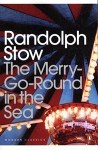
Randolph Stow, The merry-go-round in the sea (#BookReview)

Randolph Stow, The merry-go-round in the sea

Randolph Stow is a writer I’ve been meaning to read for the longest time – since, would you believe, the 1970s? Embarrassing, really, given his significance. My plan had always been to read his Miles Franklin award-winning novel To the islands first. However, the first I actually bought was The merry-go-round in the sea – back in 2009 when it was re-released as a $10 Penguin classic. It’s taken me until now to read it – and I read it with my reading group, which made it an extra special experience.

BEWARE SPOILERS, albeit this is a classic with minimal plot so, you know …

The merry-go-round in the sea was Stow’s fourth novel, published in 1965 when he was 30 years old. It has a strong autobiographical basis, but is, by definition, fiction. It is essentially a coming-of-age story about a young Western Australian boy, Rob, who, like Stow, was born in Geraldton in 1935. It covers eight years of his life from 1941, when his favourite cousin, the 21-year-old Rick, leaves to fight in World War 2, to 1949, when Rob is 14-years-old and the now-returned Rick is about to leave again, this time to live in London. The plot is not a particularly dramatic one, but rather a lot happens nonetheless.

It all starts in 1941 with Rob and his family moving (“evacuating” is the strange word his mother uses) to a family station in the country, due to fears of Japanese invasion. There Rob enjoys the life of a “bush kid” and is unhappy to find, upon his return to town, that he is really a “townie”. Meanwhile, Rick is at war, ending up a POW on the Thai-Burma railway. His experience is told in three or four brief but vivid digressions from the narrative’s main focus on Rob’s life. We are told enough to prepare us for a changed Rick on his return. In the second part of the novel, the focus is on Rob’s growing up, on his gradual loss of childish innocence, and on Rick’s struggles to come to terms with his life after his experience of war. Nothing is the same for Rick, and Rob worries about his idol.

Now, this is a 400-page novel (in my edition, anyhow) and can be discussed from multiple perspectives, so I’m going to hone in on a couple that most interested me.

One of these is heralded by the book’s structure, by the fact that, although the protagonist, the person through whom we “see” most of the book, is young Rob, the book’s two parts are named for Rick, “1 Rick Away 1941-1945”, and “2 Rick Home 1945-1949.” Superficially, this can be explained by the fact that Rick is a major focus of Rob’s interest. However, I’d argue there’s something more here, that these two characters represent conflicting forces – a duality – within Randolph Stow himself, one being his love of place, of the land and country he grew up in, and the other being his discomfort with that same place and his need to get away, which indeed he did. This duality was, as I recollect, discussed by Gabrielle Carey in her book Moving among strangers: Randolph Stow and my family (my review).

So … through Rob’s third person eyes, Stow writes gloriously, authentically, about Geraldton and the surrounding areas in which he grew up. The language is lyrical, poetic, conveying an emotional intensity in addition to pure description:

By rock pools and creeks the delicate-petalled wild hibiscus opened, and the gold-dust of the wattles floated on water. Wild duck were about, and in trees and in fox-holes by water he looked for the nests, staring in at the grey-white eggs but touching nothing. Climbing a York gum, he was startled when a grey broken-off stump suddenly opened golden eyes at him. He gazed into the angry day-dazzled eyes of the nesting frogmouth and felt he had witnessed a metamorphosis.

There’s repetition of colours, plants, and landforms, but rather than becoming tedious they convey a deep familiarity with and love of place – and make the novel sing.

However, through Rick’s eyes – albeit eyes damaged by his war experience – we see a more conflicted, and arguably more adult, understanding of this place. At the end, he explains his decision to leave to Rob:

‘Look, kid,’ Rick said, ‘I’ve outgrown you…

[…]

‘I can’t stand,’ Rick said, ‘this – ah, this arrogant, mediocrity. The shoddiness and wowserism and the smug wild-boyos in the bars. And the unspeakable bloody boredom of being in a country that keeps up a sort of chorus. Relax, mate, relax, don’t make the place too hot. Relax, you bastard, before you get clobbered.’

Stow wasn’t the only intellectual to leave Australia in the 1960s. Others include Germaine Greer, Clive Robertson, Barry Humphries and Robert Hughes.

My other issue is trickier to discuss: it concerns Stow’s references to Indigenous people in the novel. It’s complicated to tease out, and to do so properly would require a re-read, but I can’t leave the novel without saying something about it, given our heightened awareness these days. As I’ve already said, the book was written in 1965 about the 1940s. In 1957, Stow had spent three months as a storeman at the Forrest River Aboriginal mission in the Kimberleys. His biographer, Suzanne Falkiner, argued (on ABC RN Late Night Live) that this experience created some conflict for him:

‘[His family] had achieved a lot: they had been colonists in America, in the West Indies, the earliest settlers in that region of Australia,’ she says. ‘But as he grew older and as he got to know Aborigines, having worked in the Forrest River mission, I think the conflict became a real source of pain for him.’

I believe that Stow tried to convey some of this in The merry-go-round in the sea. Several times, Rob quotes his family’s racist attitudes, including here:

Rob did not mind the blackn*****s, some of the older ones he rather admired. But his mother was furious because Nan [Rob’s sister] was sitting next to a blackn****r in school. ‘They’re dirty,’ said his mother. ‘They all have bugs in their hair.’

It was funny about blackn*****s. They were Australian. They were more Australian than Rob was, and he was fifth generation. And yet somehow they were not Australian. His world was not one world.*

In other parts of the novel, he describes seeing Aboriginal art in caves, and ponders the people who made them. Not all are so sensitive or interested, however. When he’s taunted at school with having “n****r blood”, he reacts defensively, but when he’s a little older, and schoolfriends once again express racist attitudes, he responds:

‘I like them,’ the boy said, ‘There’s some nice boong kids at school.’

A poor choice of words, but at least Rob stands up for his beliefs. If we take Rob as Stow’s mouthpiece, then it’s pretty clear that Stow is conveying in this novel some disquiet about prevailing attitudes to Australia’s Indigenous people.

There is so much more to explore in this book – including the motif of the merry-go-round itself. As a young boy Rob had been shattered by the discovery of “time and change”, leading him to cling to the idea of a merry-go-round, which revolves and revolves around a solid centre, his family, never changing. By the end, however, with Rick about to leave, he realises that this too is illusion, that the world is not quite as he’d seen it. A bittersweet ending – one that must come to us all at some time!

Several bloggers have posted on this novel in the last few years, including Lisa (ANZ Litlovers) and Kim (Reading Matters), and offer additional perspectives to mine.

Randolph Stow
The merry-go-round in the sea
Camberwell: Penguin Books, 2009
400pp.
ISBN: 9780143202745

* I have blanked out this word to, hopefully, deflect the wrong sort of “hits” on this blog.

Elizabeth Jolley, Poppy seed and sesame rings (#Review)

In her introduction to Learning to dance: Elizabeth Jolley, her life and work, a book that was intended to comprise only non-fiction to create a sort of autobiography, literary agent Carolyn Lurie wrote that Jolley would sometimes “draw so directly on her life” for her stories “that it seemed illuminating to include a small selection of her fiction.” From what I know of Jolley, this seems like a sensible decision.

For example, in “Poppy seed and sesame rings”, the first person narrator says:

I often heard Mother crying in the night. When I called out my father always explained in a soft voice, ‘She is homesick, that is all.’ So I always knew what was the matter.

Compare this with the opening piece in another compilation, Central mischief: Elizabeth Jolley on writing, her past and her self, which contains only non-fiction. The piece is titled “What sins to me unknown dipped me in ink”, and in it Jolley writes that “because of her marriage, my mother was an exile. I remember that her homesickness lasted throughout her life.”

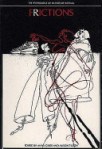
Anna Gibbs, FrictionsHowever, before I discuss the story itself, a little about its background. Jolley, born in 1923, started writing novels and short stories very early in her life. Although her first book wasn’t published until 1976, she’d written her first novel around 1939, and had had short stories published by the 1960s. As far as I can tell from a list of her papers at the University of Western Australia, the story “Poppy seed and sesame rings” was written around 1965, and was initially titled “Pumpernickl, poppy seed and sesame rings”. So, it was an early story, and has been published at least three times, twice in anthologies and once in a collection of her stories, and has also been broadcast on radio:

  • Frictions: an anthology of fiction by women, edited by Anna Gibbs, Alison Tilson (1982) (contains three Jolley stories)
  • The Oxford book of Australian stories, edited by Michael Wilding (1994)
  • Fellow passengers: collected stories: Elizabeth Jolley, 1923-2007 (1997)
  • Read on BBC Radio 4, by Kerrie Fox, 26 Oct 1997

I wonder how many of Jolley’s other stories have had such exposure?

And now, the story. As I said above, it’s clearly autobiographically based, but of course that doesn’t mean that what happens in the story happened in real life. It simply means that the story’s broad outline and main themes draw from Jolley’s experience of being the daughter of an Austrian immigrant mother. In the story, the family, comprising her father, mother, aunt and grandmother, has migrated to the “New Country” from an unidentified Germanic country. In reality, Jolley was born in Birmingham to an English father and an Austrian immigrant mother.

The main theme of the book is the immigrant experience, and particularly the mother’s homesickness. Initially, the mother tries to make it work. She is generous with their shop’s customers in a desire “to be accepted”, and she feels supported by the company of her sister and mother. However, gradually things deteriorate. The sister and mother die; her daughter (our first-person narrator) leaves home for nurse training; she continues to miss her favourite foods like “poppy seed bread and sesame rings”; and the shop struggles to make a living so her help is not needed. Her life becomes a lonely one, spent largely “in the dingy room at the back.” She becomes more set in her old ways and attitudes while the daughter, finding her own way in the world, feels less and less inclined to visit. It’s a common story in migrant families.

There are other things in this story, though, besides these ideas of exile and loneliness, that give it the Jolley imprint. The story starts with the sudden death of the narrator’s aunt while the two are visiting an Art Gallery and Museum. The daughter describes her aunt’s death on the steps of the museum:

I tried to pull her from the step but she only sighed and, making no attempt to get up, she simply leaned forward and died. I ran straight home leaving her there with the pigeons and the coming darkness.

‘Tante Bertl wanted to walk,’ I told them so they did not expect her for a time.

This sort of shocking moral failure – plainly stated, and often never discovered – is not uncommon in Jolley, and reflects her acknowledgement of our darker natures. It’s part of the surprise of her work – and so at odds with her appearance! Such a sweet-looking, unassuming little old lady in a cardigan, she was!

There’s also a hint of lesbian attraction. The daughter brings a friend, Marion, home to cheer up her mother, a “friend” she “hardly knew” and “had chosen … because she looked healthy and very clean and the nearest one to speak to in the hospital administration department.” The visit goes badly, due to the mother’s refusal to be welcoming to the visitor. Afterwards, the daughter finds herself thinking about Marion:

Upstairs I sat at my table and tried to read and write and study but I kept writing Marion’s name everywhere.

I thought about her. I kept thinking about her without being able to do anything about it.

These thoughts cause her to digress from her nursing study to write from her heart “about quiet lakes and deep pools which have no reflection and no memory”, to express the “unknown store-house of feelings” she had found within herself. There’s a double whammy here, it seems – a discovery of attraction and also, perhaps, of the power of writing. No wonder this early story has had several outings.

Read for Lisa’s (ANZLitLovers) Elizabeth Jolley Week.

AWW Badge 2018Elizabeth Jolley
“Poppy seed and sesame rings”
in The Oxford book of Australia short stories (ed. Michael Wilding)
Melbourne: Oxford University Press, 1994
pp. 177-183
ISBN: 9780195536102

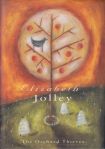
Elizabeth Jolley, The orchard thieves (#BookReview)

Elizabeth Jolley, The orchard thievesElizabeth Jolley’s twelfth novel, The orchard thieves, is a little different from most of the other Jolleys I’ve read. It’s a little less black, a little less about alienation, but it’s unmistakably Jolley in style and preoccupations.

By preoccupations, I mean her interest in family relationships and dynamics – and, related to that, her humane, but clear-eyed, understanding of human nature. The orchard thieves was written when Jolley was in her early seventies, and revolves around a grandmother contemplating the meaning of family and children. It feels very much like the meditations a woman of her age would be having – which is not to suggest that the story itself is autobiography. Still, I can see once again, why Helen Garner loves Jolley (and doesn’t love Thea Astley). Jolley and Garner both draw from their lives, albeit Garner more so, and both focus on life’s interior challenges. They also both do so in spare but loaded writing.

The orchard thieves, then, has a minimal plot, and no named characters. Told third person from the grandmother’s perspective, it concerns a family whose members are identified by their roles: the grandmother, the grandsons who belong to the youngest sister, the granddaughter who belongs to the middle sister, and the aunt (who also happens to be the eldest sister who lives with the grandmother). There is also the son-in-law (the youngest sister’s husband.) The novel (novella, really) is constructed in three parts, and the plot, such as it is, revolves around the return from London of the middle sister with her daughter.

So, what is it all about? It’s about the family at a point in time, from the grandmother’s point of view. It’s about parents and children, about love and worry, and about age and wisdom – not that the grandmother pontificates her wisdom or is even really sure that she has it. She worries about the aunt, her eldest unmarried daughter, fearing she’s lonely. She worries about the grandsons, their safety now and their future. And she worries about the middle sister’s health and happiness when she returns home – for how long? – clearly pregnant but saying nothing. It is this sister’s return that ripples the surface of the family’s finely balanced relationships.

Jolley prepares us for this “rippling” with an initially mysterious Preface, which commences

‘If you have the house,’ the middle sister said to the aunt, the eldest sister, ‘if you have the house you’ll have to pay us each one-third of the current market price. One-third each of the value of the place.’

We immediately think of course that someone has died, and then, as the book commences we realise that the owner of the house, the grandmother, has not died. We then wonder if she will die, but Jolley’s purpose is more subtle. This is not an inheritance-fight plot. Instead, the conversation tells something about the sisters’ characters. It also suggests underlying tensions, and introduces some ideas which, when they re-appear in their correct chronological sequence, become clear.

This is not a depressing book. The tensions are real, but the grandmother’s hard-won wisdom re-stabilises without offering pat solutions – and it’s all done in a quietly meditative, but by no means dry, tone. I found it absolutely delicious reading, with its Jolleyesque references to pear trees and birds, orchards and gardens, music and myths, sexuality and lesbianism; its sly humour; and, dare I say it, its relevance to my own musings. I haven’t reached my seventies yet, but am soon to join the world of grandmas and am certainly the mother of adult children. Jolley captures the concerns, the lessons learnt and still being learnt – about raising children, about relating to adult children, about being a grandmother, and above all about love – so economically but with sensitivity and insight.

Here’s a scene, early in the book:

Alone on the grey rug in the deeply shaded garden, the grandmother began to understand that it was not until she was a grandmother herself that she, because of her own love for her grandsons, realised how much she, as a small child, had been loved. And the pity was that it was too late to acknowledge this to anyone. It was no longer possible to offer, unsolicited, a kiss, a caress or a tender phrase backwards, as it were, over her shoulder. Recalling momentarily the pain of a telephone reprimand, well deserved she was sure, and only one of many, the grandmother came to a very real truth, which was that the great love which holds the mother to the child does not necessarily travel in the other direction, from the child to the mother. She understood also that she would not be the only person in the world to have discovered this.

Such spare writing. With the exception of the descriptions in the opening phrase – “grey” and “deeply shaded” – which set the melancholic, reflective tone, the language is direct and largely unadorned, and powerful as a result.

There are several references to myths and legends, which the grandmother believes “were attempts to explain happenings which were too painful and hard for human endurance.” Wanting to share these with the grandsons, she starts to tell them the story of Ceres/Demeter and her daughter Persephone/Proserpina, but it gets all too dark and boring for them, so they

simply slipped from the grandmother’s hands and disappeared with a slight rustling of dry leaves into the surrounding bushes.

You can just see it can’t you? Elsewhere, this gorgeous elegant language is subverted when the grandmother, walking with her grandsons, uses their language:

The grandmother hoped that the river paths unlike the roads and houses and the trolleys in the supermarket, were not crap. She hoped they were not crappy crap. She hoped that the aunt’s game and the secret paths, the rocks and the rock pools along the river beaches would remain uncrapped for as long as possible.

Oh, I could go on, sharing more and more. There’s so much more to say about, for example, the imagination and how it can lead you to worry and worry, about mothers’ regrets for things they could have done differently, about the time when children need to grow out of thieving orchards, about the reality that the

little rogues and thieves … would, during their lives, do something perfect and noble and wonderful and something absolutely appalling.

And appalling is pretty much how we could describe the middle sister’s behaviour when she arrives!

Helen Garner concludes her tribute to Jolley*, “To my dear Lift-rat” (which she wrote after Jolley had succumbed to dementia), with this:

But it was too late for me to say goodbye, or to thank her for the last sentence of The Orchard Thieves, where an old woman points out comfortingly to her daughter that the difference between a bad haircut and a good one is only a week.

Garner’s right. It’s somehow the perfect, grounding ending for a book which is about both the importance of “the unseen things, the real feelings and the deep needs” and the business of “push[ing] on with living.” It’s a timeless book.

Read for Lisa’s (ANZLitLovers) Elizabeth Jolley Week.

* You can read Garner’s essay on-line and in her collection Everywhere I look (my review).

AWW Badge 2018Elizabeth Jolley
The orchard thieves
Ringwood: Viking, 1995
134pp.
ISBN: 9780670865505

W. Somerset Maugham, The four Dutchmen (#Review)

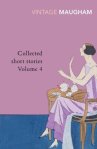
W. Somerset Maugham, Collected Short Stories Volume 4Finally, an excuse to mention W. Somerset Maugham here – and the excuse is, as Aussie literary fiction followers will probably know, that Mirandi Riwoe’s Stella shortlisted novella, The fish girl, is a response to (was inspired by) Maugham’s short story “The four Dutchmen”. I don’t usually feel I need to read the original work in these situations but given the original here was a short story and given it gets Maugham into this blog, I decided to read it.

Before I get to the story, I must explain that one of the reasons I’d like Maugham here is because I was astonished some years ago to discover just how many of his novels, short stories and plays had been adapted to film. Wikipedia says that he was “one of the first authors to make significant money from film adaptations”. So, having seen several of the films and read a few of his books, I’ve wanted him here – albeit Maugham described himself as “in the very first row of the second-raters”!

“The four Dutchmen” has not, as far as I know, been adapted to film, but it makes interesting reading. In his introduction to the volume of collected stories which includes this one, Maugham says that “most of these stories are on the tragic side. But the reader must not suppose that the incidents I have narrated were of common occurrence.” He then describes how the majority of the people in the Asian regions from which the stories come are decent hardworking people, but

they are not the sort of people I can write stories about. I write stories about people who have some singularity of character which suggests to me that they may be capable of behaving in such a way as to give me an idea that I can make use of, or about people who by some accident or another, accident of temperament, accident of environment, have been involved in unusual contingencies.

The four Dutchmen – a captain, chief officer, chief engineer, and supercargo on a Dutch tramp – are such people. The four fattest men our narrator ever knew,

They were the greatest friends, all four of them; they were like schoolboys together, playing absurd little pranks with one another.

And in such a way, the first person narrator (ostensibly the author) sets them up as jolly, cheery men for whom having a good time was more important, say, than winning money from each other at bridge. After all,

‘All friends and a good ship. Good grub and good beer. Vot can a sensible man vant more?’

But,

… the captain was very susceptible to the charms of the native girls and his thick English became almost unintelligible from emotion when he described to me the effect they had on him. One of these days he would buy himself a house on the hills in Java and marry a pretty little Javanese. They were so small and so gentle and they made no noise, and he would dress her in silk sarongs and give her gold chains to wear round her neck and gold bangles to put on her arms.

The last two sentences here comprise the epigraph Riwoe uses to open The fish girl – but more on that next week.

What happens is that the captain brings a Malay girl on board, against the wishes of his friends, and tragedy ensues – as our narrator pieces together from later newspaper reports and the hotel manager. It’s a story about friendship and loyalty, envy (probably) and revenge. But it’s also about colonial attitudes to local inhabitants, and about men seeing women as objects or toys to be played with and discarded at will.

The interesting thing is Maugham’s attitude. What is it? This is not a didactic story. The first person narrator makes no specific commentary on the rights and wrongs of the four men’s behaviour, but seems to act rather as observer and reporter. However, I think we can glean some opinion. He initially finds them fun to be with, but there are hints that he sees them lacking in substance. At one point he says “to me not the least comic part of them was their serious side” and a little later he comments ironically, after the chief had made an egregious statement, that he “had a philosophic soul”. His, the narrator’s, concluding comment seems off-hand – as if it’s just another story about characters he’s met. And maybe that’s all it is to him, but I’d say there’s ironic intent behind the reference to the “comic and celebrated friendship”.

It’s somewhat more difficult to pin down his attitude to the young woman who is first referred to as “pretty little Javanese”, then “a little thing” and “Malay girl”, before finally being characterised as “brazen hussy”, “bad rubbish”, and “trollop”. She has no voice at all in “the story” – but these descriptions of her are reported rather than his own, so again I’d say he is asking us to consider the attitudes and values he portrays. Anyhow, next week I’ll review Riwoe’s post-colonial response to the story.

Meanwhile, I’d love to know what you think of Maugham (if you’ve read him)?

W. Somerset Maugham
“The four Dutchmen” (1928)
in Collected short stories, Vol. 4
(Selected by Maugham himself)
London: Vintage Books. (Orig. pub. 1951)
ISBN: 9781409076421 (ePub)

M.L. (Mollie) Skinner, The hand (#Review)

ML Skinner, The fifth sparrow

ML Skinner, The fifth sparrow: An autobiography

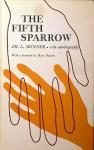
Pam of Travellin’ Penguin blog read ML Skinner’s short story “The hand” for a challenge she was doing, and, when I expressed interest in it, very kindly sent me a copy. “The hand” is a mysterious little story – and by little, I mean, little in that it takes up less than 7 pages of the anthology, Australian short stories, that she found it in.

Now, the story is a bit tricky, and I think is best understood within the context of Skinner’s biography. She was born in Perth in 1876, but the family moved to England and Ireland in 1878. Mollie was a keen student and reader but had to abandon formal education in 1887 because of an ulcerated cornea, which resulted in her spending much of the next five years in a darkened room with bandaged eyes. After cauterisation partially restored her sight, she started to write poems and stories. Presumably this was around 1892 (ie 5 years after 1887?) when she was about 16 years old. Later she trained as a nurse, which gave her her main living. And then, the ADB biography (linked to above) says something interesting in terms of our reading of this story:  “she recognized within herself an intuitive power, or sixth sense.” A little later in the biography, we are also told that “Mollie believed that God’s hand on her shoulder guided her life. She dabbled in the occult”. She returned to Australia in 1900, though returned to England later to study. She also travelled to India, and served there and Burma during World War 1.

So to the story, which was first published in 1924. It is set in a “mining hospital back there in the west.” As there was “little doing” and the light too dim to read by, the Matron is encouraged to tell a story which she is “good at” doing. They – presumably the off-duty staff – ask her about her life in “those posts way back in the interior”. Was she ever frightened, they ask?

‘Of what?’
‘Well–the loneliness. And bad white men, and bad blacks. Of patients in delirium. Or some awful maternity case you couldn’t handle.’
‘I didn’t think about it. I did what I could. I was frightened once, though: and that, really, by a nurse screaming. A nurse shouldn’t scream.’

Interesting, the “bad white men, and bad blacks”, but I’ll just take that as another of those ways in which contemporary stories provide us insight into the times, and move on with the story. She then tells the story of the scream. She describes the small outback post, the sense of community they had, and the little L-shaped hospital which was open to the bush on one side, and the road and railroad on the other. There were two other nurses besides herself, one being Nurse Hammer “a regular town girl, very attractive, but unstable, untried.” On the night of the scream, our Matron story-teller was doing accounts while the two nurses were chatting with the patients. Our Matron’s mind kept wandering she says. She’s

very practical, really, and then liable to feel things in the air, things that other people don’t seem aware of. My father called it “unwarranted interference”; and told me to taboo it. But it gets hold of me sometimes: and this evening I was uneasy, aware of “something”. There seemed to be a sound.

But, she can’t identify anything, so continues to try to work. She hears Nurse Hammer go to bed, and then – the scream. The rest of the story concerns locating the scream – it was Nurse Hammer – and working out the cause of it – a hand has grabbed Hammer’s leg.

In the end, there’s a practical explanation for “the hand” but along the way there’s a sense of an awakening or at least, a growing up, for Nurse Hammer. Initially, the Matron is

conscious, not only of Hammer’s terrible fear, but of a deeper source, dark and secret within herself. I remembered how lovely she was. How men in the wards watched with furtive eyes as she walked past. I remembered the way she walked–how she avoided those eyes. I knew then that the girl had herself been tempted, that she was powerless, now, in this dark room, because in her own life she was passing through crisis.

The Matron finds herself praying that “whatever we found in this room would not be evil.”

Skinner builds up the suspense well, the darkness, the lantern going out, until eventually the cause of the scream is determined. Before it is fully explained though, Nurse Hammer has a little more to endure, but, says Matron,

I glanced at Hammer. The Nightingale light was flooding her face …

And the Matron goes on to use words that imply a biblical aspect to Hammer’s enlightenment – but if I say more, I’ll give away the story which I’m not sure I want to do (though unfortunately the story does not seem to be available online).

Interestingly, Skinner attracted the attention of DH Lawrence … but I think I might make this the subject of tomorrow’s Monday Musings! Meanwhile, I think the story is to be understood in the sense of a divine intervention intended to test and try Nurse Hammer, from which she emerges, in a sense, reborn and now a real nurse, like Florence Nightingale. (But, I could be wrong.)

AWW Badge 2018ML (Mollie) Skinner
“The hand” (1924)
in Australian short stories (1951)
ed. by Walter Murdoch and Henrietta-Drake Brockman
(pp. 148-154)

Carson McCullers, Home for Christmas (#Review)

Carson McCullers, 1959

Carson McCullers, 1959 (photo by Carl Van Vechten, Public domain, via Wikimedia Commons)

As you will guess from the title of this Library of America (LOA) Story of the Week, I meant to post on it closer to Christmas Day than I have in fact achieved. I chose it for two reasons – firstly the obvious seasonal one, and secondly because my first Carson McCullers post was an unusual piece and perhaps not completely reflective of the writer she was. Her story “Home before Christmas”, while nothing like her best-known novels, does get us a bit closer to them.

First, though, some background. LOA’s notes tell us that the story, written in 1949, was the first of a few essays McCullers wrote for magazines like Mademoiselle and Redbook. McCullers’ biographer, Virginia Spencer Carr, says, according to LOA, that “even as a preschooler Carson would be asked what she wanted and the answer was, ‘I want book—lots of books, Mama’.” I suspect many of you reading this will say the same about yourselves. I know I would!

LOA shares a couple of other stories about the adult Carson and gift-giving – including one that resulted in such a kerfuffle that someone was written out of a will, and another involving Truman Capote. However, they take us further away from the point of THIS story.

“Home for Christmas” was apparently commissioned by Mademoiselle for its 1949 Christmas issue, and was published alongside pieces by food writer MFK Fisher and novelist Jessamyn West (whom I plan to cover here one day via the Library of America). LOA chose to share McCullers’ piece this last Christmas because 2017 was the centenary of McCullers birth.

Now I said in my opening paragraph that this story, although nothing like her best-known novels, does connect us a little with them. Firstly, an autobiographical piece, it describes life in a southern family, but more significantly, like The member of the wedding, it is seen through a child’s eye. It is not like her novels in the sense that it is not Gothic, and nor does it deal in any major way with the loneliness or “outsiderness” that I remember from her oeuvre – though there is a touch of melancholy in it, all the same.

In some ways, it’s a traditional story about childhood yearning for Christmas. It begins in August with our young first person narrator, that is, Carson, pondering Christmas, and it concludes, just after Christmas, with her yearning for the next Christmas. In between, we hear about the buying of Christmas presents, the cooking of Christmas food, and how Christmas day itself was spent. But, there is also a little unifying theme running through this – the “mystery of Time”.

In the second paragraph, it is August and our narrator is up a tree thinking:

I did not want to talk with my brother. I was experiencing the first wonder about the mystery of Time. Here I was, on this August afternoon, in the tree-house, in the burnt, jaded yard, sick and tired of all our summer ways. (I had read Little Women for the second time, Hans Brinker and the Silver SkatesLittle Men, and Twenty Thousand Leagues under the Sea. I had read movie magazines and even tried to read love stories in the Woman’s Home Companion—I was so sick of everything.) How could it be that I was I and now was now when in four months it would be Christmas, wintertime, cold weather, twilight and the glory of the Christmas tree? I puzzled about the now and later and rubbed the inside of my elbow until there was a little roll of dirt between my forefinger and thumb. Would the now I of the tree-house and the August afternoon be the same I of winter, firelight and the Christmas tree? I wondered.

You can see biographer Carr’s point about books can’t you? Anyhow, again, I suspect many of us have pondered Time in this way. McCullers doesn’t labour the point but it pops up a few more times in the article,  including the notion of time behaving differently for different people. “How”, she writes, “could it be that when she [her sister] opened her eyes it would be Christmas while I lay awake in the dark for hours and hours? The time was the same for both of us, and yet not at all the same.” There’s also a delightful little – almost throwaway – line about how her father would manipulate the clocks to enable them to get up early on Christmas morning but not too early for the parents.

“Home before Christmas” is not a particularly deep story/article, but then as an article for a Christmas edition of a magazine, it probably wasn’t meant to be. It is, however, an enjoyable read and, while presumably part of that bread-and-butter work that writers do to survive, it also provides some insight into a significant writer of, and from, America’s south.

Carson McCullers
“Home for Christmas”
First published: Mademoiselle, December 1949
Available: Online at the Library of America

Amy Witting, Afterplay (#Review)

Amy Witting’s first novel wasn’t published until 1977, when she was 59 years old, which is why she appeared in my late bloomers post a few years ago. She went on to publish five more novels after that – two of which I read and enjoyed long before blogging – and she was an accomplished short story writer and poet.

An interesting piece of Witting trivia is that in the 1960s she taught at the same high school in Sydney as Thea Astley, who was a few years younger. Astley encouraged her to submit a short story to the New Yorker, which duly published it. Wikipedia tells us that Australian poet Kenneth Slessor once said “tell that women I’ll publish any word she writes”. And critic Peter Craven argues that her form of realism wasn’t really accepted by the reading public until Helen Garner appeared on the scene.

Amy Witting, Selected stories

“Afterplay” is not in this collection!

All this is to say that although Witting has never had the level of recognition enjoyed by writers like Astley, Jolley and Garner, she was well-regarded in literary circles, and is being brought to our notice again through Text Classics. This year they added three of her books – The visit (her first), A change in the lighting (which my reading group did back in the 1990s), and Selected stories – to their list. Discussing the publication of her stories, they said they could not include them all as they wanted to keep the book to a manageable size. However, as a little tempter, they decided to publish one of her stories, “Afterplay”, online, describing it as “a bite-sized taste of Witting’s short-form genius”. This has given me a wonderful opportunity to include her on my blog – and with a story you can read too. Win-win, as they say!

“Afterplay” provides an excellent introduction to Witting’s writing for a number of reasons. It’s a good example of the realism which Peter Craven sees as her métier; it exemplifies her spare, direct style; and its subject matter reflects her main writing interest, relationship-focused stories in domestic settings. It is also, at less than 1,500 words, a short short-story, and, according to Text, demonstrates “Witting’s masterly economy”.

“Afterplay” focuses on “two young women”, Judith and Geraldine, and their response to Geraldine’s break-up with Ken ten days previously. The problem is that her way of breaking up was to walk out leaving a note on the kitchen table, and he, not expecting this to happen, wants to talk to her. Judith thinks Geraldine should, but Geraldine is resisting all his attempts to contact her, telling Judith that she “can’t stand confrontation. Never could.”

The thing about this story, which is told third person, is the way Witting subtly shifts perspective between the two women, and only gives us Ken’s perspective through Judith reporting a phone conversation as it takes place. There is also a little back story about Geraldine’s previous relationship which seems to have ended with, or just before, the man’s death (by suicide is the implication). The effect of all this is to keep the reader a little uncertain, a little off-balance. We are not given the full picture from any of the perspectives, so our antennae keep pointing in different directions as we try to work out where our sympathies should lie. In the end, I think, my sympathy went mostly to the poor friend caught in the middle!

There’s some cheeky humour here – including little innuendoes about sex as a sport. Ken was “proficient at all sports, never missed a goal”, and of course the title “afterplay” brings to mind “foreplay” (which was not, apparently, Ken’s forte, albeit he’s “a sweet-tempered man”.) However, there is one awkward part where Geraldine tells Judith some things about the break-up that she surely already knows. You could argue, perhaps, that at times like these people do tell and retell their experiences, but it did feel a little clumsy.

Regardless, “Afterplay” is a beautifully crafted little (in size, not in value) story. But, don’t take my word for it. At only 1500 words and available on-line, how about you read it too – and let me know what you think.

aww2017 badgeAmy Witting
“Afterplay”
First published (I think): Quadrant 39 (5), May 1995
Available online at Text Publishing.

Carmel Bird (ed), The stolen children: Their stories (#BookReview)

Carmel Bird, The stolen childrenCommenting on my post on Telling indigenous Australian stories, Australian author Carmel Bird mentioned her 1998 book The stolen children, describing it as her contribution “to the spreading of indigenous stories through the wider Australian culture”. It contains stories told to, and contained in the report of, the National Enquiry into the Separation of Aboriginal and Torres Strait Islander Children from their Families (Bringing them home)*. She offered to send me a copy, and of course I accepted (despite having read much about the Report at the time.)

Bird said in her comment that the book is “still regularly used in schools”. This is excellent to hear because it contains a history that needs to be told – forever, alongside all those other histories taught to Australian students. It needs to be as well (if not better) known by our students as the story of The Gold Rush or Our Explorers. We need to know it, we need, as a nation, to know our dark side, our failures, as well as our big adventures and achievements.

What makes this book particularly useful is Carmel Bird’s curation of it – and I would call what she’s done “curation” because of the complexity and variety of the writings she has gathered and organised. Bird has structured the book carefully to tell a story, with introductory front matter (including a preface from Ronald Wilson the National Committee’s prime commissioner); the Stories themselves; Perspectives from people at the time, including Hansard excerpts from politicians at the tabling of the Report; the Report’s Recommendations; and end matter comprising an Afterword from historian Henry Reynolds and a poem titled “Sorry” by Millicent whose story appears in the Stories section. Bird’s curation also  includes providing introductions to each of the stories to draw out important issues or points about that person’s situation, and adding other explanatory notes where appropriate.

This careful curation ensures that the book contains all the content and context it needs to stand alone as a resource for anyone interested in the Stolen Generations.

“It made no sense”

In her story, Donna says “It made no sense”. She’s describing her train trip away from her mother in the company of a white woman, a train trip she’d been initially excited about, thinking it was to be a family trip. However, with her mother staying behind on the platform and her brothers disappearing one by one as the journey went on, it just made no sense to her.

None of the stories make sense. And they are all heart-rending. Some children were given up willingly by their mothers, who believed it would result in better opportunities, and some, most, were stolen, often suddenly, with no explanation. Some were newborn, some pre-school or primary school-age, while others were 12 years old or more. Some found themselves in loving foster homes, but many found themselves in institutions and/or abusive situations. All, though, and this is the important thing, suffered extreme loss. They lost family and they lost language and culture. Fiona, for example, who will not criticise the missionaries who cared for her, says, on reconnecting with her family thirty-two years later:

I couldn’t communicate with my family because I had no way of communicating with them any longer. Once that language was taken away, we lost a part of that very soul. It meant our culture was gone, our family was gone, everything that was dear to us was gone.

Fiona also makes the point, as do several others, about the treatment of the mothers:

We talk about it from the point of view of our trauma but – our mother – to understand what she went through, I don’t think anyone can understand that.

The mothers, she said, “weren’t treated as people having feelings”.

The stories continue, telling of pain, pain and more pain. Murray says “we didn’t deserve life sentences, a sentence I still serve today”, and John talks of being a prisoner from when he was born. “Even today,” he writes, “they have our file number so we’re still prisoners you know. And we’ll always be prisoners while our files are in archives”. This is something that I, as a librarian/archivist, had not considered.

But, there’s more that makes no sense, and that’s the government of the time’s refusal to apologise, to satisfy, in fact, Recommendations 3 and 5a of the Report. This issue is covered in the Perspectives section, with extracts from speeches made by the then Prime Minister John Howard and the Minister for Aboriginal Torres Straight Islander Affairs Senator Herron who argue against making an apology, and from the Opposition Leader Kim Beazley and Labor Senator Rosemary Crowley, who made their own apologies. Crowley also says:

If ever there were a report to break the hearts of people, it is this one.

The Perspectives section also includes other commentary on the Report and the apology. There’s a letter to the editor from the son of a policeman who cried about his role in taking children away from “loving mothers and fathers”, and one from La Trobe Professor of History Marilyn Lake contesting the historical rationale for the practice of forcible removal. She argues that there had never been “consensus [about] the policy of child removal”. There’s also a long two-part article published in newspapers that year, from public intellectual Robert Manne. He picks apart the argument against making an apology, noting in particular Howard’s refusal to accept that present generations should be accountable or responsible for the actions of earlier ones. Manne differentiates between our role as individuals and as members of a nation:

we are all deeply implicated in the history of our nation. It is not as individuals but as members of the nation, the “imagined” community, that the present generation has indeed inherited a responsibility for this country’s past.

In the event, of course, an apology was made, finally, in February 2008, by Labor Prime Minister Kevin Rudd. This, however, does not mitigate the value of Bird’s book. It has value, first, as documenting our history and the voices of those involved – indigenous people, politicians and commentators. And second, it contains thoughts and ideas that we still need to know and think about, not only for historical reasons, but because in the twenty years since the Report we have not made enough progress along the reconciliation path. It is shameful.

I loved Carmel Bird’s introduction. It’s both passionate and considered, and clearly lays out why she wanted to do this book. I’ll conclude with her words:

I think that perhaps imagination is one of the most important and powerful factors in the necessary process of reconciliation. If white Australian can begin to imagine what life has been like for many indigenous Australians over the last two-hundred years, they will have begun to understand and will be compelled to act. If we read these stories how can we not be shocked and moved …

“There can,” she says, “be no disbelief; these are true stories.” This is why the stolen generations should be a compulsory part of Australian history curricula (Recommendation 8a). It’s also why, to progress reconciliation, we should keep reading and listening to indigenous Australians. Only they know what they need.

aww2017 badgeCarmel Bird (ed)
The stolen children: Their stories
North Sydney: Random House, 1998
188pp.
ISBN: 9780091836894

(Review copy courtesy Carmel Bird)

* For non-Australians who may not know this Enquiry, its first term of reference was to “trace the past laws, practices and policies which resulted in the separation of Aboriginal and Torres Strait Islander children from their families by compulsion, duress or undue influence, and the effects of those laws, practices and policies”. You can read the full Report online.

William T Hornaday, The bird tragedy of Laysan Island (Review)

William Temple Hornaday (1854-1937), whose article “The bird tragedy of Laysan Island” was a recent Library of America (LOA) Story of the Week offering, is a tricky man to write about. Originally a taxidermist, he became one of the pioneers of the wildlife conservation movement in America after he realised, around the 1880s, the dire situation regarding the country’s bison population. In this LOA article,  published in 1913, he chronicles the bird massacre on Laysan Island and the role played by President Theodore Roosevelt in helping to end the plumage trade. But he wasn’t without controversy, of which I’ll write more a little further on.

Laysan Island

Laysan Island. By Robert J. Shallenberger, U.S. Fish and Wildlife Service (http://www.doi.gov/photos/06152006_photos.html) [Public domain], via Wikimedia Commons)

“The bird tragedy” is a powerful piece which starts by describing the island as “sandy, poorly planted by nature, and barren of all things likely to enlist the attention of predatory man” but as the home of many varieties of birds, including the “Laysan albatross, black-footed albatross, sooty tern, gray-backed tern, noddy tern, Hawaiian tern, white tern, Bonin petrel, two shearwaters, the red-tailed tropic bird, two boobies and the man-of-war bird.” It was a “secure haven” for them, and, since 1891, had been viewed as “one of the wonders of the bird world”.

But, along came “man, the ever-greedy” looking for ways to make money, first via guano and egg collecting, then feathers for the plumage trade. The culprit was Max Schlemmer, who also introduced rabbits and guinea-pigs which multiplied and started to destroy the vegetation. Hornaday describes the horrendous massacre in 1909 of 300,000 birds for their wings. According to LOA, Hornaday is somewhat wrong in ascribing the massacre to Schlemmer. The say a biography of Schlemmer argues that he was ‘”cash-strapped” and sold the rights to the island to a Japanese entrepreneur. Whatever the situation, the destruction of the birdlife was massive in number and horrific in cruelty. Fortunately, it was stopped before complete destruction by a Zoology Professor who called the Government who in turn sent in the Navy – as you do!

Hornaday’s language makes clear his disapprobation of what happened and of the people who carried it out. His description of the massacre is horrifying, some of it quoted from a report by a 1911 scientific expedition to the island. This report notes that their “first impression” was that the island had been stripped of its birdlife:

Only the shearwaters moaning in their burrows, the little wingless rail skulking from one grass tussock to another, and the saucy finch remained. It is an excellent example of what Prof. Nutting calls the survival of the inconspicuous.

Hornaday says that if the Government had not intervened

it is reasonably certain that every bird on Laysan would have been killed to satisfy the wolfish rapacity of one money-grubbing white man.

Fortunately – albeit a little after the horse had bolted – Roosevelt, in 1909, created “the Hawaiian Islands Reservation for Birds” which includes Laysan and which, Hornaday writes, will ensure that

for the future the birds of Laysan and neighboring islets are secure from further attacks by the bloody-handed agents of the vain women who still insist upon wearing the wings and feathers of wild birds.

However, as Bill McKibben, the environmentalist whose memoir Oil and honey I’ve reviewed, writes in the headnote to the article, Hornaday had his own controversy. He became, in the late 1890s, the head of the New York Zoological Park (the Bronx Zoo), but, as McKibben writes,

a rough sense of the reasons why the social justice and environmental movements have often parted ways may be garnered from the fact that he saw nothing wrong with exhibiting a live African pygmy, named Ota Benga, in the zoo’s monkey house, later remarking that it was the “most amusing passage” in the institution’s history. His 1913 book Our Vanishing Wild Life … has a strongly nativist edge: immigrants and negroes are singled out as villains for their hunting of indigenous fauna.

According to Wikipedia, he was criticised, including by African-American clergymen James Gordon, who said that “Our race … is depressed enough, without exhibiting one of us with the apes … We think we are worthy of being considered human beings, with souls.” With the controversy, Benga was released to roam the zoo, even though Hornaday did not see anything wrong with what he’d done. Benga was later released to Gordon’s custody, but eventually committed suicide at the age of 33 when the start of World War 1 prevented his return to Africa.

Another wonderful LOA offering in a genre I always enjoy reading – nature or environmental writing.

William T Hornaday
“The bird tragedy of Laysan Island”
First published: Our vanishing wild life, 1913
Available: Online at the Library of America