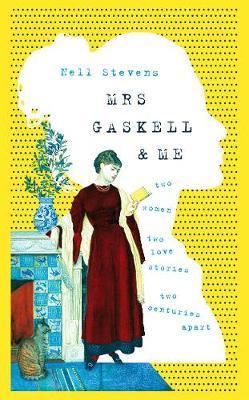
Nell Stevens, Mrs Gaskell and me: To women, two love stories, two centuries apart (#BookReview)

It’s a bit of a stretch, I admit, to submit Nell Stevens’ strange hybrid biography-memoir, Mrs Gaskell and me, as my second contribution to Bill’s (The Australian Legend) Gen 0. But, having read Elizabeth Gaskell’s two novellas, Lizzie Leigh and Cousin Phillis, for the week, and having had Stevens’ book on my TBR for a few years, I decided it was now or never to get it off the shelf. After all, as I wrote in my Two Novellas post, Mrs (Elizabeth) Gaskell (1810-1865) is a good example of a nineteenth century independent woman because, despite being a wife and mother, she managed to forge a career for herself as a writer.

So, let’s leap in. The reason this book is a bit of a stretch for inclusion in Bill’s week is not only because it is one of those hybrid biography-memoirs or bibliomemoirs, but because of Stevens’ statement in her disclaimer at the beginning of her book:

I have changed names, scenes, details, motivations and personalities. Every word has been filtered through the distortions of my memory, bias and efforts to tell a story. This is as true of the historical material as it is of the sections about my own life: studies, letters and texts excerpted here are not always faithfully quoted. This is a work of imagination.

So, it’s a work of imagination that tells two alternating stories. In first person, we have Stevens’ own story, which goes from 2013 to 2017, and encompasses her love affair with an American and the writing of her PhD on Mrs Gaskell. This is the memoir bit. In second person is Stevens’ story of Mrs Gaskell primarily covering the years 1855 to 1865 which encompass her three-months-long trip to Rome in 1857 and its aftermath. This is the biography bit.

Now, regular readers know my attitude to the fiction versus nonfiction question. I am more interested in truths than I am in facts. Facts on their own don’t always tell us a lot, and when we are talking a person’s life, they can be limiting. Knowing when a person married, for example, is far less relevant or interesting than how they felt about their marriage and the person they married, but, it is hard to get facts about those feelings. Even if the subject wrote letters and/or diaries, how truthful were they? And, did what they wrote one day in a fit of passion (positive or negative) reflect the truth of the relationship as a whole? And so on. All this is to say that I am happy to accept Mrs Gaskell and me as an imaginative bibliomemoir, but if you’re not, this book will not appeal to you.

Because of the reason I chose to read this book now, I’m not going to write the usual sort of review. There are several out there, if you are interested. Instead, I am going to focus on how it fits into Bill’s Independent Woman thesis, which is to look at non-Australian writers “whose work influenced, predated or paralleled the first wave feminists of AWW Gen 1”. This means, to me, that we can look at the works of these women writers and at their lives, and Mrs Gaskell had an interesting life.

“all of a sudden you had a career” (Stevens)

It was also, I think, though I haven’t read a true biography of her, a divided life. There was the traditional “Mrs Gaskell”, the well-brought up and educated wife and mother, but there was also this:

“Nature intended me for a gypsy-bachelor; that I am sure of. Not an old maid, for they are particular and fidgety, and tidy, and punctual – but a gypsy-bachelor.”

Gaskell wrote this in a letter in 1854. I checked its accuracy, given Stevens’ disclaimer, and it is, I believe, a true quote. Stevens goes on to write that Gaskell “played the role of wife and mother so very well, and so lovingly, but she was a ‘gypsy bachelor’ nonetheless”. So, while she was not one of those nineteenth century adventurers, like Isabella Bird and Flora Tristan, she was nonetheless independent. In her writing, this came through her “industrial” or “social novels” or what Stevens calls her “philanthropically motivated condition-of-England novels”. In these, she identified and questioned some of the significant social and moral issues of her era: in North and South, for example, she was among the first to explore conflict between employers and workers, and in Ruth (see Bill’s review), she preached compassion for “fallen” women. (I have read both of these, but before blogging.)

However, she also exhibited a level of independence in her personal life, despite its conventional trappings – and this is something that Stevens conveys (albeit with different motivations) in her bibliomemoir. Early in the book, Stevens writes, using her second person voice,

“You were always lucky, Mrs Gaskell; you were always grateful for what you had, and yet, all the same, you were restless” [my emph].

She then briefly chronicles Gaskell’s career trajectory from writing for herself, to sending articles and then short stories to magazines, to, finally, writing her first novel, Mary Barton, in 1853. Stevens writes that it “became the sort of book that people bought and reviewed and talked about, and all of a sudden you had a career”.

This is the background, but Stevens’ focus is Gaskell’s visit to Rome in 1857, when she was 46 years old, and what it meant to her. She went to escape, says Stevens, the potential fallout (of which there was plenty) from her Charlotte Brontë biography*. She found an energising community of artists (authors, poets, sculptors, painters, musicians) and met the seventeen years younger American author and critic, Charles Eliot Norton. They saw each other constantly, and remained in contact afterwards. It was, we believe, an unconsummated relationship, and not all agree it was a romance, though Stevens argues so. Whatever it was, it was clearly intense and significant, and given the (documented) ongoing years of contact that followed, it satisfied some of Gaskell’s intellectual yearnings and fed into her subsequent writing. Beyond this, Rome was, overall, argues Stevens, “transformative for her, to meet Norton, to be in Rome, to be treated as an equal by other artists”.

The other point I’d like to make is Stevens’ story that, at the end of her life, Gaskell bought and renovated a house in Hampshire without telling her husband. Sounds independent to me.

The Nell parts of the book, which chronicle Stevens’ own love affair and her struggles to write her PhD, mostly engaged me, particularly the academic life satire, but, I’m leaving it here because Mrs Gaskell was my theme. It’s an unusual book, but I’m glad I read it. I may not remember the details, which is fine given they may not all be exact, but I will remember how Stevens successfully transformed this intriguing author from her “Mrs Gaskell” persona to a living, feeling, independent woman.

* Wikipedia reports that in 2017 The Guardian named The life of Charlotte Brontë one of the 100 best nonfiction books of all time.

Nell Stevens
Mrs Gaskell and me: Two women, two love stories, two centuries apart
[Published in the USA as The Victorian and the romantic]
London: Picador , 2018 (e-Edition, 2019)
256pp.
ISBN: 978-1-5098-6819-3
Elizabeth Gaskell, Lizzie Leigh AND Cousin Phillis (#BookReviews)

This year, Bill (The Australian Legend) has framed his usual January “Gen” (short for generation) week, as Gen 0. Zero? How can that be? Well, let’s get it from the horse’s mouth. Bill says, “I am using ‘Gen 0’ as a designation for those writers – necessarily not Australian – whose work influenced, predated or paralleled the first wave feminists of AWW Gen 1”. In other words, we are looking at mostly 19th century writers – like Charlotte Bronte, Elizabeth Gaskell, and Charlotte Perkins Gilman.

Bill’s list is just a start. I would add Kate Chopin in there too, but more discussion and expansion of Bill’s list will presumably happen over the week, so I’ll get on to Mrs – or Elizabeth – Gaskell.

My Gaskell journey started in my teens when my mother, seeing my enthusiasm for Jane Austen, suggested I read Mrs (as she was on the book) Gaskell’s Cranford. From there I read North and south, Wives and daughters, and Ruth – all before blogging. I had hoped to read her first novel, Mary Barton, for this week, but when I saw how tight my reading schedule was this month, I decided to go for a novella (in the end, two novellas) instead. As it turned out, Bill has already posted on one of them, Cousin Phillis.

The Independent Woman

Bill’s AWW Gen weeks, which started back in 2018, draw from his thesis that “a case can be made for a parallel myth” to that of historian Russell Ward’s male-dominated Lone Hand. It features “the Independent Woman, who makes her way without, and often despite, men”. He is talking Australian women, of course, but for Gen 0 we are looking at what was happening elsewhere that may have affected, or simply parallel, what was happening in Australia. Elizabeth Gaskell is a perfect example, because, despite being a wife and mother of four daughters, she managed to forge a career for herself as a writer of novels, short stories, and biography.

She could do this for a few reasons, including the fact that the church she belonged to, and married into, was the dissenting, non-conformist Unitarian church, and that her minister husband William Gaskell was himself a writer and poet. He was also, according to Wikipedia, “a charity worker and pioneer in education of the working class”. It’s no surprise, then, that Gaskell’s themes, as Bill succinctly puts in it his post on Cousin Phillis, encompassed “dissenting religion and the plight of the poor, as well as strong women characters”, are all important themes in her work.”

Her fiction falls broadly into to main strands – the “ghost” stories, and the “social novel“. It is into the latter that Lizzie Leigh and Cousin Phillis fall.

Lizzie Leigh

Lizzie Leigh, published in 1855, is the simpler, shorter, of the two novellas, and its themes remind me of the 1853-published Ruth. It starts with the death of the “hard, stern, and inflexible” husband and father, James Leigh, who says to his wife on his deathbed “‘I forgive her, Anne! May God forgive me!’” We soon learn that the “her” being forgiven is their fallen daughter “Lizzie” whom he’d disinherited.

With her husband gone, Anne decides to rent out the farm for a year and go to Manchester with her two sons, the 21-year-old responsible Will who sees things his father’s way and the much younger Tom. She wants to find Lizzie.

The rest of the novella concerns her search for Lizzie, and the difference of opinion between her idea of religion – a forgiving, New Testament-based one – and Will’s. He is prepared to support his mother, for a year anyhow, but he believes Lizzie is dead and, further, that her sin brings shame on the family. When he meets an angelic young woman, he’s convinced that her knowing about Lizzie will spoil his chances with her. But things are not as he sees them, and his mother, who had been a submissive wife, starts to express her own beliefs, and commands him to listen to her on tolerance and forgiveness:

She stood, no longer, as the meek, imploring, gentle mother, but firm and dignified, as if the interpreter of God’s will.

So, two independent women here – Gaskell the writer and Anne Leigh the character.

Cousin Phillis

This novella, originally serialised in The Cornell Magazine (1863-64), is briefly introduced in my Delphi edition with “many critics agree that Cousin Phillis is Gaskell’s crowning achievement in short fiction”. It is a longer, somewhat more complex tale, and is, essentially, a coming-of-age story in which 19-year-old Paul, and his 17-year-old second cousin, Phillis – both only children – learn some tough lessons.

The story is told first person by Paul, who speaks from later in his life about when, as a young man, he had obtained a job in a country town working to an engineer in a railway building company. He begins visiting some previously unknown relations, the aforementioned Phillis and her Nonconformist clergyman-farmer father and plain-thinking mother. You might be expecting a romance to develop between these two, but quite early on Paul decides that Phillis is not for him. Not only is she still, strangely, wearing a childish pinafore, but she is taller and, like her father, bookish, which makes him feel inferior. This will not do, so they quickly fall into a sibling-like relationship, and Paul slots comfortably into their lives whenever he can. Well and good.

However, there is another man in the story, Paul’s supervisor, Mr Holdsworth, whom he hero-worships. Paul describes him as “really a fine fellow in a good number of ways”, adding that “I might have fallen into much worse hands”, which of course makes us wonder whether this is an ironic hint. As it turns out, yes and no. Heartbreak does ensure, and Paul, with well-intentioned naïveté, plays a role in bringing this about. But, he should not shoulder the full blame because we, like guilt-ridden Paul and sensible servant Betty, have seen how much her parents have babied Phillis: ‘”the child” is always their name for her when they talk on her between themselves’, says Betty.

Most of the action takes place on Phillis’ family farm, with Gaskell beautifully rendering rural life, while also introducing readers to the increasing industrialisation, bringing hints of the social change she portrayed with more depth in North and south‘s exploration of rural tradition versus modern values.

Gaskell also conveys some of her progressive views on religion. Early on, Mr Holdsworth asks Paul about his cousins:

How do preaching and farming seem to get on together? If the minister turns out to be practical as well as reverend, I shall begin to respect him.

Towards the end of the story, when Phillis is critically ill, her father is visited by some local ministers who preach their punitive religion to him, suggesting he consider “what sins” had brought this trial upon him, and

whether you may not have been too much given up to your farm and your cattle; whether this world’s learning has not puffed you up to vain conceit and neglect of the things of God; whether you have not made an idol of your daughter?’

Our minister will have none of it. He will confess his sins to God, but, he says

‘I hold with Christ that afflictions are not sent by God in wrath as penalties for sin.
‘Is that orthodox, Brother Robinson?’ asked the third minister, in a deferential tone of inquiry.

The ending, while not tragic, is open, which works well for me, though according to Wikipedia, she had considered adding two more parts to this four-part story. All up, another good read from the independent Mrs Gaskell!

Elizabeth Gaskell
Lizzie Leigh (1855) and Cousin Phillis (1864, available online)
in Complete works of Elizabeth Gaskell (illustrated)
Hastings (UK): Delphi Classics, 2015 (Version 5)

Jane Austen’s The Watsons in Trove: Finishing the unfinished

While searching Trove recently for my Monday Musings 1923 sub-series, I came across some articles on Jane Austen’s unfinished novel, The Watsons, and can’t resist sharing them with you.

I have written about unfinished books before, including on Jane Austen’s unfinished novels, The Watsons and Sanditon. Unfinished books aren’t to everyone’s taste but, if you love an author, you’ll read anything they wrote. Such is the case for me with Jane Austen.

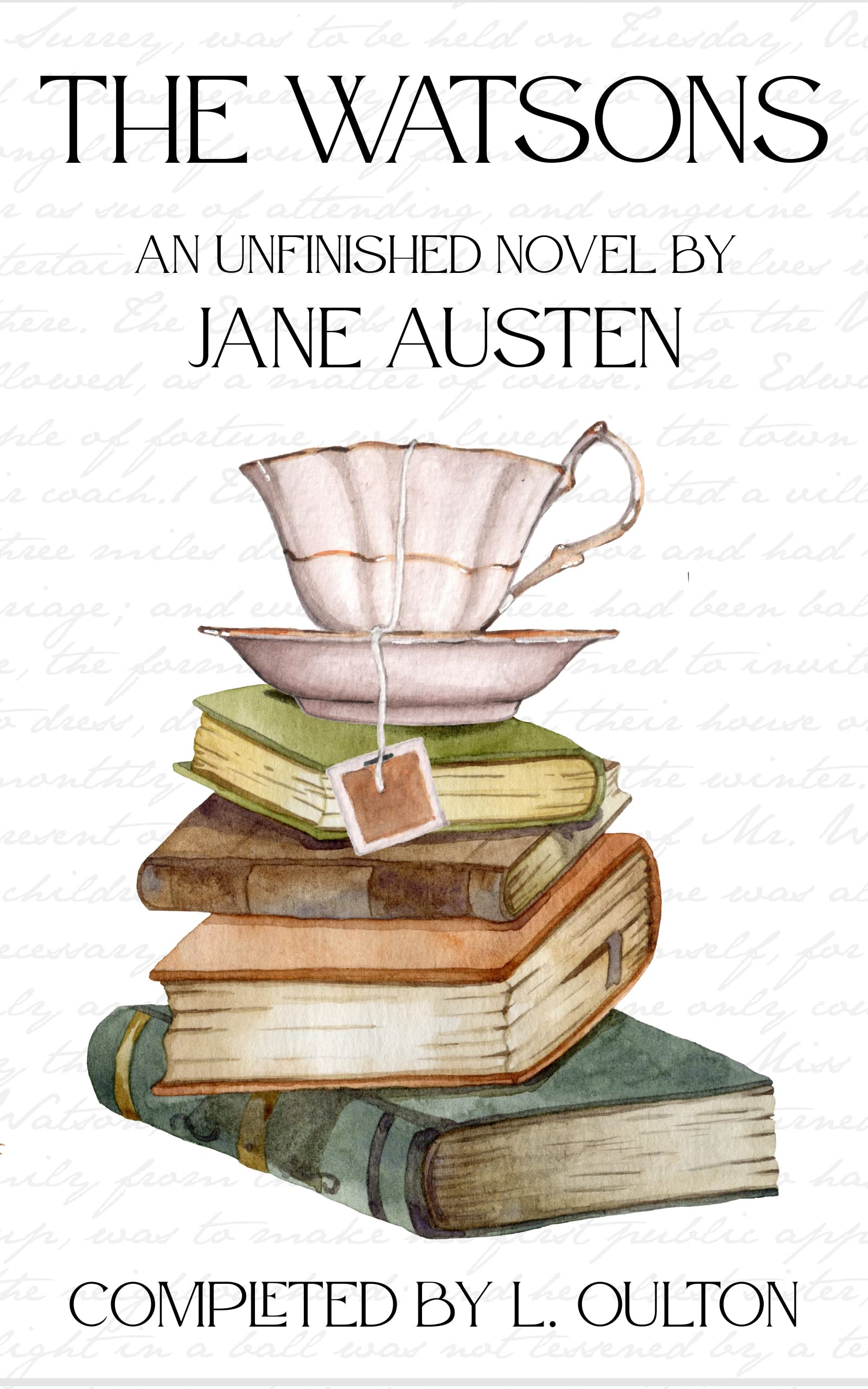
So, The Watsons. Just as writers can’t seem to stop writing sequels, prequels and multifarious other versions of Austen’s six published novels, they are also drawn to her unfinished novels. The Watsons, for example, which Austen abandoned around 1805, has been “finished” several times. The first appeared in 1850, and was not presented at the time as a continuation. Wikipedia provides a good summary, explaining that it was an “adaptation” written by Austen’s niece Catherine Hubback, who titled it The younger sister. The initial chapters were based on Austen’s writing, but Hubback did not copy her words verbatim. The first real continuation came in 1923, and was written by L. Oulton. Since then, there have been several more, including versions of Hubback’s version! And so it goes ….

You can read all about it in the Wikipedia article above. Meanwhile, I’m returning to Trove, and the two articles that inspired this post. Both appeared in May 192 – in Melbourne’s The Age (May 5) and in Sydney’s The Sun (May 13). They refer to the publication of two “editions” that year of The Watsons – an unfinished edition with, says The Age, “a pleasant and informative introduction by A. B. Walkley”, and one completed by “Miss L. Oulton”. The Sun describes these two editions:

One firm publishes this fragment with an introduction by A. B. Walkley; the other firm actually calls upon L. Oulton to finish the story! The reader is advised to read only to the place where Jane Austen threw down her pen.

Good advice, I say – but that’s because I am more interested in Austen’s writing than in what others might think were her intentions. This, however, is not why I wanted to share these pieces. What interested me were their attitudes to Austen.

The Age says:

A return to Jane Austen after a course of modern fiction is an experience. The prim dignity of her diction; her bookish, almost stilted, conversation; her expression of fine sentiments and descriptions of good manners; her special acquaintance with the somewhat narrow insular life of the well-to-do in the English provinces a century and a quarter ago; her well-bred young ladies, whose only ambition in life is to secure husbands; her shrewd insight into the human heart, and her capacity as a storyteller— the reader renews acquaintance with much pleasure.

Not surprisingly, I don’t agree with this assessment of Austen’s writing. “The prim dignity of her diction”? Good diction perhaps, but prim? Not my Jane. Her conversation does tend to be formal compared with today’s writing, but you just have to read Lydia’s slangy “Lordy” to know that Austen can capture the nuance of character through her dialogue. Further, describing her subject matter as “the somewhat narrow insular life of the well-to-do in the English provinces” is, in fact, “somewhat narrow”. Of course, I agree with “her shrewd insight into the human heart, and her capacity as a storyteller”.

It is this – “her well-bred young ladies, whose only ambition in life is to secure husbands” – that most offends. It reduces Austen’s concerns to something not worth reading, or, to something worthy only of a few hours of escapism. Her heroines do tend to be “well-bred” in terms of manners, but many are by no means “well-to-do”. Marriage is the outcome of her novels, but her themes and her heroines’ ambitions are far more complex.

The Sun was more off-handed about why we might read Austen:

The story bears all the characteristics of the author, though it does not compare with her other established works … Through this fragment, however, the modern reader may pleasantly peer at a vanished age, with a ballroom etiquette already long forgotten, sententious speeches, a slavish admiration of “the quality” in the county, love affairs that are hidden by hints and evasions, and a painful obedience to the conventions.

“Pleasantly peer at a vanished age” and “painful obedience to the conventions”? Even in the beginning of The Watsons we see Austen’s eye for superficiality versus substance in her society, and her willingness to expose it. We also see her awareness that not all women were well-to-do, as shown in this quote from the novel. In it, our not-so-well-off heroine Emma speaks to the aristocratic Lord Osborne:

‘I wonder every lady does not. – A woman never looks better than on horseback. –’
‘But every woman may not have the inclination, or the means.’
‘If they knew how much it became them, they would all have the inclination, and I fancy Miss Watson – when once they had the inclination, the means would soon follow.’
‘Your lordship thinks we always have our own way. – That is a point on which ladies and gentlemen have long disagreed. – But without pretending to decide it, I may say that there are some circumstances which even women cannot control. – Female economy will do a great deal my Lord, but it cannot turn a small income into a large one.’

Sure, Austen’s heroines were not in the poor-house, but not all were carefree either when it came to money. Indeed, several – Fanny Price and the Dashwoods, for example – rely on the kindness or generosity of others to live in reasonable comfort. And many minor characters – such as the Bateses in Emma – were identifiably poor. Marriage was a necessity not a luxury for many (Emma’s Emma notwithstanding!)

You are welcome to check my Austen posts to see my thoughts on these and other matters.

I enjoyed finding these articles, but was disappointed to find the same-old misunderstandings of Austen in vogue then as they continue to be now.

Slow reading: Jane Austen’s Pride and prejudice

Pride and prejudice book covers
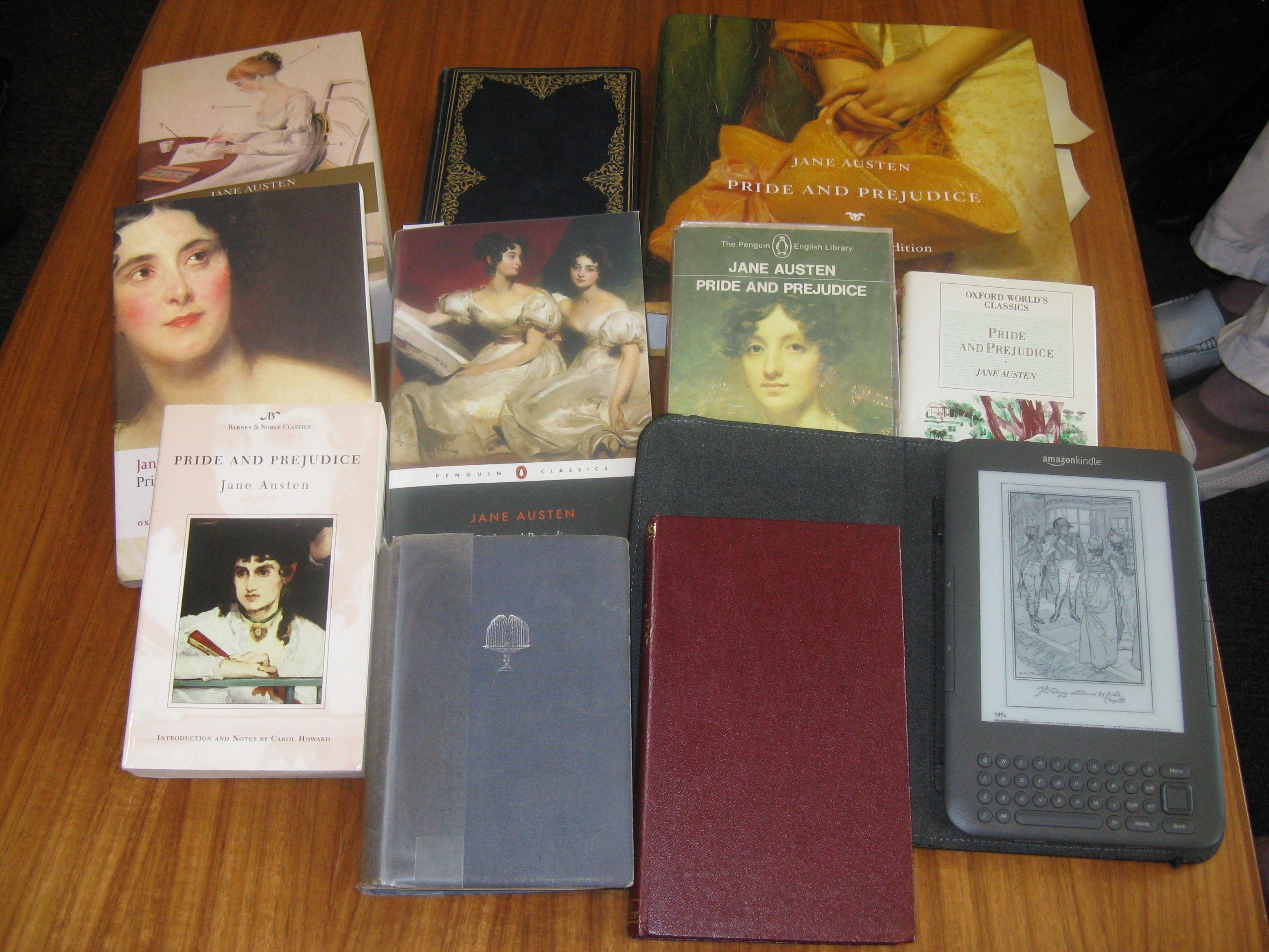
Some of the editions of Pride and Prejudice owned by my JA group

Back in the early to mid-2010s, my local Jane Austen group undertook a program of slow reading Jane Austen’s novels, coinciding with those books’ 200th anniversaries. Given that began around a decade ago, we decided last year that it was time to do another slow read program, and to stick with a chronological approach – that is, chronological in terms of publication. This meant that we did Sense and sensibility last year, and have just completed this year’s book, Pride and prejudice.

It is truly amazing just how much “new” we can find to talk about with books most of us have read not once, not twice, but multiple times, proving I suppose Italian writer Italo Calvino’s definition of a classic. Hmmm, no, not “definition” but “definitions”. He has fourteen of them, but here are the two that are most applicable to my post:

4. A classic is a book which with each rereading offers as much of a sense of discovery as the first reading.

6. A classic is a book which has never exhausted all it has to say to its readers.

These explain why slow reads can be particularly enjoyable with classics: once you know the plot, you are freed to discover how the author did it, to think about why they did it, and to notice more of the things they were telling you that you didn’t notice on the first read in your rush to find out what happens.

So, over the last three months, my group’s discussions have ranged across all of these, including finding some questions that we hadn’t thought to ask before. In Austen there are always those things she doesn’t tell us because they were known to her audience. These are the things we gradually pick up over years of Austen reading and research, such as the entail. But on this read, members raised questions regarding plot events that many of us hadn’t thought to ask before. For example, when Mr Darcy tells Elizabeth, on their meeting accidentally at Pemberley, that his sister “wishes to be known” to her, we wondered what had he told her about Elizabeth? Had he unburdened his heart to this shy young girl? Or, was it just an excuse to encourage Elizabeth to hang around a bit longer? And, when Lady Catherine visits Elizabeth because she fears there’s an engagement (or “an understanding”) between her and Darcy, where had she got this idea from?

We also found – yet again – that we had changed our minds about some of the characters, though sometimes these were diametrically opposed. For example, one remembered that when she first read the book as a schoolgirl, she felt “enormously sorry for ‘poor misunderstood Mrs Bennet’” but now she “would willingly strangle her”. For me, it’s the opposite. I had little sympathy for Mrs Bennet in my first readings, but now, understanding her worries about her daughters’ futures and Mr Bennet’s negligence in providing for them, I feel some sympathy for her – though her behaviour, all the same, is ridiculous. By contrast, in my early readings of Pride and prejudice I was far more sympathetic to Mr Bennet than I am now.

In fact, many of us in fact had little epiphanies regarding different characters that we shared with the group. Sweet Jane Bennet was thought just far too saccharine by one member, but she read some analyses that likened the angelic Jane to the sentimental 18th century heroines. Philosophers David Hume and Adam Smith argued, she told us, that feeling rather than reason provides the grounding for morality – and Jane exemplifies this. She sympathises with everyone, and behaves graciously to all. Our member wondered whether she should temper her view of Jane – though by the end she still felt Jane was just “too nice (to be real)”.

Some of these changes are due to the way slow reading exposes subtle clues that we don’t see on early reads, but some, I’m sure are due to life experiences. Austen is the perfect writer for illuminating (and then informing) our individual experiences of life.

We discussed which characters changed over the course of the novel, and, surprise, surprise, we didn’t all agree. No, let me rephrase that: we all agreed that Elizabeth and Darcy change, but some felt Mr Bennet did too, while others of us felt not – or, perhaps, only for a moment!

And then there’s the writing and the plotting. On each read we find more examples of just how beautifully, and cleverly, Austen writes. As one member said this week, as soon as he starts reading her sentences he’s drawn in – more than with any other writer. And then he shared a funny little quote from the novel that I had picked out too. It’s when Elizabeth first sees Pemberley from the outside, and takes in its beauty and grandness,

and, at that moment she felt that to be mistress of Pemberley might be something!

Book cover

Such an understatement … but of course the novel is full of statements like these, of satire and little ironies, of big and little insights. We also found interesting parallels, such as between those two ridiculous women, Mrs Bennet and Lady Catherine, who, said one member, are silly and illogical in different ways. Which brings me back to sweet Jane. Writing to Elizabeth to tell her about Lydia’s running off with Wickham, she says of her mother’s overwrought behaviour that “Could she exert herself, it would be better; but this is not to be expected.“But this is not to be expected” tells us that Jane knows her mother very well – and more, I’d argue, that Jane, while generous towards people, is not so taken in that she doesn’t see what’s what when it’s there in front of her. She just gives people the benefit of the doubt. I like that.

I fear this has been a self-indulgent ramble that hasn’t said much of substance, but it’s the best I can do right now!

Meanwhile, to those of you who do slow reads, why do you like doing them, and what you most get out of them?

Jane Austen on travel

It’s been some time since I posted on Jane Austen, but currently my local Jane Austen group is repeating the slow reads we did a decade or so ago when her novels had their 200th anniversaries. Last year, we did Sense and sensibility, and right now we are doing Pride and prejudice.

There are different ways of doing slow reads, as I know many of you are aware because you do them yourselves. Our way is to read and discuss a volume a month, based on the fact that back in Austen’s day novels tended to be published in three volumes, which makes the volume an excellent demarcation for slow reading. So, last month, we read Volume 2 of Pride and prejudice, or Chapters 24 to 42 in modern editions. This volume starts just after the Bingley retinue has moved to London, and it includes Lydia’s going to Brighton and Elizabeth’s visit to Hunsford, where she receives Darcy’s (first) proposal. The volume ends with her arrival in Derbyshire, in the company of her aunt and uncle, the Gardiners.

As those of you who engage in slow reading know, there are many pleasures to be gained from it, and the pleasures are magnified (with great books anyhow) when you slow read a book you’ve read before because, knowing the story, you can glean so much more. Most of us have read this novel many times, but we are always surprised to find something new in our next re-read. What particularly struck me about volume 2 this read was that it is really about “the education of Elizabeth“. She starts this volume being quite prejudiced. She is very sure of herself regarding Wickham’s and Darcy’s characters. She is prepared to give leeway to Wickham in the marriage stakes – that is, his marrying for money not love – but not to her friend Charlotte. But, she then sees how Charlotte has managed her life with Mr Collins, and we see what poor company her family really were anyhow! She also learns that she had misjudged Mr Darcy, and she recognises her own father’s failings. She castigates herself:

“How despicably I have acted!” she cried; “I, who have prided myself on my discernment! I, who have valued myself on my abilities! who have often disdained the generous candour of my sister, and gratified my vanity in useless or blameable mistrust! How humiliating is this discovery! Yet, how just a humiliation! Had I been in love, I could not have been more wretchedly blind! But vanity, not love, has been my folly. Pleased with the preference of one, and offended by the neglect of the other, on the very beginning of our acquaintance, I have courted prepossession and ignorance, and driven reason away, where either were concerned. Till this moment I never knew myself.” 

However, this is not the reason I chose to write this post! The reason is that I also came across a wonderful comment from Elizabeth about travel, a comment that could be as true today as it clearly was then. It comes in chapter 27, after Elizabeth had been discussing Mr Wickham’s sudden romantic interest in the heiress Miss King with her aunt Gardiner. Mrs Gardiner suggests Elizabeth accompany her and her husband on a holiday to, perhaps, the Lakes. This is Elzabeth’s delighted response:

“Adieu to disappointment and spleen. What are young men to rocks and mountains? Oh! what hours of transport we shall spend! And when we do return, it shall not be like other travellers, without being able to give one accurate idea of anything. We will know where we have gone–we will recollect what we have seen. Lakes, mountains, and rivers shall not be jumbled together in our imaginations; nor when we attempt to describe any particular scene, will we begin quarreling about its relative situation. Let our first effusions be less insupportable than those of the generality of travellers.”

I’ll leave you there, with the wisdom of our Jane!

Pauline Johnson, A red girl’s reasoning (#Review)

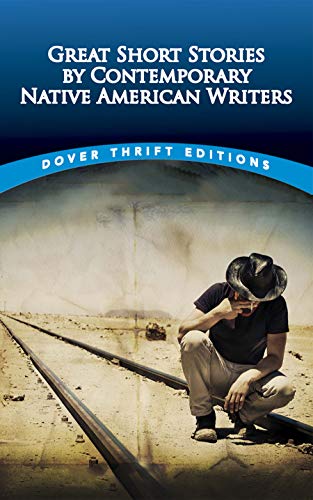
As some of you know, I have a close American friend, Carolyn, with whom I correspond weekly. We met in the early 1990s when I was living in California. During that time we started a reading group, so you won’t be surprised that our correspondence always includes reference to what we are – or are not – reading. What we recently realised is that we are not reading Native American literature. I was consequently thrilled to find Great short stories by contemporary Native American writers in my last Christmas parcel from her. I have now read the first three stories but today’s post is on the first one, “A red girl’s reasoning” by Pauline Johnson.

Pauline Johnson

The anthology’s editor, Bob Blaisdell, in his brief intro to the story, writes that Emily Pauline Johnson (1861-1913) was born on Six Nations Reserve near Brantford, Ontario. Her father, he says, was a Mohawk chief, and she was related to the American novelist, William Dean Howells, on her mother’s side. Wikipedia expands on this. It describes her as a Canadian poet, author, and performer. Regarding her parents, it says that “her father was a hereditary Mohawk chief of mixed ancestry and her mother was an English immigrant”.

Blaisdell says that Johnson started writing fiction after her father died to support the family, but Wikipedia again tells us more, focusing on her significance. It says that her poetry was published in Canada, the United States, and Great Britain, and that she was “among a generation of widely-read writers who began to define Canadian literature. She was a key figure … and has made an indelible mark on Indigenous women’s writing and performance as a whole”. Unfortunately, as so often happens, her literary reputation declined after her death, but, Wikipedia says, there has been renewed interest in her since the late 20th century.

If you are interested in her, do read the Wikipedia article because it’s reasonably thorough. Meanwhile, I will move on to …

“A red girl’s reasoning”

CanLit (where you can read the text online at the link below) says that “Red Girl’s Reasoning” was first published in Montreal’s Dominion Illustrated, in February 1893, and then, later that month, as “A Sweet Wild Flower” in Toronto’s Evening Star. Interestingly, CanLit’s online text, and the version in my anthology, both give it as “A red girl’s reasoning”. CanLit gives the author as E. Pauline Johnson. All details perhaps, but they do raise questions.

So, what’s our red girl’s reasoning? The story concerns the marriage between Christine, who is mixed-race (our ‘red girl”), and Charlie, a young white man. It starts with Christine’s white father counselling his “brand new son-in-law” to “Be pretty good to her, Charlie, my boy, or she’ll balk sure as shooting”. Charlie, as any new husband should, reassures him that of course he will, “there’s no danger of much else”. And all goes smoothly – for a while. She’s an asset to him … but, hold this thought because I want to digress to something else Pauline Johnson wrote, an essay titled “A strong race opinion: On the Indian girl in modern fiction”. It was published the year before this story, in 1892 (and is also available online).

In this essay, Johnson argues that people do not equate with their race, even though there are racial characteristics. “The American book heroine”, she writes, is allowed to be an individual. She does not have to have “American-coloured eyes” or an “American mode of dying”. She is allowed “an individuality ungoverned by nationalism”. This is not the case for “the Indian girl in modern fiction”. In an aside, she makes the point re “Indian”, that “there seems to be an impression amongst authors that such a thing as tribal distinction does not exist among the North American aborigines”. She continues:

The term “Indian” signifies about as much as the term “European,” but I cannot recall ever having read a story where the heroine was describes as “a European.” The Indian girl we meet in cold type, however, is rarely distressed by having to belong
to any tribe, or to reflect any band existing between the Mic Macs of Gaspé and the Kwaw-Kewlths of British Columbia…

She wrote this back in 1892 – how much has changed? Anyhow, her point is well-made. Johnson then details the stereotyping of “the Indian Girl” in fiction. She is always “Winona” or a name that ‘has a “Winona” sound to it’; she never has a surname; and her father is always a chief (like, in fact, Johnson’s father.) Further, this “Winona” is often suicidal, even though “suicide is an evil positively unknown among Indians”. She is always in love with “the young white hero”, and will betray her own people, but he “never marries her”. There’s more, but I think you’ve got the gist. (She does provide an exception, Charles Mair’s Tecumseh, in which the Indian Girl Iena “is the one book Indian Girl that has Indian life, Indian character, Indian beauty” – but, like her stereotyped sisters, she is not allowed to live.)

Needless to say, Johnson’s “red girl” does not have a Winona-sounding name and her white hero does marry her. Not only that, she stands up for herself when … but, I get ahead of myself. Before this, there is the wedding, which, Johnson writes, was not much, but fortunately groom Charlie didn’t mind:

in his heart he was deeply thankful to escape the flower-pelting, white gloves, rice-throwing, and ponderous stupidity of a breakfast, and indeed all the regulation gimcracks of the usual marriage celebrations …

This is significant to what follows, because the crisis, when it comes, is about Indian versus Canadian (western) marriage customs. Christine’s parents were married the “Indian” way, that is, there was a feast, but no other ritual. Charlie is aghast because he suddenly realises he has married someone “illegally born”! Her response – her “reasoning” – is that if he can’t accept that her parents are married by her mother’s customs, then she can’t accept that she and Charlie are married by his. And so the rift is wrought.

The story’s progression from here is fairly typical of nineteenth century short stories, but to say more would spoil the plot. I will say, though, that Christine does not die!

Blaisdell concludes his intro to the story that “while stagy” it “achieves some degree of pathos and delivers a strong comeuppance to Christian prejudices”. Yes, it is “stagy” (or, melodramatic, as I wrote in my margin) – but that’s fairly typical of its time. And it does deliver that comeuppance. But there is more to it. There is, for example, satire of white pretentious and superiority, a mockery of white storytelling even, in the way she uses the tropes of western rich man-poor girl stories:

She was “all the rage” that winter at the provincial capital. The men called her a “deuced fine little woman.” The ladies said she was “just the sweetest wildflower.” Whereas she was really but an ordinary, pale, dark girl who spoke slowly and with a strong accent, who danced fairly well, sang acceptably, and never stirred outside the door without her husband.

You can see the tongue firmly planted in Johnson’s cheek here.

Johnson’s story made a great opening to the anthology. It is somewhat dated in style and terminology, but its core concern, cultural clash, still holds true, and it is told with a light touch and a warmth towards its characters that engaged me.

Pauline Johnson
“A red girl’s reasoning” (1893)
in Bob Blaisdell (ed.), Great short stories by contemporary Native American writers
Garden City: Dover Publications, 2014
pp. 1-16
ISBN: 9780486490953
Available online at canlit

Monday musings on Australian literature: Introducing Rachel Henning

If you are an Aussie who was sentient in the 1950s and/or 60s, you have probably heard of Rachel Henning. If not, she may be new to you, though she does have something of a classic status in Australia. Let me explain.

Rachel Henning (1826-1914) was an Englishwoman who came to Australia in 1854 with her sister Amy, following her brother Biddulph and another sister Annie who had come previously for Biddulph’s health. She did not enjoy the life: she was homesick, she disliked bush life “extremely”, and hated the hot climate. She wrote on 29 March 1855 of being

tired of the perpetual glare of sunshine. Fine days here bring me no pleasure as they do in England: they are too hot and too numerous, and besides, you cannot enjoy them by taking nice walks–there are no walks to take.

So, she returned to England in 1856. However, in 1861, back she came to Australia, determined to be more positive, and found it much more to her liking. It was well into autumn when she landed on this second trip, which helped. After spending a few days in Melbourne, she got a steamer up to Sydney arriving there in mid-May. She writes in her first letter after arrival:

The next morning I got up early, and a most lovely Australian morning it was, the sun shining and everything looking bright and beautiful.

I do not know how to give you any idea of the beauty of Sydney Harbour. I certainly underrated the Australian scenery, but, then, it is winter now; I should tell a different story in the heat and dust of summer. (Letter to sister Etta, May 15, 1861)

After spending a little time in New South Wales, she joined her Australian family in the Bowen region of Queensland where Biddulph had taken up a property. From there she lived in several parts of eastern Australia, before spending the end of her life in Sydney.

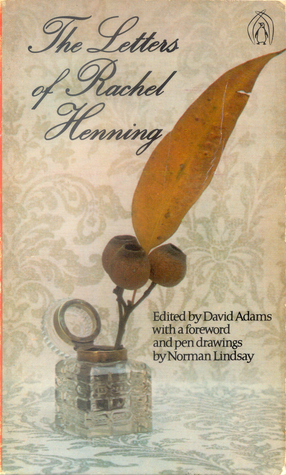
Penguin ed. 1969

Rachel Henning died in 1914, but her letters, which were never intended for publication, were not published until The Bulletin serialised them over 1951 and 1952. This was followed by publication as a book in 1954, illustrated by none other than Norman Lindsay, and edited by David Adams. Here is where it gets interesting because, as Bill writes (and as Judy Stove told my JASACT group), Adams severely edited them (reminding us of how Austen’s sister Cassandra “curated” Austen’s life by destroying so many of her letters). Bill reports that Adams reduced the original 179 letters down to 90. Not only did he remove repetitive salutations etc, but he also deleted references to “women’s problems” (which would be so interesting now) plus her most scathing comments about her fellows and most of her complaints about ‘colonials’. None of this editing was acknowledged at the time, and was only exposed decades later.

I’m not sure, and nor was Judy Stove, about the current state of the original manuscripts – or whether there are plans to release a more complete edition of the essays. However, Stove said that Norman Lindsay apparently liked the letters, and, I believe, likened them to Jane Austen’s letters which, unlike many male readers, he also liked.

Now, at the beginning I indicated that Henning’s letters were very popular in the 1950s and 60s, but implied that, if you weren’t sentient then, you may not have heard of her. This is because she fell out of favour, mainly, said Judy Stove, due to her “snobbish” attitudes, including to First Nations Australians. These attitudes changed a little over the time, with her expressing some humanity towards the original inhabitants. Fundamentally, though, it appears, as Bill cites cacademic Anne Allingham saying, that Henning “became party to the pastoralist’s pact to maintain silence on frontier conflict, the hope being that silence would imply that it simply did not exist.” In the letters, she clearly distinguishes between the “wild blacks” and the “boys” who worked on the station. She does seem aware that the term “boys” is not really right, but still, she accepts the status quo:

He [Biddulph] takes with him Alick, one of the blackboys–they are always called “boys”, though the said Alick must be thirty-five at least. People who are going for a long journey almost always take a blackboy with them. They are most useful servants in the bush, get up the horses in the morning, light fires at night, and know by a sort of instinct if there are any wild blacks lurking in the neighbourhood of their camp. They are very faithful, too. I never heard of an instance of a traveller being murdered or robbed by his own blackboy. (Letter to Mr Boyce, 23 March 1864)

Regardless (or perhaps because) of these attitudes – which were not uncommon in her time – Henning offers valuable insight into colonial Australia. Caldwell puts in this way, at the end of her ADB entry:

Her letters read like a novel with ‘darling’ Biddulph the hero, and give an invaluable picture of colonial life; with vivid descriptions and shrewd, if not always charitable, observations on people, they have both charm and humour.

Read more …

You can read the full text of her letters at Project Gutenberg Australia.

And here are some places where you can read more about her:

Have you read The letters of Rachel Henning? And if so, I’d love to hear your thoughts.

Jane Austen, Sense and sensibility (Vol. 3, redux)

Jane Austen, Sense and sensibility

I’ve called this post “Vol. 3, redux”, although it is my first post on volume 3. The reason is that for my Jane Austen group’s 2011 slow read of Sense and sensibility, I wrote posts on volumes 1 and 2, but not on volume 3 as I missed the meeting, and never did write up my own thoughts. This slow read, I have written up volume 1 (as “redux”), but I missed volume 2’s discussion, and again didn’t write up my thoughts. However, I did get to the volume 3 meeting and am naming my thoughts “redux” to match them up with the right re-read!

Now, a quick recap … In my recent volume 1 post, I discussed various ideas that had captured my attention, such as the novel’s autobiographical aspects, “fond” mothers, and appearance. Most of these had fallen away for me by the time I got to volume 3, but one idea that I mentioned – goodness, compassion and kindness – did not…

Triumph of kindness and generosity

From the novel’s beginning, the virtues of kindness, benevolence, generosity, charity are pitted against greed and self-interest. It starts with the sisters’ brother, John Dashwood, doing essentially nothing for his sisters while a distant cousin, Sir John Middleton, offers them a home at a good rental and supports them in any way he can. The theme continues through volumes 2 and into volume 3 where even characters who had been seen, initially, as somewhat silly if not vulgar, like Mrs Jennings and Charlotte Palmer, show kindness and compassion. They show up favourably against the greed and self-interest of Fanny and John Dashwood, Lucy Steele, and Willoughby.

Colonel Brandon is one of the characters whose kindness is evident from the start. Indeed, Elinor says to her mother near the end, that “his character does not rest … on one act of kindness”. A telling moment occurs when, in volume 3, he offers Edward Ferrars “a living”, after Edward’s own mother had disinherited him. The aforementioned John Dashwood finds this behaviour “improvident” and “astonishing” – and wonders why. Elinor responds, simply, that Colonel Brandon wanted “to be of use to Mr Ferrars”. That phrase, “to be of use”, conveys a sense of humility, of not wanting anything back, in his generosity.

It’s surely ironic when a page later, John Dashwood accuses sister Elinor of “ignorance of human nature”.

Mrs Jennings, too, who is described in the opening volume as “rather vulgar”, proves herself to be thoughtful and generous to Elinor and Marianne during their stay in her home in London. And when, in volume 3, Marianne falls seriously ill en-route home, Mrs Jennings

with a kindness of heart which made Elinor really love her, declared her resolution of not during from Cleveland as long as Marianne remained ill, and of endeavouring by her own attentive care, to supply to her the place of the mother she had taken her from.

Money is the root of …?

Money is another idea that threads through the novel from beginning to end: it is the death of Mr Dashwood which results in Mrs Dashwood and her daughters finding themselves homeless and impecunious. As the novel progresses, characters are defined by their attitude to money. There are well-off characters who are avaricious, like the aforementioned John Dashwoods and Mrs Ferrars, and well-off characters who are generous, like Sir John Middleton, Colonel Brandon and Mrs Jennings.

There are many in the novel, in fact, for whom money is so important they will sacrifice values like integrity and sincerity. Willoughby, in his confession to Elinor in Volume 3, admits

My affection for Marianne, my thorough conviction of her attachment to me–it was all insufficient to outweigh that dread of poverty, or get the better of those false ideas of the necessity of riches …

Of his rich fiancee, he says, “her money was necessary to me”.

Lucy Steele is, of course, the epitome of someone who schemes and manipulates for money, with little regard for the feelings of others. In the end, despite all her protestations of love, she is not willing to settle for the secure, if not rich, life that Elinor eventually has.

But what is it really all about?

As with all of Austen’s novels, what Sense and sensibility is about has been discussed and analysed and critiqued from literary, socioeconomic, feminist, historical, you-name-it perspectives. And, really, there is no one thing it is about. That is the joy and value of Austen. What she writes about, fundamentally, is people, and how we read her changes with our own experiences of life.

So here is where I am today. When I first read Sense and sensibility in my teens, I loved it. It was so romantic. Elinor gets her man, and is happy to live the life of an honest but not particularly well-off minister’s wife. Her sweet but overly romantic, emotional sister, gets the rich man. While that never seemed quite fair to me, as happily-ever-after stories go, I accepted it because it just showed what a person of integrity Elinor truly was. Love and esteem for an honest man were what made her happy.

And yet … what is Austen saying to us? Why do some of her heroines end up with less than dashing heroes? Well, I think it is partly because she was an early, if not the first, great novelist of realism. From this, her very first novel, she provides us with a microcosm of humanity. Like her later novels, Sense and sensibility is populated with flawed characters who represent complex humanity, unlike her Gothic and Sentimental novelist predecessors who tended to present the world in more morally absolutist, black-and-white terms. Not so Austen. Mrs Jennings might be “rather vulgar”, and a bit of an interfering gossip, but her heart is large and she’s generous. Mr Palmer, who seems cold and distant when first met away from home, shows himself to be kind and generous when a crisis occurs. And so on. Even Willoughby, despite his “selfish vanity”, is redeemed a little by his confession, and Austen allows him a reasonable life after all. I now see this confession as not being “clunky” as I’d once thought, but as important to Austen’s mission of portraying life.

But, back to Marianne. There was something that I noticed on this read that I’d never noticed before, and that concerned Marianne and her marriage to Colonel Brandon. One of the reasons I have always loved Sense and sensibility is for this quote:

Marianne Dashwood was born to an extraordinary fate. She was born to discover the falsehood of her own opinions, and to counteract, by her conduct, her most favourite maxims.

I so related to this – to the idea of proclaiming opinions before experience teaches us otherwise – that I hadn’t really seen the preceding paragraph, which concerns Marianne’s mother explicitly matchmaking Marianne with Colonel Brandon:

It was now her darling object. Precious as was the company of her daughter to her, she desired nothing so much as to give up its constant enjoyment to her valued friend; and to see Marianne settled at the mansion-house was equally the wish of Edward and Elinor. They each felt his sorrows, and their own obligations, and Marianne, by general consent, was to be the reward of all.

“The reward of all”. This sounds a bit suss! Austen continues …

With such a confederacy against her–with a knowledge so intimate of his goodness–with a conviction of his fond attachment to herself, which at last, though long after it was observable to everybody else–burst on her–what could she do?

And so, Marianne does come around to loving this good, kind man as Austen makes clearer a couple of paragraphs further on:

Marianne could never love by halves; and her whole heart became, in time, as much devoted to her husband, as it had once been to Willoughby.

The point, then, is that Sense and sensibility is not Romance with a capital-R, but a story about love – Elinor’s, from the start, and Marianne’s, eventually – that is based on genuine feeling combined with appreciation of the personal values that make a person worth loving.

There is so much more to this book but I’ll leave it here because I feel that, for now, I understand what it really is about!

Jane Austen, Sense and sensibility (Vol. 1, redux)

Jane Austen, Sense and sensibility

In 2011, my Jane Austen group started a slow read of her novels in chronological order of publication, which meant that we started with the 1811-published Sense and sensibility. By slow read, we meant that each month we’d read a volume of the chosen novel, given most novels in those times were published in three volumes, and discuss just that volume to see what new ideas or insights we might have. We finished the project in 2017. Having spent the last five years looking at other works by Austen (like her Juvenilia) and exploring other topics relevant to her, we decided last year that it was time to “do” the novels again. So, once again, we’ve started with the first one.

For some of you, this will seem very dry, but for those of us who love Austen, there is much to be gained from these slow reads. If you are interested in what I wrote last time on volume one, check out the post, but here I’m sharing what thoughts popped up for me this time.

First though, I’ll repeat the caveats from 2011. I’m assuming that most readers who come to this post will know the plot. (If you don’t, Wikipedia provides a good summary.) Also, this is not a formal review but simply a sharing of some of the ideas that struck me during this slow reading.

Slow reading of Volume 1

I have always liked Sense and sensibility, while my dear Mum thought it one of her weakest. (There’s no accounting for tastes! In my group there are many who will never forget that Mum loved Northanger Abbey, which some of them don’t like much at all.)

Anyhow, here goes. It’s fascinating how each read of an Austen book focuses the mind on something different. That’s the richness of Austen, and what makes her a true classic. In my last slow read, my first-volume thoughts focused particularly on the idea of judgement, and money and income. This time, other ideas came to the fore for me, some partly affected, I think, by current concerns.

Autobiographical first novel?

But first, an idea I hadn’t fully thought through before was that it could be seen as a “typical” first novel, by which I mean, it has strong autobiographical elements. Anyone who knows Austen always think of this novel’s basic set-up of in terms of her life: the fact that Austen, her mother and sister, lost their home on the death of their husband/father, and had to wait for the kindness of relations to come to their aid, just as happens to the Dashwoods. However, on this reading, I realised there were other autobiographical elements. Others in the group had come to the same conclusion, and yet none of us had discussed this last time. Curious.

So, for example, our two sisters, the younger musical Marianne and the older artistic Elinor mirror musical Jane and her artist sister Cassandra. Moreover, Jane, we believe, was lively, like Marianne, compared with her more sober older sister. If Austen did draw on herself for Marianne, however, she’s gorgeously self-deprecating – though she does present Marianne as over-enthusiastic and excitable but fundamentally sound. There are several other elements we could point to from Austen’s biography, including her flirtation with Tom Lefroy being reflected in Marianne’s with Willoughby. They are very different men, but both men are whisked away by relations from the attractive but unsuitable, ie not-rich-enough, girl.

Appearances deceive?

Perhaps partly because I’ve been listening to ABC RN’s Face Value series, I seemed to be particularly alert to the many references to appearance. Admittedly, Austen describes appearance in all her novels, but it felt pointed here in a way that I don’t recollect seeing in later novels.

So, Edward Ferrars and Colonel Brandon are both described as not handsome, but both are appealing for their good understanding and interested attention in others. Willoughby, on the other hand, is described differently. When he appears on the scene, having rescued Marianne from her fall in the rain, Austen says that Mrs Dashwood would have would have been grateful had he been ”old, ugly, and vulgar”, but his “youth, beauty, and elegance” gave him added interest.

As for the women, Sir John Middleton and Charlotte Palmer talk of Elinor and Marianne as being pretty and therefore marriageable, while Lucy Steele is seen by the perceptive Elinor to have “beauty” but to “want … real elegance and artlessness”. And then there’s Mr Palmer who, just like Pride and prejudice’s Mr Bennet, had chosen his wife Charlotte for her beauty not her sense. Beauty, Austen seems to be saying, is something we should not give undue credit to.

Fond mothers?

Another issue which caught my attention this time around concerned mothers and mothering. Mothering (poor or lack of) features in many of Austen’s novels. Lizzie Bennet’s mother (Pride and prejudice) is silly; Emma (Emma) and Anne (Persuasion) don’t have a mother; Fanny’s (Mansfield Park) is too busy; and Catherine’s (Northanger Abbey) is away from her at a critical time. By contrast, Sense and sensibility has several active and involved, though not necessarily great, mothers, from the loving, hands-off Mrs Dashwood to the ultimate controller in Mrs Ferrars.

Very early on Mrs Dashwood’s style of mothering is described and Mrs Ferrars’ is hinted at, in relation to the apparent growing attraction between Elinor and Edward.

Some mothers might have encouraged intimacy from motives of interest, for Edward Ferrars was the eldest son of a man who died very rich; and some might have repressed it from motives of prudence, for, except for a trifling sum, the whole of his fortune depended on the will of his mother. But Mrs. Dashwood was alike uninfluenced by either consideration. It was enough for her that he appeared to be amiable, that he loved her daughter, and that Elinor returned the partiality.

Mrs Dashwood, who is probably the most present mother in Austen, is loving but not always wise. When Marianne falls into excessive despair at Willoughby’s sudden, unexplained departure, Elinor suggests she ask Marianne directly about her relationship with Willoughby. Mrs Dashwood replies that she “would not ask such a question for the world … I should never deserve her confidence again … I would not attempt to force the confidence of any one”. Elinor disagrees, seeing “this generosity overstrained, considering her sister’s youth … [but] … common sense, common care, common prudence, were all sunk in Mrs Dashwood’s romantic delicacy”.

However, Mrs Dashwood does provide good “maternal” advice to Edward, suggesting that finding some useful employment would help him be “a happier man”. She then mentions his mother:

Your mother will secure to you, in time, that independence you are so anxious for; it is her duty, and it will, it must, ere long become her happiness to prevent your whole youth from being wasted in discontent.

We haven’t met Mrs Ferrars at this point in the novel, but earlier references to her have not suggested a particularly loving or even dutiful mother. If Mrs Ferrars is one matriarch in the the novel, Mrs Jennings is another. Austen tells us that “She had only two daughters, both of whom she had lived to see respectably married, and she had now therefore nothing to do but to marry all the rest of the world”. She comes across in Volume 1, as gossipy, “vulgar”, but good-natured. Without second-guessing the next volume, let’s say that I think she warms as a motherly character then!

Her younger daughter, Charlotte Palmer is pregnant, but the older one, Lady Middleton, is the mother of three young children. She is the “fond mother” who “will swallow anything”. Her very existence depends on her role – she only comes to life when her children are around – and the shrewd Steele girls take advantage of this.

For Austen readers, the issue of mothers in Austen’s novels is a loaded one. Why are there so few sensible mothers in her novels? There is much we don’t know about Austen’s life, and one of the mysteries concerns her relationship with her mother. Some Austen researchers believe it was prickly. We’ll never know, but great mothers are rare in her novels – which may or may not tell us something .

And …

Other issues that grabbed my attention included the many references to goodness, compassion and kindness, and, not surprisingly, to sense and sensibility (which I briefly discussed in my previous volume 1 post).

Goodness appears on page 1, when we are told that Mr and Mrs Dashwood had shown “goodness of heart” to the uncle from whom they had inherited Norland, the estate that Mrs Dashwood must leave after her husband dies. As the volume progresses, Marianne talks of Edward’s “goodness and sense”; Sir John Middleton is described as being of “good heart”; and Colonel Brandon as having a “good nature”. These are not just words. Sir John’s “good heart” translates into real and practical kindness to the Dashwoods, and Edward values the “kindness” of the Dashwood family “beyond anything”.

I won’t continue because we’ll have to see how or whether these issues remain to the fore as I read on, or whether others will raise their heads. Instead, I’ll close one one of those insights that I love reading Austen for. It’s on Mrs Dashwood not being prepared to consider the tough possibilities (in this case concerning Marianne and Willoughby):

But Mrs Dashwood could find explanations whenever she wanted them, which at least satisfied herself.

How often do we justify things to ourselves that we’d be better not to? Mrs Dashwood isn’t alone I think. (Or, do I speak only for myself?)

Roll on volume 2.

Price Warung, Selected tales of Price Warung (#BookReview)

Price Warung, as I wrote in my previous post on him, is the pseudonym used by English-born Australian writer, William Astley, who came to Australia with his parents in 1859 when he was still a child. Astley became a radical journalist and short-story writer, with particular interests in transportation/convict literature, and the Labour and Federation movements. Tales of the early days, the book I reviewed in my first post, was republished by the Sydney University Press, and was entirely convict-focused.

I didn’t expect to see Price Warung again, but here he is, a few years later, in a book containing a selection from three of his five books: Tales of the convict system (1892), Tales of the early Days (1894), and Half-crown Bob and tales of the riverine (1898). Given I’ve already devoted a post to the convict stories – four of which are included in this collection’s eleven, including the well-regarded “Secret Society of the Ring” – I will focus here on editor Lucas Smith’s introduction to the collection and Warung’s riverine stories, which are new to me.

Introduction

The first thing to say is that these stories were written between 1888 and 1898, but are mostly set decades earlier.

Smith starts by stating that, after Marcus Clarke’s For the term of his natural life (1874), “no writer did more to forge the myth of Australia’s convict heritage than William Astley”. However, Astley’s work a journalist included rural newspapers, like the Riverine Herald in Echuca, where gathered material for his “poignant and humorous stories about early steamboat traffic on the Murray River”. Smith says that these stories, which were “reminiscent of Joseph Furphy*”, were “his only departure from depictions of the convict system’s grimness”.

Astley’s popularity was brief, but it did make him a prominent “literary and political figure”. He is, claims Smith, “our Chekhov to Clarke’s Tolstoy”. Big claim, eh? Smith says that, with Clarke, Warung “is responsible for our colloquial [my emph.] understanding of the convicts as victims (although usually not innocent ones) of an inhuman system.” While historians like Russell Ward describe “how Australian convicts often enjoyed higher-quality food and working conditions than the labouring classes in England”, the brutal images of “striped backs”, “broken bodies” and “unrepentant gangs bent of revenge” persist. They are based in fact but were “a small aspect of the transportation system”.

Smith goes on to briefly discuss the origins – the facts and fiction – of the “convict myth”, before explaining why Warung is worth reading:

Warung is far from the supreme stylist of colonial Australia. He is often sub-Dickensian in his sentimentality, and rigid in his humour. Nevertheless, his realism, irony and humour, as well as his diligent research, exhaustively undertaken from both archival research and his associations with “the ghosts of Old Sydney”, make him worthy of reintroduction to a contemporary audience.

This collection, he says, represents “a cross-section of his work: the lured convict tales, the laconic riverboat yarns, and the anti-System diatribes”.

Regarding Warung’s reputation, Smith says that unlike some of the other men and women of the Bulletin school of the 1890s, Warung has attracted little academic attention, being seen, with a few exceptions, as an also-ran. One of these exceptions is, intriguingly, an American, Edward Watts, who believes that Warung has been “unfairly marginalised”. While not quite convinced by Watts’ suggestion of a “faint comparison to the infamous neglect of Herman Melville prior to the 1920s”, Smith argues that Warung is “more than a penny-a-liner and well deserving of further study”.

The Riverine

Smith says of the riverine stories that, “freed from the grim and technical language of the penal system”, they contain Warung’s “most fluid and picturesque writing”. He’s right, though these stories have their own technical language to confront. They are more humorous, but can also be “political”, with issues like labour practices, land-deals, political bribery, and so on, revealed through their narratives. Smith suggests that the convicts were violent to authority, while the riverine folk were “merely contemptuous”.

Book cover

The four riverine stories – “The last of the Wombat Barge”, “Dictionary Ned”, “The incineration of Dictionary Ned”, and “The doom of Walmsley’s Ruby” – all concern the steamboats that plied the river system, carrying cargo, particularly wool, from producers to ports, and bringing needed goods back. Given this industry’s demise by the 1930s, Warung’s stories offer insights from one who knew (versus Nancy Cato’s more romanticised historical fiction, All the rivers run trilogy). Echuca, where Warung spent some time, was a major port on the Murray.

“The last of the Wombat Barge” revolves around a woman working on the boats. While Jim, who managed the river pontoons to let boats through, was partial to “womanines”, others were not impressed by a woman taking a man’s job (whether it directly concerned them or not). Indeed, “the whole river population … were in agitation”:

The mate, whom Mrs Kingsley had displaced had almost as much to say as Sooty Bill the loafer, who never had a wash except when he was thrown in the river in a squabble, and who never did an honest day’s work out of gaol.

Various men try to change Captain Kingsley’s mind, but things turn to custard when the deckhands, for whom “the idea of being bossed by a woman galled their manhood” quit, and he is forced to employ scab Chinese labour. While “missie mate” was good at her job, the Kingsleys are, ultimately, brought down by pride and greed. However, the language used to describe the Chinese is shocking, with the novel’s moral being not to employ the Chinese, whose intelligence was limited to “imitation”, who lacked “initiative and readiness of wit”, and who brought disease.

“Dictionary Ned” is my favourite riverine story. Bargeman Ned buys a dictionary when he’s around forty years old, “in the vain hope of making up the deficiencies his early education”. He carries it everywhere, studying it, rigorously, at every opportunity, “when other men smoked, or swapped yarns, or drank”. He is also scrupulous about keeping his person and clothes clean. He is noticed by College Bill who, in addition to being of “odorous carcass”, has squandered his education. He accosts Ned, but comes off worse in a game of words, resulting in Ned’s star rising among his river peers, who had previously ridiculed him. The story’s end, though, is one of kindness and redemption. “The incineration of Dictionary Ned” is an entertaining tale about Ned’s desire for cremation, but it also exposes some of the politics and land deals between squatters and selectors in colonial Australia.

Warung’s stories aren’t particularly subtle but even the more gruesome ones exude a life and energy in their characters that engaged me. The stories also offer insights into the times about which he writes, and the times from which he writes! Worth reading.

* You can follow Bill’s current slow reading engagement with Furphy here.

Price Warung
Selected tales of Price Warung: Selected and introduced by Lucas Smith
Bonfire Books, 2020
236pp.
ISBN: 9780646819273

(Review copy courtesy Bonfire Books)