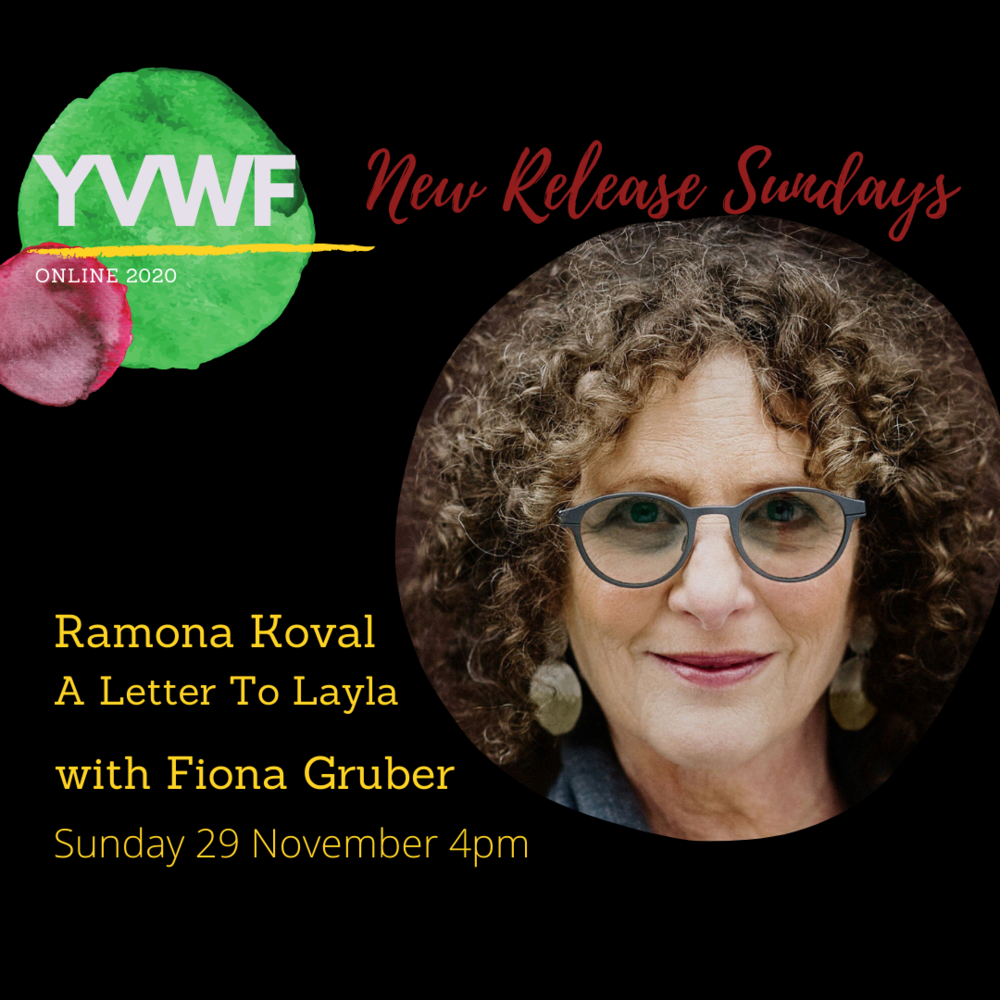
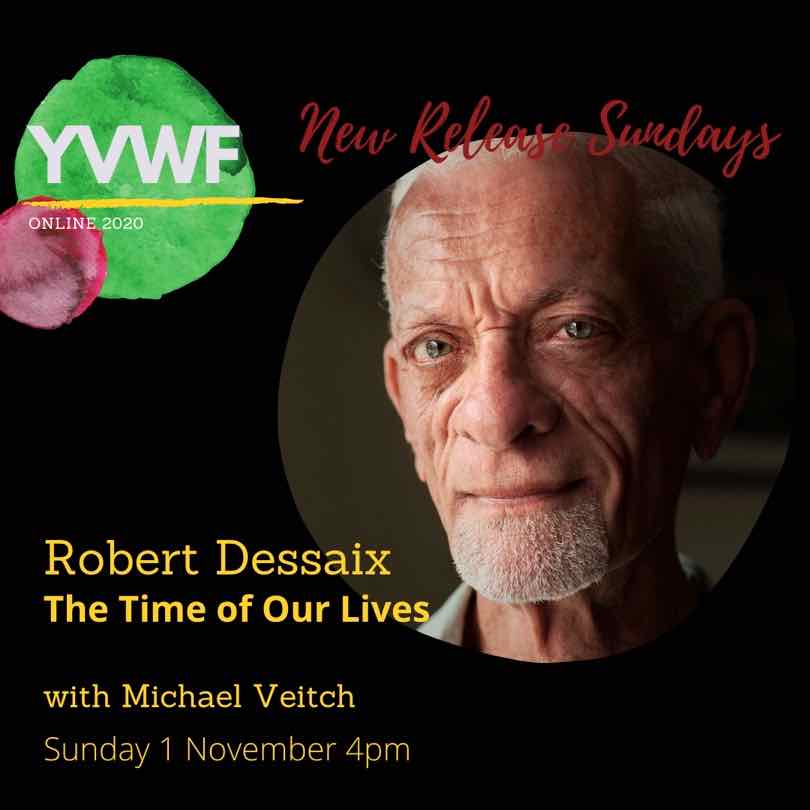
Yarra Valley Writers Festival 2020 (Online): New Release Sundays: Robert Dessaix

YVWF Dessaix Logo

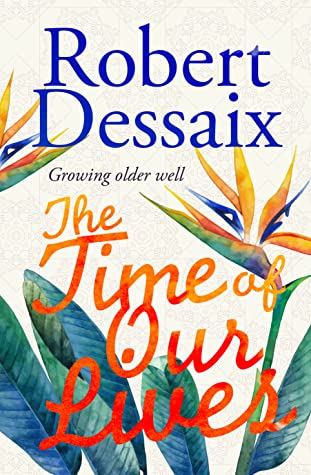
Back in May, I attended several sessions of the Yarra Valley Writers Festival (YVWF), a COVID-19 bonus, as most of you know. The Festival also runs two regular events, a weekly New Release Sundays and a monthly Bookclub. I haven’t managed to attend any, until today, which involved Festival Ambassador Michael Veitch speaking with Australian novelist, essayist and journalist, Robert Dessaix. I read Dessaix’s memoir, A mother’s disgrace, before blogging, and I used to love his ABC RN radio shows, Lingua Franca, and Books and writing (which he did for a decade.) Today’s session was about his new book about growing older, The time of our lives: Growing older well.

The session’s promo described the book as “a wise and timely exploration of not just the challenges but also the many possibilities of old age”. Given I have had nonagenarians, and now a centenarian, continuously in my life since 2004, and given my own aging, this topic interested me.

The conversation

Robert Dessaix, The time of our lives: Growing older well Book cover

Michael Veitch started, of course, by introducing Dessaix, telling us that The time of our lives is Dessaix’s 10th book. He described the book as “joyous”, but hard to define – not a novel, not short stories, not a guide. More, he said, a kaleidoscope of impressions, spiritual and intellectual.

Dessaix liked that image, saying that kaleidoscope describes how he lives: he takes shards from what happens around him, shapes them, and hopes “a beautiful pattern will emerge”.

Several themes ran through the conversation, kaleidoscope being one, plus there being “bulwarks” against the ravages of age, the importances of having an inner life, the value of curiosity, and the idea of dance. The book begins with a dance (“Voulez-vous couchez avec moi”!) and ends with a Javanese dance, which nicely encapsulates his transition from loving Europe to being interested in Asia (particularly India and Indonesia.)

Later in the conversation, Veitch mentioned the death of Dessaix’s partner’s mother, Rita. It seems that she was the (or a) major impetus for the book. She was living in a retirement village – “village” being the wrong word Dessaix felt for such homogenous places – until she had the fall that resulted in her moving into aged care. I’ll return to this later …

Veitch read an excerpt from the book describing the inner life. This definition included that it’s like “a cherished piece of music [that is] shaped by our our individual memories”. (This is a tiny part of the full description, so please don’t quote me!) Dessaix said his aim is not to shut out the outer world, but simply to keep certain things in. The inner self is a conversation, and is something that “holds us together against nothingness”. Hmm, that sounds more like the time of Sartre and TS Eliot than now!

“of course, I’m curious”

Anyhow, Veitch moved onto the idea of curiosity, suggesting that it drives the book. Dessaix agreed, saying “of course I’m curious”. We are only here for a short time!

Dessaix went on to say that a major interest as he’s grown older is other people. How do people cope with what the world has served up to them? He loves to visit India, but not for the sights, which are purely background. He likes getting close to people, to understand their lives. Women, he said, are easier to become close to.

During this conversation he said something that spoke to me, which is that coping is “such a difficult thing to do”. We think, he said, that it will be easy. that we follow the path – get a job, marry, having family, etc – and that it will all just fall into place. I remember thinking that in my angsty teen years. But, he said, it’s not like this, “we have to cope every day with something”. He described the world as “an abattoir”, which is a strong image for what is apparently not a dark book.

This led to a discussion of friendship, but there was nothing particularly new here (for me anyhow), so let’s move on. He did, though, comment that the older you get, the things you care about become less. Now he will say what he thinks, and “take negative responses on the chin”. Around here, he commented that in the 1960s, we (and I became a teen in the 1960s so I was with him) believed everything would get better, but that euphoria of has evaporated into nothing. So sad, because we really did think we were on the way to becoming kinder, gentler, fairer.

“a stupid foreginer”

Veitch asked him about his current interest in Asia. Dessaix replied that Europe started to become tedious. He wanted to go somewhere where he would be a blank, “innocent”, so he started with India, and now visits (except this year) Java. Being in a place where he feels “not at home” stimulates him “to have important conversations with himself”.

He admitted that he is granted liberties because he’s “a stupid foreigner”; he feels open to saying things he would not say in Paris or Berlin.

Veitch read another excerpt which, if I got it correctly, described a secret door going from the formal European gardens of Dessaix’s younger days to the more riotous gardens of places like Java. He said he was humbled to discover he had shut out these intricate civilisations and now he’s too old. These are sensual places. Europe preens, and positions itself as sexy, but is not sensual.

“play and discipline”

Dessaix equated the inner life with a dance, the tango, which he said combines “play and discipline”. It is sexy, sensual, beautiful but also demands discipline. His aim is to hone these two – play and discipline.

At this point, the conversation turned to the aforementioned Rita, who died during the writing of the book. She, Dessaix said, did not have an inner life (though how he really knows, I’m not sure). Born in 1922, she, Dessaix suggested, was one of those women “crushed by the men they lived with”. He believes she did not feel she was worthy of having an inner life.

Veitch wondered whether you have to learn how to have an inner life? Dessaix thought yes, but that class is also involved. Rita was told she was a “stupid woman”. She was, he said, bored out of her mind. Dessaix said her aged care home “smelled of boredom”. This could be a judgement from someone not there yet, though I’m sure boredom does exist in aged care. Dessaix doesn’t feel he will be affected because “there is too much going on inside”.

Now, here’s the thing … many aged care places (here in Canberra, anyhow) offer many opportunities for residents to be engaged and mentally active, but it depends on one’s brain staying healthy, and on hearing and sight being good. Father Gums has quite an inner life. I know, because he tells me about the things he thinks about, but time can, nonetheless, hang heavily, because sight and hearing difficulties make it difficult to partake of opportunities offered to feed the mind.

“happiness & contentment”

The discussion turned to the difference between happiness and contentment. Dessaix initially saw little difference but refined his ideas as the book progressed. Fortunately, what he came up with is how I see it, because I’m bothered by the focus on “happiness”. Contentment – a sort of inner comfort – is what we aim for, he said, but it can never be complete, while there is suffering in the world. Happiness, on the other hand, can be complete, but it “drops on you”. There is no mystery to it. As Veitch said, happiness falls on you, while contentment settles on you.

Continuing this theme, Dessaix said that he doesn’t like “tranquility”, preferring “animation”. For this reason he likes the god, Ganesha, who dances! Apparently, grief guru Elizabeth Kubler-Ross said at the end of her life, “I wish I’d danced more”. I love it!

There was more, including a discussion about attitudes to death. Mainly, though, the conversation reiterated in different ways the main theme of continuing to “play” and engage in life actively, and of accepting ageing without fear. Ever the writer, Dessaix equated life with sitting on your own “Persian carpet”: it is beautiful, has repetitions, and is different from the one next to it.

However, he did add an element of reality, which I approved. Life, he said, is about maintenance – your eyes, your ears, your … well, you get the picture.

Dessaix said he found ageing liberating, meaning that things he had hoped for – like the Catholic Church disappearing – won’t happen, and he no longer cares, because he has his inner life. He is more tolerant now, accepting that some things can’t be changed.

As you age, said Dessaix, you can still be happy: there’s a shrinking list of things to be happy about but that happiness can be deeper.

Veitch concluded the session by saying that the book is not a dark book, and is more about life than age. He liked, he said earlier, that the book is called “growing older” not “old”.

Overall, a good session about a book I’d like to read, but it is clear – and he would probably admit it – that Dessaix is a privileged person for whom ageing and an inner life will come easier than for some.

From Yarra Valley Writers Festival 2020 (Online): New Release Sundays
1 November 2020, 4:00 – 5:00 PM
Livestreamed
Book (Re)Launch: Sara Dowse’s West Block


Sara Dowse West Block

Way back when, I read Sara Dowse’s debut 1983-published novel West Block. It ticked all the boxes – it was by a woman, by a feminist, was set in Canberra (a rare thing), and was about the Public Service within which I also worked. I enjoyed it immensely and have often wanted to re-read it. I was therefore thrilled to hear that it was being re-published – and with a new introduction by Dowse.

This new edition, by For Pity Sake Publishing who published Dowse’s latest novel, As the lonely fly (my review), was virtually launched at a COVID-19-determined Zoom Event today.

The launch …

The launch comprised a conversation between Dowse and Michele Seminara who is a poet and managing editor at the Canberra-founded creative arts journal Verity La.

Sara Dowse, West Block

Seminara commenced by describing Dowse as a “legend of Australian literature”. She was also one of the Canberra Seven, about whom I have written before. The conversation, though, focused mostly on the book’s subject matter …

West Block, for the non-Canberrans here, is one of the original buildings in our Parliamentary Triangle. Built in 1926 it, and East Block, flanked what is now known as Old Parliament House. These buildings were the home of the public service.

So, Dowse’s novel, West Block, is about the bureaucracy. From 1974-1977, Dowse was the inaugural head of the women’s affairs section established to support PM Gough Whitlam’s first women’s adviser, Elizabeth Reid. Dowse became, she believed, the first femocrat.

Dowse spoke about her intentions for the novel which she started writing a couple of years after the 1975 Dismissal. She wanted to tell the story of what happened and how public servants coped in the aftermath. She wanted it not to be “just” a women’s story but a story about what women saw, about how women perceived government. “I wanted to nail them”, Dowse said, meaning she wanted to write about the male world from a feminist perspective.

The conversation, not surprisingly, also covered the politics then and now, particularly in terms of what was achieved and what has lasted. Dowse, describing the times as “unbelievably exciting”, talked about their focus being issues like child care. She said many reforms were introduced. Some were “tweaked” by the Hawke government, but they’ve been gradually whittled away since the Coalition returned to power.

She talked about the Australian federal public service, and of admiring its commitment to serving the people. She saw this public-good oriented value as being distinctively Australian, including amongst conservatives. (She couldn’t understand the antipathy with which Australians would speak of Canberra, their national capital.) However, she said, much of this value has been lost since PM John Howard turned governing into a business-style, economic rationalist, model. She talked about how private sector inflated salaries are being given as a reason why you can’t get good people into the public service, but her belief is that good people who know that the measure of their worth is not purely monetary will still work in the public service. (They’re not poor, in any event, she said.)

Dowse also told us that the main character, Cassie, is based on her, though Cassie is Australian – and unlike her, has red hair and green eyes! The joy of being a writer is that you can create characters you’d like to be! Cassie, like Dowse was, is also a single Mum juggling work and parenthood.

Seminara asked Dowse about her book’s structure with its five chapters focusing on different individuals. Dowse said she was influenced by two John Dos Passos works, Manhattan transfer and the USA trilogy. She was inspired by his telling a big story through overlapping individual stories, though he also married fiction with nonfiction which she didn’t do.

A point that came up a few times through the conversation related to the publishing and literary environment in Australia at the time she was publishing this book. For example, a fiction-nonfiction blend would not have been accepted then (though it would now.) She was also inspired by Dos Passos’ experimental writing, but that too she had to tone down for Penguin to publish the work. Upon the book’s release, one of the common questions posed about it was “is it a novel or is it stories?” This question is still with us, I believe, though writers are increasingly playing with this form (such as, most recently on my blog, Carol Lefevre’s Murmurations, my review.)

Seminara commented that she loves Dowse’s characters, with their commitment to public interest. They are, she said, “admirable as characters, flawed as people.” She also spoke of how Dowse had managed to make art out of traditionally boring subject matter. More art is now being made of such subjects, but Dowse, she said, was one of the first here to put humanity and drama into it.

Dowse briefly talked about this new edition, which was suggested by publisher Jen McDonald. Dowse said that this was her apprentice novel, and wondered how she would face having it out in the world again. However, she did not want a word changed. It had, she said, to live on its record. I am greatly looking forward to reading it again – and I fully expect it to appeal to me all over again, albeit with older eyes and understanding of how the world works.

Q&A

Dowse also read from the book, and answered a couple of emailed-in questions:

  • John Dos Passos’ influence. Dos Passos, she said, wanted to deal with the coming of mass society, and he did it by oscillating within a group of characters to build up a picture of society. This encompassed both the personal and the political, which, she reminded us, had been the feminists’ mantra: the personal is the political.
  • Susan Ryan‘s recent death and what has been left unfulfilled by it. Dowse expressed great sadness at Ryan’s death, as they had worked closely together. She said young girls now have the right to big dreams but there are still barriers. She believes the feminist voice has been rekindled through awareness of these barriers, injustices, domestic violence, and the ongoing childcare issue. While many things that were started under Whitlam have been truncated, whittled down, Ryan had achieved much, she said, including getting the ALP to accept Affirmative Action.

This was an excellent launch, and I’m glad it was on at a time that I could make. Do consider reading the book. It has much to offer.

Launch of West Block new edition
Online Zoom event by Barbie Robinson of Living Arts Canberra
25 October 2020

Melbourne Writers Festival 2020: Navigating our future

MWF logoI didn’t think I’d get to this session, but when my regular Thursday evening commitment was cancelled, I knew exactly what to do …

Navigating our future (Thursday 13 August 6-7pm)

This intriguingly titled session was described as follows:

Australian literature provides a means through which we might better understand ourselves, and our relationships with our region and the world. Larissa McLean Davies, Associate Professor in Language and Literacy at Melbourne Graduate School of Education, is joined by Professor Ken Gelder from the Faculty of Arts to explore the crucial role of literature and reading in this time of climate and social crisis, and the vital importance of teaching diverse Australian literature in schools. With an introduction from Alexis Wright, Boisbouvier Chair in Australian Literature. (Supported by University of Melbourne, Faculty of Arts)

Alexis Wright introduced it, explaining that it was the Boisbouvier Oration, but here’s the thing, it wasn’t an oration, but a conversation. Hmm … just as well I like conversations. Wright, herself, gave the Boisbouvier Oration in 2018, which was reported by The Sydney Morning Herald:

It was Alexis Wright who threw out the challenge. Australia must create great expectations of building a visionary literature for our times, she said. We should put some money into buying rocket fuel rather than just topping up the gas barbie bottle.

Richard Flanagan gave the inaugural “lecture” as The Monthly reported it in 2016. His and Wright’s focused in some way on the value or power or role of writing, and this is how the 2020 oration-cum-conversation was framed too, though it didn’t quite go where I expected it to. Instead, it focused more on the practice of teaching Australian literature in Australian schools today – in what’s being taught, in the challenges of teaching our literature, and in how things might be improved. It felt like the advertised topic – exploring “the crucial role of literature and reading in this time of climate and social crisis, and the vital importance of teaching diverse Australian literature in schools” – was a given rather than a topic to be discussed. And, that’s ok.

So, the session … it did work as a conversation, though Ken Gelder was primarily in the interviewer role, and Larissa McLean Davies in the interviewee one.

Role of Australian literature in Australian schools

Gelder commenced by saying that the things covered would include how literature can assist young people to navigate their futures, strategies for teachers, and the urgent need to prioritise the teaching of Australian literature in these challenging times. He noted that our current challenges include bushfires, COVID-19, and the Black Lives Matter movement which, in Australia, has focused on the failure of government to end institutionalised discrimination, including the ongoing Aboriginal deaths in custody issue. It is a time of climate and social crisis.

Anita Heiss, Growing up Aboriginal in AustraliaMcLean Davies exemplifed the importance of literature by saying that the recent Black Lives Matter protests brought attention to the need for indigenous stories to be heard. She said that it resulted in books by indiengous authors, like Anita Heiss’ Growing up Aboriginal in Australia (my review), and books about racism being sold out. Wow, that really says something, doesn’t it, about the value of awareness and consciousness-raising to book sales. People do want to know these stories!
These stories, she argued, help us negotiate the crises we face. The stories become part of our own subjectivity and help us negotiate our own place in the world. This was one of the most powerful things she said in the session.

Status of Australian literature in the schools

The conversation then turned to the current situation regarding the place of Australian literature in schools. McLean Davies explained that the creation of the national curriculum in 2007/8 made the teaching of Australian literature mandatory in the curriculum, requiring teachers to select and teach an Australian text (at least one) at every year level. It’s rare for such compulsion to be in school curriculums internationally, she said, which suggests the fragility of our national literature.

However, we don’t know how these texts are being taught, nor what texts are being taught (except for year 12 which has set texts). We don’t, she said, know how many Australian texts are taken up and how many are written on in the exam. In other words, there is no mechanism for assessing this mandatory teaching of Australian literature. This is the research she is doing. (How fascinating. I hope we get to see the results of her team’s research.)

The selection of texts

There are text setting panels, often setting them for 2 years, though for the obvious practical reasons – teacher familiarity, the development of resources, and the economics of availability – they will usually stay on the list for 3 to 4  years. We don’t know, however, whether these books are treated as marginal or main texts for study. The texts student will write on in exam will get the most attention – of course.

Diversity in Australian literature school texts

Gelder talked about the importance of setting suitable texts at times of crises, and diversity in literary studies. Do works by writers like Alexis Wright, Tony Birch, Tara June Winch, Lionel Fogarty, Charmaine Papertalk Green, and Ellen van Neerven have visibility, he asked?

McLean Davies said they did, because, for example, in Victoria, there are set texts for year 12, but in other years, teachers have choice, within guidelines. However, their choice depends on teachers’ personal reading diets, the professional learning they are undertaking, and the time they have to engage in new reading (given the increasing administrative work pressure teachers are under.) So, there’s opportunity but …

Claire G Coleman, Terra nulliusShe talked about the issue of “engagement” and that in trying to achieve this for diverse classes, teachers will often resort to more standard “white”, often neo-colonial texts. But young people are interested in indigenous issues, climate, etc, she said. Teachers would do well to turn to, for example, Claire G Coleman (Terra nullius) and Alexis Wright to bring these issues into the classroom. We need to think about what engagement means for Australian school students.
On being nimble in text selection

Gelder noted that quite often texts on school lists look like they’ve been there forever, but syllabi need to be nimble if they are to reflect the now. He’s found that some of his overseas students have read more Australian literature than local students have. We need to “sell our literature” he suggested.

McLean Davies said there is the issue that teachers often rely on their own reading experiences and learning. A multi-pronged approach is needed to support teachers, including looking at undergraduate degrees, and supporting teachers to develop new intertextual understandings of literature. Teachers need to learn how they can use literature to contest their own views. They need to develop new intertextual networks that enable new Australian writing to be accessed in the classroom. She quoted a colleague who said that “you don’t read a text, but a text reads you”. It is fundamental that teachers have the confidence to sell a text. They need packaged resources, and need knowledge about literature that they may not have in their own background.

Cultural cringe?

Gelder made the lovely statement that students need to be swept away by literature but teachers provide the broom, but is there cultural cringe? Australian literature tends to be characterised as white and inward-looking. Are we still resistant to, or defensive about, diversifying our understanding of our literature?

Jasper Jones, by Craig SilveyMcLean Davies concurred to a degree, but gave a nicely nuanced response, evoking a complex understanding of culture cringe:
  • There is resistance from teachers because Australian literature is seen as too white, as buying into the  Right’s rhetoric about nationalism. Teachers fear buying into the colonial monolith, into notions of nation. There’s some mismatch between what teachers want to do re diversity and the Right’s leaders wanting to focus on “nation”. That homage to Australian colonial origins is still there in the discourse, and this makes teachers anxious.
  • Cultural cringe is evident in text selection. A recent survey, 2017/8, her team did of texts being taught brought responses from 700 teachers. Only one Australian text, Craig Silvey’s Jasper Jones, appeared in the top 10 (at 8). The others included Macbeth, Romeo and Juliet, To kill a mockingbird, Animal farm, Hamlet, Outsiders (SE Hinton), 1984, and Othello. This gave us a “cause for pause” she suggested!

A place for colonial writing?

Gelder wondered if there was a place for colonial writing, particularly given it can contain its own critiques. He talked quite a bit about colonial writing, which has been his interest for ten years, but I want to move on … However, he did say, and has a point of course, that quite a lot of indigenous writing “works over” our colonial heritage, refiguring and remapping the colonial period. Is there goodwill towards colonial literature, he asked?

McLean Davies said there’s not a lot of colonial literature on syllabi in more senior years, but agreed there is potential for rethinking colonial ideas through colonial texts. She referenced the wonderful To be Continued database of short stories published in Australian newspapers, which provides access to colonial texts. Publicly available resources like this represent a wonderful potential for engaging students in literary enquiry. Teachers could use geospatial modelling to find stories set in places where students live, providing an opportunity to think about stories about those places and about the implication of those stories for their current lives. She commented that pedagogy – how we teach – is as important as what is taught. In this period of lockdown, teachers need access to digital content, but education hasn’t fully mobilised these tools in literature.

On the value of local, versus global?

Gelder talked about the conflict between the local (particularly obvious in these lockdown times) and the push for a more global/cosmopolitan outlook. (He cited Alexis Wright’s interview with expatriate Australian writer Peter Carey, and his novel Amnesia).

McLean Davies agreed, and suggested now is a good time to think about the place we are occupying and our relationship to it.  She talked about the value of speculative fiction, like Coleman’s Terra nullius and what happens if you don’t take notice of place. She also suggested that the problem is that we are continually reaching for the global, but the role of the local is very important. She mentioned Growing up Asian in Australia and Alice Pung’s wanting to read people who were like her, proving again that the local and the personal are important. It’s not one or the other. Teachers need to thing about the breadth of what they are selecting, need to look at global and local, because students need to read all those stories.

Supporting teachers

The session ended on the important issue of supporting teachers. Their challenge is to find time to develop new understandings of Australian literature. She’s involved in a project – partnership with the Stella Prize – which involves asking teachers to select a text from the longlist and then think about the text and their students, about that text re other books, and re other cultural artefacts. It’s a good opportunity to bring past and present texts together. But, the fundamental issue is that teachers need time and professional learning. They need more professional development that recognises them as intellectually interested and able to develop own new knowledge about text. Yes!

So, this is not quite the session I was expecting but, as I’m interested in both education and the teaching of literature, it ended up suiting me perfectly.

Lisa (ANZLitLovers) is also posting on the Festival, as is Theresa (Theresa Smith Writes).

Melbourne Writers Festival 2020: Let me be brief

MWF logoI won’t get to many Melbourne Writers Festival events, because those of most interest to me clash with other commitments and responsibilities. This is a shame given this year’s extensive digital program would enable me to attend my first ever MWF. Never mind, there will be other years. Nonetheless, I was thrilled to find a session on short stories at a time I could attend, so attend I did.

Let me be brief (Sunday 9 August 5-6pm)

The session was moderated by Wheeler Centre Programming Manager Veronica Sullivan who knew the books well. She managed the 45 minutes or so tightly but with intelligence and warmth. The panel comprised three writers of recently published short story collections: Yumna Kassab (The house of Youssef), Jo Lennan (In the time of foxes), and Elizabeth Tan (Smart ovens for lonely people). I’m sorry to say that despite liking short stories, I haven’t read any of their books.

Sullivan started by asking each writer about her collection, targeting her questions to what she saw as significant aspects of those collections.

Introducing the writers

Yumna Kassab

Book coverSullivan introduced The house of Youssef as comprising “spare and sharp” stories about a Lebanese community in Sydney, exploring “the way generations differences play out … the gaps … that make mutual understanding so challenging.” Kassab agreed her stories are about community and family. It’s unavoidable that there will be tensions between generations in any community, she said, but these are exacerbated in migrant communities because of the added layer of different cultural expectations. She’s become increasingly interested in this issue.
Sullivan wanted to know what drew her to these sorts of moments in the very short story form that she mostly uses. Kassab said it wasn’t her initial plan. She thought she’d need to be more dramatic, but found this form appropriate for exploring relationships. She’s always liked short stories. She said – provocatively perhaps – “the novel is a fleshier version of the short story”. She feels the form is well suited to delivering the message she wants to deliver – delivering a strong message is clearly important to her.

Jo Lennan

Book coverIntroducing Lennan’s collection, Sullivan described it as having an international outlook. It has a wide geographic spread, featuring characters taken out of their comfort zones. Lennan observed that mobility has become familiar over the last decades. It seems easy, but is in fact complicated, as she shows in her title story, “In the time of foxes”. It’s about a young filmmaker in London with a young toddler. Her mother is developing dementia back home, and, there’s a fox in the backyard to deal with. She has to face “giving up” her childhood home. Lennan’s point is that living abroad offers immense opportunities but can be accompanied by immense cost. The time has come for this character to pay that cost. (This cost, as many of my generation knows, is also paid by those left at home – particularly with COVID-19, for example, keeping grandparents away from their overseas grandchildren!)
Sullivan asked her to explain the fox motif which recurs through the collection – sometimes real, sometimes simply referenced. Lennan responded that foxes have spread throughout the world and have adapted to various environments, creating so many parallels with human mobility. They are also, she said, survivors and shapeshifters. However, she’s suspicious of themes in short story collections. Hmm, having just read Emily Paull’s Well-behaved women (my review), which does have a unifying idea, I don’t think overall themes are necessarily bad! Anyhow, she said that in her collection, the fox motif was “never a straight-jacket”.

Lennan also said that, despite this overall animal motif, the book is very much about human relationships, because they are the stuff of short fiction, of fiction in general. In her collection, relationships sometimes go disastrously, but in many stories there is a turn-up at the end. In one, for example, the protagonist doesn’t get what he wants but is changed, becoming a larger and better person at the end.

Elizabeth Tan

Book coverSullivan introduced Tan by noting that her stories, which include animal protagonists, unsettle readers expectations and assumptions. She asked how this approach allows her to explore perceptions. Tan spoke from personal experience when she observed that people can look at characters – like her cats and mermaids – and assume they don’t have interiority or inner life, that they are just a sidekick to another’s life. She likes exploring how these characters are unexpectedly resilient, and suggested they could mirror how she moves through life. As a young Asian woman, she often feels underestimated. But, she is not always sure if how she thinks the world is seeing her is how it actually is, but how do you know? She quoted Chimamanda Ngozi Adichie’s statement that “the problem with stereotypes is not that they are untrue, but that they are incomplete”.

Sullivan asked Tan about the surreal and humorous or satirical aspects of her stories, wondering what responses she was looking for. Tan said that she didn’t set out to be funny, but hoped people find her stories funny. Friendship, she said, can be defined by laughter, by empathy in sharing silly things and humour about them.

Choosing the short story form

Sullivan wanted – naturally, given the “theme” of the session – to discuss the short story form: what drew the writers to the form, how they attack its particularities, and how they consider aspects like structure and characterisation.

Many of Kassab’s stories are very short. Why, wondered Sullivan? Kassab said she didn’t really make a choice, that for her the voice of the character is the important thing. It’s this, and the idea, that dictates the structure, and word choices. She didn’t set out to write the collection. She likes shortness, believing that she can deliver a greater message that can get lost in larger work. She also said that it is easier to experiment – with technique, structure, voices – in shorter work. Such experimentation is harder to sustain in a novel.

Lennan’s stories are longer and more disparate. They have a depth of characterisation, with a sense, said Sullivan, that they start before the story and continue after it. Lennan agreed with Kassab that short stories provide scope for experimentation. She said she “inevitably” writes longer short stories, which facilitates the deep characterisation that people want in a novel. It’s having her cake and eating it too, she said! She’d been working on a novel but realised that her best writing was in her WhatsApp chats with friends! Short stories are more immediate, and felt the right way to bring immediacy and freshness to her writing.

Tan is different because her first book was a novel. However, she agreed with Lennan that brevity offers freshness, and with Kassab about the flexibility possible with short stories. You can be more playful, she said. Sometimes she gets reader feedback wishing a story was longer, but she likes that you can explore a particular moment without having to build an entire world. She said that reality is fragmented, without a lovely shape. Short stories can capture fleeting moments. Tan suggested that the desire for longer stories is a desire for conclusiveness that life can’t offer. Sullivan concurred, suggesting that short stories leave a space for readers wanting more, for anticipation. I agree. Short stories frequently leave you wondering whether you’ve “got it”, but I think this is often the author inviting us to explore.

Sullivan asked the three what advice they’d give writers regarding writing short stories. Lennan said do both, novels and short stories in tandem, arguing that few visual artists work on one piece at a time. Kassab agreed, saying writers are creative people. Ideas change, and interests change, so try different things and be prepared to throw preferences out the window. Tan also agreed, saying you don’t have to choose. Rubik (on my TBR) was going to be short stories, but the same characters kept popping up.

Sullivan suggested that the idea of conforming to set forms comes from the publishing industry. There was some discussion about this, with a general feeling that the narrow definitions are breaking down. Kassab didn’t set out to write a short story collection. It just happened. She suggested that you create the work first and let the marketers try to categorise it! There was also discussion about contemporary attention spans versus that of older generations, and that short stories might better suit the more fragmented way we consume media these days. I know this is often bandied about, but I’m not completely convinced. I’d have to see the research!

I liked Lennan’s response to this attention span argument. She proposed that in some ways they ask more of a reader. Readers have to keep reinvesting in characters, from story to story. The writer has a responsibility to make it a worthy transition for for the reader. The collection needs to work as a whole. She recognises that reading fiction right now – besides beach reads – is a big ask of people. You need to think about what you want for your reader – catharsis, to move them, to present a provocative twist, for example?

Naming favourites

The session ended with that favourite festival question about the writers’ current favourites.

Kassab: This is her year of South American writers. She’s loving Jorges (great thinker about literature and ideas) and Bolaño (great experimenter).

Lennan: Chekhov (his “clear-sighted and sympathetic portrayal of humanity”, which is timeless); Tatyana Tolstaya’s On the golden porch; and the Australians Tegan Bennett Daylight (Six bedrooms, my review) and Christos Tsiolkas (Merciless gods).

Tan: Tom Cho’s Look who’s morphing (TBR) and Julie Koh’s Portable curiosities. Both show you can write about anything you want, you can make stuff happen. Also Emily Paull’s Well-behaved women, and Wayne Marshall’s Shirl (which makes her laugh).

A great session, which offered, to me anyhow, some short story gold.

Lisa (ANZLitLovers) is also posting on the Festival, as is Theresa (Theresa Smith Writes).

Monday musings on Australian literature: Guest post from Michelle on our Brave New (online) World

Book coverToday, I present another Monday Musings guest post coordinated for me by Bill (The Australian Legend), this one from Michelle Scott Tucker, author of the wonderful Elizabeth Macarthur: A life at the edge of the world (my review).
Thanks so much again to Bill and to Michelle for helping me out with my Monday Musings. Read on … and of course we’d love your comments  … Do you think your online activity will change significantly post-COVID-19?

Michelle’s post

Hands up if you’re quite the expert at videoconferencing now. Got your lighting all sorted? Your headphone hair? De rigueur Indigenous artwork behind you?

With the onset of the COVID-19 shutdowns, the Australian literary community has moved its events online with commendable alacrity. A few organisations, like the Wheeler Centre, were ahead of the curve. They’ve regularly livestreamed some of their events for a while now. But for the rest of us, the haste with which the move to online ‘events’ had to happen resulted in a few bumps along the way, but overall, the experiment has been a success, I think.

I’ve no insider data for you, no formal evaluation, but in the last three months I’ve been involved in quite a few literary events via Zoom, or similar – so let’s take a closer look at how the experiment is going.

The Stella Prize usually hosts a glamorous, invitation-only gala event at which the annual winner is announced. Egalitarianism be damned! The NSW Premier’s Literary Awards have an equally glamorous event which, in the past, was at least ticketed. This year, though, the events were cancelled, and the announcements were livestreamed. Well, I say livestreamed but what they really meant was pre-recorded clips of the relevant hosts and authors were livestreamed to the web at an agreed announcement time. That was a little disappointing, to be honest, although understandable logistically. It wasn’t that the winners weren’t fabulous, or the speeches less interesting but what was missing was the buzz. The excitement. The little jokes and patter that are part of a live event. Frankly, though, even big-budget events like the Logies (Australia’s version of the Emmy Awards) or the Academy Awards are pretty tedious. It’s only the fashion that gets them over line and let’s face it, fashion isn’t going to rescue a literary award – everyone wears black, or Gorman. Apparently that’s the law.

The organisers of the Yarra Valley Writers Festival managed to pivot from face-to-face to a live-streamed extravaganza with swan-like grace. I can only imagine how hard the organisers had to paddle beneath the surface. The livestreamed festival was a very professionally run event, and it showed. And it was actually ‘live’, which was nice. The organisers clearly had access to excellent video and tech support. Whispering Gums blog-host Sue wrote about the sessions she watched here, here, here and here. I “attended” the festival too, largely because I found their pricing to be irresistible. For $15 I could watch a whole day of sessions live, and for an additional $20 I could continue to have access to the recordings for the next two months. Bargain. To compare, attendance in-person would have cost me $75 for the day, plus food and petrol.

In the pre-COVID world there’s little chance I’d have attended the Yarra Valley Writers Festival. It was at least two hours’ drive from my place, and family commitments usually fill my weekends. So in terms of accessibility, the revised format was a winner. But I found it difficult to stay watching and engaged for more than a couple of sessions, and eventually spent the afternoon doing something else. I kept meaning to go back and watch those later sessions but somehow never got around to it. I would rather, I belatedly realised, have listened to them in podcast format while I was doing that ‘something else’. And my insider sources tell me I was not alone – the online version of the Yarra Valley Writers Festival could best be described as a qualified success.

Other writers festivals were not so confident about executing the pivot from face-to-face to live-stream and so sensibly aimed for a much less ambitious offering. The volunteer organisers of the excellent Bellingen Readers and Writers Festival, for example, ended up cancelling the festival although they managed to salvage the Poetry Slam, which they ran live via Facebook, as well as some other book launches and workshops. I genuinely feel for the organisers, and for the would-be audiences, the local businesses and the speakers (of which I was going to be one. I was lined up for a couple of sessions at Bellingen, but the one I was looking forward to the most was facilitating a discussion between three Stella Prize winners: Heather Rose, Vicki Laveau-Harvie and Carrie Tiffany. How good would that have been?). On this last point, I should flag that I accept speaking gigs because I enjoy them. The fact that I occasionally also get paid for them is a happy bonus. But many writers rely on their speaking gigs as an important source of income. Some earn more from speaking than they ever will from sales of the book itself, especially those who speak at schools. This is yet another example of the impact of the COVID-19 shutdown on artists’ incomes.

During the shutdown period, I also “attended” an online book launch and, separately, a bookshop event where a panel of three writers were interviewed about their work. Both these events were held via Zoom on weekday evenings. The book launch was a free event, and the bookshop panel discussion was sensibly priced at $5. I thoroughly enjoyed both of them, and would have been unlikely to physically attend either in a pre-COVID world (not least because the bookshop in question was quite literally a thousand miles from my place). But, again, I had some reservations.

These days I usually attend bookish events because I know the author and want to support them. For authors I don’t know personally, but whose work I admire, I simply seek out their interviews in podcast format. ABC Radio is a great source of interviews with Australian writers, via The Book Shelf, The Book Show and Conversations, as are the excellent podcasts The Garret and The First Time. So all this Zooming has made me think about WHY I attend literary events.

I think that it’s less because of the formal proceedings, and more because of the interesting conversations that follow – with the author when I buy their book, and with the other book-loving attendees. At the last book launch I attended in person I ended up having a good chat with Helen Garner! At writer’s festivals, the same applies. I enjoy listening to the sessions, but I REALLY enjoy meeting new people or bumping into acquaintances in the crush of the coffee queue. To continue my blatant name-dropping, at Bellingen Writers Festival last year I had an impromptu pub dinner with Dr Marcia Langton AO and Dr Jane McCredie, CEO of Writers NSW. Halfway through we were joined by actor and director Rachel Ward AM. Yes, I managed to play it cool – sort of!  And, to be clear, while I know that Jane remembers this dinner very fondly, I very much doubt that Marcia or Rachel do!

So the online book launch I attended, and the online literary event were interesting, but they lacked buzz. I missed the face-to-face interactions of real life, and in this I’m not alone. A friend started up a Zoom book club as we moved into the COVID-19 shutdown. She reports that they were very popular early on, but enthusiasm was waning by the three-month-mark. Many reported that after spending much of the day using Zoom for the day job, the thought of logging-in again in the evening was less than appealing. I can vouch for that, too.

But what of the core purpose of literary launches and events – to sell more books? It appears that Zoom and its ilk have only been a qualified success. Writer and bookseller Krissy Kneen had some super interesting things to say on the topic recently, during a podcast interview. She was pleasantly surprised by the number of sales that livestream events generated but didn’t pretend that those sales were as high as they would have been for a face-to-face event.

So, in essence, livestreamed literary events have been a useful stop-gap but may play a decreasing role as physical distancing restrictions are eased. There is, however and of course, an exception to that rule.

Writers Victoria, in a usual year, hosts large numbers of face-to-face workshops, seminars and events. They adroitly managed to move most of these online and my sources tell me that the number of participants has been pretty much the same as usual. This is impressive, given that fees for a full-day online workshop remain at $155 for members (concessions are available, and non-members pay more) but the sweetener is that most online courses include, afterwards, personalised feedback by the presenter on a piece of writing up to 500 words. It’s also worth reminding ourselves that delivering online sessions often costs much the same as delivering face-to-face sessions. Fee-paying participants can also subsequently access a recording of the session, so they can go back and review what they learned.

The delightful part, though, is that the online workshops have provided access to people who otherwise could not have participated. Attendees have included people from overseas, from interstate, or who for various reasons would have been housebound even without the COVID-19 threat. Apparently there’s a mum with a newborn who has happily attended several! I delivered one of these full-day online workshops and was pleasantly surprised by how interactive it was, and how much we were able to engage with one another. The word is that Writers Victoria will return to face-to-face workshops when they can, but – beyond the shutdown – will continue to provide online workshops too.

And there, for me, lies the answer. As we move beyond a strict shutdown, I hope that we’ll be able to enjoy a blended approach to accessing literary events. By all means hold a live, face-to-face event but livestream or podcast it too. Include separate webinars as an integral part of your festival offerings, alongside face-to-face activities. By doing so, the literary community might become a little more open to the wider community and might become a little more accessible to readers – whoever, or wherever they are.

What do you think?

Michelle Scott Tucker is the author of Elizabeth Macarthur: A Life at the Edge of the World (Text Publishing, 2018) – a compelling biography of the woman who established the Australian wool industry, even though her husband received all the credit.

Elizabeth Macarthur was shortlisted for both the 2019 State Library of NSW’s Ashurst Prize for Business Literature, and the 2019 CHASS Australia Prize (from the Council for the Humanities, Arts and Social Sciences).

Michelle is a freelance writer and consultant, with a successful career in government, business and the arts – including a recent stint as Executive Director of the Stella Prize, Australia’s top prize for women writers. She has served as Vice Chair of the Writers Victoria board and is currently one of the organisers behind the inaugural ‘Mountain Writers Festival’. The festival’s focus on the environment, story and place not just as a theme, but as the festival’s entire purpose now and into the future, is unique in Australia. Passionate about Australian literature, history and storytelling, Michelle lives in regional Victoria with her family.

Yarra Valley Writers Festival 2020 (Online): Place, Family and the Weekend

I have now written three posts on last weekend’s Yarra Valley Writers Festival (which you can find on this linked tag). Lisa (ANZLitLovers) also wrote up several sessions. Given Lisa has also covered the last three sessions I have yet to cover, I will, as I did in my last post, try to focus on a few key ideas or thoughts that I came away with, mainly to document them for my own benefit.

The three sessions are:

  • Place in the New World Order: Alice Robinson (The glad shout), Meg Mundell (The trespassers), Karen Viggers (The orchardist’s daughter), with Elizabeth McCarthy
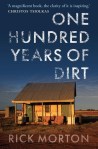
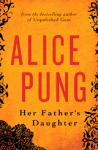
  • How Weird Does Your Family Need to Be?: Alice Pung (Her father’s daughter), Rick Morton (One hundred years of dirt), Richard Glover (Flesh wounds), with the ABC’s Michael Mackenzie (and again, I missed the beginning of this one)
  • The Weekend: Charlotte Wood (The weekend) with the ABC’s Amanda Smith

(Links on the author’s names will take you to my posts on them.)

Place in the New World Order

Place is one of those aspect of literature that most interests me, so I loved this session.

On COVID-19’s effect on the writers. All said it has affected their creative output. Viggers admitted to feeling “stymied”, while Robinson finds her time limited by needing to care for her primary school-age children. Mundell said she feels less isolated because she is now surrounded by people. She’s not getting any creative writing done but is writing grant applications because “things have fallen over”. Mundell’s latest book is about a pandemic. She initially felt guilty for writing entertainingly about something so serious, and said it feels “surreal”.

Karen Viggers, The orchardist's daughterOn whether the pandemic is affecting their thinking about their writing. Viggers, a practising vet, said she is still consumed with the summer bushfires. She is interested – horrified? – to see how politicians have engaged with scientists on the pandemic, when they haven’t done so regarding climate change and bushfires. Her writing content is not really affected. Robinson said it’s tricky trying to write about something unfolding at present, and she feels sheepish saying she’s trying to write about it. Mundell commented that she’s been obedient when she’s usually not, and has felt paranoid when others haven’t been doing the right thing. This made me laugh, as I tend to be obedient but I haven’t felt at all paranoid!
On how place impacts their writing. Viggers, saying that place is vital in a lot of writing, also said that place can be things like a location, an event, a home, a community. She uses place to orient herself as a writer, and then to explore our connections and help us to reengage with the natural world and each other. One of the great challenges is to bring readers in and engage them with ideas they may find uncomfortable. Robinson said that Anchor Point was based on landscape she grew up in. She was interested in how we have engaged with the landscape, and how we have failed to care for it. Mundell said she related to both Viggers’ idea of place as being what gets you in, and Robinson’s idea of place being where you start. She’s currently interested in an iconic place, a quarantine station which, being a border, is a place that contains memories. She’s also interested in “home”, which she explored in the anthology on homelessness she recently edited. She’s interested in the dynamics of places.

On enmeshing social justice in their writing, in a way that feels native to the text, not didactic. Robinson admitted she had to push the ideas – climate change, indigenous-settler issues, gender roles – to the back, recognising she needed to show her ideas through character’s relationships. Her second novel, The glad shout, was easier: the ideas started to manifest in the story and she found it easier to illustrate them metaphorically, or allegorically. A story, she said, can convey the ideas so the reader will feel them. Viggers agreed. You can’t tell readers what you want them to think, but you take them on a journey. In most cases, she presents a values argument regarding, say, the ethics of animal rescue (The stranding) or of kangaroo culling (The grass castle). She likes to use the different perspectives of her characters to convey different ideas, and gently add information the readers may not know! (I love that! I like to learn “stuff” from novels, though I also recognise that we readers need to assess what “stuff” authors tell us is fact and what is fiction.)

On ability to focus on reading right now (a problem I’m facing though not because of COVID-19). Mundell said she can’t sleep without reading Jennifer Egan’s Manhattan Beach, and that she mixes it up with more gruelling books. Viggers is finding reading a bit of a struggle, but is reading Mundell’s and Robinson’s books.

There was a Q&A, including:

  • one responder suggesting to Mundell that grant writing is creative writing.
  • positive takeaways from the current lockdown: our writers suggested appreciating small things, like relationships, that you matter to friends, and the connections people have made (Mundell);  the creative ways people have connected, and that people might think about how we’ve learnt not to consume too much, to touch lightly (Viggers).
  • Tasmania’s Gothic setting suited to Viggers’ novel: she said she loves the south, loves southern light and atmosphere. It speaks to her but she doesn’t think of it as gothic.
  • stories about COVID-19 appearing: Mundell thinks there may not be so many COVID stories, but she’s interested in some of the themes that have come up, in the stories we haven’t heard, the people left behind (like the homeless). Viggers commented that it is hard to write when you are deep in a lived experience.

How Weird Does Your Family Need to Be?

I missed the beginning of this session, unfortunately, and, time being what it is, I have not managed to catch it up via the link sent me, but Lisa covered it in her post (see my opening paragraph.)

Book coverI joined during the discussion of intergenerational trauma. Morton shared his mother’s statement, “I don’t hate your father, I feel sorry for him”. You do inherit these things, he said. He wrote his book carefully because he wanted to show the impact on him but didn’t want to make his father a villain. (How generous and understanding!) That said, he, his mother and sister have determined they “will never let this cycle of abuse continue”.
Glover talked about his mother not being an affectionate person. She eloped with his English teacher, after which his father fell apart and left home! Rick’s story, he said, is Angela’s ashes, while his isn’t, as he was left with a big house and a pool. A friend said, “Richard never really left home, home left him.” Glover talked about the man his father organised to look out for him, Steve Stephens (sp?) who was a “huntin’, shootin’, poetry writing Australian man”. This man looked out for him many times through his life.

Pung Her Fathers Daughter Black Inc

Pung, whose brother committed suicide, talked about how love can’t save a person. She noted, however, that your love is often imbued with your own fears and insecurities. Regarding how her brother’s suicide has affected her own parenting decisions, she said it has made her reprioritise, to look at the nature of love, and, most of all, to let children be who they are and grow into who they’ll become.

A favourite scene in Glover’s book is a short speech from his sister about their father. She said, “If you knew what my father had been through and yet how beautiful he had been to all of us,” and then burst into tears. That’s life, he said, “to turn darkness into light”. This sort of philosophy appeals to me.

The Weekend

Interviewer Amanda Smith started by quoting a description of Wood as “one of our most original and provocative novelists”.

On whether friendship in your 30s is easier than friendship in your 70s. Wood saw the novel as a sort of cautionary self-portrait re what kind of older person she wanted to be. When you are young friendships are fluid, she said. There can be a chemical attraction and romance with friends when you first meet them, but after a while you find flaws. You go through stuff together, some people change before others, and some don’t want others to change at all. We want to hang onto our friends the way we know them. She also talked about observing older women who are friends, and the frictions she sometimes sees. They are enmeshed, and behave much like they might with their siblings.

Book coverOn whether the women are true friends given the evident tensions. This is an issue discussed in my own reading group, but we felt exactly the way Wood responded. Yes, she said, they love each other. Their remarks about each other are a reflection on their own anxieties. Some readers, she said, don’t think her characters are likeable. Grrr … this is an issue that really bothers me. Why do characters have to be likeable? Smith asked the right follow-up question …
On whether fictional characters have to be likeable. Wood said it depends on what you think is likeable! She likes “spiky people”. Also, she said, there are all sorts of layers to our relationships with each other. Her characters are all grieving, they are like a three-wheeled car. She likes her characters (as do I.) She talked about how women she meets associate with the characters, with many telling her “I’m Jude”! Some say they are Wendy. (It didn’t seem like many admit to being Adele!)

On what vicarious experience of ageing Wood brought to the novel, given she’s only in her early 50s. Sometimes you don’t understand what you are writing until you get to the end of the book, Wood said. Both her parents died in their 50s, so she’d never really considered what it would be like to be 70 or 80. She wanted to enter the imagined space of being old. One of the reasons she writes is to understand how to live, to work out how to be in the world. In this book, this concerns how to be if you live to 70 or 80. (I must say that with a nearly 91-year-old mother and a 100-year-old father, I don’t see 70 as old!!)

Wood said that a Jungian philosopher says that the purpose of ageing is to become our real selves. What, she said, does that mean for friendship.

On women transitioning out of careers. All her characters have been defined by magnificent careers but don’t seem to have accepted the end of those careers; they haven’t reimagined themselves, or found their essential selves. Wood said she wanted to write about women getting older who weren’t defined by their families, because most representations of older women are as mothers, grandmothers, matriarchs, in their family hierarchy. She wanted to write about women who were not like that. Only Wendy is a mother, but she doesn’t really get on with her children. These women still feel they have work to do, still have their faculties, but the world is moving on from them.

This led to a discussion about self-delusion. People can be exceptionally self-deluded throughout their lives, but these women confront some of their self-delusions. Wood said that this generation of women belong to the first group of women to face the end-of-career challenge that men have been facing for a long time. Interesting point. I hadn’t really thought of that.

On Finn (the ageing dog). Wood talked about her Judy Harris Fellowship, which involves a writer working with scientists. She said Finn was a response to a scientist saying he’d like to see some evolutionary biology in her novel. He mentioned how ageing is more accelerated in animals than in humans. She wanted to write about ageing she said, but her women didn’t think they were ageing, it was irrelevant to them, so how talk about it? An old dog could do that, she realised. Each character has a response to his decay, each also has an epiphany related to Finn. Finn creates tension between people but he also became a useful thematic/narrative device.

On the role of the house. Wood said that houses are really wistful in novels: they can convey a primitive sense of self, also a sense of turf and territory. However, this house does not belong to any of the characters, though each feels a kind of kinship with the house, and thinks the others aren’t doing it right. The house is not fancy, in fact it’s quite ramshackle. Wood felt she could “do stuff about oldness and newness, what is salvageable”. (Oh! My reading group and I didn’t pick this up!) She talked about the fancy white sofa that Jude had bought for Sylvie (the dead house owner.) Wendy thinks the sofa spoils the house, while Jude thinks the house spoils the sofa. Great point!

There was a Q&A but I’ll leave it here … and conclude my posts on the wonderful Yarra Valley Writers Festival!

From Yarra Valley Writers Festival 2020 (Online)
9 May 2020, 9:30 AM – 7:30 PM
Livestreamed

Yarra Valley Writers Festival 2020 (Online): Fire, Climate and the Natural World

What I hate about writers festivals is that I end up wanting to read every book discussed. But this is impossible, so my next best option is to give the writers a little heads up, at least.

I have written posts on two sessions from last weekend’s Yarra Valley Writers Festival (see this linked tag). Lisa (ANZLitLovers) has also written up several sessions. Given she has covered the other sessions I attended at some depth, I’m going to just do a couple of posts on them, and try to keep it to a few points that appealed particularly to me. This post covers:

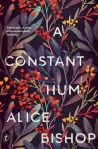
  • Fire and climate: Tony Birch (The white girl), Tom Griffiths (The art of time travel), Alice Bishop (A constant hum), with the ABC’s Michael Cathcart (which I only managed to join partway, and haven’t managed to catch up yet on the link I’ve received.)
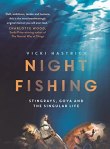
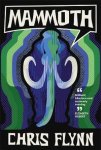
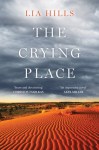
  • Writing About The Natural World: Chris Flynn (Mammoth), Vicki Hastrich (Night fishing), Lia Hills (The crying place), with author Robert Gott.

(Links on author’s names will take you to my posts on them.)

Fire and climate

Book coverI loved that this session, which followed forest ecologist David Lindenmeyer’s keynote address, included an historian, Tom Griffiths, as well as fiction writers, Tony Birch and Alice Bishop.
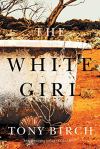
Griffiths and Birch both responded to questions about fire management in Australia. Griffiths made the point that fires are part of the fabric of Australia, that we will always lose “things” but we need to hang on to what’s important – community, human life, our values.

I liked that Cathcart asked the critical question regarding indigenous fire practices, which is how to apply them in the modern landscape, because it is clearly a more complex issue than simply doing controlled burning. Birch said that the approach needs to be collaborative, that we need to respect both indigenous knowledge and science, and that the decisions need to be local. You can’t, he said, talk fire technology on a national scale. Yes! Griffiths concurred, but added that it needs political action to hand the relevant controls to indigenous people in their country.

Book coverRegarding optimism for the future, Birch said he is concerned about our lack of foresight, about the fact that thinking does not extent beyond the next election cycle. Griffiths said the recent school protests give him hope but, like Birch, he is pessimistic about federal leadership. Bishop said she had hope in stories, but not much in leadership!
Asked about why she wrote short stories (A constant hum) rather than a novel, Bishop said that she has always loved short stories, likes how they can “get to who ordinary people are”. Birch concurred here on the power of fiction, but also said that different genres or forms work for different needs.

Griffiths had the final – and apposite – word, which I hope I have got right. It regarded the idea of reading fiction and nonfiction. We need to know the difference. What is the genre? Are we reading history or fiction? Again, yes! One of the most important things a reader needs to ask, I believe, is “what” am I reading? What is the form, and what are the conventions and expectations of that form? You can, for example, look for truths in fiction, but you can’t demand to find facts in it (though they may be there).

Writing about the natural world

Book coverMost readers, and I am one of them, love hearing about the writing process. Hastrich said that she was “not a fluid writer”. She finds “a few good sentences and images and writes around that”. She is obsessed with her 1964 Roget’s thesaurus, because the way it groups meanings under words helps you find the exact word you need. (I still remember when I fell in love with my 1962 edition.)
Convener Gott shared a favourite sentence from Hills’ book, “the fatigue inherent to being the one who always came back”. Hills talked about returning to the sense of narrative in our lives. Her character returns to his origins, bringing back what he’s learned, bringing back knowledge. We always have to return to where we came from to know ourselves, she said. Gott then asked about what he saw as a melancholic tone in her book. Hills replied that “land is political’, and that non-indigenous people carry an awareness of past wrongs.

Gott also asked her about why she likes deserts (“the landscape of the mind”). A desert-lover too, I was interested in her answer. She said it was a western tradition (or, biblical, I’d say?) to go to the desert and come back with knowledge. It is also one of the great tropes of Australia that the desert is empty. Going there thus challenged her western perception. It is both a place of the mind and a physical place.

Book coverI won’t talk a lot about Mammoth – it is on my TBR, so I’ll get to it soon-ish – but in terms of his inspiration for the story, Flynn said he thought about these massive creatures observing what was going on around them and how all of that was lost when they died. He loved the idea that all that information could be retained in the fossil.
Around here the idea of historical fiction was raised. Flynn commented that “As soon as you delve into historical fiction you open yourself up to a hiding”! I’m sure most historical fiction writers know the pain!

Gott talked about how Hastrich riffs, in her book, on frames in art, on the idea that frames exert a tyranny over art, which rock art, for example, doesn’t face. Hastrich replied how in writing you can set and move the frame, have a roving frame. Like a camera, writing can move from place to place. Gott wondered whether this was “to contain the chaos” to which Hastrich seemed a little bemused, saying it’s more that she wants to call attention to one thing. Writing puts a frame around that thing.

Given the session topic was “the natural world”, Gott did ask Hastrich about the importance of fishing to her and its role in the book. Fishing, she said, involves “intense engagement with the world”. He also asked Hills about her sentence “A story is like a river, it has its source, it has its tributaries …”. She sees stories being connected with water in Australia, and discussed the influence of Indigenous values and attitudes to water in her work.

But then, and this was not only fascinating but spot on in terms of the session’s topic, he asked her the seemingly innocent question about how she wrote the book. Great, I thought, more on the writing process. Well, the answer was not what I expected …

Book coverHills talked about how she wrote quickly on the road. Typing in the car, though, was not easy, so she used voice recognition software, party because it also enabled her to capture a storytelling tone. However, this software had unexpected benefits. Firstly, it would sometimes guess her words, and that guess was sometimes more poetic than her own language. Most fascinating though was that the software would pick up other sounds – birds, the wind – and turn them into words too. Not only did this help her – teach her to – listen to country, but it added another layer to the writing, resulting, for example, in wind sounds and a talking bird featuring in her story. The process, then, became part of the content of the book. Writing this way has given her new ways of relating to the natural world, so she no longer feels separate from it.
Gott then asked her about having indigenous characters in her novel. Hills admitted that people told her she was mad, that it was a minefield, but for her it was about respect, and mutual interest. The time she spent with Indigenous people proved an amazing opportunity. To learn, she said, you need to be open, and to accept that what you might want to do may not work. The always-engaging Gott said at this point, “You make me feel like a lazy writer!”

Flynn said about writing Mammoth that he decided to be led by historical events, but that as he wound down that path he gave up trying to direct the narrative and let it take him. So many writers, it seems, follow their writing rather than plan it out from the start.

There were more questions, but I’ll end on Gott’s final “off-piste” question about what they think is the most over-rated virtue. Hastrich said “modesty, especially for women”; Hills said “consistency”; and Flynn said “detachment”.

What would you have answered?

From Yarra Valley Writers Festival 2020 (Online)
9 May 2020, 9:30 AM – 7:30 PM
Livestreamed

Monday musings on Australian literature: On the Run (Aussie crime writers in America)

In yesterday’s post on the Yarra Valley Writers Festival (YVWF) crime panel, I mentioned Sulari Gentill’s intitiative which saw four Australian crime writers taking Australian crime to the USA last year. Called On the Run: Australian Crime Writers in America, it’s such an inspired project that I thought it deserved its own post, a Monday Musings post, in fact. The writers were Sulari Gentill, Robert Gott, Jock Serong and Emma Viskic, and the tour took place from over October-November last year.

Robert Gott describes the origins in an entertaining (but informative post) on the dailymail.com blog:

When Sulari floated her idea she pointed out that this hadn’t been done before and that Australian crime fiction was enjoying a bit of a moment in the US. She needed collaborators and it was safer to collaborate with chums than strangers, especially as we would be doing everything in the way of organisation ourselves.

Sulari, Emma, Jock and I are all friends. We’ve appeared together at writers’ festivals and launched each other’s books. We knew we could rely on each other to meet deadlines for the gruesome process of applying for grants, and for shaping our tour should the impossible happen and an application be successful.

Gott also shares some of the ideas they came up with for the project’s name: “‘Unreliable Witnesses’, ‘Roadkill’, ‘The Mobile Crime Scene’ and others that were even worse”. I think On the Run was a good decision!

The itinerary

Gott also describes the itinerary in the above-linked post:

Our first appearance in America, after a meeting with the Consul General in New York, will be at Bouchercon in Dallas. Bouchercon? I’d never heard of it either, but that’s because I haven’t been paying attention for the 50 years it’s been running. It’s a huge convention for mystery writers and readers and we’ve been given an ‘International Spotlight’, which means we have our own panel.

We thought we might have to interview each other, but Dervla McTiernan has been called in, so that’s splendid. After Dallas we’re off to Phoenix and from there we’re driving to L.A., Santa Cruz and San Francisco and we’re doing events in each of those places, so there’s plenty of scope for horror and disappointment.

Bouchercon?! So, that’s what it’s called. I’d never heard of this either – not surprisingly, I suppose, given I’m not a crime fan. Consequently, when it was mentioned during the panel, I struggled to capture its name. Was it Vouchercom or con? That didn’t seem quite right. However, now I actually had the name, I checked Wikipedia and found that:

the Anthony Boucher Memorial World Mystery Convention is an annual convention of creators and devotees of mystery and detective fiction. It is named in honour of writer, reviewer, and editor Anthony Boucher, and pronounced the way he pronounced his name, rhyming with “voucher”.

Haha, so I wasn’t too far off the mark then!

Anyhow, as Gott shares in the last post, they “were away for 21 days, 19 of them on the ground” during which they did “separately and together, 26 engagements, some small, some large, some in bookshops, some in bars, some in private homes and of course Bouchercon”. A good effort. Let’s hope it carries through to longer-term increases in Aussie book sales in the USA.

Highlights

Unfortunately, Gentill wasn’t part of the YVWF panel, so we didn’t hear her highlights, but here’s how the others answered Angela Savage’s question:

  • Viskic said she had a personal highlight from every place, but one was visiting the New York Public Library. (She writes in the blog, “I’m a polyamorist when it comes to libraries, but I think I’ve met my One True Love in the NYPL.” Oh Emma, you warmed this retired librarian’s heart!) She also said she was “blown away by the enthusiasm of people in Dallas” at Bouchercon. People were “so warm, and excited, desperate to read more Australian writers”. They were keen to read outside of American writers. It was “lovely to see that excitement”. Sounds like our writers achieved their goal if that was the case.
  • Serong said that New York had to be a personal highlight, which makes what is happening there now during COVID-19 “particularly awful”. However, he said, “more useful” was talking about their work Dallas and Phoenix. California was fascinating. He described the USA as, really, a “collection of a whole lot of different societies”, and writes some great reflections on the blog that take me back.
  • Gott “loved everything, including travelling with these people”! Nice, eh? A landscape highlight was the Grand Canyon.

Sulari Gentill describes the Canyon on the blog, and her description is perfect: “Your vision is not wide enough, your mind is not great enough and your soul is not deep enough to take it all in.”

In the blog’s closing post, Gott writes:

How did it all go? Modesty forbids declaring it brilliant, so let’s just say it was sensationally good. People came to our events. They were generous, they asked thoughtful questions, they laughed in the right places, mostly. They were intrigued when we spoke about the now well-established convention at events in Australia of acknowledging the traditional owners of the country on which we sat. The idea that a bookshop in Pasadena, sitting among neon and concrete, might actually have beneath it land once walked on by First Nation people, seemed to require a daring imaginative leap.

Gott also writes that “an Australian presence at Bouchercon, and at other large conventions, should be an inevitability rather than a curiosity.”

It was, said Savage at the YVWF panel, a real coup to pull this off. The writers added that their model was good: four works well in an American car; choose writers who have a similar outlook but write differently; and get a grant, such as from the Australia Council or the Neilma Sydney Travel Fund (about which I wrote recently).

To read all the posts written by the writers, check the On The Run tag on the dailyreview.com blog. These people are writers – obviously – so the posts are both entertaining and informative. Well worth reading, even if you are not a crime fan/reader.

Are you a crime fan/reader?

Yarra Valley Writers Festival 2020 (online):  If I tell you I’m going to have to kill you (Crime panel)

This is my second report of the sessions I attended of the first Yarra Valley Literary Festival. I hope to write up more, but you can also check Lisa’s blog for her posts. She did not, however, attend Christos Tsiolkas – see my post – nor this crime panel. Like Lisa, I really read crime, but I am interested in the genre as a form of literature, and I was very interested in these particular writers.

Crime panel

Festival director Michael Veitch introduced the panel, appropriately, as a cabal of crime-writers. It comprised Robert Gott (who didn’t make it, for technical reasons, until quite late), Emma Viskic and Jock Serong, with Angela Savage convening, again. Good on her. Again, I had quite a bit of breaking up in my reception.

I enjoyed the panel immensely. Savage, a crime-writer herself, was spot on with the questions, and the panelists were both thoughtful and entertaining. It turned out that they – with Sulari Gentil – had travelled to the USA as a sort of Aussie crime roadshow called On the Run: Australian Crime Writers in America. More on that later, but their familiarity with each other meant that they related well on this panel.

Why crime?

Viskic said that, before publishing her first novel, she’d written two manuscripts – her burn-upon-death novels. The the problem was they were boring. The only bits that worked were the things she really likes about crime novels – the dark things.

Ex-criminal lawyer Serong said he didn’t gravitate to crime, and doesn’t see his writing as “a genre exercise”. But crime, he said, comprises “a great reservoir of human drama and characters”. He has an ambivalent relationship to crime, and is never sure whether he is writing it. Rules of backyard cricket has been described as “very noir”, he said, but On the Java Ridge is “very much about crime”.

He shared Gary Disher’s description of crime fiction “as a social barometer” which Viskic leapt onto, saying that crime offers “a great way of exploring what is right or wrong in society”. She was very funny about her own fascination with how to do crime!

Serong said his main driver is the exploration of character – and particularly of who Australians are. He said that we Australians have done well with COVID because, despite our seeing ourselves as larrikins, we are in fact “very compliant”!! Haha, I loved this. It’s helped, I think, that we’ve had coherent leadership, presenting us with a vision about what we’re aiming for – but he has a point!

What makes Australian crime fiction Australian – besides the setting?

Serong said that Aussies are doing crime differently to other countries: we are bringing indigeneity into our stories, and are exploring Australian identity in terms of how far you can push the Australian character.

He then said that outsiders would probably say landscape is what differentiates our crime. However, now we are seeing more crime set in cities and suburbs, which doesn’t reach the overseas market so well.

Viskic said that her work encompasses rural and urban landscapes, and settler and indigenous culture, that she’s drawn to urban and small town settings. She particularly likes the latter because it’s “more claustrophobic, more like family” which highlights her deaf detective Caleb’s outsiderness. She said she was always going to cover “black-white” stories. She’s not indigenous, but has indigenous family. She admitted that it’s a fraught thing to do, but it felt “cowardly not to do it”, like creating “terra nullius” all over again. Also, she said, Koori people, like deaf people, have been denied language and culture.

Why use fictional settings?

Serong’s first novel has a fictional setting, from “pure ignorance”. He thought a novel had to be fiction! His later books are all set in real places. He talked about research for Preservation which is set in a real place: the challenge of knowing how the rivers were then, which birds were there then, and of conveying the complex way Yuin people moved across the landscape versus his shipwreck survivors who just headed to Sydney, keeping the ocean on the left!

Viskic said that she fictionalises place for creative freedom. Once you name a place, specificity, which is important in writing, has to be right. She rarely uses fact in her fiction. But there is also the privacy reason, to avoid people feeling they know or can identify characters.

Series vs stand-alone?

Viskic always planned her Caleb novels to be a short tight series of three to five books, because events in the novels have consequences for characters, and she wanted her characters to grow over the novels. She’s coming to the end of this series, but was relieved to realise that she can come back and do another Caleb series later.

She also said that her novels can be read on two levels: the plot level, but you can also deep dive into the whys and wherefores. She’s less interested in who done it, and more in why and what happened after.

Serong, on the other hand, had not considered a series because he tends to jump around conceptually. However, Preservation is going to be the first of a trilogy, because there are more stories to tell about this 50-year period in Bass Strait history. It’s not a traditional crime novel, but colonialism could be seen as a high level crime. Stealing an entire continent is one of the great heists of all time (and it is accompanied by smaller criminal acts). There were moments of Eden, he said, when we could have made better decisions but we keep missing those opportunities. (Like, I thought to myself, the Government’s out-of-hand rejection of the Voice to Parliament!)

On the Run: Australian Crime Writers in America

At this point Robert Gott (who had convened an earlier panel) managed to join us, and the conversation turned to the crime roadshow, but look, I think I will save that for its own post. I’ll just say that Gott said it was Sulari Gentill’s idea, and that when she posed the idea the rest of them “complacently said, sure, whatever”.  However, Gentill pushed on, they obtained an Australia Council grant, and off they went.

Savage commented that it was a real coup to pull off this trip, and its success has paved the way for more. It was the first of its kind but they don’t want it to be the last, they’d like to see it as “an inevitability”.

Q&A

I didn’t record all the questions but there were questions about the relationship between crime and real life. Serong, ex-lawyer remember, said he was constantly amazed at what people get themselves into. Books and screen lag far behind real life, he said. On the other had, said Viskic, in real life you don’t have to be credible. Ridiculous crimes occur. However, in fiction, things have to be believable and motives have to be clear. People don’t tolerate much in the way of coincidences for example.

Gott added that real criminals are mostly boring, not very smart, dull-witted, so the crime is more interesting than the criminal. The implication was that fictional crime is more about character.

There was a question regarding whether Australian crime is in danger of going down the ultra-violent American route. Serong thinks not. We don’t have the guns for a start. Savage mentioned here Serong’s Staunch Prize win, noting that you can write riveting crime without including horrible acts of violence against women.

Savage also said that all of them have strong women in their work. She wondered whether this was particularly Australian, or just because of our time?

What do you think?

From Yarra Valley Writers Festival 2020 (Online)
9 May 2020, 9:30 AM – 7:30 PM
Livestreamed

Yarra Valley Writers Festival 2020 (online): Road to Damascus (Christos Tsiolkas with Angela Savage)

Book coverToday I attended several sessions of the first Yarra Valley Literary Festival, which the organisers turned around and converted to an online event with the arrival in our lives of COVID-19. I plan to write up a couple more sessions over the next week, when time permits, but you can also check Lisa’s blog for her posts.

I was looking forward to this session, because Damascus is my current read. I also wanted to see interviewer Angela Savage (whom I’ve reviewed here, and who comments here every now and then) because she is such an engaged writer, herself, as well as a supporter of writers.

Now, I must say that although I’ve really liked the two Tsiolkas novels I’ve read, I was not really looking forward to reading Damascus. Biblical times are not something I gravitate to, and I had heard that the novel contains quite a bit of violence. However, although Damascus does indeed start with something violent – the stoning of an adulterous woman – I was engaged immediately. The violence was neither gratuitous nor laboured, and Tsiolkas’ writing just got me in (again). I’ve read about a third of the novel and the subject matter, the origins of Christianity, is keeping me interested, because I’ve started to realise why it is worth reading. Tsiolkas is focusing particularly on Christianity’s commitment to equality or egalitarianism. Given the way organised Christianity seems to have lost much of its way in our times, it seems a good time to consider its founding values.

So, the conversation, but with the proviso that I did miss bits due to much of it being broken up by connection/transmission problems somewhere.

I’ll start by saying it was a lovely conversation, held between two people who obviously know each other well. That’s one of the lovely things about these writers festivals – you get to see the camaraderie that exists between some writers, and discover some of the ways they support each other. In this case, it came out that Savage had read some of Tsiolkas’ drafts and had had discussed them with him. She praised him for the time he takes with his work, for the way he honours his art.

The first questions explored some of the novel’s background. Tsiolkas said he’d spent five to six years on Damascus, and was terrified when it came out because it is quite different from anything he’s done before. However, he’s fortunate, he said, to have a supportive publisher in Jane Palfreyman, albeit she too was nervous about this one!

While he doesn’t call himself a Christian now, he did grow up with Christianity. He was interested in how much of what we know about Christianity has come through the interpretation of Saul/Paul, and he talked about his interest in Paul, from his adolescent understandings of being rejected by an admonishing Paul to his more mature comprehension when he returned to Paul after a personal crisis. That Paul, he realised, had suffered too. He said that (Biblical) Paul’s aim was to teach people how to live while “waiting for the kingdom” or eternity (which he thought was going to happen any day now.) For Tsiolkas, this has translated to “am I really leading the life that will enrich me?

From here Savage asked him about his characterisation of Paul.

Tsiolkas talked about his research. Saul/Paul was a Jew who left his faith to follow a strange scandalous religion. Tsiolkas talked about exploring the differences and similarities between Paul’s world and ours, and the challenge of finding his own way to Paul. He knew he wasn’t writing a hagiography, because the reality is that we are human. What is remarkable about the Christian story, he said, and what the Greeks and Romans could not understand, is the fact that through Jesus the sacred becomes human. However, the book also wasn’t going to be “a kicking in the guts”. It also wasn’t intended to be heretical or blasphemous (though some might see it that way!)

He needed to give Paul a battle, and so we have in the book sins like lust, greed, vanity, pride.

This brought us to the question a novelist begins with. For Damascus it was what was it in the Christian belief system that changed the world?

Savage then asked him about the novel’s structure. She loves, she said, how he structures his novels – and if you know me as a reader, you will know that structure is something that fascinates me. I have read enough of the novel to notice its non-chronological, four-points-of-view structure – which Savage called a “roving point of view” – so I was keen to hear his answer.

Tsiolkas said that structure is important to him as a novelist. It provides him with a blueprint which stops him getting lost. Voice and structure are the first things he thinks about. He was lucky with Paul’s voice, because of Paul’s letters. The three other voices are:

  • Lydia, representing the history of female participation in the church, something that was later wiped away. (Lydia, from a dye-making family, appears in the book of Acts as the first woman Paul brings to the new religion.) Tsiolkas talked about how he had wanted the female voice to be a slave, given Christianity was largely reviled because it accepted slaves, but he couldn’t find the voice and had no models from his research to draw on. He emphasised what a radical moment this acceptance of slaves was, and, as I have already noticed in my reading, he said that the novel’s refrain, “the first shall be last, the last shall be first”, makes this point. Anyhow, he struggled until suddenly Lydia came to him in the early hours one morning, and he just started writing her. I love stories like that.
  • Thomas, representing the doubter that he wanted in the novel because he, too, is a doubter. He chose Thomas from gospel of John, because, like Thomas, he doesn’t believe Christ was resurrected. Tsiolkas believes there is no eternal kingdom, that working out how to live a good life has to be worked out here and now. This idea offers another direction in which the church could have gone.
  • Timothy was Paul’s companion in the Bible. His father was pagan Greek and his mother Jewish, so he embodies “between world-ness”.

Savage, noting that it’s not a blasphemous book because it has such a respect for the values, asked about its reception. Tsiolkas said the way people have engaged and have wanted to have a conversation about it has been heartening. He’s been “blown away” by people’s generosity in responding to it.

There was a Q&A but I’m going to end on Tsiolkas’ wonderful answer to the question about his personal faith, because it’s an answer that is more broadly applicable I think. He said that the only answer is to hold doubt and faith together. If you know me, you’ll know that this sort of almost paradoxical answer suits me to a T.

From Yarra Valley Writers Festival 2020 (Online)
9 May 2020, 9:30 AM – 7:30 PM
Livestreamed