Orhan Pamuk, Snow

One of my rules of reading is that when I have finished a book I go back and read the first chapter (or so) and any epigraphs the author may have included. These can often provide a real clue to meaning. This rule certainly applies to my latest read, Snow, by Nobel Prize winner, Orhan Pamuk.

(WARNING: SOME SPOILERS)

Snow, in fact, has no less than four epigraphs:

  • lines from Robert Browning’s “Bishop Blougram’s Apology” describing the paradoxical nature of things: “the honest thief, the tender murderer,/the superstitious atheist”;
  • a quote from Stendhal’s The charterhouse of Parma which warns about the ugliness of “politics in a literary work”;
  • a quote from Dostoevsky’s Notebooks for the Brothers Karamazov which suggests ideals like the European Enlightenment are “more important than people”; and
  • Joseph Conrad’s statement in Under Western eyes that “The Westerner in me was discomposed”.

These four epigraphs pretty well sum up the concerns of the book. What about the title? The second chapter begins with:

Veiling as it did the dirt, the mud and the darkness, the snow would continue to speak to Ka of purity, but after his first day in Kars, it no long promised innocence.

Here then is the first paradox: snow is pure but not innocent, and it covers dirt, mud and darkness. Already, you can see that this book is going to be ironic. Just how ironic though is a matter for contention but my suspicion is that its very foundation is ironic, as it grapples with what it means to be an artist in a political society, with how one is to live in a conflicted nation. The plot centres on a coup – a coup which is variously called a military coup and a theatrical coup! In fact, it is a coup by a theatrical group that is supported by the military! Art and politics could hardly be more entwined.
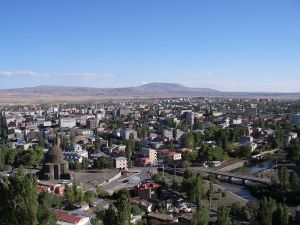
Kars Photo: Jean & Nathalie @ flickr (Creative Commons licence)

Kars Photo: Jean & Nathalie @ flickr (Creative Commons licence)

Snow though is not an easy read. It is my third Pamuk, but only the second one I have completed. I loved his memoir-cum-history Istanbul but could not, hard as I tried, finish My name is red.

What then is it about? The main action covers three days in the life of Ka, a Turkish poet recently returned from 12 years exile in Germany, who comes to Kars (in far east Turkey) ostensibly to write about the suicide epidemic among young women, but whose secondary (or perhaps primary!) reason is to fall in love with an old school-friend, Ipek. Soon after he arrives, however, the coup occurs and Ka is, rather unwillingly, caught up in the intrigue between the competing interests: the secularists, the Islamic fundamentalists, and the Kurdish nationalists. This sets the stage for exploring the art-politics nexus. Ka says to Sunay, the leader of the coup AND of the theatrical troupe that comes into town:

I know that you staged the coup not just for the sake of politics but also as a thing of beauty and in the name of art … you know only too well that a play in which Kadife bares her head for all of Kars to see will be no mere artistic triumph; it will also have profound political consequences.

Here then is one evocation of the second epigraph. The third and fourth epigraphs refer to the running conflict in the book between European/Western values and Turkish/Eastern values. There is very much a sense that the people of Kars feel condescended to by European culture, but as a teen-ager says at one point, “We are not stupid! We’re just poor”. The people of Kars do not understand Western notions of individualism, and they see Western ideas of secularism and atheism as equating with immorality. Ka, as a Westernised Turk, acts as an uncomfortable, to him, bridge between the two worlds.

The core of the book is Ka. He is a sad and highly conflicted individual who, in his youth, had used words to argue that people should act for “the common good” but now finds himself using them to further his own happiness. Once politically active, “he now knew that the greatest happiness in life was to embrace a beautiful, intelligent woman and sit in a corner writing poetry”. The irony is that, for all his attempts to achieve this, he ends up with neither and dies four years after the coup a sad and lonely man.

The novel is interesting, stylistically and structurally. It is essentially a third person story about Ka but is told by a first person narrator, Ka’s friend, the novelist Orhan(!). This metafictional narrative technique, by adding another layer to the “conversation”, rather deepens the “artist in society” and art/politics themes of the book. Much of the story is foreshadowed: we learn of Ka’s death in Chapter 29, though the book has 44 chapters. The tone of the book is imbued with huzun, that very particular Turkish sense of melancholy that Pamuk explores beautifully in his book Istanbul. And, while it is about a coup and has a body count of 29, there are some very funny scenes, one being the political meeting at which the competing rebels prepare a statement about their beliefs for the Western Press. Anyone who has attended a political meeting will feel at home here!

All this said, the book is a challenge to grasp: there are a lot of characters, comings-and-goings, and ideas to track. Just why Ka is the way he is, just what did happen to him in the end, and just what Orhan is saying about art and politics are hard to pin down. I love the way the book is underpinned by paradox and irony – and yet at times the meaning can be a little tricky to discern. What is clear though is that Ka has found living by his political beliefs deeply unsatisfying but, ironically, is unable to bring about a situation in which he can live “happily” any other way.

Kadife, the leader of the headscarf girls, says (fairly early in the book):

…do not assume from this that our religion leaves no room for discussion. I will say that I am not prepared to discuss my faith with an atheist, or even a secularist. I beg your pardon.

Oh dear! Some reviewers call it a brave book. With its fearless exploration of the tensions in modern Turkey, it certainly feels that way. I am very glad that I put in the effort to read it.
Alice Munro, Dimension

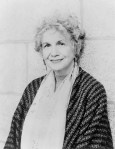
Alice Munro, from Random House Australia

Alice Munro, from Random House Australia

Alice Munro won this year’s Man Booker International Prize. You probably know that she is a Canadian short story writer. I have read many of her short stories over the years, though not as many as I would like.

WARNING: SOME SPOILERS!

Her short story “Dimension” was published in the New Yorker in 2006, and was then included in the 2007 edition of Best American Short Stories. In some ways, particularly in its tone, it reminded me of Lionel Shriver’s We need to talk about Kevin. Like “Kevin” it deals with the build up and fallout after a terrible tragedy caused by a family member, but the details of the tragedy and the focus of the story is different.

Munro clues us in very early that something terrible has happened. In the second para she writes this about the main character through whose point of view we see the story: “She liked the work – it occupied her thoughts to a certain extent and tired her out SO THAT [my emphasis] she could sleep at night”. Ah, we think, why does she have trouble sleeping? And then at the end of that paragraph is: “She didn’t want to have to talk to people”. The next para is more clear that she has been involved in something terrible: she had been “in the paper”. In this paragraph we get the first mention of “he”. “He” is nameless in the first few mentions, conveying to us a sense of mystery and, yes, menace. Not naming him at this point also depersonalises him; it makes him “other” to we named people.

This, then, is a story about one of those terrible family tragedies that we see in the news and wonder about: how did it get to that point, how does the mother (or whoever is left) keep going, etc? Munro explores these questions sensitively, conveying how Doree’s youth and inexperience resulted in her making a poor decision at a vulnerable time in her life which then stunted her further development of self – with devastating consequences. And, she does a good job of building up a picture of a controlling man (the husband Lloyd), but through Doree’s eyes so that we see her growing awareness of his nature. Her awareness though is accompanied by an uncertainty born of someone who does not know enough to judge properly, to know what is “normal” and what isn’t. Munro also makes us believe in Doree’s post-tragedy path – her going-through-the-motions distance from those around her and her tie to the perpetrator who is the only person to offer her a “refuge” peculiar though that refuge is. Munro’s resolution to all this could be seen as a little melodramatic, but it is clever…and, reassuringly, somewhat hopeful.

In other words, like all Munro’s stories, this is well worth a read.

Four time winner: Tim Winton wins 2009 Miles Franklin

Photo by Denise Fitch, Australia Council for the Arts

Photo by Denise Fitch, Australia Council for the Arts

Well, it’s finally happened as I knew it must. Someone has equalled Thea Astley’s record number of four Miles Franklin Award wins as tonight Tim Winton was announced the 2009 winner with Breath. I was seriously considering making Thea Astley my third favourite writers post – I think this means that I will now have to.

Winton has won the award for Shallows (1984), Cloudstreet (1991), Dirt Music (2001) and now Breath (2009); and Astley for The Well Dressed Explorer (1962), The Slow Natives (1965), The Acolyte (1972) and Drylands (1999). Both writers are great stylists who use metaphor well, both tend to explore strong connections between character and landscape, and both are indubitably Australian! I think, however, that Astley’s pen ranged wider than Winton’s and she took more risks. That’s not to say that Winton doesn’t deserve his wins but I do think that Astley (she died in 2004) was and continues to be undervalued.

Breath

Anyhow, here is a brief recap of my thoughts on Breath which I read long before I started writing this blog. I’ll start with a quick plot summary just in case there’s someone out there who doesn’t know it! It is a first person, coming of age story told by Bruce “Pikelet” Pike. It starts with his boyhood friendship with Ivan “Loonie” Loon. As young boys, they dare each other to perform dangerous stunts in the local river, and then as teenagers, they take up surfing where they are encouraged into new levels of recklessness by a former professional surfer named Sando. As time passes, Pikelet’s friendship with Sando and Loonie disintegrates and is replaced by a rather equally scary relationship with Sando’s American wife Eva, an injured and therefore ex-skier.

Southwest Western Australia, by soulsurfer 3 @ flickr

Southwest Western Australia, by soulsurfer 3 @ flickr

I like the book. I like the way he sustains the “breath” metaphor throughout to represent various facets of life and life-giving (or life-taking) forces. Despite not being a surfer, I love his wonderfully visceral descriptions of surfing. I also like his exploration of the imperative to take risks that is so common in young men and that is often accompanied by a drive to “be someone”.

Related I suppose to the coming-of-age issue is the theme of learning to accept being ordinary.  After Sando and Loonie leave the first time, Pikelet goes out and surfs Old Smoky: the first time he does it he’s so successful he feels he’s not ordinary, but then in his overconfidence he does it again and nearly does himself in…this is the beginning of his changing point of view. As he says a little later when he reviews his relationship with Eva, “No, Eva was not ordinary. And neither was the form of consolation she preferred. Given my time over I would not do it all again”. In other words, while he had originally equated not being ordinary with doing big risky things, with courting fear, by the end of the novel he realises that life is “a tough gig” and is about more than courting fear and taking big risks. This doesn’t mean that he can’t do and enjoy a job that provides an andrenalin rush (paramedic/ambulance driver) but it does mean that he no longer seeks to be anything other than himself and that he now goes for an adrenaline rush in “safer” more acceptable ways.

Before he gets to this point, though, he has to come to terms with his Eva experience and with the fact that he spent a big part of his life blaming her for his problems. He eventually comes to the conclusion that “people are fools, not monsters”. This closely resembles my own world-view: that is, that mostly (there are obvious exceptions) when people do the wrong thing they do it, at best, from the best of intentions, or, at worst, for reasons of laziness, selfishness or just plain obliviousness.

There’s no neat ending or pat conclusion: Pikelet recognises that he has been damaged by his life experiences and that he needs to manage himself – but he still loves to surf, that is, to do something “pointless and beautiful”. In this sense it is very much a book of its post-modern age: the lesson almost is that there is no lesson, that each of us has to find our own way. Pikelet says to Sando “maybe ordinary’s not so bad”. As one who is rather ordinary herself, I concur!

Steve Toltz, A fraction of the whole

I reckon the voters for the NSW Premier’s Literary Awards inaugural People’s Choice Award got it right when they chose Toltz’s A fraction of the whole as the first winner. Not necessarily because it is the best book of the year, because I’m not sure that it is, but because it is such a life-writ-large book. It is funny – belly-laugh, sometimes, and quiet chuckle, other times – but serious at the same time. Just when you think you have grasped what it is about, it dives off on another tangent and your brain has to start working all over again.

I’m not sure how to describe it. It’s basically a father-son story, told in first person by the son, Jasper. However, Jasper inserts into his story three long sections in his father’s voice: Martin’s life-story (to the age of 22) as he tells it to Jasper in a seventeen hour stint, entries from Martin’s journal describing his relationship with Jasper’s mother, and Martin’s unfinished autobiography. These add some texture to the novel and allow us to know things that Jasper couldn’t know.

Created by Tinette, Wikipedia, under GNU Free Documentation Licence

Created by Tinette for Wikipedia under GNU Free Documentation Licence

The characters are intriguing, with Martin being centre-stage. At my bookgroup’s discussion of the book one of the members wondered whether there could be a bit of yin-yang between Martin and his brother Terry, and she could have a point. Jasper quotes the following from his father’s journal:

No symbolic journey can take place in an apartment. There’s nothing metaphorical about a trip to the kitchen. There’s nothing to ascend! Nothing to descend! No space! No verticality! No cosmicity! … The essential important idea that will shift me from Thinking Man to Doing Man is impossible to apply here. … I am a halfway man …

But, while he tries, Martin never really does move from a Thinking Man, while his brother remains the Doing Man. Jasper seems caught in the middle. Martin’s trouble is that he has “thought himself into a corner”, one where he is so distrustful  of humanity, and so fearful of death, that he can’t trust the ideas that could get him out. As Martin says: “If men are constantly manufacturing meaning in order to deny death, then how can I know I didn’t manufacture that experience myself?”. This corner, this distrust, is to bring tragedy to his life near the end of the novel.

It’s a very funny book, with the comedy being both verbal and situational. It is at different times absurd, ironic or satiric. The satire is aimed at pretty much anything you could imagine – education, politics, media (journalists in particular), philosophy, death and, indeed, humanity. Almost any page you open will provide either a laugh or a description that makes you go “aha” – on many pages you will find both.

So what is it actually about? It is about father-son relationships, and about sons who don’t want to replicate their fathers. It is about Australia (“our demented country”) and Australians – and is not too complimentary about our willingness to put others down, our lack of compassion for those who need our help. It is about the paradoxes that make up our lives and thus humanity and much of the book is expressed in terms of these paradoxes – the good and bad, life and death, pessimism (Martin) versus optimism (Jasper), sanity and insanity, forgiveness and unforgiveness, and so on.

There is so much to write about this book that I think it’s best I end here with, fittingly, a paradoxical statement made by Martin two-thirds through the novel. “Fiction”, he says in his unfinished autobiography, “has a habit of making the real world seem made-up”. Toltz has produced in his novel a world that seems both real and made-up. It is up to us to decide which is which…and act accordingly!

What does prestigious mean?

In the June issue of Limelight magazine is this news item:

Entries are now open for two of Australia’s most prestigious literary prizes, the Melbourne Prize for Literature, and Best Writing Award. The first is awarded to a Victorian author who has made an outstanding contribution to literature and is worth $60K, the latter is for writers under 40 and offers a prize of $30K.

Hmm…do prizes for which only Victorians are eligible qualify for being among Australia’s “most prestigious”? Methinks prestige is being equated here with monetary value. My definition is closer to the dictionary definition, that is, having high reputation or being in high esteem. Does having been chosen only from Victorians grant the winner of this award prestige across Australia?

Miles Franklin, 1902, by H.Y. Dorner

Miles Franklin, 1902, by H.Y. Dorner

A quick Google search comes up with an interesting array of statements about literary awards in Australia. An Australian government website describes the Miles Franklin Award as “one of the most illustrious events on the Australian literary calendar”. As one of Australia’s oldest continuous awards and as a national award, it perhaps better lives up to being described as “illustrious” (or “prestigious”). Of course, this award has its own qualification: the winner must be “of the highest literary merit and present Australian life in any of its phases“. This has got the award into trouble on more than one occasion.

Young novelist Nerida Newton is more objective in her description of the Miles Franklin Award as “At around AU$42,000 this award is Australia’s richest literary prize”. She’s clearly out of date, however, as it is no longer Australia’s richest prize. Not even the prestigious Melbourne Prize for Literature can claim to be this. As far as I can tell, that honour goes to the new Australia-Asia Literary Award. In 2008, its prize value was $110K.

Meanwhile, over at Allen & Unwin, they try to cover all bases. They describe The Australian/Vogel Literary Award as “one of Australia’s richest and the most prestigious award for an unpublished manuscript by a writer under the age of thirty-five”. While the prize money is only $20K, it does also include publication of the manuscript. That IS worth a lot if you are a writer struggling to get published. 

The superlatives continue. The 2006 announcement of the Australia Council for the Arts Writers Emeritus Award describes itself as “one of the highest honours in Australian literature”. It too, though, is qualified as it “recognises the achievements of Australian writers over the age of 65 who have made an outstanding contribution to the field and created an acclaimed body of work”. That puts it out of reach of all but the grand dames and messieurs of the Australian literary firmament.

The thing is that when it comes to literary awards there are a lot of apples and oranges being compared. Is it an award for a piece of work or for a body of work? Is it an award for a published or an unpublished work? Is it limited by age or gender of writer, by region, genre or subject? 

I guess it all depends on your perspective. Monetary value is important – more for the winner, though, than the public looking for an indication of Australia’s leading literary lights. For me, it comes down to how widely the award net is cast (in relation to my literary interests) and who the judges are. And so, while some of my best friends are Victorian, the Melbourne Prize for Literature will not be in the top group of my literary  awards watchlist.

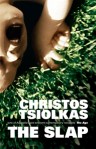
Christos Tsiolkas, The slap (Review)

You could easily give yourself away when reviewing Christos Tsiolkas’ latest novel, The slap. For example, do you align yourself with the uncompromising, emotional earth mother Rosie or the rational, cool and collected but somewhat more willing to compromise Aisha? Do you rail against the liberal use of expletives, the relaxed attitude to recreational drug use, and the focus on carnal appetites more often in their ugly or elemental than their loving guise? Do you engage in the private versus public school argument? These are the sorts of things that confront Tsiolkas’ readers.

Courtesy: Allen & Unwin

Courtesy: Allen & Unwin

In simple terms, The slap explores the fallout that occurs after a young child is slapped by an unrelated adult at a family-and-friends barbecue. This slap occurs in the first “chapter”, reminding me of Ian McEwan’s books which also tend to start with an event that triggers a set of actions and reactions. However, unlike McEwan, Tsiolkas does not build up a strong sense of suspense about “what will happen next”. In fact, the actual slap storyline is resolved about two-thirds of the way through the novel.

Rather, the book is about its characters and their relationships as spouse, parent, child, sibling, friend. At face level, most are not particularly appealing. They are often intolerant, narrow-minded and/or confrontational – just as you begin to like, or at least understand, them they do something that changes your mind.  And yet, in all their imperfections, they do engage.

The book has an interesting though not unique structure. Like Elliot Perlman’s Seven types of ambiguity, the story is progressed through a sequence of different, third person, points of view covering three generations. This shifting of perspectives and stories has the effect of moving our focus from the plot to the content.  And the content ranges broadly across the things that confront families and marriages – love and hate, family versus friends, anger, loyalty, compassion and forgiveness. It has moments of real venom, but also of real tenderness.

Not surprisingly, violence features heavily in the book. Tsiolkas shows how pervasive violence is in western middle class society. Through the various characters’ stories we see a wide range of violent behaviour from domestic violence through consensual but aggressive sex to those seemingly casual expressions of violence such as “I wanted to kill her” about a person who annoys. We also see how deeply ingrained prejudice against “other” is, whether that other be racial, religious, cultural, sexual orientation or socioeconomic. In Tsiolkas’ world it feels as though only a thin veneer of civility covers our more primitive selves and the reader is never quite sure when or whether these selves will break through and wreak havoc. It is to the credit of the characters, and by extension us, that they rarely do, but we are left in no illusion that they could.

A critical aspect of the structure is whose perspective starts and ends the novel. Interestingly, again perhaps emphasising the minimal importance of plot, these are neither the slapper nor the “slappee”. In fact, the final voice is given to someone who starts out on the edge of the main action but is gradually drawn in. As an involved outsider, with issues of his own, he is able to resolve (as much as they can be resolved) the secondary plot lines and, as a person on the brink of adulthood, he can offer a sense of hope to what has been a pretty gritty story.

Wallace Stegner, the great American writer, wrote in his book, Angle of repose, that “Civilizations grow by agreements and accommodations and accretions, not by repudiations”.  This, taken at a more personal level, seems to be the point of the novel for as Aisha says in the second last chapter, “This finally was love … Love, at its core, was negotiation, the surrender of two individuals to the messy, banal, domestic realities of sharing a life together. In this way, in love, she could secure a familiar happiness”.

POSTSCRIPT: In 2011 The slap was adapted for television, for the ABC, and closely followed the novel’s narrative style with each episode being viewed through the eyes of a different character. The scriptwriters are, I think, a quality bunch:  Emily Ballou, Alice Bell, Brendan Cowell, Kris Mrksa, Cate Shortland. Interestingly, Tsiolkas is not among them.

Joan London, The good parents (Spoilers, sort of)

I was looking forward to reading Joan London’s most recent novel, The good parents, because I loved her Gilgamesh, not only for its engrossing story but also for its evocation of place and period and its spare writing. The plot of The good parents is a simple one. Maya, Jacob and Toni’s 18 year-old daughter, disappears just before they arrive in Melbourne to visit her, and the book chronicles the way they go about locating her and bringing her home. It is not, however, a mystery or detective novel but an exploration of “family” and particularly of parents and parenting.

London looks at these subjects through her various characters and their stories: Jacob and his mother Arlene, Toni and her parents Beryl and Nig, Maya’s housemate Cecile and her adoptive parents, Toni’s previous husband Cy and his mother, and so on. And from these she uses parallels in their stories to tease out similarities and differences. For example, both Toni and Maya run away with “unsuitable” men, Jacob and Cy are both products, essentially, of single mother families. It is, in fact, a cleverly constructed book, with links and refrains criss-crossing the narrative.

The book also seems to be about the life you choose for yourself and about how to find meaning in that life: Jacob has “the fear of dying without ever having been able to give expression to what it meant to live”; Toni is concerned that she and Jacob “opted for the small life”. I’m not sure that London quite marries these two themes together – and perhaps she doesn’t need to. I did find it hard to get a grip on Maya’s story – it’s an age-old story and yet it felt a little forced. But, Jacob’s and Toni’s stories are well told and she sensitively portrays a wide range of parents and parenting and the accommodations people do and do not make in their lives regarding their families. The book is called The good parents. By the end, I wasn’t quite sure whether we are supposed to read this somewhat ironically (as in “you call that good?”), or straight, implying that parents in general do their best, even if the end result may not be exactly what they might have wanted. I suspect it’s a bit of both, showing London’s capacity to be wry and compassionate together.

It’s a very open book, with no neat conclusion and no apparent authorial judgment. Cy is not brought to book for his behaviour, nor is Maynard for his. Other characters will survive their affairs and misdemeanours. And so on. It is a book about the mistakes of youth and the messiness of life.

I like books that are generous or forgiving of their characters. This is not to say that I don’t like gritty, hard-hitting books too, but I also like generosity and this book is generous. London allows us to look at her characters, warts and all, and to draw our own conclusions. I guess, in the end, it is a “slice of life” novel … but a tightly controlled one for all that.