ALS Gold Medal, 2009 (announced 2010)

Since many book bloggers are posting the Booker longlist, I don’t think I need to do so here. I don’t expect to read many of them, not so much due to a lack of interest as to the fact that I’ve a pretty full reading schedule in front of me without adding these to it! I have read and reviewed Christos Tsiolkas’s The slap, and expect to read in the next few months Peter Carey’s Parrot and Olivier in America and David Mitchell’s The Thousand Autumns of Jacob de Zoet. There are a couple of others I would like to read, but time will probably defeat me.

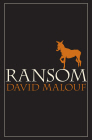
David Malouf Ransom
UK edition cover (Used by permission of the Random House Group)

However, I will instead announce – because it gets such little publicity – that David Malouf has won this year’s ALS Gold Medal for Literature with his novel, Ransom. As I wrote in my earlier post on this award, it does not come with a monetary prize and so tends to be overlooked by the media. Nonetheless it is an award well worthwhile watching (how’s that for some alliteration!) because its winners do tend to be among our more notable authors and books.

The other awards made by the Association for the Study of Australian Literature for the year are:

Congratulations to David Malouf – and the rest of the awardees. What a shame there hasn’t been a little more fanfare…

Peter Temple’s Miles Franklin win, Ruckus

Peter Temple’s winning this year’s Miles Franklin award* with his crime novel Truth has caused a bit of a ruckus – and, consequently, there’s been some interesting discussion about it on various blogs. The discussion mainly concerns the implications of a so-called genre novel winning this traditionally “literary fiction” award, but there is also some discussion of the literary “worthiness” of Temple’s work. If you are interested in this discussion, you may like to check out:

As I wrote in my own post and have commented elsewhere:

  • I have not read this novel yet – though I did read and was impressed by his previous novel The broken shore;
  • I am not a reader, in general, of crime fiction.

As is my wont, I don’t have strong feelings about this. I was surprised by the win (not so much because of its “genre” nature but because I’d read more mixed reviews of it than of some of the other shortlisted books), but I’m also interested in the strength of feeling its win has engendered. I would be sorry if we tried to categorise eligibility for the prize based on some notion of “genre”, and yet I recognise that “genre” implies adherence to conventions that can make it hard for writers to achieve the level of creativity and “difference” (or innovation) that we tend to expect in our literary prize winners. For me, then, the issue is whether the novels longlisted, shortlisted and then awarded literary prizes like this have achieved that level of  “literary” interest that we readers look for. Time will tell whether I think Temple has achieved this in Truth.

* The Miles Franklin Award conditions are that the work express “Australian life in all its phases”. I’m not sure what “in all its phases” means as I can’t imagine any one book exploring all aspects of Australian life. I have to assume that Peter Temple’s novel being set in Melbourne does meet this criterion.

PS (a few hours later): Silly me did not check the conditions. It is not “in all its phases” as I read elsewhere but “in any of its phases”. That makes more sense and is what I assumed was meant anyhow. Temple clearly meets this.

Peter Temple’s Truth wins the 2010 Miles Franklin

Peter Temple, Truth

Truth bookcover (Courtesy: Text Publishing)

So, the waiting is over and Peter Temple has won the 2010 Miles Franklin Award. I’m kicking myself that I haven’t read it yet. I am not much of a crime-fiction reader – in fact I could probably count on one hand the crime novels I’ve read – but I did like his The broken shore (which itself won quite a few awards, though not the Miles Franklin). Truth is a sequel – at least in part – to The broken shore.

I’ll be interested to read the commentary on this announcement over the next few days but the win does suggest that the literary crime novel is becoming fully ensconced into the literary mainstream. According to one report Truth is the first work of “genre fiction” to win this award since it was established in 1957.

The Miles Franklin Trust website describes the novel as follows:

Temple’s winning novel is the much anticipated sequel to The Broken Shore and comprehends murder, corruption, family, friends, honour, honesty, deceit, love, betrayal – and truth. A stunning story about contemporary Australian life, Truth is written with great moral sophistication.

I’m not averse to a bit of moral sophistication, and you all know by now that explorations of truth engage me – so Truth here I come, soon!

ALS Gold Medal (and 2009 award shortlist)

My recent review of Herz Bergner’s Between sky and sea reminded me of a rather ignored Australian literary award, the ALS Gold Medal, that I’d come across a few years ago but have let slip beneath my radar. It is time, methinks, to bring it to the fore. It was initially awarded by the Australian Literary Society (ALS) – hence its name – but this society was incorporated, in 1982, into the Association for the Study of Australian Literature (ASAL) and they now make the award. I suspect it does not receive the exposure that other awards do because there is no money attached, just – obviously – a gold medal, and oh, the glory, though perhaps there’s not much glory if no-one knows about it! There is a judging panel convened by an ASAL member from a state different to that of the previous year’s convenor and comprising other ASAL members.

The Gold Medal, just one of several awards they make, is awarded to “an outstanding literary work in the preceding calendar year”. They identify the award by the year for which the award is made and not in which it is announced and so last year’s winner, Christos Tsiolkas’ The slap, was announced in 2009, as the 2008 winner. This year’s award will be announced in July after ASAL’s annual conference, but the shortlist is out. It is:

While I haven’t read all of these, they are by respected writers who have won and/or been shortlisted for other significant Australian awards. It is therefore an award worth watching, if only because it represents another contribution to our assessment of Australian literature. I will keep you posted…

NSW Premier’s Literary Awards, 2010

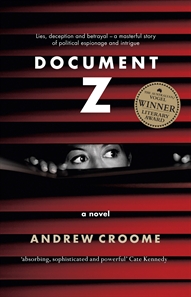
Document Z bookcover

Document Z cover image (Courtesy: Allen & Unwin)

The literary awards season is well and truly here downunder … and last night, just before the opening of this year’s Sydney Writers Festival, the NSW Premier’s Literary Awards for 2010 were announced.

The  full list of winners can be found here, so I’ll just name the critical ones, from my point of view (with links to relevant posts of mine):

  • Christina Stead Prize for Fiction: J.M. Coetzee, Summertime
  • Script writing award: Jane Campion, Bright Star & Aviva Ziegler, Fairweather Man
  • UTS Glenda Adams Award for New Writing for Fiction: Andrew Croome, Document Z
  • The People’s Choice Award: Cate Kennedy, The World Beneath
  • Special Award: The Macquarie Pen Anthology of Australian Literature

Not a bad result from my point of view. I have been meaning for some time to dip into the Macquarie Pen Anthology of Australian Literature properly. I wonder at myself sometimes really. What have I been doing posting on various offerings of the Library of America, when I could (should) in fact be choosing some choice items from this volume to share with you. I really must (want to) rectify this. (That said, another Library of America offering will be winging its way to you soon!)

Anyhow, I’m not going to ramble on about the Awards, but I would like to make one comment, and that is that the People of NSW seem to like what our judges tend to dismiss! Last year, they voted for Steve Toltz’s wonderful A fraction of the whole and this year they’ve gone for Cate Kennedy’s The world beneath. Both these books were longlisted for the Miles Franklin Award in their years, and were well reviewed around the traps, but both were not shortlisted. An interesting state of affairs, n’est-ce pas?

Miles Franklin shortlist for 2010

It seems vaguely silly for all we bloggers to be announcing the same thing – except that perhaps each of us has a slightly different readership so maybe it’s not completely redundant for me to announce here what has already been announced elsewhere – at Musings of a Literary Dilettante.

The Dilettante has provided links to the Judges’ comments, so please check out his link (here) if you’d like to see them. The shortlist though is:

  • Alex Miller’s Lovesong
  • Brian Castro’s The bath fugues
  • Craig Silvey’s Jasper Jones
  • Deborah Forster’s The book of Emmett
  • Peter Temple’s Truth
  • Sonya Hartnett’s Butterfly

To date, I’ve still only read Jasper Jones, though Lovesong is creeping up the pile!

Now the fun – and the wait – really begin.

Longlist for 2010 Miles Franklin Award announced

Book cover for Jasper Jones, by Craig Silvey

Jasper Jones cover (Courtesy Allen & Unwin)

Without further ado, here are the twelve who’ve made it to the 2010 Miles Franklin Award longlist:

  • Allington, Patrick Figurehead
  • Carey, Peter Parrot and Olivier in America
  • Castro, Brian The bath fugues
  • Doust, Jon Boy on a wire
  • Foster, David Sons of the rumour
  • Foster, Deborah The book of Emmett
  • Guest, Glenda Siddon Rock
  • Hartnett, Sonia Butterfly
  • Keneally, Thomas The people’s train
  • Miller, Alex Lovesong
  • Silvey, Craig Jasper Jones
  • Temple, Peter Truth

Well, shock! horror!, as you can see from my lonely link, I’ve only read one of these to date. While I like to give some focus in my reading to Australian writers, my reading, it seems, is driven by things other than catching the latest books out!  I do, however, have Lovesong and Truth in my TBR pile … so I will try, now, to get to them sooner rather than later … and then, well, time will tell how many of the others I manage to get to …

It is good to see a mix of new authors and established authors. That is a healthy sign, isn’t it. Still, there are some interesting omissions here, and I’m sure there’ll be plenty of comments on those. Cate Kennedy’s The world beneath (another on my TBR pile) is one that garnered some positive critical attention but is not here. Marion Halligan’s Valley of Grace and David Malouf’s Ransom, on the other hand, would have missed out because they do not meet the award’s conditions: that is, the work “must present Australian Life in any of its phases”!

All this, however, is now water under the bridge. The shortlist will be announced in April, and the winner on June 22.

If you’d like to research any of these titles further, a good start is this link to Readings Bookshop in Melbourne: it contains links to their interviews with several of the nominated authors.

The Diagram Prize for the oddest title of the year

I know you’ve been waiting for it: the longlist for the Bookseller/Diagram Prize is out – and in fact was out in early February. You can find it in the Guardian article here. As no doubt some of you know, this prize began in 1978 as a way, says the Wikipedia article to which I’ve linked, of providing entertainment during the 1978 Frankfurt Book Fair.

What a hoot! Not surprisingly, many of the winners have been non-fiction titles. Last year’s winner for example was The 2009-2014 World Outlook for 60-milligram Containers of Fromage Frais. There was a readership for that? One of those longlisted for this year is the rather clever The origin of faeces. I wouldn’t want to give you all a bum steer (sorry folks!), but my vote’s with this one!

Right now I can’t think of any particularly odd titles that I’ve come across in recent times – but here are a few title awards that I’d like to give:

Hardest to get right

Winner: The Guernsey Literary and Potato Peel Pie Society
How many people have you heard get that one wrong? People seem to have trouble getting all of “Potato Peel Pie” in when they tell you about it.

Runner up: Extremely loud and incredibly close
I have a friend who referred to it in an email like this: “Foer’s Amazingly and Suddenly (I’m sorry I can’t keep that title straight)”. She made my day, and every time I think of Foer, I think of her and smile!

Runner up (yes, I have a tie): True history of the Kelly Gang
People will start it with “The”!

Most appealing

Winner: An artist of the floating world
I know, this is a title in translation, but every time I hear it my spirit lifts and just, well, floats…

Runner up: It’s raining in Mango
Because we (here) need rain and I love mangoes. I rest my case.

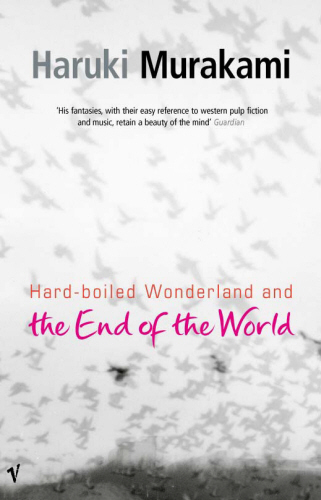
Haruki Murakami, Hardboiled wonderland and the end of the world

Cover image, used by permission of The Random House Group Ltd.

Funniest

Winner: The man who mistook his wife for a hat
A rare non-fiction entry in my list – and a very serious topic – but a worthy winner nonetheless.

Runner up: Hard-boiled wonderland and the end of the world
Not laugh out loud funny so much as bizarre. It also vies for “hardest to get right” honours too.

I could go on, making up more categories as I go but that would be too silly.

Titles are important –  though I wonder how significant they are to the success of a book, particularly for a lesser known author? Some years ago there was an article in the Sydney Morning Herald titled “What it takes to title a book”. In it Julian Barnes says:

“If I had a euro for every book title that copies the formula of Flaubert’s Parrot, I’d be a rich man,” he says, citing the examples of Pushkin’s Button and the recently published Audubon’s Elephant.

The article is fascinating, ranging over such issues as titles and commercial success, author versus publisher’s role in titling, working titles, duplicate titles, words like “midnight” that have their own “magic title buzz” – and so on.  According to the article – and many of you Fitzgerald fans will know this – F. Scott’s title for The great Gatsby was Under the red white and blue because it was about the American dream. His publisher had other ideas, and the rest as they say…  Similarly, Jane Austen afficionados are well aware that her first title for Pride and prejudice was First impressions.

What’s in a name? Plenty, it seems… Do you have any favourite titles? Or favourite title stories?

Ruth Park, Swords and crowns and rings

Note to self: never again “read” an audiobook over a long period, such as, say, 5 months! This is how I read Ruth Park‘s engrossing 1977 Miles Franklin award-winning novel, Swords and crowns and rings. It was not hard to keep up with the plot as it’s pretty straightforward – and powerful. It is hard, though, over such a time to keep up with and remember all the nuances in her writing and expression and the way they affect character development and thematic strands. For a thoughtful review of the book by someone who read it more sensibly, please see my friend Lisa’s, of ANZLitLovers, here.

I am not an experienced “reader” of audiobooks and I have to say that I found what seemed to me to be the over-dramatisation of the story rather trying in the first few CDs. I gradually got used to it, however, and by the end I was happy with Rubinstein’s reading, but it did take me a while to settle into it.

New-Zealand born Ruth Park is a wonderful chronicler of Australian life. Her novel, The harp in the south, set in working class Sydney in the 1940s is, to my mind at least, an Australian classic – but it is just one of her extensive and well-regarded body of work. Her autobiographies are also well-worth reading, not only for the light they throw on her life and on that of her husband, author D’Arcy Niland, but also on that of the Australian literary establishment of the mid-twentieth century.

Anyhow, back to the novel. Swords and crowns and rings tells the story of two young people born in an Australian country town before World War 1 – pretty Cushie Moy (born to a comfortable family with the stereotypical socially ambitious mother who has married down) and the dwarf, Jackie Hanna (whose background is well and truly working class). Not surprisingly, Cushie’s parents frown on the friendship which develops between the two. This is not an innovative story but, rather, good historical fiction with evocative writing and sensitive character development. Consequently, as you would expect, the two are separated just as they realise their love for each other and the book then chronicles their respective lives – Cushie with various relations in Sydney and Jackie in a number of country locations before he too reaches Sydney. Much of the book takes place during the early 1930s Depression. Park gorgeously evokes the hardships – physical, economic and emotional – experienced by people like Jackie and his step-dad “the Nun” as they struggle to support themselves. All this is underpinned by Park’s thorough knowledge of the social and political history of the time: we learn about labour organisations and the rise of socialism, of that irascible politician “Big Fella” Jack Lang, and of the building of the Sydney Harbour Bridge.

The resolution is predictable – it is, after all, a book of its genre – but it is not over-sentimentalised and is not achieved before the characters, Jackie in particular, have matured to the point that we can trust that he not only deserves what will come but that he will continue to work and mature for the betterment of himself and those he loves. It is truly a powerful book about human nature, as well as about the place and time in which it is set.

Ruth Park
Swords and crowns and rings (Audio CD)
Read by Deidre Rubenstein
Bolinda Audio, 2007
18 hours on 15 compact discs
ISBN: 9781741636628

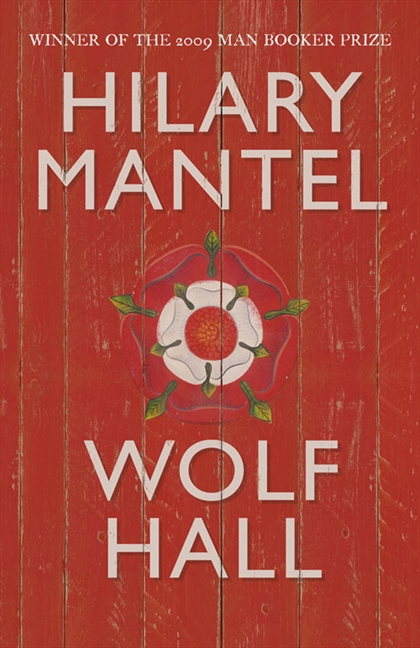
Hilary Mantel, Wolf Hall

An interesting question to ponder when thinking about Hilary Mantel’s Wolf Hall is the significance of the title. While the place Wolf Hall, the family seat of the Seymour family, does get a few mentions it does not really function as a location. Wolves, however, are one of the subtle motifs running through the novel. As its protagonist remembers late in the book:

…homo homini lupus, man is wolf to man.

Hilary Mantel, Wolf Hall

Cover image (Courtesy HarperCollins Publishers)

And, after reading the novel, it would be hard to refute this notion! Wolf Hall is set in England between 1500 and 1535, with most of the action taking place between 1527 and 1535. It deals primarily with the lead up to and first years of Henry VIII’s marriage to Anne Boleyn, but as seen through the eyes of Thomas Cromwell. Its plot centres on the machinations involved in dissolving Henry’s marriage to Katherine (Catherine) of Aragon, who had failed to produce a male heir, so he could legally marry Anne Boleyn; its real subject matter, though, is far wider than that. Its time period – the early years of the English Reformation – and its plot mean that it deals with the major issues of the time, including England’s separation from Rome, the translation of the Bible into English and the relaxing of rules regarding access to the Bible, the Act of Supremacy, and succession to the throne. Running through this are the jostlings for power, the skullduggery, and the betrayals (and suprising acts of loyalty) that are the hallmarks of the Tudor Court. Man was indeed wolf to man then (and I sometimes wonder how much has changed?).

This is an exquisite – though large! – novel. It won the 2009 Booker Prize: I can’t compare it with the others because I haven’t read them, but I did enjoy this immensely. In my recent review of The enchantress of Florence – and what fascinating synchronicity to read these two in sequence – I said that the one word I would use to describe it was “paradoxical”. The word I would use for Wolf Hall is “subtle”. It is subtle in so many ways – in its narrative style, its humour, its irony, its symbolism, its descriptions, its juxtapositions. Nothing here is heavy-handed or overdone.

But first, its narrative style. I was forewarned about Mantel’s use of “he” in this novel and perhaps this helped, because I rarely found it difficult or confusing. In fact, I rather liked the style. It’s a bit like a first-person novel told in third person – third person subjective (limited) point of view, I guess – and so the use of “he” reminds us that it is HIS perspective we are getting. Everything we know we know through him, through his thoughts and through his interactions with others. I found this approach intriguing – it gave immediacy and distance at the same time. And this brings me to the man himself.

Thomas Cromwell, for those who don’t know their English history, rose from very humble beginnings to being Henry’s trusted chief minister. He did this by dint of his character and the timely beneficial patronage of Cardinal Wolsey. He became street-smart in his youth but he also educated himself in the culture (literature and art) of the times. He could speak Latin, Italian and French. He was an accountant and lawyer.  He knew about trade. He was no slouch in the kitchen either. He was, indeed, a jack-of-all-trades. Here is a description early in the book (1527):

Thomas Cromwell is now a little over forty years old. He is a man of strong build, not tall. Various expressions are available to his face, and one is readable: an expression of stifled amusement … It is said he knows by heart the entire New Testamant in Latin … He is at home in courtroom or waterfront, bishop’s palace or inn yard. He can draft a contract, train a falcom, draw a map, stop a street fight, furnish a house and fix a jury…

A man, that is, not to be trifled with – and yet he is a man who develops a large and loving household full of loyal children, relatives and “wards”. Some of the loveliest sections of the book are set in his home, Austin Friars. He is also loyal – sticking by Wolsey, for example, in his decline – and firm, hard even, but not cruel.

However, I don’t want this review to be as long as the book and so shall move on. I loved Mantel’s descriptions – they are always short but highly evocative. Here is the Duke of Norfolk:

The duke is now approaching sixty years old but concedes nothing to the calendar. Flint-faced and keen-eyed, he is lean as a gnawed bone and cold as an axe-head;  his joints seem knitted together of supple chain links, and indeed he rattles a little as he moves, for his clothes conceal relics…

And here is another telling description (after charges against Wolsey have been written):

It is a wan morning, low unbroken cloud; the light filtering sparely through the glass, is the colour of tarnished pewter. How brightly coloured the king is, like the king in a new pack of cards: how small his flat blue eye.

Delicious aren’t they?

The novel ends at an intriguing point – but I won’t give that away here except to say that it does not conclude with the end of Cromwell’s life. That, we believe, is the subject of a sequel.

I would love to keep writing about the characters, the language, the way Mantel puts it all together – such as the way she drops hints then explores them later – but that could become boring. Better for you to read the book (if you haven’t already). Instead, I will end with what is probably the book’s overarching theme – that of “how the world works”, and that is through machinations behind the scenes:

The fate of peoples is made like this, two men in small rooms. Forget the coronations, the conclaves of cardinals, the pomp and processions. This is how the world changes: a counter pushed across a table, a pen stroke that alters the force of a phrase, a woman’s sigh as she passes and leaves on the air a trail of orange flower or rosewater…

It was ever thus, eh?

Hilary Mantel
Wolf Hall
London: Fourth Estate, 2009
653pp.
ISBN: 9870007292417

POSTSCRIPT: Steven, at A Momentary Taste of Being, posted a link to this fascinating article by Hilary Mantel on Thomas Cromwell. It is well worth a read.