Winners of the 2011 Prime Minister’s Literary Awards

National Library of Australia, photo taken by ...

NLA, 2004 (Image courtesy John Conway, via Wikipedia, using CC-BY-SA 3.0)

Brought to you straight from the afternoon presentation with Caroline Baum in the National Library of Australia Theatre:

  • FictionTraitor, by Stephen Daisley
  • Non-fictionThe hard light of day, by Rod Moss
  • Young adult fictionGraffiti moon, by Cath Crowley
  • Children’s fictionShake a leg, by Boori Monty Pryor and Jan Ormerod

This afternoon’s panel discussion followed the formal announcement and presentation of the awards this morning. The afternoon session, chaired by journalist and broadcaster Caroline Baum, involved a panel of three winning authors (Stephen Daisley, Rod Moss and Boori Monty Pryor) and one shortlisted author (Laura Buzo).

Baum led off her discussion with a question to the authors about their use of technology. It turned out that they were generally a conservative lot though Pryor did admit to having, and using, a laptop. A later question from the audience brought the response from Moss that while he did not use technology in a sophisticated way he was happy for publishers to apply whatever technology they saw fit to get the works out there. Our audience member was wanting more though. Perhaps aware of the recent apps for TS Eliot’s The waste land and Jack Kerouac’s On the road, he was hoping the authors were thinking more imaginatively about using technology in the creative process rather than for distribution after the fact … but these authors were not quite there yet it seemed.

Another question Baum asked was to Stephen Daisley on writing about place. She said that roughly 50% of authors writing about foreign places say they must visit a place to write about it, while the other half argue that visiting the place isn’t necessary. Daisley admitted that he had not visited all the places he’d written about in his novel Traitor, which of course led Baum to ask how one can write about a place without going to it. Daisley’s answer? One word: Google!

I won’t summarise the full discussion, but will mention one other issue Baum raised, and that was to do with indigenous Australians and the problems they – and we – are facing. Pryor (an indigenous Australian) and Moss (whose book is about his experience as an artist working amongst indigenous Australians) answered along similar lines. Moss suggested that he had no “answer” but that what is missing is “genuine friendship” between black and white Australians. Pryor said that it was up to each person to make their own journey but that a true recognition of the special nature and importance of indigenous language, land, art and storytelling would have a ripple effect. In other words, what I “heard” them both saying – and what I’ve heard others say – is that more important than such things as health and education programs is, simply, the showing (or, should I say, feeling of) real respect. Not lip service, not a “send them here, send them there” attitude, but a true respect for the people and their culture. From that all else should logically flow. A sobering but not negative conclusion to what was a fascinating hour or so spent in the company of some very thoughtful people.

Postscript: Some interesting changes are occurring in the literary prize community. This year the Miles Franklin award and the Prime Minister’s Literary Awards included prize money for the shortlisted books too. This is, don’t you think, a great step, recognising, if in a small way, that such awards do have a strong subjective element. So, in the Prime Minister’s Literary Awards the overall prize money remains the same in 2011 as it was last year: $100,000 for each of the four categories. But this year the winning book in each category will win a tax-free prize of $80,000, and each short-listed book (to a maximum of four in each) will receive $5000. I do hope the winners are happy with their reduced purse!
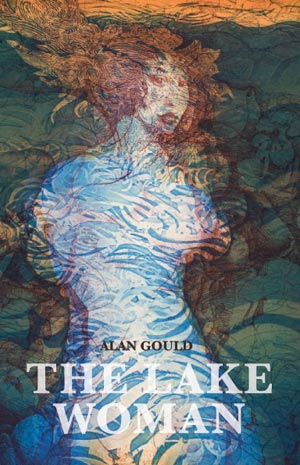
Alan Gould, The lakewoman: A romance

Alan Gould, The lakewoman

Book cover (Courtesy: Australian Scholarly Publishing P/L)

I’m a little embarrassed to say that until The lakewoman was shortlisted in the 2010 Prime Minister’s Literary Awards, I only knew of Alan Gould as a poet. Turns out, though, that he has written several novels, of which this one is his most recent. It is, ostensibly, a war novel, in that much of it is set in or around World War 2, but it is not in fact about the war.

It’s an intriguing book that slides literally and metaphorically between the solidity of the earth and the fluidity of water, between pragmatism and magic (or enchantment). It tells the story of Alec Dearborn, an Australian grazier’s son who was born in 1918. He goes to Cambridge in England and, when the war starts, decides to join up with the British Army rather than return home. The novel starts with his having landed in a lake, after parachuting from a plane for the D-Day Invasion. He is drowning, dragged down by his weapons bag and parachute, but is rescued by – yes – a lady in a lake. Ha! Now you see why it is called a “romance” because, while it contains “a” romance, it also hearkens back to the “romances” of yore, like the Arthurian legend. Here is the set up, pp. 2-3:

As he vomited he also wondered why this sudden young Mamzelle happened to be present at the exact, unlikely spot in France where his foolish body had come to earth. It was a question that would usefully occupy his mind later, when he was behind the wire with the austere leisure to brood on the magic that settled into his life following this, his fluky rescue. Magic? He was not a fellow given to outlandish notions, and would interrogate the dubious word, looking for its sense, not in mumbo jumbo, but as some friable quantity existing within the very crevices of everyday occasions.

In this passage, we see how carefully Gould has laid out his novel. He introduces us to the ideas of coincidence (fluke) and magic versus the everyday business of living, and he uses foreshadowing to distract us from plot issues (what will happen next) towards more interior ones (what is the meaning of what happens). As the novel progresses, this fellow who is not given “to outlandish notions” finds himself drawn, almost telepathically (it seems), to his rescuer. She , Viva, rather like the Arthurian lady-in-the-lake, frames the rest of his life, one way or another.

What happens on the surface of the novel is fairly matter-of-fact. Alec’s life runs its course in a mostly unremarkable way. One of the central questions of the book is that which Alec poses to his sister, Bell, a little while after he returns to Australia:

What I can’t work out is […] Well, how a person knows whether the existence he’s been given has been of value to anyone else.

This is Alec’s conundrum. He does not fulfil the traditional expectations of a grazier’s son (“Dearborn”, after all), despite his “prospects” : he’s intelligent, sensitive, and physically capable (“the dynamism in balance with the dreaminess”). Much of this failure stems from his being “disarmed” on June 6, 1944, by Viva. There are some lovely, appropriate wordplays in the novel, and one of these centres on the idea of disarming/arming, which works beautifully against the novel’s military background:

‘If you think about me, then, when you are gone, I will be arming you still,’ she assured him, mysteriously.

Soon after he leaves her, he ponders what has occurred:

‘I feel distress at having relinquished you,’ he supplied on consideration. For it was distress, he recognised, to be walking away from this sudden new claim on his life. ‘It is this that has disarmed me, I reckon,’ he explained for her.

I will be arming you, she reminded.

It is difficult with this WordPress theme to get the formatting right: this last statement by her is in italics in the novel and suggests either his memory of her words or an actual telepathic communication. Which one it is, is one of the lasting ambiguities of the novel. Italics are used throughout the novel for “communications” like this and for interior monologues/reflections, usually Alec’s, since this is a third person narrative, told mostly from Alec’s point of view.

By now you may be thinking that this novel is a fantasy, even a romantic fantasy, but not so. Neither is it magical realist. It’s simply that there is a sense that slightly mystical things may be happening, things that make sense psychologically but that also convey another plane of human thought and behaviour. It reminded me, at times, of Patrick White‘s Voss, but to suggest more than that would be to do it a disservice because it is not at all derivative. Rather, it is simply that the story focuses on a dimension of experience that can’t always be logically explained but that is nonetheless very real. Gould has, I think, pulled this dichotomy off, by careful manipulation of tone: through language that is poetic but not overdone; a pacing that is meditatively slow at the beginning and pragmatically faster at the end; evocative chapter titles (such as “To Fling the Lovely Foolish Body”, “Had You Down Dead”); the occasional light touch (“‘You are the invasion?’, she asked”); and timing that foreshadows just enough to make sure we stay focused on the ideas and not the facts.

And for me, the main idea (the one that provides an “undercurrent” to all the others) is that of completing the self, which is something Alec struggles  to do. In the end though:

…the joy, the completion was her presence, and the talk was strangely superfluous. Yet by convention they did talk from some region of the mind where the words did not especially matter but the proximity of the person created an entirety of being.

This is a rather melancholic, but by no means sentimental, book – and it moved me deeply.

Alan Gould
The lakewoman
North Melbourne: Arcadia, 2009
296pp.
ISBN: 9781921509346

Stop Press: New writer Gretchen Shirm shortlisted

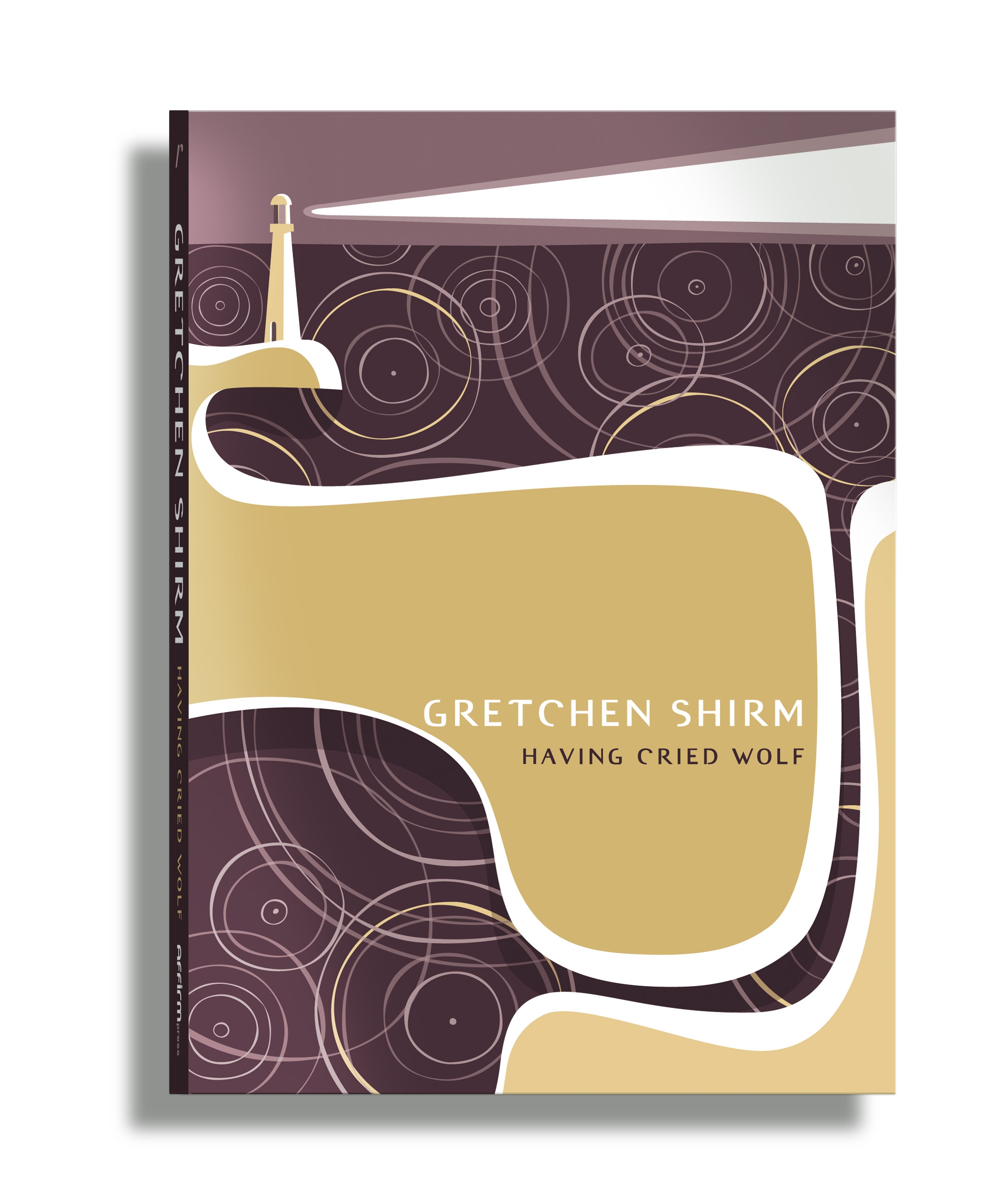
Having cried wolf, book cover

Bookcover (Courtesy: Affirm Press)

I haven’t been reporting all the various Australian literary awards announcements here since Lisa at ANZLitLovers has been doing that so ably, but I have just noticed that Gretchen Shirm’s collection of short stories, Having cried wolf, has been shortlisted for this year’s UTS Glenda Adams Award for New Writing in the NSW Premier’s Literary Awards.

I reviewed this a few months ago and was mightily impressed. I wish Shirm the best of luck but, whatever happens, it’s a great achievement to have been listed. Meanwhile, I suggest you check it out…

Marie Munkara, Every secret thing

They all nodded, not knowing what the hell curry* was but getting gist of the story all the same.

Marie Munkara leads us a merry dance with Every secret thing, her first book, which won the David Unaipon Award for an unpublished Aboriginal or Torres Strait Islander writer. What exactly is this “thing” she presents to us? A novel? A short story collection? Well, I think it’s a bit of both. It looks like stand-alone short stories, and can probably be read that way. But, the same characters keep reappearing in the stories and there is a chronological thrust to it with a conclusion of sorts in the final story, so I’d call it connected short stories.

Form, though, is not the only way in which she leads us a merry dance. This is a genuinely funny book – sometimes slapstick or ribald, sometimes more bitter, satiric and/or ironic, but pretty well always funny. However, her subject matter is desperately serious – the destruction of indigenous culture through contact with white culture, specifically in this book through contact with missions and missionaries.

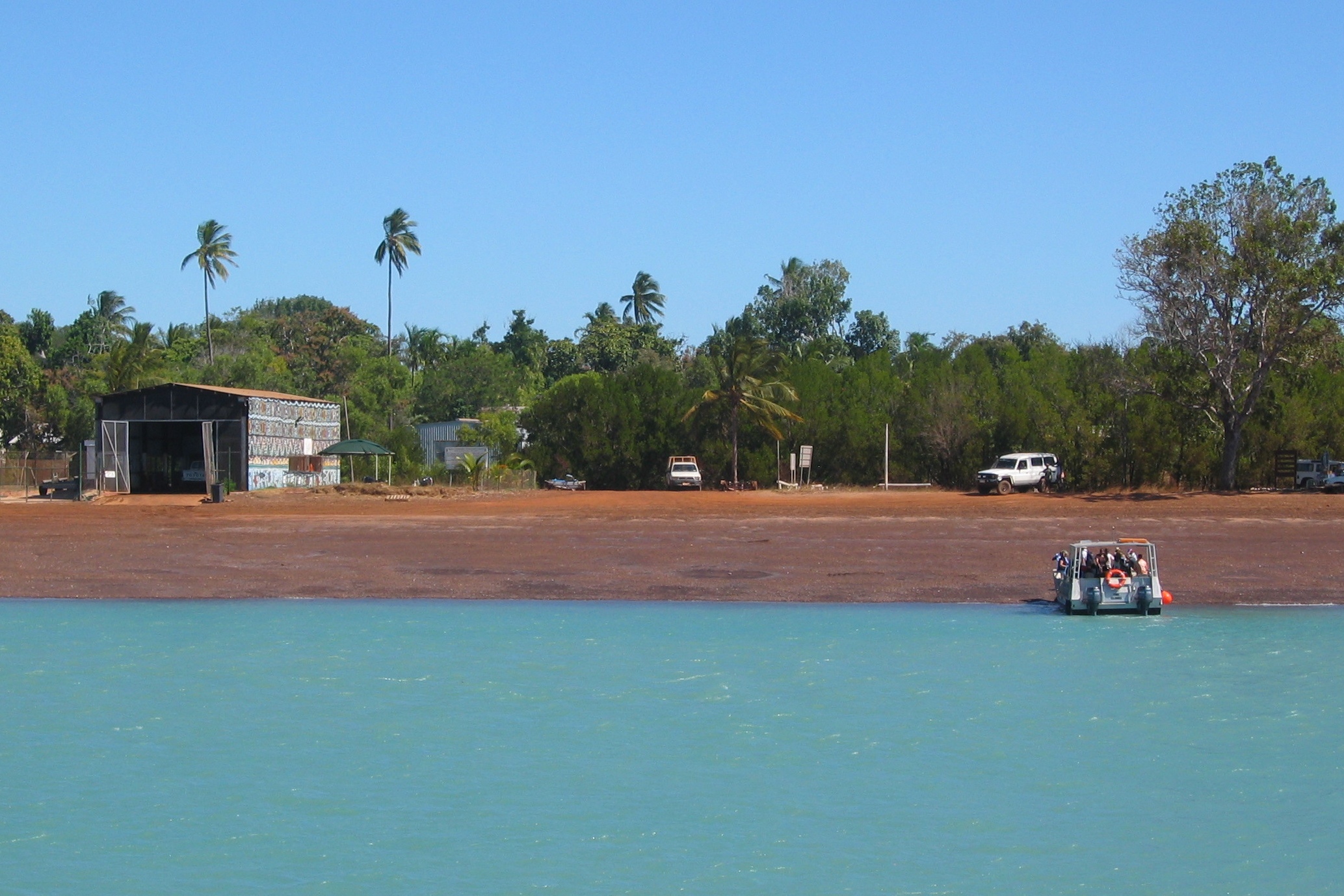
Bathurst Island (Tiwi Islands)
Approaching beautiful Bathurst Island (Tiwi Islands)

Marie Munkara was born in Arnhem Land and spent the first few years of her life on Bathurst Island in the Tiwi Islands. She left there when she was 3 years old, and didn’t return until she was 28. These stories, she says, are drawn from those told to her by friends and family, and are set, I think, in the early to mid twentieth century. She explores a wide range of issues reflective of indigenous-white contact at that time, including education and religion, the stolen generation, sexual abuse, the introduction of alcohol and disease, and anthropological research.

Munkara sees humour in everything (more or less) but her more biting humour is reserved for the “mission mob” because, of course, it is they who wield the power over the “bush mob”. The “bush mob” are shown to be intelligent and resourceful but no match for the power of the muruntawi (white people). Her language draws on a wide range of traditions – including indigenous storytelling, biblical, common clichés – and from these she tells stories that are only too believable. Here she tells us about one of the Brothers:

And so time passed and the natural progression of things came to be and the bullied became the bully, and the bully became the misogynist, and the misogynist became a Brother in a Catholic mission in a remote place in the Northern Territory… (“The sound of music”)

A too familiar story, told in a biblical tone. There is a funny story in which the “bush mob” tries to lead an anthropologist astray by feeding him incorrect information (such as obscene or silly names for ordinary objects), but their victory is Pyrrhic, as the end of the story conveys:

And after all, it was difficult sometimes to tell the difference between the missionaries and the madmen and the mercenaries because their eyes all looked the same and their tongues all spoke the same language of greed. If it wasn’t your soul they wanted, it was something else. Until it became an automatic response whenever a strange muruntani appeared to put out your hand for the specimen bottle to piss into or extend your arm for a blood sample to be taken or for the ungracious thought to pass through their mind that here was yet another who had come to take but as always gave nothing in return. (“Wurruwataka”)

Her stories about the stolen generations are particularly bitter, but again she uses humour. She tells the story of Marigold (née Tapalinga) who’d returned “home” after years away, only to find that she no longer fit, but:

Nor did Mrs Jones want the hussy back as their servant having sprung the little slut underneath Mr Jones in the spare room. The poor man was still traumatised by the ordeal. This wasn’t the first time she’d raped him, he claimed. (“Marigold”)

Only an indigenous writer could write something so patently ridiculous on this topic – and so drive the point home!

Munkara neatly tracks the Bishop’s behaviour and impact on his flock by constantly changing her epithet for him. In the first story, “The Bishop”, he is introduced as “his Most Distinguished” but is then referred to by various names including “his Most Garrulous”, “his Most Impatient” and “his Most Impious”. This changing of names for the Bishop is rather unsubtle humour but it carries a sly comment on the “mission mob’s” disrespect for indigenous culture by insisting on naming indigenous people, completely ignoring the fact that they have their own names. And so, in the first story, we are introduced to Matthew, Mark, Luke and John, to Epiphany, Lazarus, and John the Baptist, to name just a few of the cast of characters populating the book.

Another technique Munkara uses is to pepper her stories with white culture sayings and clichés, such as, “misery loves company alright”, “looking on the bright side”, “but you just can’t please everyone”, and this one:

And so it came to be that for the first time ever, the mission mob found themselves sitting where they’d never sat before – between a rock called ‘you didn’t see that one coming did you’ and a hard place called ‘bush mob’s indifference’. (“The good doctor”)

Overall, this is deceptively simple but clever writing that sets up and undermines its premises every step of the way. First “the mission mob” seems to be winning, and then “the bush mob”. However, while it could be said that “the bush mob” were “clever individuals who had learnt to sit on the wobbly fence of cultural evolution without falling off”, the real truth is that

They didn’t have to die to go to hell because the mission had happily brought that with them when they’d arrived unasked on the fateful shores of the place that was their heaven all those years ago. (“The movies”)

A spoonful of sugar, they say, makes the medicine go down, and that’s certainly true of this book. The sugar is not so strong though that you miss the medicine. Munkara makes sure of that – and the end result is a very funny but also very sobering book. I suspect and hope that Munkara has more … because the missions are only one facet of the history of contact in Australia. There is plenty for her to sink her teeth into.

Musings of a Literary Dilettante and Resident Judge have also reviewed this book.

Marie Munkara
Every secret thing
St Lucia: University of Queensland Press, 2009
181pp.
ISBN: 9780702237195

* Reference to the colloquialism “giving them curry”.

Mario Vargas Llosa, The feast of the Goat

Mario Vargas Llosa, signing books

Mario Vargas Llosa signing books in 2010 (Courtesty: Daniele Devoti, via Wikipedia, using CC-BY-2.0)

If Nobel Laureate Mario Vargas Llosa‘s The feast of the goat had been a traditional historical novel, chances are it would have started with the assassins concocting their plan and then worked chronologically to its logical conclusion. But, it is not a traditional historical novel, as is reflected in the structure Vargas Llosa has chosen to tell his story.

Before we get to that though, the plot. The central story revolves around the dying (literally) days of the 30-year Trujillo (“the Goat”, “the Benefactor”, “the devil”) regime in the Dominican Republic. This means the main action takes place in 1961. However, overlaying this is the perspective of Urania, the daughter of one of Trujillo’s head honchos. She’d left the country days before the regime ended and cut herself completely off from her father – for thirty-five years, until her sudden return at the novel’s start. The novel is told from these two time perspectives – 1960/61 and 1996 – and from multiple points-of-view*, the main ones being:

  • Urania
  • Trujillo
  • The conspirators/assassins

But this isn’t all there is to this novel’s structure and narrative style. I’m not quite sure how Vargas Llosa gets away with it, but he has written a book that is very accessible (once you get across the intricacies of Latin American names) and yet also rather complex. This complexity is found, primarily, in the structure. The book can, essentially, be divided into two parts. Chapters 1-16 proceed pretty systematically, cycling through, in turn, the stories of Urania, Trujillo (usually with one of his offsiders), and the Conspirators (usually focusing on one of them in particular). By Chapter 16 the two major crises of the book have occurred or been introduced. The last 8 chapters continue to cycle through different points-of-view but not in the same systematic order. In other words, the narrative structure becomes erratic and the rhythm more urgent, as chaos and uncertainty take over.

And yet, there’s more. For example, the novel is told primarily in third person, with the point-of-view changing chapter to chapter. But, every now and then, for just a sentence or two, or maybe a paragraph, the voice lapses into second person. This happens most often with Urania and conveys the sense that there has been some trauma that she hasn’t been able to fully integrate/recover from. We discover the origins of this trauma in Chapter 16, but it is not fully revealed until the last chapter.

… You were still a girl, when being a girl meant being totally innocent about certain things that had to do with desire, instincts, power, and the infinite excesses and bestialities that a combination of those things could mean in a country shaped by Trujillo. She was a bright girl … (Chapter 16)

This little slip into second person in Urania’s story is telling.

Okay, so this is the architecture, the behind-the-scenes technical stuff, but why write it this way? Well, the reasons are intellectual and emotional. Intellectual in that the multiple alternating points-of-view enable us to get a number of “stories” first hand. Through the eyes of the perpetrators and the disaffected, we explore the regime, and how, as happens so often with dictatorships, the early benefits are gradually (but surely) overshadowed by the corruption and violence perpetrated to maintain power, and how this leads to the assassination conspiracy. And emotional in that the constant shifting in perspective, particularly from people we can trust to those we can’t (to the best of our knowledge), and back again, unsettles and discomforts us … just as those who lived through the regime were kept on edge.

It’s impossible, without writing a thesis, to cover all the angles in this book, so I’m just going to look at one more – the characterisation of Trujillo himself. A historical novelist (rather like a biographer) has to choose what to include and what to exclude when describing a person. Vargas Llosa was lucky, really, that Trujillo had some traits that made this choice rather easy, traits that work on both the literal level and the ironic and metaphoric. Fairly early in the novel is this description of Trujillo

…that master manipulator of innocents, fools, and imbeciles, that astute exploiter of men’s vanity, greed and stupidity.

Fairly typical, wouldn’t you say, of a dictator? But, Trujillo was also fastidious about cleanliness and appearance, believing that

Appearance is the mirror of the soul.

If that’s so, then Trujillo’s “soul” is a very superficial thing because his disdain for the rights and feelings of others is palpable. Throughout the novel, Vargas Llosa sets Trujillo’s obsession with personal care (“the man who did not sweat, did not sleep, never had a wrinkle on his uniform, his tuxedo, or his street clothes”) against the coldness of his mind. That his mind is cold is made perfectly clear through his attitude to his offsiders (whom he liked to scare – “it cheered him to imagine the sizzling questions, suppositions, fears, suspicions he put into the head of that asshole who was the Minister of the Armed Forces”) and to women. This regime values machismo above all: it’s brutal to those those less powerful, and has careless disregard for the innocent. Women, of course, bear the brunt:

Again the memory of the girl at Mahogany House crossed his mind. An unpleasant episode. Would it have been better to shoot her on the spot, while she was looking at him with those eyes? Nonsense. He had never fired a gun gratuitously, least of all for things in bed. Only when there was no alternative, when it was absolutely necessary to move this country forward, or to wash away an insult.

Trujillo was nothing if not a master of self-justification.

How it all falls out, what happens after Chapter 16, is both expected and unexpected as those involved do or don’t do what they’d committed to. The end result is a devastating portrayal of how the political becomes the personal! Not a new message, perhaps, but The feast of the Goat is a compelling read that engaged my heart and mind. I recommend it.

Mario Vargas Llosa
(Trans. by Edith Grossman)
The feast of the goat
London: Faber and Faber, 2002
475pp.
ISBN: 9780571207763

* As in most historical fiction, the novel is peopled with historical characters and fictional ones. Most, in fact, are historical but Urania and her father, though based, I understand, on real people, are fictional.

Monday musings on Australian literature: the Great Australian Novel, or?

Henry Handel Richardson in 1945, a year before...

Henry Handel Richardson, 1945 (Presumed Public Domain, via Wikipedia)

First, a confession. I am not one who believes we need to define such a beast as “The Great [name your country] Novel”. However, just to be perverse, I thought that for this week’s Monday musings it would be interesting to look at what might qualify for such a label – and, in doing so, consider what might constitute an Australian canon.

A canon gets us away from having to define the “Great Australian Novel”*, from having to decide whether it must be written by an Australian, must reflect “Australia” in some sort of specific way. In fact, on the latter, Professor Gelder, a literature professor from Melbourne argued in 2009 that globalisation and transnationalism make “the great Australian novel” “almost impossible”. This is because he defines the GAN in terms of being “a nationalist project”. And, perhaps, that’s the only way you can define a GAN. A canon, on the other hand, can be more diverse, can reflect the variety – in space, time, theme, and so on – that makes up our – and, any, really – national literature.

Without getting into the pros and cons, rights and wrongs, of polls, I thought I’d list the top ten Australian books (mostly novels) from  three different and reasonably recent polls to see what they tell us.

Poll 1: The Australian Society of Authors Top 10 as voted by their members in 2003:

  1. Cloudstreet (1991), Tim Winton
  2. The man who loved children (1940), Christina Stead
  3. The fortunes of Richard Mahony (1930), Henry Handel Richardson
  4. Dirt music (2001) Tim Winton
  5. Voss (1957) Patrick White
  6. The tree of man (1955), Patrick White
  7. The magic pudding (1918), Norman Lindsay (children’s)
  8. An imaginary life (1978), David Malouf
  9. Tirra lirra by the river (1978), Jessica Anderson
  10. My brother Jack (1964), George Johnston

Poll 2: The Australian Broadcasting Corporations’s Top 10, as voted by Australians via ABC promotions in 2003:

  1. Cloudstreet (1991), Tim Winton
  2. A fortunate life (1981), AB Facey (memoir)
  3. Dirt music (2001),Tim Winton
  4. My brother Jack (1964), George Johnston
  5. The magic pudding (1918), Norman Lindsay (children’s)
  6. The tree of man (1955), Patrick White
  7. Seven little Australians (1894), Ethel Turner (children’s)
  8. The fortunes of Richard Mahony (1930), Henry Handel Richardson
  9. Tomorrow when the war began (1993), John Marsden (young adult)
  10. My place (1987), Sally Morgan (memoir)

Poll 3: The Australian Book Review’s (ABR) Top 10, as voted by Australians via ABR promotions, 0ver 2009/10 (and reported by me last March)

  1. Cloudstreet (1991), Tim Winton
  2. The fortunes of Richard Mahony (1930), Henry Handel Richardson
  3. Voss (1957), by Patrick White
  4. Breath (2008) Tim Winton
  5. Oscar and Lucinda (1988), Peter Carey
  6. My brother Jack (1964), George Johnston
  7. The secret river (2005), by Kate Grenville
  8. Eucalyptus (1998), by Murray Bail
  9. The man who loved children (1940), by Christina Stead
  10. The tree of man (1955), Patrick White

Hmm … accounting for the fact that the third poll was taken several years after the first two and so includes a couple more recent books, the noticeable thing is the remarkable congruence between the three. You would have to say that, in the early twenty-first century, Tim Winton’s Cloudstreet would get the GAN gong, though Professor Gelder would disagree. He argued that only Patrick White would qualify. He said that

Tim Winton’s ‘Cloudstreet’ got close to being a ‘great Australian novel’, but at a cost. It was nostalgic, homely, remote from reality, and conservative.

Oh dear, maybe these are the very reasons the novel is popular with readers (though authors, too, liked it!)!

Anyhow, the appealing thing to me is that, despite the to-be-expected inclusion of recent authors, these lists do also take a relatively (given the youth of our country) long view. It’s good to see the inclusion of Henry Handel Richardson, Christina Stead and George Johnston, alongside the also to-be-expected inclusion of our only literary Nobel Laureate, Patrick White. And, it’s satisfying to see a goodly number of women writers recognised – not only Richardson and Stead, but also Jessica Anderson, Ethel Turner, Kate Grenville and the artist/memoirst Sally Morgan.

You might think that such agreement might be reflected in what is being taught in Australian universities but you’d be wrong, at least according to the Teaching Australian Literature website. Its Top Ten texts (that is, those appearing on most reading lists) are:

  1. The secret river (2005), Kate Grenville
  2. My brilliant career (1901), Miles Franklin
  3. Remembering Babylon (1993), David Malouf
  4. Loaded (1995), Christos Tsiolkas
  5. Carpentaria (2006), Alexis Wright
  6. True history of the Kelly Gang (2000), Peter Carey
  7. Summer of the seventeenth doll (1953), Ray Lawler (play)
  8. The monkey’s mask (1994), Dorothy Porter
  9. My place (1987), Sally Morgan (memoir)
  10. Swallow the air (2006), Tara June Winch
    True country (1993), Kim Scott

A (generally) more “edgy” list and, in its own way, rather encouraging. But, where does that leave the canon? Perhaps as a work-in-progress … to which we might (or might not!) return to in Monday musings.  Meanwhile, talking about works-in-progress, Lisa at ANZLitLovers is working on a somewhat different tack. She is developing a List of Australian/New Zealand Books You Must Read. Go check it out – and if you’d like to make a suggestion, please do …

Do you think there is value to the idea of a canon? Or does it discourage wide and open-minded reading and coincidentally encourage a too narrow view of the culture it refers to?

* the GAN, not to be confused with another GAN, the “Great American Novel”.

Dr Peter Kocan wins the 2010 Australia Council Writer’s Emeritus Award

Some literary awards tend to fall somewhat under the radar, and one of these is the Australia Council‘s Writer’s Emeritus Award – even though it’s a fairly generous one: $50,000. This is one of those lifetime awards; it is given to a writer over 65 years old* (hence, I suppose, the “emeritus”) for “exceptional contribution to Australian writing”. Previous winners include well-known and lesser known writers, such as: Eleanor Dark, Ray Lawler, Barbara Jefferis, Christina Stead, Barry Oakley, Margaret Scott and Judith Wright McKinney.

I’m embarrassed to say, though, that I haven’t read this year’s winner, Peter Kocan. He is an interesting fella! In 1966, when he was 19 years old, he was found guilty of the attempted assassination of the then Federal Government Opposition Leader, Arthur Calwell, resulting in a prison sentence and a place in an institution for the criminally insane. It seems that he managed to turn that experience into an opportunity and took up writing in 1967. He has published novels, plays and poetry (with his first two poetry collections being published while he was still in prison). Much of his writing is, apparently, autobiographical, and therefore deals with prison life, mental health, and post-prison alienation.

He is a writer I am going to look out for …

*Note: I think this age definition must have been dropped in recent years as Kocan was born in 1947. Presumably though it is still intended for “older” writers.

POSTSCRIPT: Guy of His Futile Preoccupations has written an excellent, thorough review of Kocan’s novel, The treatment and the cure. It’s well worth reading if you’d like a sense of Kocan and his writing.

Another award for Nam Le

I read Nam Le‘s collection of short stories The boat a few months before I started my blog. The collection has been well reviewed nationally and internationally, and has won quite a few awards. I have just read that he has now been awarded another: The Kathleen Mitchell Award which is a biennial literary prize for writers under 30 years old (as Nam Le was when the book was published). This award has been previously won by Sonya Hartnett who has gone on to write several highly acclaimed novels – and been shortlisted for the Miles Franklin – and Markus Zusak.

I loved The boat. It’s an unusually diverse collection. The language is highly differentiated from story to story to suit the particular characters and setting of each; the narrative voice varies from 1st to 3rd person, and from male to female points of view; and there’s an asonishing variety in his protagonists and settings. The subjects range from an 8 year old orphan girl in Hiroshima to a middle-aged painter in New York, from a 14 year old hitman in Colombia to a 35-year old American woman visiting Iran. Despite this diversity, though, there is a strong underlying theme, that of survival. This is probably not surprising in a writer who came to Australia from Vietnam as a boat refugee (albeit when not much more than a baby).

As it’s been a while since I read the book I’m not going to review it now but, given my particular interest in the intersection between fact and fiction, I’ll just mention the autobiographical aspect of the first story, “Love and honour and pity and pride and compassion and sacrifice”. That story is so close to Nam Le’s own life that it is tempting to read it as his life. A character says to the fictional Nam that “instead [of writing immigrant stories], you choose to write about lesbian vampires , and Colombian assassins, and Hiroshima orphans – and New York painters with haemorrhoids”. One reviewer, Hari Kunzru in The Scotsman, wrote that “Sure enough, The Boat, contains all these stories, minus the lesbian vampires, who presumably got lost in the edit”. My question is: Does he know this for a fact? Did the real Nam Le write such a story or is it only the fictional one who did? Is this a case of life getting mixed up with art? In an interview on the ABC’s Bookshow Nam Le admits to a story about lesbians but says “the vampires I needed to leave some interpretive distance, I reckon”. I like to think of it as Nam Le’s little joke – but I may be wrong!

Oh, and did I mention that Nam Le attended the Iowa Writers’ Workshop? Doesn’t seem to have done him any harm!

Peter Temple, Truth

I think that every novelist has a single ideal reader (Stephen King, On writing)

Peter Temple, Truth

Truth bookcover (Courtesy: Text Publishing)

As I was reading Peter Temple‘s Truth I wondered whether I was Temple’s “ideal reader”. Somehow I think not. I am not a crime novel reader, but I did read and greatly like Temple’s previous book, The broken shore, so why did I feel less enthusiastic about Truth?

Part of the reason might be expectations. This novel won the Miles Franklin award this year. I don’t, theoretically, have a problem with a so-called genre novel winning literary awards but I did expect that if such a book won it would be out of the ordinary, and by that I mean that it would break the mould of its genre in some way. Well, I don’t think Truth does that. Of course, the Miles Franklin doesn’t explicitly say the work has to be innovative; it just says the work must be “of the highest literary merit” and present “Australian life in any of its phases”.

Another reason, related to the above, is that I found it to be a little too stereotypical. While I don’t read crime fiction as a matter of course, I do watch a lot of crime television, particularly those based on the writings of Ian Rankin, Val McDermid, and the like. I didn’t find Temple’s detective here, Steve Villani (who at one point talks of “the full stupidity of his life”), particularly different from many of the other contemporary angst-ridden middle-aged detectives I’ve seen. I didn’t find the plot, which deals with corruption (in the police force, politics and business) to be particularly different either.

So, did I like anything about it? Well, yes. But not for what Val McDermid would expect. She has said that:

As literary fiction became more hermetic, more concerned with literary theory and less concerned with narrative, crime writers assumed the mantle of turning the spotlight on the world we live in and doing it in a form where narrative was still of paramount importance.

Oh dear. I have to say this narrative bored and, at times, confused me. I was not interested in the plot – in remembering who all the characters were and guessing whether this one or that one might have “done it”. I just didn’t care. But, I was interested in Villani and his relationships with people – his father and brothers, his family, his old (now deceased) boss Singo, and his colleagues, particularly the indigenous policeman, Dove, who appeared in The broken shore. It was all a bit typical really – the workaholic cop with the troubled background and failing marriage – but Temple did manage to engage me in this character. He did this largely by telling the story through Villani’s eyes – through a third person limited point of view (or “first person in the third person” as he told Ramona Koval on the Bookshow). We are right there with Villani through one pretty hellish week in his life: horrific murders, bushfire threatening his father’s property, and a runaway daughter, alongside the odd bit of pressure to drop one of the cases because it was “just” a prostitute who’s not worth rocking the boat over.

Peter Temple is well-known for his writing. Ramona Koval describes this book as having “beautifully written ugly scenes”. I suppose they are. There is a lot of staccato dialogue, though Temple does little to explain the language used by the cops. If you don’t know the lingo, you are expected to pick it up as you go. (American readers, however, will apparently get a glossary!). There are a few motifs which run through the book. Smells are important – they convey the corruption and the social disintegration in the city and they play a practical role in solving a crime; and trees are also significant, conveying Villani’s connection with nature and his father, with, that is, something far more healthy than his homicide-driven life:

Below them a forest, wide and deep and dark, big trees more than thirty years old. Planted by hand, every last one, thousands of trees – alpine ash, mountain swamp gum, red stringybark, peppermints, mountain gum, spotted gum, snow gum, southern mahogany, sugar gum, silvertop ash. And the oaks, about four thousand, grown from acorns collected in two autumns from  every russet Avenue of Honour Bob Villani [father] drove down, from every botanical garden he passed.

Lists like this are a feature of the writing and they are effective in building up pictures in the fast moving, rather clipped world of this novel. Rhythm is in fact a significant aspect of the style. As you would expect, the story is mostly grim, but there is the odd bit of humour. I did love this one:

“Say police as caringly as possible. Like a blessing.”
“Jeez, that’s a big ask.”

The title seems to come from a horse which is mentioned only once in the novel:

…the first horse Bob raced, the best horse he ever had had, the lovely little grey horse called Truth who won at her second start, won three from twelve, always game, never gave up. She sickened and died in hours, buckled and lay, her sweet eyes forgave them their stupid inability to save her.

There’s a message in there somewhere – mostly ironic. I kinda like that.

So, my overall reaction? I don’t usually read reviews before I post, but I do when I’m preparing for my bookgroup. One of the reviews I read was Edmund Gordon’s in The Guardian. I like his conclusion that it’s an accomplished book but doesn’t escape the bounds of its genre. I was, I realise, hoping it would – and that means I’m not Peter Temple’s “ideal reader”. You, however, may be.

Peter Temple
Truth
Melbourne: Text Publishing, 2009
387pp.
ISBN: 9781921520716

JM Coetzee wins the 2010 Queensland Premier’s Literary Award

The Queensland Premier’s Literary Awards were announced last night, on the eve of the Brisbane Writers’ Festival.

The main award was won by JM Coetzee with Summertime, the third book in his fictionalised memoirs. The first two were Boyhood and Youth. I have this in my TBR but it has yet to arrive at the top! However, since it also won this year’s NSW Premier’s Literary Award, I clearly need to start levitating it.

As with the NSW Premier’s Literary Awards and the Age Book of the Year awards, these awards comprise a whole swag of prizes. I won’t list them all here but, given recent posts on this blog, I would like to mention the David Unaipon Award for an Unpublished Indigenous Writer. This year’s was won by Jeanine Leane with a book called Purple Threads which is apparently a funny and sad tale of a household of indigenous women. I look forward to seeing it in print.

And, on a personal front, my Kindle landed today. I have downloaded Ford Madox Ford‘s The good soldier (because that’s the next classic I want to read) and Jane Austen’s Mansfield Park (because a Jane Austen has to be among the first). More anon …