Monday musings on Australian literature: Stella Prize Shortlist 2025

I missed reporting on the Stella Prize shortlist when it was announced in April, which is unusual for me, but it was a busy time and I just didn’t get to it. It was well reported at the time, so I’m sure those who wanted to know didn’t miss the news.

Consequently, my aim here is not so much to share the shortlist – though I do want a record for my blog – but to value-add by sharing some resources that are available which might help those who are interested in checking out or reading the shortlist.

I’ll start, though, with the shortlist – for the record:

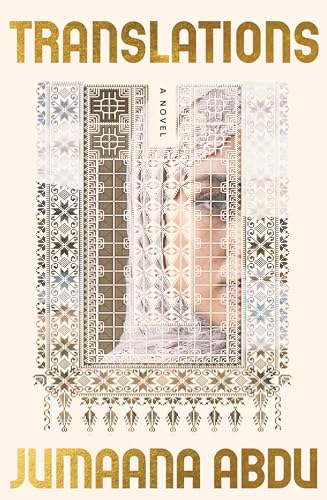
  • Jumaana Abdu, Translations (fiction, kimbofo’s review)
  • Melanie Cheng, The burrow (fiction, my review)
  • Santilla Chingaipe, Black convicts: How slavery shaped Australia (non-fiction/history)
  • Michelle de Kretser, Theory & practice (fiction, review coming soon but here is kimbofo’s review)
  • Amy McQuire, Black witness: The power of Indigenous media (non-fiction/essays)
  • Samah Sabawi, Cactus pear for my beloved: A family story from Gaza (memoir/non-fiction)

As Judging panel chair, Astrid Edwards, pointed out, this is the first time that all Stella shortlistees are women of colour:

“This year’s shortlist is consequential for Australian literary history, as it is the first time the Stella Shortlist features only women of colour. Now in its 13th year, these works showcase an incredible command of craft and understanding of our uncertain time. These works are riveting, and they stood out to the judging panel for their integrity, compassion and fearlessness.” 

The winner will be announced at 5pm on 23 May, at the Sydney Writers’ Festival, and will be live-streamed for those of us unable to attend.

Now, here are the value-adds:

  • Shortlist Films: Created by Stella, these short films feature actors presenting extracts from each of the six shortlisted books: Susie Youssef on Cactus pear for my beloved, Tiana Hogben on The burrow, Chika Ikogwe on Black convicts, Salme Geransar on Translations, Ella Ferris on Black witness, and Michelle Perera on Theory & practice.
  • Reading Guide: The ABC’s Kate Evans (The Bookshelf), Claire Nichols (The Book Show), Daniel Browning, Nicola Heath, Anna Kelsey-Sugg, and Declan Fry have put together a Reading Guide for the six shortlisted books. It briefly introduces the Stella, and then provides an overview of each book, along with links to some other content, such as a discussion about it on an ABC program.

However, Stella has created, for each shortlisted book, an almost one-stop-shop page that includes the judges’ comments, the short film, review excerpts with links to the full review, other av content where available such as from the ABC, and podcasts): Juumana Abdu’s Translations, Melanie Cheng’s The burrow, Santilla Chingaipe’s Black convicts, Michelle de Kretser’s Theory & practice, Amy McQuire’s Black witness, and Samah Sabawi’s Cactus pear for my beloved.

A related value-add: Early last year I wrote a Monday Musings on the Stella Book of the Month. Only three had been nominated at the time, but by the end of 2024 they had named ten (here). It looks like they may not be continuing the initiative this year.

Anyhow, I’d love to know if you are reading any of the shortlist, and/or your thoughts on the list.

Monday musings on Australian literature: Tasmanian Literary Awards

While some state literary awards are well established – such as the NSW and Victorian Premier’s Literary Awards – others seem to struggle to gain and maintain traction. But, where there’s a will, there’s usually a way, as we saw in Queensland in 2012 when new premier Campbell Newman cancelled the Queensland Premier’s Literary Awards. Private individuals stepped up quickly to create a non-profit association to raise funds and run the awards, until the government returned to the party in 2014. However, in recognition of the more collaborative model that had been forged, the new name, the Queensland Literary Awards, was retained.

Small jurisdictions, like Tasmania, tend to find it harder. The original Tasmanian Premier’s Literary Prizes were established by the Tasmanian Government, and awarded biennially rather than annually. As in the ACT and Northern Territory, the focus was local writers and writing. The first awards were made in 2007.

For the first four award years – 2007, 2009, 2011 and 2013 – awards were made in three categories: Tasmania Book Prize – for the best book with Tasmanian content in any genre; Margaret Scott Prize – for the best book by a Tasmanian writer; and University of Tasmania Prize – for the best book by a Tasmanian publisher. (In 2013, this last changed to be “for the best new unpublished literary work by an emerging Tasmanian writer”).

In 2015, a fourth category was added, the Tasmanian Young Writer’s Fellowship. “Supported by private philanthropists” it was for a young writer (aged 35 years and under). The inaugural award was won by Robbie Arnott, who has gone on the justify the faith shown in him, I’d say! In 2019, the awards were tweaked again to add People’s Choice Awards in the three book categories – the Tasmania Book Prize, the Margaret Scott Prize, and the University of Tasmania Prize.

Change didn’t stop there, however, because in 2021 the name was changed to the Tasmanian Literary Awards, and the categories were expanded and/or renamed. The aim, says the current website, is to “celebrate excellence in the Tasmanian literary sector, raise the profile of Tasmanian authors and foster literary talent in our State”. They are only open to writers living in Tasmania. The first awards under this new regime were made in 2022, in the following categories:

  • Minister for the Arts’ Prize for Books for Young Readers and Children
  • Premier’s Prize for Fiction
  • Premier’s Prize for Non-fiction
  • Tim Thorne Prize for Poetry
  • Tasmanian Aboriginal Writer’s Fellowship
  • Margaret Scott Tasmanian Young Writer’s Fellowship
  • University of Tasmania Prize
  • People’s Choice Awards: Minister for the Arts’ Prize for Books for Young Readers and Children; Premier’s Prize for Fiction; Premier’s Prize for Non-fiction; Tim Thorne Prize for Poetry

I have provided a lot of detail here, but I wanted show how over time these Awards can and do change for various reasons, including government policy and/or politics, funding issues including sponsorship/donor support, and changes in the literary awards environment.

2025 Awards

The 2025 Awards have just been announced (though the biennial timeline suggests they should have been made in 2024, given the previous awards were 2022, but who’s counting). While not the richest awards around, the four book prizes carry $25,000 each, which is a decent sum.

The 2025 Award winners are:

  • Premier’s Prize for Fiction: Kate, Kruimink, Heartsease (Pan Macmillan Australia, 2024)
  • People’s Choice Award for Premier’s Prize for Fiction: Meg Bignell, The angry women’s choir (Penguin Random House, 2022)
  • Premier’s Prize for Non-fiction: Maggie MacKellar, Graft (Penguin Random House, 2023)
  • People’s Choice Award for Premier’s Prize for Non-fiction: Maggie MacKellar, Graft (Penguin Random House, 2023)
  • Tim Thorne Prize for Poetry: Pam Schindler, say, a river (Ginninderra Press, 2023)
  • People’s Choice Award: Tim Thorne Prize for Poetry: Anne Kellas, Ways to say goodbye (Liquid Amber Press, 2023)
  • Minister for the Arts’ Prize for Books for Young Readers and Children: Johanna Bell, illustrated by Huni Melissa Bolliger, Digger digs down (University of Queensland Press, 2024)
  • People’s Choice Award for Minister for the Arts’ Prize for Books for Young Readers and Children: Jennifer Cossins, Amazing animal journeys (Lothian Children’s Books, 2022)
  • University of Tasmania Prize (for best new unpublished literary work by a Tasmanian writer): Johanna Bell, Department of the Vanishing

The judges wrote of the winner, that they “were impressed with the range and depth of the novel, the skilful shifts in time and narration, while remaining perfectly readable and engrossing to the final chapter”. 

You can find all the short and longlists, and judges comments at the Awards website.

For example, the longlist (with the three shortlisted titles identified) for Fiction was:

  • V.C. Peisker, Francesca Multimortal (Ashwood Publishing, 2023)
  • Kate Kruimink, Heartsease (Pan Macmillan Australia, 2024) (Shortlist)
  • Stephanie Hagstrom Panitzki, Hotel Echoed Romeo (Self-published, 2023)
  • Robbie Arnott, Limberlost (Text Publishing, 2022) (Shortlist) (my review)
  • Rachael Treasure, Milking time (HarperCollins Publishers, 2024)
  • Meg Bignell, The angry women’s choir (Penguin Random House, 2022) (Shortlist)
  • Amanda Lohrey, The conversion (Text Publishing, 2023)
  • Leigh Swinbourne, The lost child and other stories (Ginninderra Press, 2024)
  • Lenny Bartulin, The unearthed (Allen & Unwin, 2023)
  • Carol Patterson, Vanishing point (Ginninderra Press, 2023)

As in many of the State awards, Fellowships are also awarded. Indeed, this post was inspired by the first in the list below of the two awarded:

  • Aboriginal Writer’s Fellowship (which is open to all unpublished and published Aboriginal and Torres Strait Islander writers living in Tasmania): Nunami Sculthorpe-Green. You can read the full Judges comments online, but here is the part that resulted in this post: “Nunami Sculthorpe-Green demonstrates outstanding merit and significant potential as a storyteller and writer. This award acknowledges her existing achievements and is intended to provide the impetus for her to strive towards further realisation of her substantial talent. In her published piece ‘It’s not George that we follow’ in Uninnocent Landscapes, Nunami draws her personal life, family and ancestors into a historical context in an immersive and compelling way. She critically engages with the narrative power of colonial history and writes her way into challenging this – through a project of shifting the power to not only Aboriginal voices, but to Country itself. Her critique of Ian Terry is confident and gentle”. The Ian mentioned here is my brother, and the work the judges commend is the essay Ian commissioned for his exhibition-accompanying book, Uninnocent landscapes (my review). Ian was thrilled with the essay, because of her clarity and honesty, and last week alerted me to her winning this award.
  • Margaret Scott Tasmanian Young Writer’s Fellowship (which is awarded to a young Tasmanian young writer – aged 30 years and under – deemed by the judges to have demonstrated the most literary merit): Lars Rogers (see Judges’ comments online).

Past winners can be found on the website.

Stella Prize 2025 Longlist announced

Last year the Stella Prize longlist announcement took place on a Monday, gazumping that week’s Monday Musings. This year it’s a Tuesday, and it was again streamed online from the Adelaide Festival Writers Week …

As I say every year, I don’t do well at having read the Stella Prize longlist at the time of its announcement. In recent years the most I’ve read has been two (in 2019). Last year I’d read none at the time, but have read one since. This year, I have read one of the longlist (see below). I have read 8 of the 12 winners to date, which means I am falling behind! It’s not that I necessarily disagree with the winners, but just that my reading has been leading me in other directions.

In Stella’s spirit of keeping their judging panels fresh, none of this year’s judges were on last year’s panel, though some have judged before. This year’s panel comprises Gudanji/Wakaja woman, educator and author Debra Dank; teacher, interviewer/podcaster, and critic Astrid Edwards; writer and photographer Leah-Jing McIntosh; Sudanese–Australian media presenter and writer, Yassmin Abdel-Magied; and journalist and author with a special focus on social policy, Rick Morton. Astrid Edwards was the chair of the panel, and made the announcement.

The longlist

Here is the list, in alphabetical order by author, which is also how they were presented:

  • Jumaana Abdu, Translations (novel)
  • Manisha Anjali, Naag Mountain (poetry)
  • Melanie Cheng, Burrow (novel, my review)
  • Mantilla Chingaipe, Black convicts: How slavery shaped Australia (nonfiction)
  • Michelle de Kretser, Theory and practice (novel, on my TBR, kimbofo’s review)
  • Dylin Hardcastle, A language of limbs (novel)
  • Emily Maguire, Rapture (novel, my CWF Sessions 2 and 3)
  • Amy McQuire, Black witness: The power of Indigenous media: A family story from Gaza (nonfiction)
  • Samah Sabawi , Cactus pear for my beloved (nonfiction)
  • Mykaela Saunders, Always will be (short stories)
  • Inga Simpson, The thinning (novel) (Brona’s review)
  • Cher Tan, Peripatetic: Notes on (un)belonging (nonfiction)

So, seven fiction (including one short story collection), four nonfiction and one poetry collection, this year. You can read about the longlist, including comments by the judges at the Stella website.

Prior to the announcement, I pre-loaded this post with 15 potential longlistees, as a little test to myself on how many I might identify of the 12. I picked only three, partly because I hadn’t heard of some of the books the judges listed and partly because I didn’t know a lot about many of the others.

As always, I am not going to question the selection. The Stella is a diverse prize that aims to encompass a wide range of forms and styles, including some I don’t necessarily chase, and I haven’t read widely enough from 2024’s output, anyhow. But I have read one here, and gave a couple of the others to family members at Christmas. One was Rapture and it was loved. I’m keen to read the novels and the short story collection, in particular.

Last year there was an interesting panel discussion between the judges, but I don’t know whether there was one of not this year, because the YouTube link dropped out just as Astrid Edwards was finishing the list. Darn it.

Each of the longlisted authors receives $1000 in prize money, donated by the Copyright Agency’s Cultural Fund. The winer will receive $60,000. There were over 180 submissions this year.

“Literary prizes are subjective beasts, but I assure you, the works on this year’s longlist are remarkable.” Astrid Edwards

The shortlist will be announced on 8 April, and the winner on 23 May. You can seen more details on the Stella 2024 page.

Any comments?

Monday musings on Australian literature: Supporting genres, 9: Romance novels

Back in 2020 I commenced a Monday Musings subseries I called “supporting genres”. Some of the posts have, admittedly, been more form- than genre-based. Today’s however is a genre, and one I have been putting off because it’s not one I am at all familiar with. However, with Valentine’s Day looming this week, I felt it was now or never. The problem is that not only am I not familiar with this genre, but it is a huge field, so this will be basic, and more suited to the generalist like me, not specialist readers of Romance.

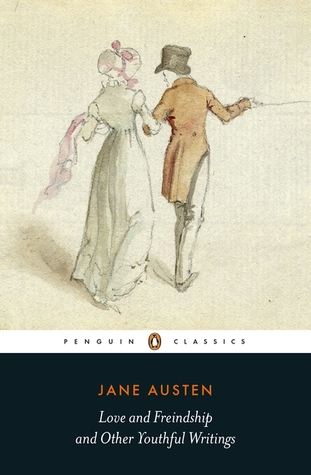
jane Austen, Love and Freindship

This is not the only problem. Defining Romance – given the multiple uses of the word through time – is a challenge, so in the interest of keeping this tight, I’m going to keep tightly to the “genre” which Wikipedia describes as follows:

romance novel or romantic novel is a genre fiction novel that primarily focuses on the relationship and romantic love between two people, typically with an emotionally satisfying and optimistic ending. Authors who have contributed to the development of this genre include Maria Edgeworth, Samuel Richardson, Jane Austen, and Charlotte Brontë.

As with many genres, Romance fiction encompasses many subgenres – including crossovers with other genres. Sub-genres include fantasy, contemporary, historical romance, paranormal fiction, and science fiction. According to the Wikipedia link above, “women have traditionally been the primary readers of romance novels, but according to the Romance Writers of America, 16% of men read romance novels”. I certainly know some here in Oz.

Modern romance fiction has moved on from what it was in the mid-twentieth century – in variety and diversity of its characters, and in storylines. It is also not averse to grappling with significant issues in relationships, like rape. RWA (see below) is focusing on increasing inclusivity and diversity in its mission, and says its “working definition of diverse encompasses all ages, cultures, ethnicities, social backgrounds, neurodiverse and physical abilities and attributes, all genders, and all sexual identities”.

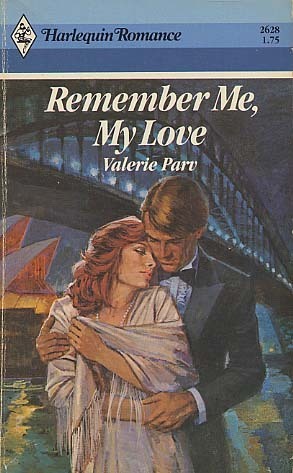
Perhaps – but don’t quote me as I’m no expert – the grand dame of romance fiction in Australia was Valerie Parv (1951-2021). You can check her out at Wikipedia, but Secrets from the Green Room podcast also did an excellent interview with her. For more writers, the Romance Writers Australia blog is a good source, with their Author Spotlight and New Release posts. The blog seems to go back to 2015, but doesn’t have the usual navigation tools (at least as far as I can see).

Organisations

There seems to be two main organisations supporting romance fiction in Australia.

Romance Writers Australia (RWA)

Describing itself as the “Home and Heart of Romance Writing in Australia”, RWA was established in Sydney around 1991, with its membership now including writers from Australia, New Zealand, Singapore, the United States and the United Kingdom. It has “become internationally recognised and respected by both category and mainstream publishers of romance”. Its aim is:

to promote excellence in romantic fiction, to help aspiring writers become published and published authors to maintain and establish their careers, to foster a safe, equitable, inclusive and diverse community, and to provide continuing support for romance writers – whatever their genre – within the romance publishing industry.

Their big event of the year is the Romance Writers of Australia Annual Conference. The 2025 conference, themed “Writer Wonderland”, will be held in Hobart from 22 to 24 August. As you can see from the program, this is clearly a conference geared more to writers than readers.

RWA also, apparently, organise “write-ins, library panels, workshops, retreats, and social gatherings in capital and regional cities”, plus other “special events and book launches”, but there were none listed on the website at the time of writing this post.

Australian Romance Readers Association Inc (ARRA)

Formed in 2007/2008, ARRA is an association “created by romance readers, for romance readers”. Starting with sixteen members, it now has well over three hundred. They outline their goals and activities on their About page.

They too run events. They held five Australian Romance Readers Conventions, with the last one being 2017. In 2019, they reinvented their convention to what they call A Romantic Rendezvous, which comprised multi-author, multi-city events, held in March 2019 in Brisbane, Sydney, Melbourne and Perth. They repeated this in 2020, and then the pandemic hit. Not to be thwarted, they held a Locked Down version. They returned to annual live events in 2023, with the 2025 event now locked in (as against locked down!) You can read all about these on their site. They also have what looks like an active blog.

Awards

Romance writing seems less well-served with major awards than, say, Crime Fiction and Science Fiction, which is interesting. However, some awards are offered by and/or coordinated by the above organisations:

  • Romantic Book of the Year (Ruby) Awards: According to Books+Publishing, which lists the 2024 winners, these are RWA’s awards, but I can’t find them on their site, except through a site search which retrieves random historical hits.
  • RWA Contests: RWA seems to offer a variety of contests which they say offer not only a “wonderful way” for writers to “showcase” their talent but also a “chance to receive valuable feedback from experienced judges and industry experts”. The contests cater for different experience levels as well as a broad range of romance genres. Current contests can be found on this page.
  • ARR (Australian Romance Readers) Awards: ARRA offers awards for the best romance books in several categories, and are voted for by ARRA members. The 2024 awards will be announced at a dinner in Melbourne on 28 March 2025. You can see a list of Previous Winners on their site. How do you like this for an award category, “Best Banter in a Romance”? What fun.

Publishers

As with awards, I found fewer specialist romance publishers in Australia, than for science fiction, but the best known romance publisher of all, Mills and Boon, does have an Australian arm. Last year ABC News wrote that while the company launched in 1908, “it wasn’t until 1974 that it set hearts aflutter among Australian readers in its first venture outside of Britain and North America”. This makes it now 50 years old in Australia. According to the ABC, “there’s a growing appetite for romance novels”, which they support by sharing Books+Publishing’s report in late 2023 that sales of romance fiction were up 37 per cent in Austra last year in Australia.

  • Hot Tree Publishing: Established in 2015 HTPubs seems to specialise in diverse romance. Their Submissions page states that they “are currently seeking M/F+, M/M+, and F/F+ series novels in the following CONTEMPORARY and PARANORMAL subgenres”. This is “not a restrictive list and exceptional stand-alones may be considered” but they are not “open to historical romances” (accessed: 10 February 2025).
  • Mills and Boon Australia: Established in Australia in 1974. Currently, according to their website, there are over 75 Australian and New Zealand authors amongst their 1,300+ authors.

Of course, most of the general publishing houses also publish romance. It is a well-served field.

Romance and me

While I understand the attraction of romance fiction, I don’t seek the genre. However, I do read many books containing romance. After all, love and relationships underpin most of our lives. What did the Beatles say – yes, “all you need is love … love … love is all you need”.

My first romance novels were, of course, Jane Austen’s (see all my Austen posts). When I first read them in my teens, my biggest interest was, as I recollect, the romance component. But since then, it’s not the romance that sets my heart aflutter, but Austen’s wit and her timeless insights into humanity, into how we think and why we behave the way we do.

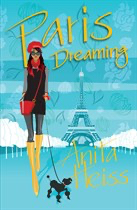
Anita Heiss Paris Dreaming

However, since blogging, I have read some romance fiction – mostly what the industry calls chick-lit – Anita Heiss’s choc-lit novel, Paris dreaming (my post), Tony Jordan’s Addition (my review) and Fall girl (my review), and Graeme Simsion’s The Rosie project (my review). These books attracted me because they reflected that trend I mentioned above, including more diverse characters – First Nations, neurodiverse, and so on.

Do you like romance fiction and, if so, care to share why?

Previous supporting genre posts: 1. Historical fiction; 2. Short stories; 3. Biography; 4. Literary nonfiction; 5. Crime; 6. Novellas; 7. Poetry; 8. Science Fiction

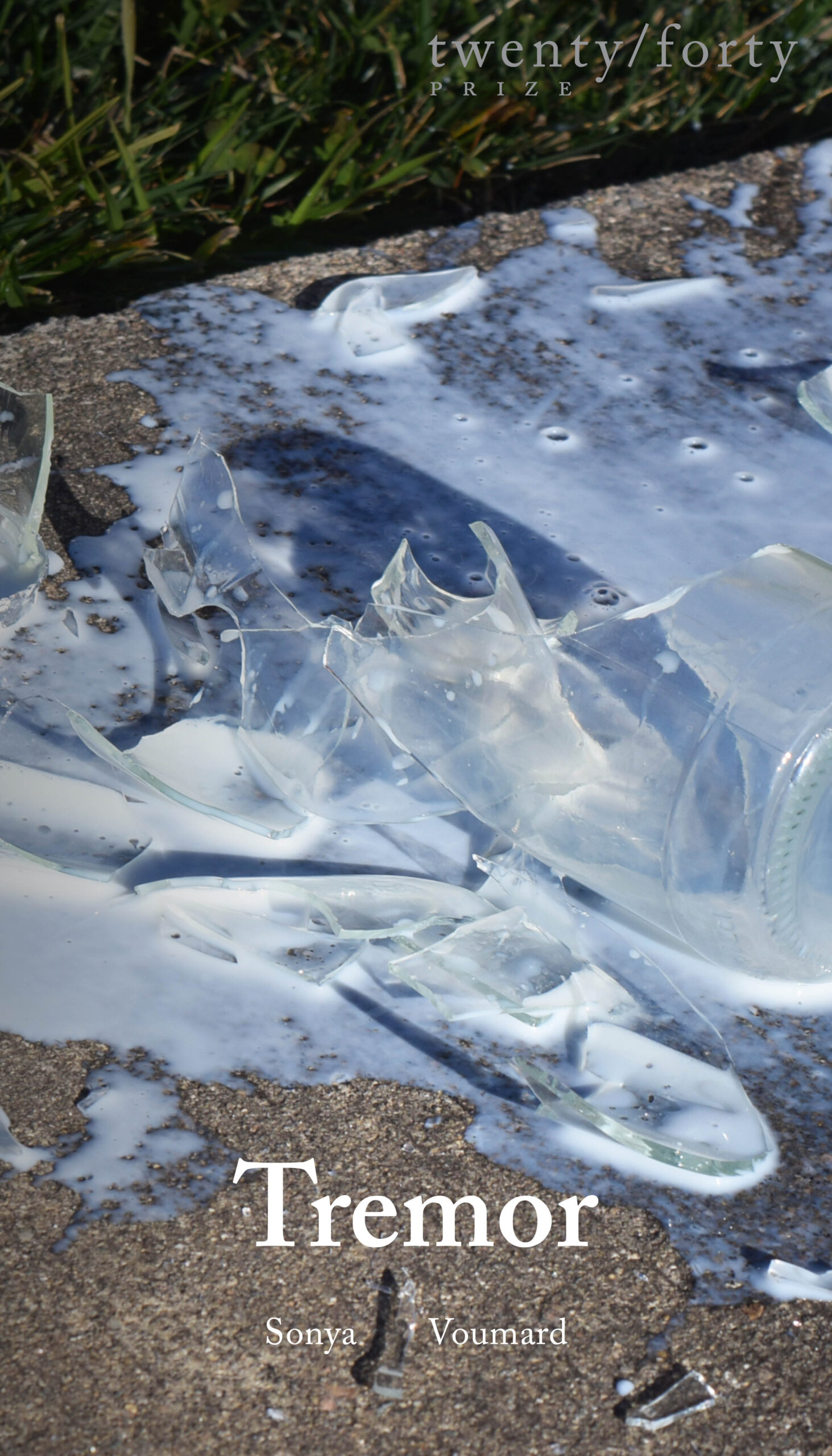
Sonya Voumard, Tremor (#BookReview)

As I’ve previously reported, Sonya Voumard’s short memoir, Tremor, is one of the two winners of this year’s Finlay Lloyd 20/40 Publishing Prize. Earlier this month, I reviewed the fiction winner, P.S. Cottier and N.G. Hartland’s novella The thirty-one legs of Vladimir Putin. Now it’s Voumard’s turn, with her book on living with a neurological movement disorder called dystonia.

While essentially a memoir, Tremor also fits within that “genre” we call creative nonfiction. The judges would agree, I think, given their comment that Tremor is “notable for its compellingly astute interweaving of the author’s personal experience with our broader societal context where people with disabilities, often far more challenging than her own, try to adapt to the implicit expectations and judgements that surround them” (back cover). The interweaving of something personal with something wider is a common feature of creative nonfiction, but what seals the deal for me is its structure. Tremor has a strong – subjective – narrative arc that propels the reader on, with more objective information providing the necessary support.

The narrative opens on December 3, 2020, the day Voumard is to undergo brain surgery for her condition. It leaves us in no doubt that what we are about to read is a very personal journey. “I am”, she writes on this first page, “a hairless head on top of a flimsy cotton gown and long compression socks”. But then, two sentences later, she opens a new paragraph with, “as I wait to be taken to the operating theatre, I channel my inner journalist. I’m on a news assignment for which I have already gathered some key facts.” And just like that, we are in journalist mode, with Voumard describing her condition and the relatively new treatment she is about to receive, followed by some facts and figures. Around 800,000 Australians, she informs us, experience tremors of the body, and about 70,000 of these have dystonia. A couple of paragraphs later we flash back to early 1960s Melbourne. Voumard is four or five years old, and her personal trajectory begins with an anecdote about dropping a bottle of milk, about being “clumsy, prone to dropping things”, but also being “a risk-taker”.

From here, the book takes us on the two journeys I’ve just intimated. There’s the mostly chronological one tracking her life with dystonia until we arrive – at the end of the book – back at the beginning with her surgery and its aftermath. And there’s her exploration of dystonia, its causes, diagnosis, and treatment. Voumard binds these two journeys together with her astute, and empathetic, reflections and analyses. She knows what it’s like to live with a disability, even if early on she didn’t recognise it as such.

So, for example, she chronicles the tactics she’d use to hide her shaking, in order to get jobs and then to demonstrate she could do them (when clearly she could). She would sit on her hands, refuse offers of drinks, self-medicate with alcohol. Whatever it took to hide her condition. She talks about navigating a medical world that is so “siloed” that diagnoses ranged from the “psychogenic” (due to “some sort of failure of womanhood, an unfulfilled yearning, a cloak for something else”) to the “purely physical” (like a sports injury or from computer use) – depending on the speciality she was dealing with – when it was something else altogether. She touches on the cost of treatment, the overall politics of medicine, the gender issues which see women’s conditions so often dismissed.

And, lest I’ve given the wrong impression, she does this not only through her own experiences, but through those of others – met personally, or found through her research – ensuring that Tremor is not a “misery memoir” but something bigger, that contributes to our understanding of how people navigate a world in which they don’t fit the norm. This navigation has a few prongs: the obvious ones relate to coping with the physical limitations, discomfort, and/or pain the condition brings; and the less visible ones concern managing your expectations and aspirations, while also dealing with how people interact with you. Voumard shares the story of a woman who had suffered for over twenty years from cervical dystonia before she got a diagnosis. While diagnosis didn’t bring a cure, “identifying her condition had helped her to live her life more calmly, to not try to do too much and to understand something of others’ suffering”.

Voumard, you’ve probably realised by now, packs a lot into the 20/40 form (that is, into 20,000 to 40,000 words). At the winners’ conversation, she said there is the assumption that to be marketable you need to write 55,000 plus words. She had the bones, and had then started filling them out, but it was just “flab”. The competition, and then Julian Davies’ editing guidance, taught her that she had a good “muscular story”. So she set about “decluttering”. The end result is interesting, because this book doesn’t have that spare feeling common to short works. Tremor feels tight – there’s little extraneous detail – but not pared back to a single core.

Voumard, in fact, covers a lot of ground. She uses the Eurydice Dixon murder case, for example, to epitomise her ongoing interest in media and reporting, particularly regarding structural disadvantage and social justice. She also contextualises the latter stages of her journey against the 2019 bushfires, the 2020-2021 pandemic and lockdowns, and the 2022 floods in NSW’s northern rivers. Why all this? The subtitle explains it. This book, this “tremor”, is not just about a movement disorder but about something bigger:

My more recent thinking about disability has strengthened my belief in the urgent need to privilege the voices of others more marginalised than mine. But I also cling to the concept of freedom of speech – not as a neoliberal, tabloid-news defender of hate speech – but as someone striving to find ways to respond to the challenges of a democratic society that is becoming more disordered.

Tremor is another beautiful, thoughtful product of the Finlay Lloyd stable. Recommended.

Read for Novellas in November, because, while not a novella, it is a short work.

Sonya Voumard
Tremor: A movement disorder in a disordered world
Braidwood: Finlay Lloyd, 2024
129pp.
ISBN: 9780645927023

Review copy courtesy Finlay Lloyd.

PS Cottier and NG Hartland, The thirty-one legs of Vladimir Putin (#BookReview)

Earlier this month, I posted on a conversation with the winners of the 2024 Finlay Lloyd 20/40 Publishing Prize, P S Cottier and N G Hartland, who wrote The thirty-one legs of Vladimir Putin, and Sonya Voumard, who wrote Tremor. On the surface, these books look very different, but conversation facilitator, Sally Pryor, found some similarities suggesting both explore ideas related to identity, one’s place in the world, and how we can be captured and defined by the systems within which we live. Having now read Cottier and Hartland’s novella, and having started Voumard’s memoir, I can see she has a point.

If you didn’t read my conversation post, you may be wondering what the heck this book with its curious title is about. Besides the fact that it’s a novella, which I love, I was attracted to it from the moment I saw it on the shortlist because the description said it “spirits us away on a comedic journey into a world where the reality and absurdity of political power are increasingly indistinguishable”. That sounded just too delicious and I was glad to see it win.

Ok, so I still haven’t told you what it’s about, but be patient, I’m getting there. The novella was inspired, said Cottier and Hartland, by the idea that there are such things as Putin “body doubles”. There is even a Wikipedia page about this “theory” so it is a thing, as they say! The titular “thirty-one legs” belong to 16 of these body doubles whose stories are told in the book. Sixteen, you ask? That doesn’t compute from 31? True, but one of the doubles only has one leg! How can that be, you might also ask, how can a “double” of two-legged Putin only have one leg? Good question, and I won’t give it away, but let’s just say that the idea epitomises the absurdity of the notion.

Now, this is a collaborative novel, and if I understood correctly from the conversation, Cottier and Hartland started by “pushing out” individual Putins. In fact, the novella reads rather like a set of interconnected short stories because each Putin stands alone, with minimal connection between them except they are all Putin doubles and most of them assume there must be others. However, there is a narrative arc to the whole. Each Putin tells us something about their recruitment and its impact on their lives, with some threads recurring through the different Putins, depending on their location and personality. Two Putins also bookend the story. Surfing Putin, Dave McDermott in Western Australia, opens the book in the Prologue and concludes it with his own story, while English Putin Samuel Chatswood starts off the stories proper, and returns with the penultimate story. Each chapter is titled with the name and location of a Putin, so we have, for example, “Maja Dahl, Oslo, Norway”, “Richie ‘The Putin’ Rogers, Cirencester, England”, “Joppe Stoepke, The Hague, Netherlands”, and “Andrei Galkin, Rostov-on-Don, Russia”.

The set-up, or plot, is simple. People from around the world who look like Putin have been recruited to act as Putin doubles should they be so needed. This recruitment has happened over twenty years, but the book is set post the Ukraine invasion, so our doubles suspect they will not be called upon to play Putin. Some are quite edgy about this, while others are more phlegmatic. For all of them, though, being paid – because paid they are, monthly, from an anonymous bank account – comes with questions, if not challenges.

Our first fully-fledged Putin, Samuel Chatswood from London, sets the scene. He tells us about his fears about being a double. Not only is he frequently teased about his resemblance to Putin and asked “why anyone would want to invade Ukraine?”, but he’s anxious because he has been increasingly getting dark looks from strangers since the Skripal poisoning. However, having recently spied another lookalike, he is “comforted” by the idea that “whatever suspicion and recriminations are possible, they are less likely to entangle me if I’m not the only Putin lookalike”. He also heralds the denouement, when he returns to find that such comfort might have been misplaced.

We meet all sorts of Putins, from the fearful, through the deluded, and the thoughtful, to the confident or more upbeat, but all ponder what being a Putin double means for them. For some their own identity gets lost in the role, and some are confused, or at least perplexed, about what’s expected of them. For others, like the resourceful Chilean, Sebastian Soto, it’s a business proposition, while several capitalise on their lookalike-ness. Steve Pinebrother in “International Waters”, for example, not only makes money, secretly, as a double but, publicly, as a performer on a cruise ship. Each one is beautifully individuated, and I find it hard to pick a favourite. There’s much humour in many of their stories, but there’s pathos too, particularly with those who get lost in – or fearful about – their roles. Life is not simple when you accept money without clarity, eh?

“the butterfly of truth does not need questions to emerge from its cocoon of facts”

So, what’s the takeaway. An obvious one is contemporary culture’s focus on appearance and its willingness to monetise looks without much substance behind it. But another is murkier. This novella, I’m tempted to say, could be read as an allegory of the changing world order. No matter where the Putins live, recent changes are unsettling them. The ground is shifting and they (we?) don’t know how to react. Do they bury their heads in the sand, believing it will be alright? Do they wait for the inevitable or, try to withdraw? Or do they take action, and if so, what action can they take? For French Putin, Hugo Fournier,

It matters not, I conclude, what is reality and what is an extravagant theory from a feverish mind. The answer of course is that I should trust no one. I am the only Putin who can, and will, look after me.

Is such isolationism the answer? Through their various Putins, Cottier and Hartland pose serious questions, including, what do we believe and what we can or should we do?

The thirty-one legs of Vladimir Putin is an audacious “what if” story. Its episodic approach works well in the novella form. Were the book much longer, the conceit would, I think, start to lose its freshness. As it is, there are enough Putins to provide a variety of stories, without becoming repetitive. The tone is light enough to be highly entertaining, but the content is informed and thoughtful enough to engage our minds. This book would make a perfect Christmas stocking stuffer, which is not to say I put it on a par with chocolates and scratchies, but that it is small in size, well-priced, physically lovely, and a thoroughly absorbing read.

Read for Novellas in November.

PS Cottier and NG Hartland
The thirty-one legs of Vladimir Putin
Braidwood: Finlay Lloyd, 2024
115pp.
ISBN: 9780645927016

Review copy courtesy Finlay Lloyd.

Monday musings on Australian literature: Writers in the news (1)

Australian writers have been capturing attention – here and overseas – in the last few months. I’ve been noting these stories as they’ve popped up, and kept planning to post on them, but somehow, time just slipped by and more stories kept coming. Consequently, most Aussie readers here will know most of these news items by now, but there might be a surprise, and, anyhow, I’m hoping they might interest non-Aussie readers of my blog. (I am numbering this post because I just might be inspired to write another one sometime.)

Alexis Wright’s multiple awards

This year, Alexis Wright has won several significant literary awards. She was awarded the Stella Prize in March and the Miles Franklin Prize in August for Praiseworthy, making her the first author to win these two prizes in one year. (Each of these is worth $60,000). In May, it was also announced that she’d won the UK’s James Tait Black Prize for Fiction (worth 10,000 British pounds or $19,000), also for Praiseworthy. Then, this month, she was awarded the triennial Melbourne Prize for Literature which is a body-of-work prize to a writer who has made an “outstanding contribution to Australian literature and to cultural and intellectual life”. It too is worth $60,000.

Melissa Lucashenko’s multiple awards

Lucashenko, like Wright, is no stranger to literary awards, but this year, she too has taken out several significant awards, all of them for her first work of historical fiction, Edenglassie (my review): the $100,000 ARA Historical Novel Prize, the $50,000 Margaret and Colin Roderick Literary award; the $30,000 Queensland Premier’s Award for a Work of State Significance, and the $25,000  Premier’s Prize for Fiction. She also won the Fiction award in this year’s Indie Book Awards.

Richard Flanagan’s prize and ethical stand

Another recently announced award is Richard Flanagan winning UK’s 2024 Baillie Gifford Prize for Nonfiction for his most recent book Question 7 (my review). This prize is worth £50,000 (or, AUD97,000). If you’ve heard this news, you will also know, as the ABC reported, that Flanagan had pre-recorded his acceptance speech because he was trekking in the Tasmanian wilderness at the time. In this speech, he said he had “delayed” accepting the prize money until sponsor Baillie Gifford put forward a plan to reduce its investment in fossil fuels and increase investment in renewable energy. Flanagan said that “on that day, I will be grateful not only for this generous gift, but for the knowledge that by coming together in good faith, with respect and goodwill, it remains possible yet to make this world better.”

Flanagan is not a rose-coloured glasses idealist. He is not asking for the world, but simply for a plan. The ABC quotes him further:

“… were I not to speak of the terrifying impact fossil fuels are having on my island home, that same vanishing world that spurred me to write Question 7, I would be untrue to the spirit of my book.

[BUT]

“The world is complex. These matters are difficult. None of us are clean. All of us are complicit. Major booksellers that sell my books are owned by oil companies, major publishers that publish my friends are owned by fascists and authoritarians … As each of us is guilty, each of us too bears a responsibility to act.”

I like this honesty and realism. Let’s see what happens next. Will a writer’s stand – which compounds what I believe is already increasing criticism of Baillie Gifford – see a company decide it too can make a stand?

Jessica Au’s novella to be filmed

Meanwhile, in non-award news, Jessica Au’s award-wining (ha!) novella, Cold enough for snow (my review), is to be made into a film. According to Variety it will be a U.K.-Japan-Australia-Hong Kong co-production and filming will begin “in fall 2025” (which presumably means next September to December). I first read about it on publisher Giramondo’s Instagram account. They quoted theatre veteran-debut director Jemima James,

I hope the film, like the book, creates space for audiences to think and feel deeply about the important people in their lives, about the relationships that are central to them …I hope it provokes shifts of perspective, new understanding, new compassion for the people they love, however complex or complicated that love might be!

Gail Jones’ Lifetime Achievement Award

I also saw on Instagram – this time Text Publishing’s account – that Gail Jones had received Creative Australia’s Award for Lifetime Achievement in Literature. In other words I’m bookending, more or less, this news post with body-of-work awards. As Text writes, the award “recognises her impressive body of work, and her ongoing mentoring of young writers”.

Creative Australia’s website tells me that Jones was one of “eleven leading artists to receive 2024 Creative Australia Awards”.  They quote their CEO, Adrian Collette AM:

‘It is our immense honour to celebrate these remarkable artists whose work is making an impact in communities across the nation. Each of the recipients contributes their unique voice to our cultural story.’

I recently reviewed Jones’ novel Salonika burning (my review) but I have more on my TBR.

Any comments on these news items? Or, indeed, do you have any to add? (Not that my aim here is to be comprehensive. That would be impossible!)

Finlay Lloyd 20/40 Publishing Prize 2024 Winning Books Launch with Conversation

I mentioned the nonfiction winner of the 2024 Finlay Lloyd 20/40 Publishing Prize, in this week’s Monday Musings, but saved the full winner announcement until after I attended the launch at a conversation with the winning authors this weekend.

The participants

This year, as publisher Julian Davies had hoped, there was a prize for fiction and one for nonfiction. The winners were all present at the conversation, and were:

  • Sonya Voumard for Tremor, which the judges described as “notable for its compellingly astute interweaving of the author’s personal experience with our broader societal context where people with disabilities, often far more challenging than her own, try to adapt to the implicit expectations and judgements that surround them”.
  • P S Cottier & N G Hartland for The thirty-one legs of Vladimir Putin, which the judges said “welcomes us to a world where absurdity and reality are increasingly indistinguishable and where questions of identity dominate public discourse. The book spirits us off on a playful journey into the lives of a group of individuals whose physical attributes appear to matter more than who they may be.”

The conversation was led by Sally Pryor who has been a reporter, arts and lifestyle editor, literary editor and features editor at The Canberra Times for many years. Born in Canberra, and the daughter of a newspaper cartoonist, she has a special connection to our city and its arts world.

And of course, the publisher, Julian Davies, started the proceedings. As I wrote in last year’s launch post, he is the inspiring publisher and editor behind Finlay Lloyd, a company he runs with great heart and grace (or so it seems to me from the outside.)

The conversation

Before the conversation started proper, Julian gave some background to the prize, and managed to say something different to what he said last year. He described Finlay Lloyd as a volunteer organisation, with wonderful support from writers like John Clanchy. He reminded us that they are an independent non-profit publisher, but wryly noted that describing themselves as non-profit seems like making virtue out of something that’s inevitable! Nonetheless, he wanted to make clear that they are not a commercial publisher and aim to be “off the treadmill”. And of course he spoke of loving “concision” and the way it can inspire real focus.

As last year, the entries – all manuscripts, as this is a publishing prize – were judged blind to ensure that just the writing is judged. The judging panel, as I wrote in my shortlist post, included last year’s winners.

Then, Sally took over … and, after acknowledging country, said how much, as a journalist, she also loved concision. Short books are her thing and they are having a moment. Just look, she said, at Jessica Au’s Cold enough for snow (my review) and Claire Keegan (see my post). Their books are “exquisite”. She then briefly introduced the two books and their authors. Sonya’s Tremor is a personal history told through vignettes, but which also explores more broadly the issue of viewing differences in other. She then jokingly said that she “thinks” Nick and Penelope’s book is fiction. Seriously though, she loved the novel’s set up which concerns the lives of 16 Putin “doubles”. It’s a page-turner. The books are very different, but share some themes, including identity, one’s place in the world, and how we can be captured and defined by the systems within which we live.

On Sonya’s journey

The conversation started with Sonya talking about her journey in writing this book. She was about to have brain surgery, a stressful situation. But she’s a journalist, and what do journalists do in such situations? They get out their notebook. Her coping mechanism was to cover it as a story, one of big stories of her life.

She has had a condition called Dystonia – mainly tremor in her hands – since she was 13. She managed for many years but, as she got older, more manifestations developed, not all easily linked to the condition, and her tremor got worse. Getting it all diagnosed took some time.

Sally noted that in the book, the doctor is thrilled that he could diagnose her and have someone else to observe with this condition (which is both environmental and genetic in cause). Sonya, of course, was thrilled to have an answer.

On Nick and Penelope’s inspiration and process

It started when they were holidaying in Queensland. I’m not sure I got the exact order here, but it included Penelope’s having read about Putin doubles, and Nick having been teased about looking like Putin. Penelope said it was a delight to write in a situation where humour would not be seen as a negative. The story is about look-alikes being recruited from around the world to act as Putin doubles should they be so needed.

Sally commented that the doubles respond differently. For some, it provides purpose, while others feel they lose their identity. What’s their place in the world, what does it mean?

Putin, said Nick, is an extraordinary leader who has morphed several times through his career. They tried to capture different aspects of him, though uppermost at the moment is authoritarianism. How do we relate to that? Penelope added that it’s also about ordinary people who are caught up in politics whether we like it or not. Capitalism will monetise anything, even something genetic like your looks.

Sally wondered about whether people do use doubles. Nick and Penelope responded that it is reported that there are Putin doubles – and even if they are simply conspiracy theories, they make a good story.

Regarding their collaborative writing process, Nick started “pushing through some Putins” so Penelope wrote some too, but they edited together. Nick is better at plot, at getting a narrative arc, Penelope said.

On Sonya’s choosing short form not memoir

It was a circuitous process. There is the assumption that to be marketable you need to write 55,000 plus words. She had the bones, and then started filling it out, but it was just “flab”. The competition (and later Julian) taught her that there was a good “muscular story” in there, so she set about “decluttering”. Sally likes decluttering. The reader never knows what you left out!

“Emotional nakedness” was a challenge for her, and to some degree members of her family found it hard being exposed – even if it was positive – but they learnt things about her experience they hadn’t known. Sonya’s main wish is that her family and loved ones like what she’s written.

But, did she also have a sense of helping others? Yes! There are 800,000 Australians with some sort of movement disorder, and many like she had done, try to cover it up. (For example, she’d sit on her hands during interviews, or not accept a glass of water). Her book could be liberating for people.

Continuing this theme, Sally suggested there are two kinds of people, those who ask (often forthrightly) about someone’s obvious condition, and those who would never. She wondered how Sonya felt about the former. It varies a bit, Sonya replied, but it feels intrusive from people you don’t know well. At work it can feel like your ability is being questioned.

On Nick and Penelope’s editing process

Nick explained that their story had a natural boundary, given they had a set number of Putins. (And they didn’t kill any Putin off in the writing!) There was, however, a lot of editing in getting the voice/s right, and getting little arcs to the stories.

In terms of research, they read biographies of Putin, and researched the countries their Putins come from.

Sally wondered whether Nick and Penelope saw any legal ramifications. Not really, but they did research their Putins’ names to get them appropriate but unique, and they have a fiction disclaimer at the end (though Julian didn’t believe it necessary!)

On Sonya’s writing another book on the subject, and on negotiating with those involved

While there are leads and rabbit holes that could be followed, Sonya is done with this story (at present anyhow).

As for the family, Sonya waited until the book was finished to show them, but she also tried to avoid anything that might be hurtful or invade people’s privacy. She’s lucky to have a family which has tolerated and understood the journalistic gene. Regarding work colleagues, she did talk to those involved. It was a bit of a risk but she didn’t name those who had been negative towards her. Most people just thought her shaking was part of her, and she liked that.

Sally talked about the stress of being a daily newspaper journalist, with which Sonya agreed, and gave a little of her personal background. She started a cadetship straight out of school and was immediately thrust into accidents and court cases. It was a brutal baptism. Around the age of 30, when the tremor and other physical manifestation increased, she decided she couldn’t keep doing this work.

Were they all proud of their achievement with this format?

As a poet Penelope is comfortable with brevity, so this was an expansion (to sentences!) not a contraction. Nick was obsessed with “patterning” – with ordering, moving between light and dark, internal and external, providing an arc. Penelope added that it started with less of an arc, including no names for the Putin doubles.

Sonya paid tribute to Julian for being “such an amazing editor” who taught her about how to impose structure on chaos. Penelope added that it was an intense editing process. It was also a challenge because, being a publishing prize it’s not announced until publication so she couldn’t tell people what she was working on. But the editing process was interesting.

Q & A

There was a brief Q & A, but mostly Sally continued her questions. However, the Q&A did bring this:

Is Nick and Penelope’s book being translated into Russian and/or will it be sent to Putin: Julian said Finlay Lloyd were challenged enough getting books to Australians. Penelope, though, would love Russians having the opportunity to read it. Perhaps, said an audience member, it could be given to the Russian embassy …

Julian concluded that it had been a joy working with these authors who “put up with him”, and thanked Sally sincerely for leading the conversation.

This was a lovely warm-hearted event, which was attended by local Canberra writers (including Sara St Vincent Welch, Kaaron Warren, and John Clanchy) and readers!

These books would be great for Novellas in November. You can order them here.

The Finlay Lloyd 20/40 Publishing Prize Winning Books of 2024 Launch
Harry Hartog Booksellers, Kambri Centre, ANU
Saturday, 2 November, 12.30-1.30pm

Monday musings on Australian literature: Aussie Booker Prize listees

Charlotte Wood, Stone Yard Devotional

In terms of the Booker Prize, it’s been a long time between drinks for Aussie writers. By this I mean that Charlotte Wood’s shortlisting for the 2024 prize with Stone Yard devotional, breaks the longest drought Australian writers have had in terms of being listed for the prize since its commencement in 1969. It has been eight years since longlisting and a full decade since shortlisting. This is probably largely due to the widening of the playing field in 2014 to include English language novels from any nationality.

This year’s winner will be announced on 12 November, but rather than wait until then, I’ve decided to share now the Australian books which have been listed for (or won) this prize because listing for this prize is a win in itself (even if it doesn’t come with the big bucks!) As Wikipedia shows, and the Booker Prize website confirms, longlists were not published for the Prize until 2001. The Booker Prizes website – particularly the year by year highlights – is worth exploring if you are interested in the prize.

Now, the order of my listing. While an alphabetical listing by author would make it easy to quickly see whether authors/books we love were listed, and how often authors have been listed, my main point here is to show when Australian authors/books have been listed, so, chronological it is.

Book cover
  • 1970 Shortlist (Lost Man Booker Prize*): Shirley Hazzard, The bay of noon (on my TBR)
  • 1970 Shortlist (Lost Man Booker Prize*): Patrick White, The vivisector (on my TBR)
  • 1972 Shortlist: Thomas Keneally, The chant of Jimmie Blacksmith (read before blogging)
  • 1975 Shortlist: Thomas Keneally, Gossip from the forest
  • 1979 Shortlist: Thomas Keneally, Confederates
  • 1982 Winner: Thomas Keneally, Schindler’s Ark
  • 1985 Shortlist: Peter Carey, Illywhacker
  • 1988 Winner: Peter Carey, Oscar and Lucinda (read before blogging)
  • 1993 Shortlist: David Malouf, Remembering Babylon (read before blogging)
  • 1995 Shortlist: Tim Winton, The riders (read before blogging)
  • 1997 Shortlist: Madeleine St John, The essence of the thing (on my TBR)
  • 2001 Winner: Peter Carey, True history of the Kelly Gang (read before blogging)
  • 2002 Shortlist: Tim Winton, Dirt music (read before blogging)
  • 2003 Winner: DBC Pierre, Vernon God Little (read before blogging)
  • 2003 Longlist: J.M. Coetzee, Elizabeth Costello (read before blogging)
  • 2004 Longlist: Shirley Hazzard, The great fire (read before blogging)
  • 2004 Longlist: Gail Jones, Sixty lights
  • 2005 Longlist: J. M. Coetzee , Slow man
  • 2006 Shortlist: Kate Grenville, The secret river (read before blogging)
  • 2006 Longlist: Peter Carey, Theft: A love story (read before blogging)
  • 2008 Shortlist: Steve Toltz, A fraction of the whole (my review)
  • 2008 Longlist: Michelle de Kretser, The lost dog (read before blogging)
  • 2009 Shortlist: J. M. Coetzee, Summertime
  • 2010 Shortlist: Peter Carey, Parrot and Olivier in America (my review)
  • 2010 Longlist: Christos Tsiolkas, The slap (my post)
  • 2014 Winner: Richard Flanagan, The narrow road to the deep north (my review)
  • 2016 Longlist: J. M. Coetzee, The schooldays of Jesus
  • 2024 Shortlist: Charlotte Wood, Stone Yard Devotional (my review)

* The Lost Man Booker Prize was made in 2010 to retrospectively correct a 1970/1 chronological glitch.

Only 5 writers have won the award twice, and one of those is Australian, Peter Carey. J.M. Coetzee, who is now Australian, has also won twice, and has been listed for the award four times since he moved to Australia from South Africa in 2002. However, his two wins, which I have not listed above, occurred while he was a “South African” writer.

Of the many Booker Prize controversies over the years, an early one involved Thomas Keneally in 1975, when the judges deemed only two novels worth shortlisting, of which Keneally’s Gossip from the forest was one. I am familiar with much of Keneally’s oeuvre (though I’ve not read a lot) but this one is new to me! The winner was the other (Ruth Prawer Jhabvala’s Heat and dust).

The most nominated Australian writers are:

  • J.M. Coetzee (6, if we fold in those two pre-Australian resident wins)
  • Peter Carey (5)
  • Thomas Keneally (4)
  • Shirley Hazzard (2)
  • Tim Winton (2)

The Man Booker International Prize was made biennially between 2005 – 2015 to recognise one writer for their achievement in fiction, and Australian writers have been shortlisted three times:

  • 2007 Shortlist: Peter Carey
  • 2009 Shortlist: Peter Carey
  • 2011 Shortlist: David Malouf

In 2106, this award came into line with the Man Booker Prize and is now made annually for a work of translated fiction. This will rarely include Australian books given the majority of our writers write in English. However, in 2020, Shokoofeh Azar was shortlisted for The enlightenment of the greengage tree (my review).

Any thoughts?

Finlay Lloyd’s 20/40 Prize 2024: Shortlist announced

And, the interesting literary awards keep coming. In November 2022, I announced the creation of the new 20/40 Publishing Prize by the local-to-my-region independent, non-profit publisher, Finlay Lloyd. A year later, in October 2023, I announced the inaugural shortlist, and soon after that, the winners, Rebecca Burton’s Ravenous girls (my review) and Kim Kelly’s Ladies’ Rest and Writing Room (my review). I am absolutely thrilled to see that the shortlist for this year’s award has just been announced.

But, before I get to that, a little explanation re my opening sentence. Like the Barbara Jefferis and the Mark and Evette Moran Nib Literary Awards, this award, too, has different and specific criteria, though in this case they are not so much about content as form. The 20/40 prize is a manuscript award with the prize being publication, neither of which criteria is particularly unusual. Further, it is not limited to debut or young or women or any other subgroup of writers, as some manuscript awards are. Submissions can be fiction or non-fiction, but must be prose (albeit “all genres … including hybrid forms” are welcome). What makes this award particularly special – to me anyhow – is that it is for shorter works, that is, for works between 20,000 and 40,000 words (hence the award’s name, the 20/40 Prize). The original aim was to make two awards – one to a work of fiction and one to nonfiction. However, last year the fiction submissions were so strong, said the judges, that both winners were fiction. Let’s see what happens this year …

And now, the 2024 Shortlist

Here is the shortlist, with a description from the announcement, plus further information I have found on the previously published authors.

  • Alicia Marie Carter’s Minotaur toes pulls no punches in taking the reader deep into the searing, visceral reality of the ensnared existence of a young woman, manipulated in prostitution: Carter is a writer, editor, teacher and podcaster who has had short stories, poetry and personal essays published in various literary journals, has won awards for her short fiction, and had a novel, Songs at the end shortlisted for the Penguin Literary Prize 2021.
  • PS Cottier and NG Hartland’s The thirty-one legs of Vladimir Putin spirits us away on a comedic journey into a world where the reality and absurdity of political power are increasingly indistinguishable: Cottier is a Canberra-based “poet who occasionally writes prose”, among other things, with an impressive body of work to her name; Harland is also a Canberra-based writer about whom I have found little except some references to prose writing.
  • Susan Saliba’s There is something that waits inside us empathetically explores the search for solace of a girl caught between the example of her high-achieving aunt and her eccentric, dysfunctional mother: Saliba is an English and Creative Writing Teacher, and an award-winning writer of young adult and children’s fiction.
  • Sonya Voumard’s Tremor shows us that beyond our societal expectations and judgements about normality, individual lives with disability can follow atypical, often difficult, but ultimately inspiring paths: Voumard is a writer and lecturer, primarily in non-fiction, who first came to my attention when she was longlisted for the Stella Prize in 2017 with The media and the massacre (which kimbofo reviewed from her won journalistic perspective).

Last year’s submissions were judged blind. This is not explicitly stated in this year’s shortlist announcement, but Julian Davies did say in an email announcement earlier this year that “Consistent with the ethos behind the prize, and last year’s guidelines, all entries will be read blind by the panel so that the quality of the writing guides the panel’s decisions rather than any extraneous influence”. I am clarifying this as I know it appeals to many readers and writers.

The judging panel for the 2024 prize comprised author Kevin Brophy (whose The lion in love I’ve reviewed), the publisher and author Julian Davies (whom I’ve reviewed a few times), author and poet Rashida Murphy, and last year’s winners, Rebecca Burton and Kim Kelly (aka Kim Swivel). The ongoing plan is for the previous year’s winners to be on the next year’s panel.

The winners will be announced on 26 October, just in time, again, for Novellas in November. The media release says, “it is intrinsic to a publishing prize that when the shortlisted entries are announced, the winning books are already in the final stages of being prepared for publication”. In other words, we should be able to buy them at the end of this month. Watch this space. I have so many novellas I want to read for Novellas in November …

It is heartening to see Finlay Lloyd’s commitment to their prize. I hope it continues long into the future.