Monday musings on Australian literature: Literary Awards for Short Stories

Since we’ve been currently talking about short stories – or, at least, I have been doing so here in my little corner of the litblog world – I though it might be a good time to list some of the literary awards dedicated to short stories in Australia. It’s a bit of a lazy post I know, but we are getting to that time of the year and life is getting busy.

There are, in fact, a goodly number of opportunities in Australia for short story writers to win awards, so in this post I am just going to list the ones that seem best known or that have a reasonably broad coverage. Most of the competitions define short stories as those 3,000 words or less. Here goes:

  • The Age Short Story Award has been awarded since 1979. I believe it was the award that kick-started Elliot Perlman’s writing career when he won in 1994. It has also been won by some of Australia’s currently best regarded short story writers like Cate Kennedy and Paddy O’Reilly.
  • Steele Rudd Award for Australian Short Story Collection was part of the recently cancelled Queensland Premier’s Literary Award and was continued this year in the Queensland Literary Awards when it was won by a favourite writer of mine, Janette Turner Hospital, for her collection Forecast: Turbulence.
  • Elizabeth Jolley Short Story Prize, which started life as the Australian Book Review award, has been offered under its new name since 2010. It honours the late Australian author, Elizabeth Jolley, who is one of my favourite writers and to whom I was introduced back in 1988 via her short story “Five acre virgin”.
  • Hal Porter Short Story Competition which in 2012 is in its 19th year, and which commemorates the Australian novelist, poet, short story writer and playwright.
  • Awards for short stories offered by state chapters of the Fellowship of Australian Writers, including the Marjorie Barnard Award from NSW (commemorating Barnard whose collection The persimmon tree and other stories* is one of my favourites) and the Henry Savery National Short Story Award from Tasmania (commemorating Savery who wrote the first “Australian-made” novel)
  • Locally offered awards such as the Alan Marshall Short Story Award, the Margaret River Short Story Competition, and the Stringybark suite of short story awards.
  • Genre-based awards for short stories, such as the Aurealis Awards for speculative fiction which include awards for short stories in fantasy, horror, science fiction and young adult; and the Scarlett Stiletto awards for crime and mystery short stories written by women. Cate Kennedy won the first Scarlett Stiletto in 1994.
  • And, of course, the Commonwealth Short Story Prize, which is part of the Commonwealth group of literary prizes and is open to all members of the (British) Commonwealth.

There are many more awards, but this list indicates that the short story is pretty well supported down under. However, short stories can always do with more recognition because, despite all the awards, they are still under-recognised and, I think, under-appreciated. I have heard chat around various traps that electronic publishing may be raising the profile of short stories with new audiences … I’ll be watching with interest.

Meanwhile, I’ll close with Australian novelist and short story writer Jennifer Mills who was a regional winner in the Commonwealth Short Story Prize in 2008. In an interview on the Spineless Wonders website, she explained why she likes the short story form:

It’s very flexible. I love its capture of pivot points, its nearly mathematical tidiness, and its risk. I can pull off imaginative feats in short stories which I would struggle to hold together in a novel. I like the adaptability of short fiction to different delivery modes, like podcasting. As a novelist, I like the gratification: the end of the job is in sight.

Are you aware of short story competitions in your neck of the world?

* I was thrilled when Tony of Tony’s Book World reviewed this collection a few years ago.

Monday musings on Australian literature: Some thoughts on specialised literary awards

Did you hear last week that the Man Group is, after the current award, withdrawing its support for the Man Asian Literary Prize? I heard it via a tweet from a member of our prize team for the 2011 prize. This, in the same year that the Queensland premier cancelled the Queensland Premier’s Literary Awards. What is happening? Is there something in the international waters? Has climate change somehow blown the winds in the wrong direction?

And yet, fortunately, other awards keep appearing. Late last week I reported on the shortlist for a new award here, the Most Underrated Book Award (or MUBA). In the same week the people behind the new Stella Prize finally called for nominations for the inaugural award. Winners will be announced in April next year. This award, appropriately named for Miles Franklin – her full name was  Stella Maria Sarah Miles Franklin – is “for the best work of literature [fiction and non-fiction] published in 2012 by an Australian woman”. Fiction and non-fiction! This will be interesting.

All this ground-shifiting raises the question, yet again, regarding whether new (in fact any) prizes are warranted, particularly prizes targeted to special groups. Author Chris Flynn, writing on the Meanjin Blog regarding the Stella Prize, said, in support of a prize for women writers:

At this point in the process the argument over whether or not a dedicated prize for women is needed is moot. We can, after all, have as many prizes as we like in literature and even if the Barbara Jefferis Award already exists, so what? Men are eligible for that anyway, as the $35K goes to ‘the best novel written by an Australian author that depicts women and girls in a positive way or otherwise empowers the status of women and girls in society.’ Frank Moorhouse was shortlisted this year, and Anna Funder won. If I came into some moolah and announced I was starting up The Flynn Prize for, say, the best first novel of the year, would anyone seriously be shouting me down and saying it was unnecessary, that there are already plenty of prizes out there and debut novelists should just suck it up and hope for the best? Yeah, I don’t think so, somehow.

I like his point that “We can, after all, have as many prizes as we like in literature”.

This brings me back to the Man Asian Literary Prize, which started in 2007. The executive director of the prize, David Parker, thanked the Man Group for its support and argued for the value of the prize:

We look forward to the future with a new partner, confident that Asian fiction is now beginning to secure the global readership and recognition it deserves. Our most recent winner, Please Look After Mom by South Korean writer Kyung-sook Shin, has recently sold its two millionth copy worldwide – an amazing achievement. One third of the shortlisted writers for this year’s Man Booker Prize are from Asia, and international publishing houses such as Pan Macmillan and Hachette have recently opened offices here in Hong Kong. Clearly, Asian literature is on the march.

I don’t know what part the Man Asian Literary Prize played in these encouraging results, but have to assume that the increased international profile it provided for Asian writers played at least some part.

Not all awards, of course, can hope to bring about such high profile change. Some certainly carry more weight (read “status”) than others, but I’d liken it to the Olympics versus national and state championships. This network of championships all play a role in the development and recognition of athletes – and so surely do the international, national, state, local and specialised awards for writers.

For writers and publishers, then, I think awards – both general and specific – have value. What about for me as a reader? I’m not a close follower of literary awards. That is, I don’t aim to read all the long- and shortlists in specific awards, or even all the winners, but I do like to keep an eye on awards and they do help inform my reading choices. I find them particularly useful as a guide in specialised areas that are out of my comfort zone – and hence my involvement in this year’s Man Asian Literary Prize. I was introduced to the literature of countries I’ve never read before. I’m hoping MUBA and Stella will do the same for the writers (and readers) they are targeting.

The Most Underrated Book Award 2012

A short post! I have just read on the SPUNC site that Kobo is sponsoring an award to highlight books that were released by independent publishers and members of the Small Press Network (SPUNC) and that did not receive wide recognition.

The shortlist for the inaugural award was announced this week, and the titles are:

The award apparently recognises both the publisher and author. The winner will be announced, the SPUNC announcement says, on 8 November at the opening of the Independent Publishing Conference during a special gala night and literary debate at the Wheeler Centre.

Good on Kobo I say. Books published by smaller presses are often overlooked in the major literary awards partly, I presume, because the authors usually aren’t well enough established to be noticed and partly because small publishers don’t have the marketing clout and distribution networks to get their books out to enough readers and reviewers. I hope this new award will help raise the profile of the authors and their hardworking publishers.

* I have a soft spot for Irma Gold, and not just because I’ve read and enjoyed her book. She lives in my city, and is currently coordinating the production of, and editing, The invisible thread, an anthology of works “by writers who have an association with the Canberra region”. The book represents a major literary contribution to Canberra’s 2013 Centenary Celebrations, and is planned to be the focus of many literary events over the coming year. Watch this space!

Queensland Literary (Fiction) Awards, 2012: Woo-hoo

Readers of this blog might remember that earlier this year the new premier of Queensland axed his state’s Premier’s Literary Awards … to a great outcry from literary aficionados around the country. However, with a wonderful can-do attitude and the support of private sponsors, a group of volunteers revived the awards, rebadged as the Queensland Literary Awards, just over 4 months ago. The prize purse was much reduced but the important thing is that the awards went ahead … And the winners were announced this week.

The awards group kept the full raft of awards that had been part of the original awards, a wide range that had made these awards particularly significant, but they are too numerous for me to list here. I will though report on the main ones of interest to me:

  • Fiction Award: Frank Moorehouse’s Cold light, the third in his trilogy, of which I’ve read the first, Grand days. This award rather breaks the stranglehold that women writers, Anna Funder and Gillian Mears, have had on this year’s awards to date.
  • David Unaipon Award for Unpublished Indigenous Writer: Siv Parker’s Story. This is a significant award for giving opportunities to and showcasing indigenous Australian writers. I’ve read some winners and have a couple more on my TBR.
  • Steele Rudd Award for Short Stories: Janette Turner Hospitals’s Forecast: Turbulence, which has been patiently waiting for me on my Kindle for a few months now. I’m a Hospital fan.
  • The Courier-Mail People’s Choice Book of the Year: Simon Cleary’s Closer to stone

A full list of the awards can be viewed here. Reviews of several of the winners listed above can be found at ANZLitLovers.

Anna Funder, Stasiland (Review)

Anna Funder's Stasiland bookcover

Funder’s Stasiland (Courtesy: Text Publishing)

Anna Funder‘s Stasiland, which won the Samuel Johnson Prize for Non-Fiction, is one of those books that can be reviewed from multiple angles, and I know that when I get to the end of this review I’m going to be sorry about the angles I didn’t get to discuss. But, I can only do what I can do, eh?

I found it interesting to read this book immediately after another non-fiction book, Brenda Niall‘s biography True north, because the contrast clarified for me why I liked True north but loved Stasiland. To put it simply, True north is a well-written but pretty traditional biography, while Stasiland is what I’d call “literary non-fiction”. In other words, in Stasiland, Funder uses some of the literary techniques – relating to structure, voice and language – more commonly found in fiction to tell her story. It’s not surprising really that this is the case, because when I heard her speak last month, she said that she had initially planned to write Stasiland as a novel but, having done the research and interviews, it “didn’t feel right” to turn those people’s stories to another purpose. She was also aware that there were things in these stories that might not be accepted, that might seem too far-fetched in fiction! Such is the fine line we tread between fact and fiction.

At this point, I should describe the book, though its broad subject is obvious from the title. Funder (b. 1966) has a long-standing interest in things German, from her school days when she chose to learn German, and has visited and/or lived in Germany several times. She writes of travelling through the former German Democratic Republic, a country that no longer exists, that comprises “tumble-down houses and bewildered people”, and she describes feeling a sense of “horror-romance”:

The romance comes from the dream of a better world the German communists wanted to build out of the ashes of their Nazi past; from each according to his abilities to each according to his needs. The horror comes from what they did in its name.

And so she decides to try to understand this dichotomy and places an ad in the paper:

Seeking: former Stasi officers and unofficial collaborators for interview. Publication in English, anonymity* and discretion guaranteed.

This is, depending on how you look at it, either a very brave or naively silly thing to do. Funder, who sees writing as an act of empathy or compassion, interviews several Stasi men who answer her ad, as well as other East Germans who suffered at Stasi hands. It might be coincidental, but essentially all her subjects who suffered were women, while the perpetrators were men. In fact, when she visits the Stasi HQ in Berlin, she’s told it only had toilets for men! All this is not to say, however, that men didn’t suffer (or, even, that there weren’t women perpetrators). Indeed, some of the Stasi men she interviewed were themselves bullied, blackmailed and otherwise stood over to keep them in line.

What makes this book compelling are the stories she gathers, partly because the stories themselves are powerful and partly because of Funder’s own voice. Funder places herself in the book. This is not a third person “objective” recounting of the interviews she conducted but a journey we take together to find some answers. When she interviews Herr von Schnitzler, who hosted the Black Channel, a television program in which he presented a Communist commentary on excerpted programs from the West, we are in the room with her, hearing not only what he says, but getting a sense of his personality alongside her. We see her being fearless in sticking to her questions in the face of a man who frequently shouts. “I recognise”, she writes, “this pattern of unpredictable shouting followed by bouts of quiet reason from other bullies I have known”.

It is particularly in the von Schnitzler section that the GDR paradox becomes most clear. Von Schnitzler was, Funder tells us, molded by the injustices of the Weimar Republic. We see how the drive to create a new society not bedevilled by the iniquities – that is, the inequalities – of capitalism (or imperialism as many of the Stasi men call it) resulted in the creation of an authoritarian society where freedom was minimal (or non-existent) and dissent not allowed. In stark contrast to von Schnitzler and his refusal to see any error in, or critique, the GDR, is Julia, one of the “victims”, who had believed in the GDR but, through having an Italian boyfriend, had become caught in the Stasi net. She discovered that the “state can be so dangerous, so very dangerous, without me having done anything at all” and was completely traumatised by the extent of surveillance and loss of privacy she experienced. And yet, having experienced the East and the West, she can still say

you see the mistakes of one system – the surveillance – and the mistakes of the other – the inequality – but there’s nothing you could have done in the one, and nothing you can do now about the other … and the clearer you see that the worse you feel.

The GDR story is, as Funder tells it, one of grand humanitarian aims but one also riddled by paradox and irony. She asks Herr Bock, a recruiter of informers, what qualities he looked for in an informer:

‘… and above all else,’ he says, looking at me, his eyes distorted and magnified through the glasses, ‘he needed to be honest, faithful and trustworthy.’

I look back at him. I feel my eyes too, getting wider.

How can you resist a writer who tells a story like this, who shows without telling exactly what is going on, who can inject sly touches of wit and humour into the tough stuff?

I can’t possibly relate all the stories – many quite horrendous – in this book. All I can say is that it is a book that manages to show how history writing can be intimate while at the same time conveying facts and hard truths. It is a memorable book, and worth reading if you have any interest at all in politics and human behaviour.

Anna Funder
Stasiland
Melbourne: Text Publishing, 2002
ISBN: 9781877008917
282pp.

* I’m intrigued by the promise of anonymity because it seems that in some, if not in all, cases, real names are used. I presume the people involved agreed to this.

Monday musings on Australian literature: Prime Minister’s Literary Awards 2012

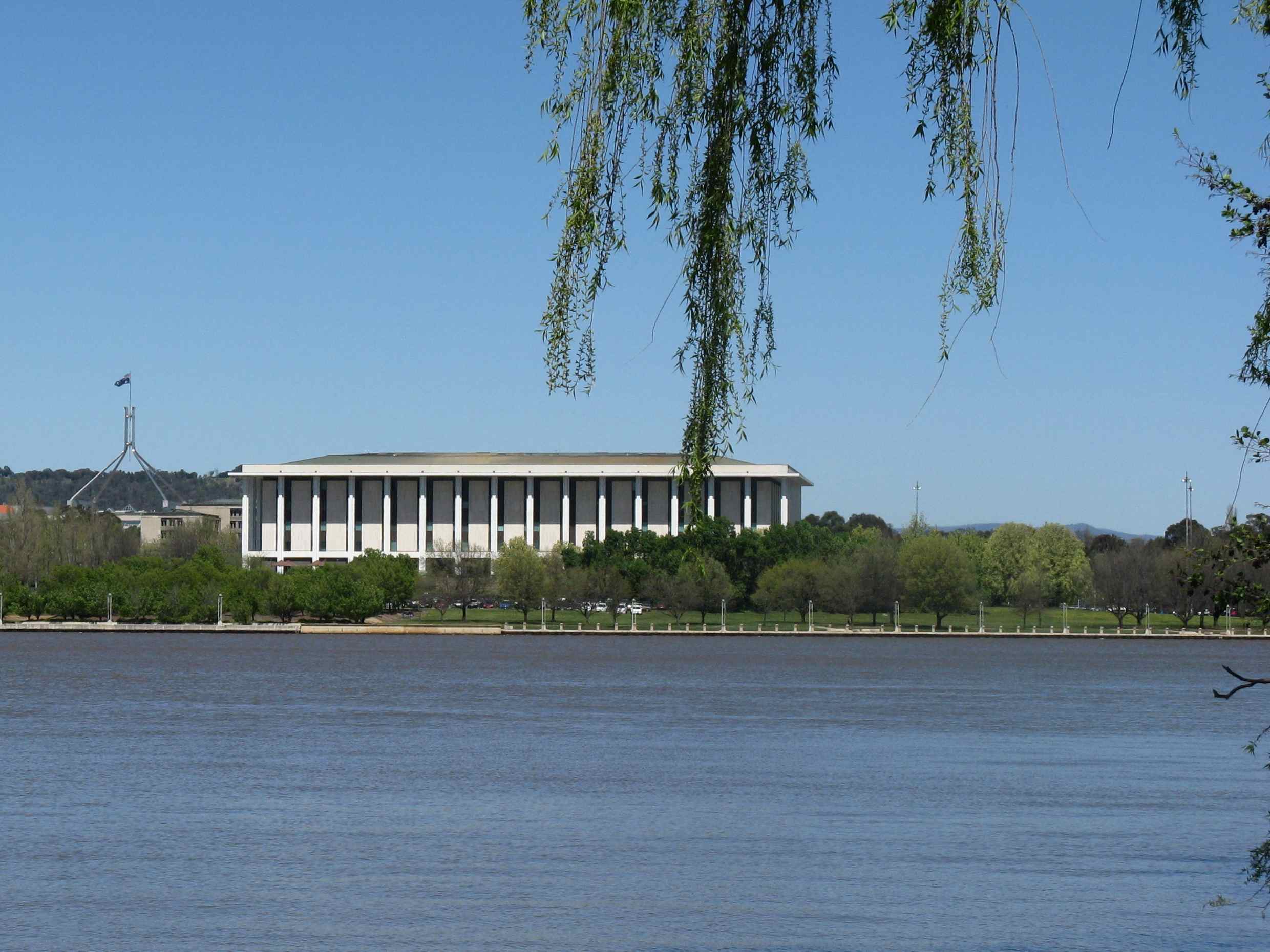
National Library of Australia

National Library of Australia, viewed from Commonwealth Park on the opposite side of Lake Burley Griffin

Last year I attended and reported on the post-announcement panel for the Prime Minister’s Literary Awards, held at the National Library of Australia. I attended again this year and, since it occurred today, Monday, I’ve decide to devote this week’s Monday musings to it.

First, the winners:

  • Fiction: Gillian MearsFoal’s bread (My review)
  • Poetry: Luke DaviesInterferon psalms
  • Young adult fiction: Robert Newton’s When we were two
  • Children’s fiction: writer Frances Watts and illustrator Judy Watson’s (illus.) Goodnight, mice!
  • Non-fiction: Mark McKenna’s An eye for eternity: The life of Manning Clark
  • History: Bill Gammage‘s The biggest estate on earth: How aborigines made Australia

Last year’s four awards were expanded to six this year by rolling the separate Prime Minister’s History Prize into them and, hallelujah, adding in a prize for Poetry. The awards are, I believe, the most generous of Australia’s publicly funded awards, providing $80,000 to each winner and $5,000 to each shortlisted author.

The panel members were Luke, Robert, Mark and Judy. Unfortunately, Bill Gammage is currently overseas, and Gillian Mears who suffers from multiple sclerosis had attended the announcement but needed to rest before her afternoon engagements. I was disappointed not to see her but of course can’t begrudge her putting her health first. The panel was chaired by local ABC radio announcer Louise Maher.

I won’t summarise the whole panel but just cherry pick a few interesting thoughts and ideas that came out of it. During a discussion about the writing process, in which Robert Newton said that he when he starts writing he rarely knows where his story is going to end, Mark McKenna offered a favourite quote from David Malouf:

I don’t write to record what I know. I write to find out what I know.

I like this. It makes me feel that we readers are on a journey with the author rather than being told what to think by the author.

There was, of course, the usual discussion about the impact of technology on books and reading and, while the responses weren’t quite as conservative as I felt they were last year, there still seems to be some resistance to thinking positively about change. I understand that. Livelihoods – of writers, publishers and booksellers – are at stake BUT, whether we like it or not, the change is coming (is here, in fact) and so our best chance is to embrace it.

Louise approached the question from a slightly different angle by asking how reading, which takes effort and time, fits into contemporary culture. Mark believes that the one-on-one aspect of reading is under threat, due I suppose to competition from other stimuli, and said that awards like these are important because they can bring more readers to books. (This point was, in fact, a bit of a mantra for him.) He suggested that the act of reading, the way we read, is changing and that the solitary experience is becoming rare. He noted that in just a few more decades the majority of people around will not have grown up with books the way we in the audience had. Their experience and expectations will be different, and books are likely to be produced in different formats with content and presentation varying between the formats. Mark also made the significant point that much of the change that is occurring is in the culture around the book rather than in reading itself, and I guess he’s right. The way books are sold – and published – is changing. Electronic books can’t be physically browsed in a bookshop. It’s not easy to lend an electronic book. You can’t get your electronic book signed. And so on …

Rob’s response that reading and technology will have to grow together was a pragmatic one. But he also commented, regarding the effort involved in reading, that he likes “the idea of books making kids work a bit”. Judy talked of inculcating a reading habit with children when they are young, and said she limits her (young) children’s time with technology. I liked Luke’s honesty when he said that attention span is the issue and that he can see it in himself, that he finds himself being drawn too often to “fiddly” little things on the Internet, like favourite blogs, and away from concentrated reading. But, he also said that he believes that our “emotional and spiritual” relationship with words will always be there. That makes sense. The forms and formats might change but our love affair with words and the ideas they express surely won’t! As one person said, we need to respect the new forms but recognise that the story, the empathy, will always be the thing.

There was a question from the floor late in the session regarding what difference the monetary prize would make to their lives. The answers weren’t really surprising but were interesting nonetheless:

  • Luke, who admitted to being more broke now than he has been for many decades, said he will pay off his debts and that the remaining money will give him a buffer enabling him to say no to jobs that he “shouldn’t” be doing, that aren’t, he said a little self-consciously, in response to his muse.
  • Rob said he’d buy a new surfboard and a laptop with working shift and caps lock keys, and that he’d consider taking some time off from his job as a firefighter to write full-time.
  • Mark said it would buy a little financial independence and provide some seed money for his new book, which will tell the history of Australia through some selected places that he will need to visit.
  • Judy also said it would take off some of the financial pressure and allow her to work on what she wants to rather than on jobs “for the money”.

A great session. I thank the National Library for again providing the opportunity for members of the public to “meet” the authors this way, and I thank the authors for giving up their precious writing time to talk with us!

Jeanine Leane, Purple threads (Review for Indigenous Literature Week)

What I especially like about Jeanine Leane’s book, Purple threads, is how well she draws the universal out of the particular. That she does this is not unusual in itself. After all, this is what our favourite books tend to do. The interesting thing about Purple threads, though, is that the particular is an Indigenous one. Even as I write this post my mind is flicking back-and-forth between thinking about the Indigenous Australian themes in the book and the more universal ones about family and relationships. More on that anon. First, I want to say a little about the book’s form, because ….

I’m not sure whether to call Purple threads a novel or a book of connected short stories, except I don’t think it matters much. What is significant is that the stories revolve around a mostly female-only Indigenous Australian family living on a small piece of land in the Gundagai area of New South Wales in the 1950s to 1960s. The main characters run through the whole book, and the stories are told pretty much chronologically. There could even be a plot line or two, but they are not strong and are not what drive us to read on. This form had an eerie familiarity as I was reading and I realised it was because it reminded me of another David Unaipon Award winning book I have reviewed here, Marie Munkara’s Every secret thing. Is this a coincidence – after all, there are similar books by non-Indigenous writers – or should I go out on a limb and wonder whether this form reflects an Indigenous Australian way of story-telling? In addition to this similarity in form, these two books share a particular style of humour. Munkara’s is probably more belly-laugh, and is definitely more gut-wrenching, but both have a self-deprecating element, a willingness and ability to laugh at themselves, to see the absurd. It’s a form of humour we also see in Alexis Wright‘s Carpentaria. Okay, enough of that, back to the book itself.

The stories are told first person by Sunny (Sunshine) who lives with her sister Star, and her grandmother, Nan, and aunts, Boo (Beulah) and Bubby (Lily). Her mother, father, grandfather, more aunts and uncles, and others in the community, also appear in the book, but these five named characters are the focus. They are well differentiated. Nan is the down-to-earth matriarch of the group who doesn’t know how to read but “sure as hell know[s] how ta think”. Boo is independent and feisty, the one who takes action when action is needed. She loves the ancient Romans, particularly Empress Livia “who knew how to work behind the scenes”. Bubby, on the other hand, is the gentle, romantic one, who loves Emily Bronte and Wuthering Heights. The stories chronicle the first two decades of Sunny’s life in this female-dominated household. There are anecdotes about walks with Aunty Boo, about spoilt Petal (Sunny and Star’s mother), and about interactions with neighbours, teachers and others in the community. Most of the stories are light, albeit with a good degree of bite, but some are dark, such as the story of the young white neighbour, Milli, who is regularly beaten by her husband. This story, in fact, forms a minor plot line in part of the book.

The universal themes are about the way families comprise different and sometimes conflicting personalities and yet manage to love and support each other to ensure their joint survival. The particularity, though, has to do with being Indigenous, with being lesser, in a rural community. Leane handles this cleverly, using, for example, the Christian symbol of “the black sheep” throughout the book to tease out the ironies and complexities packed into this idea when it is played out in a sheep-farming community. The symbol is explicitly introduced to us in “God’s flock” where Sunny talks about going to church and being taught the story of “the black sheep”:

‘ … But Jesus, if we pray to him [the priest says], will find all the lost sheep and return them to the fold, even the black sheep that no one  else wants or loves.’

At least this bit made sense to us. Apart from Jesus, we didn’t know any other sheep farmer who loved black sheep. Most hated them, in fact. That’s why every year my Aunties always ended up with a few black lambs to raise ….

Leane shows how Nan and the Aunties navigate life in a world where “black was not the ideal colour” and in which “women livin’ by themselves are always easy targets”. They navigate it with dignity, often by pretending to go along with white society’s ways while staying true to their own values, which involve respecting and caring for other people and creatures and for their little bit of land.

Purple threads, apparently drawn from Leane’s life, provides an engaging but uncompromising insight into a life most Australians know little about. I hope I’m not being too pompous when I say that we need more books like this, and they need to be read by more people, if we non-Indigenous Australians are to have a chance of truly comprehending the experience of being Indigenous in our nation.

Read for ANZLitLovers Indigenous Literature Week, for which Lisa has also reviewed it.

Jeanine Leane
Purple threads
St Lucia: University of Queensland Press, 2011
157pp
ISBN: 9780702238956

(Review copy supplied by University of Queensland Press via ANZLitLovers blog giveaway. Thanks Lisa. Thanks UQP)

* I have assumed copyright permission for this cover on the basis that the book was provided by UQP

Elizabeth Harrower, The watch tower (Review)

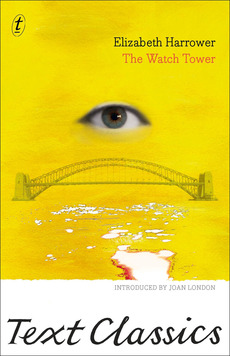
Elizabeth Harrower The watch tower
Cover for The watch tower (Courtesy: Text Publishing)

Elizabeth Harrower’s fourth and final novel, The watch tower, is a rather harrowing (couldn’t resist that) read. It is also an astonishing read, and I wonder why it has had such little recognition over the decades or so since its publication in 1966. Thanks to Text Classics, though, it now has a second chance. It deserves it. In fact, I’d say it is one of the best books I’ve read this year (to date, of course!)

What makes it so is the writing. It has a Patrick White-like intensity – and I can see her influence in writers like Joan London and Shirley Hazzard*. But first, a little about the content. It is set in Sydney and spans roughly the mid-1930s to around 1950. The plot is slim. It concerns two sisters, Laura and Clare, who are abandoned twice – first, albeit inadvertently, by their father (through his death when Laura is about 16 years old, and Clare, 9) and then a few years later by their selfish unloving mother who decides to return to her family in England, without them. What happens to them from this point is Harrower’s subject and it all centres on the ironically named Felix, Laura’s first and only boss, who comes to the rescue, or so it seems, when mother leaves the scene.

Laura had been a girl of dreams with the ability to achieve them. She aspired to be a doctor, but when tragedy strikes and she is taken from school, she’s not overly concerned. She “had read books” and in all but those with “circumstances ridiculously removed from hers, everything ended happily for young heroines.” And yet she also

had a sensation of having mislaid a vital pleasure that she could not remember, or a piece of herself.

Clare is younger and is less affected by having to leave boarding school, but life with their mother is no picnic. She expects her daughters to “take over”, to, in effect, run the house as well as go to school, for Clare, and business college then work for Laura. And so Laura’s life of servitude to one master or another begins, while Clare takes on the role of helper and watcher. Laura gets on with the job, generously and to her detriment, particularly when the misogynistic power-hungry Felix enters the scene. Clare sees what is going on, and expects more of life, but soon realises she

had really nowhere to go. Caught, not safe, cold – There were no reliable people.

From these premises, Harrower builds a story of psychological and physical entrapment in which both girls become caught in Felix’s malevolent net. Laura, ever the Pollyanna who believes noone would be consciously mean or vicious, becomes complicit in the destruction of her self while Clare, physically caught, maintains a vision of something better and does her darnedest to get Laura to see it too.

Harrower develops all this with a slow drip-drip, through language that is tightly pared to the essentials, through a simple but not even chronology that moves in fits and starts, and through a narrative voice characterised by subtle shifts in point of view. The focus is inwards  – on a small number of characters and their relationships with each other that rarely lets outsiders in. The result is a claustrophobic tone – and a slow build up of tension and suspense. Take this description, for example, of the women upon hearing Felix, drunk, coming down the path:

Breaking their poses like trees snapping branches, the women urgently regarded each other, cleared away all signs of work in an instant, examined their souls for defects, in a sense crossed themselves, and waited.

Acts of violence do occur, but are reported in retrospect. This seems to lessen our focus on the specific event and emphasises instead the response of the two young women. Will they decide to leave this time?

Late in the novel a fourth person, 19 year-old Dutch migrant, Bernard, is thrown into the mix, creating the catalyst for the denouement. For Laura, he provides a diversion for “poor Felix” and hopefully another chance for him to show a decent side. For Clare, he shows her that for all her suffering she can still be a useful person. For Felix, he of the “cold smile” and “deaf look”, well that would be telling… And as for Bernard himself, the question is whether he will survive his Felix experience intact.

And this brings me to my final point. While she doesn’t expressly say it, and in addition to her study of power and control, Harrower seems to be exploring ideas about the soul (a person’s essence) and character. Where does one end and the other begin? How do they act upon each other, and is change possible? This is a book I won’t quickly forget.

POST-SCRIPT, 2025: I wrote here about “power and control”, because the term “coercive control” by which it would now be known, was not in public parlance.

Elizabeth Harrower
The watch tower
(with a new introduction by Joan London)
Melbourne: Text Publishing, 2012
335pp.
ISBN: 9781921922428

(Review copy supplied by Text Publishing)

* Hazzard is only 3 years younger than Harrower but her first novel was published, I believe, in 1966, the year this, Harrower’s last, was published.

Prime Minister’s Literary Awards Shortlist, 2012, announced: Fiction

I don’t announce all shortlists and awards but I do like to follow the Prime Minister’s Literary Awards so am announcing its shortlist for fiction for 2012:

One of the reasons I like to take note of the Prime Minister’s Awards is that it seems depart a little from the other awards around the country. For example, in 2011 the award went to Stephen Daisley’s Traitor, a book that received little notice in other national awards. And in 2010, Eva Hornung‘s wonderful Dog boy won. It also had received little recognition elsewhere. This year’s shortlist contains only two novels in the Miles Franklin shortlist – those by Mears and Funder – and Miller’s novel was longlisted. I’m not saying this is a totally bad thing. In fact, it demonstrates the depth of writing in Australia.

What particularly pleases me about this year’s list is the inclusion of Janette Turner Hospital. It’s been a while since we’ve heard from her, but I do have Forecast: Turbulence, a short story collection, on my Kindle. This just might be the incentive for me to bump it up my reading priority order.

Two new categories were added to the Awards this year: Poetry and History (this latter having previously been a separate award). The complete shortlist can be seen on the Office for the Arts website.

Julian Barnes, The sense of an ending (Review)

I should have known I wouldn’t be the first to think of it, but during my reading Julian Barnes‘ Booker Prize winning novel, The sense of an ending, I was suddenly reminded of TS Eliot‘s The love song of J. Alfred Prufrock. It was the melancholic tone, the sense of life having passed one by, that did it:

What did I know of life, I who had lived so carefully? Who had neither won nor lost, but just let life happen to him?

Doesn’t that remind you of “I have measured out my life with coffee spoons”? I don’t usually read reviews before I write my own, but I wondered if my thought had come to anyone else. Of course it had. I googled “julian barnes sense of an ending prufrock” and up came several hits. Oh well, I thought, at least I’m not going to sound totally foolish. There is safety in numbers, after all, which brings me back to Tony, the novel’s protagonist, who says, at another point in the novel:

I’m not odd enough not to have done the things I’ve ended up doing with my life.

I admit to having a certain fellow feeling with Tony, a self-confessed “average” person who’s led an average life “of some achievements and some disappointments”. But, enough self-revelation, let’s get on with the review.

I’ll start by saying that this book is right up my alley. Firstly, it’s a novella and regular readers here know how I love a good novella. Secondly, it’s a good novella, by which I mean it’s tightly constructed and sparely written. And thirdly, plot is not the main point; character and life are Barnes’ focus.

Nonetheless, while there’s not a strong plot, there is of course a story, and it concerns the aforesaid Tony. He’s the first person narrator and is a reliably unreliable one. He tells us this on the second page, while at the same giving away the novel’s essential form:

But school is where it all began, so I need to return to a few incidents that have grown into anecdotes, to some approximate memories which time has deformed into certainty. If I can’t be sure of the actual events any more, I can at least be true to the impressions those facts left. That’s the best I can manage.

This tight little para tells us a few things about what’s to come. The word “deformed” combined with the idea that he “can’t be sure of the actual events” tells us to beware, that imperfect (for whatever reason) memory is at play. The mention of returning “to a few incidents” describes the basic structure of the novel, as it does indeed focus on and tease out the ramifications of a “few incidents”.  And the reference to school hints that there might be something of the bildungsroman about it.

I still haven’t told you anything about the story, though, have I? It’s divided into two parts. In Part One, Tony is in his teens and twenties and focuses on his three male friends and his first serious girlfriend, Veronica. This part is less than 60 pages and, as Tony promises at the beginning, primarily comprises a few scenes from his life, linked by some running commentary. There are classroom scenes and a particularly memorable one involving his first  (and only) weekend visit to his girlfriend’s home. We come back to this scene in the second part. I loved how, after spending some 50 pages on his youth, Tony wraps up around 40 years of his adult life in two pages. Impressive writing.

In Part Two, Tony is confronted again with some of the major incidents from his youth and is forced to reconsider his sense of self. The most important of these incidents concerns the suicide of one of his friends … and gradually we get a whiff of a mystery, albeit one just hovering around the edges. This is because the mystery is not the main point.

Tony, in this part, is bequeathed, out of the blue, the diary of the friend who had committed suicide 40 years previously. Now, Tony believes that it is the witnesses to your life, those you spent time with, who “corroborate” who you are. As these people drop away, there is, he says “less corroboration, and therefore less certainty to what you are or have been”. He therefore sees this diary as potentially significant:

The diary was evidence; it was – it might be – corroboration. It might disrupt the banal reiterations of memory. It might jump start something – though I had no idea what.

The bequest does “jump start something” but to what purpose is the moot point. An issue that occupies Tony is that of change. “Does character develop over time?” he asks and then continues, in one of those little postmodern touches we’ve become used to, “In novels of course it does, otherwise there wouldn’t be much of a story”. You said it, Tony/Julian, we are tempted to respond, except that by this time Tony had so captured my attention that the minimal story was neither here nor there.

And this is where I’ll leave the story … and return to an issue I raised earlier in the post, that regarding its being something of a bildungsroman. It’s not a traditional coming-of-age novel because only the first part of the novel chronicles his development as a young man. But, something is jump started for Tony in his 60s that forces him to rethink who he had been and who he had become. Memory, he says, can lock you into

the same loops, the same facts and the same emotions. I press the button marked Adrian or Veronica, the tape runs and the usual stuff spins out. The events reconfirm the emotions – resentment,  sense of injustice, relief – and vice versa. There seems no way of accessing anything else; the case is closed.

Occasionally, however, something happens to break the loop, as it does for Tony. He is suddenly confronted with new (or, different) memories which bring new emotions. He looks at “the chain of responsibility” and sees “my initial there”. He learns that the things he’d thought fixed or certain can be dissolved, that memory cannot be relied upon and can, in fact, come back to bite you. Time and memory, Barnes shows us, are malleable, suggesting, to me at least, that perhaps we never really do come of age.

Julian Barnes
The sense of an ending
London: Vintage, 2011
150pp.
ISBN: 9780099564973