Monday musings on Australian literature: Prime Minister’s Literary Awards 2013 shortlist

We have been waiting, waiting, waiting for the announcement of the shortlist for the Prime Minister’s Literary Awards. The sudden resignation of the Minister for the Arts a couple of months ago seems to have caused a delay in this announcement, which was expected in May. It’s one of my favourite awards on the Australian literary calendar – partly because it operates out of my home town but mainly because the winners are often not the “usual suspects” from the other awards around the country. It will be a shame if politics gets in the way of its smooth running!

The press release announcing the shortlist reminded me that these awards are now in their sixth year – which is right because they were one of the exciting initiatives of the new Labor Government after it came into power in late 2007.

The winners are usually announced in July but I can’t see a date in the press release or on the page the release links to. More waiting methinks!

Anyhow, without anymore preamble, this year’s shortlist, drawn from books published in 2012, is:

Fiction
Floundering by Romy Ash (Also shortlisted for the Stella Prize and the Miles Franklin Award)
The Chemistry of Tears by Peter Carey (my review)
Questions of Travel by Michelle de Kretser (I’ll be reading this in July, at last! Also shortlisted for the Stella Prize and the Miles Franklin Award)
Lost Voices by Christopher Koch
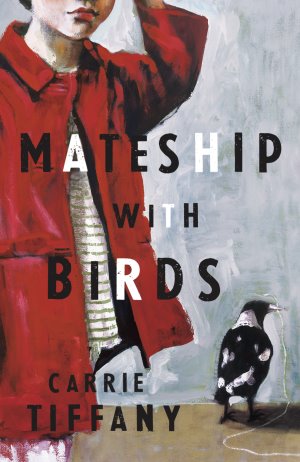
Mateship with Birds by Carrie Tiffany (my review. Won the Stella Prize and shortlisted for the Miles Franklin Award)

Poetry
Burning Rice by Eileen Chong
The Sunlit Zone by Lisa Jacobson (also shortlisted for the Stella Prize)
Jam Tree Gully: Poems by John Kinsella
Liquid Nitrogen by Jennifer Maiden
Crimson Crop by Peter Rose

Non-fiction
Bradman’s War by Malcolm Knox
Uncommon Soldier by Chris Masters
Plein Airs and Graces by Adrian Mitchell
The Australian Moment by George Megalogenis
Bold Palates by Barbara Santich

Australian History
The Sex Lives of Australians: A History by Frank Bongiorno
Sandakan by Paul Ham
Gough Whitlam by Jenny Hocking
Farewell, Dear People by Ross McMullin
The Censor’s Library by Nicole Moore

Young adult fiction
Everything left unsaid by Jessica Davidson
The Children of the King by Sonya Hartnett
Grace Beside Me by Sue McPherson
Fog a Dox by Bruce Pascoe
Friday Brown by Vikki Wakefield

Children’s fiction
Red by Libby Gleeson
Today We Have No Plans by Jane Godwin, illustrated by Anna Walker
What’s the Matter, Aunty May? by Peter Friend, illustrated by Andrew Joyner
The Beginner’s Guide to Revenge by Marianne Musgrove

Congratulations to all the authors and publishers shortlisted. May they not have to wait too long for the winners’ announcement!

Carrie Tiffany, Mateship with birds (Review)

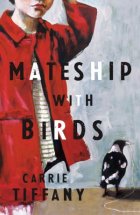
Mateship with Birds (Courtesy: Pan MacMillan)

Book Cover (Courtesy: Pan MacMillan)

Carrie Tiffany is on a roll. Last month her second novel, Mateship with birds, won the inaugural Stella Prize, and this month it won the Christina Stead Prize for Fiction at the New South Wales Premier’s Literary Awards. It has also been shortlisted for the Miles Franklin award. Many bloggers* have already read and reviewed it so, once again, I’m the last kid on the block, but I have finally got there.

Like her gorgeous first novel, Everyman’s rules for scientific living, Mateship with birds is set in rural Victoria in the past, this time, the early 1950s. Its central characters are the lonely, gentle dairy farmer, Harry, whose wife has left him, and his also lonely neighbour, Betty, who has brought her fatherless children to the country and who works in the local aged care home. The novel takes place over a year, a year that is paced by the life-cycle of a kookaburra family which Harry watches and documents in the spare righthand column of his old milk ledger. These notes, which are interspersed throughout the novel, are delightful and poetic, albeit brutal at times:

They work in pairs
against a fairy wren.
Dad buzzes the nest,
the wren throws herself on the ground
to draw him away.
She pluckily performs her decoy
– holding out her wing as if it is broken.
A small bird on the ground
is easy picking.
Club-Toe finishes her off.

They also provide commentary on the main story which is, as you’ve probably guessed, a love story. It is, however, no traditional romance. The boy and girl, Harry and Betty, are well past their youth and are cautious, given their previous experiences of love and relationships. They reminded me a little of Kate Grenville‘s rather dowdy protagonists in The idea of perfection. They care for each other in all sorts of practical ways: Betty cooks meals for Harry and tends his health, and Harry looks out for Betty and her children, fixing things when he can. A sexual tension underlies all their interactions – over many years – but it’s not openly expressed.  (“When he’s invited to tea he leaves immediately the meal is finished, as if unsure of what happens next”). Harry gradually takes on the role of “father figure” for Michael. However, when Michael becomes interested in a girl and Harry decides to pass on some “father-son” knowledge (“an explanation of things – of things with girls? Of … details of the workings”), including some rather specific physical advice regarding women, Betty is not impressed.

It sounds pretty straightforward, doesn’t it, but there’s something about Tiffany’s writing that makes it feel fresh, original. Part of it stems from her particular background as a scientist and agricultural journalist. Again, like her first novel, she grounds the story in her knowledge of farming life, but not in so much detail as to be boring. Rather, her descriptions give the novel its underlying rhythm – the landscape and the creatures inhabiting it (the kookaburras, owls, magpies, and so on); the milking; the driving into town; the way country neighbours help each other out; the sense of life going on regardless of the little dramas, the kindnesses and the cruelties, that occur. The writing is evocative but has a resigned and rather laconic tone that fits the rural setting.

Although a short book – a novella, really – it’s richly textured. There’s the main narrative drive which flips between Harry and Betty and includes flashbacks to their past, occasional dialogue, gorgeous descriptions (“The eucalypts’ thin leaves are painterly on the background of mauve sky – like black lace on pale skin”), and lists of plants, animals, medications, and so on. Interspersed with this main narrative are Harry’s kookaburra log, Betty’s notebook, Little Hazel’s nature diary, and Harry’s letters to Michael. And all this is layered with imagery involving mating, mateship, birds and humans. You can imagine the possibilities that Tiffany teases out from these. It’s all carefully constructed but doesn’t feel forced. It just flows.

In other words, this is a clever book, but not inaccessibly so. It’s generous, not judgemental. It’s also pretty earthy, with regular allusions to and descriptions of sex. If I have any criticism, it’s  in the persistent references to sexuality. At times, I wanted to say, “ok, I get it, sex – in its beauty, carnality, and sometimes cruelty and brutality – is integral to life” but I kept on reading because … of the writing. I love Tiffany’s writing. I mean, how can you not like writing like this description in which Harry compares Betty to Michael’s girlfriend Dora:

Not like Betty. His Betty is heavier, more complicated. Betty meanders within herself; she’s full of quiet pockets. The girl Dora might be water, but his Betty is oil. You can’t take oil lightly. It seeps into your skin. It marks you.
Australian Women Writers ChallengeI also kept reading because I wanted to know what it was all about. Why was Tiffany writing this particular story, I kept thinking. For some reviewers (see the links at the end), it is primarily about family, for others it is about the relationship between men and women, but for Tiffany it’s about desire. I can see that it is about all these things, but here’s the thing, the book starts with the description of four attacks by birds on humans followed by a description of cockatoos damaging crops. This, together with the sexual imagery, the frequent references to animal behaviour and to humans’ relationships with animals, suggests to me another theme to do with the nature of life, with the nature of our relationships with animals, and with how we accommodate the animal versus the human within ourselves. I’ll give the final word to the birds:

Mum, Dad, Club-Toe
break off their
preening,
squabbling,
loafing,
to attack.
They lose themselves in the doing.
I struggle to tell them apart.
Knife-beaked,
cruel-eyed,
vicious;
there is no question
they would die for the family
– that violence is a family act.

This book packs a punch!

* You may like to read the reviews written by Lisa (ANZLitLovers), John (Musings of a Literary Dilettante), Matt (A Novel Approach) and Kim (Reading Matters).

Carrie Tiffany
Mateship with birds
Sydney: Picador, 2012
208pp.
ISBN: 9781742610764
Michael Sala’s The last thread is 2013’s Pacific Region Winner of the Commonwealth Book Prize

Michael Sala The last thread bookcover

The last thread (Courtesy: Affirm Press)

I don’t know about you but I find blogging a challenge when I’m travelling, as I have been for much of May. I love my iPad for staying in touch, but I don’t find it easy to write blog posts on it – either via the WordPress app or the browser. And, our old PC laptop that we share for travelling just isn’t the same as my MacBook Pro. Consequently, I decided to delay posting on Michael Sala’s win, announced yesterday, until I got back today.

It’s an exciting win – of course, what win isn’t! – and means that Sala is now in the running for the overall Commonwealth Book Prize which will be announced on 31 May. I am particularly thrilled because it was published by a small, not yet well-known publisher, Affirm Press, which has published some lovely books over the last couple of years.

I reviewed Sala’s novel last year. It’s autobiographical, and has clearly been a challenge for him and his family*. I closed my review with:

In the very last pages of the book, Michael’s mother says that “words and stories can be dangerous” (echoing Francesca Rendle-Short’s “to think, to write, is dangerous”). They can indeed, but sometimes that danger can have positive outcomes. I hope that, for Sala, the dangers of putting his story, his truths, on the page will be restorative. There’s no guarantee though that such bravery will have its just rewards … in life or in fiction.

It’s exciting for Sala that his bravery has brought him recognition. He has also been shortlisted for the UTS Glenda Adams New Writing Award in the New South Wales Premier’s Literary Prize. I wish him well in both awards – and congratulate him and Affirm Press on their achievements to date.

* As comments from his family on my original post show.

Monday musings on Australian literature: Miles Franklin Award shortlist and the woman question

Miles Franklin

Miles Franklin ca 1940s (Presumed Public Domain, via Wikipedia)

Things have been looking up lately on the women writers front. Last year two women – Anna Funder (All that I am) and Gillian Mears (Foal’s bread) – made an almost clean sweep of our major literary awards. This year women writers are again faring well, with the Miles Franklin shortlist comprising all women. The shortlist, announced last week, is:

Three of these – Floundering, Beloved and The mountain – are debut novels, though Drusilla Modjeska has published several books, some of which play with the boundary between fact and fiction.

I’m not writing this post to gloat. After all, I love many contemporary Aussie male writers including those I’ve reviewed here, such as David Malouf, Tim Winton, Murray Bail, Gerald Murnane, Peter Carey, Richard Flanagan, and less well-known ones like Alan Gould, Andrew Croome and Nigel Featherstone. However, there have been some very lean years for women, including a couple of recent years (2009 and 2011) in which no women writers were shortlisted for the Miles Franklin. These, together with VIDA’s evidence regarding inequities in women being published and reviewed, and women being used as reviewers, were the prime impetus for the establishment of the Australian Women Writers Challenge (AWW). Last year’s stellar year for women and now this year’s Miles Franklin shortlist might suggest that the job is done – but I don’t think so. History has shown that gains made by women are often not sustained …

… and, anyhow, the AWW is not about ignoring men. It is simply about recognising and, in doing so, promoting women. Most of the women involved in the challenge also read male (or, should I say, men) writers. I sure do, as you can see if you scan my Author Index.

Last year, Rebecca Giggs wrote an article in Overland about the “woman” issue. She was commenting on a question put to Anna Krien (I’ve reviewed Into the forest and Us and them) regarding why Australia’s best non-fiction is currently being written by women. Giggs pondered:

During this past summer – a time when women’s writing has been the subject of renewed attention – I have found myself wondering why a direct answer to that question is so hard. It would be exceptionally unusual, one imagines, for an emerging male author to be asked why so many of our best books are currently being written by men. And yet it would also be wrong to say that the query, asked of a female writer, is unforeseeable. As regressive and problematic as the question seems, it remains relevant because of the prevalence of its assumptions in publishing and readership communities. To foreclose on Attwood’s right to ask about the specific role of women in nonfiction is to abandon the opportunity to learn from our stumbling answers.

This is the point – to keep the conversation going, to better understand if there are any underlying issues preventing longterm equal treatment and recognition. Reading Giggs again, I was reminded of the recent discussions regarding Wikipedia’s removing women from their American novelists category to the American women novelists category. The impetus for the new category was valid: people do want to identify and locate women writers, just as people want to locate a country’s indigenous authors or LGBT authors or some other specific group. The problem was the “removing” of women novelists from the main list, thereby marginalising them while at the same time highlighting them. Wikipedia, being the collaborative venture that it is, is reviewing its policy to ensure that its categories work practically, equitably and philosophically.

It’s vexing, really, that the question is still vexed …

Monday musings on Australian literature: Stella, Carrie and friends

Mateship with Birds (Courtesy: Pan MacMillan)

Book Cover (Courtesy: Pan MacMillan)

For those of you who haven’t yet heard the news, I’d better start with the announcement that last week Carrie Tiffany‘s novel, Mateship with birds, was announced the winner of the inaugural Stella Prize. Unfortunately, the book is still on my TBR but with its also being shortlisted for the NSW Premier’s Literary Award and longlisted for the Miles Franklin Award, I need to get a move on.

Okay, now that I’ve got that off my chest, back to Stella and Carrie. When she was announced as the winner of the Prize, Tiffany, according to tweets on the night, immediately advised that she would return $10,000 of the $50,000 prize to be shared among the remaining shortlisted writers: Courtney Collins (The burial), Michelle de Kretser (Questions of travel), Lisa Jacobson (The sunlit zone), Cate Kennedy (Like a house on fire) and Margo Lanagan (Sea hearts). She wanted to recognise, I believe, the co-operative spirit of the Stella Prize, and the fact that women writers are supportive of each other. Go Carrie, I say.

Now to the “friends” part of this post’s title. In addition to the above gesture, she also said on the night that:

The Stella Prize is an opportunity to fete and honour writing by Australian women. When I sit down to write I am anchored by all of the books I have read. My sentences would not have been possible without the sentences of Christina Stead, Thea Astley, Elizabeth Jolley, Beverley Farmer, Kate Grenville, Gillian Mears, Helen Garner and the many other fine Australian writers that I have read and continue to read.

What a great list of writers. I first read all of these women, except Christina Stead, in the 1980s, and was blown away by the quality of their writing. Not only do they all tell wonderful stories but, as Tiffany implies, they write great sentences. You can have the best story in the world but if you can’t write a good sentence you’re not going to get far.

And sentences are clearly important to Tiffany, because in addition to mentioning them in her acceptance speech, she referred to them in an interview conducted by the Stella Prize team the day before the announcement. She was asked why she became a writer, and she said:

More than anything I wanted to become a reader and I’m pleased to have achieved that. In my early twenties I worked as a park ranger in Central Australia. I live in Melbourne now and work as a farming journalist. I started writing fiction ten or so years ago. I don’t remember any momentous shift, just a hankering to make some sentences of my own.

She was right to follow that hankering because, from what I’ve read and from the awards she’s won and been listed for, she too can write great sentences, can write in fact, like the women she named, brave sentences that take risks … I look forward to reading Mateship with birds.

Queensland Literary Awards … to continue in 2013

There’s sometimes a fine line in the blogging world between promoting and supporting. I don’t see my role being to promote particular authors or books, but overall I like to think that my blog supports literature in general, and Australian literature in particular. A by-product of that support is probably promotion, but that’s not my goal. However, today I’m going to stray more into the promotion side of the line – but there’s a good reason for it, and there’s no monetary gain for the organisation I’m promoting so, here goes …

Queensland Literary Awards LogoThis week’s Monday Musings was about my new Australian Literary Awards page in which I’ve listed Australia’s main literary awards for fiction. I included the new Queensland Literary Awards without being completely certain whether they would continue, given their history. Today their continuation was confirmed in an email from Queensland Literary Awards Inc. The email says:

The Queensland Literary Awards (QLAs) were established through significant public support in 2012. The QLAs are Queensland’s most significant suite of literary prizes. They celebrate, nurture, and applaud the talents and achievements of Australia’s writers.

We have received outstanding support from numerous partners to keep the awards alive again this year.

They asked if I would help get the word out about the awards. How could I say no, given all the work they’ve done and the support they’ve received from others? Queensland is, after all, my home state and has a long history of literary awards.

This year’s award categories are:

  • The Courier‐Mail People’s Choice Queensland Book of the Year
  • Deloitte Fiction Book Award
  • University of Queensland Non‐Fiction Book Award
  • University of Southern Queensland History Book Award
  • State Library Queensland Poetry Collection—Judith Wright Calanthe Award
  • Australian Short Story Collection—Steele Rudd Award
  • Griffith University Young Adult Book Award
  • Children’s Book Award
  • Gadens Feature Film Script Award
  • Emerging Queensland Author—Manuscript Award (supported by University of Queensland Press)
  • Unpublished Indigenous Writer—David Unaipon Award (supported by Copyright Agency Cultural Fund and University of Queensland Press)

Two of the awards – The Courier‐Mail People’s Choice Queensland Book of the Year and the Emerging Queensland Author—Manuscript Award – are limited to Queensland authors, but the other nine are national awards. I rather like the idea of designating a couple of awards for the state of origin while retaining the national focus overall.

If you want to know more about the awards and how to nominate – the time-frame is tight – please click here.

Monday musings on Australian literature: Australia’s major Literary Awards

This will be a short Monday Musings … aren’t you pleased!

The literary award season for 2013 is hotting up with the most exciting thing on the horizon being the announcement of the inaugural Stella Prize due tomorrow, 16 April. In addition to this, though, we have also seen the announcement of longlists and shortlists for a few other awards, and even a winner or two. I’m finding it hard to keep up …

Award Symbol

No. 1! (Courtesy: OCAL via clker.com)

Now, while I don’t make a practice of reporting on all awards, I do like to know what’s going on. So, I have created a new page on my blog for Australia’s main national literary awards. It’s not a complete list of all literary awards offered in Australia but of the significant ones that are exclusively or mostly awarded to fiction books or fiction writers in the national arena. I plan to include in the page the major dates for announcements of long lists, short lists, and winners for each award for the current year. I have linked each award, where possible, to its Wikipedia page, on the assumption that that’s likely to be the most stable page and will, in most cases, provide a link to the award’s official site – where there is one. I find it quite frustrating, in fact, that many of the awards do not have well-maintained sites. It is quite hard, for example, to find the important dates for this year’s announcements, and so you’ll see that the list is incomplete.

Anyhow, there you have it for this week … please look at the page if you are interested, and if you see any glaring omissions or errors, let me know.

The Stella Prize shortlist, 2013

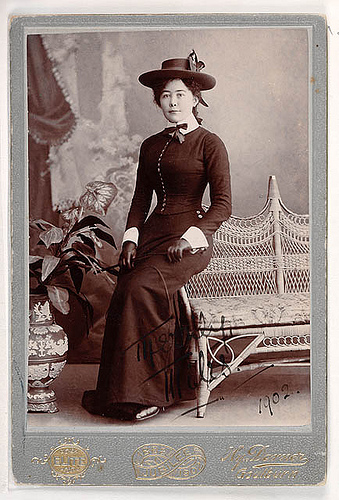
Miles Franklin, 1902

Miles Franklin, 1902, by H.Y. Dorner (Presumed Public Domain)

Woo hoo … The Stella Prize shortlist has been announced.

I posted the longlist a few weeks ago before, but just to recap, the Stella Prize is a new award on the Australian literary scene. It is named for Miles Franklin and is “for the best work of literature (fiction and non-fiction) published in 2012 (for this inaugural one) by an Australian woman”. The prize of $50,000 will go to one author.

I like the look of the shortlist. It includes authors I’ve read and enjoyed before (de Kretser, Kennedy and Tiffany) and the authors I picked out as particularly interesting (to me, anyhow) from the shortlist:

  • Courtney Collins, The burial (Allen & Unwin): a debut historical crime novel which reimagines the life of  Australia’s ‘lady bushranger’, Jessie Hickman. I’m not a crime reader, but this one intrigues me.
  • Michelle de Kretser, Questions of travel (Allen & Unwin): the fourth novel by this award-winning writer.
  • Lisa Jacobson, The sunlit zone (Five Islands Press): a verse novel which has been reviewed several times already for the Australian Women Writers Challenge. (See my roundup over there. The reviews I read while writing that round-up have increased my interest in this book).
  • Cate Kennedy, Like a house on fire (Scribe): a collection of short stories by one of Australia’s best short story writers.
  • Margo Lanagan, Sea hearts (Allen & Unwin): a fantasy or speculative-fiction novel about selkies and the like that I believe also appeals to non-genre readers. Lanagan has a reputation for lovely prose, so I’d be interested to check her out some time.
  • Carrie Tiffany, Mateship with birds (Picador): the second novel by the author of the truly splendiferous Everyman’s rules for scientific living.

It’s all fiction, but there’s “genre” writing here, as well as traditional “literary” fiction, poetry and short stories. It’s rather sad that only one can win but let’s hope the longlisting and shortlisting will raise the profile of these authors – and others along with them – because that is the prime goal of the award. (For the winner, though, the prize purse of $50K will be an important outcome!)

And, it looks like the Australian independent publisher Allen & Unwin has scooped the pool with three of the six shortlisted books! Congratulations to them.

The first winner of the Stella Prize will be awarded in Melbourne on the evening of Tuesday 16 April. I’ll keep you informed.

PS Is it the 2013 prize for books published in 2012, or is it the 2012 prize awarded in 2013?

Monday musings on Australian literature: The Stella Prize longlist

Miles Franklin
Miles Franklin, c. 1940s (Presumed Public Domain, via Wikipedia)

I have mentioned the new Stella Prize before but, for those of you who may not be across this new award on the Australian literary scene, here is a brief recap. It is named for Miles Franklin – her full name was  Stella Maria Sarah Miles Franklin – and is “for the best work of literature (fiction and non-fiction) published in 2012 (for this inaugural one) by an Australian woman”. The prize of $50,000 will go to one author.

The award was created by a group of 11 women, including the writer Sophie Cunningham, in response to what many of us felt was an abysmal under-representation of women writers in Australia’s major literary awards and other literary activity (such as reviewing and being reviewed). The Stella Prize people want to turn this around and, as they say on their website, to:

  • raise the profile of women’s writing
  • encourage a future generation of women writers
  • bring readers to the work of Australian women.

The judging panel is a varied lot and should, I think, do an interesting job:

  • Kerryn Goldsworthy (Chair): author, writer, academic and critic
  • Kate Grenville: best-selling and award-winning Australian novelist. (Surely she doesn’t need any further introduction?)
  • Claudia Karvan: actor, producer and television scriptwriter
  • Rafael Epstein: television and radio journalist who has won the prestigious Walkley Award twice
  • Fiona Stager: bookshop owner and past president of the Australian Booksellers Association.

And, in fact, I think they have if the longlist – quite different to most literary prize longlists I’ve seen before – is any guide:

  • Romy Ash, Floundering: a debut novel on contemporary themes
  • Dylan Coleman, Mazin Grace: an historical novel about mission life, by a Kokatha-Greek writer
  • Courtney Collins, The burial: a debut historical crime novel which has apparently already been optioned for film. It reimagines the life of  Australia’s ‘lady bushranger’, Jessie Hickman
  • Robin de Crespigny, The people smuggler: described as “a non-fiction thriller and a moral maze” and I think I’ll leave it at that!
  • Michelle de Kretser, Questions of travel: the fourth novel by an award-winning Sri Lankan born writer. I’ve read two of her previous novels and am keen to read this one.
  • Amy Espeseth, Sufficient grace: novel by a Wisconsin born writer. It won an unpublished manuscript award back in 2009.
  • Lisa Jacobson, The sunlit zone: a verse novel which writer and reviewer Adrian Hyland describes as combining “the narrative drive of the novel with the perfect pitch of true poetry”
  • Cate Kennedy, Like a house on fire: a collection of short stories by one of Australia’s best short story writers. I’ve only read a couple of hers but need to find time to read more.
  • Margo Lanagan, Sea hearts: a fantasy or speculative-fiction novel about selkies and the like that also appeals to non-genre readers (I believe). Her prose is said to be beautiful.
  • Patti Miller, The mind of a thief: a memoir exploring issues around native title.
  • Stephanie Radok, An opening: subtitled “twelve love stories about art” this one sounds hard to classify but fascinating to read. I think the judges called it “mixed genre”.
  • Carrie Tiffany, Mateship with birds: the second novel by the author of the truly splendiferous Everyman’s rules for scientific living. This is waiting patiently in my TBR.

What a fascinating list eh? It contains few of the usual suspects – even among our somewhat maligned women writing fraternity, we do have some “usual suspects” – but some great sounding works. By longlisting such a diverse collection the judges are surely sending out a message about the depth and breadth of women’s writing in contemporary Australia. Some of the books have been reviewed by participants in the Australian Women Writers challenge. Paula Grunseit has provided a brief survey of these reviews at the challenge site. If you go there you can enter a book giveaway at the same time!

The shortlist for the 2013 Stella Prize will be announced on Wednesday 20 March. and the inaugural Stella Prize will be awarded in Melbourne on the evening of Tuesday 16 April. I’ll keep you informed.

MUBA and Patrick White awards for 2012 announced

I don’t make a practice of reporting on awards  – many of the big ones get pretty good media coverage anyhow – but every now and then something catches my fancy … and so here I am today …

Most Underrated Book Award

Apologies to those of you waiting on the edge of your seats to hear the winner of the MUBA, or Most Underrated Book Award, that I heralded a few weeks ago. It was announced on November 8th, the day after I returned from eight days away, and I simply missed it.

The winner is (was!) Wayne Macauley’s The cook.

Congratulations to Wayne Macauley and the three runners-up, Peter Barry, Irma Gold, and Jess Huon. Please check the SPUNC page which lists the books and how you can purchase each one in both print and electronic format. As SPUNC says, they would all make worthy additions to your Christmas shopping list.

Patrick White Award 2012

Patrick White (if we exclude JM Coetzee who received his award when still a South African resident) is Australia’s only Nobel Laureate for Literature. He won that award in 1973, and in 1975 he used the proceeds to establish the Patrick White Award. His goal was to advance ‘Australian literature by encouraging the writing of novels, short stories, poetry and/or plays for publication or performance’. It tends to be given to writers who have made a significant contribution to Australian literature but whom the judges feel deserve further recognition. Recent winners include poet Robert Adamson (2011); multiple award-winning novelist, David Foster (2010); novelist and short story writer Beverley Farmer (2009), a favourite of mine but I haven’t read her for a while; and poet and translator Geoff Page (2001), whom I have reviewed here.

This year’s winner is Amanda Lohrey. I have read her but not since I started this blog. The judges praised the quality of her fiction – the most recent being her novel Reading Madame Bovary – for the moral and ethical dilemmas she explores and for her prose style which ‘has developed a distinctive grace and lucidity in expressing these complex issues’. The judges also commended her role in developing the creative writing program at the University of Technology Sydney, and her work as an essayist.

Thanks to the AustLit blog for information on the Patrick White Award.