Stella Prize 2020 Shortlist announced

Well, lookee here, the Stella Prize shortlist was announced this morning while I was at Tai Chi so I am just getting to it now. And, I am rather pleased because, although I’ve only read one of the six, I am currently reading another, and have a third on my reading group schedule, so that’s half of them without really trying! Not that I don’t WANT to try, but my reading schedule is so packed that I find it HARD to try. I therefore love it when the listed books are ones I plan to read anyhow.

So …

Book coverThe shortlist:

  • Jess Hill’s See what you made me do (nonfiction)
  • Caro Llewellyn’s Diving into glass (memoir)
  • Favel Parrett’s There was still love (novel) (will be read in May) (Lisa’s review)
  • Josephine Rowe’s Here until August (short stories)
  • Tara June Winch’s The yield (novel) (reading now) (Lisa’s review)
  • Charlotte Wood’s The weekend (novel) (my review)

After a rather “out there” longlist, which included several books many of us had not heard of, the shortlist, as often happens with the Stella I think, has narrowed down to a less surprising list. Would most you you agree with that? This is not being critical of the longlist – because I hadn’t read most of those books – but simply saying that the shortlist seems more geared to the books that have been generally well received critically. I like to think that that’s because they shine out …

Anyhow, the judges’ chair, Louise Swinn commented on the shortlist that:

Writers across the gamut of their career appear on the 2020 Stella Prize shortlist, which includes authors who are household names alongside some we are just getting acquainted with. The six books on this year’s shortlist are all outward-looking, and they tell stories – of illness, family life, friendship, domestic abuse, and more – in remarkable ways. If language is a tool, or a weapon, then these writers use their skills with tremendous courage. We found a lot to be hopeful about here, too – not just at the stories being told, but at the quality of the art being produced.

The winner will be announced on April 8.

Any comments?

Anna Goldsworthy, Piano lessons (#BookReview)

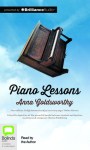
Book coverEver since Anna Goldsworthy’s memoir, Piano lessons, was published, I’ve hankered to read it, but somehow never got around to acquiring a copy. So, when I was casting around for our next road trip audiobook and this one popped up serendipitously in Borrowbox, I grabbed the opportunity.
Now, I have to admit that although I did play drums and fife, briefly, in a primary school band, I have never had formal music lessons. Ballet was my thing as a child. However, Mr Gums learnt piano to Grade 7, and I sat in on our kids’ music lessons, especially their piano ones, for years. I loved it, because I learnt so much about music (and music teachers) as a result. I was consequently primed for this book about the author’s piano lessons and her relationship with her Russian-born piano teacher, Mrs Sivan. Being on the Liszt List, that is, someone whose student-teacher lineage reaches back to Liszt, Mrs Sivan initially comes across as formidable, but very soon her warmth and generosity come to the fore.

Essentially, this memoir is a coming-of-age story. It covers Goldsworthy’s life – specifically her piano-playing life – from the age of nine until her mid-late twenties. It is not, however, the traditional coming-of-age story, but her coming-of-age as a musician and, along the way, as a wiser more rounded person. We see Anna coping with the humiliation of failure, when she gets a C in an important piano exam having been used to always getting As. We see the point at which she realises that, if she is to achieve her concert pianist dream, practising for barely two hours a day is not going to cut it. We see the naiveté of a young woman who, not prepared for a journalist’s questions, manages to hurt the people closest to her, learning, in the process, the importance of “humility and gratitude”. And, we see the brilliant pianist and school dux learning that a “perfect score” is “not proof against disaster”.

But, we also hear the wisdom of her piano teacher who doesn’t just teach her the techniques of playing piano, but also the meaning of music, the value and role of the arts and, more, a deeply humane philosophy of life, one that recognises, for example, the value of competition for learning but not for measuring one’s achievement or worth. Indeed, she tells Anna that she is “not teaching piano playing”, she is “teaching philosophy”. It is some years, of course, before Anna stops seeing piano playing as “obstacle courses for fingers” but as something you feel and express.

Goldsworthy describes this piano teacher, Mrs Sivan, as “less a character than a force”, and she conveys this sense largely through reproducing her teacher’s rapid-fire broken English. This might have been worked well in text, but in the audiobook – which was read by Goldsworthy herself – it was frequently difficult to listen to and was sometimes so fast that we missed words. Unfortunately, I don’t have the text to give you an example, but I found one tiny quote on GoodReads. Here is Mrs Sivan telling student Anna about Chopin:

I tell you a secret about Chopin, piano is his best friend. More. He tells piano all his secrets.

Mrs Sivan preceded this by saying that George Sand was not Chopin’s great love, the piano was! One of the real pleasures of this book is the insight provided into several musicians, particularly Bach, Mozart and Chopin, but also Beethoven, Shostakovich and others. Mrs Sivan knows them and their music so well, and impresses upon Anna that musicians must understand the composer and their lives to understand their music. Mozart, for example, “was born with happy of everything”.  I found her adamance about this interesting, because, in the literary arts, there are those who argue that the author’s life is irrelevant and should not be considered at all. I think there’s a place for it.

Piano lessons is not a long book – just 240 pages or so – but the writing and the structuring of the story are so tight that Goldsworthy conveys this coming-of-age to some depth despite the book’s brevity. She does this by never labouring her points, by knowing which stories to tell and how much to tell of them, and by imbuing it all with a light touch. Sometimes you think you are left hanging – “did she win that audition?” – but the answer always comes directly or indirectly a little later.

There is more to this book about music and musicians, about fostering talent, about forging a meaningful life as a musician, and about teaching being “the highest calling”, but not having it on hand, I’ll close here by sharing Mrs Sivan’s words about the arts. She told Goldsworthy that the arts must be “aesthetically and ethically grounded” and that they embody “unlimited flying of imagination”. I like both of these ideas – particularly that about the arts needing to be both aesthetic and ethical. In one sense, I don’t like to think that the arts “should” be anything, but I also believe that being ethical about what we do – whatever that is – is important. I think I would have liked Mrs Sivan.

Lisa also (ANZLitLovers) loved this book.

Challenge logoAnna Goldsworthy
Piano lessons (Audio)
(Read by Anna Goldsworthy)
Bolinda Audio, 2015 (Orig. pub. 2009)
2:23 e-audiobook (Unabridged)
ISBN: 9781489020260

Stella Prize 2020 Longlist

I don’t do well at having read the Stella Prize longlist at the time of its announcement. In 2017 I’d read none; in 2018 it was one, and last year two! Will it be three this year? (BTW by the end of 2019, I had read six of the 12, one more than in 2018! At least I’m going up, albeit at a snail’s pace.)

I do do better at reading the winners, however, having read Carrie Tiffany’s Mateship with birds, Clare Wright’s The forgotten rebels of Eureka, Emily Bitto’s The strays, Charlotte Wood’s The natural way of things, Heather Rose’s The museum of modern love and Vicki Laveau-Harvie’s The erratics. So far, I’ve only missed 2018’s winner, Alexis Wright’s Tracker.

The judges are again different to last year’s – with the exception of the chair, Louise Swinn, who was also chair last year. 2020’s judges are award-winning journalism and author Monica Attard, journalist and editor for NITV News Jack Latimore, feminist editor and author Zoya Patel, and poet, educator and researcher Leni Shilton. Once again, as you’d expect from an organisation like Stella, attention has been paid to diversity on the panel.

Book coverThe longlist:

  • Joey Bui’s Lucky ticket (short stories)
  • Gay’wu Group of Women’s Songspirals: Sharing women’s wisdom of Country through songlines 
  • Jess Hill’s See what you made me do
  • Yumna Kassab’s The house of spirit
  • Caro Llewellyn’s Diving into glass
  • Mandy Ord’s When one person dies the world is over
  • Favel Parrett’s There was still love (on my TBR) (Lisa’s review)
  • Josephine Rowe’s Here until August (short stories)
  • Vikki Wakefield’s This is how we change the ending
  • Tara June Winch’s The yield (on my TBR) (Lisa’s review)
  • Charlotte Wood’s The weekend (my review)
  • Sally Young’s The paper emperors: The rise of Australian newspaper empires

Well, wow! All I can say is I guessed Winch and thought probably Wood, and maybe Parrett, but several of the others I haven’t even heard of. I was hoping that Carmel Bird’s Field of poppies, Madelaine Dickie’s Red can origami, and Amanda O’Callaghan’s This taste for silence, for a start, might get up – not to mention Jessica White’s Hearing Maud. But, as I haven’t read most of the longlist I’m not going to judge. I will say though that my record, that was on the up, has taken a beating, as I’ve only read one to date. Nonetheless, it is good to see diversity again in the list – both in terms of author and form.

The judges’ chair, Louise Swinn commented on the longlist that:

… This longlist is varied: it includes a graphic memoir, a young adult novel, Aboriginal songspirals, personal memoir, history, short stories and novels. We’ve been given a sense of just how influential our newspapers have been on public policy; we’ve learnt some history of our land; and we’ve been given the lowdown on both the dire statistics and the real-life stories of domestic abuse. We’ve been transported: we were sixteen years old all over again (gulp!).

All of the writers we longlisted are finding innovative ways to communicate their stories, and there is a very real sense when opening these books that an honest dialogue is being entered into. These authors are craftspeople serious about their intention and dedicated to the art. We were educated and entertained by these twelve longlisted books and we recommend them heartily.

The shortlist will be announced on March 6 (not March 8, International Women’s Day, as recently been tradition), and the winner on April 8.

Any comments?

Prime Minister’s Literary Awards Winners, 2019, announced

The Winners of the the Prime Minister’s Literary Awards for 2019 were announced earlier today, but I was driving to Berrima for my annual “same-time-next-year” catch up with a dear Sydney friend.

Below is the shortlist for the three categories I posted on in my shortlist post, with the winners marked in bold.

Fiction

  • Rodney Hall’s A stolen season, Picador (my review)
  • Gail Jones’ The death of Noah Glass, Text Publishing
  • Melissa Lucashenko’s Too much lip, University of Queensland Press (my review)
  • Suneeta Peres da Costa’s Saudade, Giramondo Publishing (Lisa ANZLitLovers’ review)
  • Laura Elizabeth Woollett’s Beautiful revolutionary, Scribe Publications

Oh well, not one I’ve read but Gail Jones has been around the traps for a long time with many shortlisted books, so congratulations to her.

Non-fiction

  • Cynthia Banham’s A certain light: A memoir of family, loss and hope, Allen & Unwin
  • Gabrielle Chan’s Rusted off: Why country Australia is fed up, Vintage Books
  • Paul Genoni and Tanya Dalziell’s Half the perfect world: Writers, dreamers and drifters on Hydra, 1955–1964, Monash University Press
  • Chloe Hooper’s The arsonist: A mind on fire, Hamish Hamilton (on my TBR) (Lisa AnzLitLovers’ review)
  • Maria Tumarkin’s Axiomatic, Brow Books (my review)

Australian history

  • Billy Griffiths’ Deep time dreaming: Uncovering ancient Australia, Black Inc.
  • Anna Haebich’s Dancing in shadows: Histories of Nyungar performance, UWA Publishing
  • David Kemp’s The land of deams: How Australians won their freedom, 1788-1860, The Miegunyah Press
  • Meredith Lake’s The Bible in Australia: A cultural history, NewSouth Publishing
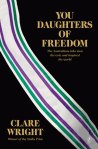
  • Clare Wright’s You daughters of freedom: The Australians who won the vote and inspired the world, Text Publishing (my review)

Other winners …

Three other categories were announced:

  • Poetry: Judith Beveridge Sun music: New and selected poems 
  • Young Adult fiction: Michael Gerard Bauer’s The things that will not stand
  • Children’s fiction: Emily Rodda’s His name was Walter

The complete shortlist with judges’ comments can be seen on the website (Check out their augmented reality function!)

No further comments from me, and no images, as I hate doing this on my iPad, but what about you…

Thoughts?

Prime Minister’s Literary Awards Shortlist, 2019, announced

As you know, I don’t announce all literary awards shortlists, but the Prime Minister’s Literary Awards have an “interesting” history, so I plan to follow them more closely than I originally did.

The press release says that over 500 books were submitted across the 6 categories, much the same as last year in fact. Last year, I listed all categories, but this year I am just listing the three that feature most often on my blog.

Rodney Hall, A stolen seasonFiction

  • Rodney Hall’s A stolen season, Picador (my review)
  • Gail Jones’ The death of Noah Glass, Text Publishing
  • Melissa Lucashenko’s Too much lip, University of Queensland Press (my review)
  • Suneeta Peres da Costa’s Saudade, Giramondo Publishing (Lisa ANZLitLovers’ review)
  • Laura Elizabeth Woollett’s Beautiful revolutionary, Scribe Publications

While last year’s list was male-dominated, this year’s tips the balance just over to the women’s side. Also, last year’s list seemed a little conservative, sticking to tried and true authors, while this year’s list mixes it up a bit. Indeed I barely know two of them. Best of all, last year I had read none of the shortlist, while this year I’ve read two! Hall, Jones and Lucashenko have appeared on a few lists this year, with Lucashenko, of course, recently winning the Miles Franklin Award.

Maria Tumarkin, AxiomaticNon-fiction

  • Cynthia Banham’s A certain light: A memoir of family, loss and hope, Allen & Unwin
  • Gabrielle Chan’s Rusted off: Why country Australia is fed up, Vintage Books
  • Paul Genoni and Tanya Dalziell’s Half the perfect world: Writers, dreamers and drifters on Hydra, 1955–1964, Monash University Press
  • Chloe Hooper’s The arsonist: A mind on fire, Hamish Hamilton (on my TBR) (Lisa AnzLitLovers’ review)
  • Maria Tumarkin’s Axiomatic, Brow Books (my review)

A mixed bunch, as you’d expect from something broadly described as “non-fiction”, but I’m pleased that again, unlike last year, I have actually read one of the books, and have another on my TBR. I like the judges’ description of Tumarkin’s exploration of her axioms, that she “turns them upside down and uses them to explore the intersection of past and present memories and the entanglement of human frailty.”

Clare Wright, You daughters of freedomAustralian history

  • Billy Griffiths’ Deep time dreaming: Uncovering ancient Australia, Black Inc.
  • Anna Haebich’s Dancing in shadows: Histories of Nyungar performance, UWA Publishing
  • David Kemp’s The land of deams: How Australians won their freedom, 1788-1860, The Miegunyah Press
  • Meredith Lake’s The Bible in Australia: A cultural history, NewSouth Publishing
  • Clare Wright’s You daughters of freedom: The Australians who won the vote and inspired the world, Text Publishing (my review)

Like last year, university publishing houses have done well here, with UWA Publishing, The Miegunyah Press and NewSouth Publishing taking three of the five spots. But, unlike last year, this year I have actually read one of the books! I am also particularly keen to read Billy Griffiths’ book which explores not only Australia’s archeology but the history of archeologists’ relationship with indigenous people and their knowledge and ideas about Australia’s “deep past”. While Griffiths and Haebich address indigenous Australia in their histories, I’m disappointed that there are no indigenous-authored histories here. Were any published or submitted this year I wonder?

The complete shortlist with judges’ comments can be seen on the website (Click on each book for the comments).

Thoughts, anyone?

Monday musings on Australian literature: National Biography Award, 2019

It’s been five years since I posted on the National Biography Award. Given that, and the fact that some changes have been made since last year, I figured it was worth reminding you (and me) of it.

First, a recap: The National Biography Award was endowed in 1996 by Geoffrey Cains, and supported for many years by Michael Crouch. Its aims were “to encourage the highest standards of writing in the fields of biography and autobiography, and to promote public interest in these genres”. From 2013 to 2018, the prize was $25,000 for the winner, and $1,000 for the shortlisted authors.

However, Michael Crouch died in 2018, bringing about some changes, as the website explains. It is now being supported by the Nelson Meers Foundation whose key objective is, they say, “to foster innovative artistic and cultural expression, and to encourage greater engagement with the diversity, complexity and richness of our cultural sector”. Hence their taking on this Award. This change has resulted in an increase in prize money for the shortlisted authors, and a new prize to commemorate Michael Crouch. The new arrangement, starting in 2019, is:

  • $25,000 for the winner
  • $2,000 for each of six shortlisted authors
  • $5,000 Michael Crouch Award for a first published biography by an Australian writer

The shortlist for 2019 was:

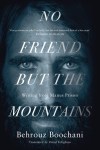
  • Behrouz Boochani’s No friend by the mountains: Writings from Manus Prison (Memoir) (Bill’s The Australian Legend’s review): If you are Australian and haven’t heard of this book yet, you have probably been RipVanWinkling it, but for non-Australians, Boochani is a Kurdish asylum-seeker who has been detained on Manus Island for over six years. This is his story, and one I have written about before.
  • Danielle Clode’s The wasp and the orchid: The remarkable life of Australian naturalist Edith Coleman (Biography) (Theresa Smith’s review): Reclaiming the story of a once well-known but then forgotten early twentieth century Australian naturalist, this book seems to be one of those hybrid biography-memoirs as the author herself, a scientist, is also present in the book.
  • Sarah Krasnostein, The trauma cleanerSarah Krasnostein’s The trauma cleaner: One woman’s extraordinary life in death, decay & disaster (Biography) (my review): This book is about as well known in Australia as Boochani’s is; it’s a beautifully structured, moving story, about transgender woman Sandra Pankhurst’s life and her current occupation as a trauma cleaner.
  • Rozanna Lilley’s Do oysters get bored? A curious life (Memoir) (Amy Walters’ post on Capital Letters, and my post on a festival conversation with Lilley): A complex memoir exploring Lilley’s life with her autistic son, her caring for her father with dementia, and her own experience of the trauma of sexual abuse while living with her bohemian parents, Dorothy Hewett and Merv Lilley.
  • Rick Morton’s One hundred years of dirt (Memoir): A memoir about multigenerational trauma, about which the judges wrote “Not since George Orwell has the grinding, humiliating, life-sapping horror of working-class deprivation and inequality been better portrayed”.
  • Sofija Stefanovic’s Miss Ex-Yugoslavia: a coming of age memoir (Memoir) (Lisa’s ANZLitLovers’ review): The story of a complex migration, which saw Sofija moving from a comfortable childhood in Belgrade to an unsettled life in Melbourne after the collapse of socialist Yugoslavia, but then returning to Serbia, only to come back to Australia when war hit the region.

So, only two biographies and four memoirs, which is a bit of a shame I think, albeit I enjoy good memoirs. However, from my research and from what I’ve read myself, each book here offers something special in content and/or in the approach taken, which expands our understanding of the forms within which they are written, and which is what you’d expect from a shortlist.

The judges for 2019 were:

  • Dr Georgina Arnott: Research Associate at Monash University on Australian history projects; author of The unknown Judith Wright which was shortlisted for the National Biography Award in 2017; and a judge also in 2018.
  • Margy Burn: librarian who has been responsible for Australian special collections at the National Library of Australia, and other state and university libraries; served on working parties for the Australian Dictionary of Biography; and a foundation judge for the Kibble and Dobbie awards for life writing by a woman author.
  • Professor Iain McCalman: author of several books; former President of the Australian Academy of the Humanities; and currently co-director and co-founder of the Sydney Environment Institute at the University of Sydney.

2019 Winners

Behrouz Boochani, No friend but the mountainsThe overall winner, announced last Monday, 12 August, is Behrouz Boochani’s No friend but the mountains. The judges said that:

This is compelling storytelling in the samisdat tradition, written in Farsi as a series of text messages sent to his translator and collaborator Omid Tofighian. Collaboration has made this book, which demonstrates how innovative, experimental and creative the work of translation can be.

The winner of the inaugural Michael Crouch Award for a Debut Work was Sofija Stefanovic’s Miss Ex-Yugoslavia, which judges described as “finely observed and ambitious”, a “thoughtful and tender addition to the genre of migration stories”.

For the non-Australians, in particular, I’d love to know about any specifically biography awards in your countries … but am of course happy to hear from anyone.

Miles Franklin Award 2019 Winner announced!

Melissa Lucashenko, Too Much LipWell, good news for me (because it’s all about me of course!) Not only had I read more of the longlist and the shortlist than is my usual achievement, but one of those books is the winner – and a wonderful winner it is too, Melissa Lucashenko’s Too much lip (my review)!

Really, as much as I liked the other contenders I’d read, I did hope this would win – because it is truth-telling of the most honest sort. Indeed, Lucashenko has said that she expected backlash (which didn’t come) from indigenous communities for her no-holds barred story about a rather dysfunctional indigenous family in which violence and substance abuse, in particular, is no stranger.  Lucashenko, does, of course, underpin this squarely with references to/evocation of the causes, that is, the intergenerational trauma indigenous people have experienced after two centuries of dispossession (and all the policies and practices that have ensued to deny them equality, dignity, and thus the health and security that we all deserve as citizens of this country.)

But, in addition to this honest, real story about contemporary indigenous lives and culture – about the challenge of marrying traditional beliefs and values with contemporary life – is the fact that it’s a rip-roaring tale. Humorous, page-turning, with colourful, individuated characters. If you haven’t read it yet, you surely will now!?

Jason Steger, writing in The Sydney Morning Herald, says

It’s not surprising that Melissa Lucashenko says Too Much Lip was her most difficult book to write. After all, it deals with physical and substance abuse, violence, marginalisation, displacement and dispossession, racism and incarceration within the experience of one Indigenous family.

He quotes the judges as saying that she “weaves a (sometimes) fabulous tale with the very real politics of cultural survival to offer a story of hope and redemption for all Australians”. Exactly!

I apologise for the delayed announcement – I was at reading group last night, and was distracted by our exciting discussions!

But, woo hoo! This is an inspired and inspiring choice! Well done judges, I say.

What do you think?

Monday musings on Australian literature: No Vogel prize in 2019

For those of us who follow the major Australian literary awards, The Australian/Vogel is one we like to keep an eye out for, because it has launched a number of significant careers during its nearly 40-year history. For those who don’t know it, the award is for an unpublished manuscript, which can be “a work of fiction, Australian history or biography”, by a writer under 35 years old.

It currently offers a $20,000 cash prize and, most importantly, publication by Allen & Unwin. It is usually announced early-ish in the year, with the book’s publication occurring at the time. (The entries for the 2020 award closed on 31 May, which gives time for the judge’s decision and for the publication process to be set in train.)

Authors who have won and gone on to publish more books – and whom I’ve posted on here – include:

Emily O'Grady, The yellow house(Of the above, only Document Z is the actual Vogel winner.

Others who have established ongoing careers, and whom I’m still to review, include Brian Castro (1982), Mandy Sayer (1989), and Rohan Wilson (2011). Last year’s (2018) winner was Emily O’Grady, with The yellow house (my review). Some of the prize’s past winners have gone on to win, or be shortlisted for, the Miles Franklin and other major Australian awards.

However, Ben Walter, discussing the Vogel (and to some degree literary prizes in general), on the Overland website, argues that while the money is nice, these awards are not, as the Vogel itself shows, a guaranteed path – or necessary even – to establishing a literary career. He has a point, I’m sure. (He also refers to an article on the writing life, including a survey of Vogel winners in Meanjin by Frank Moorhouse, in 2017. This is well-worth reading, and possibly worthy of a separate post!)

Anyhow, back to 2019 …  Books + Publishing, which reported the news in May, quoted Allen & Unwin’s publisher, Annette Barlow, as saying:

This is an award that has literally launched the careers of over 100 authors. But this year, in 2019, there is no winner and—although we’re disappointed, of course—I feel the judges’ decision speaks to their respect for the award and their desire to maintain the excellent standards of previous winning manuscripts.

They also quote Stephen Romei, literary editor of the Australian and one of the Vogel judges. He said:

I will be on the judging panel again this year, for the 2020 Vogel, and am optimistic we will find manuscripts that stand up and be counted.

It’s always disappointing when an award is not granted. This is the third time that this prize has not been awarded, the others being 1985 and 2013. Were there really no good manuscripts out there?

Jane Rawson, A wrong turn at the office of unmade listsAuthor of the innovative A wrong turn at the Office of Unmade Lists, Jane Rawson, wrote a post, “Just award the Vogel’s already”, on the Overland website, teasing out some of the pros and cons of this sort of award and of awards in general, not to mention the challenge of carving out a writer’s life. She says:

Not awarding the Vogel’s this year is downright cruel. Mediocre books get published all the time, and some of them even win multiple awards: who cares if you give the Vogel’s to a manuscript that isn’t a work of utter genius? The people who’ve submitted manuscripts have found a way to carve out time and space to write. They’ve dedicated themselves to a craft that has almost no financial or social reward. They’ve put their hopes on the line. Choose the best of the bunch and shortlist them: give one of them a prize. Maybe it will be the only money and recognition that writer ever gets, or maybe it will be the encouragement they need to go on to write better books. Either way, who cares: anything is better than the big plate of nothing most writers are served.

Her comments are both informative and provocative, but of course they are just another person’s opinion. If you are interested in the issue, do read her article and the comments on it. One interesting response came from someone called Adam Ford:

My first thought was that it wasn’t the prize committee, but the publishers themselves (more specifically the publishers’ marketing department) who decided they didn’t want to publish any of the manuscripts bc none of them fit with existing publishing success trends. Just another encroachment of commerce onto publishing. No idea if that’s true, of course. You’ve got to wonder what the conversation was like when they decided that THIS was the way to go.

I can see both sides of the argument but, in the end given the challenges of the writing life, I’m with Rawson. Why not reward the best of the bunch – and, if necessary, help that author create a “worthy” book? Then again, should we worry, or just accept Ben Walter’s argument (see above) that these awards are not the be-all and end-all – and get over it?

Miles Franklin Award 2019 shortlist

Well, good news for me in that I had read three of the longlist, and two of those have made it through to the shortlist. Interestingly, the one that didn’t, Trent Dalton’s Boy swallows universe, has been making such a splash that I rather expected it to be shortlisted. But, as we all know, you can never second guess literary judges.

So, here is the shortlist:

  • Michael Mohammed Ahmad’s The Lebs (Nancy’s review) (Hachette)
  • Gregory Day’s A sand archive (Lisa’s review) (Picador)
  • Rodney Hall’s A stolen season (my review) (Picador)
  • Gail Jones’ The death of Noah Glass (Text)
  • Melissa Lucashenko’s Too much lip (my review) (UQP)
  • Jennifer Mills’ Dyschronia (Lisa’s review) (Picador)

Rodney Hall, A stolen season

Some random observations:

  • There’s fair diversity here, with Ahmad and Lucashenko both making to to the shortlist.
  • Three women and three men! That’s neat.
  • Rodney Hall has won twice before, for Just relations and The grisly wife, and has now been shortlisted four more times.
  • Lucashenko has, this year, been shortlisted for the Stella Prize, the Victorian and NSW Premiers’ literary awards, and the Australian Book Industry awards.
  • This will be the fourth time that Gail Jones has been shortlisted for the Miles Franklin.
  • And, three of the six books were published by Picador! Congrats to them.

Melissa Lucashenko, Too Much LipStefanie Convery, writing in The Guardian (Australia), reports that:

Judge Bernadette Brennan said this year’s authors were “unafraid to take risks” in their narratives, which addressed “complex, disparate and urgent aspects of contemporary Australian life”.

This is certainly true of the two I’ve read …

Michaela Boland, writing for the ABC News, spoke to Michael Mohammed Ahmad, and wrote this:

While Mr Ahmad said that [winning the Prize] would be welcomed, the honour itself had already eased the insecurity and inadequacy he said was inherent to being an Arab Muslim immigrant in Australia.

“Three years ago our immigration minister Peter Dutton said second or third-generation Lebanese Australians like me are the mistakes of the Fraser government,” he said, after he learned his second book was one of the six short-listed.

It’s so distressing that Ahmad and, clearly, many other Australian citizens have to live their lives feeling this way – and that our government doesn’t seem to think it has a role to play in setting a welcoming, inclusive tone.

Anyhow, the judges, as I wrote in my longlist post, for this year are almost the same as last year’s: Richard Neville (State Library of NSW),  Murray Waldren (journalist and columnist for The Australian), Dr Melinda Harvey (book critic), Lindy Jones (bookseller), and Bernadette Brennan (author and literary critic). Brennan replaces last year’s Susan Sheridan.

The winner will be announced on 30 July in Sydney.

What do you think?

Sayaka Murata, Convenience store woman (#BookReview)

Book coverConvenience store woman, which won Japan’s prestigious Akutagawa Prize, is Sayaka Murata’s 10th novel, but her first translated into English. Hopefully, it won’t be the last. A rather unusual book, it elicited a stimulating discussion at my reading group last week.

The convenience store woman of the title is 36-year-old Keiko Furukawa. She isn’t “normal”, and her family worries she will never fit in to society. However, when 18 years old, she obtains work at a newly opened Smile Mart convenience store, and quickly feels comfortable, undertaking routine daily tasks, and following the store’s rules. Eighteen years later, she’s still there. This is not seen as a valid situation for a woman of Keiko’s now mature age. Why isn’t she married? And why doesn’t she have a better job? Then she meets another convenience store worker, the also, but differently, nonconformist Shiraha, and she thinks she can solve both their problems by having him move in with her.

It’s a short book, at just 176-pages in the print edition, and is told first person. Now, for those of you who remember my recent discussion of first person voices, Convenience store woman is a perfect example of an effective use of first person. The main theme is the push for conformity, the push to follow the expected narrative of a life, but our narrator, Keiko, is not, for whatever reason, able (or willing) to conform. This theme is particularly relevant to Japan, which has a reputation for conformity and group behaviour, but it’s also universally relevant, because many societies, my own included, are not good at coping with people who stray from the “norm”.

So, Keiko is different. She’s been different all her life. She knows it, and she’s mystified. She’s particularly mystified by the way people often behave which seems counter to logic, and also by the way people cheer up when they think she’s behaving “normally”. An example of the former happens in her childhood, which she tells us via flashback. There’s a schoolyard fight. The kids call for the fight to stop, so she goes to the toolshed, gets a spade and bashes one of the kids with it. Everyone is horrified,

“But everyone was saying to stop Yamazaki-kun and Aoki-kun fighting! I just thought that would be the quickest way to do it,” I explained patiently. Why on earth were they so angry? I just didn’t get it.

An example of the latter occurs after she invites Shiraha to live at her place. Everyone assumes they are in a relationship. “They were all so ecstatic”, she wondered, she says, “whether they’d lost their minds”. Listening to her friends “go on”, she says,

was like hearing them talk about a couple of total strangers. They seemed to have the story wrapped up between them. It was about characters who had the same names as we did, but who had absolutely nothing to do with me or Shiraha.

There it is – the expected story or narrative of life!

Of her convenience store colleagues, she says:

I was shocked by their reaction. As a convenience store worker, I couldn’t believe they were putting gossip about store workers before a promotion in which chicken skewers that usually sold at 130 yen were to be put on sale at the special price of 110 yen. What on earth had happened to the pair of them?

As you can see there’s a good deal of humour in this book. You can also see why this story could only be told first person. Any other voice would risk undermining Keiko’s authenticity, her reality.

So, for Keiko, it’s “convenient” having Shiraha at her place. Everyone is happy for her, and she likes that “they’ve stopped poking their nose into my business”.

However, while Keiko, for all her strangeness, is a likeable character, Shiraha is not. He has no desire to work, and takes advantage of her wish to appear “normal”, even though it satisfies his need for the same. He excuses his laziness by criticising society and its unfair gender expectations on men:

“Naturally, your job in a convenience store isn’t enough to support me. With you working there and me jobless, I’m the one they’ll criticize. Society hasn’t dragged itself out of the Stone Age yet, and they’ll always blame the man. But if you could just get a proper job, Furukura, they won’t victimize me anymore and it’ll be good for you, too, so we’d be killing two birds with one stone.”

Worse, he’s arrogant and cruel:

“I did it! I got away! Everything’s okay for the time being. There’s no way you’ll be getting pregnant, no chance of me ever penetrating a woman like you, after all.”

Actually, he only “got away” because Keiko had the idea of his moving in. Fortunately, she has no interest in sex, so his comment falls on flat ears – but we notice it.

The novel, then, hinges on the idea of normality, with the word “normal” recurring throughout the novel. Early on, Keiko realises that “the normal world has no room for exceptions and always quietly eliminates foreign objects”. This is why, it dawns on her, her family wishes to “cure” her. She is therefore grateful for the convenience store, where she can operate as “a normal cog in society” – until her age makes it no longer “normal”. The charming Shiraha has his own take:

“People who are considered normal enjoy putting those who aren’t on trial, you know. But if you kick me out now, they’ll judge you even more harshly, so you have no choice but to keep me around.” Shiraha gave a thin laugh. “I always did want revenge, on women who are allowed to become parasites just because they’re women. I always thought to myself that I’d be a parasite one day. That’d show them. And I’m going to be a parasite on you, Furukura, whatever it takes.”

Shiraha shows us that Murata’s understanding of deviations from the norm is nuanced, not simplistic.

Anyhow, later in the novel, after her sister asks “How can we make you normal?”, Keiko comes to recognise that her sister is happier seeing her as “normal”, albeit with “a lot of problems”,

than she is having an abnormal sister for whom everything is fine. For her, normality—however messy—is far more comprehensible.

In the end, Keiko does resolve her conundrum regarding how to live in a way that is true to herself. It is inspired, in fact, by the convenience store, which I think we can read as a microcosm of society. She suggests that “a convenience store is not merely a place where customers come to buy practical necessities, it has to be somewhere they can enjoy and take pleasure in discovering things they like”. She can play a role in that.

Convenience store woman is a wonderful read. Perfect in tone and voice, and fearless in its exploration of the confining nature of “normality”, it forces us to look beyond, and imagine other lives and ways of being.

Sayaka Murata
Convenience store woman
Translated by Ginny Tapley Takemori
London: Portobello Books, 2016 (trans. ed. 2018)
eISBN: 9781846276859