2025 Mark and Evette Moran Nib Literary Award shortlist

This is a quick post because I’m on the road in Japan, but I do like the Mark and Evette Moran Nib Literary Awards, and their shortlist has just been announced, so here is a quick post.

Just to recap if you don’t recollect my previous posts on this award, it is not limited by genre or form – that is both fiction and non-fiction are eligible. The judging is based on “on literary merit, research, readability, and value to the community”. Research and value to the community are interesting criteria. I have written about it before, so if you are interested in its origins and intentions please check that link. Previous winners include historians Alison Bashford and Claire Wright, biologist Tim Low, novelists Helen Garner and Delia Falconer, and journalist Gideon Haigh.

Each of the six finalists receive the $1500 Alex Buzo Shortlist Prize and are eligible for the $4,000 Nib People’s Choice Prize, which, by definition, is awarded by popular vote. The winner will receive $40,000.

The judges for the 2025 award are Sydney based writer, editor and arts producer Lliane Clarke, publisher and award-winning editor Julia Carlomagno, and author and publishing professional Angela Meyer (whom I’ve reviewed a few times here). They said, according to the email I received from Waverley Council which manages the award:

“In reading the nominations this year, we noted the effort, dedication and often bravery required to delve with such depths into topics of personal, political and cultural significance. The shortlisted books display great passion and commitment on the part of the authors and publishers, often years and decades of work, and they are all thoughtfully constructed, absorbing, moving works of literature with great value to the community”.

The email also said that this is the Award’s 24th year, and describe it as “one of Australia’s most high-profile and valuable book prizes, celebrating the most compelling research-based literature published annually”.

The 2025 shortlist

Last year I had, unusually for me, read two of the six shortlisted books, but this year we are back to the status quo! That is, I’ve read none, though most interest me. There were 174 submissions.

  • Helen Ennis (ACT), Max Dupain (biography)
  • Amy McQuire (Qld), Black witness (nonfiction/essays)
  • Rick Morton (NSW), Mean streak (nonfiction)
  • Samah Sabawi (Vic), Cactus pear for my beloved (memoir) 
  • Martin Thomas (ACT), Clever men (history)
  • Tasma Walton (WA), I am Nannertgarrook (historical fiction)

This list seems to be a bit broader, as in less life-writing heavy, than it has sometimes been, but like last year, there is just one work of fiction.

You can vote for the People’s Choice award at this link, but voting closes on October 9.

Have you read any of these books?

2024 Mark and Evette Moran Nib Literary Award shortlist

Recently, I posted on the shortlist for the Barbara Jefferis Award, which has a very specific goal concerning the depiction of women and girls in a positive way or in a way that empowers the status of women and girls in society. Today, I’m sharing another shortlist for another award with a specific focus. The award is the Mark and Evette Moran Nib Literary Award and its focus is “Australian research-based literature”. It is offered through a municipal council, the Waverley Council in Sydney, which also makes it unusual.

Like the Barbara Jefferis award, and indeed the Stella Prize, this award is not limited by genre or form – that is both fiction and non-fiction are eligible. The judging is based on “on literary merit, research, readability, and value to the community”. I have written about it before, so if you are interested in its origins and intentions please check that link. Previous winners include historians Alison Bashford and Claire Wright, biologist Tim Low, novelists Helen Garner and Delia Falconer, and journalist Gideon Haigh.

Last year, the winner’s prize doubled in value from $20,000 to $40,000, due “to an ongoing multiyear commitment by the award’s principal sponsors, Sydney philanthropists, Mark and Evette Moran, Co-Founders/Co-CEOs of the Mark Moran Group”. This makes it a significant prize. There is also a People’s Choice Prize of $4,000 and the six shortlisted books receive $1,500 each.

The judges for the 2024 award are poet Jamie Grant, publisher Julia Carlomagno, and writer Angela Meyer (whom I’ve reviewed a few times here). They narrowed the shortlist to 6 books, from 175 submissions. The announcement quotes them as saying:

“We were impressed with the breadth and calibre of this year’s entries, which ranged across genres, forms and styles. The six chosen books cast a lens both global and intimate, exploring issues of gender, class, nation and family, and emphasising the importance of community. We congratulate all the shortlisted authors.”

The 2024 shortlist

  • Shauna Bostock, Reaching through time: Finding my family’s stories (Allen & Unwin, First Nations family history)
  • Deborah Conway, Book of life (Allen & Unwin, memoir, kimbofo’s review)
  • Ryan Cropp, Donald Horne: A life in the lucky country (La Trobe University Press, biography, Lisa’s review)
  • Anna Funder, Wifedom (Hamish Hamiliton, biography, my review)
  • Melissa Lucashenko, Edenglassie (UQP, historical fiction, my review)
  • Dave Witty, What the trees see: A wander through millennia of natural history in Australia (Monash University Press, ecoliterature/nature writing)

As commonly happens with this award, life-writing features heavily in the shortlist. Like last year, there is just one work of fiction. But, unlike some years, I’m pleased to have read two of the shortlist!

If you wish to vote for the Nib People’s Choice Awards, you can do so from now until 17th October, so click here to register your choice. For more information on the award overall, check out Waverley Council’s announcement.

The winner of the overall prize and the People’s Choice Award will be announced on 27 November.

Have you read any of these books?

Monday musings on Australian literature: 2023 Mark and Evette Moran Nib Literary Award shortlist

Occasionally, as you know, I use my Monday Musings post to make awards announcements, particularly if the announcement is made on Monday, as this award usually is. And so it happened again today, a Monday, that the shortlist for this award was announced.

I have written about it before and so if you are interested to read about its origins and intentions please check that link. In a nutshell, it celebrates “excellence in research and writing”, and, like the Stella Prize, it is not limited by genre. However, given its research focus, nonfiction always features heavily.

The new thing, though, that is worth sharing in today’s post is that in April this year, Waverley Council which manages the award announced that the winner’s prize had doubled in value from $20,000 to $40,000, thanks, they say on their website, “to an ongoing multiyear commitment by the award’s principal sponsors, Sydney philanthropists, Mark and Evette Moran, Co-Founders/Co-CEOs of the Mark Moran Group”. This is a significant prize. The Council’s announcement also said that it had “also increased the People’s Choice Prize to $4000 and will be offering six shortlist prizes of $1,500 each”.

The Award is also supported by community partner Gertrude and Alice Bookshop and Café.

The judges for the 2023 award are Katerina Cosgrove (author), Jamie Grant (poet and editor), and Julia Carlomagno (publisher).

The 2023 shortlist

  • Alison Bashford, An intimate history of evolution: The story of the Huxley family (family biography, Allen Lane)
  • André Dao, Anam (debut novel, Hamish Hamilton) (Brona’s review)
  • Jim Davidson, Emperors in Lilliput: Clem Christesen of Meanjin and Stephen Murray-Smith of Overland (dual literary biography, The Miegunyah Press)
  • Fiona McMillian-Webster, The age of seeds: How plants hacked time and why our future depends on it (science nonfiction, Thames & Hudson Australia)
  • Ross McMullin, Life so full of promise: further biographies of Australia’s lost generation (multi-biography, Scribe)
  • Brigitta Olubas, Shirley Hazzard: A writing life (literary biography, Virago, on my TBR)

Waverley Council Mayor, Paula Masselos, said that the shortlist was chosen from more than 230 nominations, a number that, she said, reinforces “the importance and gravitas of this award”.

As commonly happens with this award, life-writing features heavily in the shortlist, with just one work of fiction. It is not as diverse as other awards are increasingly becoming, but most of these books wold interest me.

The winner of the overall prize and the People’s Choice Award will be announced on 9 November. For information on how to vote for the People’s Choice Award, check out the shortlist announcement page.

Do you know any of these books?

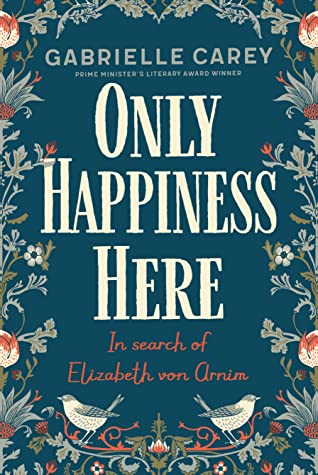
Gabrielle Carey, Only happiness here: In search of Elizabeth von Arnim (#BookReview)

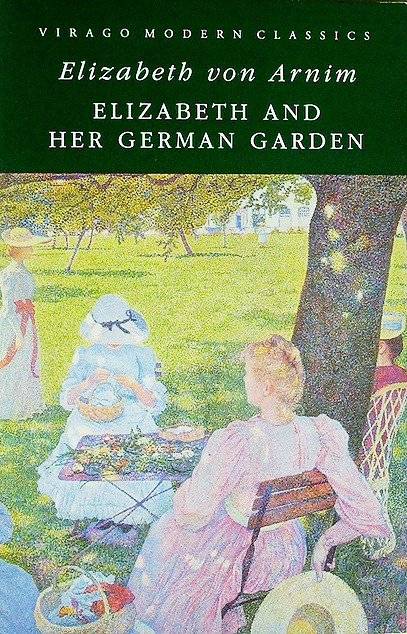
I discovered Elizabeth von Arnim (nee Mary Annette Beauchamp, 1866-1941) back in the 1990s when Virago republished her first novel, Elizabeth and her German garden. Published in 1898, this novel, writes Gabrielle Carey, was an immediate hit, turning her, almost overnight, into one of England’s favourite authors. It was certainly a revelation to me.

I went on to read several of her books, including her pseudo-autobiography All the dogs of my life, over the next decade. I was completely charmed by her wit and humour together with her insights into love and marriage, and their impact, in particular, on women’s lives. Anyone who’s a Jane Austen fan couldn’t fail, I’m sure, to see von Arnim’s ancestry. I wrote one of my early Monday musings posts on her.

Book cover

What, a Monday Musings on Australian literature on Elizabeth von Arnim? It was cheeky I know – and I admitted it at the time. Yes, she was born in Australia, but yes, she left here, never to return, when she was three. However, I just wanted to write about her. And so, it seems did Gabrielle Carey, who opens her hybrid memoir-biography with

When I first discovered Elizabeth von Arnim, I found, for the first time, a writer who wrote about being happy. So much of my reading life – which essentially means so much of my actual daily life – had been spent reading miserable literature because, let’s face it, most literature is miserable.

Carey isn’t clear about when she discovered von Arnim in relation to when she started working on this book, but says that once she discovered von Arnim, she became something of a “von Arnim evangelist”. She was “incensed” that von Arnim had been so completely forgotten. I could relate to this, because I felt the same. Unfortunately, my evangelising didn’t go far because no-one in my reading group had heard of her when I recommended that we do one of her novels as our “classic” this year. More on that, then.

If you are among those you don’t know this writer, you might be surprised to hear that several biographies have been written about her, including three in the last decade. I have two of them, Jennifer Walker’s more traditional literary biography, Elizabeth of the German garden: A literary journey, published in 2013, and Gabrielle Carey’s. The third is Joyce Morgan’s The countess from Kirribilli, published in 2021. Just this should tell you something about the fascination with which this woman is held, this woman who published 21 books, whose first cousin was Katherine Mansfield, and who knew EM Forster, had an affair with HG Wells and married (among others) Bertrand Russell’s brother. She had a life – and then some!

OK, so I’ve written quite a bit about Elizabeth von Arnim, but not much about Gabrielle Carey’s book. Only happiness here is the third sort-of literary biography that Carey has written, the other two being Moving among strangers (my review) about Randolph Stow and her family’s connection with him, and Falling out of love with Ivan Southall about her losing faith in this childhood writing idol. Carey, it seems, likes to explore her subject matter through the prism of her own life and experience (a bit like Von Arnim did with her fiction). This is not to everyone’s taste, but when done well, like, for example, Jessica White’s Hearing Maud (my review), it can be both engaging and effective.

I loved White’s book for the way she explored Maud Praed (daughter of novelist Rosa Praed) through their joint experiences of deafness, neatly marrying information with activism. Carey’s book has a very different driver, one I foreshadowed in the opening quote from her book. A few pages on, Carey makes her goal clear:

What did Elizabeth von Arnim understand about happiness that no other writer I’ve ever come across did? And is it something I too might be able to learn?

She wanted to know “the secret to her enviable ability to enjoy life” because it was clear from her novels and journals that she did, despite the many trials she faced. Indeed, the book’s title is the sign von Armin put over the door of her Swiss chalet. Carey argues that von Arnim “was, perhaps unknowingly, one of the earliest proponents of positive psychology”. Carey was so serious about her goal that amongst the end-matter in her book is a page titled “Elizabeth von Arnim’s Principles of Happiness”. There are nine, but if you want this bit of therapy you are going to have to read the book yourself! However, to whet your appetite, the first one is “Freedom”.

Carey tells her story – I mean, von Arnim’s story – chronologically, regularly interspersing her own reflections and experiences in relation to von Arnim’s. An early example occurs when she writes about von Arnim’s first marriage to the much older Count von Arnim, and her novel inspired by this, The pastor’s wife (albeit the Count was not a pastor!) In this novel, von Arnim writes that “Ingeborg in her bewilderment let these things happen to her”. Carey immediately follows this with:

How well I understand this experience of letting things happen. All my life I had let things happen to me, often without my consent.

And she then spends nearly two pages exemplifying this from her life. Mostly this approach of Carey’s was interesting, even illuminating, but there were times when it felt a little too self-absorbed. However, this didn’t overly detract from what is a thoughtful introduction to von Arnim and her work. In under 250 pages, Carey manages to tell us something about almost every one of Von Arnim’s books – how each one fit into her life, what aspects of her life it drew from, and how it was received at the time. In that same number of pages, she conveys the richness of von Arnim’s long and event-filled life. I’m impressed by how succinct and yet engaging the book is, and am not surprised that it was shortlisted for the 2021 Nib Literary Award. I should add here that while the book is not foot-noted – its not being a formal “literary biography” – there are two and a half pages of sources at the end.

So, what did I, as a reader of von Arnim, get from this book, besides a useful introduction to her complete oeuvre? Well, firstly, I got a deeper understanding of how much of her oeuvre drew from her own life, and from that I got to better understand her attitude to marriage and to the relationship between men and women, and to her exploration of, as Carey puts it, “the clash between the concept of the ideal and the real”. I also got to understand more about her times, its literary milieu, and her place within it – and to see how we can never really foretell which writers will survive and which won’t. When von Arnim died, obituary writers were sure she’d not be forgotten. They also believed she’d be far more remembered than her shorter-lived cousin, the above-named Katherine Mansfield. But …

… as Carey sums up, “her style of conventionally plotted novels, however, rebellious, insightful or entertaining, soon went out of literary fashion”, because, wrote English novelist Frank Swinnerton, “her talent lay in fun, satirical portraiture, and farcical comedy”. These, he said, were ‘scorned by the “modern dilemma”‘. We are talking, of course, of Modernism, which, as Carey puts baldly, “didn’t believe in happiness”, a value that has carried through to today.

I will leave this here, because I want to return to it in a separate post. Meanwhile, I’d argue that while von Arnim’s books might be witty, they are not simplistic. They come from an astute and observant mind that was able to comment both on the times and on universalities in human nature. They may not have Modernism’s bleakness, but they aren’t light fluff either. Carey’s simple-sounding quest has, I think, touched on something significant.

Brona (This Reading Life) enjoyed this book, which she ascribes to the bibliomemoir genre.

Gabrielle Carey
Only happiness here: In search of Elizabeth von Arnim
St Lucia: UQP, 2020
249pp.
ISBN: 9780712262975
Monday musings on Australian literature: 2021 Mark and Evette Moran Nib Literary Award shortlist

Once again I am using my Monday Musings post to make an awards announcement, though I prefer not to. However, I am breaking my rule-of-thumb so soon again for a few reasons: I spent too much time on yesterday’s Living under Covid-19 post leaving less time for today’s post; I have a zoom Tai Chi class this evening; and, the Mark and Evette Moran Nib Literary Award shortlist was announced today. I hope this doesn’t disappoint those of you who enjoy my more usual MM posts (however you define that), but it’s the best I have for you today! It has inspired a future MM post, but you’ll have to wait to see what that is.

Now, you may remember that the longlist for this year’s Nib award was a very long one – 18 titles. I wondered how they were going to whittle it down, and to how many. Before I share their decision, I’ll remind you that this award celebrates “excellence in research and writing”. It is not limited by genre, though given the research focus, nonfiction always features heavily.

Wonderfully, all shortlisted authors automatically win the Alex Buzo Shortlist Prize, of $1000, each. So, a big congratulations to them. And now …

The shortlist

Book cover
  • Gabrielle Carey‘s Only happiness here: In search of Elizabeth von Arnim (biography/memoir) (on my wishlist) (Brona’s review)
  • Kate Holden’s The winter road: A story of legacy, land and a killing at Croppa Creek (nonfiction/environment)
  • Ramona Koval’s A letter to Layla: Travels to our deep past and near future (nonfiction)
  • Sarah Krasnostein’s The believer: Encounters with love, death & faith (nonfiction/religion) (on my TBR)
  • Tim Olsen’s Son of the brush (nonfiction/memoir)
  • Luke Stegemann’s Amnesia Road, landscape, violence and memory (nonfiction/history) (Janine’s review)

Unfortunately, only one of the five books from the longlist that I had on my TBR – I identified four in my longlist post, and bought another since – made it through. However, that one l will definitely read this year, whether it wins or not.

Head judge Jamie Grant said that

This year’s Nib shortlist has been chosen from the largest and most diverse field that the prize has yet known. There are biographies, true crime stories, philosophical meditations, and personal memoirs among the shortlisted books, a variety the judges hope will include as many different readers as possible.

It certainly was diverse in terms of content, and in terms of author gender, but it could be more diverse regarding author background. I wonder if the lack of diversity in this aspect is due to authors not being aware of this prize. Hopefully, posts like this will help improve its visibility.

The judges for the 2021 award are Katerina Cosgrove (author), Jamie Grant (poet and editor), and Lee Kofman (author and editor).

Finally, I should add that there is a People’s Choice prize, which is now open for voting. It is worth $2,500, and all who vote will go into a draw to win a Nib Award prize pack containing all six of this year’s shortlisted books and $100 voucher from Nib Award community partners, Gertrude & Alice Bookstore Cafe. You can Cast Your Vote here!

The overall Winner ($20,000) and the People’s Choice Prize will be announced on 24 November.

Many of you commented on the longlist … any further thoughts now?

Monday musings on Australian literature: 2021 Mark and Evette Moran Nib Literary Award longlist

I only occasionally use my Monday Musings post to make awards announcements. Today is one of those occasions, because the Nib Literary Awards longlist was announced today and I did want to share it, as it’s one of Australia’s quieter but yet interesting awards.

I have written about it before and in that post you can read about about its origins and intentions but, in a nutshell, it celebrates “excellence in research and writing”. It is not limited by genre, though given the research focus, nonfiction always features heavily.

The Nib, which celebrates its 20th anniversary this year, is managed by Sydney’s Waverley Council. It is, according to the email announcement I received, the “only major literary award of its kind presented by a local council”. Whether you like awards or not, this represents an impressive and meaningful commitment to Australia’s literary culture, wouldn’t you say?

Anyhow, the judges for the 2021 award are Katerina Cosgrove (author), Jamie Grant (poet and editor), and Lee Kofman (author and editor). They worked their way through 150 nominations, with their judging criteria being “high literary merit, readability and value to the community”.

The longlist

Book cover
  • Bill Birtles‘ The truth about China: Propaganda, patriotism and the search for answers (nonfiction/political)
  • Tanya Bretherton’s The husband poisoner: Suburban women who killed in post-World War II Sydney (nonfiction/true crime) (Kim’s review)
  • Gabrielle Carey‘s Only happiness here: In search of Elizabeth von Arnim (biography/memoir) (on my wishlist) (Brona’s review)
  • Alison Croggon’s Monsters: A reckoning (nonfiction/memoir) (on my TBR)
  • Sarah Dingle’s Brave new humans: The dirty reality of donor conception (nonfiction/science)
  • Richard Fidler’s The golden maze (nonfiction/history)
  • Tim Flannery’s The climate cure: Solving the climate emergency in the era of COVID-19 (nonfiction/environment) (on my TBR)
  • Anthony Ham’s The last lions of Africa: Stories from the frontline in the battle to save a species (nonfiction/environment)
  • Kate Holden’s The winter road: A story of legacy, land and a killing at Croppa Creek (nonfiction/environment)
  • Zoe Holman’s Where the water ends: Seeking refuge in Fortress Europe (nonfiction/refugees) (Lisa’s review)
  • Ramona Koval’s A letter to Layla: Travels to our deep past and near future (nonfiction)
  • Sarah Krasnostein’s The believer: Encounters with love, death & faith (nonfiction/religion) (on my TBR)
  • Bri Lee’s Who gets to be smart: Privilege, power and knowledge (nonfiction/sociopolitics)
  • Mark McKenna’s Return to Uluru (nonfiction/racial politics) (on my TBR) (Janine’s review)
  • Tim Olsen’s Son of the brush (nonfiction/memoir)
  • Dymphna Stella Rees’ A paper inheritance (nonfiction/biography)
  • Rebecca Starford’s The imitator (fiction)
  • Luke Stegemann’s Amnesia Road, landscape, violence and memory (nonfiction/history) (Janine’s review)

At 18 titles, this is a long longlist. Eleven of the 18 are by women, but beyond that it’s not a particularly diverse list in terms of authors. It would be great to see that change. However, thinking of “value to the community”, it does encompass several of our important contemporary political issues including the environment (climate change and species extinction), refugees, racial politics and difficult histories. Four books fall into the life-writing category. There is only one work of fiction, which is probably why very few of these books have been reviewed by the bloggers I follow. We are mostly a fiction-focused lot!

The shortlist will be announced in late September, with the overall Winner ($20,000) and the People’s Choice Prize being announced in November.

Do you have any thoughts on this list?

Monday musings on Australian literature: Nib Literary Award

The Mark & Evette Moran Nib Literary Award is a somewhat unusual award that I’ve been receiving notifications about for years, but have never posted specifically on (though Lisa of ANZLitLovers has.) It’s unusual for a couple of reasons. One is that its focus is on celebrating “excellence in research and writing in Australia”, and the other is, as the website also says, that it is “the only major [national] literary award of its kind presented by a local council”.

The award was established in 2002 as the Nib Waverley Library Award for Literature, but was renamed The Mark & Evette Moran Nib Literary Award in 2017 to recognise the Morans’ significant sponsorship of the award. Exactly who initiated it is a little unclear, but it seems that the Australian author and playwright Alex Buzo (1944-2006), who lived near and prolifically used Waverley Library, and Chris Haywood, Patron of the Friends of Waverley Library*, were instrumental. (I love seeing a Friends’ group involved in something like this.)

The award is open to all Australian writers regardless of their experience, chosen subject matter or genre. The judging criteria are: excellence in research, high level of literary merit, readability and value to the community. These are interesting criteria and reflect, I understand, the ethos, passions and goals of both Alex Buzo and the Waverley Council. Announcing the 2019 award, City Hub Sydney suggested that these are the only awards given out for research and the writing process itself rather than just for the finished product. The shortlist and winner are chosen by an independent panel of three judges, of which Alex Buzo was one in its first few years.

There are additional prizes, but again their history is a little uncertain:

  • Alex Buzo Shortlist Prize of $1000 to each shortlisted author (added in 2006?)
  • The Military History Prize of $3000, supported by the Bondi Junction, North Bondi, and Rose Bay RSL Sub-Branches to commemorate the ANZAC centenary, “for a work that illustrates the service and sacrifice of Australian service men and women, families or the broader home front, during or in relation to any threat(s) of war” (added 2015?)
  • People’s Choice Prize of $1000 (added in 2017?)

Book cover, The forgotten rebels of EurekaI haven’t been able to find anything about the 2020 Military History Prize, so am not sure about its continuation or, at least, its being awarded this year.
Winners

  • 2002 Tim Low, The new nature (nature/science writing)
  • 2003 Barry Hill, Broken song: TGH Strehlow and Aboriginal possession (biography)
  • 2004 Geoffrey Blainey, Black kettle and full moon: Daily life in a vanished Australia (social history)
  • 2005 Helen Garner, Joe Cinque’s consolation (true crime)
  • 2006 Gideon Haigh, Asbestos house (business writing/company history)
  • 2007 John Bailey, Mr Stuart’s track: The forgotten life of Australia’s greatest explorer (biography)
  • 2008 Christopher Koch, The memory room (novel) (Lisa’s review)
  • 2009 Robert Gray, The land I came through last (autobiography)
  • 2010 Andrew Tink, William Charles Wentworth (biography)
  • 2011 Delia Falconer, Sydney (history/travel)
  • 2012 Jane Gleeson‐White, Double entry: How the merchants of Venice created modern finance (business writing/history)
  • 2013 Gideon Haigh, On Warne (biography)
  • 2014 Clare Wright, The forgotten rebels of Eureka (Text) (history) (my review)
  • 2015 Erik Jensen, Acute misfortune: The life and death of Adam Cullen (biography) (Lisa’s review)
  • 2016 Rachel Landers, Who bombed the Hilton (investigative writing/political history)
  • 2017 Kate Cole‐Adams, Anaesthesia: The gift of oblivion and the mystery of consciousness (science writing/memoir)
  • 2018 Helen Lewis, The dead still cry: The story of a combat cameraman (biography) (Lisa’s review)
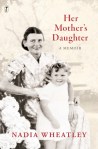
  • 2019 Nadia Wheatley, Her mother’s daughter: A memoir (hybrid biography/memoir) (my review)Nadia Wheatley, Her mother's daughter

I have read just three, but only two since blogging. It’s interesting, but not surprising, that although the criteria encompass all “genres”, only one of the winning books, to date, has been fiction. We have talked about the role of research in fiction here many times. I would love to see this award grapple with that a little more. There were a couple of novels in the 2020 longlist, including Heather Rose’s Bruny (my review) and Julie Janson’s Benevolence (on my TBR).

In the various announcements I’ve read online, I’ve seen little in the way of judge’s comments, so I don’t know how they’ve assessed the winning books in terms of the criteria, that is, their “excellence in research, high level of literary merit, readability and value to the community”. It would be really interesting to know, for example, what they mean by “readability” and “value to the community”.

Overall, though, I love that this award exists. It’s quite a testament to Waverley Council and its supporters that it has survived, now, for 19 years.

Are you aware of this award, and, regardless, what do you think about its criteria?

* See Nib Waverley’s Alex Buzo page and Wikipedia.