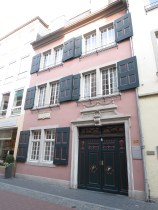
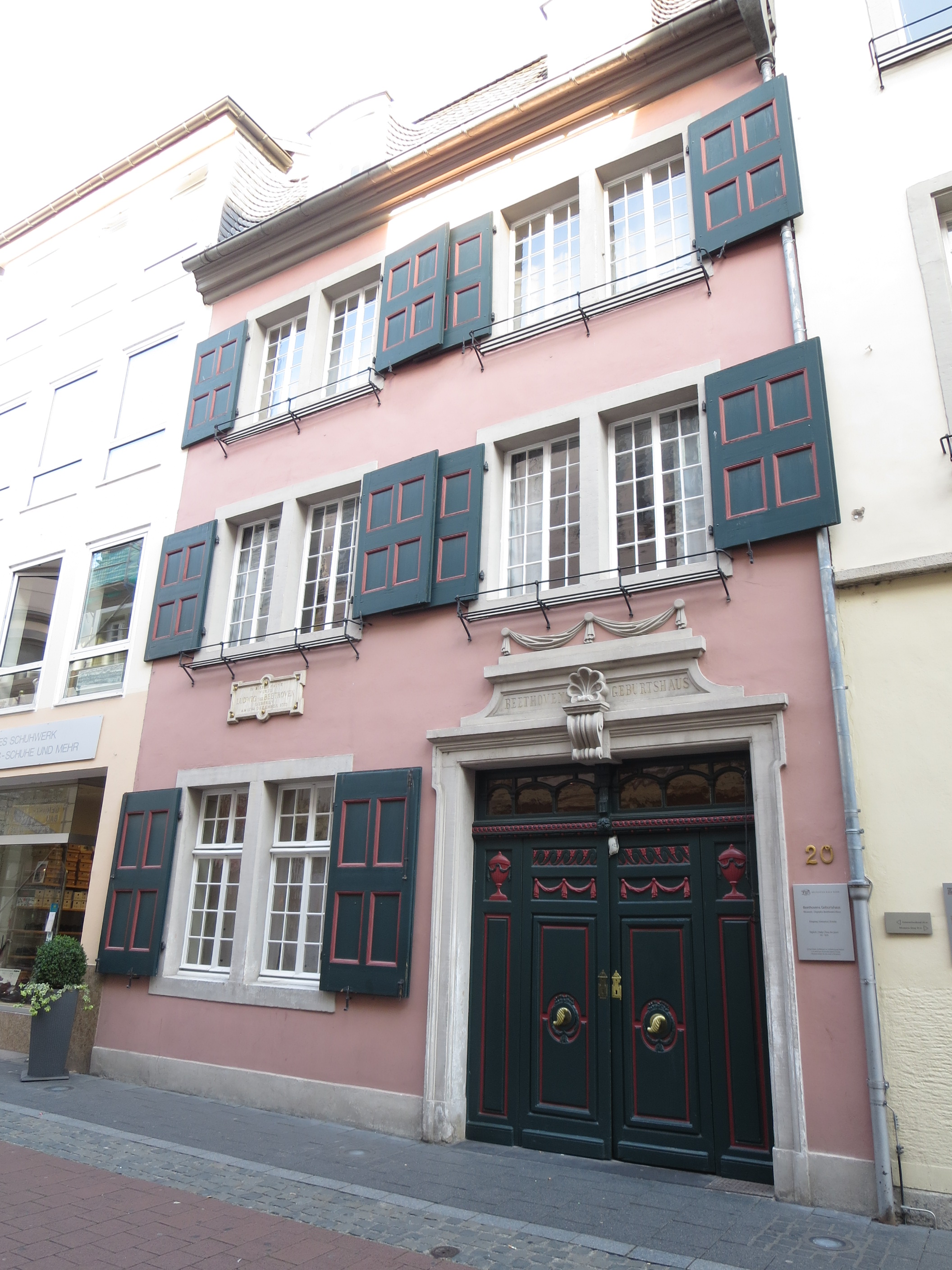
Beethoven’s birth house
During our recent trip to Europe we managed to follow the trails of a few composers*. We saw statues of JS Bach, CPE Bach, Felix Mendelssohn and Ludwig van Beethoven. We visited Eisenach, where Bach was born and saw the church where he was baptised. We visited Leipzig, where he worked for 27 years and saw the church where he wrote most of his best-known compositions. We visited the house in Weimar where Franz Liszt was based for the last 20 or so years of his life, and the house in Bonn where Beethoven was born. In a previous European trip we visited the house in Salzburg where Mozart was born. We’ve enjoyed this aspect of our tourism, the way it helps put these composers into some sort of geographic and historical perspective.
Given this, and my current interest in the meaning and value of travel, I was therefore rather tickled to read, just this morning, Murray Bail‘s comment in The voyage on composers’ houses:
… the idea of turning composers’ houses into holy houses with perfect wallpaper, bare desk and polished floorboards is more a display of falsity than history, although it hardly deters the visitors who go into every room, wanting to add layers to their general knowledge, mouths open in wonder, in Mozart’s case, amazing how a family with so many children could fit in such a space, how Mozart managed to work with his family around him, making the usual family racket, or the curator’s immaculate recreation of Beethoven’s rooms, not a speck of dust to be seen, though everyone knows he lived in disorder or squalor.
Oh dear, he does have a point!
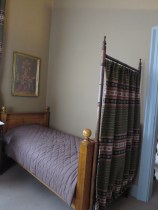
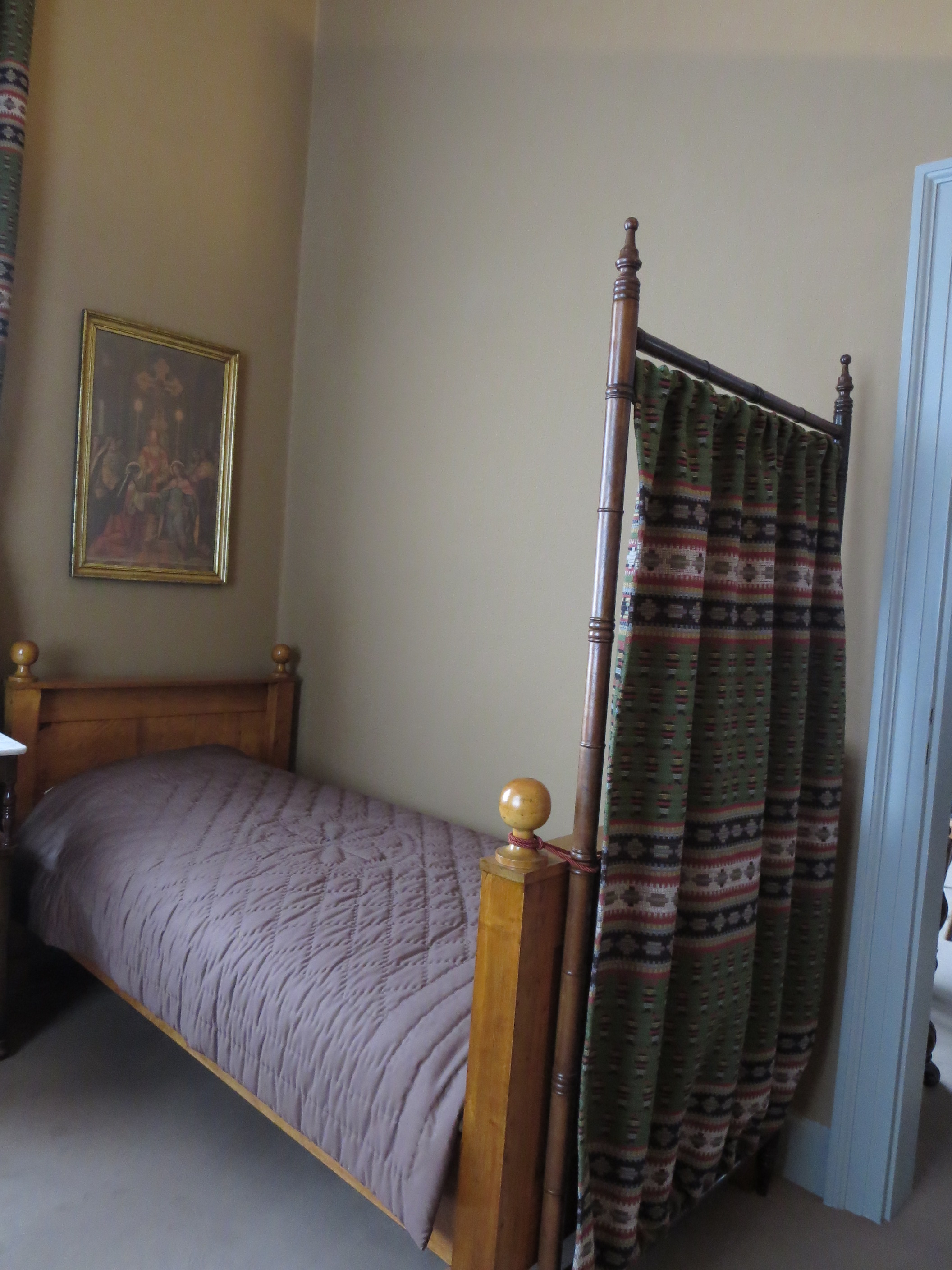
Franz Liszt’s actual bed
Indeed, in our experience, some (many, in fact) of these homes no longer have the composer’s furniture but have been furnished in period style. The curators don’t always even know what sort of furniture the famous inhabitant had, unless there are letters or some sort of contemporary inventory to tell them. In Liszt’s case though, his perspicacious supporter/ruler, Grand Duke Carl Alexander ordered within days of his death that the house be preserved because he knew fans would want to pay homage:
Since […] it can be assumed that Liszt’s innumerable friends and admirers […] will pay homage to the memory of the departed by visiting the rooms which he lived in, the Grand Duke strictly commands that nothing may be changed of the furniture and decorations, that is to the furnishings in the broadest sense, in the rooms in which Liszt lived. (from the audioguide)
The furniture there really was Liszt’s. Does that make a difference? Do we feel more reverence or awe because we know the great man (or woman) sat on that chair? Is our experience somehow less, if we know the furniture isn’t original? I guess it depends on the tourist.
How does a composer’s house turned into a museum differ from a “straight” museum. Does displaying objects – authentic and/or “only” contemporaneous – in the composer’s own space add value to our experience? Is it better than seeing these objects in an all-purpose museum space, perhaps alongside those of other composers or people of the same time? What sort of experience or knowledge are we seeking? What, to take this to its logical conclusion, is the role of museums? These are the questions I’ve been pondering, in a heightened manner I must admit, since reading Michelle de Kretser‘s Questions of travel (my review).
Bail has discussed museums and tourists in other works – in his novel Homesickness, and in a story that I plan to read soon. Watch this space! Meanwhile, do you have thoughts on the topic? Do you like to visit writers’ homes for example? Why?
* Not to mention writers, and other famous or infamous people, of course.


 Whispering Gums