Living under COVID-19 (1)

This may be the first of a regular, irregular or occasional series of posts about living under COVID-19 , probably occasional because I suspect that, once we settle in for however long it’s going to be, life will become same-same.

Like many bloggers – see Nancy in the Netherlands’ post, and Stargazer in London who said so on my blog – I am finding it hard to settle to reading and reviewing. I have one review half-written and another book read and not reviewed. They will be done, though – and next week, I hope.

Meanwhile, I thought I’d report on what the Gums have been doing.

People Stuff

Coincidentally with, but unrelated to, the start of the COVID-19 problem here in Australia, it became apparent that we would need to rejig my parents’ at-home care package to support their being able to continue to stay in their retirement village home. Using a division-of-labour approach Brother Gums took on negotiation of that care with Mr Gums and I doing the logistics needed to make that care work – all of course in close consultation with our nonagenarian parents who, while needing physical help, are perfectly able to discuss and articulate their needs. Indeed they will probably read this post, Father Gums having noted that my posts have been few lately! Anyhow, all this has made staying-at-home nigh impossible, but we’ve done our best to obey the spirit of the law. Things should be in place next week enabling us all to settle into more normal isolated living!

I just need to add here that Brother Gums has been an absolute Trojan, and we couldn’t have done it without him. Thanks Ian.

Otherwise, we have been keeping in touch with family, friends, neighbours and groups – including setting up new social messaging groups with neighbours and my reading group, and using existing ones with family.

Political stuff

I don’t like to engage much with politics here, as I am not keen to attract trolling or disrespectful commentary. I would just like to put on record that I am disappointed by our political leaders’ (on both sides) inability to be clear in their messaging. It’s impossible, I believe, to be completely consistent – unless, perhaps, you live in an autocratic, black-and-white world – but it is possible to be clear about your vision and priorities. This is exactly what, for example, I understand the Germans are being. Mr Gums, who watches the German news, translated for me that government’s very clear statement of priorities, and it is essentially this: 1. Get health care working well; 2. Look after the well-being of the people; 3. Consider the economy. Whether or not they achieve it, I like the aspiration!

Here is our Australian comedian Sammy J (who also appeared in my last Monday Musings) on the messaging we recently received in Oz:

Exercise Stuff

Social distance walking

We all know that exercise is important to our physical and mental health, but achieving that under these restrictions is difficult. My lovely little yoga class has had to suspend, and our Tai Chi venue was closed. However, Tai Chi can be done outside. So, on the understanding that the government’s rules allow outdoor physical training for groups of 10, with the proper spacing maintained, we have attended three outdoor Tai Chi classes in a public space (to the interest and amusement of occasional passers-by.) I’m not sure how long that can, or should, continue.

Otherwise, I, with Brother Gums and/or Mr Gums, have done a couple of walks in the section of the Canberra Nature Park across the road from our place, and I have continued my almost-daily at-home yoga practice.

Books and other cultural stuff

As I said, there’s not been much happening in this sphere, but what I have read will appear on the blog hopefully soon. Most of my TV watching has been news and current affairs to keep track of COVID-19 and what we need to know and do, with some light entertainment like Hard Quiz and Doc Martin thrown in.

However, with Ma Gums staying with us for the last week or so while the new care package is put in place, there have also been some Scrabble games, which I’d call cultural, wouldn’t you?

Next

As for how we plan to spend our social-isolation time from now on, well, we have tasks galore, including gardening, digital photo cataloguing, decluttering – as well as, of course, virtual socialising, more reading and listening to/watching favourite and back-logged shows, and doing what we can to support and loved businesses which are still operating (such as bookstores and cafes doing online orders and takeaway food.)

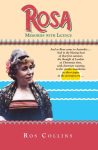
Ros Collins, Rosa: Memories with licence (Author’s response)

Book cover

Last October, I reviewed a book by Ros Collins titled Rosa: Memories with licence. As the title suggests, this book is not quite memoir, but neither is it really fiction. My post generated quite some discussion from commenters, which resulted in my saying “Maybe Ros will comment here and answer the questions”. Unfortunately, just as her book was launched, Ros had a sudden hip fracture, resulting in hospitalisation. Now, getting back to normal, she has contacted me saying she’d love to respond to the comments, but that it was long. I suggested making it a separate post. I do hope those commenters see it, and read what she has to say.

First, though, for those interested, she writes that she is well into “a new book based on [her late husband] Alan’s 19th century ancestors. It will be creative non-fiction.” Love it! And now …

Author with her bookFrom Ros Collins …

Some background

My first book, Solly’s girl (2015) was as factually accurate as I was able to research. It was intended to complement my husband Alan’s memoir Alva’s boy (2008). Even before that, he had used his terrible childhood experiences in autobiographical fiction, namely The boys from Bondi which is now part 1 of his trilogy, A promised land? (2001). The eminent critic Fay Zwicky called that ‘a psalm to life’.  It seemed an essential task for me to complete the history of our two families.

Rosa developed out of a number of short stories which undoubtedly accounts for the third person-first person dichotomy. My publisher Louis de Vries and editor Anna Blay at Hybrid, dealt with the anomalies with enormous patience. Three chapters, “Jellied eels”, “Sheyn Meydl” and “Rimonim” were part of my work for an online course in short story writing that I undertook in 2017. By the time I’d read William Trevor, Raymond Carver, Hemingway and many other masters of the genre, I knew it was not for me.

However, ‘Creative non-fiction’ had great appeal. “Ultimately, the primary goal of the creative nonfiction writer is to communicate information, just like a reporter, but to shape it in a way that reads like fiction.” (Gutkind, Lee. The best creative nonfiction, Vol. 1). I embarked on Rosa with enthusiasm and a great desire to entertain. Like Alan, I also believe in the  power of humour and only wish I had greater skills.

Response to the comments

 ‘… worn out with fictionalised Australian Jewish memoirs…’  was one I could easily relate to. I was director of Makor Jewish Community Library (now the Lamm Jewish Library of Australia). One of my proudest achievements was to establish the ‘Write your Story’ program whereby I hoped the community ‘would be able to write its own history’. To date more than 150 memoirs have been published. I believe the comprise the largest such series in the world. Inevitably, as Melbourne has so many Holocaust survivor families, the tragedy of the Shoah features prominently. It is however a multicultural series: memoirs have been written about Jewish life in Egypt, Argentina, England – and Australia.

So as far as Australian Jewish literature is concerned, it seems to be overwhelmingly preoccupied with Holocaust memoir or peeks into the exotic world of heavy duty orthodoxy. Sephardi or Spanish-Jewish history has also afforded subjects for writers: People of the book comes to mind.  But Anglo-Australian-Jewish writing is very limited. One of your commentators mentioned Judah Waten. He mentored Alan and urged him to write his first book of short stories, Troubles (1983), which was highly commended in the Alan Marshall awards.  Waten, Morris Lurie, Serge Liberman, et al, born here or not, all write out of the European tradition; the migrant/survivor experience is very much to the fore. Alan’s ancestors arrived either on a convict transport or later as free settlers in the 1800s and Rosa (me of course) is British, a ‘ten-pound Pom’ who in the 1950s wore white gloves to visit the ‘city’. Anglos. And this difference makes for confusion. It’s unlikely that your readers are familiar with communal conflicts but I’ll just open the subject by pointing out that the Jewish Anglo community in Australia was ‘more British than the British’. For many of them the mother country was still considered ‘home’, and ‘the Empire’ really mattered! The ‘reffos’ – the migrants – were often disparaged, even despised. To get a picture, don’t bother with the history books, read Alan, much more digestible and he makes the reader laugh as well as cry.

Your readers mention the Americans and British including towering figures such as Roth and Jacobson, both of whom are favourites of mine. They would doubtless be puzzled by the fact that many local Jews couldn’t warm to Jacobson’s The Finkler question [see my review] which I greatly admire. I imagine it’s the British connection. I understand how difficult it is for the mythical ‘general reader’ to come to grips with Jewish lit in all its complex variety. It helps to remember the profoundly different histories. Australian, American and British Jews are far from being all of a piece. Howard Jacobson for example has been exasperated by critics who have called him ‘the British Phillip Roth’; he retorts that Jane Austen is a far greater influence. Australian reviewers have found shades of Dickens in Alan’s work.

I’d like to  mention some helpful titles which have impressed me, authors who have made me think about identity and heritage, my place ‘down here at the bottom of the world’ as I said in 1957.

On being Jewish by Rabbi Julia Neuberger is straightforward, accessible and sensible. Baroness Neuberger, a member of the House of Lords, is a Reform rabbi (the first woman to head her own congregation in Britain), a tireless worker for social justice and progressive values. She’s younger than me but we share some knowledge of Anglo-Jewish life in the 1950s. Her ancestry is German-Jewish; her ‘British-ness’ is rather like my own.

Jews and words by the eminent Israeli writer Amos Oz and his daughter, historian Fania Oz-Salzberger, is a wonderful ‘blend of storytelling and scholarship, conversation and argument’; it also includes some great jokes.  What I like so much about this book is the way the authors introduce themselves:  At this early stage we need to say loud and clear what kind of Jews we are.  Both of us are secular Jewish Israelis. And then this, As Jewish atheists, we take religion to be a great human invention. ‘Jewish atheists’ must be very confusing for some  readers!  

Closer to home is Australian genesis: Jewish convicts and settlers 1788-1850 (1974) by J. S.  Levi and G. Bergman. It is eminently readable and beautifully illustrated. It should never have been allowed to go out of print but most libraries will have a copy. Rabbi John Levi is of ‘Anglo’ heritage and is a most sensitive and compassionate scholar. His reference book, These are the names: Jewish lives in Australia 1788-1850 (2013) is an invaluable guide to the lives of the more than 1600 Jews who came to Australia in that early period. It has been fascinating for me to read the transcript of the trial at the Old Bailey of ‘our’ 17-year old convict. He became a respectable citizen in Goulburn and the local ‘Hebrew congregation’ would meet in his store for ‘champagne suppers’ to celebrate Royal Family events back in the mother country.

An essential guide to Australian-Jewish literature is Serge Liberman’s monumental Bibliography of Australian Judaica (2011).

Did I have a ‘plan’?  Was it all ‘true’?  Did I want to protect others?  No, yes and no. I wrote Rosa because I wanted to. Isn’t that how most writers operate? The events I’ve dramatized are true but obviously I am unable to replicate conversations that took place in the past. ‘Licence’ was a word suggested to me by my kind mentor Karenlee Thompson who has written so movingly about bush fires in Flame Tip [see my review].  For example, I know my maternal grandfather went AWOL from the army of Czar Alexander and I’m guessing he was forcibly conscripted like so many other little Jewish boys at the age of 12 and couldn’t contemplate another 25 years of army life. I know he received letters from his sister in Kiev until in 1941 they suddenly ceased, and I’m assuming my great-aunt perished with 34,000 others in the massacre at the ravine of Babi Yar. And, as I write in the book, I have no wish ever to set foot in Eastern Europe. Israel is another very different matter.

Sue, you conclude your review with a most perceptive paragraph:  Rosa, then, is a warm-hearted, open-minded “memoir” written by an Anglo-Australian Jewish woman for whom being Jewish, as for many I believe, is as much, if not more, about history and heritage as god and religion. In this book, Collins interrogates her family’s past, and her late husband’s story, in order to come to a better understanding of herself, and of what she would like to pass on to the next generation. This book is testament to that soul-searching, and makes good reading for anyone interested in the life-long business of forming identity, Jewish or otherwise.

I never set out to be an apologist for my heritage and it has been a surprise to learn that so many readers have found Rosa ‘enlightening’, an opportunity to see the variety in my community. The misconceptions are often funny but also appalling at a time when intolerance and racism are on the rise in this ‘lucky country’.  So I shall end here with two stories about electricians:

My electrician who is an intelligent much-travelled man asked me: Won’t you get into trouble with your rabbi for not wearing a wig? He was amazed that I laughed and even more surprised to learn that rabbis really have little authority – they’re teachers – and although I seldom attend a service I cannot be disenfranchised.

My son’s electrician had a much more sinister question. Pointing to the mezuzah on the doorpost of my son’s house he asked:  It’s full of blood, isn’t it?  My son, completely secular, Vietnam vet, non-kosher, a painter – and a proud Jew – replied:  Of  course it isn’t, there’s little piece of paper inside with a prayer and blessing written on it; I’ll take it down and show you. But the electrician was horrified:  Ooh no, don’t do that, we’d better not touch.

And that, Sue, is how it all starts with rubbish like that, words that lead to swastika flags in Beulah and book burning …

If in Rosa I can open some windows I think it’s a good thing.

And so do I. Thanks very much Ros for appearing out of the blue with this warm, open and informative response to the comments on my post. I look forward to seeing your next book!

Books given and received for Christmas, in 2019 – sorta

Regular readers here will know that on my Boxing Day I usually publish a post on the books I gave and received for Christmas. However, this year I’m doing something different. I’ve just read a link that Paula (Book Jotter) posted in her latest Wind-up Post. It’s from The Guardian and is about the challenges of book gift giving. If you give books, as most of you are sure to, you will have confronted or considered the issues involved, so I thought I’d share them and, along the way, include some of the books I gave or received this year.

Elle Hunt, who wrote the article titled “I thought you’d like to read this”, writes that books as gifts are “thought to be less personal than jewellery, but far more telling of the giver (and what they think of the recipient) than anything that comes in a turquoise box from Tiffany. Not to mention infinitely more likely to be passed on.” She then offers a few rules:

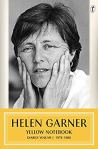
  • always save the receipt, the reason being that if you have chosen a book you’ve thought to be the perfect present for someone, so probably have others. Fortunately, my mother had saved the receipt for the book she gave me this Christmas, Helen Garner’s Yellow notebook, because I already have it (albeit as a review copy, not a gift.)
  • never write an inscription in a book, unless you’ve written it yourself. Do you write inscriptions? I used to once, but gave it up long ago, because it does mean the book can’t be returned (or re-gifted), if the recipient has it. The article discusses the pros and cons of this issue, from different angles, but the suggestion is that it’s probably safer to write your sentiment in a card.
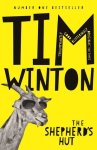
  • Book coverchoose for the recipient rather than what you think they should read! Now this, to me, is a no-brainer. Surely the aim is to give your recipient something they’ll enjoy and remember you fondly for! I’m really hoping my toddler grandson likes Pamela Allen’s Mr McGee. And I was very confident that my lexicographer-grammarian mother would like John Sutherland’s How good is your grammar. The article notes that giving books can signal your own taste, and touches on the pros and cons of this and of giving books you love. It suggests if you can’t overcome the influence of your ego when choosing books, ask the advice of a knowledgeable (often independent) bookseller! Good suggestion. This year, as in most years, I gave some books that I’ve loved – like Tim Winton’s The shepherd’s hut to Son Gums and Amanda O’Callaghan’s This taste for silence to Brother Gums’ partner – because I think the recipients will like them. But, I have also given books I haven’t read, for the same reason. Horses for courses, as they say.
Others have written on the subject too, like the Book Riot blog back in 2015. Their “10 Rules for Book Giving” post takes a slightly different tack, including offering a few suggestions on how to find out what books your recipient might like, particularly if that person is a non reader. Hmm … given their first rule is “don’t be an evangelist” for a book you’ve loved and give it to everyone “regardless of whether they’re interested in it or not”, I’m not sure we should be going there? Do you want to antagonise the non-reader, do you want to guilt them? I think there are better times to encourage non-readers than at gift-giving time, but maybe that’s just me! (Of course, I’m not talking about babies here: give them books, books, and more books I say, so they are readers from the beginning.)

Book coverThe Huffington Post also wrote on the topic in 2012, “How to pick just the right book gift”. The writer Roxanne Coady starts by commenting on the trend towards gift cards. “I get the ease and even the appeal,” she writes, but then suggests that “it results in missing an opportunity. The perfect gift to receive or give is one that reflects an understanding, an appreciation, or a quirk of someone. In the razzle dazzle of the pace of our lives, why miss the opportunity to show someone that you took the time to think of them — took the time to think of what might delight or surprise them?” Yes, there it is, the most important thing to me about gift-giving – showing someone that you took the time to think of them and to think about “what might delight or surprise them”. I’m sure this was behind Brother Gums’ gift to me, a book of poetry and paintings, The voice of water by Adrienne Eberhard and Sue Lovegrove. Brother Gums loves to promote Tasmanian culture – and this book is by Tasmanians – but he also knows that I love beautiful books that are a little different from those I usually read. You will hear more about this book in the coming weeks.

Like the writers of two previous articles, Coady also suggests asking booksellers for advice as an option, but she makes some other interesting observations, of which the most interesting to me was to take into account your relationship with the recipient. What an excellent point. Even if you think you know someone’s likes or tastes, you might want to think about the message you are sending about yourself and/or about what you think of them in the book you choose – see Elle Hunt above. This could be a minefield, if the relationship is not a close one.

So, what about you? Do you follow any rules or practices when choosing books as gifts? Or, do you think the gift card is a safer option?

World Refugee Day – #StepWithRefugees

World Refugee Day was denoted by the UN General Assembly in December 2000, and has been celebrated on June 20 ever since. Why 20 June? Because this was the date on which many African countries had already been celebrating Africa Refugee Day. The Day’s aims, as for all UN International Days, are “to educate the public on issues of concern, to mobilize political will and resources to address global problems, and to celebrate and reinforce achievements of humanity.”

It’s probably worth, at this point, sharing the definitions provided by the UN on its World Refugee Day site:

  • Refugee: someone who fled his or her home and country owing to “a well-founded fear of persecution because of his/her race, religion, nationality, membership in a particular social group, or political opinion”, according to the United Nations 1951 Refugee Convention. Many refugees are in exile to escape the effects of natural or human-made disasters.
  • Asylum seekers: someone who says he or she is a refugee and has fled his/her home as refugees do, but whose claim to refugee status has not (yet) been definitively evaluated in the destination country. (And we all know how hard some countries can be, don’t we.)
  • Other related groups – Internally Displaced Persons, Stateless Persons and Returnees – are also included in their list.

There’s always been movement of people escaping their homes for a safer, more secure life, but over the last century they have included Jews escaping persecution before, during and after WW2, Southeast Asians (particularly Vietnamese and Cambodians) escaping civil strife around the 1970s, people of diverse backgrounds escaping the Yugoslav Wars of the 1990s, and the ongoing movement of people from multiple countries in the strife-ridden Middle-east, and South and Central Asia.

Anyhow, each year has a theme, with this year’s being:

#StepWithRefugees — Take A Step on World Refugee Day

I figured that one step could be to highlight some fiction and non-fiction Aussie books that might help educate us about the experience and lives of refugees, and thus in turn mobilise some action. So, here’s a small selection (alphabetically by author):

Non-Fiction

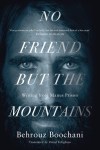
Behrouz Boochani, No friend but the mountains

Anna Rosner Blay’s Sister sister (1998) (my review): While I’m not sure the word “refugee” is specifically used in this book, Blay’s extended family left their home-land of Poland, after experiencing the atrocities of the Second World War, because post-war anti-Semitism meant it was no longer “home”. “We could feel we were not welcome”, Blay’s aunt Janka tells her.

Behrouz Boochani’s No friend but the mountains (2018) by Iranian-Kurdish journalist who has been on Manus Island since 2013 – an inhumane and unacceptable situation. Most Australians will know this book, because it has won multiple literary awards over the last few months, including the Victorian Prize for Literature. I wrote about taking part in a marathon reading of it a couple of months ago, and Bill (The Australian Legend) reviewed it last week.

Anh Do’s The happiest refugee: My journey from tragedy to comedy (2010): I haven’t read this, but it’s hard to ignore. Do and his family came to Australia in 1980 on a boat from Vietnam. He was 3 at the time. His book chronicles the horrors of that trip, and the challenges of the family’s early years in Australia.

Alice Pung’s Unpolished gem (2006), Her father’s daughter (2011) (my review): Pung was born in Australia a year after her Teochew Chinese parents from fled Cambodia and the Khmer Rouge in 1980. Her two books share her experience of being the child of refugees. I have also written about a conversation between her and Sam Vincent at this year’s Festival Muse.

Olivera Simić’s Surviving peace: A political memoir (2014) (my review): Academic Simić writes about the challenges of being a refugee from the wrong side. It’s a moving, but also analytical, analysis of the long term impact of violence, on those who find themselves in the centre of it, though no choice of their own.

Fiction (long and short)

Hans Bergner, Between sea and skyHans Bergner’s Between sky and sea (1946) (my review): This is a gut wrenching story about a group of Jewish refugees from the Nazi invasion of Poland, bound for Australia on an old Greek freighter. The story is reminiscent of the historical MS St Louis which kept being turned away from port to port.

Michelle de Kretser’s Questions of travel (2012) (my review) and The life to come (2017) (my review): Migration has featured in a few of de Kretser’s books. In The life to come, a do-gooder employs refugees to serve food at her party, while other characters in the novel stereotype refugees and migrants. In Questions of travel, too, de Kretser reveals misunderstandings about refugees and other migrants.

Irma Gold’s “Refuge” in Two steps forward (2011) (my review): A short story about a medical officer in a detention centre, and her reaction to the dehumanisation she’s forced to be part of. Most of the stories we read focus on the refugees and asylum seekers themselves, so I appreciated reading this story from another perspective.

Nam Le’s “Love and honour and pity and pride and compassion and sacrifice” and “The boat” in The boat (2009) (my post): These two autobiographical short stories bookend the collection. They draw on his life and on his family’s experience of migrating to Australia from Vietnam as boat refugees, in 1979, when Le was just one.

AS Patric, Black rock white cityAS Patrić’s Black rock white city (2015) (my review): Patrić’s Miles Franklin Award winning book is about two refugees from the Yugoslav Wars, who, academics in their own country, are forced in their new one to work as cleaners and carers. Fiction, but oh so true! This is a complex book which fundamentally questions how are we imperfect humans to live alongside each other.

Arnold Zable’s Cafe Sheherezade (2003): It’s a long time since I read this unforgettable novel. As its name suggests, it contains multiple stories – in this case of Jewish refugees from World War 2. The novel’s cafe is based on an actual cafe in Melbourne which was frequented by displaced Jewish people. The book is confronting and affecting, and affirms the importance of memory and story to survival.

Once I started looking, I found, in fact, that I couldn’t stop. I apologise to all those authors I’ve read but not listed here, but hope this sample is representative.

Now, I’d love you to make your contribution to this commemoration of World Refugee Day by sharing some of your reading on the topic.

Books given and received for Christmas, in 2018

In what is becoming a Boxing Day tradition – I have many end-of-year traditions it seems – I am doing, again, a post on the books I gave and received this Christmas. There weren’t many as it’s becoming hard to pick the right books for people, somehow, even though we are a reading family.

Robert Drewe, The true colour of the seaHere are the books I gave:

  • For Ma Gums, something different from the word and dictionary oriented books of recent years: Robert Drewe’s short story. collection, The true colour of the sea, because she enjoys a good short story.
  • For Son Gums, who likes something a bit humorous or edgy: Andrew Sean Greer’s Pulitzer prize-winner Less.
  • For new Grandson Gums, who is going to love books whether he likes it or not, a few books including Alison Lester’s Kissed by the moon.
  • For Brother Gums: Nana Kwame Adjei-Brenyah’s Friday black, because it’s hard to find something he hasn’t read and I was hoping this would be that thing!
  • For Sister-in-law Gums: Sukegawa’s Sweet bean paste, because a bit of sweetness is just what the doctor ordered.
  • For the other Sister-in-Law Gums: Sukegawa’s Sweet bean paste, because she enjoys Asian literature.
  • For Gums’ Californian friend, to whom I always like to send something Aussie: Michelle de Kretser’s The life to come (my review), because I think many of its issues are universal to other Western nations.

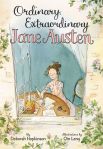
Deborah Hopkinson, Ordinary, extraordinary Jane AustenAs for what I received, a small but much appreciated selection:

  • From Parent Gums: Trent Dalton’s Boy swallows universe, because I put it on my list as it’s my reading group’s next read.
  • From Brother and Sister-in-law Gums: Maria Tumarkin’s Axiomatic, because my bother loved it and thinks I will too.
  • From a good friend who knows me well: Deborah Hopkinson’s gorgeous children’s picture book biography Ordinary, extraordinary Jane Austen: The story of six novels, three notebooks, a writing box, and one clever girl, because, well, that’s obvious isn’t it!

What about you? Any Christmas book news you care to report?

Monday musings on Australian literature: Blaming the Americans

Rummaging through my little folder of papers and ideas for Monday Musings posts, I found a 2014 article from The Conversation titled “The Americans are destroying the English language – or are they?” If you are a non-American English-speaker you probably know exactly what this is about, because we non-American English-speakers love to get on our high horse about how Americans have corrupted the English language, except …

If you actually do the research, as I have on and off over the years, you find that the situation is nowhere near as simplistic as we like to think. And this is what The Conversation writer, Rob Pensalfini from the University of Queensland, explores in his article. He starts with some facts about English-speaking around the world, including the fact that the United Kingdom has only about 15% of the world’s native speakers of English, while the USA has almost 60%. Not that quantity is necessarily a signifying issue, but still, it gives one pause. He also points out that there are various forms of “standard” or “official” varieties of, say, British, American, and Australian English, as well as innumerable non-standard varieties and pidgins.

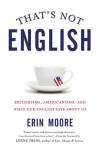
Erin Moore, That's not EnglishHe then discusses what “ruining” a language – if indeed we accept that’s possible – might mean. He suggests that since languages change, “ruining” or “destroying” one must mean changing it in “unacceptable” or “negative” ways. It must mean, he continues, that it “threatens the capacity of the language to express something – be that complex thought, heightened emotion, refined argument”. Good points, particularly that regarding the impact on our ability to express ourselves.

Anyhow, he lists the main “changes” for which Americans are criticised, and addresses each one. I’ll try to summarise them:

  • corrupt spelling (eg center, honor, neighbor): the American lexicographer, Noah Webster, as we know, introduced spelling reforms in the 1820s into American spelling, including the now commonly accepted “American” spellings of “honor, neighbor, center, and jail.” However, before we non-Americans become too smug, he notes that other reforms by Webster, the rest of us have also accepted such as “public and mask (in place of publick and masque).” Meanwhile, other of his reforms were not even accepted by Americans, such as “tung (tongue) and wimmen (women).” The weird thing – and this one I’ve researched before – is that the forms that raise the ire of us non-Americans (the “or” and “er” spellings) were actually older British spellings. Pensalfini says that “honour” occurs 393 times in the First Folio of Shakespeare’s plays (1623), while “honor” occurs 530 times; “Humour” 47 times while “humor” is used 90 times; “center” occurs nine times, but “centre” only once; and “sceptre” appears four times, but “scepter” 36. Pensalfini says that “Webster chose the ‘or’ and ‘er’ spellings because they looked less French” while the British chose the “our” and “re” spellings in the 19th century “because their French look lent them a certain dignity”.
  • discordant sounds (post-vocalic /r/, “flat” /a/): firstly, he says the post-vocalic /r/ is used in parts of England (the West Country and Scotland) and is not used in parts of America. Indeed, he suggests that “the loss of /r/ erodes comprehension, in pairs like father/farther, pawn/porn, caught/court and batted/battered merging”. As for the “flat” /a/, it is an earlier form – so there!
  • double negatives: let’s not even go here. As Pensalfini says, they have a role and, anyhow, they are “not accepted in Standard American English any more than they are in Standard British English.”
  • ending sentences with prepositions: this is just silly he says, and “is as common in British as in American English. Would you really say ‘From whence did you come?’ Seriously? ‘Where did you come from?’ is absolutely standard for all varieties of English.” (I agree, though I think his example is poor, as “from” is not needed before “whence” which means “from where”.)
  • singular they: again, he provides several examples of this, including from Shakespeare. Jane Austen, I know, used it too.
  • using nouns as verbs: this one, he says, really gets the “pedants’ collective goat … the use of words like impact and action as verbs”. Again, though, “it’s been with the English language since at least the early Middle English period.” In fact, “the modern-day Americans aren’t verbing nearly as much as Shakespeare (“Grace me no grace; nor uncle me no uncle” (Richard II)).”

Pensalfini concludes his article on a political point about the British, but I’m not going there. Instead, as I like to do, I checked Trove’s digitised newspapers for any discussion about American English in the early 20th century. There was – a lot in fact. Much of it was critical, and focused on pronunciation (including reports of the author Henry James complaining about Americans’ “slovenly” pronunciation!) But here, I’ll share two I found about spelling and usage.

The first is a letter to the editor, in Melbourne’s Herald in 1923:

Sir.— In answer to “Baffled’s” letter in tonight’s “Herald” re English spelling, it is my opinion the sooner English people all over the world wake up and copy the American system of spelling, the sooner will they become a more intelligent and efficient race. Let Australia be the first to start a campaign for the reforming of spelling, and do away with such spelling as “through” and “fright”. — Yours, etc

Efficiency
South Yarra, October 17.

Ms or Mr Efficiency was, from my short survey, swimming against the tide!

The other is an article from The Maitland Daily Herald in 1933. This writer goes to town. They (I’m using the “singular they” since the author isn’t identified) admit there are some good writers in the US, but just read any magazine they say and readers will see

the vile distortions of language, that there abound, the violations of fundamental rules of syntax, the apparent endeavour to write in a style as different as possible from that seen in an English or Australian journal of similar type. Slang is everywhere in evidence, often where it serves no good purpose, and where it ceases to be picturesque and becomes silly.

Some American slang is, they say, “decidedly clever and picturesque” but, “this cannot be said of the majority of what we see and hear. There seems to be a deliberate attempt to make American-English as much unlike English-English as possible.” Oh dear, such a crime! How conservative this sounds.

And so, this writer continues,

An effort should be made continuously by parents and teachers to impress on our young people the glory of good English, the priceless heritage left to them in the prose of Addison, the verse of Milton, the dramas of Shakespeare, and so forth. …

Now, that’s funny, given Pensalfini’s examples from Shakespeare (whom he used, he says, “because for many, Shakespeare represents a sort of pinnacle of English language usage”!)

I must say that over the years I’ve relaxed my attitude to all this. Language does change, and I know that many words we use now – such as “nice” – meant something completely different a few hundred years ago from the way we use them now. So, what to do? Like all readers, I love fine language. But I also know that fine language – that is, literary language – can be so, exactly because it breaks the rules, because it pushes boundaries. Ultimately, the point, as Pensalfini suggests, is to be able to express “complex thought, heightened emotion, refined argument” and, I’d add, for that expression to be understood.

And so, the important thing, I’d argue, is to continue the debate, because it is probably that more than anything which keeps the language fresh and true.

What do you think?

World Bee Day 2018 – and literature

Apparently today, May 20, is World Bee Day! Who knew? Not me, until this morning. I understand it was designated last December by the United Nations, on the recommendation of Slovenia. Given the rise of cli-fi literature and the importance of bees to our planet, I’ve decided to give a little shout out to our fabulous bees today.

Actually, I’m not a huge fan of honey. I love the idea of it – of all those exciting flavours you see – but if I can choose between honey and maple syrup, it’s maple syrup I take, I’m afraid. Nonetheless, bees aren’t just about the honey, as I’m sure you know. They are critical to our planet for their busy little pollination activity. The World Bee Day website says that bees and other pollinators pollinate “nearly three quarters of the plants that produce 90% of the world’s food” and that “a third of the world’s food production depends on bees.” In addition, their pollination activity is critical for ecological balance and diversity, so much so that their presence, absence or quantity is a significant indicator of the health of our environment. In other words, we need bees … but they are  are in decline, due to a combination of factors including pesticides, climate change and disease. Hence World Bee Day.

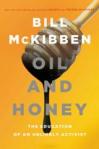
Bill McKibben, Oil and HoneyBack in 2013 I read and reviewed American climate activist Bill McKibben’s book, Oil and honey: the education of an unlikely activist. It’s about the two important things in his life: bees, honey and good farming practice, and oil, or the fossil fuel industry, and its impact on the climate. Oil and honey, climate and farming. They’re all related.

However, that’s a work of non-fiction, but increasingly fiction is dealing with climate-change, resulting in the genre called cli-fi (ie climate change fiction.) I’ve reviewed some cli-fi here, but none focussing on bees, so this post is as much for my benefit as yours. (This is why I love blogging – I get to research something I’m interested in and then share it with anyone who is interested.)

So, here is a small selection, in alphabetical order by author.

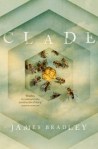
James Bradley, Clade (2015)

James Bradley, CladeAustralian author James Bradley’s book Clade is more broadly about climate change than the other books in my selection here, but it does have bees on its cover. Sydney Morning Herald reviewer, Caroline Baum describes it as follows: “A global deadly virus, the collapse of bee colonies, extreme weather events causing social unrest, eco-refugees, infertility, autism and new advances in technology – these are just some of the themes of James Bradley’s new novel, Clade.” The bees, I understand, mainly feature in a sub-story about a refugee beekeeper who is concerned about Colony Collapse Disorder. However, this sub-story and the presence of bees on the cover suggest their importance to Bradley’s overall theme.

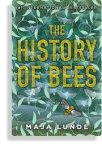
Moya Lunde, The history of bees (English ed. 2017)

Maja Lunde, The history of beesThe Saturday Paper’s reviewer, KN, describing Norwegian author Lunde’s The history of bees as presenting “an original angle” in the cli-fi realm, says that “the dystopian future she depicts hinges on the disappearance of bees from their hives. This is a real-world phenomenon, known as colony collapse disorder, diagnosed as a problem in 2006.” As The Atlantic’s reviewer writes, its premise is simple: what would happen if bees disappeared? The book apparently has three strands – one contemporary, one set in the 19th century, and one in 2098 after “The Collapse”.

I learnt a new term researching this – First Impact FictionLA Times reviewer Ellie Robins says it was coined by novelist Ashley Shelby to describe “fiction set in more or less the present day, which depicts ‘our shared world as the impacts of runaway climate change begin to make themselves known’.”

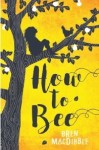
Bren MacDibble, How to bee (2017)

Bren MacDibble, How to beeBren MacDibble is an Australian-based New Zealand born writer. How to bee is a children’s book, which has been shortlisted for multiple literary awards, including the 2108 CBCA Book of the Year for Younger Readers, the 2018 Adelaide Festival Awards for Children’s Literature, the 2017 Aurealis Awards for Best Children’s Novel, and the 2017 Queensland Literary Awards, Griffith University Children’s Book Award. Decent cred, eh?

Publisher Allen & Unwin describes the plot:

Peony lives with her sister and grandfather on a fruit farm outside the city. In a world where real bees are extinct, the quickest, bravest kids climb the fruit trees and pollinate the flowers by hand.

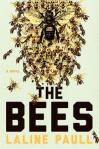
Laline Paull, The bees (2014)

Laline Paula, BeesThe Guardian’s Gwyneth Jones describes British novelist Laline Paull’s The bees as “a debut dystopia set in a beehive, where one bee rebels against the totalitarian state.” It’s apparently a complex story, and Jones concludes her review by saying that “the crisis The Bees invokes is genuine, frightening and getting worse. Hive collapse disease remains a deadly real-life mystery …”

The Bees was Shortlisted for the Bailey’s Women’s Prize for Fiction in 2015.

Now, the question is: can cli-fi help the cause of climate change? Well, coincidentally, a climate change research fellow, Sarah Perkins-Kilpatrick wrote about just that in The Conversation last year. She believes it can. “Through compelling storylines, dramatic visuals, and characters”, she says, cli-fi can make people “care about and individually connect to climate change” and thus “motivate them to seek out the scientific evidence for themselves.” She also argues – but of course this depends on the writer and the work – that cli-fi can deliver a message

of hope. That it is not, or will it be ever, too late to combat human-caused climate change.

Is all cli-fi hopeful?

Do you like cli-fi? And, do you agree that cli-fi can help the cause (assuming, of course, that you agree it is a cause)?

How to read difficult books

Rabih Alameddine, An unnecessary womanThere was a quote I really wanted to use in my review last week of Rabih Alameddine’s An unnecessary woman, but I couldn’t find a place to fit it in. Sometimes reviews take off in a direction and they just can’t be reined in, I’ve found! This quote is, however, too good not to share – at least, I think so.

The quote occurs when Aailya, our unnecessary woman, is talking about reading philosophy. The quote in question refers to her attempt to read and understand Schopenauer. She says that “I can’t seriously claim I ever grasped much of Schopenhauer on that first reading, or the second, but I kept trying”. And then she describes her method:

In philosophy, I was a page-turner long before I was a reader. I worried the surface till I penetrated the essence.

I think this is great advice for reading anything that’s a bit challenging, not just philosophy. Once upon a time I would try to understand each sentence of works that challenged me, and become frustrated when meaning eluded me. However, now my practice is to keep reading, because very often doing this will result in my gradually working my way into the author’s style (words, images, rhythm, tone) and world-view (ideas, themes). In other words, I think what I do is worry the surface until I penetrate the essence – though I must admit that I tend not to give books multiple chances. I (mostly) do need to achieve this some time during the first read. Anyhow, once I’ve cottoned on to what the author is doing I’ll go back to the beginning – if I need to – to catch what I’ve missed.

Do you have any hints for reading the more difficult books that come your way?

Books given and received for Christmas, in 2017

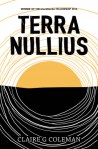
Claire G Coleman, Terra NulliusIn what is becoming a Boxing Day tradition – I have many traditions it seems at the end of the year – I am doing, again, a post on the books I gave and received this Christmas.

  • For Ma Gums, who has worked as a lexicographer, another word-oriented book (giving her such books is becoming another tradition!): Ann Patty’s Living with a dead language: My romance with Latin. My mum loved Latin at school and how it’s helped her with language throughout her now long life. I hope she likes this book.
  • For Daughter Gums, who reads widely but perhaps less so in the classics: A classic Australian, Christina Stead’s Little hotel.
  • For Brother Gums, who reads broadly, including keeping up with new Aussie releases: Robert Drewe’s latest, Whipbird, which was recently reviewed favourably by Lisa (ANZLitLovers).
  • For Sister-in-law Gums, who’s always interested in diverse authors and subjects, another recent Aussie book: Claire Coleman’s Terra nullius.
  • For Gums’ Californian friend, to whom I always like to send something Aussie: Stephanie Buckle’s short story collection, Habits of silence (my review). Not only is it a great read that appeals particularly, I think, to older readers, but it’s also a light one to post!

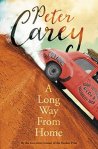
Peter Carey, A long way from hereAs for what I received, a varied but a much appreciated bunch:

  • From Parent Gums: Three books, because, strangely, they know I like to read. What a bonanza: Peter Carey’s A long way from here, Michelle de Kretser’s The life to come, and W. Bruce Cameron’s A dog’s way home.
  • From Son and Daughter Gums, who heard about my reading group schedule: Claire Coleman’s Terra nullius and Richard Flanagan’s First person. (I think I’m set for our next schedule now. I just have to find time to read them now.)
  • From Brother and Sister-in-law Gums, who, I’m pleased to say, usually give me books from their southern state: Rachel Leary’s novel Bridget Crack, which has been getting some good reviews around the blogs, and Tasmanian poet Robyn Mathison’s gorgeous little poetry collection Still bravely singing. I love reading books from our southern state.
  • From my Californian friend who gave me Viet Thanh Nguyen’s wonderful Pulitzer prize-winning The sympathizer last year: Viet Thanh Nguyen’s follow-up book The refugees, which fits beautifully into what seems to be my current reading trend, stories about displacement.
  • From a Jane Austen group member who organised a lucky dip of her duplicates at our end-of year-plus-Jane’s-birthday-celebration. An inspired idea – at least we all thought so (!): Paula Byrne’s Jane Austen: A life in small things. I have been tempted to buy this book several times, so am thrilled to have a copy.
  • From my now Octogenarian volunteer from my working days, with whom I keep in contact for semi-regular lunches: A gift voucher from a bookshop. Woo-hoo!

What about you? Any Christmas book news you care to report

Shakespeare’s Sonnets, app-style

Back in 2011 I wrote a post, a few in fact, on Touchpress‘s wonderful iPad app for TS Eliot‘s poem The wasteland. I love that app. It’s an excellent example of how interactive digital media can enhance learning about or enjoyment of literature, for a start, though Touchpress has applied its approach to a wide range of scientific and historical topics, including the solar system and Leonardo da Vinci’s Anatomy.

As you’ve probably worked out by now, Touchpress has also done one on Shakespeare’s sonnets, the whole 154 of them. It was released back in 2012 but I only bought it a year or so ago, when I decided it was time I became more familiar with this part of his oeuvre. So far I’ve only dipped into it, but have decided it’s worth posting on it now, rather than wait until I’ve finished it.

SHAKESPEARE SONNETS APP MENUSo this is an introduction rather than a proper review. The app follows a similar format to that used for Eliot, with some variations due to the work itself, and its age and particular history. It comprises the following menu items:

  • All 154 Sonnets in text form
  • Performances, by different people, such as Jemma Redgrave, David Tennant, and Stephen Fry, of each sonnet (filmed performances with the text synced to it)
  • Facsimile reproduction of the first published edition of the sonnets in 1969
  • Perspectives, that is, commentary on the sonnets, including their form, history and Shakespeare’s use of them, by various academics/Shakespearean scholars, such as Katherine Duncan-Jones, James Shapiro, Don Paterson – filmed talks, with transcript of the text.
  • Notes, that is, Arden’s detailed notes on each sonnet, including notes on individual lines.
  • Arden’s scholarly Introduction
  • Favourites, which as you’d assume allows users to save and share – yes – their favourites.

There is a Home icon so you can quickly return to the menu screen to navigate around the app. And there are also well thought through navigations. For example, on the screen containing the straight text of the sonnet are icons linking directly to the Notes, the filmed reading of the sonnet, and the Facsimile version. If you then  choose Notes, you get three tabs – Arden Notes (explanation of allusions and idioms, definitions of obsolete words, and the like), Commentary (critique) and My Notes (make your own notes).

As with all Shakespeare – given the unfamiliar-to-us language of his time – the sonnets come to life when read by people who know what they are doing.  You can read them in order, or navigate easily to particular sonnets. You can also read/hear them by performer, as when you touch a performer’s image up pops a windows listing the sonnets they perform.

Anna Baddeley, reviewing the app for The Guardian says

The Sonnets app, like its older sister The Waste Land, has the power to awaken passions (in my case, Shakespeare and poetry) you never knew you had. Reading outside and trying vainly to shield my iPad from the glare, I prayed the sun would go in so I could see what Don Paterson had to say about Sonnet 129.

Paterson’s commentary is the best thing about this app. It’s like sitting in the pub with a witty, more literary friend, who uses language such as “mind bouillabaisse” and “post-coital freak-out”. Most fascinating is his emphasis on the weirdness and borderline misogyny of the sonnets, a view echoed by the other academics interviewed for the app.

I don’t know Don Paterson, whom Wikipedia tells me is a Scottish poet, writer and musician, but Baddeley is right – in the sense that his commentaries are fresh, engaging, personal, funny and yet also meaningful. I wouldn’t go so far as to say they’re the best thing about the app, because it’s the whole that is important, but they certainly give it life.

This is not something to read in a hurry, and it is a BIG app, but how wonderful it is to have these sonnets so readily available on my iPad wherever I go.

Have you used this app, or would it interest you?

William Shakespeare
Shakespeare’s sonnets
iPad app
The Arden Shakespeare, Touch Press and Faber and Faber, 2012
1.55Gb