Monday musings on Australian literature: on 1923: 6, A postal controversy

Who would have thought that the cost of postage would generate controversy in the book world? And the sorts of issues that would be raised as a result?

Help Books Clker.com
(Courtesy OCAL, via clker.com)

In my research of Trove for book-related issues in 1923, I came across a letter to the editor opposing some proposed changes in postal rates for books and other printed matter. Of course, I researched it a bit more, and discovered that the issue had started in 1922 (or perhaps even earlier. I didn’t look further, as my aim here is to document some issues that seem interesting rather than use all my reading time on detailed research!)

As far as I can work out, investigating postal rates had started perhaps in 1921, but it was in early 1922 that the Postmaster General promulgated new regulations. They are described in detail in Melbourne’s Age of 25 January, which explains why they were needed:

These regulations are the outcome of prolonged conversations between Postal officers and those interested in the trade, and are designed to put an end to the confusion which has existed for many months past, while removing some anomalies which caused great irritation, and were responsible for considerable loss. Up to the present none has been able to say definitely what constitutes a book from the stand point of the Post Office. The new regulations, while opposed by some who are engaged in the book selling and book buying business, will at least establish uniform practice throughout the Commonwealth. 

The article describes the new regulations in detail, which I won’t repeat here. You can click on the link above if you are interested. I will just share the main contentious issues:

  • the definition of a book for postal purposes: a cookbook, for example, isn’t one, and nor is one containing advertisements.
  • the requirement to register books that are wholly printed in Australia (because they will get a favourable rate). The article tells us that books printed in Australia would cost 1d. per 8oz to post, while those printed outside Australia would cost twice that, at 1d. per 4oz. 

Now, let’s jump forward to 29 January 1923 which is when I first clocked the issue. It was in a letter to the editor in Brisbane’s Telegraph by one E. Colclough who was the Hon. Secretary of the Queensland Authors’ and Artists’ Association. His beef primarily concerned the issue of advertisements preventing a book’s “registration” as a book:

Such a regulation renders it prohibitive for a poor individual to undertake the publishing of his own works because it frequently happens that only by the assistance of the kindly advertiser is he enabled to finance his literary venture.

His association wanted Australian writers to be “encouraged and assisted in every way possible”, and asked for the regulations to be amended.

A few months later, on 13 June 1923, W.T. Pike, President of the Booksellers’ Association, wrote a letter to Melbourne’s The Argus in which he enumerated seven changes the association wanted made to the regulations. Number three was for the book rate to be applied to

all books printed in Australia without regard to subject or where the author lives. At present books printed in Australia are subject to the pernickety whims of officials. For instance, postal officials say a “cookery book is not a book but printed matter.

The Association wanted “a reasonable number of general advertisements to be allowed” and for books to not have to be registered. They argued that this was an “unnecessary time waster” because the printer’s name and address always appear on books, and books are “automatically sent under the Copywright [sic] Act to two public libraries”. They also wanted reciprocity with New Zealand in terms of rates, and suggested the reduction of overseas postage rates from the “absurd” 8d per lb to 4d per lb would be beneficial. “Quite a lot of books would be sent South Africa if postal rates were reduced”, wrote Pike.

The Commonwealth’s proposed rates bill was moved in Parliament in August 1923, and reported in Adelaide’s The Register. It makes for some entertaining reading, with some arguing against the changes because the money could be spent on other things, such as improving the actual post offices. Do read the report, as it’s short and entertaining.

Meanwhile I will end with two things, one being that the bill was passed, and the other being The Register’s report of one MP’s contribution:

Dr. Maloney (V.) supported the measure, but pleaded hard for an increase to pay to officials in allowance post offices. Some of the women, he said, worked for eight hours daily, under great difficulties, and only got 20/ to 25/ a week, or less than messenger boys.

I like this Dr Maloney, who, according to Serle in the ADB, “loved humankind, fought inequality and pressed the rights and needs of the poor”. I’ve moved away from my topic here a bit but, you know, this little series is as much about serendipity as about books!

I hope you like serendipity as much as I do?

Other posts in the series: 1. Bookstall Co (update); 2. Platypus Series; 3 & 4. Austra-Zealand’s best books and Canada (1) and (2); 5. Novels and their subjects

Monday musings on Australian literature: Weird fiction

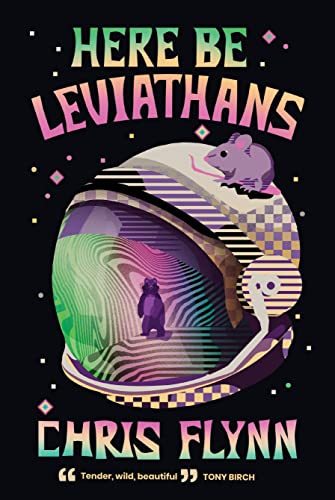
All being well, my next post – or, a very near future one – will be on Chris Flynn’s astonishing short story collection, Here be Leviathans. As I was reading it, I came quite serendipitously across Nina Culley’s article titled “Weird is in“, in Kill Your Darlings*. The article references Chris Flynn’s collection and some other works I’ve read recently that are a bit, well, off-centre.

Culley opens the article with:

Australian fiction has long been dominated by the realist novel. A new wave of writers continue the avant-garde tradition—but are experimental and offbeat stories always destined to be relegated to a literary niche? 

Now, I do tend to prefer realist (or realistic) novels. I am not much into the various forms/subgenres of speculative fiction (though I don’t mind dystopias, which just seem to me to be future realism!) However, this is not to say that I don’t occasionally venture into the more imaginative, surreal or even fantastical. I like Murakami, for example; I loved Jane Rawson’s A wrong turn at the Office of Unmade Lists (my review); and in more recent times I enjoyed Chris Flynn’s Mammoth (my review). I am certainly enjoying his Here be Leviathans. Would Culley’s article, I wondered, explain why?

She follows her intro with the point that “experimental and strange fiction is often viewed as a niche of the literary world, reserved for audacious writers who dare push the boundaries of storytelling and their open-minded readerships”. Such writing is also, she says, “frequently subjected to mixed reception – some ardent, some bamboozled”. I can understand the latter, because, almost by definition, weird writing tends to subvert, if not actively eschew, the conventions against which many of us think about what we read. When that happens, we can struggle to work out how to assess it. or example, if our benchmark is realistic characters, what do we do with characters who are determinedly not so?

Culley, who actively sought out unusual fiction, was surprised to find that there was more out there than she’d thought. It’s hard to categorise but she found it under genre labels like “bizarro fiction” and “new-weird fiction”. She suggests that these genres seem “to have a lot in common with post-modernism and early avant-garde movements, with self-reflexive tendencies towards satire, irony and pastiche”. They “playfully comment on their own artifice” and challenge readers with “bold questions”. I often enjoy writing like this. I have no problem with writers reminding me that it is art I’m consuming, not a representation of reality, because, well, it is art I’m reading and I want to think about the art.

Anyhow, she argues that Australian literature has moved on from a focus on ‘bush and beach’ to something she calls ‘urban existentialism’. Much of this is “wonderful” albeit often “bleak”, but it is also Euro-centric. She characterises it as being concerned with “weaving together a character’s multi-faceted relationship with their country—how it’s threatening and how it’s beautiful, notions with complex colonial implications”. The problem is that this writing might be significant to a point, but it is also homogenising. It “undermines the demand and presence of a diverse literary scene”.

And now, before you jump in with but, but, but, she agrees that Australia has “fostered bold voices and innovation” from the likes of Patrick White through Helen Garner, Gerald Murnane, Murray Bail, and that fascinating import from South Africa, JM Coetzee, to newer writers like Alexis Wright, Robbie Arnott, Ellen van Neerven and Evelyn Araluen. I’ve reviewed all of these writers here at lest once (and admit that while I have enjoyed their writing, most have challenged my reviewer faculties! Which is no bad thing!)

Culley then discusses the publishing of weird writing – who is publishing it and why enough isn’t publised – but I want to explore a little about why read “weird” fiction.

Take weird narrators, for example. Some readers don’t like them, they don’t like, say, skeletons (in Carmel Bird’s Family skeleton) or foetuses (in Ian McEwan’s Nutshell) but in the hands of authors who know what they are doing, weird narrators can jolt us with fresh perspectives on an idea or issue. Chris Flynn’s Mammoth, as I wrote in my review, tells the story of humanity’s destructive, often brutal march through time, through the eyes of those we supplanted, the fossils of extinct creatures. Seeing the world through such eyes is mind-bending and eye-opening.

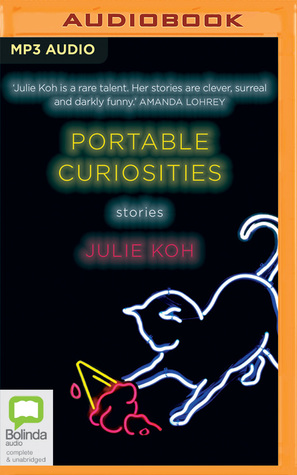
Julie Koh takes a different approach. Most of her stories in Portable curiosities (my review) start realistically but often turn surreal or absurd. Her targets, though, are grounded – in issues like consumerism, capitalism, commercialism, and the stereotyping of Asian people in Australia. Again, the weirdness can jolt us into seeing (or feeling) things that realism may not expose because it’s all so familiar.

With First Nations writing, the situation can be different again. What we western readers might think is weird is perfectly natural to First Nations people, because, for example, there is no line between the humans and country. It is all interconnected. There is no hierarchy, but mutual responsibility. Reading the writing of others may not change our own worldview, but I like to think it can help us understand different worldviews and see that they are just as valid as our own.

Returning to Culley now, towards the end of her article, she says that Flynn’s Here be Leviathans was described as “boundary pushing”. His response was that this kind of labelling indicates “that the Australian literary scene has been beholden to a streak of misery realism for so long that it’s forgotten to…have fun.” I am not averse to “misery realism” – it has its place – but it’s not my only diet. I also like fun. I like cheeky writers who know how to make points with a light – or even bizarre – touch. Watch out for my review of Here be Leviathans to see what I mean.

Meanwhile, do you read “weird” fiction? Why or why not?

* KYD is an online subscription journal, but some free access is provided.

Monday musings on Australian literature: A question about things

A different sort of Monday Musings this week …

My reading group’s June book is Edwina Preston’s Bad art mother, which was published by Wakefield Press last year and which I’ll be reviewing soon. (If you don’t know it and are interested, you can check out Lisa’s review.) It was shortlisted this year for the Christina Stead Prize for Fiction (in the New South Wales Premier’s Literary Awards) and for the Stella Prize. Wakefield Press’s website describes it as being “set in the Melbourne milieu of Georges and Mirka Mora, Joy Hester, and John and Sunday Reed”. The same milieu, in fact, that inspired Emily Bitto’s The strays (my review) although that’s a very different book. However, I digress … because my little question for you today is not central to the book, just something that caught my attention. It comes from Owen talking to his aunt:

Why did you throw out everything when you sold the house in Coburg, Ornella? Was it because you knew all those things didn’t matter in the end, that without memories attached they were just junk shop rubbish? You put Nonna’s things out on the grass for the neighbours to pick through. You didn’t even keep a teapot, or a pair of earrings. You filled your place with glossy new things … But what are you now without all those things?

There’s a bit more, but the question Owen asks is one I’ve been confronting in my current big downsizing project – a project that is almost done, thank goodness. Still, it has been difficult, a wrench, to part with things that are part of the story of my life, things I haven’t used in decades but that, every time I see them, remind me of some person or event. They gave me joy, so Marie Kondo’s criterion just didn’t work!

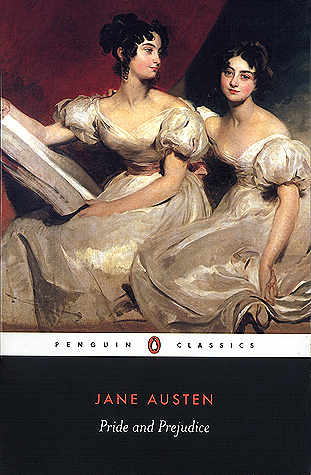
However, to use a cliche, you can’t take them with you, and we don’t want to leave more of a headache to our kids than we have to, so decisions had to be made. And, they have been. I do expect some gnashing of teeth in the future, as well as some “I kept that!”, but overall I think we’ve done ok. My choices were not based on value, but on meaning, so out went some fine art porcelain and in stayed Mum’s funny little no-brand donkey that she kept with her through her many moves, for as long as I can remember. I never did ask her why – why didn’t I? – but I couldn’t let it go. And, of course, I kept her copy of Pride and prejudice.

I could go on, sharing all my little decisions, but will leave it there, and return to the opening question: what do our things mean to us, and does letting them go change who we are?

What do you think?

Jane Austen on travel

It’s been some time since I posted on Jane Austen, but currently my local Jane Austen group is repeating the slow reads we did a decade or so ago when her novels had their 200th anniversaries. Last year, we did Sense and sensibility, and right now we are doing Pride and prejudice.

There are different ways of doing slow reads, as I know many of you are aware because you do them yourselves. Our way is to read and discuss a volume a month, based on the fact that back in Austen’s day novels tended to be published in three volumes, which makes the volume an excellent demarcation for slow reading. So, last month, we read Volume 2 of Pride and prejudice, or Chapters 24 to 42 in modern editions. This volume starts just after the Bingley retinue has moved to London, and it includes Lydia’s going to Brighton and Elizabeth’s visit to Hunsford, where she receives Darcy’s (first) proposal. The volume ends with her arrival in Derbyshire, in the company of her aunt and uncle, the Gardiners.

As those of you who engage in slow reading know, there are many pleasures to be gained from it, and the pleasures are magnified (with great books anyhow) when you slow read a book you’ve read before because, knowing the story, you can glean so much more. Most of us have read this novel many times, but we are always surprised to find something new in our next re-read. What particularly struck me about volume 2 this read was that it is really about “the education of Elizabeth“. She starts this volume being quite prejudiced. She is very sure of herself regarding Wickham’s and Darcy’s characters. She is prepared to give leeway to Wickham in the marriage stakes – that is, his marrying for money not love – but not to her friend Charlotte. But, she then sees how Charlotte has managed her life with Mr Collins, and we see what poor company her family really were anyhow! She also learns that she had misjudged Mr Darcy, and she recognises her own father’s failings. She castigates herself:

“How despicably I have acted!” she cried; “I, who have prided myself on my discernment! I, who have valued myself on my abilities! who have often disdained the generous candour of my sister, and gratified my vanity in useless or blameable mistrust! How humiliating is this discovery! Yet, how just a humiliation! Had I been in love, I could not have been more wretchedly blind! But vanity, not love, has been my folly. Pleased with the preference of one, and offended by the neglect of the other, on the very beginning of our acquaintance, I have courted prepossession and ignorance, and driven reason away, where either were concerned. Till this moment I never knew myself.” 

However, this is not the reason I chose to write this post! The reason is that I also came across a wonderful comment from Elizabeth about travel, a comment that could be as true today as it clearly was then. It comes in chapter 27, after Elizabeth had been discussing Mr Wickham’s sudden romantic interest in the heiress Miss King with her aunt Gardiner. Mrs Gardiner suggests Elizabeth accompany her and her husband on a holiday to, perhaps, the Lakes. This is Elzabeth’s delighted response:

“Adieu to disappointment and spleen. What are young men to rocks and mountains? Oh! what hours of transport we shall spend! And when we do return, it shall not be like other travellers, without being able to give one accurate idea of anything. We will know where we have gone–we will recollect what we have seen. Lakes, mountains, and rivers shall not be jumbled together in our imaginations; nor when we attempt to describe any particular scene, will we begin quarreling about its relative situation. Let our first effusions be less insupportable than those of the generality of travellers.”

I’ll leave you there, with the wisdom of our Jane!

On John Sinclair

Who is John Sinclair, you are probably asking? Those of you who read my last post, Shy love smiles and acid drops: Letters from a difficult marriage, may remember that he was the husband of the marriage in question, and father of the author, Jane Sinclair. However, as I briefly mentioned in that post, John Sinclair was also a music critic in Melbourne from 1947 to 1985.

As a keen concert-goer I was intrigued, and so did a little digging. I found an interesting man with a passion for some things that might interest us here. This is to say, he had some definite ideas about criticism, and about supporting Australian music and culture. Most of what I’m sharing here came from a 1998 article by Adrian Thomas called ‘“Beware of snakes, spiders and Sinclair”: John Sinclair (1919-1991), Music critic for the Melbourne Herald: The early years’.

If you are interested, read the article, but regarding Sinclair’s background, Thomas tells us that he started out as an artist. In fact, in the early 1940s, newspaper owner Sir Keith Murdoch gave him a stipend over other prominent artists like Sidney Nolan (who was a good friend of Sinclair’s). It was during this time that Sinclair became involved with the Heidi artistic community. Thomas doesn’t know why he didn’t continue with art, but says that his association with this circle and “their artistic beliefs” informed his career as a music critic. He was determined “to encourage a vibrant and enduring musical culture in Melbourne” like that artistic one. He also advocated for contemporary music and championed “those Australian composers and performers whose talents he deemed worthy of support.” In 1947, he was employed as music critic by Murdoch’s Herald, and there he stayed.

The function of the music critic

Sinclair apparently wrote quite a bit about criticism. Re music critics, he argued that, in addition to having the skills necessary to determining “the merit or otherwise of a performance, it is equally important that he [this was 1947] should possess the ability to translate his musical experience into terms accessible to the layman”. He saw criticism as being still “relatively undeveloped in Australia”, and was keen to be part of its development.

He was known, says Thomas, for writing “direct and uncompromising reviews” which “shook the musical establishment”. As is the way of these things, people focused on the negative, but Thomas says that “quality performances were always acknowledged”. I couldn’t resist checking, and I found many positive ones in Trove, alongside some negative ones.

For example, he wrote in 1952 of a young Australian organist, John Eggington, just returned from England, that “certainly, Melbourne organ lovers would find it difficult to recall many occasions on which the playing was as clear, expressive and brilliant as Mr Eggington’s was today”. 

His negative reviews, though, were not gentle. In 1947 he wrote on a recital by Viennese-born Australian pianist Paul Schramm, saying he “sat at the piano, dispassionate and efficient — something of a musical pharmacist dispensing a potion with deft and skilful fingers. He is a natural musician, and a fluid and sensitive interpreter.” However, while it was good playing and musical, it was also “always facile”. Returning to the pharmacist analogy, Sinclair concludes that

Mr Schramm, however, appears more concerned with the effect of his dispensations on his listeners than a personal search in the deeper realms of the composer’s meaning. 

All told, I think Mr Schramm and I were among the few people who weren’t really enjoying themselves last night.

The negative ones caused controversy, which was good for the newspaper business, but even Murdoch himself, writes Thomas, stepped in to give Sinclair his view of criticism.

Anyhow, Sinclair said a few more things about criticism that are more broadly applicable, and appealed to me, such as that it is the critic’s

job to know his subject, to set his standards and then to hold to them so that any thoughtful reader, on the evidence of a series of criticisms, can determine where he and the critic stand in relation to music. Only then can the reader form a worth-while opinion of the music on which the critic has reported. (1952)

I like this point about critics having clear criteria/standards that we can get to know. He also noted in 1952 that “the critic stands between the musician and the public and contributes to the understanding of music by measuring the individual work or performance against the widest possible background”.

And in 1973, in a letter to the Australian Council of the Arts, he said, among other things, that:

I have always believed that my responsibility was to the cause of music in the widest sense [my emph.]; that I had a responsibility not only to make reputable judgements about performance but to understand the many and complex factors that determine the quality of music making in the community.

I like his views on the practice and role of criticism. What about you?

Supporting contemporary music and musicians

Thomas discusses Sinclair’s role in improving what was Australia’s “immature musical culture”, in terms of concert-going behaviour, but my main interest is Sinclair’s ongoing concern with public’s “indifferent attitudes towards Australian composers and performers”. He laid much of this at the feet of the ABC. It was Australia’s main concert organiser and it focused on international performers. He wrote in 1952 that “in the long run it is the quality of indigenous musical activity, and not the playing of visitors that determines the worth of a year”.

The public, he saw, was being trained to prefer the international celebrity. Even worse, the concerts these and local orchestras performed primarily comprised standards from the eighteenth and nineteenth centuries. He argued that “the ABC has an obligation to foster public taste and to provide conditions in which Australian musicians can develop and mature”. He worked hard to promote contemporary music and local composers. I found a 1951 review of a concert conducted by Eugene Goossens in which he praises Goossens for “continuing his very tangible services to Australian composers” by conducting the first Melbourne performance of Margaret Sutherland’s tone poem “Haunted Hills”. Similarly, a review of a 1952 Victorian Symphony Orchestra concert starts:

Much more contemporary music than usual and an excellent standard of performance distinguished last night’s concert by the Victorian Symphony Orchestra under Juan Jose Castro in the Melbourne Town Hall.

Thomas tells us “by the time the ABC tried to change the culture by appointing composer and contemporary music advocate Juan Castro as resident conductor in 1952, a conservative attitude to music was firmly entrenched in audiences”.

Converting audiences to contemporary music has always been a tough ask, but it, like all contemporary artistic endeavour, must be supported if culture is to remain fresh. I have enjoyed getting to know John Sinclair a little more, and greatly enjoyed reading his writing in the Herald.

We don’t hear much about his work in Shy love smiles, but he and Jeannie do discuss music occasionally. I’ll close on something Jeannie wrote to him in 1961 about a concert she attended at Glyndebourne. The work was modern, “Elegy for young lovers” by Henze, with words by Auden. She loved it:

my hair stood on end as the symbols [sic] clashed on and on. You probably read about it. Ah well. Also the audience was more serious and highbrow and sympathetic. Obviously the society ladies were frightened.

They shared some values, it seems. I’ll leave it there.

Adrian Thomas
‘”Beware of snakes, spiders and Sinclair”: John Sinclair (1919-1991), Music critic for the Melbourne Herald: The early years’ in Context: Journal of Music Research, No. 15/16, 1998: 79-90
Monday musings on Australian literature: Posthumous publishing

The literary world is replete with works published posthumously. Jane Austen had two completed works published after she died, but there are many many others including Kafka, Tolkien and more recent giants like David Foster Wallace. In some cases, the writer had finished the work but time or some other reason resulted in its not being published in their lifetime. Austen’s two works are good examples. Northanger Abbey had been sold in 1803 to a publisher who never published it. It was bought back in 1816, and Austen worked further on it that year. Persuasion was completed that same year, which was the year of her death. Both were published months after her death through her brother. In other cases, as we discussed in last week’s post on unfinished works, writers specify that they don’t want their work published. Presumably, there are also cases where we just don’t know the creator’s thoughts. 

In 2018, The Conversation published an article on the ethics of posthumous publication, but, while it identifies ethical issues in relation to various authors, like Philip Larkin and WH Auden, it doesn’t fully grapple with them. It does, however, note that Auden’s literary executor, Edward Mendelson has written separately about his ethical dilemmas with regard to Auden’s wishes. For anyone interested in some stories, the article is worth checking out. The main point is that, as we discovered with Patrick White, it is most often the literary executor’s job to resolve the issue – and it isn’t easy.

This post shares a few examples of Australian posthumously published (mostly finished) works.

Across the ditch

Having said that, however, I’m going to start with New Zealand which is, after all, Antipodean, so close! (For those not in the know, “the ditch” refers to the Tasman Sea that separates Australia and New Zealand.)

My first example is the wonderful Janet Frame, and an interesting discussion on ABC RN’s The Book Show in 2008 about posthumous publication of Frame’s work. Presenter Ramona Koval discusses the posthumous release of literary works with Frame’s niece Pamela Gordon, chair of a charitable trust set up by Frame to manage her literary estate. Gordon said that she wished there’d been a “literary executor for dummies” guide to help her. Her job was facilitated by the fact that Frame believed in posthumous publishing, seeing it as “dignified”. Some of her works were not published in her lifetime for personal reasons. Frame also destroyed a lot of work that she felt was not up to being published. She also clearly indicated which poems she felt were finished. Frame wanted her poems published, and the first collection published after her death, The goose bath, was awarded New Zealand’s top poetry prize in 2007. Her 1963 novel, Towards another summer, and a 1974 novel, In the memorial room (Lisa’s review) have also been published, with, apparently, her prior approval.

My second example is an earlier, great New Zealand writer, Katherine Mansfield. She died suddenly in 1923, at the age of 34, of a pulmonary haemorrhage, leaving behind much unpublished work. Her husband, John Middleton Murry edited and published two short story collections, a volume of poems, a novella titled The aloe, and other collected writings. I’m guessing that dying so suddenly so young, she left no instructions and that we rely on her husband “knowing” her wishes.

My side of the ditch

I’ve written before about Patrick White’s literary executor, Barbara Mobbs, and her difficult decision to allow publication of White’s unfinished novel, The hanging garden. Literary executors have a challenging task, of which publishing unpublished works – my focus here – is only one aspect.

Many books, we are confident, were competed by their authors in the expectation of publication. Examples include my teenage favourite Nevil Shute’s Trustee from the tool room (1960); Morris West’s all but finalised The last confession (2000); Jacob Rosenberg’s The hollow tree (2009); Dorothy Porter’s poetry collection The bee hut (my review) and essay On passion (my review); Bryce Courtenay’s Jack of Diamonds (2012); Georgia Blain’s non-fiction The museum of words (2017); and Andrew McGahan’s The rich man’s house (2021). All were published within a year or two of their author’s death.

A different example, and one that may have better suited last week’s post, is Christina Stead’s I’m dying laughing, published in 1986. Wikipedia says that she worked on it on and off over decades between other works. One chapter, titled “UNO 1945”, was published in Southerly in 1962. A few years later, her New York agent wanted certain revisions, as did her British publisher. It appears that comments from an American friend about her handling of Hollywood radicals set off a long process of revision that she came to regret. The final book was put together by her literary executor, Ron Geering who says in the preface:

“What I inherited…was a huge mass of typescript ranging in finish from rough to polished and in length from page bits to different versions of whole chapters, along with piles of basic and supplementary material.”

There’s no suggestion here that Stead did not want it published.

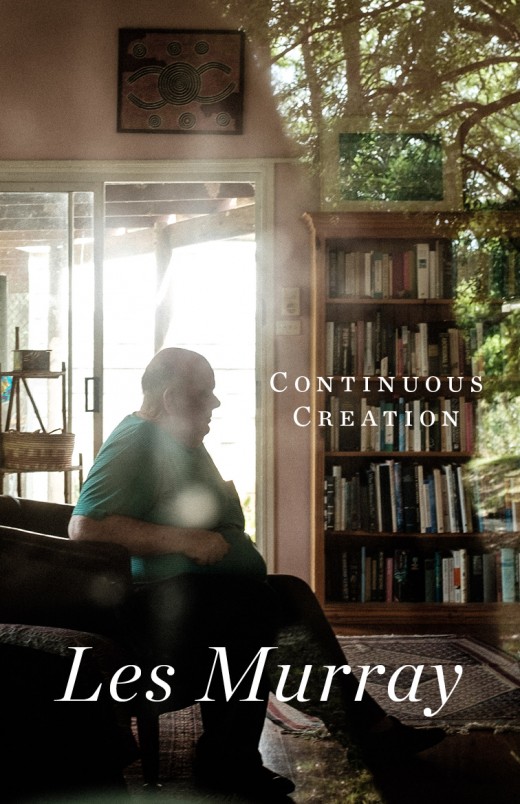
My last example is a book due for release next month, March 2022. It’s Continuous creation, a posthumous collection of poems by Les Murray. Publisher Black Inc says that the volume comprises “poems he was working on up to his death, as well as work uncovered from his scrapbooks and files”. Given his wife survived him, I assume she supports this publication.

Black Inc’s promotion for this book references the title poem, which, they write, calls up ‘the spirit of continuous creation, “out of all that vanishes and all that will outlast us”’.

“All that will outlast us”! Can’t think of a better conclusion for a post on posthumous publication.

Are you aware of reading posthumously published books, and does it make a difference to your reading experience?

Monday musings on Australian literature: Unfinished books (2)

“Literary history is replete with unfinished novels which ought never to have seen the light of day.” (Alan Taylor, Scotland’s The Herald.) 

Back in 2018, I wrote a Monday Musings post on unfinished novels. I was more interested there in why they were published and what the authors may have intended. This time, I’m focusing more on how reviewers have responded to reading unfinished novels.

I have read several unfinished novels over the years, Jane Austen’s The Watsons (my review) and Catharine, or the bower (my review), for example. As many of you know, another of her unfinished works, Sanditon, was recently developed into a television series. The less said about that the better, but I am horrified that a second series has now been commissioned from this, what, 11-chapter unfinished novel. It’s all about the money. Andrew Davies and his team are not the first to “finish” this novel, but my post is on the unfinished version. Reading the unadulterated work is always my preference, because my interest is in the writer and wanting to know them better, to see where they were heading, perhaps, or gain insight into the development of their ideas or their methodology.

On reading the unfinished

All this, though, is by way of introduction, since my Monday Musings focus is Australia.

So let’s start with Patrick White, and his unfinished novel The hanging garden (on my TBR). As I wrote in my first post, he had instructed his literary agent Barbara Mobbs to destroy all handwritten papers after his death. She didn’t, and eventually acquiesced to the requests and allowed a verbatim transcription of it to be published in 2012, the 100th anniversary of White’s birth.

Being a White novel, it was, of course, reviewed by many. James Hopkin, writing in the TLS Literary Supplement, described posthumous publication against the author’s wish as “questionable, if not distasteful”, but that didn’t stop him reading it. He concluded that, although unfinished, “it works as a self-sufficient novella, and a fine one at that. (So, in this case, the publisher may be vindicated.)” I’m not sure that’s a moral justification, but it is an artistic one! Alan Taylor, whose quote starts this post, agrees that it was worth publishing. He calls it “haunting and tantalising”, and says that “the feeling that remains after reading its 200-plus generously spaced pages is one of regret and sadness at its incompletion”.

Hopkin and Taylor aren’t Australian, but Michelle de Kretser is, and she starts her discussion with:

The publication of an unfinished draft is the writer’s version of that nightmare in which you find yourself naked in the street.

But, she doesn’t exactly address the moral issue either. Instead, she looks at it from an author’s perspective, writing that “White is manifest in this book – especially in the first half, where greatness marks every page.” But as this unfinished work progresses, she says

the sense of draft, barely perceptible earlier on, comes close to the surface. Most tellingly, the grand pavane of White’s style slows and slackens. In these pages, our dominion over the dead seems brutal – surely White would never have allowed the publication of this fragmented work.

Yet the coldblooded living gain.

Ultimately, she says, “it feels like a gift”.

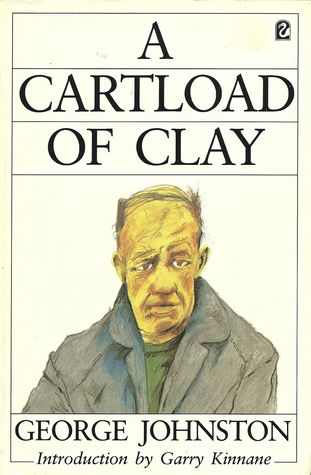
I also mentioned George Johnston’s A cartload of clay in my previous post. It completes his My brother Jack trilogy, and was published in 1971, the year after his death in 1970. Responses to it represent the more common gamut of responses to reading unfinished works. John Lleonart who reviewed it in The Canberra Times called it “a mellow, often distinctly melancholy autobiographical essay”. He says that while Johnston had intended it to be a novel, its incomplete nature does not detract from it. “[T]he absence of a contrived ending is, indeed, a factor in the book’s impact as a human document”.

Papua New Guinea Post-Courier‘s reviewer only partially agreed, arguing that its incomplete nature makes it “inherently unsatisfying, though it constitutes a fine piece of poignant and reflective writing”.

Writing nearly 50 years later – in 2020 in The Guardian‘s Unmissables series (see my post) – writer Paul Daley says he has often reread the trilogy, and that this third, unfinished volume, “emerges with rereading as equally compelling, and as the most stylistically elegant and, without doubt, melancholic, of the trilogy”. But, the best line comes from Johnston’s biographer, Garry Kinnane, whom Daley quotes:

“Just as in autobiography, the most complete form of ending in autobiographical fiction is the unfinished work, in which the final interruption to the self-exploration has been made by death itself.”

Love it!

My last example comes from a writer who died very recently, in 2018, the crime fiction writer, Peter Temple. I’ve reviewed his Miles Franklin winning novel, Truth. In 2019, Text Publishing published The red hand: Stories, reflections and the last appearance of Jack Irish. It includes the unfinished Jack Irish novel found in Temple’s drawer. Titled High art, it is, says Text, a “substantial fragment” which “reveals a writer at the peak of his powers”.

Text shares some responses. ABR described it as “dazzling…instantly engaging” and Michael Robotham called it “vintage Temple with black humour, crackling dialogue, suspense and achingly beautiful descriptions…I kept turning the page and holding it up to the light, hoping for more words between the lines”. Love that, too.

But it’s Anna Creer, in The Canberra Times, who gets to the heart of the experience of reading an unfinished novel:

The delight of reading High art eventually turns to reading despair as it ends abruptly with a body being discovered in a drain.

This seems the perfect point to hand it over to you. Do you read unfinished novels, and if so, what is your experience?

Monday musings on Australian literature: Untapped (The Australian Literary Heritage Project)

I have Lisa (ANZLitLovers) to thank for this Monday Musings because, commenting on my recent Margaret Barbalet post, she mentioned this Untapped project, which, embarrassingly, was unknown to me. Then, seeing our discussion, novelist Dorothy Johnston joined in, and offered to send me some information, which she did. So, I now have a copy of the launch announcement press release. This eased my embarrassment a little, as the project was announced two months ago, on 18 November 2021, and was launched on 6 December (at this gala event). Easy to miss, says she, at such a busy time of year!

Yes, yes, but what is it, I hear you all saying? Essentially, Untapped aims “to identify Australia’s lost literary treasures and bring them back to life”. In other words, it’s about bringing to the fore again those books that have been published in the past but are now out-of-print. The books are produced in eBook format, and are available for borrowing from libraries and purchase from several eBooksellers.

I like that it’s “a collaboration between authors, libraries and researchers”, and that “it creates a new income source for Australian authors, who currently have few options for getting their out-of-print titles available in libraries”. The project has some significant partners, including the Australian Society of Authors, National State and Territory Libraries, the Australian Library and Information Association and Ligature Press. 

What a visionary and practical project. I am particularly thrilled about it because it ties in somewhat with our reframing this year of the Australian Women Writers Challenge (AWW) to focus on forgotten and past women writers. The two activities don’t completely align: the new AWW is focusing on works published fifty or more years ago, whereas Untapped focuses on books that have gone out of print, and many of these are far more recent than 50 years old.

On the Untapped website, linked above, they have clearly outlined the steps:

  1. Identify missing books: it seems that the current collection comprises 161 books, which they describe as an “inclusive and diverse selection of lost books in need of rescue”.
  2. Find the authors and obtain the rights: this, I imagine, would have been particularly time consuming, tracking down the appropriate people to deal with – authors, estates and/or literary agents.
  3. Digitise the works: this involved scanning, then using OCR to convert the text, followed by careful proof-reading and scan quality checking. For this proofreading they focused on “hiring arts workers affected by COVID”. Then there’s all the work involved in (digital) publication, including design, metadata, royalty accounting, and uploading onto the library lending and other platforms.
  4. Promote the collection: this is where the libraries come into their own, promoting the collection in their various ways, and ensuring payment to the authors. Dorothy Johnston mentioned in her comment on my post that “we’re hoping to generate some publicity through the Geelong Regional Libraries this year”. She’d love to find any other “current or past writers living in or writing about Geelong” who might be covered by the collection. If you live in Geelong, keep an eye out for this.
  5. Collect the data and crunch the numbers: like any good project, its managers will analyse the sales and loan data. Their aim is “to understand the value of out-of-print rights to authors, the value of libraries’ book promotion efforts, and the relationship between library lending and sales”. They will feed this data, they say, “into public policy discussions about how we can best support Australian authors and literary culture”. They also hope the project might encourage new interest from commercial publishers. This research aspect is led by Rebecca Giblin, Associate Professor of Law, University of Melbourne.

As I understand it, the initial project involves this collection of 161 books, and the research will be based on this, but having created the infrastructure, they plan to “keep rescuing lost literary treasures” for as long as they have the resources to do so. The books will also be lodged at the National Library as part of its e-deposit scheme, ensuring that they’ll be available “for as long as libraries exist”.

It’s a great initiative that will spotlight work from beloved Australian authors and provide new access to those works. (Olivia Lanchester, CEO, Australian Society of Authors from Press Release)

The books

When Lisa mentioned the project, it was to say she’d bought Margaret Barbalet’s non-fiction book, Low gutter girl: The forgotten world of state wards, South Australia, 1887–1940. So, curious, I checked the site out, and bought Canberra tales, the anthology of short stories by Canberra’s Seven Writers (Margaret Barbalet, Sara Dowse, Suzanne Edgar, Marian Eldridge, Marion Halligan, Dorothy Horsfield, Dorothy Johnston) .

However, Lisa’s purchase should tell you something interesting about the collection, which is that it contains not only fiction. It includes a wide range of genres and forms, including novels, histories, memoirs, and poetry. The project also wanted a diverse collection, so there are works by First Nations author Anita Heiss, Greek-born Vogel/The Australian award winning author Jim Sakkas, and Lebanese-born writer and academic Abbas El-Zein, to name a few. Their books are all 21st century, but, there are also significantly older books, like Katharine Susannah Prichard’s Intimate strangers (1937) and M. Barnard Eldershaw’s Tomorrow and tomorrow and tomorrow (1947).

I thought, of course, to check my own library, the ACT Library Service, and found an announcement on their website. Not surprisingly, they draw attention to a Canberra connection, as Johnston would like to do in Geelong:

The books include some with a connection to Canberra, through the author or substantial Canberra-related content. For example: The golden dress by Marion Halligan, One for the master by Dorothy Johnston, The moth hunters by Josephine Flood, The schoonermaster’s dance by Alan Gould, and others.

I should add that all of Canberra’s Seven Writers are included.

So, a wonderful project. The question is, will it achieve its goal of ensuring the long tail of authors’ works stay available in a world where money not culture rules?

Monday musings on Australian literature: Reflections of a 1970s feminist

I can’t remember a time when I wasn’t a feminist, but Bill suggested that, for his AWW Gen 4 week, I “could ‘review’ The female eunuch by discussing your experience of Women’s Lib at uni”.

I replied that I could probably do “Reflections of a 1970s feminist” but that it wouldn’t be exactly what he was thinking. The thing is, I chose to go to a new, progressive university (Macquarie) though many of my peers from school preferred the “name” one (Sydney). I’m sure things weren’t perfect at Macquarie, but in my experience women were treated well, there. It had no baggage of “traditions” that the older male-dominated universities had, and its academics seemed invested in creating something new. I think that made a difference.

Macquarie’s motto is Chaucer’s “and gladly teche” (from the lines “gladly wolde he lerne and gladly teche”). I always thought it a bit strange that the motto focused on “teaching” more than “learning” but now I think it’s inspired, because it reminds the academics that “teaching” is where it all starts. All this is to say that, although I read The female eunuch during this time and was strongly affected by it personally, I wasn’t aware of an active feminist presence on my campus. However, there are things I could say about growing up from the 50s to 70s and why Greer made such an impact on me. 

A baby-boomer childhood

My father, like many men of his between-the-wars generation, wanted a son, but his first two children were daughters, me first, then my sister. A son came along, but a few years later. I never felt unloved or unwanted – indeed, I was very much loved – but we grew up, in the main, in a traditional role-oriented household. We had an intellectually frustrated but devoted stay-at-home mum and breadwinning father. Household tasks were largely gendered, with Mum looking after inside, and Dad outside – and we children followed suit. That’s how it mostly was back then, so it didn’t seem particularly strange.

Conversely, it also didn’t seem strange that my sister and I were encouraged in our education, that it was assumed that we’d go to university and on to work, and that marriage and children were sort of assumed some time down the track but were never focused on. Consequently, while my sister and I were expected to help with “women’s work” like washing and drying dishes after meals, it was only on weekends and holidays. Schoolwork came first.

They were schizophrenic times, then, and jokes were often gendered. One, I particularly remember, concerned junk car yards, which were called, by the menfolk as we drove past, “ladies’ driving school”. Yet, my Mum drove and we were encouraged to get our licences. It didn’t make sense. Was it a “little” attempt by men to retain their superiority as we encroached on their domain?

Feminism to the fore

As the 60s moved into the 70s, however, Women’s Liberation, as we called the second wave of feminism, came to popular attention. I read The female eunuch within a year or so of its publication, in my first year of university. It bowled me over, giving structure and a theoretical underpinning for how my thoughts were developing. It was both easy and not easy being a young woman then. The free-love hippy movement of the 60s gave women increasing freedom to be themselves in dress and behaviour – but old habits die hard and the pressure to conform to ideals of beauty ran alongside. Moreover, as Kate Jennings made clear in her famous Front Lawn speech in 1970, the appearance of increasing freedom for women was not matched by the reality. The recent documentary Brazen hussies documents these times very well. I was forging my own path through this, eschewing the trappings of “beauty” and dressing naturally, comfortably, sans make-up, hair colour, high heels, and so on.

Again, my family supported me. No comments were made – to my face anyhow! – but the women’s movement did not pass unnoticed. Another little anecdote, I remember, concerns my paternal grandparents, born in 1889 and 1893. They were kind, generous people, but Grandpa wasn’t averse to little digs at “women’s libbers”, including a time when Gran surprised him by suggesting she occupy the front seat of the car when my Dad was driving them home after a visit. Gran got the seat, and their marriage continued its loving way. Gran was great fun, and did her best to keep up with the times.

Moving along into the 1980s and 90s, I did marry and have children, and I chose – it was a choice – to work part-time at a time when part-time work was not well-supported in the Australian (then Commonwealth) Public Service. My good friend and work colleague had a child at the same time, so we proposed that we job-share. That was quite a saga, one too long to fully tell here. We were supported by our immediate boss, a woman a few years older than we were, and, generally, by the rest of the senior management, but we did face opposition from a few, including the female head of HR. With no regulations in place at the time for administering permanent part-time work, we needed the support of HR to make it work on paper (which included applying for leave-without-pay every week for the hours we weren’t working). We got there, eventually, but it was disappointing to find the greatest opposition coming from (some) women.

Through all of this and other feminist challenges along the way, Germanine Greer’s arguments – and those of the writers I was reading in Ms magazine, edited for a while by Australia’s Anne Summers* – underpinned my confidence that my choices and ideas were valid.

Reading women writers

It was around this time – that is, in the 1980s – that I started prioritising women writers in my reading, a priority I have maintained ever since. Virago Press was one of the inspirations for this, and I regularly scanned bookshop shelves, looking for the identifying green spine. There were other women-focused presses around, but Virago editions, in particular, inspired many of us, as we realised just how many great women writers had been forgotten. This is when I fell in love with Elizabeth von Arnim, Maya Angelou, Zora Neale Hurston and E.H. Young, to name a few.

Book cover

However, this is Monday Musings on Australian literature, so I thought I’d close on the Australian novelists who inspired me at the time. But first, back to my Mum. I grew up with reading parents, and my Mum had on her shelves – besides Jane Austen and other favourite classics – Henry Handel Richardon’s Australia Felix trilogy, Eleanor Dark’s The timeless land, M. Barnard Eldershaw’s A house is built, Eve Langley’s The pea pickers, and Thea Astley’s first novels.

So, when women’s writing started to really take off again in the 1980s I was attuned – and started reading, in that decade, novels by Thea Astley, Jessica Anderson, Elizabeth Jolley, and Olga Masters, to name a few. These writers, their contemporaries and those who followed them, including now, First Nations women writers, have added immeasurably to my understanding of myself as a woman and a person. They have helped me be comfortable in my shoes, but have also shown me where things need to change, personally and politically. I would not be who I am today without them.

A fundamental feminist principle – obvious to those who understand, but not to those who, for their own reasons, wish to remain obtuse – is that feminism is not about the sexes being the same but about all people being equal in terms of rights and respect. Germaine Greer puts it a different way in her Preface to the 21st Anniversary Paladin edition of The female eunuch. She says it’s about freedom, “the freedom to be a person, with the dignity, integrity, nobility, passion, pride that constitute personhood”, freedom from fear and hunger, freedom of speech and belief. As she says in this 1991 edition – and unfortunately it’s still true – things have changed, but not enough. It’s therefore wonderful seeing a new generation of feminists picking up the baton. They don’t always get it right, anymore than previous generations did, but womanhood – and personhood – is, I believe, in good hands.

* Anne Summers, of course, wrote another now-classic Australian feminist work, Damned whores and God’s police (Lisa’s post)

Monday musings on Australian literature: Greek-Australian literature

In a Sydney Writers Festival conversation with Michelle de Kretser, Andrew Pippos, winner of the 2021 Readings Prize for his debut novel, Lucky’s, said “the fact that we can talk about a Greek-Australian literary tradition is a sign that Australian literature is developing”. It made me think about Greek-Australian literature and what I know about it, which is not a lot, really.

First, though, what does he mean by his statement? I’m assuming he means that Australian literature is enriched by encompassing significant, identifiable bodies of work from Australia’s constituent cultures, that when there are such bodies of work they reflect on, feed into and, therefore, change and expand the majority culture?

When I think about my own reading of Greek-Australian literature, it is, of course, Christos Tsiolkas who comes to mind. Before him was Beverley Farmer. She is not Greek, but she married a Greek man and lived for some time in Greece, which experience fed into her early writing. I loved her insight into village life and relationships – but that was more about an Australian experiencing Greek culture in Greece.

Greek-Australian literature “proper” goes way back and, in my superficial Internet search I uncovered rather a lot about it, most, though, behind paywalls. Some of those had useful abstracts, and some I could access via my membership of the National Library. I skim-read a couple. But, I also found a blog, From the plastic pen, containing a post that had also been published in Meanjin in 2017. The post is titled “Living in a hyphe-nation: Exploring the Greek-Australian identity through literature”, and the author is Peter Papathanasiou. Papathanasiou is Greek-born and Australian-raised, and has just published a debut crime novel, The stoning, featuring a Greek-Australian detective.

Concerned about the next generation, the Greek-Australian-Australians, Papathanasiou posed the question:

How had Greek writers in Australia explored their hyphenated identity, and what could future generations—including other ethnic minorities—learn from their writings?

And then, he shares some literary history that I had found in those pay-walled academic articles. The earliest example of Greek-Australian literature, he says, was oral poetry at the start of the 1900s, which was shared “at events such as family celebrations, social gatherings, and entertainment in smoke-filled coffee houses (kafeneia)”. Poetry, Papathanasiou, says “has traditionally played a central role in Greek literature” and it continues here “although all types of Greek-Australian literature (poetry, prose, drama, theatre) have been represented, poetry collections have predominated”. Not reading a lot of poetry, I wasn’t aware of this, though I have read Komninos (1991), by Greek-Australian performance poet, Komninos Zervos.

Anyhow, Papathanasiou says that the first Greek-Australian literary work to be published was George Nicolaides’ short story “To gramma tis manas (Letter to mother)”, in 1913  Afstralia. From the beginning, he says, “family was a central theme, along with social issues, community activities, and migrant experiences”. He discusses the various waves of migration. In the 1920s, Orthodox Christians driven out of Asia Minor following the Turkish War of Independence brought well-educated immigrants who “introduced new subjects to the local literary scene because of the atrocities, poverty, and political upheavals they witnessed”. Then World War 2 and post-war migration brought stories of “the Greek army’s heroic fight against the Axis powers, and the united struggle of Greek and Australian soldiers against a common enemy”.

However, he said these waves did not result in much exploration of the Greek-Australian identity. These first-generation migrants wrote mainly in Greek and were “largely preoccupied with exile and dislocation, and haunted by trauma”. They wrote about “the fear of ageing and dying far from the homeland, patriotism (to Greece, not Australia), communication difficulties, and problems adapting and assimilating”. A change in theme came when second-generation migrants started writing in English, and their “connection to the fatherland” grew increasingly distant. They were were interested in “ethnicity and hybridity”, and their writing changed “from loss and yearning to identity and self” and

the rigid identity of the alienated migrant fell away, replaced by a new entity: the hyphenated Australian, whose conflict was more internal than external. These writers explored the dilemma of living between two worlds and with dual identities, the use and maintenance of Greek language and traditions, and surviving in a modern Australia while still bound by conservative parents. It was tense writing, fraught with internal conflict and doubt.

With third generation Greek-Australians now on the scene, Papathanasiou suggests that the subject-matter is changing again. There are still explorations of migration and identity, but these are no longer exclusive. Contemporary “Greek-Australian writers deal with a broad range of subjects including class, culture, gender, sexuality, faith, politics, economics, and sport, and blend various genres including memoir, autobiography, travelogue, and magic realism”.

Interestingly, alongside his discussion of subject matter, Papathanasiou also tracks changes in the publishing of Greek-Australian writing from self-publishing, at the start, through small independent publishers, like UQP and Fremantle Press, to the bigger publishers like Allen and Unwin, who have not only published some Greek Vogel award-winners but also publish Christos Tsiolkas. Pippos’ Lucky’s was published by Pan Macmillan.

Papathanasiou’s perspective, written in 2017, is similar to that written in 2014 by Penni Pappas on the Neo Kosmos website. She describes a similar trajectory in publishing and subject-matter, drawing in particular on the work of Helen Nickas who established Owl Publishing in 1992, to publish writing by Greek-Australian writers. George Kanarakis, writing in The Cud, provides another, and similar, but more detailed survey of Greek writing in Australia. All are worth reading if you are interested in the subject.

The cafes

Meanwhile, I thought I’d conclude on a quick reference to cafes, because most Australians of a certain age will remember at least one Greek cafe in their neighbourhood or on roadtrips. Pippos’ publisher, Pan Macmillan writes that, as a child, he regularly visited the family’s café in Brewarrina, NSW. These early experiences “laid the foundation of his work as a writer”:

The compelling role of the Greek-Australian café within modern Australian identity is increasingly documented in popular culture and history books alike. While sadly few exist now, for much of the second half of the twentieth century these cafés could be found on urban shopping streets and in rural country towns. They represented a new Australian zeitgeist and symbolised every-day multiculturalism. The Greek-Australian cafe milieu gave Andrew his earliest sense of community.

Lucky’s is set around a restaurant chain. You can read Lisa’s thoughts in her review.

A few years ago, I reviewed a little (literally) memoir – from the FL smalls collection – Growing up cafe (my review) by Greek-Australian, Phillip Stamatellis. I enjoyed his evocation of a cafe-based childhood.

The aforementioned Komninos also has cafe heritage. On his website we are told that “his maternal grandfather came to Australia in 1908 to work in a café”, and he, himself, born in Melbourne in 1950, grew up living above his family’s cafe-fish shop. There are poems about cafes in his collections.

It’s pretty clear that the Greeks enjoyed cafe culture long before we Anglo-origin Australians ever did (and in so doing they enriched our culture). But, for many second generation Greeks, as Stamatellis shares, the cafe which provided a living for the parents also brought challenges for the children

my nostalgia is burdened by an unseen weight, a sense of entrapment.

Anyhow, I enjoyed my brief foray into Greek-Australian literature, partly because its trajectory seems similar to those of other diaspora literatures here, albeit they may be on different points on the continuum. It brought to mind my recent post on Diversity and memoir and the idea that writers from culturally diverse backgrounds do not want to be tied to writing about that background. In the Greek-Australian case it seems like there’s been a progression from a close focus on their heritage to broader concerns. Is this is the trajectory that most immigrant literatures will naturally take – or is it forced upon them for lack of support and opportunity?

Thoughts?