Evening with a Nobel Laureate

Chen Ning Yang

Chen Ning Yang, 2005 (Courtesy: Alanmak, via Wikipedia, using CC-BY-SA 3.0 Unported)

And now for something completely different! Tonight I was way out of my comfort zone, mixing as I was with physicists and mathematicians at an event involving staff, students, alumni (pas moi, but Mr Gums) of the Research School of Physics and Engineering at the Australian National University (ANU). The event involved a reception followed by a lecture given by Nobel Laureate in Physics, Chen Ning Yang. I would of course have been more excited had the Laureate been Patrick White but that would have been a bit weird given he died in 1990 and, anyhow, a Nobel Laureate is a Nobel Laureate, n’est-ce pas? The gobsmacking thing was that Professor Yang was born in October 1922. Yes, he’s nearly 88, and in the introduction we were told he’s about to move back to Stony Brook University in the USA because there are some exciting things going on there!

The topic of the lecture was, wait for it:

How mathematics and physics got together again!

I’ll spare you the details – not of course because I couldn’t understand all the “beautiful” formulae for exciting things like gauge theory but because I would want to bore you! I will say, though, that the lecture ended with the statement that maths and physics got together again in the second half of the 20th century when the two disciplines realised they both used F.F and F.F tilde (the tilde is supposed to be above the F but I can’t find that in my PopChar list). If you can understand what all that F-stuff means, you’re ahead of me.

The funny thing is, though, that I rather enjoyed the lecture. Sure, it was peppered with many incomprehensible (to me) formulae, but he was absolutely charming and there was, in fact, an engaging story amongst it all. For the rest of the audience it may have been an inspiring science lecture, but for me it was more like a wonderful fable (you know, like “The Town Mouse and the Country Mouse”). Each to her own, I say …

Is there a reason for all this, do I hear you ask, beyond an esoteric intellectual exercise? Well, apparently there is and it has to do with money. Physics has always been closely tied to the real, that is, physical world, but Mathematics has not. By reconnecting with Physics and thereby the physical world, Professor Yang somewhat cheekily said, Mathematics finds itself in a better position to attract funding. In other words, our world, as many of we humanities-focused people know only too well, is much happier when there is some practical application to intellectual pursuit!

POSTSCRIPT: I am, funnily enough, in the middle of writing my post on Ian McEwan’s Solar, which is about a Nobel Laureate physicist. In the book, the physicist refers to the Dirac equation and says “a thing of pure beauty, that equation…”. If you look at the article on it in Wikipedia you will see the sorts (though not the same) of equations I refer to in this post.

Gums have blossoms too


Red flowering gum blossom, “Wild fire”

I thought it was time to show that Gums can have gorgeous flowers as well as interesting bark. Not all gums have dramatic flowers. The one in my garden doesn’t, for example – as is clear from its name: Eucalyptus pauciflora! But some gums, like this hybrid of the Eucalyptus maculata (obviously!) do.

Gum blossoms have a very special place in Australian literature, through the work of author-illustrator, May Gibbs. Her most famous book is Snugglepot and Cuddlepie (1918). However, she produced her first Gumnut booklets in 1916, and through them created the characters she soon after became famous for, including her Gumnut Babies and Gumblossom Babies.

There was a strong conservation message behind her books. On the first page of Snugglepot and Cuddlepie is:

Humans please be kind to all Bush Creatures and don’t pull flowers up by the roots.

And that’s about all I’ll say about May Gibbs … she’s an Australian icon but in fact she was not part of my childhood. I read very few of the traditional anthropomorphic (can plants be anthropomorphic?) children’s books when I was growing up. I much preferred reality to fantasy, then, and pretty much now too.  So, I’ll just share this image that grabbed my attention on a trip to the coast earlier this year – and suggest that it’s no surprise really that such beautiful things inspired writers like Gibbs.

(This was an experiment posting directly from flickr, but I don’t think I’ll do it that way again)

The limits of Google

I’m sure you’ve all had them, those searches that bring people to your blog by accident. Well, let me rephrase that: as far as Google is concerned it makes good sense, but you know the poor searcher at the other end of the keyboard would not agree.

Smiling cartoon face

Cheesy? (Courtesy: Mohamed Ibrahim, via clker.com)

I just have to share with you one that came to me yesterday. The search was:

Why do my gums smell cheesy?

“What the?” I thought. It’s obvious why the “gums” got to me but the rest? So I did the same search in Google and sure enough my blog was listed as hit no. 4 – and it’s there because in my post on The lady in the van I included a quote that has the words “a cheesy smell”. Nowhere are “gums” mentioned in that post, except of course in my blog name.

I often wonder to what degree Google uses proximity in its search algorithms – not a lot it seems*. It is this sort of thing that should tell the world that we still need librarians. Google is great – don’t get me wrong – but I cringe a little when I hear people say that they want to find things just like they do in Google. When time is money (or is short, in any way), Google on its own can be a frustrating beast.

Oh, and do you want to know what no. 6 in the hit list was? It’s “My boa smells” from Constrictors Forum. It refers to a boa that might have “cheesy nasty smelling junk on his gums“. To find this junk, though, you have to “hold him gently behind the neck and use your thumb to pull his lip down GENTLY”. You learn something new every day … thanks Google!

* DISCLAIMER: There are ways to refine the search in Google using asterisks but it’s not very sophisticated. If you Google  (ha!) “Google proximity searching” (with or without the quotation marks), you will find some interesting discussions.

I do like a bit of nonsense

You will never stub your toe standing still. The faster you go, the more chance there is of stubbing your toe, but the more chance you have of getting somewhere. (Charles Kettering, from thinkexist.com)

For over four months now, our daughter has been struggling with a toe-that-will-not-heal, her left big toe to be precise. It all started with a wedge resection done just a week before she headed off for the post-graduation grand adventure. She did have the grand adventure – those interested can check the link above – but through it all the toe refused to heal. She has now returned home and will have more surgery in a few days … so far so good, more or less.

Last week, while organising a table at an outside venue where I was to meet a couple of friends for lunch, I managed to drag said table onto my toe – my left big toe to be exact – and, well, I’ll spare you the gory details, but the end result is that mother and daughter are now sporting white-bandaged left big toes.

All this got me to thinking about toes, and what should pop into my mind but Edward Lear’s wonderful poem from my childhood, The pobble who has no toes. Now, at the beginning of the poem, the pobble happens to have toes, but by the end they are gone:

And when he came to observe his feet,
Formerly garnished with toes so neat,
His face at once became forlorn,
On perceiving that all his toes were gone

No-one knows where his toes goes went, but I do hope the same fate does not befall daughter and me. For the Pobble though, as I’m sure you all know:

… “It’s a fact the whole world knows,
That Pobbles are happier without their toes!”

But, moving on from toes, the point is that the Pobble made me think of nonsense-verse in general. The most well-known example is probably Lewis Carrol’s “Jabberwocky” (“‘Twas brillig, and the slithy toves …”) but according to Wikipedia there is a long tradition of nonsense verse in English, and over the years I’ve read my share, because …

I have always enjoyed a bit of nonsense. I loved reading Dr Seuss to my kids and I got a kick out of reading Flann O’Brien’s rollicking, exuberant, almost incomprehensible at times, At Swim-two-birds. But, extending this a bit further, I think a love of nonsense is related to a love of word-play – in all sorts of writing. It’s one of the reasons why I like Gerard Manley Hopkins so much. His word-play is at the other end of the scale from nonsense, but it demonstrates the same fascination with and desire to push language to its limits – and to challenge the reader. I must say that I don’t always rise to the challenge, but I do enjoy trying.

Kill your darlings, and literary reviewing

Kill your darlings is a new Australian “independent publication of fresh, clever writing that combines intellect with intrigue” (from their website). The first issue, March 2010 Issue no. 1, contains an article by Gideon Haigh on what he believes to be the parlous state of literary reviewing in Australia. The article is titled “Feeding the Hand that Bites: The Demise of Australian Literary Reviewing”. Haigh and Andrew Wilkins (of Wilkins Farago Publishing) were interviewed this week by Ramona Koval on her Radio National program The Book Show. You can listen to it by clicking here.

The interview focused on professional reviewing, and only briefly touched on the blog community and other reviewing activity on the Internet (such as what they called “fan writing” on sites like Amazon). Haigh believes that good reviewing is an important part of, what I would call, our literary health, arguing that good reviews can instruct and help writers improve their writing.

I’m not going to comment in detail on the interview (after all you can listen to it yourself) but here are some of the points made:

  • Good reviews are a dialogue between reader and reviewer. This is certainly true in the blog community, as we all know, but I take the point too regarding those reviews which engage us in an internal dialogue in which we test and mull over the ideas presented
  • Newspapers are moving more and more to short capsule reviews of around 400 words. How can you “summarise” a book in 400 words they said? What do we bloggers think is a good length for a review? Is there one? Or does it depend – and if so on what?
  • Fewer reviews are being written in Australia – newspapers are buying reviews from each other and from overseas sources. I’m certainly aware of a plethora of articles/reviews from The Guardian, UK in Australian newspapers.

There was a lot more, including discussion about the changing economics of newspaper and book publishing and the effect on reviewing … but hopefully this will whet your appetite to listen to the program yourselves, because right now I need to get back to reading so I can write my next review!

Oh, and if you are interested in this subject, from a slightly but not totally different angle, you might also like to check out Tom’s recent post on blogging and reviews over at his A Common Reader blog.

Australia Post’s new set of Living Legends

Australian Legends of the Living Word, stamps

The six on the stamps (Courtesy: Australia Post)

Does the choice of writers for Australia Post’s Australian Legends of the Written Word look a little one-sided to you? Here is the list:

The Guardian books blog – Australian writers’ stamps send the wrong message – suggests so, and has a bit of a discussion going on the topic. I’m inclined to agree. I was trying to list the 6 recipients for my co-diners at lunch yesterday and, having remembered a few, started running through other possibilites. Helen Garner? No, I’m sure she wasn’t there. Alexis Wright? No. Kate Grenville perhaps? No. And so on … you get the drift. Personally, I’d have Bryce and Colleen outta there, and would have instead some of the names I’ve mentioned – or any of the many others I could think of. But then, this is “legends” and I suppose Bryce and Colleen have earned that right if only by dint of their recognition in the popular imagination of Australians who buy their books by the droves. Who am I to argue with that?

And just for a different approach to the topic, Australian ex-pat journalist and bookblogger in London, kimbofo at Reading Matters has asked her readers who they would choose for British authorial legends. You might like to think upon that too…

Historical fiction…some brief thoughts

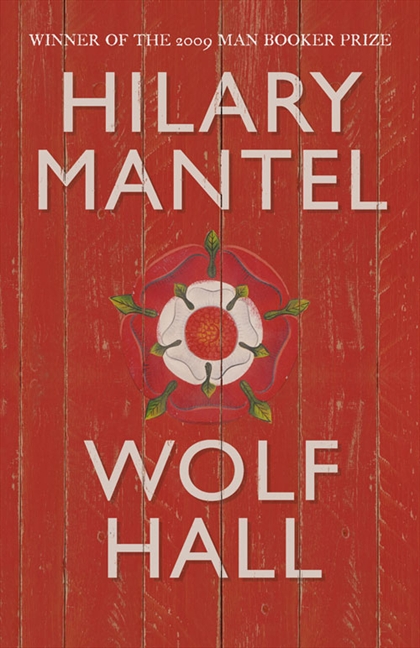
Hilary Mantel, Wolf Hall cover

Cover image (Courtesy: HarperCollins Australia)

I have never really thought of myself as a reader of historical fiction but of course I have read quite a bit of historical fiction, not because I seek it as a genre but because some of the, for want of a better word, literary fiction that comes my way is, also, historical fiction. Take last year’s Booker Prize winner, Hilary Mantel’s Wolf Hall, for example. (This is not my review of it, that will come next week)

A writer of The Guardian Books Blog wrote a little on the topic after the announcement suggesting that historical fiction has regained some “gravitas” in recent years but also recognised:

Writing in 1850, Alessandro Manzoni argued that novelists were different from historians because they give “not just the bare bones of history, but something richer, more complete. In a way you want him to put the flesh back on the skeleton that is history”. This is key, I think, to understanding fiction about the past.

However, the tension between the bones of fact and the fictional flesh can be problematic, as Leon Garfield argued: “Often you have to suppress what you actually know, and do it in a way that doesn’t seem as though you’re doing it, and you can only do that, I find, by being very subjective in your writing.” The historical novel writer is forced to acknowledge the innate fictionality of what they are doing and the way it suffuses everything, even the so-called “facts”.

Here in Australia we had a little furore over an historical novel, Kate Grenville’s The secret river, as I briefly referred to in an earlier post, and it was largely over her suggestion that novelists could add to our understanding of history. I think she understood very well “the tension between the bones of fact and the fictional flesh”: she knows that there are things that history can’t tell us and that there is a place for “imagining” how and why things actually happened, for trying to get in the heads of the people of the times. Sophisticated readers of fiction, I believe, can make this distinction, can understand that it is fiction they are reading while also recognising that this fiction may also contribute to their appreciation of the past.

I’ll probably come back to this again in future posts, but I thought I’d make an observation about how a couple of recent authors have handled presenting to their readers the historicity of their fiction. Salman Rushdie in The enchantress of Florence provides an 8-page bibliography at the end of the book demonstrating the extent of his research and giving his readers the option of following up anything they are interested in. (The fact that this book also includes magical/fantastical material as well doesn’t, I think, deny its historical aspect). Hilary Mantel doesn’t do this, but she provides an extensive list of characters and two family trees at the beginning of the novel. And like many authors of historical fiction she provides an Author’s Note to explain some of her sources and historical decisions. Kate Grenville, though, went one step further: she wrote a follow-up book, Searching for The secret river, which chronicled in detail her writing process for her book and how and why, in fact, she turned it from a biography of her ancestor into an historical novel with a fictional protagonist!

Coffee-time counsel

Crackenback Cottage Maze

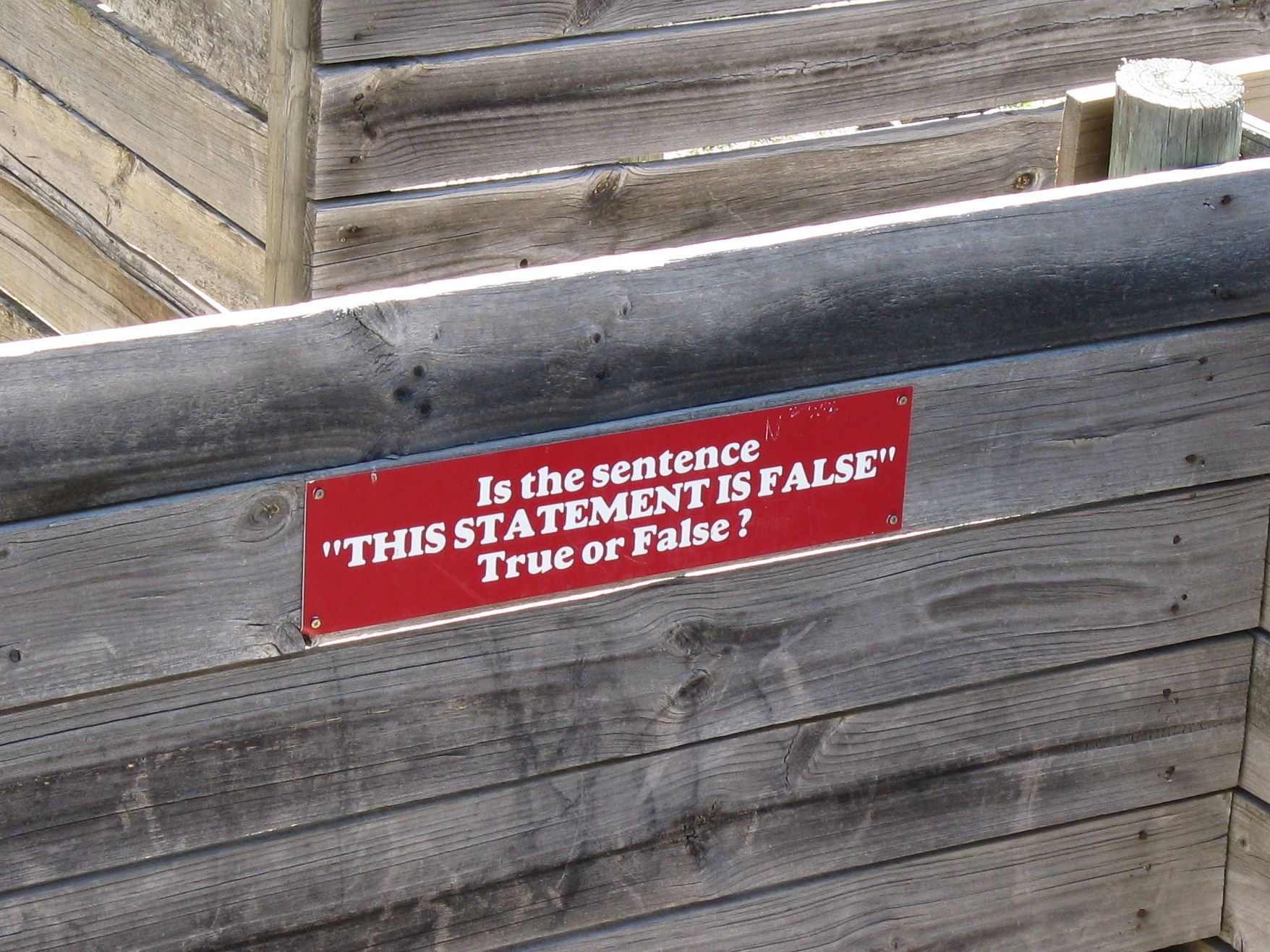
Sign on part of maze

En route to our hedonistic hiking location we traditionally stop for lunch at the historic and delightfully rustic Crackenback Cottage and Restaurant. We’ve noticed over the years that they seem to like to tease their guests with words and ideas…and of course these particular guests are not averse to that!

My first example though comes not from the restaurant but from the maze on its doorstep (in the same complex): See right. Now, that’s a bit too deep for me at lunch time!

But, back to the restaurant. Some years ago, under previous owners, the restaurant’s paper napkins contained the fun little promotion:

There being no place, like this  place, near this place, this must be the place.

And then this year, with the current owners also clearly interested in entertaining their guests, our coffees came with a little quote tucked under the cup. Here are the two we received:

Use soft words and hard arguments. (English proverb).

Fair enough…but then…

Use your enemy’s hand to catch a snake. (Persian proverb)

Oh dear – not such lovely counsel from a pretty cafe! Anyhow, from what I am reading now about the English in Hilary Mantel’s Wolf Hall it would not have surprised me if the latter one had been ascribed to the English. Here is Mantel:

The English will never be forgiven [by the French at least] for the talent for  destruction they have always displayed when they get off their own island…

…and she goes on to chronicle the havoc wreaked by English armies not only against armies but civilians. But this is a long way from coffee-time and hedonistic hiking, and so I shall leave that for another day …

What gives you joy?

I’ve just watched Andrew Denton interviewing Clive James on his Elders program. He asked James what gives him “joy”, and James replied “the Arts”. James said it didn’t have to be anything particular, it could be Marvin Gaye singing “I heard it through the grapevine” or the Adagio from Beethoven’s Ninth Sympathy or a painting by Toulouse Lautrec (whom he apparently adores). What a great answer! Being the eclectic dilettante (to lay it on thick) that I am, I can relate to that … I just hope all those responsible for funding education were watching. The Arts should be absolutely fundamental to any school program. (Now you know one of my soapboxes).

While James didn’t specifically mention books in response to that particular question, the interview did take place in his library. He is said to own 1000s of books. In response to Denton’s question about how we should judge him if we agree with the idea that we “can judge a man (hmm…) by his relationship to his books”, James said:

Intimately involved I should’ve thought. And this is just sort of the outer limit of the books that I own. And that immediately raises the question, not how many of them have you read – cause I really have read most of them, I’ve been alive a long time now – but how many of them will I read again? And if I won’t, why are they here? …[Answering this question he continued] I just like the look of them. I think the civilisation that exists in the book gets into you through osmosis, I like to have them around.

I hope he’s right … about the osmosis I mean! I sure know he’s right about liking to have them around.

Anyhow, anyone like to share what gives them joy?

Kiwis have style!

Kiwi silhouette

Kiwi (Courtesy: OCAL via Clker.com)

Much as I, an Aussie, hate to admit it, those New Zealanders have style! Kimbofo has just posted, on her Reading Matters blog, New Zealand Book Council’s current promo – take a look here. Beautiful isn’t it? It springboards from Maurice Gee’s novel Going west – which reminds me that I really must read the Maurice Gee in my TBR pile soon.

On its website, the Book Council says that its mission is:

to inspire more New Zealanders to read more; to promote reading in general, but particularly to represent and promote New Zealand writing and writers – our own artists, stories and points of view.

I have not read anywhere near as many New Zealand books as I should (would like to, even!), but I have read some, most memorably:

I would recommend all of these, for different reasons. Clearly though, there are some big gaps here: the first one I should rectify is the aforementioned Maurice Gee. And, while talking about New Zealand writers, I have to admit that a few writers we claim as Aussies originated in New Zealand, including much-loved author Ruth Park and the poet and editor Douglas Stewart.

Hmmm…the more I think about it, the sooner we annex New Zealand as Australia’s 7th state the better! I’m sure Lisa at ANZLitLovers would agree!