Monday musings on Australian literature: 1929 in fiction

As many of you know by now, Karen (Kaggsy’s Bookish Rambling) and Simon (Stuck in a Book) run “reading weeks” in which they nominate a year from which “everyone reads, enjoys, posts and shares wonderful books and discoveries from the year in question”. The current year is 1929, and it runs from today, 24 October to 30 October. For the third time now, I have decided to devote a Monday Musings to the week (my previous two being 1936 and 1954).

1929 is a meaningful year for me, because that was the year my dear mum was born. It was, however, meaningful more universally too, given, as most of you will know, the Wall Street Crash came late in the year and ushered in the Great Depression. But, of course, this happened at end of 1929, so won’t be reflected in the books published that year.

My research located books published across all forms, but my focus is fiction, so here is a selection of 1929-published novels:

  • Arthur H. Adams, Lola of the chocolate and A man’s life
  • Martin Boyd, Dearest idol
  • Bernard Cronin, Toad
  • John Bead Dalley, Max Flambard
  • Jean Devanny, Riven
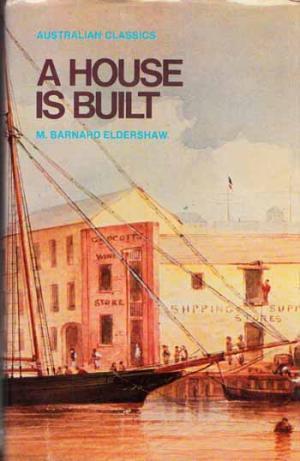
  • M. Barnard Eldershaw, A house is built (John Boland’s review)
  • Arthur Gask, The lonely house
  • Mary Gaunt, The lawless frontier
  • William Hay, Strabane of the Mulberry Hills: the story of a Tasmanian lake in 1841
  • Fred Howard, Return ticket
  • Jack McLaren, A diver went down
  • Frederic Manning, The middle parts of fortune: Somme and Ancre, 1916 (Lisa’s review)
  • Myra Morris, Enchantment
  • Katharine Susannah Prichard, Coonardoo (Posts by Lisa and me)
  • Effie Sandery, Sunset Hill
  • Henry Handel Richardson, Ultima Thule (Brona’s review)
  • Alice Grant Rosman, Visitors to Hugo
  • James Tucker (as Giacomo di Rosenberg), Ralph Rashleigh (Bill’s review)
  • Arthur W. Upfield, The Barrakee mystery
  • Arthur Wright, Gaming for gold
Book cover

By the late 1920s, there was quite a flowering in women’s writing, which continued through the 1930s. This is reflected in the above list, which includes Jean Devanny, Marjorie Barnard and Flora Eldershaw (writing collaboratively as M. Barnard Eldershaw), Mary Gaunt, Katharine Susannah Prichard and the already-established Henry Handel Richardson. Effie Sandery (Elizabeth Powell), Myra Morris and Alice Grant Rosman also appear in the list, but are new to me.

There were very few literary awards at the time, but two that were established in 1928, made awards in 1929: the ALS Gold Medal went to Henry Handel Richardson’s Ultima Thule and The Bulletin’s (unpublished) Novel Competition was won by Vance Palmer’s The passage.

Writers born this year included poet Peter Porter, and novelists Kenneth Cook, Catherine Gaskin, Ray Mathew, and Glen Tomasetti (though she was better known as a singer-songwriter and activist). Deaths included Barbara Baynton, who continues to be the subject of some of my most popular posts.

The state of the art

Of course, I checked Trove to see what newspapers of the time were saying about Australian literature, and fiction in particular.

One of the things that shone through the newspaper articles I read was great enthusiasm to support and promote Australian literature. The papers reported on the meetings of many organisations, including the Australian Literature Society (which originated the ALS Gold Medal), the Queensland Authors’ and Artists’ Association, the Henry Lawson Literary Society of Sydney, and The Royal Australian Historical Society. The papers noted the issues they raised, and what guest speakers discussed. These included:

  • holdings of Australian literature in school, university and public libraries. There was clearly concern about either lack of good holdings and/or lack of promotion of those holdings. Brisbane’s The Telegraph (8 February), for example, reported that the University of Queensland had approved the purchase of books by Australian authors for the University library from the proceeds of Authors’ Week. Further south, Tasmania’s Mercury (6 December) reported that the Australian Natives’ Association* had decided to write to the Launceston Public Library committee, asking them to set aside a section of their library for “works of all descriptions by Australian authors” and to so identify them.
  • support for Australian literature. A couple of papers reported that organisations had expressed appreciation for the support given to Australian literature by newspapers. Melbourne’s Argus (19 March) quoted a speaker at the Australian Literature Society saying that “the best newspapers of the Commonwealth were making a definite attempt to create a literary tradition, and the standard of professional writing was high, despite the fact that writers appeared to be paid in inverse ratio to their qualities” [my emph]. The Sydney Morning Herald (11 June) repeated similar praise from the Henry Lawson Literary Society which said that “opportunities for Australian writers had been greatly extended by the interest displayed by Australian newspapers and journals prominent among which were the Sydney Morning Herald and the Bulletin. On the other hand, Melbourne’s The Age (16 March) wrote of Australian Literature Society’s point that “more is required of the public than a passive loyalty”, while the above quoted Argus wrote of the public’s “indifference”.
  • lectures on Australian literature. Papers also reported on various lectures given on Australian literature. The Australian Worker (28 August) promoted a series of three to be given by author, editor and critic A.G. Stephens. It was organised by the University Extension Board “in response to numerous requests for lectures on literary subjects”. His topics were Australian Poetry, Australian Humor, and Australian Literature.

This is just a small taste of the sorts of discussions of Australian literature that occurred throughout the year. The final recurring issue I want to share concerned the quality of Australian literature – to date.
Book cover

Journalist Firmin McKinnon had strong views about Australian literature, and I have reported on him before. Then, 1934, he was still speaking about what he was arguing in 1929, which was how “behind” Australian literature was compared with the settler societies like Canada and South Africa. Brisbane’s The Telegraph (6 August) reported on a lecture he gave, in which he pronounced that:

Australian novelists have failed in the main because they have no definite attitude towards life that is worth writing about, because many of the characters are unreal, and because they have failed to interpret the great soul of the real Australia.

He did, however, praise two novels from my list above. One was John Dalley’s Max Flambard, which he described as

the best novel yet produced of Sydney and suburban life, failing only because he had given his novel a tinge of satire which detracts from a true interpretation, and depicts snobbery as the dominating feature of suburban life.

Oh dear, we can’t be satirical about Australia? But, he saves his best praise for the one he sees as “the greatest Australian novel”:

“A House is Built,” by Miss Eldershaw and Miss Barnard. … while it may be too long and too particularised for the average reader, it was a story of the reconstruction of the past, covering the history of Sydney for half a century.

Overall, though, he argues that Australian literature to date was lacking a “definite constructive outlook towards life”. McKinnon was firmly of the opinion, as The Queenslander (6 June) reported on an earlier address, that

some writers unfortunately wallowed in the realism of misery, forgetting that misery was not a dominant feature of Australian life, but light-hearted optimism and courage.

Australian writers “must”, he told the meeting, “tell a story true to Australian life”. I think I’ll leave you with that little thought!

Additional sources:

* Natives, here, meaning “white” Australian-born, not First Nations people, an appropriation issue that was commented on by later historians.

Meanwhile, do you plan to take part in the 1929 Club?
Bernard Cronin, The last train (#Review, #1954Club )

Bernard Cronin (1884-1968) has featured in this blog a couple of times, but most significantly in a Monday Musings which specifically featured him. He was a British-born Australian writer who, in his heyday in the 1920s to 40s, was among Australia’s top 10 most popular novelists. And yet, along with many others of his ilk, he has slipped from view. However, I did find a short story of his published in 1954 so decided this was my opportunity to check him out.

The reason I wrote my Monday Musings on Cronin was because in 1920 he founded (with Gertrude Hart) the Old Derelicts’ Club, which later became the Society of Australian Authors, but I have mentioned him in other posts too. For example, in one post, I noted that in 1927, Tasmania’s Advocate newspaper had named Cronin as being “amongst the leaders of Australian fiction”. And, in my post on Capel Boake I shared that he had written collaboratively with Doris Boake Kerr (aka Capel Boake) under the pseudonym of Stephen Grey. In fact, he used a few pseudonyms, another being Eric North, which he used for his science fiction. Cronin wrote across multiple forms (publishing over twenty novels as well as short stories, plays, poems and children’s stories) and genres (including historical fiction, adventure stories, metropolitan crime fiction, romances, and science fiction and fantasy).

Wikipedia’s article on him includes a “partial” list of his works, with the earliest being The flame from 1916, and the latest novel being Nobody stops me from 1960. What the list tells us is that his most active period occurred between 1920 and 1950, so the story from 1954 that I read comes late in his career.

I had initially chosen a different story, “Carmody’s lark”, which was published in late 1954 in several newspapers, but belatedly discovered that one paper had printed it in 1951! Wah! Fortunately, I found another, “The last train”, that, as far as I can tell, was first published in newspapers in 1954. They are very different stories, the former being a character piece about a lonely suburban railway worker whose friends notice a change in behaviour and think he’s finally found a woman, while the latter is a more traditional suspense story set, coincidentally, on a surburban train. Both convey subtle wordplays in the their titles.

“The last train” picks up that conversation-with-a-stranger-on-a-train motif, a conversation that will change the life of the protagonist. It’s midnight, and a “nondescript little man in sports coat and baggy slacks” rushes onto the train at Ringwood in the outer suburbs of Melbourne heading for the Dandenongs. There’s a broken light in the carriage so it’s (appropriately) dim. He thinks he’s alone until he notices “a man in a rather comical misfit of hat and light raincoat”. He’s “slumped forward with his elbows on his knees, staring at him”.

Now, our “little man” has had a rather dramatic night. The story continues …

there was nothing in the least sinister in the indolent down-at-heel looks of his solitary companion. He seemed, indeed, exactly the type preyed on by the garrulous; and the newcomer, who was shuddering deliciously with a sense of rare importance, instinctively shifted over to the corner immediately opposite him.

You have probably worked out already that all is not as our “little man”, as he is repeatedly described, thinks. The story builds slowly, starting with a bit of general chat that, if you are looking for it, already contains little hints of menace. But, our “little man” blunders on, ostensibly uncertain at first but in fact keen to tell of his experience that night, while the “other man” listens, gently encouraging him on. Too late does our “little man” realise the truth of the matter, but the story ends there, leaving it to the reader to imagine the rest from the clues given.

Lest you be thinking, it is not the same story as Patricia Highsmith’s 1950 novel, Strangers on a train (adapted by Hitchcock into a film of the same name). And it is not like Christie’s earlier 1934 novel, Murder on the Orient Express. However, it is a well-told, if traditional, suspense story, that is typical, I’d say, of 1950s popular crime fiction and perfect for a newspaper readership. (Whatever happened to the inclusion of short stories in newspapers?)

And that, I think, is the best I can do for Karen and Simon’s #1954Club.

Bernard Cronin
“The last train”
in Maryborough Chronicle (Maryborough, Qld)
22 November 1954
Available online

Monday musings on Australian literature: 1954 in fiction

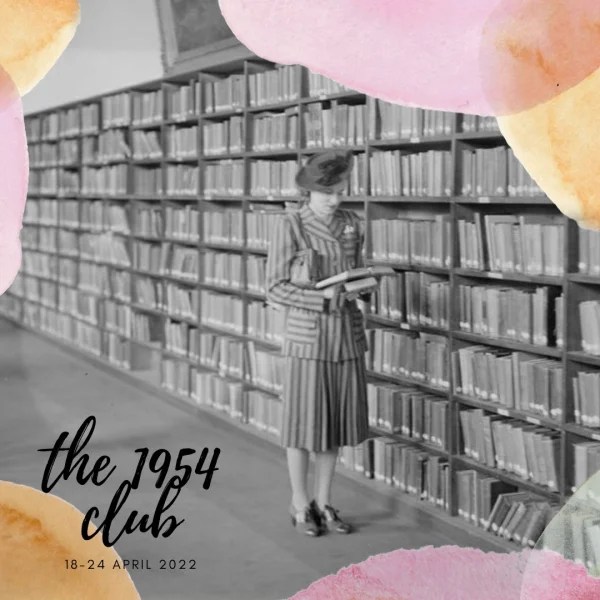
Some of you know that Karen (Kaggsy’s Bookish Rambling) and Simon (Stuck in a Book) run “reading weeks” in which they choose, somewhat randomly, a year from which “everyone reads, enjoys, posts and shares wonderful books and discoveries from the year in question”. The next one is 1954, and is happening this week, 18-24 April.

I’ve taken part a couple of times, the first time being the 1936 Club for which I also wrote a Monday Musings. I’ve decided to do this again for 1954.

By 1954, World War 2 was over, and the now infamous baby-boom was well underway. Australia was welcoming migrants from war-torn Europe and life was, generally, looking good. However, the war was still close, and the Cold War was being well felt. The war featured heavily in popular literature, but writers were also looking at who we were as Australians, and at our near neighbours.

My research located a variety of books published that year across all forms, but to keep this simple, I am going to focus on fiction. Here is a selection:

  • Jon Cleary, The climate of courage
  • Dale Collins, Storm over Samoa
  • L.H. Evers, Pattern of conquest
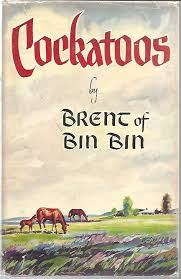
  • Miles Franklin (as “Brent of Bin Bin”), Cockatoos (Bill’s review)
  • Catherine Gaskin, Sara Dane
  • Nourma Handford, Coward’s kiss
  • T.A.G. Hungerford, Sowers of the wind: A novel of the occupation of Japan
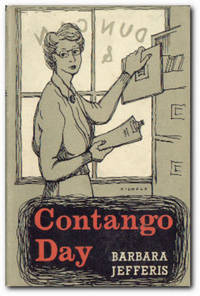
  • Barbara Jefferis, Contango Day
  • Eric Lambert, The veterans and The five bright stars
  • Henry George Lamond, The manx star
  • Eve Langley, White topee (Bill on The pea pickers and White topee)
  • Kenneth Mackenzie (as “Seaforth” Mackenzie), The refuge
  • Alan Moorehead, A summer night
  • Tom Ronan, Vision splendid
  • Arthur Upfield, Death of a lake
  • Judah Waten, The unbending
  • Don Whitington, Treasure upon the earth

Many of these authors have been forgotten, while others, like Alan Moorehead, are more remembered for their non-fiction work. Some, like Jon Cleary and Arthur Upfield, were successful writers of popular fiction, and are still remembered, albeit probably little read. Women are less evident here, than they were in 1936.

However, this list also includes some significant “literary” writers, like Miles Franklin, Eve Langley and Judah Waten, and others who are remembered today for awards established in their names, T.A.G. Hungerford and Barbara Jefferis. I like the sound of Jefferis’ debut novel. It was set during a single day in Sydney about Miss Doxy, a confidential filing and records clerk. The Barbara Jefferis Award was endowed by her husband in 2007 to commemorate her. 

There were very few literary awards at the time. One that did exist, the Australian Literature Society Gold Medal, was awarded in 1954 to poet Mary Gilmore for her collection Fourteen men.

Writers born this year included two poets, Kevin Hart and Dorothy Porter, and the novelist Kerry Greenwood. Deaths included, significantly, Miles Franklin.

Overland magazine, to which I often refer, was established in 1954 by Stephen Murray-Smith and Eric Lambert, who had also co-founded, with Frank Hardy, Melbourne’s Realist Writers’ Association.

The state of the art

Of course, I checked Trove to see what newspapers of the time were saying about Australian literature, and the fiction in particular.

Some specific issues

A recurring issue was the cost of books in Australia. A brief article in Adelaide’s Advertiser (January 25) reports on a visit to Australia by Desmond Flower of the large British publisher Cassell & Co. Flower said that English publishing costs had dropped slightly because of reductions in the price of cloth and paper, and the cost of printing was also likely to fall which should bring book prices down in England, “and consequently Australia”. (As an aside, he also noted that book business in Australia had trebled since 1939, which represented a greater increase than anywhere else in the Empire.)

Another discussion concerned the Little Golden Books, and Americanisation of Australian culture. (Nothing new, eh?) Jill Hellyer writing in the Tribune (July 21) argues not only that these cheap books had “pushed Australian authors even further from their precarious position”, when there are excellent Australian books available, but that the books were “full of loose phrases, bad grammar and cheap American slang”. She admits some in the series are good, but is particularly scathing about the Disney versions of classic children’s stories. There was a riposte, in the Tribune (August 11) from a “West Australian mother” who argued that “it is possible to select, from among these books, ones that can be good and useful for our children”. She didn’t mind ‘reading the words “sidewalk” or “cookies” because it provided her the “opportunity to explain this is how people talk in America”. From her point of view, these understandings help us get to know other people and cultures. However, while she disagreed with Hellyer’s specific cultural concerns, she agreed that “some [Golden Books] are very unpleasing, notably the ones based on Walt Disney’s films that were mentioned by the author of the article”.

Censorship was also discussed. The highly-respected Australian librarian John Metcalfe was quoted in Sydney’s The Daily Telegraph (August 10) as arguing against proposals (from both the right and the left) to extend censorship. The particular target was comic strips and books believed undesirable for children. Censorship, he said, is against the “liberal tradition” and was a “negative approach to the problem”. The Children’s Book Council, he said, “shows that a positive approach can be made in encouraging children to tackle a better type of literature.”

Similarly, a commentator in Wagga Waga’s Daily Advertiser (September 2) expressed concern about plans to extend censorship. Accepting that there there was a “a plethora of cheap and sexy trash on the market” and “an emphasis in some publications on crime and violence”, and agreeing that these can present “a danger to the younger generation and the lesser intellects [defined how?] among the adults”, this commentator believed that “a ban on ‘obscene’ literature is too dangerous to be countenanced”, and goes on to argue the case. There must be other ways, our commentator says, because

Once books are banned or burned, freedom is on the way out.

Some specific books

I could write screeds on reviews of particular books – even though I only read a tiny percentage of the articles I retrieved in Trove – but that’s not practicable, so, I’ll just share a few.

Brent of Bin Bin’s Cockatoos was much approved – and was also recognised by then as the work of Miles Franklin. IM (Ian Mair?) summarising the year’s books in Melbourne’s The Age (December 11) wrote “In the year’s fiction, first must come The Cockatoos … Like all her novels of country life, it has a wonderful feeling for place and period”. Earlier in the year, the writer of the Books Received column in Townsville’s Bulletin (April 18), wrote:

The theme is the universal one of the conflict between the artist and the practical majority who do not take the arts seriously, but the novel is also another Brent of Bin Bin’s memorable recreations of place and period in Australian country life. It is concerned particularly with the problem if the “exodists” — the restless young Australians who fifty years ago sought art of adventure, and in so doing suffered uprooting and exile. 

Oh dear – “the practical majority who do not take the arts seriously”!

There’s superlative praise for popular writers of the time like Jon Cleary and EV Timms. T.A.G. Hungerford‘s Sowers of the wind was also much liked. Interestingly, Wikipedia says that this novel won the 1949 Sydney Morning Herald prize for literature but was held back by publisher Angus & Robertson until 1954 “because it dealt with the economic and sexual exploitation of the Japanese after the War by Australian occupation forces”.

But I’ll save my last discussion for Eve Langley’s White topee. There were many reviews for this book, which continues the story of Steve from The pea pickers, but most seemed to be variations on a theme, which is to say, they praised its creativity but expressed some uncertainty too. Langley remains a challenging author for many, but her contemporary reviewers did value what she offered.

The Newcastle Sun’s (August 5) reviewer perhaps puts it best, opening with

It is impossible to judge White Topee by Eve Langley according to the established standards as the author has embarked upon the adventure of writing in a way that is completely original and individual.

The review uses headings like “poetic passages”, “heady style”, and “impressionistic”, but also gets Langley:

There are so many strands in this study of the country that the author’s impressions come tumbling with enough dazzling rapidity to suggest eccentricity, but the work on closer examination is revealed to be composite and, the result of shrewd observation and searching frankness.

M.P. in Queensland Country Life (August 5) is more measured, writing that it “could have been an outstanding book” but “is full of ego”. M.P. admires much in Langley’s passion and the writing:

Her love of Australia is deep and emotionally strong, and on the too rare occasions when Eve Langley forgets the poets and calls on her own descriptive powers she gives passages that, with their beauty and strength, are pure classics.

M.P. concludes that when Langley “extricates herself from the morass of sentimentality and confusion of mind she will write a book that is truly great”.

R.J.S., reviewing in Cairns Post (August 14) admired the book. S/he starts by saying “it has brilliant descriptive passages and much originality of thought but lacks a plot and is not a novel when judged by the usual standards”. S/he make a strong case for the work’s value:

To date no one has interpreted Australia and its people as Miss Langley has done in “White Topee.”

R.J.S. advises that the novel “cannot be skipped through” and suggests that “the careful reading it deserves will disclose that the writer has opened a new furrow in the field of Australian literature”.

I’ll leave White topee there, and will conclude my introduction to 1954 in Australian fiction with popular non-fiction author, Colin Simpson, who is quoted in Grafton’s Daily Examiner (December 23) as saying:

If one person in three would make one of his or her Christmas gifts a book by an Australian author, that could sufficiently enlarge the market to make authorship economic for more than just a few of us. The effect on our national literature could be very considerable.

Plus ça change?

Additional sources:

Meanwhile, do you plan to take part in the 1954 Club?

Jane Sinclair, Shy love smiles and acid drops (#BookReview)

Jane Sinclair’s hybrid biography-memoir, Shy love smiles and acid drops: Letters from a difficult marriage, is an unusual book. Covering around two years in her parents’ life, this book comprises, mostly, letters sent between her parents between April 1960 and July 1962 when Sinclair and her mother were in England while her father remained in Australia. Between the letters (and some entries from her mother’s journal), Sinclair adds explanatory information, which ensures the narrative flow.

Sinclair was 5 to 7 years old when these letters were written. Being so young, her memory of that time is scattered, but she has clearly thought much about her parents in her adult life. Also, she remembers family stories of those times told to her later, and she did discuss her parents’ relationship with them, though, as is the way with such things, not as much as she wishes she had. The book was inspired by her finding the letters that underpin this book.

What makes this book particularly interesting is who her parents are, the artist Jean Langley and music critic John Sinclair. You may or may not have heard of them, but these two were part of mid-twentieth century Melbourne’s arts and music scene. In particular, they had close connections with the Heide artistic community, which inspired Emily Bitto’s award-winning novel, The strays (my review), and which was created by two art-lovers and philanthropists, John and Sunday Reed. This community was famous for two things, the art produced there and the complicated personal relationships amongst its members.

Some of Australia’s best-regarded modernist artists were associated with Heide, people like Albert Tucker, Sidney Nolan, and Joy Hester, all of whom appear in this book. Artist Arthur Boyd was also close to these people, though not part of the community. However, Heide was just as well-known, as Wikipedia puts it, for “the intertwined personal and professional lives of the people involved”. Sunday Reed herself had affairs with several in the community, with her husband’s knowledge. This art history is what primarily attracted me to the book, but it was the background rather than the focus that I’d hoped. Instead, Shy love smiles and acid drops is exactly what it says it is, the story of “a difficult marriage”. As we are told on the back cover

when Jane Sinclair was five her mother Jean Langley followed her lover, Arthur Boyd, to London and took Jane with her. This book covers the two years they live there before returning to Australia in 1962, by which time her mother is three months pregnant to an Englishman.

“Your letter makes me cross” (Jeannie)

The letters are difficult reading because of the emotional pain and distress they contain. There are some fascinating insights into London and England at a time when many Australians saw it as a mecca for arts and culture. Indeed, while Jean Langley was there, living near the Boyds, so were their friends, Barry Humphries and his wife.

In her introduction, Sinclair speaks of how the letters caused her to “seriously question” her mother’s “version of herself as the aggrieved, wronged wife that she had cultivated and genuinely believe to be true”. Sinclair was also sorry that she had never allowed her father, who died twenty-five years before her mother, to tell his side of the story. This is understandable given when he died, she had probably not reached that age of (hopefully) wise reflection many of us do later in our lives, that age when we start to really see our parents as human beings, rather than seeing them through the prism of their relationship with us. I think this is so, in even the best of parent-child relationships?

Anyhow, Sinclair tells us that her parents’ relationship was “intense and difficult” from the start. They separated many times, but “there remained an irresistible attraction that kept them returning to each other”. Eleven years of age separated her mother and father, but it seems that personality difference (“not compatible emotionally”) was the essential problem. John Sinclair apparently tended to melancholy and depression, while Jean Langley was a romantic. “She could create sparkle and shine” and “wanted the world to be a beautiful place of happy endings”. All this comes through the letters. John expresses his sadness, his missing his wife and daughter, while Jeannie expresses her frustration with him, and her increasing disappointment with life and human beings, as things become more and more complicated. The England she adored at the beginning of her trip is not so great when it becomes cold and grey, and as the reality of never having enough money sets in.

“a riddle, muddle, fiddle, diddle” (Jeannie)

But what comes through even more is miscommunication, and particularly what seems to be Jeannie’s wilful misreading of John’s letters. When he invites her to return home on her terms – meaning she can live separately from him if she wishes – Jeannie seems to misread that wilfully, insisting again and again that she can’t be his wife, she won’t sleep with him, and so on. Readers wonder where she reads this, because we don’t.

At times, I put my feminist hat on and wondered whether there was something about John that we don’t know. Should I be supporting my down-trodden sister, I started to wonder? But, while there are, naturally, gender issues to do with women’s place in the mid-twentieth century, I don’t read a woman wronged by her husband here. I read a woman who, due to her own personality, and upbringing perhaps, regularly let emotion cloud her ability to reason – to her own detriment as well as those around her. She falls in and out of love twice during this English sojourn – besides the apparently abiding love for Arthur Boyd – and admits in June 1962 that, “I seem to have made a mess of my emotions”.

As the narrative progresses, daughter Jean notes that her mother, who liked to see herself as truthful, strayed often from it:

My mother believed in her emotional truth, and unfortunately for my father, it was sometimes very far from reality.

Reading this, I think I would say more than “sometimes”. I have known people like Jeannie, people who have such a zest for life but who wear their emotions so close to the surface that they can’t reason through what is really happening. They can be both joyful and draining to be around, and this is how Jeannie comes across.

This is not my usual review, because, in a sense, it’s hard to review such a personal book. Indeed it’s so personal that it’s worth thinking about its target. There’s some interesting social history here – life in the 60s, the experience of Aussie artistic expats in London, the challenges of communication in those pre-electronic communications days. There’s also a little about the the art world, the odd reference to a Boyd or Nolan exhibition, to the Blackmans, and to Brett Whiteley whom Jeannie calls “a shocking little upstart”. But, overall, this is a nicely presented but intense story of a “difficult marriage”, and it will appeal mostly to those interested in human relationships.

Read for #ReadIndies month (kaggsysbookishramblings and Lizzy’s Literary Life). Hybrid is a Melbourne-based independent publisher, with a special but not exclusive interest in Judaica. I have reviewed many of their books over the years.

Jane Sinclair
Shy love smiles and acid drops: Letters from a difficult marriage
Melbourne: Hybrid Publishers, 2021
279pp.
Cover art: from oil painting by Jane Sinclair
ISBN: 9781925736588

(Review copy courtesy Hybrid Publishers)

Monday musings on Australian literature: Two new indies

This month – February* – has been designated #ReadIndies month by two British bloggers, Karen (kaggsysbookishramblings) and Lizzy (Lizzy’s Literary Life). The rules are simple: “read anything you like, in any language you like, as long as it was published by an independent publisher”. This is not a difficult reading month for me to take part in, as the majority of my reading comes from independent publishers.

However, the question is, what is an independent publisher? Karen and Lizzy admit that it’s not easy to define, but they mean smaller outfits that print and issue their own works, and aren’t part of a larger conglomerate. In Australia, the Small Press Network (about which I’ve written before) is a good place to start. In the end, Karen and Lizzy suggest “going with your gut”. They also say, quite rightly, that most independent publisher websites will proclaim their independence. I have written a few times about independent publishers. You can find most of these on my Small Publishers tag. In those posts, I’ve named many small and independent publishers. In this post I’m adding two very new publishers which launched during the pandemic: Ultimo Press and Upswell. What a funny coincidence that both start with U!

Ultimo Press

“to be distinctive, a little bit different, to disrupt and to have fun.”

Launched in 2020, Ultimo Press is an independent publisher with the simple ambition of becoming “home to Australia’s best storytellers”. They say they are part of Hardie Grant Publishing (which is now a reasonably large, diverse business with offices worldwide), making me wonder what they mean by “independent”. However, Hardie Grant describes itself as “independent” and “Australian-owned”, so I’m going with it.

Most Australians will assume, rightly, that Ultimo’s name comes from the Sydney suburb, but here is how they describe it:

Named for the Sydney suburb that houses Hardie Grant’s Sydney office, Ultimo references our home – an historic and colourful part of Sydney. The Italian translates roughly to ‘the latest’, and that will be our ambition: to provide a platform for the latest trends and newest voices.

The staff has some extensive industry cred, as the Who We Are page shows.

They “want to excite readers of general and literary fiction (especially the sweet spot in between), and discover non-fiction that inspires and ignites”. Their “hallmarks will be editorial excellence, arresting design, dynamic marketing and publicity, respect and loyalty to our authors, and publishing compelling new voices and original perspectives that reflect the full spectrum of Australian life”.

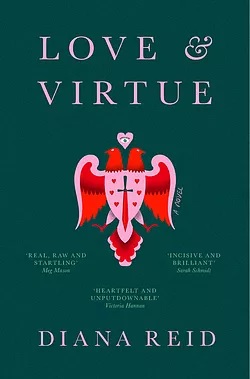
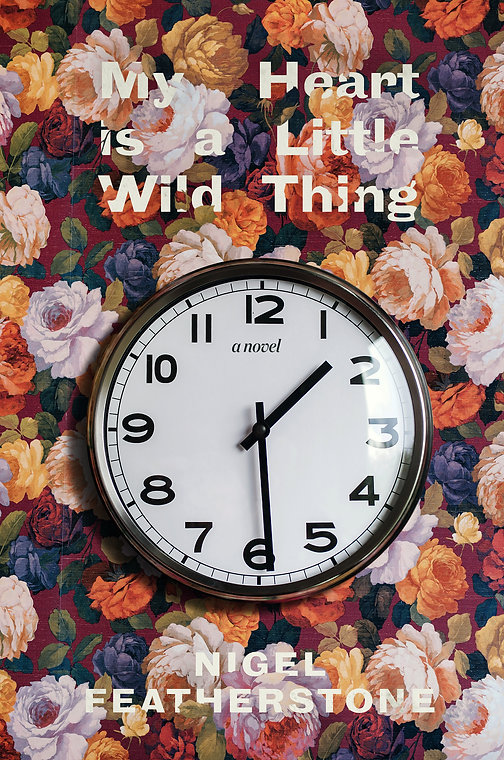
They have certainly started with a bang, with some of their books already making a splash, like Diana Reid’s Love and virtue (which I gave Daughter Gums for Christmas and she loved) and Shankari Chandran’s Chai time at Cinnamon Gardens. They’ve published Claire G. Coleman, and coming up is Yumna Kassab’s Australiana (March 2022), and local writer Nigel Featherstone’s latest novel, My heart is is a little wild thing (May 2022). Regular readers here will be familiar with Featherstone’s warm, expressive writing.

Ultimo certainly looks like a new indie to watch, as does …

Upswell

“where have all the adventurous readers gone?”**

Launched in 2021, Upswell is, you could probably say, a passion project, but it’s the passion project of someone with significant cred too. Director Terri-ann White ran UWA Publishing from 2006 until mid-2020. During that time she was responsible for significant publishing output across the genres, but, for litbloggers like me, especially for some great literary fiction and creative non-fiction. Josephine Wilson’s Miles Franklin Award winning Extinctions (Amanda’s review) and Jessica White’s hybrid biography-memoir, Hearing Maud (my review) are just two examples of too many to name.

Upswell is a not-for-profit company, with its directors being three impressive women, Carmen Lawrence, Linda Savage and White.

Like Ultimo Press, White wants to publish distinctive works, but puts it this way. She will publish

a small number of distinctive books each year in, broadly, the areas of narrative nonfiction, fiction and poetry. I am interested in books that elude easy categorising and work somewhat against the grain of current trends. They are books that may have trouble finding a home in the contemporary Australian publishing sector.

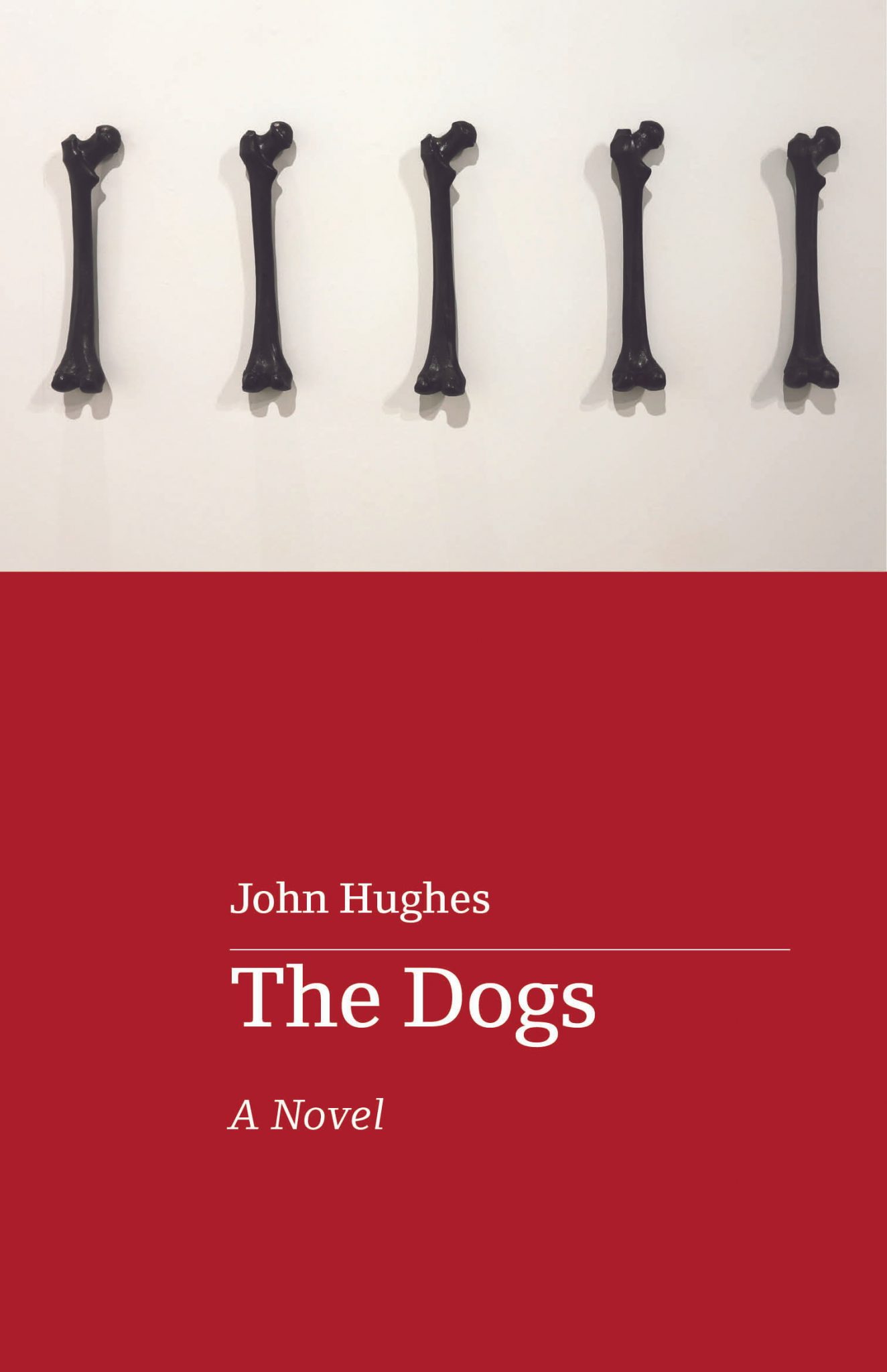
She’s shown, with her early list, not to be afraid of forms that often scare off the big publishers, like novellas, essays and poetry. And, like Ultimo, Upswell has started well with one of its first books, John Hughes’ The dogs (Lisa’s review) being shortlisted for last year’s Victorian Premier’s Literary Awards (not that awards are the only – or main – marker of excellence.)

Upswell is also distributing a bit differently. Of course, individual books can be bought from them directly or from booksellers, but they also have a subscription program, which Lisa and I took part in last year, receiving their first three books: John Hughes’ The dogs, Belinda Probert’s Imaginative possession and Vietnamese-American author Monique Truong’s The sweetest fruit. This year they are offering several subscription packages, which is a great option. You get to support an excellent publisher by providing them some certainty and you get little surprises during the year.

This isn’t the only different thing, however. Upswell also has DGR status, which means that (Australian) donations to them are tax-deductible. Donations will support their Regional Writing and Publishing Workshops, Mentorships with White, a strong poetry list, and their Noongar Voices program.

So, two new indies to add to the ever-growing list of wonderful indie publishers in Australia. Do support them when you can – and, the bookshops which stock (and feature) them. If you don’t see them at your local bookshop, talk to the bookseller. A personal touch is a powerful thing.

Finally, a little aside just in case you are interested, Marcie (Buried in Print) is running a Read Indies series on her blog, in which she is devoting posts to individual Canadian indies.

* The “month” has been extended to 15 March.
** From an article by Terri-ann White in SeeSaw magazine

Nonfiction November 2021: New additions to my TBR

Week 5 of Nonfiction November … whew, made it to the end, and it wasn’t so hard!

Nonfiction November, as of course you know, is hosted by several bloggers, with week 5 hosted by Jaymi at The OCBookGirl:

It’s been a month full of amazing nonfiction books! Which ones have made it onto YOUR TBR? Do we have any of the same ones?

Be sure to link back to the original blogger who posted about that book!

I wrote in my first Nonfiction November post that I wasn’t looking to add to my TBR, but of course it can’t help but happen. Over the month I’ve seen many, many books that appealed to me and that I’d love to read, but I really can’t add increase my TBR. However, I couldn’t call myself a keen reader if I didn’t add just a couple, so here are a few that REALLY tempted me:

Book cover
  • Graphic nonfiction: I commented on Words and Peace Emma’s post that I am not much of a graphic fiction reader, let alone graphic nonfiction, but some of the books she listed did grab my attention, like Grant Snider’s I will judge you by your bookshelf. What reader doesn’t sneakily do this from time to time?
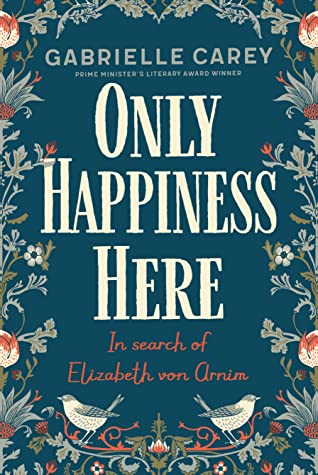
  • Literary biography: I do love literary biography, and a few came up this month. Mallika (Literary Potpourri) gave me Paula Byrne’s The adventures of Barbara Pym; Brona (This Reading Life) gave me one I already had in my sights, Gabrielle Carey’s Only happiness here (on Elizabeth von Arnim); and didn’t someone share Bernadette Brennan’s Leaping into waterfalls about Gillian Mears? If not, they should have, because I want to read it, so I’m including it here.
  • Nature writing – Trees: With a name like Whispering Gums I have to be a bit of a sucker for trees, so I did love Readerbuzz Deb’s Be the expert post on trees. Every book in her list appealed, from forest bathing to books discussing famous trees.
  • More nature writing: Brona also gave me (in the previously-linked post) a book that deviates somewhat from my usual reading, but that I thought might capture my reading group’s attention for our schedule next year. It didn’t, but I’ll keep it on my list: Raynor Winn’s The salt path. And, Kate (booksaremyfavouriteandbest) reminded me that I still want to read Rebecca Giggs’ Fathoms (about whales).
  • Social issues/Race: Liz (Adventures in reading, running and working from home) shared two books that provoked much thought for her (and for others whom I know have read them): Robin DiAngelo’s White fragility and Layla F. Saad’s Me and white supremacy.

A small list, I know, but more than I intended, to which I owe a big thanks (I think) to the 5 hosts of Nonfiction November 2021 – and all the bloggers who took part and shared your reading. It’s been fun, and edifying!

And now, I’d love to hear whether you added any books to your TBR pile from our blogosphere Nonfiction November month?

Nonfiction November 2021: Stranger than fiction

Week 4 of Nonfiction November … rolling right along …

Nonfiction November, as you surely know by now, is hosted by several bloggers, with week 4 hosted by Christopher at Plucked from the Stacks:

This week we’re focusing on all the great nonfiction books that *almost* don’t seem real. A sports biography involving overcoming massive obstacles, a profile on a bizarre scam, a look into the natural wonders in our world—basically, if it makes your jaw drop, you can highlight it for this week’s topic.

This is a new addition to the Nonfiction November weekly prompts, which is exciting, even for me who hasn’t done this month assiduously in the past. But, how to respond?

What comes to my mind when I think “stranger than fiction” are those coincidences (and the like) that happen in real life that a fiction writer could never get away with. Christopher, though, has taken a broader view, including things like “overcoming massive obstacles”. My problem is that although I’ve read the same amount of nonfiction this year, as last, none of it really seems to fit his description, but I’ll see what I can do about fitting my reading to the theme.

Stranger than fiction: 1, Overcoming massive obstacles

Wendy and Allan Scarfe had to overcome many political, personal and cultural obstacles in supporting a poor Indian village,particualrly in terms of improving educational opportunities, in their memoir, A mouthful of petals (my review).

But, when I think about overcoming obstacles in my reading this year, I have to go to Marie Younan, and her memoir A different kind of seeing (my review).

The story of how she lost her eyesight – the coincidences and lack of knowledge, among other things, that resulted in her losing her eyesight when a young child, and then the ongoing ramifications of this which meant that she did not get the right treatment, later, which may have restored some of her eyesight – is a tragic story.

The story of how she finally managed to migrate to Australia to join her family, having been rejected more than once because of her blindness, is a disgraceful indictment on Australia’s immigration system.

The story of how she, as an adult, found a person (or, he found her), who recognised her needs and who nurtured and gently pushed her into becoming literate – to learn Braille, mix with people, learn English – so that she eventually found employment and became independent, is an inspirational story.

So, yes, Marie Younan had to overcome massive obstacles to get to where she is today. It’s a story that would be hard to make believable in fiction.

Stranger than fiction: 2, Diary as therapy?

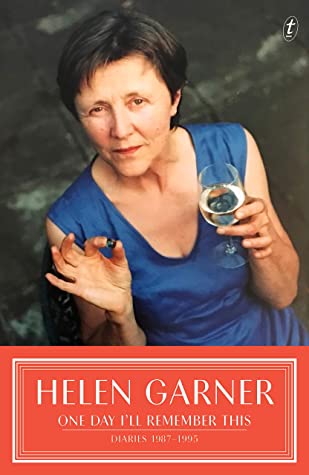
Thinking about this topic, though, I realised that Garner’s diaries are perfect, besides the irony of reading her actual diaries when her novels, her fiction, have been criticised as “just” her diaries. Does this make the point moot?

If I soldier on, though, I am a little anxious about what I’m going to say next, because I am presuming to criticise another person’s life choice, in this case Garner’s “strange” relationship with “V”. He is the man who becomes her husband during the second volume of her diaries, One day I’ll remember this (my review). I feel anxious, but I also feel it’s ok because Garner wrote about it, and because we know the outcome, so I’m not exactly saying anything new.

The point is that the relationship turned out disastrously for Garner, and anyone reading the diary could surely see that coming. If this were fiction – besides Garner’s of course, her diaries being the stuff of her fiction, says she cheekily – I would have been hard-pressed to believe the relationship. There just seemed to be too much angst, too much difference between them, for it to work.

However, here’s the thing. What do we write in diaries? Mostly our angst? Of course, diarists will occasionally write the really happy stuff, and, those diarists who are writers, will also often jot down ideas, observations and inspirations. Mostly, though, we write out our angst. We get it out of our hearts and onto the page, which makes us feel better. Diary as therapy, in other words. Taking Garner’s diaries in this context, and knowing too that she’s edited them, we cannot presume to know the whole of her relationship with “V”. However, looking at it purely on the basis of what we read, the fact that they ever married does seem “stranger than fiction”. I think that’s fair enough for me to write.

And now, I’d love to hear how YOU would answer this question. Sock it to me! I’ll believe you!

S-S-S Snake, Kate Jennings’ Snake, that is

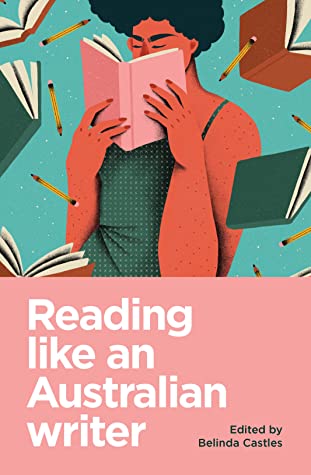
I thoroughly enjoyed Tegan Bennett Daylight’s essay on Helen Garner’s Cosmo cosmolino (1992) in Reading like an Australian writer. Consequently, I plan, over time, to read and share other essays in this book – at least those discussing books I’ve reviewed here. As it happens, there is an essay by Debra Adelaide on Kate Jennings’ Snake (my review), and it’s the perfect next cab off the rank. Not only have I already posted this year on Erik Jensen’s longer essay on the book in the Writers on writers series, but Snake is a novella, so I’m using this post as a contribution to Cathy’s (746books) Novellas in November. I hope that’s not too cheeky.

I’ll start, though, by introducing Debra Adelaide. A novelist with a few books under her belt, including The women’s pages which I’ve reviewed, she first became known to me through her work on early Australian women writers, her Bibliography of Australian women’s literature, 1795-1990 (1991) and A bright and fiery troop: Australian women writers of the nineteenth century (1988). Like many writers, she also teaches creative writing, and Snake is one of the texts she regularly sets.

So Snake – for those who don’t know – draws from Jennings’ life, and tells the story of a lively, imaginative woman, Irene, who marries a decent but boring man, Rex. It cannot work, and the consequences are dire.

Jensen’s and Adelaide’s essays are very different. This is partly because Jensen’s, being in the Writers on writers series, focuses on the writer, whilst Adelaide’s in Reading like an Australian writer focuses on the reading and writing. Not surprisingly, the approach Adelaide takes is closer to mine – except that her writerly perspective is more astute, centred and expository.

The elastic novella

Early in her essay, Adelaide specifically address its form as a novella, saying that Snake demonstrates “how wonderfully elastic the novella can be”. In Snake‘s case, it is “so elastic that it can almost be prose poetry”. It is also “audaciously” abbreviated. She’s right – this is one spare novel.

Adelaide identifies three main reasons that she sets this text for her students – “its poetic brevity, its ‘experimental’ form, and its intriguing, sometimes maddening, allusions to and quotes from numerous literary and cultural references”.

It is, she says, the perfect set text, because it can be easily read in one night and remembered, but,

Brevity does not mean simplicity: its complex themes ripple out and take their time before finally landing on the muddy shores of our imagination.

This is what makes Snake such a good and memorable read.

The three s’s

Adelaide divides her essay into three main sections, those three s’s in the title: Structure; Serpents; and Scenes, sex and Serena McGarry.

I love discussions of structure, because structure can so often help inform the meaning. When a short novel like Snake has a complex structure, it is worth taking note. Adelaide talks about her own method of writing and wonders about Jennings’ approach. She doesn’t know how Jennings works, but she does say that this novel

opened up my eyes to the possibilities of writing a novel that was straightforward yet clever in structure, that was stripped back to its narrative bones, and yet at the same time managed to be multilayered, dense, poetic and unforgettable.

She discusses the novel’s four-part structure, and explains how, although the book is primarily about the mother Irene, it manages to convey the POVs of all four characters, thus “deftly” delivering a portrait of the whole family. Simultaneoulsy, with its use of second person at the beginning and end, “it offers a powerful sense of everyperson”. I love this analysis. I also enjoyed her further discussion of second person, which accords with some of my assumptions about this voice. One of the points she makes is how second person makes (can make) the reader complicit, which is one of the reasons Madeleine Dickie used it in Red can origami (my post).

Adelaide also briefly discusses an issue that fascinates her, as it does me – “the unlikable character in fiction”. Irene is “remote, ruthless and selfish”, and yet, despite Snake‘s “staccato delivery and disparate parts”, Jennings manages to maintain the focus on Irene “without alienating us from her”.

However, the section I most enjoyed is Adelaide’s discussion of Serpents. She references DH Lawrence’s poem “Snake”, which Jennings quotes from in the novella, and Henry Lawson’s short story “The drover’s wife”. She also references Jensen’s discussion of snakes, because, of course, he discussed them too. The point is that snakes are both metaphorical (the cause of the original fall of humankind, and so on) and actual (a real threat to vulnerable children, dogs and women.)

And so, the heart of Jennings’ Snake lies in, says Adelaide, “the universal fear of the serpent, that potent post-lapsarian symbol of all evil and danger”. All associations with snakes race through our minds, she says, as we read this novel. This is one of the ways a spare novel can lay down meaning on top of meaning.

In the third section, Adelaide discusses Jennings’ “scrupulous clarity”, using a few examples from the novel. One is the murder-suicide of Serena McGarry and her husband. Adelaide explores how much, in less than 100 words, Jennings conveys about Serena, and its implications for Irene. Adelaide makes the point that these “marvellously condensed” scenes “contain entire longer stories within them”. She sometimes uses them as springboards for students to develop their own stories. I would add that this sort of writing can make a book a great reading group book because it encourages readers to think about characters – who they are, why they are who they are, and why the writer has written them this way. Endless discussion can ensue!

Adelaide concludes by saying that Snake is “a novel that replays re-readings well out of proportion to its size”. I second that.

Debra Adelaide
“Structure, serpents and Serena McGarry: Kate Jennings’ Snake
in Belinda Castles (ed), Reading like an Australian writer
Sydney: NewSouth, 2021
pp. 219-232
ISBN: 9781742236704

Nonfiction November 2021: Be the expert, etc

Week 3 of Nonfiction November … a record, for me!

Nonfiction November, as you know, is hosted by several bloggers, with Week 3: (November 15-19) – Be the expert/Ask the expert/Become the expert hosted by Veronica at The Thousand Book Project: Three ways to join in this week! You can either share 3 or more books on a single topic that you have read and can recommend (be the expert), you can put the call out for good nonfiction on a specific topic that you have been dying to read (ask the expert), or you can create your own list of books on a topic that you’d like to read (become the expert). 

I’ve done this particular Nonfiction November theme three times before: in 2020 I focused on ageing; in 2019 it was Indigenous Australian rights and lives; and in 2017 it was memoirs on the experience of racism. What to do this year? Hybrid memoir/biographies? Literary biography? Both these interest me, and I have some expertise in them, but I think I’ll go a bit left-field and do Climate Change. While I try to keep informed about climate change, I am certainly NOT an expert.

Become the expert

If I had to choose three books to read, these three seem like good places to start:

Christiana Figueres and Tom Rivett-Carnac’s The future we choose: The stubborn optimist’s guide to the climate crisis (2020): The authors led negotiations for the United Nations during the 2015 Paris Agreement of 2015. I like the idea of a book that’s stubbornly optimistic, because that’s me too. (I know, I know, what am I thinking in the face of too much evidence to the contrary!) 

Tim Flannery’s The climate cure: Solving the climate emergency in the era of COVID-19 (2020): It’s on my TBR for a start. It’s by an Australian scientist who has been writing and acting on this topic for decades. Not only is this his latest, but it encompasses discussion of how the pandemic has affected the climate debate and climate action.

Jane Rawson and James Whitmore’s Surviving and living with climate change (2015): This is an older book now, but it’s Australian and I know from Lisa (her review) that it is packed full of practical strategies which, I’m presuming, will still be valid even if there are now newer strategies for us to also consider. That’s the thing with climate change, isn’t it – things keep changing!

Ask the expert

However, I’m not an expert on what is around on this subject matter, but I do know a blogger who is, Stefanie of A Stone in the River. Some of you may know her from the So Many Books blog, but a few years ago Stefanie switched to focusing on “the Climate Emergency, transitioning to post-fossil fuel zero carbon life, bicycling, gardening, books, community, interbeing, wonder and joy”. As well as sharing her own knowledge and practice about living as green and clean as she can, she also shares books, articles and links to a wide range of relevant information. She’s my go-to blogging expert on the topic.

However, there’s also Marcie, at Buried in Print. She reads broadly but one of her reading projects is Read the Change which encompasses her reading on a range of current issues, including human rights and eco-literature. Marcie also wrote an excellent article, “Rewriting the climate apocalypse” for Herizons, a Canadian feminist magazine. It explores recent non-fiction and fiction writings by women on the environmental crisis. It’s an excellent read and, while I know this is a #nonfictionnovember post, I did like this from Kai Minosh Pyle:

I could try to write a nonfiction piece explaining those things, but sometimes a story lets you get at tangled-up issues in a more nuanced way.

Yes! It sometimes can … but, still, I do like nonfiction too!

Also, I’d love to see what expertise you have or would like to develop – if you’d like to play along.

Nonfiction November 2021: Book pairings

Week 2 of Nonfiction November and I’m still here, playing along.

Nonfiction November, as you know, is hosted by several bloggers, with Week 2: (November 8-12) – Book pairings, hosted by Katie at Doing Dewey. This week we need to “pair up a nonfiction book with a fiction title. It can be a “If you loved this book, read this!” or just two titles that you think would go well together. Maybe it’s a historical novel and you’d like to get the real history by reading a nonfiction version of the story”. 

The no-brainer

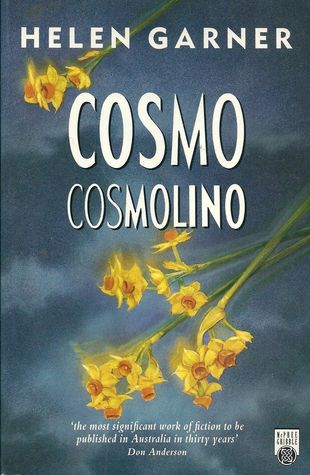
If I were just going to do one pairing, it would be a no-brainer, but it’s not really “if you loved this, read this”. Nor is it just two titles that I think would go together, and it’s definitely not pairing historical fiction with the history of the same topic. Nope, my pair comprises a book in which an author talks about her writing another one. If you’ve been reading my blog recently you’ll guess what I’m talking about, as I’m pairing volume 2 of Helen Garner’s diaries, One day I’ll remember this (my review), which I read this year, with one of the books she discusses in these diaries, Cosmo cosmolino. I have written two posts on this novel, a less than thorough review, years ago, and, recently, a consideration inspired by the diaries. I enjoyed the insights Garner provided into writing this, her most challenging novel (in terms of form) and most different (in terms of subject matter).

Helen Garner, Cosmo cosmolino

The unusual thing is that I could make several somewhat similar pairings from this year, as I’ve read other books discussing specific works. So, I could also pair Erik Jensen’s On Kate Jennings (my review) with the novel he talks about, Snake (my review), or Stan Grant’s On Thomas Keneally (my review) with the Keneally’s novel that he discusses, The chant of Jimmie Blacksmith (read before blogging). I could also pair Chrystopher Spicer’s Cyclone country: The language of place and disaster in Australian literature (my review) with one of a few books he discusses that I’ve read. But I won’t!

Instead, in the spirit of this meme, I feel I should challenge myself at least a little before ending this post, so here is …

Another pairing

I read a couple of memoirs this year that could be paired with novels, but I’ll just choose one, Marie Younan’s A different kind of seeing (my review). This tells the story of her life as a blind, illiterate Assyrian migrant to Melbourne, Australia, and how, with the help of various migrant services, she met other people, learnt English, obtained satisfying and meaningful employment, and ended up writing her memoir with the help of her English teacher, Jill Sanguinetti.

Book cover

I’m pairing this with an English-set novel, Balli Kaur Jaswal’s Erotic stories for Punjabi widows (my review), which, on the surface, sounds very different from Younan’s story. It’s about a young English-born Punjabi woman who obtains a job teaching writing to immigrant Punjabi widows in Southall, the heart of London’s Punjabi community. It’s a romcom but it also confronts some very real, very dangerous, difficulties that migrant women face in that culture. While these Punjabi women’s challenges were very different to those faced by Younan, both books provide insight into how hard it can be for immigrants, particularly immigrant women, to find their place in a new country.

For those of you doing Nonfiction November, I’ll see your pairings I’m sure, but, if you’re not, I’d love to see what you would pair – if you’d like to play along.