Frederic Manning, The middle parts of fortune, Ch. 1 (#Review, #1929 Club)

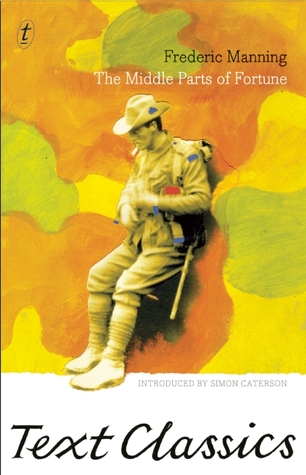
I had identified two novels for my 1929 read, M. Barnard Eldershaw’s A house is built and another. With Lisa also considering A house is built, I decided to go for the other. I started it, and am loving it, but I won’t finish it in time, so I thought I’d check my Australian anthologies for a 1929 offering, and found one. In the Macquarie PEN anthology of Australian literature is the first chapter of a book I’d been unaware of until I wrote my 1929 Monday Musings post this week. The book is The middle parts of fortune: Somme and Ancre, 1916, by Frederic Manning.

It particularly caught my attention because the title sounds more like a nonfiction book. So, I checked it. Yes, it is fiction, I clarified, and has an interesting history. I’ll start, though, with the author…

Frederic Manning (1882-1935) was born in Sydney. An apparently sickly child, he was educated at home, and when a teenager he formed a close friendship with Rev. Arthur Galton, who was secretary to the Governor of New South Wales. When Galton returned to England in 1898, Manning went with him, but returned to Australia in 1900. However, he returned to England in 1903 – when he was 21 – and there he remained. He produced all his writing from there, but the Australian Dictionary of Biography (linked on his name) claims him as Australian.

That’s all very well – for us to say now – but at the time of his death, according to Nicole Moore who wrote his entry in the Anthology, he was “largely unknown in Australia”. And yet, she continues, “his novel, The middle parts of fortune: Somme and Ancre, 1916 (1929) is cited around the world as one of the most significant and memorable novels of the First World War”. Indeed, she writes, it is “often grouped” with Ernest Hemingway’s Farewell to arms and Erich Remarque’s All quiet on the western front.

Manning served in the war from October 1915, first as Private (no. 19022) and later as a second lieutenant, though apparently the officer’s life did not suit him. He drank, and resigned his commission in February 1918. Wikipedia explains explains that, with increasing demand through the 1920s for writing about the war, and his having published some poems and a biography, he was encouraged to write a novel about his wartime experiences – and so The middle parts of fortune was born.

The story does not end here, however. The first edition was published privately and anonymously, under subscription, says Moore. Soon after, in 1930, an expurgated edition was published under the title Her privates we, with the author now identified as Private 19022. This version, Moore says, “removed the soldiers’ expletives that strongly punctuate the text”. Acceptable, apparently, for the private edition, but not for the public one! Wikipedia says that Manning was first credited as the author, posthumously in 1943, but the original text wasn’t widely published until 1977.

Wikipedia identifies the book’s admirers as including Ernest Hemingway, Arnold Bennett, Ezra Pound, and T. E. Lawrence. Lawrence is quoted as saying of The Middle Parts of Fortune that “your book be famous for as long as the war is cared for – and perhaps longer, for there is more than soldiering in it. You have been exactly fair to everyone, of all ranks: and all your people are alive”, while Ernest Hemingway called it “the finest and noblest novel to come out of World War I”. How could I have not known it?

Now, the book … Wikipedia says that each chapter begins with a quote from Shakespeare – answering a question I had, because Chapter 1 so starts. The source of the quote, however, is not cited, but a quick internet search revealed it to come from Act III, Scene 2 of Henry IV Part 2:

By my troth, I care not; a man can die but once;
we owe God a death. … and let it go which way it will,
he that dies this year is quit for the next.

It basically says that we can only die once, and that we’ll all die one day – so, we may as well accept our fate? A soldier’s creed?

Before I say briefly discuss the first chapter, I’ll add that Nicole Moore says that the protagonist’s nationality is not “made explicit” which is “in keeping with the novel’s deflation of military hierarchies and nationalism”. She goes on to say that it explores “the effect of war on reason and selfhood” and is thus “an existentialist study of the extremes of human experience”.

I’ve read several novels, over the years, about World War 1, including – to share another Australian one – David Malouf’s Fly away Peter. It too powerfully evokes the terrible impact of that war.

So, Manning’s Chapter 1 introduces us to a soldier stumbling back to the trenches after some action during which many men had been lost. Soon, he – named Bourne, we learn – is joined by a couple of Scottish soldiers – not from his battalion – and then an officer from his. The rest of the excerpt chronicles his moving through a “battered trench” to join his compatriots in their dugout, before setting off again to meet their captain and retire to their tents in the ironically, but truthfully, named “Happy Valley”.

The tone is one of desperate resignation. Faces are blank (despite “living eyes moving restlessly” in them); no energy is wasted in unnecessary talk; and whiskey is a necessary support after “the shock and violence of the attack, the perilous instant”. The description of their progress from the dugout to the camp above ground beautifully exemplifies the writing:

they saw nothing except the sides of the trench, whitish with chalk in places, and the steel helmet and lifting swaying shoulders of the man in front, or the frantic uplifted arms of the shattered trees, and the sky with clouds broken in places, through which opened the inaccessible peace of the stars.

The “frantic uplifted arms of the shattered trees” and the “inaccessible peace of the stars” conveys it all – and this is only Chapter1.

If you would like to know more about this novel, you can check Lisa’s blog, as she knew of this book and reviewed it back in 2015!

Read for the 1929 reading week run by Karen (Kaggsy’s Bookish Rambling) and Simon (Stuck in a Book).

Frederic Manning
The middle parts of fortune: Somme and Ancre, 1916 (1929)
in Macquarie PEN anthology of Australian literature (ed. Nicholas Jose)
Crows Nest: Allen & Unwin, 2009
pp. 365-369
ISBN: 9781741754407

Monday musings on Australian literature: 1929 in fiction

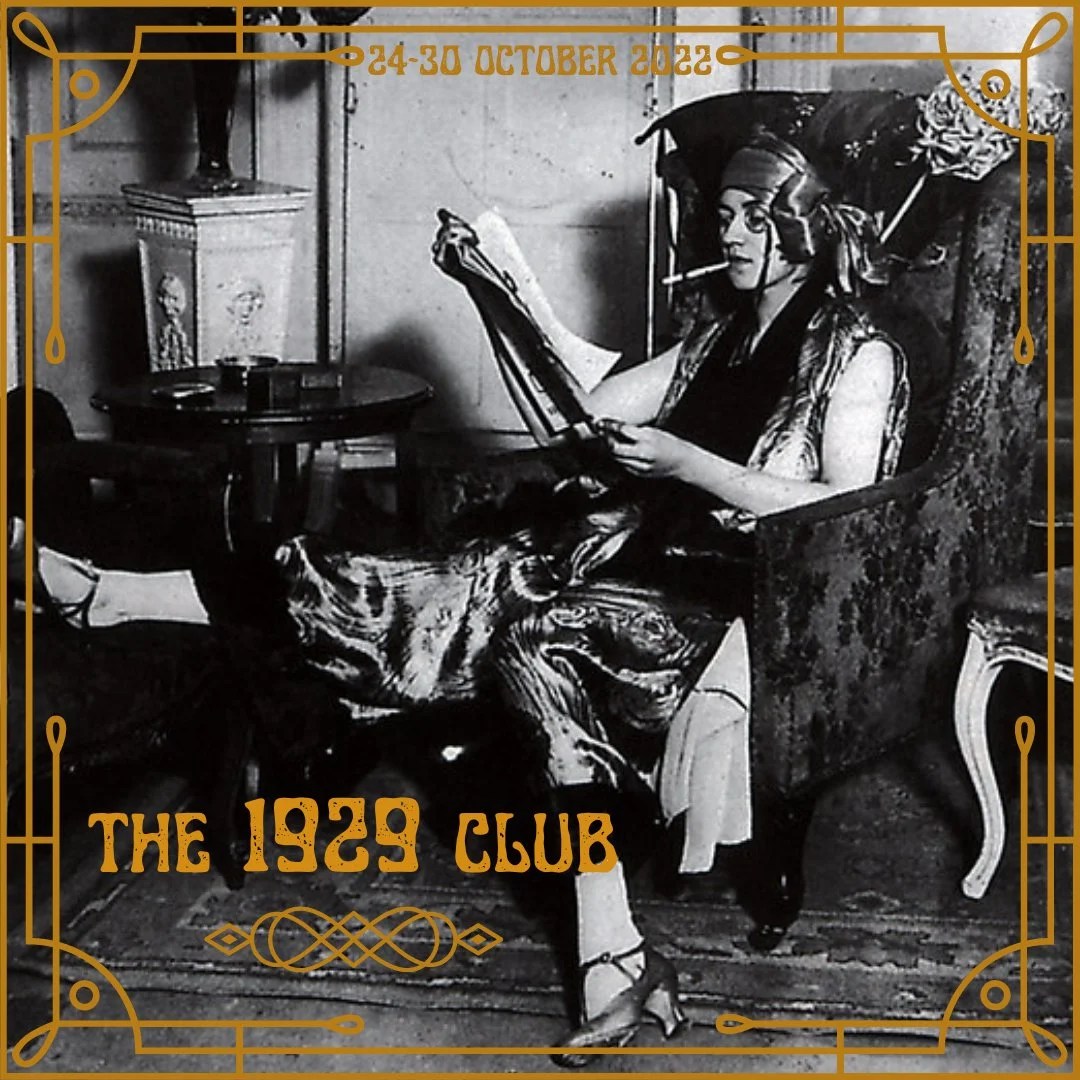
As many of you know by now, Karen (Kaggsy’s Bookish Rambling) and Simon (Stuck in a Book) run “reading weeks” in which they nominate a year from which “everyone reads, enjoys, posts and shares wonderful books and discoveries from the year in question”. The current year is 1929, and it runs from today, 24 October to 30 October. For the third time now, I have decided to devote a Monday Musings to the week (my previous two being 1936 and 1954).

1929 is a meaningful year for me, because that was the year my dear mum was born. It was, however, meaningful more universally too, given, as most of you will know, the Wall Street Crash came late in the year and ushered in the Great Depression. But, of course, this happened at end of 1929, so won’t be reflected in the books published that year.

My research located books published across all forms, but my focus is fiction, so here is a selection of 1929-published novels:

  • Arthur H. Adams, Lola of the chocolate and A man’s life
  • Martin Boyd, Dearest idol
  • Bernard Cronin, Toad
  • John Bead Dalley, Max Flambard
  • Jean Devanny, Riven
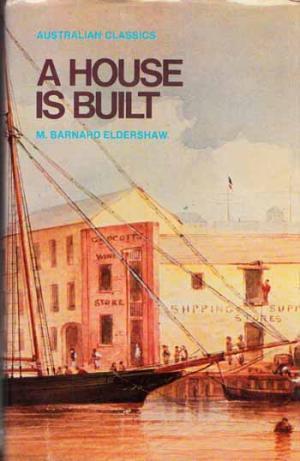
  • M. Barnard Eldershaw, A house is built (John Boland’s review)
  • Arthur Gask, The lonely house
  • Mary Gaunt, The lawless frontier
  • William Hay, Strabane of the Mulberry Hills: the story of a Tasmanian lake in 1841
  • Fred Howard, Return ticket
  • Jack McLaren, A diver went down
  • Frederic Manning, The middle parts of fortune: Somme and Ancre, 1916 (Lisa’s review)
  • Myra Morris, Enchantment
  • Katharine Susannah Prichard, Coonardoo (Posts by Lisa and me)
  • Effie Sandery, Sunset Hill
  • Henry Handel Richardson, Ultima Thule (Brona’s review)
  • Alice Grant Rosman, Visitors to Hugo
  • James Tucker (as Giacomo di Rosenberg), Ralph Rashleigh (Bill’s review)
  • Arthur W. Upfield, The Barrakee mystery
  • Arthur Wright, Gaming for gold
Book cover

By the late 1920s, there was quite a flowering in women’s writing, which continued through the 1930s. This is reflected in the above list, which includes Jean Devanny, Marjorie Barnard and Flora Eldershaw (writing collaboratively as M. Barnard Eldershaw), Mary Gaunt, Katharine Susannah Prichard and the already-established Henry Handel Richardson. Effie Sandery (Elizabeth Powell), Myra Morris and Alice Grant Rosman also appear in the list, but are new to me.

There were very few literary awards at the time, but two that were established in 1928, made awards in 1929: the ALS Gold Medal went to Henry Handel Richardson’s Ultima Thule and The Bulletin’s (unpublished) Novel Competition was won by Vance Palmer’s The passage.

Writers born this year included poet Peter Porter, and novelists Kenneth Cook, Catherine Gaskin, Ray Mathew, and Glen Tomasetti (though she was better known as a singer-songwriter and activist). Deaths included Barbara Baynton, who continues to be the subject of some of my most popular posts.

The state of the art

Of course, I checked Trove to see what newspapers of the time were saying about Australian literature, and fiction in particular.

One of the things that shone through the newspaper articles I read was great enthusiasm to support and promote Australian literature. The papers reported on the meetings of many organisations, including the Australian Literature Society (which originated the ALS Gold Medal), the Queensland Authors’ and Artists’ Association, the Henry Lawson Literary Society of Sydney, and The Royal Australian Historical Society. The papers noted the issues they raised, and what guest speakers discussed. These included:

  • holdings of Australian literature in school, university and public libraries. There was clearly concern about either lack of good holdings and/or lack of promotion of those holdings. Brisbane’s The Telegraph (8 February), for example, reported that the University of Queensland had approved the purchase of books by Australian authors for the University library from the proceeds of Authors’ Week. Further south, Tasmania’s Mercury (6 December) reported that the Australian Natives’ Association* had decided to write to the Launceston Public Library committee, asking them to set aside a section of their library for “works of all descriptions by Australian authors” and to so identify them.
  • support for Australian literature. A couple of papers reported that organisations had expressed appreciation for the support given to Australian literature by newspapers. Melbourne’s Argus (19 March) quoted a speaker at the Australian Literature Society saying that “the best newspapers of the Commonwealth were making a definite attempt to create a literary tradition, and the standard of professional writing was high, despite the fact that writers appeared to be paid in inverse ratio to their qualities” [my emph]. The Sydney Morning Herald (11 June) repeated similar praise from the Henry Lawson Literary Society which said that “opportunities for Australian writers had been greatly extended by the interest displayed by Australian newspapers and journals prominent among which were the Sydney Morning Herald and the Bulletin. On the other hand, Melbourne’s The Age (16 March) wrote of Australian Literature Society’s point that “more is required of the public than a passive loyalty”, while the above quoted Argus wrote of the public’s “indifference”.
  • lectures on Australian literature. Papers also reported on various lectures given on Australian literature. The Australian Worker (28 August) promoted a series of three to be given by author, editor and critic A.G. Stephens. It was organised by the University Extension Board “in response to numerous requests for lectures on literary subjects”. His topics were Australian Poetry, Australian Humor, and Australian Literature.

This is just a small taste of the sorts of discussions of Australian literature that occurred throughout the year. The final recurring issue I want to share concerned the quality of Australian literature – to date.

Book cover

Journalist Firmin McKinnon had strong views about Australian literature, and I have reported on him before. Then, 1934, he was still speaking about what he was arguing in 1929, which was how “behind” Australian literature was compared with the settler societies like Canada and South Africa. Brisbane’s The Telegraph (6 August) reported on a lecture he gave, in which he pronounced that:

Australian novelists have failed in the main because they have no definite attitude towards life that is worth writing about, because many of the characters are unreal, and because they have failed to interpret the great soul of the real Australia.

He did, however, praise two novels from my list above. One was John Dalley’s Max Flambard, which he described as

the best novel yet produced of Sydney and suburban life, failing only because he had given his novel a tinge of satire which detracts from a true interpretation, and depicts snobbery as the dominating feature of suburban life.

Oh dear, we can’t be satirical about Australia? But, he saves his best praise for the one he sees as “the greatest Australian novel”:

“A House is Built,” by Miss Eldershaw and Miss Barnard. … while it may be too long and too particularised for the average reader, it was a story of the reconstruction of the past, covering the history of Sydney for half a century.

Overall, though, he argues that Australian literature to date was lacking a “definite constructive outlook towards life”. McKinnon was firmly of the opinion, as The Queenslander (6 June) reported on an earlier address, that

some writers unfortunately wallowed in the realism of misery, forgetting that misery was not a dominant feature of Australian life, but light-hearted optimism and courage.

Australian writers “must”, he told the meeting, “tell a story true to Australian life”. I think I’ll leave you with that little thought!

Additional sources:

* Natives, here, meaning “white” Australian-born, not First Nations people, an appropriation issue that was commented on by later historians.

Meanwhile, do you plan to take part in the 1929 Club?

Six degrees of separation, FROM Notes on a scandal TO …

It might be spring but it’s not a particularly appealing one here, with so much grey and rain, which is unusual for my corner of the world. But, Daylight Savings starts this weekend, which is always a plus, and the spring blossoms and bulbs are out which cheer up the grey. What also cheers up the grey is that it’s Six Degrees time again, which is a time of reconnecting with bloggers I don’t always catch up with over the month. As always, if you don’t know how it works, please check meme host Kate’s blog – booksaremyfavouriteandbest.

The first rule is that Kate sets our starting book, and in September it is another book I haven’t read, though I did see the movie, Zoë Heller’s Notes on a scandal. It was also published under another title, What was she thinking? If I’d realised that before – I only discovered it when I was searching for the book cover – I might have started my chain with the idea of different titles, but I didn’t and so I’m not!

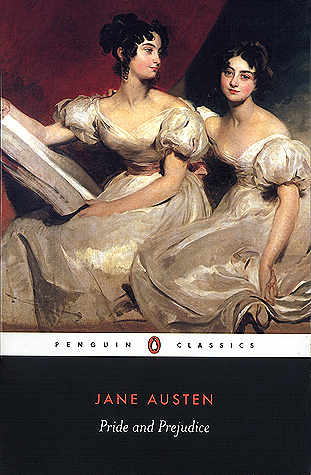
As I said above, I have not read the book but have seen the movie, which stars Cate Blanchett and Judi Dench, so I’ve decided to go with a book that was adapted to a film in which Judi Dench played a role. There are of course many many such books in her long career but I couldn’t resist the opportunity to include a Jane Austen novel again. Judi Dench played Lady Catherine de Bourgh in the 2005 Pride and prejudice (a post on the novel), so that’s what I’m linking to.

Fyodor Dostoevsky, Crime and punishment

Next up is a simple link, another book with a three-word-title with “and” in the middle. I think I’ve done this sort of link before, but no matter, it works and my time is limited. The books is Fyodor Dostoevsky’s Crime and punishment (my review).

In Crime and punchishment, our antihero protagonist,  Raskolnikov, is sentenced to Siberia for eight years. Diego Marani’s protagonist in his The last of Vostyachs (my review) is Ivan, who is the eponymous last of the Vostyachs, an ancient Siberian shamanic tribe – hence my link!

Vincenzo Cerami, A very normal man

My next link is a more usual one, the nationality of the author. Diego Marani is Italian, and so is Vincenzo Cerami, whose novella, A very normal man (my post) has remained in my mind ever since. Perhaps because ….

… its protagonist was a civil or public servant, as I was (though in libraries/archives rather than a government department.) This public-servant subject matter, and the fact that it’s set in Canberra, is partly why my next book also remains memorable for me, Sara Dowse’s West Block (my review). It also happens to be an excellent read, and a novel with a slightly different structure that I found enjoyable to think about as I read. However, that’s not what I’m linking on next.

Dorothy Johnston, Through a camel's eye

My final link is on publisher. Both Dowse’s book and Dorothy Johnston’s Through a camel’s eye (my review) were published by a small and, I gather, highly personal publishing company For Pity Sake Publishing. I wanted to mention this because I did once meet the publisher, Jen McDonald, and found her a lovely, warm person. Tragically, however, she died this year, way too young. Sara Dowse has written a beautiful tribute on her blog. (I should add that I could also have linked Johnston to Dowse through their joint membership of Canberra’s Seven Writers group).

This month, we’ve traveled from England through Russia to Italy and across to Australia. We’ve stayed mainly in the 20th and 21st centuries but have also popped into the nineteenth century. Oh, and we’ve read a few translated novels. This month the gender split is 50:50.

Now, the usual: Have you read or seen Notes on a scandal? And, regardless, what would you link to?

Six degrees of separation, FROM The drover’s wife TO …

Spring at last – in the southern hemisphere anyhow. Winter seemed to start early this year so many of us, in my corner of the world anyhow, have been desperate to see its end. Yes, I know many of you have much more severe winters than we do, but it’s all relative! And on that, before I dig myself into a hole, I’ll just confirm that it’s the Six Degrees time again. As always, if you don’t know how it works, please check meme host Kate’s blog – booksaremyfavouriteandbest.

The first rule is that Kate sets our starting book, but for September she threw us one of those curve balls and told us to use the last book we linked to in our last chain. For me, that was Leah Purcell’s film/book/play The drover’s wife (my post). Lisa reckoned I’m lucky to have that to start with. Perhaps so, and, cross-my-heart, I wrote and scheduled my post before I saw what Kate planned!

Margaret Atwood, The Penelopiad

There are so many ways I could go with this – another multiply adapted work? Another another “wife” title, because there are many of those? Or, a riff on a classic or well-known work? And this last is the way I’ve decided to go, because I enjoy seeing what later writers makes of a loved work, particularly when they look as it from the perspective of a minority or disempowered perspective – as Purcell did with Henry Lawson’s “The drover’s wife”. My first link, then, is Margaret Atwood’s Penelopiad (my review), which looks at Odysseus’ story from the perspective of his wife and the hanged maids.
From here, let’s go to another adaptation of that original work, The Odyssey. This time, I’ve chosen a BBC4 full-cast dramatisation (or, “dramatic retelling”) by Simon Armitage (my post) – which I experienced in audiobook form. (Consequently, my post, like many of my audiobook posts, is more minimal than most).

Sea of Many Returns cover

Odysseus’ goal is, of course, Ithaca, and in my post linked above, I added a little postscript referencing Arnold Zable’s Sea of many returns (my review) which, I said, focuses on Ithaca, and its literal and mythological contexts of “home”.

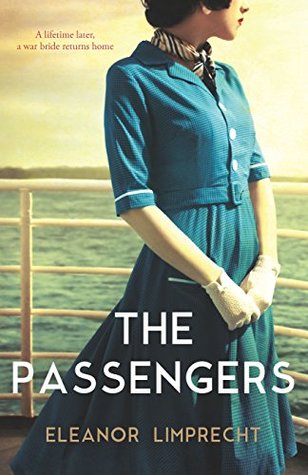
Sea of many returns is a dual point-of-view novel, with the two points of view being grand-daughter Xanthe and her Ithacan-born grandfather whose journals she is translating. The book is about all the leavings and returnings in their family, for work, adventure, war or, simply, to find a better life. Eleanor Limprecht’s The passengers (my review) is also a point-of-view novel involving a grandchild and grandparent, and leaving and returning. Here, though, both voices are female, and they are travelling together, as the grandmother returns to America after a 68-year absence. She had come to Australia as a war-bride.

Book cover

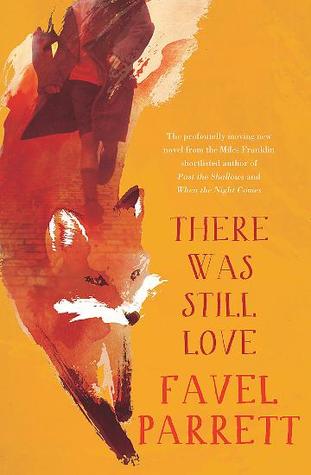
I’m going to stick to grandchildren and grandparents, and the impact of war, by linking to Favel Parrett’s There was love (my post). In this novel we have two grandchildren and two grandmothers. It revolves around two Czech sisters, one who ended up in Melbourne with the other remaining in Prague, after their lives had been disrupted by the Second World War and the 1968 Czechoslovakian Revolution.

Anthony Doerr, All the light we cannot see

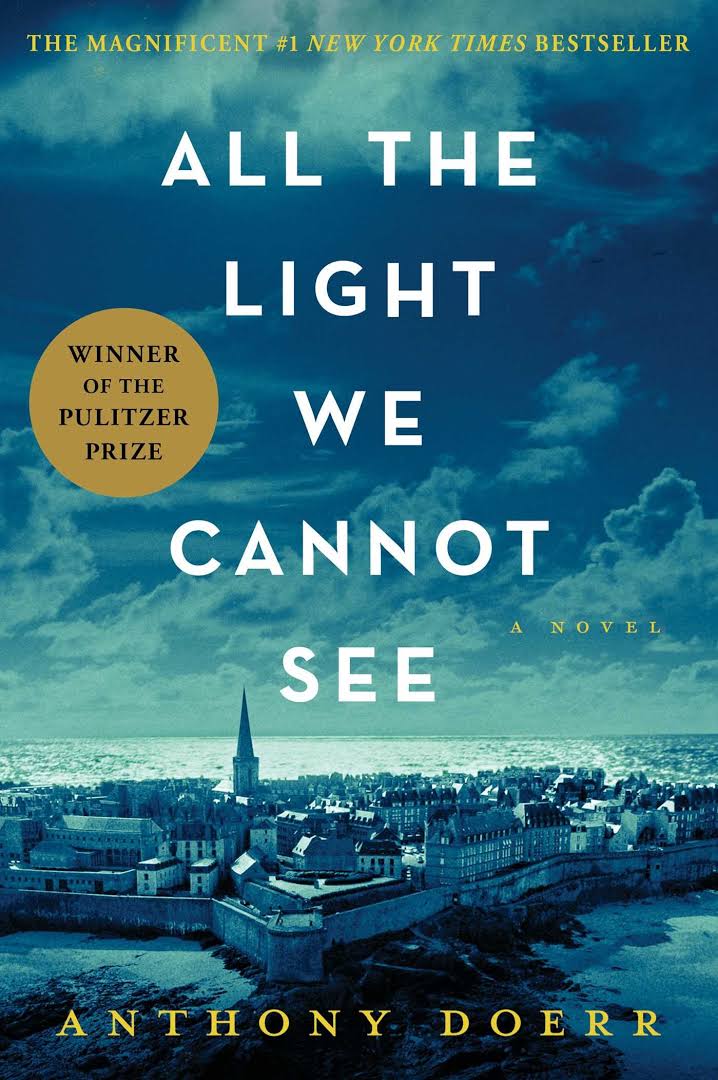
Another dual point-of-view novel – but one in which the stories operate in parallel until near the end – is Anthony Doerr’s Pulitzer prize-winning All the light we cannot see (my review). It too is a war story, telling of the Second World War through the eyes of a young blind French girl and a young orphan German boy.

This month, we’ve traveled from mythical Greece to modern Australia, via Europe and Greece, but somehow war has dogged us every step of the way, starting with a background of the Frontier Wars in Purcell’s The drover’s wife.

Now, the usual: Have you read or seen The drover’s wife? And, regardless, what would you link to – except, hmm, I asked that last month of course, so let’s choose something else! Do you have any favourite grandparent-grandchildren novels?

Monday musings on Australian literature: The new AWW, six months on

In February, a new AWW (Australian Women Writers blog) team, comprising its founder, Elizabeth Lhuede, Bill Holloway (The Australian Legend) and me, published our first post in our revamped blog. Six months on we have settled into a nice little routine which I’d like to share with you, but first …

Let me recap what I explained in my last AWW Challenge post for 2021. This challenge was, as many of you know, instigated in 2012 in response to concerns in Australian literary circles about the lack of recognition for women writers. By 2021, things had changed significantly with women writers seeming to be well-established on Australia’s literary scene, at least by observable measures. Because of this and some additional practical reasons, it was agreed that the challenge would change tack in 2022 and focus on past, and often under-recognised or overlooked, women writers from the 19th- and 20th-centuries. The new team decided that we would write articles about and reviews of earlier writers, and publish their actual writings – in full or excerpt form, as appropriate. Our reasoning was that Australia’s rich heritage of Australian women’s writing hasn’t been fully explored and we wanted to nudge it into the limelight.

So, what have we done? We have established the following routine:

  • on Wednesdays we publish essays or articles on relevant writers, works, or topics; and
  • on Fridays we publish actual writings, related, where possible, to that Wednesday’s post.

Bill is our commissioning editor, which means he sets up our posting timetable and approaches others (mostly bloggers we know) to contribute to our Wednesday articles, while Elizabeth schedules the Friday posts, drawing from the work she’s done, and is still doing, on locating and listing online content for past women writers. I have the easy job, being part of the ongoing consultations and keeping an eye on some of the background issues like our category and label policy and practice. Each of us also writes one Wednesday article a month, with the other week/s (given there are three of us) being a guest post.

We have not imposed a structure over the content of the posts. That is, we have not decided to explore past Australian women writers chronologically or geographically or thematically. Instead, we have drawn on contributors’ interests and experiences. This has resulted in an eclectic mix of posts, but, we believe, an interesting one, that should appeal to a variety of tastes and interests.

So, for example, Jonathan Shaw (Me fail? I fly!), who contributed many poetry reviews to the original blog, agreed to write articles on past women poets. His first was on Zora Cross. Brona (Brona’s Books) posted on Mary Gaunt, while author and blogger Michelle Scott Tucker posted on the children’s writer Patricia Wrightson and the issue of appropriation. We have also been thrilled to have contributions from overseas bloggers interested in classic Australian literature, like French blogger Emma (Book Around the Corner) on Catherine Helen Spence’s Mr Hogarth’s will, and Canadian Marcie McCauley (Buried in Print) on Katherine Susannah Prichard’s Goldfield’s trilogy.

Meanwhile, Elizabeth has focused specifically on our goal of finding forgotten and overlooked writers. Putting her research skills to work, she has unearthed writers we really never have heard of – and, along the way, has discovered some fascinating stories. Netta Walker, for example, took her on a merry chase, as did another wonderful find of hers, the case of Eucalypta (or, Mrs H.E. Russell). As for Bill, in between tracking down guest posters, he has been contributing posts on works by some of his favourite independent women, like Miles Franklin and Ada Cambridge.

Posts on topics other than individual writers and works include guest poster and literature honours student Stacey Roberts on Using the AWWC Archives, and mine on Primary and Secondary Sources.

So, six months in, we seem to be going strong, though there’s not a lot of comment engagement on the blog. More of that would be lovely.

We’d love to know whether you’ve looked at the blog. If you have, what have you liked or not liked, and is there anything you would particularly like to see? (We are open to offers too!)

My literary week (17), musicals, movies and more

Spring is springing

It’s been over two years since my last literary week, which is weird given I enjoy writing these posts that explore the literary content or implications of other parts of my life. I am writing this one, for a number of reasons, prime of which is that I’ve not written a review this week and need to write something! I have been reading, just not enough to write about – yet. There’s been too much going on.

Now, an admission … this literary week is more like literary season, which I hope you agree is fair enough. Who says bloggers can’t invoke artistic licence, after all? By season, I mean winter, which ends this week, here downunder. Thank goodness.

Musicals

Mr Gums and I enjoy musicals and have seen two this month, one this week in fact. The first, which we saw earlier this month, was Hamilton. We must be among the last musical enthusiasts in Australia to see it, but we finally got there. I loved it. Besides its colour-blind casting, I loved its Shakespearean quality. It has the hallmarks of great Shakespearean tragedy, from the great man brought down by his own flaws to the fool (in this case King George III) who provides comic relief while also saying some wise things. And, the political machinations have such relevance to today. I loved, for example, the reference to transparency, or lack thereof: “I want to be in the room where it happens”. A real treat – though we were briefly thrown when, after Interval, the actor playing George Washington changed from an average-build white man to a thinner, younger looking black man. There had been an announcement but in the rustle of everyone returning to seats, we’d missed the crucial piece of information about who was “now being played by”? We worked it out soon enough.

The other musical, the one we saw this week, also has strong literary content, The Girl from the North Country, which, as many of you will probably know, features Bob Dylan’s songs and tells a Depression era story. Given Dylan – albeit controversially – won the Nobel Prize for Literature in 2016, it’s hard to deny the “literary week” credentials of this one. I didn’t engage with it as quickly as I did with Hamilton, mainly because the story and characters were not familiar, but by the end, the characters had won me over with their stories and the actors with their performance.

Movies

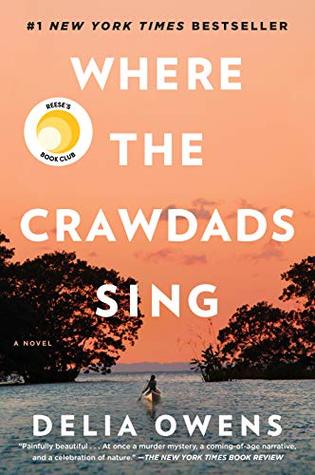
I’m just going to mention one of the movies I’ve seen in recent times, Where the crawdads sing. Yes, a popular movie, though I have been to some more arthouse and classic fare too (like John Farrow’s gorgeous-to-look-at The Big Clock just last night). But I want to mention a conversation (by letter) with my American friend Carolyn, on Crawdads. Both of us enjoyed the movie. It’s beautiful to look at, well-cast overall, and the adaptation felt true to the book. Any problems it has, we agreed, are due more to the book – the stretching of credulity and generally stereotyped characterisation – than with the film itself. (My review of the book explains why I felt I could accept some of these challenges in the book.)

Now is the winter of our discontent…

This section is the saddest part of this post, because here I want to pay brief tribute to some special people who died this season and who also happen to have some literary or arts relationship with me.

The first occurred at the beginning of winter and was, in some ways, the most shocking – because it came with no warning, and because she was the youngest of the people I’m talking about. It was my reading group’s fabulous member Janet Millar who died, suddenly, of a heart attack in early June. She had moved to Sydney but, once a reading group member aways a reading group member and we had stayed in contact over the years. A journalist by training, Janet was warm, intelligent, funny, subversive and could be relied on to enliven any group. So sad, so missed.

Then there were two people who were not as close to me personally, but who were meaningful acquaintances, Liz Lynch who was in Mr Gums’ Advance German Conversation class and with whom I’d discussed reading group experiences, and Geoffrey Brennan, who was on our local Musica Viva committee and hosted, with his wife, many lovely musical afternoons in their home. These afternoons were equally about socialising as about music, because Geoff, like Liz, was a people person. They will be so missed too.

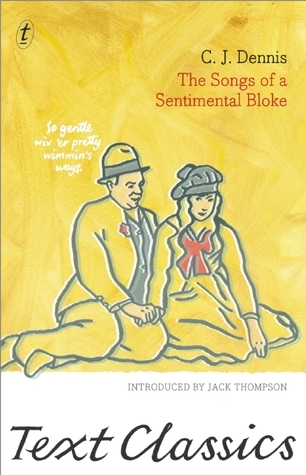
And finally, there was ex-work colleague and friend, Richard Keys. The oldest of the four here, Richard was in his 80s. He was a loyal, warm-hearted and fun colleague and friend, whom I met him through work at the National Film and Sound Archive. We quickly connected over literature as well as film, because both were dear to Richard. After he retired, we stayed in contact, and frequently ran into each other at film events, literary events and folk festivals. I would also occasionally find a letter from him in my mailbox – containing some newspaper clipping or other about Jane Austen! Richard could also quote Shakespeare at the drop of a hat, and may or may not have approved of my heading for this section! I’m going to close here, though, not with Shakespeare, but with a quote Richard had over his desk at work. It was from The sentimental bloke which is both an Australian film and literary classic. I used it in my last message to him:

Sittin’ at ev’nin’ in this sunset-land,
Wiv ‘Er in all the World to ‘old me ‘and,
⁠A son, to bear me name when I am gone.…
⁠Livin’ an’ lovin’—so life mooches on.

“so life mooches on” … on that note, I’ll mooch off and try to finish the unfinished books next to my bed, so I can bring you some reviews next week. Meanwhile, vale Janet, Liz, Geoff and Richard. You will all be remembered.

Six degrees of separation, FROM The book of form and emptiness TO …

Last month, as I wrote this post, I had just got back from Melbourne, and this month I am back in Melbourne. Next Six Degrees, I should be in Sydney, all being well. Life is busy at the moment, but we are enjoying catching up with family and friends after two years of limited opportunities. All that’s well and good, do I hear you say, but what about the main point of this post? It’s the Six Degrees meme, of course, and if you don’t know how it works, please check meme host Kate’s blog – booksaremyfavouriteandbest.

The first rule is that Kate sets our starting book, and for August it is another book I’ve not read, Ruth Ozeki’s The book of form and emptiness. GoodReads says it’s a “inventive new novel about loss, growing up, and our relationship with things”. Sounds interesting, but that doesn’t help me right now …

When I haven’t read the starting book, I prefer not to link on content because, you know, I might get it a bit wrong. So, for my first link I’m going with title, and another book that starts with “The book of”. My book is Australian author Leslie Cannold’s The book of Rachael (my review).

Book cover

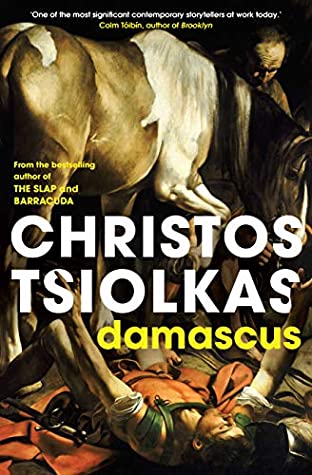
Cannold’s book is about biblical characters, although the title character is a fictional one. Another book about biblical characters, though in this case the protagonist is real, is Christos Tsiolkas’ Damascus (my review) about Saul who became Paul, in the New Testament.

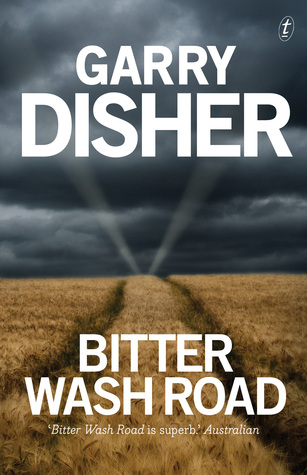
My next link is weak – I know it – but I’m going there anyhow. Tsiolkas’ Saul became the Apostle Paul, though throughout the novel he remains known as Saul. Garry Disher’s detective in Bitter Wash Road (my review) is Paul Hirschhausen, but throughout the novel he is Hirsch. No-one would ever know he was a Paul!

And now it’s time, after three links, to leave Australia, and the best way I can think of is to go to a much beloved detective of recent decades, Alexander McCall Smith’s Precious Ramotswe from Botswana. I’m choosing one of the two novels I’ve reviewed from this long series, The Saturday big tent wedding party (my review). You’ll have to forgive this very loose link, because Precious is a female private detective whilst Hirsch is a male police detective.

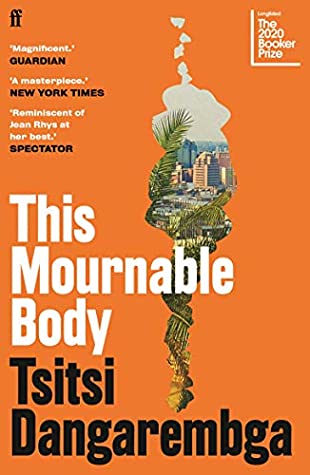
Now, if there is someone who could have done with some of Precious Ramotswe’s common-sense and warmth, it’s Tambu in Tstitsi Dangarembga’s This mournable body (my review). Again my link is very loose, based as it is on the fact that the two novels are set in neighbouring African countries, Tambu living in Zimbabwe bordering Precious’ Botswana.

And now, having found myself here, I can’t resist returning to Australia, linking this time on authors who also make films. Tsitisi Dangarembga has an impressive resume, having won multiple literary awards while also being an active filmmaker of feature, short and documentary films. While she’s not as prolific, Australia’s Leah Purcell is also known as a novelist and filmmaker. I’m linking to her latest production, The drover’s wife (my review), which she’d also written as an award-winning play and a novel.

This month, then, we’ve managed to travel through history and place, from biblical times in the middle east to modern times in Africa and Australia. And we have a 50:50 split in authors, three male and three female.

Now, the usual: Have you read The book of form and emptiness? And, regardless, what would you link to?

#54321 Challenge – Just for fun

Lisa posted this challenge, which she got from Lizzy Siddal, who nicked it from somewhere on Instagram! Love the provenance here!

Each of us has interpreted it in ways that suits us. For me, my interpretation is to draw on authors who have died (except for #1) because there are too many living authors that I love for me to choose from. So, with that proviso, here goes …

#5 Books I love

In author’s birth order:

Jane Austen, Persuasion
  • Pick an Austen any Austen, let’s go with Persuasion (my post), which has such a lovely, mature heroine who, nonetheless, had to learn to make her own decisions. 
  • Edith Wharton’s The house of mirth, which I read before blogging, but which has left a lasting impression for its story of a woman who was torn between love and integrity, and (what she thought would be) security.
  • Patrick White’s Voss, which I read in my teens, long long before blogging. It was the book that turned me on to White.
  • Albert Camus’ The plague/La peste (my post) which I also first read in my late teens, which I encouraged my reading group to read many years later, and which continues to resonate with me.
  • Thea Astley’s Drylands (my post), which is just one of Astley’s novels that has stuck with me for its expressive writing and intellect.

#4 Autobuy authors

Albert Camus, The plague

After the 19th century classics, my first autobuy author was

  • Albert Camus

who was followed by …

  • Edith Wharton, whom I discovered in the 1980s during our first posting in the USA, and
  • E.H. Young, who was recommended to me by a Kiama, NSW, bookseller, in the late 1980s. I subsequently bought, or was given, all of her books that were published by Virago.

And then an Aussie, but which one? Perhaps the first Aussie, besides Patrick White, whom I wanted to autobuy was

#3 Genres I love

Most of you could probably guess this:

  • Literary fiction
  • Classics
  • Literary biographies

#2 Places I like to read

Where else but stretched out on a sofa, or in bed.

#1 Book I’m Going to Read Next

I haven’t quite decided, but my next reading group book is Audrey Magee’s The colony. This will not be my next review, however, as I am currently reading a First Nations’ book, and will probably read a couple more before I read my reading group book!

Six degrees of separation, FROM Wintering TO …

Why do I always start these posts with the weather or the seasons? This time I’ll break with tradition and start with the fact that I’ve just got back from a lovely trip to Melbourne where we enjoyed some good family times, albeit interrupted in the middle by COVID isolation. How our lives have changed over the last two to three years, as we take these things, not quite in our stride but, at least, as sort of normal or to be expected? What hasn’t changed, however, is our Six Degrees meme. If you don’t know how this meme works, please check meme host Kate’s blog – booksaremyfavouriteandbest.

The first rule is that Kate sets our starting book, and for July we are back to a book I’ve not read, Katherine May’s Wintering: The power of rest and retreat in difficult times. It’s a memoir, and I think the subtitle speaks for itself. I like the concept of “wintering” or lying fallow as you heal.

I thought a lot more than usual about my first link this month, toying with several ideas. In the end I decided to go with a title using a present participle that refers to an action that’s the subject of the book. Jim Crace’s Being dead (my review) is about a couple found dead among the dunes on a beach. As well as being the story of a crime, this novel also details what happens to dead bodies. It’s pretty visceral, but I learnt things I’ve not forgotten! I love it when fiction does that.

Bianca Nogrady, The end book cover

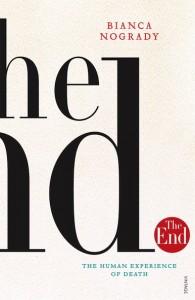
My next link was easy, because I went for the obvious, science writer Bianca Nogrady’s book The end: The human experience of death (my review). As you might have guessed from the title, it’s a nonfiction work that explores death and dying from multiple angles, including physical, psychological, scientific, and legal. I found it so interesting.

Bianca Nogrady, The best Australian science writing 2015

My next link is also pretty obvious, as it’s on the author Bianca Nogrady, except that for this book she’s the editor not the author. It’s The best Australian science writing 2015 (my review). I’ve come to love these volumes for their varied content ranging across all sorts of science from climate to AI, from how the brain works to research into disease, and so on.

Trent Dalton, Boy swallows universe

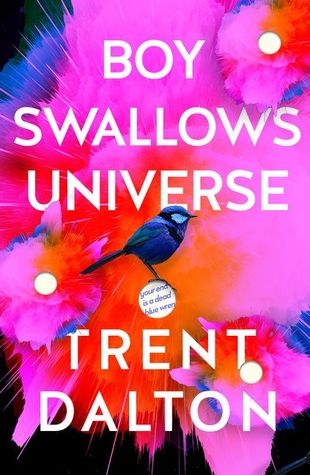
And now, unusually for me, I’m sticking with creator for yet another link. It’s interesting how many writers of fiction are also journalists and essayists. Trent Dalton, to whose book Boy swallows universe (my review) I’m linking, is an example. He had a piece in Bianca Nogrady’s anthology called “Beating the odds” about a driven Australian man who developed an artificial heart.

Rabih Alameddine, An unnecessary woman

But now its time to branch out, and I’m going personal this time. Trent Dalton’s book was my reading group’s first book in 2019. Our first book the year before, 2018, was Lebanese American writer Rabih Alameddine’s An unnecessary woman (my review). This was a great read on many levels, including the fact that the main character, a 72-year-old woman is a great reader who comments frequently on the books she reads, including Australian authors like Patrick White and Helen Garner.

Valeria Luiselli, Faces in the crowd

I nearly linked on one of those authors, but we’ve spent a bit of time in Australia this post, so I’m linking on something different. Alameddine’s protagonist Aaliya spends her time translating books, even though they will never be published. It’s an exercise for her. Another novel that features a translator – though in this case it is her job for a while – is Valeria Luiselli’s Faces in the crowd (my review).

I don’t see any obvious link back to the starting novel. The meme doesn’t require there to be, but it’s fun if there is one. As is common for me, four of my books are by female writers (or editors) and two by male. While we’ve spent quite a bit of time in English-speaking countries, we have also been to Beirut and Mexico City, which are places I rarely take us to.

Now, the usual: Have you read Wintering? And, regardless, what would you link to?

Six degrees of separation, FROM Sorrow and bliss TO …

What a cold, cold start we’ve had to winter here in the nation’s capital. We have already had a few maximums under 10°C, and winter has barely started. I hate it, but I am lucky to have a warm house, so I’ll stop complaining and be grateful. And, anyhow, we have hope that our new Government will follow up on its promises on big issues like the Uluru Statement from the Heart, climate change and resolving some long-standing asylum seeker/refugee issues. We wait to see what happens. Meanwhile, let’s get onto this month’s Six Degrees. As always, if you don’t know how this meme works, please check meme host Kate’s blog – booksaremyfavouriteandbest.

The first rule is that Kate sets our starting book, and for May we are back to a novel I’ve not read, Meg Mason’s Sorrow and bliss about a woman, and the aftermath of her separation from her husband. What else can I say about it? I haven’t read it, as I said, but those who have are impressed.

I don’t like linking on content of books I’ve not read, so I’m not going there. Instead, I’m linking on titles comprising opposite concepts – taking us from Sorrow and bliss to Lost & found, by Western Australian-based author, Brooke Davis (my review). Like Sorrow and bliss, Lost & found deals with a sad subject, but both books do it with humour (at least I understand Mason’s does).

Humour, however, is not my next link. Instead I’m linking on the idea of a mother disappearing at the beginning of a novel. This is what happens in Lost & found, and it also happens in Margaret Barbalet’s Blood in the rain (my review), albeit under quite different circumstances. It had been on my TBR for decades, so I was really pleased to find time to read it this year.

My next link is not at all clever. I read Margaret Barbalet in January, and in April I read (actually, listened to) another Margaret – Margaret Atwood’s poetry collection Dearly (my review) which covers a range of subjects dear to Atwood’s heart, including women’s rights and environmental issues.

Another poet whose political passions are well-known is Australia’s John Kinsella, so it is to his prose memoir, Displaced: A rural life (my review) that I’m linking next. He was born in and has now returned to the Western Australian wheatbelt. He writes so evocatively of the place – and of the challenges wrought by the long tail of colonisation.

My next link pays homage to the author, Katharine Susannah Prichard, because last month I attended the online launch of Nathan Hobby’s The red witch, the first thorough biography about her. I’m linking to a short story by her, “The Christmas tree” (my post) because it is also set in the Western Australian wheatbelt. It links beautifully to Kinsella, because, as I wrote in my post, “we are still challenged by the role capitalist structures play in people’s lives and livelihoods”.  Kinsella would agree.

“The Christmas tree” was first published in 1919, and so was another short story, written by another significant woman writer, “The mark on the wall” (my post) by Virginia Woolf. They might be very different stories in very different styles – Prichard’s realist approach versus Woolf’s stream-of-consciousness – but both come from women who have now moved into the canon.

So, a bit of a different month to usual: I have only one male writer, two of the works are short stories, two are by poets, and one I experienced as an audiobook. However, we have travelled around the English-speaking world a little – Australia, Canada and England – and we have spent more time than usual in Western Australia. I can’t see any link back to the starting book.

Now, the usual: Have you read Sorrow and bliss? And, regardless, what would you link to?