Six degrees of separation, FROM Revolutionary Road TO Fateless

Richard Yates, Revolutionary RoadSix Degrees of Separation is a monthly “meme” hosted by Kate (booksaremyfavouriteandbest). Each month, she nominates a book, and then those who choose to play create a chain of six books, linking one from the other as the spirit moves. Now, I hadn’t planned to play this time because I haven’t read Richard Yates’ Revolutionary Road (nor did I even see the movie), but I need to make an embarrassing confession. I’ve cheated on the last two “memes”. I’ve only done SIX books, not SIX degrees of separation from the chosen book making SEVEN. Where was my brain? Well, wherever it was, I have it back now, so have decided to prove it by playing this time after all …

Lesley Lebkowicz, The Petrov PoemsYates’ Revolutionary Road is set in suburban America in the 1950s. Wikipedia quotes Yates saying he intended the book to be an “indictment of American life in the 1950s. Because during the Fifties there was a general lust for conformity all over this country, by no means only in the suburbs—a kind of blind, desperate clinging to safety and security at any price”. It was much like this in Australia too – and it’s understandable given people’s very real memories of World War II – but not everyone dreamed these suburban dreams. There were, for example, the Communists who had a different vision of how life should be. Lesley Lebkovicz’s verse novel The Petrov poems (my review) tells the story of a very different couple to Yates’. They were Soviet intelligence agents posted in Australia, and their lives derailed badly as their spying was uncovered.

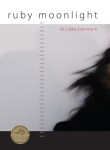
Ali Cobby Eckermann, Ruby MoonlightThere are many places I could go from here, but I’m keen to encourage more people to try verse novels, so I’m going to link by form and choose Ali Cobby Eckermann’s Ruby Moonlight (my review). Like Lebkowicz’s novel, Ruby Moonlight is historical fiction, but set in a very different world. Indigenous author Eckermann tells the story of early contact between indigenous people and white settlers in remote South Australia around 1880. It’s a beautiful (and accessible) read, one that is both uncompromising in identifying the wrongs that have been done, and yet also open to seeing pain and loneliness among the settlers. I do admire such generosity.

Ellen van Neerven, Heat and light, book coverSomething else I’m keen to encourage is for us (myself included) to read more books by indigenous writers. I’ve read a few here over the years, but the one I’m going to choose is Ellen van Neerven’s Heat and light (my review). This is one of those books which defies definition in terms of its form, but I’m not going to engage in that now. What I want to draw from here is its middle section, “Water”, which is an edgy dystopian story set in the near future. It manages to addresses contemporary political issues regarding environmental degradation and indigenous ownership through a clever story about “plant-people”.

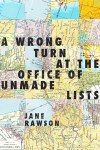
RawsonWrongTurnTransitAnother edgy dystopian book set in the near future is Jane Rawson’s gorgeously titled, A wrong turn at the office of unmade lists (my review). Actually it shifts a bit between a sort-of imaginary 1997 San Francisco and a 2030 Melbourne, and belongs to that new genre, cli-fi, though it crosses other genres too, including time-travel. It’s a rather mind-bending (as well as genre-bending) read, because Rawson has one of those quick-witted imaginations that can address something very serious while maintaining a playful edge. And I do like playful writers, so next I’m going to choose …

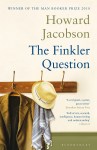
Howard Jacobson's The Finkler questionA non-Australian book, to give all my non-Australian readers a bit of a fighting chance with this list. How about Howard Jacobson’s The Finkler question (my review)? I am a bit of a sucker for Jewish humour, and this book, as my family will tell you, really tickled my funny bone. I mean, whoever heard of a Gentile wanting to be a Jew. (Well, yes, we all have I’m sure, but I think you know what I mean …) The book is full of wordplays and jokes, all the while addressing personal concerns like identity, love and loss alongside more political ones to do with issues like Zionism and, more broadly, what it means to be Jewish.

kerteszfatelessNow, where can that lead me to for my all important SEVENTH book? Well, I think at this point, I might turn serious, not that playful writers like Rawson and Jacobson aren’t serious, because they are, but having raised the Jewish question (ha!) I think I should continue with it. I have read and reviewed some excellent memoirs by Jewish writers, but I think I’m going to go for the jugular and choose Imre Kertesz’s Fateless (or Fatelessnes, depending on your translation) (my review). I say “jugular” because this is one of those books that needs a bit of nutting out; it engages with some fundamental ideas about the human condition, about what is fate, what is freedom.
And so, we have moved from an American couple in the 1950s, through Australia past and future, taking a little side trip back to America, before moving on to contemporary England and ending up in Hungary during World War 2. If my first 6-degrees meme had a certain circularity, this one seems to be rather more linear.

Where would Revolutionary Road take you – your first step at least?

Six degrees of separation, FROM Never let me go TO The paper house

I rather enjoyed playing Kate’s #6Degrees “meme” last month so, while I don’t expect to play every month, November’s starting book, Kazuo Ishiguro’s Never let me go, was far too tempting to let go! Once again, read on to see why …

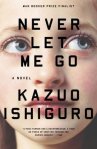
ishiguroneverletmegoI read Kazuo Ishiguro’s dystopian Never let me go before I started blogging, and have only reviewed one of his works since then. I’m thrilled, therefore, to have an opportunity to record that although I haven’t read all of his books, I have read most of them, because I enjoy his writing immensely. I particularly like his tone, which often comprises a sort of matter-of-fact, almost emotionless description of things which, we come to realise, are pretty unpleasant. And these things are usually told to us by narrators who, themselves, don’t recognise the truth of what they are seeing/describing (or certainly don’t recognise it fully). They are, in other words, often unreliable.

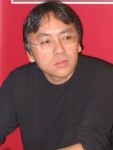
Kazuo Ishiguro

Kazuo Ishiguro, 2005 (Courtesy: Mariusz Kubik CC-BY-SA 3.0)

I rather like unreliable narrators, partly, I’m sure, because most of us aren’t wonderfully reliable at narrating our lives. We see our own stories from our own perspective and, if we ever see the fuller picture, it’s often in retrospect, don’t you think? So, for my next book I’m going to choose the only Ishiguro book I’ve reviewed here, Nocturnes: Five stories of music and nightfall (my review). This is a collection of short stories, some of them linked. In all of them, as I wrote in my post, “the narrator is either unreliable or in some other way not completely across what is going on. This is the Ishiguro stamp … as is the overall tone of things not being quite right, of potential not being quite achieved, of people still looking for an elusive something but not necessarily knowing quite what that is.”

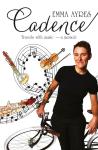
Emma Ayres, CadenceNow, I could link to another book with an unreliable narrator, but that would get boring, so instead I’ll go with content. As the full title of Nocturnes suggests, the book features music and musicians in most of the stories, with the last story being titled “Cellists”. That reminded me of Emma Ayres’* memoir Cadence: Travels with music (my review) about her bicycle trip from England to Hong Kong. It’s a thoughtful, engaging book in which she reflects on her life as a musician, and her desire, violist that she was, to be a cellist! See the neat link!

Jamil Ahmad Wandering falcon coverOf course, as well as talking about her two main loves, cycling and music, she talks about the places she rides through. One that she fell in love with, despite all the warnings she’d received while planning her trip, was Pakistan, where she was treated with kindness and generosity almost without fail. Her experience of Pakistan brought to mind a book I read for the Man Asian Prize Shadow Jury in 2011, a book that I can’t forget, in fact, Jamil Ahmad’s Wandering falcon (my review). It is set in the decades before the rise of the Taliban and explores life in the multi-tribal region on the borders of Pakistan, Afghanistan and Iran. It highlights what happens when political borders cross tribal lands. The writing evokes the unforgiving landscape and the often brutal justice beautifully. While I don’t remember the details now, its overall impression and theme have stayed with me.

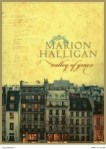
Marion Halligan Valley of grace

For my next book, I’m not going to link by content or tone, but by author. You see, Jamil Ahmad was a late bloomer. He was born in 1933, but Wandering falcon, his first book, was not published until 2011 (though apparently he wrote the stories in the 1970s). I’ve written a post on late bloomers, so I’m going to choose one of those, but which one? Well, I reckon Marion Halligan, for three reasons: she lives in my city, I love her books, and she’s a stalwart supporter of the arts in the ACT. The last book of hers that I’ve read, though I have a couple on the TBR pile, was Valley of grace (my review). It’s set in Paris, where Halligan lived for several years. It’s a beautiful book and is, as I wrote in my post, Halligan’s “meditation on children – who they are, what they mean to us”.

Anna Spargo-Ryan, The paper-houseSo, where to from here? This journey from Kazuo Ishiguro’s Never let me go (which, interestingly, is about children/young adults) has not been plotted in advance. For my final book, I have a few options: I could stick with an author connection, or return to a content link, or launch into something new. Something new? Yes, why not? I’m thinking book designer, because Valley of grace is really beautiful to hold and to read. It was designed by Sandy Cull, an award-winning book designer who also designed a book I read very recently, Anna Spargo-Ryan’s The paper house (my review). Not only is this book’s cover gorgeous, but its interior design is important, particularly in the increasing use of white space later in the book to convey the main character’s heightening mental illness. (There is a content link with this book, too, as it turns out, because The paper house is about parents and children.)

And, there you have it … another fun, for me anyhow, Six Degrees of Separation Meme. I’m surprised, in a way, where I ended up, because Never let me go is a dystopian novel, and I do read such novels, but somehow I led myself off in another direction! I only have myself to blame.

Anyhow, if you’ve read Never let me go, what book would you choose to link from it?

* Since writing this book, Emma Ayres has transitioned to Eddie Ayres. I’ve used the female pronoun here because he wrote this book as a woman.

Six degrees of separation, FROM Extremely loud and incredibly close TO The women’s pages

I have never played this #6Degrees “meme” before but when Kate (BookasAreMyFavouriteAndBest) announced that Jonathan Safran Foer’s Extremely loud and incredibly close (her response) would be the October starter, I knew I had to do it. Read on to see why …

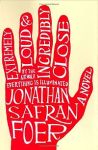
Jonathan Safran Foer, Extremely loud and incredibly closeI have read Extremely loud and incredibly close and as I recollect I enjoyed it. I don’t remember the details now, but I did think that Foer managed well that fine line between warmth and sentimentality. However, the book is memorable to me for another reason, which stems from the fact that one of my online reading groups discussed it. A member of that group had great trouble with the title. It is, after all, not only a bit of a mouthful, but rather abstract, with nothing that you can particularly hang your memory on. Anyhow, in one email my online-bookgroup friend described it as “Foer’s Amazingly and Suddenly (I’m sorry I can’t keep that title straight)”. Every time I think of Foer, I think of her and smile! Hello, Susan!

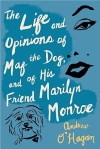
Andrew O'Hagan Book CoverAnd this makes me think of other books with long or hard to remember titles. One I’ve reviewed here is Andrew O’Hagan’s The life and opinions of  Maf the dog and of his friend Marilyn Monroe (my review). This book entertained me at the time because of the way it plays with reality, art and the imagination. Maf, the dog, suggests that “we are what we imagine we are: reality itself is the true fiction.” I love this paradoxical way of viewing ourselves, of seeing the artifice in “reality”. However, the point is that while I usually remember Foer’s title, I always have trouble with this one. I had to do a keyword search on my blog to get it exactly. All I knew was that it had “dog” and “Marilyn” in it!

But now, where to go? I could move to a book whose cover design comprises mostly words. There are a few of those around. But I really can’t go past another “life and opinions” book, Laurence Sterne’s The life and opinions of Tristram Shandy, gentleman. It’s been many a decade since I read this book – back in my university days – but its tongue-in-cheek-take-the-reader-along-for-a-ride style, its purporting to be what it isn’t, that is, a biography, was an eye-opener to my young literature-student self. It also introduced me to the picaresque style of novel. This is a style I always look a bit askance at, and yet usually enjoy when I get down to it, because it tends to be satirical – and I’m never averse to a bit of satire.

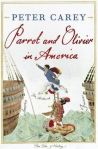
Peter Carey, Parrot and Olivier in AmericaAn Aussie example of the picaresque – though it’s not set in Australia – is Peter Carey’s Parrot and Olivier in America (my review). The object of Carey’s satire, that “great American experiment, democracy”, seems rather apposite given the current presidential race shenanigans. Donald Trump represents the very values and attitudes – the unquestioning belief in capitalism – which Carey satirises. Another issue Carey questions in this novel is whether “high” art and “total” democracy are mutually exclusive? Do you let the majority decide what art they will support and fund? If or when you do, what art will they choose, he ponders.

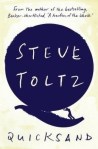
Steve Toltz, Quicksand, soverArt, the making of it, is also one of Steve Toltz’s targets in his satirical novel Quicksand (my review) but his angle is slightly different. Part of it is the way people plunder the lives of others to make art, and part is an exploration of why we make art. Is life easier with or without art is one of his questions. Protagonist Liam at one stage desires a life “unencumbered by art” whereas art teacher Morell suggests we make art to understand who we are and why we’re here. In the end, though, like many good satires, there’s no simple answer.

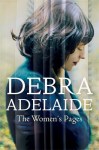
Debra Adelaide, The women's pagesBut, shock, horror, my first five books are all by men, even though women writers comprise well over 50% of my reading. How did this happen? I’m not sure, but I can’t end without one woman writer! Debra Adelaide’s protagonist, Dove, in The women’s pages (my review) is, like Liam in Quicksand, writing a novel – but Adelaide’s is not a satirical novel. It’s a more personal drama about the urge to write fiction (create art, in other words), about how fiction might illuminate life’s meanings, and about how we tell and use stories.

I’ve come a long way from Jonathan Safran Foer’s Extremely loud and incredibly close, a 9/11 story, and yet not so far really, because both books – Foer’s and Adelaide’s – are about grief and loss, and both, one indirectly the other directly, are about how art might play a role in resolving the tragedies that confront us. That seems to make a rather nice circle, albeit comprising 6° not 360°!

If you’d like to read other responses to this “meme” check out Lisa’s (ANZLitLovers) and Jenny Ackland’s (Seraglio).