Maria Tumarkin, Axiomatic (Guest post by Amanda) (#BookReview)

I am thrilled to host this post by Amanda who responded to my call on the Australian Women Writers Challenge for a review of Maria Tumarkin’s Axiomatic, which won the Best Writing Award in this year’s Melbourne Prize for Literature awards. However, Amanda does not have a place to post reviews on-line, so we agreed that I would post it here so it can then be added to the AWW database. Thanks very much Amanda!

Amanda notes that Tumarkin has her own web page, and that Axiomatic has also been shortlisted for the Victorian Premier’s Literary Awards to be announced at the end of Jan 2019.

Amanda’s review
Maria Tumarkin, AxiomaticHaving lived outside Australia for several decades I had not heard of Tumarkin.  A professor in Creative Writing at Melbourne University, she is the author of several non-fiction titles, Axiomatic being her 4th and her first with Brow Books publishing – an independent, not-for-profit publisher dedicated to innovative writing at about marginalised topics.

At the time of this review, Axiomatic had won the Melbourne Prize for Literature’s 2018 Best Writing Award. And Axiomatic is great writing but it is also flawed.

More like a compilation of long essays, the title is derived from 5 axioms which are the themes driving each section of the book. The writer then goes on through the essays to dispel the axiom through a collection of real life case studies and experiences.

She opens with her strongest and most heart-wrenching piece “Time Heals All Wounds” about teenage suicide in Australia. Tumarkin’s writing is a powerful composite of investigative journalism, analytical thinking and literary technique. Brutal and unflinching – delivering a  punch to the gut – Tumarkin is able to conjure in the mind’s eye all the complexities and nuances of grief, love and survival  through snippets of conversation and quotidian details. She includes numerous references to contemporary writers, classical literature, Greek mythology and philosophers, deftly combining both fiction and non-fiction.

In terms of critiques – and there are a few – the writing never lets up. There is no pause, no distraction, no break in the narrative for the reader apart from what is self-imposed. Sentences have been meticulously crafted and her writing sings, but it’s hard to appreciate it all because Axiomatic is so unrelenting.

Tumarkin’s arguments are also often convoluted. She veers off on tangents at the slightest provocation and then expands these into auxiliary sections. Her analysis is at its best in the first three sections when dealing with complex social issues, and is less effective and more self-indulgent when focusing on her personal friendships and relationships. (The last section – “You Can’t Enter the Same River” – seems out of place). The book is uneven in quality.

Axiomatic is not balanced nor fair in its judgments. Some would question Tumarkin’s right to take a position on any of these subject but, as she states herself, this has never stopped her in the past, and it certainly doesn’t now. She likes “to kick the floorboards out from under her readers”, so are the shock techniques of her writing her key selling points? If so, she is selling short the stories of these survivors.

Reasoning aside, what Axiomatic lacks from a visceral perspective is hope. Fictitious happy endings are overrated, but hope is not. Tumarkin puts forth unattainable Utopian standards both for society and its participants in order to fix its ills, and therefore Axiomatic is ultimately nihilistic.

As a reader, the one question I have is – what does Tumarkin wish to achieve with this book? She paints in grim detail an Australian society bereft with failings. The unsung heroes rallying against the system and circumstances are alone. But these problems of teenage suicide, poverty, abuse ,corruption and inadequate systems are perennial and  can be made about many countries.

There are no easy solutions to these problems. Tumarkin does not have the answers. Most readers will be both devastated and frustrated with the pieces – is it meant to serve as a rally cry for the rest of us to do more to rectify these issues? You can’t read Axiomatic and not be moved – but then what do you do with this awareness?

If you’ve read Axiomatic, Amanda and I would love to know what you think about it, and Tumarkin’s intentions?

AWW Badge 2018Maria Tumarkin
Axiomatic
Brow Books, 2018
201pp.
ISBN: 9781925704051
New Territory Litbloggers’ Year in Review, 2018

When my 2018 New Territory blogging mentee Amy (of The Armchair Critic) suggested that we do some sort of joint end-of-year blog post I loved the idea. The only question was what would we talk about, and how would we do it? It wasn’t too hard to decide former, as the subject matter was obvious: we would write about our favourites reads of this year, what we’d like to read over summer, and the ACT Writers Centre’s New Territory program which brought us together

As for how, we tossed around various formats, but settled on something simple: each of us would write a post responding to our agreed topics, and would then post the other person’s answers on our own blog. This means that you can read Amy’s responses below, and mine on Amy’s blog.

I do hope you enjoy Amy’s thoughts. We would both love to hear your comments on her reading.

Amy’s highlights

Best Fiction

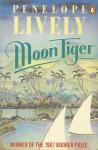
Penelope Lively, Moon tiger

I’ve managed to narrow it down to three. All of them happen to have won prizes but this is a coincidence; I take an interest in prizes but I don’t let my reading habits be defined by them. First up is Moon Tiger by Penelope Lively. This won the Booker Prize in 1987. It tells the story of Claudia, a journalist, who mentally revisits her life as she is dying. The fluidity of Lively’s prose reminds me of Virginia Woolf, and, like Woolf, it encapsulates multiple perspectives of the same event. It is a short book but extremely dense, though in a good way – it is emotionally and historically rich, spanning events throughout the twentieth century including the second world war.

My other favourite novel was The bookshop by Penelope Fitzgerald which coincidentally is also a previous Booker winner. I read it after seeing the movie, which I reviewed on my blog. I loved Fitzgerald’s witty turn of phrase and the sense of quiet devastation that her understated prose leaves you with. A hard-hitting meditation on justice, personal culpability and the cost of pursuing a life in art.

My final fiction read is The museum of modern love by Heather Rose which won the 2017 Stella Prize. This book centres around a performance work at MONA in New York by Marina Abramovic and weaves aspects of Abramovic’s life with the contemporary life of the protagonist, Arky Levin, whose wife is seriously ill. It explores themes including the purpose of art, and the nature of human connection.

Best Non-fiction

Again I have to pick the top three. First up is Murder without a motive by the Saturday Paper’s chief correspondent Mart McKenzie Murray. Murray investigates the murder of schoolgirl Rebecca Ryle in Perth’s northern suburbs in 2004, and how her family manages to live in the knowledge of what happened to her. Mckenzie-Murray and I both grew up in Perth’s northern suburbs around where the murder took place, so I identified strongly with his (not so flattering) evocations of it. What clinched the book for me was how Mckenzie-Murray explored how the life trajectory of Ryle’s murderer was conditioned by his stultifying surroundings which were characterised by toxic masculinity.

Next up is Draw your weapons by Sarah Sentilles. I heard Sentilles at this year’s Adelaide Writer’s Week, and I highly recommend these podcasts for summer listening. Sentilles, a pacifist and former art history professor, writes about the ethical entanglements we all have with our society’s violent structures, and how we can take both a moral and practical stand against being implicated in perpetuating such violence. The book is held together by the stories of two men; a conscientious objector from World War Two and a soldier who worked at Abu Graib. Saying a book changed your life can be a throwaway line, but in this case it is true.

Lastly is Small wrongs: How we say sorry in life, love and the law by Kate Rossmanith. Rossmanith is an academic with degrees in theatre and anthropology. The book is “hybrid,” as she examines remorsefulness and redemption in her own life, as well as in other spheres such as the law. Her writing is beautiful and she is brutally honest about her own actions, which is very compelling and refreshing. I literally could not put this book down.

Best biography

I reviewed Do oysters get bored by Rozanna Lilley for New Territory. Lilley is such a talented writer, and I enjoyed the way she teased out her complicated relationships with her parents and the artistic community she grew up surrounded by. As I wrote in my review, I really believe Lilley has done Australian society a major service by demonstrating the moral conundrums and aftermath of artists’ delusional or egocentric behaviour.

My other favourite was Twin by Allen Shawn. Shawn is a composer and musician whose father was William Shawn, the long-serving editor of the New Yorker. Like his father, Allen has many anxieties and phobias which he has also written about. Twin is an account of how Shawn’s autistic twin sister Mary was removed from the family at the age of five and has spent her life in an institution. The dynamics of Shawn’s family are complex – there is a major twist about his parents’ relationship, and it really demonstrates the extent to which self-deception and sacrifice, mostly on the part of mothers, are necessary to maintain a bearable home life. Shawn’s writing is poetic and devastating.

Highlights of my summer reading list

  • Michelle de Kretser, The life to comeThe life to come by Michelle de Kretser and No more boats by Felicity Castagna: I heard these two authors together at Adelaide Writers Week and am really looking forward to getting into their work
  • The helpline by Katherine Collett: Collett is co-creator of the podcast The First Time and this is her first book. Apparently it is hilarious, and revolves around a mathematician who works on a senior citizens’ helpline …
  • Shell by Kristina Olsson: set during the building of the Opera House, a building I am fascinated by. It is billed as a moving reflection on art and shame.
  • Giving up the ghost by Hilary Mantel: I came across this while researching Mantel’s views on historical fiction for my first New Territory piece. It is about her relationship with her family history.
  • Any ordinary day by Leigh Sales: I picked this up in a bookshop and was totally compelled by the first few pages.

What has New Territory meant to me?

New Territory has been great for many reasons. I’ve spent time with the amazing Sue Terry and have built relationships with the wonderful staff at the ACT Writers Centre, whose advice I really value. I’ve been exposed to rehearsals at The Street and have come to understand what it takes to produce theatre. I have attended some great events at the National Library, not to mention being able to speak to Rozanna Lilley courtesy of the Canberra Writers Festival.

From a craft point of view it was helpful to have the experience of being edited, and seeing how a good editor can really improve your work. I was also really privileged to attend the Hard Copy conference, where I heard from writers, agents and publishers about the publishing industry and how to get people to read your writing. This was invaluable, and helped me develop my goals for next year, which include pitching to a writers festival as a presenter, and networking with the writing community both online and at events.

Monday musings on Australian literature: Guest post from ACT Lit-blogger Emma Gibson

With the ACT Lit-bloggers of the Future program in its closing months, I thought it would be lovely for you to hear directly from Emma and Angharad via a guest post, and they both agreed. First up is Emma  – and she chose to write about …

The great Australian writer you’ve (possibly) never heard of: Randolph Stow and Tourmaline

The sun is close here. If you look at Tourmaline, shade your eyes. It is a town of corrugated iron, and in the heat the corrugations shimmer and twine, strangely immaterial. This is hard to watch, and the glare of the stony ground is cruel.  The road ends here. – The Law, Tourmaline

Randolph Stow, TourmalineI was returning to Australia after two years of self-imposed exile when I first stumbled upon Randolph Stow’s Tourmaline.

It was July and I was spending a month writing poetry at an artist residency in Cadiz, Spain, an ancient city the shape of a fist that juts out into the Atlantic. I had chosen the location because it was almost as close to the antipodes as I could get – the actual antipodean point to Canberra is in the ocean – and because I’d spent my last two summers in Scotland or Iceland and wanted a taste of warmth before returning to Australia in August. I had forgotten heat. I was to discover that I did not miss it.

I did miss Australia, as reading Tourmaline made me realise. I read it twice in that month, hiding away from the afternoon sun, because the images it conjured up were so strong, even though it was not a part of Australia I knew.

Far from civilisation, the town of Tourmaline was once a prosperous gold mining settlement in Western Australia, where its potential for riches saw it imagined as having streets pathed with the very gold taken from the earth. It was, as Gabrielle Carey describes in her introduction to the new edition of the novel, ‘a colonisers fantasy’ until the gold was exhausted, and so too the water.

The book is narrated by the Law, the ageing sheriff of the town who lives in the crumbling gaol tower and fears his irrelevance. Now, he is little more than a bystander, who has appointed himself as the memory keeper for the town. It is his testament we read, although it may not be reliable, as his recollections are tinted by nostalgia, memories of rains that the younger generation have never known.

I have seen rain in Tourmaline. Can you believe that? How can you? You have not seen that green, that green like burning, that covers all the stones on the red earth, and glows, gently, upward, till the grey-green leaves of the myall are drab no longer, but green as the grass, washed in reflected light.

Stow writes in his author’s note that the novel is to be imagined as taking place in the future.

Something has happened in the outside world, something that has changed civilisation forever. The town’s war memorial plays host to an annual event that bears resemblance to an ANZAC day service, where the Law delivers the same sermon each year. Outside, where “wild beasts are loose upon the world”, Tourmaline has been forgotten in its isolation, thought long-buried by the drifting red sands that claimed the nearby settlement of Lacey’s Find. No one comes to Tourmaline, and no one in recent memory has left; those who did leave never returned. The exception is the monthly supply truck, and its arrivals are a town event.

Among those assembled for the truck one month are town publican Kestrel, Deborah, his young Aboriginal de facto, Deborah’s adopted parents, Mary and Tom, who run the town’s only store and Byrne, the acne-scarred drunk troubadour and Kestrel’s cousin. As well as the supplies, they are delivered a near-dead man, found fifty miles down the road. Deborah, Mary and Byrne nurse the man back to health. When the stranger recovers, he introduces himself as Michael Random and claims to be a diviner. In his promise of water and gold for the town, he becomes a messiah for the people of Tourmaline – but is Random’s promise of salvation as much of a mirage as water in the desert?

Tourmaline was Randolph Stow’s fourth novel, published in 1963. Stow was a prodigious writer. By the time he was 30, he has published two poetry collections and five novels, as well as working at an Aboriginal community in the Kimberly, as an assistant anthropologist on the Trobriand Islands, and stints as an academic.

But it’s likely that Randolph Stow is the great Australian writer you’ve never heard of. I had never heard of Stow until I found Tourmaline, and as I raved about it to friends over the ensuing months, they hadn’t either, except for one who recalled reading The Merry-Go-Round in the Sea as a student in Geraldton, where the book is set. I became obsessed with learning more about the man and his life.

Stow won the Patrick White Award and the Miles Franklin Award, as well as a fellowship from the Australia Council for the Arts (which he later terminated in a letter to Gough Whitlam). He was a contemporary of Patrick White’s and mates with Sidney Nolan, who designed some of the covers for his books.

Yet he is described as ‘the least visible figure of that great twentieth-century triumvirate of Australian novelists whose other members are Patrick White and Christina Stead’.

I wonder why this is. While it’s likely more complex, there are two reason I can see. One is that his work could be considered difficult. While others were writing social realism, Stow was instead interested in the symbolic, drawing on Taoism spiritualism in Tourmaline, which has been described as an ecological allegory. Patrick White himself professed that Tourmaline had “Come to grief in a lush labyrinth of poetic prose.” (Quoted by Bruce Bennet in Westerly 55:2, p. 152).

The other is that Stow himself was elusive. Always a solitary figure who had struggled with mental health issues and alcohol, he spent long periods travelling in the 1960s and then settled in England. Perhaps, in this exile to the home of his ancestors, was a reflection of a theme apparent in his work, of the tension around colonial identity and the impact of European settlement on Indigenous Australians.

After leaving Australia, Stow published few books, and over time, disappeared from our literary consciousness. When Stow died in 2010, most of his books were out of print in Australia – a forgotten relic like Tourmaline, perhaps, already thought long buried. But unlike his narrator in the novel, Stow need not fear lapsing into irrelevance. In recent years, there has been a renewed interest in his novels and poetry.

In 2015, Text republished five of Stow’s novels as part of its Text Classics series. Gabrielle Carey’s Moving Among Strangers: Randolph Stow and My Family, was published in 2014 and Suzanne Falkiner’s comprehensive biography, Mick: A Life of Randolph Stow, followed in 2016.

I hope then, that Stow’s work will find new readers.

***

About Emma Gibson

Emma is a writer and performance-maker here in Canberra. She’s particularly interested in writing about place (which of course appeals to me), and is currently studying a Masters of Creative Writing (Place Writing) with Manchester Metropolitan University.

Emma has written plays, some performed locally, such as Johnny Castellano is mine (Canberra Youth Theatre/Street Theatre), The Pyjama Girl (HotHouse Theatre), and Widowbird (The Street Theatre), and others performed internationally, including War Stories (24:7 Festival, Re:Play, Greater Manchester Fringe, Buxton Fringe), and Bloodletting (Bread and Roses Theatre, London).

Emma also writes prose, and has had short pieces published in the Skagastrond ReviewSeizure, and Iceview. She has created a site-specific poetry installation in Spain, helped run an artist residency in Iceland, and made an audio walking tour around Garema Place for Canberra’s You Are Here Festival.

Her posts for the ACT Lit-bloggers program can be found here on the Capital Letters blog.

Thanks, Emma, for this first piece on Stow in my blog. I appreciate it! And now, Emma and I would love to hear what you know or love about Randolph Stow …

Monday musings on Australian literature: Guest post from Bill of The Australian Legend

It’s been two years since I last published a Guest Post, for no any other reason than that the idea slipped off the radar as other busy-ness took over. However, during a recent email correspondence with (relatively new) blogger Bill, the idea re-popped into my head, and so I asked him, as he explains below.

First though, a quick intro. Bill appeared on the Australian lit-blog scene just over two years ago with quite a bang. Well, that’s a bit overly dramatic perhaps. What I mean is that he launched himself as a serious player in the lit-blogosphere, and one with a very particular agenda – to write about independent women, particularly independent women writers. Well, of course, I was interested in that and have enjoyed some good discussions here and on his blog ever since. If you’re likewise interested, I suggest you start with his About page and move on from there.  Meanwhile, let’s give the floor to Bill …

*****

Apart from my friend Michelle at Adventures in Biography who got me started on Lit.Blogging, Sue here at Whispering Gums was the first blogger I followed and who followed me. So I owe her a great debt, and feel guilty each time I think of the imaginary detective story where the private eye’s principal informant is the toothless derelict … Whispering Gums. (The real, and much nicer, origin of her name is here.)

It is a matter of great pride to me to be invited to do a guest post, and I’m only sorry that it is under false pretences. I was discussing (by email) with Sue some reviews I had put up on the Australian Women Writers Challenge site and I asked her in passing what she thought of biographies of women writers by men. My intended question was did she think the AWWC site should list them. Sue however thought I was asking her opinion of the biographies themselves, and promptly put it back onto me!

Do you remember the old BBC Radio show Just A Minute which was often used as a filler on Radio National? Well I feel like (the late) Derek Nimmo leaning in to the microphone to speak for 60 seconds on the life cycle of newts. But here goes, 1000 words on Biographies of Women Writers by Men, starting now.

Colin Roderick, Miles FranklinI have reviewed two such biographies, Brian Mathews on Louisa Lawson and Colin Roderick on Miles Franklin. The former is a good example of a man being able to write sympathetically and insightfully about a woman, and the latter is not.

Walking up and down my own shelves I see I have numerous biographies by women. Three – Roe, Barnard and Coleman – on Miles Franklin, Barbara Baynton by Penne Hackforth Jones, Christina Stead by Chris Williams, two by Sylvia Martin – Aileen Palmer and Passionate Friends, ‘collected’ lives by Drusilla Modjeska, and by Dale Spender, Tomalin’s Jane Austen and Gaskell’s Charlotte Bronte; and I also have two more by men, Brian Dibble on Elizabeth Jolley (Doing Life which I really ought to have reviewed by now) and Ric Throssell on his mother, Katharine Susannah Prichard.

Of course, as you may know, I am an old white guy and so I am probably the very last person to be attempting to answer the implied question: does it matter? Well, in the case of Colin Roderick (1911-2000), one of the most influential figures in the Aust.Lit industry in the middle of the last century, his gender matters a great deal. He runs Franklin down both as a writer and as a woman:

[her] unshakeable conviction of physical inferiority and lack of physical attraction… converted her into a skittish coquette stringing two or three men along simultaneously and a synthetic man-hater… It forced her to become a defensively bellicose propagandist for feminist causes.

He routinely misstates her commitment to feminism, and writes that a determined suitor might have cured her flirtatiousness with a spanking. In the comments to my piece on Roderick, author Jess White, taking comfort from my description of him, describes Roderick’s biography of Rosa Praed, In Mortal Bondage, as “bizarre & bordering on fiction in places.”

The Roe biography of Franklin I would describe as asexual, but the earlier (in fact the first) biography, by Marjorie Barnard, which I haven’t read for a long time, does seem to me to reflect the fact that it is written by a woman. It starts (stereotypically!) by describing how Franklin dressed and how she looked: “her smile. Radiant, quick and gay, it transformed her. It was irresistible and in her old age still charming and youthful.” And ends with an analysis of love: “[Miles] held in her heart an impossible ideal of human relationships and when she found it unrealizable, not so much for herself as in the lives of others, she was bitterly hurt and disappointed”, which I have never been able to express half so well.

Unlike Roderick, Matthews takes Lawson’s feminism seriously and gives a good account of it. In fact, he takes Lawson seriously as poet, businesswoman, leading figure in the women’s movement at the turn of the century, and as a mother (with four difficult adult children!) Whether he adequately emphasizes with her, perhaps only a woman could tell. Unfortunately for Matthews there was very little evidence to say how Louisa spent her private life after leaving her husband – although we’re pretty sure she didn’t want to get pregnant again.

Marianne van Velzen in her account of Ernestine Hill turned to fiction to round out those areas where evidence was lacking, an approach which Matthews discusses and dismisses, and which I think detracts greatly from the usefulness of those autobiographies which resort to it.

At this point in my writing I went away for a couple of days, and by sitting, driving, with the radio off, was able to refine my ideas. We have seen that biographies may be ‘factual’ or ‘fictionalized’. Then, from a ‘gender studies’ point of view we may also categorise them as: Neutral, Masculinist, and Feminist. The problem of course with ‘Neutral’ is that old, conservative, white men regard their own point of view as neutral and all others as radical. But let us say for argument’s sake that ‘neutral’ is the gathering and presentation of historical material without (much) gender analysis, and that Jill Roe’s Stella Miles Franklin is an example of this. Colin Roderick’s biographies of Franklin and Praed are clearly ‘masculinist’, in that he devalues the opinions of the women he is writing about and ascribes to them motives which he wouldn’t ascribe to men. An example of a ‘feminist’ biographer might be Sylvia Martin who is exploring the space between spinsterism and lesbianism by looking into the lives of single women writers like Mary Fullerton.

A further division is suggested by Nathan Hobby who is both a blogger and PhD student writing a biography of Katharine Susannah Prichard. At the end of 2015 he wrote, “The best biographies, in my opinion, are generally written by biographers who care about biography as a genre rather than biographers who are simply passionate about their subject.”  So then we also have ‘serious’ biographers and the ‘simply passionates’. The latter definition clearly captures rellos such as Ric Throssell and journalists like Marrianne van Velzen.

If you are thinking I have drifted a bit far from the topic, I guess the questions I am trying to get to are: How many Australian women writers have been the subject of biographies by ‘serious’ men? And, assuming only Roderick actually attacks his subjects, how many of those biographies were sympathetic, and how many missed the point?

Now, all you Whispering Gum-nuts out there, it’s down to you. I’ve listed the four that I have. How many have I missed?

Thanks Bill for taking up my invitation – and for presenting some different angles for us all to think about regarding biographers and their biographies.

Monday musings on Australian literature: Guest post by Annette Marfording of the Bellingen Writers Festival

Courtesy: Annette Marfording

Courtesy: Annette Marfording

Having been intrigued by comments made by Annette Marfording, Program Director of the Bellingen Readers and Writers Festival, about running a literary festival, I approached her about writing a guest post for my blog. I thought her experience might intrigue at least some of my readers here too.

Marfording chairs one-on-one conversations and panels at the Festival, and is also a broadcaster at Bellingen’s community radio station 2bbb fm for which she created a monthly program on Australian writers and their work. Marfording’s recently published book, Celebrating Australian Writing: Conversations with Australian Authors, is based on in-depth interviews broadcast on this program. All profits from the sale of the book will go to the Indigenous Literacy Foundation. What a generous gesture! I have bought a copy of this book, which includes writers like David Malouf, Cate Kennedy and Larissa Berendt. You can too at lulu.com.

Now, here’s Annette’s post …

Some time ago, Sue asked me as Program Director of the Bellingen Writers Festival (full name Bellingen Readers and Writers Festival) to do a guest post for her wonderful blog on the joys and challenges of organising a writers’ festival. I’m delighted to do so.

This year the Bellingen Writers Festival (full name Bellingen Readers and Writers Festival) had its fifth birthday. In the period since our first in 2011, there’s been an explosion of new literary festivals all around Australia. With the exception of big city specialised sub-festivals, such as the Sydney Jewish Writers’ Festival and its Festival of Speculative Fiction, and some school or suburb festivals, such as the Abbotsleigh Literary Festival and the Sutherland Shire Writers’ Festival, most of the new festivals are in small regional towns and not specialised in any particular genre. Even though not all of them survive (for example the Gloucester Writers Festival), at the time of writing there are at least nine such regional festivals in New South Wales alone in addition to the big ones: the Sydney Writers’ Festival, the Byron Bay Writers’ Festival and the Newcastle Writers Festival.

On the one hand, this proliferation of festivals is wonderful for readers and book sales and demonstrates that the book is not dead. On the other, for several reasons, it is cause for concern:

  1. All these festivals compete for government grants and sponsorships.
  2. They also compete for authors, and understandably authors tend to prefer the greater publicity and book sales associated with the big festivals. Our invitations are often declined on the grounds that the author is overseas at the time/wants to concentrate on her/his next book/can’t possibly attend every writers’ festival in the country.
  3. Several of the festivals are scheduled in winter, enhancing the competition for authors during those months.
  4. Sadly these difficulties are compounded when other regional festivals choose to schedule theirs at the exact same time as another, as the newer Batemans Bay Writers Festival did with the Bellingen Writers Festival. Thus two of the authors we had invited appeared in Batemans Bay instead. Similarly it is confronting to find that other regional festivals have copied your advertising slogan, as the Southern Highlands Writers’ Festival in Bowral did with their adoption of ‘Be a part of the story‘ (in comparison to Bellingen’s ‘Be part of the story.’

Even if there were only one literary festival in the country, organising a festival is not for the faint hearted. The large festivals attract big money from government agencies and sponsors while the smaller ones have to make do with far less. That usually means that large festivals have a large number of paid staff, while the smaller ones tend to be organised and run by volunteers.

In Bellingen all festival committee members work as unpaid volunteers, which means they have to be brimming with passion and enthusiasm for there is a lot of work to be done: books must be read, authors and chairs selected and invited, contracts drawn up, funding applied for, sponsorship sought, venues booked, an experienced bookseller chosen, transport and accommodation organised, possibly a schools program organised, the program put together and proof-read multiple times for print and website, newsletters written for the website, social media and print publicity employed to spread the word. For the event itself, you need an event producer/organiser, sound engineers, microphones for all venues and multiple speakers, additional volunteers and an organiser for those volunteers. After each festival there are clean-up tasks, author payments and accounting to be done. Over the five years we have lost several festival committee members due to burn-out or the need for an income-generating job. We have also gained a few new ones each year, but they don’t always stay. Only four members have been involved since the beginning.

Government funding bodies often demand the introduction of a new aspect or theme for each year’s festival. For 2013 the Bellingen Writers Festival chose Celebrating Women Writers and Women’s Stories, because 2012 marked the beginning of a conversation about gender in literary culture. In 2013 the Stella Literary Award was awarded for the first time. As the readers of this blog may remember, a number of women authors, critics and publishers pushed for the introduction of an award for women writers after women had been left off the shortlist for the Miles Franklin Literary Award for Fiction for two years in a row. Another response was the creation of the Australian Women Writer’s Challenge. For 2015 the Bellingen Writers Festival chose Politics and Society and attracted a number of politicians, journalists, screenwriters and fiction writers exploring social issues and added three forums on mental health issues with Professor of Psychiatry Gordon, clinical psychologist David Roland and author of Australia’s first memoir on youth suicide Missing Christopher Jayne Newling.

Festival visitors often don’t realise that authors need to be paid not only for their transport costs and accommodation, but also earn a fee for every festival appearance (in accordance with standards set by the Australian Society of Authors). In small regional towns such as Bellingen, where small businesses often struggle, it is very difficult to attract sponsorship from local businesses, especially since Bellingen hosts several music festivals as well. Government grants are difficult to obtain on a recurring basis, especially in these times of funding cuts to the arts. This means that smaller festivals become ever more reliant on ‘big name’ authors to attract visitors prepared to pay for tickets. The further away authors live from the festival location, the higher the authors’ transport costs. This means that authors who live on the other side of Australia, in Tasmania, let alone the US, are unaffordable for the Bellingen Writers Festival.

I think it’s obvious from the above that the challenges are formidable. The joys of organising a writers’ festival require far fewer words, but nevertheless win in the end for those who are engaged and passionate about reading and/or writing. The joys of introducing favourite authors to new readers, observing the audience’s enthusiastic faces, rapt attention, and long queues for books and autographs. Even better if the authors have a good time, too, and in Bellingen, they always do. For me personally, involvement in the festival has also made it easier to interview some of the authors in my recently released book Celebrating Australian Writing: Conversations with Australian Writers which has sold 80 copies in the first two weeks – to the benefit of the Indigenous Literacy Foundation, which will receive all the profits from the sale.

****

Thanks so much Annette for this wonderful behind-the-scenes insight into running a festival. Readers like me owe a big debt to people like you who are willing to undertake the hard yakka of putting on a regional festival. I wish I lived closer to Bellingen!


Monday musings on Australian literature: Guest post by Dorothy Johnston, writer and Barbara Jefferis Award judge

Literary awards, their role and import, have come under frequent discussion here at Whispering Gums. So, when writer Dorothy Johnston, whose The house at number 10 and Eight pieces on prostitution I’ve reviewed and, more relevantly, who was one of the judges for this year’s Barbara Jefferis Award, suggested a guest post on the Award, I was more than happy to take her up on it.

I have never met Dorothy but I have “known” her for a long time as she was one of Canberra’s famous Seven Writers who published the anthology Canberra Tales in 1988. I became “reacquainted” with her more recently via blogging and her appearance in The invisible thread anthology edited by Irma Gold for Canberra’s centenary last year. It’s been a lovely rediscovery. Dorothy has published nine novels – literary fiction, and crime-mystery novels, mainly. Two of her novels – One for the master and Ruth – have been shortlisted for the Miles Franklin Award. Dorothy blogs at her website Dorothy Johnston.

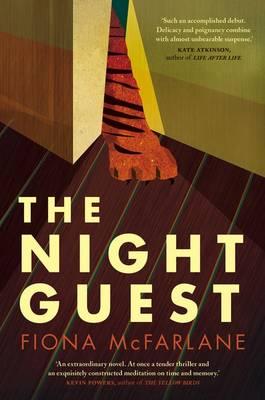
For those who haven’t heard, this year’s Barbara Jefferis Award was shared by Margo Lanagan’s Sea hearts and Fiona McFarlane’s The night guest. Here is Dorothy’s story about her experience as a judge.

***

The idea of splitting the Barbara Jefferis Award between The Night Guest and Sea Hearts did not come up before the three judges (myself, Margaret Barbalet and Georgia Blain) met at the Australian Society of Authors (ASA) in Sydney, at the end of September.

LanaganSeaHeartsI enjoyed working through the 72 entries, making notes, keeping in mind the selection criteria, (a work of literary merit that showed women and girls in a positive light), starring the books I knew I would want to go back to. I had no idea whether my favourites would find favour with Margaret and Georgia.

After about 6 weeks, we exchanged our long lists. One novel was common to all three of us – Fiona McFarlane’s The Night Guest, a brilliant study of a woman who believes there is a tiger in her house. Others on my long list didn’t show up on those of the other two judges, but both had included Margo Lanagan’s Sea Hearts. I went back and re-read it more carefully, and was, as the saying goes, blown away.

These two entries stayed at the top from then on, while we emailed back and forth. Part of the reason for having 72 entries is that the award covered 2 years – 2013 and 2014 – and included self-published titles. By far the greatest number of entries came from the big publishers – Penguin, Allen & Unwin, Random House – though, as it turned out, 4 of the 7 shortlisted book were published by small, or small to medium presses.

We didn’t have to make a firm decision on our shortlist before the meeting; but once in Sydney we only had a morning to finalise it, then choose a winner, and then we had to spend the afternoon writing our report.

I’d had to give up some of the books on my long list because they didn’t find favour with Margaret or Georgia, and the same went for them. One I regretted letting go was Elemental by Amanda Curtin, a terrific story of a young girl growing up in a Scottish fishing village, and what happens to her subsequently. On the other hand, All The Birds Singing, by Evie Wyld, which the others both included, and which, as readers will know, won the Miles Franklin, I thought was over-rated.

McFarlaneNightGuestIf I had to make one general remark about the books that made it onto the shortlist, I would say that each one is utterly itself. What do I mean by this? I mean that, a few pages in, I recognised the voice as original, distinct, perfect for the narrative; they fitted hand and glove. So often I found that an author began promisingly, but then could not sustain the voice. Or, right from the beginning, the author pandered to one contemporary fashion or another. When you’re reading your way through 2 years of entries, you quickly learn that following the fashion is a bad idea.

There’s no whiff of conformity amongst the shortlist. Amy Espeseth’s Sufficient Grace focuses on two young women and their difficult lives in an isolated religious community. The Life and Loves of Lena Gaunt, by Tracy Farr, introduced me to an extraordinary musician and her instrument, the theremin.

Pilgrimage, by Jacinta Halloran, is about two sisters, one of them a doctor, and what happens when their mother is diagnosed with motor neurone disease.

Margo Lanagan’s Sea Hearts takes ancient selkie legends as its starting point and moves in a wholly original direction. Fiona McFarlane’s The Night Guest is another novel that borders the surreal in an original and quite wonderful way. The First Week, by Margaret Merrilees, is, by contrast, a realist tale that cuts to the bone.

The Mountain by Drusilla Modjeska, an ambitious and far-reaching story of Papua New Guinea in the years since independence.

We also highly commended Laura Buzo’s Holier Than Thou.

But back to that meeting at the ASA. We already knew each other’s preferences. We’d picked the same top two and could not choose between them. There didn’t seem a hair’s breadth, or knife point to tip the balance. We called in Lucy Stevens, who was overseeing the judging process. Lucy sat at one end of the table balancing the two books in her hands while we reached the decision to award the prize to both.

The presentation was held in the renovated foyer of St Barnabas Church, Broadway, a lovely light-filled space. It was a beautiful Sydney spring evening. There was music and champagne. I realized – not that I hadn’t known it before, but it came to me suddenly – that we were here to celebrate books and their authors. Angelo Loukakis, Executive Director of the ASA, welcomed us. David Day, who is Chair of ASA’s Board of Directors, spoke about Barbara Jefferis and the bequest. Tara Moss spoke about women and the arts. I looked around me. Everyone in the room cared about, and many worked hard to foster and promote, Australian literature. When I stepped up to the podium, to give my judges’ speech, I had a big smile on my face.

***

Thanks a bunch Dorothy for giving us your insider’s perspective on awards judging. I can see it wasn’t an easy job and love that you’ve shared your thoughts with us.

Dorothy (I’m sure) and I would love to hear your thoughts – on awards, on judging, on these particular books, or on anything else her post has inspired you to think about.

My View from Here is over at BookerTalk

My Social Media Pic

My Social Media Pic

Karen who writes the BookerTalk blog asked me to write about reading and writing here in Australia for her inspired View from Here series.

If you’d like to read what I wrote, check out my post on her blog. If you’re an Aussie, I’m sure Karen would love you to add your own perspectives in the comments, because I couldn’t say all that I’d love to have said. Of course, if you’re not an Aussie, please comment too!

If you’d like to read the other View from Here posts, check out this list. You might be surprised by what you find. I’ve certainly enjoyed them.


Monday musings on Australian literature: Guest post from Nigel of Under the counter or a flutter in the dovecot

This is embarrassing but I really can’t remember how and when I first met Nigel. Actually let me rephrase that: I do remember when I met him in person because I’ve only met him once (at a literary event earlier this year), but who stumbled across whose blog first I have no idea. I’m glad we did though, because in Nigel I’ve discovered not only a lovely writer (see my review of his novella Fall on me) but an active supporter of Australian literature through such activities as the online creative arts journal VerityLa and the arts forum, the Childers Group. I also enjoy his reflective blog, Under the counter or a flutter in the dovecot. And so I was thrilled when he said yes without apparent demur to my request for a guest post. Thanks Nigel …

Real or imagined, raising children makes a great story

The game now finished and the speeches in full swing, the camera panned left to take in the players who were standing off to one side and looked worn-out and knocked around, a few with mud on their faces, a bit of blood too, but smile they did because they’d won and were elated. After a moment, the camera went back to whoever it was that hadn’t yet finished his speech (why is it that a man with a microphone will always go on too long?). For the first time in my life I was grateful when the TV channel cut to an ad break.

When the NRL grand final coverage resumed – I’d not watched the actual game, and had only stumbled on the closing minutes of the concluding celebrations by lazy accident – the victorious players were wandering around the field, or ‘paddock’ as it’s apparently called, many with their young children in hand. It’s this that struck me: rugby league boofheads wanting to be with their kids in these lingering moments of sports elation.

It looked – it felt – amazingly non-sensical.

I’m not one for children; never have been, never will be. I am, in fact, the least paternal person on Earth. At no point in my life have I ever wanted children. Which is, now I examine my life with precision (the process of writing does that), a bit of a lie. I remember that as a teenager I did have day-dreams of raising children, except in those day-dreams my wife was always absent, to be accurate she was dead, which left me to be a hip young single father, and I was very good at fathering, and my kids adored me and I adored them back. Once I was old enough to understand why my wife was always cactus, my mind – my conscious mind – turned to things closer at hand, and much more real. Which is why, aged forty-four, I’m blissfully childless. When on the rare occasions something good happens to me (though for some reason these events are never televised), I reach for a bottle of nicely chilled verdelho and a slice of blue cheese on a cracker.

Not having children, not wanting children – now that I have a fine appreciation of the opportunities and constraints of my life, I desire children as much as I desire the idea of a car-alarm going off in the middle of the night, and if ever I find myself day-dreaming, which is, I should say, a lot, it’s about having a crumbling hut in some far-flung place that you can only access by barging a rusty old four-wheel-drive across seven creek-crossings – is problematic for someone like me, a writer of all things, that ridiculous trade that’s getting more and more ridiculous as each day goes by. For family is the guts of the contemporary Australian story – it is, to throw into the mix some suitably highfalutin French, its raison d’etre.

I’ve just finished having a private Australian literature festival, reading some blisteringly powerful novels by our nation’s finest (who too don’t get to parade their children in front of TV cameras). Kate Grenville’s Sarah Thornhill, Craig Silvey’s Jasper Jones and Gillian Mears’ highly distressing but remarkable Foal’s Bread. All three novels explore family and the impacts on children, but also the desire for children, that procreating is the usual path, the standard, the predictable, how it is just what you do. How the desire to continue your bloodline is simultaneously overwhelming and underwhelming. It is refreshing that both Foal’s Bread, which is largely set between the world wars, and Sarah Thornhill, which has as its backdrop our morally bankrupt colonial times, explore women who aren’t just mothers, whose dreams are bigger and wider and deeper.

*

In my own writing, my own attempts at making words come to life on the page – it always seemed so easy as a boy: you wrote what happened and that was that – I too explore family. My main characters are usually men and women (always a good start!) who have children, who want to be parents, who struggle to cope, who feel the pressure of internal and external expectation, who fail and fall into a heap but pat themselves down and have another crack at it.

Featherstone, Fall on me

Fall on me bookcover (Courtesy: Blemish Books)

My novella Fall on Me (Blemish Books, 2011) is about a single father who has to cope with his precocious seventeen-year-old son who insists on turning his naked body into an art exhibition. Lou and Luke: how through writing their story I’ve gotten to know them well, so well, despite everything how they created a family for themselves, and the addition to that family, Anna Denman, their housemate who became much more. To the point that I still think about them. And it’s always gratifying – and humbling – when readers say they think about them too.

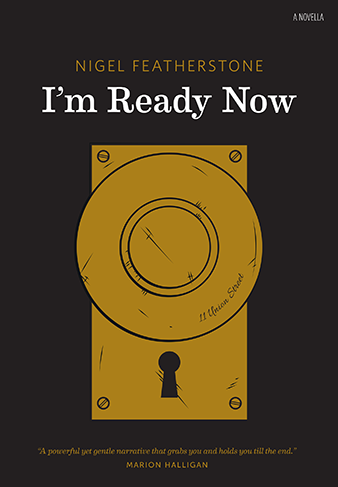
In my forthcoming novella, I’m Ready Now, to be launched in Canberra on 22 November by Blemish Books, I write about a very different family. The story is a simple one, but it’s told from two points of view: a mother’s and a son’s. Lynne Gleeson is a fifty-year-old ‘corporate wife’ (that’s how she describes herself) whose husband Eddie, a man who inherited his family’s property-development business, has died of a heart-attack. Theirs was a perfectly functional if not loving relationship, one of considerable wealth and privilege – the family home is a daunting historic mansion called Gleeson House in Battery Point, Hobart. Now that Lynne is alone, she has decided to sell this property, and the family’s other houses, including an architect-designed getaway on Magnetic Island, Queensland. Effectively homeless, she leaves Tasmania to spend a fortnight in Sydney, staying with her son Gordon. But Lynne has plans. Big plans.

Nigel Featherstone, I'm ready now

Cover (Courtesy: Blemish Books)

Meanwhile Gordon, a professional freelance photographer, is thirty now, and despite being in a relationship of five years’ standing, is having what is described as a ‘Year of Living Ridiculously’ – it involves spending his weekends out in Sydney’s bars and clubs, taking drugs, and having promiscuous sex. For his thirtieth birthday, which his step-father’s death prevented the family from celebrating, Gordon has secretly arranged ‘The Ultimate’, which threatens to tear everything and everyone apart. It sounds heavy, it sounds grim, but it’s just about family. So it’s the truth. And, yes, I really think I can say that: the truth.

Family: there are plenty of other things to write about. Fighting wars amongst far-flung stars. Cornering yellow-teethed bad-guys. Hacking up zombies. Sex, which as I know better than anyone, doesn’t always have to result in something altogether gruesome nine months later. But still it’s family that I write about, the desire to raise someone in your own likeness, to have your best go at doing a decent job of it, to leave something worthwhile behind. All I’m going to leave behind is a handful of stories in the flickering fluorescent-light basement of the National Library of Australia.

*

Last month my older brother and his fourteen-year-old son dropped in on their way to the snow-fields. We went down to a café in the mainstreet for lunch and caught up on all that was happening in our various worlds. An hour later it was time for them to continue on their way south. The day was cold and blustery, the sort that makes my hands turn blue and my mood turn a similar colour. Dust was being flung around and as my brother and his son got into their brand-new four-wheel-drive I began to cough and splutter wildly.

My nephew, who’s not big on conversation and his favourite thing ever is his skateboard, wound down the window and stared at me fair-square in the face and said, ‘Are you sick?’ He looked genuinely concerned. ‘No,’ I said, ‘there’s a typhoon going on out here and it’s hit the back of my throat.’ His eyes brightened right up and he laughed. As my brother drove the two of them away, I sent my nephew a text message: ‘Have a great time on the slopes.’ He wrote back: ‘Have a good week.’ When was the last time someone had wished me a good week? I couldn’t remember. But I loved those words. They moved me. And they still do.

If I have a motivation to write, it’s to move people.

So, despite everything I know about myself, after forty-four years of determined self-direction, to the point that I’m now, to put a twist on something Quentin Crisp once said, one of the stately homos of Goulburn, I watch the dying moments of a rugby league season and can’t take my eyes off the men – proud, probably even gentle men (when they need to be) – who lead their children around a football field; it’s not the men who fascinate me, but the big hands holding the little hands. And I read great Australian novels about family and generations and personal history amongst the maelstrom that is the bigger political and social context. And I write stories about people who do their utmost to raise the best of kids. And I keep in my mind a simple text-message from my nephew.

But I also recall something the US poet and civil rights activist June Jordan once wrote: ‘In the name of motherhood and fatherhood…we threaten and suffocate and bind and ensnare and bribe and trick children into wholesale emulation of our ways.’ My unborn children should be grateful that they had me as a father. Hopefully the ones that live on the page are much more optimistic about their chances in the world.

Monday musings on Australian literature: Guest post from Marilyn of Me, You and Books

I first “met” Marilyn earlier this year when she decided to take part in the Australian Women Writers Challenge 2012. There aren’t many non-Australians who have signed up for this challenge so Texas-resident Marilyn stood out. She is a retired professor of a small liberal arts school in the USA, where she taught women’s history, black history, US social history, and women’s studies. We started “talking” about the similarities and differences in our respective settler nations, and discovered that we share some interests in the intersection between literature and history. She seemed a perfect person to ask to do a Guest Post for Monday Musings. Luckily for me she said yes … thanks Marilyn! Here is her post:

Writing about Indigenous Peoples: Grenville and Clendinnen

I never set out to become a critic of Australian writers. When I started blogging last January, I joined the Australian Women Writers challenge because I wanted to read more globally. Then I read Anita Heiss’s guest post on Australian Indigenous Women Writers and started reading books by and about Indigenous women. I was hooked.

In the past, as a white scholar, I have researched and taught about African American, Native American, and Hispanic peoples in US history. In Women’s Studies, I also have explored the differences between the stories that women and men typically tell about women. With an African American colleague I researched and wrote about Black Women’s Clubs in Kansas. In my own mind, I have played with questions of how those from the dominant culture can write with authenticity about those our culture has defined as Other. Reading books by and about Australian Aboriginals put me back into those issues.

Kate Grenville and Inga Clendinnen have both written about the original encounter between British settlers and Australian Aboriginals. Both have strong views about how to approach the subject. In 2006, after the publication of Grenville’s The Secret River and in the context of the Australian “History Wars,” the two publicly debated their different viewpoints. Having recently read several books by each, I see their debate as crystallizing the issues for all of us who seek to read and write those who are different from us in essential ways.

Grenville writes as a novelist and Clendinnen as an historian, making some of the differences between their writing predictable. As an historian, I may be biased in favor of Clendinnen. But their initial perspectives on Indigenous people are even more divergent and more critical. Clendinnen speculates equally about the British and the people they found in Australia. Grenville explicitly immerses herself in the characters based on her ancestors and views the Indigenous people as “too different” to attempt to understand.

As many of you know, Grenville is a superb writer, in part because she literally puts herself into the landscapes and characters of her stories. For her Thornhill books, she sailed along the rough Australian coast and stepped into the wilderness just off the path to try and discover how her ancestors would have experienced those places. And she is able to convey what she has experienced to her readers. In part, her method works because people, past and present, share basic human thoughts and feelings. Clendinnen points out, however, that the British whose experiences Grenville seeks to know and describe are really not like those of us who read her novels today. Grenville is able to make people from the past seem real, but she can not know them more accurately than historians, as she may have claimed to do. She later retracted comments which implied that fiction was superior in telling what really happened. It may indeed be better at conveying the feelings, but it cannot prove their reality.

Clendinnen is very aware of the rules that historians agree to follow in their writing. She sometimes chaffs at those rules, describing herself as Gulliver held down by all the little ropes of the Lilliputians. Historians are limited by the “evidence.” They don’t write oral dialogue into their books, and they state the sources of their information, for example. In the end, Clendinnen accepts her identity as an historian. But her discipline is changing as historians, like others, face the implications of shifting understandings of “memory” and “truth.” With some assistance from anthropology, Clendinnen seeks to squeeze out clues to the larger cultural significance of human actions, and she is more willing to speculate than historians have traditionally been willing to do. Looking very carefully at the accounts written by British officials about their first contact with the Australian Aboriginals, she analyzes both groups and the values held by each, revealing both the cultural misunderstandings and the confusion on both sides. She points out how initially both groups were hopeful, even willing to “dance with the strangers.” Gradually, however, each side misread the other and tension between them grew. The British could not conceive of the rituals the Australians were enacting, and the Australians could not grasp why the British lashed and hung members of their own community.

What is unusual here, and in sharp contrast to Grenville’s first and third Thornhill novels, is that Clendinnen explicitly gives the Australian Aboriginals and the British equal treatment. Deeply aware that societies define “truth” differently, she sees both groups as equally human. She explicitly rejects any assumptions that the British accounts are objective rather than filled with their own value judgments. In contrast, Grenville stops at the surface of the Indigenous people, portraying them as if they were objects, not as she treats her fully developed Anglo characters. In doing so, she does recreate her own ancestors’ probable perception of them. However, this approach encourages her readers to go on thinking of Aboriginals as silent and thus less than human.

In The Lieutenant, the second of the Thornhill books, Grenville is able to write with an authenticity and feeling about the Indigenous people not present in the other books. Grenville does a fine job of using history as a starting point for this novel. She uses some of the same source material that Clendinnen used in her historical work, Dancing with Strangers, but she goes in a difference direction. First, she creates the character, Daniel Rooke, the fictional version of William Dawes, who kept the notebooks which Grenville used in researching the novel. She envisions him as a boy and young man with a prodigious mathematical ability but no social skills. When Rooke comes to Australia as the astronomer for the First Fleet, one of task he sets himself is that of learning the language of the people already living there. He realizes that learning individual words, as others are doing, is not enough. He wants to grasp the structure and feel of the language. A bright, young Indigenous girl agrees to help him learn in exchange for his teaching her English. Grenville says she is ten or twelve years old, the age that Rooke remembers his dearly loved sister as being. A delightful exchange develops between the two, not romance but the shared excitement of discovery and learning which Grenville describes wonderfully. In the process, Rooke becomes sharply aware of the native peoples’ humanity and, with joy and pain, of his own. As events unfold, he is forced to realize that these human bonds conflict with his duties as a military officer.

Despite their previous disagreements, Grenville follows Clendinnen’s approach to conceptualizing Indigenous people in The Lieutenant. Her major character is British and his changing thoughts and feelings are the focus of the book. When he gets to Australia and begins to work with the people there to learn their language, however, he is increasingly aware of them as real people, not as the silent shadow figures that appear in her other books. Native and British are equals; in fact he realizes that at times the girl is quicker than he is to figure things out. Perhaps Grenville is capable of doing this in this particular book because she stayed so closely to the actual words written in Lawson’s notebooks. She notes, in something approaching a footnote, that the conversations between Rooke and he young girl were not imagined but taken directly from the notebook. She only creates the feelings and thoughts that might have accompanied those words. Clendinnen and any other historians would be impressed. As I read, I didn’t care whether or not Grenville’s descriptions had actually happened because she stayed so close to what we can know in her imagining.

Grenville shows us in The Lieutenant that an author need not be Indigenous to write authentically about them. Using the notebooks left by William Dawes seems to have helped her achieve this. Sadly, she was not able to do the same thing in her next novel where the documents she used were written by those who did not honor and listen to those unlike themselves. Perhaps listening is the key; listening to documents, listening to voices that are unfamiliar. It is hard work, however, for an author to understand and write from the perspective of the Other. But it can be done, as Grenville shows us in The Lieutenant.

I agree that is easy to expect too much of novelists who write historical fiction. But I believe that the most basic requirement of the genre is that authors not treat any group of characters in their books as empty stereotypes. For years male authors treated women in this way until, finally, women began to introduce women characters that were as fully human as their male ones. Now we seeing fuller and more authentic women in men’s writings as well as women’s. We need to make the same change in how we write about other groups which have been subordinated in the past. That is what it means to move beyond colonization and assumptions of white superiority.

Relevant writings. Links to my reviews and online articles.

Grenville, Kate. The Secret River (2006), The Lieutenant (2008), Sarah Thornhill (2012) and “Unsettling the Settlers.” I tried to obtain her Searching for the Secret River, but no libraries in the US have a copy to loan.

Clendinnen, Inga. Tiger’s Eye (2001), Dancing with Strangers (2005), and her online essay, “The History Question: Who Owns the Past” (2006).

And now Marilyn and I would love to hear your thoughts on the books and/or issues she raises here.

Monday musings on Australian literature: Guest post from Christina of Memory and You

As with most of my guest posters here, I met Christina through blogging and thus discovered not only another Australian litblogger (there aren’t many of us) but one who is also a writer. Her special interest is memoir and her blog is titled Memory and You. I enjoy (a good) memoir but don’t get to read as many as I’d like, partly because it is not always easy to determine which are the “good” memoirs. And here is where Christina comes in. She has a PhD and a Masters degree in life writing, and is writing memoir herself. She also mentors and teaches other writers, and reviews books for a couple of newspapers. She has thought a lot about memoir and so I’m thrilled she agreed to write a guest post on it for my blog. Thanks Christina …

Memoir as an act of healing

Memoir is a multi-faceted art, and has become the people’s voice. There is even an Australian publisher’s prize for an unpublished memoir, The Finch Memoir Prize, awarded annually. For me, there are two sorts of memoir: the ‘good story’ that tells us how it is to experience life events that have shaped, perhaps damaged, a life; and the remarkable memoir, that fuses the personal with the universal, and takes us on a journey that we remember and want to revisit. Of the first type, there are many, and more being published each year. Of the second type, there are a few, bright stars that shine out in a crowded galaxy.

It is the bright stars that I want to focus on here, and share with you some that I think are, like a good wine, worth adding to your library (or cellar). The three Australian memoirs I want to talk about are: The Young Widow’s Book of Home Improvement, by Virginia Lloyd (2008); When it Rains, by Maggie Mackellar (2010) and Reaching One Thousand, by Rachel Robertson (2012). These are all memoirs that deal with loss, grief, disability, and with how the subject, the narrator, has been affected  and has survived. There are also some renowned memoirs by overseas writers on this theme, including Joan Didion’s Blue Nights and The Year of Magical Thinking, and Joyce Carole OatesA Widow’s Story.

Some critics say that grief should remain private, unspoken. But memoir can be an act of healing, not only for the writer, but for readers who have suffered and seek stories of others who have survived loss, abuse, betrayal. And even if we have not been so unfortunate, through empathy, we enter another’s pain and are strengthened and illuminated by their sharing. When the personal is fused with the universal, in a memoir that makes us pause, catch our breath, linger and want to return, we share what it means to be human, and finish the book feeling different, more alive.

The Young Widow’s Book of Home Improvement is, as the sub-title tells us, about love and renovation. The author, Virginia Lloyd, lives in an old inner city 19th century house that is attacked by rising damp. The story opens with the diagnosis, by an expert, that it needs extensive repair. The expert is incredulous that Virginia has let the problem get so bad. Her reason, which she does not tell him, is that when the problem surfaced, her husband was dying. She met John when she was 32 and single. He was 47, divorced, and had been diagnosed with a rare tumour at the base of his spine. She knows this, but he is not defined by his illness, and they fall mutually and deeply in love. She moves in with him, and within months, they are married. 11 months after the wedding, she buries him. Throughout the love story and the final, agonising ending, the theme of repair to the rising damp, and of her steps away from the grave, are woven into the narrative. It is impossible to summarise briefly how artfully and seamlessly this is done, and how, as a young widow, she is released from the self that briefly loved and lost into an undefined future, in a house that is both an ending and a beginning; her life as a wife is ended, and her life as a widow and a person who is not defined by her past is beginning, as she prepares to “take flight” for New York, with John’s blessing and desire that she should live “a rich and full life”.

When it Rains, by Maggie Mackellar, narrates how her life is shattered by the sudden descent of her husband into psychosis and suicide, closely followed by her mother’s diagnosis of aggressive cancer, and death within nine months. She and her husband have a five-year-old daughter, and she is six months pregnant with their son when she becomes a widow. After these terrible losses, which she had no time to prepare for, she struggles on for a year in the city, then moves with her children to the family farm in central western New South Wales. Heat and drought are constant themes, but the simple life, the horses and other livestock, the rhythms of the land and the seasons, slowly restore her and her children to a sense of worth and a reason for living. She takes the scary step of resigning from her academic job, and becomes a country woman and a full-time mother and writer. She struggles with two griefs, the grief for her beloved mother, which is “open and raw and honest”, and the intertwined, ambivalent grief for her husband, whom she had loved unreservedly and feels betrayed and abandoned by. He haunts her dreams, and “the question of why one death is so different from another, one grief so perplexing, so hidden, and another so obvious, so instinctively harrowing, keeps niggling me”. At last, she begins to release him, and when her daughter is nine, and agrees that it is time to let go, they go back to the sea, and the children throw his ashes into the air:

He mixes with salt and wind. He falls on rock and heath. He falls into beauty as the children scatter him like chicken feed. They laugh and chase each other on the high headland in the screaming wind. I say goodbye. At last, I say goodbye.

The epilogue: it’s Christmas Eve back at the farm, and a big rain is forecast, breaking the long and severe drought. She lies in bed, quiet and lonely. Then the rain starts to fall. “Tomorrow, I think, because of the rain, tomorrow will be different.”

Finally, a few words about Rachel Robertson’s memoir of her relationship with her autistic son, Reaching One Thousand. The story of Rachel’s awakening to her son’s difference, and her search for ways of relating to him that respect his difference and allow them to develop trust and intimacy is delicately told, with restraint and honesty. Theories about autism and the mind are lightly woven in and filtered through the narrator’s down-to-earth, ethical, questioning intelligence. Understanding and acceptance bring healing for disappointed expectations, and the joy of sharing a different way of being. One of the delights of this story is that Ben, a story-teller in his own right, has a strong voice, and is given the last word. I wrote a longer review of this memoir in my blog.

If you haven’t read these stories, I recommend them. They are shining examples of memoirs of healing.