Helen Garner, Everywhere I look (Review)

Helen Garner, Everywhere I lookI was very sad to come to the end of Helen Garner’s latest essay collection, Everywhere I look. It was such a joy – such a joy – to read. Garner ranges across a wide variety of subjects from a kitchen table to Russell Crowe, from some of the darkest things humans do to each other to the beauty of ballet dancers in rehearsal, and she does it in a natural, warm voice that makes you almost feel as if she’s sitting across that kitchen table from you. While it would be cheeky of me to say that I now understand her, this collection provides wonderful insight into the way she thinks, how she goes about the business of living, why she writes the things she does. We come to know her as a human being who muddles through life, making mistakes, questioning herself, confronting challenges, rather than as the literary doyenne she in fact is. In other words, as she always does, she lays herself open.

I call these essays, but some are probably better described as articles or perhaps even columns, and there are a few which read more like collections of jottings or diary entries. Form isn’t the important thing here, it’s the content. The collection comprises 33 pieces, all but three of which have been previously published. Three date back to the 1990s. Many were published in Monthly, and some others in the Age and the Sydney Morning Herald. It’s not always obvious why they were originally written, but in this collection they have been loosely grouped into six broad thematic groupings, starting with “Part One: White paint and calico”, which is all about homes and things domestic, and ending with “Part Six: In the wings”, which I’d describe as comprising reflections about life and self. The cover, designed by the award-winning WH Chong, is just gorgeous, and I found myself looking at it several times as I read, opening it out to look at the whole front-and-back panorama.

But now, that common challenge of writing about a collection: what to discuss, what to leave out. I am going to leave out one thing, and that’s her discussion of writers and writing, because I want to save that for another post. Perhaps I’ll start with some “yes” moments, not that I have to always agree with writers to appreciate them, but affirmation can be nice. There’s her jotting in “When not writing a book” in which she expresses elation over the election of Obama. What an exciting time that was, even for us antipodeans. Her statement – “To think I’m alive when this happened” – is one many of us shared. I remember popping a bottle of bubbly with my patchwork group for the occasion.

There are delightful, often humorous, anecdotes about family life, especially about her grandchildren who now live next door to her, and there are little jewels of description, such as this perfect one of Christmas mornings:

The unnerving silence of Christmas morning. No sound of traffic. Sun lies fresh on everything. Birds sing with unnatural sharpness. The air is still.

And I did love her reference to a criticism of Muriel Spark in “Funk paradise”, another diary style piece:

Apparently her letters make no reference whatsoever to current events. So?

This accusation is also levelled at Jane Austen – for both her novels and letters – the implication being that to be valid you have to be political. I contest that. Austen and Spark write compassionately but incisively about human nature. Let others do politics if they will!

However, the section that grabbed me most was “Part Four: On darkness”. Here she explores the dark sides of human nature through five stories/cases about people who have done terrible things to others. This is subject-matter that many readers shy from, and those who do this tend to make those of us who don’t feel a bit ghoulish. Garner writes in this section about some well-known cases in Australia including the rape-murder of Jill Meagher (“The city at night”) and the murder of Luke Batty by his father (“The singular Rosie”). The fifth and last piece in this section is called “On darkness” and it’s about the Robert Farquharson trial which is the subject of her book, This house of grief (my review). In her opening paragraph she writes:

When the book came out I was struck by the number of interviewers whose opening question was ‘What made you interested in this case?’ It always sounded to me like a coded reproach: was there something weird or peculiar about me, that I would spend seven years thinking about a story like this.

She continues, describing how she would try to come up with “sophisticated explanations” for her curiosity, but eventually tired of being defensive. She outlines the complexity of the case – the ordinary people who behave in ways that even they can’t understand or explain – and asks why this is not worth exploring. She says:

People seem more prepared to contemplate a book about a story as dark as this if the writer comes galloping out with all moral guns blazing. A friend of mine told me that the woman who runs his local bookshop had declared she would, under no circumstances, read my book. Surprised, he asked why. ‘Because’, she replied. ‘I know that nowhere in the book does she say that Robert Farquharson is a monster.’

If he had been a monster, I wouldn’t have been interested in writing about him. The sorts of crimes that interest me are not the ones committed by psychopaths. I’m interested in apparently ordinary people who, under life’s unbearable pressure, burst through the very fine membrane that separates our daylight selves from the secret darkness that lives in every one of us.

This is why I like Garner. She’s generous, openly questioning, tender, but fierce too. And just in case you think she has no “moral guns”, read her piece in the last section, “The insults of age”, in which she describes her reaction to a young teenage girl whom she’d seen intimidating/disrespecting some Asian people. Garner writes:

… I saw the Asian woman look up in fear, and something in me went berserk.

In two strides I was behind the schoolgirl. I reached up, seized her ponytail at the roots and gave it a sharp downward yank. Her head snapped back. In a voice I didn’t recognise I snarled, ‘Give it a rest, darling.’ She twisted to look behind her. Her eyes were bulging, her mouth agape. I let go and she bolted away to join her friends …

This is why I like Garner!

There is so much in this book, lighter stuff too, but I’ll leave those delights for you to discover.

In “My dear lift-rat”, her delightful piece on Elizabeth Jolley, Garner says that she frequently wrote about Jolley’s books “in literary magazines, trying not to go over the top”, and that Jolley would write “formal” thank you letters. “I never knew”, Garner wrote, “whether she really liked them, or if she thought I had missed the point”. If Garner can feel that way about writing reviews (or critiques), then I don’t feel so badly about having the same worries! I sure hope, though, that I haven’t missed her points in this one.

awwchallenge2016Helen Garner
Everywhere I look
Melbourne: Text Publishing, 2016
227pp.
ISBN: 9781925355369
Monday musings on Australian literature: Annual anthologies

This post would possibly be better done at the end of the year given that its subject – annual anthologies – relates most commonly to end-of-year publishing. However, not all such anthologies are published at year’s end, and, anyhow, I was inspired to write this post because my reading group is about to do one of these publications. Why not strike while the inspiration is upon me?

I’m going to share just a few that I’ve come across in recent years – ordered by publisher.

Black Inc

BestOf2009PoemsBlackIncMelbourne publisher Black Inc is the company which has made, in recent years anyhow, the biggest contribution to this form. I’m not sure when they started their “Best Australian” series but I’ve found titles going back to 2007 at least. They currently publish three annual editions: Best Australian stories, Best Australian poems and Best Australian essays. I’ve received, or given as gifts, various of these volumes over the years. Their editors change regularly, though not necessarily annually, so, for example, the 2016 edition of Best Australian stories will be selected by Charlotte Wood (whose The natural way of things won this year’s Stella Prize, among other awards). Previous editions have been edited by writers like Amanda Lohrey and Kim Scott. Recent Best Australian poems have been edited by poets Geoff Page, Lisa Gorton and Robert Adamson, and recent Best Australian essays by essayists Geordie Williamson and Robert Manne. These three annual anthologies are books that many of us Australians start looking for as the year draws to an end – and they do make good Christmas gifts for the reader who has read everything!

Griffith Review

The Queensland-based literary quarterly, the Griffith Review, published for several years (issues 26, 30, 34, 38 and 42) an Annual Fiction Edition (though the first one was called the Fiction Issue). The last of these, issue 42 published in 2013, was edited by Griffith Review’s editor Julianne Schultz and author Carmel Bird, and contained stories by recognised writers including Cate Kennedy, Arnold Zable, Tony Birch, Marion Halligan, Margo Lanagan and Bruce Pascoe. These editions focus on fiction, as their name implies, but they also include a smattering of pieces written in other forms, such as essays and poems.

However, in the last couple of years, Griffith Review seems to have abandoned this series, and has published instead what it calls The Novella Project. Numbered II (issue 46) and III (issue 50), these built on what was initially a one-off edition, issue 38 published in 2012. The novellas published were chosen from submissions to novella competitions run by the Review. One of last year’s winners was Nick Earls whom I featured in an earlier post this week. Issue 50 was published in October last year. I have no idea what Griffith Review plans for its last issue of 2016, but it would be lovely if it were a similarly focused “annual”.

Margaret River Press

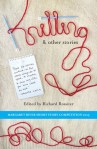
Richard Rossiter, Knitting

Courtesy: Margaret River Press

For four or five years now, Western Australia’s Margaret River Press has been running an annual short story competition, the conclusion of which is the publication of the winning and shortlisted titles in an anthology, usually edited by the judges. I have reviewed, and thoroughly enjoyed, a couple of these anthologies, the 2013 titled Knitting and other stories, edited by Richard Rossiter, and the 2014 one titled The trouble with flying and other stories, edited by Richard Rossiter and Susan Midalia.

The competition attracts both new and established short story writers. In 2015, they received 323 entries, of which 24 were shortlisted for inclusion in the anthology. This initiative represents a wonderful commitment by a small publisher to the short story form.

New South Books

New South Wales based New South Books contributes something a little different to this annual anthology arena – and this is the one my reading group will be discussing next month. I’m talking their Best Australian Science Writing anthology. We will be reading the 2015 edition which was edited by science journalist Bianca Nogrady whose book about death, No end, I’ve reviewed. The 2015 edition is the fifth they’ve published but, not surprising, given my main reading interests, I had not heard of it. However, I’m looking forward to being introduced to, as its promo says, “the knowledge and insight of Australia’s brightest thinkers in examining the world around us”. Its subjects apparently range from “our obsession with Mars to the mating habits of fish”. I’m intrigued. One thing I know is that I’ll be introduced to a whole bunch of writers I’ve never read before! Like Black Inc, New South Books is already promoting this year’s edition. It’s being edited by Jo Chandler, and promotion for it says:

Good writing about science can be moving, funny, exhilarating or poetic, but it will always be honest and rigorous about the research that underlies it.

Do you read annuals? If so, I’d love to know which one/s and why. 

(PS I should add here that I did buy, about a decade ago, one of the O Henry Prize Stories anthologies. It was great reading.)


My literary week (3), mid-winter 2016

Today pretty much marks the middle of winter for us downunder, and what an unusually cold and wet winter it’s been, at least in my city. We’ve had more rain than usual, and we’ve had snow, which is rare for us though not unheard of. Our average July maximum is around 12-13°C but this last Wednesday it barely made it to 7°C. No wonder, as I write this, I am en route to slightly warmer climes, on the New South Wales central coast, where we expect to experience temperatures of 18-22°C in the coming week. Whew. But, none of this relates much to my literary week, so on with the show …

Kibble Award Winners

The winners for the Kibble Literary Awards for life-writing by women were announced this week. I’m thrilled that Fiona Wright’s honest, moving collection of essays, Small acts of disappearance (my review) about her experience of an eating disorder, won the Nita B Kibble Literary Award, which recognises the work of an established Australian woman writer.

Lucy Treloar’s historical fiction novel, Salt Creek, won the Dobbie Award for a first published work by an Australian woman. I’m yet to read it, but as it’s been shortlisted for this year’s Miles Franklin Award I would like to try to fit it in. You can check out Lisa’s review at ANZLitLovers.

Both these books were shortlisted earlier this year for the Stella Prize. As happy as I am about Fiona Wright’s win – it’s an excellent book – I did have a secret little wish that Elizabeth Harrower’s A few days in the country, and other stories (my review) would win. She hasn’t been recognised nearly enough.

Helen Garner on mothers and daughters

Helen Garner, Everywhere I lookI am currently reading Helen Garner’s beautiful collection of essays, Everywhere I look. A review will follow soon-ish – that is, as soon as I finish the book instead of  soaking up some sun. In the meantime, I’ll share a quote from her essay about her complicated relationship with her mother. Helen, born in 1942, was the eldest of 6. She writes:

When, in the street, I see a mother walking with her grown-up daughter, I can hardly bear to witness the mother’s pride, the softening of her face, her incredulous joy at being granted her daughter’s company; and the iron discipline she imposes on herself to muffle and conceal this joy.

This brought tears to my eyes.

New ways of telling stories

Finally, I want to share some ideas I heard last Saturday from ABC Radio National’s Future Tense program. It explores change from all sorts of angles. In this particular session they interviewed three novelists about new forms of story telling. My comments below are based on some quick notes I made at the time, while I was doing some housework. I haven’t had time to listen to it again, but you can do so at the link I’ve provided if you’re interested.

First off, and the least “controversial”, was Australian author Nick Earls on his recent series of novellas. Wisdom Tree. (Lisa has reviewed the first two at ANZLitLovers.) Novellas aren’t new of course, but Earls sees them as meeting the needs of contemporary readers (though he believes that big books will never be completely replaced) and as having excellent podcast potential. The thing that interested me most about this interview, however, was his requirements for a good story: it must be authentic; readers must be able to connect with the characters (he didn’t say we must “like” or even “engage” with them); and there needs to be something at stake that will interest the readers and make them want to read on.

Next was Naomi Alderman, an author-cum-video game developer from London. She argued that video games are the new “story form”. I was fascinated by this, partly because of recent discussions I’ve had with Son Gums. He has always loved stories. In his primary school years, he got into comics, alongside his love of “chapter books”, but by his late teens, comics and graphic novels had become his main fare. He never, though, really got video games the way his friends did – until very recently! Now in his early-thirties, he’s come to them quite late. I was surprised, but the reason he gave was the new style of story-based games. If I hadn’t had these conversations with him, I may not have connected quite so quickly with Alderman. Anyhow, she also gave her story requirements: the characters must be real; the worlds created must be coherent, in that the players must be able to imagine humans in them; and there needs to be meaningful themes like justice, revenge, freedom. In conclusion, though, she said quite categorically that if you want to understand story culture today, you must understand games and the way they use storytelling.

Finally, we heard Sydney novelist Mike Jones on virtual reality. He has created a piece of crime fiction called VR Noir. It premiered at this year’s Vivid festival in Sydney. I was interested in his idea that we tend to choose what we read/see/experience on the basis of what “choose to feel”. In other words, when we look at a selection of movies at the local cinema, we choose what to see on the basis of what we want to “feel”. I think there’s a lot of truth in that, though I’ve never quite thought about it that way. VR feeds into this “experiential” need, he says –  the “reader” (“user”) is put into the story and experiences it from within. VR, he said, draws from both video games and interactive theatre, and is still very new.

Do you think our story-telling (story-reading) needs have changed in our modern digital, interactive, connected world?

Monday musings on Australian literature: Miles Franklin Award, the third decade (1978-1987)

Miles Franklin

Miles Franklin, c. 1940s (Presumed Public Domain, via Wikipedia)

Today’s post is the third in my little sub-series of posts looking at the Miles Franklin Award by decade.

As before, I don’t plan to list all the decade’s winners, as you can find them on the Award’s official site. Instead, I’ll share some interesting snippets, inspired by my Trove meanders.

Women writers on the rise?

The late 1970s and 1980s saw, I believe, a flowering of Australian women writers, similar to that we saw in the 1920s-1940s with the likes of Katharine Susannah Prichard, Marjorie Barnard/Flora Eldershaw, Eleanor Dark, and Christina Stead, not to mention Miles Franklin herself. This flowering is partly evidenced by the fact that while just five awards were made for books by women in the first two decades, another four were made to women in this third decade. These were Jessica Anderson’s Tirra Lirra by the river (1978) and her The impersonators (1980), Elizabeth Jolley’s The well (1986), and Glenda Adams’ Dancing on coral (1987).

In 1979, The Australian Women’s Weekly announced Jessica Anderson’s win under the headline “Women take honours in literature, fashion”. It seems the awards were handled differently then, with the winner being advised before the presentation. The Weekly describes Anderson’s reaction:

“I was thrilled,” she said. “Like all Australian writers, I think we owe a tremendous debt to our predecessors. The award does encourage writers. You feel someone out of the past has spoken to you.”

One of the Award judges, the well-known and successful publisher-editor, Beatrice Davis, said of Anderson’s book that “It has an unpretentious elegance, an individual quality so different from the realistic documentary that still dominates the field in Australian novels.” But Jessica Anderson told The Weekly that, the book’s content annoyed a lot of people, particularly men:

“I didn’t mean it to be a liberationist gesture,” she said. “Men recorded their experiences for hundreds of years and women read them with admiration.”

Hmmm … this is fascinating, and an issue that we still confront, I believe. Meanwhile, if you haven’t read Tirra Lirra by the river, add it to your list. It’s a great read. I read it before blogging, but Lisa has posted her thoughts on her blog.

Incomprehensible or outstanding?

David Ireland won the award in 1980 for the third time with A woman of the future. Ireland said at the time that it had been initially rejected by Macmillan because it was “too incomprehensible”. The judges called it “outstanding”. Well, four of them felt it was. The fifth, Colin Roderick, called it “literary sewage”, The Canberra Times reported.

A few months after it won, a long article giving “a feminist perspective” appeared in Woroni, the ANU’s student paper. The writer, Andrea Mitchell, starts by discussing Ireland’s previous novels in which women appear as “domestic or sexual adjuncts”. Ireland, she argues, does not dissociate himself in these novels from his male characters’ poor treatment of women, but, she writes

A Woman of the Future offers a different and more rewarding perspective on women in society. A complete turnabout, Ireland presents a woman’s life and experience in the first person.

It’s an in-depth analysis, but I’ll just share her assessment of what she thinks he is doing, because I love it:

I would suggest that Ireland is not only satirizing sexism, but levelling criticism at a certain style of feminism epitomized by German Greer’s A Female Eunuch: That is, that in order to change the subservient position of women, women must become as ruthlessly self-oriented and competitive as men have traditionally been. Ireland reasonably sees the same danger for women as for men who pursue social power: a less than full human existence, and alienation in their personal lives.

Here come the men!

Peter Carey, BlissIf this decade saw a flowering of Australia’s women writers, it was also when some of the men who are now among Australia’s top male writers won their first awards. I’m talking Peter Carey, who won the first of his three Miles Franklin Awards with his debut novel Bliss, and Tim Winton who won the first of his four awards with his second novel Shallows.

The Canberra Times reported judge Beatrice Davis as saying that

Carey was an “effortless stylist” who “gives a sense of immediacy to every vivid scene and compels belief in every character no matter how bizarre”.

While I haven’t loved every Carey I’ve read, I do love the fact that you never know what form or “style” he’s going to produce next. He is exciting to read.

Tim Winton won the 1984 award with his novel Shallows. The award was not made for 1983 (see below) so I was intrigued to read the following statement by the judges quoted in The Canberra Times report:

The merit of Winton’s novel is reflected by the high quality of the 29 books considered this year for the $5,000 award … Among the other books entered were David Malouf’s Harland’s half acre, Elizabeth Jolley’s Milk and honey, Thomas Shapcott’s The white stag of exile, Nicholas Hasluck’s The Bellarmine jug (The Age Book of the Year), David Ireland’s Archimedes and the seagle, Alan Gould’s The man who stayed below and Olga Masters’s Loving daughters.

Interesting.

Now, I’m a Winton fan but when I read Shallows not long after it came out I clearly remember feeling it overdid the imagery a bit, that it was a little “overwritten” (which is something I’ve just read Helen Garner felt about his first novel). Still, the judges saw “ample proof of a developing talent” and I certainly wouldn’t disagree with that. The judges also said:

The merits of this novel are perhaps most evident in the strength of the characterisation — these characters stand on their own — and in Winton’s ability to bring the early history of whaling into an intelligible relationship with present-day attitudes to the whaling industry.

Fair enough. Winton is great at writing character, and setting. He, like, Carey, is always exciting to read.

Another interesting winner this decade was Rodney Hall, with his wonderful Just relations, but I just don’t have time to share everything I found.

No award (again)

As happened in the second decade, there was a year in this third decade, 1983, in which no award was made. The Canberra Times reported that most of judges for the 1983 Miles Franklin Literary Award “felt the standard too poor to justify presenting it”. The report continued that “if no novel of sufficient quality is available, the author of a play for stage. radio, television ‘or such other medium as may develop’ can be the recipient but few scripts are received”.

In 1983, novels were published by people like Brian Castro, Sara Dowse, Elizabeth Jolley, and Peter Kocan. Interestingly Peter Kocan’s The cure won the NSW Premier’s Literary Award and Elizabeth Jolley’s Mr Scobie’s riddle won The Age Book of the Year Award. There were also short story collections – but these, unlike plays and scripts, are not eligible it seems – by Carmel Bird, Robert Drewe, Beverley Farmer, amongst others. I’m not saying any of these should have won, but in the light of what the judges said the following year – including highlighting The Age Book of the Year as indicative of quality – it does make me wonder.

Past posts in the series

Larissa Behrendt, Under skin, in blood (Review)

ANZLitLovers ILW 2016In my last review – that for Ali Cobby Eckermann’s Ruby Moonlight – I shared the following lines:

Jack knows the remainder of the conversation
before it was spoke ya see any blacks roaming
best ya kill ’em disease spreading pests
(“Visitor”, from Ruby Moonlight)

Quite coincidentally, this point I was making, that it was not “the blacks” who brought disease, turned out to be the subject of my second choice for Lisa’s 2016 Indigenous Literature Week, Larissa Behrendt’s short story, “Under skin, in blood”. I chose it because I wanted to read at least something by Behrendt.

The story is told in first person by an older woman – called Nana Faye by Merindah, the granddaughter she’d raised – and is divided into three parts. The first and third parts are set in the present while the middle part flashes back to Faye’s past as she tells us why she no longer has her husband and son (Merindah’s father).

In the present, Faye (and Merindah) live in Faye’s grandmother’s country, Gadigal land, around Sydney. But Faye spent her married life, the place where Merindah was born, in Baryulgil on the land of the Bunjalung people. Faye’s flashback is inspired by a discussion she has with university student Merindah who is researching the Northern Territory’s Kahlin Compound, a place to which “half-caste children” (members of the Stolen Generations) were taken between 1911 and 1939. It had – and here you’ll start to understand my introductory paragraph – high rates of leprosy. Merindah is researching claims – claims which have indeed been made and researched – that children there were used as guinea pigs for leprosy drugs. Whether or not these claims are true – they may never be fully resolved due to lack of records – the case causes Faye to comment that the most lethal things white settlers brought to Australia were not guns and alcohol but “microbes” which were “flowing through their veins, floating in their blood, under that skin like bark from a ghost gum tree”. Leprosy, in other words, and malaria, small pox, syphilis, influenza. These killed more indigenous people in the first year of white settlement than bullets.

But these microbial-based diseases are not the main focus of Faye’s memories. It’s the mine in Baryulgil, the mine that opened in 1944 and which everyone thought made them lucky. Having lost their land to the pastoralists, but having decided to stay to be close to their country, the people suddenly found they had jobs – but, what were they mining? Asbestos! Faye tells of the tragic impact asbestos had on her husband Henry and son Jack:

… the mine we felt lucky to have, that gave us the benefits of work and kept the community together was slowly but surely killing us.

The scandal is that there was awareness of deleterious health effects of asbestos in the early 20th century, and certainly by the 1960s its relationship to mesothelioma was recognised. Australia’s best known asbestos mine, Wittenoom, was closed in 1966, ostensibly for economic, not safety reasons. It is telling though that Baryulgil was not closed until 1979. Faye says that the official enquiries that came later found

the mine was barely profitable and only continued to operate to prevent permanent unemployment among the Aboriginal workers in the area. Turned out this employment that was supposed to be doing the community a favour was actually a death sentence.

So, Wittenoom was closed more than a decade earlier because it wasn’t profitable, but different decision-making was used for Baryulgil. Now, normally, I’d approve of decision-making that took into account social values but this one is a bit suss.

This is, I have to say, a fairly didactic story. It could almost have been an essay, except that Behrendt has clearly thought, as she in fact says in her interview with Annette Marfording, that telling it as a story, showing the impacts of policy on human beings, would be the more effective way to go. So, while the story imparts a lot of factual information, Faye shares the devastating impact on her of losing her husband and son. She also tells how indigenous cultural practices work to their disadvantage in a white world. She says:

The hardest thing is to trust these people. These people who have the power of life or death over you, and use that power carelessly. These people we are mute to argue against. And our words never seem a match for what they wrote down, even though we have good memories and they make mistakes.

Now, that is probably the most important message in the story.

awwchallenge2016Larissa Behrendt
“Under skin, in blood”
in Overland (203), Winter 2011
Available online

Ali Cobby Eckermann, Ruby Moonlight (Review)

ANZLitLovers ILW 2016Ali Cobby Eckermann has been on my radar for a while, so when Lisa announced her 2016 Indigenous Literature Week, I decided Eckermann’s verse novel Ruby Moonlight would be my first choice. This novel won the poetry prize and the book of the year in the 2013 New South Wales Premier’s Literary Awards.

I enjoy verse novels but don’t read them often enough to build up a comprehensive understanding of the form. Eckermann’s Ruby Moonlight is the shortest and sparest of those I’ve reviewed on this blog, but its narrative is just as strong. It is set in colonial South Australia – the not-very-poetic subtitle being “a novel of the impact of colonisation in mid-north South Australia around 1880” –  and tells the story of Aboriginal teenage girl, Ruby Moonlight, whose family is massacred by white settlers. The novel reads like a classic three-act drama. It opens with the massacre and Ruby’s lonely wanderings, and then moves into a somewhat idyllic phase when Ruby meets the also lonely “colourless man”, Miner Jack. They become friends and lovers, giving each other the company and warmth they both so desire:

good friendships
blossom
slowly
(from “Friends”)

and

in the moonlight
solace is shared
in this forbidden friendship
( “Solace”)

But it can’t last, of course, not in that place and time, because neither the colonisers nor the Aboriginal lawmen will accept it: “it is the oasis of isolation/that tolerates this union”. Nothing else.

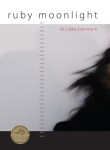
Ali Cobby Eckermann, Ruby MoonlightThe poetry, as you can see from my excerpts, is spare. There’s no punctuation, not even apostrophes, and no capitalisation except for proper names. Lines are generally short, and description is generally minimal. There’s a lovely but restrained used of repetition, and the rhythm is matter-of-fact, that is, it moves the story along with few flourishes (if that makes sense). The story is told through separately titled poems, each of which occupies its own page, though some only part of it. The titles are simple and to the point – “Ambush”, “Friends”, “Oasis”, “Hate”, “Cursed”, “Sunset”. You could almost track the trajectory of the story through its titles. This spareness, I think, enhances the emotional power. The poems say what they need to say without embellishment.

The excerpts above are from more narrative-focused poems, but there are also poems which provide context, describing the seasons as time passes, commenting on the landscape within which our characters operate, providing a sense of the country’s spirits watching, tending, ready to act. The novel opens on the poem “Nature” which sets the scene perfectly by conveying the opposing faces of nature – “sometimes/turning to/butterfly” or sometimes just to “dust” – which also subtly heralds the coming massacre. And, a few poems in, soon after the massacre, comes one describing nature’s nurturing of Ruby:

chirping red-browed finches lead to water
ringneck parrots place berries in her path
trust nature
(“Birds)

The words “trust nature” are repeated at the end of each couplet in this poem, providing a soothing mantra for Ruby.

Most of the poems are presented in couplets or triplets, but occasionally one uses a different structure, usually to mark a dramatic change. Early in the novel is the devastating, shaped-poem, “Ambush”, in which all lines but one comprise single words (“hack/hack/hack” it starts); and half-way through is another shaped-poem, “Tempo”, which marks both the passing of time and acts as a transition from a short time of idyll for Ruby and Jack to the appearance of others:

Jack knows the remainder of the conversation
before it was spoke ya see any blacks roaming
best ya kill ’em disease spreading pests
(“Visitor”, immediately after “Tempo”)

The irony of it! Who brought disease?

So, Ruby and Jack. One of the delights of the book is the sympathetic representation of these two characters. Bereft after the loss of her family, Ruby stumbles across Jack, a loner who scrapes a living out of fur-trapping. Both are outcasts in colonial Australia, Jack an Irishman, a hated “Mick” (“a music-less man stands aloof at the bar/scowling his hatred for the Micks”, from “Loose”) and of course Ruby, a lubra or black woman. These two cautiously find a “small trust … growing” (“Solace”) between them, but it is a “forbidden friendship”, forbidden from both cultures, so their times together are snatched carefully. Ruby is watched by members of another mob, people who are “slowed by fatigue” and “weary with worry” (“Signs”), and who know the dangers:

camp smoke whispers
tell story of the killings
(“Whispers)

Jack and Ruby become the target of the aforementioned “music-less man” – a man who’d lost his “music heart” after an act of barbarity – and his hired help, two brothers “with rotten teeth smirks” (“Scheme”). Hatred and greed fuel these men. And so the scene is set, but it doesn’t quite play out the way you expect, because Eckermann wants to focus more on our universal need for warmth, love and companionship, and also on survival.

The novel is imbued with indigenous presence, from the opening where Ruby’s family live in “Harmony” in their environment, through her meeting with the other mob, the Cloud people, “on their winter trek”, to the appearance of “Kuman”, her guardian spirit who guides her to safety.

Ruby Moonlight is a special read that adds another perspective and voice to colonial contact narratives, a voice that pays respect to indigenous law and traditions, addresses the politics of contact, but also recognises our personal and universal need for love and companionship. It’s a warm and generous book, but it doesn’t pull punches either. A good read.

awwchallenge2016Ali Cobby Eckermann
Ruby Moonlight
Broome: Magabala Books, 2012 (2015 reprint)
74pp.
ISBN: 9781921248511

Julie Proudfoot, The neighbour (Review)

Julie Proudfoot, The neighbourWhen Julie Proudfoot offered me her debut novel, The neighbour, for review I was more than happy to accept. After all, it had won Seizure magazine’s Viva La Novella Prize in 2014, and you all know how much I love a novella. I must say it’s a gorgeous looking book. I’m not one to judge books by their covers, but neither am I immune to a beautiful book, and The neighbour is that – from its rich, green and mysteriously intriguing cover to its crisp, clear internal design. It is such a pleasure to hold and read. No wonder I prefer print to electronic!

But of course, the most important thing is the content, and the book delivers here too. It’s an Ian McEwan style page-turner. By this I mean it starts with a dramatic event which sets in train actions and reactions as the characters struggle to come to grips with the event, with its impact on themselves and their relationships, and with the way it exposes secrets and past traumas. The event is the horrible but accidental death of a child due to a mistake made by a neighbour. The circle of characters is tight – Ryan, Angie, and the nearly-five Lily, who live next door to Luke, Laney, and their four-year-old son Sam. On the opening page, Luke acknowledges, internally, that a frisson of tension (“a nervous kind of energy”) exists between himself and Angie  – and then she asks him for a favour he does not want to do.

“His actions were wrong, but now he can right them”

The neighbour is a novel about psychological disintegration brought about by grief and guilt, and about the tension that ensues when one wants to forget, another wants to remember, while yet another wishes to atone. Grief, we see, is a personal, private thing, and particularly so when it is bound up in a secret that prevents its full expression. Luke has always been Mr Fix-it for Angie and Ryan, so of course he wants to keep on fixing. If he can just fix their house, the loose roof-tiles, for example, he can make amends. Actions, he tells Angie, are the only way he can “beat down” the guilt. But you can’t help or fix for others if you are falling apart yourself, and you certainly can’t if those others don’t want that help. This is something Luke has trouble recognising as his thinking becomes more and more disordered.

And Luke’s thinking becomes so disordered, in fact, that his behaviour moves into quite bizarre territory. His determination to fix things for Angie and Ryan, despite their refusal, edges him into stalker territory. But, stranger still, Lily’s death resurrects (I’ve chosen this word specifically but I’m not going to explain why!) memories of his older brother’s drowning when they were children. Luke’s response to these memories is, there’s no other word for it, sadistic, but we go with it because we know Luke is losing his hold on reality. He is not a sadist. He is a troubled man. We care about him – because Proudfoot makes sure we do.

She achieves this by telling most of the story through Luke’s perspective, though we also occasionally enter other perspectives, such as Angie’s, too. It’s in third person, but present tense, so we journey with Luke, and other characters, as they try to make sense of their situation. Here’s Luke after Ryan has vehemently rejected his attempt to fix their roof:

As he climbs back over the fence, he can feel Ryan watching him. It’s going to be tough. Ryan will fight it. He knows this, but they’ll thank him in the end. They don’t even know what they need right now. He’ll get them all back on track. Ryan and Angie need never be aware of it.

The language, as you can see, is clear and direct. Because we are in Luke’s head most of the time, description is kept to a minimum, but the writing is nonetheless evocative. Sentences are generally kept short, which keeps the story moving and develops tension. The short, choppy sentences also mimic the characters’ erratic, distressed mental states. Here is Angie through Luke’s eyes:

When she talks her face is in parts. Her eyes shine. Her mouth moves. Her cheeks square up when she speaks and droop when she stops. In doing what Ryan wants, she has become fractured and tense. The more Luke tries to help her, the worse she gets.

Then there’s the plotting. It’s delicious. As the novel progresses, we think we’ve guessed the back story, and we have, but not quite. As it builds to its conclusion, we think we know how it will end, and we are right, almost. The end, in fact, has a beautiful irony – and is perfect.

Despite its brevity, The neighbour tells a complex story of grief, guilt, culpability and responsibility. There are layers, here, as there often are in tragic accidents, but rather than labour them, Proudfoot trusts us to comprehend them while she gets on with the story. This is a powerful, thoughtful – and at times – shocking novel that gripped me from its opening sentence. I look forward to seeing what Proudfoot produces next.

Lisa (ANZLitLovers) read and enjoyed this when it first came out.

awwchallenge2016Julie Proudfoot
The neighbour
Sydney: Xoum Publishing, 2014
204pp.
ISBN: 9781922057983

(Review copy courtesy the author)

Monday musings on Australian literature: Spotlight on Larissa Behrendt

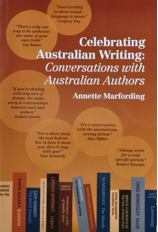
Courtesy: Annette Marfording

Courtesy: Annette Marfording

This is the fourth in my occasional series of Spotlight posts inspired by Annette Marfording’s Celebrating Australian Writing: Conversations with Australian Authors, and this time I’m featuring an indigenous author to coincide with Lisa’s (ANZLitLovers) Indigenous Literature Week.

Larissa Behrendt is the perfect subject for what is also NAIDOC Week, not only because she has a few books under her belt, but also because her new book published earlier this year, Finding Eliza, explores how colonisers have written about indigenous people. Behrendt is a Eualeyai/Kamillaroi woman, and in her interview with Marfording describes herself as a Type A person. Looking at what she has achieved in her less that 50 years I can well believe it. She is currently Professor of Indigenous Research and Director of Research at the Jumbunna Indigenous House of Learning at the University of Technology, Sydney. She has won awards for her fiction, and been on the boards of various arts organisations including the Sydney Writers Festival, Bangarra Dance Theatre and the Museum of Contemporary Art. She was the National NAIDOC Person of the Year in 2009 and NSW’s Australian of the Year in 2011. As a lawyer, she has served on many boards, review committees and land councils, most of them indigenous-related. The list is impressive.

Marfording’s interview occurred in August 2010. As she does with each of her interviews, Marfording commences with a brief biography of her subject at the time of the interview, and follows the interview with a biography update to the time of publication. It’s nicely done.

I particularly loved this interview not only because Marfording asks, as she does in all the interviews, thoughtful, relevant questions showing her understanding of the subject, but because in this interview she covers some issues of particular interest to me. More on that anon.

Marfording asked Behrendt, as she tends to ask all award-winners, what winning awards means to her. Behrendt admits that it is affirming to win an award but also says that the richest prize is when a reader tells her that a book “touched” them or that it’s “like me and I never see myself in a book”.

Some of the questions Marfording asked relate to the autobiographical nature of her work, as her two novels, Home (2004) and Legacy (2009), both draw strongly on her family, with Home looking particularly at the stolen generation issue and Legacy being more specifically about her father and her relationship with him. She said that although Home was heavily fictionalised, her father found it hard to read. “It was flattering to me as a writer,” she said, “because it meant I’d got it right.”

Marfording also questioned Behrendt about the fact that her two novels also tend to be issue-based. As a fiction reader, I loved Behrendt’s response. She said that, as a lawyer, she has advocated and written factual pieces on many of the same issues, but that

telling a story that actually explains how a policy can impact on somebody’s life so personally, telling that story from a really human point of view, can influence more people than the most eloquent legal argument, especially when you can talk to somebody through the universals that they understand, like the love between siblings, the love between parents, etc.

I love this reference to universals – to the things that bring us all together. She mentions them again later in the interview, but here I want to share her gorgeous language. She said:

I’ve got very strong opinions, and I think it was a real learning process to learn that sometimes it’s through the whisper of a story that you can influence people more than through the louder, shouting style of activism.

There were other questions too, but I want to conclude on two that focused on her as an indigenous writer, one on labelling, and the other on the issue of non-indigenous people writing about indigenous people (which, as you know, I’ve raised here a few times).

Regarding labelling, Behrendt described it as a complex question. While she has no problem being identified as an indigenous writer, she said it can become problematical when writers are pigeonholed. For example, at the Byron Bay Writers Festival she was invited on a panel discussing “fathers”, a panel that recognised the diversity of perspectives, but in many festivals indigenous writers are lumped together on a panel about indigenous writing. She said that:

What we like to say is that within our writing – and I think that’s true of every Aboriginal author – there are universal themes about family, about love, about betrayal, about hurt, about anger and jealousy, and these are the things that actually unite us.

It’s a problem, in other words, when indigenous authors are seen to be writing only about indigenous subjects. Love it. The comment reminded me of Ellen van Neerven’s Heat and light (my review) in which some of the stories didn’t focus on or clarify race or ethnicity of the characters. They were just about people. For Behrendt, any story – whether the focus is an indigenous issue or not – is, essentially, about universals.

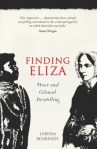
Larissa Behrendt, Finding ElizaAnd finally, that issue about non-indigenous writers writing on indigenous people. Again Behrendt is thoughtful rather than dogmatic. She says she’s always interested in how non-indigenous people portray indigenous people – hence, obviously, Finding Eliza – but that it’s difficult for them to do it authentically because they don’t know enough about Aboriginal life and culture. The reverse is a little different because Aboriginal people are “so bombarded with the dominant culture”. She identifies some writers who have not done it well – albeit she respects their hearts – and then names some who have impressed her. Kate Grenville in The secret river is one. Grenville, she says, doesn’t try an Aboriginal point of view. Instead

through using her non-indigenous characters, by showing their ignorance, their violence, their sense of entitlement, their fear, she tells a very strong story about Aboriginal experience. You read her book and you know exactly what it was like for Aboriginal people.

Grenville talks in Searching for The secret river about the issue of presenting the indigenous perspective. It was something she thought carefully about. Nice to see she’s been vindicated, in the eyes of Behrendt anyhow. The other effective portrayal she offers is Liam Davison’s The white woman. (Davison was tragically killed in the MH-17 disaster, and Lisa reviewed The white woman, as well as his other novels, as a tribute to him.) Behrendt says that Davison tells the story of massacres in Gippsland but relates

the story from the perspective of somebody who goes out as part of those hunting parties, and by getting into the psyche of the kind of person that can actually commit the most brutal aspects of a colonisation of a land, he tells a very strong story about Aboriginal people.

So, while she doesn’t see it as a no-go zone for non-indigenous writers, she does believe that the level of ignorance makes it a difficult challenge.

Another great interview with a writer who’s been in my list of must-reads for a long time. I’ll be starting soon with a short story. Watch this space.

Previous Spotlight posts:

Annette Marfording
Celebrating Australian Writing: Conversations with Australian Authors
Self published, 2015
273pp.
ISBN: 9781329142473

Note: All profits from the sale go to the Indigenous Literacy Foundation. To find out where you can purchase this book, please check Marfording’s website.


Monday musings on Australian literature: Recent books by Indigenous Australians

Next week, from 3rd to 10th of July, Lisa at ANZLitlovers is running her now annual Indigenous Literature Week. While she usually holds it during or near Australia’s NAIDOC Week in order to support that program’s goal of increasing awareness and understanding of indigenous Australian culture, she does in fact accept reviews of works by any indigenous authors worldwide. In other words, you don’t have to be or read Australian to join in, so if you’d like to raise awareness of an indigenous culture near (or not so near) you, do head over to her blog (link above) and make your contribution.

Lisa has included links to lists of indigenous Australian books, including her own, to get people started, so I’m not going to repeat that. But, for my own benefit as well as to support Lisa’s week, I thought I’d suss out and share some works – across genres and forms – that have been published in the last 12 months or so. It’s a serendipitous list:

  • Tony Birch, Ghost riverLarissa Behrendt’s Finding Eliza: Power and colonial storytelling (UQP, 2016): historical analysis of how indigenous people – in Australia and elsewhere – have been portrayed in stories by the colonisers.
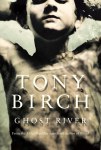
  • Tony Birch’s Ghost river (UQP, 2015) (my review): novel set in working class Melbourne in 1960s; long-listed for the 2016 Miles Franklin Award.
  • Ali Cobby Eckermann’s Inside my mother (Giramondo, 2015): poetry collection.
  • Lizzie Marrkilyi Ellis‘ Pictures from my memory: My story as a Ngaatjatjarra woman (Aboriginal Studies Press, 2016). (Yvonne’s Stumbling through the past review): memoir by a Central Australian woman.
  • Stan Grant’s Talking to my country (Lisa’s ANZlitLovers review): memoir, exploring the complicated experience of growing up black in a white dominated world.
  • Ambelin Kwaymullina’s The foretelling of Georgie Spider (Walker Books, 2015): the last in her Young Adult fantasy series, the Tribe trilogy, set in a post-apocalyptic world in which Aboriginal culture and philosophy play a significant role.
  • Marie Munkara’s Of ashes and rivers that flow to the sea (Vintage, 2016): memoir about her search for her origins. (I read her David Unaipon award-winning Every secret thing, and loved her voice)
  • Lesley and Tammy Williams’ Not just black and white (UQP, 2015) (Lisa’s ANZLitLovers review): won the David Unaipon Award in 2014

I decided to focus just on 2015 to 2016, but in my research I included the new biennial Indigenous Writers Prize in the New South Wales Premier’s Literary Awards, and found that the 2016 joint winners were books published in 2014, so I’m including them too:

  • Bruce Pascoe’s Dark Emu (Magabala Books, 2014) (Lisa’s ANZLitLovers review): analyses pre-colonial indigenous Australian culture suggesting that it was more “settled” than the common “hunter-gatherer” assumption. (I’ll be reading this with my reading group later this year.)
  • Ellen van Neerven’s Heat and light (UQP, 2014) (my review): collection of stories, some connected, some not, and including a longform speculative story, about living as an indigenous person in contemporary Australia.

But what am I hoping to read? First up, an older book, Ali Cobby Eckermann’s Ruby Moonlight, followed by, if I have time, a newer one, Stan Grant’s Talking to my country.

Do you make a point of reading indigenous literature? And do you have favourites?

Dorothy Johnston, Through a camel’s eye (Review)

When should I give up saying that I don’t read crime? In the last seven years, I’ve posted nine reviews tagged crime fiction (of which one was a guest post). Perhaps just over one a year still qualifies as not reading crime? Then again, what’s the point of saying it, if every now and then I do read crime? I think there is a point – it advises that I’m not a crime fiction expert, so my posts need to be read from that point-of-view, and it also tells readers not to come here looking for posts on crime.

So now, with that off my chest, I’ll get to Dorothy Johnston’s crime novel, Through a camel’s eye. It’s the first novel in her new crime series, Sea-change mysteries. I decided to read it for two reasons. One is that I’ve read and posted on two other works by her and was interested to see how a Miles Franklin shortlisted author might approach crime fiction. The other is that she was going to be in town last weekend and we’d agreed to meet for a quick cuppa, so I thought this would be the time to read her latest book (though I didn’t finish it in time). I didn’t plan to quiz her about the book, but I did want to show some support for a hardworking author. As with most of the crime novels I’ve read while blogging, I wasn’t sorry about my decision to expand my horizons a little.

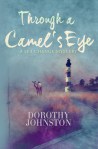
Dorothy Johnston, Through a camel's eyeBefore I write about the book, though, I do want to mention the cover. It features a soft-edged image of a camel, lighthouse, and boardwalk. It’s gentle, atmospheric and, woo-hoo, it doesn’t have an image of a tiny man or a woman’s back as has been popular in recent times. The murder victim is, however, a woman, which, given women do not comprise the majority of homicide victims, is another issue that crops up in commentaries. The point here, though, is that Johnston does not delight in gruesome detail. We gradually discover during the course of the novel how the murder took place but the details, the victim’s emotions, the appearance and/or treatment of the body are not focused on. This is because Johnston’s interest lies elsewhere.

And now, I should get to the story. It’s a police procedural set in a small coastal community in Victoria. The police station is run by a local, Constable Chris Blackie, who returned to the town when his mother was unwell and stayed on after she died. The novel starts, though, with Anthea, a young, recently graduated constable who has been sent to be Chris’ assistant. Her country-town placement has precipitated a break with her architect lover, and she’s pining. Actually, the novel doesn’t quite start with her, either – she’s just the first police officer we meet. The novel starts with one of the town’s “characters”, the recently mute Camilla Renfrew, watching a young woman, Julie, train a young camel. As Camilla walks away, she remembers that on a previous visit she’d heard a woman’s scream. And so there we have it, we think, the crime – and yes, one of the book’s two crimes is a murdered woman, but it’s not, in fact, the first crime we are confronted with. That honour goes to the aforementioned camel, Riza. He goes missing.

From these two crimes, Johnston spins an intriguing tale that keeps us wondering whether the crimes are connected or not – but you’ll have to read it yourself to answer that question. I want to talk instead about what I enjoyed most about the novel – characters and language.

… looking for drama

Most crime novels, I think, draw on archetypes. In this case, there’s the idea of a “sea-change” – particularly for Anthea – and the basic character set-up, the reserved, loner boss, and the fresh, unsettled, somewhat disengaged offsider. Anthea is “disappointed” to have been sent to Queenscliff, and thinks she has her boss pinned:

She would like to dismiss Chris Blackie as an old fuddy-duddy, or a closet-gay; but found she couldn’t, quite.

She’s attracted to “forceful men with definite ideas” but Chris is not that sort of man. He’s barely conscious of his “maleness”, and she doesn’t quite know how to respond to such a person. For his part, Chris would have been happy to run the station solo. Nonetheless, he’d been open to the idea of a woman, but

Anthea had come looking for drama. He’d seen it in her eyes the minute she walked in. Both the anticipation and the almost instantaneous disappointment …

He wasn’t to know of course that her first sight of him, bum-up tending the police station’s lavender and rose garden, hadn’t exactly inspired her.

So, we have an archetypal “misfit” situation – two people working together, neither of whom are completely comfortable in their skins. It is the development of these two characters and their relationship, rather than in solving the crime, that I enjoyed most in the novel. Anthea may have come “looking for drama” but Johnston develops her story quietly, tenderly, rather than dramatically. She achieves this by taking us into the heads of these two unsure people, showing us their thoughts, feelings and reactions.

Why are they unsure? Well, I’ve already described some of it, but there’s more – and this could be where those of you who don’t like coincidences may come a little unstuck, because there are several missing parents here. Anthea’s parents had died in an accident when she was three, while Chris’ father had drowned when he was ten. Camilla’s “cold, punitive” husband had died of a heart attack when her now adult son, Simon, was ten, something for which he seems to still blame her. And young Julie, the camel owner? Her parents had died in a car-crash when she was in her teens. Johnston doesn’t labour all this, but these losses provide background to the characters and help explain their lack of mooring. Coping with loss and resolving the past could also be seen as themes of the novel. Anthea, for example, needs to let go of her lover, while Chris needs to resolve the fears that are stunting him.

Besides these characters, there’s Johnston’s description of place and small town life. We meet the town’s denizens – farmers, teenagers, caravan park owners, retired solicitor. They are typical – they have to be for us to believe the town – but, overall, they work as individuals too. We see the pros and cons of small town living, the everyone-knows-everyone-else’s-business aspect alongside the looking-out-for-each-other part. Chris’ old cottage and Anthea’s flat, the paddocks and seascape, are all clearly, but succinctly, described, as are the characters. Here is a minor character:

His big frame relaxed as though someone pulled a peg that was holding complicated scaffolding in place.

And here is the physical environment, seen through the eyes of another minor character:

Camilla was fascinated by the thick white stalk of the lighthouse, appearing and disappearing through the fog. Behind her, the pier squatted as a vague horizontal line, a grey denser than the sky. Its verticals were lines of shadow legs, a giant centipede.

The crimes are solved, and Chris and Anthea progress in self-understanding, but enough openings are left for us to wonder where Johnston might take these characters next. Through a camel’s eye relies more on the little details of lived lives than on the big dramas to provide interest, which is exactly why I enjoyed it.

awwchallenge2016Dorothy Johnston
Through a camel’s eye
For Pity’s Sake Publishing, 2016
216pp.
ISBN: 9780994448521