Miles Franklin Award 2018 Shortlist

Having posted this year’s Miles Franklin Award Longlist I decided I may as well keep on with it! After all, it is, probably, Australia’s most watched award. The shortlist was announced in Canberra tonight – not that I was invited!

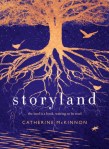
Catherine McKinnon, StorylandHere is the list:

Some random observations:

  • Gerald Murnane, a neglected Australian author has made it through to the shortlist, which is great to see. Of being longlisted, he said he was “gratified”, because it was “a suitable reward for the hard task of writing the book.”
  • Two previous winners, Michelle de Kretser and Kim Scott, have made it through.
  • Recent winner of the Premier’s Award in the 2018 Adelaide Festival Awards for Literature, Hornung, has also made the cut. Her novel The Last Garden has also been shortlisted for the ALS Gold Medal. Hornung, who hasn’t been listed for the Miles Franklin, said of being longlisted that it felt “like a personal endorsement.”
  • McKinnon, who has been overlooked, to date, by other awards, has also been shortlisted – which is great to see because it’s an interesting book and a good read. She said about being longlisted that she was “Delighted, dizzy, honoured, thrilled.” What will she feel now!
  • Four of the six books are by women writers, and one is by an indigenous writer.

Judge Richard Neville, Mitchell Librarian of the State Library of NSW, said, justifying the shortlisting in terms of Miles Franklin’s criteria:

The Miles Franklin 2018 shortlist engages with the complexities of Australian life in all of its phases, and the legacy of its timeless Indigenous past and its recent European present. All the novels explore how Australians connect with their complex stories, with their emotional histories, and with the legacy of colonisation. Each author in the shortlist considers what it means to live in a particular location, with unique and challenging vision. The vibrancy of contemporary Australian literature, and its relevance to thinking through the challenges of modern Australia, is confirmed with this diverse and intelligent shortlist.

The winner will take away $60,000, and each shortlisted order will receive $5,000 from the Copyright Agency’s Cultural Fund.

The judges for this year are: Richard Neville (State Library of NSW),  Murray Waldren (journalist and columnist for The Australian), Dr Melinda Harvey (book critic), Lindy Jones (bookseller), and Susan Sheridan (Emeritus Professor in Humanities, Flinders University).

The winner will be announced in Melbourne on 26 August. I congratulate them all and wish them luck …

Is your favourite there? Do you want to make a prediction?

Monday musings on Australian literature: Australian literature in Australian schools

As I was trawling my little collection of ideas for Monday Musings, I lit upon a paper by the late educator Annette Patterson titled “Australian literature: culture, identity and English teaching”. Bingo!  I had my answer, because it will contribute to a discussion I took part in on Guy Savage’s His futile preoccuptions blog. The discussion concerned the following statement in Michelle de Kretser’s latest novel The life to come: “It had been explained to Ash that the government funded the Centre of Australian Literature after a ministerial survey of humanities graduates found that 86 percent of English majors had never read an Australian book.”

Patterson’s article was published in JASAL (the Journal of the Association for the Study of Australian Literature) in 2012, so it’s reasonably up-to date. The article’s abstract describes says:

The development of the Australian Curriculum has reignited a debate about the role of Australian literature in the contexts of curricula and classrooms. A review of the mechanisms for promoting Australian literature including literary prizes, databases, surveys and texts included for study in senior English classrooms in New South Wales and Victoria provides a background for considering the purpose of Australian texts and the role of literature teachers in shaping students’ engagement with literature.

Patterson starts by arguing the importance of literature to cultural or national identity, stating that this link is expressly made by several of Australia’s major literary prizes. These awards, plus other indicators such as the growth in resources to support the teaching of Australian literature, demonstrate, she says, “the health of Australian literature”.

She then reports on a survey of Australian secondary teachers regarding the factors affecting their selection of Australian texts for teaching. A major factor was one of the main points I made on Guy’s blog: “the availability of the text in the school storeroom”! This was one of the reasons my son’s high school teacher gave me for teaching Steinbeck’s Of mice and men, and not an Australian book.

And then, interestingly, she provides an historical perspective on the teaching of Australian literature in Australian schools, pointing to concerns about the issue dating back to the late 19th century. She writes about the use of Royal Readers back then which included some reference to Australia but were, overall, firmly grounded in the northern hemisphere. She quotes an inspector of schools, H. Shelton, from 1891:

I have often wondered how the Wimmera farmers relish the statement in the Second Book [of the Royal Readers] that ‘it is a pleasant sight to see wild rabbits running over the fields.’ This lesson should either be struck out, or the other side of the picture be given for the benefit of young Australians.

Tara June Winch, Swallow the airMoving on in her paper, we get to discussions about texts being studied by senior secondary students in NSW and Victoria. I’m going to focus on prose fiction, though she includes non-fiction, poetry, plays and film. So, for example, of the five prose fiction texts set for the 2010 NSW Higher School Certificate, only one was by an Australian, Tara June Winch’s Swallow the air (my review). Things were better in those other forms I mentioned.

Patterson focuses her study, though, on Victoria. She tabulates the occurrence of Australian texts and directors listed for study for the Victorian Certificate of Education from 2001 to 2010. Again, I will focus on the prose fiction – listing those that appear three of more times in order of frequency:

  • Henry Lawson’s Short stories (4 times)
  • Tim Winton’s Minimum of two (short story collection) (4 times) and The riders (1 time)
  • Larissa Behrendt’s Home (4 times)
  • David Malouf’s Dream stuff (short story collection) (3 times) and Fly away Peter (1 time)
  • Christopher Koch’s The year of living dangerously (3 times)
  • Thomas Keneally’s The chant of Jimmie Blacksmith (3 times)
  • Peter Goldsworthy’s Maestro (3 times)

Hmm, a fascinating list. Not a bad one, but there’s not a good gender balance here, and there’s only one indigenous writer (who happens to also be the only woman!) It’s also interesting to see the preponderance of short story collections – and that the novels are mostly short ones. Does this mean students won’t read full novels?

Anyhow, Patterson concludes that the lists she presents provide clear evidence of the important place of Australian literature in school curricula, formally at least. But, quite rightly, she notes that being listed doesn’t mean the works are actually “taken up”. Through a process which she describes briefly, she identifies only one work of prose fiction on the most popular list for the period in question. It’s Peter Goldsworthy’s Maestro (which, interestingly, “was voted one of the Top 40 Australian books of all time by members of the Australian Society of Authors”), although other works, including the films Lantana and Look both ways, also appear on the list.

Several prose works appeared on the least popular list:

  • Larissa Behrendt, HomeShane Maloney’s The brush-off
  • Amy Witting’s I for Isobel
  • Henry Lawson’s Short stories
  • Julia Leigh’s The hunter (though she may mean the film adaptation, she doesn’t clarify)
  • Thomas Keneally’s The chant of Jimmie Blacksmith
  • Larissa Behrendt’s Home
  • Beverley Farmer’s Collected stories

Disappointing, but Patterson is encouraged because:

  • more Australian works appeared on the most popular lists later in the decade indicating a “positive shift”; and
  • “top scoring students appear to be working with Australian texts” – including Beverley Farmer’s Collected stories.

In the last part of the paper she discusses the value of including the study of literature, and particularly Australian literature, in the curriculum – and the theoretical underpinnings for the arguments. They are fascinating, and clearly presented. I loved, of course, her conclusion that

In teaching Australian literature, teachers do a great deal more than teach about the quality of language or the characteristics of a genre. English teachers teach techniques for living, ways of behaving and responding, building empathy, promoting tolerance and developing responses to texts that are considered appropriate within current social and cultural contexts.

She ends by returning to her study, and arguing for the value of undertaking ongoing research into text lists, and their use.

However, I’ll return to Guy’s blog discussion and say that Patterson’s paper reveals that Australian texts are being taught in Australian schools – and have been for a long time. However, whether all schools teach them, and whether all students in the schools that do actually “take them up”, is another question. There is, in other words, sure to be some truth in the statement in de Kretser’s book, but I sure hope it’s not 86%!

Elizabeth Jolley, Poppy seed and sesame rings (#Review)

In her introduction to Learning to dance: Elizabeth Jolley, her life and work, a book that was intended to comprise only non-fiction to create a sort of autobiography, literary agent Carolyn Lurie wrote that Jolley would sometimes “draw so directly on her life” for her stories “that it seemed illuminating to include a small selection of her fiction.” From what I know of Jolley, this seems like a sensible decision.

For example, in “Poppy seed and sesame rings”, the first person narrator says:

I often heard Mother crying in the night. When I called out my father always explained in a soft voice, ‘She is homesick, that is all.’ So I always knew what was the matter.

Compare this with the opening piece in another compilation, Central mischief: Elizabeth Jolley on writing, her past and her self, which contains only non-fiction. The piece is titled “What sins to me unknown dipped me in ink”, and in it Jolley writes that “because of her marriage, my mother was an exile. I remember that her homesickness lasted throughout her life.”

Anna Gibbs, FrictionsHowever, before I discuss the story itself, a little about its background. Jolley, born in 1923, started writing novels and short stories very early in her life. Although her first book wasn’t published until 1976, she’d written her first novel around 1939, and had had short stories published by the 1960s. As far as I can tell from a list of her papers at the University of Western Australia, the story “Poppy seed and sesame rings” was written around 1965, and was initially titled “Pumpernickl, poppy seed and sesame rings”. So, it was an early story, and has been published at least three times, twice in anthologies and once in a collection of her stories, and has also been broadcast on radio:

  • Frictions: an anthology of fiction by women, edited by Anna Gibbs, Alison Tilson (1982) (contains three Jolley stories)
  • The Oxford book of Australian stories, edited by Michael Wilding (1994)
  • Fellow passengers: collected stories: Elizabeth Jolley, 1923-2007 (1997)
  • Read on BBC Radio 4, by Kerrie Fox, 26 Oct 1997

I wonder how many of Jolley’s other stories have had such exposure?

And now, the story. As I said above, it’s clearly autobiographically based, but of course that doesn’t mean that what happens in the story happened in real life. It simply means that the story’s broad outline and main themes draw from Jolley’s experience of being the daughter of an Austrian immigrant mother. In the story, the family, comprising her father, mother, aunt and grandmother, has migrated to the “New Country” from an unidentified Germanic country. In reality, Jolley was born in Birmingham to an English father and an Austrian immigrant mother.

The main theme of the book is the immigrant experience, and particularly the mother’s homesickness. Initially, the mother tries to make it work. She is generous with their shop’s customers in a desire “to be accepted”, and she feels supported by the company of her sister and mother. However, gradually things deteriorate. The sister and mother die; her daughter (our first-person narrator) leaves home for nurse training; she continues to miss her favourite foods like “poppy seed bread and sesame rings”; and the shop struggles to make a living so her help is not needed. Her life becomes a lonely one, spent largely “in the dingy room at the back.” She becomes more set in her old ways and attitudes while the daughter, finding her own way in the world, feels less and less inclined to visit. It’s a common story in migrant families.

There are other things in this story, though, besides these ideas of exile and loneliness, that give it the Jolley imprint. The story starts with the sudden death of the narrator’s aunt while the two are visiting an Art Gallery and Museum. The daughter describes her aunt’s death on the steps of the museum:

I tried to pull her from the step but she only sighed and, making no attempt to get up, she simply leaned forward and died. I ran straight home leaving her there with the pigeons and the coming darkness.

‘Tante Bertl wanted to walk,’ I told them so they did not expect her for a time.

This sort of shocking moral failure – plainly stated, and often never discovered – is not uncommon in Jolley, and reflects her acknowledgement of our darker natures. It’s part of the surprise of her work – and so at odds with her appearance! Such a sweet-looking, unassuming little old lady in a cardigan, she was!

There’s also a hint of lesbian attraction. The daughter brings a friend, Marion, home to cheer up her mother, a “friend” she “hardly knew” and “had chosen … because she looked healthy and very clean and the nearest one to speak to in the hospital administration department.” The visit goes badly, due to the mother’s refusal to be welcoming to the visitor. Afterwards, the daughter finds herself thinking about Marion:

Upstairs I sat at my table and tried to read and write and study but I kept writing Marion’s name everywhere.

I thought about her. I kept thinking about her without being able to do anything about it.

These thoughts cause her to digress from her nursing study to write from her heart “about quiet lakes and deep pools which have no reflection and no memory”, to express the “unknown store-house of feelings” she had found within herself. There’s a double whammy here, it seems – a discovery of attraction and also, perhaps, of the power of writing. No wonder this early story has had several outings.

Read for Lisa’s (ANZLitLovers) Elizabeth Jolley Week.

AWW Badge 2018Elizabeth Jolley
“Poppy seed and sesame rings”
in The Oxford book of Australia short stories (ed. Michael Wilding)
Melbourne: Oxford University Press, 1994
pp. 177-183
ISBN: 9780195536102

Elizabeth Jolley, The orchard thieves (#BookReview)

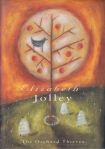
Elizabeth Jolley, The orchard thievesElizabeth Jolley’s twelfth novel, The orchard thieves, is a little different from most of the other Jolleys I’ve read. It’s a little less black, a little less about alienation, but it’s unmistakably Jolley in style and preoccupations.

By preoccupations, I mean her interest in family relationships and dynamics – and, related to that, her humane, but clear-eyed, understanding of human nature. The orchard thieves was written when Jolley was in her early seventies, and revolves around a grandmother contemplating the meaning of family and children. It feels very much like the meditations a woman of her age would be having – which is not to suggest that the story itself is autobiography. Still, I can see once again, why Helen Garner loves Jolley (and doesn’t love Thea Astley). Jolley and Garner both draw from their lives, albeit Garner more so, and both focus on life’s interior challenges. They also both do so in spare but loaded writing.

The orchard thieves, then, has a minimal plot, and no named characters. Told third person from the grandmother’s perspective, it concerns a family whose members are identified by their roles: the grandmother, the grandsons who belong to the youngest sister, the granddaughter who belongs to the middle sister, and the aunt (who also happens to be the eldest sister who lives with the grandmother). There is also the son-in-law (the youngest sister’s husband.) The novel (novella, really) is constructed in three parts, and the plot, such as it is, revolves around the return from London of the middle sister with her daughter.

So, what is it all about? It’s about the family at a point in time, from the grandmother’s point of view. It’s about parents and children, about love and worry, and about age and wisdom – not that the grandmother pontificates her wisdom or is even really sure that she has it. She worries about the aunt, her eldest unmarried daughter, fearing she’s lonely. She worries about the grandsons, their safety now and their future. And she worries about the middle sister’s health and happiness when she returns home – for how long? – clearly pregnant but saying nothing. It is this sister’s return that ripples the surface of the family’s finely balanced relationships.

Jolley prepares us for this “rippling” with an initially mysterious Preface, which commences

‘If you have the house,’ the middle sister said to the aunt, the eldest sister, ‘if you have the house you’ll have to pay us each one-third of the current market price. One-third each of the value of the place.’

We immediately think of course that someone has died, and then, as the book commences we realise that the owner of the house, the grandmother, has not died. We then wonder if she will die, but Jolley’s purpose is more subtle. This is not an inheritance-fight plot. Instead, the conversation tells something about the sisters’ characters. It also suggests underlying tensions, and introduces some ideas which, when they re-appear in their correct chronological sequence, become clear.

This is not a depressing book. The tensions are real, but the grandmother’s hard-won wisdom re-stabilises without offering pat solutions – and it’s all done in a quietly meditative, but by no means dry, tone. I found it absolutely delicious reading, with its Jolleyesque references to pear trees and birds, orchards and gardens, music and myths, sexuality and lesbianism; its sly humour; and, dare I say it, its relevance to my own musings. I haven’t reached my seventies yet, but am soon to join the world of grandmas and am certainly the mother of adult children. Jolley captures the concerns, the lessons learnt and still being learnt – about raising children, about relating to adult children, about being a grandmother, and above all about love – so economically but with sensitivity and insight.

Here’s a scene, early in the book:

Alone on the grey rug in the deeply shaded garden, the grandmother began to understand that it was not until she was a grandmother herself that she, because of her own love for her grandsons, realised how much she, as a small child, had been loved. And the pity was that it was too late to acknowledge this to anyone. It was no longer possible to offer, unsolicited, a kiss, a caress or a tender phrase backwards, as it were, over her shoulder. Recalling momentarily the pain of a telephone reprimand, well deserved she was sure, and only one of many, the grandmother came to a very real truth, which was that the great love which holds the mother to the child does not necessarily travel in the other direction, from the child to the mother. She understood also that she would not be the only person in the world to have discovered this.

Such spare writing. With the exception of the descriptions in the opening phrase – “grey” and “deeply shaded” – which set the melancholic, reflective tone, the language is direct and largely unadorned, and powerful as a result.

There are several references to myths and legends, which the grandmother believes “were attempts to explain happenings which were too painful and hard for human endurance.” Wanting to share these with the grandsons, she starts to tell them the story of Ceres/Demeter and her daughter Persephone/Proserpina, but it gets all too dark and boring for them, so they

simply slipped from the grandmother’s hands and disappeared with a slight rustling of dry leaves into the surrounding bushes.

You can just see it can’t you? Elsewhere, this gorgeous elegant language is subverted when the grandmother, walking with her grandsons, uses their language:

The grandmother hoped that the river paths unlike the roads and houses and the trolleys in the supermarket, were not crap. She hoped they were not crappy crap. She hoped that the aunt’s game and the secret paths, the rocks and the rock pools along the river beaches would remain uncrapped for as long as possible.

Oh, I could go on, sharing more and more. There’s so much more to say about, for example, the imagination and how it can lead you to worry and worry, about mothers’ regrets for things they could have done differently, about the time when children need to grow out of thieving orchards, about the reality that the

little rogues and thieves … would, during their lives, do something perfect and noble and wonderful and something absolutely appalling.

And appalling is pretty much how we could describe the middle sister’s behaviour when she arrives!

Helen Garner concludes her tribute to Jolley*, “To my dear Lift-rat” (which she wrote after Jolley had succumbed to dementia), with this:

But it was too late for me to say goodbye, or to thank her for the last sentence of The Orchard Thieves, where an old woman points out comfortingly to her daughter that the difference between a bad haircut and a good one is only a week.

Garner’s right. It’s somehow the perfect, grounding ending for a book which is about both the importance of “the unseen things, the real feelings and the deep needs” and the business of “push[ing] on with living.” It’s a timeless book.

Read for Lisa’s (ANZLitLovers) Elizabeth Jolley Week.

* You can read Garner’s essay on-line and in her collection Everywhere I look (my review).

AWW Badge 2018Elizabeth Jolley
The orchard thieves
Ringwood: Viking, 1995
134pp.
ISBN: 9780670865505
Kibble and Dobbie Literary Awards 2018 Shortlists announced

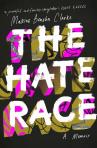
Maxine Beneba Clarke, The hate raceI don’t regularly report on every Australian literary award – there are just too many – but as a supporter of Australian women writers, I’ve long been interested in the Nita B Kibble Literary Awards for Women Writers (a mouthful, eh?) They comprise two awards: the Kibble ($30,000) for established writers, and the Dobbie ($5,000) for debut authors. These awards were established in 1994 by Nita Dobbie, in the name of her aunt Nita Kibble who was the first woman librarian at the State Library of New South Wales. Dobbie, who was brought up by her aunt, followed her into librarianship, and shared her love of Australian women’s writing. The awards are now awarded biennially.

Besides being restricted to female authors, the awards are specifically for “life writing”, which is very broadly defined and can include both fiction and non-fiction. So, the shortlists:

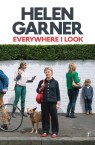
Helen Garner, Everywhere I lookThe Kibble Award:

  • Maxine Beneba Clarke’s The hate race (my review)
  • Michelle de Kretser’s The life to come (scheduled for my reading group in July, but Lisa has reviewed)
  • Helen Garner’s Everywhere I look (my review)
  • Fiona McFarlane’s The high places (I should read this, given it’s a short story collection and has been so well reviewed).

As much as I love The hate race, and believe that de Kretser’s book and McFarlane’s are excellent, I would love to see Garner win because Everywhere I look is a wonderful read, and because Garner has, arguably, set the benchmark for contemporary life-writing in Australia, across multiple forms.

Madelaine Dickie, TroppoThe Dobbie Award:

You can see both the longlist and shortlist online at the Trustee’s website. As always I could argue the toss about books that were or weren’t long- and short-listed, but …

Sarah Krasnostein, The trauma cleanerI can’t remember when I’ve last read a significant proportion of the books shortlisted for an award, so I’m particularly thrilled about these two lists! Moreover, as those of you who read my post on Troppo know, its listing is exciting for my reading group because Dickie is the daughter-in-law of one of our founding members (albeit, unhappily for us, she’s moved out of state now.) Given the number of debut books published over the last two years, it’s a wonderful achievement (for her, and the other two writers) to have been shortlisted.

This year’s judges are the literary critic Elizabeth Webby, State Library of New South Wales representative Rachel Franks, and the author Eleanor Limprecht (whose Long Bay and The passengers I’ve reviewed here.) The winners will be announced on July 25.

Monday musings on Australian literature: Australian ghostwriters

John Friedrich, Codename IagoIf you’ve read my blog recently, you’ll know exactly what inspired this post. Yes, Richard Flanagan’s novel First person (my review), which was inspired by his experience of ghostwriting Australian fraudster John Friedrich’s memoir. The book was called Codename Iago.

You probably all know what a ghostwriter is, but just to make sure, here’s the definition from the editors4you blog:

A ghostwriter is a writer who writes books, stories, blogs, magazine articles, or any other written content that will officially be attributed to another person – the credited author.

So, how much do you know about Australia’s ghost-writers? Did you know, for example, that crime-fiction bestseller Michael Robotham once made his living as a ghostwriter, or that published author Libby Harkness currently spends more time on ghostwriting than her “own” writing? Did you know that Anh Do’s best-selling memoir started out with a ghostwritten manuscript? Or that the two biographies of Hazel Hawke, Hazel: My mother’s story and Hazel’s journey, were written by her daughter, Sue Pieters-Hawke, with the assistance of ghostwriter Hazel Flynn. As I started to delve into this shadowy – ghostly, let us say – area, I uncovered a fascinating world of professional writers who help people who have stories to tell to, well, tell them.

My focus here is Australia, for obvious reasons, but I’ll be including information from further afield, starting with an article in The Guardian from 2014. Titled “Bestselling ghostwriter reveals the secret world of the author for hire”, it’s about English ghostwriter Andrew Crofts who at the time had written 80 titles over 40 years, and sold some 10 million copies, but mostly under “more famous names”. The article, which you can read at the link, names many of them. That year, he published his “own” book, Confessions of a ghostwriter.

Rober McCrum, the author of The Guardian article, says that the term

was coined by an American, Christy Walsh, who set up the Christy Walsh Syndicate in 1921 to exploit the literary output of America’s sporting heroes. Walsh not only commissioned his ghosts, he imposed a strict code of conduct on their pallid lives. Rule one: “Don’t insult the intelligence of the public by claiming these men write their own stuff.”

American ghostwriter David Kohn was interviewed by the ABC Book Show in 2009. He said it suited introverts like him. He doesn’t have to go to book signings or do promotional tours!

Not just memoirs

McCrum notes, as we probably would all guess, that the types of works best known for being ghostwritten are the “misery memoir, sporting lives and celebrity autobiography”. We have examples of all of these in Australia.

Jelena Dokic, UnbreakableSporting lives, for example, to pluck out just a few Australian examples, include footballer Wayne Carey’s The truth hurts, which was cowritten with Charles Happell who is credited on the cover; cricketer Brad Haddin’s My family’s keeper which Hazel Flynn “helped” write though she is not on the cover; and tennis player Jelena Dokic’s Unbeatable (my report) which was cowritten with Jessica Halloran who is credited on the cover.

However, another area well known for being ghostwritten are the “how-to” books, including cookbooks. Google “ghostwritten cookbook” and you’ll find articles galore. And, apparently, as I found on a comprehensive American website on ghost-writing, medical ghostwriting is a big thing. I also found references to ghostwriters doing fiction, too. Fascinating, eh?

Crediting ghostwriters

Sue Pieters-Hawke, Hazel's Journey

Hazel Flynn credited on the cover

Not all ghostwriters are credited. Some appear on title pages, or even on covers, and some might be mentioned in acknowledgements (as happened with Anh Do’s book), but others are not mentioned at all. Where credited, their names are usually preceded by “and” or “with” or “as told to” (with the ghostwriter’s name less prominent to indicate the “lesser” role). As the editors4you blog says, credit depends on the nature of the ghostwriter’s contract with their client. They note that the client can ask the ghostwriter to sign a nondisclosure contract forbidding them from revealing their role. This is fair enough I suppose. It’s a fee-for-service business deal. However, as a reader, I’m another sort of client of that service, and I’m not sure I like the idea that I don’t know who really wrote, or contributed significantly, to the work I’m reading.

Reading around the ‘net, I found, not surprisingly, quite a bit of sensitivity about this issue. Read, for example, this article about Gwyneth Paltrow’s cookbooks. There’s sure to be ego involved, but also, just plain lack of clarity.

Finally, some Australian ghostwriters

Here are three of Australia’s “top ghostwriters”, from the 16 in this article):

  • Michael Collins has had various jobs, including undercover cop and photo-journalist before turning to full-time writing around 20 years ago. He has written in several genres, he writes on his blog, including self-help, fiction, biographies and memoirs, though I’m not sure whether all these are ghostwritten. One of his recent books is Carolyn Wilkinson’s Blood on the wire about prison escapee Daniel Heiss.
  • Libby Harkness has been ghostwriting in several non-fiction areas since 1992, and in 2013 was a guest at the first international ghostwriters conference in California, as she writes in this blog post for the NSW Writers Centre. Her most recent book, for which she is credited on the book’s cover, is Simon Gillard’s Life sentence: a policy officer’s battle with PTSD.
  • John Harman is English-born but West Australian-based now it seems. He has written crime fiction, television and film scripts as himself. However, ghostwriting is a major part of his work. On his website, he says that he has ghostwritten “a number of books, from popular romantic fiction to corporate histories, biographies and autobiographies.” His most recent ghostwritten book is Arthur Bancroft’s WW2 memoir, Arthur’s war, on which Harman is identified on the cover.

Many of the ghostwritten books I found were published by the big publishers like Allen & Unwin, HarperCollins, and Penguin, indicating it’s a well-entrenched segment of the industry.

Are you aware of having read ghostwritten books? Does it matter to you whether the book you read has been ghostwritten or not – and do you like to know?

Richard Flanagan, First person (#BookReview)

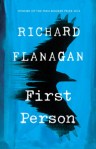
Richard Flanagan, First PersonRichard Flanagan’s latest novel First person, which I did with my reading group, is a challenge to read. By this I don’t mean it’s “hard” to read but that it requires careful attention to pin down. On the surface, its subject is straightforward. It’s the story of struggling as-yet-unpublished writer, Kif Kehlmann, who accepts the job of ghost-writing a memoir for a con-man, Siegried Heidl. It’s autobiographically-based in that Richard Flanagan himself did just this for the fraudster or imposter John Friedrich, who headed the National Safety Council of Australia. However, the novel takes off in directions far removed from Flanagan’s life. At least, so I believe, though as Kif very quickly learns, how do we know what to believe! Who to trust!?

Anyhow, why write this now, 25 or more years after the events? Well, the title might give you a hint, as well as the subject matter … but, it is a tricksy book, starting from its very nature as a pseudo-memoir about a ghost-written memoir. If you know Flanagan, you’ll know he’s setting himself – and us – up for quite a ride. It’s a complicated ride, and perhaps got a little sidetracked at times, but is nonetheless fascinating …

“ceaselessly self-making”

The story describes, in Kif’s first person (ha!) voice, his experience of ghostwriting Heidl’s memoir and its aftermath. The ghostwriting task doesn’t go well, with Heidl evading Kif’s attempts to obtain the information he needs. Flanagan describes this with the wonderfully evocative language that we love reading him for. “I may as well have used a pair of scissors to pick up spilt mercury”, he writes of his early attempts to get some facts. He tries a different method: ask some direct questions, write up his understanding of the answers, and then check his version with Heidl:

The more outlandish, the less related my story was to the few, vague facts he had outlined, the more ludicrous I was, the more pleased Heidl seemed, and the more he would claim that it accorded exactly with his own memory.

After which, apparently, Heidl would contact 60 Minutes or some other program or newspaper, to line up “paid interviews about himself on the basis of such inventions.”

You can perhaps see where this is going in terms of my Why now question. It’s that Heidl (Friedrich) was continuously reinventing himself. Sound familiar? Heidl lived “in a constant state of transformation”. The end result, as Kif sees it, is that Heidl, “the great story maker … was everywhere present in his creations but nowhere visible”. He was not, as Kif tells it, “so much a self-made man as a man ceaselessly self-making”. This narcissism, this solipsistic way of being in the world, this mania for self-invention, makes this book relevant now.

“Trust is the oil that greases the machine of the world”

The other main issue relating to the Why Now question concerns trust. Heidl was a con-man, which means of course that he played on people’s trust. And my, he did it with bells on. He managed to defraud banks of $700 million by, for example, convincing them that he had a fleet of shipping containers (CIRILs) full of the technology and equipment required for responding to disasters. Heidl says, continuing the heading quote above:

Even people we hate we trust. That’s how it is. And, amazingly, mostly it works. The bankers trusted that the CIRILs were real, that ASO was real, until finally it was real. Like you trust the mechanic did service the car or that the bank is honest; like you trust that the people who run the world know what they’re doing …

Every day now, every single day it seems, we are confronted with organisations and individuals failing to live up to our trust – the churches, the banks, the police, the politicians. This is why, it’s patently obvious, Flanagan wrote this story now.

The novel, then, is about what happens when we buy into this world of make-believe. And it’s not pretty. In the book it is most vividly exposed, at the personal level anyhow, through what happens to Kif during and after his writing of the book. The more time he spends with Heidl, the more he finds himself, against his will, being drawn into Heidl’s world and starting to “think like Heidl”, until finally “all that divided him from me evaporated.” You’ll have to read the book yourself, if you haven’t already, to see how this plays out.

“The novel is dead”

The book is also an apologia for fiction. Like Flanagan, Kif was a struggling novelist when he accepted the ghost-writing job. It’s something that Heidl regularly throws back in his face, whenever Kif questions his truths. Why is a fiction writer, Heidl asks him, concerned about truth and facts when what he does in fact is lie? Hmm … I’d tell him there’s lying and there’s story, and that the former obfuscates while the latter illuminates, but he probably wouldn’t believe me!

Near the end, an entertaining (there’s much humour in the book in fact) but significant set piece occurs when, visiting New York decades later, Kif meets a young writer. She’s in her late twenties and has just published the third volume of her autobiography. The novel, she says, “as a mode of narrative“, is dead:

It’s fake, inventing stories as if they explain things … Just the thought of a fabricated character doing fabricated things in a fabricated story makes me want to gag […] Everyone wants to be the first person. Autobiography is all we have.

Kif says he doesn’t agree … and nor does Flanagan, which he demonstrates most obviously through the very act of writing this story as a novel not a memoir. Fiction, he shows, facilitates the exploration of alternatives, the asking of questions.

Overall, I loved Flanagan’s exploration of our current mania for self and of the issues surrounding truth and our desire (need, even) to trust. I also enjoyed Flanagan’s language. But when I got to the end, I couldn’t make it fully cohere. This is partly to do with the breadth of targets and topics, of which I’ve only touched the surface here. It felt at times that Flanagan had a few points to make – scores to settle even – regarding, for example, publishing and writing in Australia. These confused the main thrust a little – though maybe I have conflated Kif with his author! Finally, the second part of the novel, post Heidl’s death, could have been tighter. Kif’s life diverges significantly from that of his model, Flanagan, and is explored at some length. It’s perfectly logically developed, but the “message” started to feel a little laboured.

Nonetheless, First person is well worth reading – for its (novelistic) insight into that time in Flanagan’s life not to mention into a fascinating episode in Australia’s history; for its intelligent exploration of some critical issues that don’t seem to be going away; and for Flanagan’s marvellous prose. I should probably read it again.

Lisa (ANZLitLovers) loved this book.

Richard Flanagan
First person
North Sydney: Knopf, 2017
392pp.
ISBN: 9780143787242

Monday musings on Australian literature: Reconciliation Day in Canberra

National Reconciliation Week 2018 LogoToday, 28 May 2018, we in Canberra celebrated our inaugural Reconciliation Day Public Holiday. We are the first jurisdiction in Australia to have such a public holiday*. From this year, this day will be held on the first Monday after 27 May or on the 27th if it is a Monday – the 27th being that anniversary of the 1967 referendum which resulted in a change to the Australian constitution to enable indigenous Australians “to be counted in reckoning the Population”. Our Reconciliation Day falls within Australia’s National Reconciliation Week (27 May to 3 June), whose theme this year is Don’t keep history a mystery: Learn. Share. Grow.

The aim of the Week (which commemorates both the Referendum and the MABO decision) is, as Reconciliation Australia says on its website, for “all Australians to learn more about Aboriginal and Torres Strait Islander cultures and histories, to share that knowledge and help us grow as a nation. And for this year’s theme, their aim is for us “to learn more about the Australian story.”

Now, to my mind there are two incontrovertible facts – no matter what interpretive layer might be added to them. These are that:

  1. Indigenous (Aboriginal) Australians were here first, tens of thousands of years first in fact.
  2. Non-indigenous Australians arrived in the late eighteenth century and took up land will-nilly to suit their needs, with no formal, practical recognition of the existing inhabitants and their ownership of the land.

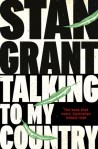
Stan Grant, Talking to my countryWhen I decided to write this post I wondered how best to make it fit the Monday Musings subject, but the Week’s theme – Don’t keep history a mystery – gave me my angle. And so, although I recognise the importance of fiction to understanding history and its impact, here I’m going to share a selection of non-fiction works, by indigenous writers, which tell their history and/or the impacts of their history on their lives. (I’ve read some of these, including some before my blog, but not all). Here goes

  • Eric Wilmot’s Pemulwuy: the rainbow warrior (1987): a rare history, particularly at the time, of an indigenous Australian hero. We all know about Australian “heroes” from our past but how many of us know – or were taught about – Pemulwuy or Jandamarra, for example.
  • Ruby Langford Ginibi’s Don’t take your love to town (1988) is now regarded as a classic indigenous memoir, one documenting her survival in spite of the poverty and tragedy surrounding her.
  • Sally Morgan’s My place (1988): Although my consciousness had already been raised by reading books by non-indigenous writers, like CD Rowley, in the 1970s, it was Sally Morgan’s My place which really brought home for Aussies some of the ways dispossession had impacted indigenous people’s lives – the shame, in particular, that her ancestors had been made to feel.
  • Doris Pilkington’s Follow the rabbit-proof fence (1996, Bill’s review, The Australian Legend): one of the first stories – better known to many Aussies via the feature film – about Stolen Generation children’s experiences to come to the wider Australian public.
  • Anita Heiss’s Am I black enough for you (2012, my review) is a contemporary urban successful indigenous woman’s manifesto about the challenges of being indigenous in modern Australia, setting assumptions and expectations against facts.
  • Noel Pearson’s Quarterly Essay: A rightful place: race, recognition and a more complete Commonwealth (2014): the title says it all. I should have read this one.
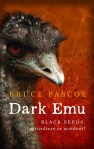
  • Bruce Pascoe’s Dark emu, black seeds (2015, my review) which publisher Magabala Books says “attempts to rebut the colonial myths that have worked to justify dispossession.”
  • Stan Grant’s Talking to my country (2015, my review) which he was inspired to write when he realised that the booing of footballer Adam Goodes “was about our shared history and our failure to recognise it.” Exactly this week’s theme!Bruce Pasco, Dark emu

Reconciliation Australia lists more books and reports, including fiction and works by non-indigenous Australians. It’s well worth checking out – and contains many works I have never heard of, let alone read.

Meanwhile, there were many ways to celebrate Reconciliation Day in Canberra, including a Reconciliation Day Eve concert with Archie Roach and Tiddas, a Reconciliation Day in the Park event, and special events at various cultural institutions including the National Museum of Australia, the National Film and Sound Archive, and the National Gallery of Australia.

This is an important day for itself, but it’s also important to help redress the imbalance created in recent years by over-emphasis on the importance of Australia Day and ANZAC Day. I am not averse to these days but I am to suggestions that they, individually or together, define Australia and Australians. They don’t. They contribute to what makes us Aussies – but we have a bigger history that we must (personally and politically) also recognise and accept as being part of what defines us.

Do you have any favourite books on the topic? (Or on a similar critical topic, if you’re not Aussie?)

* It was created by replacing a previous holiday, rather than by adding an additional holiday to our calendar.

Wendy Scarfe, The day they shot Edward (#BookReview)

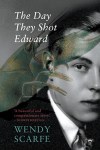
Wendy Scarfe, The day they shot EdwardThere’s something about novellas, about the way they can combine the tautness of the short story with the character development of a novel, and then hone in on an idea, undistracted by side-stories. This, in any case, is what Adelaide-writer Wendy Scarfe achieves in her book, The day they shot Edward.

Like her previous novel, Hunger town (my review), The day they shot Edward is a work of historical fiction. It’s set in Adelaide in 1916, in other words, half-way through World War One. Emotions run high, and 9-year old Matthew, through whose third-person perspective we see most of the events, is often uncertain, if not fearful. The plot is simple enough. We know from the title that Edward has died, and we know from the Prologue that Matthew is implicated in his death in some way, but was a child at the time. From the Prologue we move straight into a chronological narrative telling the story of Matthew, an only child who lives with his restless mother Margaret, his wise Gran (Sarah), and his father, the ironically named Victor, who is dying of tuberculosis on the sleep-out. There are three other main characters, the aforesaid Edward, who is an anarchist and whom Matthew idolises, an intimidating man in a cigar-brown suit, and Mr Werther, the German-born headmaster of Matthew’s school.

Matthew’s life is difficult. A sensitive lad, he is caught between his grounded, politically-aware, loving Gran and his self-centred, unhappy Mother. Gran, who approves of Edward’s activism on behalf of disadvantaged people, is constantly disappointed by her daughter’s readiness to put Matthew’s and anyone else’s interests behind her own desire for acceptance by the “better class”. Matthew himself is conscious of his mother’s self-centredness. Out with Gran and Mr Werther, for example, he feels included, part of “the special laughter and talk of Gran and Mr Werther”, but out with his Mother he feels “alone, beside her but separate” because although she sat with him

in reality she skipped out of her chair nodding, laughing, flirting and frolicking around the room. People always looked at her. She insisted that they did.

Complicating all this is that Edward is attracted to Margaret, and she’s happy to flirt with him but, “lost in her dream of social acceptance”, is unlikely to accept him when she does become free. However, lest you are now seeing Margaret as the villain of the piece, she deserves some sympathy. She had chosen poorly in marriage, and her lot is now doubly difficult in having to care for an ill man who hadn’t been a good husband in the first place. Her life is not easy, and her future not assured.

Anyhow, as if this wasn’t enough in Matthew’s life, there are the political tensions – Mr Werther is insulted by his students and is no longer welcomed amongst people who once socialised with him, and, worse, there are people wanting to trap Edward in the act of subversion. The net is closing in on Edward – as we knew it would from the Prologue.

We see these adult tensions and interactions through Matthew’s eyes – but we know the dangers lying behind the things that simply mystify (or, unsettle) him. I would call Matthew a naive narrator but I’m trying to recollect whether I’ve ever read a third-person naive narrator. Regardless, though, this is essentially what he is.

All this is to say that The day they shot Edward makes for great reading. Although we essentially know the end at the beginning, we do not know who the characters are, nor how or even why it happened. We don’t know, for example, who this Mr Wether is who is accompanying the now violin-playing grown-up Matthew in the Prologue. It is all told through a beautifully controlled narrative. There are recurring plot points – from the opening scene when Matthew decides to save the yabbies he’d caught to his ongoing concern about people liking to kill things, from Edward’s little box-gift for Margaret to the boxes of papers he asks them to store. There’s the quiet build-up of imagery, particularly the increasing references to red/blood/crimson colours. There’s the development of the characters through tight little scenes in the kitchen and living room, on the street and in the schoolyard, in cafes and at the beach. And there’s the language which is poetic, but never obscure.

Ultimately, this is a coming-of-age story. Sure, it’s about politics – about how difficult times turn people to suspicion, intolerance and cruelty – and in this, it’s universal. We see it happening now. But it is also about a young boy surrounded by adults whom he doesn’t understand. He’s only 9 when it all comes to a head – young for a coming-of-age – but as he considers in the Prologue:

Had surprise ceased that tragic night? Or did his understanding as a man mark that moment as his step into awareness?

In this, it’s also universal. Matthew learns some difficult truths the night Edward died – but those truths include some positive ones, such as that love can continue after a person dies, that good choices can be made, and that not all people kill things. A lovely, warm, read.

Lisa (ANZLitLovers) also enjoyed this book.

AWW Badge 2018Wendy Scarfe
The day they shot Edward
Mile End: Wakefield Press, 2018
124pp.
ISBN: 9781743055199

(Review copy courtesy Wakefield Press)

Miles Franklin Award 2018 Longlist

Catherine McKinnon, StorylandI didn’t post the Miles Franklin Award Longlist last year, but I’m intrigued by this year’s list so am sharing it with you – though I’m sure most Aussie readers will have seen it already.

Here is the list:

Some random observations:

  • There are 11 on the longlist, which is interesting in itself – the Miles Franklin judges have, in recent years at least, not constrained themselves to a set number for their longlist. In 2016 and 2017, there were 9 books, and in 2015 there were 10.
  • Six of the longlisted books are by women writers. Only one of these, Michelle de Kretser, was also longlisted for the Stella Prize.
  • The list, unlike the Stella, is rather short on diversity, though, in addition to representing women well, it does include twice-winning indigenous writer, Kim Scott and Sri Lankan-born Michelle de Kretser.
  • This is the first time that Gerald Murnane – frequently tipped as Australia’s next Nobel Laureate in Literature – has been listed for the award. About time.
  • Peter Carey has won three times. If he wins this year, he will equal Tim Winton and Thea Astley who have both won four.
  • I have several on my TBR, and others I would like to be there, but have only read one, Catherine McKinnon’s  Storyland which, I was starting to think, was not going to be listed for any awards, despite its fascinating structure and all-round good story.
  • I’m a little surprised not to see Claire G. Coleman’s Terra nullius nor Sofie Laguna’s The choke on the list.
  • The ABC notes in its announcement that it’s “a list that’s light on outliers, all writers have been shortlisted for, or won, at least one major literary award.”
  • Oh, and not surprisingly, Lisa has reviewed a lot of them!!

The judges for this year are: Richard Neville (State Library of NSW),  Murray Waldren (journalist and columnist for The Australian), Dr Melinda Harvey (book critic), Lindy Jones (bookseller), and Susan Sheridan (Emeritus Professor in Humanities, Flinders University).

The shortlist will be announced in Canberra on 17 June, and the winner in Melbourne on 26 August.

What do you think?