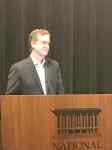
Dymphna Clark Lecture: Clare Wright and You daughters of freedom

According to the University of Melbourne website, the Dymphna Clark Lecture “is delivered annually by a lecturer who exemplifies the deep commitment Dymphna Clark showed to Australia’s intellectual and cultural life.” Strangely, I can’t find a description of the lecture series on the Manning Clark House site which, I believe, is behind the lecture series. I can, however, find a list of the Manning Clark Lectures up to and including 2019 on their About Us page. Poor form I think, particularly given it was Dymphna, I understand, “who bequeathed the family home to the intellectual and cultural community with the wish that it be used to support artists and public intellectuals and provide a safe haven for the entire community.”

On Facebook I discovered that Drusilla Modjeska gave the 2016 lecture; on the above-linked University of Melbourne site that Anna Funder gave 2013’s; and on Virginia Haussegger’s site that David Headon was 2009. Drilling down to page 3 of my Google search, I found at honestyhistory that Bill Gammage was it for 2014 and on safecom that Eva Sallis was 2007. But, why can’t I easily find a list of all the Dymphna Clark lectures, as I can of the Manning Clark lectures? We could take exception to this, seeing it as, once again, sexism in action, but I’m inclined to think the reason is more mundane, and that it’s a sin of omission, not of commission. So, I now respectfully suggest that they create a new page for the two lecture series and maintain a list, with relevant links, of both series, because they are serious lectures. Clare Wright’s 2018 talk, for example, was being recorded for ABC RN’s Big Ideas program. But now, having made my point, I’ll move on to the lecture.

You daughters of freedom

Technological troubles

It was held in a lecture theatre at the ANU. Unfortunately, despite many people trying for over half an hour to get the technology working, the lecture went ahead without Wright’s accompanying slideshow. A real shame but, luckily, Wright is an excellent, engaging speaker, and easily kept our attention for the 50 minutes or so that she spoke. The lecture was, of course, inspired by Wright’s latest book, You daughters of freedom, the second in her Democracy Trilogy, she told us. Manning Clark House’s promotion for the lecture said the book:

brings to life a time when Australian democracy was the envy of the world—and the standard bearer for progress in a shining new century. For the ten years from 1902, when Australia’s feminist activists won the vote for white women, the world looked to this trailblazing young democracy for inspiration.

This epic new history tells the story of that victory—and of Australia’s role in the subsequent international struggle—through the eyes of five remarkable players: the redoubtable Vida Goldstein, the flamboyant Nellie Martel, indomitable Dora Montefiore, daring Muriel Matters, and the artist Dora Meeson Coates, who painted the controversial Australian banner carried in the British feminist activist marches of 1908 and 1911.   

I’ve started reading the book, and while I’ve only read some 40 of its 500 or so pages, I’m finding it wonderfully readable.

Anyhow, now, really, the lecture! Wright was briefly introduced by Sebastian Clark, President of the Manning Clark House and son of Dymphna and Manning Clark, and then we were off. She started by describing that famous restaurant scene in When Harry met Sally – you all know the one – which concludes with the woman at the next table saying to the server, “I’ll have what she’s having.” Wright teased out some meanings and implications of that scene in terms of women’s freedom, the #metoo movement, and, of course, her lecture’s subject, the granting of the vote to women in Australia in 1902.

“In the noonday glare”
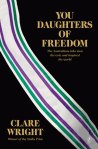
Clare Wright, You daughters of freedomWhen Wright stated that this legislation made Australian women the most franchised women in the world, there were mutterings in the audience about, for example, New Zealand – and was followed up in the Q&A. But, I had already read Wright’s Author’s Note that opens her book, where she explains her claim. Australia was the first nation to give (white) adult women full suffrage – meaning not only could they vote on equal par with men (that is, without property qualifications, and with the same age and residency requirements) but they could also sit in parliament. New Zealand granted women the vote in 1893, but New Zealand was not a nation until 1947, and women could not sit in parliament until 1919. Finland was, in fact, the next nation to grant full suffrage to women – in 1906. I loved that she refers in this Note to something that we’d discovered on our US travels back in the 1990s, which was that women were granted the vote in Wyoming in 1869! But, Wyoming is a state, not a nation. Similarly the colony of South Australia enacted universal suffrage in 1895, including allowing women to stand for the colonial parliament, but again, it was not a nation. It was the fact that a nation had granted suffrage that apparently became a beacon for the world. Of course, proclaiming “firsts” is always risky, but Wright’s definition seems perfectly valid to me in terms of her book’s thesis.

Wright explained in her lecture that this same Act disenfranchised indigenous people. Some parliamentarians did apparently demur on this point, but those who demurred gave way to ensure that at least women got the rights. Consequently, race not gender became the dividing line. As Wright said, “white” Australia was very much the game from Federation, and, while later, some women started fighting for their “black sisters”, their first priority, after gaining suffrage for themselves, was to go to England to support the mother country’s sisters. Such were the times. Later in her lecture, Wright said that it may not be pleasing to know this about our “heroines” but it’s historically accurate!

I should confess at this point, that I’m not reporting on this lecture exactly in the order that Wright gave it but in an order suiting my main takings from it.

Anyhow, back to the granting of suffrage. Wright quoted American-born Australian suffragist Jessie Ackermann who said that this act of the new Australian nation put it/us “in the noonday glare.” Suffrage was, she said, the biggest news in the early years of the twentieth century and was simply known as “the Cause”. Australia’s actions made it/us a test site for universal suffrage and the other socially progressive laws Australia enacted in those days. Could it work? Everyone was watching – particularly of course men who feared loss of power. As Wright said near the end of the lecture:

Power never concedes anything without a fight.

Wright briefly introduced the five main women she features in her book, Vida Goldstein, Nellie Martel, Dora Montefiore, Muriel Matters, and Dora Meeson Coates, and characterised their approach to activism by giving them a canine archetype! Goldstein, the “born activist”, she described as a kelpie, for example, while Meeson Coates is a “reluctant activist” and a Weimaraner! (As past owners of Weimaraner, Mr Gums and I chuckled here.) Again, near the end of the lecture, Wright explained that she did this canine breakdown to show that these women were not all one type, and that difference is critical to the movement’s internal gatekeeping.

Wright also spoke about the challenge she faced in making suffrage, citizenship and federation exciting, particularly at this time when democracy is under attack. She quoted the recently reported Lowy Institute poll showing the surprising level of ambivalence in Australia about democracy. It’s hard to imagine in this environment, she said, that democracy and all that it involves was the hottest topic on the planet in the late 19th century. Why did Aussie women travel to England to fight for the rights for others?

Well, they were different times, of course, as Wright made clear. The turn of the century was a time of optimism. In Australia it was a trinity – new year, new nation, new century. People believed the past was being left behind; they had new Utopian visions. Women’s suffrage encapsulated all this – the ideas of rebellion, emancipation, restructuring society. Suffrage was seen as the key to unlocking repression. If women could vote, and if women could sit in parliament, women’s needs might be better cared for. As Jessie Ackermann said, the freest girls were in Australia.

The women’s suffrage banner

As she does in her book’s Introduction, Wright walked us through (our current) Parliament House to a narrow corridor past the Members’ Hall where, if you get there, you find a large banner. It was created by that Weimaraner Dora Meeson Coates in 1908 and was carried in the 1911 suffragette-organised Women’s Coronation Procession. Wright took us through its iconography/symbolism, through the implications of its depiction of Mother Britannia with Daughter Minerva. It shows, she said, the daughter Australia speaking to the mother England, the banner headline reading “Trust the Women Mother As I Have Done.” This was, she said, “allegorical effrontery.” Why had she not known about this banner, she wondered, given she calls herself a feminist historian?

Now, I could go on, but I’ve probably lost half of you by now and will soon lose the rest, so I’m going to try to become even briefer. Wright explained that one-third of her book is about how Australian women won the vote, and two-thirds about how Australian women inspired the world, In this context, she told a wonderful story about Bulldog Dora Montefiore, another Aussie woman who went to England, and her “Siege of Hammersmith”, a 6-weeks long passive resistance protest again paying taxes without representation. (She was, says Wright, seen by a young Indian man, Mahatma Gandhi!) A wonderful story. It was part of something called the Women’s Tax Resistance League. Wright also described the passive resistance campaigns against the 1911 Census: Women argued that if they don’t count, they shouldn’t be counted.

The irony of history

And so, Australian women were leaders in the suffrage movement and yet, today, British suffragettes are icons of rebellion and bravado but our Australian activists are relegated to the footnotes of academic history. BUT, she argued, Dora Meeson Coates’ banner challenges the view that this history of women’s activism is niche. The big picture is, she said, that Federation and Feminism went hand-in-glove: the banner is about colonialism, about old and new, the enfranchised and disenfranchised, about men in Australia who championed women’s suffrage and those in England who didn’t, and more …

Why then are women not sufficiently accounted for in Australian history? Because, she said, of the First World War. Federation’s optimism, she argues, was soon overshadowed by the War, which, as we all know now, precipitated a “new narrative.” So, whilst before the War, our role in the world was being seen in terms of our achievements in terms of democratic idealism, suddenly it was being seen in military terms. It was our bravery, our contribution to the war effort, that now defined us as a nation – and the rest, as they say, is history! (Particularly given, I’d add, that, as Jane Austen said one hundred years ago, “Men have had every advantage of us in telling their own story … the pen has been in their hands.”) From Wright’s point of view, the War represented not the birth of a nation, but the death of the nation we were becoming. Something to think about, eh?
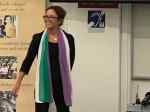
Clare WrightThere was still more, but even I’m running out of puff now. Wright concluded by talking about the importance of stories. The stories we choose to tell are the ones that define who (we think) we are. Why, for example, she asked, is there no statue in Melbourne memorialising that significant suffragist and social reformer, Vida Goldstein? Why, too, is Prime Minister Fisher remembered more for his statements about war (about our defending the mother country “to the last man, and the last shilling”) but not his argument about “true democracy” requiring the inclusion of “women as well as men in the electorate of the country”?

Wright said she’s wary of “learning lessons” from history, preferring to think about legacies. The legacy of the suffragists is that resistance, that grass-roots movements, can create real and lasting change. Her mantra, she said, is Dora Montefiore’s exhortion: #trustthewomen. And with that, her true colours, already advertised in the borrowed suffragette scarf she was wearing, were shown!

An intelligent Q&A lasting nearly half an hour followed, but eventually we had to finish. It was a wonderful lecture. I love that not only is Wright such an accessible, engaging historian, but that she linked the past to the present, because that is the main reason I like to read history. The past is interesting, but its true value lies in how it can enlighten the present.

And now, if you made it to the end – I thank and salute you!

Dymphna Clark Lecture
RN Robertson Theatre, ANU
17 October 2018

Prime Minister’s Literary Awards Shortlist, 2018, announced

I don’t always announce all literary awards shortlists, but have decided to announce the Prime Minister’s Literary Awards shortlist this year. The press release says that over 500 books were submitted across the 6 categories. Is that all? I guess I would have expected more, but it is somewhat expensive to submit, particularly for small publishers. There is NO entry fee, but 10 copies of each book submitted must be provided.

Over the years, the number of categories offered under the award, which was introduced in 2008 by Kevin Rudd, has increased, which is excellent I’d say for Australian writers, given the value of the award. Winners receive $80K, and shortlisted authors $5K.

I also don’t always announce all the categories covered by awards, but this year I’m gonna, starting with Fiction of course!

Michelle de Kretser, The life to comeFiction

  • A long way from home, Peter Carey (Penguin Random House): on my TBR (Lisa’s review)
  • Border districts, Gerald Murnane (Giramondo): on my TBR (Lisa’s review)
  • First person, Richard Flanagan (Penguin Random House): my review
  • Taboo, Kim Scott (Pan Macmillan): on my TBR (Lisa’s review)
  • The life to come, Michelle de Kretser (Allen & Unwin): my review (and winner of this year’s Miles Franklin Award)

Quite a male-dominated list this year, and generally conservative, as it sticks with tried and true authors, but nonetheless these are all, from what I’ve read or ascertained from others, good books. Still, I have liked that this award has often introduced us to something a bit different (like Stephen Daisley, and Lisa Gorton) from the other awards, but not so here. It would be lovely to see Gerald Murnane win – the only one among these not to have won a significant Australian award – given his significant contribution to Australian letters, but, will he?

I have not read any of the rest of the shortlisted books, I’m afraid.

Poetry

  • Archipelago, Adam Aitken (Vagabond Press)
  • Blindness and rage: A phantasmagoria, Brian Castro (Giramondo Publishing)
  • Chatelaine, Bonny Cassidy (Giramondo Publishing)
  • Domestic interior, Fiona Wright (Giramondo Publishing)
  • Transparencies, Stephen Edgar (Black Pepper)

Looks like that wonderful independent publisher Giramondo is one of this year’s winners, regardless of WHO wins the awards in the end. Good on them, in particular, for supporting poetry so well.

Non-fiction

  • Asia’s reckoning, Richard McGregor (Penguin Random House UK)
  • Mischka’s war: A European odyssey of the 1940s, Sheila Fitzpatrick (University of Melbourne Publishing)
  • No front line: Australia’s special forces at war in Afghanistan, Chris Masters (Allen & Unwin)
  • The library: A catalogue of wonders, Stuart Kells (Text Publishing)
  • Unbreakable, Jelena Dokic and Jessica Halloran (Penguin Random House): my report of an In Conversation event

Australian history

  • Beautiful Balts: From Displaced Persons to New Australians, Jayne Persian (NewSouth Publishing)
  • Hidden in plain view: The Aboriginal people of coastal Sydney, Paul Irish (NewSouth Publishing)
  • Indigenous and other Australians since 1901, Timothy Rowse (NewSouth Publishing)
  • John Curtin’s war: The coming of war in the Pacific, and reinventing Australia, Volume 1, John Edwards (Penguin Random House
  • The enigmatic Mr Deakin, Judith Brett (Text Publishing)

And here, NewSouth Publishing, the publishing arm of the University New South Wales, has strut its stuff. They also did well at this year’s New South Wales Premier’s Literary Awards, where they won two prizes, including Paul Irish’s Hidden in plain view for the NSW Community and Regional History Prize. As I’ve said before, it’s excellent to see university presses publishing and doing well.

Children’s literature

  • Feathers, by Phil Cummings and Phil Lesnie (Scholastic Australia)
  • Figgy takes the city, Tamsin Janu (Scholastic Australia)
  • Hark, it’s me, Ruby Lee!, Lisa Shanahan and Binny Talib (Hachette Australia)
  • Pea pod lullaby, Glenda Millard and Stephen Michael King (Allen & Unwin)
  • Storm whale, Sarah Brennan and Jane Tanner (Allen & Unwin)

Young Adult literature

  • Living on Hope Street, Demet Divaroren (Allen & Unwin)
  • My lovely Frankie, Judith Clarke (Allen & Unwin)
  • Ruben, Bruce Whatley (Scholastic Australia)
  • The ones that disappeared, Zana Fraillon (Hachette Australia)
  • This is my song, Richard Yaxley (Scholastic Australia)

And, in the youth literature area, congrats to Allen and Unwin, Hachette Australia and Scholastic Australia who have scooped the pool. I don’t know enough about this area to know how representative this is, but I do know that indigenous publisher Magabala Books publish children’s books. I wonder if they submitted.

The complete shortlist with judges’ comments can be seen on the website. And now, I apologise for the rushed post, but I’m running late for my afternoon commitments and will be out this evening too.

Thoughts, anyone?

Monday Musings on Australian literature: the Australasian Home Reading Union et al (2)

Shared Reading Sign

Shared Reading (Courtesy: Amy via Clker.Com)

You may remember that a couple of weeks ago I wrote a Monday Musings post on the Australasian Home Reading Union – and said at the time that I’d probably write more because I’d like to see what happened to it. Well, here is the next instalment. Please note, though, that my research isn’t as thorough as it could be – partly because I’m focusing on newspapers which, strangely enough, don’t think about what people in the future might want to know! Consequently, this “history” I’m gradually concocting should be seen as tentative rather than definitive.

Collapse of the AHRU

So, as I continued to search Trove, I found a bit of a gap in discussions of the Union in the early 1900s, though there were scattered references, such as to the meeting of a South Australian group in 1900. Then, suddenly, articles starting appearing around 1906 about something called the National Home Reading Union. Was this the same beast I wondered, or something different? This 1906 activity seemed to be mostly occurring in Western Australia. Was this simply that WA was now joining the east in the home-reading union movement? With just a little more digging, however, I found an article that explained it all …

The article appeared in Perth’s Western Mail on 11 August 1906 and concerned the visit to Australia of one Dr Hill, Master of Downing College, Cambridge. It commences by describing at some length Dr Hill’s “hobby” – the National Home Reading Union. He was one of the original founders in England and, he tells “the interviewer”, it had spread through various parts of the Empire, including Canada and South Africa. But what of Australia?

Well, you might also remember from my first post that the Australasian Home Reading Union started in Tasmania? Here is what Dr Hill says:

“When Bishop Montgomery first went to his See in Tasmania, I asked him to try to establish an Australian branch of the N.H.R.U. His efforts were only too successful. Why, in New South Wales the then Governor, Lord Jersey, took the chair at an inaugural meeting, and the Premier and several bishops were on the platform. The movement started with such eclat that the committee felt themselves strong enough to establish an Australasian Reading Union, with their own book lists, their own magazine, etc. But they did not reckon that whereas we in England can obtain an unlimited supply of scholars to write for the magazines the conditions are not equally favourable in Australia. After a short, though meteoric existence, the Australasian Union came to an end. Had it remained as it started – a colonial branch of the N.H.R.U. – it would still be flourishing. We have strong centres in Canada and South Africa, and in other parts of the Empire, and I should greatly like, before I leave, to see a branch established for Western Australia.”

Interesting, eh? Sounds like we, unlike other parts of the empire, decided to go it alone. Good on us for being independent! Anyhow, he goes on to suggest how to go about organising a new WA branch:

“It has been strongly borne in upon me since I came to Perth … that it is far less easy here to find men of leisure in need of a congenial occupation of this kind than at home. But this work is, perhaps, rather ladies’ work than men’s. It is the ladies who have the leisure to read, and they have their children to encourage in habits of reading. Many of our strongest committees at home are composed chiefly of ladies. If some of the ladies of Perth would organise themselves into a branch of the N.H.R.U., they would, I think, find that it not only immensely increased their interest in reading, but that it afforded them an effective means of advancing the cause of civilisation.”

Fascinating. Is it that we had fewer men of leisure – it probably is – or that we had fewer “in need of a congenial occupation of this kind”? And, did women (oops, “ladies”) have more time or, were they more motivated? There are, in fact, many issues we could unpick in his statement regarding class and gender, but that’s not my focus here, so let’s move on.

The interviewer then asked Dr Hill whether the Union focused on “serious works, and books of the dry-as-dust series.” Absolutely not, replied Dr Hill:

our whole object is to render reading recreative. We have, this year, courses on Stevenson, Browning, George Meredith, French novels, and many other subjects, which cannot be termed academic, and we never miss an opportunity of introducing into our lists novels, biographies, and essays, or other lighter forms or reading. We are not technical. We keep as far away as possible from bread and butter studies, and we absolutely decline to institute examinations. Our object is culture.

WA gets under way

A month later, on 15 September 1906, the Western Mail reported that a temporary committee had already been formed and that while they could not obtain all the material needed from England for some months, this committee would endeavour to put a proposal tighter “for a course of reading.”

Then, on 27 February 1907, the West Australian announced that the National Home-Reading Union was underway, though it does not provide specific details, beyond giving some examples of courses from the NHRU’s magazine. However, the very next month, another WA newspaper, The Northam Advertiser states that “A ‘men’s “circle” has been started in a small way in our midst, and some half dozen members have been enrolled. Mr. A. H. Greenwood is secretary, and the meetings are fortnightly at the Rectory.” (It’s notable, in fact, the degree to which the church seemed to be involved in this activity.) The article lists the course of reading – do click on the link to see what you think – and concludes by stating that:

The cost of the books will run from 9d to 1 /6 each, and about one or two books a month is all that will be required, so that it is within the reach of everyone to join, and the reading at home and the meetings are sure to be interesting and instructive. It is hoped to start a ladies’ “circle” as well, and Miss Janet Rickey will be glad to receive names of persons willing to join.

So, gendered groups, which is probably not surprising. And an overt reference to cost, which tells us something about their intended audience – “everyone”, not just the well-to-do.

There is more to this AHRU/NHRU story because it did seem to take off – but I’ll leave that for the next instalment.

Sue Williams, Live and let fry (#BookReview)

Sue Williams, Live and let fryWell, 2018 is clearly “the year of the Mallee” here at Whispering Gums, with Sue Williams’ Rusty Bore Mystery, Live and let fry, being my third Mallee-set book so far this year. The others are Jenny Ackland’s Little gods (my review) and Charlie Archbold’s Mallee boys (my review). By the time I visit the Mallee – next year I hope – I should know it well, though I might stay away from Rusty Bore. Fortunately, that won’t be hard as Rusty Bore is fictional. I say fortunately, because who wants to visit a place known for murders? It would be like choosing to visit Midsomer!

Seriously though, on with the book, starting with the fact that it’s the third in the Rusty Bore Mystery series. I haven’t read the first two, but I’d say this one stands alone well. There’s enough recap for the new reader to quickly pick up the main characters and their relationship with the protagonist, Cass Tuplin, who’s an unlicensed private investigator as well as the owner-operator of the Rusty Bore Takeaway. I’m not a big reader of crime fiction, but I do watch a bit on TV, and I can say that Cass fits the mould of many TV detectives – private or not, licensed or not – in that she has a messy personal life. She’s clearly had a fling with Vern, the owner of the town’s only other shop, but is now with Leo, who’s doing good works in Bolivia but is staying away significantly longer than he’d told her he would. Cass also has two sons – Dean, a not-very-successful policeman in Mildura (a real place), and the-not-very-sensible Brad who’s waiting his court case for “disseminating false information to the market.” There’s affection between mother and sons, but it’s not without tensions – either because Dean is fussing over his mother’s safety, not to mention her unlicensed detecting, or because Cass is too focused on this detecting to listen to Brad well enough to hear what’s happening in his life.

None of this need be taken too seriously, though. As the back cover blurb says, Williams is “Australia’s answer to New Jersey’s Janet Evanovich.” I haven’t, I admit, read Evanovich – shock! horror! – but Daughter Gums has, so I know enough to realise that her crime novels are bright, breezy affairs. And so, certainly, is Live and let fry.

Now, what to say? This is rural crime, and it starts with the disappearance of the aforesaid Vern’s new lady friend, Joanne, from the neighbouring town of Sheep Dip. (There’s nothing subtle in the town names here – Rusty Bore, Sheep Dip, Muddy Soak, Hustle.) Cass, like any self-respecting unlicensed private detective, is reluctant to become involved but, of course, you know she will – and she does. Pretty soon, a murder occurs – not Joanne’s though – and the plot rapidly thickens as we move into the murky world of developers and environmental protection. This has our intrepid Cass driving backwards and forwards across the Mallee in her “little Corolla”, getting into more and more serious scrapes, worrying her sons, irritating the police, and not always making the right calls – as you’d expect.

All this gives Williams the opportunity to provide us with a picture of the Mallee and its inhabitants, which she does in language somewhat different from that we’ve seen in those other Mallee books I’ve read. Here is the Mallee, for example:

As I got closer to Mildura the eucalypt-and-orange desolation gave way to irrigation green, the dark green of orange groves, the brighter, flamboyant green of grapevines, the camouflage khaki of olive trees. I drink it in – green’s not a colour we get that much of in Rusty Bore.

And here is one of its inhabitants:

Nola’s eighty-two and usually quite mentally robust, with opinions carefully cryo-preserved since 1953.

The writing is peppered with gentle, affectionate mocking like this, along with broad satire of various contemporary issues and preoccupations, such as “coffee condescension” from city-siders, and Cass’s own “artisanal” food. We’re also told that

Leo’s import-export business in Muddy Soak folded after the African knick-knack trade fell victim to the decluttering trend.

And there are digs at politics and politicians, such as:

I stood at the desk and waited. A TV flickering behind Taylah showed a surging crowd of middle-aged people in suits. Mostly men, looked like politicians. Another leadership spill? A new Royal Commission? There’d been a lot of debate lately about whether air exists. “If you can’t see it, can’t smell it, it can’t be there.” The slogan of one of the newer political parties.

It’s not subtle, but then Williams’ goal is less social or political commentary than maintaining a light breezy tone and conveying character.

Now, though, back to Cass. Does she get her man (or, not to be sexist, woman)? Well, this is what I’d call “cheery crime”, so yes, one way or another, she does. In other words, without spoiling anything, it all comes out right(ish) in the end and Cass lives to fight (or not, as she chooses) another day. I’m not sure I’ll read another Rusty Bore mystery as I feel I’ve got its measure now, but for those who love light-hearted crime, particularly with an Australian flavour, then Rusty Bore could be just the ticket.

AWW Badge 2018Sue Williams
Live and let fry
Melbourne: Text Publishing, 2018
295pp.
ISBN: 9781925603514

(Review copy courtesy Text Publishing)

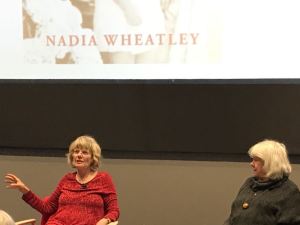
Nadia Wheatley in conversation with Marion Halligan

Nadia Wheatley, Marion Halligan,

Nadia Wheatley and Marion Halligan, ANU Meet the Author

Nadia Wheatley is, I fear, not as well-known in Australia’s literary firmament as she should be because her credentials are excellent. Not only is there My place (1987) – a wonderful multi-award-winning children’s book about the history of place – but her biography of Charmian Clift, The life and myth of Charmian Clift, has been described by critic Peter Craven as “one of the greatest Australian biographies.” She has appeared here in a Monday Musings list of books recommended by indigenous writers (even though she is not indigenous) for her book, with Ken Searle, The Papunya School book of country and history. And these are just a few of her literary credentials.

All this is to say that when I saw that she was to be a “Meet the author” subject this week at the ANU – on a free night for me, no less – I didn’t hesitate to book. It didn’t hurt, too, that her Conversation partner was to be Marion Halligan (who has appeared here several times, in various guises.)

Now, I don’t want to discuss in detail her latest book – Her mother’s daughter: A memoir – which was the reason for this event, because I have almost finished it and will discuss it in my soon-to-come post, so I’ll just share, briefly, some of the main points from the conversation.

“Caught between an independent woman and a controlling man”

The book’s title suggests that the book is Wheatley’s memoir of her life with her mother (Nina, familiarly called Neen.) However, this is only part of the story. The book is, in fact, like a few I’ve read recently, a sort of hybrid biography-memoir, because it is as much a biography of her mother, who died in 1958 when Nadia was 9, as it is a memoir. Three others I’ve discussed here in recent years are Susan Varga’s Heddy and me, Anna Rosner Blay’s Sister, sister, and Halina Rubin’s Journeys with my mother. Interestingly, the mothers in all of these books experienced World War 2 in some way, though Wheatley’s mother differs from the other three European-born women in that she was an Australian who went over to work in the war.

Marion Halligan commenced the conversation by commenting that the book was a difficult read, and that it must also have been difficult to write. Wheatley agreed, commenting that people under-estimate children’s ability to suffer, but also their ability to survive…

… and both suffer and survive, Wheatley did. She was caught, she said, “between an independent woman and a controlling man”, but that was only the half of it. She wasn’t helped by a family which – only partly because it was the 1950s – did not feel the need to tell Wheatley what had really happened to her mother, resulting in the young Nadia hoping (if not totally believing), for some years, that one day her mother would return. She was abandoned by her father, whom she described as “a strange, sadistic person.” The family dynamics are complex, and I’ll discuss some of them a little more in my post on the book.

I will say, however, that the underlying biographer’s question for Nadia in writing the book was:

Why would a nice person like Neen marry an awful person like my father?

Because, awful he was … though not, it seems, to Neen in the early years of their relationship when they were working for/with refugees and displaced persons in post-war Europe!

What lifts this book above what could so easily have been a misery memoir is that it also works as social history of an era – of life in Australia in the first half of the twentieth century, and of the work Australian nurses did during and after the Second World War. The pictures Wheatley draws of the joys (yes) and challenges of the War for Nina are vivid, and ring true. Nina was a truly independent woman, despite the demands home and family exerted on unmarried “girls” at the time. The pictures Wheatley then draws of Nina post-marriage are, consequently, even more devastating – because of the gap between what could (should) have been and what was. Nina’s dire situation was compounded by the confluence of a controlling, sadistic husband and a time, the 1950s, when women had little agency in the face of such a situation. Even so, Nina did her best …

At one point during the conversation, Wheatley made the interesting – and obvious, if you know their stories – point that there are some parallels between her and her mother’s stories. Both were motherless from a young age, and both became involved in social justice action. There was discussion in fact about how her mother’s work with refugees is relevant to today’s refugee situation. Nina worked for the short-lived UNRRA and was involved in the early definition of just what a refugee is and in the practice of placing them.

Telling the story

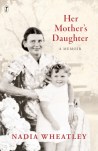
Nadia Wheatley, Her mother's daughterIn the Q&A, I asked Wheatley about the structure she chose to use in the book, about the fact that while is it generally chronological, she inserts herself into this chronology at times when she herself wouldn’t have been alive. For example, she describes the young Nadia asking her mother about a photo in an album. This enables us to see Nadia’s interest in her mother’s story, her reaction to her mother’s story, and her mother’s later reaction to the events in her life, at least in terms of how she wants to present them to Nadia. From the reader’s point of view, it makes reading this book far more engaging.

Wheatley answered that felt she needed to be in there “on the quest”, and referred us to AJA Simon’s biography A quest for Corvo: An experiment in biography, as one of her inspirations. She wanted the book to be her journey of discovery – “to have the detective story of her unravelling her mother’s story” – rather than just be a presentation of the evidence. Again, I will talk more about this in my post, but Wheatley did share some of the stories about how she went about this unravelling. I like this approach to non-fiction, not only because it’s usually engaging, but because it can strengthen the authority or integrity of the work.

There was more to the conversation – but some of it, as I’ve already said, will come out in my post, and some of it is best left for you to read yourselves in the book. I mustn’t give it all away!

Vote of thanks

To conclude, MC Colin Steele introduced The Canberra Times’ past – and, distressingly, to date, last – literary editor, Gia Metherell, to give the vote of thanks. In doing so, she said that Wheatley’s book shows why childhood biographies can be so potent. She quoted the late Australian critic Geraldine Pascall* (I think) who said that Australian writers write more often and more potently about their childhood than anyone else, besides English and French writers. What an interesting thought on which to end a thoroughly engaging conversation.

* Gia Metherell clarifies this in the comments below saying that it wasn’t Geraldine Pascall to whom she was referring but English academic Roy Pascal. However, on checking later, she realised she had misremembered and it was Richard Coe, in “Portrait of the Artist as a Young Australian: Childhood, Literature and Myth”, Southerly, 41, no. 2, 1981. Thanks Gia.

ANU/The Canberra Times Meet the Author
MC: Colin Steele
Australian National University
8 October 2018

Monday musings on Australian literature: The Next Chapter

Two weeks ago I wrote a Monday Musings post on HarperCollins’ new prize for unpublished manuscripts, the Banjo Prize – and this week I saw the announcement of the winners of another new “prize”, the Wheeler Centre’s Next Chapter initiative.  It’s a very different kettle of fish but is another program offering opportunities to writers who may be struggling to be heard …

The Next Chapter program was, in fact, announced back in May as “an unprecedented new way of supporting writers”. Like the Horne Prize, about which I’ve also written recently, it is supported by the Aesop Foundation. Before I get onto Next Chapter, I need to tell you about this interesting company called Aesop! Established in Melbourne in 1987 it is – would you believe – a company that sells skin, body and hair products that are “created with meticulous attention to detail, and with efficacy and sensory pleasure in mind.” Hmm … no wonder I, who uses minimal and very basic skin, body and hair products, have never heard of them. However, it seems that their philosophy extends beyond their products to “fostering literacy, storytelling, and diversity”, which they do through a Foundation which offers support through two granting programs. I almost feel I should check out their products.

Anyhow, back to the Wheeler Centre’s Next Chapter. The Centre recognised that there are aspiring writers all around Australia who find it hard to get their stories heard. It also realised that “the commercial market is not always the best place for a writer to develop their skills and hone their craft.” And so it created the Next Chapter program, which aims

to elevate the Australian stories that aren’t being published – and to nurture a new generation of writers, from all sorts of backgrounds, to tell them.

They plan to do this by selecting, each year, “ten outstanding writers” who will be given $15,000 each to develop their work. They will also be matched with a mentor who will work with them to bring their writing to life, and connect them with peers, publishers and readers.

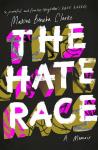
Maxine Beneba Clarke, The hate raceThe good thing is that although the Wheeler Centre is Melbourne-based/Victorian-focused, this program is being offered nationally – in order, says director Michael Williams, to “find the next chapter of Australia’s literary story.” The inaugural judging panel is beautifully diverse – you know how I feel about that – comprising Maxine Beneba Clarke (whose The hate race I’ve reviewed), Benjamin Law, Christos Tsiolkas (who has also appeared here several times), and Ellen van Neerven (who has appeared here several times). There is a video (with transcript) about the program at the Centre’s site, outlining the judging criteria – merit, impact, potential, suitability and significance.

Law, supporting the program, said that the two most important things he needed to build a sustainable writing career were “mentorship and money,” which is what the Next Chapter aims to provide. Tsiolkas said, on accepting the role of judge:

I am supporting The Next Chapter because we need to listen to and be astonished by more voices in Australian writing. Both to reflect the reality of contemporary Australia but also, and possibly more importantly, to provoke and invigorate cultural forms and expressions.

The danger of the word diversity is that it can be reduced to feel-good, kumbaya sloganeering. The radical dare of diversity is that it challenges us to be open not only to the difference of voice but the difference of opinion, politics, belief, aesthetic, commitment and priority. Real diversity should burst bubbles and we need that more than ever now.

Looking at the winners below, I’d say the judges have made a bang-on attempt to achieve this goal …

So, who are the inaugural winners? Being emerging writers they are not well-known, but many do have a good cv already, including being published in literary journals and/or performing at festivals (or elsewhere) and/or winning specialist awards:

  • Evelyn Araluen, indigenous poet, researcher, and educator working with Indigenous literatures at the University of Sydney
  • Jean Bachoura, Damascus-born, Melbourne-based writer and actor
  • Ennis Cehic, writer of fiction, non-fiction, poetry and essays, who was born in Bosnia and Herzegovina, but now lives in Melbourne
  • Nayuka Gorrie, New South Wales-based Gunai/Kurnai, Gunditjmara, Wiradjuri and Yorta Yorta freelance and comedy television writer, who focuses on black, feminist and queer politics
  • Lian Low, a Melbourne-based writer and spoken word artist, who has collaborated with circus artists, poets and dancers, in Malaysia and Australia
  • Yamiko Marama, Melbourne-based writer, therapist and food truck owner who is interested in social justice and memoir
  • Giselle Au-Nhien Nguyen, Melbourne-based Vietnamese-Australian writer, editor and bookseller
  • Ara Sarafian, Melbourne-based writer and editor who writes comedy-fiction, commentary and satire
  • Adrian Stanley, South-Australian based indigenous artist
  • Adam Thompson, Aboriginal (Pakana) writer from Launceston who writes contemporary, Aboriginal-themed short fiction.

There is, as you can see, a high proportion of winners from Melbourne – which is not hugely surprising for a new program emanating from Melbourne. Despite this geographic concentration, however, the winners’ backgrounds are diverse. You can read more about them at the Wheeler Centre’s site.

So, another interesting initiative – from a literary centre with support from a philanthropic foundation. So great to see, particularly given it focuses not only on emerging artists but also on encouraging and supporting “real” diversity. Now, it will be interesting to see where these writers/performers pop up next?

HC Gildfind, The worry front (#BookReview)

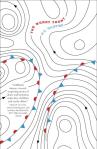
HC Gildfind, The worry frontThe first thing to note about HC Gildfind’s short story collection, The worry front, is its striking, inspired cover. Designed by Susan Miller, it features a weather map which captures the central motif of the title story, but it also suggests the unsettled lives which characterise the book. Gildfind, however, writing a post on the publisher’s blog ascribes another meaning too, noting the link between maps and stories. She says that both “guide us: they locate us in the present by showing us where we have been and where we might go in the future.” Both can also represent the abstract and concrete domains in which we live and operate – and where they might intersect.

But now, the book. It contains ten short stories and a novella, titled “Quarry”. All but one of the stories have been published before – in respected literary journals like Meanjin, Griffith Review, Westerly and Southerly. “Quarry” in fact appeared in the Griffith Review’s novella edition back in 2015. Gildfind then is an accomplished writer, and yet I hadn’t been aware of her. I am now, though, and I’m impressed.

I wasn’t completely sure that I would be, however, when I started the collection. “Ferryman” is a grim, gritty story about an angry man. I wasn’t sure that I was ready for such anger, albeit understandable in the circumstances – but the writing, particularly the rhythm and poetry of it, appealed, so I kept on reading. I’m glad I did, because the next story, the title story – “The worry front” – got me in completely. While the first story is told third person through a man’s eyes, this one is first person in the voice of an eighty-year-old woman. Like “Ferryman”, it’s a powerful story – but this time about a widowed woman who, all her life, has been dogged by “the worry front” but who, when confronted with the realisation that she has cancer, takes matters into her own hand with a breathtakingly original plan. It’s one of those stories where, at the start, you think, “is what I think is happening, what is really happening?” Well yes, it is.

And so the stories continue – varied in gender and voice, but often about something a little out of the ordinary or from a slightly offbeat point of view. The third story, “Gently, gently” is, for example, told second person. It’s a woman speaking about herself, but the second person voice engages us intimately in her life and feelings, drawing us in. It’s about a couple and the three hens they acquire. A chook goes missing – and the couple’s reactions highlight the tension in their relationship. Violence ensues. Like other stories in the book, it treads familiar ground but then turns a corner that forces us to see it from different angles. The relationship dynamic is not as simple as it might have first seemed. The next story, “Eat. Shit. Die” is told in two alternating voices – Leo’s in first person, and Nina’s in second. Both are lonely, and both have – hmm – gut troubles. Nina can’t stop eating, and Leo is having trouble with his s******g, but these are, as you might expect, also symptomatic of something else.

The birds and other animals, and food and eating, that appear in these two stories, recur in many of the book’s stories. Sometimes they reflect emotional states and other times they provide conduits for resolution. In the novella, “Quarry”, a stray black dog kickstarts our damaged protagonist Luke’s return from his agonising loneliness.

These recurring motifs underpin, as you’d expect, recurring themes. One is the interrogation, sometimes explicit, sometimes not, of what is normal. And another is that universal human one of longing for meaningful connection. Some characters eschew it because it hasn’t proven positive (“The wished for”), some are resigned to not having it because they feel unloved or unlovable (“Quarry”), and some actively seek ways of achieving it (“Solomon Jeremy Rupert Jones”). In most cases, this meaningful connection means a relationship with someone of the opposite sex, which, not surprisingly, raises the spectre of gender differences – which issue does run through many of the stories. There’s violence, direct or indirect, in several – but there’s nuance here rather than reliance on standard tropes or simple explanations.

Margaret River Press has produced Book Club Notes for the book. I’m not usually interested in such notes, because they don’t usually address my reading interests, but these are good. There are thoughtful questions for each story, ones that ask for the meaning or significance of events, symbols, actions, and/or characters, rather than the more simple “what would you do” sort of question that you often see.

There are also some general questions for the overall collection. One of these is: “Do you think it is important to ‘like’ a character when reading fiction?” This is a good question because it confronts this problematic issue head on. The worry front does not have many immediately likeable characters – but most characters ring true, and that’s the critical thing for me. We may not, for example, decide to do what the woman in “The worry front” does, but her feelings of dismay, and her resignation to and acceptance of things she can’t change, are true.

Another general question asks “which stories – or characters – provoked the strongest thoughts and feelings in you?” What a good question! I love that it doesn’t ask which one/s you like the best. For me, three stories in particular stand out – “Ferryman” because its anger was so viscerally shocking, “The worry front” because its protagonist’s plan is so surprising while her feelings are so comprehensible, and “The quarry” because Luke’s predicament engaged my heart from the start.

Not all stories grabbed me equally, but there are other memorable ones, including “What there is”. I related to its narrator’s searching for “the body-jolt of recognition” in books. Ironically, a significant jolt that she receives comes from another character, not a book:

You can never change the past. But you can always change how you feel about it.

However, it did come from a book, for me!

It’s hard to do a collection like this justice, but I liked it. I liked its surprising situations. I liked having my expectations unsettled. I also liked its design, and its careful order. It starts and ends with angry men, both of whose anger is caused by the actions of others, by, as Luke sees it, “f*****g men and f*****g women f*****g everything up for everyone forever” (“The quarry”). While it’s uncertain whether our first man will recover, Gildfind does leave us with a sense of hope at the end. I like that too.

AWW Badge 2018HC Gildfind
The worry front
Margaret River Press, 2018
288pp.
ISBN: 9780648027577

(Review copy courtesy Margaret River Press)

Monday Musings on Australian literature: the Australasian Home Reading Union (1)

Shared Reading Sign

Shared Reading (Courtesy: Amy via Clker.Com)

Reading Groups, U3A branches, Probus clubs, etc. These are just a few of groups around today in which people come together, formally or informally, to further their intellectual interests. What did people with such interests do in, say, late nineteenth century Australia? Well, one option was to join or form an AHR circle. Have you heard of these?

English and American antecedents

I admit that I hadn’t – until I stumbled across references to the Australasian Home-Reading (sometimes hyphenated, sometimes not) Union while researching Trove recently. So, I dabbled in Trove and to a degree in Google, and discovered quite a lot about Home-Reading Unions. As far as I can gather the idea has a few origins. In England, by the 1870s, there were reading courses offered by libraries, and post-university extensions schemes like the Oxford Home Reading Circle which involved systematic. My source for this, however, noted that these tended to be very middle-class, requiring an advanced level of education. This source, Robert Snape from the University of Bolton, goes on to say that:

The fragmentary progress in establishing a popular framework of adult education and guided reading in England was contrasted by the success in North America of the Chautauqua movement. Founded in 1871 as a camp meeting of the Methodist Episcopal Church at Lake Chautauqua in New York State, this evolved into the Chautauqua Literary and Scientific Reading Circle comprising over 100,000 workmen, farmers, teachers and housewives who read prescribed books over a four-year course. The aim of the circle, which was widely imitated throughout North America, was to nurture the habit of daily reading through a formalised winter programme, its emphasis on system and method being underpinned by lists of prescribed reading, local discussion groups and an annual summer camp with classes and lectures.

That was 1871. The idea was then, Snape said, picked up back in England by one John Brown Paton, who was the Principal of the Congregational Institute in Nottingham. He heard about the scheme, and was attracted because, says Snape, he was “interested in the moral welfare of young people” and was “aware of their patterns of reading and what he perceived as the corrupting influence of cheap literature.” He had already founded the Recreative Evening Schools Association to encourage progressive reading amongst young adults.

The Chautauqua scheme, though, “offered an inspirational example of the large-scale programme of popular education Paton wished to introduce in Great Britain” and so, with the help of others, “he formulated a system of home reading circles, modelled on Chautauqua, that would provide ‘some guiding hand to show folk what to read’ and would be primarily for uneducated working people and for young adults who had recently left school.” He had hoped to engage the help of the universities but they wanted this scheme to be part of their existing extension programs. However, Paton was “adamant that his new scheme should embrace the Chautauqua principle of inclusiveness.” He consequently eschewed the universities with their middle-class constituency and founded the National Home Reading Union as an autonomous organisation in April 1889.

Snape writes that

the aims of the National Home Reading Union were to guide readers of all ages in the choice of books, to unite them as members of a reading guild and to group them, where possible, in circles for mutual help and interest.

Paton hoped it would, “check the spread of pernicious literature among the young” and “remedy the waste of energy and lack of purpose so often found among those who have time and opportunity for a considerable amount of reading.” The reading would occur within “a systematic framework, and would educate readers in the practice of reading reflectively and to personal advantage.” Paton believed that social reading in a circle would facilitate members discussing prescribed books. His primary audience was “relatively uneducated readers” but he also hoped to reach established readers for whom the program could make “reading more profitable.”

And so to Australia

Not surprisingly, Australians started to hear about the scheme. By 1890, there are various articles – and even letters to the editor – discussing the above English and American programs. And then, on 14 March 1892, an article in Melbourne’s Argus tells us that an Australian version, Australasian Home-Reading Union “was recently founded at the Hobart meeting of the Australasian Association for the Advancement of Science.” Tasmania, eh?

The article’s main aim though is to advise that “an influential meeting of ladies and gentlemen” had just been held in Melbourne’s Town Hall “to co-operate in establishing a Victorian branch” of the Union. A Professor Morris advised the meeting that:

the object of the society was to promote a more systematic study of literature and science by publishing courses of home reading appealing to different tastes, drawn up by specialists in various subjects, by, publishing a monthly magazine containing additional help for students of each course, and by the formation throughout Victoria of local circles for combined study and discussion by those taking up the same courses.

Another attendee at the meeting, Mr. R. T. Elliott, said that

rapid progress had been made in New South Wales and Tasmania, where Lady Hamilton had taken a most active interest in the union, and that the results already attained in Victoria were very encouraging.

It seems that the formation of circles around Victoria was indeed taking off. An article in the Beechworth, Victoria’s, Ovens and Murray Advertiser of 21 May 1892 says that a circle was about to formed in Beechworth. It explains that the reading program can “be selected according to individual taste, whether that be for scientific, historical, philosophical or popular literature” and that the plan is “so arranged that intending readers, who know little or nothing of the subject they may choose, can begin with very easy and popularly written hand-books and proceed to more comprehensive but equally popular works.” It believes that the circle

will prove itself a very great boon to the social life of quiet Beechworth.

I have numbered this post (1) because I plan to return to this organisation again: how active was it, how long did it last, and how effective was it as a democratising project. Meanwhile, you can look at the Union’s 1894 edition of the AHR (Australasian Home Reader) Volume 3. It contains, among other things, prescribed readings for their courses, as well as papers relating to the year’s business.

Telling and writing the story: Richard Fidler’s Seymour Biography Lecture

Richard Fidler

Richard Fidler, NLA, 2018

On Friday night I went to my fourth consecutive Seymour Biography Lecture at the National Library of Australia. A highlight on the Library’s calendar, it’s an annual lecture devoted to life-writing, and was endowed by the Seymours in 2005.

This year’s speaker, Richard Fidler, was, at first glance, a surprising pick – but a very popular one. He is well known to Australians, for several reasons, but particularly for hosting, since 2005, ABC Radio’s hour-long interview program, Conversations. He has also recently written two historical books, Ghost empire (2016) and Saga land (co-written with Kári Gíslason) (2017). These books, the lecture promo said, contain short biographies of historical figures from, respectively, Byzantium and mediaeval Iceland. So, he has not written a biography or memoir or autobiography, per se, but these books contain small biographies. Moreover, his Conversations program, it was suggested, comprises mini-autobiographies of the interviewees. Fidler then, as it turned out, was well able to talk about life-writing or, more broadly, telling life stories.

After being introduced by the NLA’s Director-General, Marie-Louise Ayres, Fidler commenced by telling us that he’d titled his lecture, “Telling and writing the story”. The event’s promotion explained that this meant

outlining some of the tensions that come into play when bringing someone’s life story to a listening audience and comparing it to the freedoms and constraints involved in writing biography for a reader.

Fidler commenced with a little anecdote exemplifying the dangers of biography. Back in 1988, he had read, he said, Robert Caro’s The years of Lyndon Johnson: The path to power (1982). It’s volume 1 of a larger work. Caro has now published three more volumes (in 1990, 1992 and 2012) and has apparently announced that he will conclude with a fifth volume which, he said this year, could take from two to ten years. Caro is now 82. Fidler proposed that this story provides a warning for the biographer – as you go in, he said, have an eye on the exit! This issue has not – to date, anyhow – been a problem for Fidler whose biographical work has taken a very different, and much shorter path.

Radio versus print

As the lecture’s promotion promised, Fidler talked about both his written and radio work, reflecting as he went on the difference between the two. I love this sort of discussion, this exploration of different media, of different forms of writing and presentation, in order to tease out what is inherent to each. As a consumer and reviewer of media, I believe that knowing and understanding the form in hand is a critical starting point. I’m therefore going (to try) to marshal my report on this lecture to focus on these issues, rather than be a blow-by-blow summary.

Print

Early in the lecture, Fidler said that written stories can take more liberties – the story can sprawl, for example, diving off on tangents at will. Radio, on the other hand, is more linear, it must keep moving forward in a direct path (though it does have the voice to guile you!) He likened radio to a shark driving ever forwards, while print is like a Portuguese man-of-war which can drag all sorts of bits-and-pieces along with it.

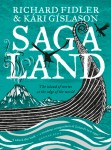
Richard Fidler, Kari Gislason, Saga LandHe exemplified this through the Saga land project, first explaining, for those of us who didn’t know, that Icelandic sagas – Saga land’s subject – are stories of real Vikings. Icelanders read these sagas, he said, the way we read Shakespeare. He also explained that in Old Norse, the word “saga” means “telling. He then read the beginning of the first saga about Gunnar, showing us how the narrative tension builds. (We’ll leave, here, the side issue of how much of the actual stories about these real people is fact, and how much fiction or hyperbole, as it’s irrelevant to my main thread. It’s an issue, he suggested, best left to saga scholars who still argue about it.)

He realised, he said, that these sagas would translate well to audio (to radio and podcast). Their first two chosen stories translated pretty easily to the audio form, but then he got to the story of Gisli which turned out to be much harder to transform into a linear form. How could he pour this sprawling story into the narrow form needed for a spoken narrative – a paradoxical problem, given the sagas originated in oral form. The “crush of family”, the multiple but confusing relationships, he said, are important to Gisli’s story. Eventually, though, he identified its core, and developed the narrative from there.

Fidler went on to talk about more stories from Saga Land, and talked a little about Ghost empire which he described as, essentially, the biography of a city, Constantinople. It reminded me of another “biography” of Constantinople, Orhan Pamuk’s mesmerising Istanbul: Memories of a city. Anyhow, regarding writing Ghost empire, he mentioned in particular the mini-biography of Constantine XI and how writing about him involved “a strange act of sympathy.” In fact, he described biography as “a profound act of sympathy”, which means, for him, “sitting beside his subject” as he writes rather than observing from a distance.

Radio

Of course, many in the audience were keen to hear about Fidler’s hugely popular radio program, Conversations, and Fidler did spend some of his 45 minutes on it too. He started by saying that the program’s aim was to present the stories of unknown people although, as listeners know, he also interviews better known people like “astronauts, authors and scientists.”

Fidler talked about the challenge of creating coherent narratives out of his subjects’ lives, many of whom, unused to the media, struggle to tell their stories coherently. His producers spend a long time talking – often on the phone – with selected interviewees, teasing out a narrative. Life is messy, a bit like a teenager’s bedroom he said!

Moreover, how reliable is memory, he asked – and then told a pertinent personal story to prove just how unreliable it is! He quoted British poet, Lemn Sissay’s definition of a family:

“Family is memory disputed between a group of people over a lifetime.”

Love it. Anyhow, he said that, consequently, he asks his interviewees “What do you remember?” rather than “What happened?” This question can often result in wonderful reveries, ones that make him almost stop breathing in order to not break the momentum. He gave an example from his interview with Angela Lansbury who gave an evocative description of the London of her childhood. Fidler said that he could see that a movie of that time was playing before her eyes.

Overall, he said, producing Conversations required artful deception in order to create the narrative arc of an hour.

Why read or listen to biography?

This subject wasn’t – really – specifically addressed, but Fidler did say a few relevant things. Regarding the value of reading Icelandic sagas, he said our interest springs from a deep-seated human need to understand our own lives through those of our ancestors. The sagas, he says, may fall short in terms of biographical rigour but they do tell larger truths. They were enjoyed as escapism but they also offered a different way of being human. Apparently, the poets Auden and Borges loved Iceland’s sagas.

Somewhat related to this issue was his discussion about the overall value of radio. It’s more intimate than television. It’s also more “profoundly democratic because you can’t be seen” and therefore not judged by the markers of appearance. He saw this as “a noble nakedness.”  In addition, radio has, he believes, an “enormous didactic momentum”, one which can create a “commonwealth of shared sympathies”, a sense of shared humanity.

There was more, including a Q&A during which questions included how subjects are found for Conversations, what he would ask Constantine XI if given the chance, and his tips for new interviewers.

But, I’ll leave it here and conclude with Fidler’s impassioned concluding statement, made in the context of the week’s astonishing events in which the ABC lost both its Managing Director and Chairman of the Board. He said that the public trusts that the Board will support the ABC, and that it’s not the government which funds the ABC, but you (that is, us), the audience. That of course brought him resounding applause – and so, sadly, ended another excellent Seymour lecture.

Further reading and listening: Saga Land: The Book and Radio Series

Previous lecture postsRobert Drewe (2015), David Marr (2016) and Raimond Gaita (2017)

Seymour Biography Lecture
National Library of Australia
28 September 2018

Horne Prize – the “political correctness” controversy

Help Books Clker.com

(Courtesy OCAL, via clker.com)

Dare I step into the breach? I think I will. Let me start by saying I’m a strong supporter of political correctness, though I hate the term itself and the way it is bandied about with little thought or nuance. To me, political correctness fundamentally means respect for and sensitivity to the feelings and place or position of others – of others, that is, who are less powerful, have less agency and status than the prevailing majority. It means, essentially, in our culture, not privileging the western white straight abled male perspective in the way we speak and write, and in who gets to speak and write.

Having this fundamental view means that I (generally) support indigenous Australians’ call for non-indigenous writers not to write in the voice of indigenous characters. I say “generally” because I’m not a believer in black-and-white rules when it comes to art. I also say it because I think that non-indigenous writers should be able to include indigenous characters in their books where relevant. Otherwise, the risk is that oppression and invisibility is being perpetuated by their absence. There’s a fine line here between oppression-through-absence and oppression-through-appropriation. This line needs to be trodden carefully and must be in consultation with relevant indigenous people. Not all indigenous people agree with this approach, but some do I believe. This opinion of mine is set in jelly not concrete – as I have no wish to continue oppression – but it’s my intellectual position on the issue.

So, the Horne Prize. Named for the late public intellectual Donald Horne who wrote on Australian culture and identity, the Horne Prize was established in 2014 by Aesop and The Saturday Paper. It is “for an essay of up to 3000 words, addressing some part of the theme ‘Australian life’ – shining light on a particular aspect of who we are, from a contemporary perspective.” It’s probably not well known in general circles, but it came to the fore on the weekend when two judges – writer Anna Funder (whom I’ve reviewed here) and journalist/public intellectual David Marr – resigned from the panel when they discovered that some restrictions had been added to this year’s submission guidelines.

David Marr explains it in The Guardian:

But, without warning the judges, Jensen [The Saturday Paper editor] decided to radically narrow the rules and issued a list of what the Horne prize was “not seeking or accepting” this year: “Essays by non-Indigenous writers about the experiences of First Nations Australians. Essays about the LGBTQI community written by people without direct experience of this community. Any other writing that purports to represent the experiences of those in any minority community of which the writer is not a member*.”

Marr continues in this article that on seeing this, he immediately contacted Jensen expressing his disagreement with such restrictions and advising that he could not be on the panel as a result. To his credit, Jensen immediately emailed the other judges – Funder, indigenous Australian academic Marcia Langton, and a representative of Aesop – explaining his reasons:

The guidelines attempted to reduce the number of essays we received that offered chauvinistic or condescending accounts of particular groups of Australians, especially First Australians.

Funder withdrew because she felt that much of her own work would not be approved under the guidelines, while Marr reports this of Langton:

Langton told me: “I don’t think you should completely rubbish Erik’s attempt to get rid of the rubbish.” She views the new guidelines as: “Probably a mistake because it’s not the done thing. I’ve got a lot of sympathy for what he’s trying to achieve but it crosses the line on censorship and free speech.”

Another article in The Guardian by Calla Wahlquist quotes some who agree with Jensen’s new conditions: Kerryn Goldsworthy who thought they were “absolutely fair enough”, Anna Spargo-Ryan (whose The paper house I’ve reviewed here) who “wished guidelines restricting writers from venturing outside their own experience and authority weren’t necessary, but that the negative reaction to the entry criteria proved they still were”, and two indigenous Australian writers, Nayuka Gorrie and Jack Latimore. Wahlquist writes this of Latimore:

Latimore said it was part of a broader global push to ensure people from minority groups retained control over and any benefit that stemmed from the telling of their stories.

“If you want to get a deeper or richer Aboriginal story, an Aboriginal journalist is going to be the one who gets that more than anyone else,” he said.

Now, my opinion is – and I think it is similar to Marr’s – that no such “rule” should be needed because good, sensitive, intuitive judges should be capable of identifying essays which are chauvinistic, condescending or worse. Such works should not make the first cut. My belief is that the “best” works on marginalised or dispossessed peoples, on “other” – and of course not all essays will be on these subjects – will, almost by definition, be by people who have the appropriate lived experience. (But, perhaps, I am naive to believe all this?)

The critical thing, then, in regards to general awards like this (ie not those targeted to specific groups like The Stella Prize for women or the David Unaipon for indigenous Australians) may be less about who can write what, but who should judge (an issue I discussed recently in fact). This panel seems diverse: it includes a white woman (Funder), a gay white man (Marr), and an indigenous woman (Langton). Knowing these three, I’d (if anyone asked me) say that they are knowledgeable and skilled enough, are thoughtful and sensitive to prevailing community values and attitudes, to make a good decision. (Yen-Rong Wong, though, may disagree.)

And the end result? Jensen has withdrawn these additional conditions and the deadline for the prize has been extended by a month. Nice to see someone willing to change his mind publicly eh?

I feel a little nervous writing this – but I’d like to think we can discuss this issue from a fundamental basis of respect for all, with the understanding that there is in fact no right or wrong but a multiplicity of opinions which are best shared rather than buried under the carpet.

* None of the discussion here, or that I read, addresses the tricky issue of labelling and identification, of how you prove you are part of the valid community for your topic.