Rodney Hall, A stolen season (#BookReview)

Rodney Hall, A stolen seasonRodney Hall is one of those Australian authors who deserves more attention than he seems to get. Consequently, I’m thrilled to at last include him in my blog, with his latest novel A stolen season. I was introduced to Hall back in the late 1980s when my reading group read his surprising novel, Just relations, and I’ve also read another surprising novel by him, The day we had Hitler home. Hall is good at surprising, because A stolen season isn’t exactly run-of-the-mill, either, in terms of its characters and set-up.

It’s a tricksy book comprising three different, more-or-less alternating, story-lines. The chapters go like this: Adam and Bridget, Marianna, Adam and Bridget, John Philip, Adam and Bridget, Marianna, Adam and Bridget. Adam and Bridget, then, form the driving story, and there seems to be no connection between the three sets of characters for a very, very long time. Indeed, by the middle story, John Philip, the only literal connection is a minor character from the first Adam-and-Bridget chapter appearing as a rather minor character in this one. Later, a similarly loose, not-exactly-direct, connection occurs between Adam and Marianna. What gives, we wonder? Who are Marianna and John Philip? Why are we also reading about them? And, will they all ever actually meet, as we expect in novels like this? Well, all I’ll say is that Hall does not, as is probably his wont, do the expected. No, I’ll say more in fact: if we focus our energies on worrying about this structural plot issue, we risk missing what’s important, which is the overarching idea that gradually reveals itself, an idea relating to money and power, and to the way they can not only deceive but actively generate inhumane/anti-human values.

The main story, Adam and Bridget’s, centres on soldier Adam. He returns from fighting with the Coalition of the Willing in Iraq so severely damaged that he can only live, get around, by means of an exoskeleton (the “Contraption”) that is activated and controlled by his brain, something which Hall explains at the end is not complete science fiction. Adam and Bridget’s story is surprising from the beginning, because, while we realise that this injured soldier, Adam, whom we’ve just met, has a wife, we don’t realise, until he arrives home, that the marriage was essentially over by the time he’d gone to war. This was not because they hated each other but because they’d married on a whim – “it seemed a fun thing to do at the time, but they were just kids and kidding” – and the marriage had run its course. Unfortunately for Bridget, she had never got around to legally leaving Adam after he had physically left her to go to war, because it had never seemed necessary. Now what was she to do?

Adam and Bridget’s story is darkly humorous, but also deeply moving, not least because Hall imbues them with a humanity that we can relate to and recognise. They embody the sorts of inner conflicts anyone would experience in a situation like this – Adam, desiring his wife but incapable of achieving what he most wants, wants, genuinely, generously, to set her free, and Bridget, feeling trapped but empathetic, increasingly tender, wants to do the right thing by this decent strong man. Hall writes their story – writes all of the stories in fact – from the individual characters’ third person points of view. Not only does this make for engrossing reading, but it reveals Hall to be a writer who knows, fundamentally, what makes us human.

Meanwhile, Marianna, a German-born Australian, is on the run in Belize after discovering that her husband had seriously deceived her and was implicated in the greed that underpinned what we Australians call the GFC. While Adam and Bridget’s story is the most personal one, hers is the more mysterious, mystical one. Why is she in Belize, and what does she want with the Mayan pyramid? It’s all to do with numbers, mathematics, and end-of-the world predictions. Hers is the hardest story to pin down, because of its more mystical quest. She sees the temple:

… the structural puzzle of steps and platforms on all sides forming a pyramid crowned by a little room with a single doorway–like the lonely eye of the soul.

Marianna gets it. With neither front nor back, nor left nor right, the geometry is inward looking.

And then there’s John Philip, 70-something, indolent and mega wealthy from family money, who suddenly finds himself in possession of a strange bequest – a long-lost book of “the” artist Turner’s erotic sketches of female pudenda. What he does with these is to thumb his nose at his family in a stylish but shockingly public way while, at the same time, making a statement about art. His is the central or peak story to and from which the other chapters formally if not narratively move. It is satiric, rather than tragic, and has a guffaw-producing, conversation-ending last line, but, in placing him at the centre of his story, Hall is surely presenting his manifesto on the meaning and role of art. John Philip realises:

‘The thing about art’–he finds words for the revelation taking shape in his mind–is that art can be a gift. It’s for whoever sees what it is. That’s what makes it art in the first place.’ He probes deeper. ‘I suppose that also makes it political. I mean, if you can’t stop it speaking the truth.’

Back to Adam and Bridget. What is so special about their story is the way Hall weaves the political into the personal so closely that they are almost indistinguishable. It is here that the “cost” of war is plain to see; it is here that the “money” theme – the idea that “the accountants” are at “the wheel” – is played out to its bitter end; and yet, it is also here that people’s ability to be quietly heroic in the only important way, in our treatment of each other, is laid bare. It’s an astonishing novel about some specific issues of our time, namely the Iraq War and the GFC, and about those wider questions concerning being human and the meaning of art.

Now, however, I’m kicking myself, because this book deserves a wider audience than I’ve seen it getting – and, unfortunately, its turn came up on my reading pile at the slowest time of year for blog reading. It’s a time when readers might peruse various “best-of” lists, but, at least as I’ve observed in previous years, pay less attention to more serious posts. This is a real shame, because both Rodney Hall and this, his latest book, deserve some real attention. It’s a book that will pay the reader who likes to take time to ponder in spades.

Lisa (ANZLitLovers) also enjoyed this book.

Rodney Hall
A stolen season
Sydney: Picador, 2018
342pp.
ISBN: 9781760555443

(Review copy courtesy Pan Macmillan Australia)
Monday musings on Australian literature: ABC RN presenters name their top 2018 reads

In recent years, I’ve shared ABC RN presenters’ suggested summer reads, but this year I’m sharing Best Reads of 2018, from the two presenters of The Bookshelf program, and some of their guests. For more lists, and related links, you can check out the webpages for their December 7 and December 14 radio shows.

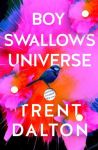
Trent Dalton, Boy swallows universeNicole Abadee (literary consultant and books writer for AFR Magazine and Good Weekend):

Trent Dalton (author of Boy swallows universe):

  • Haruki Murakami, Colourless Tsukuru Tazaki (Japanese)
  • Geraldine Brooks, People of the book (Australian-American) (an older book, and one I read before blogging)
  • Larry McMurtry, Lonesome Dove (American) (another older book, as I’m sure you know)

Kate Evans (presenter on The Bookshelf): 

  • Melissa Lucashenko, Too much lip (Australian)(on my TBR – I’ll get to it soon)
  • Michael Ondaatje, Warlight (Canadian)
  • Imogen Hermes Gowar, The mermaid and Mrs Hancock (English)
  • Peter Cochrane, The making of Martin Sparrow (Australian)
  • Tayari Jones, An American marriage (American) (Kate of booksaremyfavouriteandbest identifies this as the book which appeared most frequently in the 37 best-of-2018 lists she analysed)

Amelia Lush (Stella Prize judge, and head of Children and Young Adult programming for the Sydney Writers’ Festival):

  • Rebecca Makkai, The great believers (American)
  • Tara Westover, Educated (American) (A memoir highly recommended by my Californian friend)
  • Maria Turmarkin, Axiomatic (Australian) (Highly recommended by Brother Gums)

Cassie McCullagh (presenter on The Bookshelf): 

  • Rachel Cusk, Kudos (Canadian-born English)
  • Sally Rooney, Normal people (Irish)
  • Tim Winton, The shepherd’s hut (Australian)
  • Peter Cochrane, The making of Martin Sparrow (Australian)
  • Tayari Jones, An American marriage (American)

Shaun Prescott (author of The town)

  • Dag Solstad, T Singer (Norwegian)
  • Jamie Marina Lau, Pink Mountain on Locust Island (Australian)
  • Olivia Laing, Crudo (English)

OK, so not many of these are Australian, but for this particular Christmas list I relax my rules to focus on Australian readers (at the ABC!)

Anyhow, a few observations. Of the 23 top picks, there are only three duplications: Peter Cochrane’s The making of Martin Sparrow; Tayari Jones’ An American marriage; and Rebecca Makkai’s The great believers. Only one of these is Australian, Cochrane’s historical novel set in the early days of the colony. This lack of duplication is probably not surprising given all the books that are out there for us to read.

Just two of the books (unless I’ve missed something) are non-fiction – Tara Westover’s Educated and Maria Tumarkin’s Axiomatic. Again, probably not surprising.

And, most of the books are anglo – Australian, American, English, Canadian, Irish – with just two that aren’t, Murakami from Japan, and Solstad from Norway.  We really aren’t, it seems to me, very good at reading translated books from other cultures – and I admit that my reading diet is light on in that area too. Only one, as far as I can tell, is by an indigenous Australian.

Anyhow, I hope you have found this at least a bit interesting!

What ONE book would you recommend from your 2018 reads for the rest of us to read over the holidays?

Monday musings on Australian literature: ACT’s literary awards

Last week, I attended the ACT Writers Centre’s Christmas Party and Awards Night. It was a lovely, relaxed affair – just the sort I like. Not too much ceremony, but much good will and conviviality. I loved seeing writers, and others from our little territory’s literary community, mingle with each other, commending each other’s achievements. I could name drop, but fear forgetting a special name as you always do in situations like this, and I could describe some fan-girl moments, but that, too, could be fraught. So, instead, I’ll just say what a very enjoyable night it was (helped along by delicious local wines from Eden Road Wines, who do a great job in Canberra sponsoring arts organisations, including, in my experience, the ACT Writers Centre and Musica Viva. Thanks Eden Road – and your wines are delicious.)

And now, the awards – which come in two strands.

ACT Book of the Year Award

This award, “for excellence in literature”, is supported by the ACT Government, and supports ACT-based writers and writing. It “recognises quality contemporary literary works including fiction, non-fiction and poetry by ACT-based authors published in the previous calendar year”. The winner receives $10,000, with any highly commended book receiving $2,000, and the shortlisted books earning $1,000 each. Not the biggest awards in town, but we are a small jurisdiction. I should note too that “ACT-based” can include residents outside the ACT who “can specifically and strongly demonstrate an ACT-based arts practice”.

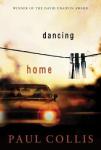
Paul Collis, Dancing homeThis year’s winner and runners-up were:

  • Paul Collis’ Dancing home (Winner), which also won the David Unaipon Award in 2017, and has been reviewed by Lisa. I have it on order.
  • Merlinda Bobis’ Accidents of composition (Highly commended)
  • Jackie French’s Facing the flame (Shortlist)
  • Omar Musa’s Millefiori (Shortlist)
  • Rachel Sanderson’s The Space Between (Shortlist)

ACT Writers Centre Awards

These sponsored awards are managed by the ACT Writers Centre.

Marjorie Graber-McInnis Short Story Award

Amanda McLeod’s Loyal Animals

June Shenfield Poetry Award

Natalie Cook’s Incursion, Extinctions.

The 2018 Anne Edgeworth Young Writers’ Fellowship

Gemma Killen. She will receive support from the Trust to help her develop her skills in writing for the screen with a focus on comedy scripts.

Anne Edgeworth’s son announced that, next year, the award will change emphasis, slightly, from “young” to “emerging”, recognising that new older writers also need support.

Publishing Awards

Kirsty Budding, paper cutsThese awards were established in 2004 “to recognise, reward and promote writing by ACT region authors that has been published by small publishers or been self-published”.

  • Fiction: Kirsty Budding, Paper cuts: Comedic and satirical monologues for audition or performance (Blemish Books, who also published Nigel Featherstone’s three novellas). Budding lives and works in Canberra as a theatre producer and teacher. She has been shortlisted and/or won several playwright awards, including being a semi-finalist in the 2017 ScreenCraft Short Screenplay Contest, Los Angeles.
  • Non-fiction: Robert Lehane’s Verity (Australian Scholarly Publishing). This is a biography of Canberra pioneer, Verity Hewitt, who, among other things, established a bookshop in Canberra in 1938. She also, apparently, taught Gough Whitlam, and was an activist in the peace movements of the 1950s to 70s.
  • Children’s: Maura Pierlot’s Trouble in Tune Town (Little Steps Books). This is Pierlot’s first children’s picture book, and it has been gaining recognition in awards – Best Illustrated Children’s E-Book in the Independent Publisher Book Awards (IPPY) 2018 (Joint Winner); and a finalist in the Children’s Picture Book (Hardcover Fiction) in the International Book Awards 2018
  • Poetry: Paul Cliff, A constellation of abnormalities (Puncher and Wattman). Cliff is a poet, playwright and editor whose has been published for over 30 years, and has won or ben shortlisted for several awards including the Mattara Poetry Prize, the David Campbell and Rosemary Dobson Poetry Prizes.

Full details of the awards, with all the shortlisted writers can be found on the ACT Writers Centre website.

Congratulations to all the winning and shortlisted authors, and a big thanks to the ACT Writers Centre for inviting me to the event.

Clare Wright, You daughters of freedom (#BookReview)

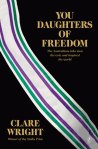
Clare Wright, You daughters of freedomWell, that was a tome and a half! And in saying this I’m referring less to the length of Clare Wright’s new history, You daughters of freedom: The Australians who won the vote and inspired the world, than to its depth and richness. There are, in fact, two main stories going on here – the story of women’s suffrage in Australia and England, and that of Australia’s leadership in the world, at the time, in terms of progressive politics, of forward-thinking social legislation. They were heady, optimistic times, and the suffragists (being those men and women who advocated for women’s enfranchisement) were part of it all.

Clare Wright frames her history of this period in Australia’s nationhood through the story of five suffragists – Vida Goldstein (1869-1949), Dora Montefiore (1851-1933), Nellie Martel (1855-1940), Dora Meeson Coates (1869-1955), and Muriel Matters (1877-1969). These women should – like that famous suffragette Emmeline Pankhurst is – be household words. Indeed Pankhurst knew and used most of them in her long battle for women’s suffrage in England. Why are they not? Why, for example, asked Clare Wright at the lecture I attended, is there no statue to Vida Goldstein in Victoria? (There is, she tells us in her Epilogue, a memorial park bench in her hometown of Portland, Vic! A park bench!!)

Well, lest we think they are not well-known because achieving suffrage was oh-so easy in Australia, Vida told otherwise to a US Senate Select Committee on US Suffrage during her 1902 USA tour:

Vida wished the senators to know, too, that this was the result of years of hard fighting–in case they also subscribe to the ‘one fine day if just happened’ school of political progress.

In other words, our five women (and all the other Australian fighters for the cause) may not have had to chain themselves to a grille like Muriel Matters did in England in the Suffragette cause, nor refuse to pay taxes as Dora Montefiore also did in England for the same cause, but they had lobbied their case hard. Indeed, while South Australia granted suffrage to its women in 1894, and the new federal government to women in 1902, it took until 1908 for the last state in Australia, Victoria, to do so.

I should clarify here that, although Australia was a leader in women’s suffrage by being the first nation to legislate suffrage for all white adult Australian women, without property qualifications, and to enable those women to stand for parliament, it was just for white women. As Wright says, “it was now race, not gender, that defined the limits of Australian citizenship.”

Writing history

You daughters of freedom is, then, a good read, because the story it tells is fascinating. The five significant women are all wonderful subjects in their own right:

  • Vida Goldstein, the private school girl who “developed a passionate commitment to the underprivileged” and a “zeal for social reform”, and stood for parliament several times to pave the way for others;
  • Dora Montefiore, the committed socialist whose practice of non-violent civil disobedience was observed by a young Gandhi;
  • Nellie Martel, the elocutionist whose militant activism resulted in her being arrested in England and spurned by papers at home;
  • Dora Meeson Coates, the artist whose “Trust the women” banner is now on permanent display in Parliament House; and
  • Muriel Matters, the actor who led the grille protest in the House of Commons, flew in a “Votes for Women” labelled airship over London, and undertook a popular, successful lecture tour on English suffrage in Australia.

I’m not going to share their stories, because you can find them in reviews (like Lisa’s, in the link below), in the Australian Dictionary of Biography (on which their names above are linked), and most importantly in Clare Wright’s book. Each of these women played critical roles in the suffrage fight both home and in England where limited women’s suffrage wasn’t achieved until 1918.

No, what I want to write about is the style, because no matter how interesting or important history is, few (besides the academics and die-hards) will read it if it it’s not written in a way that engages. And this is where Wright shines. It’s a hefty tome, at nearly 500 pages. It’s a complex one which juggles the stories of five quite disparate women, from the late nineteenth century to the second decade of the twentieth. And it is extensively researched, with each page containing not one but several quotes from mostly primary sources (such as newspapers, speeches, and documents from personal papers.) A daunting work for researcher and reader alike.

In my admittedly limited knowledge of historical writing – so I might be barking up the wrong tree – Clare Wright’s approach reminded me somewhat of Thomas Carlyle’s in his three-volume The French Revolution. It’s a few decades since I read Carlyle, but that history could be written with such verve and colour made a big impression on me. Like Carlyle, though perhaps not quite so flamboyantly, Wright is not afraid to use bold rhetorical tools to tell her story. Explaining why 1911 didn’t turn out to be the golden year England’s suffragettes hoped, Wright writes:

Truth be told, the writing was on the wall well before that. The summer of 1911 continued in a national pantomime of over-the-top pageantry and under-the-surface tension with the King and his court centre stage. But the audience should have been shouting, ‘Over there! Look over there!’

Over there  … to Bermondesy […]

Over there … to Ireland […]

And further over there–to Germany […]

The glorious late summer of Edwardian England was about to shatter like a cheap vase.

There is nothing inaccurate in what she says – to my knowledge, anyhow – but the way she says it is fresh, compelling, and devoid of dry or, worse, obfuscating academese. I could pull out example after example of writing that captures our attention, but I think I’ve made my point.

Wright is also careful to make clear where the historical record is lacking. Why did Nellie, for example, suddenly disappear from public life? Wright explains that there are no clear answers, but follows up to discuss the “few clues”.

And, then, almost best of all, there’s the extensive use of contemporary newspaper reportage – surely made so much easier for modern researchers by the wonderful Trove. Wright draws on conservative and progressive newspapers from around Australia to reflect what people – as represented by editors and journalists – were thinking at the time. When Nellie, say, or Vida, were active in England, the Australian papers were watching closely and reporting. Not only does this flesh out our understanding of the suffrage question, but it fleshes out the wider social history.

The book is chronologically told, with evocatively titled chapters, such as, for example, Chapter 28’s “Homecoming Queen, Australia, winter 1910”, which chronicles Muriel Matters’ return home for her lecture tour. However, despite this signposting, readers do have to be on their mettle to keep track of our five suffragettes, to know where they are at any one time, and which of the many political organisations, if any, they’re aligned with. It’s a complicated story that Wright aims to tell – and following it requires attention.

They were heady days …

So, You daughters of freedom, is an engrossing read – but, I have to admit that, as I read it, I became sadder and sadder. This was mainly because of that thread that I mentioned in my opening paragraph, the one to do with Australia’s leadership in terms of progressive politics. What happened to us – us Australians I mean? There we were, at the turn of the century, leading the world, not only in women’s suffrage but in a whole raft of social reform measures, relating to working conditions, conditions for women and children, and, even, Maternity Allowance. We were also the first nation to elect a socialist or Labor government, when Andrew Fisher was swept into power in 1910.

Well, what happened, says Wright, was World War 1, which completely changed the nation’s narrative. But that is another story. Meanwhile, I highly recommend You daughters of freedom, and look forward to Wright’s third book in her planned trilogy on Australian democracy.

Lisa (ANZLitLovers) has also reviewed this book. She liked it too.

AWW Badge 2018Clare Wright
You daughters of freedom: The Australians who won the vote and inspired the world
Melbourne: Text Publishing, 2018
553pp.
ISBN: 9781925603934

Prime Minister’s Literary Awards Winners, 2018, announced

The Winners of the the Prime Minister’s Literary Awards for 2018 were announced this morning at Parliament House … an event I followed via their Twitter Live Feed … and it contained the BEST of ALL POSSIBLE news that Gerald Murnane won the Fiction prize. I haven’t read the novel, so perhaps my approval is cheeky, but Murnane has been far too under-rated over the years and it’s high time he was recognised for his contribution to Australian letters! Sure, he can be obscure, but that makes him interesting – even fun – to read because of the mesmerising way he interrogates our emotional interiors/landscapes in some sort of alignment with a physical interior/landscape, that feels Australian but is also mythical in its lack of specificity.

Below is the shortlist, with the winner marked in bold.

Gerald Murnane, Border districtsFiction

  • A long way from home, Peter Carey (Penguin Random House): on my TBR (Lisa’s review)
  • Border districts, Gerald Murnane (Giramondo): on my TBR (Lisa’s review)
  • First person, Richard Flanagan (Penguin Random House): my review
  • Taboo, Kim Scott (Pan Macmillan): on my TBR (Lisa’s review)
  • The life to come, Michelle de Kretser (Allen & Unwin): my review (and winner of this year’s Miles Franklin Award)

The pre-announcement Twitter feed said “beautifully told stories capturing a broad range of themes”. That tells us a lot doesn’t it!

Poetry

  • Archipelago, Adam Aitken (Vagabond Press)
  • Blindness and rage: A phantasmagoria, Brian Castro (Giramondo Publishing) (Lisa’s review)
  • Chatelaine, Bonny Cassidy (Giramondo Publishing)
  • Domestic interior, Fiona Wright (Giramondo Publishing)
  • Transparencies, Stephen Edgar (Black Pepper)

This time the twitter feed said that “this year’s shortlistees prove that poetry is very much alive and a vibrant art form in Australia”. Hmm … any different from last year’s I wonder?

The winner is another grand man of Australian letters whom I must get onto my blog soon – he’s one of my gaps.

Non-fiction

  • Asia’s reckoning, Richard McGregor (Penguin Random House UK)
  • Mischka’s war: A European odyssey of the 1940s, Sheila Fitzpatrick (University of Melbourne Publishing)
  • No front line: Australia’s special forces at war in Afghanistan, Chris Masters (Allen & Unwin)
  • The library: A catalogue of wonders, Stuart Kells (Text Publishing)
  • Unbreakable, Jelena Dokic and Jessica Halloran (Penguin Random House): my report of an In Conversation event

And the pre-announcement twitter feed said, “The shortlisted books reflect our place in history and the modern world.” Hmm … again. I think I’ll forget the Twitter feeds.

Australian history

  • Beautiful Balts: From Displaced Persons to New Australians, Jayne Persian (NewSouth Publishing)
  • Hidden in plain view: The Aboriginal people of coastal Sydney, Paul Irish (NewSouth Publishing)
  • Indigenous and other Australians since 1901, Timothy Rowse (NewSouth Publishing)
  • John Curtin’s war: The coming of war in the Pacific, and reinventing Australia, Volume 1, John Edwards (Penguin Random House)
  • The enigmatic Mr Deakin, Judith Brett (Text Publishing)

Children’s literature

  • Feathers, by Phil Cummings and Phil Lesnie (Scholastic Australia)
  • Figgy takes the city, Tamsin Janu (Scholastic Australia)
  • Hark, it’s me, Ruby Lee!, Lisa Shanahan and Binny Talib (Hachette Australia)
  • Pea pod lullaby, Glenda Millard and Stephen Michael King (Allen & Unwin)
  • Storm whale, Sarah Brennan and Jane Tanner (Allen & Unwin)

Young Adult literature

  • Living on Hope Street, Demet Divaroren (Allen & Unwin)
  • My lovely Frankie, Judith Clarke (Allen & Unwin)
  • Ruben, Bruce Whatley (Scholastic Australia)
  • The ones that disappeared, Zana Fraillon (Hachette Australia)
  • This is my song, Richard Yaxley (Scholastic Australia)

Thoughts, anyone?

Monday musings on Australian literature: Eleanor Witcombe

Eleanor Witcombe

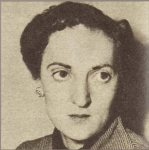
Eleanor Witcombe, 1950 from Australian Women’s Weekly (Presumed Public Domain)

Eleanor Witcombe, who died in October at the venerable age of 95, is not exactly a household name in Australia – but some of her work is, because she’s associated with the renaissance of Australian film in the late 1970s. She wrote the screenplays for The getting of wisdom and My brilliant careerHowever, her writing career long preceded that work.

Growing up

Eleanor Witcombe, then, was a playwright and screenwriter. She was born in 1923 in Yorketown, South Australia, where she went to Yorketown Higher Primary School until 1939 when her family moved to Brisbane. There she attended Brisbane Girls’ Grammar School. I was entertained to find, via Trove, all sorts of references to her schooldays because in those days, particularly in country towns, the papers reported on school doings. Yorketown’s The Pioneer regularly included “Honor Lists” in which the young Eleanor would appear, such as in 1931 for “Arithmetic” and “Mental”, or, in 1935, as winning a prize for “Schoolwork” in the Yorketown Show. In 1932 the paper reported on the formation of Yorketown’s first Brownie pack, and listed Eleanor and her sister among its first members, and in 1938, it reported that she had earned Honours in her Grade VI Music Theory exam. She was clearly a diligent girl …

… and she liked writing. The Sydney Morning Herald, in its obituary, says that her English teachers at Brisbane Grammar School encouraged her talent. She wrote her first play, “Omlet”, a skit on Shakespeare’s Hamlet, for a school concert.

Early working years

In 1941, the family moved to Sydney, and by mid-20s, she was living in Cremorne, Sydney. She went to art school where she knew Margaret Olley (also born in 1923.) This connection also popped up in Trove, this time in The Daily Telegraph of 23 January 1949 which reports on William Dobell controversially winning the Archibald Prize with his portrait of Olley. The report writes that of the 50 people viewing the portrait only two recognised “buxom, attractive 25-year-old Miss Olley”, and one of these was Witcombe. The report continues that:

Miss Witcombe attended East Sydney Technical College art school with Miss Olley. She said: “From some angles the portrait resembles Margaret. “There is a certain something about the whole thing that is Margaret. “I think it is glorious. I think it glows. It jumps out of the wall and really gets you. “But no one who does not ‘know’ Margaret would recognise it as a portrait of her.”

However, by this time, Witcombe had moved from art to writing and the theatre. In 1945, her short story “The Knife” was one of 43 out of over 2000 entries chosen for publication by the Sunday Telegraph in its short story competition, though I suspect she wasn’t among the final winners. Her story is available on-line.

It was drama though that captured her interest. Her biography at AustLit records that she enrolled in Peter Finch’s Mercury Theatre School, and that between 1948 and 1950 she was commissioned by the Mosman Children’s Theatre Club to write three plays for children: Pirates at the BarnThe Bushranger, and Smugglers Beware. Searches on Trove find many, many references to these plays – over a long period of time, and in England as well as Australia. According to AustLit, Smugglers, Beware became the first Australian children’s play professionally produced in London.

In 1950, The Australian Women’s Weekly included her in an article on Interesting People. She was 27, and had written and had performed those three children’s plays. The article concludes with

Miss Witcombe has been writing plays since she was seven, likes action and says “fairies are only for adults.”

Throughout the early 1950s, she appears frequently in the newspapers, with her plays being performed all over Australia – in remote places like Bourke as well as the cities. She started writing for radio, and talks in interviews about original versus adapted works.

However, she also spent part of the 1950s abroad, going to London in 1952 where she worked and studied for 5 years, not returning to Sydney until 1957.

Television years, and beyond

On her return, she wrote for the ABC and commercial radio – including many one-hour drama adaptations of plays, books, and stories – as well as for the theatre. She initiated the Australian Theatre for Young People in 1963, and was a foundation member, in 1962, of the Australian Writers Guild. We have a picture, in fact, of an active successful writer – of both original and adapted works.

When television appeared on the scene, Witcombe turned her hand to that medium too, writing for sketch comedy series The Mavis Bramston Show and, for three years, for the television soap opera Number 96, both of which, for different reasons, are important parts of Australian television history. She adapted children’s novels for television: Pastures of the blue crane (1969), which is one of the first miniseries I recollect seeing, and Seven little Australians (1973).

And, just to show her complete versatility, she adapted Norman Lindsay’s The magic pudding for the Marionette Theatre of Australia, a show that was performed at Expo 70 in Japan. When this show was revised in 1980 for new puppets, the Australian Women’s Weekly reported that

The script for the new production is by screen writer Eleanor Witcombe. Richard [the Theatre’s artistic director Richard Bradshaw] believes she’s the best.

“Eleanor used great huge chunks of the original book but we had to develop Pudding’s part. Her additional dialogue is perfectly in character.”

Meanwhile, of course, there were those films, The getting of wisdom (1977) and My brilliant career (1979). Both were adaptations of Australian classics, and both earned Witcombe AFI Awards for Best Adapted Screenplay.

I found a lot more in my research that I’d love to share, but will just tell this, before concluding. Around 1976, Witcombe was invited by Sir Robert Helpmann to research Daisy Bates for a film in which Katharine Hepburn wanted to star! Who knew! It was Witcombe, apparently, who uncovered that Bates had once been married to “Breaker” Morant.

After her death, the National Film and Sound Archive posted an excerpt from a 1998 oral history interview with her by Stuart Glover. In the excerpt she discusses writing adaptations, and the need to find the wood amongst the trees, the essence of the story. The excerpt ends with Glover suggesting she’d had a good career and asking her whether she’d enjoyed it. She replied:

No, I’m disappointed in myself. Because I don’t think I’ve – I haven’t adapted myself well. [Laughs] I haven’t found my centre enough and quickly and solidly and surely enough, to be able to go for that centre, y’know? I haven’t looked at me like a book and said, ‘This is what this book is about, and that is where the centre is.’

Sounds to me like an artist – never happy with her work – because, if you ask me, she had a brilliant career.

Have you heard of Eleanor Witcombe, or seen any of her plays or films?

My literary week (14), lists and a celebrity

I don’t really need to write a post today having written two in the last two days, but there are a couple of things I’d love to share with you, so here I am for the third day in a row.

Reading group schedule

Trent Dalton, Boy swallows universeFirst up is my reading group schedule for the first half of the next year, which we decided by consensus – with a bit of the usual argy-bargy – a few days ago. Here’s the list in the order we’ll read them:
  • Trent Dalton, Boy swallows universe : strongly recommended by an ex-member (“ex” because she moved away) whose recommendations are usually spot on – and with supporting recommendation by Brother Gums whose taste is also impeccable.
  • Anita Heiss (ed), Growing up Aboriginal in Australia : for obvious reasons, and because if the University of Melbourne believes its staff should read it, then so should we!
  • Marilynne Robinson, Gilead : because many of us have been wanting to “do” Marilynne Robison for some time.
  • Amor Towles, A gentleman in Moscow : because many of us have heard good things about it.
  • Sayaka Murata, Convenience store woman : because we’d like to include more translated fiction in our reading diet and this sounded interesting.
  • Mary McCarthy, The group : our “classic”, which some have never read and others are interested to read again in our current climate.
You will of course hear more about these as 2019 progresses …

Eric Idle in conversation with Alex Sloan

Eric Idle, Always look on the bright side of lifeAs most Aussie readers will know, Monty Python member Eric Idle is currently doing the rounds in Australia promoting his book Always look on the bright side of life: A sortabiography. I’m intrigued by that subtitle given the various discussions we’ve had here recently about memoirs and biography – but I haven’t read it yet so I can’t tell you what angle, if any, Idle has taken on the biography form.

Anyhow, the event I attended was part of the ANU/Canberra Times Meet the Author series, this one a paid event, with the ticket price including a signed copy of the book. I went with friends so didn’t take my usual copious notes. Indeed, I took no notes, so this will be a brief report.

I suspect most of the events ran pretty similarly, with a few variations depending on who “conversed” with Idle. Anne of Cat Politics, who occasionally comments here, went to the Melbourne event where the conversation was conducted by Michael Williams of The Wheeler Centre. She has written about it on her blog. We had a similar discussion, led beautifully by Alex Sloan, about Idle’s life and, career and his friendships with people like George Harrison. We also had a couple of songs, including the “Selfies” one (for which Anne provides a Youtube link.) Our event, like hers, ended up with Idle singing “Always look on the bright side of life”, except we had a small backing group, The Idlers, drawn from the Canberra Choral Society. That was fun – and I think they enjoyed themselves, too.

But, I think we may have had something else unique to us – a discussion about physics. Our event commenced with a YouTube video of Idle doing his “Galaxy Song”, after which ANU Vice-chancellor and Nobel Laureate in Physics, Brian Schmidt, came to the stage to introduce Idle. In doing so shared with us some – let us say – disagreements between Eric Idle and physicist Brian Cox about certain facts in the song. Schmidt suggested that, on one fact at least – to do with the power of the sun – he’s decided to agree with Idle. There was some lovely banter about all this, with Idle, who has performed the Galaxy Song with Cox, telling us that he’d told Cox that the facts were correct when he wrote the song: it was Science that had changed (due to that darned Hubble Telescope). You can Google Brian Cox and Eric Idle to find out more – if you haven’t seen them already.

Kate’s list of lists

As a service to us all, Kate (booksaremyfavouriteandbest) has published a post titled Best Books of 2018 – A List of Lists. In it she has listed the Best of 2018 lists already published by magazines and newspapers around the world – with annotations explaining what they cover. For example, of Esquire’s list she says “excellent mix of 50 fiction and nonfiction titles” and for NPR’s Best Books of 2018 she writes “use the filters to wade through this 300-strong list”.
Kate will be adding to this post as more lists are published. If you love book lists, bookmark her post!

Quote of the week

Clare Wright, You daughters of freedomHopefully, by the end of next week I’ll have written my post on Clare Wright’s You daughters of freedom, but I can’t resist sharing just one of many wonderful quotes from the book. This one is not Clare Wright’s own words, but a description of England’s “suffragette agitators” by the UK’s attorney-general at the time. He called them “those unsexed hyenas in petticoats”. Really!? You have to laugh!


Monday musings on Australian literature: Bush Sketcher (Intro)

I was uncertain about whether to title this post The Australasian or “Bush Sketcher”, but have decided on the latter. However, I will start by introducing The Australasian!

The Australasian was a weekly newspaper established in 1864 by the merger of three Melbourne weeklies, and later incorporating a couple of other publications, including, in 1889, the monthly Australasian Sketcher with Pen and Pencil. The Australasian was the weekend companion to the Argus, and lasted until 1946 when it became the Australasian Post. That publication had a bit of a chequered history, but lasted until 2002 (albeit named, by then, Aussie Post.)

The reason, though, that I checked all this out was because of a regular column or section in the Australasian called “Bush Sketcher” as it was under this banner that Katharine Susannah Prichard’s short stories, “The bridge” and “Christmas tree”, were published (links are to my recent posts). It was when I saw the second story appear under the banner that I decided to check out this “Bush Sketcher” business. Through my best Trove jiggery-pokery (without spending hours), I think I can say that this “Bush Sketcher” column ran from around 1895 to 1925.

Bush Sketcher

Ernest Reid, Australian station storiesArticles ranged from 600 to 3000 or so words, with most being in the vicinity of 1500 to 2500 words, so this was more than a “column”. All the articles have by-lines, but many are pseudonyms (like Bushwoman, Millewa and Coriander) or just initials (such as J.A.M., A.H., and R.V.L). However, as we already know, some authors, like Katharine Susannah Prichard, are fully identified. Another well-known author who came up in my search was Daisy M Bates. Other lesser known writers (to me) include Hetty Ralph-Baker, Ernest Reid (whose short stories from The Argus and The Australasian were published in 1930 in a collection titled Australian station stories), and  E.S. Sorenson (novelist, poet and short story writer who appears in the Australian Dictionary of Biography). So, a varied bunch.

The content is varied too as a random selection of article titles shows:

  • “Aboriginal relationships” (Daisy M Bates – a detailed description of Western Australian Aboriginal kinship systems, written in 1922)
  • “Racing in the never never” (Bushwoman)
  • “A day at Bushvale” (Coriander)
  • “Far north blacks” (Hetty Ralph-Baker – but this article is barely legible, so worn or faded is it)
  • “The old station” (Ernest Reid)
  • “Sundowners” (ES Sorenson)

And, not only is the content varied, but the form also: some of the articles are short stories, while others are more journalistic or slices-of-life non-fiction.

I will return to “Bush Sketcher” in future as there’s some fascinating material here, but will close by sharing one …

“Women’s work in the North West”

Written by A.H. and published on 18 December, 1920, this article is written by the mistress of a station homestead. Focusing on wash-day, it describes the work undertaken by women in managing a homestead – though in fact the women whose work is mostly described is that of the Aboriginal women (or “gins” as she calls them). I think A.H. is being genuinely inclusive in her title, “women’s work”.

The homestead is set in the Kimberley area and provides insight into life there. The story starts with a somewhat purple but highly evocative description of the landscape around the station, then tells us that it’s wash-day. The arrival of the indigenous women reminds her that there’s no time to waste:

The women, running up with their shouts, laughter, and repartee to their lazier men folk, warn us that if the great mountain of soiled clothes in the laundry is to be clean goods by noon we too must be on the move.

She tells us how they all wear white in the house! Really? In the red-earthed north-west! And she describes the women: “Hebe, our bed room girl [who] has been well trained for her work from the age of ten …The other women … were all older – Chatterbox, the children’s nurse; Chloe, the dining room and pantry maid; Mirabon, the kitchen help; and old Biddy, Hebe’s mother, a general utility, able to clean windows, wash down verandahs, and help in the laundry.” She describes the challenges involved in keeping them on task, including bribing them with “a tin of apricots”.

However, once she’s got the women started on the washing, she writes that:

I can safely go in now to the half-past 6 breakfast, which is spread on the shady verandah. The children are in their nursery, the netted in end of the vine-covered verandah, where a swing and a hammock, a rocking horse, and boxes of bricks, with slates and pencils, minister to their amusement and interest through the long hot day. Every one, native and white, has a siesta from 12 till 3 in the afternoon, noon. Breakfast is taken at 6 or half-past, tiffin (a light meal of cakes and tea or coffee), at 10, lunch at 12, (a light meal also); afternoon tea at half-past 4; and dinner at half-past 7. Such are our rules, and these vary little among the station homesteads between the Gascoyne and Marble Bar, Broome, Derby, and Wyndham.

So, we get a lovely time-table of station-life.

The whole thing is paternalistic as you’d expect from the times – at one stage she calls the women “happy creatures” – but A.H. is not totally closed-minded to indigenous lives and ways. I was fascinated by this:

When the copper has its first consignment, the women pause for a drink of cold tea and a nice repast of broiled frogs, which Topsy a 10-year-old Coorie, has brought up smoking hot from the camp, and they do not look untempting, lying well browned on a mass of gum leaves in the boat shaped Tar-doo, which serves the natives as a tray. With a sleight of hand quite wonderful the frog is stripped of its brown coat, attendant ashes, and in the same movement the shrunken “innards,” leaving only the succulent limbs, which are swallowed as we swallow oysters.

She also describes some of the lively repartee with Chloe who, though under our writer’s control, is not afraid to express her frustration, telling A.H., “Missis too much wongi wongi: make black-fella woman bad fella”. Then, having given this “frank opinion”, she gets back to work “on the tubs.”

Particularly interesting, though, is A.H.’s concluding paragraph:

The natives who belong to the territory taken up by the squatter become, by an arrangement with the Government, his indentured servants. He is responsible for their upkeep. A liberal scale of diet is specified by the Protector of Aborigines, who also sends an agent from time to time on surprise visits to see that all regulations are fairly kept.

That, I suppose, is to reassure the city-readers that all is properly managed and happy on the stations.

There is of course so much we, a century later, could read into this wash-day slice-of-life, but I’m not going to say the obvious here. My point really is to show what a rich source “Bush Sketcher” is for providing insight into Australian outback life – including values, attitudes and language – at the beginning of the Twentieth Century. I’ll be back with more …

Katharine Susannah Prichard, Christmas tree (#Review)

Katharine Susannah Prichard

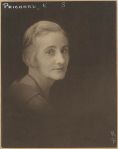
Prichard, by May Moore (Presumed Public Domain, State Library of NSW)

Commenting on my recent post on Katharine Susannah Prichard’s short story “The bridge”, Prichard biographer Nathan Hobby, pointed us to an online version in Trove of her short story, “Christmas Tree”, which he describes as the best of her early work. It’s about farmers, droughts and banks. Seemed very appropriate (to us in Australia right now, anyhow) so of course I checked it out. (And I corrected the OCR-introduced errors while doing so – hope I caught them all.)

So, “Christmas tree”. Published in The Australasian in 1919, it was, according to writer Glen Phillips, the first of Prichard’s stories to be translated – into Chinese in the 1920s! Fascinating eh? It would be interesting to know who read it and what they made of it.

“Christmas tree” tells the story of Western Australian wheatbelt famers Jinny and George Gillard, and is told third person, primarily through the eyes of Jinny who, at the start, is standing at her back door, reminiscing about their thirty years on the farm. The story starts:

Against the dim blue of the summer sky the Christmas trees had thrown their blossoming crests; they lay along the horizon like a drift of clouds, fluted and curled, pure gold.

The trees stood irregularly in the dry, scrubby land of the plain beyond Gillard’s fences to the north of Laughing Lakes homestead. Their trunks were not visible from the backdoor of the house to where Jinny Gillard stood, her eyes on that distant line of yellow blossom. But she was not thinking of the dark, heavy trees which put on an appearance of such opulent beauty at Christmas time. Her thoughts glanced from them and wandered listlessly, ravelling and unravellin, fretted, anxious, thoughts, old hopes, despairs, bitter, weary, and faint, sweet memories.

This year’s crops were, in fact, better than they had been for years, but it’s all too late – it is not they who will be benefiting from this year’s wheat but the bank.

It’s a sad story, but realistic rather than melodramatic. It’s about hard work and bad luck. Jinny knows they are not the only ones who have struggled. Some have had better luck than George who had sown “lightly when a good season happened along, or heavily when the rain kept off, and so had lost both ways” but some are also in George and Jinny’s predicament. The second part of the story concerns a Christmas party underwritten by one Christopher Tregear, who was chairman of the Great Western’s board of directors and “supposed to be one of the wealthiest men in the State”. Many farmers did business with Great Western, “thinking Tregear’s position in it would guarantee them from harsh treatment. But it had not.” Not for George, not for many others, and yet, here they all are, sees Jinny, dancing and singing with him, though “he was not a good friend of theirs.” Of course, we don’t get Tregear’s point of view, but there’s a sense that with the good season coming, compromises could have been reached.

This story is enjoyable on several fronts. Its realism means it conveys the facts without the histrionics that can sometimes distance readers. The realism also makes more effective the underlying theme that with more loyalty and less greed from the men with money, more farmers could survive the bad seasons. But it’s also enjoyable because of the tight, focused writing – from the sly irony behind the parasitic Christmas trees, and the names of the Gillards’ properties, Laughing Lakes and Everlasting, through the evocative descriptive writing, to the pointed repetition of the Gillards’ mantra “Crack hardy … I’m crackin'”.

“Christmas tree” is a story that hasn’t dated. It’s as relevant now as it was 100 years ago when it was first published – stoicism and dignity never go out of date, and we are still challenged by the role capitalist structures play in people’s lives and livelihoods. Another good read from Prichard – but that’s not surprising.

AWW Badge 2018Katharine Susannah Prichard
“Christmas tree”
First published: The Australasian, 20 December 1919
Also published in Potch and colour, Angus & Robertson, 1944
Available: Online at Trove

Apology: I posted this an hour or so ago with the wrong short story title, so have deleted that post, and republished with the right title, otherwise we’ll all get confused (including Google!)

Monday musings on Australian literature: University of Canberra Book of the Year 2019

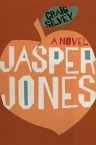
Jasper Jones, by Craig SilveyI have written about the University of Canberra’s Book of the Year initiative, twice – in 2012 when it was initiated, and again in 2014, when I checked to see whether the program was continuing. I am thrilled to say that earlier this month I heard the announcement of 2019’s book, so the program continues still. This book will be the 7th in the program.

Before I announce next year’s book, though, a quick refresher about the program. It involves the University providing a selected book, free, to all “commencing students” regardless of their subjects, as well as to all staff, academic and otherwise. The book is required reading, and teaching staff are expected to incorporate the book somewhere in their programs.

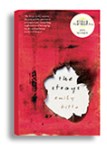
Emily BItto, The strays, book coverThe books are not always Australian, which is a shame given this is an excellent opportunity to introduce students to Australian literature. Also, and perhaps this sounds contradictory, while the genres and subject matter vary somewhat, there’s not a lot of diversity in terms of writers. No indigenous writer, no writer from a non-white/non-English language background, for example. Here is the list, to this year:

2013: Jasper Jones, by Craig Silvey (my review)
2014: Room, by Emma Donoghue
2015: The Rosie Project, by Graeme Simsion (my review)
2016: The strays, by Emily Bitto (my review)
2017: The white earth, by Andrew McGahan
2018: Do Androids dream of electric sheep? by Philip K. Dick

Professor Klomp describes the goals:

The UC Book Project is a fantastic initiative that introduces commencing students to intellectual life before their studies officially begin, encouraging early engagement with UC online resources, and informal learning and sharing among all new students.

It also promotes interaction and engagement among staff and students with a common topic to chat about around campus.

UC Book for 2019

In October, the University announced the shortlist, which are, this year, all recent Australian books. Good decision – and again some varied content, but, notwithstanding Bobis, not particularly diverse. It really is time, I think, to see some indigenous Australian writing chosen.

The announcement says that the judging panel, which comprises “Professor Klomp, the University Librarian, a Professor of Creative Writing, authors, media personalities and students”, is provided the shortlist from which to select “a book that is appealing to our wide range of students”. This year’s shortlist (including main “awards” credentials) was:

  • Merlinda Bobis’ Locust girlNew South Wales Premier’s Literary Award (Christina Stead Prize for Fiction); Juan C. Laya Philippine National Book Award (Best Novel in English)
  • Felicity Castagna’s No more boats: Miles Franklin Literary Award (Shortlist)
  • Peggy Frew’s Hope Farm: Barbara Jefferis Award (Winner); Miles Franklin Literary Award (Shortlist), Stella Prize (Shortlist)
  • Bram Presser’s The book of dirt: NSW Premier’s Literary Awards (Christina Stead Prize for Fiction); NSW Premier’s Literary Awards (UTS Glenda Adams Award for New Writing); NSW Premier’s Literary Awards (The People’s Choice Award); Voss Literary Prize (Shortlist)
  • Lucy Treloar’s Salt Creek: Dobbie Award for Best New Writer (Winner); Miles Franklin Literary Award (Shortlist); Walter Scott Prize for Historical Fiction (Shortlist)
  • Josephine Wilson’s Extinctions: Miles Franklin Literary Award (Winner); Prime Minister’s Literary Awards for Fiction (Shortlist)
  • Charlotte Wood’s The natural way of things (my review): Prime Minister’s Literary Award for Fiction (Joint Winner); Stella Prize (Winner); Miles Franklin Literary Award (Shortlist); Barbara Jefferis Award (Shortlist); Voss Literary Prize (Shortlist); plus short listing for the NSW Premier’s Literary Awards, Queensland Literary Awards and Victorian Premier’s Literary Awards.

Charlotte Wood, The natural way of thingsAnd the winner is: Charlotte Wood’s The natural way of things. A provocative and probably challenging choice for many – but one that should stimulate great discussions about all sorts of ideas, values and topics. UC’s Press Release announcing the selection says that Professor Klomp “hopes that the book with engage a wide audience with its universal themes of power, morality, judgement and friendship.” Remembering the strong and varied reactions in my reading group – about everything from style and characterisation to meaning and themes – I’d love to hear the students and staff discuss this one.

I’d love to hear you thoughts about the book choices, or the program itself?