Monday musings on Australian literature: some Australian feminist “classics”

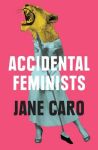
Jane Caro, Accidental feminists

Tonight I went to an ANU/The Canberra Times Meet the Author event featuring author and journalist, Jane Caro, in conversation with local radio personality and booklover, Alex Sloan. It was of course inspired by Caro’s new book, Accidental feminists. So, I thought it might be fun this Monday Musings to just list some of Australia’s best-loved feminist books – in chronological order of publication.

While I call myself a feminist, I wouldn’t call myself an expert on the history of feminist writing in Australia – and most of what I’ve read I read before blogging so I have minimal reviews here. Consequently, I don’t want to pretend to be offering anything like a complete or thorough list. Instead, this list is just a taster, a sample, an introduction to some of the best-known books and writers. (Oh and I admit up-front that I’m using the term “classic” loosely as I will be including some rather recent books which might, in time, become classics.)

Here goes:

Louisa Lawson’s The Dawn: a feminist magazine published between 1888 and 1905, The Dawn was established by feminist Louisa Lawson (under the name, Dora Falconer). It became, according to Wikipedia, the official publication of the Australian Federation of Woman voters. The journal has been digitised on Trove, and this comes from its first issue, May 15, 1888.

Every eccentricity of belief, and every variety of bias in mankind allies itself with a printing machine, and gets its singularities bruited about in type, but where is the printing-ink champion of mankind’s better half? There has hitherto been no trumpet through which the concentrated voice of womankind could publish their grievances and their opinions … Here then is Dawn, the Australian Woman’s Journal and mouthpiece – phonograph to wind out audibly the whispers, pleadings and demands of the sisterhood.

Here we will give publicity to women’s wrongs, will fight their battles, assist to repair what evils we can, and give advice to the best of our ability.

Germaine Greer’s The female eunuch: first published in 1970. Reading this while still a teen was my founding feminist moment. I had been brought up believing I was equal, that I could go to university and get a job just like my brother and the boys around me, that I didn’t have to marry to live a good and enjoyable life, but Greer’s book gave me an understanding of the structural, personal, psychological issues behind the struggle women faced (and still face) to gain true equality.

Anne Summers, Damned whores and God's police

Anne Summers’ Damned whores and God’s police: first published in 1975, this book examines the two main stereotypes that are used to define women – “bad girls” who refuse to conform to society’s expectations of “the good girl”, or “good women” whose role it is to civilise society, to keep everyone else moral. Forty years on, Summers believed that, despite some progress, the stereotypes persist, and a revised edition of her best-selling book was published in 2016. Lisa (ANZlitLovers) posted on this book, focusing on the introduction to the new edition.

Jocelynne Scutt’s Different lives (ed): published in 1987, this is less a feminist treatise, than an anthology of writing by women who were active in the second wave of feminism (either formally through organisations or informally through individual action.) This is just one of feminist lawyer Scutt’s several books on feminist issues.

Dale Spender: I’ve included Spender here because of the volume of her writing on women’s issues, in the 1980s and 1990s in particular, rather than for one particular book. Her focus has largely been women writers, and their neglect. Her first book, Man-made language, analyses how the English language is constructed from a masculine point of view, and the ramifications of this. Other books include Writing a new world: Two centuries of Australian women writers and the provocatively titled The writing or the sex?, or, Why you don’t have to read women’s writing to know it’s no good. I have her Mothers of the novel: 100 good women writers before Jane Austen, in which, among other things, she discusses how and why the work of these early women writers has been lost while that of their male peers has entered the canon.

Tara Moss’ The fictional woman (my review): published in 2014, this explores her thesis that women’s lives and roles are subject to an inordinate number of fictions that contradict reality, and that this helps perpetuate ongoing inequalities for women in representation, status, value. I’m not sure of Moss’s longterm standing in feminist literature, but I found this an engaging read.
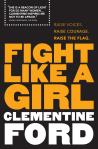
Clementine Ford, Fight like a girl

Clementine Ford’s Fight like a girl: published in 2016, this book belongs to the new generation of Australian feminists of whom Ford is clearly one of the frontrunners. The book’s starting point is that things have not changed for women – at least they haven’t changed enough. The book is therefore, writes Readings bookshop, “a call to arms for all women to rediscover the fury that has been suppressed by a society that still considers feminism a threat.”

There are many other Australian writers who explore aspects of women’s experience from a sociopolitical, and feminist, perspective, including Drusilla Modjeska’s Exiles at home, on Australia’s lively, fierce and often activist women writers of the 1930s; Diane Bell’s Generations on the way women pass on traditions; and Larissa Behrendt’s Finding Eliza (on my TBR) which takes on colonialism – and how the attendant stereotypes and myths have played out in the treatment of indigenous people, particularly women, since 1788. But, I had to stop somewhere…

Now, over to you: do you have any favourite feminist texts, Australian or otherwise, you’d care to share with us?
Annabel Smith, Whiskey and Charlie (#BookReview)

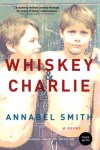
Annabel Smith, Whiskey and CharlieSome explanations first. Western Australian author Annabel Smith’s novel Whiskey & Charlie was first published in Australia back in 2012 as Whisky Charlie Foxtrot, which immediately brings to mind the two-way alphabet (or, as I knew it, the alphabet used by the police on The Bill for communication. The things you learn via TV!) However, as happens, the book was, excitingly and successfully, published in America in 2014, and its title was changed to the less evocative Whiskey & Charlie. What I read – heard, actually – was the audiobook that I won in a Readers’ Pack draw last year. Mr Gums and I listened to it on our recent road trip to Melbourne. It passed the time beautifully.

But, another thing, before I talk about that. I’m not a huge fan of audiobooks as I explained earlier in this blog. I really like to see the text; I don’t like to miss visual clues; and I rarely like readers acting out the voices. All these were challenges with Whiskey & Charlie, particularly the last one. The reader, Gildart Jackson, is English. He did the English accents well, but, oh dear, his Australian accent sounded disconcertingly American. I assume this audio, with its American title, was made for an American audience, but, regardless … I prefer reading!

So now the book itself which, really, is what this is all about isn’t it? It tells the story of two identical twins, Whiskey (born William) and Charlie. It is all told, however, through Charlie’s eyes, as the novel starts after Whiskey has had a freak accident and is lying in hospital in a coma. They are 32 years old, and the trouble is that they have been estranged for some time. Charlie has no idea what music, for example, Whiskey would want played at his funeral should he not awaken. He’s distressed. A procastinator who avoids confrontations, he’d always believed there’d be time to sort it all out. The novel progresses from this point, with the family taking turns waiting by Whiskey’s bedside, while Charlie remembers the past and how they’d got to the point they’re at. As he does so, he gradually comes to some realisations about himself and their relationship that enable him to – finally – mature, to see that it hadn’t all been as one-sided as he’d rather smugly assumed. This could be seen in fact as a coming-of-age novel. Perhaps all novels are, in a way; perhaps none of us stop coming of age until we, well, stop?

Anyhow, what makes this book particularly intriguing, besides the thoroughly engrossing story of an ordinary family with all its ups and downs – emigration from England to Australia, parental divorce, and so on – is its structure. And this is where the two-way alphabet comes in. We learn early on that when they were 9 years old, the then close twins been given a walkie-talkie set, and, to help with communication, they learnt this alphabet. William was disappointed that Charlie’s name was in the alphabet, while his was not. Charlie dubs him Whiskey, which becomes his name from then on. Smith structures the narrative around the alphabet, with each chapter titled according to the words – Alpha, Bravo, Charlie, Delta and so on right through to Zulu – and with each of these words linking to some part of its chapter’s content.

This – and the fact that the flashbacks aren’t completely chronological – gives the novel a somewhat episodic structure, but it doesn’t feel forced. Instead, the story is revealed in the backwards-forwards sort of way, for example, that we gradually get to know new friends while the friendship itself is moving forward. (A not uncommon structure. What makes this one a bit different is being organised by the alphabet.)

I’m not going to write my usual sort of review, mainly because having listened to it, I don’t have the same sort of notes, or the same easy access to check details or find quotes. So, I’ll just make a few comments. It’s quite a page-turner, with the main plot, as you’d expect, turning on whether Whiskey will come out of his coma, and if he does what state will he be in. The secondary plot relates to Charlie’s mental state, and his understanding of himself and his relationship with his brother (not to mention with his long-suffering, angelically patient partner, Juliet). He has always felt inferior – the one who came second, the one who didn’t get the girls or the fancy jobs – but he also felt in the right when it came to their estrangement. However, were things really how he saw them? This is something he has to work out for himself. For this reason, the third person limited voice is a good choice for the novel. It enables us to feel with Charlie, while also providing that little bit of distance which enables us to see that Charlie’s perspective may be just a little skewed.

One of the lovely things about Smith’s plotting is that there’s no melodrama, or over-blown emotionalism here. Sure, drama occurs, and there are some surprises, but it’s all within the realm of possibility. There’s some lovely humour too, particularly in the stories of the boys growing up. One particularly funny section has Charlie describing the “bases” in petting with a girl. There were times, though, when I felt Charlie was too angry, too irrational, particularly towards the end when it seemed he was on the road to growth, but that’s minor and didn’t affect his overall trajectory.

Binding all this together is the description of Whiskey’s medical condition. Smith obviously did quite a bit of research – or already knew – just how extended comas play out. While I knew some of it, there were details that I didn’t, and that I found fascinating. Smith also covers such issues as grief and end-of-life decisions.

Finally, I like the title. At first I wondered why Whiskey’s name was first when Charlie was telling the story, particularly given Charlie also comes first in the alphabet. But, of course, it’s polite to put the other person first, and it also reflects Charlie’s sense of who was first in their relationship.

Whiskey & Charlie (or Whisky Charlie Foxtrot) has been out for a few years now, but it’s still worth reading if you come across it in a library or bookshop. Or, have you read it already? If you have, let me know what you thought.

Lisa (ANZLitLovers) also liked and reviewed this – but way back when it came out!

AWW Challenge 2019 BadgeAnnabel Smith
Whiskey & Charlie (Audio)
(Read by Gildart Jackson)
Blackstone Audio, 2015 (Orig. pub. 2012)
10H30M on 9CDs (Unabridged)
ISBN: 9781504608268


Monday musings on Australian literature: Stella judges on the zeitgeist in Australian fiction

Last week I reported on the longlist for this year’s Stella Prize, and shared an excerpt from the judge’s comments. For today’s Monday Musings, I’m reiterating most of that – for us to think about and discuss:

Reading for the Stella Prize … [is] a sample of the zeitgeist, a look at what is informing our thinking right now …

It feels like a big year for fiction, and our longlist reflects this. … Family relations and the persistence of the past in the present continue to inspire writers, and several books were concerned with the aftermath of trauma, especially sexual violence. Realism continues to dominate Australian fiction, with a few standout departures into other modes.

We wished for more representations of otherness and diversity from publishers: narratives from outside Australia, from and featuring women of colour, LGBTQIA stories, Indigenous stories, more subversion, more difference.

I’m not aiming here to get into a beat-up about their choices – because we all know that judging in the arts is such a subjective thing – but they did raise the issue, so I thought we could have a little think …

Starting with what they say is dominating contemporary fiction:

  • family relations
  • impact (“persistence”) of the past in the present
  • aftermath of trauma (particularly sexual violence)
  • realism

And then, looking at what they felt they didn’t see much of, which was “otherness and diversity”. They defined this as narratives that:

  • are not based in Australia
  • come from and feature women of colour, LGBTQIA people, Indigenous people (and, presumably, other “differences”, such as people with “disabilities”)
  • are subversive
  • are different

There are a several ways we can look at this. Firstly, do we agree with their assessment of Australian fiction, specifically, of course, that written by women – recognising that they are talking about trends, not exceptions as there will always be those. My sense is that they are right. Certainly, several books in their longlist are about family relationships – particularly fathers and daughters/parents and children – and about how the past continues to impact present behaviours and lives.

Secondly, if we agree with the judges’ assessment, does it matter? I’d say it does, because it suggests that we are not being introduced to the breadth and depth of Australian experience but to a subset of it.

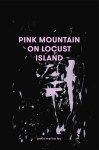
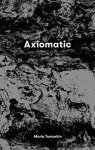
Jamie Marina Lau, Pink Mountain on Lotus IslandThirdly, if we agree it does matter, why is it so? Is it because this is what publishers think readers want to read? It’s interesting, for example, that the most subversive books in the longlist are probably the two from the small independent publisher, Brow Books (Lau’s Purple mountain on Locust Island, and Tumarkin’s Axiomatic), and that the indigenous work in the list (Lucashenkos’ Too much lip) is published by UQP, a university press which has a history of supporting indigenous writing.

Anyhow, what I’m going to do is share here some books written by women and published last year that I think offer “otherness and diversity”, not, as I said, to say that I think these should have been shortlisted – because I haven’t read all the books the judges did, and I don’t know which ones were submitted anyhow – but just to offer some ideas and to have you offer some back!

  • Glenda Guest’s A week in the life of Cassandra Aberline (Text) (my review), which could be seen to largely fit the zeitgeist/trends the judges identified – family relations, the impact of the past on the present – but it is also about “otherness”, in that the main character is an older woman who has been diagnosed with dementia.
  • Krissy Kneen’s Wintering (Text), which I haven’t read but Kneen does tend to be subversive. Is this book so – or is it simply a variation on Tasmanian Gothic?
  • Margaret Merrilees’ story about lesbians, Big rough stones (Wakefield Press) (my review)
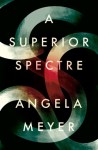
  • Angela Meyer’s dystopian-tending-realism-departing story, A superior spectre (Ventura Press) (my review).

This isn’t what you’d call a lot! I did find a few more by men, but. We see stories all the time about “other” experiences, about the many challenges we are facing as a society – on the news, for a start. Where are they in our fiction?

Now, over to you – and if you’re not Australian, I would of course love to hear what you have to say about “otherness and diversity” in your neck of the woods.

(PS This may not publish, as scheduled, on Monday night AEDST as we are out in the wilds of NE Victoria where internet connection is flakey.)

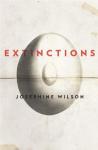
Josephine Wilson, Extinctions (Guest post by Amanda) (#BookReview)

I am very pleased to bring you another guest post by Amanda, for a book I’ve not managed to read yet, much as I’d like to: Josephine Wilson’s Miles Franklin Award winning novel, Extinctions.

Amanda’s review

Josephine Wilson. ExtinctionsI loved this book. I was really sorry when it ended. It’s the kind of novel you press into the hands of a good friend. If we lived in the same town I would drive over and lend it to you. [Thanks, Amanda, I wish you could!]

It comes with impressive credentials – Winner of the 2017 Miles Franklin Literary Award and the 2015 Dorothy Hewett Award for an Unpublished Manuscript. I would never judge a book based on its awards – and putting those aside, Wilson has created an intelligent sensitive story, combining the personal and political with poignant and endearing characters.

I’ll give you a brief synopsis of the plot and a mention of some unique touches Wilson employs. Some reviews out there give away too much, which ruins the book’s unfolding narrative.

As implied by the title – the book deals with extinctions of all sorts – racial, national, natural and personal. Our protagonist is retired engineering professor Fred Lothian, father to Caroline and Callum, reluctant resident of St Sylvan retirement village, neighbour to Jan and desperately missing his deceased wife Martha. The first couple of chapters are a bit slow moving as we are introduced to Fred and in retrospect to Martha. But it picks up the pace quickly and indeed the ending did seem a bit rushed. The story is told mainly through balancing the present with Fred’s memories.

Wilson uses photos and drawings throughout the book to emphasise a point, which works very well. The photos are unique enough to create interest and have sufficient detail for a reader to divine meaning in addition to the narrative. She also likes quoting large paragraphs from other literature, ranging from Shakespeare to Wind in the willows. That I liked less, they seemed overdone and distracting.  Some engineering terms are used as metaphors in numerous chapter titles.

Wilson is a master story-teller. She is excellent at creating suspense. She deftly manages humour and even in this poignant, serious tale it never seems out of place. You’ll find the most entertaining first date in literature in this book. Some writers let their characters meander aimlessly in the story, but Wilson was having none of that. She works her characters like draught horses. They are constantly flung at each other to challenge, chide, ameliorate and alleviate each other. She has a great ear for dialogue and parent-child dynamics. However, this is a political book and sometimes her characters’ conversations can seem didactic – with each taking an opposing view to prove that there is no absolute right or wrong in most matters. Also occasionally Wilson needs to stretch the plot twist to fit the story and even Fred admits that some events were highly coincidental.

Extinctions is full of beautiful sentences – there is a whole paragraph about the early years of educating a child. It’s too long to quote here, but you will recognise it when you get to it. With great writing I often wonder how much is autobiographical. I note in the afterword that both of Wilson’s parents and a mother–in-law passed away during the writing of the book. Also her father was an engineer.

What I liked most is Wilson’s message of hope – that before we all grow old and become extinct, it is never too late to make amends and make the world a better place for the ones we love.

Lisa (ANZLitLovers) reviewed it of course when it came out.

AWW Challenge 2019 BadgeJosephine Wilson
Extinctions
UWAP, 2016
ISBN: 97817425888988

Stella Prize 2019 Longlist

I don’t do well at having read the Stella Prize longlist at the time of its announcement. In 2017 I’d read none, and last year I improved on that by having read one of the 12-strong longlist. By the end of the year, though, I had read five, which is good for me, given in 2017, I’d only read three. How will I go this year?

I do have a BIG fail though, which is that until now I had read all the winners – Carrie Tiffany’s Mateship with birds, Clare Wright’s The forgotten rebels of Eureka, Emily Bitto’s The strays, Charlotte Wood’s The natural way of things, and Heather Rose’s The museum of modern love – but I have yet to read 2018’s winner, Alexis Wright’s Tracker.

The judges are again different to last year’s – with the exception of the chair, Louise Swinn, who also judged last year – which is good to see.  The 2019 judges are writer, journalist and broadcaster Daniel Browning; writer Michelle de Kretser (whom I’ve reviewed a couple of times here); bookseller Amelia Lush; Walkley Award-winning journalist Kate McClymont (who is in that Media Hall of Fame I wrote about a couple of weeks ago); and writer and publisher Louise Swinn (the chair). Once again attention has been paid to diversity on the panel.

Here is the longlist:

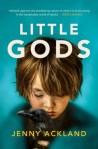
  • Jenny Ackland’s Little gods (novel/Allen & Unwin) (my review)
  • Stephanie Bishop’s Man out of time (novel/Hachette)
  • Belinda Castle’s Bluebottle (novel/Allen & Unwin) (Theresa Smith Writes review)
  • Enza Gandolfo’s The bridge (novel/Scribe) (Lisa’s review)
  • Chloe Hooper’s The arsonist (non-fiction/Penguin Random House) (Lisa’s review)
  • Gail Jones’ The death of Noah Glass (novel/Text)
  • Jamie Marina Lau’s Purple Mountain on Locust Island (novel/Brow Books) (Amanda’s guest post here)
  • Vicki Laveau-Harris’ The erratics (memoir/Finch Publishing)
  • Bri Lee’s Eggshell skull (memoir/Allen & Unwin) (Kate’s – booksaremyfavouriteandbest – review)
  • Melissa Lucashenko’s Too much lip (novel/UQP)(on my TBR, and coming up soon) (Lisa’s review)
  • Maria Tumarkin’s Axiomatic (essays/Brow Books) (my review)
  • Fiona Wright’s The world was whole (essays/Giramondo) (on my TBR – I loved her Small acts of disappearance

So, I’ve read and reviewed just two – creeping up my one each year! – and have a guest post for a third on my blog. I have two more on my TBR right now, and a couple more I am very keen to read, including Chloe Hooper’s The arsonist. I have been out tonight, and  so had tried to get a head start by partially drafting this before I went out with my “guesses” inserted – I had only 5 right!

The judges commented on the longlist that:

Reading for the Stella Prize … [is] a sample of the zeitgeist, a look at what is informing our thinking right now …

It feels like a big year for fiction, and our longlist reflects this. As well as some strong debuts, it was reassuring to see so many books from writers whose work we have admired for some time. Family relations and the persistence of the past in the present continue to inspire writers, and several books were concerned with the aftermath of trauma, especially sexual violence. Realism continues to dominate Australian fiction, with a few standout departures into other modes.

We wished for more representations of otherness and diversity from publishers: narratives from outside Australia, from and featuring women of colour, LGBTQIA stories, Indigenous stories, more subversion, more difference.

[…]

Ultimately, we chose books that strove for something big and fulfilled their own ambitions. … These are all artists concerned with the most important questions of our age and how to live now, and it has been a pleasure to be in their company.

I like their comment about a wish for more diversity – but I would expect nothing less from them. As always there are surprises, but that’s to be expected. It would be a sad world if we all came up with the same 12 eh?

Anyhow, I’d love to know if you have any thoughts on the list.

The shortlist will be announced on March 8 (International Women’s Day, as has become tradition), and the winner in April.

Angela Meyer, A superior spectre (#BookReview)

Angela Meyer, A superior spectreA superior spectre may be Angela Meyer’s first novel, but her already significant writing credentials, including being the author of the short/flash style fiction collection Captives (my review), and the editor of the anthology The great unknown (my review), ensure this is a confident debut. And it needed to be, because Meyer took big risks in this book – structurally, genre-wise, and with her characters.

Let’s start, however, with the title. It hints at genre, doesn’t it? And yes, this book does owe much to genre, but more to genre-bending than to simple genre. It has two storylines – which is part of the risky structure – one set in mid 19th-century Scotland, drawing on historical fiction, and the other also set in Scotland, but in 2024, making it more speculative fiction. There is also a touch of the Gothic here, with visitations, hidden rooms and madhouses, with dark thoughts and hints of perversion. But, the novel is more complex, more sophisticated than that suggested by this idea of two interwoven storylines from the past and the future. The two epigraphs that introduce the novel clue us into this complexity. The first epigraph is from Emily Dickinson and suggests that the “superior spectre” is not “external”, or “material”, but something “interior”, or “more near”, while the second, from Kafka, hints at the dark side of love and human nature.

These ideas are explored through the two main characters: Leonora, a young farm girl from the Scottish Highlands, and Jeff, a dying man who has “escaped” Australia (something that is difficult to do in his chip-controlled futuristic world) to die alone in Scotland. Leonora is poor, but well-read and resourceful; she’s a hard-worker and loves her father; she’s sensual, sexual, but not afraid to express it; and she has a mind of her own, but is independent rather than wilful. She is, in other words, easy to like and wish well for. Jeff, on the other hand, is more ambiguous, and thus a challenge for us readers. Not only does he admit to some questionable sexual proclivities, but his behaviour in Scotland, particularly towards Leonora, becomes increasingly selfish. He knows it, but in the end puts his needs and desires ahead of hers. How, though, given their different eras?

Well, let’s now turn to the structure. Meyer sets us up at the beginning with a comfortable, predictable structure in which third-person Leonora’s story alternates with first-person Jeff’s. There’s nothing particularly remarkable in this, but it doesn’t last. In Part 2 (of this four-part novel), Leonora’s story also becomes first-person. It happens because, as the back cover blurb has told us, Jeff is using some experimental technology (a “tab”) that enables him to inhabit Leonora’s mind, and at the end of Part 1 he decides to change how he brings her to us. His aim, he says, is to enable us to “partly inhabit her as well” though in so doing, he warns us, our thoughts too, like Leonora’s, may be “infected” by him. I like books in which the structure itself underpins the meaning of the work. In this case, the structure unsettles us – as in, where are we now, who are we with – and mirrors the discord being experienced by Leonora, who wonders

about how powerful our thoughts can be. We might think we are sick when we truly have no ailment. But if we present the symptoms, and believe them, are we not sick anyway? . . . I wonder if a person could learn to be aware of when the mind is influencing a bodily reaction, and also when an instinct is overruling the mind.

So, in A superior spectre, we have a destabilising structure, a slippery character in Jeff who knows he doesn’t deserve our sympathy but wants to justify himself nonetheless, and a creative intertwining of genres – but to what purpose? There are several, I think, some personal, some sociopolitical. The latter is obvious. For Leonora there are the gender expectations which limit what a young girl of her class and background can do: she cannot study at university as some young women she meets are doing; she cannot marry the Laird for whom she falls; and she cannot protect herself from being deemed mad when she admits to strange visions of flying machines and horseless carriages. For Jeff, whether we like him or not, there is the lack of personal freedom that comes with living in a so-called technologically-advanced (dystopian) society. It’s not completely coincidental that Meyer wrote her final draft of this book on Jura, where George Orwell finished 1984.

But, it’s the personal – particularly the grappling with one’s inner demons or “spectres” – that gives the book its greatest power. Jeff’s selfishness, his poor self-control and yet desire to explain himself to us, recall characters like Nabokov’s Humbert Humbert. It’s hard to completely hate a character who is so open about his self-disgust even while he does nothing about it, and who engenders at least some sympathy from his Scottish landlady. She doesn’t approve, but she doesn’t reject either. In the end, Jeff is more pathetic than hateful, partly because his “spectres” are plain to see.

Leonora’s “spectres” come from her challenge in matching her sensual nature with the life she finds herself in, from her desire to find that freedom espoused by John Stuart Mill:

It is difficult for me to read about freedom and tyranny without relating these words to my own situation. Mill’s number one basic liberty is a freedom of thought and emotion. The individual being sovereign over his own body and mind. But what if your thoughts are being suppressed not just from the outside, but from some inner tyrant also?

She knows her aunt wants the best for her, a “good” marriage, but fears this would mean

suppressing the thoughts and emotions I have? It is the opposite of liberty; it is to put myself potentially in the hands of another tyrant. I feel I am pressing at walls all around.

Jeff’s “infection” of her (his tyranny), then, can have multiple readings: not only is it a manifestation of his selfish disregard of others, but it represents her own inner spectres, and symbolises the male control she rejects.

A suitable spectre is not an easy book to pin down, but this just makes it more enjoyable. And if that’s not a good enough reason for you, how about that it offers an intelligent interrogation of past and future, of inner conflicts and outer challenges, through two vividly drawn, not-easy-to-forget characters?

Lisa (ANZLitLovers) also liked this book.

AWW Challenge 2019 BadgeAngela Meyer
A superior spectre
Edgecliff: Ventura Press, 2018
270pp.
ISBN: 9781925183917

(Review copy courtesy Ventura Press)

Monday musings on Australian literature: Reading Victoria

The inspiration for these Monday Musings posts comes from all sorts of places, but mostly from online sources and print media. Today’s, however, comes from a catch-up I had last week with my group of litblogger mentees (at which Angharad and Emma from 2017 met Amy from 2018.) It was delightful. You won’t be surprised to hear that a main topic of conversation was reading and writing – during which Emma mentioned Reading Victoria and the stories that have been lobbing weekly into her email inbox. How did I not know about this? Ah well, I do now – better late than never!

Reading Victoria is a Melbourne City of Literature initiative, created in 2018 to celebrate the tenth anniversary of Melbourne’s designation as a UNESCO City of Literature. The aim was to publish “a new piece of writing each week, free and online, themed around a suburb or town in Victoria. From fiction to nonfiction, poetry to prose, the only constant was the titles.” By “constant”, I think they mean that the titles comprise, simply, the name of the place being written about – nothing fancy, just, say, Mallacoota or Ramsay Street. The place, as you say from these examples, could be pretty much any physical place. The About page, linked above, says that by the end of the 2018 they will have published 60 pieces. (Hmmm, lucky Victoria. They seem to have found 8 more weeks in their year. Wish I could!!)

Anyhow, the main page on their simple, clear, website is their Suburbs & Pieces page, which so far lists 57 pieces. It’s now well into 2019 so will there be 60, or have they stopped? I’ve subscribed so will soon find out. It would be lovely if the project continued. The site implies it was just for 2018. It doesn’t say how it is funded and whether the writers (and the editors, Sophie Cunningham, Andre Dao, Elizabeth Flux, Omar Sakr and Veronica Sullivan) are paid? It would be good to know these things?

Meanwhile, back to Suburbs & Pieces. Have you clicked on it already? I probably would have. However, on the assumption that you haven’t, or that you’re not Australian and would like a little more context, I’ll describe the pieces a little more to give you a flavour.

The content is wonderfully varied. I picked some at random to look at – based either on places or authors I know. The first one to catch my eye was Wangaratta (Week 6 by Andy Connor). Wangaratta is an attractive little country town on the Hume Highway between where I live and Melbourne. Connor’s piece is non-fiction, a little memoir, reflecting on all the reasons he had for wanting to escape it and wondering why, upon a return visit, he found you can ” feel nostalgia for a place you never felt you belonged”. Fair question.

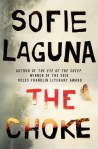
Sofie Laguna, The chokeAnother non-fiction piece is Sofie Laguna’s Echuca (Week 14), which is on the Murray River near when she set her novel The choke (my review). Her piece is moving, but I particularly like this which gives you a sense of the novelist’s ear and eye:

I read about the Barmah Choke – a place in the Murray where the banks come closer, flooding at certain points in the year, contributing to the wetlands environment. I liked those words – Barmah and Choke and the way they sat together – the first so round, lifting at the final vowel, and the second so tight, hemmed in by biting consonants. The words seemed to contradict each other.

These two pieces are non-fiction but there are also fiction pieces, poems, small plays, interviews. Many well-known published authors are here including Tony Birch, Helen Garner, Alex Miller and Jane Rawson, but there are new-to-me writers too, writers who have been published in journals like Lifted Brow, or are performers, or, even, comic book artists (see Corio, Week 41, Eloise Grills).

Some of the stories have been published elsewhere. At least, I recognised Bruce Pascoe’s fiction piece Mallacoota which appeared, with a few changes and under a different title, in Writing Black. But that doesn’t matter. In fact, one of the great things about short form writing is that it can be “curated” in different places and collections, and that writers can continue to “fiddle” with their pieces for each iteration. Not being a writer, I don’t know, but I’m guessing that sometimes this “fiddling” is to fix up something they don’t like, and sometimes to tailor the piece to its new “home”?

There is of course a very brief bio for each writer at the end of their piece providing their writing background or credentials. That’s particularly useful for writers you don’t know.

For anyone interested in writing about place, this project has a lot to offer. Many of the pieces are gritty, pulling no punches about the places they write about (Sydney Road, Week 38, by Fury is particularly strong), while others are affectionate, or even satirical. There are pieces by indigenous writers (like Tony Birch, Yarra River, Week 46), and by those from migrant backgrounds (like Alice Pung, Footscray, Week 30). When this is published, I will be staying somewhere along the one of Australia’s iconic roads, the Hume Highway, and it is here too: Hume Hwy (Week 48, by Sophie Cunningham).

In some ways this project reminds me of the Library of America Story of the Week program, except that it’s about sharing America’s literary heritage. Reading Victoria, on the other hand, is focused very specifically on contemporary responses to place.

Do you know of any similar initiatives to this – and do they interest you?

Vale Andrew McGahan (1966-2019)

My reading group was only talking about Andrew McGahan (1966-2019) this week. We knew he was terminally ill, but little did we know that his end was so near. How very sad, then, to hear today that he died just yesterday, at only 52 years of age.

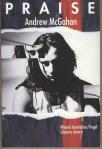
Andrew McGahan, Praise, Allen and UnwinNow, I know that Lisa (ANZLitLovers) has written a tribute but I do want to write one too, because he’s an author who made an impression on me. After all, he introduced me to a genre that would not be my natural calling – grunge lit (or, perhaps more “formally” known as dirty realism!) I enjoyed it. Well, I appreciated his books anyhow. I read both Praise (1992) and 1988 (1995), back in the mid-1990s, which was long before blogging. I wrote to my Californian friend in 1995 – my letters to her are a useful resource sometimes – that I found 1988 “interesting reading” even if I found the 21-year-old protagonist “frustrating in his inability to take hold of his life”. Frustrating perhaps, but the vivid sense of hopelessness and helplessness that McGahan conveyed in these books has stayed with me, which says something about his writing. (It helped too that the protagonist’s girlfriend in Praise suffered from eczema. There’s something validating, as many of you know, in reading about a character whose challenges are yours!)

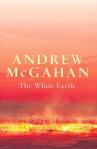
Andrew McGahan, The white earthAnyhow, I went on to read his very different novel, The white earth (2004), a rather ambitious multi-generation book about indigenous and non-indigenous Australian love of land/country. It was inspired by the 1992 native title legislation and the conflicting attitudes towards it. It was controversial in some quarters. I liked it. In my letter to my Californian friend, I did say it was a little “clumsy” and used some fairly conventional images and symbolism, but again, over time, it’s a book whose “message”, whose heart really, has stayed with me, while other books I read back then haven’t.

I haven’t read any other of McGahan’s novels. though he wrote three more, Last drinks (2000), Underground (2007) and Wonders of a godless world (2009). According to Wikipedia, he also wrote young adult novels, a play and the screenplay for the film of Praise. The reason he came up at my reading group earlier this week was because one of our members – a recently retired rep for McGahan’s publisher Allen & Unwin – was reading Last drinks. It’s about police corruption in Queensland, and she was wondering if Trent Dalton’s Boy swallows universe was going to visit similar ground. It doesn’t – but she did tell us that McGahan was taking his diagnosis philosophically and was continuing to work on his new novel. It will be published later this year.

The wonderful thing about McGahan was his versatility, having tried his hand at several genres and forms. He didn’t do a bad job at them either, as the following awards for literary, crime, science fiction and children’s fiction reveal:

  • Praise: the Australian/Vogel Award (for an unpublished manuscript by a writer under 35 years of age); the Commonwealth Writers Prize for First Novel (Southeast Asia and South Pacific Region)
  • Praise (screenplay): AFI Award for Best Adapted Screenplay; the Queensland Premier’s Award for Best Drama Script.
  • Last drinks: Ned Kelly Award for Crime Writing for Best First Novel. (That must mean best first crime novel?)
  • The white earth: Miles Franklin Award; Commonwealth Writers Prize Southeast Asia and South Pacific Region; Age Book of the Year; Courier Mail Book of the Year.
  • Wonders of a godless world: Aurealis Award for Best Science Fiction Novel.
  • The coming of the whirlpool: CBCA (Children’s Book Council of Australia) Book of the Year.

For a lovely insight into who McGahan was, albeit from 2004 when The white earth came out, check out this article with him in The Age. The Guardian Australia’s announcement of his death and tribute is also worth reading.

I am very sorry to hear that he has died, and pass my sympathy to his family, friends and colleagues. Fifty-two is just too young to die. He may not have been, for me, the “perfect” writer, but he made a lasting impression on me, so much so that those three books I’ve read frequently come to mind. In the end, what writer could ask for more? (Except for some more years, perhaps!)

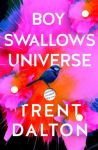
Trent Dalton, Boy swallows universe (#BookReview)

Trent Dalton, Boy swallows universe

Two books came to mind as I was reading Trent Dalton’s debut novel Boy swallows universe. One was Steve Toltz’s out-there book about fathers and sons, A fraction of the whole (my review), and the other was Tim Winton’s Breath (my post), which explores what it is to be a good man, but more on these anon.

I had three reasons for wanting to read the book. Firstly, it was my reading group’s first book of the year, and secondly, it was recommended by two people whose literary tastes often match mine, my brother and an ex-reading group friend. Finally, there was its Brisbane setting. I spent six special years of my childhood in the Sandgate area of Brisbane, where, I’d read, Dalton had also lived while growing up. Fortunately, all these reasons were justified as this novel is an excellent read – engrossing in content and intriguing in style.

Boy swallows universe covers around six years of its protagonist Eli Bell’s life, starting in 1985 when he is 12 years old and living with his mother, Frankie Bell, and stepfather Lyle. He and his mute older brother August are regularly babysat by Slim (based on the real criminal, convicted murderer Arthur Ernest Halliday) while Frankie and Lyle are out dealing drugs. Slim, for all his apparent criminality, turns out to be one of the most important wise people in Eli’s life – and, while he isn’t always around as Eli grows older, it is to Slim that Eli often speaks, consciously or subconsciously, drawing on his ideas and advice, as he faces life’s challenges. Eli’s relationship with Slim is just one of the threads and refrains that hold this big book together.

a genre-bending coming-of-age crime novel with a touch of magic

Terrible things happen in the book – and Eli and August are pushed around, buffeted by the things that happen in the adult world and over which they have little or no control. Part way through the book, having lived most of their lives with Frankie and Lyle in Darra (Brisbane’s southwest), they find themselves dumped with their damaged alcoholic father Robert Bell, whom they don’t know, and who lives in Bracken Ridge (Brisbane’s north in the Sandgate electorate). While Frankie and Lyle, for all their illegal doings, provide a generally stable home-life, the one provided by Robert is erratic, affected by his alcoholic binges. And yet, here too, the two resourceful boys find love – and more, support.

All this probably suggests to you a straightforward book about dysfunctional families, of which there are many these days. But, you would be wrong, because wrapped around the domestic is a story of drug dealing, drug double-dealing and violence, that takes this book into a whole other realm. In fact, the best way to describe it is as a genre-bending coming-of-age crime novel with a touch of magic. You with me?

Now, I’m going to shift gear a bit and return to those two books I mentioned in my opening paragraph. The book’s opening line is “Your end is a dead blue wren”, and we soon discover that these words have been written in air by August, who is sitting on their brown brick fence while Eli is being taught to drive by Slim. There’s a bizarre edge to all this which, in addition to the fact that the book is mostly about men and boys, fathers and sons, made me think of Toltz’s A fraction of the whole. However, while Toltz’s “bizarre” lies more in the absurd area, Dalton’s is more magical. There’s a red telephone in a secret room, for example, that always seems to ring when Eli is around. Who is at the other end? August at one point says it is he, but is it really? It doesn’t really matter, in fact, because the phone seems to be more about deflecting or, perhaps, relocating fear and trauma than about reality. It works because Eli’s voice and the sort of jaunty in-the-moment tone make it work.

More interesting to me, though, is the link with Winton’s Breath. They are very different books. For a start, Breath is more novella, while Boy swallows universe verges on the big, baggy monster. But, both books are fundamentally about what makes a good man – and, in neither case is the answer simple. In fact, it comes more often than not from flawed, if not sometimes bad, men. From early on in Dalton’s novel, Eli asks various men – family, friends, criminals, strangers – “are you a good man?” Many are surprised and know not what to answer. Gradually though Eli puts together his own picture from their answers and bevaviours, until, near the end, he says (addressing Slim in his mind):

This is what a good man does, Slim. Good men are brash and brave and fly by the seat of their pants that are held up by suspenders made of choice. This is my choice, Slim. Do what is right, not what is easy … Do what is human.

Now, before I get onto the writing, a bit about this genre-bending novel’s plot. As I mentioned above, the novel’s plot-line relates to drug double-dealing. This results, at the end, in quite a suspenseful, page-turning adventure that was much enjoyed by many in my reading group. But, not so much by me who finds reading action pretty boring. Indeed, if I have one question about the book, it’s whether it really needs the final chase. I think the point would have been made had the novel concluded just before it – but that final adventure will help the novel adapt well to film, and to a film that many will want to see, so I won’t be too churlish about it.

And, anyhow, it’s a small criticism because I greatly enjoyed the book. It is so well constructed. Little details dropped in one place are picked up in another; little verbal refrains recur adding both poetry and meaning without being heavy-handed. Even the curious, often cryptic, three-word chapter headings, like “Boy writes words”, “Boy steals ocean”, and “Boy masters time”, are explained late in the book when the Courier Mail editor asks Eli to tell his life in three words.

There’s also lovely descriptive, sometimes lightly satirical writing, such as this from the Vietnamese restaurant scene:

There’s two more tanks dedicated to the crayfish and mud crabs who always seem to resigned to the fact they’ll form tonight’s signature dish. They sit beneath their tank rocks and their cheap stone underwater novelty castle decorations, so breezy bayou casual all they’re missing is a harmonica and a piece of straw to chew on. They’re so unaware of their importance, so oblivious to the fact they are the reason people drive from as far away as the Sunshine Coast to come taste their insides baked in salt and pepper and chill paste.

Then, of course there’s the characterisation, and the first person voice. Eli is such a kind and likeable character. His coming-of-age is a tough one, but he’s positive, loving, open-minded and willing to learn. He’s also courageous. It could almost be schmaltzy except that you see the grit and know that he has been tested. More cynical readers might think Eli is too good to be true, but the book’s light tone and touch of magic remind us that this is not social realism. It’s “true” to the heart of what Eli (and I believe Dalton) experienced, but it’s not fact. It’s about surviving trauma. Dalton has, I’d say, found a perfect recipe for conveying dysfunction and accompanying trauma while also showing how it can be mentally and spiritually survived.

A good read, and a meaningful book that got my reading group off to a rip-roaring start for 2019.

Trent Dalton
Boy swallows universe
Sydney: Fourth Estate, 2018
474pp.
ISBN: 9781460753897

Monday musings on Australian literature: Australian Media Hall of Fame

When I was a young twenty-something library student, I learnt a new word – serendipity. It, means, essentially, finding things by accident, and was apparently coined by Horace Walpole back in 1754. It’s one of the best things about research I think – unless, of course, you are so focused you have no time for accidental discoveries.

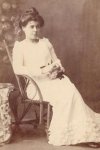
Louise Mack, 1890s

Louise Mack, by Kerry & Co, 1890s (Photo:
National Library of Australia, nla.pic-an23474744)

However, this is not a post on serendipity, per se, but on a serendipitous find I made while doing some research for one of my posts for Bill’s AWW Gen 2 week. The post was on Louise Mack’s book Girls together, and in my searching I found an entry for her on a website that was new to me, the Australian Media Hall of Fame. So, I checked it out, and found it an interesting and rich site.

The Hall of Fame was created in 2011 by the Melbourne Press Club. Its About Us page says it

comprises reporters, editors, broadcasters, photographers, cartoonists and commentators that have made a significant contribution to the development of Australian media.

This is beautifully broad I think.

My rough count shows that it currently has around 240 inductees, of whom, I estimate, less than 15% are women. Not good, but probably reflective of the period it covers?

Anyhow, its aim is (and I’m paraphrasing) to

  • highlight the work of these media legends,
  • show the historical importance of strong and independent journalism, and
  • ensure that such journalism continues.

I’m not sure how well publicised it’s been outside of the profession, but given it’s on the ‘net, I guess more and more people will discover it. Meanwhile, I’ll do my best to raise some awareness. It’s a nicely presented site – at least in terms of what I look for …

About us

I like sites that tell you clearly who they are and what they are about. The About us page doesn’t really tell you who the Melbourne Press Club is, but it tells you what you need to know about this work it’s doing. It also tells us who the judging panel is, and who they want to honour:

people who have made an impact. Inductees must have helped shape the history of a significant news organisation, the craft of journalism, a  town, city, State, nation or the world. Sustained excellence helps, but is not enough. The Hall of Fame identifies game-changers. The Hall is open to journalists, editors, publishers, broadcasters, producers, artists, photographers or others who have had a significant impact by working in the media. Individuals have been inducted for a truly memorable single piece of work or for six decades of outstanding journalism; at each extreme they have made a big impact.

Finding inductees

Of course the main reason for coming to this page is to check out the Inductees, and I like this section of the site. The main Inductees page has an introduction, followed by an alphabetical portrait display of the inductees. If you are looking for a name you can find it easily.

However, it also has an excellent search (filter) function – by genre, era, and region – which enables you to refine your search to an area that specifically interests you and which also facilitates serendipitous finds!

The Genre filter is particularly interesting. It really means, in my words, the professional area the inductees have been honoured for, which are:

  • Broadcasters
  • Business journalists
  • Cartoonists/illustrators
  • Commentators
  • Editors/publishers
  • Photographers/cinematographers
  • Reporters
  • Sports journalists
  • War correspondents

The Eras are: pre 1900; 1900-1918; 1918-1948; 1945-1980; post 1980. The era seems to draw from the date of birth of the inductee, not their era of main activity. Given some have very long careers, this makes some sense … but it has its limits.

The Regions reveal that this is, not surprisingly given its origin, primarily an eastern-states activity: NSW, Victoria, ACT, Other.

So, a pre-1900 search produces some names of interest to me, including suffragists Louisa Lawson and Catherine Spence – but, I didn’t stop there and had fun with all sorts of searches

Information

However, while a decent searching capability is important, it’s only worth doing if the information provided is useful – and I’d say it is. The information can vary a little depending on the person but it usually includes a brief outline of the inductee’s career, a longer biography, still images, and recommended further reading, including links, such as to their Australian dictionary of biography entry if there is one. For some there is also a video of their induction (regardless of whether they were present, as some have long gone).

Take, for example, Catherine Spence. She is described as “a leading suffragist, a social and political reformer, novelist and journalist” and can be found under the Genre of “reporter”. Her page includes a biography by Women’s Studies academic, Susan Magarey, four lovely images, and a list of Further Reading.

Besides the actual information provided about the inductees, the value of sites like these also lies in who is included – in terms of quantity and quality. My sense is that the site – and people are added each year – includes many of the names I would expect to find there – and then some. I loved, for example, finding combat cameraman and cinematographer, Damien Parer, who filmed Australia’s first Oscar-winning film, Kokoda Frontline, listed. It really is a fun site – for Aussies anyhow – to potter around.

But look, my aim here is not to list all the treasures there are to find here (nor share all my trips down memory lane much as I’d like to), but to just tell you that the site exists. Do check it out if you are interested.