Bill curates: Eve Langley’s The pea pickers

Back in April, Karen of Booker Talk published a great series of posts on the A2Z of Bookblogging. One of those posts was on Updating Posts or, Breathing new life into old posts. Bill (The Australian Legend), as part of his generous plan to help me keep my blog alive during my time-challenged period, suggested taking up this idea and reposting some of my old blogs. Thus was born … Bill curates! I am so grateful. And now, I pass you over to Bill …
Bill curates will be an occasional series where I delve into Sue’s vast archive, stretching back to May 2009, and choose a post for us to revisit.
Book coverMy first choice is Sue’s review of Eve Langley’s masterpiece The Pea Pickers. One day Australians will overcome their cultural cringe and realise that in Joseph Furphy’s Such is Life and Eve Langley’s mostly unpublished eleven journals and novels we have writing that should be ranked alongside Ulysses and Rembrance of Times Lost. That’s my opinion and not necessarily Sue’s, but I think she still ranks The Pea Pickers pretty highly, and while she says she might now have written this piece a little differently – it was in fact her first review – I think you’ll agree it stands the test of time.
Eve Langley, The Pea Pickers, first pub. 1942. Cover from Angus & Robertson 2nd ed. hardback, 1958
See also Bill’s posts about Langley:
  • Eve Langley Wrote Two Novels (here)
  • Wilde Eve, ed. Lucy Frost (here)
_______________________

My original post

It  is hard to classify Langley’s most famous novel, The pea-pickers, which was first published in 1942. In some ways it fits into the coming-of-age genre but it is different from the more usual offerings in that genre, if only because there is no real sense at the end that the protagonist has come of age! It also has elements of the picaresque. Again, it’s not typical. The two sisters don’t travel far and wide, they don’t have many “big” adventures”, and it’s heavier in tone than the usual picaresque, but it is about two young women who set out to adventure partly to recover some of their lost history.  A modern interpretation of the picaresque perhaps?

The novel is semi-autobiographical, and is told in first-person. Given that there’s not a very strong plot nor a strong sense of character development, it’s interesting that Langley chose the novel form for it rather than autobiography. She wrote it in the early 1940s, but based it on the journals and poetry she wrote during the time period in which the novel is set, the 1920s.

So what exactly is it about?  The plot is pretty thin: two sisters dress as men and take men’s names, Steve and Blue, in order to work as agricultural labourers in Gippsland, the place their mother has told them about throughout their childhood and with which they feel they have a connection.  The book chronicles their life and work over a few seasons, and particularly describes the people they meet along the way, including a couple of “loves” for Steve, the narrator.

Stylistically it is interesting. Her language is very poetic, and there is also a lot of specific poetry in it. It is quietly humorous. It is also quite declamatory – in an old-fashioned poetic sort of way. There are a lot of allusions, particularly to things classical. There is no real plot, no sense of growth for the main characters from the beginning to the end. All this makes it quite odd – a strange mix of old-fashioned (declamatory style, classical allusions, etc) with post-modern (disregard for traditional elements of the novel such as plot and character development).

Two lovely pieces of writing early in the book are:

Down I fell, in love. And what happened? In feeling, incidents pure beyond pens, anguished beyond all telling. In fact, incidents to the point of idiocy.

and

Then the elderly party with the severe yet insane look took the violin from Blue’s hand and stood beside the door with it, looking as though he were meditating on a dry spell that had brought crows flying around the sheep and mortgages flying around the mailbox, and on that violin he played, with an absent-minded hand, such tunes as Ulysses should have retorted to the harpies.

It’s interesting in terms of social history – the cross dressing, the racism (anti Italians in particular), the depiction of agricultural life of the time. It beautifully evokes 1920s rural Victoria, portraying both the characters who populated it and the sort of small-scale agriculture that was going on.

Cross-dressing or women dressing “mannishly” was a bit of a common thread in nineteenth and early twentieth century Australia. Louisa Atkinson, back in the mid to late 1800s, was a botanist, illustrator, writer who wore trousers (particularly when she was out collecting her specimens) and shocked the locals in the Southern Highlands of NSW (Berrima/Bowral area), even though she conformed in terms of religiosity. Marie Bjelke Petersen (late 19th to mid 20th century) was described as mannish in dress when she was young – and I believe she wore pants. In addition, Marie Bjelke Petersen wrote the story “Jewelled Nights” which was turned into a film starring Louise Lovely in 1925. It is about a woman who dressed as a man. The film didn’t do wonderfully well at the box office. And then Edna Walling in Melbourne in the early 20s wore comfortable jodhpurs when she undertook the gardening and landscaping for which she was famous, leading local residents to call her ‘Trousers.”

So it seems that women did find pants more comfortable and wore them mainly for that reason. But, in this book there is also the issue of assuming a man’s guise to help them to find work. They didn’t try to completely hide their womanhood but they didn’t want to advertise it either. They used their male names in their application letter to get a hop-picking job. They also felt safer if they didn’t look obviously female when they were out and about.

In addition to the coming-of-age theme, the book also has other themes, such as love of land and dispossession from it:

Yes, I am from Gippsland, too. My family have been graziers here for many years. I should be the mother of sons who would be the princes of this province, in thought and action … But what am I? Well, you can see, A wandering pea-picker, living in a galvanised iron hut. But my forefathers were the pioneers here. And that is what is really hurting more than anything. I am nothing to Gippsland; I just wander through her, being hurt by her and used by her in menial toil.

The pea-pickers is a challenge. It seems fresh and innovative, thumbing its nose at many traditions of the time, but it also seems to go nowhere and can be self-consciously self-important. It is, nonetheless, an important part of Australia’s literary heritage and deserves wider reading.

_______________________
Do any of you agree with Bill and me about this astonishing book?

Monday musings on Australian literature: Guest post from Bill on Melbourne and Sydney, 1880-1939

Over the years, I’ve invited people to write guest posts on my blog, including Bill a couple of years ago. However, when Bill (The Australian Legend) became aware of my current family care situation and its impact on my reading and posting, he offered to organise some guest Monday Musings posts for me. It lifted my heart immensely to know that Bill, Lisa and others – as you will see – are willing to help keep this little series of mine going. Thanks so much Bill for taking this in hand. I love that Bill’s post is on a topic dear to my heart (and his). Read on … and do let us know what you think …

Bill’s post

Book coverIn the 1870s and 1880s Melbourne was both Australia’s largest and wealthiest city and its literary centre – around figures like Marcus Clarke, George McCrae (son of Georgianna), Adam Lindsay Gordon, Henry Kendall, Ada Cambridge, Tasma.

What I want to discuss here is the movement of the literary centre to Sydney and how that worked out, during the first half of the twentieth century. This is an opinion piece rather than the result of any great research so feel free to add to what I say and to correct my mistakes.

Sue has always been interested in the women of this period of Australian writing, and over the past few years we, the Australian Lit.Blogging community, have done a lot to establish in our own minds at least, who the women writers were and to review their work. On my blog, I broke Australian writing into ‘Generations’ more or less in line with HM Green’s ‘Periods’ in his History of Australian Literature, so: Gen 1 1788-1890, Gen 2 1890-1918, Gen 3 1919-1960.

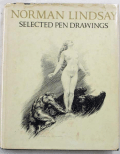
Gen 2 and the first years of Gen 3 were characterized by being both Sydney-centred and seriously misogynist. Gen 2 covered the years of the Sydney Bulletin magazine’s greatest influence, Federation, rising nationalism, WWI.  The Bulletin‘s stable of writers: Henry Lawson, Banjo Patterson, Steele Rudd, Joseph Furphy and a host of bush poets, and the drawings of Lindsay Norman (who moved up from Melbourne after leaving art school) followed by the War reporting of Keith Murdoch and CEW Bean left us with an indelible image of ourselves as resourceful bushmen, and larrikin fighting men. An image which both excluded women and around which they had to work.

The Bulletin openly scorned home life and dismissed the popular women writers of the previous generation as ‘Melbourne-based romance writers’.

“The Sydney Bulletin liked to believe that in ‘virile cultures’ where ‘home-life [had] not become so all absorbing: ‘men live and struggle and fight out in the open most of the time. When they go to their homes they go to beat their wives…’{3 Nov. 1888} According to the Bulletin, home life trammelled a man’s spirit and sapped his masculinity. And it robbed him of his independence.” (Marilyn Lake, 1986

This bled into Gen 3 and the Lindsay-led Sydney Push of the 1920s, an antipodean Bohemia where women were only of use as models and for sex.

For those of us over, say, 50 our history, including such literary history as got past the anglophile gatekeepers, was written and taught by returned servicemen, and they very much bought into the myths of the lone bushman, mateship etc. So it is important to realise that there is another history, that of strong, independent women, which is not taught. In the 1890s both Melbourne and Sydney had vibrant women’s movements focussed on (white) female suffrage, yes, but also on domestic violence, temperance, and women’s welfare. The Melbourne movement coalesced around Annette Bear and Vida Goldstein, and Sydney around Rosa Scott and Louisa Lawson, and Lawson’s newspaper, Dawn.

Miles Franklin is the prime example of a woman writer who was influenced by the nationalism of the Bulletin but wrote with a definite pro-woman and anti-marriage slant. After the publication and instant success of My Brilliant Career in 1901, Franklin was taken up by Rosa Scott, and then subsequently fell in with Goldstein’s lot when she moved to Melbourne and became life-long friends with Melbourne suffragists Mary Fullerton and Mabel Singleton. Her fictionalised biographies My Career Goes Bung and Cockatoos describe her year in the Sydney literary set, living with Scott, flirting with AB Paterson, and meeting Lindsay and (Bulletin editor) Archibald.

Franklin lived overseas for many years, from 1906 to the 1930s and when she came back for good, to her mother’s house in Sydney, it was to a changed literary scene, one dominated by women. During the 20s women had been excluded from the Sydney Push’s literary magazine, Vision, and maybe only Zora Cross with her erotic poems fitted in with the times. Anne Brennan, daughter of drunken poet Christopher Brennan, who hung around the Lindsay push for grog and sex, and tried to write, tried to fit in and failed. Christina Stead was tempted to join the Push, but her compulsion to earn enough to flee overseas saved her.

The Melbourne scene gathered around Nettie and Vance Palmer. Vance, originally a Queenslander, tried hard to be a writer in the Bulletin tradition but hasn’t stood the test of time. They were friends with Louis and Hilda Esson and with the poet Maurice Furnley. But more importantly Nettie and Hilda had been at school together at Melbourne’s Presbyterian Ladies College, and subsequently at university. Hilda had been neighbours with Katherine Susannah Prichard’s family and introduced KSP to Nettie. Earlier alumni of PLC included Vida Goldstein and Henry Handel Richardson who, of course, wrote about the school in The Getting of Wisdom.

Nettie, a poet and scholar, maintained an enormous correspondence with a great many Australian writers and was important in maintaining links with expatriates like Richardson.

Sydney women wrote from their homes, isolated from each other until the formation of the Fellowship of Australian Writers in 1928 by Mary Gilmore, Steele Rudd and John le Gay Brereton. Later in the 30s the FAW’s most prominent members were Miles Franklin, Marjorie Barnard and Frank Dalby Davidson.

So what can I say about that fixture of Australian life: Melbourne-Sydney rivalry. Melbourne ‘had’ Katherine Susannah Prichard, but she was living in Perth; Henry Handel Richardson, acknowledged for years as Australia’s best writer, but long since based in England; (the late) Joseph Furphy, writer of the Great Australian Novel, Such is Life; and Nettie Palmer.

Sydney, by the outbreak of WWII, had a blossoming of writers: Kylie Tennant, Marjorie Barnard, Flora Eldershaw, Dymphna Cusack, Eleanor Dark, Ernestine Hill, and Patrick White just setting out. You be the judge.

For a compilation of posts on Australian (mostly) women’s writing up to 1960 see:

  • theaustralianlegend, AWW Gen 1, 1788-1890 (here)
  • theaustralianlegend, AWW Gen 2, 1890-1918 (here)
  • theaustralianlegend, AWW Gen 3, 1919-1960 (here)

Bill Holloway, 25 May 2020

Yarra Valley Writers Festival 2020 (Online): Place, Family and the Weekend

I have now written three posts on last weekend’s Yarra Valley Writers Festival (which you can find on this linked tag). Lisa (ANZLitLovers) also wrote up several sessions. Given Lisa has also covered the last three sessions I have yet to cover, I will, as I did in my last post, try to focus on a few key ideas or thoughts that I came away with, mainly to document them for my own benefit.

The three sessions are:

  • Place in the New World Order: Alice Robinson (The glad shout), Meg Mundell (The trespassers), Karen Viggers (The orchardist’s daughter), with Elizabeth McCarthy
  • How Weird Does Your Family Need to Be?: Alice Pung (Her father’s daughter), Rick Morton (One hundred years of dirt), Richard Glover (Flesh wounds), with the ABC’s Michael Mackenzie (and again, I missed the beginning of this one)
  • The Weekend: Charlotte Wood (The weekend) with the ABC’s Amanda Smith

(Links on the author’s names will take you to my posts on them.)

Place in the New World Order

Place is one of those aspect of literature that most interests me, so I loved this session.

On COVID-19’s effect on the writers. All said it has affected their creative output. Viggers admitted to feeling “stymied”, while Robinson finds her time limited by needing to care for her primary school-age children. Mundell said she feels less isolated because she is now surrounded by people. She’s not getting any creative writing done but is writing grant applications because “things have fallen over”. Mundell’s latest book is about a pandemic. She initially felt guilty for writing entertainingly about something so serious, and said it feels “surreal”.
Karen Viggers, The orchardist's daughterOn whether the pandemic is affecting their thinking about their writing. Viggers, a practising vet, said she is still consumed with the summer bushfires. She is interested – horrified? – to see how politicians have engaged with scientists on the pandemic, when they haven’t done so regarding climate change and bushfires. Her writing content is not really affected. Robinson said it’s tricky trying to write about something unfolding at present, and she feels sheepish saying she’s trying to write about it. Mundell commented that she’s been obedient when she’s usually not, and has felt paranoid when others haven’t been doing the right thing. This made me laugh, as I tend to be obedient but I haven’t felt at all paranoid!

On how place impacts their writing. Viggers, saying that place is vital in a lot of writing, also said that place can be things like a location, an event, a home, a community. She uses place to orient herself as a writer, and then to explore our connections and help us to reengage with the natural world and each other. One of the great challenges is to bring readers in and engage them with ideas they may find uncomfortable. Robinson said that Anchor Point was based on landscape she grew up in. She was interested in how we have engaged with the landscape, and how we have failed to care for it. Mundell said she related to both Viggers’ idea of place as being what gets you in, and Robinson’s idea of place being where you start. She’s currently interested in an iconic place, a quarantine station which, being a border, is a place that contains memories. She’s also interested in “home”, which she explored in the anthology on homelessness she recently edited. She’s interested in the dynamics of places.

On enmeshing social justice in their writing, in a way that feels native to the text, not didactic. Robinson admitted she had to push the ideas – climate change, indigenous-settler issues, gender roles – to the back, recognising she needed to show her ideas through character’s relationships. Her second novel, The glad shout, was easier: the ideas started to manifest in the story and she found it easier to illustrate them metaphorically, or allegorically. A story, she said, can convey the ideas so the reader will feel them. Viggers agreed. You can’t tell readers what you want them to think, but you take them on a journey. In most cases, she presents a values argument regarding, say, the ethics of animal rescue (The stranding) or of kangaroo culling (The grass castle). She likes to use the different perspectives of her characters to convey different ideas, and gently add information the readers may not know! (I love that! I like to learn “stuff” from novels, though I also recognise that we readers need to assess what “stuff” authors tell us is fact and what is fiction.)

On ability to focus on reading right now (a problem I’m facing though not because of COVID-19). Mundell said she can’t sleep without reading Jennifer Egan’s Manhattan Beach, and that she mixes it up with more gruelling books. Viggers is finding reading a bit of a struggle, but is reading Mundell’s and Robinson’s books.

There was a Q&A, including:

  • one responder suggesting to Mundell that grant writing is creative writing.
  • positive takeaways from the current lockdown: our writers suggested appreciating small things, like relationships, that you matter to friends, and the connections people have made (Mundell);  the creative ways people have connected, and that people might think about how we’ve learnt not to consume too much, to touch lightly (Viggers).
  • Tasmania’s Gothic setting suited to Viggers’ novel: she said she loves the south, loves southern light and atmosphere. It speaks to her but she doesn’t think of it as gothic.
  • stories about COVID-19 appearing: Mundell thinks there may not be so many COVID stories, but she’s interested in some of the themes that have come up, in the stories we haven’t heard, the people left behind (like the homeless). Viggers commented that it is hard to write when you are deep in a lived experience.

How Weird Does Your Family Need to Be?

I missed the beginning of this session, unfortunately, and, time being what it is, I have not managed to catch it up via the link sent me, but Lisa covered it in her post (see my opening paragraph.)
Book coverI joined during the discussion of intergenerational trauma. Morton shared his mother’s statement, “I don’t hate your father, I feel sorry for him”. You do inherit these things, he said. He wrote his book carefully because he wanted to show the impact on him but didn’t want to make his father a villain. (How generous and understanding!) That said, he, his mother and sister have determined they “will never let this cycle of abuse continue”.

Glover talked about his mother not being an affectionate person. She eloped with his English teacher, after which his father fell apart and left home! Rick’s story, he said, is Angela’s ashes, while his isn’t, as he was left with a big house and a pool. A friend said, “Richard never really left home, home left him.” Glover talked about the man his father organised to look out for him, Steve Stephens (sp?) who was a “huntin’, shootin’, poetry writing Australian man”. This man looked out for him many times through his life.
Pung Her Fathers Daughter Black Inc

Pung, whose brother committed suicide, talked about how love can’t save a person. She noted, however, that your love is often imbued with your own fears and insecurities. Regarding how her brother’s suicide has affected her own parenting decisions, she said it has made her reprioritise, to look at the nature of love, and, most of all, to let children be who they are and grow into who they’ll become.

A favourite scene in Glover’s book is a short speech from his sister about their father. She said, “If you knew what my father had been through and yet how beautiful he had been to all of us,” and then burst into tears. That’s life, he said, “to turn darkness into light”. This sort of philosophy appeals to me.

The Weekend

Interviewer Amanda Smith started by quoting a description of Wood as “one of our most original and provocative novelists”.

On whether friendship in your 30s is easier than friendship in your 70s. Wood saw the novel as a sort of cautionary self-portrait re what kind of older person she wanted to be. When you are young friendships are fluid, she said. There can be a chemical attraction and romance with friends when you first meet them, but after a while you find flaws. You go through stuff together, some people change before others, and some don’t want others to change at all. We want to hang onto our friends the way we know them. She also talked about observing older women who are friends, and the frictions she sometimes sees. They are enmeshed, and behave much like they might with their siblings.

Book coverOn whether the women are true friends given the evident tensions. This is an issue discussed in my own reading group, but we felt exactly the way Wood responded. Yes, she said, they love each other. Their remarks about each other are a reflection on their own anxieties. Some readers, she said, don’t think her characters are likeable. Grrr … this is an issue that really bothers me. Why do characters have to be likeable? Smith asked the right follow-up question …

On whether fictional characters have to be likeable. Wood said it depends on what you think is likeable! She likes “spiky people”. Also, she said, there are all sorts of layers to our relationships with each other. Her characters are all grieving, they are like a three-wheeled car. She likes her characters (as do I.) She talked about how women she meets associate with the characters, with many telling her “I’m Jude”! Some say they are Wendy. (It didn’t seem like many admit to being Adele!)

On what vicarious experience of ageing Wood brought to the novel, given she’s only in her early 50s. Sometimes you don’t understand what you are writing until you get to the end of the book, Wood said. Both her parents died in their 50s, so she’d never really considered what it would be like to be 70 or 80. She wanted to enter the imagined space of being old. One of the reasons she writes is to understand how to live, to work out how to be in the world. In this book, this concerns how to be if you live to 70 or 80. (I must say that with a nearly 91-year-old mother and a 100-year-old father, I don’t see 70 as old!!)

Wood said that a Jungian philosopher says that the purpose of ageing is to become our real selves. What, she said, does that mean for friendship.

On women transitioning out of careers. All her characters have been defined by magnificent careers but don’t seem to have accepted the end of those careers; they haven’t reimagined themselves, or found their essential selves. Wood said she wanted to write about women getting older who weren’t defined by their families, because most representations of older women are as mothers, grandmothers, matriarchs, in their family hierarchy. She wanted to write about women who were not like that. Only Wendy is a mother, but she doesn’t really get on with her children. These women still feel they have work to do, still have their faculties, but the world is moving on from them.

This led to a discussion about self-delusion. People can be exceptionally self-deluded throughout their lives, but these women confront some of their self-delusions. Wood said that this generation of women belong to the first group of women to face the end-of-career challenge that men have been facing for a long time. Interesting point. I hadn’t really thought of that.

On Finn (the ageing dog). Wood talked about her Judy Harris Fellowship, which involves a writer working with scientists. She said Finn was a response to a scientist saying he’d like to see some evolutionary biology in her novel. He mentioned how ageing is more accelerated in animals than in humans. She wanted to write about ageing she said, but her women didn’t think they were ageing, it was irrelevant to them, so how talk about it? An old dog could do that, she realised. Each character has a response to his decay, each also has an epiphany related to Finn. Finn creates tension between people but he also became a useful thematic/narrative device.

On the role of the house. Wood said that houses are really wistful in novels: they can convey a primitive sense of self, also a sense of turf and territory. However, this house does not belong to any of the characters, though each feels a kind of kinship with the house, and thinks the others aren’t doing it right. The house is not fancy, in fact it’s quite ramshackle. Wood felt she could “do stuff about oldness and newness, what is salvageable”. (Oh! My reading group and I didn’t pick this up!) She talked about the fancy white sofa that Jude had bought for Sylvie (the dead house owner.) Wendy thinks the sofa spoils the house, while Jude thinks the house spoils the sofa. Great point!

There was a Q&A but I’ll leave it here … and conclude my posts on the wonderful Yarra Valley Writers Festival!

From Yarra Valley Writers Festival 2020 (Online)
9 May 2020, 9:30 AM – 7:30 PM
Livestreamed

Monday musings on Australian literature: Nurses in Australian fiction

As some of you may know, last Tuesday, 12 March, was International Nurses Day, the date chosen because it was Florence Nightingale’s birthday. The day’s aim  is, in Wikipedia’s words, “to mark the contributions that nurses make to society”. Each year, apparently, has a theme. This year’s – presumably chosen long before COVID-19 – seems quite prescient: “Nurses: A Voice to Lead – Nursing the World to Health”. One of the ways the day is marked in Australia is to recognise nurses through a raft of awards, including naming a Nurse of the year. This year’s winner was Monash Health nurse Tania Green, who was chosen for her “championing of patients with cleft and craniofacial conditions”.

Oh, and to put a bit of icing on the cake, 2020 happens to also be the World Health Organisation’s International Year of the Nurse & Midwife!

Now, you may have noticed that my reading and blogging are currently slow and sporadic – something that will continue for some time yet, I expect. The reason is some significant family care needs which have, coincidentally, resulted in my getting to know many wonderful carers and nurses.

Why not then, I thought, check out some novels which feature nurses. I should warn you, though, that while my experience of nurses and carers over the last little while has been very positive, writers explore the dramatic possibilities of nurses in ways that are not always the most laudatory. Remember Nurse Rached?

(Very) select list of nurses in Australian fiction

What follows here is a highly serendipitous list plucked pretty much out of the air (and my blog). I’m sure there are many romance novels featuring nurses, but as I don’t read romance, you won’t find those here. There are crime novels featuring nurses, but as I don’t – well, you get the drift. Instead, what you’ll find here is an arbitrary list of books, mostly at the more literary end of the spectrum, in which nurses are either the protagonist or, at least, a significant, character. I’m listing them in chronological order.

Mollie Skinner’s “The hand” (1924) (my review): a short story with a hint of the occult, about a young nurse’s enlightenment.

Book coverElizabeth Jolley’s My father’s moon (1989) (my review): a semi-autobiographical novel about a young, lonely and alienated woman, Vera, who also happens to be a nurse. She’s not the most sympathetic character, shocking us at times, but Jolley gets to the heart of being an outsider.

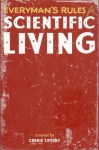
Carrie Tiffany’s Everyman’s rules of scientific living (2005): historical fiction inspired by Victoria’s Better Farming Train which travelled through rural Victoria educating communities about domestic skills and agricultural practices. One of the characters is a nurse, Sister Crook, though the main characters are sewing teacher Jean and agricultural scientist Robert. (I loved this book when I read it, a few years before blogging.)

Thomas Keneally’s The daughters of Mars (2012) (Lisa’s review): historical fiction about two sisters and their experiences working as nurses during World War 1, in the Dardanelles and France.

Fiona McFarlane’s The night guest (2013) (my review): I’m throwing McFarlane’s book in here because, while one of the main characters is not a nurse, she appears as a government care worker to live with the main character, an ageing woman who may be starting to lose her mind, or is she? Who is Frida, the care worker, and what about that tiger who prowls around the house? A clever, disturbing book about the vulnerability that accompanies growing old.

Eleanor Limprecht’s Long Bay (2015) (my review): historical fiction based on the true story of young woman jailed for manslaughter in 1909 due to a botched abortion she performed, having learnt the trade from her mother-in-law Nurse Sinclair. This is a deeply humane book about poverty, women and their choices.

Charlotte Wood’s The natural way of things (2015) (my review): the rather grotesque “nurse” Nancy is not one of the main women characters in Charlotte Wood’s novel, but she becomes a significant character, offering another perspective on women’s agency, or lack thereof.

So, folks, this is my off-the-top-of-the-head tribute to nurses and carers. A weird tribute, I agree, given many of the nurses identified do not meet your traditional stereotype, but every character here has an interesting story and contributes to our understanding, in one way or another, of the caring professions.

Do you have any favourite fictional nurses, or novels featuring nurses?


Yarra Valley Writers Festival 2020 (Online): Fire, Climate and the Natural World

What I hate about writers festivals is that I end up wanting to read every book discussed. But this is impossible, so my next best option is to give the writers a little heads up, at least.

I have written posts on two sessions from last weekend’s Yarra Valley Writers Festival (see this linked tag). Lisa (ANZLitLovers) has also written up several sessions. Given she has covered the other sessions I attended at some depth, I’m going to just do a couple of posts on them, and try to keep it to a few points that appealed particularly to me. This post covers:

  • Fire and climate: Tony Birch (The white girl), Tom Griffiths (The art of time travel), Alice Bishop (A constant hum), with the ABC’s Michael Cathcart (which I only managed to join partway, and haven’t managed to catch up yet on the link I’ve received.)
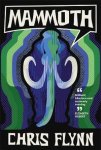
  • Writing About The Natural World: Chris Flynn (Mammoth), Vicki Hastrich (Night fishing), Lia Hills (The crying place), with author Robert Gott.

(Links on author’s names will take you to my posts on them.)

Fire and climate

Book coverI loved that this session, which followed forest ecologist David Lindenmeyer’s keynote address, included an historian, Tom Griffiths, as well as fiction writers, Tony Birch and Alice Bishop.
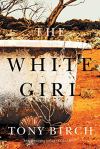
Griffiths and Birch both responded to questions about fire management in Australia. Griffiths made the point that fires are part of the fabric of Australia, that we will always lose “things” but we need to hang on to what’s important – community, human life, our values.

I liked that Cathcart asked the critical question regarding indigenous fire practices, which is how to apply them in the modern landscape, because it is clearly a more complex issue than simply doing controlled burning. Birch said that the approach needs to be collaborative, that we need to respect both indigenous knowledge and science, and that the decisions need to be local. You can’t, he said, talk fire technology on a national scale. Yes! Griffiths concurred, but added that it needs political action to hand the relevant controls to indigenous people in their country.

Book coverRegarding optimism for the future, Birch said he is concerned about our lack of foresight, about the fact that thinking does not extent beyond the next election cycle. Griffiths said the recent school protests give him hope but, like Birch, he is pessimistic about federal leadership. Bishop said she had hope in stories, but not much in leadership!

Asked about why she wrote short stories (A constant hum) rather than a novel, Bishop said that she has always loved short stories, likes how they can “get to who ordinary people are”. Birch concurred here on the power of fiction, but also said that different genres or forms work for different needs.

Griffiths had the final – and apposite – word, which I hope I have got right. It regarded the idea of reading fiction and nonfiction. We need to know the difference. What is the genre? Are we reading history or fiction? Again, yes! One of the most important things a reader needs to ask, I believe, is “what” am I reading? What is the form, and what are the conventions and expectations of that form? You can, for example, look for truths in fiction, but you can’t demand to find facts in it (though they may be there).

Writing about the natural world

Book coverMost readers, and I am one of them, love hearing about the writing process. Hastrich said that she was “not a fluid writer”. She finds “a few good sentences and images and writes around that”. She is obsessed with her 1964 Roget’s thesaurus, because the way it groups meanings under words helps you find the exact word you need. (I still remember when I fell in love with my 1962 edition.)
Convener Gott shared a favourite sentence from Hills’ book, “the fatigue inherent to being the one who always came back”. Hills talked about returning to the sense of narrative in our lives. Her character returns to his origins, bringing back what he’s learned, bringing back knowledge. We always have to return to where we came from to know ourselves, she said. Gott then asked about what he saw as a melancholic tone in her book. Hills replied that “land is political’, and that non-indigenous people carry an awareness of past wrongs.

Gott also asked her about why she likes deserts (“the landscape of the mind”). A desert-lover too, I was interested in her answer. She said it was a western tradition (or, biblical, I’d say?) to go to the desert and come back with knowledge. It is also one of the great tropes of Australia that the desert is empty. Going there thus challenged her western perception. It is both a place of the mind and a physical place.

Book coverI won’t talk a lot about Mammoth – it is on my TBR, so I’ll get to it soon-ish – but in terms of his inspiration for the story, Flynn said he thought about these massive creatures observing what was going on around them and how all of that was lost when they died. He loved the idea that all that information could be retained in the fossil.

Around here the idea of historical fiction was raised. Flynn commented that “As soon as you delve into historical fiction you open yourself up to a hiding”! I’m sure most historical fiction writers know the pain!

Gott talked about how Hastrich riffs, in her book, on frames in art, on the idea that frames exert a tyranny over art, which rock art, for example, doesn’t face. Hastrich replied how in writing you can set and move the frame, have a roving frame. Like a camera, writing can move from place to place. Gott wondered whether this was “to contain the chaos” to which Hastrich seemed a little bemused, saying it’s more that she wants to call attention to one thing. Writing puts a frame around that thing.

Given the session topic was “the natural world”, Gott did ask Hastrich about the importance of fishing to her and its role in the book. Fishing, she said, involves “intense engagement with the world”. He also asked Hills about her sentence “A story is like a river, it has its source, it has its tributaries …”. She sees stories being connected with water in Australia, and discussed the influence of Indigenous values and attitudes to water in her work.

But then, and this was not only fascinating but spot on in terms of the session’s topic, he asked her the seemingly innocent question about how she wrote the book. Great, I thought, more on the writing process. Well, the answer was not what I expected …

Book coverHills talked about how she wrote quickly on the road. Typing in the car, though, was not easy, so she used voice recognition software, party because it also enabled her to capture a storytelling tone. However, this software had unexpected benefits. Firstly, it would sometimes guess her words, and that guess was sometimes more poetic than her own language. Most fascinating though was that the software would pick up other sounds – birds, the wind – and turn them into words too. Not only did this help her – teach her to – listen to country, but it added another layer to the writing, resulting, for example, in wind sounds and a talking bird featuring in her story. The process, then, became part of the content of the book. Writing this way has given her new ways of relating to the natural world, so she no longer feels separate from it.
Gott then asked her about having indigenous characters in her novel. Hills admitted that people told her she was mad, that it was a minefield, but for her it was about respect, and mutual interest. The time she spent with Indigenous people proved an amazing opportunity. To learn, she said, you need to be open, and to accept that what you might want to do may not work. The always-engaging Gott said at this point, “You make me feel like a lazy writer!”

Flynn said about writing Mammoth that he decided to be led by historical events, but that as he wound down that path he gave up trying to direct the narrative and let it take him. So many writers, it seems, follow their writing rather than plan it out from the start.

There were more questions, but I’ll end on Gott’s final “off-piste” question about what they think is the most over-rated virtue. Hastrich said “modesty, especially for women”; Hills said “consistency”; and Flynn said “detachment”.

What would you have answered?

From Yarra Valley Writers Festival 2020 (Online)
9 May 2020, 9:30 AM – 7:30 PM
Livestreamed

Monday musings on Australian literature: On the Run (Aussie crime writers in America)

In yesterday’s post on the Yarra Valley Writers Festival (YVWF) crime panel, I mentioned Sulari Gentill’s intitiative which saw four Australian crime writers taking Australian crime to the USA last year. Called On the Run: Australian Crime Writers in America, it’s such an inspired project that I thought it deserved its own post, a Monday Musings post, in fact. The writers were Sulari Gentill, Robert Gott, Jock Serong and Emma Viskic, and the tour took place from over October-November last year.

Robert Gott describes the origins in an entertaining (but informative post) on the dailymail.com blog:

When Sulari floated her idea she pointed out that this hadn’t been done before and that Australian crime fiction was enjoying a bit of a moment in the US. She needed collaborators and it was safer to collaborate with chums than strangers, especially as we would be doing everything in the way of organisation ourselves.

Sulari, Emma, Jock and I are all friends. We’ve appeared together at writers’ festivals and launched each other’s books. We knew we could rely on each other to meet deadlines for the gruesome process of applying for grants, and for shaping our tour should the impossible happen and an application be successful.

Gott also shares some of the ideas they came up with for the project’s name: “‘Unreliable Witnesses’, ‘Roadkill’, ‘The Mobile Crime Scene’ and others that were even worse”. I think On the Run was a good decision!

The itinerary

Gott also describes the itinerary in the above-linked post:

Our first appearance in America, after a meeting with the Consul General in New York, will be at Bouchercon in Dallas. Bouchercon? I’d never heard of it either, but that’s because I haven’t been paying attention for the 50 years it’s been running. It’s a huge convention for mystery writers and readers and we’ve been given an ‘International Spotlight’, which means we have our own panel.

We thought we might have to interview each other, but Dervla McTiernan has been called in, so that’s splendid. After Dallas we’re off to Phoenix and from there we’re driving to L.A., Santa Cruz and San Francisco and we’re doing events in each of those places, so there’s plenty of scope for horror and disappointment.

Bouchercon?! So, that’s what it’s called. I’d never heard of this either – not surprisingly, I suppose, given I’m not a crime fan. Consequently, when it was mentioned during the panel, I struggled to capture its name. Was it Vouchercom or con? That didn’t seem quite right. However, now I actually had the name, I checked Wikipedia and found that:

the Anthony Boucher Memorial World Mystery Convention is an annual convention of creators and devotees of mystery and detective fiction. It is named in honour of writer, reviewer, and editor Anthony Boucher, and pronounced the way he pronounced his name, rhyming with “voucher”.

Haha, so I wasn’t too far off the mark then!

Anyhow, as Gott shares in the last post, they “were away for 21 days, 19 of them on the ground” during which they did “separately and together, 26 engagements, some small, some large, some in bookshops, some in bars, some in private homes and of course Bouchercon”. A good effort. Let’s hope it carries through to longer-term increases in Aussie book sales in the USA.

Highlights

Unfortunately, Gentill wasn’t part of the YVWF panel, so we didn’t hear her highlights, but here’s how the others answered Angela Savage’s question:

  • Viskic said she had a personal highlight from every place, but one was visiting the New York Public Library. (She writes in the blog, “I’m a polyamorist when it comes to libraries, but I think I’ve met my One True Love in the NYPL.” Oh Emma, you warmed this retired librarian’s heart!) She also said she was “blown away by the enthusiasm of people in Dallas” at Bouchercon. People were “so warm, and excited, desperate to read more Australian writers”. They were keen to read outside of American writers. It was “lovely to see that excitement”. Sounds like our writers achieved their goal if that was the case.
  • Serong said that New York had to be a personal highlight, which makes what is happening there now during COVID-19 “particularly awful”. However, he said, “more useful” was talking about their work Dallas and Phoenix. California was fascinating. He described the USA as, really, a “collection of a whole lot of different societies”, and writes some great reflections on the blog that take me back.
  • Gott “loved everything, including travelling with these people”! Nice, eh? A landscape highlight was the Grand Canyon.

Sulari Gentill describes the Canyon on the blog, and her description is perfect: “Your vision is not wide enough, your mind is not great enough and your soul is not deep enough to take it all in.”

In the blog’s closing post, Gott writes:

How did it all go? Modesty forbids declaring it brilliant, so let’s just say it was sensationally good. People came to our events. They were generous, they asked thoughtful questions, they laughed in the right places, mostly. They were intrigued when we spoke about the now well-established convention at events in Australia of acknowledging the traditional owners of the country on which we sat. The idea that a bookshop in Pasadena, sitting among neon and concrete, might actually have beneath it land once walked on by First Nation people, seemed to require a daring imaginative leap.

Gott also writes that “an Australian presence at Bouchercon, and at other large conventions, should be an inevitability rather than a curiosity.”

It was, said Savage at the YVWF panel, a real coup to pull this off. The writers added that their model was good: four works well in an American car; choose writers who have a similar outlook but write differently; and get a grant, such as from the Australia Council or the Neilma Sydney Travel Fund (about which I wrote recently).

To read all the posts written by the writers, check the On The Run tag on the dailyreview.com blog. These people are writers – obviously – so the posts are both entertaining and informative. Well worth reading, even if you are not a crime fan/reader.

Are you a crime fan/reader?

Yarra Valley Writers Festival 2020 (online):  If I tell you I’m going to have to kill you (Crime panel)

This is my second report of the sessions I attended of the first Yarra Valley Literary Festival. I hope to write up more, but you can also check Lisa’s blog for her posts. She did not, however, attend Christos Tsiolkas – see my post – nor this crime panel. Like Lisa, I really read crime, but I am interested in the genre as a form of literature, and I was very interested in these particular writers.

Crime panel

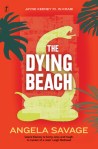
Festival director Michael Veitch introduced the panel, appropriately, as a cabal of crime-writers. It comprised Robert Gott (who didn’t make it, for technical reasons, until quite late), Emma Viskic and Jock Serong, with Angela Savage convening, again. Good on her. Again, I had quite a bit of breaking up in my reception.

I enjoyed the panel immensely. Savage, a crime-writer herself, was spot on with the questions, and the panelists were both thoughtful and entertaining. It turned out that they – with Sulari Gentil – had travelled to the USA as a sort of Aussie crime roadshow called On the Run: Australian Crime Writers in America. More on that later, but their familiarity with each other meant that they related well on this panel.

Why crime?

Viskic said that, before publishing her first novel, she’d written two manuscripts – her burn-upon-death novels. The the problem was they were boring. The only bits that worked were the things she really likes about crime novels – the dark things.

Ex-criminal lawyer Serong said he didn’t gravitate to crime, and doesn’t see his writing as “a genre exercise”. But crime, he said, comprises “a great reservoir of human drama and characters”. He has an ambivalent relationship to crime, and is never sure whether he is writing it. Rules of backyard cricket has been described as “very noir”, he said, but On the Java Ridge is “very much about crime”.

He shared Gary Disher’s description of crime fiction “as a social barometer” which Viskic leapt onto, saying that crime offers “a great way of exploring what is right or wrong in society”. She was very funny about her own fascination with how to do crime!

Serong said his main driver is the exploration of character – and particularly of who Australians are. He said that we Australians have done well with COVID because, despite our seeing ourselves as larrikins, we are in fact “very compliant”!! Haha, I loved this. It’s helped, I think, that we’ve had coherent leadership, presenting us with a vision about what we’re aiming for – but he has a point!

What makes Australian crime fiction Australian – besides the setting?

Serong said that Aussies are doing crime differently to other countries: we are bringing indigeneity into our stories, and are exploring Australian identity in terms of how far you can push the Australian character.

He then said that outsiders would probably say landscape is what differentiates our crime. However, now we are seeing more crime set in cities and suburbs, which doesn’t reach the overseas market so well.

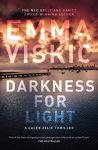
Viskic said that her work encompasses rural and urban landscapes, and settler and indigenous culture, that she’s drawn to urban and small town settings. She particularly likes the latter because it’s “more claustrophobic, more like family” which highlights her deaf detective Caleb’s outsiderness. She said she was always going to cover “black-white” stories. She’s not indigenous, but has indigenous family. She admitted that it’s a fraught thing to do, but it felt “cowardly not to do it”, like creating “terra nullius” all over again. Also, she said, Koori people, like deaf people, have been denied language and culture.

Why use fictional settings?

Serong’s first novel has a fictional setting, from “pure ignorance”. He thought a novel had to be fiction! His later books are all set in real places. He talked about research for Preservation which is set in a real place: the challenge of knowing how the rivers were then, which birds were there then, and of conveying the complex way Yuin people moved across the landscape versus his shipwreck survivors who just headed to Sydney, keeping the ocean on the left!

Viskic said that she fictionalises place for creative freedom. Once you name a place, specificity, which is important in writing, has to be right. She rarely uses fact in her fiction. But there is also the privacy reason, to avoid people feeling they know or can identify characters.

Series vs stand-alone?

Viskic always planned her Caleb novels to be a short tight series of three to five books, because events in the novels have consequences for characters, and she wanted her characters to grow over the novels. She’s coming to the end of this series, but was relieved to realise that she can come back and do another Caleb series later.

She also said that her novels can be read on two levels: the plot level, but you can also deep dive into the whys and wherefores. She’s less interested in who done it, and more in why and what happened after.

Serong, on the other hand, had not considered a series because he tends to jump around conceptually. However, Preservation is going to be the first of a trilogy, because there are more stories to tell about this 50-year period in Bass Strait history. It’s not a traditional crime novel, but colonialism could be seen as a high level crime. Stealing an entire continent is one of the great heists of all time (and it is accompanied by smaller criminal acts). There were moments of Eden, he said, when we could have made better decisions but we keep missing those opportunities. (Like, I thought to myself, the Government’s out-of-hand rejection of the Voice to Parliament!)

On the Run: Australian Crime Writers in America

At this point Robert Gott (who had convened an earlier panel) managed to join us, and the conversation turned to the crime roadshow, but look, I think I will save that for its own post. I’ll just say that Gott said it was Sulari Gentill’s idea, and that when she posed the idea the rest of them “complacently said, sure, whatever”.  However, Gentill pushed on, they obtained an Australia Council grant, and off they went.

Savage commented that it was a real coup to pull off this trip, and its success has paved the way for more. It was the first of its kind but they don’t want it to be the last, they’d like to see it as “an inevitability”.

Q&A

I didn’t record all the questions but there were questions about the relationship between crime and real life. Serong, ex-lawyer remember, said he was constantly amazed at what people get themselves into. Books and screen lag far behind real life, he said. On the other had, said Viskic, in real life you don’t have to be credible. Ridiculous crimes occur. However, in fiction, things have to be believable and motives have to be clear. People don’t tolerate much in the way of coincidences for example.

Gott added that real criminals are mostly boring, not very smart, dull-witted, so the crime is more interesting than the criminal. The implication was that fictional crime is more about character.

There was a question regarding whether Australian crime is in danger of going down the ultra-violent American route. Serong thinks not. We don’t have the guns for a start. Savage mentioned here Serong’s Staunch Prize win, noting that you can write riveting crime without including horrible acts of violence against women.

Savage also said that all of them have strong women in their work. She wondered whether this was particularly Australian, or just because of our time?

What do you think?

From Yarra Valley Writers Festival 2020 (Online)
9 May 2020, 9:30 AM – 7:30 PM
Livestreamed

Yarra Valley Writers Festival 2020 (online): Road to Damascus (Christos Tsiolkas with Angela Savage)

Book coverToday I attended several sessions of the first Yarra Valley Literary Festival, which the organisers turned around and converted to an online event with the arrival in our lives of COVID-19. I plan to write up a couple more sessions over the next week, when time permits, but you can also check Lisa’s blog for her posts.
I was looking forward to this session, because Damascus is my current read. I also wanted to see interviewer Angela Savage (whom I’ve reviewed here, and who comments here every now and then) because she is such an engaged writer, herself, as well as a supporter of writers.

Now, I must say that although I’ve really liked the two Tsiolkas novels I’ve read, I was not really looking forward to reading Damascus. Biblical times are not something I gravitate to, and I had heard that the novel contains quite a bit of violence. However, although Damascus does indeed start with something violent – the stoning of an adulterous woman – I was engaged immediately. The violence was neither gratuitous nor laboured, and Tsiolkas’ writing just got me in (again). I’ve read about a third of the novel and the subject matter, the origins of Christianity, is keeping me interested, because I’ve started to realise why it is worth reading. Tsiolkas is focusing particularly on Christianity’s commitment to equality or egalitarianism. Given the way organised Christianity seems to have lost much of its way in our times, it seems a good time to consider its founding values.

So, the conversation, but with the proviso that I did miss bits due to much of it being broken up by connection/transmission problems somewhere.

I’ll start by saying it was a lovely conversation, held between two people who obviously know each other well. That’s one of the lovely things about these writers festivals – you get to see the camaraderie that exists between some writers, and discover some of the ways they support each other. In this case, it came out that Savage had read some of Tsiolkas’ drafts and had had discussed them with him. She praised him for the time he takes with his work, for the way he honours his art.

The first questions explored some of the novel’s background. Tsiolkas said he’d spent five to six years on Damascus, and was terrified when it came out because it is quite different from anything he’s done before. However, he’s fortunate, he said, to have a supportive publisher in Jane Palfreyman, albeit she too was nervous about this one!

While he doesn’t call himself a Christian now, he did grow up with Christianity. He was interested in how much of what we know about Christianity has come through the interpretation of Saul/Paul, and he talked about his interest in Paul, from his adolescent understandings of being rejected by an admonishing Paul to his more mature comprehension when he returned to Paul after a personal crisis. That Paul, he realised, had suffered too. He said that (Biblical) Paul’s aim was to teach people how to live while “waiting for the kingdom” or eternity (which he thought was going to happen any day now.) For Tsiolkas, this has translated to “am I really leading the life that will enrich me?

From here Savage asked him about his characterisation of Paul.

Tsiolkas talked about his research. Saul/Paul was a Jew who left his faith to follow a strange scandalous religion. Tsiolkas talked about exploring the differences and similarities between Paul’s world and ours, and the challenge of finding his own way to Paul. He knew he wasn’t writing a hagiography, because the reality is that we are human. What is remarkable about the Christian story, he said, and what the Greeks and Romans could not understand, is the fact that through Jesus the sacred becomes human. However, the book also wasn’t going to be “a kicking in the guts”. It also wasn’t intended to be heretical or blasphemous (though some might see it that way!)

He needed to give Paul a battle, and so we have in the book sins like lust, greed, vanity, pride.

This brought us to the question a novelist begins with. For Damascus it was what was it in the Christian belief system that changed the world?

Savage then asked him about the novel’s structure. She loves, she said, how he structures his novels – and if you know me as a reader, you will know that structure is something that fascinates me. I have read enough of the novel to notice its non-chronological, four-points-of-view structure – which Savage called a “roving point of view” – so I was keen to hear his answer.

Tsiolkas said that structure is important to him as a novelist. It provides him with a blueprint which stops him getting lost. Voice and structure are the first things he thinks about. He was lucky with Paul’s voice, because of Paul’s letters. The three other voices are:

  • Lydia, representing the history of female participation in the church, something that was later wiped away. (Lydia, from a dye-making family, appears in the book of Acts as the first woman Paul brings to the new religion.) Tsiolkas talked about how he had wanted the female voice to be a slave, given Christianity was largely reviled because it accepted slaves, but he couldn’t find the voice and had no models from his research to draw on. He emphasised what a radical moment this acceptance of slaves was, and, as I have already noticed in my reading, he said that the novel’s refrain, “the first shall be last, the last shall be first”, makes this point. Anyhow, he struggled until suddenly Lydia came to him in the early hours one morning, and he just started writing her. I love stories like that.
  • Thomas, representing the doubter that he wanted in the novel because he, too, is a doubter. He chose Thomas from gospel of John, because, like Thomas, he doesn’t believe Christ was resurrected. Tsiolkas believes there is no eternal kingdom, that working out how to live a good life has to be worked out here and now. This idea offers another direction in which the church could have gone.
  • Timothy was Paul’s companion in the Bible. His father was pagan Greek and his mother Jewish, so he embodies “between world-ness”.

Savage, noting that it’s not a blasphemous book because it has such a respect for the values, asked about its reception. Tsiolkas said the way people have engaged and have wanted to have a conversation about it has been heartening. He’s been “blown away” by people’s generosity in responding to it.

There was a Q&A but I’m going to end on Tsiolkas’ wonderful answer to the question about his personal faith, because it’s an answer that is more broadly applicable I think. He said that the only answer is to hold doubt and faith together. If you know me, you’ll know that this sort of almost paradoxical answer suits me to a T.

From Yarra Valley Writers Festival 2020 (Online)
9 May 2020, 9:30 AM – 7:30 PM
Livestreamed

Shokoofeh Azar, The enlightenment of the greengage tree (#BookReview)

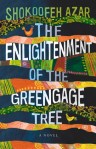
Book coverI bought Shokoofeh Azar’s novel The enlightenment of the greengage tree when it was longlisted for the 2018 Stella Prize, for which it was also shortlisted. However, it was its shortlisting this year for the International Booker Prize that prompted me to finally take it off the TBR pile.
Born in Iran, artist and writer Azar was still a child when the Islamic Revolution started in 1979. She grew up there, and, as an adult, obtained work as an independent journalist. However, after being imprisoned three times, she fled Iran by boat, ending up on Australia’s Christmas Island, and was eventually accepted as a political refugee by the Australian government. She has written a children’s book and two short story collections, but The enlightenment of the Greengage tree is her first novel. Like many first novels, it feels autobiographical, though given the narrator is a ghost and Azar is clearly still with us, it is not exactly autobiography!

The story chronicles the lives, experiences, and reactions of a family caught up in the chaos and brutality of post-revolutionary Iran. This family comprises father Hushang, mother Roza, son Sohrab, daughter Beeta, and another daughter, the above-mentioned ghost narrator, Bahar. Following the 1979 Revolution, they flee Tehran for the remote village of Razan, which was untouched for years by the revolution, until it came there too during the Executions of 1988.

While the story is roughly linear, it does slide around a bit, so you need to keep your wits about you. It starts in Razan with Roza’s attainment of enlightenment “at exactly 2:35pm. on August 1988, atop the grove’s tallest greengage plum tree”, the same moment at which her son Sohrab is executed amongst hundreds of other political prisoners in Tehran. This, of course, is told to us by thirteen-year-old Bahar who, we don’t discover until chapter 5, had died in a fire set in her father’s library in 1979 by Revolutionary Guards.

Now, the book is described on its back cover as magical realist, but this is term I have been uncomfortable about ever since hearing Alexis Wright question it. I fear that with our rationalist Western minds, the description “magical” can carry a hint of condescension. Alexis Wright said that “Some people call the book magic realism but really in a way it’s an Aboriginal realism which carries all sorts of things.” Toni Morrison has spoken similarly. Azar, on the other hand, embraces the term, describing it like this: “People of old or ancient cultures sometimes seek the metaphysical solution for realistic problems”. That makes sense. I also rather like this description in Wikipedia by Mexican critic Luis Leal. He says “to me, magical realism is an attitude on the part of the characters in the novel toward the world” or, to be more specific, toward what happens to them. I guess it’s really a matter of a rose by any other name, and that the issue is less the term, than how we readers understand or approach what we read?

So, when I tell you that Roza finds enlightenment at the very top of a greengage tree, that the ghosts of 5000 executed people confront the Grand Ayatollah Khomeini in his bedroom, that Beeta becomes a mermaid and joins the merpeople to escape the sorrows of the world, that forest jinns place curses, or, even, that the novel is narrated by a ghost, I am accepting that this is how the characters experience their world.

The enlightenment of the greengage tree is, then, the story of people in extremis. The background is the repressive regime, but the book’s ambit is much bigger. It’s about life and death, love and loss, and how those play out in brutal, politically-charged times. While “most people”, says Hushang, “wanted to get used to everything”, his family heads to the jungle town of Razan, where they think, foolishly as it turns out, they will be safe. When the revolution does reach them, the people are unprepared, and are left

wondering how they’d ended up in a game whose rules they hadn’t written. The game of aggressor and victim. A game in which it didn’t take long for the victims to become the aggressors; become victim aggressors… it wasn’t long before they forgot their myths and dreams, their history and balance …

With Sohrab soon arrested, our family soldiers on, each reacting to the brutality they confront in their very different, beautifully differentiated, ways.

Roza leaves home early in the novel because:

… she wanted to lose herself.  She didn’t want to sit in her newly rebuilt house and look at the freshly-painted walls, and the new furniture and carpet, and imagine how Sohrab was killed or how I suffered as I burned.  She didn’t want to think about the future and what other calamities might befall Beeta and Hushang.  She wanted to run away from herself, from her fate.  She didn’t want to be wherever she was.

Beeta, on the other hand, who had stayed and struggled, eventually transforms into an aquatic creature, “so as to experience and live life with a freedom that had been impossible as a human”. Meanwhile, Hushang, who also stayed, reads. He had “a thirst for reading”, a desire to be “connected with the world’s thinkers”, to distance himself “from the contemporary world of intellectual midgets that had overrun his country.” Eventually though, his reading brings him to “contemporary Iranian history; the place where all his questions turned to bottomless chasms”.

History is, in fact, a constant thread in the novel, one that is pored over from every angle – including an attempt by the people of Razan to discard it altogether. Azar shows, graphically, the damage done by those regimes which try to quash people’s past, their heritage.

Late in the novel, there’s a confrontation between Hushang and his brother Khosro who had taken a mystical path. Hushang is furious, arguing that “this mysticism game” had done nothing against the various atrocities and traumas, and criticising “smart people” like Khosro for hiding “in the safety of temples instead of doing something to fight the corruption and injustice.” Khosro, though, believes, probably realistically, that nothing can be done to avert the ongoing destruction of Iranian culture. He argues that “all I can do is not become tainted by something I don’t believe in.”

The enlightenment of the greengage tree is a wonderful read if you like books which pose these sorts of fundamental questions about how to live in difficult times. It could be a grim read, given the brutality contained within, but it’s not. It’s tragic, of course, but it has a sort of unsentimental, slightly melancholic tone that doesn’t weigh you down. Two-thirds of the way through the novel, Beeta tells Bahar that “imagination is at the heart of reality”. A perfect description of what Azar has done in this book.

In the front matter, Azar expresses gratitude to the Australian people for accepting her “into this safe and democratic country” where she can “have the freedom to write” such a book. We, however, should be grateful, in return, to have such a creator in our midst.

Lisa (ANZLitLovers) also liked this book.

Challenge logoShokoofeh Azar
The enlightenment of the greengage tree
Translated by Adrien Kijek*
Melbourne: Wild Dingo Press, 2017
268pp.
ISBN: 9780987381309

* Translator’s name is a pseudonym; the European edition was published with translator as anonymous.

Monday musings on Australian literature: Best Young Australian Novelists (2)

The Sydney Morning Herald’s Best Young Australian Novelists award is announced annually to coincide with the opening of the Sydney Writers Festival. Of course, there is no live festival this year, but awards announcements can still go ahead can’t they? I have posted on these awards before, but that was 2013, so I figured I could feature them again, particularly since this year’s winners were all writers of short story collections – and, interestingly, all women.

The Best Young Australian Novelists awards were established in 1997 by Susan Wyndham, the newspaper’s literary editor at the time. Its aim is to recognise emerging writing talent, so is open to “writers aged 35 and younger at the time of publication of their nominated books”. It is called a “novelists” award, but the award is made on the basis of a specific book, which is why writers, like Sonia Hartnett below, can win more than once. I should note, too, that despite the award’s name, short stories have been allowed since 2009.

Ellen van Neerven, Heat and light, book coverIt is not the richest award – though $8000 this year for the winner and $1000 for each runner-up is not bad either – but it carries a good deal of kudos. It has also done well over its 24 years in identifying young writers who have gone on to become serious names in the Australian literary world. Past winners, with links to my posts, include:
Book coverIf you look at the Wikipedia link in the paragraph above, you’ll see that the number of awards made each year varies. In 1997, ten awards were made, but most commonly it seems that around three to four are announced. This year, it was three, as Jason Steger reported. They are:

  • Alice Bishop’s A constant hum (winner)
  • Joey Bui’s Lucky ticket
  • Josephine Rowe’s Here until August. (Rowe has won before for her collection A loving faithful animal, which I’ve reviewed.)

The judges were SMH’s Literary Editor Jason Steger, plus two previous winners, Maxine Beneba Clarke and Fiona McGregor. Steger reports that:

What distinguishes the collections are the strength of the voices and distinctiveness of their characters. The stories are firmly rooted with a solid sense of place and at their hearts a strong sense of compassion for the predicaments of the protagonists and what they are experiencing.

They are all collections I have on my radar, but not in my physical TBR, which is a shame given I like short stories. Anyhow, Steger says that they also made two honourable mentions, Kathryn Hind’s Hitch (about which I’ve written before) and Carly Cappielli’s Listurbia (which I don’t know).

Other emerging writers’ awards

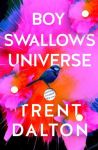
Trent Dalton, Boy swallows universeWhile SMH’s Best Young Australian Novelists is one of the best known emerging writers awards, there are others. Many, like this one, are age-related, such as The Australian Vogel Literary Award which was won this year by Katherine Kruimink, A treacherous country. But not all are. The UTS Glenda Adams Award for New Writing in the New South Wales Premier’s Literary Awards suite is for “a published book of fiction by an author who has not previously published a work of fiction that is booklength”. There is no age limit here. Last year’s winner was Trent Dalton with Boy swallows universe (my review), while this year’s was SL Lim with Real differences (Lisa’s review).

I have written about such awards before – about unpublished manuscript awards and emerging/debut fiction awards – so I won’t repeat the information here. However, in her May Six degrees of Separation post, Melinda Tognini mentioned a new award for young writers, the biennial Fogarty Literary Award, which was established last year. It is sponsored by the Fogarty Foundation and Fremantle Press. It is “awarded to an unpublished manuscript by a Western Australian author aged between 18 and 35 for a work of adult fiction, narrative non-fiction or young adult fiction”. The prize is $20,000 cash and a publishing contract with Fremantle Press. Not bad, eh? The inaugural winner was Rebecca Higgie for The History of Mischief, which will be published in September 2020. The next winner will be announced in May 2021.

Do you follow emerging writers’ awards and have you made any exciting discoveries as a result?