Helen Trinca, Madeleine: A life of Madeleine St John (Review)

Trinca, Madeleine
Madeleine (Courtesy: Text Publishing)

I wanted to read Helen Trinca’s biography Madeleine for several reasons. First, of course, being a reader, I’m interested in biographies and autobiographies of writers. Secondly, Madeleine St John belongs to that group of Australians, half a generation or so older than I am, that has made quite a mark on the literary and arts world. Her friends and acquaintances included Sydney University peers Clive James, Bruce Beresford, Robert Hughes, Richard Walsh, most of whom lived ex-pat lives like she did. Thirdly, her father Edward St John, was a controversial conservative politician (and then barrister) who fought injustice and whom Justice Michael Kirby described as “a contradictory, restless, reforming spirit”. And finally, I was hoping to find out more about what happened to Bruce Beresford’s plan to film her first novel, The women in black. Trinca covers all these bases and more in her biography.

Madeleine was – as Trinca ably, but fairly it seems, demonstrates – a complicated and difficult woman. She could be called a tragic figure if we define that as a person brought down by a flaw in their character or make-up. Trinca’s Madeleine, though, would probably not agree with that assessment. As far as she was concerned, her troubled life was solely caused by her father, “the ghastly Ted”. More on that anon. First I’d like to quote from a letter Madeleine wrote as she was trying to write her first novel:

I somehow feel (not for quite the first time) that life is beyond my capacities … meanwhile am trying to write some fiction, which is abominably difficult & and therefore terrific – but horrifying.

This quote says a lot about St John – about how hard she found life, and about the heightened way she lived it.

Madeleine was born in 1941 to Edward St John (Ted) and his lively, sophisticated wife Sylvette. Sylvette did not, for several reasons carefully explored by Trinca, adjust well to the life of wife and mother. She became an alcoholic and mentally unstable, to the point that Ted, apparently in order to protect his two daughters, placed them in boarding school in 1953. They didn’t understand, and were miserable. The next year their mother took her life, a fact which was not made clear to the girls at the time and which Madeleine never accepted. Ted remarried the next year a women ten years his junior, 27-year-old Val Winslow. Madeleine never accepted this either and at the age of 18 was told to leave home. While she saw and communicated with her family, on and off, for the rest of her life she never reconciled with them and believed to the end that they were the architects of all that was wrong with her life. We will never know the truth of course, and many records have been destroyed. However, while mistakes were made, partly due to individual personalities and family dynamics and partly as a consequence of the childrearing practices and patriarchal attitudes of the time, Ted and Val, Trinca argues, did their best to support Madeleine but she never gave them an inch, never saw things from any other perspective but her own. Tragic, really, however you define it …

… and making her, I think, a tricky subject to write about. Madeleine was, and there is documentation from a variety of sources to support this, a controlling and emotionally erratic friend who would, as one said, “just destroy everything, destroy a relationship”. She was, as we’d say now, high maintenance, and wanted, needed, to call the shots. And yet, people stuck with her, because she was witty, intelligent company, and also because people saw her need. Trinca handles this minefield with a clear, even-handed but sensitive eye, enabling us to feel Madeleine’s pain while being frustrated at her inability to lift herself out of it.

St John moved to London in the 1960s, leaving, more or less by mutual agreement, her first and only husband behind in the USA, and eventually took out English citizenship. She was horrified when, on being shortlisted for the Booker Prize in 1997 for her novel The essence of the thing, she was hailed as an Australian writer. She didn’t want to be aligned with the place, but she was the first Australian woman to be shortlisted for the Booker, so no wonder she was hailed that way.

Trinca’s biography is a traditional, chronologically told one. It’s tight, with little superfluous detail but enough examples to provide a good picture of Madeleine and her life. I particularly enjoyed the chapters covering the writing and publication of her novels. The book is very well documented, using clear but unobtrusive numbers linked to extensive notes at the end. In her acknowledgements, Trinca details what records she had available and where the gaps are. In addition to the oral history St John recorded (covering the first couple of decades of her life), Trinca had access to letters by and to Madeleine (though many were destroyed) and other documentation such as wills, and obituaries written by those who knew her. Trinca also interviewed many of the significant people in her life. I was intrigued to discover names familiar to me in other contexts, such as filmmaker Martha Ansara. The older we get, it seems, the more we discover our paths have crossed in interesting ways with others.

If you need any proof that Madeleine is worth reading, Clive James’ statement made in 2006, the year she died of emphysema, may convince you:

Sometimes, when I’m reading one of the marvelous little novels of Madeleine St John, part of whose genius was for avoiding publicity, I think the only lasting fame for any of the rest of us will reside in the fact that we once knew her. (quoted by Trinca from his memoir North Face of Soho)

A slight exaggeration perhaps, given who the “us” are, but James clearly believed that this complex late bloomer who produced four novels in six years deserved more recognition than she was getting. Thanks to Text Publishing, all four of her novels are back in print and we have this thorough and highly readable biography. All we need now is to see The women in black in film!

Helen Trinca
Madeleine: A life of Madeleine St John
Melbourne: Text Publishing, 2013
280pp
ISBN: 9781921922848

(Review copy supplied by Text Publishing)
Monday musings on Australian literature: The little Aussie battler

Australian public intellectual and ethicist, Clive Hamilton, wrote in his 2005 book Affluenza (excerpted in The invisible thread) that

Politicians love to identify with the Aussie battler, that stoic, resilient character who has little and complains less. Fifty years ago Australia was full of battlers, people hardened by the rigours of depression and war and, if not proud of their penury, certainly not ashamed of it. The Aussie battler is the central icon of Australian political folklore, and the image persists despite the fact that, as a result of sustained economic growth in the past five decades, the number of people who truly struggle has shrunk to a small proportion of the population.

My plan here, though, is not to discuss the political use (about which Hamilton makes a lot of sense) but the literary one, because reading this excerpt of course made me think about what part this “motif” or “myth” has played in Australian literature. I’ve written a few Monday musings to date on “themes” (such as the lost child, the beach, the gum tree, even sheep). The little Aussie battler is worthy, I think, of similar, albeit introductory, exploration. Is this icon (or stereotype) that is so popular with politicians, also reflected in Australian literature?

Who then is the “little Aussie battler”? My understanding of the term is that it refers to men (or more broadly families) who are working class, urban or rural, who struggle (battle) to make a living.  Historically, they had few pretensions to upward mobility, except perhaps for their children. There’s a discussion of the word’s meaning on the Australian National University website, which includes the following definition of the “battler” as:

the person with few natural advantages, who works doggedly and with little reward, who struggles hard for a livelihood, and who displays enormous courage in so doing.

The notion of “the battler” probably originates in Australia’s convict heritage of the late 18th century and the battle to survive, but the early “battlers” in Australian literature were the itinerants and the struggling rural workers of the late 19th century, as glorified by writers like Banjo Paterson and Henry Lawson. They could be employed, irregularly employed, or unemployed. By the early to mid twentieth century, the “battlers” were often urban, though the country battler survived.

In fact, the iconic “battlers” of early 20th century literature were Steele Rudd‘s Dad and Dave, the struggling settler farmers who are often described as “the original Aussie battlers”. The first Dad and Dave book, On our Selection, was written in 1899, but the characters and their struggles became popularly known through plays, film and radio in the first decades of the 20th century. My favourite battlers, though, are those of Ruth Park. Her Harp in the south trilogy and her Miles Franklin Award winning Swords and crowns and rings are quintessential battler stories. New Zealand born Park got down pat the mid-twentieth century battler, the often flawed characters with big hearts and a desire to provide for their families and care for their mates. George Johnston’s My brother Jack is another example of a great battler of Aussie literature, as is Kylie Tennant‘s unfortunately lesser known novel The battlers. These mid-20th century battlers had usually experienced the Great Depression and/or the world wars. Life was difficult.

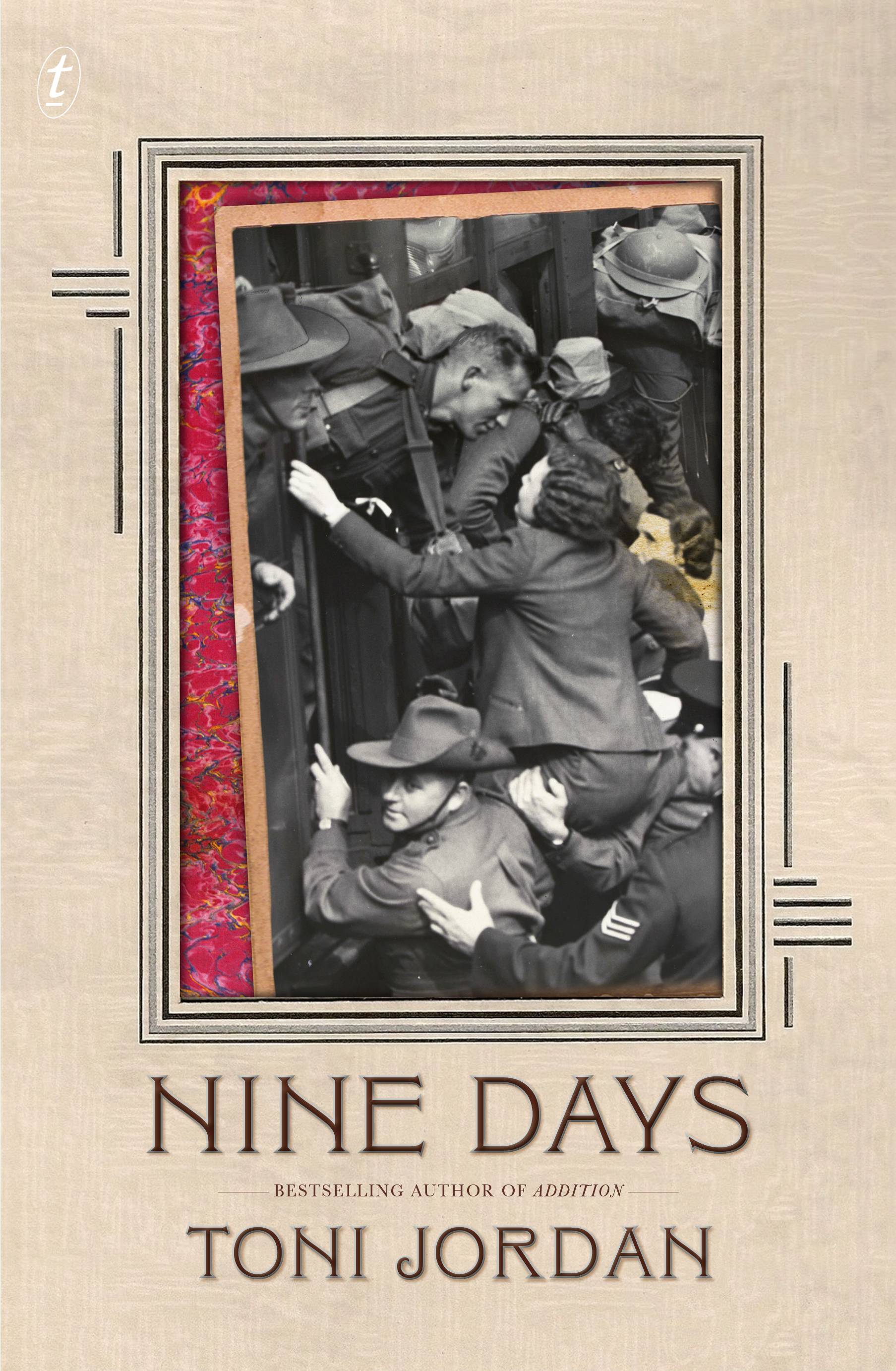
Jordan's Nine Days

Book cover (Courtesy: Text Publising)

Current writers like Joan London (Gilgamesh) and Toni Jordan (Nine days) have also written about these historic battlers, as has, most famously, Tim Winton in Cloudstreet. What does it say, I wonder, that the book which most often wins surveys seeking our favourite or best Australian novel is this one about Aussie battlers?

But what about late 20th or early 21st century battlers? Do they still exist (outside the politicians’ minds?). Are Tim Winton’s more contemporary-focused books, like The turning, also about “Aussie battlers”? If they are, they are written with a more realistic, less affectionate eye, I think, than the earlier books I’ve mentioned. Is the old definition of “battler” – essentially, a working class white Australian male – still reflective of contemporary Australian society, with its multicultural and increasingly middle-class make-up? Certainly, when I think about recent Australian literature that is set in current times, the “battler” theme, or even character really, does not come to the fore – and yet, if I Google, “aussie battler”, the idea is alive and well. It seems, perhaps, that literature has turned its eye to more complex notions of the Australian character while politicians and the media stick to a romanticised version of “the battler”. I’d love to know what other readers of Aussie literature think.

If you like puns …

Puns make me laugh … and living in Canberra, as I do, I’m regularly confronted by them. How, do you ask? Well, via a local lawn/turf business called Canturf, a family business which started in 1966. They have, for many years now, been promoting their product – even, and it must have been hard, throughout our recent long drought that saw stringent water restrictions result in many a dead lawn – through signs based on puns.

The puns keep changing, so much so that I have often wondered whether they can keep it up, but it seems they can. Do they have a wonderful ad agency? Or is it their own staff? The answer is on the FAQ page. The answer to “Who thinks of your funny signs?” is: “You do. If you come up with an original saying and think it would be a good Canturf sign, send it in to us via email or fax along with your contact details. If your idea is original and gets used you will be paid $250 for your efforts.” Now, there’s a challenge!

Anyhow, today, as we were driving into the country for our annual Easter Sunday lunch, we saw a couple of their latest:

  • It’s been nice mowing you

and

  • It’s a lawn way to the top if you want a grassy knoll.

Honestly! How can you drive past signs like that and not smile. (You certainly don’t forget the name of the company behind them!)

Previous signs have included:

  • Looks good mown eh Lisa
  • Lawngerie modelled here
  • We’re easy to get a lawn with
  • Fifty shades of green
  • It’s sexy and you grow it
  • It’s greener than brown

This last is a political pun probably only understood by Aussies. It’s a little daring for a business to use but I suppose it can be read in multiple ways. And, anyhow, this is Canberra, and we have a reputation for being Green.

I’m sorry that I haven’t photographed these signs but, you know, we’ve always been going places at the time …

And, since we are talking about puns, I’d like to give a plug here for a young ensemble I heard this weekend at the National Folk Festival. Calling themselves the Miss Chiefs they admitted loving puns. Their name, they said, gives it away. Just one year old, this group first performed at the 2012 festival’s Infinite Song Contest for which performers present their version of a song relating to the year’s contest theme. Last year’s theme was Leonard Cohen, and the just-formed trio performed “Hallelujah”. Here is a You Tube recording of that event:

The lead singer, Vendulka Wichta is 14 (at the time of the recording!), and she’s accompanied by Laura Zarb (24) and Amelia Gibson (17). From what I saw this year, one year on from the above performance, the Miss Chiefs is a group to watch.

Monday musings on Australian literature: Inaugural First Nations Australia Writers Workshop

I had planned another topic for today’s Monday Musings, but when I heard via AustLit News about the inaugural First Nations Australia Writers Workshop to be held in May this year, I decided to write about it sooner rather than later …

The workshop aims to bring together established and emerging writers of Aboriginal and Torres Strait Islander backgrounds with a view to further developing indigenous arts practice. It is being presented by the First Nations Australia Writers Network (FNAWN) and is to be held at the State Library of Queensland, in Brisbane, from 9th-10th May, 2013. The Network was apparently established last year and its Chairperson is Canberra-based Wiradjuri poet, writer, activist Kerry Reed-Gilbert.

The workshop has an impressive line-up of presenters, including writers I have reviewed here:

  • Alexis Wright whose Carpentaria (see my review) won the Miles Franklin Award in 2007. It has been published in many countries and been translated into multiple languages. She has written several other works, and has a new novel coming out this year.
  • Melissa Lucashenko who won the Dobbie award for her first novel Steam pigs. Her latest novel is Mullumbimby (2013). (See my review for her short story “The silent majority).
  • Anita Heiss about whom I’ve written several times on this blog. Her most recent book is her memoir, Am I black enough for you?, which I plan to read and review in a couple of months. Heiss also co-edited The Macquarie PEN Anthology of Aboriginal Literature. (See my review of her Paris dreaming.)
  • Kim Scott whose novel That deadman dance (see my review) won multiple awards including the Miles Franklin Award in 2011. Like Wright, Scott has had several novels and short stories published.
  • Marie Munkara whose Every secret thing (see my review) won the David Unaipon Award in 2008 and whose next novel will be published this year.

Exciting list, eh? Other presenters are Kerry Reed-Gilbert, Bruce Pascoe, Sam Wagan Watson and more, including some new names to me. AustLit News also mentions Tony Birch whose novel Blood was shortlisted for the Miles Franklin Award last year, but I can’t find him on the Workshop’s website. Sharon Shorty, a Canadian First Nation writer, will also be presenting.

The program is broad-ranging with an emphasis on practical issues – copyright, preparing your manuscript, the future of the book, “writing our stories” – which is what you’d expect for a workshop. Creative Partnerships Australia puts it this way:

With the rapid and seemingly constant changes in the publishing and literary sectors it is imperative that Australia’s Indigenous writers embrace the knowledge, technology and global context for the sustainable development of their livelihoods and their art.

If you would like to keep in touch with the Workshop:

Tax-deductible (for Australians anyhow) donations are welcome to support attendance, particularly by writers from remote areas. Click this link if you are able to help.

The Stella Prize shortlist, 2013

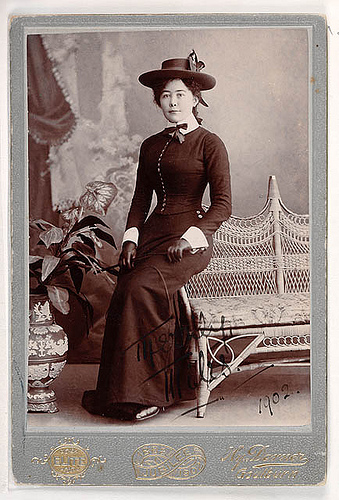
Miles Franklin, 1902

Miles Franklin, 1902, by H.Y. Dorner (Presumed Public Domain)

Woo hoo … The Stella Prize shortlist has been announced.

I posted the longlist a few weeks ago before, but just to recap, the Stella Prize is a new award on the Australian literary scene. It is named for Miles Franklin and is “for the best work of literature (fiction and non-fiction) published in 2012 (for this inaugural one) by an Australian woman”. The prize of $50,000 will go to one author.

I like the look of the shortlist. It includes authors I’ve read and enjoyed before (de Kretser, Kennedy and Tiffany) and the authors I picked out as particularly interesting (to me, anyhow) from the shortlist:

  • Courtney Collins, The burial (Allen & Unwin): a debut historical crime novel which reimagines the life of  Australia’s ‘lady bushranger’, Jessie Hickman. I’m not a crime reader, but this one intrigues me.
  • Michelle de Kretser, Questions of travel (Allen & Unwin): the fourth novel by this award-winning writer.
  • Lisa Jacobson, The sunlit zone (Five Islands Press): a verse novel which has been reviewed several times already for the Australian Women Writers Challenge. (See my roundup over there. The reviews I read while writing that round-up have increased my interest in this book).
  • Cate Kennedy, Like a house on fire (Scribe): a collection of short stories by one of Australia’s best short story writers.
  • Margo Lanagan, Sea hearts (Allen & Unwin): a fantasy or speculative-fiction novel about selkies and the like that I believe also appeals to non-genre readers. Lanagan has a reputation for lovely prose, so I’d be interested to check her out some time.
  • Carrie Tiffany, Mateship with birds (Picador): the second novel by the author of the truly splendiferous Everyman’s rules for scientific living.

It’s all fiction, but there’s “genre” writing here, as well as traditional “literary” fiction, poetry and short stories. It’s rather sad that only one can win but let’s hope the longlisting and shortlisting will raise the profile of these authors – and others along with them – because that is the prime goal of the award. (For the winner, though, the prize purse of $50K will be an important outcome!)

And, it looks like the Australian independent publisher Allen & Unwin has scooped the pool with three of the six shortlisted books! Congratulations to them.

The first winner of the Stella Prize will be awarded in Melbourne on the evening of Tuesday 16 April. I’ll keep you informed.

PS Is it the 2013 prize for books published in 2012, or is it the 2012 prize awarded in 2013?

Christos Tsiolkas in Meanjin’s The Canberra Issue

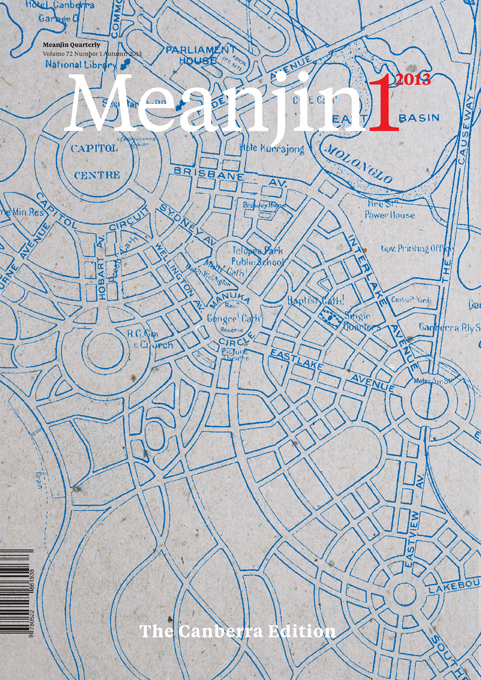
Meanjin Canberra Issue 2013

Courtesy: Meanjin

I indicated in my recent review of Meanjin‘s special Canberra issue that I would write another post or two on the issue. This is one of those posts. It may, in fact, be the only one, for who knows where the spirit will lead me next? Right now though, I want to devote a post to the second last piece in the volume, “Me and my country, Where to Now?”. It’s a conversation between writer Heather Taylor Johnson and Christos Tsiolkas whose novel The slap was one of the first I reviewed in this blog. While the novel was well received critically – won awards and was short/longlisted for others – it was not universally liked. The Wikipedia article on the novel quotes Commonwealth Writer’s Prize judge, Nicholas Hasluck, describing it as “a controversial and daring novel”. It was that …

Before I continue, I should say that this piece has a fairly tenuous link to Canberra – Tsiolkas lived here for a short time in the 1990s I understand – but its inclusion is justified, I think, for the relevance of the ideas it covers. I don’t plan to summarise the whole conversation, interesting though it is, but pick out a couple of points that got my attention – and they mostly relate to The slap.

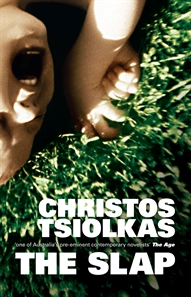
Courtesy: Allen & Unwin

Courtesy: Allen & Unwin

Johnson commences by asking Tsiolkas about the mini-series adaptation of The slap. While recognising that the mini-series was not his work, but the work of those who had “translated and transformed” it for another medium, Tsiolkas talks of his overall intention:

I felt a certain responsibility with the screening of the series, a hope that whatever criticism people had of it, that it would be understood as an authentic voice of contemporary, multicultural urban Australia. I share the frustration of so many people of immigrant heritage in this country who have rarely seen their lives portrayed with any complexity or realism on the Australian screen. I also know that there would be people of that experience who either don’t read fiction or can’t read fiction in English and for whom the moving-image media are the only source for story and representation. I wanted people to be angry, frustrated, enraged by The slap, but I also wanted their arguments with it to be based on an appreciation that the representations were neither patronising nor sentimental. My own view is that the series succeeded in doing that.

Although focused on the miniseries, this statement is also, I think, a manifesto for the novel. It’s a warts-and-all story of people, most of whom happen to be immigrants or minorities in some way, getting on with their often flawed lives.

One of the themes that came through to me in the novel was that of violence. I felt Tsiolkas was saying that violence lies just beneath the surface of many human relationships. Later in the conversation he talks about the principles and philosophies, the “politics”, that drive him – feminism, racial civil rights, sexual liberation, post-colonial and communist. A complicated and, as he admits, sometimes contradictory bunch of ideas. He says:

I think that one of the drives I have in my writing is to express the complexity and violence of this tension. It means that though gender and sexuality are among the themes and ideas I explore in all my work, I can’t give myself over to a liberationist idea that the transformation of the individual can resolve these tensions and contradictions.

Hmm … this is pretty complex thinking methinks and I’m not sure I was able to articulate his ideas at this deeper philosophical level, but I sensed something going on and this helps explain it (to me, anyhow). He continues to say that he believes that “sexuality and the body constantly undermine our attempts at mastery and transformation”. This brought to mind the terrible recent rape cases in India and some angry discussions I’ve just read on Facebook about the current court case concerning the gang rape of the 16-year-old girl in the USA. We are not making much progress.

There is so much in this conversation that I’d love to talk about, such as his comment that much “Anglophone and European contemporary literature is moribund”. He argues that the most electric writing is coming from outside the Anglo-European centre. That must, I suppose, pose a challenge to him given his background. But, I’ll move on.

Johnson asks him about controversy, particularly in relation to The slap. Again his response is complex, but his main point is that “I want to pose questions that are unsettling or troubling”. One of the things that bothered me about the conversations surrounding The slap was that people focused on “the slap” itself  – as in do you or don’t you hit a child, particularly one not your own – and not on the social, cultural and, yes, political issues inherent in the relationships involved. The fact that “the slap” plot is resolved way before the end of the novel tells us that this issue of hitting a child is not Tsiolkas’ main point. In fact, he says in this conversation with Johnson that “the language of moral absolutes … may be having a pernicious effect on much of contemporary writing”. And then he says:

I have given up reading blogs because so many people are dismissing work because they ‘don’t like the characters’ or because the resolution of a book is not neat, is not easy. We are reading for confirmation of ourselves rather than to challenge ourselves and I think that is a real danger.

He has more to say on issues that interest me – including Aboriginal dispossession and public education – but I think I’ll finish here, because I need to think …

in Meanjin 1, 2013, The Canberra Issue
University of Melbourne
pp. 178-188
ISBN: 9780522861938

(Review copy supplied by Meanjin)

Monday musings on Australian literature: Indigenous writing and Canberra

This is going to be a difficult post to write because, really, my knowledge is superficial, but I figure that if I put out some feelers, I just might learn something from those who read this and, hopefully, comment. I was inspired to write it by – yes, you’ve probably guessed it – Canberra’s centenary, because at last Monday’s “Very Big Day Out” celebration, we were given a beautifully produced program titled Centenary of Canberra: Celebrating First Australians. It describes the major events that are/will be occurring in Canberra over the centenary year involving indigenous Australians. Many of these events involve indigenous people from other parts of Australia – but given Canberra’s role as the nation’s capital it seems right that we don’t narrowly focus on ourselves. There’s a big Australia out there.

To today’s topic though … the first thing I need to say is that the history of indigenous culture in the Canberra region is a complicated one, and is still being researched. It appears that several groups are associated with the area, representing several languages, with the Ngunnawal, Ngambri and Wiradjuri people having the closest association. I don’t intend to write more on these groups and what connections they may or may not have with each other and the land, as it’s not relevant to my main concern here. The important thing is, I think, the conclusion in Our Kin Our Country report published in August 2012 by the ACT Government’s Genealogy Project:

the verification of a distinct regional Aboriginal population that survived, resisted and adapted to European occupation and settlement in the areas surrounding what is now known as Canberra.

Indigenous writers associated with Canberra include the late activist Kevin Gilbert, Jennifer Martiniello who established the ACT Indigenous Writers Group, and Jeanine Leane whose David Unaipon award-winning book, Purple threads, I reviewed last year. Kevin Gilbert and Jennifer Martiniello are represented in both the ACT Centenary anthology, The invisible thread, and the Macquarie PEN anthology of Aboriginal literature.

Kevin Gilbert and Oodgeroo Noonuccal (or Kath Walker) were the first indigenous writers I became aware of, back in the late 1960s. They were both activists who exposed the devastating effect dispossession had on indigenous people. In 1992, Gilbert, a Wiradjuri man, made a speech at the Aboriginal Tent Embassy (in Canberra), stating:

You cannot build a vision, you cannot build a land, you cannot build a people, on land theft, on continuing apartheid and the denial of one group of Aboriginal people … (from the Macquarie PEN anthology of Aboriginal literature)

He was a prolific writer of poetry, plays and non-fiction.

Jennifer Martiniello‘s piece in The invisible thread is also highly political, speaking particularly of the impact of loss of language:

I could tell you about growing up in a voided space. What it is like as a child to be an echo, a resonance of something unnamed in the silence. I could tell you about my grandmother’s and my father’s first three languages – Alyerntarrpe, Pertame, Arrernte – and about my own eliminative reduction to one, English. My father’s fourth language, and the supreme evidence of colonial obsession with an abstracted literacy that could not read the forms and expressions of our multiple literacies. I could show you the void of two hundred blank white pages of history unmarked with the black ink of our lives … (from “Voids, Voices, and Stories without End”).

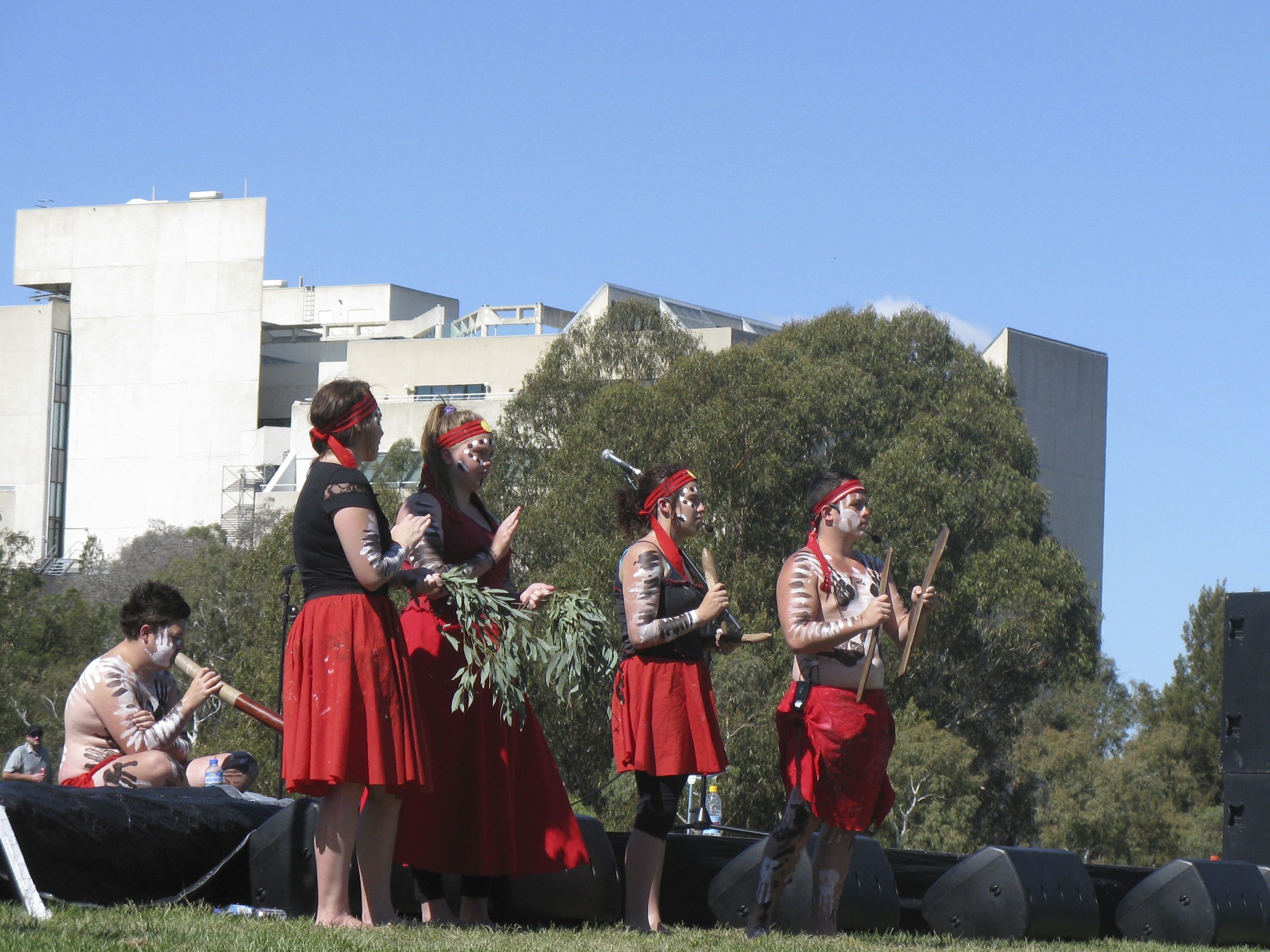
Wiradjuri Echoes

Wiradjuri Echoes, at “The Very Big Day Out”, 11 March 2013

Martiniello is of Arrente, Chinese and Anglo-Celtic descent.

Jeanine Leane‘s Purple threads also has an activist element, albeit couched in stories which are warm and funny as well as sometimes dark. They are set in a world where, she says, “black was not the ideal colour”. (By the way, when I reviewed this work I wasn’t sure what to call it but I have since seen it described as a “story cycle”. That sounds good to me!). Leane, a Wiradjuri woman, has also written and published poetry.

There are, I’m sure, other indigenous writers associated with Canberra, but these are the three best known to me. Identifying writers as belonging to a group – indigenous, migrant, women, gay, and so on – is an uncomfortable thing. It would be good to simply see writers as writers, people as people, but when you are a minority, when recognition doesn’t come easily to your “group”, there is value I believe in overcoming my discomfort … to help bring other ways of being and seeing to the attention of us in the majority culture.

As I was researching this post I came across a comment made by Cara Shipp, a local teacher of secondary English, at the Dare to Lead Conference: Leading indigenous perspectives in the national curriculum (Sydney, November 2010):

I think there is a danger in concentrating too much on the traditional cultural stuff. In terms of the way it is delivered, that can play into the stereotype that Aboriginal culture is dead and past. The only texts suggested for teaching in the draft National Curriculum are Dreamtime stories and I am not sure this is a good thing.

Really? Only Dreamtime stories in 2010? She has a point. I sure hope the final National Curriculum includes some of the great indigenous writing we know is out there.

Meanjin’s The Canberra Issue (Review)

Meanjin Canberra Issue 2013

Courtesy: Meanjin

Zora Sanders writes in her Editorial for Meanjin‘s Canberra Issue that Canberra has (or, is it had) a reputation for being The National Capital of Boredom. This is just one of the many less-than-flattering epithets regularly applied to Canberra: A Cemetery with Lights, Fat Cat City, and the pervasive, A City without a Soul. For me though it’s simply Home … a home I chose back in the mid-70s when I applied for my first professional job at the National Library of Australia. I was consequently pleased when Meanjin offered me their special Canberra edition to review.

Sanders describes the issue as being “full of the usual eclectic mix of fact, fiction and poetry” and says it aims to “offer a taste of Canberra as it is now, 100 years after its founding, as viewed by the people who live there, who’ve left there and who never meant to find themselves there in the first place”. The result is something that’s not a hagiography, if you can apply such a word to a city, but that offers a thoughtful look at Canberra from diverse angles – political, historical, social, personal.

With the exception of poetry which is interspersed throughout, the issue is organised straightforwardly by form, rather than by theme or chronology. This is not to say, however, that there is no sense of an ordering hand. The first essay, for example, is, appropriately, Paul Daley’s “Territorial disputes” which explores Canberra’s complex and sometimes controversial indigenous heritage, including the thorny question concerning Canberra’s name. Is it derived from “Ngambri”, which means the “cleavage between the breasts of Black Mountain and Mount Ainslie“?

The issue includes a Meanjin Papers insert comprising an essay by ACT historian David Headon titled “The genius and gypsy: Walt and Marion Griffin in Australia and India”. So much has been written about the Griffins over the decades, and particularly this year, that it’s a challenge to present them in a handful of pages. Headon’s approach is to focus on the Griffins’ idealism, on what drove them to do what they did, and bypass the complex story of what happened to the plan. That story is explored a little later by Chris Hammer in his essay “A secret map of Canberra”. Griffin, like the 19th century American poet Walt Whitman, was, Headon writes, inspired by the prospect of “a prosperous egalitarian future for the new democracy in the south”. He planned his “ideal city” to serve such a nation. It didn’t, as we know, quite turn out that way, but I love that our city has such passion in its genes.

Anthologies are tricky to write about, particularly one as varied as this (despite its seemingly singular subject). The main sections are Essays, Fiction, Memoir and Poetry. There’s also a Conversation and a Gallery – and an opening section titled Perspectives. These pieces provide a fittingly idiosyncratic introduction to the volume. First is novelist Andrew Croome (whose Document Z I reviewed a couple of years ago). He writes of the 2003 fire – Canberra’s worst disaster – and its impact on the observatory at Mt Stromlo. There was a terrible human cost to this disaster but, without denying that, Croome takes a more cosmic view, and turns our eyes to the future. It’s nicely done. Writer Lorin Clarke follows Croome with her cheekily titled perspective “The love that dare not speak its name”. She ferrets out, without actually using the word, some of Canberra’s soul, seeing it in small spaces rather than showy institutions and in, if I read her correctly, the gaps that appear between carefully planned intentions and reality. The third perspective comes from a previous Meanjin editor, Jim Davidson, who, like Clarke and other writers in the issue, starts with the negatives –  “a public service town” etc etc – but suggests that “the city is beginning to acquire a patina”. He argues, rather logically really, that Canberra is still young. Other planned cities, like Washington DC and Istanbul, have got “into their stride” and Canberra probably will too.

These perspectives – and the way they test Canberra’s image against reality – set the tone for the rest of the issue. I’m not going bore you – though the contributions themselves are far from boring – by summarising every piece. There is something here for everyone – and they show that the real Canberra is more than roundabouts and public servants. Dorothy Johnston‘s short story “Mrs B”, though set in Melbourne, reminds us of the hidden world of “massage parlours” and migrant workers, while Geoff Page‘s poem, “The ward is new”, addresses mental illness. Michael Thorley’s poem “Bronzed Aussies” reveres some of Canberra’s (and Australia’s) top poets, AD Hope, David Campbell and Judith Wright, while award-winning novelist Marian Halligan‘s memoir “Constructing a city, Constructing a life” recounts how a move to Canberra for a year or so turned into half a century and still counting. Several pieces describe Canberra’s natural beauty, including Melanie Joosten’s bittersweet short story, “The sky was herding disappointments”. And Alan Gould’s poem “The blether”, pointedly but wittily the last piece in the volume, suggests we could do with less aimless chatter and more of the “sweet unsaid”.

Of course, as this is Canberra, there has to be some politics. I particularly enjoyed Gideon Haigh’s essay, “The Rise and Rise of the Prime Minister”. Looking at the recent development of prime ministerial libraries à la America’s tradition of presidential libraries, he argues that the political landscape is being personalised, resulting in a shift in focus from ideology to leaders and their personalities.

Many of the pieces interested me, and I plan to write separately about one or two of them in future posts, so I’ll end here with architects Gerard O’Connell and Nugroho Utomo. In their essay “Canberra LAB – a mythical biography; or the art of showing up”, they say:

One has to understand that Canberra is a dream. It doesn’t exist. It is an ideal unrealised. A half-finished work on the way to becoming a masterpiece.

I like that. Meanjin has compiled an anthology that shows, as contributor Yolande Norris puts it, how “rich and strange” Canberra’s history is. It’s hard for me to be objective, but I’d say this volume has enough variety and good writing to appeal to a wide range of readers – whether or not they know or care about Canberra.

Meanjin, Vol 72 No.1 (Autumn 2013); or,
Meanjin 1, 2013, The Canberra Issue
University of Melbourne
191pp.
ISBN: 9780522861938

(Review copy supplied by Meanjin)

Monday musings on Australian literature: Reading about Canberra

If you’re not already aware of it – through my blog or elsewhere – Canberra turns 100 this year. Tomorrow, Tuesday 12 March, is THE day. How does one date a city with such precision? Well, in Canberra’s case it’s pretty easy because it was (is) a planned city. I suppose a number of dates could have been chosen – the date the location was announced or when the design competition or its winner was announced, perhaps – but the date we use is the date it was officially named, the date a bunch of white people came riding across the sheep paddocks and declared this place would be Australia’s national capital and called Canberra. We have movie footage of the event – and the city has been well-documented in all media ever since.

The invisible thread, by Irma Gold

Cover (Courtesy: Irma Gold and Halstead Press)

I’m not going to dwell long on this, because I’ve talked about it before and will again during the year, but I thought I’d list three useful resources for those interested in the city’s literature:

  • The invisible thread, edited by Irma Gold, is the anthology I’ve written about several times already. It’s not exclusively about Canberra but the 70-odd pieces within are all by writers who have a connection with the city. It includes fiction (short stories and novel excerpts), non-fiction and poetry.
  • Meanjin Quarterly Vol 72 No. 1, 2013, The Canberra Issue. Meanjin, arguably Australian’s most venerable literary magazine, aims in this issue “to take the pulse of our elusive, much maligned-capital”, the city often dubbed, writes editor Zora Sanders, The National Capital of Boredom. Little do they know, we longstanding residents mutter, but quietly so (for we rather like our secret). This beautifully produced issue is organised into sections labelled Essays, Fiction, Gallery, Memoir, and Conversation, with poetry interspersed throughout. The contributors include Gideon Haigh, Drusilla Modjeska, Marion Halligan, Dorothy Johnston and Alan Gould. (Click here for subscription and stockist details).
  • Dinner at Caphs is a blogger whose Centenary project is to “attempt to read in 2013 only fiction that is set in Canberra. I want to try to see this city the way others see it, and to examine how I feel about what they see”. Dani has a page on her blog listing books she has identified as being set in or about Canberra. I’m hoping she’ll update it as she comes across more. My own reading group has decided on a (not exclusive) focus on Canberra-related writing this year so I was chuffed to come across Dinner at Caphs.

I started this post by mentioning how well Canberra’s history has been documented. I’ve mentioned film and writing, but music too has played a part. What better way to close this week’s Monday Musings than on the chorus from popular Australian songwriter Jack Lumsdaine’s song written in the late 1930s and titled “Canberra” or “Canberra’s calling to you”. Click this “Canberra’s calling to you” link to read more about the song and hear some old and new versions. (It’s a bit of a hoot.) The chorus begins:

Like a jewel so rare,
In a setting so fair,
A city of white was born.
With its gardens of blooms and its rare perfumes
That greet each sunny morn,
Australia’s creation the heart of a nation
‘neath azure skies of blue.

Very much of its time of course, but it’s part of our history. I am grateful to our national institutions – the National Film and Sound Archive, the National Library of Australia, the National Archives of Australia and the National Museum of Australia – for the work they’ve done to capture and preserve the history of this city I call home. Roll on the next 100 years …

Meanjin’s Tournament of Books 2012 (2013), Final, or the Winner is announced

Sorry folks, but I have been slack. Meanjin took a little while to post the final round but I’ve taken even longer to report back to you. February was not a good reading and blogging month for me as my Past Whisperings link shows. I am, however, back now and ready to post the winner which, you may remember, was to be chosen from Thea Astley‘s “Hunting the wild pineapple” and Tom Cho’s “Today on Dr Phil”. I have (now, anyhow) read them both.

And what a pair of stories they are … it’s fitting in many ways that it came down to these two because they are probably the most “out there” of the stories in the tournament. Both take you on wild rides where one minute you feel firmly planted in reality and next you’re not quite sure. They seem grounded in reality but what’s going on stretches your imagination almost to breaking point. Cho’s “Today on Dr Phil” exposes our modern culture’s propensity for public confession, for seeking our five minutes of fame, while Astley explores the violence lurking just below the surface of many human relationships.

For the final round, Meanjin used three judges all of whom are published authors themselves:

Ryan O’Neill, the Scottish born Australian writer of  The weight of a human heart, wrote that Cho “expertly controls the story until the fitting, chaotic climax, while at the same time posing serious questions about identity and self”. But, he gives it to Astley’s story for “the spikiness of its style, the oddness of its characters, and the vividness of its setting”.

Susan Johnson, author of several novels including Life in seven mistakes which I’ve reviewed, writes of Astley’s “wonderful, theatrical, imaginative flourish”. However, using a horse race metaphor, she gives it to Cho, not only because he manages to make some “brilliant cultural and ethnic allusions” but because “he’s alive, and straining, and needs to get home to eat”.

So, one vote each now. Who will win?

Chris Flynn, author of A tiger in Eden which I’ve also reviewed, has the casting vote – and what a vote it is. I love it because, while appreciating Tom Cho’s wonderful, clever story, he gives it to Thea Astley – and I can’t argue with his reason:

… this is Thea Astley we’re talking about here. If Cho had been up against any of the more realist writers we’ve seen in the competition, some of which he’s already taken out, it would be game over man, game over … But … Astley was the progenitor, the chain-smoking, wise-cracking, jazz-loving four times Miles Franklin-winning champion of linguistic manipulation whose style got on Helen Garner’s nerves and who pushed the envelope of Australian literature when no-one else had the cojones to do so. My vote goes to Thea Astley, as without her, I don’t know where we’d be today.

I love that Flynn recognises and takes into account Astley’s contribution to Australian literature. I hope Cho isn’t disappointed because he was beaten by a real grand dame. He has nothing to be ashamed of – and I will continue to read his short stories in Look who’s morphing. It’s a great collection.

And so the winner of the latest Meanjin Tournament of Books is Thea Astley’s “Hunting the wild pineapple”.

You can read the full judgements here.