Monday musings on Australian literature: AustLit FREE TRIAL

When I first discovered AustLit (Australian Literature Resource) in the early 2000s I was thrilled. What fan of Aussie literature wouldn’t be excited by a database for Australian writers and writing? Created in 2000 by Australia’s university sector and led by the University of Queensland, AustLit “aims to be the definitive virtual research environment and information resource for Australian literary, print, and narrative culture” (from AustLit’s About page) – and it pretty much is, I’d say.

However, it is also a subscription service – and an expensive one at that – so my use of it has been limited to when I’ve been able to access it, either through public/national library logons (on-site at the library) or through my occasional contract work for a university (logon at home). But, during June and July (2013), AustLit is offering a free trial. Why didn’t I know? I’ve wasted a month’s good research! OK, I probably should have known. It was very likely announced in one of the many emails I receive and I missed it. Hands up who manages to read every email from every service they subscribe to?

Anyhow, I’d say, if you are interested in Australian literature and have some writers or works you want to research, hop to it now by clicking through to the AustLit website. Search, for example, on Elizabeth Jolley and you will get a link to AustLit’s author page for her. Author pages contain the following information, where applicable:

  • Most referenced works (with a link to all the author’s works)
  • Brief but useful biography
  • Awards
  • Awards for works

There are also – and here is where it gets exciting – links to:

  • Works about the author
  • Works about the author’s works

Click on these to get a listing of articles, books, essays etc about the author (349 for Jolley) or the works (546 for Jolley). They are listed alphabetically by title, but in the right sidebar are options for sorting and filtering. So, for example, you can sort the list by date or filter it by form, such as to retrieve just “reviews” or “criticism”.

But here is also where the disappointment hits. These lists comprise citations to the articles, essays etc. In most cases, you then need to find the journal or book in which they are located – through a journal database or the old way through a library catalogue. Being a person of the digital age, I want the content and I want it now! Admittedly, some are available on-line – indicated by a clickable arrow over which you can hover to see an abstract – but, not surprisingly, they are mostly recent works and there aren’t many of them. I’m sure DRM issues are involved here, in addition to availability in electronic form. To locate this content quickly, you can limit your search by clicking the “full text only” box. Do that on the main search page where you’ve also entered Elizabeth Jolley – did I tell you I’m a Jolley fan? – and you get 20 hits. Not a lot, but a good start. I understand that digitisation is an ongoing project so more and more content will become available.

There is more to AustLit. There are full text versions of poems and novels (either on the site or linked to from the site) and there’s a wide range of projects including ScreenLit, BlackWords and Banned in Australia. But, if you are interested, get in quick. Your free trial access has 30 days to go!

Seriously though, AustLit is a seriously good site.

Have you used the AustLit database, and if so what do you think? If you are not from Australia, are you aware of similar database projects for your national literature – and if so, what is it?

Monday musings on Australian literature: ASA’s Authors Unlimited eBook portal

In her comment on my recent Monday musings about e-Publishing, Australian author Dorothy Johnston, whose novel The house at number 10 I reviewed recently, mentioned Authors Unlimited. I responded that I’d look into it and perhaps post on it. I did and now I am. Never let it be said that Whispering Gums is not true to her word. (Hmmm … perhaps you should ignore that … I don’t always follow through methinks, at least not promptly.)

Anyhow, Authors Unlimited is the “information and sales portal for authors, books and eBooks” for the Australian Society of Authors (ASA). The masthead on the homepage has the tagline “buy eBooks from Australian authors” but in fact it also contains pretty extensive information about Australian authors, who are members of the ASA, and their books*. So, for example, if you click on J under Authors, and then click on Dorothy Johnston you get some information about her (written by her) and a list of her books. To find out more about any particular book, click on a title and you’re taken to a page describing the book and providing publication details. If the book has an e-version – in ePub or mobi format generally – you can purchase it from that page … as I did for …

Kindle ebook ereader

Kindle (Courtesy: OCAL via clker.com)

… Johnston’s collection of short stories Eight pieces on prostitution. It includes her first story, “The man who came with the news”, which was published by Frank Moorhouse in State of the Art in 1983. It also includes a long story – almost a novella, she says – titled “Where the ladders start” and “Mrs B” which was included in Meanjin’s The Canberra Issue this year (my review). I have bought this book – for AUD9.95 – and plan to read it when I travel later in the year. Prices vary, but they all seem pretty reasonable to me.

I’m not an author or publisher, as you know, but Dorothy Johnston is enthusiastic about this initiative. I notice that popular Australian children’s writer Hazel Edwards (whom I mentioned in my post on the inaugural Canberra Readers’ Festival) is selling her novel Fake I.D. available through the site. It was originally published in 2002, and in her description of the book she writes “Originally a popular print book, now only available in e-format”.

And there’s the thing … Authors Unlimited provides a great opportunity for authors to publish their out-of-print books with the help of ASA. I presume most (all?) books published in the last two or more decades were published from electronic versions. It should be a relatively easy matter, technically, to convert them to one of the e-Book standards. Some books’ rights are, presumably, still held by publishers – and some publishers are now using e-publication for out-of-print backlists but it’s good to know that authors have another option. They can publish via ASA using its conversion process, sell via ASA’s ordering and delivery mechanisms, and promote via their own websites, Facebook pages, and so on …

Here’s to more options for authors  – to republish old works, as is or in new permutations, and to publish new work.

* I believe the author listings here are automatically fed through from ASA, and so includes many authors who do not have books for sale through the portal.

Australian Women Writers 2013 Challenge completed – and Miles Franklin Award Winner 2013

Australian Women Writers ChallengeAs regular readers here know by now, last year I broke my non-challenge rule to take part in the Australian Women Writer’s Challenge. It was so satisfying, I decided to do it again this year. After all, it’s really the challenge I’d do when I’m not doing a challenge.

Like last year, I signed up for the top level: Franklin-fantastic. This required me to read 10 books and review at least 6. I have now exceeded this – and will continue to add to the challenge, as I did last year – but one of the requirements of completing the challenge is to provide a link to a complete challenge post. Here is that post.

I have, in fact, contributed 13 reviews to the challenge to date, but decided to wait to write my completion post until I’d read 10 books. I have now done that – with the other three being individual short stories or essays.

Johnston, House at Number 10 bookcover

Courtesy: Wakefield Press

Here’s my list in alphabetical order, with the links on the titles being to my reviews:

Except for the Baynton, Astley and Johnston reviews, they are all for very recent publications. I would like in the second half of the year to read some more backlist, more classics. Will I do it? Watch this space!

Miles Franklin Award winner for 2013 …

has been announced and it is Michelle de Kretser‘s Questions of travel. I’m pretty thrilled as this is the book my reading group decided to do in July (from the shortlist). As much as I enjoyed Carrie Tiffany’s Mateship with birds, it has won two significant awards this year already, and I don’t think it serves literature well for one book to have a stranglehold on a year’s awards – unless there really is only one great book published in a year but that would really be a worry wouldn’t it?!

You can read about the announcement on the Miles Franklin Literary Award site.

Monday musings on Australian literature: Prime Minister’s Literary Awards 2013 shortlist

We have been waiting, waiting, waiting for the announcement of the shortlist for the Prime Minister’s Literary Awards. The sudden resignation of the Minister for the Arts a couple of months ago seems to have caused a delay in this announcement, which was expected in May. It’s one of my favourite awards on the Australian literary calendar – partly because it operates out of my home town but mainly because the winners are often not the “usual suspects” from the other awards around the country. It will be a shame if politics gets in the way of its smooth running!

The press release announcing the shortlist reminded me that these awards are now in their sixth year – which is right because they were one of the exciting initiatives of the new Labor Government after it came into power in late 2007.

The winners are usually announced in July but I can’t see a date in the press release or on the page the release links to. More waiting methinks!

Anyhow, without anymore preamble, this year’s shortlist, drawn from books published in 2012, is:

Fiction
Floundering by Romy Ash (Also shortlisted for the Stella Prize and the Miles Franklin Award)
The Chemistry of Tears by Peter Carey (my review)
Questions of Travel by Michelle de Kretser (I’ll be reading this in July, at last! Also shortlisted for the Stella Prize and the Miles Franklin Award)
Lost Voices by Christopher Koch
Mateship with Birds by Carrie Tiffany (my review. Won the Stella Prize and shortlisted for the Miles Franklin Award)

Poetry
Burning Rice by Eileen Chong
The Sunlit Zone by Lisa Jacobson (also shortlisted for the Stella Prize)
Jam Tree Gully: Poems by John Kinsella
Liquid Nitrogen by Jennifer Maiden
Crimson Crop by Peter Rose

Non-fiction
Bradman’s War by Malcolm Knox
Uncommon Soldier by Chris Masters
Plein Airs and Graces by Adrian Mitchell
The Australian Moment by George Megalogenis
Bold Palates by Barbara Santich

Australian History
The Sex Lives of Australians: A History by Frank Bongiorno
Sandakan by Paul Ham
Gough Whitlam by Jenny Hocking
Farewell, Dear People by Ross McMullin
The Censor’s Library by Nicole Moore

Young adult fiction
Everything left unsaid by Jessica Davidson
The Children of the King by Sonya Hartnett
Grace Beside Me by Sue McPherson
Fog a Dox by Bruce Pascoe
Friday Brown by Vikki Wakefield

Children’s fiction
Red by Libby Gleeson
Today We Have No Plans by Jane Godwin, illustrated by Anna Walker
What’s the Matter, Aunty May? by Peter Friend, illustrated by Andrew Joyner
The Beginner’s Guide to Revenge by Marianne Musgrove

Congratulations to all the authors and publishers shortlisted. May they not have to wait too long for the winners’ announcement!

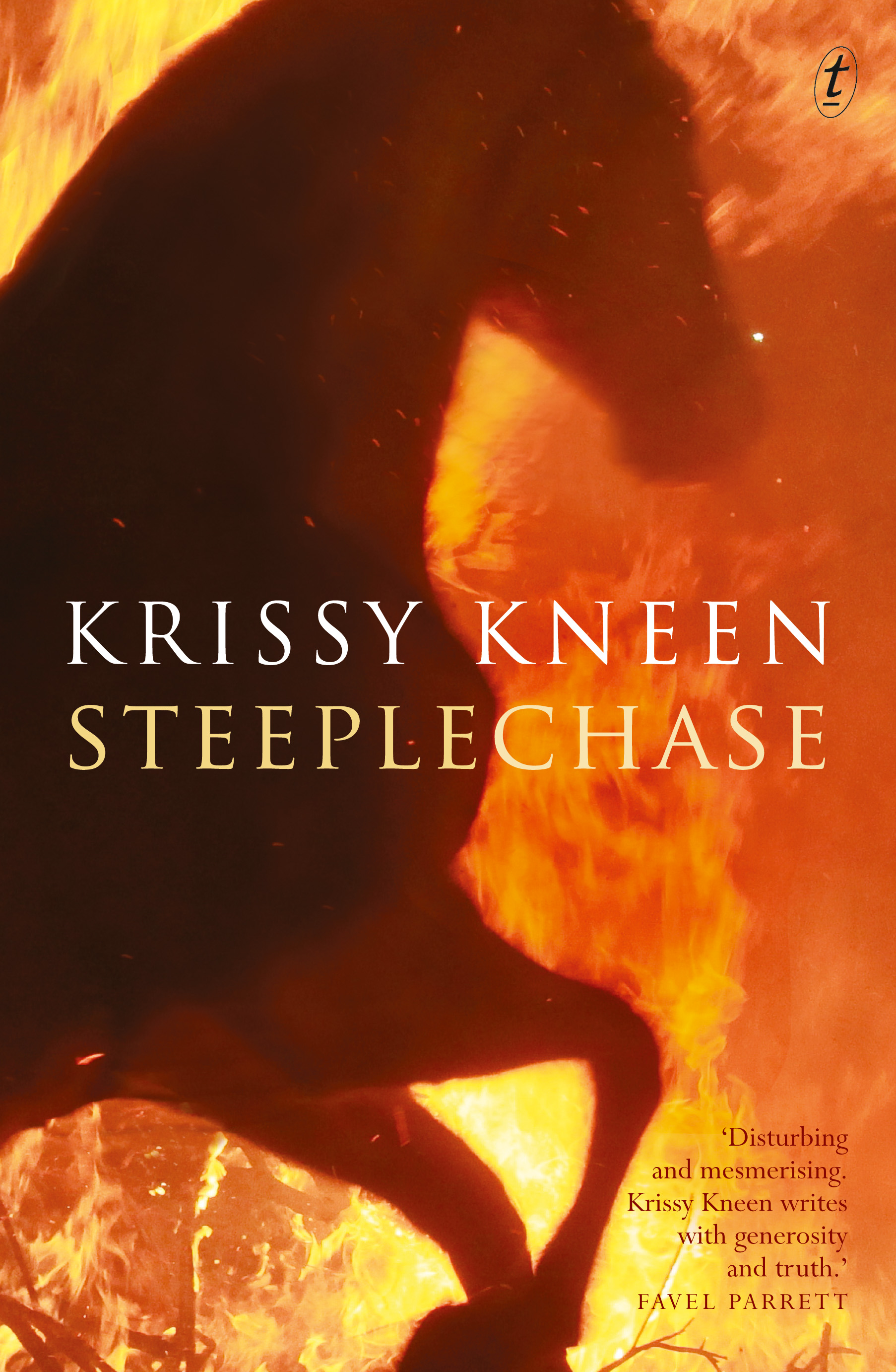
Krissy Kneen, Steeplechase (Review)

Krissy Kneen, Steeplechase

Cover: WH Chong (Courtesy: Text Publishing)

Darn that Australian Women Writers  Challenge! It has introduced me to a bunch of Aussie women writers I hadn’t heard of previously, one of whom is today’s author, Krissy Kneen. I may not have read her quite as soon as I have – there are so many I want to read – if it hadn’t been for Text Publishing sending me Steeplechase. It’s Kneen’s third book but first novel. She has also written Affection: An intimate memoir, which was shortlisted in 2010 for the non-fiction prize in the (now-defunct) Queensland Premier’s Literary Awards, and Triptych a work of literary erotica. Steeplechase, the frontmatter tells us, is Kneen’s first non-erotic work.

It is a contemporary novel about two sisters, told in first person by the younger, Bec. Both are artists, but while Bec is an art teacher who also paints and exhibits, her sister Emily is a wildly successful artist whose works have been sold for astronomical prices by Sotheby’s. Bec, 40, lives in Australia, and Emily in China. They hadn’t seen or spoken to each other for 23 years when, out of the blue, at the beginning of the novel, Emily calls Bec and invites her to Beijing, telling her she has already bought the plane ticket. So the novel begins, and gradually the cause of their separation, “the terrible thing”, is revealed. It involves madness … Madness and art. An irresistible subject.

Kneen plots the story well, interspersing the present chronology with flashbacks. The sisters’ mother, we’re told, was mentally ill, and the three of them – mother and daughters – lived in the country with their grandmother Oma, an art conservator. She’s a strong woman, a matriarch, is Oma. The steeplechase metaphor is introduced in the first chapter, through imaginative play directed by Emily in which the girls pretend to be horses galloping and jumping through a course designed by, yes, Emily. “The steeplechase is dangerous”, Emily explains to Bec.

At first it seems that Emily is the typical bossy big sister, who likes to control and scare her little sister. And Bec is the typical younger sister, adoring and long-suffering. Gradually though it becomes clear that something is not quite right with Emily, that she is going the way of her mother. Around this time we “meet” Raphael who may, or may not, be Emily’s lover and who, on one dramatic night, seems to also become 15 year-old Bec’s lover. But, is he real? (According to the 16th century art historian and biographer, Vasari, the artist Raphael died prematurely due to a fever brought on by a night of excessive sex! I suspect the choice of name isn’t a coincidence.) Kneen teases us throughout with questions of reality and fantasy, drawing us into a world where it’s hard to know where “madness” may start and end.

Meanwhile, in the present, the novel starts with Bec recovering from gall-bladder surgery. She returns to work where we meet, among her students, 23-year-old John who is her lover. Bec, “the good girl”, feels guilty about this, recognising the ethical dilemma it creates.

But, that’s enough of the plot … It’s certainly more than I usually provide in my reviews but this is, largely, a plot-driven book. How is Emily now? Will Bec go visit her? What was “the terrible thing”? Why is Bec signing paintings in Emily’s name? Does John really love Bec? Is Bec a good artist? And, even, is Bec herself sane? These are some of the questions that arise as the novel progresses.

Australian Women Writers ChallengeSteeplechase is compelling. It’s well-written and surely structured, with the shifting between present/life and past/memory all but coalescing at the climax. Kneen draws clearly but not slavishy on the traditions of the Gothic and mad-women. She teases us with paradox – Emily’s calm ordered room versus Bec’s messy chaotic one – and irony. Are they really “safe, protected, locked up tight” when Oma closes up the house at night?

I enjoyed her sensitive depiction of sisterly relationships, of the rivalry that runs parallel to unconditional love. She explores what happens when two sisters end up in the same career, one successful and the other not obviously so, and the lack of confidence that can ensue. We believe Bec’s self-assessment that she’s lesser, though there is a hint partway through the novel that she may be better than she thinks. Kneen weaves this though a story that explores madness, art, and memory that threatens to derail. My only reservation is that for a book which ponders the complexity of love (sibling and romantic), the nexus between madness-sanity and art, and the role of memory in constructing self, the resolution is just a little too neat. But that may just be me! It is, for all that, a darn good read.

Lisa (ANZLitLovers) also enjoyed the book.

Krissy Kneen
Steeplchase
Melbourne: Text Publishing, 2013
224pp
ISBN: 9781922079879

(Review copy courtesy Text Publishing)

Monday musings on Australian literature: Specialist presses

I’ve written Monday musings before about publishers, including posts on small presses and university presses. Today I’m bringing you another – about publishers which specialise in a certain “type” of literature. As with my other posts of this type, this won’t be comprehensive, but will comprise a selection whose specialties interest me! Here they are – listed in their order of longevity, as far as I can tell.

Currency Press

subtitles itself, “the performing arts publisher”. It’s the one I’ve known for the longest, which is partly due to the fact that it’s over 40 years old and partly because its subject area crossed my professional life. It started in 1971 as a publisher of plays, but has expanded significantly since then to “screenplays, professional handbooks, biographies, cultural histories, critical studies and reference works” in the performing arts area. In 2011, its 40th year, Currency Press received an AWGIE Award for its outstanding contribution to the performing arts. Among their new releases is a book that was launched at the Sydney Film Festival today. It’s by film academic, Sylvia Lawson, and is about my favourite Australian documentary, The Back of Beyond (1954). If you want to find the script of a film or play by Australian greats like, say, Andrew Bovell or David Williamson, Currency Press would be your first stop.

Five Islands Press

is one of several small publishers which specialise in Australian poetry. I’ve chosen them to represent this special interest area because it is one that I often see around the traps though I haven’t yet reviewed any of their publications. They were established in 1986, and aim to publish both established and emerging poets. In 2012 they published Lisa Jacobson’s verse novel, The sunlit zone, which was shortlisted for this year’s inaugural Stella Prize.

Magabala Books

describes itself as “Australia’s oldest independent Indigenous publishing house”. It was established in 1990, and is located in gorgeous Broome. It is a non-profit organisation that aims “to preserve, develop and promote Australian Aboriginal and Torres Strait Islander cultures”. It has, to date, published more than 100 titles in a wide range of forms and genres from children’s picture books to adult fiction, from poetry to contemporary non-fiction. Their list of authors is extensive and would be a great place to start, particularly for authors not well-known in the mainstream.

Spinifex Press

describes itself as “an award-winning independent feminist press, publishing innovative and controversial feminist books with an optimistic edge”. I’ve read a few books from them during my blogging career – Merlinda BobisFish-hair woman, Francesca Rendle-Short’s Bite your tongue, Sefi Atta‘s A bit of difference and, just yesterday, Susan Hawthorne’s Limen. According to the About Us page on their site, the press was established by Susan Hawthorne and Renate Klein in 1991, one year after Magabala, and now has over 200 titles in print. They were, they say, the first publisher to set up an interactive site based on a book (for Building Babel in 1996) and the first small press in Australia to release eBooks through an eBookstore attached to their own website. They publish Australian and overseas writers, including many works in translation. I’ve thoroughly enjoyed the books of theirs that I’ve read. Their books aren’t all overtly political but all deal in some way with women’s experience. Spinifex seems to be a good example of what a small publisher with a very focused goal can do.

Spineless Wonders

is a relatively new kid on the block, having been established, as far as I can tell, around 2011. (Don’t you wish all organisations included a little bit of their history on their websites?) Anyhow, Spineless Wonders is “devoted to short, quality fiction produced by Australian writers … [to] brief fiction in all its forms – short story, novella, sudden fiction and prose poetry”. Their name refers to the fact that their publications are “delivered to readers via  smart phones and laptops”, but they do publish in print form, and also audio. Check Litblogger Angela Meyer’s interview at crikey.com with the founder, Bronwyn Mehan, for some background to her philosophy.

To conclude …

That’s five, and probably enough to get you thinking about the breadth of publishing out there. There are plenty of others, including publishers for genre fiction (such as Pulp Fiction Press), children’s literature (such as New Frontier Publishing), regionally-focused publishers (such as Backroom Press in the Kimberleys), not to mention education publishers, religion publishers, and so on.

Do you have any favourite specialist presses you go to for specific reading interests?

Susan Hawthorne, Limen (Review)

Susan Hawthorne, Limen, book cover

Cover: Courtesy Spinifex Press

Limen is a lovely word, isn’t it? It’s the title of Susan Hawthorne’s recently published verse novel. You probably know what it means, but just in case you’d forgotten like I had, it means threshold or doorway. This Limen though is a verse novel!

If you are uncertain about novels in verse, this would be a great one to try. The story is easy to follow; the language spare and beautiful, but accessible. It has a chronological structure with nine parts (titled Day 1 to Day 9) bookended by a Prologue and an Epilogue. The plot is straightforward. It’s about two women (Woman 1 and Woman 2) who go on a camping trip to the river – a favourite spot – with their young dog (Dog) . They arrive, full of anticipation for a good time, but “thunderclouds gather/on the horizon”. Overnight it rains and by Day 6, the longest section in the novel, they are trapped by the rising river. The story is told through the eyes of these three characters, each having a clearly defined role and personality.

Woman 1 is the driver and, perhaps because of this, is the more anxious one. She can’t sleep at night (“sleep avoids me/my head pops up”, “river rises by stealth/night terror”). Woman 2 is initially less worried, reporting on their activities (“we make lunch/talk in the dampness”) and on how Woman 1 is going, but as the waters rise she too becomes concerned:

she tells me her fears
only now do I understand
her wakefulness
her restless checking of the river at night
(Day 6)

The dog remains calm, caring only for physical comforts (“my ever-filling bowl/gone”), stick-chasing games, and the presence of its owners (“I sleep/curled paws/your body warm next to mine”).

Two men they had met in the local town appear, tow their bogged car out, and leave, telling them “you’ll be right mate” (in the italics Hawthorne effectively uses for dialogue). However, the river defeats them once again so they decide to “stay with the car”. Two young indigenous men, brothers and miners, appear, offer help, then set off to walk to the mine when the river can’t be crossed. The women, worried about the young men’s safety despite “their bush knowledge/carried on down the generations”, wait. Finally, other cars appear and they face the river crossings in convoy…

Limen is a beautiful read. It has its tensions but it’s not a thriller. The strangers they meet are not sinister, but just other people trying to manage the flooding river. The lack of names for any of the characters gives it a mythic tone. Hawthorne describes the joys of camping – the physical beauty, the spiritual peace, the time for talk and reflection – and the disappointments and fears – the pig-hunting that destroys the tranquility, the floods that threaten their safety. The writing is spare. There’s lovely imagery referencing female lives (“the river is a necklace of pools”, “paperbark/ruffled as a frilled ballgown” and “clouds are crocheted close/threatening”) but when the tension is highest the language becomes terse and plain. The story’s momentum is carried by changes in rhythm – from the more lyrical descriptive sections to those pared down to the basics:

start
rev
release

nothing
(Day 6)

The text is supported by simple, stylish, irregularly interspersed, black and white illustrations – a lizard, tire tracks, patterns in the mud.

Now, back to the title. Clearly the women find themselves at a threshold. Do they wait, staying with the car, or do they go? There is no conflict between them, but there are gentle hints of other things amiss – a “black spirit dog … sniffing the Styx”, the pig hunting that destroys the peace, the white policeman who shows no concern about whether the two young indigenous men who set off on foot have made it through (“it’s their/problem if they’re/out there“). These aren’t laboured, but they suggest other thresholds and are there I’m sure for us to notice and consider. For the women

this tiny crack
in our lives
wind and rain strewn
stranded on the limen
[ …]
where we could
be on both sides of time
span beingness
like an unfinished arc
of a bridge
is closing
(Epilogue)

until, perhaps, next time …

Do read this novel, if you can, and see what you think.

Susan Hawthorne
illus. by Jeanné Brown
Limen
North Melbourne: Spinifex Press, 2013
166pp.
ISBN: 9781742198606

(Review copy courtesy Spinifex Press)

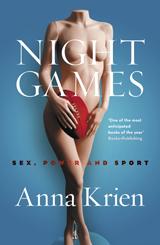
Anna Krien, Night games: Sex, power and sport (Review)

Anna Krien, Night Games

Night Games (Courtesy: Black Inc)

Towards the end of her most recent non-fiction work, Night games, Anna Krien writes:

I wish I’d chosen to follow an ‘easier’ rape trial.

She’s concerned that what she’s written, what she’s finding, won’t “sit well with feminists or footballers”. She might be right, but that would be a shame, because what she’s produced is a rational and, yes, provocative analysis of football culture and the way society enables it. It’s about power, entitlement, complicity – and, of course, sex.

“… despite the verdict, I still don’t know who is guilty and who is innocent”

Like Helen Garner (The first stone and Joe Cinque’s consolation) and Chloe Hooper (Tall man), Anna Krien, whose Into the forest and Us and them I’ve previously reviewed, writes in the narrative non-fiction genre. It uses literary techniques to create a narrative about a real issue or event, and can involve the author putting herself (in this case) in the story. I like the style. If well done, it feels honest because the author is clear from page one about the facts (and their limits) she’s presenting, the ideas she’s exploring and, significantly, the challenges she personally faces during her exploration. Krien doesn’t shy away from confronting her feelings, but neither does she let them overshadow her ability to reason.

And so to Night games. The book tracks the rape trial of an AFL footballer. This has implications for the narrative. The name of the complainant must be suppressed, so Krien decides to suppress the defendant’s name too. The complainant’s testimony was given in closed court, so cannot be reported. This could seriously skew Krien’s story, except that she structures the book in such a way that, although the connecting narrative is the trial, the main game (ha!) is the surrounding culture. Also, Krien reverses traditional trial narrative (fictional and factual) and reports the verdict in her Prologue. This de-emphasises the trial drama, and focuses us on the issues she wants to explore. It’s intelligently done – and once again convinced me that Krien is a writer I want to watch.

The book has six parts – the Prologue, an Epilogue, and four parts in between in which Krein tackles what she sees as the critical issues. These are football culture, particularly regarding male bonding rituals, and attitudes to women and minorities such as black and gay players; rape and what she describes as the grey area surrounding consent; and the broader role of women in football, in various guises, including management and media. These parts could almost be read as separate essays, except that they are connected by the trial narrative, and by their thematic connections to each other.

“an abnormal society…”

Some of my family and friends looked a bit askance when I told them what I was reading. After all, rape is an unpleasant subject and I’m not a football follower – but, I am interested in gender and power, social relationships, and ethical behaviour, which are the book’s real subjects. The picture Krien paints of football culture is not pretty, but neither is it particularly new. Who hasn’t seen and heard, in recent years, news stories about drunken parties and sexual assaults involving footballers? Krien teases out what’s behind these behaviours, and it’s mostly to do with male bonding, a bonding that is characterised by bullying and by a “macho culture of humiliation” in which women become the objects through which the men (try to) prove themselves. It’s not quite that simple of course – and women can try to play the game too, can want footballer notches on their belts – but the pervading attitude, until recent moves to change it, has been one of male power and entitlement.

“… a moral quagmire”

More interesting to me was Krien’s discussion of “the grey area, the gulf of uncertainty between consent and rape”. She quotes academic Catherine Lumby, Rugby League’s advisor on gender and cultural change:

Yes, there are many instances of behaviour that we found in our research into players’ experiences that did not equate to sexual assault but are definitely extremely unethical behaviour – such as after having sex with a girl, throwing her out of your hotel room naked without her clothes for a joke. Or suddenly asking, ‘Do you mind if I invite my mate back?’

How easy, Krien asks, is it for women to say “no” in many of the, usually powerless, situations they find themselves in – and if they don’t say no, have they consented? Is acquiescence consent? If not, what is it? The issue of consent was the critical issue in the rape trial Krien follows in the book – and hence her wish for an ‘easier’ rape trial. I’m aware that, except for that stereotypical violent, sociopathic rapist we all think of, consent is the critical issue in many rape cases. But, what I liked about Krien’s discussion was her analysis of the consent issue within this particular culture and her questions concerning how it might be better negotiated and understood at the time the sex occurs and how it might be better handled legally. Underlying this, though, is the idea that there would be less need to worry about grey areas surrounding “consent” if the culture itself fostered respect and equality, not to mention ethical or moral behaviour.

I’ll leave my discussion of Krien’s arguments and thesis here, otherwise I’ll end up writing an essay myself. I’ll simply add that I like Krien’s self-questioning and analytical, rather than emotional, approach. There’s no list of sources at the end, which I missed, but she clearly identifies her extensive research as she goes, naming the people and works she consulted. I also like her writing. It’s accessible and logical, but has fresh turns of phrase that lift it out of dry reportage.

If you weren’t inclined to read this book, think again, because I found Night games to be illuminating beyond its specific focus on football culture. It is also an excellent read.

Anna Krien
Night games: Sex, power and sport
Collingwood: Black Inc, 2013
268pp.
ISBN: 9781863956017

(Review copy courtesy Black Inc)

Monday musings on Australian literature: Thoughts on Australian e-publishing

I wasn’t sure whether to call this “an Australian’s thoughts on e-publishing” or “thoughts on e-publishing in Australia” or the title I ended up choosing. There are subtle differences but almost too subtle for me to tease out here, so I decided to use the shortest title.

I was inspired to write this post by Nigel Featherstone’s blog post a week or so ago about a special offer for his novella, Fall on me (my review). The deal is that you can buy the e-book version and “pay whatever you like”! Apparently, as some of you probably know, Radiohead tried something similar many years ago – and 60% chose to pay nothing. I certainly hope that’s not what happens to Nigel Featherstone and his publisher, Blemish Books. Featherstone writes of the Radiohead experiment that:

At the time, Radiohead’s approach was considered ground-breaking, but over the years there’s been debate about its impact on the music industry in general; even Thom Yorke, the band’s free-thinking frontman, said that the strategy may have been a mistake, as it played into the prevailing internet culture that everything should be free.

I certainly don’t think everything on the internet should be free. After all, everyone has to eat and if the internet is the best way to distribute the results of one’s work then one should get paid. And yet, when I first acquired my Kindle around three years ago now, my idea was that I’d only use it for free classics (such as those from Project Gutenberg)!  I wasn’t, I thought, going to spend real money on a virtual book!

But, with experience has come some change of mind. Here is what I do now:

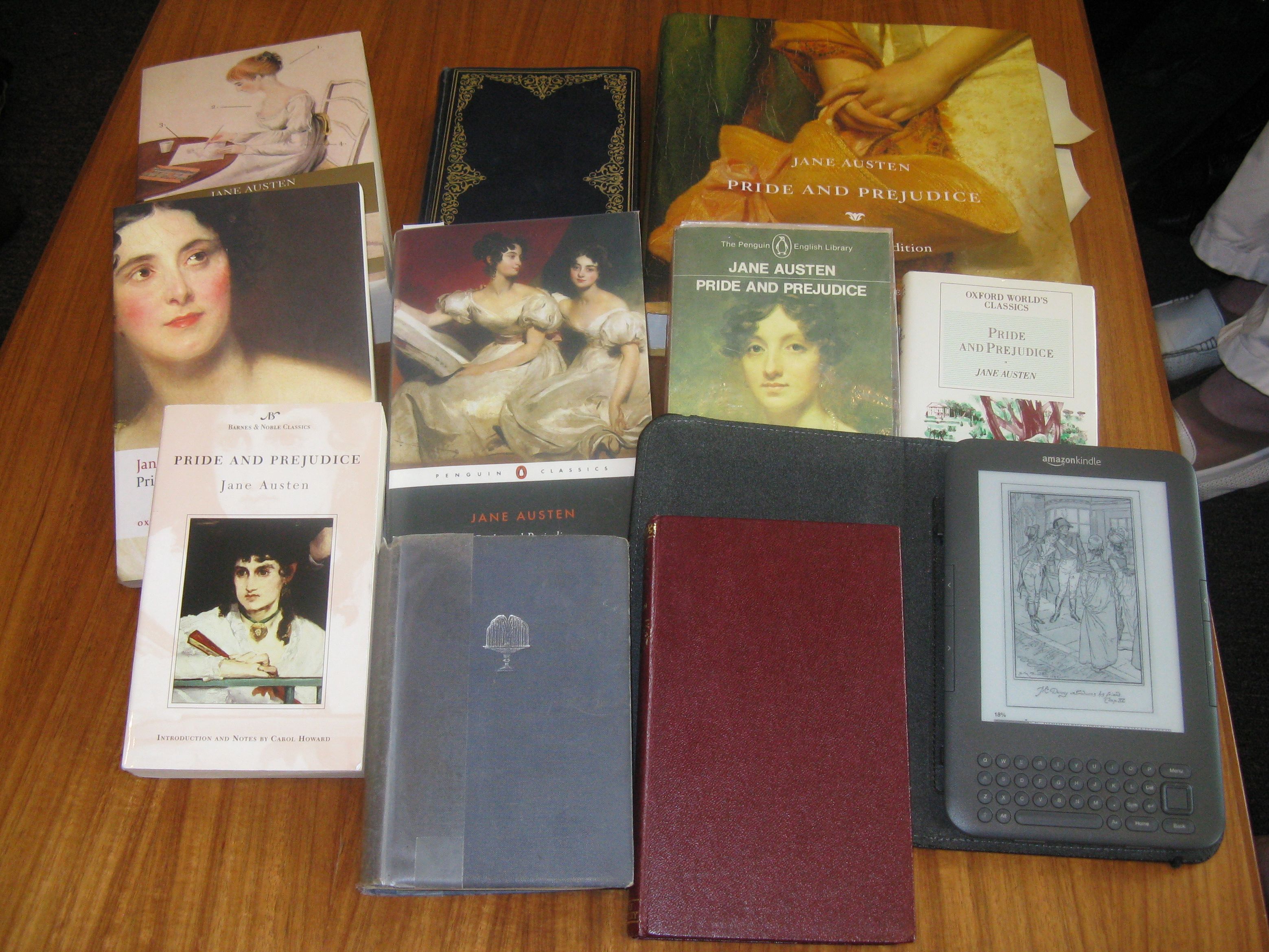
  • Pride and Prejudice book covers

    Reading the classics

    Classics: I will still acquire free classics if that’s the only way I can acquire them but if, as with say Jane Austen’s novels, they can be bought I will pay for them. This is because, really, “you get what you pay for”. With a bought classic you can usually choose a version with an introduction by an academic or critic you respect or want to read, and the edition is less likely to have editing/proofreading errors and other conniptions (as my last free classic did – it just seized up at a certain chapter and that was it. I could have investigated – re-downloaded perhaps – but it was easier to pay a couple of dollars for a commercially published edition).

  • Journals: I have discovered that I quite like reading literary journals on my Kindle. I do miss the lovely physicality of many journals – some are just gorgeous (like Kill Your Darlings) and some contain pictorial content that aren’t easily reproduced (like Griffith Review) – but journal articles are perfect for spare moments when I’m out and about, and e-versions are convenient.
  • Newspapers: I also like to read the newspaper in e-format, particularly since my app also supports crosswords! So far our local newspaper app is free, as they are still ironing out bugs etc, but at the prices being charged for other metropolitan newspaper apps, I’d be happy to pay for ours here in e-format, when they decide to charge. It’s so easy to select the articles I want to read, and I can read it when travelling.
  • Contemporary literature: I have finally started acquiring contemporary literature – both fiction and non-fiction – on my Kindle. I still prefer print versions for this sort of reading but am teaching myself to enjoy e-versions. It is lovely to hear of a book, decide you want it right away, and be able to get it – particularly when it isn’t immediately available in my favourite bookshop (as I discovered recently with Courtney Collins’ The burial. “We can order it for you”, the salesperson helpfully said, but that can take two weeks or more and, being a child of the twenty-first century, I wanted it now!). I want to pay less for an e-version, but there are costs – including payment to the author – that are independent of the publishing platform, so we have to pay something. Right?

So, how reflective are my reading habits of e-publishing in Australia? Clearly, journals and newspapers are actively moving into e-formats. I don’t know how readers are responding to this, but anecdotal evidence tells me that people are increasingly interested in receiving their newspapers and journals electronically. However, the situation seems to me to be a little different when it comes to books. Again speaking anecdotally, there’s some resistance among my literary fiction cohorts to reading “whole” books electronically, with most still preferring print, even where, like me, they have e-book devices. I think there might be a bigger uptake among genre readers?

An article in The Australian earlier this year suggests that e-Books represent about 10% of book purchases here, which is less than in the US (20%) and the UK (16%). Publishers recognise that the e-book is here to stay but also believe that print will continue side-by-side (for some time to come, anyhow). Sensibly, publishers are starting to look more carefully at what they publish in what format when. Digital-first and digital-only publishing is now part of the business model. Penguin Australia, for example, has introduced its digital only Penguin Specials collection, with wonderful sounding fiction and non-fiction titles by the likes of Elizabeth Jolley, Gideon Haigh, and Orhan Pamuk. Ooh, I want to read them …

Also in The Australian article, the HarperCollins spokesperson said that:

Fiction readers, in particular, have responded enthusiastically to the e-reading experience and we have seen a significant upsurge of sales of backlist titles as people ‘discover’ a new author and then buy all previous books by them.

Great, eh? The Blemish Books initiative which inspired this post is, really, about backlist. I hope it goes well. It isn’t easy being a small publisher – or one of its authors!

Irma Gold and Craig Phillips, Megumi and the bear (Review)

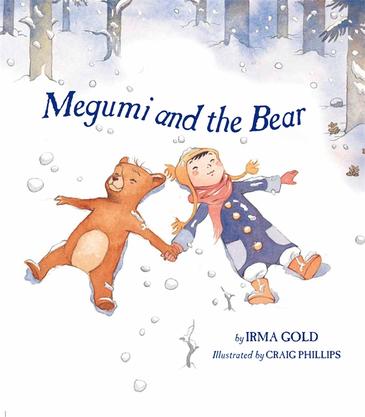
Irma Gold Craig Phillips Megumi and the bear book cover

Courtesy: Walker Books Australia

Now here’s something different at the Gums! I don’t, as you’d know, make a practice of reviewing children’s literature, though I have done a few cross-over adult-young adult novels. So, when Irma Gold and Craig Phillips’ children’s picture book, Megumi and the bear, landed in my letterbox a week or so ago I was challenged. Not only is it a picture book, but its cover – featuring a child and a bear making snow angels – suggest that it has little to do with Australia. Why should Whispering Gums make an exception for this book?

Well, the reasons are twofold. Firstly, I’ve reviewed two works by Irma Gold before (her short story collection, Two steps forward, and the anthology she edited, The invisible thread) and so was intrigued to read something different again by her. She’s one hard-working, versatile author, which I think you have to be if you want to make writing your career. Secondly, while it’s not set in Australia – usually something has to be Australian for me to make an exception – it is set in Japan. At least, Craig Phillips’ illustrations were inspired by his observing a little girl playing in the snow in Hokkaido. I love Japan – and have been to Hokkaido. Exception made!

Now, with two mid-late twenty-something children, I’ve not read a picture book for a long time but, as I picked this up and read it, a whole pile of memories of loved books came back, but first, the story. Like most picture books, its narrative line is simple – a young girl, Megumi, meets a young bear in a forest and they become good friends, playing together again and again until one day the bear doesn’t appear. Megumi is sad, and goes into the forest every day, to wait … until eventually she starts to forget and goes into the forest with her friends … It’s a lovely story about friendship, loss, time and memory.

Craig Phillips’ water colour illustrations are delightful – clear, uncluttered and colourful within a restrained palette. The bear and Megumi’s feelings are nicely conveyed through their facial expression and movement. Irma Gold’s text is also clear and simple, but not simplistic, with a nice use of repetition, “But the bear doesn’t come”, in the central section. The narrative is well-paced, keeping the story moving while providing time to consider (and feel) what is happening. The text is visually appealing. The topic sentence on each double-page spread is presented as a wavy line using an italicised font, with the following sentences in straight-lined plain text. This adds a lovely touch of whimsy to the presentation – and, I suspect, could help the out-loud reader get into a rhythm.

All this made it an enjoyable read – but what I enjoyed most was how it reminded me of other childhood loves, my own or ones made with my kids. The idea of a child playing with a bear brings to mind, of course, Winnie the Pooh. This is not at all a Christopher Robin and Pooh-like story but it plays into that notion of a friendship between children and bears. Going into the forest to play with a wild creature recalls Sendak’s Where the wild things are. Our bear here is not a wild thing – he’s sweet and small – and Megumi and the bear may not engage in wild rumpus, but they do have fun in the forest away from adults. And, this next probably sounds even less likely, but I was also reminded of the song “Puff, the Magic Dragon“. Again a completely different story and theme – and in fact quite the reverse in that here it’s the animal which goes missing – but both explore a friendship with “other” that is made and then lost. Hmm, now I think about it, these connections are pretty loose, but isn’t this partly what reading is about? Enjoying, remembering, connecting, making our own paths through literature and its meanings for us?

The thing is, whatever you make of it, Megumi and the bear is a gorgeous book that I can imagine loving to share with a grandchild, if I had one!

Irma Gold and Craig Phillips (illus)
Megumi and the bear
Newtown: Walker Books Australia, 2013
ISBN: 9781921977909

(Review copy courtesy Walker Books Australia)