Delicious descriptions: Brooke Davis on salmon gums

In my recent review of Brooke Davis’ novel Lost & found I mentioned her descriptions but didn’t really give any examples. I can’t leave this book without giving you two that involve a rather interesting tree. It also gives me an opportunity to share my photographs of one! They are beautiful (though my photographs don’t really do them justice).

Salmon Gum

Salmon Gum from NT (Eucalyptus tintinnans).

The interesting thing about Gum Trees – because of course I am talking about gums – is their nomenclature. Many gums have multiple names, and sometimes the same name is used for several different species. An example is the Ghost Gum. This name is commonly used for several species of gums that mostly grow in arid Australia and have ghostly white bark. There are other examples though, one of which is the less commonly known Salmon Gum. I have only seen the Eucalyptus Tintinnans in the Northern Territory, but Davis writes about, I assume, the Western Australian native one, the Eucalyptus salmonophloia. I don’t have a photograph of it but you can see a gorgeous one on this blog (I hope they don’t mind my linking to it).

So, here is the first description:

They drive past rows of gum trees, leaning out over the road and into the sky, like dancers posing. Those trees there, the bus driver says. See how pink they are? Millie nods. They make her think of the inside of her mouth. Salmon gums. Always looks like the sun’s setting on them.

Do you reckon that’s a sly joke about “gums” there?

Another shot of Eucalpytus Tintinnans

Another shot of Eucalpytus Tintinnans

The second one comes in a description of the people of inland Western Australia, from Karl’s perspective:

Back home, on the southwest coast, the people have dazed eyes, blond edges, waterlogged strides. The people here are different: scratchy, like they’ve been sketched roughly on paper, like they are born of the very red dirt they scuff their feet in, made out of the salmon gums that line the streets. They yell outside the bakery, the supermarket, the pubs and in the main thoroughfare, chopping at words as though throwing their sentences in a blender. Karl doesn’t feel like he fits in here. Then again, Karl doesn’t feel like he fits in back there, either.

The sky is between day and night, that deep blue it gets when it’s shedding one for the other.

Not being from the West, I don’t fully understand the basis of the distinction she’s making here between the coastal and inland people – what’s this about yelling outside bakeries, supermarkets and pubs? – but I did enjoy reading this description. It’s vivid. I know that a few Western Australians read this blog. I’d love to hear what they think of this, and what it says to them.

Monday musings on Australian literature: Australian writers in England, 1911

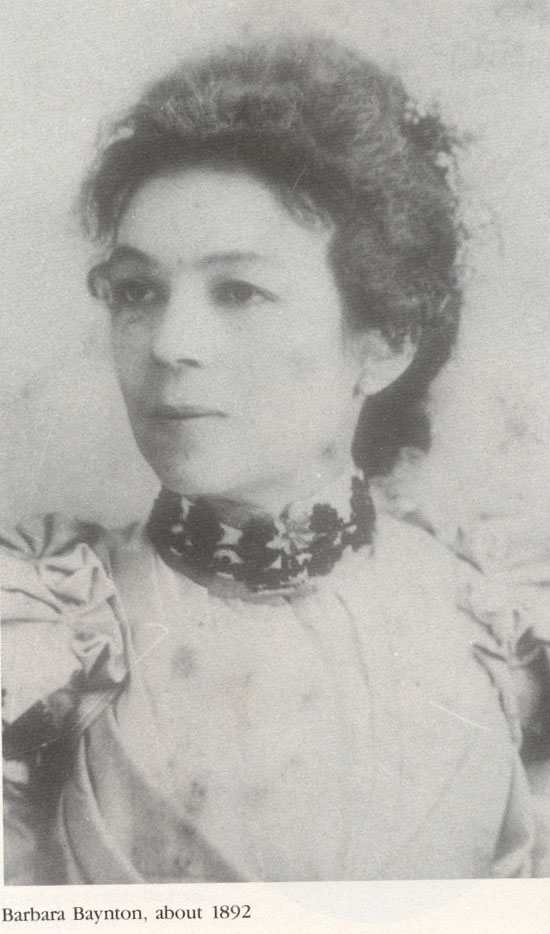
Barbara Baynton 1892

Baynton 1892 (Presumed Public Domain, via Wikipedia)

I’ve devoted a few Monday Musings recently to Australian writers in the first few decades of the twentieth century. I expect to do a few more in coming months, as I’m enjoying the research. Today, I’m drawing from a report of a talk given by Barbara Baynton in Sydney in 1911 to the Writers and Artists Union. The article, titled “England and the Australian writer: Barbara Baynton’s experience” appeared in a column in The Argus titled Page Twenty-One, written by arts journalist Norman Lilley (d. 1941).

Barbara Baynton will be well-known to readers of this blog as over the last year I’ve separately reviewed the short stories in her collection, Bush Studies. This book was published in England, after she had not been able to get it published in Sydney. However, as she explains in her talk, it’s not easy …

English publishers

Baynton told her audience that she’d explored many avenues in her search for a publisher – the English Society of Authors, the London-based Agent-General of New South Wales, publishers themselves, and, by accident, a man reading for a publisher. It was this man, Edward Garnett, who, in the end, read her work, liked it, and submitted it to Duckworths. Along her journey though, she was offered money by a publisher for one short story only; was told by another, Heinemanns, that it didn’t “touch short stories”; and was asked for “absurd sums” by others to cover the printing and distribution of her book. As I read all this, I wondered how much has changed!

Lilley comments that Baynton found “Literature … to be a costly pastime – that is, legitimate literature as distinct from sensational novel writing.” The latter, he says, could be made to pay “if you could catch the vogue and tickle the popular taste”.

The English mind

Baynton clearly spent some time discussing what English readers would read. Lilley reports:

Englishmen were not interested in Australia; they knew nothing about it, and did not want to learn. They regarded it as a land of strange contradictions, where the birds did not sing* and the flowers had no smell, and the trees shed their bark instead of their leaves; and nothing could persuade them that eucalyptus was not our national scent. They might read about the adventures of an Englishman in Australia; but they declined to take any interest in the country itself.

Baynton said, he reports, that “you cannot score a popular success with serious matter”. Again, one wonders how much, really, has changed – in terms of reading tastes, not in terms of interest in Australia, I mean.

Anyhow, Baynton apparently went on to say that writers who included “plenty about princesses and earls and gilded palaces” did sell! She gave popular English writer Marie Corelli as an example of this sort of writing. I discovered a brief paragraph about Corelli written in 1904 in the Bathurst Free Press and Mining Journal. The writer reports on one Rev. R. Eyton, of Bathurst, who, apparently said that “children were left with the minds utterly untrained, and no wonder that their literary zest is satisfied with writers like Marie Corelli. They never have had a chance to judge between literature and trash, which is certainly rough on the lady whose books have such a vogue.”

Baynton also mentioned Australian-born English writer HB Marriott Watson. She said he had been a great literary success, but that “the better written his books were the worse they paid. To make a commercial success he had to be frankly sensational”.

Baynton, you can see, was not afraid to express her opinions! In fact, she also mentioned Conan Doyle who made “₤2000 a year or more out of fiction that was not literature at all”! The most successful Australian writer, financially speaking, was Albert Dorrington, but his work “was not legitimate literature”.

Unfortunately, Baynton also referred to what we know as “the cultural cringe”. Lilley reports that “she was ashamed to say that a great part of general public here seemed to think you must have the English hallmark, and that the Australian was of no value”. Interestingly, she also said that America was interested in Australia, that “American magazines would take what the English publishers rejected as ‘peculiar’; and so the Americans encouraged clever writers”.

Union

Baynton’s talk was, as I indicated in the first paragraph, given to a union audience and so union issues, particularly in terms of remuneration for writers, were touched on. She gave examples of payments writers could receive in different countries and from different publishers. She mentioned that the people “who made the largest incomes out of literature were the middlemen – the agents”. She said that England badly needed a writers’ union.

Unionism, Baynton preached to the converted, “was wanted in the literary profession: to force prices up – to make the rich papers pay decent rates for writers’ brains”. She argued that shareholders, like herself, should receive smaller dividends so that the men and women who did the work could be properly paid. Good for her.

Russian writing (and the English mind, again)

At the same meeting, Lilley reports, Dora Montefiore, the English-born Australian writer and founder in 1891 (according to Debra Adelaide’s Australian Women Writers: A bibliographic guide) of the Womanhood Suffrage League of NSW, also spoke on writing and publishing in London. She gave the example of trying to find a publisher for a translation of some Maxim Gorky stories. Montefiore, according to Lilley, said that:

a very wide circle of readers had not been expected for them, as the English mind, being the very reverse of introspective, could not easily understand the psychology of the Russian mind, and was consequently prone to call such work as Gorky’s morbid**. The English made mistakes, promptly forget them, and went on again; they disliked exceedingly thinking about them, or dwelling on any process of thought. The Russian was the reverse of this …

If you are English and reading this blog, what do you think … about then, and now.

The moral

Lilley concludes his report with

The moral that Australian writers should stay in their own country, and by uniting should make conditions good enough for the best of talent, seemed obvious.

* They clearly hadn’t heard the Australian magpie!

** Coincidentally, you may remember that I reported in my Monday Musings on Baynton that she’d been likened to Gorky for her grim realism.

Brooke Davis, Lost & found (Review)

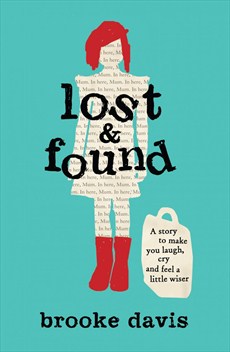
DavisLostFoundHachetteI must say that my antennae go up when I hear a book being touted as a publishing sensation even before it is published, as Brooke Davis’ recently published debut novel Lost & found, was. What does that mean? That it was the subject of a mega-dollar bidding war like, say, Hannah Kent’s Burial rites? Well, not necessarily, but Davis’ novel, according to hoopla.com, was “one of the hit titles at the 2014 London Book Fair and has since gone on to sell into 25 territories”. The question is, does it live up to this, hmm, hoop-la?

You’re all going to die (Millie)

I’ll start by saying that this “sensation” comes dressed as a light book and is, in fact, an easy and delightful read, but it also offers something more, content-wise and stylistically. For those of you who haven’t heard, the novel was inspired by Davis’s grief over the sudden death of her mother in a freak accident in 2006, and was written for her doctorate at Curtin University. It tells the story of three characters: seven-year-old Millie whose father has died and whose mother subsequently abandoned her in a department store; 87-year-old Karl whose wife has died and who has escaped the nursing home to which his son had abandoned him; and 82-year-old Agatha who hasn’t left her house since her husband died seven years ago, and who fills her day shouting insults at passersby. Three lost characters who come together, looking, though not initially consciously, to understand the old question: what is life about, or, more specifically, how do you live life when it is defined by loss, or even, as Agatha wonders, wouldn’t it be better to never care for anyone?

At the end of my edition is a short version of an article titled “Relearning the world” that Davis wrote about grief.  If you have experienced the terrible grief of sudden or before-its-time loss, you will relate to much of what she writes. She talks of the moment when the loss becomes real (a moment I vividly remember in my own life), and of “feeling outside of everything and looking in” (another sensation I remember). She talks of theories of grief, like Elizabeth Kubler-Ross’s, and how it makes sense because “we like order”. “Isn’t that”, she asks, “why we like narrative?”. But, she says, there’s been a backlash against the compartmentalisation of grief towards a recognition of “the disorder of grief”. Grief, she has learnt, is part of everything she says and does, all that she is. It is never resolved.

We’re just living, Derek (Karl)

This all sounds pretty heavy, albeit sensibly heavy. Davis’s book, however, is quite the opposite. The narrative line owes something to the picaresque novel, and the linear but choppy structure supports this form. The main body of the story concerns a rather wild and wacky journey the three characters take, some of it on the Indian Pacific train, to help Millie find her mother. As befitting the picaresque, they meet various colourful characters along the way, such as Stella the bus driver and Derek the train conductor. As the journey progresses, the adventures and mischief get sillier and sillier, and less and less “real”. But then, this isn’t a realistic novel. In fact, it is quite slapstick, which is not my favourite form of humour. However, Davis makes it work, pretty well anyhow, because we are invested in her characters by then. We want them to find what they are looking for – or something equally worthwhile.

Old is not a choice (Agatha)

Davis also makes it work because of the voice. Using third person, it’s fresh, and direct, and authentically captures the perspectives of a curious young child, a loving old man, and a grumpy old woman. It might be a “light” novel, but it’s not a prosaic or formulaic one. Each character is associated with various “things” or “recurring behaviours”. Just Millie writes “In here Mum” messages whenever she goes to a new place so her Mum can find her. Karl the Touch Typist, who had deeply loved his wife Evie, carries around Manny the store mannequin, with which he had helped Millie escape the authorities in a department store and which is mistaken for a sex doll by some of the people he meets. Agatha Pantha, a closed-off woman who had not been a kind wife, has her Age Book, in which she obsessively records her day in third person. Some of the character “associations” might, depending on your point of view, be a little overdone, just as the slapstick, depending on your tolerance, may be pushed a little too far. Overall though, I found Davis’ characterisation effective and engaging.

All this is supported by the narrative, which is moved along through delightful language, from the zippy dialogue to tight descriptions that nail with their acuity.

Here, for example, is Agatha trying to explain to Millie why at seven she can’t start a family:

You can’t get pregnant.
Why not?
You have to get your! Your! Agatha gulps. Your monthly womanly visitor!
Are they from the government?
Good God, no!
Where from then?
They’re not from anywhere!
Why are they called visitors, then?
That’s just what we say!
Who?
Agatha sighs loudly. Okay, I give up! Someone from the government comes to your house and makes you a woman!
Millie eyes the breastfeeding mum, and leans in close to Agatha. Will they bring me boobs too? she whispers. Because I’m not going to take them.

And here is Millie’s view on dates on gravestones:

The start date and the end date are always the important bits on the gravestones, written in big letters. The dash in between is always so small you can barely see it. Surely the dash should be big and bright and amazing, or not, depending on how you had lived. Surely the dash should show how this Dead Thing had lived.

Besides the loss-grief theme, Lost & found is about many things – loneliness, love, friendship and caring, and, above all, about taking risks because this is your life. It’s not a challenging novel, as it wears its heart on its sleeves, but it is lively, inventive and wise. It will be very interesting to see what Davis does next.

awwchallenge2014Brooke Davis
Lost & found
Sydney: Hachette Australia, 2014
280pp.
ISBN: 9780733632754

(Review copy courtesy Hachette Australia)

Monday musings on Australian literature: Australian women writers, 1930s

In July I wrote two posts based on Nettie Palmer’s 1920s assessment of great Australian novels. In 1935, another Australian novelist, Zora Cross, wrote an article about Australian women novelists and poets. I enjoy reading these contemporary perspectives, and I think some of you are interested too … do let me know if you aren’t.

I’ve said it before I think, and that is that there were two flowerings of Australian women’s writing in the twentieth century, one in the 1920s-40s and the other in the 1970s-80s. It’s a bit early to tell but I’m wondering whether we are experiencing another one now. Let’s hope so – not at the expense of our male writers, but recognised and read, alongside the men.

I don’t know Zora Cross (1890-1964) as well as I know Nettie (and Vance) Palmer, but she was a recognised novelist, poet and journalist in her day. Her aim in her article, published the Sydney Morning Herald in 1935, was to demonstrate the strength of women’s writing. She starts by naming writers who, at that time, had been writing for twenty years or more – writers still known to us (Miles Franklin and Mary Gilmore), and those far less known, if not pretty much forgotten (Louise Mack, Ada Holman and Dora Wilcox). The only one I know of these last three is Louise Mack – as she is in my TBR pile. Cross then mentions younger writers, of whom only one, Katherine Susannah Prichard, is well-known to me. The others are Dulcie Deamer, Vera Dwyer, Ella McFadyen and Nina Murdoch. When I read these lists, I wonder which of today’s writers readers a century from now will know. Sometimes I wish I did believe in eternal life – or, reincarnation!

Like Palmer, Cross uses headings in her article, so I will again follow.

Success abroad

Nettie Palmer, ten years earlier, also talked about writers succeeding abroad, but Cross writes of two different sorts of successes. One is that achieved by writers who started writing “at home” and then move abroad. She names several, again mostly not well-known now – Helen Simpson, Alice Grant Rosman, Dorothy Cottrell – and one completely unknown to me, and about whom some quick Google searching has revealed nothing, Daniel Hamlyn. Hamlyn, she says, won The Bulletin’s second novel competition, the first one having been jointly won by Katherine Susannah Prichard and M. Barnard Eldershaw. I think I’ll need to actually go to a Library and research The Bulletin to discover more about her! Cross doesn’t mention Christina Stead, but as Stead only published her first book in 1934, that’s not surprising.

The other “success abroad” Cross mentions is that achieved by those who hadn’t left home. One of the most interesting of these is, she says, Eleanor Dark. She does, however, name several others, all unknown to me, so I’ll just mention a couple which stand out because of her comments. One is Georgia Rivers whose novel, The difficult art about a young girl growing up, “is a most unusual book”. She doesn’t elaborate, but this has piqued my interest. Another is Jessie Urquhart who, she says, “will not, I think, do her best work until, like Alice Grant Rosman, she  relinquishes journalism for fiction”. An intriguing comment from a novelist-poet-journalist! It would be interesting to know whether Urquhart needed her journalistic work to survive. The last one I want to mention is Mary Mitchell who achieved London success with the wonderfully titled Warning to wantons. Cross tells us that this book is not Australian so “of little importance to us here. She could write, I’m sure, a good Australian society novel, for which there is a waiting public.” I hadn’t realised until this point that her article is not just about Australian women writers, but about Australian women writers writing about Australia.

Literary competitions

Here Cross mentions Marjorie Barnard and Flora Eldershaw (aka M. Barnard Eldershaw), and another writer I don’t know, Velia Ercole, as writers brought to notice through winning competitions. But, as Palmer did (though under her “abroad” category), Cross focuses her attention here to Henry Handel Richardson who, she says, was introduced to Australia by Nettie Palmer.

Cross, like Palmer, praises Richardson, saying that few “have equalled her in style and form of production”. She says that fame finally came with the last book in her Fortunes of Richard Mahoney trilogy, Ultima Thule, which she describes as “lucid and sincere”. Nonetheless, she does suggest that “there are faults to be found from an Australian point of view” with the novel, “but few with the presentation of it”. She’s not clear about what these faults are, though suggests that many may “question the worth” of such a detailed look at “a failure’s life”.

Ethel Turner

Cross’s last heading is devoted to Ethel Turner, whose juvenilia I plan to review later this year and who is famous for her novel Seven little Australians. Cross again shows that her interest here is writing about Australia when she says:

Too much stress cannot be laid on the fact that Ethel Turner, from the moment she opened the door of an Australian house and showed the world what we were really like, has been a guiding star for the best. She has not been able to give us adults as real as children but the germ is there.

But, the cultural cringe is strong, Cross implies, when she says that Australians do not recognise that Turner’s children are as immortal as Alice [in Wonderland] and much more real than Anne of Green Gables. Fighting words, eh! She names writers who have followed Turner, including Mary Grant Bruce whose juvenilia I reviewed earlier this year.

Conclusion

This is not one of Cross’s headings, but after her discussion of Turner she writes a few paragraphs about other writers and writing. She refers to “imaginative women writers [who] are immersed in journalism”, playwrights, and women who write humorously, such as Miss Lloyd and her book Susan’s little sins. Couldn’t resist mentioning that one!

She then writes, curiously, that:

All of our women writers are well read, none very keen about sport, though golf and tennis and sometimes dancing play a part in their leisure moments. All are earnest, sincere workers.

I wonder why she felt the need to say all this? Anyhow, she follows this by saying she has left one writer to last, Mary Gilmore “whose hobby may well be ‘the finding of new writers'”. Dame Mary Gilmore wrote poetry and prose, though Cross, rightly, believed that it’s for her poetry that she’ll most be remembered.

And here, I’ll conclude with her conclusion because – well, see what you think:

Our women aim at truth in writing just as the men do: and this is characteristically Australian. We do not need to read Russian literature to inspire us to realism. Our country, born of suffering and hardship, has shaped our character, and out of it is coming a literature entirely different from any other. Women are doing their share in the building up of this national literature just as they did their share towards the making and shaping of the nation itself.

So there!

Ouyang Yu, Diary of a naked official (Review)

Ouyang Yu, Diary of a Naked Official

Courtesy: Transit Lounge

When I was offered Chinese-born Australian writer Ouyang Yu’s latest novel Diary of a naked official to review, I was warned that it is rather graphic. And so it turned out to be, but, not having read Ouyang Yu before, I did want to give it a go. The accompanying publicity sheet describes it as “Ouyang Yu’s most commercial novel to date – erotic fiction set in contemporary China”. So now you, my blog readers, have also been warned.

Where to start? Perhaps with the title. Not being an expert on Chinese culture, I wouldn’t have fully understood the title if it hadn’t been for the back cover. It explains that “naked official” is a recognised term in China describing men who locate their wives and children overseas, where they also deposit all their money. The men remain in China “naked” and, in this case at least, “totally free” to indulge in whatever they desire – which brings me to the subject matter of this novel …

The main part of the novel comprises diary entries written by our naked official (who may be named Shi Ma and so that’s what I’ll call him) over a period of three months*. In it he details a life driven by satisfying carnal pleasures with no desire (ha) to rein them in. He is so focused on “enjoying” other women – young, beautiful ones – through pretty much any act you could imagine and then some, that he has no time or energy for intimacy with his wife, who does not move to Australia until halfway through the novel. “Sex”, he says early in his diary, is “a keyword of our times, it is like a poisoned liquid that seeps into the minds of everyone, including women”. (Including women, eh! How gender plays out in the novel, in fact, could occupy a whole post).

Framing the diary is the encompassing conceit that the story is presented to us by a writer, who is probably Chinese-Australian and who had found the diary on a USB stick left on a Melbourne train. He decides to present it in its entirety “with a bit of editing here and there, just to make it less offensive to the middle-class sensitivities in this country”. He warns his readers, just as I have, to be prepared for an assault on their “moral values”.

As you have probably gathered by now, this is a clever, complex and rather slippery book. I say slippery because it looks like it’s a critique (or satire) of modern China, of a world where obsession with sex and fast adoption of capitalism collide, and where increasing independence for women sees “concubine” become “working girl” with different expectations. But, when you comprehend that the character “publishing” this diary is based in Australia – and that writer-translator Ouyang Yu spends his life between Australia and China – you see that this is no simple tale. This is not to suggest that the book is autobiographical but rather that, through these layers, Yu plays with our minds, and forces us to recognise that Australia and China have more in common than we may think.

The layers are complicated further by the fact that Shi Ma himself works in a publishing house. His job is to recommend works to his boss, B, for publication. B, though, rarely agrees with him. Our narrator says:

But it is books that speak the honest truth to a hurting degree that are denied the chance of publication because the comfort zone is outstepped and our core values are challenged.

And so, Shi Ma, whose life of self-centred debauchery alienates us, also draws us in with his desire to publish difficult or confronting works. Publishing now, he says, “is dictated by MM, money and market through B, Banker of Books”. At one point, he considers whether a particular erotic book

might be considered for publication if not recommended outright. In today’s China, things are much more confronting, and much more physically permissive than a decade or so back as it is good for the economy … Still, I am not sure because B may object on the basis of market and censorship.

Censorship in China is one issue, but western readers are only too aware that publishing in so-called “free” countries is by no means free of the impact of the market. Shi Ma is pretty devastating in his comment on publishing:

In the scheme of things, an excellent book, by the time it is edited and published, becomes a good book, and a good book, a so-so book. It is amazing how a so-so book can sell, such as the one penned by the guy called Hung Heavens, but I have ceased to be amazed by the mediocrities as the world is made for them, books written by the mediocre for the mediocre, like common food, eaten only to be shat.

In another interesting layer, Shi Ma is given the job of assessing applications for “self-funded poetry”. Ouyang Yu, himself, is a poet and clearly knows only too well how difficult it is to get poetry published.

I have, I know, digressed somewhat, because the examination of publishing is only one aspect of this novel, and I probably haven’t given you much sense of its actual narrative. The novel does have a story, albeit a flimsy one based around sexual exploits. There are recurring characters, including the aforementioned B, a mother and daughter with whom Shi Ma has a complicated relationship, his friend Sam, and various working girls. However, while Shi Ma, himself, does develop to some degree – becoming “absolutely bored with a multitudinous accumulation of bodies” – none of the other characters are “developed” or even “rounded” in the usual way of fiction, because this is not a traditional novel. It is, rather, what I’d call an “ideas novel” that explores not only what is happening in modern China but also, more generally, what a sex-focussed, market-driven world looks like. And it ain’t pretty. Human relationships and original artistic expression are measured by money, and such values as love and morality are degraded in the wake.

Diary of a naked official is a book that shocks and appalls, but that can also surprise and even make us laugh. In it, Ouyang Yu, unlike B, is not afraid to expose “the night in our hearts”. Shi Ma is not a sympathetic character and yet, at times, he makes sense. There are no easy answers, and this book certainly doesn’t provide any. It does, however, ask some very pointed questions.

Ouyang Yu
Diary of a naked official
Melbourne: Transit Lounge, 2014
220pp.
ISBN: 9781921924705

(Review copy supplied by Transit Lounge)

* In an interview I heard with Ouyang Yu, he pointed out that the diary starts on 4 June (the Tiananmen Square date) and ends on 11 September (9-11 in other words). More layers, you see …

Monday musings on Australian literature: National Biography Award

I have mentioned the National Biography Award before, but have never dedicated a post to it. Since this Monday musings coincides with the announcement of the 2014 award, I thought it would be a good time to write a little about this award.

The National Biography Award was initially endowed by Geoffrey Cains, with support a little later by Michael Crouch, and is managed by the State Library of NSW. Its aim, says its website, is “to encourage the highest standards of writing in the fields of biography and autobiography, and to promote public interest in these genres”.  As of 2013, the winner receives $25,000, with each shortlisted book receiving $1,000. I like the fact that more and more awards are providing a monetary prize for the shortlisted works. Associated with the award, since 2003, has been an annual lecture on the subject of life-writing. The list of lectures, and papers if available, can be found on the State Library of NSW’s website.

The shortlist for 2014 was:

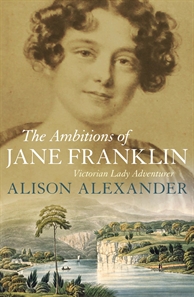
    Alison Alexander, The ambitions of Jane Franklin
    Courtesy: Allen & Unwin
    • Alison Alexander’s The ambitions of Jane Franklin (Allen & Unwin). This one intrigues me as Lady Jane Franklin, about whom I’ve written before, was one of those amazing 19th century woman who came to my attention through contemporary novels, including Richard Flanagan’s Wanting and Andrea Barrett’s The voyage of the Narwhal, and a book of poetry titled Jane, Lady Franklin by Tasmanian Adrienne Eberhard. The biography is subtitled, Victorian lady adventurer. I don’t know Alexander, but she is apparently a Tasmanian historian.
    • Steve Bisley’s Stillways: A memoir (HarperCollins Publishers). Steve Bisley is an Australian actor and this book, the website says, is “a classic memoir of an Australian childhood in the sixties”. That in itself gives it some appeal to me.
    • Janet Butler’s Kitty’s war (University of Queensland Press). This one is on my TBR. It is based on the war diaries of World War 1 army nurse Sister Kit McNaughton. In 2013 it won the NSW Premier’s Prize for Australia. Butler works in the History department at La Trobe University.
    • John Cantwell & Greg Bearup’s Exit Wounds: One Australian’s War on Terror(Melbourne University Publishing). Cantwell was a Major-General in the army who served in Iraq and Afghanistan, and ended up with post traumatic stress disorder (PTSD). He has written this with Walkley Award winning journalist, Greg Bearup.
    • Sheila Fitzpatrick’s A Spy in the Archives (Melbourne University Publishing). Historian Sheila Fitzpatrick lived in the Russia during the Cold War, while researching for her doctoral thesis. She apparently felt at home in Russia, but, as a foreigner, was always seen by Soviet authorities as potentially a spy. The book explores this part of her life. Fitzpatrick is regarded as an expert in the field of Soviet/modern Russian history.
    • Gideon Haigh’s On Warne (Penguin Australia). Australians will know immediately the subject of this biography, the flamboyant, controversial but highly-talented cricketer Shane Warne. Gideon Haigh is a journalist who has written several well-regarded and award-winning books on sport, media and the automotive industry (among other topics).

    All books I’d willingly read … though Alexander’s and Butler’s would be my top priority.

    And the winner is: Alison Alexander’s The ambitions of Jane Franklin! Now I really do want to read this book … It was a little tricky to find who won via a normal Google search several hours after the announcement, so I turned to Twitter and there it was (of course). Will it be reported on Australian television news tonight? I wonder!

    Anyhow, once I knew the winner, I was able to search on that and found a Sydney Morning Herald article which quotes chair of the judging panel (and a previous winner), Jacqueline Kent, as praising the book for its detailed portrayal of a “highly intelligent, vital and strong-minded woman” She said that “This is a biography that drew on a huge amount of research but is also very light on its feet”. Apparently Franklin, according to the Herald, had left behind “8 million words in journals and correspondence”. Alexander is reported as saying that the biography would have been impossible without a “Find” key to search documents. Isn’t modern technology grand – though the “find” function can’t completely replace in-depth reading during which you can find all those wonderful serendipitous details that make research such fun.

    Monday musings on Australian literature: The novel in Australia, 1927-style, Part 2

    Today’s Monday Musings is Part 2 of my two post series discussing Nettie Palmer‘s article, “The novel in Australia”, that was published in The Brisbane Courier, 15 October 1927.

    As I did in last week’s post, I’ll use her headings to share her view on Australia’s great novels.

    A novelist abroad

    Here she discusses Australian writers who wrote their novels while living overseas, Australians being, as we know, good travellers. It’s no surprise that her choice of the best known novel written while its writer was abroad is Henry Handel Richardson’sMaurice Guest (1909), which is a “brilliant story of music-student life in the Leipzig of the ‘nineties”. (This is another languisher on my TBR pile).

    Palmer then tells us about Richardson’s Australian trilogy, The fortunes of Richard Mahoney, which she wrote mostly from her home in England though she “revisited Australia about 1912 to verify impressions”. Palmer’s article was written before the third book in the trilogy was published, but here she is on the first two:

    The writer’s knowledge of the period – costumes, food, and customs – is immense but the “Fortunes” is never a mere costume novel: there is character all through. All Henry Handel Richardson’s novels, even those whose setting is wholly Australian, are better known in Europe than here, and are discussed at length in German and Scandinavian literary encyclopaedias and reviews. In America too, they have received deep attention. Victoria is fortunate to have found such a chronicler, more fortunate than it knows yet [my emphasis].

    Cultural cringe, or because Richardson was based overseas? Whatever the reason, recognition of her work did increase through the century. The Australian Dictionary of Biography entry on Richardson, written in 1988, discusses her reputation briefly, and touches on the unevenness of her reputation – overseas and in Australia.

    Contemporary novels

    Palmer concludes her article by looking at contemporary (to the late 1920s, that is) novels, and names a few she deems significant.

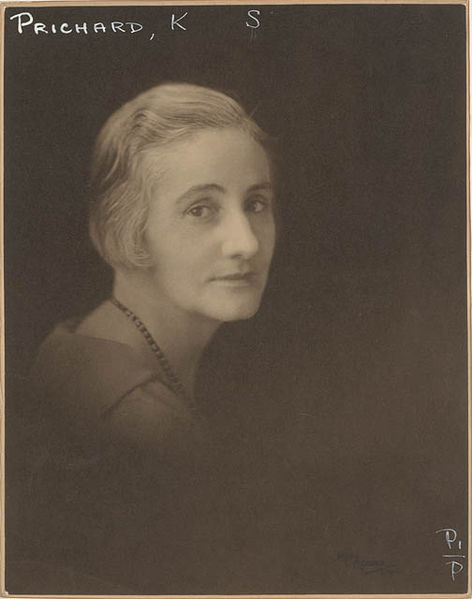
    Katharine Susannah Prichard

    Prichard, 1927/8 (Courtesy: State Library of NSW, via Wikimedia Commons)

    Katherine Susannah Prichard’s works, she says, “are the fruit of an intense devotion to her subject matter. Her gifts are mainly two: first, that of brilliant impressionism, then a rare power of writing group-scenes.” In Black Opal, for example, the opal miners are “standing about chaffing each other and discussing the universe, every man of them alive”. She says there are similarly vivid scenes of groups of timber-getters in Working Bullocks. “Such scenes”, she says, “are too difficult for most novelists, who shirk them: yet they enrich a book immensely and the reader feels that our everyday life is full of unsuspected charm”.

    Palmer then writes something rather strange (to me anyhow). She comments that each of Prichard’s books is located in a different place – the tall-timbers of South-east Victoria (presumably The pioneers, which I’ve reviewed), the opal fields of Western New South Wales, and the saw-milling country in the south of Western Australia. She says:

    (Reading over this list of regions I can only feel how wretchedly inconvenient our Australian names are: a mere mention of latitude and longitude! Are we too big to think about? It will take many years for many of our names to become easy and vivid.)

    What does she mean? Those names are purely geographical descriptions. The pioneers is, yes, set in south-east Victoria but this region does have a name – Gippsland – which it has had since the nineteenth century. I don’t think I’m on Palmer’s wavelength here at all.

    Anyhow she concludes this section with the statement that there’s “little space left for some recent Queensland books” (because, of course, The Brisbane Courier is a Queensland newspaper). She names Zora Cross, whose books “put on record the changing years of a South Queensland [ha!] district” and M. Forrest, whose novels “have that special quality which readers of her verse would expect – a power of painting in words the rich details of Queensland’s unexplored landscapes”.

    Conclusion

    As I read this article I pondered what criteria Palmer was using to define quality novels. Good characterisation, meaningful realism (if that makes sense), and a capturing of Australian identity seem to be what she was looking for. Fortunately, she has a go at answering this question herself in her last two paragraphs.

    Firstly, she says that:

    the most satisfactory definition of a good novel seems “the revelation of character through narrative,” but the character need not be only human. There is also the character of a country.

    She then suggests that good novels break new ground, with the author “giving part of himself away, revealing his personal vision of ‘men, coming and going on the earth'”. On this point of innovation, she quotes Randolph Bedford, who appeared in Part 1 and who, she says, satirised the idea that “the average publisher loves words written to a formula, to please a reading public which dislikes anything new”. Bedford apparently said of this public:

    It loves to read some old friend it recognises, so it can say, “How original it must be, because I know it so well”.

    Oh dear. Have things changed do you think?

    Palmer then presents her own definition of “a more genuine kind of originality” – and it’s to do with the difficulty of making “Australian life and character their theme”. She concludes:

    Some day, when a novel about life in Indooroopilly seems as natural as one about Piccadilly, we shall thank those who turned the first sods so fruitfully.

    So there it is really. The cultural cringe. This I think has changed.

    * Wikipedia tells us she was Iris Murdoch’s second cousin twice removed. A remote relation, perhaps, but interesting nonetheless!

    Roslyn Russell, Maria returns: Barbados to Mansfield Park (Review)

    A week or so ago my local Jane Austen group had a guest speaker at our meeting, Roslyn Russell, the author of Maria returns: Barbados to Mansfield Park. Russell is a local historian who has written this historical novel based on Jane Austen’s novel, Mansfield Park. She is also a lapsed member of our group, so of course we had to ask her to come and talk to us about it. Most of this post draws from my report of her talk, which she titled Maria returns: Barbados to Mansfield Park: Fictionalising the legacy of slavery in Mansfield Park.

    Regular readers probably know that I’m not a fan of fan-fiction or sequels of well-known works. In fact, I probably wouldn’t have read any if it hadn’t been for belonging to the Jane Austen Society of Australia. However, having read Deidre Shauna Lynch’s essay, “Sequels” in Jane Austen in context, edited by Janet Todd, I decided that I should relax my “rule”. Lynch convinced me that these books are an important part of our understanding of Austen as a literary and cultural icon. Consequently, I have now read PD James’ crime novel Death comes to Pemberley (my review) and Jo Baker’s Longbourn (my review). Roslyn Russell’s historical novel is my third. In it, she imagines that some ten years after being banished to the country, and upon the death of her companion Aunt Norris, Maria Bertram goes to Barbados and learns about slavery and the abolition movement.

    There are, I’m gathering, many different reasons why writers want to write sequels or fan fiction works. For Russell, it was, as she writes in her author’s note, inspired by two passions: her love of Jane Austen and of Barbados. Barbados? How many Australians have been to, let alone developed a passion for, Barbados? Not many, I expect. It was her museum work, in fact, which took Russell to Barbados and there, its history – and particularly the history of its plantations and the practice of slavery – reminded her of Jane Austen’s Mansfield Park in which the leading family, the Bertrams, draw their prime income from their plantation in Antigua.

    Jane Austen, Mansfield Park and Slavery

    Russell commenced by telling us that although most of the characters in her novel are fictional, some are based on real people. Before discussing this further, however, she read the excerpt from Mansfield Park which contains the only reference to slavery:

    “But I do talk to him more than I used. I am sure I do. Did not you hear me ask him about the slave–trade last night?”

    “I did—and was in hopes the question would be followed up by others. It would have pleased your uncle to be inquired of farther.”

    “And I longed to do it—but there was such a dead silence! And while my cousins were sitting by without speaking a word, or seeming at all interested in the subject, I did not like— I thought it would appear as if I wanted to set myself off at their expense, by shewing a curiosity and pleasure in his information which he must wish his own daughters to feel.” (MP)

    She noted that this shows Maria and Julia’s lack of interest in the source of their family’s income. She then referred to cultural theorist Edward Said’s discussion of the novel and his statement that it is not appropriate “to expect Jane Austen to treat slavery with anything like the passion of an abolitionist or a newly liberated slave”. Said, she told us, did not apply 21st century attitudes to his assessment of Austen, but suggested that her work, as that of an author who belonged to a slave-owning society, should be analysed in context and in terms of what she does and doesn’t say rather than simply attacked as being complicit.

    Ros then briefly outlined some of Austen’s known or probable connections with plantations:

    • the family’s close relationship with her father’s friend, the plantocrat James Langford Nibbs who was also Austen brother’s godfather. Nibbs apparently took his son out to his plantations in Antigua to settle down his unruly behaviour, which rather mirrors Sir Thomas’ taking Tom out to his plantation.
    • Austen’s aunt-by-marriage, Jane Leigh-Perrot, who was born in Barbados, though went to school in England.
    • Mrs Skeet who is mentioned in Austen’s letters. Skeet is a common name in Barbados, suggesting she had a connection to slavery*.
    • the Holder family of Ashe Park, also friends of the Austens. Holder, too, is a common name in the Caribbean.

    The title Mansfield Park, itself, could also reflect Austen’s awareness of the slavery issue, as it may have been inspired by Lord Mansfield who was famous for adjudications which contributed significantly to the eventual abolition of the slave trade. (This is the Lord Mansfield who became guardian of his mulatto niece Dido, fictionalised in the recent film, Belle).

    Barbados and Maria Returns

    Russell then turned to her own book, first addressing the question of why she had set it in Barbados and not Antigua, where the Bertrams’ plantation was. Firstly, she has been to Barbados several times and knows its history. She couldn’t, she said, write about a place she didn’t know. Secondly, Barbados is also the location of a historical event she uses in her novel.

    Mansfield Park was written 20 years before emancipation (i.e. the formal abolition of slavery) in 1834. Maria Returns is set about 15 years after MP, and so during the time when the abolition movement was becoming more vocal. Ros explained that the abolition of the slave trade in 1807 did not seriously affect the Caribbean plantations: they were “breeding” their own slaves and were essentially self-sufficient. However, the abolition of slavery represented a major threat to their livelihoods, and the plantation families were deeply concerned. By the 1820s the abolition movement was becoming active – mostly among Evangelical Anglicans, Methodists and Quakers.

    Ros discussed the historical basis of her fiction. For example, at the dinner party in the English village where Maria first meets abolitionist John Simpson, he talks of a trial in Barbados in which slaves were apparently unjustly convicted of and executed for a murder. This trial did occur and is a reason Russell chose Barbados for her setting. The trial was witnessed by James Stephen** who, though he lived a little earlier than our fictional Simpson, is Russell’s model for her character.

    Simpson also talks at this dinner about a slave rebellion, led by African-slave Bussa, that occurred in Barbados in 1816. Bussa was killed in the rebellion. Such slave rebellions resulted in plantation owners becoming harsher. Simpson makes it clear which side he is on. This is a wake up call for Maria who:

    had not been aware of the strength of feeling in the wider community against the institution of slavery, from which her own family had benefitted so materially. (MR)

    After Maria arrives in Bridgetown she meets or hears of other abolitionists, such as the historically real free coloured man, Sam Prescod (who, with Bussa, is now a national hero) and plantation owner Josiah Thompson. Thompson is fictional but, as a former owner who had downsized his estate and treated his slaves-now-servants well, he has historical antecedents. Men who behaved like he did faced hostility from other Barbadians – and so, in the novel, Thompson is a lonely man who is keen to host Maria and her friends at his home. His willingness to import a teacher from England to teach his slaves also has precedents. Maria realises again that she’d never wondered about her father’s plantations, but she begins now to wonder what her father might think about the people she’s meeting.

    Ros then spoke about the treatment of slave women by their white owners, particularly in relation to sexual predation. This forms an important part of the story – but I won’t spoil it here. However, she again spoke of historical precedents – not that we really needed any for this one!  We weren’t, though, quite prepared for the example she gave us, one Thomas Thistlewood who kept a diary of his plantation life. Wikipedia confirms what Ros told us: his diary chronicled “3,852 acts of sexual intercourse and/or rape with 138 women, nearly all of whom were black slaves”.

    Roslyn Russell, Maria Returns Ros illustrated her talk with some wonderful illustrations, including the painting used on the cover of her book, Agostino Brunias’ The Barbadoes Mulatto Girl. She also mentioned some of the sources she used in her research, like Andrea Stuart’s Sugar in the blood: A family’s story of slavery and empire.

    So, the novel

    I enjoyed the read. It is pretty much genre historical fiction rather than literary fiction, so not my usual fare. Russell doesn’t try to emulate Austen, and while her writing is clear, her dialogue can be a little too formal and uniform at times. She includes a lot of information about life at the time, information that Austen herself would not have needed to, and indeed did not, supply. But, of course, this is historical fiction, and modern audiences need background that Austen’s contemporaries didn’t.

    Russell spins a credible story, both in terms of the plot she creates and how she develops the characters she draws from Mansfield Park. Maria does change significantly, but Russell convinces us that she could. However, this is historical, romantic fiction, not a fierce novel, so Russell’s more culpable characters, in particular Bertram father and son, are let off more lightly than they deserve. This perhaps mirrors the political reality: after emancipation, the Caribbean plantation owners received in total £20 million compensation, while the slaves received nothing.

    What did Austen know and feel about slavery? We’re unlikely to ever know, but in Maria returns Russell has given us some insight into the darker side of life that Austen only hints at.

    * Names that are common in slave areas are usually so because slaves tended to take on the surnames of their masters.

    ** Wikipedia tells that Stephen was great-grandfather of Virginia Woolf.

    awwchallenge2014

    Roslyn Russell
    Maria returns: Barbados to Mansfield Park
    Flynn: Bobby Graham Publishers, 2014
    (Kindle ed.)

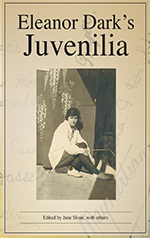
    Eleanor Dark’s Juvenilia (Review)

    Eleanor Dark's Juvenilia

    Courtesy: Juvenilia Press

    Eleanor Dark was quite a star in Australia’s literary firmament of the 1930s to 1950s, and has left an important legacy, not only in her most famous book The timeless land but also in the fact that her home Varuna in the Blue Mountains is now one of Australia’s most significant and loved writers’ retreats. It’s therefore wonderful that the Juvenilia Press was able to produce a book on her early work.

    Unlike the Press’s volume on Mary Grant Bruce, which comprises works that push their definition of juvenilia, Eleanor Dark’s Juvenilia fits clearly within their guidelines. All pieces were written between 1916 and 1919, when Dark was 15 to 18 years old. Like the Bruce volume, it was edited by secondary school students and their teacher, rather than the Press’s more usual practice of using tertiary students. (The Press is a teaching press). The decision to use secondary school students is particularly appropriate for this volume as the students come from the school, Redlands, which Dark attended, in her childhood name of Pixie O’Reilly. Research for the volume included the school’s own archives, and all the pieces come from the school magazine, The Redlander. A Foundation Day speech given by the (then) school’s archivist, Marguerite Gillezau, is one of the appendices.

    Like other Juvenilia Press editions, this book includes useful extra matter such as Pixie O’Reilly’s school report! There is, too, an introduction, this one titled “Pixie to Eleanor: From a spark to a flame”. It is creatively, and entertainingly, organised under headings taken from the school report – “Making fair progress”, “Very promising indeed”, and so on. The volume is also illustrated with photographs and other images from Dark’s school days – and there is also the list of references consulted.

    As with most juvenilia, the pieces here provide an insight not only into the author’s childhood but also into the passions and interests they’ll develop later. Dark went to Redlands school in 1914 (an auspicious year) after her mother died. Although it was a girl’s school – why do I say “although”? – the school did not seclude its students. Indeed the school archivist in her Foundation Day speech said that, since its establishment in 1884, the school “has been aware of the world outside its front gates”, including war. One of Dark’s pieces in this volume is a poem about the First World War, “Jerusalem set free”.

    For those of you who don’t know Dark, she and her husband were politically radical – or – socialist in leaning, something for which they were often persecuted. Not having read biographies of her, I cannot say how much of this may have come from the family, but the Introduction says that one writer on Dark, Marivic Wyndham, stresses the importance of the school’s ethos on her development. Wyndham writes that the school provided her “not only with flesh-and-blood models of the new woman and the radical intellectual she eventually adopted, but also with models of community and sisterhood that later featured prominently in her vision of a ‘good society'”.

    These values are evident in the piece most dear to my heart, “The Gum Tree’s Story”. I loved this little 2-page piece for three reasons: it contains delightful descriptions of Australian flora; it contains a story-within-a-story about that Australian archetype, “the lost child in the bush”; and it’s an allegory about inclusion rather than exclusion. The story concerns Waratah who wants to organise a party to enliven his drooping companions but wishes to exclude the interloper White Rose. (Is it girlish, that the Rose is white not red, do you think?).

    The other story in the volume – there are two stories and four poems – encompasses another theme common to classic Australian literature, the bushranger. Titled “‘Thunderbolt’s’ Discovery”, it tells of young boys on a picnic who play bushrangers – Australian readers will be aware that Captain Thunderbolt was a famous bushranger – and come across an unconscious man who, they imagine, is a bushranger. What I love in this is her description of the bush:

    It was very deep in the bush. A clear stream trickled down over the rocks, and there was the faint bush smell of damp earth and fallen gum leaves. Maiden-hair grew thickly, and clumps of pale wide violets and pretty, delicate ferns. Where the stream was at its wildest a huge old tree had fallen across it, and the damp bark was covered with soft green moss. Further up the hillside flannel-flowers and Christmas bells grew among the tall bulrushes, and Christmas bush was already nearly in full bloom.

    Dark, it is clear from this and “The Gum Tree’s Story” knew her botany – but I think she evokes it well too, without going overboard as young writers can do.

    The four poems speak to different aspects of Dark’s girlhood – from the war to hatred of exams. They show someone comfortable with language and with expressing ideas through them. They also show an ability to mix tone, to work in the serious and the light, in the grand and the more personal, in the fanciful and the real.

    Not everyone, I know, enjoys Juvenilia but I am thoroughly enjoying these texts, and the insight they provide into the writers to come. I look forward to telling you about the next one in, hopefully, a month or so.

    awwchallenge2014Eleanor Dark
    (ed. Jane Sloan with students from Redlands, Sydney)
    Eleanor Dark’s Juvenilia
    Sydney: Juvenilia Press, 2013
    26pp.
    ISBN: 9780733433733

    * The book only costs $12 plus postage, from the Press.

    My previous posts on the Juvenilia Press are: Monday Musings and Mary Grant Bruce.

    Monday musings on Australian literature: The novel in Australia, 1927-style, Part 1

    Nettie Palmer was one of Australia’s leading literary critics, not to mention essayist and poet, through the 1920s to 1940s. I have mentioned her several times in this blog, including in my post on Australia’s literary couples. She also mentored younger women writers such as Marjorie Barnard and Flora Eldershaw. However, what I want to discuss today – and next week – is the article she wrote in 1927, about “The novel in Australia”. It was published in The Brisbane Courier, 15 October 1927.

    She starts by commenting that the number of “good novels written in Australia has been small”. There are reasons for this she says but discussing those is not her aim in this article. Rather, her plan is to reduce her list of “good” Australian novels to just the best. The result “is a nugget of surprisingly high quality”. And now my plan is to share with you those nuggets that she defined for her readers back in 1927. It makes for interesting and sometimes surprising reading. Here goes, using the headings she did.

    Some early nuggets

    She names two.

    Thomas Alexander Browne (aka Rolf Boldrewood) (Public Domain from the National library of Australia, via Wikipedia)

    Thomas Alexander Browne (aka Rolf Boldrewood), by Henry Walter Barnett (Public Domain from the NLA, via Wikipedia)

    Henry Kingsley’s Geoffrey Hamlyn (1859), which is a book I have in my TBR and would love to find time to read. I’m not sure I had heard of it until a few years ago but it keeps popping up in unusual places which has piqued my interest. It has, Palmer says, without elaborating, “a very colonial outlook”.

    Rolf Boldrewood’s Robbery under arms (1882), which I defy any self-respecting Australian to say they haven’t heard of (though I suspect many of us haven’t read it!). She does elaborate over one and a half paragraphs on this one! She writes that, despite its “truculent title”:

    It is one of those rare books that can please on several different counts – as an adventure story, as a sketched historical background, and as a sons psychological novel.

    I love that she praises it for its “fine and unexaggerated vernacular, without dropped aitches or other irritating apostrophes to spot its pages”. She sees it as a model for good novels in Australia.

    Some successors

    Palmer then says that it was a “long time before the simplicity and naturalness of that book was again reached”, but eventually some more nuggets appear.

    Marcus Clarke’s For the term of his natural life (1870), but she does not elaborate.

    Mrs Campbell Praed’s (or Rosa Praed as I know and have read her) “easy flowing books now almost forgotten” (1890s). Books being forgotten is, clearly, an age-old problem! Anyhow, she names one, which I haven’t read, Longleat of Koralbyn.Wikipedia tells us that it  was first published in 1881 under the exciting (my description!) title of Policy and passion! No wonder it was republished under a different title. I have read Praed’s rather raw The bonds of wedlock (1887). I laughed at Palmer’s comment that Praed’s books are set in Queensland but “the writer shirks the whole problem of making her Queensland live in the readers’ sight”. That could mean a number of things – but the important thing, I suppose, is that she likes Praed’s writing!

    Then, though her subject is novels, she mentions short story writers, naming Louis Becke, Price Warung (whose stories I’ve reviewed), Henry Lawson and Albert Dorrington.

    She concludes this section with the following:

    For many years it has seemed that only short stories would ever be published again (and those only in fugitive form): any novels that appear have had every sort of circumstantial opposition to overcome.

    Fugitive form? Does she mean in magazines (like The Bulletin, established in 1880) and newspapers rather than something more permanent like books? I suspect her comment about the difficulty of getting novels published is not totally incomprehensible to writers today?

    Novels after 1900

    Her choice of novels from the early twentieth century includes a couple of authors I don’t know. Regular readers here will recognise which ones they are by not having seen them mentioned here!

    First up, of course, is Miles Franklin’s My brilliant career which she describes as a “bit of ironic auto-biography, set in an up-country township of the drearier sort”. Palmer, from the point of view of 1927, hopes that “some day she [Franklin] will be able to repeat her early success, looking through the opposite end of life’s telescope”. Franklin did achieve fictional success again, in the late 1930s, with All that swagger.

    She then names Randolph Bedford’s – quick quiz question: have you heard him mentioned here? – two novels. True eyes and the whirlwind (1903) and The snare of strength (1905). (Don’t you love these titles?) Palmer describes the first as “a novel of the picaresque style, a useful type for expressing the nomadic youth spent by many Australians before they find their life’s work”. Interesting. I hadn’t quite realised just how far back the idea of Australians as travellers extends, but it reminded me that Patrick White spent time jackarooing in Australia, in the 1920s, and travelling overseas as he sought a place for himself in the world. Overall, she says, Bedford’s work “is never without a fine gusto”. Sounds worth checking out.

    I’m pleased to see that she also includes in her list, Barbara Baynton and her novel The human toll (1907) which, she says “had a strong, if acrid life of its own … full of bush tragedy”. That’s our Baynton!

    And finally, in this group, she names Louis Stone’s Jonah, “a Sydney story of young larrikins, done with sincerity”.

    Palmer ends this section with a cry that is surely universal:

    Out-of-print, out-of-print – that is what one has to lament about all these books! Many novels deserve to die in their year of birth, but what of those that have permanent quality? We can only beg for new editions.

    I will conclude my discussion of her article in next week’s Monday Musings.