Sparrow-Folk and Tara Moss want to Ruin Your Day

This year, as I like to do, I went to the National Folk Festival, albeit for only one day instead of my usual two. I love the music, but I also love the singer-songwriters for whom the lyrics are at least as important at the music. I came to folk through the protest songs of the Civil Rights era and so love to hear songs addressing contemporary concerns – political, social, global, local, they all have a place in the folk singer-songwriter repertoire.

For this post I’m just going to talk about one song, because it illustrates the point and it enables me to refer again to a book I read and reviewed earlier this year, Tara Moss’s The fictional woman. But first, the song. Seems like I’m late to the party, because it apparently made quite a splash early last year, not only in Australia, whence it originates, but overseas. It was even picked up by Huffington Post. The song’s title is “Ruin your day” and it satirises those who frown upon/are disgusted by/want to ban mothers breastfeeding in public. I must say, I’ve been astonished recently to realise that instead of breastfeeding in public becoming more acceptable since my time in the 1980s, it’s actually become less so. We 1980s mothers did not furtively cover ourselves with shawls or disappear into some dark nether regions of wherever we happened to be. No, we did what comes naturally, not brazenly but naturally. Well, at least my friends and I did, and while there were some demurs from some quarters, we fully expected the world to become more enlightened and tolerant as time moved on. Not so, it seems.

Anyhow, here’s the video:

As I listened to the gorgeous, locally-based “glam-rock” duo, Sparrow-Folk, perform this song over Easter, I was reminded of Tara Moss’s chapter on the topic. As you can imagine, she, a new mother in her late 30s, and a card-carrying feminist, had plenty to say on the subject. Her chapter, “The Mother”, is the longest chapter in the book, because there are many “fictions” attached to motherhood – and several have to do with breastfeeding, with the can-and-can’ts, the for-and-againsts, and of course the hide-or-go-publics. These “fictions” tend to be accompanied by a lot of either-or discussions which put women in boxes, and, worse, pit women against each other, creating what she calls “false divides”. I’m not going to go into all that now, but I will briefly discuss her section on public breastfeeding.

Moss beautifully unpacks society’s ongoing discomfort with breastfeeding, with the fact that “the very sight of breastfeeding remains inexplicably controversial”. “Images of breastfeeding”, she writes, “are still routinely flagged as offensive on Facebook and banned, accompanied by this message: ‘Shares that contain nudity, pornography, or sexual content are not permitted on Facebook … refrain from posting abusive material in future'”. Breastfeeding, pornographic? abusive? What is all this about? There has been some official relaxation of the “rule” she says, but reports still come in of photos of breastfeeding being banned on Facebook.

Confirming my 1980s memories, she writes that it wasn’t always like this. Sesame Street “once routinely showed breastfeeding, but since the 1990s it has reportedly only shown babies being fed by bottle”. These days, it is ok for magazines and advertising to feature “a sea of exposed female upper body flesh” but not ok for that breast to be seen doing what it was designed for. She argues this is “learned bias [and asks] since when did the natural way of feeding your child come to be seen as offensive or controversial?”

Moss continues:

Our choices are influenced by what we see and what society portrays as normal or aspirational. In a very real way, visibility is acceptance. Unfortunately, while we have become accustomed to seeing the fertile female body used to sell us all kinds of products, we are not longer accustomed to seeing it perform this most natural task. But though anti-discrimination laws protect women’s right to breastfeed in all public places, without normalising the sight of breastfeeding in our society we have little hope of making more mothers comfortable enough to engage in the practice of publicly feeding their children naturally.

I love that Sparrow-Folk’s you-tube went global:

I’m not going to retreat
To the comfort of a toilet seat
No, no, I’m happy to stay out here where everybody else eats

Everyone knows new mothers are exhibitionists
Taking every chance they get to ruin your day with tits.

Go Sparrow-Folk, go Tara Moss – and go all you breastfeeding women brave enough to stare down pursed-mouth looks and abuse. This regressive tide must be turned.
Monday musings on Australian literature: First winners of The Bulletin Novel Prize

“Once again women have proved that they can triumph over men”! So starts a 1928 newspaper article announcing the winners of the first Bulletin Novel Prize. Hmmm … fascinating to read this the week we heard that eight of the ten books longlisted for the 2015 Miles Franklin Award are by women. I don’t like to think that today we are talking about one gender triumphing over another, but about equality of opportunity to be published and considered for awards. However, I suspect there was an element of competition back in those more gender-divided days.

The Bulletin Novel Prize was announced in 1927, and was first awarded in 1928. The first First Prize was shared between three women writers – the previously published Katharine Susannah Prichard for her novel Coonardoo, and the debut collaborators, Majorie Barnard and Flora Eldershaw, writing as M. Barnard Eldershaw, for their A house is built. Third prize went to Vance Palmer, husband of Nettie Palmer. (He went on to win the prize in its second year with his most famous novel, The passage).

I’ve mentioned this prize before in a post on early literary prizes. Today I thought I’d share some of the reporting on the first award because – well, because I found it interesting. And I found it interesting for two main reasons, besides that opening salvo. One is that most of the reports I found via the National Library of Australia’s Trove focus more on Prichard than on M. Barnard Eldershaw, presumably because she was a well-respected, award-winning, previously published author, while they were unknowns. My other reason relates to how her winning book was described.

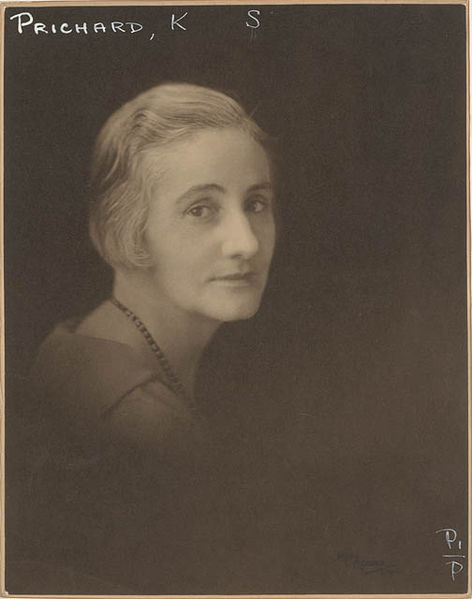
Katharine Susannah Prichard

Prichard, 1927/8 (Courtesy: State Library of NSW, via Wikimedia Commons)

The main article announcing the award – the one starting with the words with which I opened this post – appeared in city and regional newspapers throughout Australia. It tells us nothing about A house is built, but has this to say about Coonardoo, which was a ground-breaking and controversial novel for its depiction of “the sexuality of white men and black women” (ADB). The article describes it as follows:

‘Coonardoo’ is thoroughly typical of her penmanship, frank, vigorous, full of life and movement. Its setting is a station in the north-west of Western Australia, where a widow brings up her only son. Its men and women, made to live in her pages with remarkable reality, are typical of those who are everywhere making the real Australia — the Australia that is outside the cities. The relationships of the white settlers and the blacks, dealt with   firmly and quite frankly, supply the main theme of the story. Coonardoo from whom the novel takes its title (the word means “the well in the shadow”), is a little black girl of unusual type. In the background is the pioneering life; and woven through the story are the strange superstitions of the aboriginals and their weird customs. ‘Coonardoo’ is unquestionably one of the most powerful and absorbing novels ever written in Australia.

I love what this tells us about the times. There’s the idea that “real” Australia is “the Australia that is outside the cities”. It’s taken us a long time to accept, in our literature, that we are and always have been, in fact, a highly urbanised nation. And then there’s the description of Coonardoo as being “a little black girl of unusual type”. What does this mean? The writer doesn’t explain, and it’s too long since I’ve read the book for me to identify whether indeed she was of “unusual type” or whether this is the white writer’s assumption that any indigenous person mixing in a white world was unusual?  The writer also tells us that the story is woven with “the strange superstitions of the aboriginals and their weird customs”. How far we have come since then (I hope) to the point where we now see indigenous customs as not being “superstitions” or “weird” but an alternative world view, and one that we non-indigenous Australians not only respect but can learn from. Articles like this provide such rich pickings for researchers looking for values and attitudes of past times, but also for more casual readers like me interested in seeing where we have come from.

There are several brief articles announcing the prize, and a few advising that Coonardoo would start being serialised in The Bulletin forthwith, but I’ll just share one other. Its headline is: “PRIZE NOVELISTS: VANCE PALMER’S SUCCESS”! Why does third prize-getter Vance Palmer get the headline? We could jump to the conclusion that it’s because he’s a man, but the more likely answer is implied in the opening sentence: “Much satisfaction was expressed in Brisbane yesterday at the announcement in the “Courier,” in a message from Sydney, that Katherine Susannah Prichard, of Western Australia, and Vance Palmer, of Caloundra, had achieved success in the “Bulletin” prize novel competition”. The newspaper from which this article comes is The Brisbane Courier, that is, the main newspaper for the state in which Palmer was born. We’re not parochial! Poor old joint winners Flora S. Eldershaw and Marjorie Barnard don’t get a mention until the second paragraph.

I wonder what people reading our papers a hundred years hence will think of the assumptions and values we express!

Biff Ward, In my mother’s hands (Review)

Biff Ward In my mother's hands

Courtesy Allen & Unwin

“Profoundly moving”, “a kind book”, and “harrowing” could be blurb words for Biff Ward’s memoir, In my mother’s hands, but they’re not. They are some of the words used by members of my reading group when we discussed the book this week with – lucky us – the author in attendance.

It’s quite coincidental that I happened to be reading this book right when Annabel Smith asked me to name my favourite memoir for her Friday Faves, which resulted in my follow-up post on memoirs this Monday. However, I’m glad it happened this way, because it’s given me an excuse to continue the discussion a little more. There’s so much to say about Ward’s book, but for this post I’m going to explore just two aspects: the reading experience, and its literary qualities.

On reading In my mother’s hands

So, let’s start with the story. Biff Ward is the daughter of one of Australia’s most influential historians of the mid-twentieth century, Russel Ward. At our meeting, she told us that people expected her to write his biography, but, she said, that was never her interest. Instead, she found herself writing about her mother. In doing this, though, she did in fact write about her father – but in a memoir, not a biography, because this book is about her experience of living in a family with an increasingly delusional, paranoid mother. What that experience was like – and how she eventually unravels the full story – makes compelling reading.

But, there’s more to reading this book than the story, strong as it is. There is how Ward tells it. She evokes the times beautifully – particularly the 1950s and 1960s – showing, in particular, the devastating result of the lack of understanding or awareness of mental illness. And she does this while inhabiting the child she was at the time, that is, she manages to tell those years from her child’s eye view, interspersing this voice with her experienced adult one. Take, for example, her description of when, as a teenager, she’s home when her mother is visited by “top girl” or “the queen bee of the university wives”. Ward believed this visit showed her mother was being talked about publicly, and she felt “shame and embarrassment” as “Top Girl bustled down the hall and out the front door”. That word “bustled” perfectly captures the idea of a “busybody”. Later, though, she sees it differently:

Now I can see that the network of women, connected through the university where their husbands worked, might have cared about my mother. Or might have wanted to care but were not sure how to go about it.

Also contributing to my reading enjoyment was how seamlessly Ward incorporated her research into the story to substantiate her feelings and ideas. She quotes from letters her father wrote to his parents and sister. (How wonderful that these were kept, says this librarian-archivist!) She talks of speaking to friends and family members later about their memories. She shares her research into official records. She refers to her father’s autobiography. And so on. None of this is tedious, but is woven naturally, logically, into the narrative.

Then there’s Ward’s honesty in confronting difficult truths, and her ability and willingness to reflect on her experiences and comprehend their meaning or implications. Here she is, for example, on her response to her father’s overwhelming (and surely unreasonable) request for her to look after her mother for a year:

I didn’t know that somewhere inside me was a plan. My motivation was buried way too deep for me to connect that first touch of an erect penis with the request Dad had made of me.

You can probably guess the outcome.

It would be easy to read this book with anger – to be angry particularly with Russel Ward for his failings – but that would, I think, miss the point. Ward is not angry – and indeed her father did a lot right too. Her tone is more one of sadness, than of anger. She appreciates the culture of the times and she knows that people are flawed. I loved this – the generosity with which she relates what was clearly a traumatic upbringing.

What makes a memoir literary?

This might sound like a snooty question, but literary non-fiction is a recognised genre, and memoirs are making literary award lists. So, what makes one memoir stand out over another in terms of literary qualities? Critic Barbara Lounsberry captures my perspective: “Verifiable subject matter and exhaustive research guarantee the nonfiction side of literary nonfiction; the narrative form and structure disclose the writer’s artistry; and finally, its polished language reveals that the goal all along has been literature.” (from Wikipedia)

So, narrative form, structure and “polished” language. While I wouldn’t call In my mother’s hands particularly innovative or challenging in terms of style and technique, I would call it skilled and polished. Ward’s use of her child’s voice interspersed with her more reflective adult one effectively draws the reader in. Her use of foreshadowing – such as “I missed seeing that I had been provided with a rehearsal of what was to come” and “It’s hard, looking back, to pick the precise moment when a turning point arrives, when your life is about to change” – picks up on a structural device common in fiction. (It also neatly demonstrates the memoirist’s ability to think back).

The jewel in the crown, though, is her language. Ward’s writing is generally direct and to the point, but she has a great eye for metaphor and produces some gorgeous images that can encompass multiple ideas. I loved this description of her mother’s increasing (often self-imposed) alienation within the family:

Even when there weren’t visitors, we hardly spoke to her. As her delusions grew, as she had almost no everyday conversation, we cut off from her, twig by twig. Our family tree grew its gnarled limbs around us and through us, in the imperceptible way trees do, so that we didn’t notice how weirdly shaped we all were.

This obviously distorts the traditional family tree motif but also, I think, subtly suggests the tree of (non) life?

And then there’s the title itself. In my mother’s hands references so many ideas – the fact that children are (rather defencelessly) in their parents’ hands; the idea that as a nurse her mother had had caring, nurturing hands; her mother’s grotesque habit of gouging and hurting her hands (invoking Lady Macbeth, and the mystery at the heart of the book); and her mother’s terrifying attempt to strangle Ward in her bed when she was 12 years old. Literal, symbolic, metaphoric. They’re all there in those four words.

The chapter titles are similarly evocative, usually brief and apt, such as Brittle, Knife, The Cobweb, Running. Language is, in fact, a significant issue in the book because in those awful days when mental illness was not understood, Ward, her father and younger brother had no language to explain to each other, let alone to outsiders, what they were experiencing. Sometimes Ward would lie, she said, because “when there are not adequate words, fiction will suffice”; other times they would use “shorthand” to obscure the reality.

I could write more about the language in this book, because I found it perfectly tuned to the story and to conveying the feelings within, but I’ll leave it here.

At the end of our meeting, I mentioned to Ward her longlisting for the Stella Prize. She smiled a little wryly, and said, in relation to missing out on the shortlist, that she felt in good company being “rejected with Helen Garner and Sonya Hartnett”! She sure is – and on the basis of this book, I’d say she well deserves being mentioned in the same breath as those writers.

awwchallenge2015Biff Ward
In my mother’s hands
Sydney: Allen & Unwin, 2014
268pp.
ISBN: 9781743319116

Monday musings on Australian literature: Scattered thoughts on memoirs

I’ve titled this Monday Musings “scattered thoughts” because I don’t want to raise expectations that I’m going to write a treatise on what is a fascinating but oh-so complex topic. I was inspired to write this post by author Annabel Smith’s asking me to take part in her Friday Faves* post on favourite memoirs. For this post, Smith asked six writers/bloggers to nominate their favourite memoir. Three of us chose Australian memoirs. Do check the link I’ve provided if you’re interested – I certainly enjoyed reading my co-invitees’ selections.

According to my stats, I have read and reviewed 24 autobiographies or memoirs over the history of this blog. I don’t want to get into discussions about autobiography vs memoir now, except to say that Wikipedia’s definition is pretty much how I see it:

An autobiography tells the story of a life, while a memoir tells a story from a life.

By this definition, a memoir will tend to focus on an aspect of a person’s life, often an event or activity that defines who they are or why they are the way they are! Over half of the 24 books I’ve reviewed are memoirs, and a little over half of them are by Australian writers.

The main point I want to make here is that while memoirs reach far back into time, as the Wikipedia article describes, they started gaining popularity – and, with it, visible literary status – in the last couple of decades. Early standouts for me were an Australian one, Sally Morgan’s My place, and an Irish-American one, Frank McCourt’s Angela’s ashes. Who hasn’t read these! Both are moving stories, and both are written by people who can write! It’s all very well to have a story to tell, but there’s more to it than that …

So much more, in fact, that memoirs have become the subject of academic and critical discussion. Where, for example, is the boundary between memoir and autobiographical fiction? Why would an author pass off as memoir a work that was fiction – such as James Frey’s A million little pieces. Despite controversies like this, however, memoirs have cachet and are appearing on literary prize shortlists.

Take, for example, the Kibble Literary Awards (the Nita B Kibble Literary Award for an established Australian female writer, and the Dobbie Literary Award for a first published work by a female writer). These awards are for “life-writing” and can be won by “novels, autobiographies, biographies, literature and any writing with a strong personal element”. In recent years, memoirs have been among the winners, such as Kristina Olsson’s Boy lost: A family memoir (2014), Kate Richards’ Madness: A memoir (2014), Lily Chan’s Toyo: A memoir (2013), and Inga Clendinnen’s Tiger eye (2001).

These awards, though, are for life writing so it’s not surprising that memoirs feature. Memoirs, however, also appear in non-fiction awards. Kate Richards, for example, won the non-fiction prize in the Adelaide Festival Awards for Literature in 2014 for Madness: A memoir. Kristina Olsson’s Boy lost: A family memoir won the Douglas Stewart Prize for Non-fiction in the 2014 New South Wales Premier’s Literary Awards, and Malcolm Fraser with Margaret Simons won the same award in 2011 for Malcolm Fraser: The political memoirs.

And then there’s the Stella Prize, established in 2012 for “writing by Australian women in all genres”. So far, a memoir hasn’t won, but they have been short and long-listed. The 2012 longlist included Patti Miller’s The mind of a thief; the 2013 longlist had Gabrielle Carey’s Moving Among Strangers: Randolph Stow and my family and Kristina Olsson’s Boy lost: A family memoir. Kristina Olsson also made it to the shortlist. This year, Biff Ward’s In my mother’s house which, coincidentally, will be my next review, was longlisted, though it didn’t make the shortlist.

Don’t worry, I’m not going to keep listing awards won by memoirs, because I think I’ve made my point that memoirs are worthy of serious consideration. Certainly, I enjoy a good memoir – and I like thinking about what makes a memoir. I’ve read several Australian memoirs last year which did not feature in awards but which had strong voices that engaged me, such as Margaret Rose Stringer’s And then like my dreams (my review) and Olivera Simić’s Surviving peace (my review).

I’m intrigued by novels which are closely autobiographical, like, say, Kate Jennings’ Snake (my review). It’s a novel, but Jennings used excerpts from it in Trouble (my review), which she called her “fragmented autobiography”. Barbara Hanrahan’s The scent of eucalyptus (my review) is also highly autobiographical.

Francesa Rendle-Short book cover Bite your tongue

(Courtesy: Spinifex Press)

Then there are the books that more explicitly span the memoir-fiction divide. Kate Holden’s The romantic: Italian nights and days (my review) is, she says, memoir. She started it as a novel, feeling memoirs are “narcissistic”, but realised it was her “life” so she turned back to memoir – and wrote it in third person! And this brings me to the book I nominated for Annabel Smith’s post, Francesca Rundle-Short’s Bite your tongue (my review). Described as a fiction-cum-memoir, it too is told third person – in the main, because a few first person chapters are interspersed in the book. Rendle-Short chose third person because the story was too hard to tell so she had to come at it “obliquely”, while Holden chose third person to maintain “critical distance” from her former self.

Oh dear, I think this has been a bit of a ramble … but it’s a topic I love thinking about. Thanks Annabel for inspiring me to post on it today!

Now I’d love to know whether you, reading this, are memoir readers, and if you are, what makes a good one for you.

Friday Faves is a series on Smith’s blogs in which she asks one or more writers and/or bloggers to write about a favourite book, often on a specific topic. I reviewed her novel/ebook/app The ark last year.

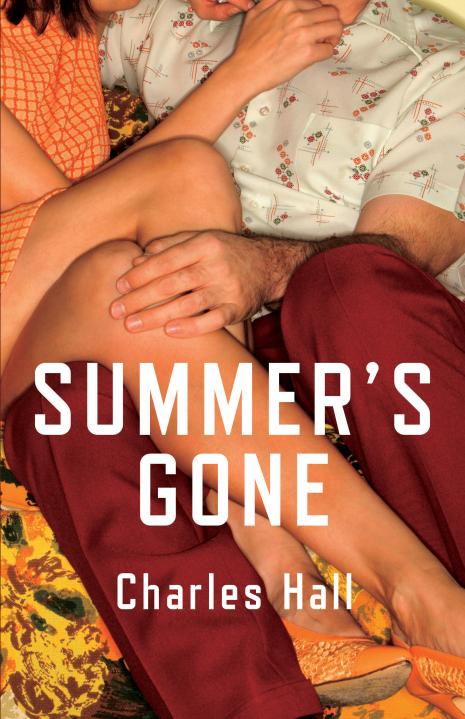
Charles Hall, Summer’s gone (Review)

Charles Hall, Summer's gone, Margaret River Press

Courtesy: Margaret River Press

When Western Australian writer Craig Silvey set his coming-of-age novel Jasper Jones in the 1960s I was a bit surprised, as Silvey himself did not grow up in that era. I’m not so surprised, though, about Charles Hall’s debut novel Summer’s gone as Hall did grow up in the 1960s. The novel is, from my reading of the brief author biography, somewhat autobiographical, as debut novels often are: both Hall and his main character played guitar in bands, hitch-hiked across Australia, worked in labouring jobs and ended up studying at university. This, though, doesn’t mean the story is Hall’s story. It simply tells us that Hall wrote of a milieu he knows – a wise thing to do!

Summer’s gone is a part-mystery, part-coming-of-age narrative, and is told first person by Nick. It focuses on his relationship with two sisters, Helen and Alison, and another young man, Mitch, with whom he’d formed a folk band in 1960s Perth. The novel starts, however, in Melbourne in 1967 with Nick finding 20-year-old Helen dead (or dying) on their kitchen floor. What happened to her, why it happened, and Nick’s feelings of guilt about it, form the novel’s plot. The theme, though, is something else, it’s about

the trouble with dwelling too much on the past – sometimes you remember other things as well, things you don’t necessarily want to think about.

Except, of course, we do often need to dwell on the past if we haven’t resolved it, we need to think, as Nick does, about the things we did, didn’t do, or might have done differently. We need, in fact, as Nick has come to realise, “to say goodbye to things. And perhaps even to understand.”

To tell his story, Nick slips between the 1960s, the mid 1970s, the 1980s, and sometime around the present from which he is looking back. Hall handles these time-shifts well: it’s not difficult to know where you are, and it effectively replicates the way we often approach the past, that is, in fits and starts as we put together what happened.

It’s an engaging story. Nick, the young version anyhow, is a rather naive and not well-educated – but not unintelligent – young man. He’s not wise in the ways of the world, but he’s decent, and prepared to give things a go. He has a poor relationship with his Perth-based mother, and his only real adult role model is his uncle Clem in Melbourne. The relationship between the four young people is nicely evoked, though because it’s a first person story, the other three characters are only developed as far as Nick understands them, and Nick is not always the most perceptive person. I found this a little frustrating – I wanted to know the other characters more – but I suppose it’s fair enough given the narrative voice chosen.

What gives this book its greatest interest is the social history. Many of the main stories of the period are worked into the narrative – abortion, and the horrors resulting from lack of legalisation; the Vietnam War, conscription, draft-dodging, and the physical and psychological damage experienced by soldiers. Nick also spends time in a hippie commune, and other news events like the Poseidon bubble and crash, the beginnings of women’s liberation, and the release of the Beatles’ Sgt Pepper’s Lonely Hearts Club Band album also get a mention. If you lived through this era, the novel provides an enjoyable wander down memory lane. It reminds us of the hopes and ideals of a generation which felt free to explore life and love, to rebel against the constraints of their elders, even though this freedom wasn’t always all it seemed to promise. I did feel, however, that Hall could have left the social history to this era. The references to Chernobyl and mesothelioma started to feel a little forced, and not really necessary to the plot, even though the mesothelioma issue is used to tighten the noose around one character just that little bit more.

Hall’s dialogue is realistic, and gives flavour to the era, and I did enjoy his descriptions of place – of Perth suburbs, and Melbourne, of travelling the Nullarbor and of country Victoria. These descriptions are kept to a minimum, but are just enough to breathe life into the scene.

Early in the novel, Hall refers to chaos theory and the butterfly effect, to the idea that “a minor detail has the power to change everything”. That’s probably true but I’m not sure it tells us anything we don’t already know! There are many minor details in our lives, and we could go mad worrying about which is the one that will (or did) change everything. Fortunately, I think Nick eventually agrees.

This is not a difficult novel, but it is warm, readable, and sings to us of summers past when the world seemed golden, but when in fact there was, as there always is, much more to it than that.

Lisa at ANZLitLovers enjoyed the book also for its evocation of the era.

Charles Hall
Summer’s gone
Witchcliffe: Margaret River Press, 2014
288pp.
ISBN: 9780987561541

(Review copy supplied by Margaret River Press)

Miles Franklin, Brent of Bin Bin and the Great Australian Bight

In this week’s Monday Musings I discussed the literary mystery concerning the identity of Brent of Bin Bin. I referred to an article written in 1954 after her death by Murray Tonkin in which he asked whether the truth that she is, or is a collaborator of, Brent of Bin Bin will now be revealed. I didn’t share though a delightful little story he includes.

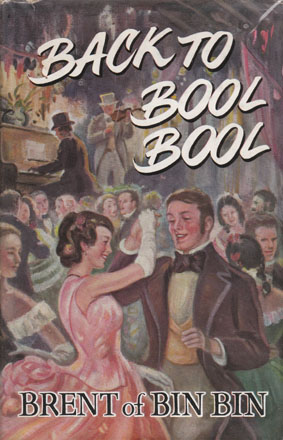
FranklinBrentBoolBoolA&R

Angus & Robertson 1956 ed.

You see, those who argued that Brent of Bin Bin was Miles Franklin used stylistic and thematic similarities between the works of the two authors together with facts about Franklin’s life to prove their case. “Bin Bin”, for example, was the name of a property (or run) next to the one her father managed in Brindabella. There’s a “Gool Gool” in My brilliant career and All that swagger, and one of the books in the Brent of Bin Bin series is called Back to Bool Bool. Thematic similarities between the two “authors” include the exploration of the harshness of life for bush women, and stories about literary women.

But, I didn’t share a fun little point which Tonkin says had “escaped other literary detectives”. It comes from poet Ian Mudie, who apparently knew her well. Tonkin writes that Mudie had identified that

Both she and Brent, in their books, have the Murray River emptying itself into the Great Australian Bight. But when he taxed her with it she brushed the point aside. “Of course!”   she said firmly. Every body knows the Murray runs into the Bight!”

Haha, I thought, he’s right, the Murray doesn’t flow into the Great Australian Bight but into Lake Alexandrina, which is rather east of the Bight. However, according to one definition of the Bight, Franklin was right. Wikipedia tells me there are two definitions of the extent of the Bight: The International Hydrographic Organization (IHO) sets its eastern limit as Cape Otway in Victoria, which easily encompasses the mouth of the Murray, while the Australian Hydrographic Service (AHS) has it as Cape Carnot which definitely does not.

By the IHO definition, then, Mudie’s argument doesn’t work as a coincidence outing Franklin as Brent of Bin Bin, but I suspect she probably had made a mistake and that most Australians then, and now, would not see the mouth of the Murray as being in the area we call the Bight. Fascinating the places that literary detection can take you, eh?

Anyhow, what do other Aussies think about the Murray and the Bight?

Monday musings on Australian literature: Miles Franklin, and the mysterious Brent of Bin Bin

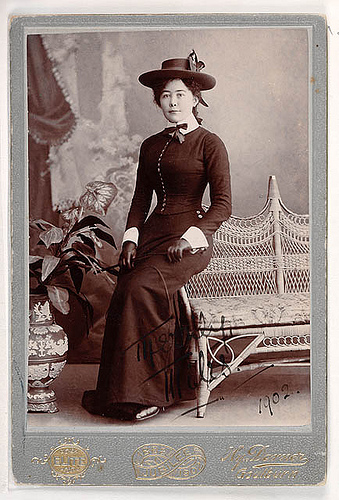
Miles Franklin, 1902

Miles Franklin, 1902, by H.Y. Dorner (Presumed Public Domain)

In last week’s Monday Musings I discussed an article by Canadian-born author Aidan de Brune on the novelist Bernard Cronin in his West Australian series on Australian Authors. The now little-known Bernard Cronin was no. 3 in his series. Number 4, though, was one of the giants of Australian literature – then, and still now – Miles Franklin. Most of you will know that she bequeathed our most significant literary prize, the Miles Franklin Award, and you probably have also heard of her most famous book, My brilliant career. But, Miles Franklin did have a secret …

This secret, as we now know, is that in addition to several other novels published under her name, she wrote a series of six novels using the pseudonym “Brent of Bin Bin”. They were completed by 1933 but not all had been published by her death in September 1954. According to Paul Brunton, editor of The diaries of Miles Franklin, Franklin saw this as “a publicity device”. She wrote in 1929 that “hiding under a pen-name … will be more fruitful of publicity”. Her plan was to retain the mystery until the last book was published at which time she would reveal her identity. Unfortunately, she died before they were all finished. Nonetheless, Brunton says, she “enjoyed the speculation on Brent’s identity”. In 1941 she chaired, “with a straight face”, a meeting of  the Fellowship of Australian Writers at which Brent of Bin Bin’s identity was discussed. Brunton continues:

She had no scruples about praising Brent’s books publicly as though she had nothing to do with them, as she does in her diaries. She even praised them in her Commonwealth Literary Fund lectures in 1950.

She also wrote to others, including the critic Nettie Palmer, as Brent of Bin Bin. I should add here that the current theory is that she used “Brent of Bin Bin” (and her other pseudonyms) because she feared not being able to repeat her My brilliant career achievement.

Anyhow, back to Aidan de Brune writing in 1933. He commences his article with:

Thirty years ago literary circles in Australia were astounded by the publication of an extraordinary book, written by a girl of sixteen, Stella Miles Franklin. The title of the book was audacious — “My Brilliant Career.”

He praises the book saying:

It throbs with a passionate love of the Australian bush, and particularly of horses, and with an equal passionate hatred of the cruelties of life endured by the people on the land, particularly by the women. It is the first statement, and to this day it remains the greatest statement, of the case for Australian bush womanhood.

He also quotes Henry Lawson’s praise in the book’s preface for its “painfully real” depiction of “bush life and scenery”. De Brune is concerned that in 1933 it, like many “fine” Australian books had been allowed to go out of print, with copies being hard to come by. He then gives a little of Franklin’s biography – her twenty years abroad working for the Feminist Movement in the USA, in the Scottish Women’s Hospital in Salonika, and for a housing committee in London. But now, he tells his readers, she is back and in 1932 had published a book, Old Blastus of Bandicoot, “under her name”. (Hmm … !) It was highly praised by many critics including John Dalley in The Bulletin. He also advises that another book, a detective story, would be published in 1933.

But, he asks:

Is that, then, the whole story of Miles Franklin? We shall see. Is it likely, or possible, that a writer of such power and sheer genius as the author of “My Brilliant Career” should have been silent for more than twenty years?

Fair questions! He goes on to tell his readers that “Miles Franklin will not admit it” but many people are identifying her with

the mysterious “Brent of Bin Bin,” whose books (published by Blackwood, of Edinburgh, be it noted) are acknowledegd to be the finest presentation in fiction of the Australian outback epic which have yet been written. “Brent of Bin Bin” loves the bush and understands horses, and hates injustice to bush women, as only the author of “My Brilliant Career” and “Old Blastus of Bandicoot” could love, and understand, and hate.

Brent of Bin Bin’s books are now Australian classics he says but, like My brilliant career, are hard to come by. How lucky we are that publishers like Text Publishing, Allen & Unwin, and others, are bringing back Australian classics in our times, eh?

Anyhow, I did love the conclusion to his article:

If Miles Franklin is also “Brent of Bin Bin,” then she is the greatest Australian bush novelist alive. And if she is only Miles Franklin of “My Brilliant Career” and “Old Blastus of Bandicoot” she takes second place to one writer alone — the tremendously gifted and mysterious author who writes in Miles Franklin’s manner under the pseudonym of “Brent.”

Ha ha … I bet he had fun writing that! I’m intrigued though that the praise is qualified, that she is “the greatest bush novelist”. I sense though that he doesn’t intend to diminish her achievement but to simply describe the milieu she was writing in. What I hear is that the bush continued to be a significant concern in 1930s Australia and was therefore seen as a worthy topic for our literature.

POSTSCRIPT: In an article written after her death, Murray Tonkin asks whether her death will finally solve the literary mystery. So, although many were confident they knew the identity, Franklin clearly kept up the pretence to the end. Tonkin says that he will “gladly eat his hat” if Franklin is not identified as “at least a close collaborator”. Love it!

Monday musings on Australian literature: Bernard Cronin, an Old Derelict!

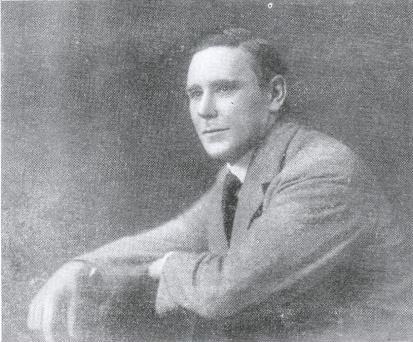
Bernard Cronin

Bernard Cronin (Presumed Public Domain, via Wikipedia)

It’s a bit cheeky, really, to write about a writer I’ve never read, but I do this occasionally, particularly in Monday Musings because I use them to educate myself as well as to share ideas and knowledge with you. I came across Bernard Cronin (1884-1968) when I was roving around Trove earlier this year. He’s an English-born Australian writer and you can read about him on Wikipedia and at the Australian Dictionary of Biography. If you want to read about his life, do go there, because my focus is not going to be that.

However, I will give you a nutshell! Cronin came to Australia when he was 6 years old, and graduated from an agricultural college. He worked in cattle-farming, as a salesman and clerk, and as a journalist, but for most of his life he was also writing. He wrote novels, short stories, plays, and verse, some in his own name and some using pseudonyms. In 1920, he co-founded the Old Derelicts’ Club (don’t you love that!) for struggling authors and writers. This became the Society of Australian Authors in 1927, with Cronin its first president, but in 1936 the society was wound up because, according to Cronin, it was becoming “infiltrated by politics”. Cronin St, in a suburb in my city, is named for him.

Cronin first came to my attention when he appeared in the top 10 of the 1927 plebiscite on Australian authors*. And then, as I was following other links, I came across him again in an article written in 1933 by Canadian writer, Aidan de Brune (1879-1946), who also settled in Australia. Aidan de Brune wrote a series of articles on Australian authors for The West Australian, devoting the third article to Cronin. By this time, 1933, Cronin had published around 15 or so novels, and saw himself as an Australian writer. De Brune writes that unlike many writers he had stayed in Australia, and quotes Cronin as saying:

The writer in the Old Country finds his scenery, as it were, ready made for him. In this country it is definitely not to be found upon the surface of things. One has to dig deeply to become aware of the very great natural beauties of the Australian landscape. Real treasure is mostly of the buried variety. To my mind there is more character in an old Aussie gum tree than in any other tree I ever heard of. Incidentally, I should say that that much abused genius, D. H. Lawrence, came closer to an understanding of the spirit of the Australian landscape than any other writer, local, or imported, has yet done. He is the first scribe definitely to sight the real genii of the bush.

De Brune interprets this as Cronin seeing “Australia as a literary theme”, but without a need to “sentimentalise” it. I’m intrigued by Cronin’s comment on DH Lawrence. I still haven’t read Kangaroo and, while I’m not driven to read Lawrence again, I feel I should make an exception for this, one day. I also love Cronin’s description the “Aussie gum tree”. Yes!

De Brune then quotes Cronin again:

Our trouble is that we lack real breeding, and crudeness is a poor scaffold for the Arts. Further, the indifference of our rulers to the absolute need to develop a national soul has not made matters any better. Hansard will never make this country aware of the sublimities of human destiny. We need to see Australia from her own standpoint, and with her own individuality. The Arts are our only hope of salvation.

De Brune comments that “by this last phrase our fierce realist is revealed as an idealist, after all”. Perhaps so. What interests me, these eight decades later, is that ongoing battle against indifferent rulers for validation of the arts, for recognition of the importance of the arts to our souls, national and otherwise.

Cronin’s next novel, to be published in 1933, was The sow’s ear. Set in Tasmanian timber country, it is, says De Brune, “a ruthless exposure of the tragic life of young girls enslaved by the system of marrying without love, at the command of domineering parents”. He writes that all Cronin’s novels have this “fierce” quality, exposing what Cronin “considers to be wrong, stupid or uneconomic. In this sense he is the strongest of the Australian writers who wish to make us aware of our short comings, so that we may eliminate them, and become a truly civilised nation.” So, Cronin had a very clear image of what sort of Australia, what sort of “national soul” he wanted us to develop.

After giving a brief rundown of Cronin’s life and career to date, de Brune concludes with Cronin’s role in the Australian Society of Authors. He again quotes Cronin:

There is much to discourage the Australian writer. Nevertheless, he holds steadily to his job. He hopes that the pioneering work which he is doing will prove an invaluable foundation for the generation of writers to come. Give him the support of his own Government and public, and he will win to wider distinction inside a decade. But he’ll win through, any way.

I love that optimism – that writers will “win through anyway”. In many ways I think they do – but I do often wish it were easier for them! De Brune ends his article forecasting that “when Australian authors have finally won recognition from their own people, the name of Bernard Cronin will stand high in the roll of honour of those who have fought for this objective”. Now, that makes me sad. Maybe this is a case of back-slapping between mates, but somehow, reading Cronin’s words, and of his role in various writers’ organisations, I suspect there is a good deal of truth in De Brune’s assessment – and yet I didn’t know Cronin. I’d love to know if other Aussies here do.

* I wrote on this plebiscite in a Monday Musings last year, but only gave the top 6 novelists. Cronin was number 7!

Jessica White, Entitlement (Review)

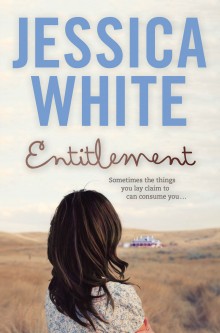
WhiteEntitlementVikingEntitlement is a powerful title for Australian author Jessica White’s second novel, but then White wanted to explore some powerful themes – though they are, unfortunately, somewhat belied by the rural romance/saga looking cover. The author bio at the front of the book tells us that White grew up on a property in northwest New South Wales and it becomes clear very early in the book that she knows whereof she speaks!

Of what does she speak, then, you are probably asking? Entitlement is set in contemporary times on a cattle property near a fictional place called Tumbin. The story starts with 29-year-old Cate McConville, now a practising GP, returning home because her parents wish to sell the property. She, with other family members, is a partner in the business, and all need to agree to the sale. But, Cate’s holding out – not because she loves farming and wants to return, but because her only sibling, her much-loved brother Eliot, had disappeared several years earlier and she wants him to have a home to return to. The farm – the land – also contains her memories of, and therefore her link to, him.

While the plot-line is established gradually, the first chapter sets the book’s tone and style. It tells us there’s tension between Cate and her parents; that memory is going to feature strongly in the telling; and that indigenous issues are likely to be part of the story. The book then progresses, introducing more and more characters over the next few chapters. Each chapter tends to be dedicated to one character, or a small group of characters, and usually involves flashbacks, as the character remembers something from, or reflects on, the past. White handles this well. There are many characters, but the present-flashback narrative style keeps them clear and in their place (if that makes sense). This style does risk becoming a little rigid, but White breaks it up every now and then with a chapter purely set in the present, or one that commences in the past.

Very early, as the characters are introduced, the themes start to become clear. The story is told within two main contexts – farming succession and indigenous connection to land. Over-riding all this is the notion of stolen and lost children. Local indigenous man, Mellor, has worked for a couple of decades for the McConvilles, as had his wife until she’d died of cancer. His extended family, particularly his two aunts, live with him on the edge of the property, and have experienced the stealing of their children. Cate’s father, Blake, is racist and dismissive of indigenous people and their rights, while her mother Leonora, by contrast, is on friendly relations with Mellor and his family.

Now, if you’ve been reading my blog for a while, you’ll have read some of my discussions of non-indigenous people writing about indigenous issues. It’s uneasy ground to walk on, but for White, with her farming background, the issues of stolen children and indigenous land rights are things she’s likely to have lived. I’m not surprised she wanted to explore it. Indeed, she wrote a comment on this blog nearly two years ago, saying that this novel:

raises the question of who, in contemporary Australia, is entitled to the land? I also tried to show, through the break up of a white family that was fighting over land, how Indigenous people have been affected by their dispossession. I don’t think it’s a question that can ever be answered, though I did aim for a (probably utopian) resolution at the end of the book.

She couldn’t do this, really, without creating indigenous characters and that means of course that she had to present (her understanding of) their attitudes. I think she’s handled this sensitively, but of course I’m non-indigenous. I did wonder if she’d stepped onto shakier ground when she drew comparisons between Cate’s mother’s loss with that of the stolen generation mothers. However, in her acknowledgements White thanks “Michael Aird and Sarah Martin for their conversations and resources on Indigenous culture and history”. She has not, it seems, walked this ground lightly. And she doesn’t leave it at country and stolen generation issues, but touches on other injustices, such as indigenous health and housing, and racist violence.

White is on safe ground when she discusses the land and farm from Cate’s point of view. I thoroughly enjoyed her descriptions of the landscape and farm life – little scenes of her father and uncle undertaking farm tasks, of Mellor tending to fences, or of Cate running through the land, for example. Here’s a description of an Australia Day picnic:

Flies and mosquitoes plucked at their skin. The scents of the bush were drawn out by the heat and bundled together like a sweet, loosely woven shawl. Kangaroos bounded away in alarm as they made their way up the hill. Crickets whirred, rising from the long grass, and cockatoos screeched.

Her characters, too, are real; they are imperfect, believable human beings. Cate’s inflexibility, her selfish unwillingness to understand the health issues forcing the need to sell, made me cross but the pain, the loss, driving her behaviour is believable. Her parents are presented as having a loving relationship, but not without its tensions and conflicts. And so on.

Entitlement is an engrossing and serious, though not a grim read. As White admits, she does try for a positive resolution, which could almost do the seriousness of the issues a disservice. However, the story is not completely neatly tidied up, presumably because she realised that her question – how do we handle conflicting relationships to this land so many of us call home – does not have a simple answer. It’s therefore important that both indigenous and non-indigenous writers put stories and ideas out there for us to think about. It can only help the discussion, don’t you think?

awwchallenge2015Jessica White
Entitlement
Melbourne: Viking, 2012
289pp.
ISBN: 9780670075935

(Signed copy won in a blog giveaway)

Stella Prize 2015 Shortlist

I rarely write longlist, shortlist and winner posts, but for the Stella Prize I don’t mind making an exception. Last month, I posted on the longlist, and yesterday, the shortlist was announced.

  • Maxine Beneba Clarke’s Foreign Soil (Hachette): short story collection that I really must read, a debut book
  • Emily Bitto’s The Strays (Affirm Press): another debut book, this a novel that’s been garnering excellent reviews, and I’m keen to read this.
  • Christine Kenneally’s The Invisible History of the Human Race (Black Inc): the only non-fiction in the list, about her research into DNA and humanity’s origins.
  • Sofie Laguna’s The Eye of the Sheep (Allen & Unwin): second adult novel by an award-winning playwright and writer for children, about an individual young boy who may be, though it’s apparently not stated, on the autism spectrum.
  • Joan London’s The Golden Age (Random House): the only shortlisted book by a well-established novelist. I love her writing so need to read this. All these “must reads” make me wonder what I have been reading!
  • Ellen van Neerven’s Heat and Light (UQP): another debut book, and an intriguing collection of short, long and interrelated stories. I reviewed it last month.

It’s great seeing so many smaller publishers in the mix. Reminds us again that we should not overlook them when we are seeking quality books! This Stella Prize link will give you all the gen on the shortlist, including excerpts.

I was disappointed not to see Helen Garner’s The house of grief shortlisted, but not having read all the books, I’m in no position to pass judgement.

PS Apologies to those who saw it for the early incomplete posting of this post. I’m on the road and, against my better judgement, stupidly tried to use WordPress’s app. I like most things about WordPress, but detest the iPad app, so I tediously finished this in the browser on the iPad. Not a fun thing to do.