Monday musings on Australian literature: Some favourite Aussie film adaptations (2)

A couple of Monday Musings ago I shared some of my favourite Australian films adapted from novels. Today, it’s the turn of Aussie plays. I’m no expert in adapting works but it seems to me that it would be easier to adapt a play to film than it would be a novel. I wonder if that’s true in reality? Does anyone know?

Anyhow, here are some of my favourite Australian films that had their genesis in theatre:

  • Don’s Party (1976) is one of many plays written by satirist David Williamson that have been adapted to film, and I have enjoyed most of those I’ve seen. I’ve chosen Don’s Party because it was one of the first. The play was written in 1971 and is set during a post-election party held by Don for his Australian Labor Party friends. They expect their party to win but things don’t quite go to plan, and tensions develop. The film was directed by prolific Australian director, Bruce Beresford. It beautifully but rather excruciatingly captures the new educated, socially mobile middle class, their (our!) pretensions and the gap between reality and their dreams.
  • Breaker Morant (1980) is one of my favourite Australian films from our film renaissance of the 1970s to early 80s, partly because I am a bit of a fan of courtroom dramas and this is a good one! The film was adapted from a play (first produced in 1978) by a playwright I don’t know, Kenneth G. Ross, and was directed by Bruce Beresford. (Told you he was prolific!). The subject is the court-martial of Lieutenant Harry “Breaker” Morant and two other officers for murders during the Boer War. The film plays to an historical tension between the colonial Aussies and the colonist Brits, as well as to Australians’ reputation for larrikinism or anti-authoritarianism, and it makes a strong anti-war case. It starred Edward Woodward, Bryan Brown and Jack Thompson – and, writing about it now, makes me want to see it again.
  • Lantana (2001) was adapted from the play, Speaking in tongues, by Andrew Bovell. It’s a tense drama centred around a murder, but it’s less a crime story than an exploration of relationships and trust/betrayal. The film was directed by Ray Lawrence. It has a moody atmosphere and an insistent soundtrack (composed by Paul Kelly) that makes it hard to forget.
  • Blessed (2009) was adapted from the play, Who’s afraid of the working class?, written by Andrew Bovell (again), Patricia Cornelius, Melissa Reeves, Christos Tsiolkas (author of The Slap) and Irene Vela. The playwrights, with the exception of Vela, also wrote the film script. As I wrote in my review on this blog, it’s a gritty exploration of mothers and their often neglected children.

There are many other Australian films adapted from plays, including several by Williamson, The Summer of the Seventeenth Doll (from Ray Lawler’s classic play of the same name), and The Sum of Us (from a play by David Stevens, who also wrote the filmscript for Breaker Morant!).

When films are adapted from books, we often know because the books tend to be republished (often with a movie image on its cover). The movies provide a great opportunity for books to get another airing. With plays, though, its a different situation. We don’t, as a rule, read plays and we often don’t know, I suspect, whether a film has been based on a play or not (even if it has the same title).

How often are you aware of the theatrical origin of films you like, and do you have any favourite films that are based on plays?

(BTW, My next post on the topic of adaptations will be on television adaptations.)
Monday musings on Australian literature: National Bookshop Day (Belated)

Saturday 11 August was National Bookshop Day here down under but I decided to delay writing about it until this week’s Monday Musings as it seems a worthy subject. However, Lisa of ANZLitlovers and Louise of A Strong Belief in Wicker did their posts in a more timely way.

National Bookshop Day is a new concept here. In fact this was its second year, having been inaugurated last year by the Australian Booksellers Association. Its logo is “celebrating bookshops in the community” and its aims are, I think, both celebratory and promotional, regarding bookshops, literature and, more generally, culture. I guess it doesn’t take much thought to work out why they feel the need to have such a day, what with the internet ‘n all?

I like this comment from Bite the Book, the blog of Pages and Pages* bookshop in Mosman, Sydney:

The internet makes it easier for everyone to find what they are looking for but what a boring place the world would be and how uninteresting our lives would be if we only ever found what we were looking for. As much as I enjoy reading the next book from one of my favourite authors there is nothing quite like that feeling of reading a book you found from left field through a recommendation or the serendipity of finding it on a shelf.

I like this because it recognises that there’s no turning back the clock. Technologies change. The three-volume book gave way to the single volume, paperbacks brought book-buying to a new level, and now e-books are on the rise. The point is they are all books and one thing remains the same: People continue to read. A day that celebrates this while also promoting one of the places that we readers love the most can only be a good thing. Browsing an online store, while possible and getting smarter, is nothing like browsing a bookshop surrounded by other booklovers and by books of all shapes, sizes, colours and contents.

I’m embarrassed to say that, unlike Lisa and Louise, I did not get to a bookshop on THE day, but I do go to bookshops regularly. Bookshops have had a tough time in the national capital over that last few years with significant chain stores disappearing view: Collins, Angus and Robertson and Borders. Just two chains survive, Dymocks and QBD. It’s good to see them survive. Chain bookshops** have their place after all, but they are not my bookshops of choice. My favourites tend to be independent stores, particularly:

  • Paperchain – has the best remainder table I know, as well as other great books of course, and many author events
  • Electric Shadows – has a particular focus on film, media and the performing arts as well as a good selection of Aussie lit, and also has author events
  • Smiths Alternative – has books you don’t always find elsewhere including a good selection of translated fiction, and in line with its alternative, socially-conscious vibe, holds a variety of events in fiction, poetry and music
  • National Library of Australia’s Bookshop – is the one I frequent the most. It’s in a beautiful building belonging to our premier literary institution, specialises in Aussie literature,  and offers a generous discount to Friends of the Library. And there’s a gorgeous cafe across the foyer. What’s not to like?

Just for the record, I have recently bought books from a bookshop (the National Library one): Luke DaviesInterferon psalms (book of poetry, for me), Robert Newton’s When we were two (YA novel, for my nephew), and one I won’t name because it is a gift that hasn’t been bestowed yet.

Did you, if you’re Australian, attend a bookshop on National Bookshop Day? I’d love to hear about it. And, if you’re not Australian, is there something similar where you are? Are bookshops in your area thriving?

* On National Bookshop Day, Pages and Pages donated $1 for each book sold to the Indigenous Literary Foundation. Many bookshops held events, offered discounts and prizes. Let’s hope, for all their hard work, they attracted some new customers to their fold.

** My favourite chain in Australia has to be Kinokuniya. Its depth of fiction, from many nations, is simply hard to beat – but we don’t have a store in my city.

Monday musings on Australian literature: Some favourite Aussie film adaptations (1)

In support of Australia’s National Year of Reading the National Film and Sound Archive is, later this year, holding an exhibition on film adaptations. And that made me think about my favourite film adaptations, which in turn made me think it might be a good Monday Musings topic. So, here I am. This post will focus on films adapted from novels and short stories. I will write other posts in future on adaptations from plays and adaptations for TV.

The Australian film industry, like most, has drawn from novels, plays and stories since its early days. Some of Australia’s best known silent films are adaptations, including The sentimental bloke (1919) (CJ Dennis), On our selection (1920) (Steele Rudd), and For the term of his natural life (1927) (Marcus Clarke). For this post, however, I’ll be focusing on my favourites from the last few decades.

Are you one of those people who refuses to see a film until you’ve read the book? I’m not really, though if it’s a book I’m keen to read I do prefer to read it first. I take a pretty free and easy (wishy-washy, did I hear you say?) approach to film adaptations. That is, I don’t expect them to replicate the work they are based on and am very happy for artistic licence to be taken. Film and Literature are different media and it’s impossible, in my view, for one to replicate the other. This might sound a bit ingenuous, but I’m just not too fussed about getting my knickers in a knot over the issue. I care more about whether I enjoyed the film (and, of course, whether I enjoyed the book).

I have to admit that some (though my no means all) of my favourite Aussie film adaptations are of books or stories I haven’t read or that I read after seeing the film. However, they are still adaptations and they are films I like, so I’m going to list them here (with the work they are based on). Like all lists it’s going to be hard to limit it, but limit it I must, so here goes, in film date order …

  • Picnic at Hanging Rock (1975) is credited with kickstarting the renaissance of Australian film in the 1970s. It was based on a novel of the same name, by Joan Lindsay. It was quite controversial at the time – not the film itself – but the question of whether it was based on fact or not. It wasn’t! It’s a great story, beautifully filmed by Peter Weir – and has become pretty much an iconic Aussie film.
  • My Brilliant Career (1979) was based on Miles Franklin‘s novel of the same name. It was made during a period when the Australian film industry was dominated by nostalgia (or period drama). When you’re on a good thing, stick to it, and all that … but this film had something special. It spoke to the second wave of feminism in its story of Sybylla who gives up a man to stay true to her dream of being a writer, and it launched the career of pioneering woman film director, Gillian Armstrong.
  • Three dollars (2005) was based on a novel of the same name by Elliot Perlman whose latest novel, The street sweeper, I’ll be reading and reviewing  later this year. I love this film (and book, which is one of those I did read first) because it’s about a man who sticks by his principles, who won’t let corporate greed or urban apathy get in the way of his humanity despite significant cost to himself. And it starred David Wenham (aka the luscious Diver Dan from a favourite television series).
  • Jindabyne (2006) is a bit of a ring-in here because it was based not on an Australian work but on a short story by the American writer, Raymond Carver. The story is titled “So much water so close to home” and has been transplanted to Australia and overlaid with an indigenous theme, but the essential story about men who, on a fishing trip discover a dead (murdered) girl and, rather than hike out to report the death immediately, continue their trip, remains the same. It’s a taut, tight, visually beautiful film about moral responsibility.
  • The eye of the storm (2011) is based on Patrick White’s novel of the same name. White is often described as “unadaptable” – and later this year I plan to write on the saga behind an attempt to make a film of Voss. We are still waiting – though it was adapted for opera, with David Malouf the librettist. Meanwhile, I reckon The eye of the storm effectively shows that White can indeed be adapted to film. The film had an amazingly long run (in my city anyhow) for not-the-best-known book by an author generally regarded as “hard”.

These are just five of many that I’ve seen and enjoyed over the years – I might also have mentioned Bliss, CandyLooking for Alibrandi and Romulus my father, for example – but for all those I’ve seen, I wonder about the ones that haven’t been made. Over the years, we hear books are optioned – like Jessica Anderson’s Tirra Lirra by the River, Thea Astley‘s Drylands, Murray Bail’s Eucalyptus, and Tim Winton’s Dirt Music – and we wait, and wait, and wait to see them, but they never appear. Given that adaptations can often guarantee an audience (though perhaps less so of literary fiction), it’s surprising to me that so many of our wonderful novels have not yet been adapted. I can only wait and hope…

Meanwhile, do you enjoy film adaptations, and what are your favourites?

Monday musings on Australian literature: It’s all about sport, or is it?

I’ve written previous Monday Musings on themes and motifs in Aussie literature – like the lost child, the beach, mountains and even sheep – so, with the Olympics now on, it seemed appropriate to add sport to this list.

Whether we all like it or not, Australia has somewhat of a reputation for being a sports-focused country. We’ve had our moments in the sun as a cricketing nation, a tennis nation, a swimming nation, a golfing nation, and so on. We’ve even won the Tour de France and the America’s Cup! Given all this, I started to wonder last weekend about how sport has been presented in our literature … and I must say I struggled to come up with many examples (from my own reading anyhow). This will be a short post, methinks, but it has to be done!

My first encounter with sport in Aussie literature was in my childhood, through ballads. My two favourite examples are Thomas E Spencer’s “How McDougall topped the score” (1898) and Banjo Paterson‘s “The Geebung Polo Club” (1893). The former is a comic poem about a country cricket match between two towns. It celebrates the triumph of the underdog (a popular Aussie theme) through (bush) cunning. While Spencer’s poem is about one of Australia’s most popular sports, “The Geebung Polo Club” is about a far less widespread sport, polo (of course). Polo works as an effective vehicle for depicting another common theme in Australian culture, the ordinary man versus the toff (which, in this poem, is compounded by the country versus the city conflict). The ballad also celebrates the “never say die” spirit, and is what I’d call a tragicomedy. I can’t resist giving you a flavour:

Here are the Geebungs:

But their style of playing polo was irregular and rash –
They had mighty little science, but a mighty lot of dash:
And they played on mountain ponies that were muscular and strong,
Though their coats were quite unpolished, and their manes and tails were long.

And here is a description of their opponents, the Cuff and Collar team:

For the members were distinguished by exclusiveness and dress.
They had natty little ponies that were nice, and smooth, and sleek,
For their cultivated owners only rode ’em once a week.
So they started up the country in pursuit of sport and fame,
For they meant to show the Geebungs how they ought to play the game;

You get the drift, I’m sure.

The next work dealing with sport that comes to my mind is a play (later made into a film) by Australia’s best known contemporary playwright, David Williamson. Much of his work is satirical and his play The club (1977) is a great example. The sport in question is a particular type of football, Australian Rules, and the play explores the tensions between commercialism and traditional club loyalties, which, reminding me of “The Geebung Polo Club”, also translates into an exploration of class conflict. More broadly, though, it is about the struggle for power, something Williamson explores in other settings besides sport.

Okay, so I’ve discussed a couple of poems (ballads) and a play, but when I turn to literary fiction my mind goes pretty blank. There is Tim Winton‘s Miles Franklin Award winning novel Breath (2009). It’s about surfing, and is primarily about masculinity and risk-taking. Winton’s interest is more psychological than the socio-political explorations of the other works I’ve mentioned. And there’s Gillian Mears‘ recent novel, Foal’s bread, about horse high jumping. As I wrote in my review, I loved the way it, like Breath, introduced me in the most visceral way to a sport I have never experienced. It draws on some of the themes from those 19th century ballads – in particular the hardship of country life – but while they tend to romanticise the lives they depict, Mears’ work, while having an element of the heroic about it, also deals with the struggle to survive, psychologically as well as physically.

There are many novels in which sport appears (like say, Craig Silvey’s Jasper Jones) but not many, that I can dredge up, for which sport provides the principal setting. Is this because sportspeople and writers tend to be diametrically opposed? I’d love to hear your thoughts on this, and whether you have any favourite novels in which sport is centre stage.

Monday musings on Australian literature: Prime Minister’s Literary Awards 2012

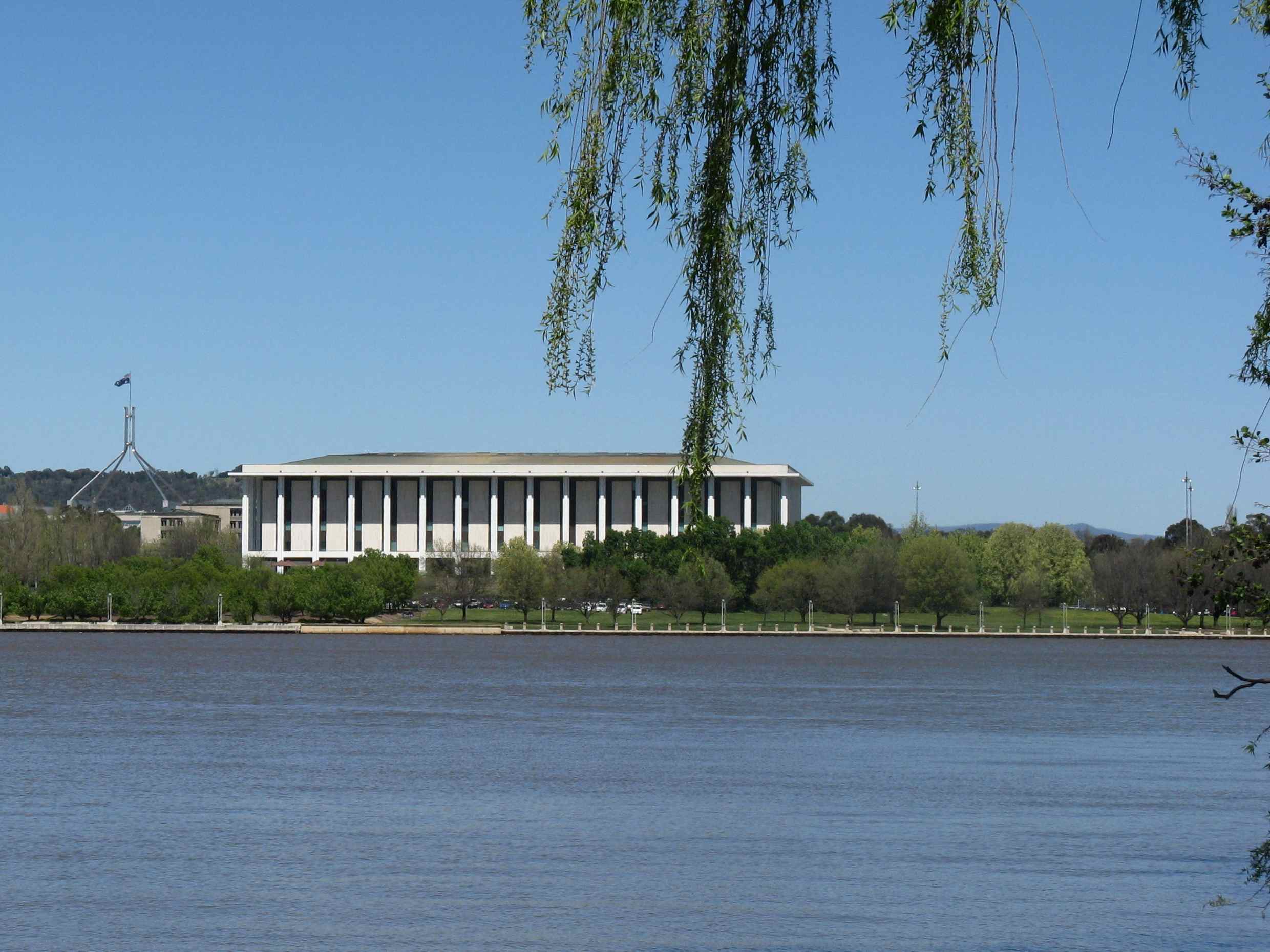
National Library of Australia

National Library of Australia, viewed from Commonwealth Park on the opposite side of Lake Burley Griffin

Last year I attended and reported on the post-announcement panel for the Prime Minister’s Literary Awards, held at the National Library of Australia. I attended again this year and, since it occurred today, Monday, I’ve decide to devote this week’s Monday musings to it.

First, the winners:

  • Fiction: Gillian MearsFoal’s bread (My review)
  • Poetry: Luke DaviesInterferon psalms
  • Young adult fiction: Robert Newton’s When we were two
  • Children’s fiction: writer Frances Watts and illustrator Judy Watson’s (illus.) Goodnight, mice!
  • Non-fiction: Mark McKenna’s An eye for eternity: The life of Manning Clark
  • History: Bill Gammage‘s The biggest estate on earth: How aborigines made Australia

Last year’s four awards were expanded to six this year by rolling the separate Prime Minister’s History Prize into them and, hallelujah, adding in a prize for Poetry. The awards are, I believe, the most generous of Australia’s publicly funded awards, providing $80,000 to each winner and $5,000 to each shortlisted author.

The panel members were Luke, Robert, Mark and Judy. Unfortunately, Bill Gammage is currently overseas, and Gillian Mears who suffers from multiple sclerosis had attended the announcement but needed to rest before her afternoon engagements. I was disappointed not to see her but of course can’t begrudge her putting her health first. The panel was chaired by local ABC radio announcer Louise Maher.

I won’t summarise the whole panel but just cherry pick a few interesting thoughts and ideas that came out of it. During a discussion about the writing process, in which Robert Newton said that he when he starts writing he rarely knows where his story is going to end, Mark McKenna offered a favourite quote from David Malouf:

I don’t write to record what I know. I write to find out what I know.

I like this. It makes me feel that we readers are on a journey with the author rather than being told what to think by the author.

There was, of course, the usual discussion about the impact of technology on books and reading and, while the responses weren’t quite as conservative as I felt they were last year, there still seems to be some resistance to thinking positively about change. I understand that. Livelihoods – of writers, publishers and booksellers – are at stake BUT, whether we like it or not, the change is coming (is here, in fact) and so our best chance is to embrace it.

Louise approached the question from a slightly different angle by asking how reading, which takes effort and time, fits into contemporary culture. Mark believes that the one-on-one aspect of reading is under threat, due I suppose to competition from other stimuli, and said that awards like these are important because they can bring more readers to books. (This point was, in fact, a bit of a mantra for him.) He suggested that the act of reading, the way we read, is changing and that the solitary experience is becoming rare. He noted that in just a few more decades the majority of people around will not have grown up with books the way we in the audience had. Their experience and expectations will be different, and books are likely to be produced in different formats with content and presentation varying between the formats. Mark also made the significant point that much of the change that is occurring is in the culture around the book rather than in reading itself, and I guess he’s right. The way books are sold – and published – is changing. Electronic books can’t be physically browsed in a bookshop. It’s not easy to lend an electronic book. You can’t get your electronic book signed. And so on …

Rob’s response that reading and technology will have to grow together was a pragmatic one. But he also commented, regarding the effort involved in reading, that he likes “the idea of books making kids work a bit”. Judy talked of inculcating a reading habit with children when they are young, and said she limits her (young) children’s time with technology. I liked Luke’s honesty when he said that attention span is the issue and that he can see it in himself, that he finds himself being drawn too often to “fiddly” little things on the Internet, like favourite blogs, and away from concentrated reading. But, he also said that he believes that our “emotional and spiritual” relationship with words will always be there. That makes sense. The forms and formats might change but our love affair with words and the ideas they express surely won’t! As one person said, we need to respect the new forms but recognise that the story, the empathy, will always be the thing.

There was a question from the floor late in the session regarding what difference the monetary prize would make to their lives. The answers weren’t really surprising but were interesting nonetheless:

  • Luke, who admitted to being more broke now than he has been for many decades, said he will pay off his debts and that the remaining money will give him a buffer enabling him to say no to jobs that he “shouldn’t” be doing, that aren’t, he said a little self-consciously, in response to his muse.
  • Rob said he’d buy a new surfboard and a laptop with working shift and caps lock keys, and that he’d consider taking some time off from his job as a firefighter to write full-time.
  • Mark said it would buy a little financial independence and provide some seed money for his new book, which will tell the history of Australia through some selected places that he will need to visit.
  • Judy also said it would take off some of the financial pressure and allow her to work on what she wants to rather than on jobs “for the money”.

A great session. I thank the National Library for again providing the opportunity for members of the public to “meet” the authors this way, and I thank the authors for giving up their precious writing time to talk with us!

Monday musings on Australian literature: The sheep’s back

As a baby-boomer, I grew up knowing that Australia “rode on the sheep’s back”, that our economy, in other words, was based on the wool trade. It’s not quite so now – though wool is still an important product – but I was reminded of the saying last weekend as we were introducing a young American to a little bit of country Australia. We were, in fact, focused on one of our wine regions, but it was the sheep that she particularly noticed.

Sheep among the vines at Stanton and Killeen

Sheep among the vines at Stanton and Killeen, Rutherglen

This made me think about sheep in Australian literature/culture. How do (did) they feature, given the role that they’ve played in our “wealth for toil”. Rather negatively, in fact. Horses and cattle-droving are romantic, and often feature in Australian outback novels and ballads, with a sense of heroism (as in “The man from Snowy River”). Sheep and shearing don’t quite cut it in the same way. They too can be romanticised, but more in the “rough diamond” category rather than the “heroic” one.

One of the best known Australian songs/ballads to feature sheep is “Click go the shears” which describes the hard work of the shearer, the various roles played in the shearing shed (the “boss”, the “tar-boy”, the “old shearer”, the inexperienced “snagger”) and the drinking at the pub when it’s all done. The other, more famous song featuring sheep is of course “Waltzing Matilda” about the swagman who steals a sheep (the “jolly jumbuck”) to eat. The song, written by Banjo Paterson, was probably inspired by the hardships endured by shearers during and after the Great Shearers’ Strike of 1891. It depicts the class division in Australian society between the “battler” (or working-class man) and the “squatter” (or, landowner).

And this reminds me of a novel I reviewed early in this blog’s history, William Lane’s The workingman’s paradise, a social realist novel which explored both urban poverty  (Sydney) and rural hardship (Queensland shearers). The novel is set in Sydney, but the plight of the shearers is a major theme. Another, much later novel, Jeremy Chambers’ The vintage and the gleaning, is set in the vineyards of northeast Victoria (where this post’s photo was taken) but is narrated by Smithy, who had been a shearer for 47 years before becoming a vineyard worker. Smithy rues his years of hard-drinking (see “Click go the shears” above!) and its impact on his health. A third Australian work to focus on the rough, hard side of the shearer’s lot (alongside its mateship aspects) is the movie Sunday Too Far Away. Hard drinking features here too, in a story about shearers fighting to retain their bonuses against the threat of non-union shearers.

There are other “takes” on sheep, however. One is the film Babe, that was filmed in Australia but based on English writer Dick King-Smith‘s children’s novel, The sheep-dog. It’s a romanticised pastoral story about a pig that herds sheep like a sheep-dog. King-Smith’s (English) sheep are intelligent and manipulative, quite different from the typical description of sheep in Australian literature. Another, more interesting depiction, though, comes from Jeanine Leane’s Purple threads which I reviewed earlier this month. In that review I commented on Leane’s use of sheep symbolism. Her book is set in a sheep farming area. The narrator sees her indigenous family’s practice of adopting the black sheep that are spurned by the farmers as reflecting Jesus’ teachings about charity and inclusiveness. It’s pretty obvious, I suppose, but I liked the way she makes her point by mixing Christian symbolism with something symbolising anglo-Australia’s encroachment on her people’s country.

But I can’t resist returning to Banjo Paterson, my favourite bush poet, to close today’s post. He wrote a piece called “The merino sheep”, which you can read online. He describes the sheep as a “dangerous monomaniac” whose “one idea is to ruin the man who owns him” and concludes with:

The hard, resentful look on the faces of all bushmen comes from a long course of dealing with merino sheep. The merino dominates the bush, and gives to Australian literature its melancholy tinge, its despairing pathos. The poems about dying boundary-riders, and lonely graves under mournful she-oaks, are the direct outcome of the poet’s too close association with that soul-destroying animal. A man who could write anything cheerful after a day in the drafting-yards would be a freak of nature.

Oh dear … and I thought it was caused by heat, aridity and remoteness!

Anyhow, if you are Australian, I’d love to hear of other references to sheep in our literary (or cultural) life that have struck you (as my discussion here is brief and limited). And, if you are not Australian, does this post inspire any thoughts about ongoing motifs in your own national literature?

Monday musings on Australian literature: Who is Colin Roderick?

Regular readers here will know that a couple of recent Monday musings were based on two books written in the late 1940s surveying Australian literature. At the time of writing those posts, I’d never heard of the man behind those books, one Colin Roderick. I soon learnt, though, that he was a somewhat significant figure in 20th century Australian literature. In fact, according to Peter Pierce*, in his obituary for Roderick in 2000, “no other figure has been more influential in giving intellectual rigour and self-belief to Australian literature”. Wow … this is clearly someone I should know at least something about I thought. And so I did a little research and discovered some interesting things.

I didn’t know, for example, that there is a Colin Roderick Award. It was established in 1967 by James Cook University’s Foundation for Australian Literary Studies which Roderick founded. The award is presented annually, and has been won by many writers I’ve reviewed here, such as Deborah Robertson, Peter Temple, Tim Winton, Ruth Park, Peter Carey, Alan Gould and Thea Astley. It is not limited to fiction, so, for example, Don Watson has also won for his book on Paul Keating, Recollections of a Bleeding Heart: A Portrait of Paul Keating PM, and Peter Rose for his memoir, Rose boys.

This is great – I’m a believer in literary awards – but, what struck me was the award’s criterion: “the best book published in Australia which deals with any aspect of Australian life”. Now, if you are an Australian literary award watcher, this will ring a bell – and the bell is the criterion for our premier award, the Miles Franklin Award. Its criterion is “the best Australian published novel or play portraying Australian life in any of its phases”. It’s not totally surprising, I suppose, that awards created in Australia be targeted to Australian published books about Australia. But there is something particularly interesting about this case, because …

Colin Roderick was one of the original judges for the Miles Franklin Award. In fact, the terms of Miles Franklin’s will set out the first judging panel for the Award. According to the Miles Franklin Award website, the panel was to include “the then Mitchell Librarian at the State Library of New South Wales; two representatives of Angus & Robertson publishers, Beatrice Davis and Colin Roderick; the poet Ian Mudie and George Williams, Miles’ accountant.” Colin Roderick remained a judge from the first award in 1957 to 1991 when, according to Peter Pierce, “he resigned in acrimonious circumstances over the definition of what constituted a work of Australian fiction”. Ah, awards controversies! Don’t you love them? Patrick Allington wrote an article about the award, including a discussion of this affair, in the Australian Book Reviewof June 2011. I won’t go into details – you can find Allington’s article (a pdf) online – but apparently Roderick felt that Nicholas Jose’s The avenue of eternal peace, that was on the 1990 shortlist, should not have been eligible (though he apparently felt it was a better book than the winner).

This controversy aside, Roderick played a significant role during his life in promoting Australian literature through much of the mid to late 20th century. Allington describes his “career long commitment to Australian literature”, a commitment that can be demonstrated through his:

  • work as an editor (and later director) of Australia’s then premier publisher of Australian literature, Angus & Robertson, for around 20 years
  • role in the movement to establish a chair in Australian literature at Sydney University
  • creation of the Foundation of Australian Literary Studies (and the associated annual Colin Roderick Award and Colin Roderick Lecture) in 1966
  • role as a Miles Franklin judge
  • prolific, wide-ranging writings on Australian literature including critical and biographical works on Rosa Praed, Miles Franklin (whom he knew), and Henry Lawson.

This is not to say he was universally revered. Even Miles Franklin, who chose him for her first judging panel, wrote to Angus & Robertson’s most famous editor, Beatrice Davis:

You can measure how much I miss you when I say that Roderick seems the flower of the flock to me there now, and I’m glad of his friendly welcome till he spoils it by some literary obtusity.

Oh well, we all have our feet of clay. I’ll be returning to Colin Roderick’s books on Australian literature in future – and when I do, at least we’ll all know a bit about him.

* The obituary was published in the Sydney Morning Herald, 17 June 2000.

Monday musings on Australian literature: Guest post from Christina of Memory and You

As with most of my guest posters here, I met Christina through blogging and thus discovered not only another Australian litblogger (there aren’t many of us) but one who is also a writer. Her special interest is memoir and her blog is titled Memory and You. I enjoy (a good) memoir but don’t get to read as many as I’d like, partly because it is not always easy to determine which are the “good” memoirs. And here is where Christina comes in. She has a PhD and a Masters degree in life writing, and is writing memoir herself. She also mentors and teaches other writers, and reviews books for a couple of newspapers. She has thought a lot about memoir and so I’m thrilled she agreed to write a guest post on it for my blog. Thanks Christina …

Memoir as an act of healing

Memoir is a multi-faceted art, and has become the people’s voice. There is even an Australian publisher’s prize for an unpublished memoir, The Finch Memoir Prize, awarded annually. For me, there are two sorts of memoir: the ‘good story’ that tells us how it is to experience life events that have shaped, perhaps damaged, a life; and the remarkable memoir, that fuses the personal with the universal, and takes us on a journey that we remember and want to revisit. Of the first type, there are many, and more being published each year. Of the second type, there are a few, bright stars that shine out in a crowded galaxy.

It is the bright stars that I want to focus on here, and share with you some that I think are, like a good wine, worth adding to your library (or cellar). The three Australian memoirs I want to talk about are: The Young Widow’s Book of Home Improvement, by Virginia Lloyd (2008); When it Rains, by Maggie Mackellar (2010) and Reaching One Thousand, by Rachel Robertson (2012). These are all memoirs that deal with loss, grief, disability, and with how the subject, the narrator, has been affected  and has survived. There are also some renowned memoirs by overseas writers on this theme, including Joan Didion’s Blue Nights and The Year of Magical Thinking, and Joyce Carole OatesA Widow’s Story.

Some critics say that grief should remain private, unspoken. But memoir can be an act of healing, not only for the writer, but for readers who have suffered and seek stories of others who have survived loss, abuse, betrayal. And even if we have not been so unfortunate, through empathy, we enter another’s pain and are strengthened and illuminated by their sharing. When the personal is fused with the universal, in a memoir that makes us pause, catch our breath, linger and want to return, we share what it means to be human, and finish the book feeling different, more alive.

The Young Widow’s Book of Home Improvement is, as the sub-title tells us, about love and renovation. The author, Virginia Lloyd, lives in an old inner city 19th century house that is attacked by rising damp. The story opens with the diagnosis, by an expert, that it needs extensive repair. The expert is incredulous that Virginia has let the problem get so bad. Her reason, which she does not tell him, is that when the problem surfaced, her husband was dying. She met John when she was 32 and single. He was 47, divorced, and had been diagnosed with a rare tumour at the base of his spine. She knows this, but he is not defined by his illness, and they fall mutually and deeply in love. She moves in with him, and within months, they are married. 11 months after the wedding, she buries him. Throughout the love story and the final, agonising ending, the theme of repair to the rising damp, and of her steps away from the grave, are woven into the narrative. It is impossible to summarise briefly how artfully and seamlessly this is done, and how, as a young widow, she is released from the self that briefly loved and lost into an undefined future, in a house that is both an ending and a beginning; her life as a wife is ended, and her life as a widow and a person who is not defined by her past is beginning, as she prepares to “take flight” for New York, with John’s blessing and desire that she should live “a rich and full life”.

When it Rains, by Maggie Mackellar, narrates how her life is shattered by the sudden descent of her husband into psychosis and suicide, closely followed by her mother’s diagnosis of aggressive cancer, and death within nine months. She and her husband have a five-year-old daughter, and she is six months pregnant with their son when she becomes a widow. After these terrible losses, which she had no time to prepare for, she struggles on for a year in the city, then moves with her children to the family farm in central western New South Wales. Heat and drought are constant themes, but the simple life, the horses and other livestock, the rhythms of the land and the seasons, slowly restore her and her children to a sense of worth and a reason for living. She takes the scary step of resigning from her academic job, and becomes a country woman and a full-time mother and writer. She struggles with two griefs, the grief for her beloved mother, which is “open and raw and honest”, and the intertwined, ambivalent grief for her husband, whom she had loved unreservedly and feels betrayed and abandoned by. He haunts her dreams, and “the question of why one death is so different from another, one grief so perplexing, so hidden, and another so obvious, so instinctively harrowing, keeps niggling me”. At last, she begins to release him, and when her daughter is nine, and agrees that it is time to let go, they go back to the sea, and the children throw his ashes into the air:

He mixes with salt and wind. He falls on rock and heath. He falls into beauty as the children scatter him like chicken feed. They laugh and chase each other on the high headland in the screaming wind. I say goodbye. At last, I say goodbye.

The epilogue: it’s Christmas Eve back at the farm, and a big rain is forecast, breaking the long and severe drought. She lies in bed, quiet and lonely. Then the rain starts to fall. “Tomorrow, I think, because of the rain, tomorrow will be different.”

Finally, a few words about Rachel Robertson’s memoir of her relationship with her autistic son, Reaching One Thousand. The story of Rachel’s awakening to her son’s difference, and her search for ways of relating to him that respect his difference and allow them to develop trust and intimacy is delicately told, with restraint and honesty. Theories about autism and the mind are lightly woven in and filtered through the narrator’s down-to-earth, ethical, questioning intelligence. Understanding and acceptance bring healing for disappointed expectations, and the joy of sharing a different way of being. One of the delights of this story is that Ben, a story-teller in his own right, has a strong voice, and is given the last word. I wrote a longer review of this memoir in my blog.

If you haven’t read these stories, I recommend them. They are shining examples of memoirs of healing.

Monday musings on Australian literature: Kimberley dreaming

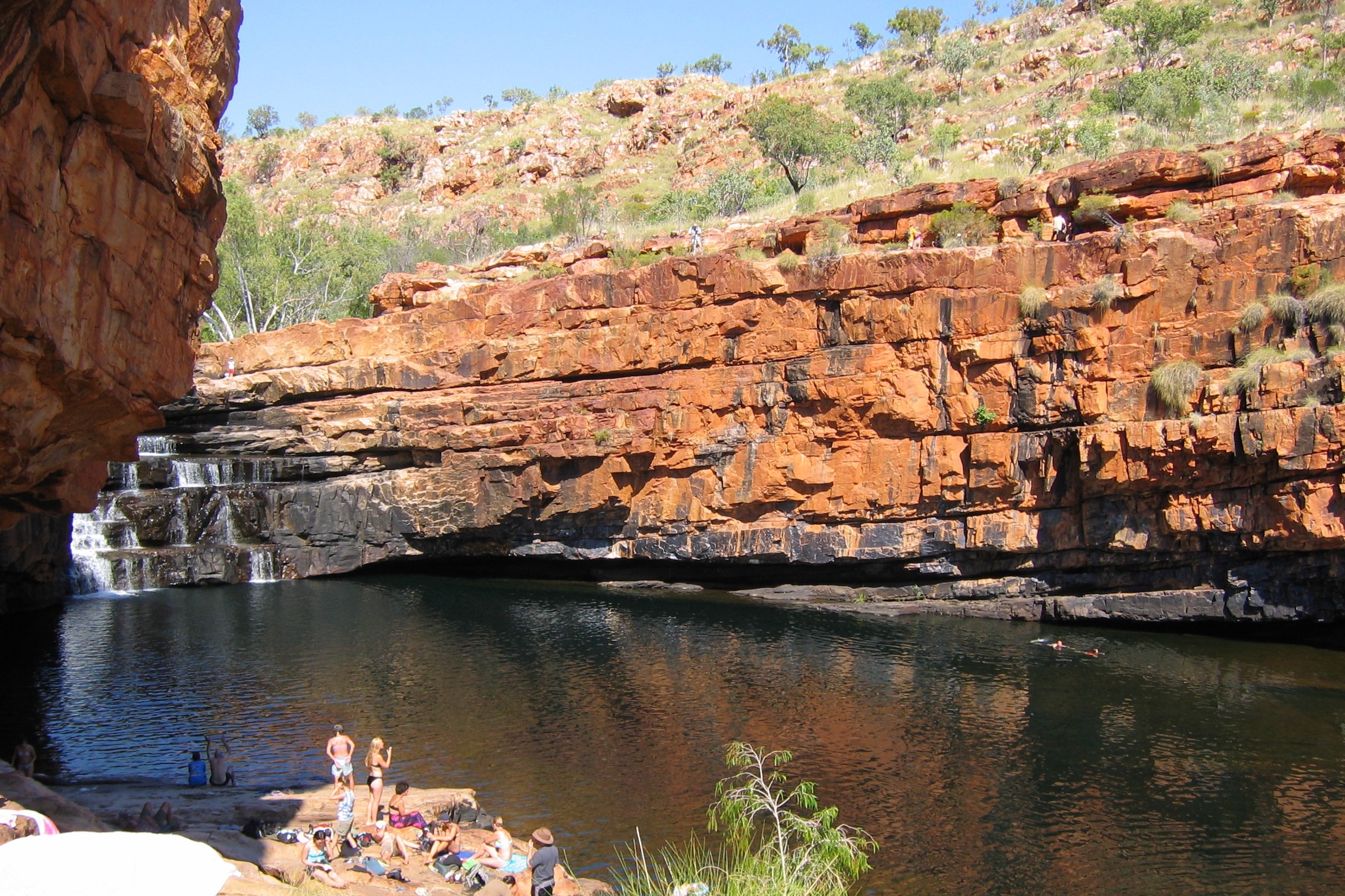
Waterhole in the Kimberleys

Waterhole in the Kimberleys

The Kimberley region of Australia is a place of dreams. The most enduring and significant of these are, of course, those belonging to its indigenous inhabitants who have been there, it is believed, for around 40,000 years. Jump forward to recent centuries and we find new dreamers – the pearlers, the gold prospectors, the pastoralists,, the farmers (with their ambitious Ord River Scheme), the miners and, most recently, the tourists.

It is a huge region occupying an area that is about three times the size of England and it is beautiful, with its beaches, gorges, waterfalls, rivers, lakes and stunning sandstone and limestone rock formations. It has a long and rich indigenous culture and a fascinating, if not always admirable, colonial history. In other words, it’s a region that is of much interest, historically, culturally, socially and geologically.

The most famous book about the region is, surprisingly, a history,  Mary Durack‘s Kings in grass castles (1959), which chronicles her family’s story from their migration from Ireland in the mid-19th century to their life as Kimberley pastoralists in the mid-20th century. Durack wrote other histories, as well as novels, children’s books, and articles. She wrote sympathetically about the indigenous inhabitants and provided practical help and support to indigenous writers and artists.

Many Australian writers, including some I’ve mentioned in recent Monday Musings like Ion Idriess and Henrietta Drake-Brockman, have set writings in the area. Novelist Dora Birtles describes the town of Wyndham:

Wyndham lay flat under the moonlight, its main street, its corrugated iron roofs, its mud flats by the mangrove edges, drawn into main relief, in highlight and dark shadow like the strong, rough contrast in a lino-cut, white and black. The salt pans glittered sharp as ice. It was not without beauty in its starkness…

Other writers who have written about the area include Leslie Rees and Randolph Stow, who worked at a mission for several months and used this experience in his novel To the islands.

A more recent Australian writer who has set writing here is Tim Winton, in Dirt Music. In an interview he said:

Lu gets to see something of the endurance and power of Aboriginal wisdom. For someone like him, a southerner if you like, with farming connections, he’s mostly been exposed to indigenes as victims, and being in the remote parts of the Kimberley he sees more power, more confidence, more evident, extant culture that resonates, educates him in an oblique way.

But I’ll conclude with a poet I don’t know, because his description conveys a wonderful sense of the region, some of which reflects my own, admittedly brief, experience:

Fire-red mountains, fissured and caverned,
lilac-hazed ranges, red-purple ravines,
have reared round, receded, and reappeared
all  day through my vision. This is the region
of baobab trees, of monstrous obese
baobabs squatting in chaos of sun-fired,
sun-blackened boulders in the ranges’ ravines.

— Ronald Robinson, “Kimberley Drovers”

Thanks to Peter Pierce’s The Oxford Literary Guide to Australia, Oxford: Oxford University Press, 1983, for the bulk of the literary background in this post.

Monday musings on Australian literature: Literary hoaxes and identity scandals

Have you ever heard of the Ern Malley affair? Or of Helen Demidenko? Or what about Mudrooroo? These are just three of Australia’s literary controversies involving false identities. Why are Miles Franklin and Henry Handel Richardson perfectly acceptable pseudonyms, while Helen Demidenko, for example, is not? Aye, there’s the rub…

It seems to have something to do with a conscious attempt to defraud, to trick … and yet …

Let’s look at three recent Australian literary scandals. One is white male author Leon Cameron whose supposedly autobiographical novel, My own sweet time, was published in 1994 by indigenous publisher, Magabala Books. He presented himself as Wanda Koolmatrie, a Pitjantjatjara woman of the Stolen Generation, and he won the Dobbie Literary Award. The truth didn’t come out until he tried to sell his sequel and the publisher asked to meet him. And then all hell broke loose.

Another is Norma Khouri‘s Forbidden Love which was published by Random House in 2003 as a non-fiction account of the honour killing of her best friend in Jordan. It was a best-seller, but after being exposed by Sydney Morning Herald literary editor, Malcolm Knox, she admitted – eventually – that she had taken “literary licence”. For a work marketed as non-fiction, this was a bit of an understatement!

Then there’s Helen Demidenko, whom I mentioned in the opening paragraph. Her novel The hand that signed the paper won the Vogel award for unpublished manuscript in 1993 and then the prestigious Miles Franklin award in 1994. Helen Demidenko was a pseudonym for Helen Darville. On its own, that doesn’t seem like a huge crime, but the controversy came about because she presented her novel as being based on the experiences of her Ukrainian family. She said that the events that she wrote about in the book “actually happened”. Well, they may have, but not to her or her family. This book became the subject of a longstanding literary debate*.

What probably made people most angry about these hoaxes is that they involved authors appealing to our sympathies – by masquerading as minority writers (in the case of Cameron and Darville) and/or writing a “true” story about a devastating event (in the case of Khouri). And why did they do this? To get published, to rise above the crowd? Or, to make a point (as had been the case with the Ern Malley affair)?

In general, literary hoaxes tell us something we all know, that it is tough to get published and that prevailing cultural and social sensibilities can get in the way of  who and what gets published. They also suggest that for some people the ends just might justify the means. But, besides these, let’s say, more practical concerns, they raise some fundamental issues for readers and critics about the nature of literature, about what we mean by authenticity and how we define quality. Would Khouri’s book have packed the same punch if it was known to be fiction? Why or why not? We know honour killings occur and Khouri** reached a lot of people with her story. Is the message less valid because she based her story on research rather than telling the true story of a friend? Similarly, are Demidenko’s and Koolmatrie’s stories somehow less “authentic” and of less literary quality because the authors aren’t who they say they are?

The bottom line is, I suppose, is the work the thing? Always? It depends?

What is your experience of literary hoaxes – and what do you feel about them?

* An additional controversy regarding plagiarism came later, though she was I believe acquitted of this latter accusation.
** Khouri’s story is complicated by the discovery of other fakes or frauds in her life.