Monday musings on Australian literature: Australian women writers, 1930s

In July I wrote two posts based on Nettie Palmer’s 1920s assessment of great Australian novels. In 1935, another Australian novelist, Zora Cross, wrote an article about Australian women novelists and poets. I enjoy reading these contemporary perspectives, and I think some of you are interested too … do let me know if you aren’t.

I’ve said it before I think, and that is that there were two flowerings of Australian women’s writing in the twentieth century, one in the 1920s-40s and the other in the 1970s-80s. It’s a bit early to tell but I’m wondering whether we are experiencing another one now. Let’s hope so – not at the expense of our male writers, but recognised and read, alongside the men.

I don’t know Zora Cross (1890-1964) as well as I know Nettie (and Vance) Palmer, but she was a recognised novelist, poet and journalist in her day. Her aim in her article, published the Sydney Morning Herald in 1935, was to demonstrate the strength of women’s writing. She starts by naming writers who, at that time, had been writing for twenty years or more – writers still known to us (Miles Franklin and Mary Gilmore), and those far less known, if not pretty much forgotten (Louise Mack, Ada Holman and Dora Wilcox). The only one I know of these last three is Louise Mack – as she is in my TBR pile. Cross then mentions younger writers, of whom only one, Katherine Susannah Prichard, is well-known to me. The others are Dulcie Deamer, Vera Dwyer, Ella McFadyen and Nina Murdoch. When I read these lists, I wonder which of today’s writers readers a century from now will know. Sometimes I wish I did believe in eternal life – or, reincarnation!

Like Palmer, Cross uses headings in her article, so I will again follow.

Success abroad

Nettie Palmer, ten years earlier, also talked about writers succeeding abroad, but Cross writes of two different sorts of successes. One is that achieved by writers who started writing “at home” and then move abroad. She names several, again mostly not well-known now – Helen Simpson, Alice Grant Rosman, Dorothy Cottrell – and one completely unknown to me, and about whom some quick Google searching has revealed nothing, Daniel Hamlyn. Hamlyn, she says, won The Bulletin’s second novel competition, the first one having been jointly won by Katherine Susannah Prichard and M. Barnard Eldershaw. I think I’ll need to actually go to a Library and research The Bulletin to discover more about her! Cross doesn’t mention Christina Stead, but as Stead only published her first book in 1934, that’s not surprising.

The other “success abroad” Cross mentions is that achieved by those who hadn’t left home. One of the most interesting of these is, she says, Eleanor Dark. She does, however, name several others, all unknown to me, so I’ll just mention a couple which stand out because of her comments. One is Georgia Rivers whose novel, The difficult art about a young girl growing up, “is a most unusual book”. She doesn’t elaborate, but this has piqued my interest. Another is Jessie Urquhart who, she says, “will not, I think, do her best work until, like Alice Grant Rosman, she  relinquishes journalism for fiction”. An intriguing comment from a novelist-poet-journalist! It would be interesting to know whether Urquhart needed her journalistic work to survive. The last one I want to mention is Mary Mitchell who achieved London success with the wonderfully titled Warning to wantons. Cross tells us that this book is not Australian so “of little importance to us here. She could write, I’m sure, a good Australian society novel, for which there is a waiting public.” I hadn’t realised until this point that her article is not just about Australian women writers, but about Australian women writers writing about Australia.

Literary competitions

Here Cross mentions Marjorie Barnard and Flora Eldershaw (aka M. Barnard Eldershaw), and another writer I don’t know, Velia Ercole, as writers brought to notice through winning competitions. But, as Palmer did (though under her “abroad” category), Cross focuses her attention here to Henry Handel Richardson who, she says, was introduced to Australia by Nettie Palmer.

Cross, like Palmer, praises Richardson, saying that few “have equalled her in style and form of production”. She says that fame finally came with the last book in her Fortunes of Richard Mahoney trilogy, Ultima Thule, which she describes as “lucid and sincere”. Nonetheless, she does suggest that “there are faults to be found from an Australian point of view” with the novel, “but few with the presentation of it”. She’s not clear about what these faults are, though suggests that many may “question the worth” of such a detailed look at “a failure’s life”.

Ethel Turner

Cross’s last heading is devoted to Ethel Turner, whose juvenilia I plan to review later this year and who is famous for her novel Seven little Australians. Cross again shows that her interest here is writing about Australia when she says:

Too much stress cannot be laid on the fact that Ethel Turner, from the moment she opened the door of an Australian house and showed the world what we were really like, has been a guiding star for the best. She has not been able to give us adults as real as children but the germ is there.

But, the cultural cringe is strong, Cross implies, when she says that Australians do not recognise that Turner’s children are as immortal as Alice [in Wonderland] and much more real than Anne of Green Gables. Fighting words, eh! She names writers who have followed Turner, including Mary Grant Bruce whose juvenilia I reviewed earlier this year.

Conclusion

This is not one of Cross’s headings, but after her discussion of Turner she writes a few paragraphs about other writers and writing. She refers to “imaginative women writers [who] are immersed in journalism”, playwrights, and women who write humorously, such as Miss Lloyd and her book Susan’s little sins. Couldn’t resist mentioning that one!

She then writes, curiously, that:

All of our women writers are well read, none very keen about sport, though golf and tennis and sometimes dancing play a part in their leisure moments. All are earnest, sincere workers.

I wonder why she felt the need to say all this? Anyhow, she follows this by saying she has left one writer to last, Mary Gilmore “whose hobby may well be ‘the finding of new writers'”. Dame Mary Gilmore wrote poetry and prose, though Cross, rightly, believed that it’s for her poetry that she’ll most be remembered.

And here, I’ll conclude with her conclusion because – well, see what you think:

Our women aim at truth in writing just as the men do: and this is characteristically Australian. We do not need to read Russian literature to inspire us to realism. Our country, born of suffering and hardship, has shaped our character, and out of it is coming a literature entirely different from any other. Women are doing their share in the building up of this national literature just as they did their share towards the making and shaping of the nation itself.

So there!
Monday musings on Australian literature: National Biography Award

I have mentioned the National Biography Award before, but have never dedicated a post to it. Since this Monday musings coincides with the announcement of the 2014 award, I thought it would be a good time to write a little about this award.

The National Biography Award was initially endowed by Geoffrey Cains, with support a little later by Michael Crouch, and is managed by the State Library of NSW. Its aim, says its website, is “to encourage the highest standards of writing in the fields of biography and autobiography, and to promote public interest in these genres”.  As of 2013, the winner receives $25,000, with each shortlisted book receiving $1,000. I like the fact that more and more awards are providing a monetary prize for the shortlisted works. Associated with the award, since 2003, has been an annual lecture on the subject of life-writing. The list of lectures, and papers if available, can be found on the State Library of NSW’s website.

The shortlist for 2014 was:

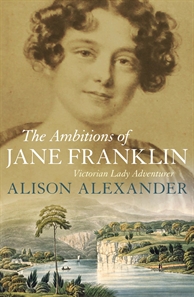
    Alison Alexander, The ambitions of Jane Franklin
    Courtesy: Allen & Unwin
    • Alison Alexander’s The ambitions of Jane Franklin (Allen & Unwin). This one intrigues me as Lady Jane Franklin, about whom I’ve written before, was one of those amazing 19th century woman who came to my attention through contemporary novels, including Richard Flanagan’s Wanting and Andrea Barrett’s The voyage of the Narwhal, and a book of poetry titled Jane, Lady Franklin by Tasmanian Adrienne Eberhard. The biography is subtitled, Victorian lady adventurer. I don’t know Alexander, but she is apparently a Tasmanian historian.
    • Steve Bisley’s Stillways: A memoir (HarperCollins Publishers). Steve Bisley is an Australian actor and this book, the website says, is “a classic memoir of an Australian childhood in the sixties”. That in itself gives it some appeal to me.
    • Janet Butler’s Kitty’s war (University of Queensland Press). This one is on my TBR. It is based on the war diaries of World War 1 army nurse Sister Kit McNaughton. In 2013 it won the NSW Premier’s Prize for Australia. Butler works in the History department at La Trobe University.
    • John Cantwell & Greg Bearup’s Exit Wounds: One Australian’s War on Terror(Melbourne University Publishing). Cantwell was a Major-General in the army who served in Iraq and Afghanistan, and ended up with post traumatic stress disorder (PTSD). He has written this with Walkley Award winning journalist, Greg Bearup.
    • Sheila Fitzpatrick’s A Spy in the Archives (Melbourne University Publishing). Historian Sheila Fitzpatrick lived in the Russia during the Cold War, while researching for her doctoral thesis. She apparently felt at home in Russia, but, as a foreigner, was always seen by Soviet authorities as potentially a spy. The book explores this part of her life. Fitzpatrick is regarded as an expert in the field of Soviet/modern Russian history.
    • Gideon Haigh’s On Warne (Penguin Australia). Australians will know immediately the subject of this biography, the flamboyant, controversial but highly-talented cricketer Shane Warne. Gideon Haigh is a journalist who has written several well-regarded and award-winning books on sport, media and the automotive industry (among other topics).

    All books I’d willingly read … though Alexander’s and Butler’s would be my top priority.

    And the winner is: Alison Alexander’s The ambitions of Jane Franklin! Now I really do want to read this book … It was a little tricky to find who won via a normal Google search several hours after the announcement, so I turned to Twitter and there it was (of course). Will it be reported on Australian television news tonight? I wonder!

    Anyhow, once I knew the winner, I was able to search on that and found a Sydney Morning Herald article which quotes chair of the judging panel (and a previous winner), Jacqueline Kent, as praising the book for its detailed portrayal of a “highly intelligent, vital and strong-minded woman” She said that “This is a biography that drew on a huge amount of research but is also very light on its feet”. Apparently Franklin, according to the Herald, had left behind “8 million words in journals and correspondence”. Alexander is reported as saying that the biography would have been impossible without a “Find” key to search documents. Isn’t modern technology grand – though the “find” function can’t completely replace in-depth reading during which you can find all those wonderful serendipitous details that make research such fun.

    Monday musings on Australian literature: The novel in Australia, 1927-style, Part 2

    Today’s Monday Musings is Part 2 of my two post series discussing Nettie Palmer‘s article, “The novel in Australia”, that was published in The Brisbane Courier, 15 October 1927.

    As I did in last week’s post, I’ll use her headings to share her view on Australia’s great novels.

    A novelist abroad

    Here she discusses Australian writers who wrote their novels while living overseas, Australians being, as we know, good travellers. It’s no surprise that her choice of the best known novel written while its writer was abroad is Henry Handel Richardson’sMaurice Guest (1909), which is a “brilliant story of music-student life in the Leipzig of the ‘nineties”. (This is another languisher on my TBR pile).

    Palmer then tells us about Richardson’s Australian trilogy, The fortunes of Richard Mahoney, which she wrote mostly from her home in England though she “revisited Australia about 1912 to verify impressions”. Palmer’s article was written before the third book in the trilogy was published, but here she is on the first two:

    The writer’s knowledge of the period – costumes, food, and customs – is immense but the “Fortunes” is never a mere costume novel: there is character all through. All Henry Handel Richardson’s novels, even those whose setting is wholly Australian, are better known in Europe than here, and are discussed at length in German and Scandinavian literary encyclopaedias and reviews. In America too, they have received deep attention. Victoria is fortunate to have found such a chronicler, more fortunate than it knows yet [my emphasis].

    Cultural cringe, or because Richardson was based overseas? Whatever the reason, recognition of her work did increase through the century. The Australian Dictionary of Biography entry on Richardson, written in 1988, discusses her reputation briefly, and touches on the unevenness of her reputation – overseas and in Australia.

    Contemporary novels

    Palmer concludes her article by looking at contemporary (to the late 1920s, that is) novels, and names a few she deems significant.

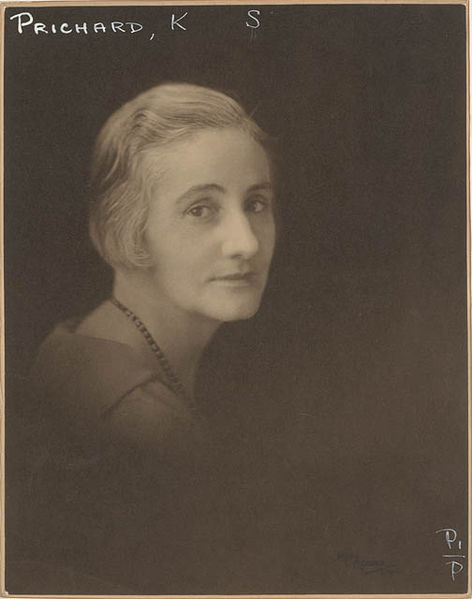
    Katharine Susannah Prichard

    Prichard, 1927/8 (Courtesy: State Library of NSW, via Wikimedia Commons)

    Katherine Susannah Prichard’s works, she says, “are the fruit of an intense devotion to her subject matter. Her gifts are mainly two: first, that of brilliant impressionism, then a rare power of writing group-scenes.” In Black Opal, for example, the opal miners are “standing about chaffing each other and discussing the universe, every man of them alive”. She says there are similarly vivid scenes of groups of timber-getters in Working Bullocks. “Such scenes”, she says, “are too difficult for most novelists, who shirk them: yet they enrich a book immensely and the reader feels that our everyday life is full of unsuspected charm”.

    Palmer then writes something rather strange (to me anyhow). She comments that each of Prichard’s books is located in a different place – the tall-timbers of South-east Victoria (presumably The pioneers, which I’ve reviewed), the opal fields of Western New South Wales, and the saw-milling country in the south of Western Australia. She says:

    (Reading over this list of regions I can only feel how wretchedly inconvenient our Australian names are: a mere mention of latitude and longitude! Are we too big to think about? It will take many years for many of our names to become easy and vivid.)

    What does she mean? Those names are purely geographical descriptions. The pioneers is, yes, set in south-east Victoria but this region does have a name – Gippsland – which it has had since the nineteenth century. I don’t think I’m on Palmer’s wavelength here at all.

    Anyhow she concludes this section with the statement that there’s “little space left for some recent Queensland books” (because, of course, The Brisbane Courier is a Queensland newspaper). She names Zora Cross, whose books “put on record the changing years of a South Queensland [ha!] district” and M. Forrest, whose novels “have that special quality which readers of her verse would expect – a power of painting in words the rich details of Queensland’s unexplored landscapes”.

    Conclusion

    As I read this article I pondered what criteria Palmer was using to define quality novels. Good characterisation, meaningful realism (if that makes sense), and a capturing of Australian identity seem to be what she was looking for. Fortunately, she has a go at answering this question herself in her last two paragraphs.

    Firstly, she says that:

    the most satisfactory definition of a good novel seems “the revelation of character through narrative,” but the character need not be only human. There is also the character of a country.

    She then suggests that good novels break new ground, with the author “giving part of himself away, revealing his personal vision of ‘men, coming and going on the earth'”. On this point of innovation, she quotes Randolph Bedford, who appeared in Part 1 and who, she says, satirised the idea that “the average publisher loves words written to a formula, to please a reading public which dislikes anything new”. Bedford apparently said of this public:

    It loves to read some old friend it recognises, so it can say, “How original it must be, because I know it so well”.

    Oh dear. Have things changed do you think?

    Palmer then presents her own definition of “a more genuine kind of originality” – and it’s to do with the difficulty of making “Australian life and character their theme”. She concludes:

    Some day, when a novel about life in Indooroopilly seems as natural as one about Piccadilly, we shall thank those who turned the first sods so fruitfully.

    So there it is really. The cultural cringe. This I think has changed.

    * Wikipedia tells us she was Iris Murdoch’s second cousin twice removed. A remote relation, perhaps, but interesting nonetheless!

    Monday musings on Australian literature: The novel in Australia, 1927-style, Part 1

    Nettie Palmer was one of Australia’s leading literary critics, not to mention essayist and poet, through the 1920s to 1940s. I have mentioned her several times in this blog, including in my post on Australia’s literary couples. She also mentored younger women writers such as Marjorie Barnard and Flora Eldershaw. However, what I want to discuss today – and next week – is the article she wrote in 1927, about “The novel in Australia”. It was published in The Brisbane Courier, 15 October 1927.

    She starts by commenting that the number of “good novels written in Australia has been small”. There are reasons for this she says but discussing those is not her aim in this article. Rather, her plan is to reduce her list of “good” Australian novels to just the best. The result “is a nugget of surprisingly high quality”. And now my plan is to share with you those nuggets that she defined for her readers back in 1927. It makes for interesting and sometimes surprising reading. Here goes, using the headings she did.

    Some early nuggets

    She names two.

    Thomas Alexander Browne (aka Rolf Boldrewood) (Public Domain from the National library of Australia, via Wikipedia)

    Thomas Alexander Browne (aka Rolf Boldrewood), by Henry Walter Barnett (Public Domain from the NLA, via Wikipedia)

    Henry Kingsley’s Geoffrey Hamlyn (1859), which is a book I have in my TBR and would love to find time to read. I’m not sure I had heard of it until a few years ago but it keeps popping up in unusual places which has piqued my interest. It has, Palmer says, without elaborating, “a very colonial outlook”.

    Rolf Boldrewood’s Robbery under arms (1882), which I defy any self-respecting Australian to say they haven’t heard of (though I suspect many of us haven’t read it!). She does elaborate over one and a half paragraphs on this one! She writes that, despite its “truculent title”:

    It is one of those rare books that can please on several different counts – as an adventure story, as a sketched historical background, and as a sons psychological novel.

    I love that she praises it for its “fine and unexaggerated vernacular, without dropped aitches or other irritating apostrophes to spot its pages”. She sees it as a model for good novels in Australia.

    Some successors

    Palmer then says that it was a “long time before the simplicity and naturalness of that book was again reached”, but eventually some more nuggets appear.

    Marcus Clarke’s For the term of his natural life (1870), but she does not elaborate.

    Mrs Campbell Praed’s (or Rosa Praed as I know and have read her) “easy flowing books now almost forgotten” (1890s). Books being forgotten is, clearly, an age-old problem! Anyhow, she names one, which I haven’t read, Longleat of Koralbyn.Wikipedia tells us that it  was first published in 1881 under the exciting (my description!) title of Policy and passion! No wonder it was republished under a different title. I have read Praed’s rather raw The bonds of wedlock (1887). I laughed at Palmer’s comment that Praed’s books are set in Queensland but “the writer shirks the whole problem of making her Queensland live in the readers’ sight”. That could mean a number of things – but the important thing, I suppose, is that she likes Praed’s writing!

    Then, though her subject is novels, she mentions short story writers, naming Louis Becke, Price Warung (whose stories I’ve reviewed), Henry Lawson and Albert Dorrington.

    She concludes this section with the following:

    For many years it has seemed that only short stories would ever be published again (and those only in fugitive form): any novels that appear have had every sort of circumstantial opposition to overcome.

    Fugitive form? Does she mean in magazines (like The Bulletin, established in 1880) and newspapers rather than something more permanent like books? I suspect her comment about the difficulty of getting novels published is not totally incomprehensible to writers today?

    Novels after 1900

    Her choice of novels from the early twentieth century includes a couple of authors I don’t know. Regular readers here will recognise which ones they are by not having seen them mentioned here!

    First up, of course, is Miles Franklin’s My brilliant career which she describes as a “bit of ironic auto-biography, set in an up-country township of the drearier sort”. Palmer, from the point of view of 1927, hopes that “some day she [Franklin] will be able to repeat her early success, looking through the opposite end of life’s telescope”. Franklin did achieve fictional success again, in the late 1930s, with All that swagger.

    She then names Randolph Bedford’s – quick quiz question: have you heard him mentioned here? – two novels. True eyes and the whirlwind (1903) and The snare of strength (1905). (Don’t you love these titles?) Palmer describes the first as “a novel of the picaresque style, a useful type for expressing the nomadic youth spent by many Australians before they find their life’s work”. Interesting. I hadn’t quite realised just how far back the idea of Australians as travellers extends, but it reminded me that Patrick White spent time jackarooing in Australia, in the 1920s, and travelling overseas as he sought a place for himself in the world. Overall, she says, Bedford’s work “is never without a fine gusto”. Sounds worth checking out.

    I’m pleased to see that she also includes in her list, Barbara Baynton and her novel The human toll (1907) which, she says “had a strong, if acrid life of its own … full of bush tragedy”. That’s our Baynton!

    And finally, in this group, she names Louis Stone’s Jonah, “a Sydney story of young larrikins, done with sincerity”.

    Palmer ends this section with a cry that is surely universal:

    Out-of-print, out-of-print – that is what one has to lament about all these books! Many novels deserve to die in their year of birth, but what of those that have permanent quality? We can only beg for new editions.

    I will conclude my discussion of her article in next week’s Monday Musings.

    Monday musings on Australian literature: Indigenous writers recommend …

    Last week, to commemorate the beginning of NAIDOC Week, I devoted Monday Musings to Anita Heiss’s series of interviews with indigenous Australian writers, In conversation with BlackWords. I said then that this week’s post would also draw from the series – and so here it is.

    I’m not 100% sure of Heiss’s process, but I think she sent the same set of questions to all writers, and they answered some or all of questions as they desired. I am focusing, in this post, on one of the questions. Seventeen of the twenty writers responded to it. The question is:

    What book do you think every Australian should read?

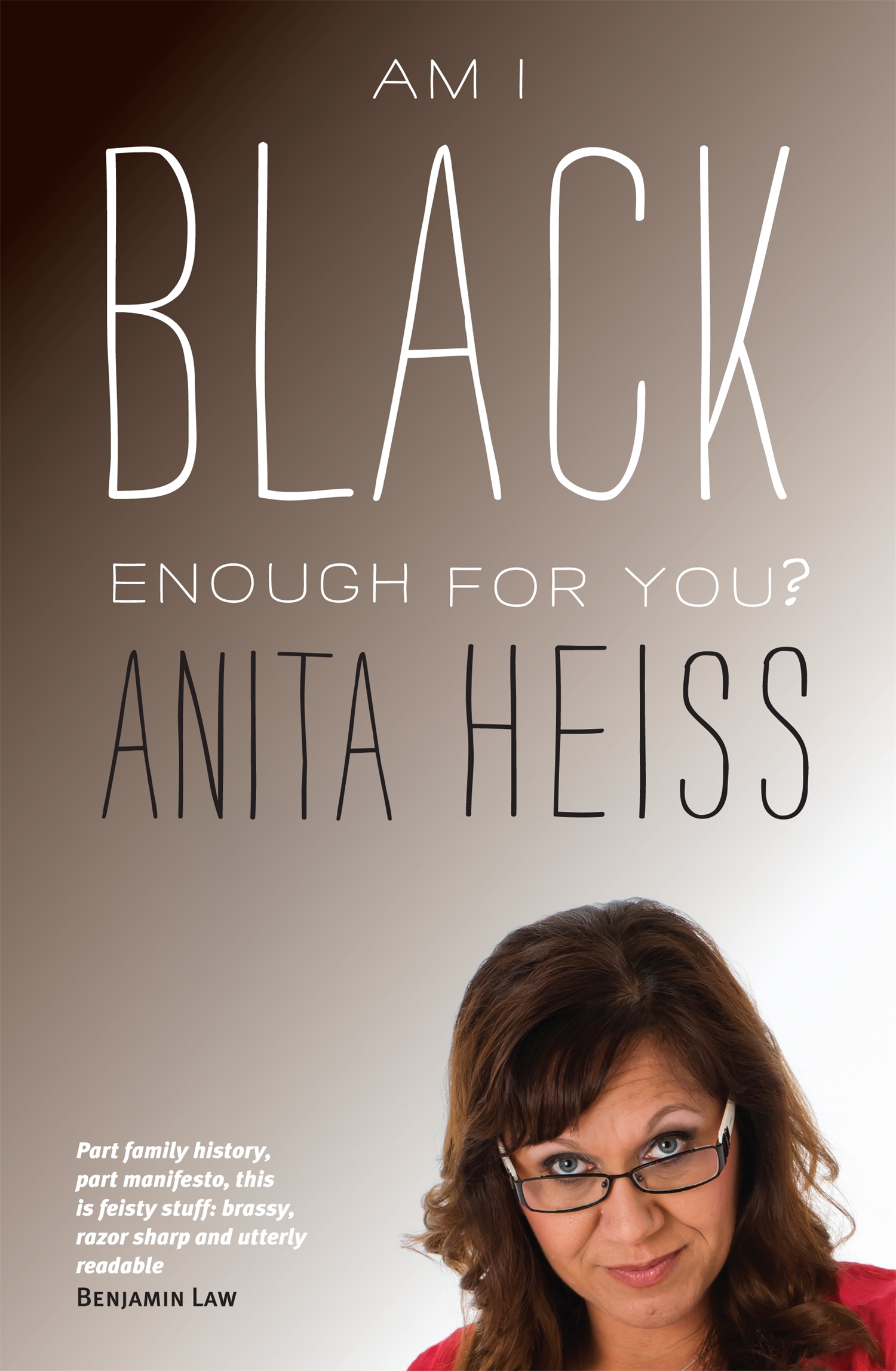
    Anita Heiss, Am I black enough for you?

    Courtesy: Random House

    The answers are fascinating. Most, as you would expect, recommend books that would help all Australians learn and understand more about indigenous culture and history, and the books they recommend are mostly by indigenous Australians. But, the interesting thing is that there’s a lot less duplication than I expected. I like this. It suggests the existence of an active indigenous literary culture. No simple, easily defined cannon here! It provides a great list for us all to go to – both now, and when we are planning for ANZLitLovers’ 2015 Indigenous Literature Week.

    Anyhow, I thought, when I decided to do this post, that I could tally up the recommendations and list them in popularity order. But, given what I actually found, I have decided instead to simply list them in alphabetical order by author/editor, with the name of the recommender/s and comments where appropriate.

    • Berendt, Larissa: HomeEllen van Neerven called this “A very important book.”
    • Carey, Peter*: True history of the Kelly GangJared Thomas said it “alerted me to class struggle – the fact that it is not only Aboriginal people who have endured persecution in this country.”
    • Chi, Jimmy: Bran Nue Dae (script). Kim Scott.
    • Eckermann, Ali Cobby and Fogarty, Lionel (eds): Southerly, Vol 71, No. 2, 2011, “A Handful of Sand: Words to the Frontline”. Lorraine McGee-Sippel described this as “An invaluable resource of Australia’s First Nations writers … Across all genres, ages and life experiences”. She believes is should be “compulsory reading … in all high schools and universities”.
    • Eckermann, Ali Cobby: Ruby MoonlightBruce Pascoe.
    • Gammage, Bill*: The biggest estate on earthKim Scott simply said “an important book”.
    • Gilbert, Kevin: Because a white man’ll never do itKerry Reed-Gilbert, his daughter.
    • Green, Evan*: Adam’s empireSue McPherson described it as “a good Aussie story. It should be made into a film.”
    • Haebich, Anna*: For Their Own GoodKim Scott said that it “focuses on south-west Western Australia, but the power relationship it articulates applies across the continent”.
    • Heiss, Anita: any book. Lionel Fogarty gave Heiss as an example in recommending “Indigenous-authored books such as those by Anita Heiss.
    • Heiss, Anita: Am I black enough for you? Jared Thomas, Bruce Pascoe (my review)
    • Heiss, Anita and Minter, Peter (eds): The Macquarie PEN Anthology of Aboriginal LiteratureKerry Reed-Gilbert.
    • Leane, Jeanine: Purple threadsMelissa Lucashenko (my review).
    • McMullen, Jeff*: any writing. Samuel Wagan Watson.
    • Maynard, John: Fight for liberty and freedom. Recommended by himself.
    • Munkara, Marie: Every secret thingBruce Pascoe (my review).
    • Papunya School with Nadia Wheatley and Ken Searle: The Papunya School Book of Country and HistoryAnita Heiss likes this because it is “accessible to all”.
    • Pascoe, Bruce: works by him. Recommended by himself.
    • Pascoe, Bruce: EarthMelissa Lucashenko.
    • Pilger, John*: A secret countryKate Howarth.
    • Reynolds, Henry*: any book. Kerry Reed-Gilbert argued that “it’s time for people to know the truth of this country”; Samuel Wagan Watson.
    • Reynolds, Henry*: Forgotten WarLorraine McGee-Sippel said that it “addresses Australia’s selective amnesia in relation to the wars fought between Traditional Owners and the Invaders. Where are our memorials?”
    • Reynolds, Henry*: This whispering in our heartsJackie Huggins.
    • Scott, Kim: Benang: From the heart. Bruce Pascoe.
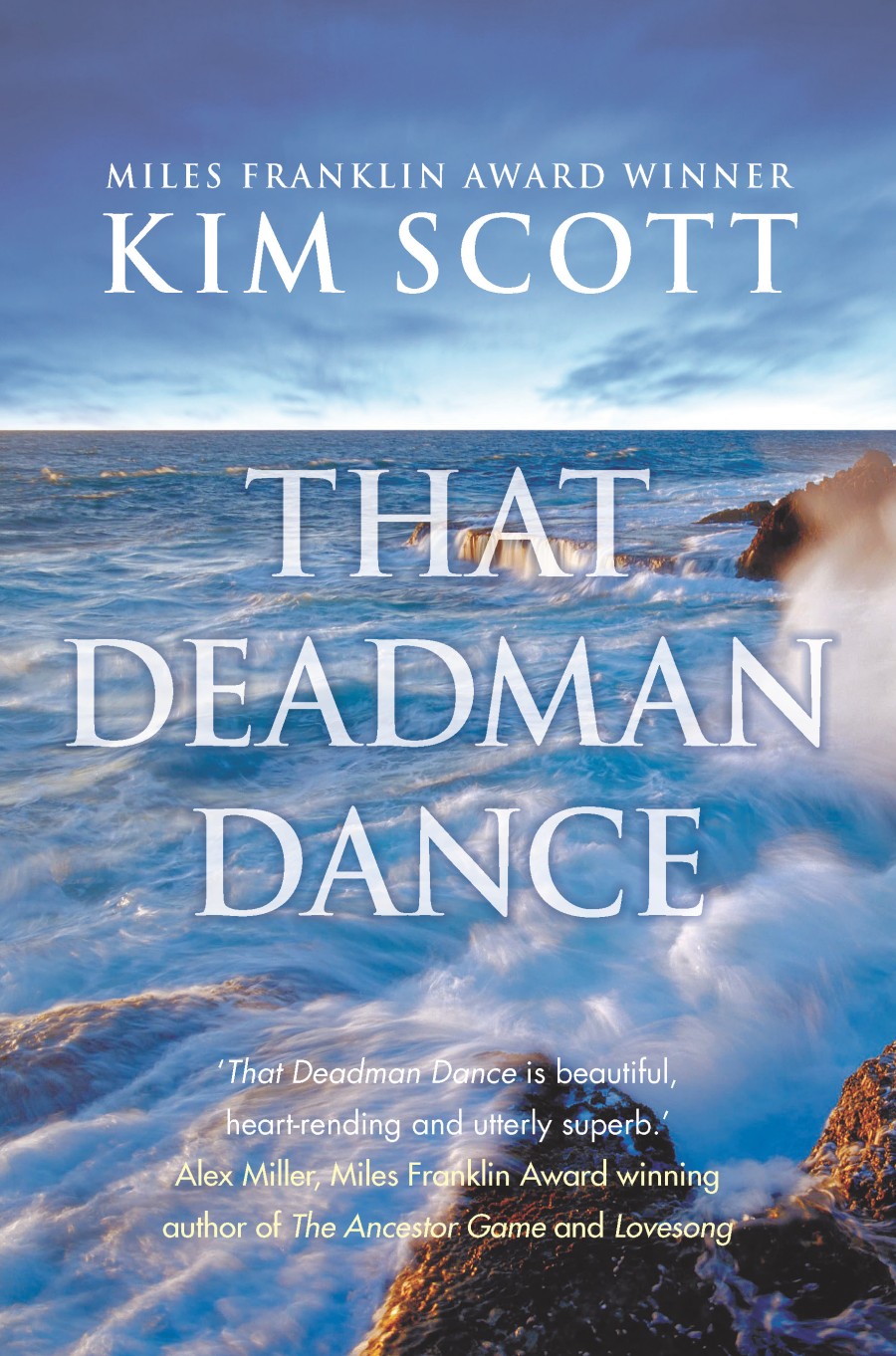
    • Scott, Kim: That deadman danceKerry Reed-Gilbert; Bruce Pascoe (my review).
    • Scott, Kim: True countryMelissa Lucashenko.
    • Thiele, Colin*: Labourers in the vineyardBruce Pascoe.
    • Weller, Archie: stories by him. Bruce Pascoe.
    • Willmot, Eric: Pemulwuy: The rainbow warriorDub Leffler.
    • Wright, Alexis: CarpentariaBruce Pascoe (my review).
    • Wright, Judith*: stories and poems by her. Bruce Pascoe.
    Kim Scott also recommended that people read an anthology of writing from the region in which they live, such as Those Who Remain Will Always Remember: an Anthology of Aboriginal Writing, edited by Rosemary van den Berg, Anne Brewster and Angeline O’Neill.

    Tegan Chillcott and Samuel Wagan Watson were a little wary of being prescriptive. Chillcott said, simply, ““whatever book seems most interesting to them”.  Watson, though was a little more explanatory. He said:

    Every Australian?’ Hmmm … It’s hard to say, and I know mature Australians who have admitted to having never finished reading a book because literature bores them. I can’t answer that question? I’ve never watched a cricket match in my 41 years either … So I must seem weird to people who don’t pick up a book. If I was on a ‘soapbox’, I’d say any writing by Uncle Henry Reynolds or Uncle Jeff McMullen.

    But some people can be turned off literature – altogether – by books that are too confronting. And that’s the delicate balance that needs to be dealt by a writer when you’re thinking about audiences. I do believe some writers have no idea that they are either not engaging with an audience or they don’t care? As a writer, on the journey of composing your work or novel or music, you need to consider your audience at every turning point. If you don’t think about the needs of your reader, you are simply writing in a very tight vacuum.

    Another respondent who didn’t seem keen to name specific titles or authors was Samantha Faulkner.

    Papunya School Book

    (Courtesy: Allen & Unwin)

    I’d like to conclude with her lovely, generous statement. She wrote:

    Any book by an Aboriginal and/or Torres Strait Islander writer. Reading a book by a First Nations Australian writer will identify similarities that connect us, and bring us together, rather than divide us. After all, we live on this beautiful country together.

    * Non-indigenous author

    Monday musings on Australian literature: In conversation with Black Words

    Today* marks the first day of NAIDOC Week 2014, which will run through to July 13. In honour of this, and of Lisa’s Indigenous Literature Week at ANZLitLovers, I thought I’d devote this week’s Monday Musings to indigenous Australian writers – and specifically to Anita Heiss’s “In conversation with Blackwords” series.

    This series is described on the AustLit website as follows:

    In late 2013 Dr Anita Heiss sent a series of questions to contemporary Aboriginal and Torres Strait Islander writers. The responses she received are at times funny, sad, moving, and always deeply insightful. Universally an important piece of advice was to ‘Read, read, read’ if you want to write. As an ambassador for the Indigenous Literacy Foundation, Anita was very happy to see that advice coming from some of Australia’s most admired and read authors.

    As far as I can understand from the website, some 20 interviews were gathered, and posted on the site between November 2013 and May 2014. The last interview (to date anyhow) is with Heiss herself. The writers interviewed include some well-known to me like Melissa Lucashenko, Kim Scott, and Bruce Pascoe, and some I’m not at all familiar with like Dub Leffler and Sue McPherson. Heiss starts by asking them about their mob and where they are from, and then asks them about their writing and their reading – about, in other words, all those things other readers and writers love to know.

    I haven’t read all the interviews, as they are pretty extensive, but have at least dipped into most, and will read more in the coming days. Here, in no particular order, are some of the things they say:

    Samuel Wagan Watson (internationally recognised poet and storyteller) said this in response to “what makes a good writer”:

    As far as what makes a ‘good writer’ … I don’t know? I’m an ‘established writer’ yet I wouldn’t consider myself a ‘good’ writer. Should we define a ‘good writer’ as someone who publishes a novel every year or an artist who simply falls in love with language and is a skilled technician who writes a sentence now and then that simply smokes with pearly-wings of an epiphany in the midst of your mind’s eye?

    Anyone who can write “smokes with pearly-wings of an epiphany in the midst of your mind’s eye” must surely make some claim to being a good writer?

    Kim Scott That Deadman Dance

    (Courtesy Picador Australia)

    Kim Scott (author of That deadman dance, among other things) said this about his aims as a writer:

    To reach and connect. To provoke, sometimes. To transform, if only a little. As Elizabeth Jolley said, to provide ‘places where people may meet’.

    To touch on greater truths. Language and stories shape the world; I sometimes want to flex and remake it again.

    He’s won me over, first, by referring to one of my favourite writers, Elizabeth Jolley. But, I also like his desire to “touch on greater truths”. It’s not surprising that an indigenous writer might also want to “flex and remake” the world.

    Ali Cobby Eckermann (poet, and author of Ruby Moonlight) offered this advice to writers:

    My advice is to be creative! Turn the telly off and be creative. A half an hour each day has the capacity to achieve remarkable results. Be relentless, and find happiness in honouring your story, the legacy of your cultural knowledge.

    Being creative, I think, is easier said than done, but I do love her suggestion to “find happiness in honouring your story”.

    Ellen van Neerven (winner of David Unaipon Award in 2013) is a writer I hadn’t heard of before. She said in answer to “who do you write for?”:

    Sometimes I could be writing for my younger self. I want people to feel less alone. I want people to feel less confused.

    Now, that’s an answer from the heart.

    Bruce Pascoe (writer of fiction, non-fiction and YA fiction). I had to finish with Pascoe’s response to the question about his writing process:

    Get up, go into room and work arse off. Break for lunch, tour of vegetable garden, back into room. In good weather I write down by the river, especially if it’s a job I’m writing longhand. In my room I’ve got a growing gallery of dead Black friends to watch over me and all the birds who come to the door and want to know if it’s ok if they tell me a story. The Willy Wagtail is good but the Scrubwren is profound, the Powerful Owl haunting, the pelican a bit superior on occasions and the cormorants are always good for a laugh. I get a hell of a lot of story from birds and animals.

    With such an imagination, you can sure see why he’s a prolific writer.

    I plan a follow-up post on this series of conversations for next week’s Monday Musings to conclude NAIDOC Week.

    * Hmm … just realised today is 7 July! NAIDOC Week started officially on 6 July!

    Monday musings on Australian literature: Once more unto the breach

    A little over three years ago, I wrote a Monday musings about the GAN (aka the Great Australian Novel) and the canon. I concluded with the questions: Do you think there is value to the idea of a canon? Or does it discourage wide and open-minded reading and coincidentally encourage a too narrow view of the culture it refers to? It generated an interesting discussion. I was reminded of it recently when I read Kerryn Goldsworthy’s 17-month-old essay “What we talk about when we talk about Australian literature” (Sydney Review of Books, 29 Jan 2013) and John Kinsella’s older article, cited by Goldsworthy, “An Australian canon will only damage Australian literature” (The Guardian, 9 March 2012).

    Critic, editor, author Goldsworthy and poet, critic, editor Kinsella are both responding, at least in part, to statements by Text Publishing’s Michael Heyward, and others, about the loss of Australian classics. Both tackle the issue of defining Australian literature, and refer to the idea of a “canon”.

    I won’t summarise all their arguments here: you can read their far more eloquent words yourselves at the links I’ve provided above. In essence, both support and encourage the teaching of Australian classics, but both also question the existence of, or wisdom of defining, a canon – for the very reasons I posed in my questions back in 2011. Kinsella puts it this way:

    Setting out precisely which books should be taught, and thereby defining a single national literature, is liable to occlude its true diversity.

    I’m inclined to agree that we should be cautious about the idea of a canon, without discounting it altogether.

    Goldsworthy opens her essay by suggesting that Australian literature changed around 1988. I loved her “proof”! It’s to do with parody nights at the annual conference of the Association for the Study of Australian Literature (ASAL). Parody, of course, requires those on the receiving end knowing the references which, in the case of ASAL, means knowing Australian literature. Until around 1988, Goldsworthy writes, there was a “pretty stable Australian literature canon” of which, of course, ASAL conference attendees would be expected to be well-versed. They therefore “got” the parodies. However, from around 1988, she says, Australian literature started diversifying – which is, I think, a good thing – and academics started specialising. Common knowledge or recognition of our literary tradition started to wane.

    This is not the only issue she mentions. A somewhat darker one has to do with politics and a reaction to the conservative cultural agenda of the John Howard era. She quotes Nicholas Jose who suggested that to avoid being co-opted into “a coercive agenda” involving teaching an approved canon, scholars opted for “a rupture … a clean break with a shameful past that was being recycled”.

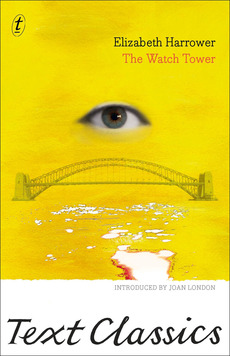
    Elizabeth Harrower The watch tower

    Cover for The watch tower (Courtesy: Text Publishing)

    Enter, sometime down the track, Michael Heyward and his Text Classics. Goldsworthy provides a good analysis of the series, addressing some of the issues regarding selection that have come to my mind – because it is an idiosyncratic list that includes works one wouldn’t have expected and omits those one would. There are many reasons for this, the main ones being availability and marketability. None of this, though, for me or for Goldsworthy, destroys the value of the enterprise. It’s just that you have to understand the parameters and not draw invalid conclusions about “a canon” from the list.

    Kinsella takes a related but somewhat different tack to Goldsworthy, partly because hers is longer and therefore broader in reach. He immediately hones in to the idea of canons. He argues that by foisting a defined set of works on students

    we are blatantly gatekeeping: setting agendas of control and manipulation. The teacher becomes an extension of the state in more ways than being its employee or citizen.

    He argues that a national literature be looked at with “flexibility and an openness to change and reassessment”. He then says something a little more provocative:

    Australian ‘classics’ are too often limited to texts that work as affirmations of Australian identity: about being Australian, if not being in Australia. In fact, the much-lauded Miles Franklin award is unapologetically nationalistic: given to a “published novel or play portraying Australian life in any of its phases”. Which is not to say that the winning book has to be landscape-specific, but rather that it needs to deal with Australiannness in some way. That’s what “classics” are about in this context – and that’s what worries me.

    Those of you who follow the Miles Franklin Award will know that this very issue of “Australianness” has often provided its biggest controversies. Kinsella’s concern is that focusing on “Australianness” equates with “nationalism”, as does, he fears, the creation of a canon. He says that, in focusing on a canon,

    we run the risk of affirming the many other dubious tenets of any nationalism. Nationalism is about exclusion, about quarantine, about community in which consensus, the rights of all to have a say, are ceded to bodies of authority.

    It’s a valid concern. Canons can change – and we can be committed to making our canon “diverse” – but the very act of selection does, unavoidably, make a statement. Of course, we can never not select when it comes to choosing what to teach or what we are individually going to read, but keeping the field from which we select open must be a good thing (even if that means parody nights have to go the way of the stone tablet!).

    Meanwhile, Kinsella challenges us to seek out writing that doesn’t affirm received notions of “who we are”. I need, I know, to do better in this regard …

    Monday musings on Australian literature: Red Room Poetry Object Competition 2014

    Just a quick Monday Musings today but an interesting one I hope.

    Red Room Poetry Object is a poetry-writing competition for Australian students in Years 3-10. It was created by The Red Room Company, which is a not-for-profit organisation that was established in 2003. It apparently grew out of the Red Room Radio Show. The company’s aim is to create “unusual and useful poetry projects which transform expectations of, and experiences with, poetry.” They want to make poetry more accessible,  especially to “those who face the greatest barriers to creative opportunities”. They run a wide variety of, mostly, public poetry projects of which the Red Room Poetry Object is just one.

    The Red Room Poetry Object was first held, I think, in 2013. It involves young writers and their teachers submitting poems of 20 lines or less about objects that are special to them. What a great idea – it provides some level of structure and framework, while being very open as well. According to the website, the 2013 project involved 72 schools from Australia and New Zealand, and they published 1200 poems by students and teachers. You can read the students’ poems here. The winning poems were exhibited from November 2013 to February 2014 at Customs House in Sydney. Submissions for this year’s project are now open, and poems can be submitted until 19 September.

    Can this Snow Gum in the Snowy Mountains be my object?

    Can this spirit-moving Snow Gum in the Snowy Mountains be my object?

    While, formally, a “talismanic object” is “an object that brings a person protection or good luck” (like coins, a ring or other piece of jewellery), for this project Red Room is looking for objects that are special to individual people, objects that “may not be worth anything to anybody else”,  that may only be precious or important to the writer (like a favourite teddy bear). The winning Secondary Student poem last year was “My book” while the winning Primary Student poem was “Nitro car”. It’s just ten lines, and concludes:

    You have an engine in your head,
    and wheels in your shoes
    that’s why I love you.

    (James, Year 6, Holy Saviour School, NSW, Winning Student Poem (Primary), 2013)

    “Making the objects sing in a new way” is how one judge apparently described it.

    The teacher’s resource book includes exercises for handing out to students. I particularly like the one on “Overcoming clichés and using specific imagery”. It encourages students to think of a clichéd image, such as “as blue as XXX” and to then replace it with a more apposite image. I was only thinking about clichés the other day, about the struggle to find fresh words to use in reviews. So hard … I think I’ll go off now and have a go at that exercise …

    PS the Red Room Company ran an event at the Sydney Writers’ Festival this year, the culmination of a project, which received funding from the Australia Council, and which they coordinated with ARTAND Australia.


    Monday musings on Australian literature: Barbara Baynton

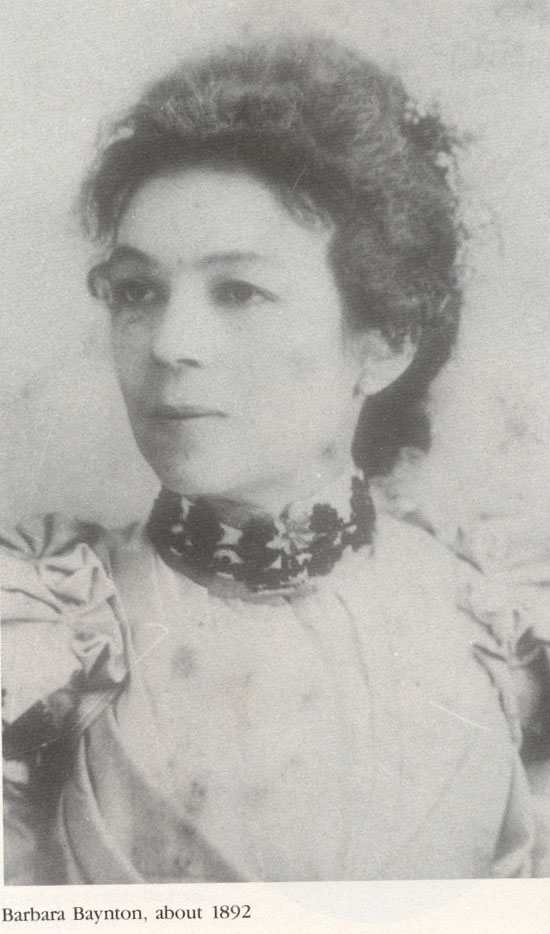
    Barbara Baynton 1892

    Baynton 1892 (Presumed Public Domain, via Wikipedia)

    It’s a while since I’ve devoted a Monday Musings to an individual author – my last being, I think, Jessica Anderson back in February 2012 – and so I thought it was high time for another one, if only to mix the series up a bit! My choice for today is – well, you know who it is from the post’s title – Barbara Baynton. She is a worthy subject for several reasons. Let me count the ways. Firstly, she does not, outside of academia at least, receive the attention she deserves. Yes, she can be a little challenging to read, particularly in her use of the vernacular, but she was quite a pioneer in the subjects she discussed and in bucking some of the male traditions of her time regarding writing about the bush. Secondly, she was an interesting person worth knowing a little about. And thirdly, I recently finished reviewing the short stories in her collection, Bush studies. Baynton only published two books: Bush studies in 1902, and a novel, Human toll, in 1907. She did write stories, poems and articles after this, but there were no more books.

    Rags to riches girl

    So, who was this Barbara Baynton? It appears that she was pretty good at covering her tracks – at least earlier in her life. In a 1980 review of Barbara Baynton (Portable Australian Authors series), author Marian Eldridge wrote that the editors had cleared up the mystery surrounding her origins. This mystery was further clarified in a biography written in 1989 by her great grand-daughter, Australian actress, Penne Hackforth-Jones. Baynton was born in the Hunter region of New South Wales in 1857, and was married three times. She divorced her first husband, with whom she had three children, after he repeatedly left her isolated when he was “a-droving and a-drinking” (Ralph Elliott reviewing Hackforth-Jones’ book). In fact, he ran off with her niece. At this point, Baynton moved to Sydney where she, aged 33, married the 70-year-old wealthy doctor Thomas Baynton, who had employed her as a housekeeper. It was during this time of material comfort that Baynton started to write about the harsh life of the bush. After Thomas Baynton died in 1904, she moved to London with her daughter and it was here, wrote Hackforth-Jones, that “she rubbed out bits of her past she didn’t like and substituted the ones she did”, creating for herself quite an ancestry. During the war, she was generous to Australian soldiers, apparently lodging, overall, some 8,000 during their leave. On a visit to Australia in 1920, she spoke of the pain experienced by Australian mothers whose sons were sent to other side of the world:

    Those mothers had not the wonderful hours when their sons were on leave. Their boys were strangers in London, and I know no lonelier place on this earth than London for the uninitiated. It is the Gethsemane of loneliness.

    Many years later, in 1921, she married Lord Headley. Elliott writes that Headley was “a Muslim convert, engineer, sportsman” who “needed money for his decaying Irish estate.” Baynton, on the other hand, “coveted the coronet”. This marriage did not last long and ended in divorce. She returned to Australia, one last time, in 1928, and died in 1929.

    Subtle like Proust, grim like Gorky!

    Researching this post, I came across some interesting contemporary (or near-contemporary) assessments of her work. One, by Australian poet, essayist, critic and literary mentor, Nettie Palmer, appeared in the Brisbane Courier of 15 June 1929, a couple of weeks after her death. Palmer analyses Baynton’s writing, quoting a passage, and arguing that:

    Baynton shows that there is no end to subtleties of human and even sub-human intercourse. The implications of that passage … make a scene as subtle as something in Proust.

    Proust, eh? I’m afraid I don’t know Proust well enough to comment on that, but it’s an interesting comparison. Baynton is determined, she says, “to record the varied strands in our human nature” even though “her actual figures are usually derelicts in some forgotten corner of a bush that she shows as without comeliness”. She then writes that Scottish writer RB Cunninghame Graham likened her to contemporary Russian writers like Maxim Gorky (1868-1936) who was determined, according to Wikipedia, to “write the bitter truth”. That certainly sounds right! Take, for example, this contemporary review of Human Toll:

    As a study in character of the morbid kind recent fiction has nothing to show equal in impressiveness to this picture of the beautiful, strenuous, high-wrought Ursula.

    That was in 1907. In 1931, another unidentified writer is somewhat critical of Baynton’s grim realism, comparing her and Price Warung (see my review of his collection, Tales of the early days) with Henry Lawson and EG Dyson. Baynton and Warung, this writer says, “have not their breadth of vision, although they have a compensatory intensity to some extent”. Hmm … that “to some extent” rather reduces what little compliment there is in this statement, doesn’t it? This writer continues that:

    “The Bulletin” encouraged the presentation of the raw and ruddy in bush sketches as an antidote to the sentimental. Yet it is no truer art to exclude the gentle and gracious side of life in the name of realism than to obliterate the harsh and repellant in the name of the romantic. Barbara Baynton is a grim realist, and her “Bush Studies” are powerful but unpleasant.

    Who said, one could ask, that art must be pleasant? For this 1931 writer, Baynton’s story “Squeaker’s mate” (my review) is “more gruesome than Gorky”, and “The chosen vessel” (my review) “raises the question of art and the horrible”. Baynton, s/he says, paints “the backblocks in the colours of hell”. S/he would much prefer Henry Lawson’s more “human” stories. But, Lawson could be sentimental, as Marian Eldridge argues. You could never accuse Baynton of that!

    But wait there’s more …

    I can’t leave this brief introduction to Baynton, without mentioning something rather surprising – her anti-suffrage stance, which was mentioned in a couple of the articles I read. Indeed, one specifically commented that she would stand on a tub in Hyde Park to argue her case! So, I delved a little deeper, and found a recent article by Lucas Smith at sheilas.org.au. He tells us that she was one of the first women to divorce in the colony after laws were passed allowing women to file. And she was able to inherit Baynton’s estate in her own name because inheritance laws had recently changed. She was an independent woman. And, her stories demonstrate the awful powerlessness of women. So, why anti-suffrage? Well, Eldridge found the following statement by her in the Sydney Morning Herald in 1911:

    It may sound disloyal to my sex, yet, it is a common truth; show me a woman in power, and I will show you a despot. Indeed, in my anti-suffrage canvass in London, my surest and most successful weapon was to just ask shopgirls, “Would you rather have a woman over you than a man?”

    Oh dear … so simplistic, and unfortunately there is still an element of this attitude today. Anyhow, Smith concludes his article with a good question – and I’ll end my post with him:

    She benefited from women’s rights struggles at every stage of her life – her divorce and her inheritance were the result of collective struggle – yet she seemingly never recognised this fact. Bush Studies portrays the fear and helplessness of early women settlers in a male-dominated colonial Australia better than any other book, yet Baynton was opposed to female suffrage, arguably the single-most important achievement of the modern women’s movement. Where is the line between the personal and the political drawn? This is the question Baynton’s story forces us to think about.

    It sure does …

    Monday musings on Australian literature: Specialist literary festivals

    Are you a reader of crime or science fiction or fantasy? Or, perhaps of poetry? A few weeks ago I wrote a post on regional literary festivals in Australia. I focused then on festivals for general and/or literary fiction. But, if you have specialist reading inclinations, there are also likely to be festivals for you. And so today I thought I’d post a selection – just to whet your appetite.

    While I was researching that last post, I came across a couple of websites: literary festivals.com.au, which lists Australian festivals, andVampires in the Sunburnt Country, which publishes a literary festival calendar for Australia. They are worth checking out if you want to know whether a festival is coming to a town near you – or, better still, your own town.

    As last time, I’ll list a randomly selected few – representing a variety of specialty and location – in the order of their establishment, starting with the oldest.

    • Australian National Science Fiction Convention. Established in 1952, and run each year in different cities by different groups. This year’s festival will be held in Melbourne and run by a group called Continuum.  Arthur C Clarke was a guest at the fourth convention held in 1955.
    • Romance Writers of Australia Conference. Running now for 23 years, this is a big affair. It’s a 4-day event and will be held in Sydney this year, but moves around a bit I believe. It is, really, more conference for practitioners than festival for readers, but with “350 published and aspiring romance writers, editors, agents and other industry professionals” attending, I figured it’s worth mentioning. Romance is, clearly, serious business. And, anyhow, the conference will include a Literacy High Tea, which they describe as a networking event “for librarians, booksellers, authors and readers” that will also be a fundraiser the Australian Literacy and Numeracy Foundation.
    • StoryArts Festival Ipswich. Established in 1995, and originally called the Ipswich Festival of Children’s Literature. It takes place biennially and is organised primarily by the Ipswich Teacher-Librarian Network (in Queensland). Good for them. Their aim is broad: “to increase an awareness of the value of the arts in relation to writing and illustration and help build and maintain increased audiences for children’s literature. We plan to inspire young people to buy and read more books and gain an appreciation of the processes involved in writing and illustrating. We also aim to enthuse teachers and parents about the value of stories and encourage them to promote literature to young people.”
    • Perth Poetry Festival. Established in 2005 as the WA Spring Poetry Festival, and now run by WA Poets Inc. It is one of many poetry festivals held around Australia, including some dedicated to bush poetry and other poetry forms, which suggests that poetry is alive and well(ish) even if poets can’t make a living from their art!
    • Jane Austen Festival Australia. Established in 2008 in Canberra, this is a 4-day Regency Festival which explores the world of Jane Austen. It includes a wide variety of activities and events including dancing, archery, historical costume making, a Jane Austen book club and lectures on literary and historical subjects. The 2014 conference included a half-day symposium on Mansfield Park.
    • Reality Bites. Established in 2008, and run by the Sunshine Hinterland Writers’ Centre (in Queensland). (It may alternate with another festival titled Reality Writes, but the website doesn’t yet have its “About” page functional). It describes itself as “Australia’s premier literary nonfiction festival” and takes place on the last weekend in October each year. It sounds right up my alley but is rather far away.
    • Death in July Festival. Established in 2014 – yes, this is its first year. In my last post I only selected festivals that had some longevity behind them but, Ballarat Writers Inc, which is organising this festival with Sisters in Crime, tweeted me about it. I reckon that deserves a guernsey. It celebrates women’s crime writing and will be held in Ballarat, Victoria, in July. Guests at this first festival will include Angela Savage whose The dying beach I reviewed earlier this year.

    As you can see, most of these are pretty recent – though there are some longstanding ones. I haven’t included any play/theatre festivals but there are several of those too. It does seem that literary festivals of all sorts are popular at present – not only in cities but also in regional towns, which clearly hope that festivals will be part of their survival in our economically tough world.

    Have you attended any speciality literary festivals? If so, what specialty has taken your fancy!