Monday Musings on Australian literature: Three Top End explorers

Well, folks, I’m back on the grid, but still in the Top End holidaying, so I’m going to make this one as short and sweet as I can.

As we traveled through Arnhem Land we learnt about various early 19th century explorers in this region, particularly Phillip Parker King (who makes an appearance, if I remember correctly but can’t check here, in Michelle Scott Tucker’s Elizabeth Macarthur: A life at the edge the world) and Ludwig Leichhardt (who inspired Patrick White’s Voss). Journals of these two, plus of Matthew Flinders, are available at Project Gutenberg Australia, and this is what I’m sharing today (for my benefit as much as yours, as I plan to come back to them!)

Matthew Flinders (1774-1814)

A Voyage to Terra Australis undertaken for the purpose of completing the discovery of that vast country, and persecuted in the years 1801, 1802 and 1803, in His Majesty’s ship The Investigator, and subsequently in the armed vessel Porpoise and Cumberland schooner. With an account of the shipwreck of the Porpoise, arrival of the Cumberland at Mauritius, and imprisonment of the commander during six years and a half in that island. By Matthew Flinders Commander of The Investigator. In 2 volumes with an atlas. London: Printed by W. Bulmer and Co. Cleveland Row, and published by G. and W. Nicol, booksellers to His Majesty, Pall-Mall, 1814.

Whew. They wrote long title pages, some of these explorers.

Anyhow, it is in Vol. 2 Ch IX, that Flinders writes of this region, and it is 1803. He describes the landscape, the plants, sightings of indigenous people. This description which seems to refer to Melville Island (part of the Tiwi Islands) particularly appealed because of our own experiences:

No inhabitants were perceived, nor any fresh traces of them; but as dogs were seen twice, it is probable the natives were watching us at no great distance; they had visited all the places where I landed, and should therefore seem to possess canoes. Traces of the same strangers, of whom mention has been so often made, were found here; and amongst others were partitions of frame work and part of a large earthen jar. Kangaroos appeared to be rather numerous in the woods, brown doves and large white pigeons were tolerably plentiful, and a bird nearly black, of the size and appearance of a hen, was shot; there were also cockatoos, both black and white, and a beautiful species of paroquet not known at Port Jackson. The aquatic birds were blue and white cranes, sea-pies, and sand-larks. Besides fish, our seine usually brought on shore many of the grey slugs or sea cucumbers, but not so abundantly as in Caledon Bay.

Australian Green Ant Gin and Tonic

Australian Green Ant G&T

We were not here pestered so much with the black flies as before; but the musketoes and sand flies were numerous and fierce. Most of the bushes contained nests made by a small green ant; and if the bush were disturbed, these resentful little animals came out in squadrons, and never ceased to pursue till the disturber was out of sight. In forcing our way amongst the underwood, we sometimes got our hair and clothes filled with them; and as their bite is very sharp, and their vengeance never satisfied, there was no other resource than stripping as expeditiously as possible.

We, too, were pestered by mosquitoes in the Top End, but what Flinders didn’t know is that those Green Ants make good bush food and medicine. I tried a gin and tonic made with Australian Green Ant Gin, and ate a fresh green ant off the real rocks as well! Can’t believe I did that, actually, but when in Arnhem Land …

Phillip Parker King (1791-1856)

Narrative of a survey of the intertropical and western coasts of Australia. Performed between the years 1818 and 1822. By Captain Phillip P King, R.N., F.R.S., F.L.S., and Member of the Royal Asiatic Society of London. With an Appendix, containing various subjects relating to hydrography and natural history. In Two Volumes.

Phillip (two “ll”) Parker King was the son of the Australian colony’s second governor, Philip (one “l”) Gidley King.

Anyhow, in Vol. 1 Ch 2, for example, we are in April 1818, and King discusses Port Essington which he named for a “lamented” friend. This later became the short-lived settlement of Victoria, 1838 to 1849, partly on the basis of his recommendation:

During our examination of Port Essington, we found no fresh water, but our search for it did not extend beyond the precincts of the sea-beach, since we were not in want of that article, having so lately completed our stock at Goulburn Island; but from the number of natives seen by us, and the frequency of their traces, which were encountered at every step we took, there must be fresh water; and had we dug holes, we should doubtless have succeeded in finding some, particularly in the vicinity of the cliffs.

Wood is abundant and convenient for embarking, but the trees are generally small: the waters are well stocked with fish.

As a harbour, Port Essington is equal, if not superior, to any I ever saw; and from its proximity to the Moluccas and New Guinea, and its being in the direct line of communication between Port Jackson and India, as well as from its commanding situation with respect to the passage through Torres Strait, it must, at no very distant period, become a place of great trade, and of very considerable importance.

Victoria Settlement

Victoria Settlement

We toured the ruins of Victoria, and were shown the plants that indigenous Australians use to find fresh water!

In this chapter King refers to altercations with “natives” in which he and his men used muskets to scare them off. I need to read more regarding King’s experiences with “the natives”, but perhaps if he hadn’t been so fearful he may have found some water.

Ludwig Leichhardt (1813-1848)

Journal of an overland expedition in Australia: from Moreton Bay to Port Essington, a distance of upwards of 3000 miles, during the years 1844-1845 by Ludwig Leichhardt (1813-1848).

Leichhardt’s Ch 15 covers his arrival at Port Essington. I’ve only dipped into it, but it seems to confirm our tour guide’s comment that Leichhardt was known to speak well of indigenous Australians (and was not popular for it). Leichhardt was also keen to document local plants, which is also evident (though all the explorers did this to some degree I think.)

Anyhow, here is a description of a meeting with “natives” on 2 December 1845, 15 days before he reached Port Essington:

The natives were remarkably kind and attentive, and offered us the rind of the rose-coloured Eugenia apple, the cabbage of the Seaforthia palm, a fruit which I did not know, and the nut-like swelling of the rhizoma of either a grass or a sedge. The last had a sweet taste, was very mealy and nourishing, and the best article of the food of the natives we had yet tasted.

I’d love to share more of these journals – and of how they relate to the experiences we’ve had and the knowledge we’ve gained, but time is short. Who knows, I may explore them in a little more depth in the future.
Monday musings on Australian literature: New Territory 2018

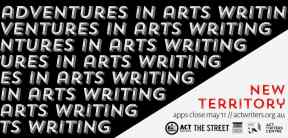
New Territory LogoLast year, some of you will remember, I was a mentor for the ACT Writers’ Centre ACT Lit-bloggers of the future program. It was great fun, and I really enjoyed working with Angharad and Emma over the six-months the program lasted. I wrote a couple of posts about the program, but if you’d like to refresh yourself, this one soon after it started would be a good place to start.

Well, it’s on again this year, but newly branded as New Territory: Adventures in Arts Writing, and with the Street Theatre joining the ACT Writers Centre and the National Library of Australia as program partners. The program, as last year, provides for two emerging ACT-region writers to attend events at the National Library of Australia, the Street Theatre and, in fact, the Canberra Writers Festival, and post their responses on the Writers Centre’s Capital Letters blog.

The ACT Writers Centre’s advertising of the program described it as follows:

[It] is a program that is committed to developing a deeper conversation about the arts: why we make art, how do we engage in art, and to what end? We aim to develop the arts writers, thinkers and provocateurs of the future.

In other words, the writers are encouraged to explore the arts in Canberra – and particularly the events offered by the partner organisations, which they can attend at no charge.

The two writers were chosen in June, and the program is now officially under way, so I’d like to introduce this year’s bloggers to you:

  • Amy (armchaircriticoz): like last year’s Angharad, Amy has a full-time job, and is developing her blog and critical writing skills on the side. Currently her blog roams across film, television, exhibitions, books and other topics that grab her fancy. Do check it out.
  • Siv Parker (On Dusk): and like last year’s Emma, Siv has some writing credentials behind her. Indeed, she won the  David Unaipon Award in 2012, and, in fact, I mentioned her twitter fiction piece in my post on the Writing back anthology last year. She is keen to rekindle her writing career, particularly in this arts writing area, and wants to explore how social media can be harnessed to this purpose. Check out her blog too.

I have asked Siv and Amy whether they’d like to write a guest post here during the program, as Emma did last year, and both seemed keen so you will hopefully see them here sometime in the not too distant future.

I will report back mid-program and point you to some of the work Amy and Siv have been doing, but meanwhile please do check out their blogs and Capital Letters (links above).

Until then, thanks again to the ACT Writers Centre, the NLA and the Street Theatre for sponsoring this program – and a special thanks to author Nigel Featherstone for overseeing this program and gently, encouragingly, shepherding us all through it. I am thrilled to be involved again. I loved getting to know, and spending time with, Angharad and Emma, and look forward to developing a similar relationship with Amy and Siv. Writers – of all sorts – are such fun to be around.

We’d love to hear if you know of any similar programs in your neck of the woods.

Monday musings on Australian literature: VerityLa

I’ve mentioned the literary blog-cum-journal, VerityLa, a few times before here, partly because one of its founders is local writer, Nigel Featherstone. For those of you who haven’t come across it, however, it is, in its own words, “an on-line, no-way-for-profit, creative arts journal, publishing short fiction and poetry, cultural comment, photomedia, reviews, and interviews.” I have subscribed to it for some years now – it was established in 2010 – and have loved receiving in my email inbox its intriguing mix of content, from contributors both known and unknown to me. (My only complaint was that I wanted it to be like a “traditional” blog that I could comment on, as there were many times that I wanted to respond to the content.)

However, I was thrilled to receive an email last week announcing VeritaLa mark II, a stylish new website for the “journal” that significantly expands (and better organises) its content, including, the email, says, two new publishing streams:

  • Slot Machine (spoken word and performative text) curated by David Stavanger; and
  • Rogue State (bold nonfiction) edited by Kathryn Hummell

Overall, there are 14 streams, covering such areas as emerging indigenous writers, deaf and other disabled writers, travel writing, LGBTQI writers, visual artists, plus interviews and reviews. The full list as well as instructions on how to submit to the journal are available on their Submission Guidelines page. The excitement doesn’t stop with this expanded content, though. In other news on the same page, they announce that, due to financial support from Australia Council for the Arts, they will be paying, this year, $100 for each piece published (except for previously published book extracts). This amount, they say, is a “grand (in literary circles) sum.”

It just goes to show what can be achieved by plugging quietly away, gradually proving that what you are doing has value. That it does indeed have value is evidenced by the site’s being archived by the National Library of Australia’s Pandora, by its being comprehensively listed on the AustLit database (paywalled, though some content can be accessed free-of-charge), and by the archiving of selected pieces at Deakin Research Online.

The hunger

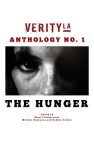
VerityLa Anthology 1, The HungerTo celebrate this new phase in its existence and “to recognise what’s been achieved” the VerityLa team has also produced its first anthology, chosen to reflect the journal’s diversity. Titled The hunger, it’s an eBook and costs only $10. A bargain, so I’ve bought it!

This anthology was edited by novelist and playwright Nigel Featherstone, poet and editor Michele Seminara, and poet and critic Robbie Coburn. It is described as follows:

Hunger is defined as an intense desire or craving. Artists published in Verity La crave a creative purity and truth, forging a place outside of what might be considered fashionable and publishable in the mainstream. The work appearing in this anthology is defined by the journal’s mantra, Be Brave: be hungry for your voice to be heard and to articulate your soul, no matter the cost.

It includes contributions from both well-known writers like Robyn Cadwallader, Leah Kaminsky, Wayne Macauley, Anna Spargo-Ryan, Prime Minister’s Literary Prize winner Melinda Smith. They also include indigenous contributors such as Graham Akhurst, Brenda Saunders and Teena McCarthy the Iranian poet and asylum-seeker Mohammad Ali Maleki, and many more. What the diverse group of contributors in this volume shows is the liveliness of the arts in Australia.

Now, I haven’t read it properly, yet, but dipping into it, I’ve been moved by, for example, Brenda Saunders’ poem, “Taxi!” about the ongoing racism experienced by people with black skins, and entertained by Kristen Roberts’ clever, cheeky piece “Urban alphabet”:

P is for toilets and sometimes behind trees, never for footpaths or front doors, and definitely never for faces. Not cool at all.

Q is for tickets, or the dunny at a good gig (see? Use the  toilets!). Not too sure about those people who sleep out the front of a shop the night before a new phone comes out though. I mean, it’s just a bit of technology that’s gonna be superseded by another one in a few months, yeah? My time is too valuable for that.

(from “Urban alphabet”)

“Be brave”, as the volume’s promotion says, is VerityLa’s mantra. And the pieces I’ve read so far certainly are – in content and/or in form.

So, if you haven’t checked out VerityLa before, now might be the time. You might even consider donating (as little as $5 is appreciated) to help them keep paying contributors, among other costs. Or you could buy The hunger (at the link above). At these prices, you can’t really lose!

Do you read on-line literary journals, and if so, which ones and why?

Monday musings on Australian literature: Grace Gibson

Today’s post was inspired by a tweet, yesterday, from the Australian Dictionary of Biography (ADB). Using the hashtag #OTD (On This Day), they promoted their entry on Grace Gibson who was born on 17 June (in 1905.) Not only was that tweet a blast from my working-life past, but it also introduced an aspect of Australian literature that I haven’t really talked about here before, radio serials.

I am using “literature” here, of course, in its widest, or most generic, sense which, according to Wikipedia, includes “any body of written works.” Radio serials, of course, start with written scripts.

A brief bio

Zenith Console Radio, 1941

Zenith Console Radio, c. 1941, By Joe Haupt, USA [CC BY-SA 2.0, via Wikimedia Commons]

So, Grace Gibson, for those of you who haven’t heard of her, was a radio executive producer, who was born in El Paso, Texas. While still young, she became a successful salesperson for the Radio Transcription Co. of America, and was noticed, in the early 1930s, by Sydney radio-station 2GB’s general manager, Alfred Bennett, who was visiting the USA. He invited her to help him establish and manage the company that later became Artransa Pty Ltd. They sold American recorded radio programs throughout Australia. However, in 1941, Gibson, on a buying trip to the USA, became stranded there when the country World War II.

She returned to Australia about  1944, and established her own company, Grace Gibson productions. Lynne Murphy, writing for the ADB, says

The ban on the importation of non-essential goods during the war was a boon for Australian-made products including radio programs, which were now locally produced and increasingly locally written.

So what Gibson did was to make her own productions using American scripts “with local actors as compères or narrators.” She sold these programs to radio stations around Australia. Gradually, the productions became more and more Australian. Here’s Murphy again:

Gibson was astute in her choice of drama directors who, in turn, cast good actors, resulting in high-quality, successful productions. Talented writers adapted the American scripts to local conditions and created original material when the American scripts ran out. They were encouraged to write their own serials—with some outstanding results such as Lindsay Hardy’s spy thrillers Dossier on Dumetrius, Deadly Nightshade and Twenty Six Hours.

By the mid 1950s, says Murphy, the company was producing thirty-two programs per week, and they were broadcast not only in Australia, but in New Zealand, South Africa, Hong Kong and Canada. The programs included evening programs,, Night Beat, and her “two flagship productions”, the daytime soap operas, Dr Paul (which ran from 1949 to 1971) and Portia Faces Life, about lawyer Portia Manning (which ran from 1954 to 1970.) Television eventually saw the end of the radio serial heyday, though Gibson claimed to be the last survivor among of the commercial studios. She wasn’t described as the “human dynamo” for nothing.

Maryanne Doyle, writing on the NFSA’s website, says:

Though Gibson concentrated on the sales side of the business, she could recognise a good script and was noted for her skill at spotting talent.

So, why have I included her here? She wasn’t a writer. However, her programs – together with programs from other studios and production companies – were important providers of stories to people before the days of television, and not just to housewives during the day, but to families at night, to shift workers, and so on.

Stories for Australians?

The question is, though, what stories? To answer this, I went to the National Film and Sound Archive website and, of course, to Trove’s digitised newspapers – and found an interesting story, that took us from the importation of American serials on physical discs, to the production of American scripts here using Australian cast and crew, to the production of scripts written by Australians.

There were various reasons behind this trajectory:

  • legislation: importation of transcriptions from the USA was banned in 1939.
  • political action: an article in The Mail in 1951, for example, notes that although there was no evidence of the importation ban being lifted, such programs were starting to come in again, perhaps via England. Actors’ Equity, the article said, was hostile and passing resolutions against the practice. The article says, though, that opinion was divided. Grace Gibson, it says, seemed to sympathise with the actors, but warned that “if the imports don’t stop soon she’ll be forced to join in the game, too, to protect her business.” On the other hand, the article reports that C.G. Scrymgeour, rep for Towers of London*, argued that “the influx of shows by people like Gracie Fields, Clive Brook, and Donald Peers, made and sold by his organisation, have raised the standard of Australian radio programs.”  The article writer concluded that “the policy of nothing but the best, irrespective of country of origin, sounds good to radio listeners. And an occasional English or American shows adds a welcome variety to our programs.” However, s/he realises that “some form of a quota does seem indicated — that is, if we want our actors to eat.”
  • popularity: some American serials were so popular that when the American scripts ran out – meaning I think that the serial in question had done its dash in the US – the stories were continued by Australian scriptwriters!

Interestingly, in all I read on this issue, the main concern seemed to be supporting the Australian industry – the writers, technicians, producers, and musicians who made their livings out of radio – rather than telling Australian stories for Australians. It confirms that old “cultural cringe” attitude in Australia. Who wanted our stories when you could have overseas ones!

Oh, and it sounds like Grace Gibson may have felt “forced to join in the game” because a 1954 Sydney Morning Herald report says that Grace Gibson Radio Productions was fined £200 for importing prohibited goods, though the Department of Trade and Customs “refused to reveal what the goods were or what their value was.”

Anyhow, Grace Gibson did also produce original Australian scripts, some even telling Australian stories (unlike the afore-mentioned Dossier on Dumetrius, which was an MI5 spy story.) One example is Cattleman which comprises 208 x 12-minute episodes:

He [the character Ben] is a kind of ideal Australian in his generosity, and his contempt for authority and affectation. Even his cattle duffing seems to be more an endearing failing than a serious crime. His life history, covering pioneering, marriage and wartime service is also true to the prototype of the ideal Australian. (Grace Gibson Productions website)

See, real Australian!

Are any of you old enough – or prepared to admit you are – to remember listening to radio serials?

* An independent, British radio production company.

Monday musings on Australian literature: Australian literature in Australian schools

As I was trawling my little collection of ideas for Monday Musings, I lit upon a paper by the late educator Annette Patterson titled “Australian literature: culture, identity and English teaching”. Bingo!  I had my answer, because it will contribute to a discussion I took part in on Guy Savage’s His futile preoccuptions blog. The discussion concerned the following statement in Michelle de Kretser’s latest novel The life to come: “It had been explained to Ash that the government funded the Centre of Australian Literature after a ministerial survey of humanities graduates found that 86 percent of English majors had never read an Australian book.”

Patterson’s article was published in JASAL (the Journal of the Association for the Study of Australian Literature) in 2012, so it’s reasonably up-to date. The article’s abstract describes says:

The development of the Australian Curriculum has reignited a debate about the role of Australian literature in the contexts of curricula and classrooms. A review of the mechanisms for promoting Australian literature including literary prizes, databases, surveys and texts included for study in senior English classrooms in New South Wales and Victoria provides a background for considering the purpose of Australian texts and the role of literature teachers in shaping students’ engagement with literature.

Patterson starts by arguing the importance of literature to cultural or national identity, stating that this link is expressly made by several of Australia’s major literary prizes. These awards, plus other indicators such as the growth in resources to support the teaching of Australian literature, demonstrate, she says, “the health of Australian literature”.

She then reports on a survey of Australian secondary teachers regarding the factors affecting their selection of Australian texts for teaching. A major factor was one of the main points I made on Guy’s blog: “the availability of the text in the school storeroom”! This was one of the reasons my son’s high school teacher gave me for teaching Steinbeck’s Of mice and men, and not an Australian book.

And then, interestingly, she provides an historical perspective on the teaching of Australian literature in Australian schools, pointing to concerns about the issue dating back to the late 19th century. She writes about the use of Royal Readers back then which included some reference to Australia but were, overall, firmly grounded in the northern hemisphere. She quotes an inspector of schools, H. Shelton, from 1891:

I have often wondered how the Wimmera farmers relish the statement in the Second Book [of the Royal Readers] that ‘it is a pleasant sight to see wild rabbits running over the fields.’ This lesson should either be struck out, or the other side of the picture be given for the benefit of young Australians.

Tara June Winch, Swallow the airMoving on in her paper, we get to discussions about texts being studied by senior secondary students in NSW and Victoria. I’m going to focus on prose fiction, though she includes non-fiction, poetry, plays and film. So, for example, of the five prose fiction texts set for the 2010 NSW Higher School Certificate, only one was by an Australian, Tara June Winch’s Swallow the air (my review). Things were better in those other forms I mentioned.

Patterson focuses her study, though, on Victoria. She tabulates the occurrence of Australian texts and directors listed for study for the Victorian Certificate of Education from 2001 to 2010. Again, I will focus on the prose fiction – listing those that appear three of more times in order of frequency:

  • Henry Lawson’s Short stories (4 times)
  • Tim Winton’s Minimum of two (short story collection) (4 times) and The riders (1 time)
  • Larissa Behrendt’s Home (4 times)
  • David Malouf’s Dream stuff (short story collection) (3 times) and Fly away Peter (1 time)
  • Christopher Koch’s The year of living dangerously (3 times)
  • Thomas Keneally’s The chant of Jimmie Blacksmith (3 times)
  • Peter Goldsworthy’s Maestro (3 times)

Hmm, a fascinating list. Not a bad one, but there’s not a good gender balance here, and there’s only one indigenous writer (who happens to also be the only woman!) It’s also interesting to see the preponderance of short story collections – and that the novels are mostly short ones. Does this mean students won’t read full novels?

Anyhow, Patterson concludes that the lists she presents provide clear evidence of the important place of Australian literature in school curricula, formally at least. But, quite rightly, she notes that being listed doesn’t mean the works are actually “taken up”. Through a process which she describes briefly, she identifies only one work of prose fiction on the most popular list for the period in question. It’s Peter Goldsworthy’s Maestro (which, interestingly, “was voted one of the Top 40 Australian books of all time by members of the Australian Society of Authors”), although other works, including the films Lantana and Look both ways, also appear on the list.

Several prose works appeared on the least popular list:

  • Larissa Behrendt, HomeShane Maloney’s The brush-off
  • Amy Witting’s I for Isobel
  • Henry Lawson’s Short stories
  • Julia Leigh’s The hunter (though she may mean the film adaptation, she doesn’t clarify)
  • Thomas Keneally’s The chant of Jimmie Blacksmith
  • Larissa Behrendt’s Home
  • Beverley Farmer’s Collected stories

Disappointing, but Patterson is encouraged because:

  • more Australian works appeared on the most popular lists later in the decade indicating a “positive shift”; and
  • “top scoring students appear to be working with Australian texts” – including Beverley Farmer’s Collected stories.

In the last part of the paper she discusses the value of including the study of literature, and particularly Australian literature, in the curriculum – and the theoretical underpinnings for the arguments. They are fascinating, and clearly presented. I loved, of course, her conclusion that

In teaching Australian literature, teachers do a great deal more than teach about the quality of language or the characteristics of a genre. English teachers teach techniques for living, ways of behaving and responding, building empathy, promoting tolerance and developing responses to texts that are considered appropriate within current social and cultural contexts.

She ends by returning to her study, and arguing for the value of undertaking ongoing research into text lists, and their use.

However, I’ll return to Guy’s blog discussion and say that Patterson’s paper reveals that Australian texts are being taught in Australian schools – and have been for a long time. However, whether all schools teach them, and whether all students in the schools that do actually “take them up”, is another question. There is, in other words, sure to be some truth in the statement in de Kretser’s book, but I sure hope it’s not 86%!

Monday musings on Australian literature: Australian ghostwriters

John Friedrich, Codename IagoIf you’ve read my blog recently, you’ll know exactly what inspired this post. Yes, Richard Flanagan’s novel First person (my review), which was inspired by his experience of ghostwriting Australian fraudster John Friedrich’s memoir. The book was called Codename Iago.

You probably all know what a ghostwriter is, but just to make sure, here’s the definition from the editors4you blog:

A ghostwriter is a writer who writes books, stories, blogs, magazine articles, or any other written content that will officially be attributed to another person – the credited author.

So, how much do you know about Australia’s ghost-writers? Did you know, for example, that crime-fiction bestseller Michael Robotham once made his living as a ghostwriter, or that published author Libby Harkness currently spends more time on ghostwriting than her “own” writing? Did you know that Anh Do’s best-selling memoir started out with a ghostwritten manuscript? Or that the two biographies of Hazel Hawke, Hazel: My mother’s story and Hazel’s journey, were written by her daughter, Sue Pieters-Hawke, with the assistance of ghostwriter Hazel Flynn. As I started to delve into this shadowy – ghostly, let us say – area, I uncovered a fascinating world of professional writers who help people who have stories to tell to, well, tell them.

My focus here is Australia, for obvious reasons, but I’ll be including information from further afield, starting with an article in The Guardian from 2014. Titled “Bestselling ghostwriter reveals the secret world of the author for hire”, it’s about English ghostwriter Andrew Crofts who at the time had written 80 titles over 40 years, and sold some 10 million copies, but mostly under “more famous names”. The article, which you can read at the link, names many of them. That year, he published his “own” book, Confessions of a ghostwriter.

Rober McCrum, the author of The Guardian article, says that the term

was coined by an American, Christy Walsh, who set up the Christy Walsh Syndicate in 1921 to exploit the literary output of America’s sporting heroes. Walsh not only commissioned his ghosts, he imposed a strict code of conduct on their pallid lives. Rule one: “Don’t insult the intelligence of the public by claiming these men write their own stuff.”

American ghostwriter David Kohn was interviewed by the ABC Book Show in 2009. He said it suited introverts like him. He doesn’t have to go to book signings or do promotional tours!

Not just memoirs

McCrum notes, as we probably would all guess, that the types of works best known for being ghostwritten are the “misery memoir, sporting lives and celebrity autobiography”. We have examples of all of these in Australia.

Jelena Dokic, UnbreakableSporting lives, for example, to pluck out just a few Australian examples, include footballer Wayne Carey’s The truth hurts, which was cowritten with Charles Happell who is credited on the cover; cricketer Brad Haddin’s My family’s keeper which Hazel Flynn “helped” write though she is not on the cover; and tennis player Jelena Dokic’s Unbeatable (my report) which was cowritten with Jessica Halloran who is credited on the cover.

However, another area well known for being ghostwritten are the “how-to” books, including cookbooks. Google “ghostwritten cookbook” and you’ll find articles galore. And, apparently, as I found on a comprehensive American website on ghost-writing, medical ghostwriting is a big thing. I also found references to ghostwriters doing fiction, too. Fascinating, eh?

Crediting ghostwriters

Sue Pieters-Hawke, Hazel's Journey

Hazel Flynn credited on the cover

Not all ghostwriters are credited. Some appear on title pages, or even on covers, and some might be mentioned in acknowledgements (as happened with Anh Do’s book), but others are not mentioned at all. Where credited, their names are usually preceded by “and” or “with” or “as told to” (with the ghostwriter’s name less prominent to indicate the “lesser” role). As the editors4you blog says, credit depends on the nature of the ghostwriter’s contract with their client. They note that the client can ask the ghostwriter to sign a nondisclosure contract forbidding them from revealing their role. This is fair enough I suppose. It’s a fee-for-service business deal. However, as a reader, I’m another sort of client of that service, and I’m not sure I like the idea that I don’t know who really wrote, or contributed significantly, to the work I’m reading.

Reading around the ‘net, I found, not surprisingly, quite a bit of sensitivity about this issue. Read, for example, this article about Gwyneth Paltrow’s cookbooks. There’s sure to be ego involved, but also, just plain lack of clarity.

Finally, some Australian ghostwriters

Here are three of Australia’s “top ghostwriters”, from the 16 in this article):

  • Michael Collins has had various jobs, including undercover cop and photo-journalist before turning to full-time writing around 20 years ago. He has written in several genres, he writes on his blog, including self-help, fiction, biographies and memoirs, though I’m not sure whether all these are ghostwritten. One of his recent books is Carolyn Wilkinson’s Blood on the wire about prison escapee Daniel Heiss.
  • Libby Harkness has been ghostwriting in several non-fiction areas since 1992, and in 2013 was a guest at the first international ghostwriters conference in California, as she writes in this blog post for the NSW Writers Centre. Her most recent book, for which she is credited on the book’s cover, is Simon Gillard’s Life sentence: a policy officer’s battle with PTSD.
  • John Harman is English-born but West Australian-based now it seems. He has written crime fiction, television and film scripts as himself. However, ghostwriting is a major part of his work. On his website, he says that he has ghostwritten “a number of books, from popular romantic fiction to corporate histories, biographies and autobiographies.” His most recent ghostwritten book is Arthur Bancroft’s WW2 memoir, Arthur’s war, on which Harman is identified on the cover.

Many of the ghostwritten books I found were published by the big publishers like Allen & Unwin, HarperCollins, and Penguin, indicating it’s a well-entrenched segment of the industry.

Are you aware of having read ghostwritten books? Does it matter to you whether the book you read has been ghostwritten or not – and do you like to know?

Monday musings on Australian literature: Reconciliation Day in Canberra

National Reconciliation Week 2018 LogoToday, 28 May 2018, we in Canberra celebrated our inaugural Reconciliation Day Public Holiday. We are the first jurisdiction in Australia to have such a public holiday*. From this year, this day will be held on the first Monday after 27 May or on the 27th if it is a Monday – the 27th being that anniversary of the 1967 referendum which resulted in a change to the Australian constitution to enable indigenous Australians “to be counted in reckoning the Population”. Our Reconciliation Day falls within Australia’s National Reconciliation Week (27 May to 3 June), whose theme this year is Don’t keep history a mystery: Learn. Share. Grow.

The aim of the Week (which commemorates both the Referendum and the MABO decision) is, as Reconciliation Australia says on its website, for “all Australians to learn more about Aboriginal and Torres Strait Islander cultures and histories, to share that knowledge and help us grow as a nation. And for this year’s theme, their aim is for us “to learn more about the Australian story.”

Now, to my mind there are two incontrovertible facts – no matter what interpretive layer might be added to them. These are that:

  1. Indigenous (Aboriginal) Australians were here first, tens of thousands of years first in fact.
  2. Non-indigenous Australians arrived in the late eighteenth century and took up land will-nilly to suit their needs, with no formal, practical recognition of the existing inhabitants and their ownership of the land.

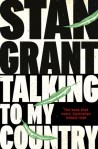
Stan Grant, Talking to my countryWhen I decided to write this post I wondered how best to make it fit the Monday Musings subject, but the Week’s theme – Don’t keep history a mystery – gave me my angle. And so, although I recognise the importance of fiction to understanding history and its impact, here I’m going to share a selection of non-fiction works, by indigenous writers, which tell their history and/or the impacts of their history on their lives. (I’ve read some of these, including some before my blog, but not all). Here goes

  • Eric Wilmot’s Pemulwuy: the rainbow warrior (1987): a rare history, particularly at the time, of an indigenous Australian hero. We all know about Australian “heroes” from our past but how many of us know – or were taught about – Pemulwuy or Jandamarra, for example.
  • Ruby Langford Ginibi’s Don’t take your love to town (1988) is now regarded as a classic indigenous memoir, one documenting her survival in spite of the poverty and tragedy surrounding her.
  • Sally Morgan’s My place (1988): Although my consciousness had already been raised by reading books by non-indigenous writers, like CD Rowley, in the 1970s, it was Sally Morgan’s My place which really brought home for Aussies some of the ways dispossession had impacted indigenous people’s lives – the shame, in particular, that her ancestors had been made to feel.
  • Doris Pilkington’s Follow the rabbit-proof fence (1996, Bill’s review, The Australian Legend): one of the first stories – better known to many Aussies via the feature film – about Stolen Generation children’s experiences to come to the wider Australian public.
  • Anita Heiss’s Am I black enough for you (2012, my review) is a contemporary urban successful indigenous woman’s manifesto about the challenges of being indigenous in modern Australia, setting assumptions and expectations against facts.
  • Noel Pearson’s Quarterly Essay: A rightful place: race, recognition and a more complete Commonwealth (2014): the title says it all. I should have read this one.
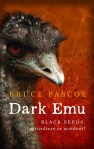
  • Bruce Pascoe’s Dark emu, black seeds (2015, my review) which publisher Magabala Books says “attempts to rebut the colonial myths that have worked to justify dispossession.”
  • Stan Grant’s Talking to my country (2015, my review) which he was inspired to write when he realised that the booing of footballer Adam Goodes “was about our shared history and our failure to recognise it.” Exactly this week’s theme!Bruce Pasco, Dark emu

Reconciliation Australia lists more books and reports, including fiction and works by non-indigenous Australians. It’s well worth checking out – and contains many works I have never heard of, let alone read.

Meanwhile, there were many ways to celebrate Reconciliation Day in Canberra, including a Reconciliation Day Eve concert with Archie Roach and Tiddas, a Reconciliation Day in the Park event, and special events at various cultural institutions including the National Museum of Australia, the National Film and Sound Archive, and the National Gallery of Australia.

This is an important day for itself, but it’s also important to help redress the imbalance created in recent years by over-emphasis on the importance of Australia Day and ANZAC Day. I am not averse to these days but I am to suggestions that they, individually or together, define Australia and Australians. They don’t. They contribute to what makes us Aussies – but we have a bigger history that we must (personally and politically) also recognise and accept as being part of what defines us.

Do you have any favourite books on the topic? (Or on a similar critical topic, if you’re not Aussie?)

* It was created by replacing a previous holiday, rather than by adding an additional holiday to our calendar.

Monday musings on Australian literature: Blaming the Americans

Rummaging through my little folder of papers and ideas for Monday Musings posts, I found a 2014 article from The Conversation titled “The Americans are destroying the English language – or are they?” If you are a non-American English-speaker you probably know exactly what this is about, because we non-American English-speakers love to get on our high horse about how Americans have corrupted the English language, except …

If you actually do the research, as I have on and off over the years, you find that the situation is nowhere near as simplistic as we like to think. And this is what The Conversation writer, Rob Pensalfini from the University of Queensland, explores in his article. He starts with some facts about English-speaking around the world, including the fact that the United Kingdom has only about 15% of the world’s native speakers of English, while the USA has almost 60%. Not that quantity is necessarily a signifying issue, but still, it gives one pause. He also points out that there are various forms of “standard” or “official” varieties of, say, British, American, and Australian English, as well as innumerable non-standard varieties and pidgins.

Erin Moore, That's not EnglishHe then discusses what “ruining” a language – if indeed we accept that’s possible – might mean. He suggests that since languages change, “ruining” or “destroying” one must mean changing it in “unacceptable” or “negative” ways. It must mean, he continues, that it “threatens the capacity of the language to express something – be that complex thought, heightened emotion, refined argument”. Good points, particularly that regarding the impact on our ability to express ourselves.

Anyhow, he lists the main “changes” for which Americans are criticised, and addresses each one. I’ll try to summarise them:

  • corrupt spelling (eg center, honor, neighbor): the American lexicographer, Noah Webster, as we know, introduced spelling reforms in the 1820s into American spelling, including the now commonly accepted “American” spellings of “honor, neighbor, center, and jail.” However, before we non-Americans become too smug, he notes that other reforms by Webster, the rest of us have also accepted such as “public and mask (in place of publick and masque).” Meanwhile, other of his reforms were not even accepted by Americans, such as “tung (tongue) and wimmen (women).” The weird thing – and this one I’ve researched before – is that the forms that raise the ire of us non-Americans (the “or” and “er” spellings) were actually older British spellings. Pensalfini says that “honour” occurs 393 times in the First Folio of Shakespeare’s plays (1623), while “honor” occurs 530 times; “Humour” 47 times while “humor” is used 90 times; “center” occurs nine times, but “centre” only once; and “sceptre” appears four times, but “scepter” 36. Pensalfini says that “Webster chose the ‘or’ and ‘er’ spellings because they looked less French” while the British chose the “our” and “re” spellings in the 19th century “because their French look lent them a certain dignity”.
  • discordant sounds (post-vocalic /r/, “flat” /a/): firstly, he says the post-vocalic /r/ is used in parts of England (the West Country and Scotland) and is not used in parts of America. Indeed, he suggests that “the loss of /r/ erodes comprehension, in pairs like father/farther, pawn/porn, caught/court and batted/battered merging”. As for the “flat” /a/, it is an earlier form – so there!
  • double negatives: let’s not even go here. As Pensalfini says, they have a role and, anyhow, they are “not accepted in Standard American English any more than they are in Standard British English.”
  • ending sentences with prepositions: this is just silly he says, and “is as common in British as in American English. Would you really say ‘From whence did you come?’ Seriously? ‘Where did you come from?’ is absolutely standard for all varieties of English.” (I agree, though I think his example is poor, as “from” is not needed before “whence” which means “from where”.)
  • singular they: again, he provides several examples of this, including from Shakespeare. Jane Austen, I know, used it too.
  • using nouns as verbs: this one, he says, really gets the “pedants’ collective goat … the use of words like impact and action as verbs”. Again, though, “it’s been with the English language since at least the early Middle English period.” In fact, “the modern-day Americans aren’t verbing nearly as much as Shakespeare (“Grace me no grace; nor uncle me no uncle” (Richard II)).”

Pensalfini concludes his article on a political point about the British, but I’m not going there. Instead, as I like to do, I checked Trove’s digitised newspapers for any discussion about American English in the early 20th century. There was – a lot in fact. Much of it was critical, and focused on pronunciation (including reports of the author Henry James complaining about Americans’ “slovenly” pronunciation!) But here, I’ll share two I found about spelling and usage.

The first is a letter to the editor, in Melbourne’s Herald in 1923:

Sir.— In answer to “Baffled’s” letter in tonight’s “Herald” re English spelling, it is my opinion the sooner English people all over the world wake up and copy the American system of spelling, the sooner will they become a more intelligent and efficient race. Let Australia be the first to start a campaign for the reforming of spelling, and do away with such spelling as “through” and “fright”. — Yours, etc

Efficiency
South Yarra, October 17.

Ms or Mr Efficiency was, from my short survey, swimming against the tide!

The other is an article from The Maitland Daily Herald in 1933. This writer goes to town. They (I’m using the “singular they” since the author isn’t identified) admit there are some good writers in the US, but just read any magazine they say and readers will see

the vile distortions of language, that there abound, the violations of fundamental rules of syntax, the apparent endeavour to write in a style as different as possible from that seen in an English or Australian journal of similar type. Slang is everywhere in evidence, often where it serves no good purpose, and where it ceases to be picturesque and becomes silly.

Some American slang is, they say, “decidedly clever and picturesque” but, “this cannot be said of the majority of what we see and hear. There seems to be a deliberate attempt to make American-English as much unlike English-English as possible.” Oh dear, such a crime! How conservative this sounds.

And so, this writer continues,

An effort should be made continuously by parents and teachers to impress on our young people the glory of good English, the priceless heritage left to them in the prose of Addison, the verse of Milton, the dramas of Shakespeare, and so forth. …

Now, that’s funny, given Pensalfini’s examples from Shakespeare (whom he used, he says, “because for many, Shakespeare represents a sort of pinnacle of English language usage”!)

I must say that over the years I’ve relaxed my attitude to all this. Language does change, and I know that many words we use now – such as “nice” – meant something completely different a few hundred years ago from the way we use them now. So, what to do? Like all readers, I love fine language. But I also know that fine language – that is, literary language – can be so, exactly because it breaks the rules, because it pushes boundaries. Ultimately, the point, as Pensalfini suggests, is to be able to express “complex thought, heightened emotion, refined argument” and, I’d add, for that expression to be understood.

And so, the important thing, I’d argue, is to continue the debate, because it is probably that more than anything which keeps the language fresh and true.

What do you think?

Monday musings on Australian literature: Aussie “up lit”

Hands up if you’ve heard of a new genre (or literary trend is perhaps more accurate) called “up lit”? I hadn’t, until I read a post recently on Kate’s (booksaremyfavouriteandbest) blog. She pointed to an article about it at The Guardian.

The writer, Danuta Kean, says:

In contrast with the “grip lit” thrillers that were the market leaders until recently, more and more bookbuyers are seeking out novels and nonfiction that is optimistic rather than feelgood. And an appetite for everyday heroism, human connection and love – rather than romance – is expected to be keeping booksellers and publishers uplifted, too.

See how behind I am? We’ve had “grip lit” but it’s on its way out before I’d even heard of it, and is being replaced by “up lit”.

My first thought when I saw the term “up lit” was “feelgood” but it appears that we are talking something more active than that, we are talking optimism – and empathy, and kindness. And, it’s not just fiction we’re talking about, but non-fiction too. Kean’s article, written in August 2017, argues that the trend was kickstarted by “a bruising year dominated by political and economic uncertainty, terrorism and tragedy.” This reminds me of American screwball comedy films which started during the Great Depression and lasted through to the early 1940s (that is, into World War 2). Times were tough and people needed some brief moments of escapism – which is also part “up lit”.

But, as I’ve already said, “up lit” seems to involve more than just “escape”. A March 2018 article in The Guardian by Hannah Beckerman quotes Rachel Joyce, the international bestselling author of The unlikely pilgrimage of Harold Fry:

But up lit isn’t simply a means of sugar-coating the world … “It’s about facing devastation, cruelty, hardship and loneliness and then saying: ‘But there is still this.’ Kindness isn’t just giving somebody something when you have everything. Kindness is having nothing and then holding out your hand.”

It’s about the idea that “it is possible to fix what’s broken”. The publisher HarperCollins describes it more simply as “meaningful, optimistic books that celebrate everyday heroes, human connection and love!” In other words, it’s a pretty broad church it seems.

Kean and Beckerman provide popular and literary fiction examples of “up lit” including, for example, Gail Honeyman’s Eleanor Oliphant is completely fine, and last year’s Booker Prize winner, George Saunders’ Lincoln in the Bardo. You can check out all their examples in the articles linked above, while I move on to see what I can find in Australia’s literary firmament. Are we seeking – and producing – such literature?

Do we have Australian “up lit”?

I struggled to come up with many recent Aussie “up lit” books. I was looking for the more “literary” end of the spectrum than at genres like Romance which, by definition, are happy or positive, regardless of current literary trends.

  • Brooke Davis’ Lost and found (my review): a rather quirky (hate that word, really) novel about the loss experienced by three people, and how community helps them cope.
  • Eliza Henry Jones’ In the quiet: “A moving, sweet and uplifting novel of love, grief and the heartache of letting go” (HarperCollins); “uplifting and tender” (The Canberra Times.)
  • Inga Simpson’s Mr Wigg: a gentle book about ageing and loss, apparently.
  • Graeme Simsion’s The Rosie project (my review): belongs to the Romance end of the spectrum, but has an edge because the male protagonist is not your usual romantic hero.

Some of you may remember that there was discussion last year in Australia about reading lists for senior school students being “too dark and depressing”. Of course, there were arguments pro and con. One student said that she thought a lot of the books “are quite depressing” and “don’t really give any motivation or happy feeling in the classroom” while another thought that “if they’re not depressing, they’re not going to be interesting to analyse.” She’d agree with Eva Gold, the executive officer of NSW’s English Teachers Association, who said that “A mark of great literature is conflict and tension. … Unfortunately, resolutions that provide uplift do not necessarily reflect the complexities of life.”

Three years before that, in 2014, there was an article in The Conversation about young adult fiction. The writer, Diana Hodge, argued that “dark themes give the hope to cope,” and that “discussing life’s tougher issues is not in itself pessimistic or disheartening.” In fact, she says:

Overcoming obstacles, developing strength through hardship, experiencing human kindness in the face of traumatic events are not depressing themes; they can be powerful and uplifting and inspire hope.

To some extent, what she’s saying doesn’t completely contradict some of the “up lit” proponents who talk about facing the tough things and then being “fixed” by, for example, kindness. Still, my sense is that “up lit” supporters don’t want the tough things to be dwelled upon for too long, don’t want that grim tone that can attend the so-called “depressing” reads. Take, for example – and here I’m moving briefly away from Australia – Rohinton Mistry’s novel A fine balance. It’s one of my all-time favourite novels. I’d argue that despite the gut-wrenching nature of the plot – if something could go wrong it does – the ending is positive. Many disagree with me, however!

I must admit that I do look for signs (or glimmers) of hope in the novels I read, but I don’t require it. That, I think, would be unrealistic, as Eva Gold above suggests. “Up lit” won’t, therefore, be my go-to.

What do you think? Do you find yourself seeking “up lit”? And if so, have you any recommendations?

Monday musings on Australian literature: My reading group does Garner

You are never too old to try something new – and so it was that my 30-year-old reading group tried something new for our April meeting. The idea was that we would all read Garner, but our individual choice of Garner. We’ve discussed five Garners over the years, and many had read other Garners besides those, so we thought it might be fun for us to all read what we like – from her large oeuvre of novels, short stories, screenplays, essays and other short non-fiction, and longform non-fiction – and then see what conclusions we might draw.

It worked well – I think. At least, the discussion was lively and engaged.

So, what did we read?

(Listed in publication order, with links to my reviews where I’ve reviewed them here.)

  • Monkey grip (1977) (x2)
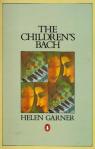
  • The children’s Bach (1984) (x2) (my review)
  • The last days of chez nous and Two friends (1992) (my review)
  • The feel of steel (2001)
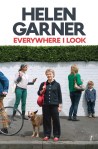
  • Everywhere I look (2016) (x2) (my review)
  • True stories (2017)
  • A writing life: Helen Garner and her work, by Bernadette Brennan (2017) (my review)

A good spread in some senses but not in others. It includes two of her five novels, her two screenplays, three collections of her short non-fiction (essays and the like), and the not-a-biography-literary-portrait. It does not include any of her short fiction (like Postcards from Surfers) (my review) or her longform non-fiction (like This house of grief) (my review). It was pretty clear, I’d say, that most didn’t want to confront the unpleasantness of books like Joe Cinque’s consolation and This house of grief, though we did discuss Joe when it came out.

Helen Garner, The children BachThe reasons we chose our books were diverse. Some of us, including me who did the screenplays, chose books we already owned. Some chose books they’d read and wanted to reassess (like Monkey Grip), while another chose Monkey Grip because she hadn’t read it and felt it was now “part of our culture.” One music-lover chose The children’s Bach because it was short and referenced music, while another chose The feel of steel because there were only two options at her secondhand books source and she didn’t want to read the other (Joe Cinque’s consolation.) One chose the 2017 compilation True stories because it represents 50 years of Garner’s short non-fiction writing. And one chose the literary portrait because she’d read a lot of Garner, and wanted to find out more about her.

What common threads did we find?

It wasn’t hard to find common threads in Garner – which is not to suggest that we think reading her is boring!

The overriding thread was that she draws heavily from her life, even for works that aren’t autobiographical. We agreed that she’s present, one way or another, in most of her writing, including her longform non-fiction works, such as Joe Cinque’s consolation.

Another thread was that she is “searingly honest”, “will have a go at everything”, “is not afraid of looking an idiot”.  This honesty, we felt, applies both to the topics she chooses and to her way of exploring them. If you’ve been reading my blog for a while, you’ll know that I’ve regularly made this “honest” comment about Garner.

The third main thread that most of us commented on was her writing. We agreed that she’s a wonderful stylist, but beautifully spare too. Spare, though, doesn’t mean plain. One put it perfectly when she praised Garner’s “word pictures”.

Over the course of the evening, excerpts were read – to show her writing skill and/or her ability to capture life (not to mention her sense of humour).

Helen Garner, Everywhere I lookHere are some that were shared:

The waiter had a face like an unchipped statue. (The children’s Bach)

He waltzed the car from lane to lane with big flourishes of the steering wheel. (The children’s Bach)

Everyone looks at her, surprised. She has quietly dropped her bundle. (The last days of chez nous)

I knew I couldn’t be the only person in the world who’s capable of forgetting the contents of a novel only minutes after having closed it. (from The feel of steel)

And long live the Lydias of this world, the slack molls who provide the grit in the engine of the marriage plot; for without them it would run so smoothly that the rest of us would fall into despair. (referencing Pride and prejudice, in “How to marry your daughters”, from Everywhere I look)

Our conclusion

Our discussion ranged rather widely, but we did try to draw it all together at the end, particularly regarding her relevance and longevity.
Questions we considered included: Is she too Melbourne-focused? Does she only appeal to people around our age? Will she still be relevant for future readers? One member reported that her daughter, who’s a keen reader, couldn’t get into Everywhere I look. The Melbournites loved her ability to describe Melbourne, but wondered if that limited her appeal.
We concluded that Garner has carved out a niche that’s unlike anyone else, and that despite her focused setting, her subject matter is universal. And, overlaying this is her writing. It’s worth reading for itself.
So, it wasn’t a contentious meeting, as sometimes discussions of Garner can be … instead it was full of delight and discovery. We’ll probably all read more Garner as we follow in her tracks, a decade or so behind her.