Monday musings on Australian literature: ABC RN presenters name their top 2018 reads

In recent years, I’ve shared ABC RN presenters’ suggested summer reads, but this year I’m sharing Best Reads of 2018, from the two presenters of The Bookshelf program, and some of their guests. For more lists, and related links, you can check out the webpages for their December 7 and December 14 radio shows.

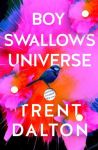
Trent Dalton, Boy swallows universeNicole Abadee (literary consultant and books writer for AFR Magazine and Good Weekend):

Trent Dalton (author of Boy swallows universe):

  • Haruki Murakami, Colourless Tsukuru Tazaki (Japanese)
  • Geraldine Brooks, People of the book (Australian-American) (an older book, and one I read before blogging)
  • Larry McMurtry, Lonesome Dove (American) (another older book, as I’m sure you know)

Kate Evans (presenter on The Bookshelf): 

  • Melissa Lucashenko, Too much lip (Australian)(on my TBR – I’ll get to it soon)
  • Michael Ondaatje, Warlight (Canadian)
  • Imogen Hermes Gowar, The mermaid and Mrs Hancock (English)
  • Peter Cochrane, The making of Martin Sparrow (Australian)
  • Tayari Jones, An American marriage (American) (Kate of booksaremyfavouriteandbest identifies this as the book which appeared most frequently in the 37 best-of-2018 lists she analysed)

Amelia Lush (Stella Prize judge, and head of Children and Young Adult programming for the Sydney Writers’ Festival):

  • Rebecca Makkai, The great believers (American)
  • Tara Westover, Educated (American) (A memoir highly recommended by my Californian friend)
  • Maria Turmarkin, Axiomatic (Australian) (Highly recommended by Brother Gums)

Cassie McCullagh (presenter on The Bookshelf): 

  • Rachel Cusk, Kudos (Canadian-born English)
  • Sally Rooney, Normal people (Irish)
  • Tim Winton, The shepherd’s hut (Australian)
  • Peter Cochrane, The making of Martin Sparrow (Australian)
  • Tayari Jones, An American marriage (American)

Shaun Prescott (author of The town)

  • Dag Solstad, T Singer (Norwegian)
  • Jamie Marina Lau, Pink Mountain on Locust Island (Australian)
  • Olivia Laing, Crudo (English)

OK, so not many of these are Australian, but for this particular Christmas list I relax my rules to focus on Australian readers (at the ABC!)

Anyhow, a few observations. Of the 23 top picks, there are only three duplications: Peter Cochrane’s The making of Martin Sparrow; Tayari Jones’ An American marriage; and Rebecca Makkai’s The great believers. Only one of these is Australian, Cochrane’s historical novel set in the early days of the colony. This lack of duplication is probably not surprising given all the books that are out there for us to read.

Just two of the books (unless I’ve missed something) are non-fiction – Tara Westover’s Educated and Maria Tumarkin’s Axiomatic. Again, probably not surprising.

And, most of the books are anglo – Australian, American, English, Canadian, Irish – with just two that aren’t, Murakami from Japan, and Solstad from Norway.  We really aren’t, it seems to me, very good at reading translated books from other cultures – and I admit that my reading diet is light on in that area too. Only one, as far as I can tell, is by an indigenous Australian.

Anyhow, I hope you have found this at least a bit interesting!

What ONE book would you recommend from your 2018 reads for the rest of us to read over the holidays?

Monday musings on Australian literature: ACT’s literary awards

Last week, I attended the ACT Writers Centre’s Christmas Party and Awards Night. It was a lovely, relaxed affair – just the sort I like. Not too much ceremony, but much good will and conviviality. I loved seeing writers, and others from our little territory’s literary community, mingle with each other, commending each other’s achievements. I could name drop, but fear forgetting a special name as you always do in situations like this, and I could describe some fan-girl moments, but that, too, could be fraught. So, instead, I’ll just say what a very enjoyable night it was (helped along by delicious local wines from Eden Road Wines, who do a great job in Canberra sponsoring arts organisations, including, in my experience, the ACT Writers Centre and Musica Viva. Thanks Eden Road – and your wines are delicious.)

And now, the awards – which come in two strands.

ACT Book of the Year Award

This award, “for excellence in literature”, is supported by the ACT Government, and supports ACT-based writers and writing. It “recognises quality contemporary literary works including fiction, non-fiction and poetry by ACT-based authors published in the previous calendar year”. The winner receives $10,000, with any highly commended book receiving $2,000, and the shortlisted books earning $1,000 each. Not the biggest awards in town, but we are a small jurisdiction. I should note too that “ACT-based” can include residents outside the ACT who “can specifically and strongly demonstrate an ACT-based arts practice”.

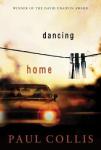
Paul Collis, Dancing homeThis year’s winner and runners-up were:

  • Paul Collis’ Dancing home (Winner), which also won the David Unaipon Award in 2017, and has been reviewed by Lisa. I have it on order.
  • Merlinda Bobis’ Accidents of composition (Highly commended)
  • Jackie French’s Facing the flame (Shortlist)
  • Omar Musa’s Millefiori (Shortlist)
  • Rachel Sanderson’s The Space Between (Shortlist)

ACT Writers Centre Awards

These sponsored awards are managed by the ACT Writers Centre.

Marjorie Graber-McInnis Short Story Award

Amanda McLeod’s Loyal Animals

June Shenfield Poetry Award

Natalie Cook’s Incursion, Extinctions.

The 2018 Anne Edgeworth Young Writers’ Fellowship

Gemma Killen. She will receive support from the Trust to help her develop her skills in writing for the screen with a focus on comedy scripts.

Anne Edgeworth’s son announced that, next year, the award will change emphasis, slightly, from “young” to “emerging”, recognising that new older writers also need support.

Publishing Awards

Kirsty Budding, paper cutsThese awards were established in 2004 “to recognise, reward and promote writing by ACT region authors that has been published by small publishers or been self-published”.

  • Fiction: Kirsty Budding, Paper cuts: Comedic and satirical monologues for audition or performance (Blemish Books, who also published Nigel Featherstone’s three novellas). Budding lives and works in Canberra as a theatre producer and teacher. She has been shortlisted and/or won several playwright awards, including being a semi-finalist in the 2017 ScreenCraft Short Screenplay Contest, Los Angeles.
  • Non-fiction: Robert Lehane’s Verity (Australian Scholarly Publishing). This is a biography of Canberra pioneer, Verity Hewitt, who, among other things, established a bookshop in Canberra in 1938. She also, apparently, taught Gough Whitlam, and was an activist in the peace movements of the 1950s to 70s.
  • Children’s: Maura Pierlot’s Trouble in Tune Town (Little Steps Books). This is Pierlot’s first children’s picture book, and it has been gaining recognition in awards – Best Illustrated Children’s E-Book in the Independent Publisher Book Awards (IPPY) 2018 (Joint Winner); and a finalist in the Children’s Picture Book (Hardcover Fiction) in the International Book Awards 2018
  • Poetry: Paul Cliff, A constellation of abnormalities (Puncher and Wattman). Cliff is a poet, playwright and editor whose has been published for over 30 years, and has won or ben shortlisted for several awards including the Mattara Poetry Prize, the David Campbell and Rosemary Dobson Poetry Prizes.

Full details of the awards, with all the shortlisted writers can be found on the ACT Writers Centre website.

Congratulations to all the winning and shortlisted authors, and a big thanks to the ACT Writers Centre for inviting me to the event.

Monday musings on Australian literature: Eleanor Witcombe

Eleanor Witcombe

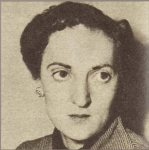
Eleanor Witcombe, 1950 from Australian Women’s Weekly (Presumed Public Domain)

Eleanor Witcombe, who died in October at the venerable age of 95, is not exactly a household name in Australia – but some of her work is, because she’s associated with the renaissance of Australian film in the late 1970s. She wrote the screenplays for The getting of wisdom and My brilliant careerHowever, her writing career long preceded that work.

Growing up

Eleanor Witcombe, then, was a playwright and screenwriter. She was born in 1923 in Yorketown, South Australia, where she went to Yorketown Higher Primary School until 1939 when her family moved to Brisbane. There she attended Brisbane Girls’ Grammar School. I was entertained to find, via Trove, all sorts of references to her schooldays because in those days, particularly in country towns, the papers reported on school doings. Yorketown’s The Pioneer regularly included “Honor Lists” in which the young Eleanor would appear, such as in 1931 for “Arithmetic” and “Mental”, or, in 1935, as winning a prize for “Schoolwork” in the Yorketown Show. In 1932 the paper reported on the formation of Yorketown’s first Brownie pack, and listed Eleanor and her sister among its first members, and in 1938, it reported that she had earned Honours in her Grade VI Music Theory exam. She was clearly a diligent girl …

… and she liked writing. The Sydney Morning Herald, in its obituary, says that her English teachers at Brisbane Grammar School encouraged her talent. She wrote her first play, “Omlet”, a skit on Shakespeare’s Hamlet, for a school concert.

Early working years

In 1941, the family moved to Sydney, and by mid-20s, she was living in Cremorne, Sydney. She went to art school where she knew Margaret Olley (also born in 1923.) This connection also popped up in Trove, this time in The Daily Telegraph of 23 January 1949 which reports on William Dobell controversially winning the Archibald Prize with his portrait of Olley. The report writes that of the 50 people viewing the portrait only two recognised “buxom, attractive 25-year-old Miss Olley”, and one of these was Witcombe. The report continues that:

Miss Witcombe attended East Sydney Technical College art school with Miss Olley. She said: “From some angles the portrait resembles Margaret. “There is a certain something about the whole thing that is Margaret. “I think it is glorious. I think it glows. It jumps out of the wall and really gets you. “But no one who does not ‘know’ Margaret would recognise it as a portrait of her.”

However, by this time, Witcombe had moved from art to writing and the theatre. In 1945, her short story “The Knife” was one of 43 out of over 2000 entries chosen for publication by the Sunday Telegraph in its short story competition, though I suspect she wasn’t among the final winners. Her story is available on-line.

It was drama though that captured her interest. Her biography at AustLit records that she enrolled in Peter Finch’s Mercury Theatre School, and that between 1948 and 1950 she was commissioned by the Mosman Children’s Theatre Club to write three plays for children: Pirates at the BarnThe Bushranger, and Smugglers Beware. Searches on Trove find many, many references to these plays – over a long period of time, and in England as well as Australia. According to AustLit, Smugglers, Beware became the first Australian children’s play professionally produced in London.

In 1950, The Australian Women’s Weekly included her in an article on Interesting People. She was 27, and had written and had performed those three children’s plays. The article concludes with

Miss Witcombe has been writing plays since she was seven, likes action and says “fairies are only for adults.”

Throughout the early 1950s, she appears frequently in the newspapers, with her plays being performed all over Australia – in remote places like Bourke as well as the cities. She started writing for radio, and talks in interviews about original versus adapted works.

However, she also spent part of the 1950s abroad, going to London in 1952 where she worked and studied for 5 years, not returning to Sydney until 1957.

Television years, and beyond

On her return, she wrote for the ABC and commercial radio – including many one-hour drama adaptations of plays, books, and stories – as well as for the theatre. She initiated the Australian Theatre for Young People in 1963, and was a foundation member, in 1962, of the Australian Writers Guild. We have a picture, in fact, of an active successful writer – of both original and adapted works.

When television appeared on the scene, Witcombe turned her hand to that medium too, writing for sketch comedy series The Mavis Bramston Show and, for three years, for the television soap opera Number 96, both of which, for different reasons, are important parts of Australian television history. She adapted children’s novels for television: Pastures of the blue crane (1969), which is one of the first miniseries I recollect seeing, and Seven little Australians (1973).

And, just to show her complete versatility, she adapted Norman Lindsay’s The magic pudding for the Marionette Theatre of Australia, a show that was performed at Expo 70 in Japan. When this show was revised in 1980 for new puppets, the Australian Women’s Weekly reported that

The script for the new production is by screen writer Eleanor Witcombe. Richard [the Theatre’s artistic director Richard Bradshaw] believes she’s the best.

“Eleanor used great huge chunks of the original book but we had to develop Pudding’s part. Her additional dialogue is perfectly in character.”

Meanwhile, of course, there were those films, The getting of wisdom (1977) and My brilliant career (1979). Both were adaptations of Australian classics, and both earned Witcombe AFI Awards for Best Adapted Screenplay.

I found a lot more in my research that I’d love to share, but will just tell this, before concluding. Around 1976, Witcombe was invited by Sir Robert Helpmann to research Daisy Bates for a film in which Katharine Hepburn wanted to star! Who knew! It was Witcombe, apparently, who uncovered that Bates had once been married to “Breaker” Morant.

After her death, the National Film and Sound Archive posted an excerpt from a 1998 oral history interview with her by Stuart Glover. In the excerpt she discusses writing adaptations, and the need to find the wood amongst the trees, the essence of the story. The excerpt ends with Glover suggesting she’d had a good career and asking her whether she’d enjoyed it. She replied:

No, I’m disappointed in myself. Because I don’t think I’ve – I haven’t adapted myself well. [Laughs] I haven’t found my centre enough and quickly and solidly and surely enough, to be able to go for that centre, y’know? I haven’t looked at me like a book and said, ‘This is what this book is about, and that is where the centre is.’

Sounds to me like an artist – never happy with her work – because, if you ask me, she had a brilliant career.

Have you heard of Eleanor Witcombe, or seen any of her plays or films?
Monday musings on Australian literature: Bush Sketcher (Intro)

I was uncertain about whether to title this post The Australasian or “Bush Sketcher”, but have decided on the latter. However, I will start by introducing The Australasian!

The Australasian was a weekly newspaper established in 1864 by the merger of three Melbourne weeklies, and later incorporating a couple of other publications, including, in 1889, the monthly Australasian Sketcher with Pen and Pencil. The Australasian was the weekend companion to the Argus, and lasted until 1946 when it became the Australasian Post. That publication had a bit of a chequered history, but lasted until 2002 (albeit named, by then, Aussie Post.)

The reason, though, that I checked all this out was because of a regular column or section in the Australasian called “Bush Sketcher” as it was under this banner that Katharine Susannah Prichard’s short stories, “The bridge” and “Christmas tree”, were published (links are to my recent posts). It was when I saw the second story appear under the banner that I decided to check out this “Bush Sketcher” business. Through my best Trove jiggery-pokery (without spending hours), I think I can say that this “Bush Sketcher” column ran from around 1895 to 1925.

Bush Sketcher

Ernest Reid, Australian station storiesArticles ranged from 600 to 3000 or so words, with most being in the vicinity of 1500 to 2500 words, so this was more than a “column”. All the articles have by-lines, but many are pseudonyms (like Bushwoman, Millewa and Coriander) or just initials (such as J.A.M., A.H., and R.V.L). However, as we already know, some authors, like Katharine Susannah Prichard, are fully identified. Another well-known author who came up in my search was Daisy M Bates. Other lesser known writers (to me) include Hetty Ralph-Baker, Ernest Reid (whose short stories from The Argus and The Australasian were published in 1930 in a collection titled Australian station stories), and  E.S. Sorenson (novelist, poet and short story writer who appears in the Australian Dictionary of Biography). So, a varied bunch.

The content is varied too as a random selection of article titles shows:

  • “Aboriginal relationships” (Daisy M Bates – a detailed description of Western Australian Aboriginal kinship systems, written in 1922)
  • “Racing in the never never” (Bushwoman)
  • “A day at Bushvale” (Coriander)
  • “Far north blacks” (Hetty Ralph-Baker – but this article is barely legible, so worn or faded is it)
  • “The old station” (Ernest Reid)
  • “Sundowners” (ES Sorenson)

And, not only is the content varied, but the form also: some of the articles are short stories, while others are more journalistic or slices-of-life non-fiction.

I will return to “Bush Sketcher” in future as there’s some fascinating material here, but will close by sharing one …

“Women’s work in the North West”

Written by A.H. and published on 18 December, 1920, this article is written by the mistress of a station homestead. Focusing on wash-day, it describes the work undertaken by women in managing a homestead – though in fact the women whose work is mostly described is that of the Aboriginal women (or “gins” as she calls them). I think A.H. is being genuinely inclusive in her title, “women’s work”.

The homestead is set in the Kimberley area and provides insight into life there. The story starts with a somewhat purple but highly evocative description of the landscape around the station, then tells us that it’s wash-day. The arrival of the indigenous women reminds her that there’s no time to waste:

The women, running up with their shouts, laughter, and repartee to their lazier men folk, warn us that if the great mountain of soiled clothes in the laundry is to be clean goods by noon we too must be on the move.

She tells us how they all wear white in the house! Really? In the red-earthed north-west! And she describes the women: “Hebe, our bed room girl [who] has been well trained for her work from the age of ten …The other women … were all older – Chatterbox, the children’s nurse; Chloe, the dining room and pantry maid; Mirabon, the kitchen help; and old Biddy, Hebe’s mother, a general utility, able to clean windows, wash down verandahs, and help in the laundry.” She describes the challenges involved in keeping them on task, including bribing them with “a tin of apricots”.

However, once she’s got the women started on the washing, she writes that:

I can safely go in now to the half-past 6 breakfast, which is spread on the shady verandah. The children are in their nursery, the netted in end of the vine-covered verandah, where a swing and a hammock, a rocking horse, and boxes of bricks, with slates and pencils, minister to their amusement and interest through the long hot day. Every one, native and white, has a siesta from 12 till 3 in the afternoon, noon. Breakfast is taken at 6 or half-past, tiffin (a light meal of cakes and tea or coffee), at 10, lunch at 12, (a light meal also); afternoon tea at half-past 4; and dinner at half-past 7. Such are our rules, and these vary little among the station homesteads between the Gascoyne and Marble Bar, Broome, Derby, and Wyndham.

So, we get a lovely time-table of station-life.

The whole thing is paternalistic as you’d expect from the times – at one stage she calls the women “happy creatures” – but A.H. is not totally closed-minded to indigenous lives and ways. I was fascinated by this:

When the copper has its first consignment, the women pause for a drink of cold tea and a nice repast of broiled frogs, which Topsy a 10-year-old Coorie, has brought up smoking hot from the camp, and they do not look untempting, lying well browned on a mass of gum leaves in the boat shaped Tar-doo, which serves the natives as a tray. With a sleight of hand quite wonderful the frog is stripped of its brown coat, attendant ashes, and in the same movement the shrunken “innards,” leaving only the succulent limbs, which are swallowed as we swallow oysters.

She also describes some of the lively repartee with Chloe who, though under our writer’s control, is not afraid to express her frustration, telling A.H., “Missis too much wongi wongi: make black-fella woman bad fella”. Then, having given this “frank opinion”, she gets back to work “on the tubs.”

Particularly interesting, though, is A.H.’s concluding paragraph:

The natives who belong to the territory taken up by the squatter become, by an arrangement with the Government, his indentured servants. He is responsible for their upkeep. A liberal scale of diet is specified by the Protector of Aborigines, who also sends an agent from time to time on surprise visits to see that all regulations are fairly kept.

That, I suppose, is to reassure the city-readers that all is properly managed and happy on the stations.

There is of course so much we, a century later, could read into this wash-day slice-of-life, but I’m not going to say the obvious here. My point really is to show what a rich source “Bush Sketcher” is for providing insight into Australian outback life – including values, attitudes and language – at the beginning of the Twentieth Century. I’ll be back with more …

Monday musings on Australian literature: University of Canberra Book of the Year 2019

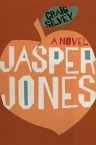
Jasper Jones, by Craig SilveyI have written about the University of Canberra’s Book of the Year initiative, twice – in 2012 when it was initiated, and again in 2014, when I checked to see whether the program was continuing. I am thrilled to say that earlier this month I heard the announcement of 2019’s book, so the program continues still. This book will be the 7th in the program.

Before I announce next year’s book, though, a quick refresher about the program. It involves the University providing a selected book, free, to all “commencing students” regardless of their subjects, as well as to all staff, academic and otherwise. The book is required reading, and teaching staff are expected to incorporate the book somewhere in their programs.

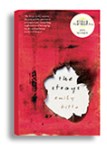
Emily BItto, The strays, book coverThe books are not always Australian, which is a shame given this is an excellent opportunity to introduce students to Australian literature. Also, and perhaps this sounds contradictory, while the genres and subject matter vary somewhat, there’s not a lot of diversity in terms of writers. No indigenous writer, no writer from a non-white/non-English language background, for example. Here is the list, to this year:

2013: Jasper Jones, by Craig Silvey (my review)
2014: Room, by Emma Donoghue
2015: The Rosie Project, by Graeme Simsion (my review)
2016: The strays, by Emily Bitto (my review)
2017: The white earth, by Andrew McGahan
2018: Do Androids dream of electric sheep? by Philip K. Dick

Professor Klomp describes the goals:

The UC Book Project is a fantastic initiative that introduces commencing students to intellectual life before their studies officially begin, encouraging early engagement with UC online resources, and informal learning and sharing among all new students.

It also promotes interaction and engagement among staff and students with a common topic to chat about around campus.

UC Book for 2019

In October, the University announced the shortlist, which are, this year, all recent Australian books. Good decision – and again some varied content, but, notwithstanding Bobis, not particularly diverse. It really is time, I think, to see some indigenous Australian writing chosen.

The announcement says that the judging panel, which comprises “Professor Klomp, the University Librarian, a Professor of Creative Writing, authors, media personalities and students”, is provided the shortlist from which to select “a book that is appealing to our wide range of students”. This year’s shortlist (including main “awards” credentials) was:

  • Merlinda Bobis’ Locust girlNew South Wales Premier’s Literary Award (Christina Stead Prize for Fiction); Juan C. Laya Philippine National Book Award (Best Novel in English)
  • Felicity Castagna’s No more boats: Miles Franklin Literary Award (Shortlist)
  • Peggy Frew’s Hope Farm: Barbara Jefferis Award (Winner); Miles Franklin Literary Award (Shortlist), Stella Prize (Shortlist)
  • Bram Presser’s The book of dirt: NSW Premier’s Literary Awards (Christina Stead Prize for Fiction); NSW Premier’s Literary Awards (UTS Glenda Adams Award for New Writing); NSW Premier’s Literary Awards (The People’s Choice Award); Voss Literary Prize (Shortlist)
  • Lucy Treloar’s Salt Creek: Dobbie Award for Best New Writer (Winner); Miles Franklin Literary Award (Shortlist); Walter Scott Prize for Historical Fiction (Shortlist)
  • Josephine Wilson’s Extinctions: Miles Franklin Literary Award (Winner); Prime Minister’s Literary Awards for Fiction (Shortlist)
  • Charlotte Wood’s The natural way of things (my review): Prime Minister’s Literary Award for Fiction (Joint Winner); Stella Prize (Winner); Miles Franklin Literary Award (Shortlist); Barbara Jefferis Award (Shortlist); Voss Literary Prize (Shortlist); plus short listing for the NSW Premier’s Literary Awards, Queensland Literary Awards and Victorian Premier’s Literary Awards.

Charlotte Wood, The natural way of thingsAnd the winner is: Charlotte Wood’s The natural way of things. A provocative and probably challenging choice for many – but one that should stimulate great discussions about all sorts of ideas, values and topics. UC’s Press Release announcing the selection says that Professor Klomp “hopes that the book with engage a wide audience with its universal themes of power, morality, judgement and friendship.” Remembering the strong and varied reactions in my reading group – about everything from style and characterisation to meaning and themes – I’d love to hear the students and staff discuss this one.

I’d love to hear you thoughts about the book choices, or the program itself?

Monday musings on Australian literature: Barbara Jefferis Award and negative depictions of women

A month ago, blogger Kim Forrester (Reading Matters) tweeted “I’ve stopped reading books where a woman being murdered is the plot point. Let’s change the story.” I thought this was interesting, but didn’t think a lot about it at the time because I read very little crime (though I do watch some). However, I was reminded of it when, last week, Lisa (ANZLitLovers) brought my attention to this year’s Barbara Jefferis Award and the judging panel’s comment on the submitted books – but first some background.

The Barbara Jefferis Award has very specific criteria:

“the best novel written by an Australian author that depicts women and girls in a positive way or otherwise empowers the status of women and girls in society”.

In other words, it is not the sex of the writer that’s relevant here (nor, in fact, the genre). This award is for books about women and girls, but it must also present them in a positive or empowering way. It was controversial at the time it was established. I remember it well because I created the Wikipedia article on it. I noted that journalist and literary editor Susan Wyndham had asked whether Australia needed a new fiction award encouraging ‘positive’ portrayals of women and girls, or whether it’s “an outdated gesture in a post-feminist culture rich with female authors, characters and readers?” And then I continued with:

Several writers have supported the award, including Tom Keneally, Helen Garner, Frank Moorhouse, Gerald Murnane, Anne Deveson, Kerryn Goldsworthy and Brian Castro. However, writer and critic, Andrew Reimer dislikes the idea of focusing on “social agenda” over “novelist’s skill and imagination”, and novelist Emily McGuire agreed, stating that she doesn’t “like the idea of judging fiction based on its message”. Author and critic, Debra Adelaide, expressed her concern that the award might encourage “safe and constrained” writing and wondered whether “we are getting to the point where we have more awards than publishing opportunities”.

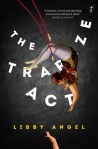
Libby Angel, The trapeze actJumping ten or so years later to the 2018 award, here is The Sydney Morning Herald’s report after the announcement of Libby Angel’s The trapeze act as winner:

Among a record number of books entered for the $55,000 Barbara Jefferis Award, a surprising number featured domestic violence, death or the subjugation of women, according to judge Sandra Yates, running contrary to the prize’s explicit criteria.

The first three books Yates read from the longlist saw one woman burnt at the stake, one woman pushed off a cliff and the other a victim of domestic violence.

“We were surprised, I have to say, that so many even in the longlist seemed to have such dark, negative portrayals of women in them,” she said. “We [women] don’t need any more books about our capacity to endure, I think we have established that.”

Reporting this, Lisa commented “So I am not the only one sick-and-tired of the current crop of misery memoirs and novels featuring women as victims…”

I don’t feel as strongly as Lisa about the “current crop” of books, but I am interested in the wider issue at play here, which I’d break down into three main questions:

  • How do we define positive, empowering representation?
  • Is there, currently, a prevalence of negative representations?
  • Should writers conform to a “social agenda”?

I’m not sure whether there is a definition for the judges to work with – and would be interested to hear from Dorothy Johnston who wrote a guest post here on judging this award –  but I’d define positive, or empowering depictions of women and girls as those in which women are able to exert some sort of agency in their lives. This could include Lisa’s “misery memoirs” if, as often happens, they end with the woman rising above the challenges (the violence, the abuse, the poverty, the illness – whatever the initial misery is) to take control. There can be a fine line here, though, between Yates’ notion of “enduring” and the idea of being, or becoming, empowered.

To be simplistic, we could say that, in the context of this award’s requirements, there are three “types” of books depicting women: those whose portrayals are positive (or, “ultimately” positive); those whose portrayals are neutral, that is, they are just about women getting on with the normal business of life; and those in which woman are essentially victims, with no agency to improve their lot.

Looking at the novels I’ve read that feature women and/or girls and were published between 1 January 2016 and 31 December 2017, I would say that most – by my definition, anyhow – would fall into the first two “types”. These books include:

  • Carmel Bird’s Family skeleton (my review)
  • Diana Blackwood’s Chaconne (my review)
  • John Clanchy’s Sisters (my review)
  • Claire Coleman’s Terra nullius (my review)
  • Madelaine Dickie’s Troppo (my review) (shortlisted for the Barbara Jefferis’ Award)
  • Michelle de Kretser’s The life to come (my review)
  • Sara Dowse’s As the lonely fly (my review)
  • Glenda Guest’s A week in the life of Cassandra Aberline (my review)
  • Sofie Laguna’s The choke (my review)
  • Catherine Mackinnon’s Storyland (my review)
  • Emily Maguire’s An isolated incident (my review)
  • Josephine Rowe’s A loving, faithful animal (my review)
  • Anna Spargo-Ryan’s The paper house (my review)
  • Ariella van Luyn’s Treading the air (my review)

Not all of these are simple, positive depictions, but their women are not all victims, albeit some are certainly challenged by the decisions they’ve made. I know from experience, however, that my definition of “positive” is not universal, and that I see hope where others don’t. Laguna’s The choke, for example, is undeniably grim – but Laguna believes in offering hope, and, whether or not you like the ending, it is intended to be hopeful.

The only book I’ve read from this period which, by my definition, would not meet the Award’s positive depiction criterion is Mirandi Riwoe’s The fish girl (my review). That girl tries, but is ultimately powerless and so done in by men with power over her.

So, I don’t necessarily agree that the majority of current books – at least those I’ve read – focus on women as victims. Many of the female protagonists may commence as victims – like Laguna’s Justine or the two protagonists in Charlotte Wood’s The natural way of things (published in 2015) – but most of the books are about confronting problems, not simply succumbing to them and enduring.

As for whether writers should conform to a social agenda, my simplistic answer is no. But that doesn’t mean that a social-agenda based award is, in itself, wrong. It just means that it would be unwise for an author to write to an award whose requirements didn’t align with what they wanted to say. We have in fact many social-agenda oriented awards – the Stella Prize and the David Unaipon Award being just two examples.

How would you define “positive depiction”, and what do you think about the current crop of novels (regardless of where you live)?

Monday musings on Australian literature: Reading for Reconciliation

Funny sometimes how Monday Musings topics suddenly appear to me. I was researching for a future post, when I came across a site called Reading for Reconciliation – and couldn’t go past it for today’s post.

However, the site’s Home Page needs a bit of unpicking. It has a heading, “Finalists in 2012 Queensland Reconciliation Awards”, followed by text which reads “More than a ‘book club’ – we celebrated our 10th Anniversary in August 2014.” At first, I thought the page was going to list the 2012 finalists, but then I realised that they were saying that their bookclub was a finalist in the 2012 awards? Duh, silly me! Anyhow, the accompanying text tells us that the group:

  • is diverse in background and age, and has no political or religious affiliations; and
  • seeks “to expand our knowledge and understanding of current issues impacting on Australia’s First Peoples by reading and discussing works in an informal, friendly setting”.

They are a Brisbane group, which meets every 6 weeks or so – and they welcome new readers. The way they work is for members to take turns in leading discussion of the chosen book, with this leader being expected “to provide some extra background or context, focus the discussion, etc.” I’d be there if I lived in the Brisbane area. A bit more Googling uncovered the fact that they seem to run under the banner of Reconciliation Queensland Incorporated.

Paul Collis, Dancing homeAnyhow, next on the home page is the list of books they’ve scheduled for 2018:

  • John Newton, The oldest foods on earth
  • Damien Freeman & Shirleen Morris, The forgotten people
  • Anita Heiss, Barbed wire & cherry blossoms
  • Mark Tedeschi, Murder at Myall Creek
  • Mark Moran, Serious whitefella stuff
  • Mark McKenna, From the edge
  • Nonie Sharp, No ordinary judgement
  • Paul Collis, Dancing Home

A varied list, and one that contains some titles and authors I don’t know. However, the best thing about this site is that they also have a page listing every book they’ve discussed since they started in 2004. That’s a great resource for anyone else wanting to read for reconciliation (or start such a group!) It’s worth noting that the books they read aren’t all by indigenous Australians, and they include fiction and non-fiction. They’ve read books by indigenous authors like Kim Scott and Anita Heiss, Bruce Pascoe and Jeanine Leane, for example, all of whom you have met here. Non-indigenous writers they’ve read include novelist Kate Grenville and historians Henry Reynolds and Ann Curthoys.

Understanding the past to comprehend the present

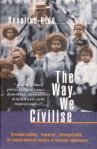
Rosalind Kidd, The way we civiliseAnyhow, I kept Googling, as I wanted to find out how this group started, and up popped an article titled “Six Books for Reconciliation Week” on an Amnesty International site! The article is by the group’s founder Helen Carrick. She starts:

In a Brisbane suburban lounge room in 2004, a diverse group aged from their 20s to 70s gathered to discuss Ros Kidd’s ‘The way we civilize’, which Professor Marcia Langton has described as a “ground-breaking history in the lives of Aboriginal people.”

They may have been diverse but their reason for meeting was not. They “all wished to learn more about Australia’s shared history – all regretted this hadn’t been learned at school.” They believe that they need to understand the past, in order to comprehend the present.

Carrick then describes the group’s history to date – including moving its home from members’ lounge rooms – and lists some of its highlights, including:

  • being a finalist in those awards I mentioned above!
  • establishing their website
  • having authors attend some meetings to discuss their books
  • the establishment of similar groups in Logan City (still Qld – you can see their 2016 list here) and Lismore (NSW)

And with this, I’ll end, making it a short Monday Musings for us all. I’ll just say that it’s great seeing a group like this – and not just seeing it, but seeing it survive for more than a decade and seeing the idea copied by others. Meanwhile, if you’re interested but can’t join a group, there’s always Lisa (ANZLitLovers)’s Indigenous Reading Week. From little things, big things grow – hopefully.

Do you take part in any reading for reconciliation programs?

Monday musings on Australian literature: And now it’s booktubers

Book Stack

(Courtesy: OCAL, from clker.com)

Well, actually, it’s not quite “and now” because booktubers have been around for a while – apparently. Or, so I read in an article, sent to me by occasional commenter here Neil. (Thanks Neil.) The article is from ABC RN’s The Hub program: it contains a link to the segment on the radio program, as well as a written article about booktubers. One of the booktubers has been posting videos for 9 years! Fascinating.

Here is the link on the ABC’s website, if you are interested.

It’s probably not surprising, however, that this corner of the book-internet has escaped my notice because, firstly, booktubers seem to come, primarily anyhow, from a younger generation than mine, but secondly, and probably more significantly, booktubers apparently tend to be lovers of fantasy and YA fiction, neither of which are big (as you’ll know) in my reading diet. However, we are ecumenical here at Whispering Gums in our interest in book and reading culture, hence today’s post.

So what or who are booktubers? Well, firstly, booktubers are, if I understand correctly, a subset of vloggers (ie video-loggers). In other words, they are book reviewers who, instead of writing their reviews on a blog, present them orally via a video service like YouTube.

Some Australian booktubers

  • G-Swizzel Books(Grace): Commenced 2015, with nearly 5,000 subscribers. Marvel Books, are among her special interests.
  • IsThatChami (was Read Like Wildfire): Commenced in 2014, with nearly 20,000 subscribers. She seems to do more than books, but books feature in a significant number of her vlog posts.
  • Happy Indulgence (Jeann Wong): Commenced in 2014, with nearly 2,000 subscribers. A recent vlog post of hers was about a book haul. Her audience is comparatively small, but she told the ABC that she also blogs and Instagrams about books, and has a good relationship with publishers.
  • Little Book Owl (Catriona Feeney): Commenced in 2011, with over 181,000 subscribers. According to the ABC, she’s our most popular one. Fantasy fiction is apparently her specialty. An example is her recent vlog post on unboxing book boxes.
  • Noveltea Corner (Stef): Commenced in 2014, with nearly 2,000 subscribers.
  • Piera Forde: Commenced in 2011, and now has over 32,000 subscribers. earlier this month she posted a video on setting up bookshelves in her new home. She also likes fantasy, and the ABC report quotes her as saying that “Apart from BookTube, I rarely see reviews of fantasy fiction in newsletters or in the paper.” She needs to check out the Australian Women Writers Challenge, and our Speculative Fiction Round-ups. There are many many fantasy fiction book bloggers – not newspaper reviews I know, but they are written form reviews.
  • Tilly and her Books: Commenced in 2014, with over 14,000 subscribers. YA and Fantasy seem to be her main interests.

You can find more Australian booktubers at The Noveltea Corner. I haven’t checked them all out, and some seem to have not posted for some time, but it’s a start if you are interested.

As well as talking about books, these bloggers seem to talk about their reading lives – about unpacking book boxes (their book hauls), for example, or setting up their book shelves. Apparently, according to the ABC, “book haul” posts are a “sub-genre wherein BookTubers name-check recent yet-to-be-read acquisitions.” Like book bloggers, they’ll do posts on top reads, or recommending books on a theme. Little Book Owl, for example, produced one last week for Halloween. Indeed, in my quick survey, I saw more of these general vlog posts, than ones specifically reviewing one or two books.

Interestingly, the three identified by the ABC are all young women. Most of those on Noveltea’s list are women (just a couple of exceptions) and another list I found of ten favourite international booktubers seemed to be all women too.

The ABC noted that publishers are recognising the influence of this “new wave of digital-native bibliophiles.” Digital natives they may be, but I’m loving that they love the printed book. Many of them, when describing their book hauls, comment on the physical book – on its feel, its look, its size and weight. And they do so with obvious passion and delight. They don’t seem to be heavily into e-books – which corresponds with some recent research which suggests that younger readers still prefer hard copy for their recreational reading.

Anyhow, back to the publishers … the ABC quotes Ella Chapman, who is head of marketing and communications at Hachette Australia. She says that the booktubers enable them to “tap into a readership that perhaps we haven’t been able to reach via traditional means.”

I’ve enjoyed my little introduction to this booktuber phenomenon, and love that there’s an enthusiastic bunch of younger readers out there communicating about books. Their focus seems to be different to mine, and their presentations tend to be a bit too fast and excited for me. I think I’ll stick to blogs, but supporting diversity in how we share and engage in literary culture can only be good for us all.

Have you come across any booktubers? And if you have, do you have favourites?

Monday musings on Australian literature: Memorable homes in Aussie novels

“Last night I dreamt I went to Manderley again” is a novel opener that many of us will recognise, I’m sure. It comes, of course, from Daphne Du Maurier’s Rebecca. For some reason it popped into my head recently, and it got me thinking, not about first lines, but about famous fictional houses – and whether we have any in Australia. I’m meaning houses that are (somewhat universally) known by their name – and/or by their strong presence – in the novel. There are many, in fact, throughout literature, and some are listed on a Wikipedia page for Fictional houses, like 221B Baker Street, Bag End, Howards End, and Thornfield Hall. One of the big ones for me is, you won’t be surprised, Pemberley in Pride and prejudice. It was when she saw Pemberley, Elizabeth Bennet cheekily tells sister Jane, that she started to change her mind about Mr. Darcy.

However, when I started thinking about memorable houses (or homes) in Australian fiction I came a bit unstuck. I’ve been pondering this – on and off – for a few weeks but, although I came up with all sorts of memorable places or locations, I’ve only come up with three identifiable homes (so you know what I’m going to ask you at the end of this post, don’t you!?) I’m listing them in chronological order of publication.

Misrule

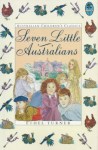
Ethel Turner, Seven Little AustraliansFrom Ethel Turner’s Seven little Australians (1894). It was inspired by her family’s home in Sydney’s Killara and its then bushland setting.

Misrule is introduced in Chapter 1:

Indeed at Misrule—that is the name their house always went by, though I believe there was a different one painted above the balcony—

The name, of course, reflects the unruly nature of the family life that happens within and around it. As the novel ends, and after the tragedy that my Aussie reading friends will remember, stepmother Esther wishes

there might be some chance, then, of Misrule resuming its baptismal and unexciting name of The River House.

But, oddly enough, no one echoed the wish.

Thank goodness for that … Ethel Turner’s sequel was, in fact, titled The family at Misrule, reassuring us that life for the Woolcot family will, again, not be “unexciting” in this follow-up story!

Appleyard College

Joan Lindsay, Picnic at Hanging RockFrom Joan Lindsay’s Picnic at Hanging Rock (1967). OK, so not a house exactly, but as the boarding school in Joan Lindsay’s gothic-influenced novel it was the school-year home for the novel’s girls, and featured its formidable (eponymous) principal, Mrs Appleyard. The Victorian-era formality of the school and the strict controls placed on its female students are set against the sense of freedom offered by picnic fun and the mysterious, alluring Hanging Rock. Unfortunately, though, I don’t have the book so can’t share any quotes or descriptions.

Cloudstreet 

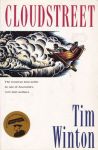
Tim Winton, CloudstreetFrom Tim Winton’s Cloudstreet (1991). This is, perhaps, Australia’s most famous fictional house, being the home, from the 1940s to the 1960s, of Tim Winton’s two families, the Pickles and the Lambs. There are many lovely descriptions of the house, but here is Rose Pickles just after they’ve moved into the big empty house left in a will to her father Sam:

Well, she thought, the old man had a win. Cloud Street. It had a good sound to it. Well, depending on how you looked at it. And right now she preferred to think of the big win and not the losses she knew would probably come. (p. 38)

The wins and losses, in other words, that big family homes, like Misrule for example, know all about. After this follows a physical description of the house as the family moves in, cleans it up, and explores its many nooks and crannies. How on earth, they wonder, will they fill up “this great continent of a house.” And then, along come the Lambs and the rest, as they say, is history.

So, a short – and I hope – fun post this week after last week’s bunch of rather long, earnest ones.

And now, I’d love to hear of your favourite fictional homes – Australian or otherwise – but if you are one of my Australian readers, I’d really like to hear your Australian ones. I bet you’ll come up with some that make me say, “Of course!”


Monday Musings on Australian literature: the Australasian Home Reading Union et al (2)

Shared Reading Sign

Shared Reading (Courtesy: Amy via Clker.Com)

You may remember that a couple of weeks ago I wrote a Monday Musings post on the Australasian Home Reading Union – and said at the time that I’d probably write more because I’d like to see what happened to it. Well, here is the next instalment. Please note, though, that my research isn’t as thorough as it could be – partly because I’m focusing on newspapers which, strangely enough, don’t think about what people in the future might want to know! Consequently, this “history” I’m gradually concocting should be seen as tentative rather than definitive.

Collapse of the AHRU

So, as I continued to search Trove, I found a bit of a gap in discussions of the Union in the early 1900s, though there were scattered references, such as to the meeting of a South Australian group in 1900. Then, suddenly, articles starting appearing around 1906 about something called the National Home Reading Union. Was this the same beast I wondered, or something different? This 1906 activity seemed to be mostly occurring in Western Australia. Was this simply that WA was now joining the east in the home-reading union movement? With just a little more digging, however, I found an article that explained it all …

The article appeared in Perth’s Western Mail on 11 August 1906 and concerned the visit to Australia of one Dr Hill, Master of Downing College, Cambridge. It commences by describing at some length Dr Hill’s “hobby” – the National Home Reading Union. He was one of the original founders in England and, he tells “the interviewer”, it had spread through various parts of the Empire, including Canada and South Africa. But what of Australia?

Well, you might also remember from my first post that the Australasian Home Reading Union started in Tasmania? Here is what Dr Hill says:

“When Bishop Montgomery first went to his See in Tasmania, I asked him to try to establish an Australian branch of the N.H.R.U. His efforts were only too successful. Why, in New South Wales the then Governor, Lord Jersey, took the chair at an inaugural meeting, and the Premier and several bishops were on the platform. The movement started with such eclat that the committee felt themselves strong enough to establish an Australasian Reading Union, with their own book lists, their own magazine, etc. But they did not reckon that whereas we in England can obtain an unlimited supply of scholars to write for the magazines the conditions are not equally favourable in Australia. After a short, though meteoric existence, the Australasian Union came to an end. Had it remained as it started – a colonial branch of the N.H.R.U. – it would still be flourishing. We have strong centres in Canada and South Africa, and in other parts of the Empire, and I should greatly like, before I leave, to see a branch established for Western Australia.”

Interesting, eh? Sounds like we, unlike other parts of the empire, decided to go it alone. Good on us for being independent! Anyhow, he goes on to suggest how to go about organising a new WA branch:

“It has been strongly borne in upon me since I came to Perth … that it is far less easy here to find men of leisure in need of a congenial occupation of this kind than at home. But this work is, perhaps, rather ladies’ work than men’s. It is the ladies who have the leisure to read, and they have their children to encourage in habits of reading. Many of our strongest committees at home are composed chiefly of ladies. If some of the ladies of Perth would organise themselves into a branch of the N.H.R.U., they would, I think, find that it not only immensely increased their interest in reading, but that it afforded them an effective means of advancing the cause of civilisation.”

Fascinating. Is it that we had fewer men of leisure – it probably is – or that we had fewer “in need of a congenial occupation of this kind”? And, did women (oops, “ladies”) have more time or, were they more motivated? There are, in fact, many issues we could unpick in his statement regarding class and gender, but that’s not my focus here, so let’s move on.

The interviewer then asked Dr Hill whether the Union focused on “serious works, and books of the dry-as-dust series.” Absolutely not, replied Dr Hill:

our whole object is to render reading recreative. We have, this year, courses on Stevenson, Browning, George Meredith, French novels, and many other subjects, which cannot be termed academic, and we never miss an opportunity of introducing into our lists novels, biographies, and essays, or other lighter forms or reading. We are not technical. We keep as far away as possible from bread and butter studies, and we absolutely decline to institute examinations. Our object is culture.

WA gets under way

A month later, on 15 September 1906, the Western Mail reported that a temporary committee had already been formed and that while they could not obtain all the material needed from England for some months, this committee would endeavour to put a proposal tighter “for a course of reading.”

Then, on 27 February 1907, the West Australian announced that the National Home-Reading Union was underway, though it does not provide specific details, beyond giving some examples of courses from the NHRU’s magazine. However, the very next month, another WA newspaper, The Northam Advertiser states that “A ‘men’s “circle” has been started in a small way in our midst, and some half dozen members have been enrolled. Mr. A. H. Greenwood is secretary, and the meetings are fortnightly at the Rectory.” (It’s notable, in fact, the degree to which the church seemed to be involved in this activity.) The article lists the course of reading – do click on the link to see what you think – and concludes by stating that:

The cost of the books will run from 9d to 1 /6 each, and about one or two books a month is all that will be required, so that it is within the reach of everyone to join, and the reading at home and the meetings are sure to be interesting and instructive. It is hoped to start a ladies’ “circle” as well, and Miss Janet Rickey will be glad to receive names of persons willing to join.

So, gendered groups, which is probably not surprising. And an overt reference to cost, which tells us something about their intended audience – “everyone”, not just the well-to-do.

There is more to this AHRU/NHRU story because it did seem to take off – but I’ll leave that for the next instalment.