Monday musings on Australian literature: Author blogs on the publishing journey

Most readers, not to mention aspiring authors, love hearing about the writing and publishing process authors go through. What inspired their book? How did they go about writing it and were there any hiccoughs along the way? How hard was it to get an agent and/or publisher? What role did the publisher/editor have in shaping the final product? And, once the book is out, how did the marketing/promotion journey go? How did they feel about reviews, positive and negative? These sorts of issues are often covered in book launches, and on panels and “in conversation” events at writers’ festivals, but some writers go a step further and share them via their personal blogs.

So, today, I’ve decided to share a select few of these, given I can’t possibly capture them all (even if I knew them all, or could remember all those I’ve come across!) All these authors have had books published, and all have written more posts on writing than the posts I’m featuring here. In other words, I’m brazenly inviting you to explore their blogs beyond the posts I’m highlighting below.

Book coverLouise Allan

Louise, whose debut novel The sisters’ song was published in 2018, has a series on her blog called Writers in the Attic. Here she publishes guest posts from Australian authors on what it’s like to be an author. Her guests include authors well-known to me like Heather Rose (A few thoughts about writing), Favel Parrett (When fiction becomes truth), and Robyn Cadwallader (The angel among the chaos). Introducing Robyn’s post, Louise writes:

I’m always deeply grateful to the writers who contribute to Writers in the Attic. Their words never fail to give me something to think about, or bestow a nugget of wisdom or just make me feel less lonely on this torturous journey to a novel.
Book coverAmanda Curtin

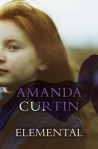
Amanda, like Louise (above) and Annabel (below), is a Western Australian writer, and has published a few books, including novels Elemental and The sinkings. She has a couple of special series of posts about writing on her blog, looking up/looking down. One is called Writers ask writers (with topics like early inspirations and tools of the trade), and the other is 2, 2 and 2 (writers + new books) in which writers discuss two things about each of three aspects or ideas relevant to their new book. Two of these aspects are set – things that inspired their book and places connected with it – while the third is chosen by the author. So, for example, Brooke Davis, writing about her novel Lost and found (my review) chose 2 of her favourite secondary characters in her book, while Jenny Ackland talking about The secret son (my review) chose 2 favourite things connect with her book.
Nigel Featherstone, Bodies of menNigel Featherstone

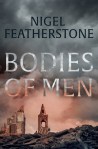
Local author Nigel has been documenting his writing life on and off since 2009 in his creatively named blog, Under the Counter or a Flutter in the Dovecote. However, he has written a special series documenting the course of his latest novel, Bodies of men (my review). The series, called Diary of bodies, takes us from its original inspiration to his feelings about reviews and, woo hoo, being shortlisted for an award. Nigel, like many of the authors in this post, shares not only the practical, factual things about writing and publishing his book, but also his emotional journey. Nigel, a local author, has appeared several times on my blog.
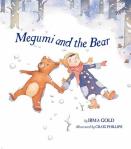
Irma Gold Craig Phillips Megumi and the bear book coverIrma Gold

Irma is also local author who has appeared several times on my blog. She is a professional freelance editor who also teaches editing. She has edited an anthology, and has had a collection of short stories and children’s picture books published. She discusses all this, and many other topics related to the writer’s life on her blog. Like some of the other writers listed here, she has included in some of these posts input from other writers, such as this post on rejections, in which Anna Spargo-Ryan, Sheryl Gwyther and Ben Hobson discuss their feelings about rejections. Hobson, author of To become a whale, writes:

It sucks. But I’m saying to you: you can persevere. You’re a writer, damn it. Get off the floor and clench your fists and edit and send it out once more. You can endure. You are being refined. Collect rejections like UFC fighters collect scars; each one of those things is a mark that has created this warrior you’re becoming. Be proud. And send it out again.

Annabel Smith and Jane Rawson

Annabel Smith (from Perth) and Jane Rawson (from Melbourne) have both appeared on this blog before (see Annabel and Jane). Together, they created in 2017 a series of posts they titled What to expect, which they ran on both their blogs, Annabel and Jane. Their aim was to “dish the dirt on what happens just before, during and after your book is released”. In these posts, Annabel and Jane give their opinion – on, say, prizes or book launches – and then, mostly, also invite another author or two to contribute.
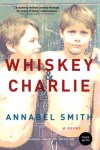
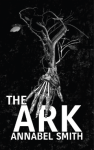
Annabel is a member of the Writers Ask Writers series of posts that Amanda also posts. She also has an Author Q&A series in which she asks writers “to answer some questions about writing and publication” and a series on How Writers Earn Money.

Book coverMichelle Scott Tucker

Michelle, like Nigel, has maintained a general litblog for many years. However, also like Nigel, she has a specific series of posts focused on her biography, Elizabeth Macarthur: A life at the edge of the world (my review). In this series, she shares both her writing and publishing journey and her post-publication experiences and events, including being shortlisted for awards.

How generous and open-hearted are these writers to share their knowledge, and to go to so much trouble to do so. I dips me lid to them. But, they are just a start. Many other authors have blogs too, offering us all sorts of delights. I plan to share more of them during 2020.

Have you read any of the blogs, or blogs like them? If so, do you enjoy them and why?
Monday musings on Australian literature: ABC Bookshelf’s top Aussie reads 2019

The usual end of year listmania has begun, and I also like to join in, but with a focus on Aussie book lists. This year, I’m starting with the Aussie books subset of the books recommended on ABC’s Bookshelf program. Recommenders, in addition to the show’s presenters, Kate Evans and Cassie McCullough, were Stephen Romei, Literary Editor of The Australian; David Gaunt, independent bookseller of Sydney’s Gleebooks; and Michaela Kalowski, interviewer and moderator for writers and ideas festivals and local libraries. To see the full list of books they recommended, check out their page or, even better, listen to the program (accessible on that page). Do listen to the program if you have time, as they discuss issues like books that are hard to sell (and why) and liking (or not) books that are grim or too close to the bone.

Books from around the world were mentioned, but of course there was an emphasis on Aussie books, and that’s what I’m focusing on here. I like that this list roams across genre (including historical fiction, crime and sci-fi/fantasy) and to some degree across time (including books not out until next year. That’s prescient of them!)

Here are the Aussie books mentioned, separated into fiction and nonfiction, and ordered alphabetically by author.

Fiction (and poetry)

  • J.M. Coetzee, The death of Jesus: novel, coming in May 2020
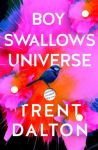
  • Trent Dalton, Boy swallows universe: novel, my review (Also recommended was Dalton’s second novel, All our shimmering skies, coming in June 2020.)
  • Garry Disher, Peace: crime fiction
  • Lexi Freiman, Inappropriation: novel
  • Chris Hammer, The Martin Scarsden seriescrime fiction series
  • Kathryn Hind, Hitch: novel
  • Toni Jordan, The fragments: historical fiction, Lisa’s review
  • Leah Kaminsky, The hollow bones: novel, Theresa’s review
  • Paul Kane, A passing bell: Ghazals for Tina: poetry (by an American poet who spends half his time in Australia)
  • Amie Kaufman and Jay Kristoff, Aurora rising: YA sci-fi/fantasy novel
  • Melissa Lucashenko, Too much lip: novel, 2019 Miles Franklin Award winner, my review
  • Roslyn McFarland, All the lives we’ve lived: novel
  • Adrian McKinty, The chain, of The Sean Duffy series (Irish really, but lives – or has lived – in Australia, and has won the Ned Kelly Award more than once): crime fiction
  • David Malouf, Ransom: novel, my review
  • Heather Rose, Bruny: novel, on my TBR, Lisa’s and Bill’s reviews
  • Dominic Smith, The electric hotel: novel, Australian-born but now US-based, my review
  • Ilka Tampke, Songwoman: novel, 2019 MUBA winner, Lisa’s review
  • Peter Temple, works: crime fiction, my review of Truth, his 2010 Miles Franklin Award winner
  • Lucy Treloar, Wolfe Island: novel, Lisa’s review
  • Christos Tsiolkas, Damascus: historical fiction, on my TBR
  • Rohan Wilson, Daughter of bad times: speculative fiction, Lisa’s review
  • Rohan Wilson, The roving party: historical fiction, winner of NSW Premier’s Literary prize, Lisa’s review
  • Tara June Winch, The Yield: novel, on my TBR, Lisa’s review
  • Charlotte Wood, The natural way of things: novel, 2016 Stella Prize winner, my review
  • Charlotte Wood, The weekend : novel, on my TBR, Lisa’s review

Nonfiction

  • Meera Atkinson, Traumata: creative nonfiction/part memoir
  • Trent Dalton, By sea and stars: nonfiction
  • Helen Garner, Yellow notebook: Diaries Volume I 1978–1987: non-fiction, on my TBR
  • Katharine Murphy, On disruption: essay
  • Cathy Perkins, The shelf life of Zora Cross: biography, on my TBR

This is a lot of books, and there was a good number of non-Australian books mentioned too, many of which I’d love to read, so the program covered a lot of reading in an hour!

By the way, if you really, really, really love end-of-year book lists, you need go no further than Kate’s (booksaremyfavouriteandbest) blog post, Best Books of 2019 – A List of Lists. She will keep adding to it as more lists appear!

Do you use these lists to direct your own reading or – as I suspect many listmakers hope – to help with your gift-shopping?

Monday musings on Australian literature: Random thoughts from the mid-1930s

I’ve written a few posts in recent months about Australian literary culture in the 1930s – on moving beyond “gumleaf and goanna”, on setting vs character, and two (here and here) on where Australian literature was heading. This week, I’m returning to the topic to share a random selection of comments made about Australian fiction in the newspapers around the middle of the decade, a time when life was still pretty tough due to the Great Depression.

Writing from real life

Book coverC.H. Wales (whoever s/he is) was inspired by the death of John McCarthy, who inspired ‘Irish Mac’ in Mrs. Aeneas Gunn’s 1907 novel, We of the Never-Never, to write about the frequent use made by Australian authors of people from real life in their novels. Writing in Adelaide’s Chronicle in June 1934, Wales comments that “the ways of life in the outback are accepted as a commonplace by people in the Commonwealth, but are learned of with amazement by people overseas” and suggests that it is therefore “no wonder, then, that our authors weave the romance of this life into their novels”. A life, he says, that includes cattle stations as big as Surrey and more, that involves using a flying medical service, and in which children who are five years old have “never seen a shower of rain”.
Wales names some contemporary writers continuing this tradition – William Hatfield’s Sheepmates (1931), which is dedicated to “the real life characters in the book”; Myrtle White’s evocatively titled No roads go by (1932); and, more famously, Ion Idriess’ Lasseter’s last ride (1931), which “adds another illuminating but tragic page to the annals of Australian exploration, which in years to come will supply a useful link with literature dealing with the history of the foundation and development of our Commonwealth and Empire”.

Interestingly, the two male writers here have Wikipedia articles, but not Myrtle White. However, like them, she does have an ADB entry (linked on her name), which includes this:

When her three children were older and she had some leisure, White began writing. At Wonnaminta, despite endless interruptions, she worked meticulously on her drafts which she typed with one finger. The result was No roads go by (Sydney, 1932), an account of life at Lake Elder, rather in the tradition of Mrs Gunn’s We of the NeverNever. With humour and resilience, White described the remote station surrounded by sand ‘insidiously creeping up the six-foot iron fence, which was our frail barrier against all that moving country’. Drought, flood and near death were presented in intense but restrained prose.

Stories about the past

Historical fiction, it seems, was as popular then as it is now. My random reading of “new fiction” columns revealed a goodly number of novels about Australia’s past, including:

  •  John K. Ewers’ Fire on the wind (1935) is, says the reviewer in Melbourne’s Leader, “a story of Gippsland nearly forty years ago, culminating in the disastrous bush fires of February, 1898”. Ewers, says the reviewer, was a school teacher in Perth who “has not lived in Gippsland, but he has derived his local color from relatives who spent part of their lives there, and lived through the terrible experiences of Black Thursday […] although the author is not a Gippslander he knows the bush and the settlers, and on that account the background of his story has the note of realism”.
  • Alice Meagher’s The moving finger (1934) was published to coincide with Victoria’s centenary. The South Coast Times and Wollongong Argus reviewer writes that “while not a history, the story gives an interesting outline the early days. There is a brief mention of the Eureka stockade, and a realistic description of the heart-breaking work in the mallee country. The graphic story of a bushfire helps to make one realise what the pioneers of this country had to go through.” The West Australian reviewer (below) says that it shows “the growth of the State in a comparatively brief period of time”.
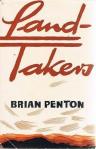
  • Book coverBrian Penton’s Landtakers (1934) is described as being among “other readable novels published in Australia”! Damned with faint praise? This West Australian reviewer describes it as “the usual type of tale that deals with Penal Settlement days, whereof Marcus Clarke’s For the term of his natural life is the great and abiding examplar”. Penton, who has a Wikipedia page like Ewers above, was an Australian journalist and novelist. Landtakers, his first novel, apparently sold well.
It’s interesting to see the specific mention of Ewers’ lack of personal experience about Gippsland and how he overcame that. I also liked the inference that fiction can tell us about who we are.

Other stories

Book coverTrove revealed many other books of different genres and styles, so I’ll share just a few, the first group coming from the West Australian (linked above):

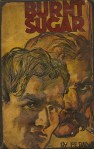
  • F.E. Baume’s Burnt sugar (1934), described as “a powerfully-written romance of North Queensland, and of Italian settlers, slightly at variance over their racial divergencies”. Baume was a journalist, author, and radio and television broadcaster, well-known to some boomers!
  • Winifred Birkett’s Three goats on a bender (1934), described as “a highly farcical story, which has, however, its amusing moments”. I’ve mentioned Birkett here before, as she won the ALS Gold Medal in 1935 for another novel, Earth’s quality.
  • J. J. Mulligan’s A gentleman never tells (1934), described as “the surprising adventures of the versatile Lord Gerrard Fitzgerald in London, Paris, on the Riviera, in Egypt and elsewhere”. The reviewer calls it “a modern picturesque story” and “remarkably entertaining”. S/he also says that it’s “none the worse for getting away from the conventional and often tedious setting of the ordinary Australian novel”. But, Mulligan doesn’t appear in Wikipedia or the ADB.
  • Robert Waldron’s The flying doctor (1934), described as “the first romance — so far as we are aware — in which the leading motive is that admirable movement for supplying medical aid to persons in isolated districts of Australia by means of flying machines”. As with Mulligan, I can’t find him in Wikipedia or the ADB.

From the above-linked Leader article comes the comment that “there are few Australian novels ‘with a purpose’ in these distressful days” but that Ambrose Pratt “has attempted one in his new book, Lift up your eyes.” (1935). The reviewer wonders, however, whether the book

will add to his reputation as a writer or really further the causes of the ideal life and social and moral reconstruction which, it is to be presumed, are part of its justification. It is a Melbourne story, and some of its pleasantest passages describe hill-scenery and touch on life in and around the Victorian metropolis. But the strain upon the credulity of the reader is excessive and there appears to be an almost complete disregard of the “unities.”

S/he finds it hard to reconcile “the idealism and the religious intensity of feeling attributed to the leading male character” with his “Machiavellian conduct of a gigantic gamble in wheat”, but suggests the book “will excite curiosity and discussion”. Pratt was a prolific novelist who appears in both Wikipedia and the ADB. ADB says that in 1933 he founded “a League of Youth dedicated to the ‘protection and preservation of the flora and fauna of Australia’ and ‘the development of ideals of citizenship in the minds of young Australians'” and that the latter aspiration was reflected in Lift up your eyes.

Book CoverThose versed in the period will know that I’ve not included some of the better known writers. This is partly because some have been mentioned in previous posts, but more because they didn’t pop up in my random search of this mid-30s period. One did, however, appear – Christina Stead’s The Salzburg tales. However, I have decided to hold it over for a future post as she’s worth a special focus.
Notwithstanding the above, the most notable observation to make, of course, is how few of these books and authors we know now. That may not be a bad thing, given the reviewers’ comments, but I love that Trove enables us to obtain a picture of what was being written and read at the time, and what the commentators thought. It all contributes to our knowledge of Australia’s culture and literary history.

Monday musings on Australian literature: Neilma Sidney Literary Travel Fund

We all know that a writer’s life is not a well-paid one. One way that writers keep going, that is, that enables them to continue writing, is through winning awards and grants. I report often on awards, and they also regularly appear in the media, but how much do we know about grants? And what exactly is a grant?

I’m not sure what the official definition of an artist’s grant is, but I’d define it broadly to encompass any monies or, other in-kind products or services (like residencies), intended to support creators doing their work. Grants tend to be offered by government bodies, foundations, trusts and non-profit organisations, with the best-known ones in Australia being, probably, those offered by the Australia Council for the Arts and the Copyright Agency. However, there are many other grants – big and small, general and specific – that writers can apply for. Darned if I know how they find out about them all, but their state writers centres, most of which I’ve now covered in this blog, are probably a good start.

I don’t want to get into the politics of funding artists. There’s the politics involved in grant-making (as anyone who has followed the Australia Council over the years knows only too well) but there’s also the bigger issue of how (or if, some would say) we should, as a society, support artists in the first place. Instead, today, I just want to share one specific grant, as an example of the sort of support artists (in this case writers) need and can get.

Neilma Sidney Literary Travel Fund

The Neilma Sidney Literary Travel Fund was established in 2017 by Writers Victoria, with funding from the Myer Foundation, in the name of poet, novelist and short story writer Neilma Gantner (1922-2015). Gantner was the daughter of businessman and philanthropist Sidney Myer. The Fund recognises, says the Writers Victoria webpage, “the unique value of travel in the development of new writing and literary careers”.

The grants, which range between $2000 and $10,000, are “intended to support emerging, midcareer and established Australian writers and literary sector workers. This includes writers, editors, agents, publishers, librarians, booksellers, employees and associates of literary organisations and journals, and other literary professionals currently living in Australia”.

Last week, Books + Publishing advised that Writers Victoria had announced the fifth round of recipients for the Fund. This round was the second offered in 2019. The judges change for each round, with those for Round 5 being writer Eugen Bacon, podcaster Astrid Edwards, and Black Inc. publisher Kirstie Innes-Will.

Here are the recipients (in grant amount order), showing the sorts of activities the fund supports:

  • Evelyn Araluen and Jonathan Dunk ($9656): to research Aboriginal and settler–colonial literary and cultural relations in England and the Czech Republic. Araluen is an Indigenous Australian poet, educator and researcher, while Dunk is a poet, critic, fiction-writer and academic.
  • Cate Kennedy ($7000): to attend writers’ festivals in Ireland and Jamaica, and residencies and reading events in the US. I’ve read some of Kennedy’s short stories, and have reviewed the excellent anthology Australian love stories which she edited.
  • Ruhi Lee ($6850): to research her memoir in India. Lee is a Melbourne-based writer, and was, in fact,  part of this year’s HARDCOPY program, run by the ACT Writers Centre (about which I wrote in 2015).
  • Mirandi Riwoe ($6062): for a residency at the Tyrone Guthrie Centre in Ireland. I’ve reviewed her powerful novella, The fish girl.
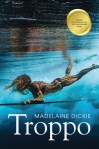
  • Book cover for Madelaine Dickie's TroppoMadelaine Dickie ($4374): to research a proposed biography of Wayne Bergmann in Broome. I’ve reviewed Dickie’s debut novel, Troppo, and will be attending the launch of her second book, the intriguingly titled Red can origami, this month. Dickie won the T.A.G Hungerford Award for Troppo, and it was also shortlisted for the Dobbie Literary Award and the Barbara Jefferis Award.
  • Fiona Hardy ($3920): to research and begin her middle-grade fiction book on Christmas Island. Hardy is a children’s book writer, reviewer and bookseller.
  • Robert Lukins ($3473): to research a novel in Carter Lake, Iowa–Nebraska, US. Lukins’ debut novel, The everlasting Sunday, was short or longlisted for some major literary awards this year.
  • Maria Takolander ($3177): to attend the Arteles artist-in-residency in Finland. I have Takolander’s short story collection, The double, on my TBR, but keep not getting to it! My bad.
  • Sara Saleh ($3100): to take part in the inaugural Arab–Palestinian literature festival in New York. Saleh is an Arab-Australian poet, creative artist and activist.
  • Tamara Lazaroff ($2723): to research her memoir on De Witt Island, Tasmania. Lazaroff is a Queensland-based writer of fiction and nonfiction, who took part in last year’s HARDCOPY program.

Books + Publishing referred to “eleven successful writers, booksellers and publishers” but in fact all these grants have been given to writers and/or for writing projects. This is not surprising really, given their generally insecure funding base, but it would be interesting to know how often other literary professionals have been given grants.

It’s darned hard work applying for grants, I know. The above 11 (for ten projects) were selected from 99 applicants, which is probably not a bad ratio. Still, writers must have to juggle the time spent on writing grant applications against writing their books. I congratulate the above 11 on their success, and hope they find spending their money both fruitful and enjoyable!

Monday musings on Australian literature: University of Canberra Book of the Year 2020

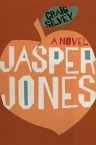
Jasper Jones, by Craig SilveyI wasn’t necessarily planning to announce the University of Canberra’s Book of the Year again this year, having written about it three times already – in 2012 when it was initiated, in 2014, when I checked to see how the program was going, and in 2018 to announce this year’s book. However, next year’s book is such a good choice that I felt it worth reminding you again of this initiative, which is now in its 8th year.

The program involves the University providing a selected book, free, to all commencing students across the five faculties. It is “required reading”. The book is “integrated into the curriculum and provides a common conversational topic on campus”. You can see the main goals in my 2018 post, and there is more about the program at the UC Book page. I had to laugh at one of the FAQs on this page. The question is:  “What does ‘required reading’ mean? Do I have to read the book?” And the answer:”Yes, all commencing undergraduate and postgraduate students in 2020 are required to read the Barbed Wire and Cherry Blossoms…” I would love to see more on the site about how this actually plays out.

It’s an inspired and inspiring initiative, though I’ve had some quibbles. I wrote last year that it was a shame that the books haven’t always been Australian, because it provides an excellent opportunity to introduce students to Australian literature. I also note that while the genres and subject matter have varied somewhat, there’s not been much diversity in terms of writers. No indigenous writer, no writer from a non-white/non-English language background, for example. Well, that has changed this year!

First though, here are the books to date:

2013: Jasper Jones, by Craig Silvey (my review)
2014: Room, by Emma Donoghue
2015: The Rosie Project, by Graeme Simsion (my review)
2016: The strays, by Emily Bitto (my review)
2017: The white earth, by Andrew McGahan
2018: Do Androids dream of electric sheep? by Philip K. Dick
2019: The natural way of things by Charlotte Wood (my review)

UC Book for 2020

In October, the University announced the shortlist, which comprises, this year, all recent Australian books. But, not only are they ALL recent Australian books, they are ALL by indigenous writers! What a wonderful message that sends.

Here’s the shortlist:

  • Tony Birch’s Ghost River (my review): “The highly anticipated new novel from the Miles Franklin-shortlisted author of Blood … The river is a place of history and secrets. For Ren and Sonny, two unlikely friends, it’s a place of freedom and adventure…
  • Claire G Coleman’s Terra nullius (my review): “The Natives of the Colony are restless. The Settlers are eager to have a nation of peace, and to bring the savages into line. Families are torn apart, re-education is enforced…”
  • Anita Heiss’ Barbed wire and cherry blossoms: “In 1944, over 1,000 Japanese soldiers break out of the No.12 Prisoner of War compound on the fringes of Cowra. In the carnage, hundreds are killed, many are recaptured, and some take their own lives rather than suffer the humiliation of ongoing defeat. But one soldier, Hiroshi, manages to escape. At nearby Erambie Station, an Aboriginal mission, Banjo Williams, father of five and proud man of his community, discovers Hiroshi, distraught and on the run…”
  • Melissa Lushenko’s Mullumbimby“When Jo Breen uses her divorce settlement to buy a neglected property in the Byron Bay hinterland, she is hoping for a tree change, and a blossoming connection to the land of her Aboriginal ancestors…”
  • Kim Scott’s Taboo: “From Kim Scott, two-times winner of the Miles Franklin Literary Award, comes a work charged with ambition and poetry, in equal parts brutal, mysterious and idealistic, about a young woman cast into a drama that has been playing for over two hundred years…”

While I’ve only read two of these books, I have read books by all of these authors, and am thrilled to see them represented here because each has something to offer to the program.

Book coverAnd the winner is: Anita Heiss’ Barbed wire and cherry blossoms.
The judges have chosen, probably, one of the less challenging reads from the list, but that’s sensible given the diverse readership they are choosing for in interest, skills and background – and it will serve the purpose of raising some necessary issues regarding indigenous history and lives. Sure, it’s about the past, but it can lead from there to discussions about How much has and hasn’t changed since then, and why …

Responding to the news of her win, Heiss told CityNews:

To have the UC community engaging in the story of the Cowra Breakout, and life of Wiradjuri people living under the Act of Protection during wartime, will add to a greater understanding of a significant moment in Australian history.

What do you think about the book choices, or the program itself?

Monday musings on Australian literature: Deafness and Australian writers and writing

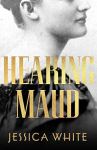
Book coverToday’s post was inspired, of course, by my recently reading Jessica White’s memoir-biography, Hearing Maud (my review), which parallels White’s own experience of deafness with that of Maud Praed. This post will not be an exhaustive (or even comprehensive) discussion of the topic, but a broad-brush introduction to some of the ways deafness is reflected in modern Australian literary culture.
For a start, some of our best-known writers have been deaf, including Henry Lawson, who was deaf by the age of 14; Judith Wright, who started losing her hearing in her 20s; and Richard Flanagan. Flanagan was “virtually deaf” for the first six years of his life. Novelist Kirsten Krauth says “I can read this experience through all of Flanagan’s work, his ability to translate, to make us listen, his forceful prose, and his empathy for others struggling with language too.” Aljaz, the protagonist of his novel, Death of a river guide, was deaf in his early years due to pneumonia. Krauth shares this quote from the book:

He [Aljaz] now listened to the way in which words were used, the way one word could carry so many different meanings, how every word could be a tree full of fruit. But when he asked questions he was answered only with a quizzical shake of the head.

The issue of how disability (specifically, deafness) affects, positively and negatively, how a person experiences and/or responds to the world is a theme that runs through White’s book.

Quite serendipitously, I came across last week, Michael Bérubé’s essay “Autism aesthetics” in the Sydney Review of Books. The essay, obviously, is about autism, but he starts with this:

About 10 years ago, I began to get impatient with disability studies. The field was still relatively young, but it seemed devoted almost entirely to analyzing how disability was represented – in art, in culture, in politics, et cetera – especially in the case of physical disability. This, I thought, fell short of the field’s promise for literary studies. Where, I wondered, was the field’s equivalent of Epistemology of the Closet, the book in which Eve Sedgwick showed us how to ‘queer’ texts, such that we will never read a narrative silence or lacuna the same way again? Put another way: I wanted a book that showed how an understanding of disability changes the way we read.

He reviews three books which he believes do just this, which demonstrate how “autistic readers and writers can widen the range and deepen the complexity of human expression”.

This post is mostly going to do what made Bérubé impatient, but it will touch on what he’s looking for too. Regardless, though, I wanted raise the issue of how abled people “read” and “judge” literature through “abled” lenses, how we “pathologise” people with disabilities (either as creators or as characters.) As Bérubé says, “There must be no performance criteria for being human”.

However, before I get to that, another disability issue worth thinking about was raised by AWW Challenge guest poster Gail Sobott:

Disability as metaphor — blind, deaf, cripple, mad metaphors — create problems for understanding the specifics of our lived experience. The challenge is to encourage nuance and experimentation, politically-accountable uses of metaphor that make people think more deeply and enable them to imagine alternatives to what exists.

Selected recent books

The books I’m sharing here, fiction and non-fiction, by and about deaf people, have come from Jessica White’s Diversity round-ups for the Australian Women Writers challenge – so they are all by women.

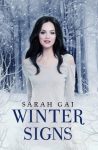
Book coverSarah Gai’s Winter signs (young adult novel, 2017)
GoodReads reviewer Brenda, linking to the challenge, felt that Gai handled her deaf protagonist well. Brenda wrote that “deafness and everything that means for living a life is hard to comprehend for someone who has never been in that position. … I could feel Winter’s frustration when she was unable to understand non-signing people because they spoke too fast for her to lip-read.”

I know the jury is still out about the relationship between literature and empathy, but I’d argue that “feeling” a character’s emotions, and learning from this, is an important part of literature – and is particularly relevant in helping us understand lives that are very different to our own.

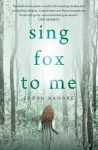
Sarah Kanake, Sing Fox to meSarah Kanake’s Sing fox to me (novel, 2016)
Kanake’s novel (my review) features a character with Down syndrome and a deaf character. Kanake’s brother has Down Syndrome, so she has some understanding of that disability. What she says in an interview about this character applies to the portrayal of all disabilities:

People with Down syndrome are often still seen as a homogenous mass, despite the fact that every person with Down syndrome is different and has their own lived experiences and understanding of the world based on those experiences.

She also said that “the best part of writing Samson was figuring out how to communicate sign language onto the page. I love the way Samson communicates and his relationship with the deaf girl, Mattie Kelly, is one of my favourite elements of the books”.

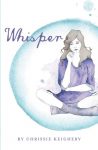
Book coverChrissie Keighery’s Whisper (young adult novel, 2011)

Whisper’s protagonist is fourteen-year-old Demi who becomes deaf through meningitis, as did Jessica White. GoodReads (but not AWW Challenge) reviewer, CG Drews, who said she was writing her own book with a deaf character, offered this:

I loved how it talked about audism (discrimination to non-hearing people) and Deaf communities. And I loooved how it contrasted the narrator, Demi, who lives in a hearing family but is now deaf, and Stella, who is SO FIERCELY proud of her deaf heritage that she’s actually very cruel to hearing people.

She, who has clearly read a few books on the topic, said that “this is the book” for people who want to know about “Deaf culture and what it’s like to be deaf”.

LomerTalkUnderWaterKathryn Lomer’s Talk Under Water (young adult novel, 2015)
Lomer’s protagonist is also a deaf teenager, Summer, who develops a friendship with Will. Jessica White wrote in her round-up, that “as Will discovers how confident Summer is about her disability, his world opens up. I would have liked to have read a novel like this when I was young … it would have been an antidote to my relentless sense of strangeness and alienation”.

Summer, like many characters in this section, uses sign language.

McDonaldArtBeingDeafDonna McDonald’s The art of being deaf (memoir by a deaf person, 2014)

Jessica White, introducing an AWW Challenge guest post by deaf author McDonald said that in her memoir, McDonald draws “an original map of the contours of her experiences of deafness, creating a land into which other people could travel and learn of its customs”. Reviewer Jemimah-Oddfeather, who read the memoir as an introduction to her AusLan class, would agree. She described the book as “a good place to start” for those wanting to learn about Deafhood and the Deaf community. McDonlad, like White in Hearing Maud, explores “her relationship with her deafness while ‘passing’ as a hearing woman in a hearing world.”

RomerThornwoodHouseAnne Romer’s Thornwood House (crime fiction, 2013)

Jessica White reviewed this for the challenge. She wrote in the round-up that she liked “its positive portrayal of a deaf man, Danny”, and that Romer “took some of Danny’s characteristics, such as his attentiveness to body language and lipreading, and used them to add tension to her work.” Another AWW Challenge reviewer Rochelle, commented that the love interest uses sign language, and called that “Plus one for diversity”.

ViskicResurrectionBayEmma Viskic’s Caleb Zelic series (crime fiction) 

Viskic now has three books in her crime series featuring deaf protagonist, Caleb Zelic – Resurrection Bay (2015), And the fire came down (2017), and Darkness for light (due in 2020). AWW Challenge reviewer Weezelle (Words and Leaves) was impressed because

it’s not ‘Caleb, the deaf investigator’, but ‘Caleb, the investigator who happens to be deaf and is also lots of other things as well’. In other words, Caleb’s deafness is one element of his character and he’s not defined by it.

Or, in other words, he is not performing his disability. Notably, he uses sign language, which immediately identifies his disability. Signing – which has been a controversial issue – was mentioned in most of the books listed here.

I’d love to hear of any books you’ve read that are by or feature deaf people … and whether you have any ideas about disability literature.

Monday musings on Australian literature: Whither Australian literature, 1930s (Pt. 2)?

As I wrote last week, I apologise to those of you not interested in the history of Australian literature, because yes again I am continuing my little survey of contemporary writing about Australian literature in the 1930s. This week I plan to look at some another discussion about the place of and interest in Australian literature.

So, today’s post looks at an article which asked Why is the average Australian reader, if given the choice, more likely to pick an overseas (English or American book) than an Australian one?

Australian fiction in America

In 1935, Pegasus (whoever that is) wrote an article (probably syndicated) in the Central Queensland Herald inspired by Australian readers’ apparent preference for books written overseas*, and in which s/he discusses, conversely, the growth of interest in Australian literature in America! S/he says that the Christian Science Monitor reports that “the American reading public is beginning to ‘wake up’ to the fact that worthwhile fiction is being produced in Australia”.  Tell McKinnon et al, that, eh? Pegasus, in fact, says that

Australian fiction has been noticed in America is something to be put to the credit side of the ledger, when Australian authors and critics deplore the quality of Australian fiction produced to date.

Book coverIndeed, Pegasus says that the Christian Science Monitor writer talks about the enthusiasm of the American reviewers “which is more than I can remember occurring in this country”. The book, they are particularly enthusiastic about is Henry Handel Richarson’s The fortunes of Richard Mahony. Pegasus notes that “there are many in Australia who would agree with the American critic who described this novel as ‘the most important single piece of literature ever to come out of Australia,’ [but] it has never become popular in Australia, either amongst critics or readers”!
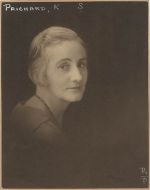
Pegasus then shares some of the other books that were being appreciated in America. Rolfe Boldrewood’s Robbery under arms and Marcus Clarke’s For the term of his natural life are also loved here, he says, but EL Grant Watson’s Desert horizon, “has been forgotten here, if it ever received any particular attention”. Katherine Susannah Prichard’s Working bullocks was being deservedly appreciated, but, says Pegasus,

the unfortunate Coonardoo, well-written though it is, is probably better appreciated than it deserves by an American critic who can regard it as “a portrayal of the relations between the white race and the white black on a typical cattle station in north-eastern Australia.

Other books appreciated in America include G.B. Lancaster’s Pageant, M. Barnard Eldershaw’s A house is built, and Frank Dalby Davison’s Red heifer (Man shy), which “has already been accepted in America, probably to a greater extent than in Australia”. Man shy and A house is built are both well known to me, and would be regarded as classics I think, but G.B. Lancaster, whom most of us haven’t read, is mentioned once again in my blog. This is the name used by Edith Lyttleton (1873-1945). Born south of Launceston, she moved with her family to New Zealand when she was six years old, and stayed there until she moved to England in 1909. She returned to Tasmania in the 1930s, but ended up moving back to England. She wrote, among other things, thirteen novels and some 250 short stories, which, says AustLit, were “mostly narratives of romance and adventure set in the remote back country of New Zealand, Australia and Canada”. It’s probably not surprising, given she lived very little of her adult life in Australia, that she’s not particularly well-known here now. However, Pageant did win the ALS Gold Medal.

What all this says to me is that when it comes to the creative arts, there is always something for commentators to be concerned about – and then talk about – which is not necessarily a bad thing. After all, any publicity is good publicity, n’est-ce pas?

Any comments?

* Things seemed to have started to change by 1937, according to Angus and Robertson’s Mr W.G. Cousins.

Monday musings on Australian literature: Whither Australian literature, 1930s (Pt. 1)?

Apologies to those of you not interested in the history of Australian literature, because this week and next I’m continuing my little survey of contemporary writing about Australian literature in the 1930s. My first post discussed the move from “gumleaf and goanna” to other topics, and last week’s focused on discussions about the importance of writing about character. This week and next, I plan to look at some bigger picture discussions about the place of Australian literature.

These posts are, however, based on a somewhat serendipitous search of Trove. There could very well be articles – there probably are – which say some different things. I can only share what I have been able to find in the time I have available. Just as well I’m not producing an academic work, eh?

And here might be a good place to point you to an article by Susan Lever in Inside Story concerning the current parlous state of teaching and research about Australian literature in Australian universities. It’s particularly depressing, now that we have Trove with its rich content, that there is not the support for research into our written heritage and culture – which, of course, feeds into discussions about who we are and where we are going.

Australian literature’s place in the Dominions

Why is it that Australian creative literature, fiction, and poetry has not reached the same high standard as that of South Africa and Canada?” and “What is the place of the Australian novel in the fiction of the British Dominions?” These questions were posed in reports of a lecture given in June 1934 by Firmin McKinnon to the English Association of the University of Queensland. Thomas Firmin McKinnon (1878-1953) was, coincidentally, born in the Yass area not far from were I live. He was a journalist, and, says Desmond Macaulay in the ADB, was nicknamed at Brisbane’s Courier, “the Encyclopaedia”! He and his wife were active in Brisbane’s cultural life, and by the mid 1910s and 1920s, he was “recognized as a tireless literary lecturer and mentor of many young writers”. Among his many roles, he was President of the Queensland Bush Book Club. Macaulay also says that “his Anglocentric conservatism, however, allowed little sympathy for certain literary trends”, so we should keep this in mind when thinking about his views of Australian literature.

The two reports are both in Brisbane’s Courier-Mail, one a brief report on a Tuesday and the other clearly a more feature article report on a Saturday. Neither have by-lines as far as I can see, so I’ll just call them Tuesday and Saturday. Tuesday’s is titled “Australian fiction: Where is it lacking” and Saturday’s is “Australian fiction: It’s place in literature”.

Katharine Susannah Prichard

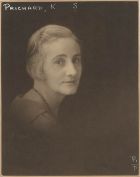
Prichard, 1927/8 (Courtesy: State Library of NSW, via Wikimedia Commons)

Tuesday says that McKinnon particularly focused on the fiction of South Africa (represented by Sarah Gertrude Millin, Pauline-Smith, and Norman Giles), Canada (by Martha Ostenso, Corinthia Cannon, and Maza de la Roche), and Australia (by Katharine Susannah Prichard, Brent of Bin Bin, Flora Eldershaw, Marjorie Barnard, Helen Simpson, G. B. Lancaster, and John Dalley). Tuesday shares some of McKinnon’s arguments for the comparative failure of Australian fiction versus that of South Africa and Canada, saying that McKinnon’s conclusion is that “the contrast of nationality, and conflict of international ideas … were deficient in Australia. Even the contrasts provided by the migration era of the gold digging days had disappeared, and Australia was now the most homogeneous race on earth.” By contrast, South Africa had “a continuous conflict of colour and clash of nationalities” and while there was less conflict in Canada, it did have “a contrast of nationalities”. Hmm … sounds a bit simplistic to me. Prichard and Barnard-Eldershaw, for a start, found signifiant issues to tackle within our so-called homogenous culture. As did Christina Stead in Seven poor men of Sydney, but that, her first novel, was only published in the year of this lecture.

Tuesday reported that during the post-lecture comments, one person said “that many books of Australian fiction showed a good deal of slovenliness and lacked any marked spiritual impulse and characterisation”.

Book coverSaturday, as you would expect, provided more detail, including about the authors chosen to represent the three countries. Saturday reports that McKinnon admitted that “we have in Australia, in its history, and in its great cities excellent material and splendid background” but were not producing literature equal to Canada and South Africa. Saturday writes, presumably reporting McKinnon, that:

Unquestionably the impatience of the age has something to do with the decline of great creative literature all over the world. Beauty in literary form cannot flourish to perfection in an age that is wildly excitable, in an age that relishes some snippet about Bradman or Larwood, much more than it would a gem of English.

Have things changed much? Saturday goes on to report (or say) that

Australia has produced some very creditable fiction, but almost every creditable novelist who is writing of Australia has been abroad. Now is there any reason why our purely Australian novelist is not doing better work? There must be. Here in Australia we have a magnificent background for novels, and there is abundance of material. Some of the greatest novelists in the English language, from Jane Austen and Scott to Dickens and Walpole, have found their inspiration in happenings far less outstanding than those that could be found in the development of Australia, and in characters that may be found in any Australian city. But everything lies in the treatment of the subject, and our novelists fall short in the treatment of the story. Now what is the reason?

Llike Tuesday, he reports on the various ideas put forward and rejected by McKinnon, one being the effect of Democracy, itself, which he argued “which tends to the mediocre in everything”. Saturday quotes McKinnon as saying

Art and literature need to be fostered by leisure, good taste, moderate wealth, and cultivated discernment, and these do not flourish best in a democracy. Demos is a poor patron of art and literature.

Sounds a bit elitist don’t you think?

However, McKinnon, fortunately, realised the error of this argument, given Canada and South Africa were also democracies. And so, as Tuesday did before him, Saturday shares McKinnon’s argument that it’s “the lack of contrast and conflict in Australian life” that doesn’t support “literary creativeness”.

The answer? McKinnon says that what Australia needed was the “steady flow of migration” to provide “the clashes”, the opportunity to make comparisons “that are particularly valuable to the creative artist”. I’m not sure I fully agree with McKinnon’s argument regarding literature – I don’t see much evidence of clash of cultures driving Jane Austen’s novels, for example – but I do agree that cultural diversity is a good thing.

Anyhow, it appears that McKinnon gave a version of this talk later in the year, on 17 October, to the Authors’ and Artists’ Association. He again compared Australian writers with Canadian and South African ones, and he again argued that Australian novelists, with some exceptions, lack perspective and imagination, that they’re narrow and insular. Perhaps because this time he was talking to the creators themselves, he was, it appears, a little more positive. He “spoke of the vast and artistic improvement In Australian fiction within the past three years” albeit “all of it [was] written by travelled authors”. He again recommended migration to Australia, but added that “the development of aviation” and “even the Centenary gatherings in Melbourne” would be valuable in “helping to provide that standard of measurement that novelists needed”.

Now, I don’t know the South African and Canadian writers named, so I can’t comment on their relative merits. I’d love to hear from anyone who does know them. Regardless, though, I believe that Australians were producing some very interesting work in the 1930s, alongside the usual more popular fare?

Any comments?

Monday musings on Australian literature: Setting vs Character in 1930s Australian fiction

Today’s post continues the discussion started in last Monday’s “gumleaf and goanna” post. It looks particularly at what reviewers were saying about setting/scene and character, through five Australian books that were reviewed in papers during the decade. There was clearly a lot of engagement in the community about the development of Australian literature, and you can expect more posts on the decade!

This post was inspired, though I’m not going to labour the point, by Eric Norton, who wrote in The Courier Mail in 1934. He comments on the over-focus in Australian literature on “some half dozen ‘peculiar’ environments — the farm, the selection, the station, the mining camp, and a few others, which, if not familiar to us in actuality, have become so through the magazines or by repute”. The stories relying on these, he says, “develop inevitably a certain sameness”. For him, “the imperishable in fiction is that which deals primarily with the shallows or the deeps of the human heart” and he concludes with:

In the creation of fiction, as in life, it is character, not setting, that counts; and it is to the Australian rather than to Australia that the local novelist must look for his inspiration.

Book coverBrent of Bin Bin: We now know this pseudonym was Miles Franklin, but it was a pretty well-kept secret at the time. Certainly, the reviewer in Melbourne’s The Age had no idea. S/he reviews Ten creeks run (1930) (see Bill’s review), which was the second Brent of Bin Bin novel. The reviewer has mixed feelings, saying that “the same defects and the same merits” are apparent in it, but then says that “the effect of repetition is to bring out the merits more emphatically and to place the defects in the background”. This reviewer discusses both setting and character:
The canvas is crowded with minor characters, and the author has not sufficient skill to make these minor characters stand out individually; but the mass effect is good as a background to this story of station life on the Murrumbidgee more than a generation ago. Station life has never been more faithfully depicted in Australian fiction, or with so little conscious effort. Most of the more important characters are true to life, and though the story does not reveal much imaginative force on the part of the author in creating dramatic situations, he [ha!] has skill enough to keep the reader’s interest alive.

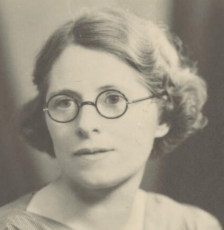
Birkett, 1939, Unknown, National Library of Australia, Public Domain, Via Wikimedia Commons.

Winifred Birkett, who won the prestigious ALS Gold Medal, for her 1934 novel, Earth’s quality. The reviewer in Melbourne’s Leader, says this book represents a “great advance on her previous book, Three goats on a bender”.  S/he goes on to say that Earth’s quality,

like so many other Australian novels, has a sheep station for its setting, but unlike most of its class it is not a description of station life, but a study in characterisation. And most of the characters are portrayed with the skill of a practised hand.

S/he then describes some of the main and minor characters, noting that one of the minor characters, Anthony, a Cockney man-of-all-work, “stands out with the vividness of reality”. Fascinatingly, however, “Miss Birkett is not very successful in portraying woman characters”. The story is “somewhat bare of incident, but the literary quality of her book lifts it much above the level of most Australian novels”.

John K Ewers: A Western Australian novelist, poet and schoolteacher who was President of the WA branch of the Fellowship of Australian Writers. His second novel, Fire on the wind (1935), was reviewed in Melbourne’s Leader.  It’s a story about disastrous bushfires in Gippsland in the late nineteenth century. The reviewer notes that Ewers hadn’t lived in Gippsland, but did have “relatives who spent part of their lives there, and lived through the terrible experiences of Black Thursday.” S/he then outlines the plot – a farm saga – including describing the characters, and concludes that “Although the author is not a Gippslander he knows the bush and the settlers, and on that account the background of his story has the note of realism. His best portrait is that of the aged Colliver, who, despite his narrowmindedness and his bigotry, is an engaging old man”. (ADB)

William Hatfield (pen-name of English-born writer Ernest Chapman): This author I hadn’t heard of. He was best known for his novel Sheepmates (1931), but the review I’m focusing on is for his 1933 novel, Desert saga. It buys right into our modern discussions about who can write what story, because it is, says the The Age’s reviewer, “about a tribe of aborigines in Central Australia, who, when the story opens, had never even seen a white man.” Our reviewer says the author provides “an interesting account of tribal customs and ceremonies, but the primitive conditions of life of an aboriginal tribe do not provide the variety in scene, incident and character, which are the main essentials of a good novel”. Of course, there would have been be good character to explore here, but Hatfield wouldn’t have been the man to do it. Hatfield is on firmer ground when he introduces white men, and explores their relationship with Indigenous people. The reviewer concludes that it’s obvious that Hatfield “has studied the Australian aborigines, and that in presenting their customs, habits and mentality, in the form of a story, he has adhered to truth”. Hmm … how does the reviewer know – and yet, it’s interesting to see that Indigenous people appeared in fiction more often, perhaps, than we might have thought. (ADB)

Kay Glasson Taylor (who, Bill identified last week, used the pseudonym of Daniel Hamline, and was second place-getter in the 1929 Bulletin Prize): The reviewer of her novel, Pick and the duffers (1930), commences by noting that the Australian story “must stand on its own merit, and not by implication or suggestion strive to emulate something of quite different atmosphere.” S/he was commenting on the claim on the jacket of “Pick …” that “Pick is an Australian re-incarnation of the immortal Tom Sawyer.” Our reviewer finds such comparisons dangerous. S/he writes that like several recent Australian stories, “the setting of Pick and the duffers is Queensland, and it deals with some lively incidents connected with cattle duffing on “Coomera” and adjoining stations … It is quite a good yarn, with plenty of action and incident”. It also, interestingly, has an Aboriginal character, Gordon, who is a friend of 11-year-old protagonist Pick. But, for our reviewer, it’s a “a good story for boys, but to adults, Pick becomes tedious with his posturing and posing and precocities”. Not much character development here!

I have more, but will save them for another post another time. I’m enjoying exploring the period, particularly seeing the reviewing style, and what reviewers looked for in and thought about Australian literature.

Any comments?

Monday musings on Australian literature: 1930s, moving beyond “gumleaf and goanna”

Time for another post inspired by Trove, this one, as often happens actually, discovered while researching something else. What I discovered was the discussion that went on in the 1930s about Australian fiction’s coming of age – and the fact that much of this was down to the women writers of the time (about which I have written before).

This post will focus on what critics and reviewers were saying about the Australian novel and its creators, and I’ll start with an intriguing competition that was run by Sydney’s The Sun in 1934. The competition was, apparently, for “a short comment on the progress of Australian fiction since the war”. What a fascinating competition idea? The competition report sums up the entries as follows:

Nobody expressed regret at the passing of the “gumleaf and goanna” phase — that tiresome exploitation of externals, of the obviously distinctive things in the Australian scene. Contestants commented on the decline of blood-and-thunder melodrama, and on the entry into Australian prose of high imagination and feeling for style (notably in the works of Henry Handel Richardson). Several commented on the success of women writers (H. H. Richardson, Kathleen Pritchard [sic], G. B. Lancaster, Helen Simpson, and others), and the use of themes of universal interest, even if the setting be Australian.

Katharine Susannah Prichard

Katharine Susannah Prichard (1927/8) (State Library of New South Wales [Public domain], via Wikimedia Commons)

This idea that Australian prose was moving away from a focus on melodrama and simple plots to exploring deeper issues and concerns runs through all the articles I read from the decade. As The Sun’s writer says, the setting, for most, was still Australian, but the core issues were becoming more universal. (Also running through the articles, unfortunately, was an ongoing issue with getting Katharine Susannah Prichard’s name right – something I’m sure biographer Nathan Hobby knows all about, and then some!)

Anyhow, the winner of the competition, a Miss Constance Wallace of Roseville, wrote that:

The Australian novel at last has broken from the convention of gum-trees and wide open spaces. It is losing its colonial, narrow atmosphere for a more vital and a broader national—and International—outlook. It has achieved a deeper humanity and a more virile quality. No longer is it mere landscape painting; the canvas begins to glow with the warmer tones of human emotions.

She names, among others, Henry Handel Richardson, Helen Simpson, G.B. Lancaster (pseudonym for Edith Joan Lyttleton), M Barnard Eldershaw, and a man or two, including Ion Idriess.

Meanwhile, back in 1931, The Canberra Times reported on two talks given to the Canberra Society of Arts and Literature by eminent men of letters of the time, Kenneth Binns and Harold White. Binns discussed M Barnard Eldershaw’s Green memory. He described the plot as “strong, dramatic and dignified” and as proceeding “with that quality of inevitableness which is characteristic of all great dramatic writing”. He liked the characterisation, describing the interest being in “the pull of character against character, instinct against instinct” in the two main characters, but he also commended the authors’ ability to delineate their minor characters. In terms of style, he described the pair as “masters of vivid, picturesque yet dignified writing”, likening them to Robert Louis Stevenson, “in their use of picturesque and arresting words and metaphors, and also in their command of highly pregnant short sentences”. Binns believed that Marjorie Barnard and Flora Eldershaw had “produced a book which not only delights but which also adds dignity and significance to Australian letters”.

Book coverWhite talked about Henry Handel Richardson’s The fortunes of Richard Mahony (1930), starting by contesting some of the criticisms from Australian critics. He described the trilogy as having “a structural harmony found only in very great novels” and he dispensed with “the question of whether the author had produced a typicallv Australian book or not” by saying it was “a universal work, and that should be enough”. (So there!) White, like Binns, then went on to talk about the work in detail – plot, characterisation, style, and so on, concluding, our reporter says, that

with this one book, Australian fiction took its rank with European conception of the novel as a form of art through which the real experiences of life are recorded sincerely and honestly. At the same time the author had recreated a period in our social history and added two living creations to the world’s great characters in fiction.

In 1934, a writer in The Age reviewed a later work by Henry Handel Richardson, The end of a childhood, which s/he described as “a collection of odds and ends”. Some of this the reviewer felt would “add little to the author’s reputation”. However, the work includes some sketches of girlhood, in which, says the writer, “slight as they are, Mrs. Robertson [sic!!!] displays a penetrative knowledge of the mentality of young girls”. The book concludes with four stories, which, our writer finally praises, reveals the “psychological subtlety which has proved a valuable asset in her portrayal of characters on a larger canvas”.

Moving on, in 1937, an article in Adelaide’s The Advertiser discussed Katherine [sic] Susannah Pritchard’s [sic] (honestly!) novel Intimate strangers, which the writer argues represents a development in Australian fiction because it “gives one the impression that Mrs. Pritchard [sic] is feeling her way towards what one may call the sociological novel”. The writer has some reservations about the book, but also praises it because Prichard

has grasped so well … the essentially challenging nature of marriage — the surrender that it calls for but which cannot wholly be given; the individual aspirations that, in its infinite demands, it so often submerges; the regrets it cannot completely banish; and the whole complex and unfathomable business of two distinct personalities being required to find a common denominator.

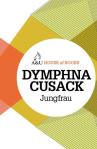
Dymphna Cusack, JungfrauAnother writer praised during the decade is Dymphna Cusack. In another 1937 article in Adelaide’s The Advertiser, the reviewer praises Cusack’s Jungfrau (my review). The reviewer starts with:

“IT is not wholly fanciful to suggest that within a decade or so most novels of ideas will be written by women,” a distinguished English literary critic wrote recently. “Modern intelligent men,” he added, “express themselves and their thoughts more easily in autobiographies, biographies, essays, and books of travel than in the form of fiction. And the future of the English novel is already largely in the hands of women.”

Our reviewer goes on to suggest that we should test this idea against the Australian novel, and starts by referencing Henry Handel Richardson. However, “are there”, s/he asks, “any young Australian women writers to succeed her in making the future of the Australian novel a brilliant one?” Well, yes, is the answer, and one of these is Dymphna Cusack as evidenced by her debut novel Jungfrau. I loved the writer’s reference to the cover, when s/he describes it as “a novel that — despite its title and its publishers’ absurd pictorial jacket— is arrestingly Australian in every way as well as being a fine piece of fiction”.

S/he goes on to praise Jungfrau, for its portrayal of Sydney, giving

a valuable picture of our city life that should do much to dispel persistently recurring illusions abroad concerning Australians’ homes, culture, manners, and way of speech.

Not only is Jungfrau “interesting and convincing”, s/he writes, it is also

extremely well-written, the prose having an effortless continuity and forcefulness which make it delightful to read, as, one feels, it must have been delightful to write.

The writer praises Cusack’s “lesser characters”, saying she “has endowed the very least of them with life; they are all so easy to believe in, and so easy to like or laugh at or despise.” And finally, s/he concludes that “altogether, the young writer is very much to be congratulated on her first book; on her irony, insight, and deft handling of human nature”.

So, Henry Handel Richardson, Katharine Susannah Prichard, Marjorie Barnard and Flora Eldershaw, and Dymphna Cusack … all praised, with clear argument, for progressing Australian fiction through the quality of their writing and their characterisation, and by tackling bigger and more universal ideas.

Have you read these authors, and, if so, what would you say?