Monday musings on Australian literature: on 1922: 2, Reviewers on Australianness

This is the second post in a series I plan to do this year inspired by articles in Trove from 1922, that is, from 100 years ago. My first post was on the NSW Bookstall Company, and I have several more 1922 post ideas. However, I thought a good choice for the second one would be to share some of the things reviewers/critics/ columnists at that time were saying about “Australianness” in the writing. Representing Australia – writing Australian novels – seemed to be important. But what did that mean to them?

I’ll start by repeating something from my first 1922 post. The columnist from Freeman’s Journal (July), wrote that Vance Palmer’s upcoming book, The boss of Killara, was “an entertaining story, … most entertainingly written, and … true in every detail to Australian bush-life”. I wanted to share this again because, by the 1920s, Australia was (and had been for some time) a highly urbanised nation, and yet bush-life seemed to define us in most reviewers’ (and presumably our own) eyes. It suggests that was our point of difference from the rest of the world, regardless of the truth of our lives.

Note that not all books discussed in 1922 were published that year, but most were.

Historical fiction

I didn’t come across a lot of historical fiction, but there were some, and when I did, reviewers were interested, naturally, in whether the past was properly evoked. The Western Mail’s (November) reviewer approved of J.H.M. Abbott’s Ensign Calder, saying that “The writer’s descriptions of life in Sydney, early in the nineteenth century during the governorship of Macquarie, are very faithfully rendered”. Wikipedia’s brief article on Abbott quotes Miller and Macartney from their book, Australian literature. Miller and Macartney describe his writing as being “of a simple kind, without subtleties or motive or characterization, against a background of the Australian past as revealed by historical records, and introducing actual personages”. So, not great literary writing, but accurate. This assessment (acceptance) was, I found, also a fairly common thread in 1922.

Romance and adventure

I will write more about adventure in a later post, because it seemed to be a popular genre. However, it’s worth sharing here some reviewers’ thoughts relevant to this week’s topic.

One adventure story exponent was Walter G Henderson. He was a country solicitor and grazier, as well as writer, and his novel, Bush bred (serialised in 1918, published 1922), was an adventure romance. J. Penn, who wrote for Adelaide’s Observer, called it (July) “a truly Australian product”, then described the wild adventures of its protagonists, including on the goldfields north of Port Augusta. He notes – and I found it interesting that this is one of the things he chose to emphasise – that “the author’s knowledge of camels and their ways is extensive”. Penn also writes that the 1922 edition included a commendation from Viscount Novar who, says Penn, claims that “the preservation of fugitive incident, illustrating different phases of life in a developing country, is a valuable contribution to literature.” Here, at least, is a reference to the idea of “illustrating different phases of life”.

Another popular adventure book was Jack North’s The black opal, which The Northern Territory Times and Gazette (May), describes as “a wholesome, well-written novel in which the lure of the bush triumphs over the glamor of the city”. See!
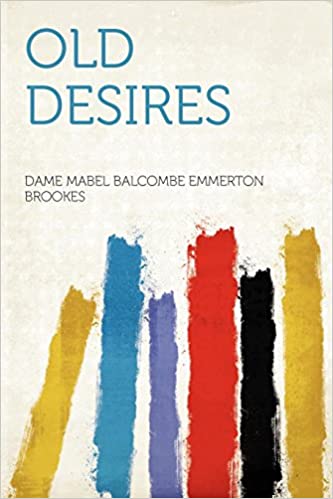
Mrs Norman (aka Mabel) Brookes’ novel, Old desires, is set partly in Cairo, but, writes the reviewer in Adelaide’s The Mail (October),

Separate from its dramatic qualities, the book is most admirable in its prelude chapters of way-back Australian life. Description of the recognisable routine, normal and often exciting, of station experience in the great interior, has, of its kind, seldom been more truthfully achieved. Occasional conventions link it, nevertheless, to a standard of accomplishment more familiar. Harris tweeds here preserve their familiar and apparently irresistible smell. That Mary, climbing through the stockyard fence, should vouchsafe a generous display of stocking is unimpressive to reading mankind inured to daily main street exhibition requiring neither fence nor stile.

As I’ve said before about these older Trove articles, I love their formal language. Formal this may be, but we get the gist that her description of Australian (station) life is authentic, albeit her English origins can’t help creeping in. Oh, and poor Mary, showing off her stocking unnecessarily, given the (city) worldliness of her readers!

What seemed to be mostly admired about “Australian” novels was not so much their exploration of Australian identity, or other themes, or their writing, but their description of Australian life. The reviewer in Brisbane’s Telegraph (August) of William Anderson’s The silent sin says

The great merit of this story in our eyes is that it is thoroughly Australian. The characters are Australian, and for the most part the scenes are laid in New South Wales and Queensland. For the rest it is told without pretension to literary ornament. 

Realist fiction
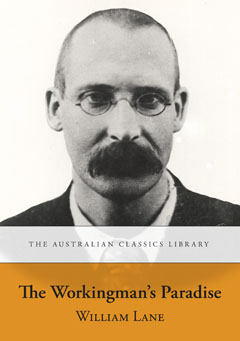
Then as now, older books were given new life, and one such book was William Lane’s 1892 novel The workingman’s paradise (my review). The report is not about a new publication, but about its being serialised in Brisbane’s Daily Standard (August). The columnist writes – remember, this is 30 years after its original publication – that

It is truly a remarkable book, more remarkable now, perhaps, than when it was published, because it is as inspiring to-day as it was intended to be then, and its story of the class struggle and road that lies before the Labor movement has increased in significance by the developments of the last quarter-century.

At last, a book that deals with some critical issues! Yes, yes, I’m showing my colours, I know, but I’m sure that won’t surprise you!

This is a brief, and superficial survey, but it comes from several pages of Trove hits and is a fair representation of what I saw as trends at the time. I have found some, let us say, outlier articles, which I will also share as 2022 progresses!
Monday musings on Australian literature: Best Young Australian Novelists (4)

The current winners of this year’s Best Young Australian Novelists were announced recently. I haven’t seen much publicity, so given I’ve reported on this award for the last two years, I thought I’d do it again this year. It’s a worthwhile award, and one that has seen writers go on to develop good careers.

Just to recap, the award was established in 1997 by The Sydney Morning Herald‘s then literary editor, Susan Wyndham. It’s an emerging writers’ award, open to “writers aged 35 and younger” at the time their book (novel or short story collection) is published. They don’t have to be debut novels, though they often are – like this year’s three winners.

The winners, as announced by Robert Moran, a culture reporter for The Age and The Sydney Morning Herald, are:

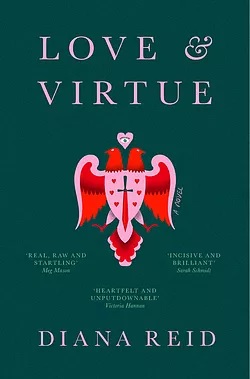
  • Diana Reid’s Love and virtue (winner, $8,000) (see Brona’s review)
  • Ella Baxter’s New animal (runner-up, $1,000; also shortlisted for the 2022 UTS Glenda Adams Award for New Writing, and the 2021 Readings Prize ) (see Kim’s review)
  • Michael Burrows’ Where the line breaks (runner-up, $1,000; also shortlisted for the 2021 Fogarty Literary Award) (see Lisa’s review)

The judging panel comprised the Sydney Morning Herald’s Spectrum editor, Melanie Kembrey; critic and poet Thuy On; and a 2011 SMH Best Young Australian Novelist Gretchen Shirm (whom I’ve reviewed). The number of awards used to vary, but in recent years they seem to have settled on three. The prize money comes from the Copyright Agency Cultural Fund.

The Herald‘s Melanie Kembrey, writing in the emailed newsletter I receive, said of the candidate books:

There were clear recurring thematic interests, including consent, cultural identity and the environment; many were coming-of-age tales; and others experimented with different forms and styles. It was tough selecting the winners and many of the entrants have bright futures.

She also commented on the importance of prizes like this:

It’s tough being a novelist, let alone an emerging one. There are the occasional unicorn stories: novel selected for Oprah’s book club gets adapted into a Hollywood blockbuster and sets author up for life. But these stories are rare. The reality of life as a writer, even more so a new one, is writing around day jobs, trying to flog your manuscript, being at the mercy of publishers, and then releasing your novel and watching this thing that has consumed you disappear into the depths without leaving a ripple.

This is why, she says, this award was created all those years ago.

The winners, briefly

You can find interviews with the three authors in the Robert Moran article linked above.

Diana Reid (26)

According to Kembrey, Love and virtue is “a piercing examination of university campus culture” or, as Brona puts it, “a campus novel about sex, power and consent”. Very today themes, eh? This novel has been making quite a splash amongst bloggers and readers, including Daughter Gums to whom I gave it for Christmas.

Brona said that “It’s an easy, quick read, but layered with oodles of moral grey areas and nuanced, contemporary issues”. She appreciated the way the novel deals with the complexity of consent, and said that Reid “does not shy away from contradictory behaviours or the realities of modern life as seen through the eyes of young adults”, although she did feel it was more a novel for the age-group it’s about than for older readers. Reid wrote this when she was 24, just after she left university.

Ella Baxter (36)

Of New animal, Kembrey says its “caustic tone … will crack you up”. Kim would agree. She loved this book, describing it as “a blackly comic tale about what it is to be alive when everyone around you is dead — literally”. Literally, because the protagonist works in a funeral parlour. Kim suggests that the novel is part of the new genre of “Millennial angst” but, she says, it’s not “as navel-gazing as most of those” and is “highly original”. I am tempted.

Michael Burrows (33)

Kembrey describes metafictional Where the line breaks as “a playful take on academia and history”. Lisa found it an absorbing, unconventional novel that “interrogates the mythmaking that surrounds the Anzac Legend”.  It has, apparently, three narrative threads, which include one focusing on PhD student Matt, and another on his WW1 hero, Alan Lewis. The playful take on academia comes partly through the footnotes which, I’m told, readers should not ignore. It sounds like my sort of book.

These three books appeal to me, as being meaty but not overly earnest. I can’t help noticing, though, that it doesn’t look like a particularly diverse list.

Have you read any of these books?

Monday musings on Australian literature: Australian Pocket Library (2)

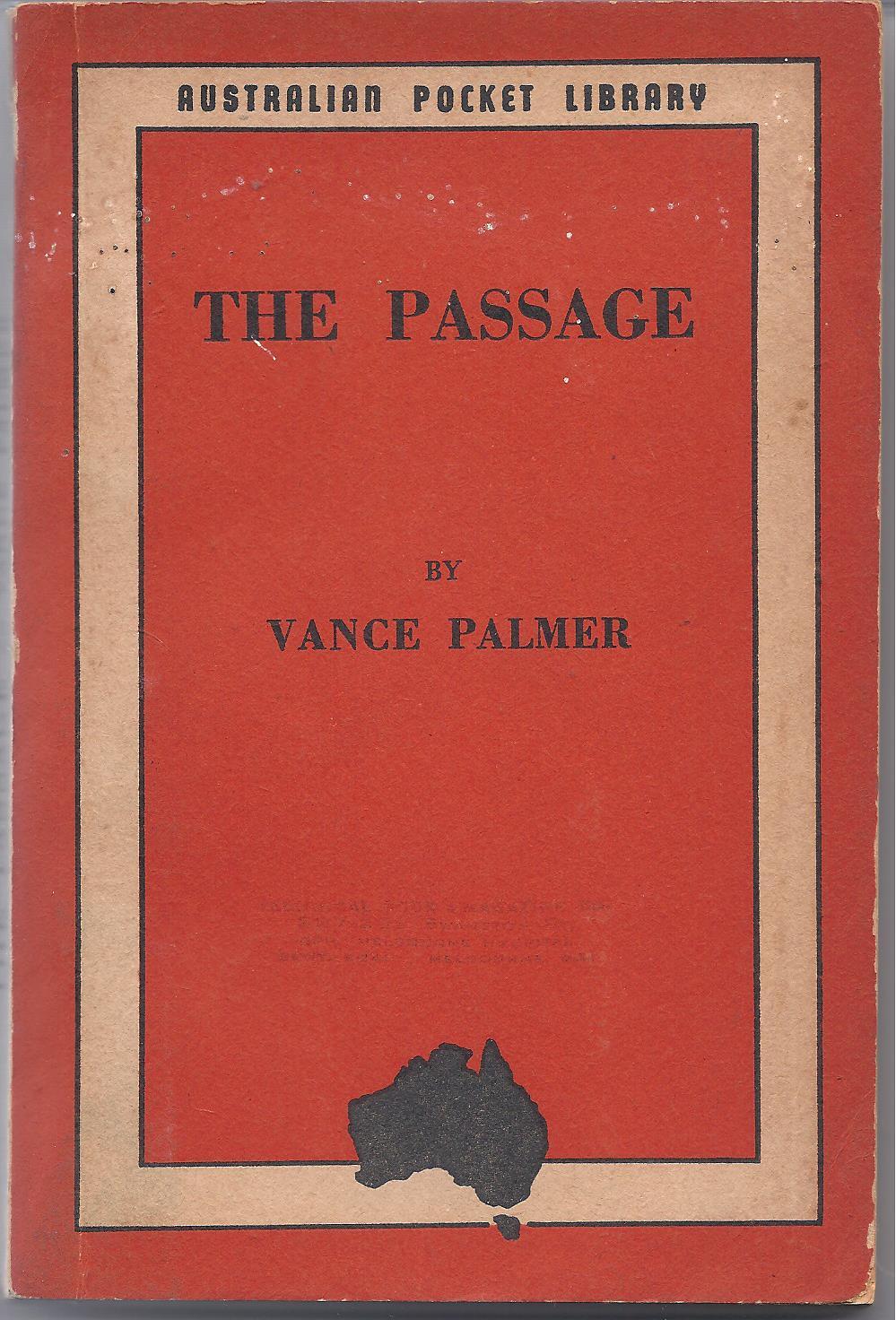
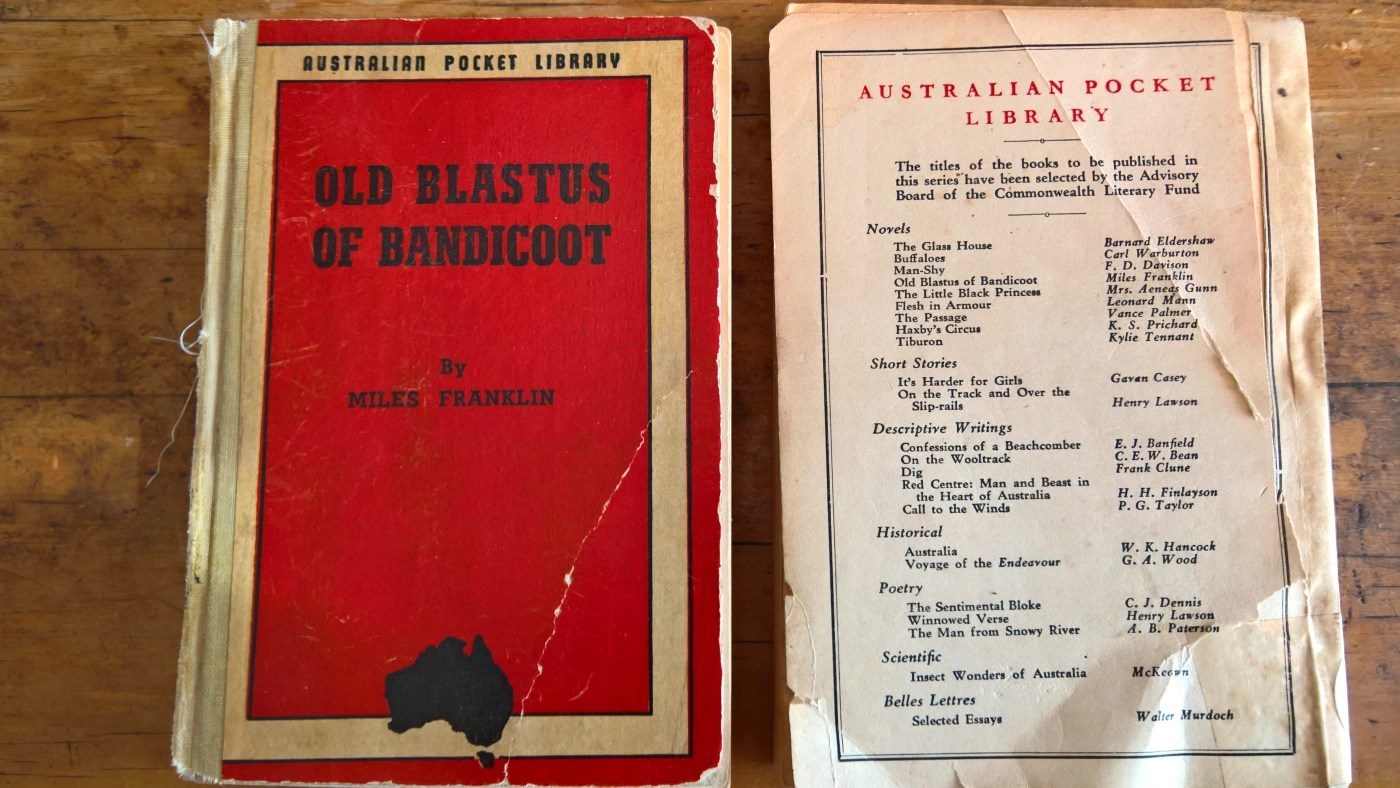
Last Monday I introduced the Australian Pocket Library (APL) which was a series of cheap paperbacks produced under the auspices of the Commonwealth Literary Fund (CLF). Its initial purpose was to provide Australian reading matter to Australian POWs but, in its final form, was intended by the CLF to play a bigger role in promoting Australian literature at home too. Planning started in 1943, with publication occurring between 1944 and 1947.

In last week’s post I shared part of an article on the APL by academic, Neil James, and some thoughts on the selection by a contemporary critic and literary editor, RG Howarth who discussed the library, taking as his starting point that the library was intended to contain “standard” works. I will return to James, but first, more from contemporary commentators on Trove.

Standard?

I’ve chosen to focus on P.I. O’Leary (1888-1944), a journalist and poet who, like Howarth, was committed to promoting Australian literature, and who also took up the “standard” question. P.I.O’L (his by-line) wrote an extended article about the APL in the Books and Bookman magazine of the Advocate in 1944 (17 May). He commences his article, titled “We parade our masterpieces”, with:

What is a “standard” Australian book? How many of the books selected by the Advisory Board of the Commonwealth Literary Fund to form the nucleus of an “Australian Pocket Library” are “standard” works? These and other points in this commendable enterprise are here considered.

Overall, he commends the endeavour, because too many works have been out of print. He sees the Library as representing “a belated national appreciation” of Australian writers. He is “not heady with any enthusiasm for an attempted, forced growth of literature in Australia”, he says, arguing that you cannot force produce great novels or great poems. However, “Australia has, and has had, many subsidised industries—and there is no reason why the literary industry … should not have some assistance in the shape of grants to writers”. Then he gets onto the issue of “standard”.

He doesn’t really know ‘what entitles an Australian literary work to be styled a “standard” book’, he says, but supposes that

Robbery under arms has passed the test, together with, say, We of the Never-Never, On the track and Over the sliprail, Such is life, and a handful of other books.

However, the selection of some of the other books as “standard” works, “sets up an energetic speculation as to what special passport a book must carry in order to cross the frontier”. (Love the language.) He knows how difficult it is to make such choices, but writes that “some books selected do not appear to me to even be borderline cases”. Then, like Howarth, he puts forward his views on some of them.

He agrees with Howarth’s questioning the inclusion of Katharine Susannah Prichard’s Haxby’s Circus, asking “what standard does it set up?” He thinks it the weakest of her novels, and “not comparable to Working bullocks or Coonardoo as a skilful work of fiction”. (Howarth named Working bullocks and Pioneers as better.) Like Howarth, he also questions the inclusion of Brian Penton’s Landtakers (read it anyone?) as “standard”, describing it as “largely sound and fury”. 

P.I.O’L also discusses representativeness, asking whether the selection is “representative” of “our writers’ books”. He feels that “as a foundation selection it is … satisfactory”, arguing that “a start had to be made somewhere”. Howarth, he says, agrees, given the limitations the CLF was operating under. Moreover:

Allied Servicemen are not literary cognoscenti balancing niceties of literary values, characterisation, form. If you were to ask most of them in what order they would place the writers of their own polyglot land they would probably very honestly say that they were no judges—and had not read many books, American or otherwise, anyhow.

Then he tackles Howarth’s discussion of the gaps, the works that should have been included. Again, I loved his language:

And when you start offering a register of names of writers whose works should be included in the “Australian Pocket Library” you push your keel into a wide sea—one, sometimes of trouble. 

He disagrees with some of Howarth’s suggestions – we are mostly talking poets here – and makes his own, but you can read it yourself if you are interested. Overall, he agrees with Howarth’s support of the project, quoting Howarth’s statement that the CLF should be “congratulated on the vision and courage of the enterprise”.

Legacy?

Now, I’ll return to Neil James’ 2000 article because he has some interesting points to make about the selection, and the APL’s legacy.

Looking at the selection nearly sixty years later, James writes

The titles selected reflect clearly the nationalist agenda in Australian literature … `Representative Australia’ in 1943 derived from the Bush, and the democratic values which seeped into Australian culture from its historical struggle against the natural elements. Most of the titles were originally published in the 1920s and 1930s, but some went back to an earlier age to engage with the grand narratives of exploration, adventure and colonisation. The list sets up literary values, social values, and national-historical values as interchangeable. This is hardly surprising given the primary influence of Palmer, whose published and broadcast criticism sought to define an Australian literature in national terms … It was a nationalist canon in paperback set for a wide distribution, and it sat comfortably with the government’s war-time agenda.

James shares the many practical challenges the CLF confronted – acquiring rights to the books, cover design, production problems, and agreeing on price with the publishers. And he describes the project’s demise, ending up publishing 26 of the finally planned 39. It’s all interesting and you can read it in the article. I want to end with his discussion of the legacy because this is most relevant to us now.

First, he says, it “represents the first officially selected and endorsed canon of Australian literature” and one recognised at the highest level of government. Furthermore, the APL played a significant, though not recognised, role in the “unprecedented transformation in the publication and recognition of Australian literature” in the 1940s and 50s. However, the importance of the Library has been lost partly, he argues, because the “nationalist outlook” of the selection was rejected a decade or so later by the universities, resulting in the writers being expunged from the canon.

The failure of the venture also had an impact on publishing. The CLF withdrew from “acting as de facto publisher” and became more reactive than proactive in publishing ventures. Had it succeeded, and had the CLF ‘continued to foster a nationalist canon of writing, there would have been, at the very least, more than “one set of values [to rule] the entire roost”, as Max Harris put it’.

More significant, though, I think, is James’ argument that the failure of the APL “effectively delayed the literary paperback in Australia by two decades”. He believes that the 1930s Penguin revolution in Britain “could have been reproduced here in the 1940s” with the APL its “de facto trial run”. Unfortunately, its unappealing format, which was “far too compromised by wartime conditions … killed off any good will towards paperbacks amongst booksellers and publishers”.

How fascinating. It was not until the 1960s, James says, that the literary paperback returned to the Australian scene, and not on a major scale until the 1970s. This fundamentally influenced “the character and the accessibility of Australian writing”, by which he means that because mass cheap paperbacks were not available as they were in Britain and France, “the readership of Australian literature was to remain the middle classes rather than `the multitude’.”

James concludes – in 2000 – that the Australian Pocket Library is worthy of “further scrutiny as part of the assessment of individual authors, and in understanding the evolution of Australian cultural values”. He also suggests that, “given the current paucity of an available Australian backlist” it may contain lessons for a classics publishing program! Well, it may not be the same model, but the Text Classics imprint, which began in 2012, has picked up the baton of cheap affordable classics and run with it. As far as I can tell, ten years later, it is going strong, with a catalogue that is diverse but, like the APL, constrained at times by access to rights.

Sources

Monday musings on Australian literature: Australian Pocket Library (1)

Bill and Lisa have already posted today in recognition of ANZAC Day, Bill’s titled ANZAC Day 2022, while Lisa’s is about Martha Gething who is featured in the book, Australian women pilots: Amazing true stories of women in the air. My post, in fact, comes to you courtesy of Lisa who, last week, emailed me with the subject line, “A Monday Musings Topic?” She wrote that while reading Nathan Hobby’s soon-to-be-published biography of Katharine Susannah Prichard, she’d “learned about the existence of the Commonwealth Pocket Library, cheap paperbacks for distribution to POWs during the war”. She closed her email with, “Of course I thought of you…”.

Now, I’m always happy to hear ideas, particularly ones like this which come with a link to a scholarly article. I was especially grateful, this time, because I had been pondering a topic relevant to ANZAC Day, given Monday was going to be THE day. She handed me my post on a platter, so, thanks Lisa!

Australian Pocket Library

I should start, though, by saying that it appears it was called the Australian Pocket Library, not Commonwealth Pocket Library, as Hobby describes it. Wilde, Hooton and Andrews’ The Oxford companion to Australian literature says:

The Australian Pocket Library was a series of austerity paperbacks published with the help of the then Commonwealth Literary Fund during the economic restrictions imposed by the Second World War.

(The Fund’s involvement is probably where the “Commonwealth” confusion came in.)

There is, of course, far more to this story than The Oxford companion had time to tell, and I’m going to share some of it with you. In addition to reading the article from the Australian Literary Studies journal sent to me by Lisa, I also did a Trove search – of course! The project, it seems, generated quite a bit of excitement in bookish circles – and why not!

Neil James, in the article Lisa sent me, provides a history of the series. It started with an idea in 1943 and ended with publication of the last books in the series in 1947. Its active life, in other words, was short – but James argues that its legacy, both positive and negative, was significant. I’ll return to this in part 2, because there is so much to explore.

Origins

James explains that in 1943, Prime Minister Curtin had been approached by the AIF Women’s Auxiliary for Prisoners of War which wanted cheap editions of Australian books for Australia’s POWs. The Auxiliary had been choosing books for parcels going overseas, but were finding that “practically every Australian book we would wish to include is now out of print”. Prisoners of war everywhere, they said, ask for books about their homeland. The request was referred to the Advisory Board of the Commonwealth Literary Fund (CLF), and it ended up with Vance Palmer, who was on the Fund’s Advisory Board. He “immediately latched onto the idea”, not just for “the POWs, but also for the cause of Australian literature”. Never let a chance go by, eh! Vance and his wife Nettie Palmer, as many of you will know, were significant supporters and promoters of Australian literature, as well as being writers themselves. 

Anyhow, Palmer advised that the task was beyond private publishers: the paper would not be available, and, anyhow, “most publishers do not know what to print and how to get the copyrights”. It was, in other words, a job for the CLF. Indeed, writes James, the Fund had apparently had ideas since 1939 for “a standard library of Australian works”. Here was their chance.

Cutting to the chase, funding was granted and the process commenced. You won’t be surprised to hear that choosing the actual books was fraught. Various publishers wanted their books included, but Palmer was, says James, “sceptical of Australian publishers” because they’d proven themselves to be “cautious” regarding publishing Australian literature. A committee was formed to choose the books. The plan was that “the CLF would have editorial control but the publishers would pay for production and distribution”. Publishers “which had the rights to a book chosen would have first option to publish it in the Library” but they had to agree to “conditions governing cover design, format, royalties, and price”. James explains why publishers supported a scheme in which they took all the financial risk but gave “creative control to a Canberra committee”. The reason was, in a word, paper!

The list, primarily chosen by Vance Palmer and Flora Eldershaw, was not universally approved. James reports that CLF’s Board chair “was consulted only when the list was virtually set”. He was apparently a little put out, commenting that it “is possible that other considerations than merit have determined the choice”.

The books

And here, I’ll turn for a while to Trove, and what the critics, reviewers and journalists thought. One of those was R.G. Howarth. He was founding editor of the literary journal, Southerly, and literary critic for the Sydney Morning Herald. According to Lee, in the Australian Dictionary of Biography,  he “influence[d] Australian writing through deciding who would or would not be published in the 1940s and 1950s”. His sole criterion was “literary quality”, not “political and ideological considerations”.

Howarth wrote about the new initiative in 1944 (April 29), starting with the basic plan: it involves twenty-five “standard” Australian books, “designed for members of the Australian forces (including prisoners of war) and members of the Allied forces in Australia, as well as for the general public”, and to be sold at prices ranging from 1/3 to 2/. The list includes 10 novels, plus collections of short stories, “descriptive books”, histories, verse, a scientific work, and essays.

He comments that the poets, Lawson, Paterson, and Dennis, “will undoubtedly solace and stimulate the fighting-man” as well as “renew their own popularity”. He describes the novels, which included currently out-of-print books, Robbery under arms, We of the Never Never, and Man Shy; the best of Australian novels of the last war, Leonard Mann’s Flesh in armour, which is “unhappily little known because unobtainable”; and Katharine Prichard’s Haxby’s Circus, Brian Penton’s Landtakers, Vance Palmer’s Passage, Kylie Tennant’s Tiburon, Barnard Eldershaw’s The Glass House, and Miles Franklin’s Old Blastus of Bandicoot.

However …

Of course there was going to be a “however”! Howarth questions the definition of the selected works as “standard”, notwithstanding the CLF confronted issues concerning “copyright and competition”. He recognises that the Commonwealth Literary Fund is “at once serving the reading public, helping the Australian author, and reviving books undeservedly neglected”, then asks how far the list meets these purposes.

He questions, to take Prichard as an example, why Haxby’s Circus “and not her Pioneers or Working bullocks – much more Australian in spirit and setting?” Re Bernard Eldershaw, he asks, why “The glass house – a study of shipboard life during a voyage from Europe to Australia – rather than their prize winning A house is built?” Well, I don’t know, but Eldershaw was on the selection committee so …

Of Penton’s Landtakers and Franklin’s Old Blastus of Bandicoot he says that “much as one admires the authors in other ways one is compelled by honesty to say that their inclusion is at least questionable”. Old Blastus, he feels, ‘appears as a failure that might well have been a success; in it a true “character” is imperfectly realised’.

And of course, as all commentators do on lists, he identifies works not included, such as For the term of his natural life. He recognises that ‘opinions are now divided about this …but surely it presents a stage in our history and in the development of the human conscience that must be retained in mind. It is “standard”, too in the same sense as Robbery under arms‘. He names other gaps, such as novels by Eleanor Dark, Ernestine Hill, Norman Lindsay and Christina Stead.

But, he concludes:

Whatever one’s opinions of its selection, the Commonwealth Literary Fund must be congratulated on the vision and courage of the enterprise. It has here decisively shown its importance to Australian authors, hitherto largely unprotected and uncertain of the future; and its wish and power to foster the growth, and distribute the products of Australian literature.

Then, on 4 May 1944, he writes a letter to the editor passing on a playwright’s surprise at the omission of “the Australian playwright” from the list. Two days later, on 6 May, playwright Leslie Rees, who signs as “Hon. Chairman, Playwrights’ Advisory Board” responds in his own letter, saying that Howarth was “surely unfair in implying that the Commonwealth Literary Fund has done nothing for the Australian dramatist”. He defends the work of the Fund and says that “When the time comes for a second list of Pocket Library books”, plays “might well be included”. You gotta laugh really. Howarth merely passed on someone else’s comment – albeit in passing it on he must have agreed somewhat – while Rees defends the Fund suggesting that they “might” include plays in a later list! Sounds like some undercurrent there that we don’t know about.

Meanwhile, on 17 May, P.I.O’L. also took up the issue of “standard”, but I’ll leave that for next week … and simply say, here, that little of the discussion I read focused much on the poor POWs!

Sources

Monday musings on Australian literature: 1954 in fiction

Some of you know that Karen (Kaggsy’s Bookish Rambling) and Simon (Stuck in a Book) run “reading weeks” in which they choose, somewhat randomly, a year from which “everyone reads, enjoys, posts and shares wonderful books and discoveries from the year in question”. The next one is 1954, and is happening this week, 18-24 April.

I’ve taken part a couple of times, the first time being the 1936 Club for which I also wrote a Monday Musings. I’ve decided to do this again for 1954.

By 1954, World War 2 was over, and the now infamous baby-boom was well underway. Australia was welcoming migrants from war-torn Europe and life was, generally, looking good. However, the war was still close, and the Cold War was being well felt. The war featured heavily in popular literature, but writers were also looking at who we were as Australians, and at our near neighbours.

My research located a variety of books published that year across all forms, but to keep this simple, I am going to focus on fiction. Here is a selection:

  • Jon Cleary, The climate of courage
  • Dale Collins, Storm over Samoa
  • L.H. Evers, Pattern of conquest
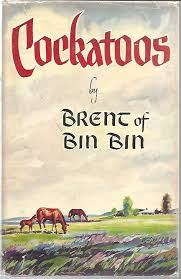
  • Miles Franklin (as “Brent of Bin Bin”), Cockatoos (Bill’s review)
  • Catherine Gaskin, Sara Dane
  • Nourma Handford, Coward’s kiss
  • T.A.G. Hungerford, Sowers of the wind: A novel of the occupation of Japan
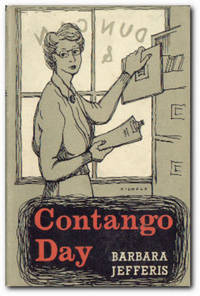
  • Barbara Jefferis, Contango Day
  • Eric Lambert, The veterans and The five bright stars
  • Henry George Lamond, The manx star
  • Eve Langley, White topee (Bill on The pea pickers and White topee)
  • Kenneth Mackenzie (as “Seaforth” Mackenzie), The refuge
  • Alan Moorehead, A summer night
  • Tom Ronan, Vision splendid
  • Arthur Upfield, Death of a lake
  • Judah Waten, The unbending
  • Don Whitington, Treasure upon the earth

Many of these authors have been forgotten, while others, like Alan Moorehead, are more remembered for their non-fiction work. Some, like Jon Cleary and Arthur Upfield, were successful writers of popular fiction, and are still remembered, albeit probably little read. Women are less evident here, than they were in 1936.

However, this list also includes some significant “literary” writers, like Miles Franklin, Eve Langley and Judah Waten, and others who are remembered today for awards established in their names, T.A.G. Hungerford and Barbara Jefferis. I like the sound of Jefferis’ debut novel. It was set during a single day in Sydney about Miss Doxy, a confidential filing and records clerk. The Barbara Jefferis Award was endowed by her husband in 2007 to commemorate her. 

There were very few literary awards at the time. One that did exist, the Australian Literature Society Gold Medal, was awarded in 1954 to poet Mary Gilmore for her collection Fourteen men.

Writers born this year included two poets, Kevin Hart and Dorothy Porter, and the novelist Kerry Greenwood. Deaths included, significantly, Miles Franklin.

Overland magazine, to which I often refer, was established in 1954 by Stephen Murray-Smith and Eric Lambert, who had also co-founded, with Frank Hardy, Melbourne’s Realist Writers’ Association.

The state of the art

Of course, I checked Trove to see what newspapers of the time were saying about Australian literature, and the fiction in particular.

Some specific issues

A recurring issue was the cost of books in Australia. A brief article in Adelaide’s Advertiser (January 25) reports on a visit to Australia by Desmond Flower of the large British publisher Cassell & Co. Flower said that English publishing costs had dropped slightly because of reductions in the price of cloth and paper, and the cost of printing was also likely to fall which should bring book prices down in England, “and consequently Australia”. (As an aside, he also noted that book business in Australia had trebled since 1939, which represented a greater increase than anywhere else in the Empire.)

Another discussion concerned the Little Golden Books, and Americanisation of Australian culture. (Nothing new, eh?) Jill Hellyer writing in the Tribune (July 21) argues not only that these cheap books had “pushed Australian authors even further from their precarious position”, when there are excellent Australian books available, but that the books were “full of loose phrases, bad grammar and cheap American slang”. She admits some in the series are good, but is particularly scathing about the Disney versions of classic children’s stories. There was a riposte, in the Tribune (August 11) from a “West Australian mother” who argued that “it is possible to select, from among these books, ones that can be good and useful for our children”. She didn’t mind ‘reading the words “sidewalk” or “cookies” because it provided her the “opportunity to explain this is how people talk in America”. From her point of view, these understandings help us get to know other people and cultures. However, while she disagreed with Hellyer’s specific cultural concerns, she agreed that “some [Golden Books] are very unpleasing, notably the ones based on Walt Disney’s films that were mentioned by the author of the article”.

Censorship was also discussed. The highly-respected Australian librarian John Metcalfe was quoted in Sydney’s The Daily Telegraph (August 10) as arguing against proposals (from both the right and the left) to extend censorship. The particular target was comic strips and books believed undesirable for children. Censorship, he said, is against the “liberal tradition” and was a “negative approach to the problem”. The Children’s Book Council, he said, “shows that a positive approach can be made in encouraging children to tackle a better type of literature.”

Similarly, a commentator in Wagga Waga’s Daily Advertiser (September 2) expressed concern about plans to extend censorship. Accepting that there there was a “a plethora of cheap and sexy trash on the market” and “an emphasis in some publications on crime and violence”, and agreeing that these can present “a danger to the younger generation and the lesser intellects [defined how?] among the adults”, this commentator believed that “a ban on ‘obscene’ literature is too dangerous to be countenanced”, and goes on to argue the case. There must be other ways, our commentator says, because

Once books are banned or burned, freedom is on the way out.

Some specific books

I could write screeds on reviews of particular books – even though I only read a tiny percentage of the articles I retrieved in Trove – but that’s not practicable, so, I’ll just share a few.

Brent of Bin Bin’s Cockatoos was much approved – and was also recognised by then as the work of Miles Franklin. IM (Ian Mair?) summarising the year’s books in Melbourne’s The Age (December 11) wrote “In the year’s fiction, first must come The Cockatoos … Like all her novels of country life, it has a wonderful feeling for place and period”. Earlier in the year, the writer of the Books Received column in Townsville’s Bulletin (April 18), wrote:

The theme is the universal one of the conflict between the artist and the practical majority who do not take the arts seriously, but the novel is also another Brent of Bin Bin’s memorable recreations of place and period in Australian country life. It is concerned particularly with the problem if the “exodists” — the restless young Australians who fifty years ago sought art of adventure, and in so doing suffered uprooting and exile. 

Oh dear – “the practical majority who do not take the arts seriously”!

There’s superlative praise for popular writers of the time like Jon Cleary and EV Timms. T.A.G. Hungerford‘s Sowers of the wind was also much liked. Interestingly, Wikipedia says that this novel won the 1949 Sydney Morning Herald prize for literature but was held back by publisher Angus & Robertson until 1954 “because it dealt with the economic and sexual exploitation of the Japanese after the War by Australian occupation forces”.

But I’ll save my last discussion for Eve Langley’s White topee. There were many reviews for this book, which continues the story of Steve from The pea pickers, but most seemed to be variations on a theme, which is to say, they praised its creativity but expressed some uncertainty too. Langley remains a challenging author for many, but her contemporary reviewers did value what she offered.

The Newcastle Sun’s (August 5) reviewer perhaps puts it best, opening with

It is impossible to judge White Topee by Eve Langley according to the established standards as the author has embarked upon the adventure of writing in a way that is completely original and individual.

The review uses headings like “poetic passages”, “heady style”, and “impressionistic”, but also gets Langley:

There are so many strands in this study of the country that the author’s impressions come tumbling with enough dazzling rapidity to suggest eccentricity, but the work on closer examination is revealed to be composite and, the result of shrewd observation and searching frankness.

M.P. in Queensland Country Life (August 5) is more measured, writing that it “could have been an outstanding book” but “is full of ego”. M.P. admires much in Langley’s passion and the writing:

Her love of Australia is deep and emotionally strong, and on the too rare occasions when Eve Langley forgets the poets and calls on her own descriptive powers she gives passages that, with their beauty and strength, are pure classics.

M.P. concludes that when Langley “extricates herself from the morass of sentimentality and confusion of mind she will write a book that is truly great”.

R.J.S., reviewing in Cairns Post (August 14) admired the book. S/he starts by saying “it has brilliant descriptive passages and much originality of thought but lacks a plot and is not a novel when judged by the usual standards”. S/he make a strong case for the work’s value:

To date no one has interpreted Australia and its people as Miss Langley has done in “White Topee.”

R.J.S. advises that the novel “cannot be skipped through” and suggests that “the careful reading it deserves will disclose that the writer has opened a new furrow in the field of Australian literature”.

I’ll leave White topee there, and will conclude my introduction to 1954 in Australian fiction with popular non-fiction author, Colin Simpson, who is quoted in Grafton’s Daily Examiner (December 23) as saying:

If one person in three would make one of his or her Christmas gifts a book by an Australian author, that could sufficiently enlarge the market to make authorship economic for more than just a few of us. The effect on our national literature could be very considerable.

Plus ça change?

Additional sources:

Meanwhile, do you plan to take part in the 1954 Club?

Monday musings on Australian literature: Bibliomemoirs

Book cover

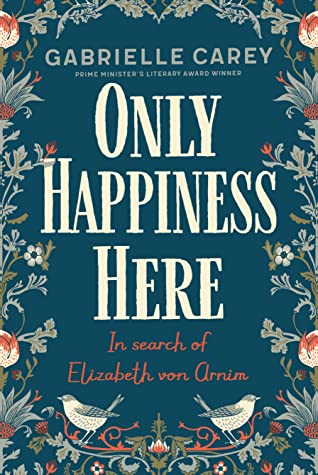
At the end of my post on Gabrielle Carey’s Only happiness here, I mentioned that Brona (This reading life) had described it as a bibliomemoir, which was a new term for me. As it turns out it is a reasonably new term, full stop. Readings Bookshop says that

defined by Joyce Carol Oates in the New York Times in 2014 as ‘a subspecies of literature combining criticism and biography with the intimate tone of an autobiography’, the bibliomemoir offers unique and personal insights into people’s relationships to their books.

This is not to say that the “genre” is new – because it certainly isn’t – but that it now has its own name.

Website/blog Book Riot also wrote about them recently, saying

Most readers love books about books. We also love snooping through other people’s bookshelves for the thrill of the possibility of discovering a whole person in a stack of books that they chose to read. Bibliomemoirs offer both. These books combine the confessional, intimate tone and personal approach of memoirs and autobiography with, well, books, and sometimes literary criticism.

And, apparently, says Kate Flaherty in The Conversation, Gabrielle Carey has, herself, described the genre:

Carey described bibliomemoir as a piece of writing that shows literary criticism is “best written as a personal tale of the encounter between a reader and a writer”.

It’s not surprising, then, that Only happiness here is a good example. In it Gabrielle Carey looks at Elizabeth von Arnim’s life through the prism of her works and draws conclusions about her own life through those same works. In doing so, she also offers literary criticism, through both her own views and those of others on von Arnim’s books.

The first example of this genre that I can remember reading – before it had its name – is non Australian, Azar Nafisi’s Reading Lolita in Tehran: A memoir in books (2003)*. Such an intelligent, moving – and political – book.

For keen readers, the bibliomemoir, when done well, and particularly when written by and/or about favourite writers, can be engaging (if sometimes disheartening!) reading. They can also be enlightening because they explore the way we use books to understand our own lives and/or to understand the lives of others. They are about the way we use books, for example, for solace, for self-education, for the safe exploration of other ideas and feelings.

Readings, in the page linked above, shares a few bibliomemoirs selected by their Hawthorn store bookseller, Mike Shuttleworth. Not all were Australian, but as most of you know by now, these Monday posts are devoted to Australian literature, so my list here includes his two Aussie selections and others selected by me:

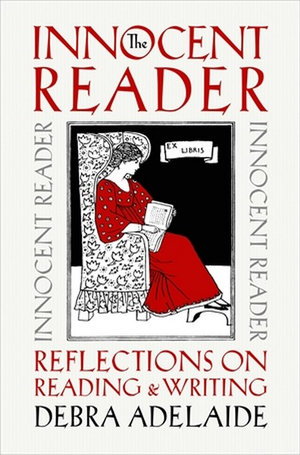
  • Debra Adelaide, The innocent reader: Reflections on reading and writing (2019) (on my TBR, Lisa’s review)
  • Carmel Bird, Telltale: Reading, writing, remembering (to be published July 2022)
  • Ramona Koval, By the book: A reader’s guide to life (2012) (Lisa’s review)
  • Michael McGirr, Books that saved my life: Reading for wisdom, solace and pleasure (2018) (Brona’s review)
  • Judith Ridge (ed.), The book that made me: A collection of 32 personal stories (2016)
  • Jane Sullivan, Storytime: Growing up with books (2019) (Lisa’s review)
  • Brenda Walker, Reading by moonlight: How books saved a life (2010)

Book Riot says, “A bibliomemoir is like an insightful, bookish dinner guest — and a recipe for an exploding TBR”. On the other hand, bibliomemoirist herself, Jane Sullivan, shared a different viewpoint in The Sydney Morning Herald back in 2014. She wrote that British journalist Rachel Cooke, while liking what bibliomemoirs were doing, was also worried. Cooke, wrote, she says:

These books, however endearing, funny and insightful, strike me as just another form of talking about books rather than actually reading them. Go to the text! I want to shout, bossily.

So, with all this in mind, do you like bibliomemoirs? And, if so, care to share any favourites, Aussie or otherwise?

* Coincidentally, while researching this I discover that Nafisi has a new book out this year, Read dangerously: The subversive power of literature in troubled times.

POSTSCRIPT : An interesting, brief discussion of bibliomemoir at Boston Bookfest. Argues that:

Much like microhistory, bibliomemoir upends a specific, traditional cultural structure—in this case the kind of authoritative perspective (rooted in entrenched power structures) that conventional criticism upholds. In this sense, it is an inherently political genre—a liberal or democratic genre.

Monday musings on Australian literature: Sources for early Australian Women Writers

As I think you know, Elizabeth Lhuede (founder of the Australian Women Writers Challenge), Bill Holloway (The Australian Legend), and I, are behind the re-framed Challenge. Our focus is early Australian Women Writers, by which we mean women writers from the nineteenth and early-to-mid twentieth centuries. We are particularly interested in those women writers who have never received due recognition, but we’ll cover the bigger names too. We publish twice weekly – articles and reviews on Wednesday mornings, and excerpts (mostly) of actual writings on Friday mornings (Australian time of course).

Currently, I post on the last Wednesday of the month, and my first two posts were on sources for researchers and anyone else interested in the topic. I have decided to document them here, for my own records – and, just in case some of you haven’t caught those posts, but would be interested in them:

  1. Early Australian women writers: 1, Primary sources: focuses on where actual writings by the authors can be found… Read on …
  2. Early Australian women writers: 2, Secondary sources: focuses on where information and writings about the authors and the period can be found… Read on …

Clicking on either of the Read on links will take you to the blog. Once there, please potter around to see what else we’ve posted to date. You might find something interesting. We’d love to hear from you if you did, and if you have an idea of something relevant you might like to contribute, please contact Bill who is our commissioning editor, theaustralianlegend[at]gmail.com.

This is a very short Monday Musings this week. Enjoy the respite!

Monday musings on Australian literature: on 1922: 1, Bookstall Co.

I haven’t done many Trove-inspired posts lately, but, I do enjoy pottering around Trove’s Newspapers and Gazettes database, so thought that for today’s Monday Musings I’d have a little look at what was happening in the Australian book world in 1922. My broad search retrieved around 8,000 articles! I can’t read them all, but I found several items of interest, to me at least, that I’d like to share, which I’ll do over the year.

For my first post, I’ve chosen a new publisher to me. In the Books Received column in the Kadina and Wallaroo Times of 8 March, the columnist refers to the N.S.W. Bookstall Company, writing “now that publishing difficulties have eased, the N.S.W. Bookstall Co. proposes to add rapidly to its popular Australian fiction series”.

Who was this company I wondered? Well, they were “notable” enough to have a Wikipedia page, and the man who turned it into a successful business, A. C. Rowlandson, has an entry in The Oxford companion to Australian literature. The Companion tells me that in 1991, the book, The New South Wales Bookstall Company as a publisher, by Carol Mills, was published. The Publishing History website also devotes a page to them.

So, the company … It was started by Henry Lloyd around 1880 as a newsagent, with its first foray into publishing possibly being racebooks for the Hawkesbury Race Club around 1886. The Wikipedia article stops with a discussion of World War Two, which suggests that the company folded soon after the war, but I haven’t confirmed this.

I have however found out a bit about Alfred Cecil Rowlandson. He started with the company in 1883 as a tram ticket seller, presumably from one on the company’s bookstalls. Wikipedia says that “the greatest part of the company’s business consisted of retailing local, interstate and overseas periodicals, postcards (Neville Cayley produced a series) and stationery from its eight city shops and fifty-odd railway stall outlets”. Rowlandson worked his way up, and in 1897, bought the company from Lloyd’s widow. He ran it from then until his death in, coincidentally, mid-1922.

From the Bookstall series. Image: Publishing History website

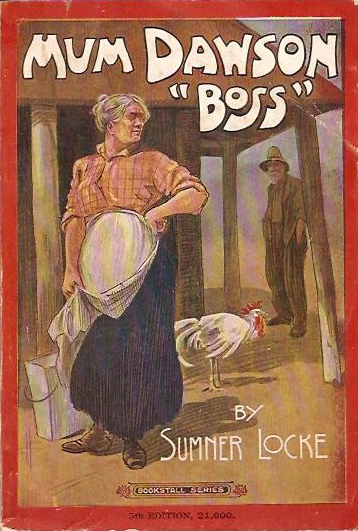
He was clearly a visionary, because, as the Companion says, the company became “one of Australia’s most successful book-publishing and selling ventures, publishing in paperback about 200 titles by Australian authors and selling four to five million copies”. The above-linked Publishing History page lists some of its books in chronological order, while the Wikipedia page lists a selection by author’s name. The authors include names familiar to me like Louis Becke, Charles Chauvel, Norman Lindsay,  Sumner Locke, Vance Palmer, and Steele Rudd.

Rowlandson came up with the idea of selling Australian books at one shilling each, and created the Bookstall series in 1904. Wikipedia says that despite his belief in a market for cheap Australian books, the prospects were not encouraging, because Australians had not shown much faith in the the work of their own novelists.

However, Rowlandson put his money where his mouth was. He paid £500 for the publication rights for Steele Rudd’s Sandy’s Selection. It was the largest sum paid in advance for an Australian book at that time. Rowlandson also apparently spent “comparatively large sums in readers’ fees”. And, he believed, it seems, in bright catchy covers, employing artists and cartoonists as illustrators, like Norman Lindsay, Sydney Ure Smith, cartoonist Will Dyson, and war artist George W Lambert.

The Companion says that “the remarkable sales of of these Australian books confirmed Rowlandson’s intuition that the Australian reading public was keen for local reading matter, and the impact of his company on the development of Australian writing was considerable.”

Now, back to Trove. The columnist of the aforementioned Kandina and Wallaroo Times, writing, remember, in 1922, says “now that publishing difficulties have eased, the N.S.W. Bookstall Co., proposes to add rapidly to its popular Australian fiction series”. My guess is that these “publishing difficulties” stem from the war. The Companion says that during the war, due to the shortage and cost of paper, the “bob” (or “shilling”) price was increased by threepence, but Rowlandson – good for him – reverted to the “bob” after the war.

Anyhow, our columnist wrote that three new novels were in the presses, and that “the enterprising publishing house” had nearly 20 more under way. One of the books was S.W. Powell’s Hermit Island. It’s “of the Islands adventure class, but, like its predecessor, is off the beaten track”. Our columnist says that the predecessor, Powell’s first novel, The maker of pearls, was “one of the best of last year’s contributions to Australian fiction”. Still 1s 3d at this stage. 

Rowlandson died in June 1922 at the age of 57. Soon after, in July, Freeman’s Journal advised that the Company’s intention was to “continue the publication of Australian novels at popular prices, as during the life of the founder, Mr. A. C. Rowlandson, the late managing director”. Founder? Not correct. And so inaccuracies creep into the historical record, eh?

Freeman’s columnist goes on to say that

The late Mr. Rowlandson had profound faith in the literary resources of the Commonwealth, and during his life was wholly responsible for the publication of at least 150 Australian novels, the sales of which have totalled nearly four millions. During recent years the standard of the series has been steadily improved; and the manuscripts now in hand show still further improvement. 

And, s/he announces that the next book is Vance Palmer’s The boss of Killara, which is “an entertaining story, … most entertainingly written, and … true in every detail to Australian, bush-life”.

Trove provides information about more books published in 1922, including:

  • J.H.M. Abbott’s Ensign Calder, which contains stories which originally appeared in the Bulletin. These are historical fiction, being set in the nineteenth century during the governorship of Macquarie. The Western Mail‘s correspondent says that the stories “are very faithfully rendered, and … highly amusing”.
  • Hilda Bridges’ The squatter’s daughter, which interests me because it’s an adaptation of a 1907 play pf the same name by Bert Bailey and Edmund Duggan. The play was adapted into film twice, one silent and one talkie, as well as into this novel. The Midlands Advertiser says it’s “capably written, and gives a faithfully and permanent record of the play”
  • Jack McLaren’s Feathers of heaven from, says Freeman’s Journal correspondent, “one of the most popular Australian authors”. It’s set in “the wilds of New Guinea” and is “a novel of stirring adventure written round the illegal hunting of New Guinea’s beautiful birds-of-paradise”. A volume of “wholesome adventure”!

Of course, there were also reports of Rowlandson’s death, funeral and estate, but I’ll end with some comments on his legacy from the The Australian Worker:

Some of the writers taken up by A.C.R. have since capitalised their ‘bob’ start, and made overseas reputations. Rowlandson, by instinct and practice, was a tremendous live-wire hustler, and probably his business intensity contributed to his all too early death—a death which will grieve hundreds of thousands who enjoyed cheap local fiction of exceptional merit as a result of his enterprise, and by scores of young writers who never would have been heard of only for his faith in local literary products, his kindly and sympathetic disposition, and his never-resting determination to give Australian literature a show.

Monday musings on Australian literature: World Poetry Day, on anthologies

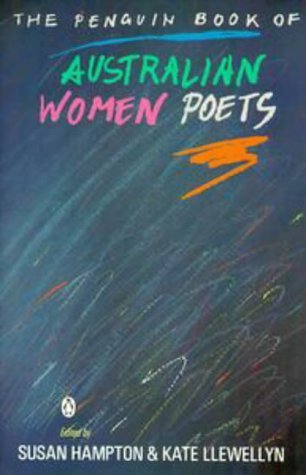
Last week, Brona (This Reading Life) wrote a post on Eve Langley’s poem, “Native-born”, in which she shared the statement from Wikipedia that it appears regularly in Australian anthologies. As I responded to Brona, I checked my three “modern” Australian poetry anthologies and only found it in the most obvious one, The Penguin book of Australian women poets. This got me thinking about Australian poetry anthologies. I’m not an expert – by any stretch – on these, but it’s World Poetry Day today, so I thought to explore them a little.

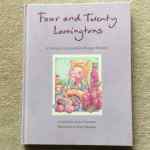
Cover, Four and twenty lamingtons

This will be the fifth post I’ve done on World Poetry Day. In my first, I mentioned that I bought many children’s poetry anthologies when my children were young. I loved reading poems to them, and loved that these anthologies would include poems not written specifically for children.

Anyhow, I’ll start by sharing my four (adult) anthologies, listing them in the order I acquired them:

  • Ian V. Hansen, The call of the gums: An anthology of Australian verse (1962): my first year of high school poetry text. I treasure/d this book (loved the title, of course). It’s organised by subjects/themes.
  • Susan Hampton and Kate Llewellyn, The Penguin book of Australian women poets (1986): produced partly in reaction to years of male-poet-heavy anthologies; organised chronologically.
  • Jamie Grant, 100 Australian poems you need to know (2008): organised by themes.
  • Bertram Stevens, Golden treasury of Australian verse (1912): my oldest, but most recently acquired, it was given to my grandmother in 1914.

And here, I lost three hours work, when WordPress suddenly told me I don’t have the right to save my work, and I hadn’t noticed that it wasn’t saving! I feel defeated as I just can’t sit down now at 8pm and rewrite the whole thing. I usually copy and paste my content elsewhere when something like this happens, but I didn’t tonight and lost it all. So, a summary instead, to which you may all say, phew!

Essentially, I was writing about the value of anthologies, starting from the point of view that national anthologies can play a role in defining a canon (putting aside whether defining a canon is a good thing or not). I had found an excellent article in JSTOR, written by poet Geoff Page in 1994. He discusses Australian anthologising through much of the 20th century, focusing particularly on the impediments to their canon potential. Impediments include the times in which they were compiled (such as the nationalistic/imperialistic tenor of one in 1922), and, in Australia’s case, differences of opinions between poets. This has been well documented over the years but he simply alludes to it here, making the point that different prejudices have played out in the anthologies produced. He says:

No editor, of course, can really escape his or her own subjectivity but it is remarkable how many ones seem to feel it was not worth the effort anyway.

Page’s survey and analysis of inclusions and exclusions in several anthologies is fascinating.

He suggests that anthologies compiled by academics have tended to be the “fairest”. He also talks about the gaps in representation – such as of women, First Nations, and non-English speaking background poets – and notes some slow improvements in these areas.

He also makes the obvious-when-you-think-about-it point that it’s not just who is included or excluded but what poems are chosen. Page recognises the impact (on canon formation) of

the universal anthologist’s desire to discover what has not been anthologised before–which often, when space for only two or three poems is available, means passing up a classic for something less central.

I can understand this desire from both the compiler’s and reader’s point of view. However, there can be a darker side to the choice of a, perhaps, “lesser” poem, or, say, fewer poems for one poet over another. With anthologists becoming, Page writes, “more cautious about omission […] it’s not so much about exclusion now but branding by short measure”!

Anyhow, the end result is that “there is no generally agreed canon; various traditions contend or, increasingly, coexist”. This is not necessarily a bad thing, particularly if, as Page suggests, “the quality of the best work bears comparison” with that of other countries, and if, as Page also suggests, poets who “represent, or identify with, minority groupings … are slowly [my emph] being more widely represented in major anthologies”. Page concludes

the situation is lively and in flux, and is likely to continue that way for some time. Some allegiances are changing, some borders are being crossed, but the presence of long-established loyalties and demarcations are not about to disappear.

And, it seems, he was right, because, nearly twenty years later, in 2012, academic and poet Ali Alizadeh wrote a negative review in Overland of a 2011 anthology, Australian poetry since 1788 by Geoffrey Lehmann and Robert Gray (whose earlier 1992 anthology Page had discussed). Alizadeh writes that the anthology

is not only a collection of some of the more timid and uninteresting poetry produced in this country since British invasion, it also propagates ideological notions that are comprehensively trite and reactionary …

He comments not only on who is included, but also what, noting, for example, that

the only poem by the radical avant-gardist Ania Walwicz included in the anthology is ‘travelling,’ a poem that is, according to the editors’ notes, largely bereft of the ‘socio-political intent’ present in ‘much of Walwicz’s [other] poetry’.

This is just one example of unrepresentative selection he provides to support his assertion that the editors’ “key objective … may have been much more ideological and tendentious: to present – or even shape – an image of Australian poetry as a cultural milieu devoid of ‘socio-political intent’.” Strong words. And they garnered strong, but mostly very interesting, if lively, responses. Do read them if you are interested.

Meanwhile, I will just share a response by critic Alison Croggon (whose Monsters I’ve reviewed). Picking up the point about “what” has been included, she argues that “the creation of context [is] another crucial aspect of anthologising”, and agrees with Alizadeh that what has been created here is the idea that “poetry is apolitical, a contextless aesthetic object”. This reminds me of Susan Hampton and Kate Llewellyn who, back in 1986, introduced their anthology by calling it “part of a history of women’s writing and of cultural politics which are creatively disturbing the conventional view of our literary heritage.”

Ah, poetry in Australia! It’s still a lively, contested place, and, really, that’s a good thing.

Now, do you enjoy – poetry anthologies? Care to talk about them?

Monday musings on Australian Literature: Colonial Texts series

I came across the Colonial Texts series back in 1988 with the publication of its first book, Ada Cambridge’s A woman’s friendship. I bought it and read it, and was inspired to read another novel by Cambridge, Sisters. Somehow, though, I lost touch with this series, partly due to my young family busy-ness at the time but also, I’d say, due to poor general (ie outside academia) marketing.

The series is just one example of the flurry of activity that was happening around the late 1980s in terms of retrieving Australian literary history, particularly, but not exclusively, women’s writing. This was strongly related to the Australian Bicentenary which saw all sorts of renewed enthusiasm for things “Australian”, though there was at the time, and quite rightly, controversy about celebrating 200 years of settler society, given the long habitation of this land by First Nations Australians who had never been celebrated.

This is an important issue, but not related to this post, so, back to the series … The University of New South Wales’ Australian Scholarly Editions Centre (ASEC) devotes a page to it. The eight titles were published between 1988 and 2004, when it – just – stopped. ASEC describes the series’ aim as being “to provide reliable reading texts of little-known nineteenth-century Australian literary works”, in editions that include introductions and explanatory notes, which “outline relevant biographical, book-historical and critical contexts”.

ASEC also notes that the titles by Catherine Martin, Ernest Favenc and Tasma, as well as Ada Cambridge’s  A Black Sheep, are “full-scale critical editions, recording variant readings in other lifetime printings”. These are, then, scholarly editions but this doesn’t detract from their essential content, which is accessible to any interested reader.

Some of these works first appeared as serialisations in the newspapers of the day, and for some, this series was the first edition since their original publication. Others, however, had – and/or have since – appeared in other editions.

The list

Here is the list of the books published, in series no. order, and with some notes from ASEC’s site.

  1. Ada Cambridge, A woman’s friendship (1988, ed. Elizabeth Morrison): a “gentle satire of class and sexuality” which “opens a window on Melbourne society of the 1880s and illuminates some important issues of the day – reform of dress and diet, the ‘marriage question’, socialism, and women’s suffrage”. (1889)
  2. Mary Theresa Vidal, Bengala, or, Some time ago (1990, ed. Susan McKernan): “depicts the life of the colonial gentry in the years before the goldrush, but it offers a more domestic and less exaggerated version of their lifestyle”. (1860)
  3. N. Walter Swan, Luke Mivers’ harvest (1991, ed. Harry Heseltine): “a tale of adventure, love, and revenge”, which ranges from the sheep runs of Victoria to the Palmer goldfields in North Queensland. Intersperses scenes of high passion and excitement with “satirical commentary on many aspects of nineteenth century Australian life and manners”. (1879)
  4. Catherine Martin, The silent sea (1995, ed. Rosemary Foxton): “centres around the Colmar Mine which is modelled on the largest gold mine existing in South Australia at the end of the nineteenth century … intelligent and sophisticated novel [which] encompasses compelling psychological obsession, passionate romance and ironic questioning set in vivid historical detail against Adelaide society and the outback”. (1892)
  5. Ernest Favenc, Tales of the Austral tropics (1997, ed. Cheryl Taylor): collection of stories which “draw their vivid realism” from the author’s experience as an explorer and rover in north Queensland”. Includes romances and comedies, but most “return to the theme of death in the desert, mangroves and caves. Their obsessive horror and ugliness are suggestive of tensions in the national identity, as it emerged in an alien environment, to confront many kinds of racial and cultural differences”. (1890s) (Lisa’s review of SUP edition)
  6. Louisa Atkinson, Gertrude, the emigrant : a tale of colonial life (1998, ed. Elizabeth Lawson) (Bill’s review of Mulini Press edition on AWW site): “the first Australian novel written by a native-born woman and the first to be illustrated by its author … [the] story of a young immigrant heroine making a life in a colony which is itself in the making … draws on authorial and family memories to summon the harsh, more complex, convict worlds of Sutton Forest, the Shoalhaven and Sydney in the late 1830s and 1840s”. (1857)
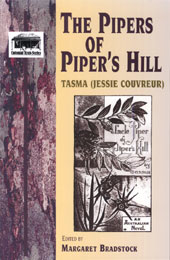
  7. Tasma (Jessie Couvreur), The Pipers of Piper’s Hill (serial version of Uncle Piper of Piper’s Hill ) (2002, ed. Margaret Bradstock) (my review of PGA edition): “the story of the Cavendish family who come to Australia from England to live with Mrs Cavendish’s parvenu brother, Tom Piper” focusing on “the clash of values between the impoverished old world of privilege and the new-world democracy of the self-made man … Tasma’s depiction of the conflicting currents of life in colonial society, and her delightful evocation of the characters involved, rapidly established her as an author of note”. (1888)
  8. Ada Cambridge, A black sheep: some episodes in his life (serial version of A marked man) (2004, ed. Elizabeth Morrison) (Narelle Ontivero’s review of Pandora’s edition of A marked man on Bill’s blog): follows the life and loves of Richard Delavel, from being “a rebellious Oxford undergraduate in 1850s England” to “a still restless middle-aged family man in 1880s Sydney … against a background of constraints and opportunities in Britain and Australia”. Described as “a powerful creation of an iconoclastic character in search of professional fulfillment” and “a complex reflection on marriage ties and social obligations and a lively evocation of late colonial Sydney”. (1888/1890)

It’s interesting, but not surprising, to see that the goldrush and goldmining feature in several of these, not to mention the clash between old and new worlds. It’s also interesting that a few are satirical.

Hmm…

In 1991, a report titled “Successful symbiosis of defence and books”, was published in The Canberra Times. Written by literary editor Robert Hefner, it describes the launch of NINE books published by the staff of the English Department at University College, the Australian Defence Force Academy, which, Hefner writes, “has for more than a decade, been building a reputation as one of the country’s leading centres for the study of Australian literature”. Australian polymath Barry Jones, who did the launch said:

It’s always very flattering to be asked to launch a book … but to have been asked to launch nine is something well beyond my experience … and to do it here in the environment of the Australian Defence Force Academy… makes the occasion all the more unusual and to be cherished.

The English Department here at the University College… an outpost — and I would hope a revolutionary and subversive outpost of the University of New South Wales — with its extraordinary symbiosis has been extraordinarily productive.

It was the idea that a Colonial Texts series would come out of a defence force academy that thrilled me so much when I bought my Cambridge. The nine impressive books are listed in the article. They include two Colonial Texts, Vidal’s Bengala and Swan’s Luke Mivers’ harvest. Bengala editor, Dr McKernan, said that something they’ve

all found in working on this series is that you can’t rely on public opinion for the good things to come to the surface… there’s a lot of pleasure in things that’ve been lost. 

Don’t we know it! She went on to say, writes Hefner, ‘that this reinforced the sense that critics working today had a big responsibility to read and argue about things, “because in a hundred years’ time they may all be forgotten”.’ This is why our reframed AWW program is so important.

Why, you might wonder, did I head this section, Hmm? It’s because Hefner concluded his report with a comment by one of the launched authors, Adrian Caesar:

All these books were, I think, largely conceived, written and produced before the Government and the University of NSW began expending so many efforts and energies on making us more efficient, productive and accountable.

Very possibly we’ll have to work even harder in the future to match this output, since so much of our time is now taken up with shuffling bits of paper around our desks in order to prove how efficient, productive and accountable we are. This of course inevitably makes us much less efficient since it detracts from our proper task of teaching and research. I feel hopeful, however, that this department at least will maintain its productivity, despite, not because of the valiant initiatives to improve us.

You can’t help thinking that in saying this, he was foretelling the future, because publication of the last five Colonial Texts took much longer than the first three (even allowing for a couple of years lead-time before the first was published). And then they stopped. I’m sure that’s not because there was nothing else worth publishing!