Monday musings on Australian literature: on 1923: 4, Austra-Zealand’s best books and Canada (2)

Last week I wrote about Canadian librarian, George Locke, commissioning Australian critic and journalist AG Stephens to compile the “best 100 imaginative Australian and New Zealand books” to be sent for exhibition in Toronto’s public library”. I ended on the commission having been completed, but I did not include his list because, not only had it taken me a while to find, but it then needed some editing before I could download it to share.
I’m not going to share the whole list, now, either. It is long, and probably not of core interest to most readers here. So, I plan to introduce the list, and then share selections – and, of course, I’ll give you the link so those of you who are interested can peruse the lot.

The list

After trying a few search strategies to locate the full list, I finally found it in Adelaide’s The Register (11 August 1923), in J. Penn’s “Literary Table” column. I’ve come across his columns before during my Trove searches, but have not yet found much about him. So, let’s move on. I’ve noted his name for further research, along with other mysterious by-lines I’ve seen.

Penn starts with some background. Stephens, he says, “was not required to display the historical course of literature”, nor “to include works of record, works of science, works of reference”:

His task was to choose works of literature identified with Australia or Zealandia, typifying Austra-Zealand character, suggesting life and thought native to Australia or Zealandia at the present day, yet readable and valuable elsewhere by reason of their art, by force of their genius. 

Penn suggests that “as a natural consequence of the change of environment, the character of Australians, and to a less extent of Zealandians, is gradually differentiating itself from the character of the parent British stock”. Some of the books in the list, he says, “exhibit this evolutionary change” while others reflect, in various degrees, “some of the qualities of world-wide literature”. Stephens, he continues, believes that the body of Austra-Zealand verse, which is “chiefly Scottish or Irish in origin”, is comparatively good. Regarding the rest, he quotes Stephens:

Austra-Zealand prose is good only in short stories. The best of the few long novels have been written by Englishmen. The list shows a distinct quality of English literary persistence, and a distinct preference of the Celtic mind for brief flights in prose and verse. Several books in the field of travel and description have a charming novelty. The juvenile books are excellent.

Interesting, eh? Not surprisingly, the list is verse-heavy. It is presented in categories …

  • Anzac (6)
  • Art and Illustration (8)
  • Drama (2)
  • Essays and Criticism (4)
  • Fiction (21)
  • Juvenile (11)
  • Reference (4)
  • Travel and Description (10)
  • Verse (34)

    … and is annotated with Stephens’ comments, which were presumably intended for Locke and his library.

    Fiction
    Book cover
    • 21. Becke (L.), By Reef and Palm, London, 1894. The first admirable short tales of the best East Sea writer since Melville. Neither Stevenson nor Maugham equals his graphic presentation of island nature and human nature.
    • 22. Bedford (E.), The Snare of Strength, London, 1905. An impetuous characteristic Australian novel, not shaped to gain its proper literary effect.
    • 23. Baynton (B.), Bush Studies, London, 1902. Short stories realizing with peculiar force and feeling the life they describe.
    • 24. Bartlett (A. T.), Kerani’s Book, Melbourne, 1921. In prose and verse the book of a typical young Australian.
    • 25. Browne (T. A.), Robbery Under Arms, London, 1888. Still the best bush story and the best long fiction written in Australia.
    • 26. Clarke (M. A. H.), For the Term of His Natural Life, Melbourne, 1874. Based on the records of the English convict settlement in Tasmania early in the 19th century. Picturesque, dramatic, and forcible at its epoch, it is moving into our literary past.
    • 27. Davis (A. H.), On Our Selection, Sydney, 1898. Lively humorous sketches of farm life and character.
    • 28. Dyson (E. G.), Factory ‘Ands, Melbourne, 1906. City life and character shown with brilliant satirical humour.
    • 29. Franklin (S. M.), My Brilliant Career, London, 1901. The first novel of a high spirited Australian girl- individual and characteristic.
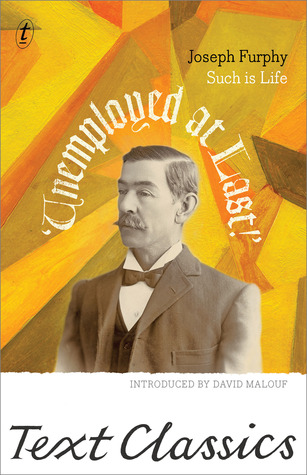
    • 30. Furphy (J.), Such is Life, Sydney, 1903. Lengthy, slow, meditative, a lifelike gallery of bush scenes and bush people.
    • 31. Hay (W.), An Australian Rip Van Winkle, London, 1921. Personal and descriptive sketches are fully written and skilfully elaborated.
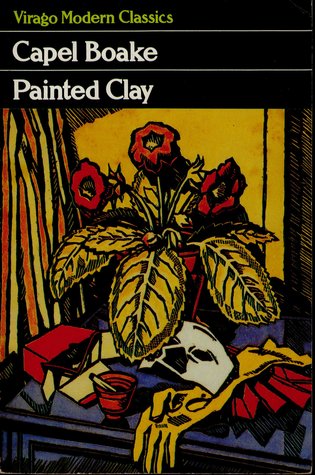
    • 32. Kerr (D. B.), Painted Clay, Melbourne, 1917. An Australian girl’s first novel, representing current fiction.
    • 33. Jones (D. E.), Peter Piper, London, 1913. The book of a typical Australian girl.
    • 34. Lawson (H.), While the Billy Boils, Sydney, 1896. Early collection of stories and sketches by the chief of Australian realistic writers.
    • 35. Lloyd (M. E.), Susan’s Little Sins, Sydney, 1919. Rare fertility of natural humour.
    • 36. Mander (J.), The Story of a New Zealand River, London, 1920. Best recent Zealandian novel, truthful and powerful.
    • 37. Russell (F. A.), The Ashes of Achievement, Melbourne, 1920. Placed first in De Garis prize competition of several hundred writers.
    • 38. Stephens (A. G.). ed. The Bulletin Story Book, Sydney, 1902. Many Austra-Zealand short stories permanently highly valuable.
    • 39. Stone (L.), Jonah, London, 1911. Keen observation, firm characterization, and witty exact description of city life.
    • 40. Wolla Meranda, Pavots de la Nuit, Paris, 1922. An Australian woman’s novel written in English, and first published in a French translation—a vivid story of sex in Australian scenes.
    • 41. Wright (A.), A Game of Chance, Sydney, 1922. One of the best books of a popular Australian writer of two score sporting stories. 

    So now, some thoughts. Remember that this was 1923. Many of our better-known early 20th century writers were just getting going. Katharine Susannah Prichard, for example, had written just three books by then, and Vance Palmer two. Others, like Christina Stead, M Barnard Eldershaw and Frank Dalby Davison had not quite started. Of course, some had, and are not included, like Catherine Helen Spence, as Bill (The Australian Legend) would say, and Price Warung, to name just two. Louise Mack is included, but in the Juvenile category – along with writers like Mary Grant Bruce and Ethel Turner.
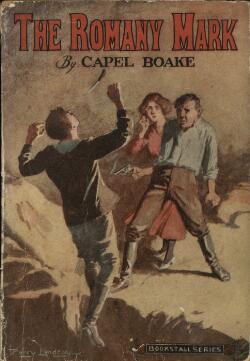
    Capel Boake, Painted clay

    People will always complain about lists. Indeed, I think an important role of lists is to get book talk into the public arena. I shared some criticisms of this list last week. I’m therefore going to leave that issue and look briefly at what Stephens included. There are books here, for example, that we still know today – those by Barbara Baynton, TA Browne (aka Rolf Boldrewood), MAH (Marcus) Clarke, AH Davis (aka Steele Rudd), SM (Miles) Franklin, J Furphy, DB Kerr (aka Capel Boake) and H(enry) Lawson.

    There are some surprises here – for me. Wolla Meranda is completely new to me, and I plan to research her for a future post. EG Dyson’s Factory ‘Ands, with its “brilliant satirical humour” also intrigues.

    As some critics complained (in my post last week), there is one by Stephens himself – but it is an anthology so is surely not, really, self-aggrandisement?

    Finally, his annotations. Love them. Some read a bit strangely – syntactically speaking. However, as well as reflecting his own preferences, of course, they are succinct, not bland, and they convey how the works meet that commission – to represent Austra-New Zealand thought and character in readable but quality literature!

    Others

    To avoid writing a tome, I’m now going to share a few from Drama and Verse. Of the two Drama works listed, one is by Louis Esson, who was critical of the list. Stephens includes his 1912 Three Short Plays and annotates it with “exhibits dramatic power as far as he goes”. 

    Verse contains quite a few “Zealandians” (to use the language of the time). Australian poets include many still known to us, like Barcroft Boake, Christopher Brennan, Zora Cross, CJ Dennis, Adam Lindsay Gordon, and Henry Kendall. Several poets are noted (annotated) for their satirical or sardonic humour, which appeals to me. But I’ll conclude with one I don’t know, R Crawford’s 1921 The Leafy Bliss. Stephens’ annotation is “Awkward verse with astonishing aptitudes; the uncouth elf suddenly disclosing the high shining face of poetry”. (Should this be “uncouth self”? Anyhow, I love this annotation.)

    Thoughts?

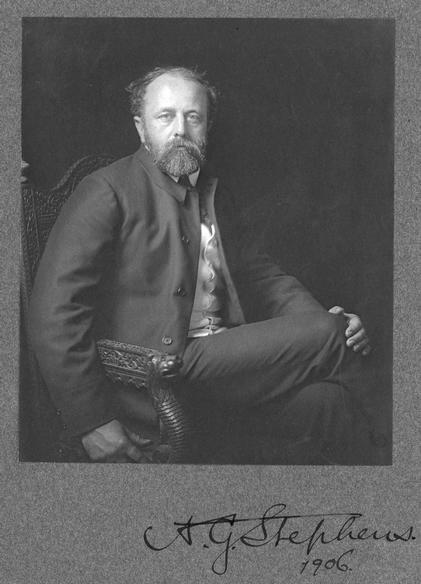
    Picture Credit: Alfred Stephens, 1906, Public Domain, from National Library of Australia.

    Other posts in the series: 1. Bookstall Co (update); 2. Platypus Series; 3. Austra-Zealand’s best books and Canada (1)
    Monday musings on Australian literature: on 1923: 3, Austra-Zealand’s best books and Canada (1)

    For my third post in my Monday Musings 1923 series, I’m moving away from publisher initiatives, like the NSW Bookstall Co and the Platypus Series, to something a bit different. It’s an intriguing story about what one paper called “inter-Imperial amity”. It goes like this …

    Mr. George H. Locke (1870-1937) – as the newspapers of the day referred to him – was, at the time, the Chief Librarian of the Public Library of Toronto. He was significant enough to have a Wikipedia page, which tells us that he had that role from 1908 to his death. Wikipedia also says that he was the second Canadian to be president of the American Library Association (ALA). The Toronto Public Library website tells us a little more. He was their second chief librarian, and his memorial plaque credits him with having “transformed a small institution into one of the most respected library systems on the continent.” They say he was the first Canadian to be president of the ALA – but who’s counting! The important point is that he was an active librarian who not only “promoted library training and professionalism” but was intellectually engaged in the world of letters.

    All very well, I hear you saying, but what’s that got to do with us? Well, in 1923, he commissioned Mr. A.G. Stephens (1865-1933) to “choose the best 100 imaginative Australian and New Zealand books for exhibition in the Toronto library” (as reported by many newspapers of the day, like Brisbane’s The Queenslander, 3 March 1923). His aim, the newspapers say, was “to inform Canadian readers of the literary aspirations and performances of Australian and New Zealand authors”. This is an inspired and inspiring librarian!

    Now, A.G. Stephens, who also has a Wikipedia page, is well known to those steeped in the history of Australian literary criticism and publishing. He was famous for his “Red Page” literary column in The Bulletin, which he ran for over a decade until 1906. Stuart Lee, who wrote Stephens’ ADB article, says of this column:

    Stephens’ common practice was to spark controversy by attacking an established writer, such as Burns, Thackeray, Kipling, or Tennyson, thereby enticing correspondents as varied as Chris Brennan or George Burns to attack and counter-attack, sometimes over weeks. It was heady stuff.

    After leaving The Bulletin, Stephens worked as a freelance writer and editor. Some of the newspaper articles reporting on Mr. Locke’s initiative, also reference Stephens’ being the editor of the literary magazine, The Bookfellow. He had edited 5 issues of it in 1899, and then revived it as a weekly for a few months in 1907. After that more issues were published, at intervals, until 1925. Overall, Stephens was recognised for his criticism, literary journalism and literary biography. After he died, critic Nettie Palmer, writes Stuart Lee, complained about ‘the appalling lack of public response’ to the news of his death, while Mary Gilmore wrote in an obituary, that “only those who were intellectually shaped by his hand, only those who stood on the strong steps of his work, know with what a sense of loss the words were uttered, ‘A. G. Stephens is gone’.” All this suggests that he was a person well-placed to fulfil Locke’s commission.

    So, back to the commission. I found very little detail about it. Most of the papers announcing it merely explained what it was – which is what I’ve told you already. A few made the point – as did The Queenslander above – that ‘The “hundred best books” task has not been attempted in Australia before. An initial difficulty is that many of our best books are out of print, and have to be painstakingly sought for.’

    But, here’s the thing, on 3 August 1923, a few months after the commission was announced, The Sydney Morning Herald reminded readers of the commission, and then wrote

    The collection has now been made, and the books have been despatched to Canada.

    Nothing more! Back to the drawing board for me. After trying various search strategies – which produced a few comments on the list – I finally found the full annotated list. It’s way too long to share in this post – and it needs a lot of editing in Trove for it to be shareable. In the meantime, I’ll whet your appetite with this response to the list by critic and poet Louis Esson (1878-1943) in Melbourne’s The Herald (1 September 1923):

    Mr Stephens has now published his list of a hundred representative books. As might have been expected, they make a rather arbitrary and unsatisfactory collection. Half of them at least might have been omitted with advantage. Mr Stephens has an exaggerated opinion of the value of the writings and critical opinions of Mr A. G. Stephens. Fifteen of his hundred representative books have been either written or edited by himself. A number of feeble writers have been included while more important writers like Bernard O’Dowd, Frank Wilmot, Vance Palmer, Francis Adams, Walter Murdoch, Katharine Susannah Prichard, Price Warung and others are inadequately represented or not selected at all. Mr Stephens, no doubt, has done his best. He has a perfect right to his own opinion; but readers in Canada and Australia must be on their guard against accepting A.G.S.’s list as being in any way critical or authoritative.

    Esson isn’t the only one who commented on Stephens including himself.

    If you are interested, watch this space … the list is not quite what I expected, based on those early announcements. I’ll try to share it next week.

    Picture Credit: Alfred Stephens, 1906, Public Domain, from National Library of Australia.

    Other posts in the series: 1. Bookstall Co (update); 2. Platypus Series

    Monday musings on Australian literature: Trove treasures (1), Reading novels

    During my Trove searches for specific topics, I come across – serendipitously – other articles that are interesting and worth sharing. So, I have decided to create an occasional sub-series called Trove Treasures. My first group comprises some random little pieces, particularly jokes, that I’ve come across about reading novels.

    Humorous snippets

    Woman reading with cushion

    The interesting thing about all these is what the humour tells us about the values of their time particularly regarding novel reading … see what you think. The ones I’m sharing here all relate to women reading novels, and the dangers that may or may not ensue!

    From 21 December 1892, in Townsville’s The North Queensland Register, comes this one titled “Worse than novels”:

    Father (impatiently): Where is your mother?
    Little pet: Upstairs, reading.
    ‘Hush! Reading novels, I suppose, when she ought to be–‘
    ‘No. She’s readin’ a perfumed letter she found in your inside vest-pocket.’
    ‘Hem! Tell her I’ve gone out to buy her some new novels.’

    My next one comes from 27 May 1905 in Sydney’s The World’s News. It’s titled “Silly fellow” (though I also found it in an earlier paper, Melbourne’s Leader of 26 December 1903, titled “Unpardonable”):

    He: So the engagement is broken off?
    She: Yes; he told her he thought she should stop reading novels and read something more substantial—something that would improve her.
    He: Well?
    She: Well, the idea of a man intimating to his fiancee that she could be improved in any way!

    Then, there’s this one that particularly made me laugh from 4 February 1909 in Melbourne’s Table Talk. It’s a cartoon caption, and is titled “The Cause of the Trouble“:

    Mistress (entering suddenly): Mary, how is it I find you reading novels instead of doing your work?
    Mary: Oh, it’s ‘cos you wear them sand shoes, mum.

    I’m interested in Mary’s “mum” not “ma’am” for her Mistress?

    Finally comes this one from 19 March 1926 in Hurstville’s The propeller. It is headed “Flapperism” with a subheading, “Reading novels”:

    He: Do you read all the popular novels of the day!
    She: Gracious, no! I have only just time to see how they end.

    In a future Trove Treasure, I plan to share a piece about impatiently reading endings!

    A little more serious

    On 2 April 1928, Perth’s The West Australian ran a paragraph headed “Reading novels!” with the subheading “Admiral’s calmness“. The same story was run in two Kalgoorlie papers, Kalgoorlie Miner on 5 April 1928, and the Western Argus on 10 April 1928. Here is the text from The West Australian:

    GIBRALTAR, March 31.— Before the court-martial opened the calmest figure seemed to be Rear-Admiral Collard, who, clad in flannels, spent hours in reading novels in hotel lounges. Commander Daniel and Flag-Captain Dewar spent yesterday conferring with their counsel aboard the warship Valiant, which is moored off-shore, preparing a reply to the charges. Meanwhile their wives show plain evidence of the strain.

    I found an article in Trove about this far-flung event written before the court-martial – in Brisbane’s Daily Standard of 28 March 1928. It provides some background. (I have not fully edited it, so it’s quite messy to read.) There are a few articles about the court-martial, including this one that I have edited from The Sydney Morning Herald on 6 April 1928. Read them if you are interested in naval history – my interest is in the Admiral’s novel reading!

    My next Trove Treasures post might be one on novel reading and men.

    Meanwhile, do any of these grab your attention?

      Monday musings on Australian literature: Beach (or Summer) reads

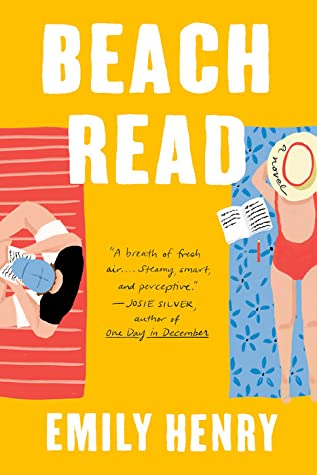
      It is currently summer down under and so, despite some unseasonably cold weather in various parts, the thoughts of many have turned to “beach reads”. Most of us understand that to mean escapist, easy-to-read, non-demanding fiction, although we don’t all define our own “beach reading” that way. But, do you know the history of the term and concept? Last month, Julian Novitz, from Swinburne University of Technology, wrote an article for The Conversation titled “Melodramatic potboilers, worthy classics and DIY escapism: a brief history of the beach read”. Of course I was interested.

      Do you know when the term “beach read” originated? I was surprised to read that it only dates back to the 1990s. Novitz cites as his source a 2016 article by Michelle Dean in The Guardian. Dean wrote that:

      the term only emerged in the 1990s, usually in book trade publications such as Booklist and Publisher’s Weekly. It was only around the middle of the decade that it migrated into the general lexicon and became something literary journalists began using.

      (An aside: I did find a reference to “beach books” in the 1960s, on which more below.) Dean continues that

      vacation reading is not a new concept. Ever since the 19th century, when novels were considered relatively sinful indulgences, leisure and fiction-reading have been closely associated. But it was not until the wide popularization of paperbacks in America in the middle of the last century that you began to see the beach so closely entwined with a page-turning thriller.

      Dean doesn’t explore the history further, but Novitz does. He writes that communications scholar Donna Harrington-Lueker says that in the early 19th century, “holiday reading was often viewed as a mark of gentility and refinement” and that “travellers were encouraged to use their abundant time to appreciate worthy classics”. Recommendations for “perfect” summer reading included works of Lord Byron and Charles Lamb.

      A combination of social, economic and technological developments – including increased literacy and the ability to publish books more cheaply – contributed to the rise of reading for leisure. The resultant “dime novels” popularised sensationalist thrills and adventure, and publishers started marketing “light literature” for summer reading. Novitz writes that:

      Summer novels were typically presented as “agreeable” fiction, easy for vacationers to pick up and put down, cheap enough to be happily left or exchanged in hotels.

      Of course, not all approved this trend, including those who didn’t think much of fiction in the first place. Novitz gives the example of the popular Brooklyn preacher Reverend Thomas De Witt Talmage who in 1876, labelled summer novels as “literary poison” and “pestiferous trash”.  However, even in the nineteenth century, not all saw summer reading as necessarily light. Novitz reports on Scribner’s suggested summer reading list of 1885. It included “Frances Hodgson Burnett’s passionate exploration of inequity and exploitation in the Lancashire coal pits (That Lass O’ Lowrie’s), the surreal, proto-science-fiction tales of Fritz James O’Brien, as well as travel writing, histories, and a small collection of Plato’s dialogues”.

      Critics and publishers, Novitz says, have ‘defended summer reading as a necessary “release” from the stresses of the year’, but he argues that this “doesn’t necessarily imply triviality”, and concludes that

      the best lesson to take from the history of the beach read is that if you can only get through a book or two while on holiday, then make sure they are ones you will like.

      Amen to that …

      What about Australia?

      However, this is my Monday musings series, so to bring the discussion specifically to Australia, I went of course to Trove. I’m sharing just a handful of articles I found. They are too few to be regarded as conclusive or even properly representative, but they offer some insights …

      On 26 December 1903, Rockhampton’s Capricornian ran an article titled “Summer reading”, in which the first half discusses the topic in some detail. It suggests that, for many, “a pleasant book in a shady nook will afford welcome relief and give agreeable exercise to the mind in the contemplation of novel thoughts, strange characters, and startling incidents”, but few will think about whether this time “will be well spent”. However, it says, this is being discussed “in some quarters”. The books most demanded from public libraries are “those classed under the head of fiction. All conditions of readers are alike imperious in their demand [my emph] for novels”. In fact, “the publication of works of imagination exceeds that of all other classes of literature” across the English-speaking world. The article describes in some detail what these works offer, including that “places and persons are portrayed with vivid realism” and that “good and bad characters are met with just as in real life, but those in fiction are the more interesting because the moving springs of their action can always be traced, and the consequences of their conduct considered and discussed. Human nature in all its strange developments and infinite varieties is strikingly illustrated in modern fiction and its consideration under diverse aspects and in startling forms is always pleasant occupation”.

      Hmmm … just “pleasant occupation”. Indeed, says our writer, “the value of novel reading is meeting with lively condemnation”, with the time spent being “alleged to be not a pastime, but a waste-time”. S/he is not prepared to disagree outright with this, but does suggest that novel reading offers “a change of exercise to the wearied brain, and a subtle form of excitement to the system [and, for these reasons] it must be admitted to be worth more than can be readily estimated”.

      A few years later, in Sydney’s The Daily Telegraph (3 November 1911), there is a brief article titled “Books for summer reading”. It lists 20 books compiled by Andrew Lang, “an accomplished and quick-witted writer and editor”. Lang apparently suggested that “no one who is happily placed during the summer months reads at all” and then proferred his list, which included ‘… 3, “The High History of the Holy Graal”; (Mr. Sebastian Evans’s translation)… 8. Hazlitt (Essays); 9. Leigh Hunt (Essays) … “‘Confessions of St. Augustine; 12 Boswell’s “Johnson” … 19, Gibbon’s “Decline and Fall”‘. You get the picture. The article writer assesses the list:

      Every book in this list is full of meat; there is no whipped syllabub for the undisciplined and the indolent. But when one considers the taste of the average summer reader as disclosed by the books placed at his disposal at summer resorts and on ocean steamers, this list is a huge satire.

      Love it. Two decades later, we are moving on. In Adelaide’s Southern Cross on 10 January 1930, “K”, recommends some books suitable “for the holiday season in Australia, when the heat of summer interferes with serious, and sustained reading… the kind of mental fare palatable to those who are recuperating at the seaside or in the hills”. The books are published by Mills and Boon, “the enterprising London publishers … [who] … are constantly bringing out novels which are suitable for general reading.” Clearly “K” is happy with light summer reading.

      More fascinating to me though is the Editor of W.A. Amateur Sports (20 November, 1931) who says about summer reading:

      I am sure readers will have observed from their experience that, as in the case of our dietary needs, it is not in the best interest of our health to live on rich matter continually. Generally, there is no difficulty about that, since really good books are certainly in the minority, and we are compelled, in fairness to others, particularly if our reading is catered for by a circulating library, to be inflicted with a great deal of trash at frequent intervals. 

      Oh dear … to be so “inflicted with a great deal of trash”. Anyhow, s/he sees summer reading as more varied:

      Thrillers are in regular demand, whilst in more enlightened circles travelogues are never far from the hand of those who seek the Muse in solitude. Poetry comes once more into its own and the sun sets on many a magazine flung carelessly on beach or hammock.

      Not “just” light fiction here.

      Jumping now to times a bit closer to ours, we get Bookman in The Australian Jewish Times (3 November, 1961). He reviews three books by Australian writers, but starts off with:

      Summertime is a period when ‘‘light reading”” is thought to be in order.

      Whether this is because prolonged sunshine and heat make profound reading too much of a strain, or because so many people are making holiday moves that they cannot be expected to stick a hard text, l don’t know.

      But round the world we get such publishers’ categories as “summer reading,” “hammock novels” and “beach books.”

      There we have it, “beach books”. Not “beach read”, but much the same in concept.

      He continues that these sorts of books generally come in “two types: the so-called light fiction, including detective and adventure novels; and the more or less diverting non-fiction of general interest and limited importance”. The three books he reviews are of the latter type, all non-fiction published by Angus and Robertson – John Bechervaise’s book on Antarctica, The far south; Alice Duncan-Kemp’s on life in northern Australia, Our channel country; and Helen McLeod’s on living in Papua New Guinea as the wife of a government official, Cannibals are human.

      There is more to say, including about these books in particular so I’ll return to them. Now, though, it’s late so I’m closing here on a question:

      What does “beach read” mean to you (if anything)?

      .

      Monday musings on Australian literature: Digital Lending Right

      Australia implemented a Public Lending Right (PLR) in 1975. It’s a Federal Government program which makes payments to eligible creators and publishers, in recognition of income they lose (in other words, don’t get!) through loans and other free uses of their books in public lending libraries. PLR schemes operate many countries around the world, including New Zealand, Canada, Israel and many in Europe. (There is a complementary ELR, which does the same for books held in educational institutions).

      Fist full of money
      (Courtesy: OCAL from clker.com)

      To be eligible for Australia’s PLR (or ELR) payment, creators:

      • can be an author, editor, illustrator, translator or compiler;
      • must be an Australian citizen or a permanent resident;
      • must be entitled to receive royalties from their books; and
      • must be living.

      What this list doesn’t say is that eligible books had to be printed, which was logical in 1975. However, the scheme has not kept up with technology – not with audiobooks (which have been around for a long time now) and certainly not with eBooks.

      For most authors the payments are very small. Author Annabel Smith (whose Whiskey and Charlie I’ve reviewed) explained it in detail in her excellent How Authors Earn Money blog series. However, it has long been a thorn in their side that their digital and audio works have been excluded. That has now been rectified – at last – and the joy I’ve seen around the various sites, Twitter, Instagram, and so on, has made clear just how important it is, both practically and philosophically.

      The ASA (Australian Society of Authors) has been lobbying for this extension for a long time, but stepped it up in recent years, arguing that

      The outbreak of COVID-19 made the case for digital lending rights even more compelling. When libraries closed, patrons increasingly borrowed in ebook and e-audio format, and will possibly continue to do so into the future. We believe the increased investment in digital resources and new borrowing patterns may have a long term effect on the way patrons interact with libraries.

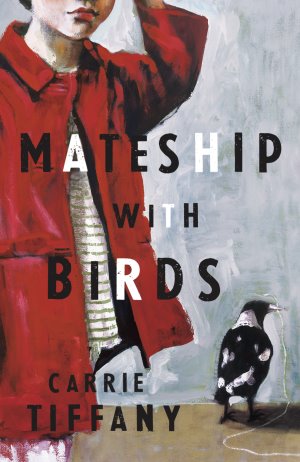
      Mateship with Birds (Courtesy: Pan MacMillan)

      Author Carrie Tiffany, whose Mateship with birds I’ve reviewed, was, apparently, a Digital Rights Lending Ambassador. The ASA quoted her on Instagram:

      I am relieved and grateful that the injustice writers face around digital lending rights will finally be addressed. My thanks to the ASA, and to all of the writers who made submissions on this issue.

      Writers are listeners. By putting our ear to the world we connect people and inspire compassion. At last the Australian Government has listened to us. Let’s hope this conversation will continue.

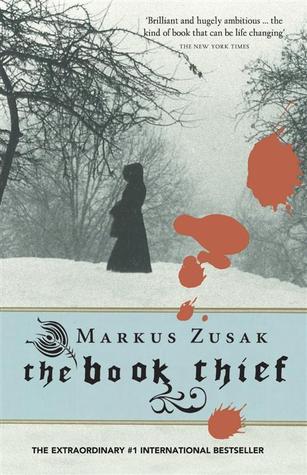
      Markus Zusah, The book thief

      Many authors weighed in, but I’ll just share one other writer quoted by the ASA, Marcus Zusak, whose The book thief I’ve also posted on:

      The announcement of Digital Lending Rights is a great win for Australia’s writers. It’s not just the financial rewards, but the affirmation that our work still matters. Australian stories still matter.

      We have to be a country that loves its own stories, and this is another step in supporting the people who write them.

      “Have to be”? I would like to think we “are”.

      “You are required”

      This DLR announcement was just one small part of the new National Cultural Policy announced today (available online). It is titled “Revive” (which conveys something about the current state of our Arts industries), and is structured around “five interconnected pillars”:

      • First Nations First: Recognising and respecting the crucial place of First Nations stories at the centre of Australia’s arts and culture.
      • A Place for Every Story: Reflecting the breadth of our stories and the contribution of all Australians as the creators of culture.
      • Centrality of the Artist: Supporting the artist as worker and celebrating artists as creators.
      • Strong Cultural Infrastructure: Providing support across the spectrum of institutions which sustain our arts, culture and heritage.
      • Engaging the Audience: Making sure our stories connect with people at home and abroad.

      The policy contains many initiatives across the arts sectors – literature, music, the screen and performing arts, and so on – including a recognition of minimum rates of pay for arts workers, but I’m not going to list them all here, nor critique them. After all, no policy will please everyone.

      Announcing the policy today, Arts Minister Tony Burke said to the arts community, “you are required”. Yes they certainly are … I hope these are not just words, but Burke does have some cred in supporting the arts. Let’s hope this policy provides the kickstart our artists and arts companies need.

      Meanwhile, those of us concerned about the “collecting and exhibiting institutions” – like the National Library of Australia, the National Film and Sound Archive, the National Gallery of Australia, and the National Museum of Australia – are pleased to see them included in the policy, under Pillar 4. The critical issue facing them – a real and serious reduction in their core funding – is not resolved here, but the policy states that:

      There is an ongoing issue with respect to long-term neglect of core funding for the collecting institutions, for both capital and operations. Updated government policy on core funding and sustainability of the institutions does not form part of cultural policy but future funding for Australia’s collecting institutions is being assessed as part of the Budget process.

      We wait with hope … but for now, I applaud this win for our literary creators. It augurs well for a revival of government interest in arts and culture.

      Monday musings on Australian literature: on 1923: 2, The Platypus Series

      My first post in my Monday Musings 1923 series featured an update on the 1880-established NSW Bookstall Company, which, you may remember, focused on supporting Australia’s writers and readers by publishing Australian books and selling them for just one shilling each. In 1923, another publishing initiative appeared on the scene, Angus and Robertson’s Platypus Series.

      This series, though, is a little more complicated. In 1923, as far as I can gather, the books were published by Angus and Robertson under their own imprint. Then, from 1924 to 1929, some, though maybe not all, were published under a different Angus and Robertson imprint, Cornstalk Publishing, before returning to Angus and Robertson in 1930. Through all this, however, it remained the Platypus Series.

      So now, let’s get to 1923, to November in fact, when newspapers started reporting on receiving the first 8 books in a new series of books from Angus and Robertson. They all reported that seven of the books were classics, with the eighth, J.H.M. Abbott’s historical novel, Sydney Cove, being new fiction. The books, at half-a-crown (2/6), were more expensive than Bookstall’s 1 shilling.

      The articles made some other interesting points, prime of which concerned the economics and profitability of publishing. Western Australia’s The Beverley Times, put it particularly clearly:

      The publishers suggest that they [the books] could not have been turned out in Australia had not Henry Ford’s methods been applied to their manufacture by a Sydney firm of printers and binders. “More power to the elbow” for the venture has kept thousands of pounds worth of work in “this country,” and good Australian books which have perforce gone out of print have been made available with more to follow. 

      Most articles reported on the “mass production” used to produce the books, though only some referenced Henry Ford. Some quantified the amount as £10,000.

      Many of the articles, like those writing about the NSW Bookstall Company, commended Angus and Robertson for, as Sydney’s The Sun wrote, “catering for the local market by encouraging the local author”. Some added their own flavour to their description of the series. Victoria’s The Ballarat Star, which described Angus and Robertson as “one of the firms that believes in Australian literature for Australians”, provided its own perspective on the state of Australian literature:

      We are, as a nation, rearing our own literary atmosphere. It is not a hasty progress, but it is in sound lines, and when a firm of the standing of Angus and Robertson, of Sydney, can find that it pays to keep Australia to the front in the matter of the “making of books,” well, there is encouragement for the authors also.

      And I did love The Sydney Stock and Station Journal‘s little admonition to readers, that there are “other volumes in preparation — sixteen promised by next February, so you can’t growl about the high cost of good reading any more”. But, it’s The Sydney Morning Herald which provided the most information about the Series’ overall plans. It advised that “at least 84 volumes are contemplated”, across several categories – “For Boys and Girls,” “Fiction,” Poetry,” and “Miscellaneous” – and concluded that from what they knew “it is clear that anyone who purchases the series will acquire much of the most characteristic literature that Australia has produced”.

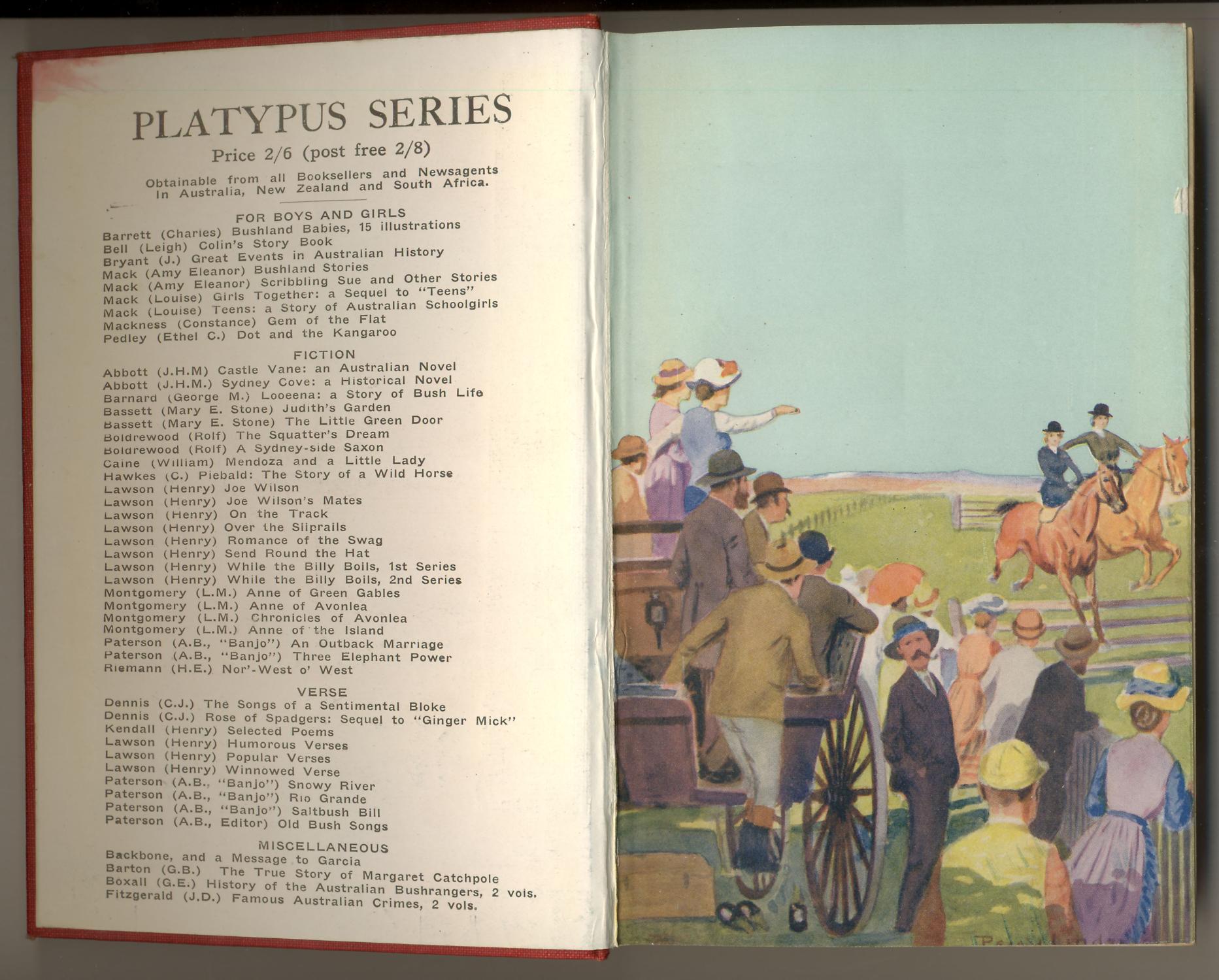
      Platypus Series books, 1923

      The first eight books in the series were published in 1923:

      • J. H. M. Abbott, Sydney Cove
      • Henry Lawson, Joe Wilson 
      • Henry Lawson, Joe Wilson’s mates
      • Amy Eleanor Mack, Bushland stories, stories for children
      • Amy Eleanor Mack, Scribbling bus
      • Louise Mack, Teens: a story of Australian school girls  
      • Louis Mack, Girls together (a sequel to Teens
      • Ethel C. Pedley, Dot and the kangaroo

      Most of the articles discussed the books, but tended to say the same things – whether due to syndication or publisher’s press release, I’m not sure. One of the repeated comments was that the set included “five of the best School Library and Prize books ever written”. That’s a big call. “Ever written” in the world? In Australia? And which were the five? None make it clear. But it sounds good.

      While many of the articles gave a little extra information about the new book, Abbott’s Sydney Cove, The Ballarat Star, cited above, wrote more than most on the other books, saying that the two Henry Lawson’s were ‘fine specimens of what the London “Academy” well termed the “artless art” of Henry Lawson’. It also praises Louise Mack’s two books – both for their writing and for being Australian:

      She makes the Australian school girl really live, and in her two books — Teens and Girls together which is a sequel— any Australian children will revel because it is their own atmosphere free from artificiality, and redolent of the Australian school life, which is so different from that of England or America. One of these days outsiders who try to write school stories of Australia will have to go to Miss Mack and Ethel Turner, and Ethel Pedley and Amy Mack, and many others of our Australian girl writers for Australian atmosphere.

      I love the idea that “outsiders” might want to write Australian school stories, but, regardless, this is lovely praise. It then describes Louise’s sister Amy’s books as “two daintily written kiddie stories, written evidently from the sheer joy of writing”, and says that ‘one of the brightest little things in the Bushland stories is the “Bird’s Alphabet.” It is a lesson inside a story for the author had to drag in the scientific name for the familiar silvereye (“Zosterops”), to complete the Alphabet”. And, it commends Pedley’s Dot and the kangaroo as having a “flavor” of Lewis Carroll, and being “a delicious story of the Australian bush inhabitants and their quaint and wonderful ways”.

      Finally, while several articles commented on the value of publishing Australian authors for Australians, Sydney’s The World News made this very clear when it praised the initiative “for everyone knows it is far less risky to sell British and American books, and much more profitable, than publishing works by Australian authors”. That said, it was apparently in the Platypus Series (in 1924) that Anne Montgomery’s Anne of Green Gables made her first appearance in Australia! Just saying.

      Photo credit: From Rolf Boldrewood’s A Sydney-Side Saxon 1925 (via Abe Books)

      Other posts in the series: 1. Bookstall Co (update)

      Monday musings on Australian literature: First Nations Australia speculative fiction

      This post is my first contribution to Bill’s (The Australian Legend) Australian Women Writers Gen 5 Week 15-22 January. Gen 5 encompasses women who have been writing from the 1990s to now. Bill argues that two major trends characterise this era: “the rise and rise of Indigenous Lit” and “writing which in earlier days would have clearly been SF – but which now is generally characterised as Climate Fic., Dystopian, or less frequently, Fantasy/Surreal/Postmodern.” With this in mind, Bill decided that AWW Gen 5’s focus would SFF – Science Fiction/Fantasy.

      Given Bill observed that First Nations Women are writing in this genre, I have decided, for this post, to combine the two trends. It won’t be comprehensive, but more in the spirit of providing an introduction or overview. Here goes …

      I have seen various terms applied to SF, or what I prefer, though Bill doesn’t, to call Speculative Fiction. Introducing their anthology, Unlimited futures, Ellen van Neerven and Rafeif Ismail speak of Visionary Fiction, which Wikipedia explains is not “science fiction” because it is driven by “new and uncanny experiences (mystical, spiritual and paranormal) in the neural web”. Wikipedia quotes Michael Gurian, who was one of the first to promote the genre on the web. He defines visionary fiction as “fiction in which the expansion of the human mind drives the plot. Where science fiction is characterized by storytelling based in expanded use of science to drive narrative, visionary fiction is characterized by storytelling based in expanded use of mental ability to drive narrative.” So, it may not be traditional SF, but I believe it can be encompassed under the speculative fiction umbrella, particularly as First Nations people see it.

      Claire G Coleman, Terra nullius

      The other main term I want to share, I found in BookRiot, in their 2020 article, “Explore Indigenous Futurisms with these SFF books by Indigenous authors”, by Danika Ellis. Ellis, who also uses the umbrella term, Speculative Fiction, writes that “Indigenous Futurisms” was coined by Dr. Grace Dillon, professor in the Indigenous Nations Studies Program at Portland State University. It was inspired by Afrofuturisms, which explores speculative fiction through an African diaspora lens. Ellis explains that “depictions of Indigenous people in mainstream media has often placed them in a historical context, not recognizing the Indigenous cultures and individuals of today, never mind the future. Indigenous Futurisms imagine Indigenous people into every context: space travel, fantasy worlds, alien invasions, and more.” BookRiot’s list includes Claire G. Coleman’s Terra Nullius (my review) and Ambelin Kwaymullina’s young adult novel The interrogation of Ashala Wolf. Ellis makes the point that:

      Indigenous Futurisms brings a much-needed perspective to a genre that is often uncritically colonial, whether it’s fantasy rooted in Medieval England, or space travel that celebrates conquering new worlds.

      Good one. Not being a reader in this genre, I hadn’t clocked this.

      Meanwhile, closer to home, last June The Conversation ran a review by Yasmine Musharbash of This all come back now: An anthology of First Nations speculative fiction, which was edited by Mykaela Saunders. This anthology, you will have noticed, uses the term Speculative Fiction, and Musharbash accepts this, offering her understanding of the genre:

      In my view, speculative fiction – the narrative exploration of “what-ifs”, the creative probing into latent possibilities, the imaginary voyaging into potential futures – is the genre of our times. We are on the brink of … something. Environmentally, for sure. But also socially, politically, economically. 

      What this something is, when it will happen, how it will shape the future: these are the questions at stake. 

      This all come back now, she says, is the “first Australian anthology of First Nations speculative fiction”. This might be so, but of course First Nations Australians have been writing speculative fiction for some time. Musharbash discusses what characterises this anthology as “First Nations”, and says the first thing is “Country with a capital C, in that very First Nations sense of something utterly fundamental and intimately related to the self, is centrally present across these pages. Many of these stories are fully immersed in Country.” This is not surprising, nor, really is the other recurring element she identifies, humour. I have mentioned before First Nations humour and its particular flavour. Musharbash describes the humour as being cheeky, and often “bitter-funny”.

      First Nations Australia SFF

      I wrote above that First Nations Australians have been writing speculative fiction (SFF) for some time, and I’ve reviewed a little here on my blog, including Coleman’s Terra nullius, and Ellen van Neerven’s “Water” (my post), which is included in This all come back now. Coleman, in fact, is making this space a bit of her own, with two more novels, The old lie (Bill’s review) and Enclave (Bill’s review), published

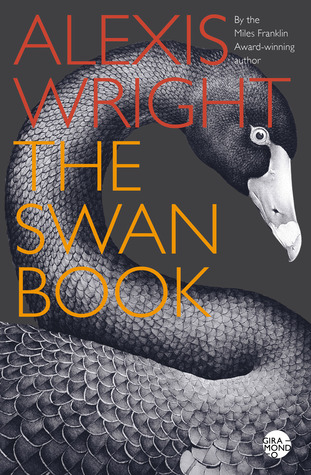
      Book cover

      Before them was Alexis Wright with Carpentaria (my review) and, more obviously, The Swan book (Lisa and Bill). Bill describes this latter as being set “some time in the future after the countries of Europe have been lost in the Climate Wars”. It is still on my TBR.

      However, there are several other writers whom I’ve not read or reviewed (yet) on my blog, like Karen Wyld and Alison Whittaker. Another is Ambelin Kwaymullina, who is best known for her YA speculative fiction series, The Tribe. Six years ago, she wrote a post, titled “Reflecting on Indigenous superheroes, Indigenous Futurisms and the future of diversity in literature on the loveozya blog. She starts with a strong argument about how Indigenous writing has been measured, against Western concepts, and addresses that colonisation aspect I mentioned above. She also addresses the point I have heard Alexis Wright make about “magic”, and takes it further:

      In Australia and elsewhere, Indigenous peoples have also long been able to interact with the world in ways that the West might label as ‘magic’, but this is because the West often defines the real (and hence the possible) differently to the Indigenous cultures of the earth. There are many aspects of Indigenous realities that might be called ‘speculative’ by the West (such as communicating with animals and time travel). There is also much in Western literature that Indigenous peoples regard as fantasy even though it is labeled as fact, including the numerous negative stereotypes and denigrations of Indigenous peoples and culture contained within settler literature. 

      Another good challenge to our worldview. She too references Dillon’s “Indigenous futurisms”, explaining that it describes “a form of storytelling whereby Indigenous peoples use the speculative fiction genre to challenge colonialism and envision Indigenous futures”.

      Kwaymullina argues that there’s a growing Indigenous presence in speculative fiction, including in YA and Children’s fiction, and names some writers – Teagan Chilcott, Tristan Michael Savage, graphic novelist Brenton McKenna, and the young Aboriginal people responsible for NEOMAD (my post).

      So, an exciting time for the genre and for literature in general, but I’ll close here …

      Have you have read any First Nations (anywhere) speculative fiction? If so, care to share?

      Monday musings on Australian literature: on 1923: 1, Bookstall Co. (update)

      Last year I wrote a series of posts about 1922, drawing primarily from Trove. I enjoyed doing it, and have decided to repeat the exercise this year, and perhaps continue annually, to build up a picture of the times. My first 1922 post was about the NSW Bookstall Company which was established in 1880, but which around 1904 began publishing and selling Australian books for one shilling each. When I started my 1923 Trove search, this company featured heavily, so I’ve decided to lead off with an update of it.

      Now, I noted last year, that the company’s longstanding managing director, A.C. Rowlandson, had died that year, but that the company planned to continue. During this year’s research, I found that in 2000 the University of Melbourne’s Baillieu Library put on an exhibition titled “Sensational Tales: Australian Popular Publishing 1850s-1990s”. One of the “tales” concerned the NSW Bookstall Co. They confirmed that the Company had “helped make writing a viable occupation for a generation of Australians, a number of whom – including Norman Lindsay, Vance Palmer and ‘Steele Rudd’ – achieved lasting reputations”. However, they also say that the Company’s publishing program did decline after Rowlandson’s death, and that it issued fewer than 70 titles between 1924 and 1946. By the end of World War II, the Company had “reverted to being a retail distributor of books and magazines”. How much of this decline was due to Rowlandson’s death and how much to changing times, they don’t say, but, from what I’ve read of him, I suspect the former played a role, as Rowlandson was clearly a powerful and inspirational force.

      Anyhow, on with 1923. I plan to share the fiction that I’ve identified as published by them in 1923. What is interesting is not just who the Australian authors were and what they were writing, but what the reviewers and commentators were saying about both the company and the specific books, and what it all reveals about Australia’s literary environment of the time.

      Bookstall Series books, 1923

      Although the University of Melbourne’s exhibition notes the company’s decline, it was still going strong in 1923:

      • Vera Baker, The mystery outlaw (pub. 1920, and 1923)
      • Capel Boake, The Romany mark
      • Dale Collins, Stolen or strayed
      • Arthur Crocker, The great Turon mystery
      • A.R. Falk, The red star
      • J.D. Fitzgerald, Children of the sunlight: stories of Australian circus life
      • Jack McLaren, Fagaloa’s daughter
      • Jack North, A son of the bush
      • Ernest Osborne, The plantation manager
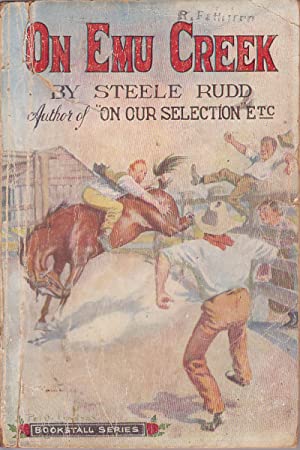
      • Steele Rudd, On Emu Creek
      • Charles E. Sayers, The jumping double: a racing story
      • H.F. Wickham, The Great Western Road

      Most of these authors are male. Indeed, Capel Boake and Vera Baker seem to be the only woman here.

      I found several references for most of the books listed above. Some were not much more than listings, and some seemed to be somewhat repetitive (which could be due to syndication and/or drawing from publisher’s publicity. It’s hard to know without deeper analysis.) However, there was also some more extensive commentary.

      First though, as you can probably tell from the titles, the books tend to be “commercial” or genre books, most of them adventure with some mystery thrown in. One of my 1922 posts focused on the time’s interest in adventure, so I won’t repeat much of that except to say that many of the reviewers/columnists talked about “thrills”, “exciting reading”, fast pacing, and the like. The majority of the novels are set in the bush, reflecting our well-documented ongoing interest in outback stories. But A.R. Falk’s detective novel The red star, is set in Sydney. The Brisbane Courier’s reviewer (23 June) argues that Australian writers hadn’t “developed the field of detective fiction to any extent”, which is interesting given its popularity now. This reviewer praises the book saying that Falk had “written a far better detective story than the majority of those that are imported”. S/he says that “the fight between detectives and a clever gang of thieves and murderers is told in a very convincing manner” and that while “the ending, perhaps, is forced” the story “takes a high place among current detective fiction”.

      That’s higher praise than some of the books received at the hands of our reviewers. J.Penn tended to write a little more analytically. I haven’t been able to identify who J.Penn is, but s/he wrote a new books column in Adelaide’s Observer and Register titled “The Library Table”. S/he generally praised Ernest Osborne’s The plantation manager but did note a weakness at times for ‘making people “talk like a book”‘ (Observer, 5 May) and was critical of Steele Rudd’s On Emu Creek which s/he felt lacked the satirical edge of his Dad works. S/he writes that “Steele Rudd is firmly convinced that his readers will find sufficient fun in the mere fact of some one being humiliated or hurt, without the author’s having to worry to hunt for words” (Register, 19 May). The Murray Pioneer and Australian River Record (3 August) described On Emu Creek as humorous but qualified this with “the reader may be pardoned if he fails to see in the more recent books the same rich vein of humor that characterised the earlier chronicles of the Rudd family” while The Age (5 May) was gentler, calling it “an agreeable story, without any affectation of style, and containing points of humor”

      Penn described (Register, 21 April) Dale Collins’ Stolen or strayed as ‘a “shilling shocker” of modern Australia’. Set mostly on the Murray, “it is,” writes Penn “a joyous yarn, and, as generally happens nowadays, the literary style is more than worthy of the tale it unfolds”. Interestingly, though, Collins’ book generated more disagreement than most. The Queenslander (12 May) was less impressed, saying that “neither the workmanship nor the characterisation show any especial ability” and The Sun (22 April) said that “It is a story just good enough, so far as construction is concerned, to lead one to hope that the author will do much better some day.”

      Overall, several reviewers commented along the lines of Perth’s Western Mail (26 April) reviewer, who said, regarding Stolen or strayed and The planation manager, that “both books will no doubt be read with avidity by those who care for stories of this kind”. This is fair enough given these readers were Bookstall’s target market.

      Now, some quick observations, before closing. I was interested that some reviewers seemed to give the whole plot away, which we don’t see now. Also, I’ve not (yet) been able to identify several of the authors, but a few were also journalists – like Dale Collins and Jack North – and some used pseudonyms, like Capel Boake about whom I’ve written before.

      Finally, despite what seemed to be qualified praise for many of the books, it’s clear that the endeavour was valued for providing a career for Australian writers and illustrators at a time when they struggled to get published. And, as Hobart’s Mercury (18 August) wrote

      Beyond question, they are more than worth the money, the thing most prejudicial to their success being the gaudy “Deadwood Dick” types of covers in which they appear.

      Trove (et al) under threat

      You all know how much I rely on Trove. Back in 2016 I wrote a post in support of it when its survival was threatened. Well, it’s under threat again, and Lisa posted on it today. She references an(other) article in The Conversation that addresses not only the situation for the National Library of Australia and Trove, but other significant national cultural institutions like the National Film and Sound Archive and the National Gallery of Australia. These services and institutions are the lifeblood of academics, writers, journalists and other researchers (professional and general). Their role is to acquire, preserve and make available our heritage. They are not dispensable. They are essential.

      Monday musings on Australian literature: Some New Releases in 2023

      Maintaining tradition, my first Monday Musings of the year once again focuses on “new releases”. As before, it is primarily drawn from the Sydney Morning Herald. Jane Sullivan and the team do a wonderful job of surveying publishers large and small, but I have added a couple of my own! Also, as this is Monday musings on Australian literature post, my focus is Australian authors in areas of interest or relevance to me. Click on the SMH link to see the full list, which includes non-Aussies, Aussies I haven’t selected, plus additional info about many of the books.

      As usually happens, some books listed here were listed last year but, for some reason, were not published on schedule.

      Links on the authors’ names are to my posts on those authors.

      Fiction

      I have read a very small number from last year’s list, but a few more are on my TBR and will be read this year. (Indeed, one is almost finished right now!) Here’s this year’s selection:

      • Kim E. Anderson, Prize (Pantera Press, April)
      • Tony BirchWomen and children (UQP, November)
      • Stephanie Bishop, The anniversary (Hachette, April)
      • Benjamin Stevenson, Everyone on this train is a suspect (Penguin Random House or PRH, October)
      • Trent Dalton, untitled (Fourth Estate, October).
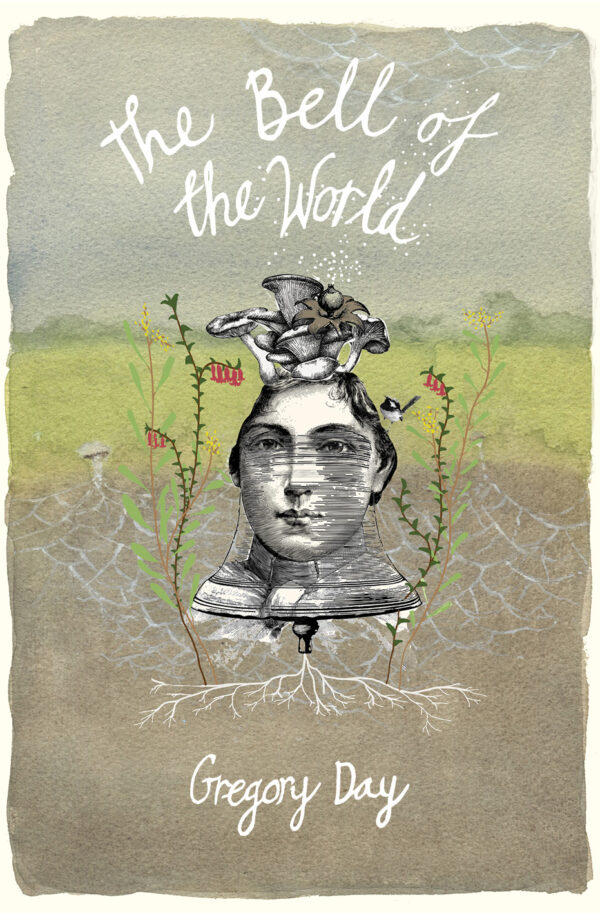
      • Gregory Day, The bell of the world (Transit Lounge, March)
      • Robert Gott, Naked ambition (Scribe, May)
      • Kate GrenvilleAlways greener (Text, July)
      • Toni Jordan, Prettier if she smiled more (Hachette, April)
      • Leah Kaminsky, Doll’s eye (PRH, September)
      • Melissa LucashenkoEdenglassie (UQP, October)
      • Catherine McKinnon, The great time (Fourth Estate, August)
      • Rachel Matthews, Never look desperate (Transit Lounge, September)
      • Drusilla Modjeska, Ways of being (PRH, November)
      • Kate Morton, Homecoming(A&U, April)
      • Graeme SimsionCreative differences (Text, January) 
      • Tracy Sorensen, The vitals (Picador, second half 2023)
      • Christos Tsiolkas, The in-betweens (A&U, November)
      • Pip Williams, The bookbinder of Jericho (Affirm, April)
      • Chris WomersleyOrdinary gods and monsters (Picador, second half 2023)
      • Alexis Wright, Praiseworthy (Giramondo, April) 
      • Emma Young, The disorganisation of Celia Stone (Fremantle, September) 

      SMH lists many books under Crimes and Thrillers, but this is not my area of expertise. So, I’m going to leave you to check SMH’s link if you are interested, and just bring a couple to your attention. They tell us that “the ever-popular small town with dark secrets plot gets a good work-out” in:

      • Lucy Campbell, Lowbridge (Ultimo, July); 
      • Nikki Mottram, Crows Nest (UQP, February)

      I mention them because UQP and Ultimo are worthwhile independent publishers. Dervla McTiernan has another book coming out, and there’s more, as I said, if you are interested.

      SMH also lists Debut Australian fiction, including some the result of “heated auctions” and some winners of manuscript prizes:

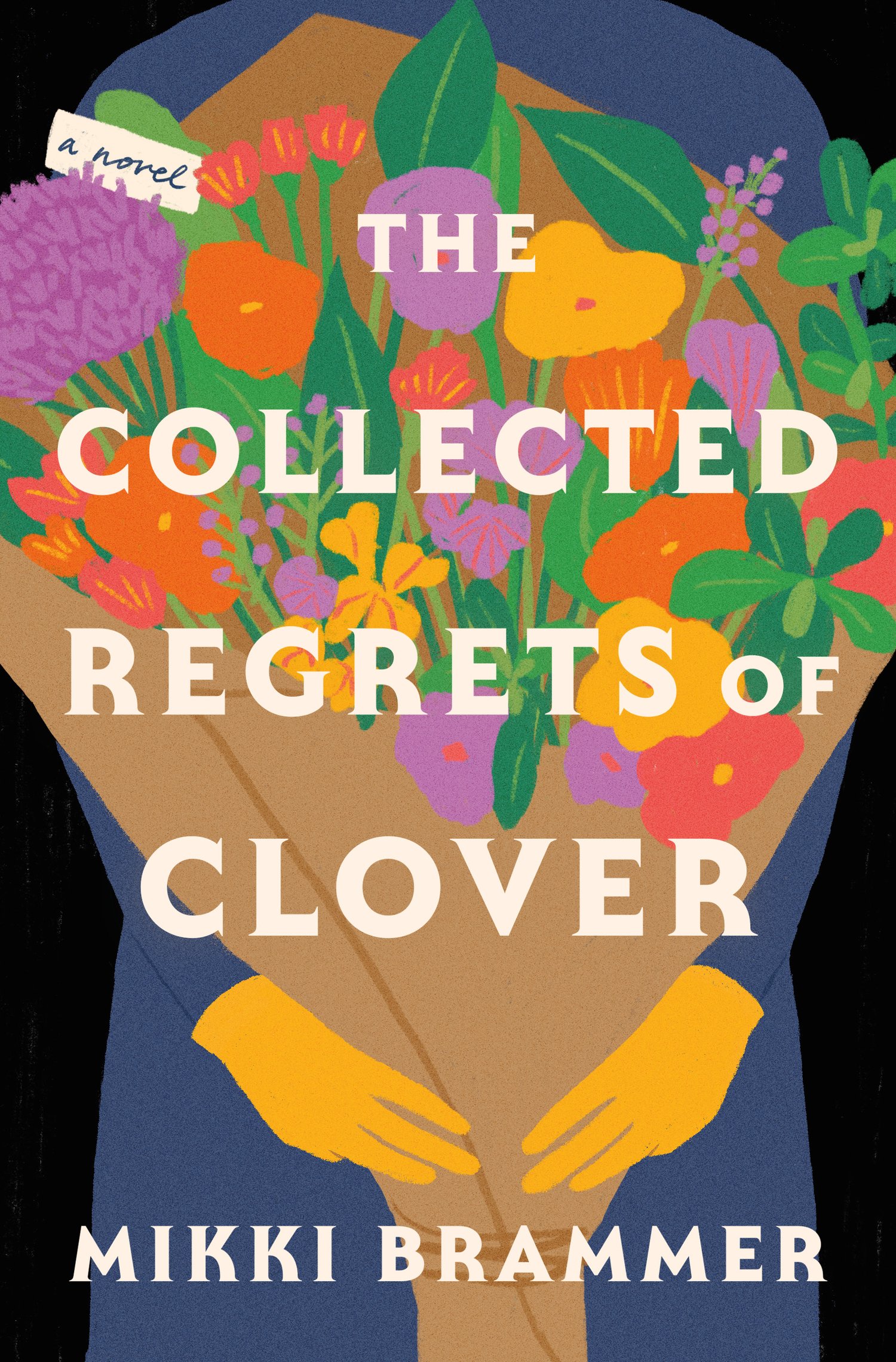
      • Mikki Brammer, The collected regrets of Clover (Viking, May): sold in 23 countries
      • Andre Dao, Anam (PRH, May): won the Victorian Premier’s fiction award for an unpublished manuscript 
      • Pip Finkemeyer, Sad girl novel (Ultimo, October)
      • Annette Higgs, On a bright hillside in paradise (PRH, July): won the 2022 Penguin literary prize
      • Megan Rogers, The heart is a Star (Fourth Estate, May)
      • Molly Schmidt, Salt River Road (Fremantle, November): won the City of Fremantle Hungerford prize
      • Aisling Smith, After the rain (Hachette, May), won the Richell prize
      • Michael Thompson, How to be remembered (A&U, March)
      • Dianne Yarwood, The wakes (Hachette, March)

      Short stories

      • Carmel Bird‘Love letter to Lola’: Eighteen stories and an author’s reflection (Spineless Wonders, May)
      • J.M. CoetzeeThe Pole and other stories (Text, July) 
      • David Cohen, The terrible event (Transit Lounge, June).
      • Laura Jean McKay, Gunflower (Scribe, October)

      Non-fiction

      SMH includes a wide range of new non-fiction books, so this is just a selection.

      Life-writing (loosely defined, and selected to those focused mainly on the arts and activism)

      • Belinda Alexandra, Emboldened (Affirm, April): novelist on some women who saved her after she ran from home in terror
      • Ryan Cropp, The life of Donald Horne (Black Inc, August): biography
      • Robyn Davidson, Unfinished woman (Bloomsbury, October): Tracks author’s memoir
      • Marele Day, Reckless (Ultimo, May): novelist’s memoir about her long friendship with an international fugitive 
      • Helen Elliott, Eleven letters to you (Text, May): journalist/critic on her younger years
      • Deborah Fitzgerald, In search of Dorothea (Simon & Schuster, August): biography of Dorothea Mackellar
      • Martin Flanagan, untitled (PRH, no date): journalist’s memoir on his time at a Catholic boarding school
      • Anna Funder, Wifedom (PRH, July): biography of Eileen Orwell, George Orwell’s ignored-by-biographers wife
      • Louise Hansen, Smashing serendipity (Fremantle Press, February): Binjareb Nyoongar woman’s story of her fight against violence and racism
      • Susan Johnson, Aphrodite’s Island (A&U, May): novelist on a year with her mother on the Greek island of Kythera
      • Krissy Kneen, Fat girl dancing (Text, May): third in her memoir series
      • Sarah Krasnostein, On Peter Carey (Black Inc, June): from Writers on Writers series
      • Matthew Lamb, Frank Moorhouse: A Discontinuous Life (PRH, December): biography of Moorhouse, proponent of the “discontinuous narrative” 
      • Frances Peters Little, Jimmy Little: A Yorta Yorta man (Hardie Grant, April): daughter on her First Nations’ musician father
      • Priya Nadesalingam with Rebekah Holt, Back to Biloela (A&U, October): on the refugee family’s ordeal on Christmas Island and final return to Biloela
      • Sam Neill, Did I ever tell you this? (Text, March): actor’s memoir
      • Matt Preston, Big mouth (PRH, November): billed as “a rock’n’roll memoir of death, guns and the occasional scandal”.
      • Jeanne Ryckmans, Trust: A fractured fable (Upswell, August): memoir and detective story 
      • Emmett Stinson, Murnane (MUP, August): biography of Gerald Murnane

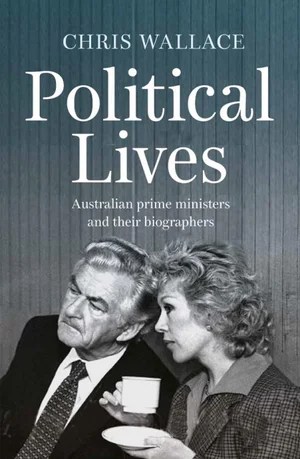
      SMH also lists biographies and memoirs on/by politicians but, again, I’m taking a break from parliamentary politics, so check SMH’s link, if you are interested. However, I will note that journalist Chris Wallace’s Political lives (NewSouth, February) is based on her interviews with all living 20th-century Australian prime ministers and their biographers. That second part increases its interest for me.

      There are also two whistleblower stories coming out: Bernard Collaery’s The trial: Defending East Timor (MUP, late 2023) on being prosecuted, with “Witness K”, by the federal government for allegedly breaching the Intelligence Services Act, and David McBride’s The nature of honour (PRH, no date) on his facing prosecution for exposing alleged war crimes.

      History and other non-fiction (esp. racism, sexism, environmental issues)

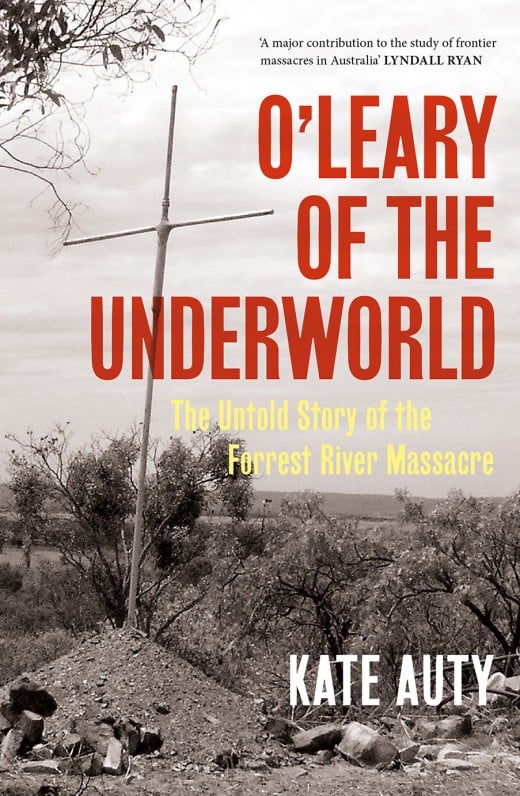
      • Kate Auty, O’Leary of the Underworld (Black Inc, February): examines a massacre
      • Victor Briggs, Seafaring (Magabala, April): history, with First Nations perspective
      • Chanel Contos, untitled (Macmillan, no date): “a radical rethinking of what yes means when it comes to sex”. 
      • Megan Davis, Quarterly Essay On the Uluru Statement from the Heart (Black Inc, June): First Nations
      • Osman Faruqi, The Racist Country (PRH, August): racism
      • Clementine Ford, I don’t (A&U, October): challenges accepted ideas about marriage
      • Stan GrantThe Queen is dead (Fourth Estate, May): “pull-no-punches” look at colonialism, the monarchy and its bitter legacy for First Nations Australians
      • David Marr, A family business (Black Inc, October): history, First Nations focused
      • Shireen Morris and Damien Freeman (ed.), Statements from the Soul (Black Inc, February): First Nations issue
      • Lucia Osborne-Crowley, Maxwell (A&U, second half of 2023): on Ghislaine Maxwell’s trial and its implications for reparative justice
      • Grace Tame and Michael Bradley, Cancelled (Hardie Grant, September): on cancel culture.
      • Ellen van NeervenPersonal score (UQP, May): racism
      • Penny van Oosterzee, Cloud Land (A&U, February): on the tropical rainforest of northern Queensland
      • Justyn Walsh, Eating the earth (UQP, July): “an incisive celebration and a critique of modern capitalism”
      • Dave Witty, In search of lost trees (Monash University Publishing, May): meditation on nature

      Poetry

      Finally, for poetry lovers, here’s what they list, but there are more if you go to the relevant publisher websites:

      • Stuart Barnes, Like to the Lark (Upswell, February)
      • Bonny Cassidy, Monument, (Giramondo, October)
      • Amy Crutchfield, The Cyprian (Giramondo, September): 2020 winner of the Gwen Harwood Poetry Prize,
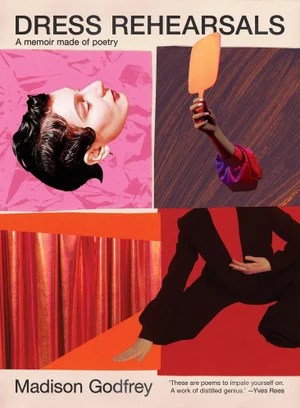
      • Madison Godfrey, Dress rehearsals (A&U, March): verse memoir about “a decade of performing womanhood in a non-binary body”
      • John Kinsella, Cellnight (Transit Lounge, April): verse novel
      • John Kinsella, Harsh Hakea (UWA Publishing, February): collected poems, volume 2
      • Kate Larsen, Public.Open.Space (Fremantle, July): debut collection after a decade working as an insta poet
      • David McCooey’s The book of falling (Upswell, February)
      • Kate Middleton, Television (Giramondo, October)
      • S.J. Norman, Blood from a stone (UQP, November): verse memoir about the legacy of violence towards women
      • PiO The dirty t-shirt tour (Giramondo, August): verse account of a US poetry tour
      • Omar Sakr, Non-essential work (UQP, April)

      And, one final surprise – we do expect to see the winner of Finlay Lloyd’s 20/40 Prize in November. That could be anything – but whatever it is, it is sure to be worth waiting for.

      Anything here interest you?

      Monday musings on Australian literature: Australian Women Writers Challenge 2022

      For around 10 years I devoted my last Monday Musings of the year to the Australian Women Writers Challenge, which most of you will remember was instigated by Elizabeth Lhuede in 2012 in response to concerns in Australian literary circles about the lack of recognition for women writers. As I explained last year, it would be changing tack in 2022 to focus on past and often under-recognised or overlooked women writers, from the 19th- and 20th-centuries. By the end of the last year, we felt that much of what we had aimed for in the original challenge had been achieved, with women writers seeming to be well-established on Australia’s literary scene, at least by observable measures. We hope that holds, as there have been regressions in the past. Just compare the impressive visibility of Aussie women writers in the 1920s and 30s with a couple of decades later. For now, though, things are looking positive.

      So, 2022 started with a new team overseeing this new phase, Elizabeth, Bill, and me. Our plan was to publish articles and reviews about earlier writers, and publish their actual writings – in full or excerpt form, as appropriate – in order to promote what we knew to be Australia’s rich heritage of Australian women’s writing. I’m not going to do a full rundown of the year’s achievements because Elizabeth will be doing an end-of-year round up on the site in January, but I do want to share a little about what we’ve achieved …

      What happened in 2022

      We have managed to post twice a week: articles and reviews on Wednesdays, and actual writings, related where possible to the previous Wednesday’s post, on Fridays. Bill took on the job of commissioning editor and has done a wonderful job of finding guest posters to fill the spare weekly slots. Elizabeth, who was keen from the start to bring actual writings to the fore, has scheduled all the Friday posts and worked on enhancing the Stories from Online Archives pages. In addition to writing my monthly Wednesday post, as all three of us have done, I have taken a quieter role in the background, including contributing to discussions about guest posts, and our policies and practices, and helping with various behind-the-scenes tasks like Trove editing to support postings.

      We made it to the end of the year, with a decent following in tow. Our stats have dropped significantly from the old challenge days, but we expected that with our narrower focus. While it is always encouraging to have readers, we see the main value of what we are doing to be long-term. In bringing past and lesser-known writers into the light, we not only ensure that they are visible and more easily found by people who are looking for them, but we’d like to think that this visibility will inspire, encourage and facilitate further research into Australia’s literary heritage. We have had at least one academic express gratitude for the help the site has provided her in her research. Music to our ears.

      Our Wednesday posts have been an eclectic mix. Rather than impose structure – thematic, chronological, whatever – on our posting schedule, we decided to let the posters choose their topic. This made it easier for Bill to lock in guest posters, because he could give them free rein depending on their relevant interests, and resulted in a variety of posts which (hopefully) appealed to our readers. To see what we posted, just head over to the site – with only two postings a week, there are not too many to scroll through.

      For now, I’ll briefly summarise what we three have done in particular.

      Elizabeth has focused particularly on lost writers, on those women who have all but disappeared from view. She has not only brought them into the light, but has solved a few mysteries along the way. For example, who was R McKay Tully? Male or female? Elizabeth worked it out. Or Netta Walker? A woman yes, but what’s in a name? Again, sleuth Elizabeth was on the case. The thing is that Elizabeth’s posts provide useful insights into the research process as well as into the writers she unearths.

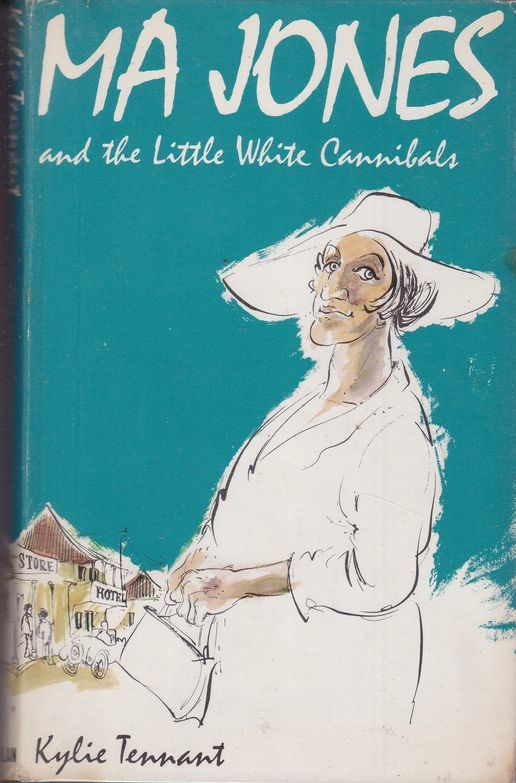
      Bill, on the other hand has tended to write reviews – with a little biography thrown in – of authors he’s been keen to explore more, besides his beloved Miles Franklin, like Kylie Tennant (Ma Jones and the little white cannibals), Rosa Praed (The bond of wedlock), and Ada Cambridge (A mere chance). All are authors I’ve read but wish to read more.

      I started the year by posting on selected primary and secondary sources for research into Australian women writers, and then moved into posts on specific writers, many of them edited or enhanced versions of posts I’ve written here. These included posts on juvenilia, the poet Eliza Hamilton Dunlop, and journalist-botanist-author Louisa Atkinson.

      We have also had some wonderfully generous guest posters who accepted Bill’s call to delve into history for us – bloggers Jonathan Shaw and Brona from Australia, Emma from France and Marcie McCauley from Canada; published authors Jessica White, Michelle Scott Tucker, Debbie Robson and Nathan Hobby; and academics and historians Stacey Roberts and Linda Emery. We are hugely grateful to them.

      And so, 2023

      Although the blog is not generating a lot of traffic, Elizabeth, Bill and I believe it is serving the purpose we identified, and so have decided to continue in 2023. We would love, though, to hear if you have ideas for posts, or would like to offer a post yourself, or have any other suggestions.

      Meanwhile, I have enjoyed the year, because of our subject-matter and because Bill and Elizabeth have been so easy to work with. There’s something special about working with others on a shared goal … so roll on 2023. We are ready.