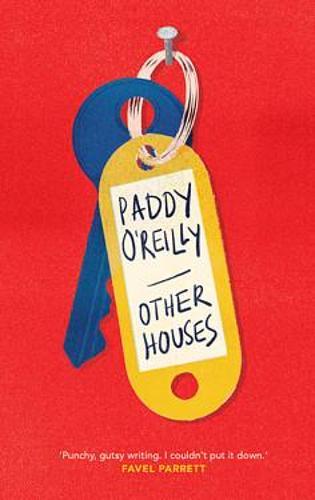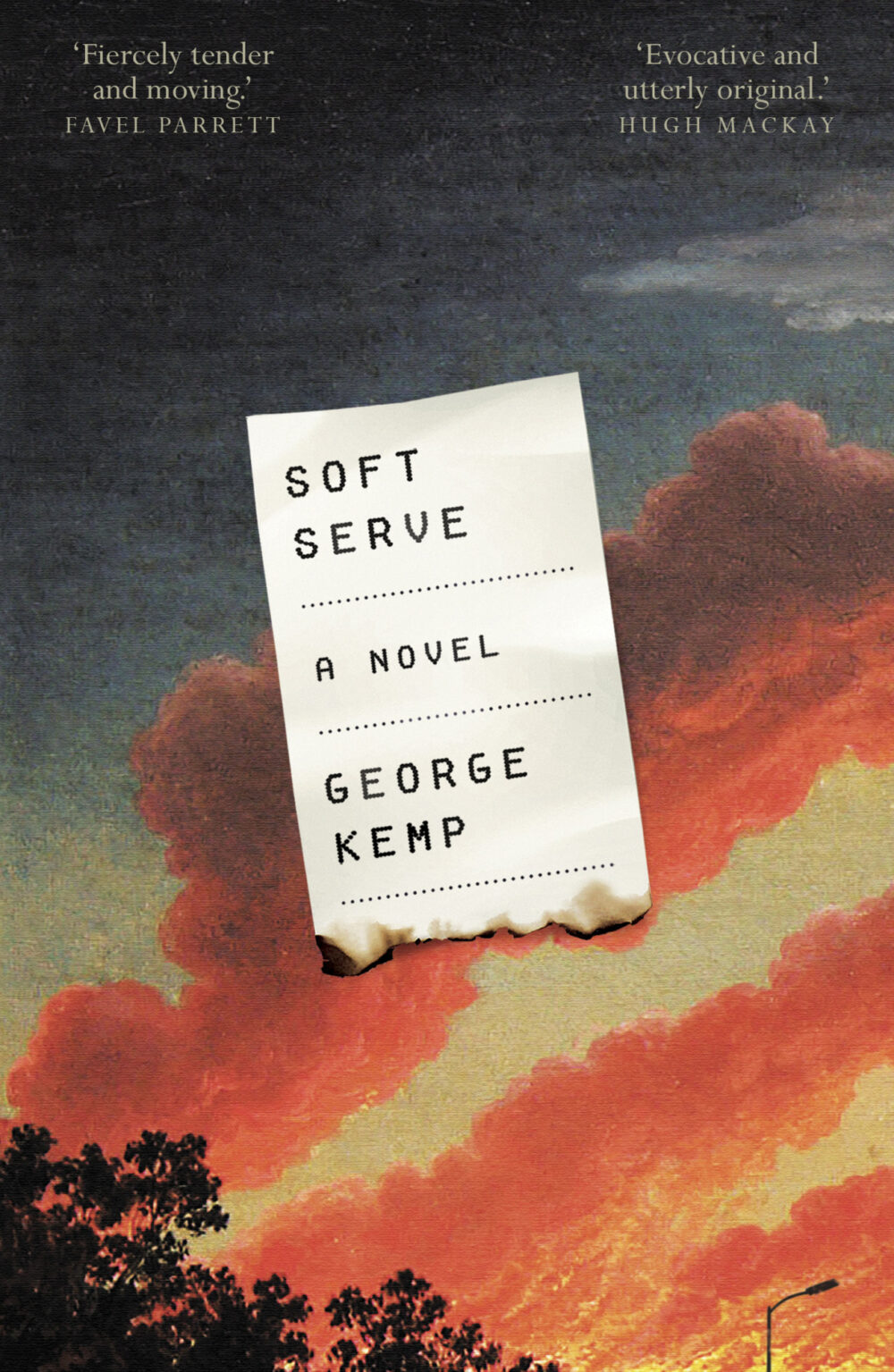
Brona (This Reading Life) recently announced her main reading project for next year, Reading Nonfiction 2026, in which she plans to read 24 nonfiction books from her TBR. She has written a few posts on the project, including on two nonfiction categories on her TBR shelves, Australian Lit Bios and Environment, Climate and Travel. If you are looking for some good Aussie nonfiction – perhaps to get ahead of the game for Nonfiction November 2026 – these posts would be a good place to start.
While I also have nonfiction books on my TBR shelves, including some in the categories above, particularly the Lit Bio one, I thought I would share here some books from another “genre”, that described as creative or narrative or even literary nonfiction. As I have written before, including in my Supporting Genres post back in 2021, it generally refers to nonfiction writing that uses some of the techniques of fiction, particularly, but not only, in terms of narrative style. Wikipedia defines it as “a genre of writing that uses literary styles and techniques to create factually accurate narratives.” This is a good enough description (I’ll use “description” that rather than “definition”) for me to use here.
I do enjoy nonfiction, including history of all sorts but particularly social history, autobiography and biography, travel, science, and more, but the form which this writing takes can make a difference and, being a lover of fiction, creative nonfiction is my preferred form. As is my wont and as I explained in that 2021 post, I define it broadly, so I won’t repeat all that here. Instead, I’ll just list a few that are on my TBR right now that fill the bill.
Interestingly, several of them come from Upswell Publishing which, as publisher Terri-ann White says on her About page, publishes “books that elude easy categorising and work somewhat against the grain of current trends. They are books that may have trouble finding a home in the contemporary Australian publishing sector.” They are, in fact, the sorts of books that tend to fall into the creative nonfiction basket. Other publishers who publish in this area include Transit Lounge, Text Publishing, and, although small in output, Finlay Lloyd. Interestingly too, these books are often, but certainly not always, written by writers of fiction.
So, here is a somewhat eclectic and random list of recent books from my TBR. I have ascribed some sort of “form” to them, but because, by definition, they are hard to categorise, these descriptors are loose, even those that don’t look like they are:
Anne-Marie Condé, The prime minister’s potato and other essays (Upswell, 2025, sociocultural studies)
Gregory Day, Words are eagles (Upswell, 2022, landscape writing)
Abbas El-Zein, Bullets, paper, rock: A memoir of words and wars (Upswell, 2024, memoir)
Helen Garner, Chloe Hooper and Sarah Krasnostein, The mushroom tapes (Text, 2025, true crime)
Kim Kelly, Touched (Finlay Lloyd, 2025, memoir, review coming soon)
Belinda Probert, Imaginative possession: Learning to live in the Antipodes (Upswell, 2021, memoir/place writing)
Susan Varga, Hard joy: Life and writing (Upswell, 2022, memoir)
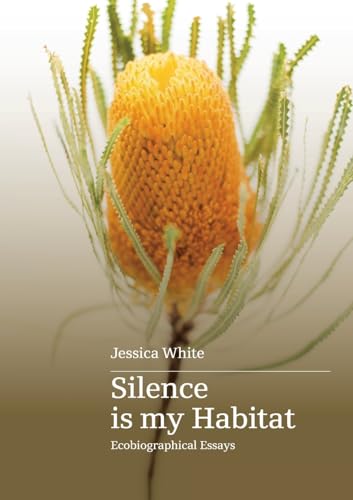
Jessica White, Silence is my habitat (Upswell, 2025, ecobiographical writing)
What do you think about creative (or whatever you prefer to call it) nonfiction?
A week or so ago, I saw a post by Cathy (746 Books) that she was taking part in a Doorstoppers in December reading event. My first thought was that December is the last month I would commit to reading doorstoppers. In fact, my reading group agrees that doorstopper month is January, our Southern Hemisphere summer holiday month. That’s the only month we willingly schedule a long book. My second thought was that I call these books “big baggy monsters”. But, that’s not complimentary I know – and I do like many big books. Also, it’s not alliterative, which is almost de rigueur for these blog reading challenges.
Anyhow, I will not be taking active part, but it seemed like a good opportunity for a Monday Musings. I’ll start with definitions because, of course, definition is an essential component of any challenge. The challenge has been initiated by Laura Tisdall, so she has defined the term for the participants. (Although, readers are an anarchic lot and can also make up their own rules! We wouldn’t have it any other way, would we?) Here is what she says:
Genre conventions vary so much. For litfic, for example, which tends to run shorter, I can see anything over 350 pages qualifying as a doorstopper, whereas in epic fantasy, 400 pages would probably be bog standard. Let’s say it has to at least hit the 350-page mark – and we encourage taking on those real 500-page or 600-page + behemoths
I love her recognition that what is a doorstopper isn’t absolute, that it does depend on the conventions or expectations of different forms or genres. I will focus on the literary fiction end of the spectrum but I think 350 pages is a bit short, particularly if I want to narrow the field a bit, so I’m going to set my target for this post at 450 pages. I am also going to limit my selected list to fiction published this century (albeit the challenge, itself, is not limited to fiction.)
However, I will commence with a little nod to doorstoppers our past. The nineteenth century was the century of big baggy monsters, even in Australia. And “baggy” is the right word for some, due partly to the fact that many were initially published in newspapers as serials, so they tended to, let me say, ramble a bit to keep people interested over the long haul. Dickens is the obvious example of a writer of big digressive books.
In 19th century Australia, publishing was just getting going so the pickings are fewer, but there’s Marcus Clarke’s 1874 His natural life (later For the term of his natural life). Pagination varies widely with edition, but let’s average it to 500pp. Catherine Martin’s 1890 An Australian girl is around 470pp. Rolf Boldrewood’s Robbery under arms runs between 400 and 450pp in most editions, while Caroline Leakey’s 1859 The broad arrow is shorter, with editions averaging around 400pp.
By the 20th century, Australian publishing was growing. Like Leakey’s novel, Joseph Furphy/Tom Collins’ 1903 Such is life is shorter, averaging 400pp (Bill’s final post). Henry Handel Richardson’s 1930 The fortunes of Richard Mahony, depending on the edition, comes in around the 950pp mark. Of course, it was initially published as three separate, and therefore relatively short, volumes but the doorstopper edition is the one I first knew in my family home. Throughout the century many doorstoppers hit the bookstands, including books by Christina Stead in the 1930s and 40s, Xavier Herbert from the 1930s to the 1970s (when his doorstopper extraordinaire, Poor fellow my country was published), Patrick White from the 1950s to late in his career, and on to writers like Pater Carey whose second novel, 1985’s Illywhacker, was 600 pages. He went on to publish more big novels through the late 20th and into the 21st century.
Selected 21st Century Doorstoppers
The list below draws from novels I’ve read from this century. In cases where I’ve read more than one doorstopper from that author, I’ve just chosen one.
Peter Carey, Parrot and Olivier in America (2009, 464pp, my review)
Trent Dalton, Boy swallows universe (2018, 474pp, my review)
Michelle de Kretser, Questions of travel (2012, 517pp, my review)
Sara Dowse, As the lonely fly (2017, 480pp, my review)
Richard Flanagan, The narrow road to the deep north (2013, 466pp, my review)
Elliot Perlman, The street sweeper (2011, 626pp, my review)
Wendy Scarfe, Hunger town (2014, 456pp, my review)
Steve Toltz, A fraction of a whole (2008, 561pp, my review)
Christos Tsiolkas, The slap (2008, 485pp, my review)
Tim Winton, Dirt music (2001, 465pp, read before blogging)
Alexis Wright, Carpentaria (2006, 526pp, my review)
There are many more but this is a start. They include historical and contemporary fiction. Many offer grand sweeps, while some, like Scarfe’s Hunger town, are tightly focused. The grand sweep – mostly across and/or place – is of course not unusual in doorstoppers. A few are comic or satiric in tone, like Carey’s Parrot and Olivier in America, while others are serious, and sometimes quite dark. The authors include First Nations Alexis Wright and some of migrant background. And, male writers outweigh the females. Perhaps it’s in proportion to the male-female publication ratio? I don’t have the statistics to prove or disprove this. Most of these authors have written many books, not all of which are big, meaning the form has followed the function!
Are you planning to take part in Doorstoppers in December? And, if you are, what are you planning to read?Regardless, how do doorstoppers fit into your reading practice?
Another post in my Monday Musings subseries called Trove Treasures, in which I share stories or comments, serious or funny, that I come across during my Trove travels.
Today’s story is longer than those I have mostly shared, but given it’s an annual recap of 1945, exactly 80 years ago, I’ve decided to share it. The article, “What we read in 1945” (29 December 1945), was written by Ian Mair* who may have been The Argus’ Literary Editor at the time, given his was the byline for the Argus’ Weekend Magazine Literary Supplement.
The first part of the article contains the titles of books by Australian writers – across various forms, including novels, short stories, poetry, and essays – published in Australia in 1945. Before these, however, he says this:
What must surely be from all reports the most important book of the year by an Australian, Christina Stead’s For love alone [my review], published in America, has been out some months, yet has not been seen in Australia, and is not likely to be seen here for some months yet.
Harumph. Indeed, he introduces his article with the comment that it had been an “odd” year for the Australian book world because importers had been “unable to get anything like the numbers required of the books they have ordered” and instead, “have had to half-fill their shops with whatever material of second rate interest the English trade cared to send them”. Nonetheless, trade had boomed, and Australian publishers and printers had “prospered”.
Do read the article yourself if you are interested, as I’m just going to share some of the authors and titles he names, and some of the issues he raises.
1946 Cheshire ed.
So, he makes a big call saying that “the most beautiful piece of Australian writing of the year”, in book form, was Alan Marshall’s nonfiction These are my people. Marshall was 42 when it was published, and it seems to have been his first book. Despite some reservations, Mair says that “it will very likely be still read years hence, and not only because it is the first book of a young writer who is obviously going places”. Well, Australians will know that Marshall did indeed go places, with his 1955 autobiography, I can jump puddles, becoming an Australian classic.
Mair also names two other nonfiction works as making “the two most important contributions to our literature” for “the light they throw on the Australian scene, and the different ways we have reacted to it imaginatively”. They are Sid Baker’s The Australian language, which is “more than philological” and is “by a true writer”, and Bernard Smith’s history of Australian art titled Place, taste and tradition. It is ‘less “literary” in feeling’ but offers new ideas “that everywhere illuminate Australian literature and life”.
All well and good, but I am more interested in fiction. After mentioning Marshall’s nonfiction work, he names James Aldridge’s war novel The sea eagle. It won, in 1945, the John Llewellyn Rhys Prize, which I’d never heard of, but was a British Commonwealth Prize that lasted from 1942 to 2010. Anyhow, Mair says it was a second book, and “still full of promise”, but less original than Marshall’s book. Mair felt it was too influenced by Hemingway. Its “prose and outlook are mannered … But Aldridge himself can imagine and write; he only needs time off to inspect the behaviour of people in general (not just soldiers), under less fantastic circumstances than those that environ his stories”. He was prolific, if Wikipedia is anything to go by.
I found this interesting but, reading on, I came across authors we Australian literature lovers know better. He says:
A year in which Katharine Susannah Prichard,Norman Lindsay, and Elinor [Eleanor] Dark put out novels should have been good.
Should? He was disappointed, describing them all as “deficient in basic thinking out”:
1944 Angus and Robertson ed.
Miss Prichard’s Potch and Colour (Prichard biographer, Nathan Hobby’s review) fell between her professions that they were either legend or simple slabs of life. Lindsay’s Cousin from Fiji worked over his favourite theme of flaming youth among puritans in a way that added nothing to it – and in literature if you don’t go forward you go back. Mrs. Dark’s Little company (Marcie’s review) was a tremendously solemn, vague argument that might be going on to this day for all the book showed.
I did like his point that “in literature, if you don’t go forward you go back”. Anyhow, fortunately for Mair, it was a good year for short stories – including Douglas Stewart’s collection Girl with the red hair – and for poetry. I should clarify that Prichard’s Potch and colour was also a short story collection.
Mair names more books, including essays, books of criticism, and biography, which you can read about in the article! I want to end on some comments he made about publishing in general. He says:
… considering the number of books bought during a year when money was plentiful, and so many consumers’ foods were scarce, Australian authors didn’t make much hay.
The problem was that the Australian market was small “for an author who really puts work into his [of course] writing”, but if Australian authors publish overseas – like Stead, for example – their books don’t reach their “fellow Australians at all” or reaches them “very late”. He names other authors, besides Stead, who publish overseas, like Henry Handel Richardson, Eleanor Dark and Kylie Tennant.
He says that “American publishers have surrendered the whole Australian market to the English book trade” and that English publishers are only interested in publishing an Australian book if “it will also sell reasonably well in England”. The end result is that “it is quite on the cards that an Australian novel published in what may well be as things are, its best possible market, that is, the United States, will not reach Australia at all”. If, however, an author does publish first in Australia, chances are American publishers will shy away, because it is no longer new – and it is “almost certain that an English publisher will reject it”. Catch 22 eh?
Some of this plight, he says, was being discussed by the Tariff Board, booksellers, publishers, and authors themselves. But, he moved on to his next point, which concerned something authors and publishers could do to potentially ‘improve matters”. This was, like Australia’s “exporters of tinned goods”, to “package things a bit better”. He said:
Australian dust-jackets, bindings, lay-outs, type faces, and printing are – generally speaking – awful. Dust-jackets are almost always completely without character, and usually in hideous colours. Even our most experienced publishers usually contrive to ruin the binding of a book with either ugly lettering on the spine, dirty use of gold-leaf, or even the title repeated in the front cover. And so on.
And this wasn’t all. He turned to the editing. Authors could write good or bad books, but no-one, he says, speaking to authors, would take them seriously if their “proofs are badly read” or their “grammar is rocky”, if they repeat themselves “unnecessarily”, or if they waste their adjectives on the first paragraph of the first page. A good publishing house should fix these – or,
in every capital city there are a number of newspaper sub-editors, able men, who could “clean up” and “tighten” many a book by a high-ranking Australian author or authoress in such a way that, though we may be ashamed of what in our books appears as lack of culture, we need no longer blush for our sheer illiteracy. I recommend this for all books, even for those morally-offensive pretentious ones of which there have been a few this year.
Moral delinquency is an awful spectacle indeed at any time; it is doubly so when it has egg on its chin.
He didn’t pull his punches, our Mr Mair. This article was, it turned out, a little treasure.
What say you?
* According to AustLit, Ian Mair (1907-1993) was a “librarian, lecturer, writer and critic”.
Of all the forgotten writers I’ve researched, Edna Davies proved by far the most difficult. Even AustLit had nothing on her besides a list of a few works, but she intrigued me so I soldiered on. This post, like most of my recent Forgotten Writers posts, a revision, with a little bit of added information, of the one I posted there.
Edna Davies
So, for my AWW post I started at the end, where we get some facts. Her death was reported on 26 December 1952 in the Family Notices section of The Pioneer (from Yorketown, South Australia). It said she was 56 years old, which suggests she was born in 1896. The notice gives her name as Edna Irene, identifies her parents, and names her siblings as Daisy, Keith and Jack (deceased).
There are two other entries for her in the newspaper in December. On 12 December, a brief article announced that ‘Miss Edna Davies, “Pioneer” representative and correspondent, has been absent for some weeks because of ill health, and is at present in hospital, where she may have to spend some time yet’. They identify someone who will gather news, and add that “until Miss Davies’ return to Minlaton, advertisements, or payment of accounts, should be sent direct to the Pioneer Office”, which suggests she had an administrative role. They conclude this announcement, by saying that ‘The weekly feature “Comments on the News” (Written by Miss Davies) will, we regret, have to be temporarily suspended”, which confirms her writing contribution.
Press and Radio Correspondent Dies Yorke Peninsula generally will feel the loss of Miss Edna Davies, of Minlaton who died in an Adelaide Hospital on Monday. Miss Davies, whose name is particularly familiar to readers of “The Pioneer,” has served many years as Southern and Central Yorke Peninsula’s chief correspondent for radio stations, provincial and metropolitan newspapers. People in many Peninsula towns will miss the friendly weekly phone calls she used to make in her search for news about the doings of local organisations and people. Her articles, as well as her Peninsula news items, have been of great value and interest, and we join her brother and sister and our readers in mourning her sudden demise.
So, it’s likely that she was born in Minlaton, central Yorke Peninsula, which is about 30 kms north of Yorketown, the home of her employer The Pioneer. Indeed, on 20 March 1926, a brief article appeared in The Pioneer, headed “Minlaton. Farewell to Miss Edna Davies”. The article describes an event that was held at the Minlaton Institute “to bid farewell to Miss Edna Davies and Mr. Jack Davies” (presumably the brother mentioned in the death notice.) They were leaving for London. (Indeed, according to Adelaide’s The Register, they left on 20 March). There were “eulogistic addresses” and “a useful cheque” was handed to Miss Davies. What does this tell us? Not a lot, but we can glean some information. She was around 30 years old, and seemingly not married. She was known in the community, at least enough for her departure to be reported on, albeit social news was more common at the time. It also tells us – from the headline – that it was she, not her brother, who was most known.
Since writing my AWW post, I have done more research, and have discovered something about why she was known in the community. For example, Adelaide’s Observer (3 November 1923), writing on the Central Yorke’s Peninsula Agricultural Society’s annual show, observed that “the show committee provided the dinner … under the able management of Miss Edna Davies … Things worked smoothly in this department”. The article also praises the work of the Society’s secretary, Mr D.M.S. Davies, Edna’s father.
Anyhow, back to her chronology, three months after the report of her going to London, Moonta’s The People’s Weekly(12 June 1926) writes about the Minlaton Literary Society’s fourth annual musical and elocutionary competitions, advising that entries go to “secretary (Miss Edna Davies)”. This must have been a clerical error because, from the many newspaper reports under her by-line – and headed “Travel” or “Our London Letter” – it’s clear that she was in England by June 1926, then through 1927 and probably into early 1928. It’s possible that some of the articles dated later in 1928 were written back home.
Certainly, on 31 May 1929, there is a report in The Pioneer of the Minlaton Institute Literary Society’s seventh annual musical and elocutionary competitions and once again entries were to go to secretary Edna Davies. She probably was back on the job then. From this time, there are more articles, stories and columns – including her “Comments on the News” – by her South Australian papers. Together they build up a picture of who she was, and what she thought about life – local, national and international.
One that captured my attention was written from England, and published in The Pioneer on 6 January 1928. She starts by saying she hadn’t been doing much sightseeing so was “short of material” for her London Letter. So, she writes about some reading she’s doing about Australia, including a book by Mr Fraser. From what she says, I believe the book was Australia: The making of a nation (1911/12) by Scottish travel writer John Foster Fraser. Chapter 19 is tilted “A White Australia”. Fraser, a man of his times, understands the desire for a “white Australia”, but asks this:
What will Australian people say when the question is put to them, “As you are not developing this region [the great uninhabited north], what right have you to prohibit other people from developing it? It was not your land in the first instance. You obtained it by conquest that was peaceful. What can you do to resist conquest by force of arms? Who are you to say to the world, Let other peoples crowd together and be hungry owing to congestion of population, live cramped and struggling lives, but we, although doing practically nothing to develop our own resources, do not want anybody else to come in and develop the resources of a part of the world not given to us but given to the human race?'”
Davies is taken with this question and asks, “Have we all studied the pros and cons of the question carefully, so that should it be wanted, we can without hesitation give a carefully thought out decision after viewing the question from all sides. Looking back through history we see that no nation has ever come into, or held its own, without fighting for it, so why should we be an exception”. Her thinking – and Foster’s thinking – is not our thinking, but that she took the issue up and was published tells us something about her and the times. Neither of course consider that “little” line of Foster’s that “It was not your land in the first instance”.
READING about a press conference Mr. Menzies had recently in London this thought struck me — “What much wider outlook British pressmen seem to have than do their colleagues in Australia.” And that’s a bad thing for Australia. Because if pressmen haven’t a wide outlook how can the public, who depend on them for news of the outside world, be expected to have one.
She slates it to the “old problem” of Australia’s geographic isolation, suggesting that “we are so isolated from other places that it it [sic] hard to realise that their welfare and their doings are important to us”.
AustLit lists 5 stories by her, and AWW lists 12 short stories in Stories from online archives (11 from the 1930s and 1 from the 1940s), but these are just a few of many short stories by her that were published in South Australian newspapers, and The Bulletin. I shared one of The Bulletin stories in my AWW post. Titled “Scrub”, it’s perfect “Bulletin-fare”, with its story of a woman who cannot get over a childhood nightmarish experience in the bush, and an intriguing take on lost-child-in-the-bush tradition in Australian culture.
Edna Davies turned out to be another example of an independent woman who seems to have made a career for herself in journalism and writing.
Sources
Edna Davies, “Scrub“, The Bulletin, Vol. 56 No. 2906 (23 Oct 1935)
Back in 2019, the Canberra Writers Festival sent subscribers a report on the event. I don’t think they’ve done so since, which is a shame, as I loved reading (and writing about) it. This year, thanks to Colin Steele, who runs the ANU/Meet-the-Author series, I was able to see a report on the Festival that was published in the paywalled Books+Publishing*.
The report included some stats:
the festival recorded more than 10,000 audience attendees, an increase of 55% on the 2024 festival.
the 5-day program included 114 events, of which 50 sold out and 24 reached 75% of audience capacity.
CWF also presented its inaugural schools program, and a Kids and YA day which featured writers like Andy Griffiths, Jack Heath, and Craig Silvey. These were apparently successful enough that they see opportunities “to further develop programs for younger audiences”. Excellent, eh?
Books+Publishing quoted CWF festival director Andra Putnis, as saying:
“The Canberra Writers Festival continues to grow because it connects people through story – whether they’re exploring global issues and politics or their love of literature, poetry, crime, memoir or page-turning fiction. This year’s record numbers show that Canberrans have an appetite for joyful and challenging conversations…
Gathering to listen to each other’s stories is what art and humanity are all about, and this year Canberra truly showed up for it. We really can’t thank enough all the international, interstate and local artists that came together to truly shine and share their work.”
I did not attend most of the big note sessions, such as those featuring Trent Dalton and Heather Rose. Time available, cost and the inevitable clashes all affect decision-making. And I really wanted to attend some of what sounded to be meatier sessions, like Reckoning, Our worlds, our way, and Poems of love and rage (see my posts linked below).
For me, it was an excellent Festival. When, in 2016, Canberra “got” a writers festival again, many of us fiction readers were frustrated that fiction did not feature highly in the program. Gradually, and particularly through Beejay Silcox’s time as Artistic Director, the balance shifted, resulting in far more sessions feeding those of us who aren’t only interested in history, memoir, and crime written by journalists (all of which are fine, I hasten to add! It’s the balance that was frustrating, not the individual works and their authors.) This year, this balance continued, and I felt spoilt for choice, which brings me to…
The main challenge of this Festival, for festival-goers anyhow. I have written about this before – and it is probably not an uncommon issue – but it’s the geographic spread of venues, across both sides of the lake. This is largely because the venues are sponsored, and who turns down a sponsor? The Festival does a good job of theming the different locations, which helps, but choices still have to be made. My practice is to choose a venue for a day on the basis of one or two events I really want to attend and then plan my bookings around that. Last year, that meant one day at one location, and the other day at another. This year it meant both days at the same location. For those who did some venue-hopping, it was, luckily, a good weekend weather-wise.
A few more facts
The National Library of Australia Bookshop, which was one of the participating booksellers, reported their Top Ten sales during the Festival. These sales presumably drew mostly from those sessions held at the Library so may not reflect the Top Ten sold throughout the Festival’s multiple venues, but we all like lists don’t we:
Trent Dalton, Gravity let me go (Fourth Estate)
Heather Rose, A great act of love (A&U)
Garry Disher, Mischance Creek (Text, bought for Mr Gums for Christmas – don’t worry, he knows!)
Kathleen Folbigg and Tracy Chapman, Inside Out (Penguin)
Devoney Looser, Wild for Austen (Ultimo, bought an e-version so mine won’t have counted here)
Lev Grossman, The bright sword (Penguin)
Rachael Johns, The lucky sisters (Penguin)
As you can see, I didn’t contribute much to this list, but I did buy some other books including Evelyn Araluen’s The rot, and some as gifts (so my lips are sealed). I already had some books relating to sessions I attended, including Darren Rix and Craig Cormick’s Wirra Wirra Wai and Susan Wyndham’s Elizabeth Harrower: The woman in the watchtower.
Back in 2019, I listed my posts in their order of popularity (that is, by number of hits), so I thought I’d do that again:
Reckoning (with Craig Cormick, Paul Daley, Kate Grenville)
(Tied) ACT Book of the Year (with Andra Putnis, Qin Qin, Darren Rix and Craig Cormick) AND Our Worlds, Our Way (with Evelyn Araluen, Lisa Fuller, and Jasmin McGaughey)
The posts ranked from 3rd to 6th were closely bunched, with the top and second ranked posts well out in front and somewhat separated from each other. You can tell something about my readers though, when you see that the crime-related session was my least popular post, while its participant Disher’s book (and Looser’s) were the only ones to make the Top Ten from the sessions I attended.
In conclusion …
Whatever the reason – programming, the weather, the truly engaged volunteers, and/or the fact that the cafe at my venue (the Library) stayed open for longer this year – there was a real buzz at this year’s festival. It was a joy to attend – and, I came away with some new insights and things to think about.
* This post draws partly from the Books+Publishing report (with the agreement of the Canberra Writers Festival).
I first came across Tarella Daskein back in 2021 when Bill (The Australian Legend) wrote a post about her as the result of her coming up in discussions and reading about Katharine Susannah Prichard. She then slipped my mind until a couple of months ago when I was searching around for a subject for my Australian Women Writers post that month. This post, like most of my recent Forgotten Writers posts, s a minor revision of the one I posted there.
Tarella Daskein
As with many of the lesser-known writers we research for this blog, Tarella Daskein (1877-1945) was somewhat challenging to pin down. It’s not that she wasn’t known. Indeed, Wikipedia and AustLit both have entries for her. However, there were conflicting details of her life. For example, both Wikipedia and AustLit had her death date as 1934, which was curious because Adelaide’s The Advertiser reported on her visiting that city in June 1935. How could that be? Further, The Advertiser also had her husband as Mr. T.S. Daskein while Wikipedia and other newspaper articles had him as Mr. T.M. Daskein. Compounding all this was her use of multiple names, including some confusion over her maiden name. The above-mentioned Advertiser, for example, reported it as Quinn. AustLit, however, resolved this by noting at the end of its entry that her name had been incorrectly spelled as ‘Quinn’ in Miller and Macartney’s Australian Literature: A Bibliography (1956). The death date issue was clarified by, strangely, Wikipedia’s article on her father, Edward Quin, which gave her death as 1945 and cited a newspaper notice as evidence. And a death notice for her husband confirms him as T.M. not T.S.
So, with all that resolved, who was this Tarella Daskein? Tarella Ruth Quin was born in Wilcannia, second daughter to pastoralist and one-time member of the New South Wales Legislature, Edwin Quin, in 1877. She is best known as a writer of children’s stories, but also wrote three adult novels – A desert rose (1912), Kerno (1914) and Paying guests (1917) – and many short stories which were published in contemporary newspapers and magazines. AustLit provides a good outline of her origins. She was one of eight children. Her father owned a dairy farm called ‘The Leasowes’, near Victoria’s Fern Tree Gully, and a sheep station called ‘Tarella’, after which she was named, in far western New South Wales near Wilcannia. ‘Ella’, as she was known, was educated in Adelaide, but spent most of her life on stations. She married Thomas Mickle Daskein, part proprietor of a station in far northwest NSW.
AustLit says that her first writing comprised short sketches of station life, which were published under the pseudonym “James Adare” in the Pastoral Review. At the editor’s suggestion, she also wrote some stories for children, which she sent to Ethel Turner, hoping to have them published in Sydney newspapers. However, Turner apparently recommended they be published as books. Her first book, Gum Tree Brownie, was published in 1910, with illustrations by Ida Rentoul whom Ella’s younger sister, Hazel, knew at school. This began a long partnership between the two, with Ida Rentoul Outhwaite illustrating many of her books for children. Wilde et al say she was “one of Australia’s most successful writers of fairy-stories for children” and that “humour, irony, a fluent, dramatic style and fantasy reminiscent of Lewis Carroll enliven her stories”.
Bill, as mentioned above, came across her, initially in Katharine Susannah Prichard’s autobiography, Child of the hurricane. Apparently, Prichard was governess for a year at Tarella Station in 1905, by which time Tarella, who was six years older than KSP, was already a published author. Prichard, says Bill, is “pretty dismissive” of Quin’s writing.
However, not all were. Several contemporary reviewers praised her adult novels, often singling out Kerno: A stone for special mention. On 10 April 1915, Adelaide’s Observer wrote:
Kerno, although similar in some respects, is nevertheless distinctly different from A Desert Rose. The latter is a novel – the former is a study – a keen analysis of human feelings and desires. One cannot well peruse the book without thinking deeply, and wondering what one would have done in circumstances like those in which the leading actors found themselves placed. Young people and those having a preference for light ephemeral literature may be inclined to consider the story rather tame; but all who have a true appreciation for human nature, and endeavour to probe into its many and varied qualities, will find in it compelling and absorbing interest.
Those who praise Kerno mostly praise it for its “real” characters and deep understanding of human nature. Indeed, the Observer says that it “richly deserves to rank among the best truly Australian novels”. Daskein was also praised for her understanding of and ability to convey life in the bush and, as the Observer says, for her “descriptive writing which … captivates the reader”.
Notwithstanding all this, Quin mostly wrote for children, with The Australian Women’s Weekly claiming, after the publication of Chimney Town in 1936, that
She has published more ambitious volumes, but her tales for children have a unique charm that makes one feel that this is her real metier.
Quin’s publishing career lasted from around 1907 to the mid-1930s, so it was no flash in the pan. AustLit lists over 20 works by her, but this may not be all. Regardless, she was well-known to readers of her time, and, according to Adelaide’s The Rouseabout, had some presence in literary circles, including being “a foundation member of the Melbourne centre of the P.E.N. Club and a constant attendant at its meetings”. She died on 22 October 1945, at a private hospital in Melbourne. The fact that I found little mention of this beyond The Rouseabout’s short article suggests that in the last decade of her life – after the death of her husband in 1937 – she faded from view.
The piece, “The camel”, which I chose for AWW, was published in The Bulletin’s Christmas issue in 1935. It shows a writer a writer who knows the outback, knows how to entertain her audience, and, who firmly belongs to the bush tradition. Life is tough, but our woman protagonist is resourceful.
Sources
Bill Holloway, “Tarella Down a Rabbit Hole“, The Australian Legend (blog), 16 December 2021 [Accessed: 9 November 2025] The Rouseabout, “In Town and Out“, The Herald, 12 November 1945 [Accessed: 16 August 2025] Tarella Quin, AustLit [Accessed: 16 August 2025] Tarella Quin, Wikipedia [Accessed: 16 August 2025] William H. Wilde, Joy Hooton and Barry Andrews, The Oxford companion to Australian literature. Melbourne, Oxford University Press, 2nd, edition, 1994
During the year, John McKellar (1881-1966) gave lectures on topics relating to literature and labour or the working class. On February 12, a newspaper titled Labor Call advised that at the February 17 meeting of the Malvern Branch of the ALP, Mr McKellar would speak on “Literature: Its relation to working class progress.” I didn’t know John McKellar but he has an entry in the ANU’s Labour Australia site. He was an “engineer, trade union official, editor and author”. He unsuccessfully stood for Labor in both state and federal elections and was associated with the Jindyworobak movement which focused on promoting Australian culture. He published books of essays, and historical articles, including one on a Gippsland-based Christian Socialist commune. His political and cultural interests are clear.
Anyhow, on June 11, this Labor Call wrote on another address given by Mr J. McKellar to the ALP’s Port Melbourne branch:
The lecturer prefaced his remarks by instancing the deep and lasting pleasure to be gained from the cultivation of the love of books. He spoke of the wonderful wealth of literature in the English language, and said that a feature of modern literature was that it got closer to the lives of the people.
He said writers like Bernard Shaw, H. G. Wells, and G. K. Chesterton “held the mirror of life by their works”, and recommended other works, including The Communist manifesto. But, reported the paper, he also said that
Too little appreciation was shown for our own Australian writers. One of the planks of the Australian Labor Party declared for the cultivation of an Australian sentiment. This was not, he stated, to be taken only in a political sense. The cultivation of an Australian sentiment was equally the work of Australia’s literary men.
And he apparently named some who had done just this, including Fernlea Maurice (actually Furnley!), R. H. Long, and Vance Palmer. (R.H. Long does appear in the Australian Dictionary of Biography. It says he wrote “wrote topical verse, prompted to do homage to Nature and to denounce capitalism …”)
A few days later, on June 17, The Australian Worker reported on the same lecture. They also wrote of his comments on the lack of appreciation for Australian writers, and on the fact that one of the ALP’s planks was “the cultivation of an Australian sentiment”. They continued:
He might have added that, generally speaking, Australian writers have to go to London for an audience that will appreciate — and pay for — their songs and stories of the land that froze them out.
Ouch!
Australian literature and art in schools
Quite coincidentally, the topic of teaching Australian literature in schools that came up in my 1925 Trove research also came up, briefly, in comments on a #Six Degrees post this weekend – on host Kate’s (booksaremyfavouriteandbest) post, in fact. She linked to David Malouf’s Ransom because one of her children had studied it at school this year (as they had, the American starting book, Shirley Jackson’s We have always lived in the castle). Rose (RoseReadsNovels) chimed in saying her children had, in the past, read another Australian novel for school, Melina Marchetta’s Looking for Alibrandi. I remember being disappointed when my children were in Year 11 and 12 that there was little if any contemporary (or any) Australian literature in their curricula.
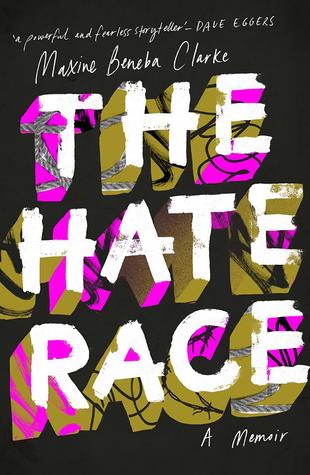
The inclusion of Australian books in school curricula was also mentioned, in passing, in a Canberra Writers Festival session I attended – Poems of Love and Rage – with both Evelyn Araluen and Maxine Beneba Clarke mentioning that their books, Dropbear (my review) and The hate race (my review), were taught in schools. I love that recent Australian books speaking to current lives and issues are being taught. I know it’s neither easy nor cheap for schools to teach recent books, but I believe it is important.
This is not, of course, a new issue. It was discussed in the newspapers in late 1925 – on December 17 in Sydney’s Evening News (briefly) and The Sydney Morning Herald, and on December 18 in Newcastle Morning Herald and Miners’ Advocate (not then part of the SMH group) – after members of the Australian Journalists’ Association (AJA) had met with Mr Mutch, the Minister for Education. They argued that “to foster a pure Australian sentiment” there needed to be “an increased study in the schools of Australian literature and art”.
The best definition of “pure Australian sentiment” came from the critic A.G. Stephens, who, said the SMH, declared that “our literature was the mirror of our lives, and naturally we desired to see reflected in it our own country, lives, and characteristics.” He argued, wrote the SMH, that it was better “for children to read of gum-trees and their 400 varieties than of oak and fir trees” but that children were only learning “scraps of Australian literature, the lives, personalities, and ideals of the writers”.
The AJA also said that “the Australian author and artist were not getting a fair show in their own country”. They wanted the Department to work towards a “proportion at least 50 per cent” of Australian works in the schools. The Minister, a political being of course, disagreed with some of their condemnation but generally agreed with their sentiment! However, he said that “The department suffered from a constant financial malnutrition, and the purchase of Australian books was restricted on this account”. (The NMH&MA described the money issue as “a chronic state of financial stringency”.) Then he offered them another tack. They could
also arrange with the grand council of the Parents and Citizens’ Association that at least half of the prizes purchased for distribution at the end of the year should be Australian-made.
Nothing like passing the buck! But, not a bad suggestion all the same. The Evening News had its own suggestion. It argued that “if Australian literature were used largely in the examination papers, it would be taught as a matter of course in all the schools” and suggested that rather than approach the Minister, the delegation approach the University! I presume examinations were set by the University at that time.
Once again it’s Karen’s (Kaggsy’s Bookish Rambling) and Simon’s (Stuck in a Book) “Year Club” week. This week, it is 1925, and it runs from today, 20 to 26 October. As for the last 8 clubs, I am devoting my Monday Musings to the week.
The 1920s were wild years, at least in the Western World. The First World War was over, and neither the Depression nor Second World War were on the horizon. It was a time of excess for many, of the flappers, of
A brief 1925 literary recap
Books were, naturally, published across all forms, but my focus is Australian fiction, so here is a selection of novels published in 1925:
Martin Boyd (as Martin Mills): Love gods
Dale Collins, The haven: A chronicle
Erle Cox, Out of the silence
Zora Cross, The lute-girl of Rainyvale : A story of love, mystery, and adventure in North Queensland
Carlton Dawe, Love: the conqueror
Carlton Dawe, The way of a maid
C.J. de Garis, The victories of failure
W. M. Fleming, Where eagles build
Nat Gould, Riding to orders
Jack McLaren, Spear-eye
Henry Handel Richardson, The way home (the second book in the The Fortunes of Richard Mahony trilogy)
M. L. Skinner, Black swans: Rara avis in terris nigroque simillima cygno
E. V. Timms, The hills of hate
Ethel Turner, The ungardeners
E. L. Grant Watson, Daimon
Arthur Wright, The boy from Bullarah
EV Timms had a long career. Indeed, he also appeared in my 1952 Year Club list. Zora Cross has reappeared in recent decades due to renewed interest in Australia woman writers. Both Bill and I have written about M.L. (Mollie) Skinner, a Western Australian writer who came to the attention of D.H. Lawrence. And then of course there are those writers – Martin Boyd, Henry Handel Richardson and Ethel Turner – who have never “disappeared” from discussions about Australia’s literary heritage.
While my focus here is fiction, it’s worth noting that many of Australia’s still recognised poets published this year, including Mary Gilmore, Henry Lawson, Dorothea Mackellar, Furnley Maurice and John Shaw Neilson.
The only well-recognised novelist I could find who was born this year was Thea Astley.
The state of the art
As for previous club years, I checked Trove to see what newspapers were saying about Australian fiction. Because 1925 is a century ago, I had already started researching the year for the little Monday Musings Century ago subseries I started in 2022. So far, I have written just one post on 1925. It focused on two literary societies which were active at the time, the Australian Literature Society and Australian Institute of the Arts and Literature, so I won’t repeat that here.
I found a few interesting tidbits to share, including, in a couple of newspapers, a brief report of a talk given to Melbourne’s Legacy Club by local bookseller, C. H. Peters, manager for Robertson and Mullens. He reported that the English publisher, John Murray the Fourth, said
that the Australian consumption of fiction was enormous, compared with the English market, and that, making allowances for differences in population, the Australian read five novels to every one read by the Englishman.
Some of the other items of interest I found were …
On a cult classic?
One of the surprising – to me – finds during my Trove search was the book Out of the silence by Erle Cox. It was, says The Argus (9 October) and the Sydney Morning Herald (28 November), first published in serial form around 1919, but there were many requests for it to be available in book form, which happened in 1925. The story concerns the discovery of a gigantic, buried sphere, which contains the accumulated knowledge of an ancient civilisation. The Argus’ reviewer says that the sphere’s aim “was to exemplify the perfection attained in a long past era and to assist the human race of the time of discovery towards similar perfection”, with the finder being helped in this goal by the “dazzling Earani”, a survivor of that civilisation.
The reviews at the time were positive. The Argus says that “the story is carried on with much ability”, while The Age (17 October) describes it as “brilliantly conceived and charmingly written … original and weird, maybe a little far-fetched”. Edward A. Vidler writes for the Sydney Morning Herald that “Mr. Cox is to be congratulated on a story of rare interest, which holds the attention from beginning to end”.
It has been republished more than once since 1925, including in other countries. For example, in 1976, it was republished in a series called “Classics of Science Fiction” in 1976, by Hyperion Press, and in 2014 an ePub version was published “with an Historical Afterword by Ron Miller”, who featured it in his “The Conquest of Space Book Series.” The promo for this edition describes it as “the classic lost race novel” in which a pair of amateur archaeologists “inadvertantly revive Earani, the survivor of an ancient race of superbeings”. But this is not all. It was also adapted for radio, and turned into a comic strip. You can read all this on Erle Cox’s Wikipedia page.
On reviewing
I enjoy seeing how reviewers of a different time went about their business. Some reviews in this era – the 1920s – tell the whole story of the novel, and do little else. Others, though, try to grapple with the book, finding positives as well as negatives, and sometimes discussing the reason for their criticisms.
Reviews for Dale Collins’s island adventure The haven are a good example. It seems that Collins had decided to have the main character – the male protagonist – tell his story. The reviewer in The Age (31 October) didn’t feel it worked, writing that Collins
repeats the experiment of blending psychology and sensation which he caried out so successfully in ‘Ordeal.’ It is a very clever and original story, but the reader who wants sensation will find there is too much psychology in it; and the reader who is interested in psychological studies will discover that the author has handicapped himself by making the central figure tell the story. As a result the psychology becomes monotonous …
The Argus (6 November) on the other hand was positive about the technique of Mark telling his own story:
Mr Collins has skilfully worked out the effect of the situation on each one of his characters, but especially on that of Mark, who reveals himself through a diary of their life on the island … The author has set himself a very difficult task in the carrying out of which he has been remarkably successful.
The reviewer in The Age (25 July) – the same one? – was disappointed in Zora Cross’s The lute-girl of Rainyvale, seemingly because of its supernatural subject matter concerning Chinese vases and curses, after the quality of her previous novel Daughters of the Seven Mile, but ended on:
The story has some vivid descriptive writing, which serves to emphasise that Zora Cross’s real gifts are wasted on fiction of this character.
Mollie Skinner’s Black swans was reviewed twice in the same column in The Age (12 September) with slightly different assessments. The first writes that it is “a very readable story founded on historical events in the convict days of Western Australia” and goes on to say that she had collaborated with D. H. Lawrence on The boy in the bush but that “her unaided work is preferable”. The review concludes that Skinner had “drawn her picture strongly and produced a good novel”.
Later in the same column, the reviewer (presumably a different one?) references Skinner’s work with Lawrence and then says of this new book that the story begins in Western Australia’s Crown colony days of 1849. Skinner “sends her childish heroine and hero on adventures amongst blacks and Malays, in company with an escaped convict” then “takes them to England for the social and love interest”. The reviewer concludes that
Miss Skinner writes well, with a special anxiety to set down striking phrases and epigrams. To quote a common, phrase, she is more interesting than convincing.
Hmm … there’s a sense between the lines here that the story doesn’t hang together, but that Skinner, like Cross, has some writing skills.
As for Henry Handel Richardson, although her novel came out in mid-1925, I found only a couple of brief references to it. Martin Mills (Martin Boyd), on the other hand, fared better with some quite detailed discussions, including in the West Australian (4 July). The reviewer explored it within the context of being part of a rising interest in the “religious novel” and ended with:
Love Gods, with its old story of the unending conflict between the Pagan deities and the restraining influences of Christianity, is a novel of unusual insight, and most uncommon power of literary expression.
There’s more but I’ve probably tired us all out by now! I will post again on this year.
Back in August, I wrote the first post in my Monday Musings sub-series on Quiet Achievers in Australia’s literary landscapes, meaning people like publishers, for example. My first post was on Terri-ann White from Upswell Publishing.
Of course, most of these people aren’t really Quiet Achievers. Those in the industry will know them, often well. However, for the general reading public, people in the industry are not necessarily well-known, hence this new little sub-series.
Barry Scott (Transit Lounge)
I have read and reviewed many books published by Transit Lounge over the years because they publish the sorts of books and authors I like. According to Wikipedia, Transit Lounge was founded in Melbourne in 2005 – 20 twenty years ago – by two librarians Barry Scott and Tess Rice. It is an independent Australian literary small press, which publishes literary fiction, narrative and trade non-fiction. Its focus is to “show the diversity of Australian culture”. Their website says they are
dedicated to the publication of exciting new fiction and non-fiction. Our tastes are broad and encompass literary fiction and upmarket genre writing such as psychological thrillers. We have a particular interest in creative literary publishing that explores the relationships between East and West and entertains and promotes insights into diverse cultures.
As far as I can tell, Scott works full-time on the press, while artist and photographer Rice works part-time. In 2018, Scott was interviewed by Books+Publishing, and said their books:
go in search of the outsider, the marginalised, the immigrant, the different or the disappearing. We are always searching for what seems beautiful, unique, true, and isn’t afraid to push beyond the current zeitgeist in terms of themes or genre tweaking.
And, they have been successful in doing so. AS Patrić won the Miles Franklin Award in 2016 for his immigrant story, Black rock white city (my review), and Jane Rawson’s “genre-tweaking” From the wreck (Bill’s review), won the 2017 Aurealis Award for best science fiction novel, with its blend of historical and science fiction. Many other Transit Lounge books have been listed or won significant awards, including, recently, Lisa Kenway winning the Ned Kelly Award for Debut Crime Fiction with All you took from me (my post). We often wonder about the impact of awards on sales, so I was interested to see a comment by Scott, in the Sydney Morning Herald (SMH) after Patrić’s win, that the company overall “will be more visible” and that he had “already noticed more people following the company on Twitter and wanting to see its books”.
In 2023, Scott was interviewed by ABR (the Australian Book Review), and here we hear his motivation for getting into publishing:
I was involved with administering the Victorian Premier’s Literary Awards in 2003 when the Unpublished Manuscript Prize was conceived. … I became acutely aware that there were many talented writers unable to achieve publication. Transit Lounge always has been and always will be about giving some of those new writers a voice, as well as publishing more established authors.
A bit like Terri-ann White! That said, Transit Lounge’s focus in terms of what they publish has changed a little over the years. In the above-mentioned SMH article, Scott said that he initially ‘wanted to publish Australian authors writing about other cultures and people writing from overseas about here. “We have moved away from that a bit; we were a bit more travel based than we are now”.’
Once in the publishing game, it seems that Barry Scott was fully invested, that is, he became involved in the industry. He was a director of the Board of the now-unfortunately-defunct Small Press Network. In 2009, he visited the US for several weeks, under a Copyright Agency Limited grant to find out about small independent publishers there, including the state of the industry. You can read his report at Overland.
Meanwhile, I’ll return to the ABR interview. Over the years, it has run several interviews with publishers, and I will refer to those – if or when I focus on those people. It’s illuminating to see their different reactions to the questions. For example, when asked about the significance of book reviews, Scott replied:
They are gold, even when negative. As Oscar Wilde said, ‘There’s only one thing in the world worse than being talked about, and that is not being talked about.’
Not all publishers responded so positively to this question, although most recognised that reviews mean something to authors. I recently listened to the interview with Graeme Simsion and Anne Buist on the Secrets from the Green Room podcast, and Simsion, a “data person” who has researched bookselling at some length, said that the main impact on sales comes from “word of mouth”. He didn’t talk about how you get that word-of-mouth started, but surely reviews, as Scott implies, are a contributing factor? I wonder whether the current fragmentation of book “reviewing” across traditional media, websites, blogs and social media, is, in fact, resulting in increased “word of mouth” exposure?
I have a few Transit Lounge books on my TBR, as I write, including Carmel Bird’s latest novel – a foray into historical fiction with Crimson velvet heart, set in Versailles at the end of the 17th century.
I’ll conclude, however, with a comment made by another author. In the blog, In Their Own Write, Mandy Sayer says
Barry Scott at Transit Lounge is a truly collaborative publisher, and I’m grateful for the opportunity to work with him.
This was August 2025, just before the publication of her memoir, No dancing in the lift. It seems that the fire is still burning in Scott.
Today I saw an Instagram post promoting the latest interview on Irma Gold and Karen Viggers’ podcast, Secrets From the Green Room. The interview was with Emily Maguire, and the promo shared this:
Other people of my age who’ve been working at something for as long as I’ve been working at writing – they have a better lifestyle than me. They’re able to live in a way that I can’t, even though I feel successful. (Emily Maguire)
Emily Maguire should indeed feel successful. She has written seven novels, and three works of nonfiction. In 2013 she was named one of The Sydney Morning Herald Best Young Australian Novelists. Her fifth novel, An isolated incident (my review) was shortlisted for several significant literary awards including the Stella Prize and the Miles Franklin Literary Award. Her latest novel, Rapture, won the Queensland Literary Award for Fiction and was listed for other awards.
And yet, she doesn’t have the same lifestyle as her peers. This brings me to the issue which is currently causing concern among writers internationally, including those in Australia. I’m talking of course about the AI industry’s use of copyrighted material to “train AI models”. This issue has been bubbling along for some time now and I’m not going to track it all here. The Conversation published an article in September summarising the current state of play in Australia, including these points:
The Productivity Commission’s interim report (published in August) “proposed a text and data mining exception to the Australian Copyright Act, which would allow AI training on copyrighted Australian work”.
The Minister for the Arts, Tony Burke, said in that same month that the government had “no plans, no intention, no appetite to be weakening” our copyright laws.
Both the Australian Society of Authors (ASA) and the Australian Publishers Association oppose the the Productivity Commission’s proposal. The publishing industry is not entirely opposed to AI, but recognises significant legal and ethical challenges. The Australian Publishers Association wants government policies on AI to prioritise “a clear ethical framework, transparency, appropriate incentives and protections for creators”. They want a balanced policy which enables both AI development and cultural industries to flourish.
The concerns make sense to me. I am a librarian by profession, which means that freedom of information is one of my founding principles. It also means that I love the Internet and all that it offers us in terms of being able to find (discover) the things we want to know. However, this doesn’t mean that I believe these things should come at a cost to others.
So, what do librarians think about this? In February this year, the National Library of Australia published its Artificial Intelligence Framework. It recognises that “AI technologies present opportunities for developing new ways to collect, understand and share the collection” (p. 3) but also that:
Responsible AI governance includes recognition of legal rights holders and their valid commercial interests. Where legal frameworks for AI are evolving or unclear, any development will proceed with caution and consent from relevant stakeholders and copyright owners will be sought. This includes engaging with external stakeholders such as the NED Steering Group, publishers and independent publishing communities. We will not on-sell or share in-copyright data under any circumstances. As discussed below, we recognise the rights of Indigenous peoples to control their own cultural and intellectual property.
And, under their principles, they include that “We will always respect Australian copyright law and protect valid commercial interests”.
Meanwhile, Australian authors and musicians spoke last week at a Senate committee hearing on the Productivity Commission proposal to introduce the exception to the Copyright Act to allow AI training. Anna Funder, Thomas Keneally and other authors spoke powerfully on the importance of copyright to sustaining writers’ careers. I loved that Keneally invoked Frank Moorhouse, the author who was significant in the development of Copyright law in Australia, but he also made his own points:
It’s not copy-charity. It’s not copy-privilege. It’s not copy-indulgence. It’s copyright.
Anna Funder concluded her comments with:
If Australia would like books to delight itself, to know itself, to be itself, and not a source of raw materials for American or Australian computer companies, we will need books. But without copyright, no one will write them.’
(I saw these on Instagram, but you can read a summary on the ASA’s page.)
AMPAL, the Australia Music Publishers Association Limited, posted on Instagram that:
If AI needs our songs to learn … then our songwriters deserve to earn.
Life is tough for creatives, and yet what they create for us is, as one person told me many years ago, what makes life worth living! (Besides our family and friends of course.) So, I stand with Australian creatives in their fight to retain the right to say who can use their material, and how, and to be recompensed for that.