The Griffyns end the year on, hmm, a macabre note

Only the Griffyn Ensemble could put together a concert that included Arvo Pärt and Bob Dylan, that started with eerie sounds from a tape and ended with mysterious knockings and bumpings from who knows where to the strains of Silent Night. Intrigued? Then read on …

This year the Griffyns’ theme has been Fairy Stories – loosely defined (and I do love loose definitions). We have wandered though strange maps, worried about what we believe, and thought about our place. In their final concert, “The shearer that could have been”, we were scared witless – well, not really, but they gave it their best shot. It all started with the setting – and a story …
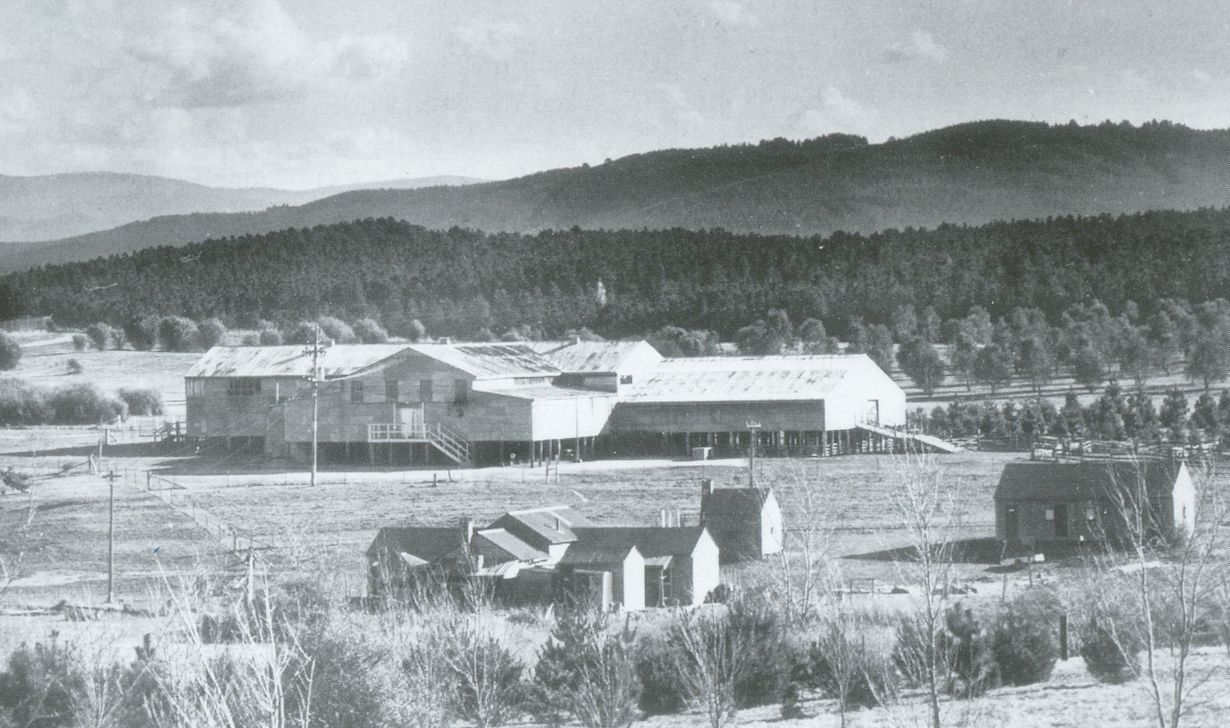
Yarralumla Woolshed, 1925

Yarralumla Woolshed, 1925 (Public Domain, via Wikipedia)

The Griffyn Ensemble like to mix up their venues – partly because they like to choose venues that add to their music, to the stories they want to tell – and so this last concert of the year was in yet another very new venue for them, the old Yarralumla Woolshed. Built in 1904, and still surviving in what is pretty close to the geographic centre of Canberra, the Woolshed has seen many uses over its lifetime – and one of these, in my twenties, was as Canberra’s most popular bush dance venue. It was this history, and its previous history as – of course – a woolshed, that the Griffyns drew on for their performance. And, as they have done all year, they had a collaborator, this time local author Katie Taylor.

Taylor created an appropriately spooky story, about shearers’ tales, mysterious disappearances, loss and hope, about beginnings and endings, and how endings are found in beginnings and vice versa. It was performed expressively by Kate Hosking who told the tale through and between the music performed by the ensemble. We were warned there’d be exaggerations because, as Taylor’s text told us,

exaggerations are what you want from a story-teller.

And so there were – at least we hope they were exaggerations, though you never know!

The eerie tone was set with Juan Pablo Nicoletti’s electroacoustic “Abismo al Abismo” played via tape. Its weird otherworldly impressions of wind and water were enhanced by the sound of Australia’s favourite cockatoos screeching over the woolshed. We were consequently well prepared for Susan Ellis’ unusual rendition of “Have yourself a merry little Christmas … it may be your last”!

From this, and with the story continuing, the ensemble moved on to play two of my favourite Erik Satie pieces (“Gymnopedie No. 3” and “Gnossienne No. 3”), followed by “Swamp Song”, composed by Griffyn violinist Chris Stone, and Shawn Jaegar’s “Pastor Hicks Farewell”. Then, in keeping with the venue, we were invited to take part in a bush dance called by Chris Stone and led by Michael Sollis, as the rest of the band played a “Bush Dance Macabre Suite”. Mr Gums and I aren’t unfamiliar with bush dance moves but “the stab”, “strangle your partner”, and “chop, chop like the guillotine”, were new moves to us! We think playing the spoons was a new move for flautist Kiri Sollis too, but, unlike our dancing, we felt she could easily take up a new bush band career. The suite ended with Susan Ellis singing Bob Dylan’s “Ballad of Hollis Brown” in character, as Ellis always does with aplomb.

We returned after a brief intermission to a dramatic change of pace – from jigs and ballads to Arvo Pärt’s minimalist “Fratres” played by Chris Stone (violin) and Laura Tanata (harp). I’m a bit of an Arvo Pärt fan, so enjoyed their thoughtful rendition. According to Wikipedia, this piece encapsulates Pärt’s “observation that ‘the instant and eternity are struggling within us'”. That fits rather nicely, I think, with the night’s theme of beginnings and endings, of moving forwards and backwards. This piece segued nicely to two very moody pieces: “so she moaned, and as she uttered her moans” composed by Michael Sollis, and featuring the double bass (Holly Downes), mandolin (Michael Sollis), violin (Chris Stone) and flute (Kiri Sollis), and  “Ghost” by Myrto Korkokiou and Apostolos Loufopoulos, with Kiri Sollis on alto flute accompanied by more electroacoustic music. These three pieces showed off the ensemble’s musicianship perfectly.

The concert concluded with Jeff Buckley’s “Dream brother” performed with some lovely singing by the whole ensemble:

Don’t be like the one who made me so old
Don’t be like the one who left behind his name
‘Cause they’re waiting for you like I waited for mine
And nobody ever came

Oh dear … And then, as Ellis moved onto “Stille nacht” (“Silent night”), the rest of the ensemble quietly left the stage, and it wasn’t long before we heard the ghosts of woolsheds past (or were they of our future?) a-knocking and tapping beneath us.

It was a beautifully coherent yet quirky concert that gave its audience a night to remember – and, just so we wouldn’t be left too spooked, they served us lamingtons at the end.

I look forward their Global Chronicles concert series in 2015.

You can hear other versions, online, of some of the music we heard:

Art meets Literature at In the Flesh

I’m pushing it really with my heading, as for many the literary aspect of the National Portrait Gallery’s In the Flesh exhibition would be a passingly noticed sideline, but for me it added significantly to my enjoyment. It helped of course that I found the following in the first room:

It is not time or opportunity that is to determine intimacy; it is disposition alone. Seven years would be insufficient to make some people acquainted with each other, and seven days more than enough for others. (Jane Austen, Sense and sensibility)

I like it when exhibition curators draw parallels between different art forms or, perhaps more accurately in this case, use evidence from one art form (in this case literature) to comment or elucidate another (here, figurative art).

Exhibition curator Penelope Grist describes* the exhibition as being about “humanness – the experience of a mind enfleshed in a body”. She goes on to say that “relationships between the human mind, flesh and lifespan underpin the nature of portraiture”. But wait … are these portraits? Technically not, I think, not if we understand “portrait” to mean the depiction of a specific person. While individuals may have modelled for works in this exhibition, they are not, with an exception or two, identified. Given the subject matter of the works, I don’t see this as a problem. Categories are sometimes best left fluid.

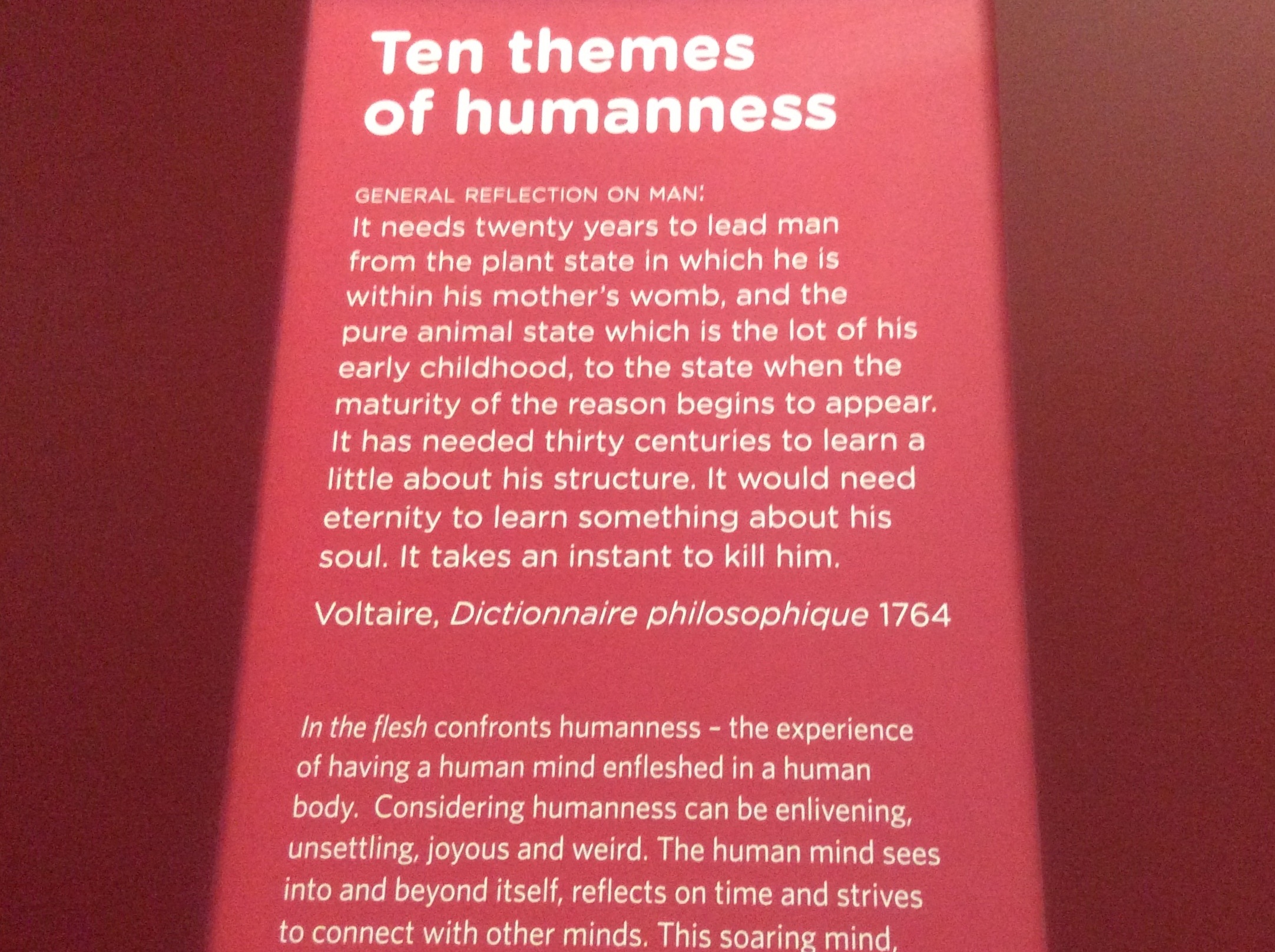
"In the Flesh" interpretative panel

From “In the Flesh”

This exhibition looks at the idea of “humanness” through ten themes – Intimacy, Empathy, Transience, Transition, Vulnerability, Alienation, Restlessness, Reflection, Mortality and Acceptance – which are, in themselves, interesting. I can imagine the fun the curators had in deciding these ten themes. They are an eclectic bunch, but they make sense. The works exhibited vary in form and come from ten contemporary figurative artists: Natasha Bieniek, Robin Eley, Yanni Floros, Juan Ford, Petrina Hicks, Sam Jinks, Ron Mueck, Jan Nelson, Michael Peck and Patricia Piccinini. I like art but keep up with it erratically, so was really only familiar with two of these: Ron Mueck and Patricia Piccinini.

So, where does the literature come in? Well, as you’ve probably guessed already, each of the themes is introduced with a quote. Jane Austen’s introduces the theme of Intimacy. In her article, Grist explains that:

The contemporary art of In the Flesh takes the weight of the thousands of years that human minds have expressed in art their struggle to comprehend the existence, transformation and demise of the human body. The ten quotations from Shakespeare to The Doors that accompany each theme reference this legacy.

I’m not sure why she limits her comment here to “the human body”, unless she doesn’t mean it literally, because the quotations themselves refer more widely to the condition of being human. And the rest of her article encompasses a broader concept of “humanness”.

I’m not going to discuss the ten themes in detail, and I’m not going to include a lot of images**. Instead, I’m going to briefly discuss my responses to two of the works to exemplify how one can enjoy this exhibition.

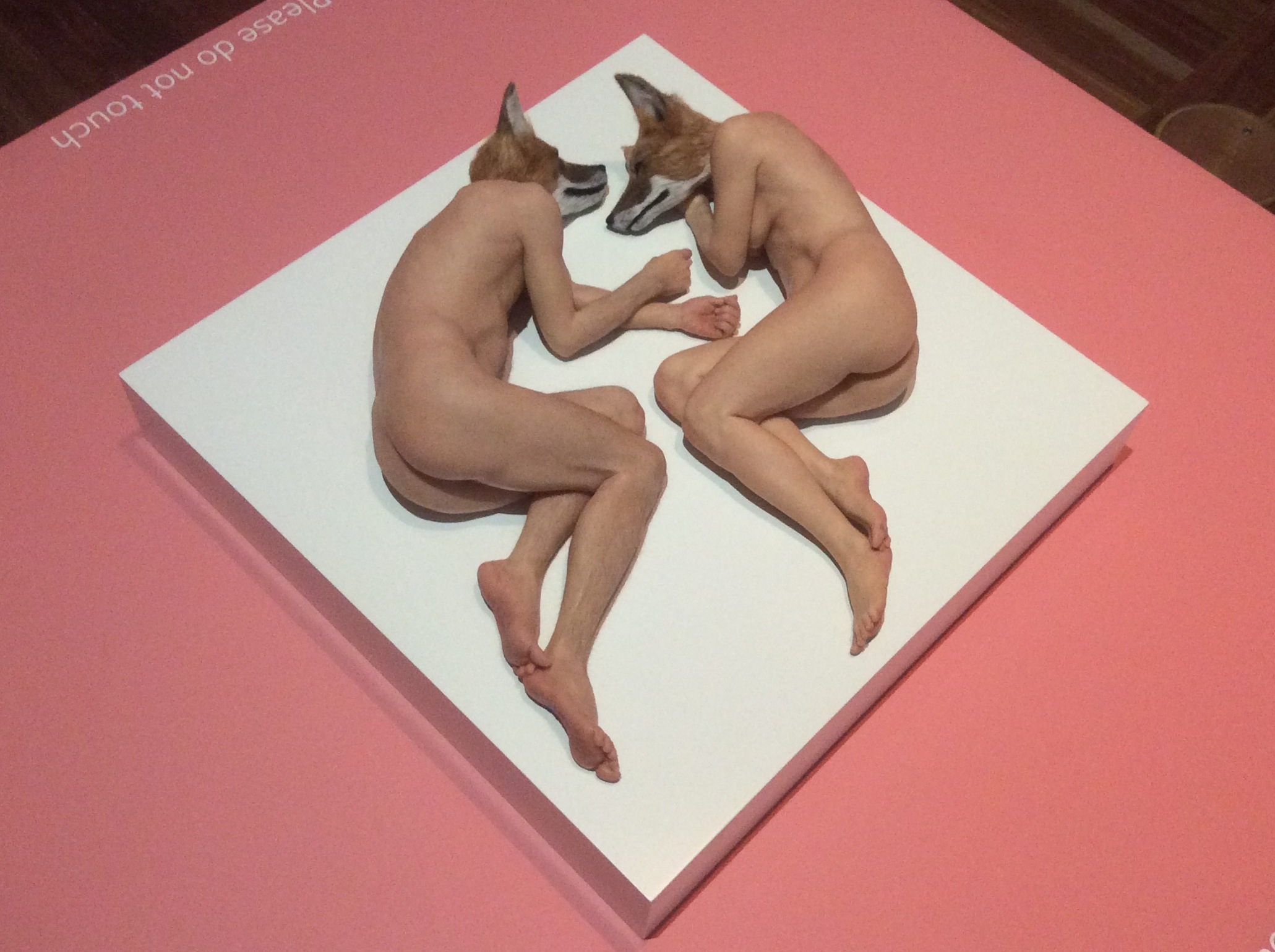
Sam Jinks, Unsettled Dogs

Sam Jinks, Unsettled Dogs

The first room is devoted to Intimacy, and it contains works by sculptor Sam Jinks, one being “Unsettled Dogs”. I was captivated by this. It’s tender, fragile. They look paradoxically trusting and vulnerable (another of the themes) as well as intimate. But it’s also disconcerting, because of the dog-heads. Grist explains this: “the dog-headed cynocephalus of ancient and medieval imagination reminding of the human capacity for destructive irrationality within intimate relationships”. I have always seen dogs as benign not destructive creatures, but the sculpture does indeed capture the tension contained in this classical concept. Perhaps it’s also because the dog heads are fox-like which we Aussies definitely equate with destruction.

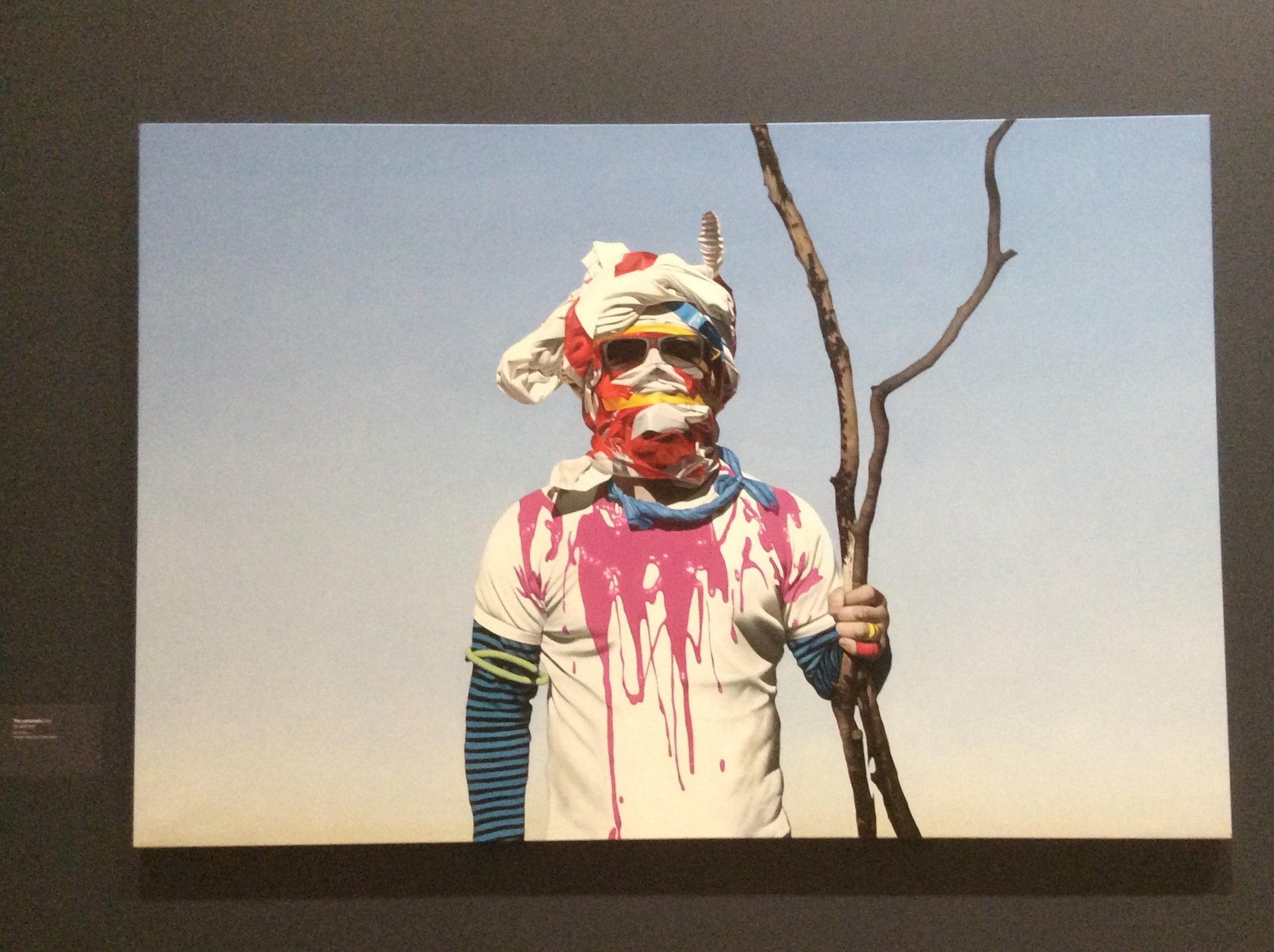
Juan Ford, The Reorientalist

Juan Ford, The Reorientalist

Another work in which a cultural context affected my “reading” is Juan Ford’s painting, “The Reorientalist” (2013). It is in the Reflection theme, and is a large, arresting, powerful piece. Grist talks about the “motif of the play-weapon” confronting “the notion of the natural self”. She says the works displayed in this section are not about glorifying war but questioning why we are interested in war as children, raising ideas of “innocence and experience”. The curator at the Dianne Tanzer Gallery says of this work:

Standing strong, grasping staff-like branches as if to communicate his allegiance to nature’s side of the war. Bound in industrial detritus, this figure wears a tribal outfit that might be conjured from a Mad Max film, like a lone-warrior of both painting and the wild – and a caricature of himself as the artist. The title itself suggests a challenge to the colonialist tendencies of the painting traditions he seeks to subvert, redirecting their Orientalist imperatives into the wilderness; an exorcism performed by an Absurdist shaman.

I can see the tension between children, play and weapons, and I appreciate Ford’s wanting to subvert colonialist traditions. However, in the current environment of concern about the radicalisation of young Australian men, this work had another layer for me. Am I over-thinking it? It certainly made me ponder how art can take on different meanings according to circumstance.

These are just two of the 63 works in the exhibition, most of which made me stop and think. If you are in Canberra over the next few months, I recommend you make time to visit this exhibition. Meanwhile, I will close on the literary reference used for the theme of Transience, partly because it’s by William Cowper who was one of Jane Austen’s favourite poets:

The lapse of time and rivers is the same,
Both speed their journey with a restless stream;
The silent pace, with which they steal away,
No wealth can bribe, nor prayers persuade to stay …
(William Cowper, “A comparison”)

The ultimate description of our “humanness”!

* “In the Flesh: an exhibition of humanness in ten themes” in NPG’s magazine Portrait #47 (Spring/Summer 2014). Currently for sale but will, I believe, be available online on the magazine’s site down the track. The article includes excellent images from the exhibition.
** I’m not totally sure of copyright issues, and I don’t want to detract from the exhibition itself, so I’ve just included a couple of my poor quality iPad images of works that the NPG has used on its website. You can click on the images to see them bigger, though not necessarily better! I am assuming that my use here is covered by fair dealing for criticism or review.

Murray Bail, Arthur Boyd, Art and Landscape

Last year, I attended the National Library of Australia’s two-day seminar, Writing the Australian Landscape, and wrote three posts about it, here, here and again here! In the first post, I wrote about Murray Bail’s somewhat provocative keynote speech. What I didn’t mention in my post was Bail’s reference to Arthur Boyd’s painting, titled “Interior with Black Rabbit” (which you can see at the National Gallery of Australia: BOYD, Arthur | Interior with black rabbit.)

I was reminded of this reference when I visited the Gallery’s Arthur Boyd: Agony and Ecstasy exhibition prior to the Griffyn Ensemble Concert because, on the label for this artwork was a quote from Murray Bail, which I recognised as being from his address at the seminar. I’d like to share it with you now. Bail introduced the painting, which he showed on a screen (presumably with copyright approval), by telling us that its subject is “the difficulty of being an artist in this new, largely empty place, Australia”. He then described the painting, thus (and this is the quote on the National Gallery’s label):

It shows the dilemma of the painter. It could just as well be the dilemma of the novelist in Australia, or the poet, or somebody composing a piece of music. Perhaps above all the dilemma faced by the painter and the novelist.

The painter is wearing a European ruff representing some sort of distant sensibility. Outside is the Australian landscape – glaring, pitiless, empty, uncultivated. That’s here. That is us. Landscape is always viewed through culture. And here culture is represented by chicken wire. Utilitarian, crude, provisional. And in the darkened room the artist is on his knees, trying to capture something of this, via the rabbit – and the rabbit is an animal that is always out of reach.

This view of the landscape is, of course, the view of a “distant sensibility”. I don’t imagine that the traditional owners of the landscape see it as “glaring, pitiless, empty”. One of the concerns in the audience that day was Bail’s Euro-centric focus. That was fair enough, in a way – he is, after all, like most of us were in that audience, descended from distant sensibilities – but some greater recognition of indigenous sensibilities would have been appropriate. Putting this aside, however, Bail is right about one thing, which is that landscape “is always viewed through culture”. This is particularly evident in Australia, where responses to landscape can vary immensely depending on your origin – indigenous, “settler” or settler ancestry, or recent immigrant. Certainly, landscape is a powerful – and complicated – force in both Bail’s and Boyd’s work.

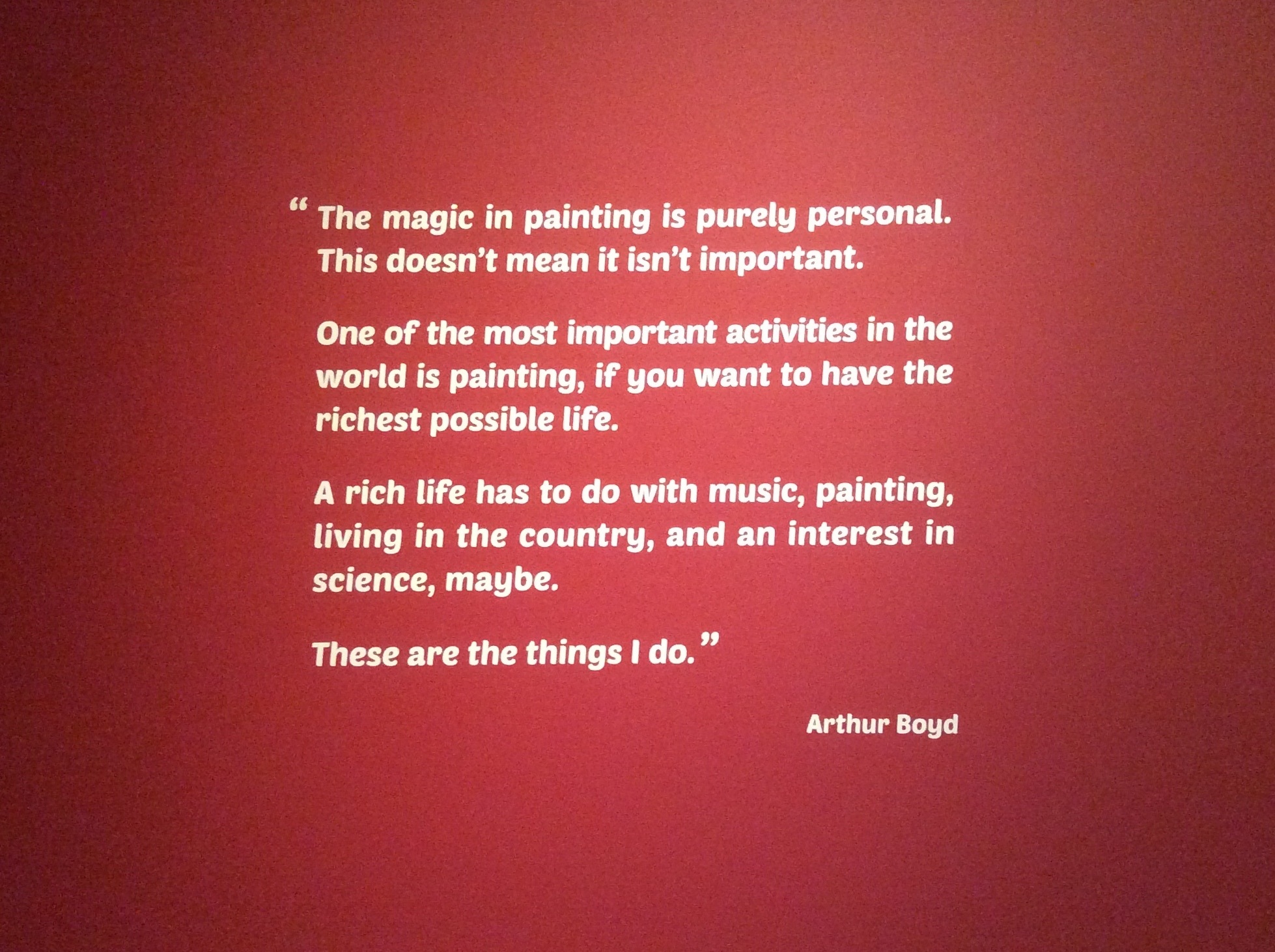
Hmm ... what about Literature? (Boyd Label at NGA)

Hmm … what about Literature? (Boyd Label at NGA)

So, how does it play out in their work? For Bail, there is still clearly a tension between his (our) European heritage and this place we are in. Indeed, in the talk I attended he said that

I hadn’t quite realised my novels are centred around journeys, all of them….. My people are instinctively hot-footing it out of here, turning away from the apparent barrenness.

He’s right … at least there are elements of this, surprisingly so at times, in the three novels of his I’ve read, Eucalyptus (less so), The pages and The voyage.

I’m not sure how much Bail himself hotfooted it out of here, but Boyd sure did. He lived in London from 1960 to 1971. On his return, he bought a place, Bundanon, in the Shoalhaven region (only a couple of hours from where I live). The Wikipedia article on Boyd suggests that at first he found the landscape “rugged and wild” but that he gradually “befriended the formidable landscape”. In fact, he befriended it so much that, as I wrote in my Griffyn Ensemble post, he donated the property to the Australian people. In Zara Stanhope’s Arthur Boyd: An active witness (Bundanon Trust, 2013) he is quoted:

I want it to be accessible to any Australian whose life can be enriched by the beauty, the history, the landscape, the environment and by the energy and stimulation from social interaction with Australian creative artists.

In the book, Stanhope says that Boyd wrote in a handwritten letter that he want the property to be used as “a base for research by practitioners in music, drama, literature, visual arts and science”. Phew … that answers my question in the caption above! Stanhope also discusses briefly in the book Boyd’s engagement in the natural world, saying that:

From being a compositional vehicle and a carrier of emotions, the landscape came to offer multiple meanings.

Those meanings include spiritual or abstract ones dealing with our relationship with or connections to the environment, metaphorical ones to do with our attitude to the natural world (including his series on animal research), and practical ones about preserving the environment. Boyd did also paint a series – the Bride paintings – expressing his concerns about conditions of indigenous people and the need for reconciliation, but these were earlier in his career after a visit to outback/central Australia.

I have no conclusion to all this – but just wanted to share some thoughts I’ve been having, connections I’ve been making. It just reminds me that in Australia at least, we can’t divorce ourselves from considerations of landscape, no matter what Bail said in his talk. Not only is it a presence that demands notice, but it defines our relationships – indigenous-nonindigenous, east-west, national-international, inland-coast, mainland-island – which in turn define our culture, who we are, how we see ourselves. No wonder we keep talking about it, writing about it, painting it, composing about it …

The Griffyns are on fire

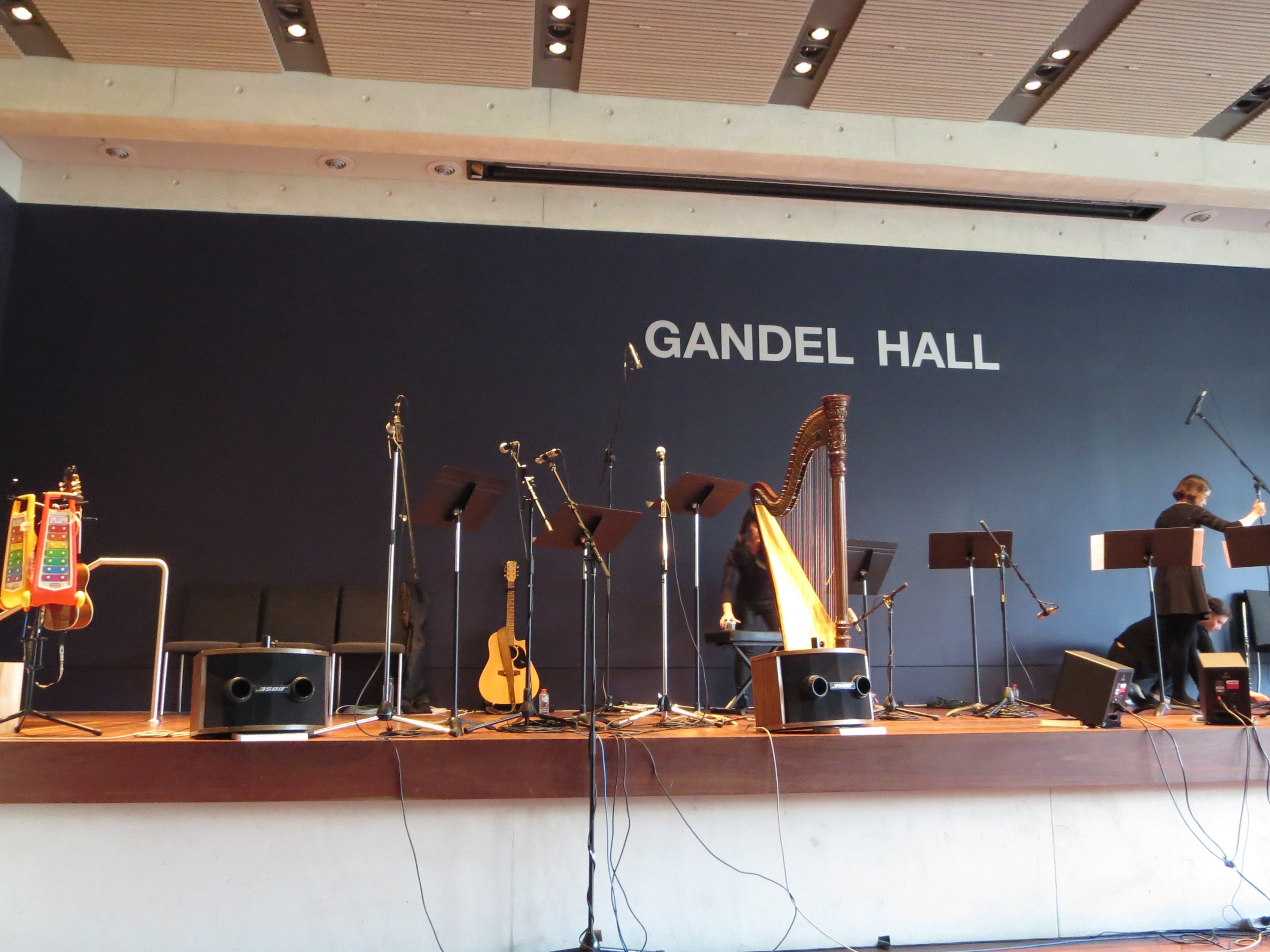
Stage, pre-show

Preshow setting up

And now for something completely different. If Griffyn Ensemble’s last concert, Do you believe? (my review)kept us on our intellectual toes from go to whoa, their third concert* of 2014, House on Fire, had our toes-a-tapping and feet-a-walking in a program that owed more to folk traditions than classical. Collaborating this time with Canberra pop-duo The Cashews (Alison Procter and Pete Lyons), they presented “a new program of original music” composed by them and The Cashews. The programme was  inspired by Arthur Boyd’s imaginative, surreal exploration of “place and identity” and was performed at the National Gallery of Australia’s Gandel Hall to coincide with the Gallery’s Arthur Boyd: Agony and Ecstasy exhibition. Mr Gums and I made a day of it. We visited the exhibition, had lunch overlooking the gorgeous sculpture garden and lake, and then went to the afternoon concert.

When I describe this program as more folk than classical, though, I don’t mean to suggest it was simple. This is the Griffyns after all, and their intent was serious even if the presentation had a lighter – and yes, probably more musically accessible – touch.

The programme opened with an empty stage and the sounds of birds which became more intense as the Griffyns took up their places on the stage and started playing music that sounded like dawn – like birds congregating around a waterhole, as the sun comes up. This segued immediately to the Cashews who performed a beautiful acknowledgement of traditional owners. It was an inspired change from the usual spoken one. “I’ll begin where you began”, they sang, “with connection to this land … I acknowledge you”, concluding with “and pause to acknowledge all that is yours”*. Truly moving.

Pete Lyons then introduced the program, and acted as emcee for the rest of the concert. This was interesting given that it was a Griffyn Ensemble concert, but it spoke beautifully to the fact that this was a real collaboration. Lyons told us that the concert would explore such ideas as belonging and unbelonging, connectedness and unconnectedness, metamorphosis, space, landscape, and silence. All of these made sense to an Australian audience, particularly when also viewed through the prism of Arthur Boyd’s complex depiction of landscape and intense relationship with the environment.

I’d love to describe the whole programme but that would take too long. Unfortunately there was no printed program so I can’t list the pieces. In fact I don’t really know the names of them all, but there were 11 or 12 interspersed with commentary, some brief interviews with Griffyn musicians, and a little walk on the outside! The program ran for nearly 2 hours without an interval, but I don’t think anyone cared.

“Moving to a discordant beat”

Susan Ellis singing inside "Skyspace"

Susan Ellis singing inside “Skyspace”

I did wonder how well the two sets of performers would meld their very different sounds – one folk-pop and the other contemporary classical. I needn’t have worried. These are all seasoned musicians, flexible in their ability and eclectic in their interests. It was particularly interesting to hear Susan Ellis’ classically trained voice mix with Alison Procter’s lighter one. They had (of course) practised and it worked beautifully, invoking for me the way Arthur Boyd had blended so many competing influences and tensions in his work. In several of the pieces of music, this tension was also conveyed by interspersing lyrical sections with more discordant sounds. Surprising how discordant a harp can sound when it tries – and Laura Tanata certainly tried, to great effect.

I enjoyed Holly Downes’ double bass playing in the last concert, and again in this one. Chris Stone produced some gorgeous mournful tones on his violin. A particularly moving piece was the song that expressed the concert’s theme of House on Fire. It drew on Canberra’s tragic bushfire of 2003 and the fire at Arthur Boyd’s childhood home that destroyed his father and renowned potter Merric Boyd’s kiln. The piece opened with Susan Ellis and Laura Tanata, with the whole ensemble then joining in. It conveyed, in words and music, a sense of “moving to a discordant beat”, but also recognised that there is “strength in adversity”.

The Arthur Boyd “theme” played out in various ways throughout the concert. In another piece, “Metamorphosis”, Susan Ellis, in voice, and Holly Downes’ on double bass, led the ensemble in a piece that explored Boyd’s sense of being “out of kilter”. There was a lovely melancholy in the playing here, too, particularly in the opening double bass.

“Listen … I know exactly what I’m looking at”

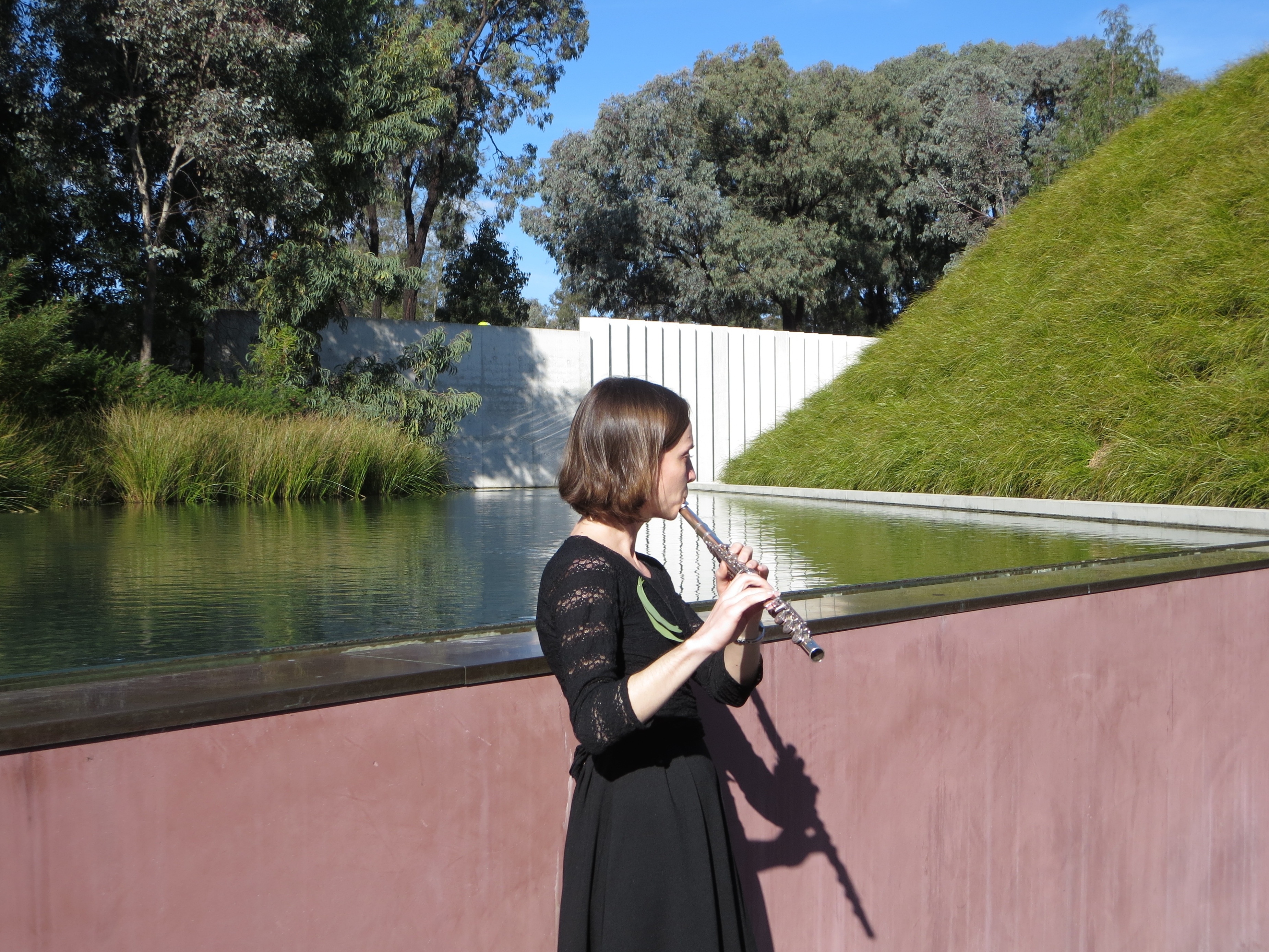
Kiri Sollis outside "Skyspace"

Kiri Sollis outside “Skyspace”

As always, Kiri Sollis shone with her flute, but we were entertained to discover in one of the little “impromptu” interviews that this concert was a departure for her. Classically-trained Sollis is used, she said, to practising lots to get what’s on the page in front of her right. However, in this show, she didn’t have much on the page in front of her and had to draw on her improvisational skills. She mentioned the sense of liberation and the terror of “not having stuff on the page”, reminding us again of Boyd and his terrors! She, like Boyd, needn’t have worried.

We were informed at the beginning that there would be silence and a walk. The silence occurred around the halfway mark, and was introduced by Pete who talked of Boyd’s silence about his work. We can understand why, agreeing with Pete’s comment that Boyd’s imagery and metaphors are complex and not easily unravelled. Best, really, for each person to make of it what they will.

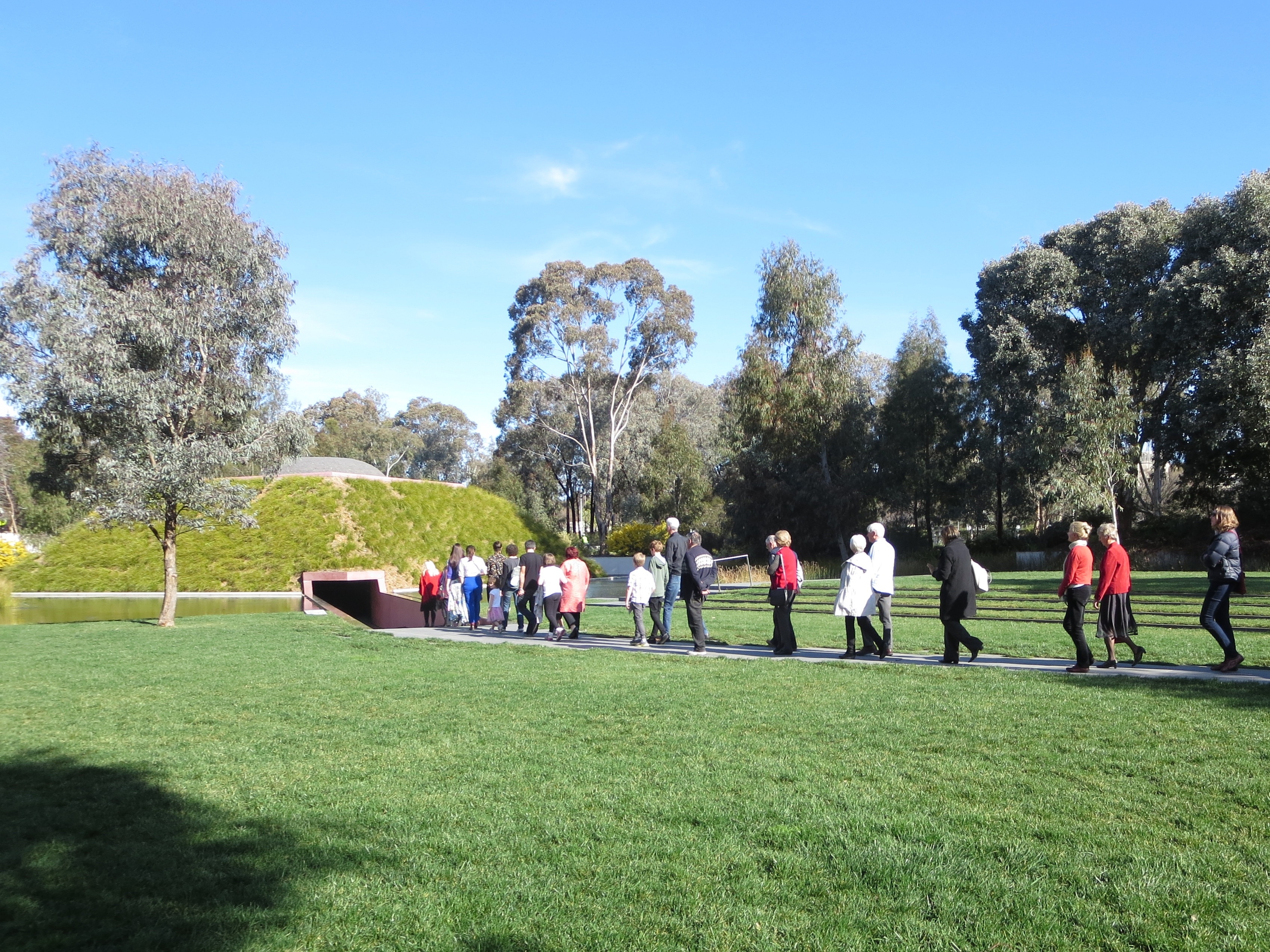
The walk occurred a little later in the concert and involved the audience following Susan Ellis (emulating the Pied Piper in voice) out of the Hall, across the lawn and into James Turrell’s “Skyspace”. Once there, we filed inside the cone in small groups and found three Griffyns sitting on the bench humming/chanting into the space. It was peaceful, harmonious – and reminded Mr Gums and me of some moving “art space” experiences in Japan, particularly from the Setouchi International Art Festival.

“Come walk with me”

Following Susan Ellis

Following Susan Ellis

The concert/show/performance (have you noticed that I don’t quite know what to call these events?) concluded on three pieces of music: “Umbilical Link” composed by Michael Sollis, with words by Alison Procter, “Landscape Escape”, and  “Mountain Song”. “Umbilical Link” was inspired by Sollis’ walking around the suburb in which he grew up, and now lives in again. It’s about belonging, and it also connected to Boyd, to the fact that in the last two decades of his life he found a place he loved, Bundanon. In 1993 he gave Bundanon to the people of Australia because “you can’t own a landscape”.

Being Whispering Gums, I loved this line from “Umbilical Link”:

… big trees whispering moments from my histories.

“Landscape Escape”, a new song by the Cashews, referred specifically to Boyd’s finding Bundanon – “an intricate seduction on a canvas so vast”. The show then closed with an older Cashews’ work (I believe), “Mountain Song”, which neatly tied together the various themes that had been put to us – belonging, disconnection and discordance, respect for indigenous ownership, and a nurturing of the spirit. Australians will get the allusion in Lyons’ words, “the great divide is the great unification”. And with that, a few of the Griffyns picked up stones and sticks and playfully duelled with each other, percussively, before all took their well-deserved bows.

* For the second time this year, the programme was preceded by a support act, this time, appropriately, the local folk/folk-rock/hug pop group, Pocket Fox. We heard the last few songs and were impressed.
** I was trying to capture some lyrics as they were sung, so my quotations may not be exact.

The Griffyns ask Do you believe?

I’ve said it before and I’ll probably say it again, the Griffyns are a tricksy lot. Their second program for 2014 was titled The Three Futurists and was aligned with National Science Week. The theme was “Do you believe” – but we quickly realised that it wasn’t only do you believe in something, though that was certainly part of it, but also do you believe what you are told/what you hear, which is, I think, a more challenging proposition in our media-saturated world.

Pre Show, with scrolls under seats, and double bassist and a dancer doing a last minute practice

Pre Show, with scrolls under seats, and double bassist and a dancer doing a last minute practice

And so, early in the second half of a program that twice had the audience filling out forms, we completed the “Truth assessment” answer sheet from the scrolls under our seats. The sheet had no questions on it; they were read out to us. The questions were about climate change. On finishing our sheets, we were asked to show our hands if we’d answered “a” to a particular question. I was surprised when my seatmates who, I know, “believe” as I do on the issue, raised their hands. Huh? I felt disconcerted – for a moment. And then came: “Do you believe your answer sheet is the same as your neighbour’s”? I looked, and sure enough, Mr Gums’ “a” was the opposite to mine, that is, it was the same as my “b”. Whew, but the point was made, in a very practical way! Don’t take anything for granted!

This year’s theme, as I wrote in my post on the first concert of the year, is Fairy Tales, but they define it broadly to mean “spooky stories and twisted tales”. So far they are keeping their promise. The Three Futurists – aka (Mechanical) Evolution, Prophecy and Armageddon – confronted us with the usual Griffyn challenge. By this I mean, you don’t expect at a Griffyn concert to be transported into a peaceful reverie or to be allowed a simple emotional response; you expect to be intellectually challenged. This is not to say that the music doesn’t move or transport, but that a Griffyn program usually demands an additional level of commitment from the audience. These are artists who like to present ideas, often political ones, through their music. I don’t believe art must be political, but I do like it when artists want to engage politically. Put it down to the 1960s-70s idealist in me!

Anyhow, onto the actual concert. The Griffyns were joined by Liz Lea and four dancers from QL2, Canberra’s youth dance ensemble. An inspired idea, as they added a special dimension to the show. The choreography was expressive, and the dancing – in solos, duets, trios and in ensemble – was lovely and mostly sure. Their representation of mechanical evolution, of robots, was very effective – jerky but with an appealing fluidity that engendered some sympathy for these mechanical life-forms rather than rejection. I also liked Liz Lea’s ancient priestess dance that accompanied the “Song of Seikilos”. According to the program notes, its text comes from around 200BC-100AD:

I am a portrait in stone
I was put here by Seikilos
Where I remain forever,
the symbol of timeless remembrance.

Interesting that this lyrical, graceful reminder of timelessness was bookended by mechanical robots and intimations of Armageddon!

As usual with the Griffyns, the music ranged across genres. It’s one of the things I love about them. In this concert we heard arrangements of older or familiar pieces from popular culture, namely a thoughtful and provocative rendition of Rodgers and Hammerstein’s controversial song “You’ve got to be carefully taught” from soprano Susan Ellis, and Radiohead’s confronting “Fitter Happier”. We also heard the Australian premiere of musical director Michael Sollis’ “Happy Deathday Mister Robot” (listen to a recording made in New York).

Appropriately, much of the music had a strong electronic aspect. I was fascinated by the three pieces by new-to-me Netherlands’ composer Jacob TV (Jacob ter Veldhuis), which use ghettoblaster accompanied by musical instruments such as, in Sollis’ arrangements, flute, harp and/or double bass. Some unusual conjunctions there but they worked in their eerie way. The strangest piece was “Jesus is coming” which includes, among other sounds, some repetitive (and mesmerising) baby talk, but the most confronting was the last piece, “Believer”. In it, Jacob TV incorporates the distorted voice of journalist Bill O’Reilly interviewing George Bush Jr in 2004 about the Iraq War and asking him “So you are indeed a true believer?”. Bush’s response “I believe peace is coming” is what – naive, disturbing, ironic?

I haven’t, I’m afraid, talked much about the musical performances. There was so much going on – the music, sometimes with the ghettoblaster, occasional commentary from the computer (did I mention that before?), live speech, and the dancing – that it’s difficult in retrospect to single out specific performances. So let me just say that the playing was exactly what we’ve come to expect – professional, thoughtful and engaged.

And so what did Mr Gums, our friends and I take away from the concert? Well, primarily that we’d been stimulated to think more upon’t. And that, I think, means it was an excellent afternoon.

You can hear other versions of some of the music on You Tube, such as:

Bangarra Dance Theatre’s Patyegarang

This year is Bangarra Dance Theatre’s 25th anniversary. For those of you who don’t know, Bangarra Dance Theatre is an Indigenous Australian contemporary dance company that was established – obviously – in 1989. Its artistic director since 1991 has been Stephen Page. His brother, David Page, does the music. These are two very talented brothers who have had their hands in many significant indigenous arts endeavours besides Bangarra, but today it’s Bangarra I want to talk about! Bangarra is apparently a Wiradjuri word for “to make fire”.

Mr Gums and I have been to many Bangarra shows over the years. They are exciting. We love the way they incorporate indigenous themes and movements into the contemporary dance world. Last year’s show was Blak, which comprised three parts – a men’s story, a women’s story, and then both genders together. It was clever and entertaining. In 2012, we saw Terrain, which was inspired by the changing landscape of Lake Eyre in central Australia.

Two performances we’ve seen, though, have been inspired by historical figures – and have also connected, coincidentally, with Australian literature. In 2008 it was Mathinna, the indigenous Tasmanian girl who was adopted by Governor and Lady Franklin. Richard Flanagan told her story in his novel Wanting, which I read before blogging.  The other is their current show Patyegarang about the young indigenous woman who befriended and trusted first fleet astronomer-timekeeper, Lieutenant Dawes. She trusted him so much that she shared her culture with him, including her people’s language, which Dawes recorded in his diaries. Their story is told in Kate Grenville’s The lieutenant, which I reviewed a couple of years ago.

Stephen Page explains in the program why he chose this story for their 25th anniversary show:

I wanted to take the opportunity to pay homage to the land on which we have gathered and created dance theatre works since 1989 – the Eora nation; the place we call Sydney.

[…]

I believe Patyegarang was a young woman of fierce and endearing audacity, and a ‘chosen one’, to speak, within her clan and community. Her tremendous display of trust in Dawes resulted in a gift of cultural knowledge back to her people almost 200 years later …

What he means here is that Dawes’ diaries, which were “rediscovered” by a researcher in the 1970s, have helped current people recover language and culture that had been lost.

Dramaturg Alana Valentine talks of how she translated Page’s vision into a story. She also quotes Richard Green, an elder and cultural adviser for the project, who said that “Dawes was different, he listened”. Valentine continues:

It is an observation that carries invaluable wisdom for how contemporary Australia might continue to honour the contribution Dawes himself made to reconciliation and respect.

There it is again – the message we keep hearing: Listen!

Musician David Page talks of working closely with his brother, nutting out just who Patyegarang was. He said the biggest question for him was “How close was their relationship?”

So, the show. It runs for 70 minutes without interval. My, how hard those dancers worked. As you would expect, it took their relationship from their meeting through getting to learn to trust each other and share their knowledge to when Dawes departs. The scene opens on the beach with the warm glow of dawn. It’s idyllic. The people go about their business, safe, as they usually do. Then a strange man appears and the story progresses. There’s hunting and gathering, smoking ceremonies, the gradual acceptance of Dawes (danced by the non-indigenous Thomas Greenfield) led by Patyegarang (Jasmin Shepherd) while others are less sure – and of course there’s fighting with the red coats. It’s a work that requires concentration and imagination from the audience – and I’m not sure we understood all the references. I suspect this is because while there seemed to be a clear narrative, the program is framed a little more abstractly, focussing on feelings, spirit, values and politics rather than narrative. It’s a work that would benefit from multiple viewings.

The dancing draws closely from traditional moves – at least from those I, as a non-indigenous person, recognise – but is still contemporary. Much of it is low to the ground, earthy, suggesting connection to country. All this is accompanied by lighting that tracks the day and mood; a simple backdrop of cliffs, which at times gave the impression of the ancestors looking on, and a single large rock representing a place of safety, of meeting; and gorgeous costuming that blends with the earth while suggesting lightness and spirit too. There’s one dance by the women – “Maugri (Generic Fish)” – in which tubular costumes enable them to slip from human to sea-creature and back again in fluid, organic moves. The music is dramatic, evocative – including clapping sticks at times, strains of “Botany Bay” at others, and overlays of the language Patyegarang shared and Dawes documented.

Works like this are inspiring on multiple levels, emotionally, intellectually and politically … it would be wonderful if more Australians could (or would) see it.

Winter Solstice: New Lights and Dark Chords

While Hobartians are enjoying a full-on festival – Dark Mofo – to celebrate the Winter Solstice, we here in the national capital have had our little celebration. Or, at least, Mr Gums and I attended one. There might be others going on that I know nothing about.

Winter Solstice: New Lights and Dark Chords was, hmmm, what exactly was it? Well, it was a program inspired by the solstice that combined story, poetry, astronomy and music to explore our responses to light and darkness. It was held at the National Library of Australia. Their promotion described it as follows:

White like black, like light and like darkness, connect literature, music, art, spirituality and science. Cultures around the world have been observing the winter solstice for thousands of years. Join us to celebrate the universal wonders of light and dark and their resonances through contemporary art, music and poetry …

That’s pretty much what it was … and this is how it went.

We arrived and entered the atmospherically darkened theatre before start time to find flautist Kiri Sollis and harpist Laura Tanata of the Griffyn Ensemble playing the opening movements of Polish composer Henryk Górecki’s moody, atmospheric Good Night (which I have heard them perform before). It was a moving opening, spoiled only by two women talking rather loudly, completely oblivious it seemed to the quiet, expressive performance going on in front of them.

The program then officially opened with a video “welcome to country” from Paul House. It was a longer “welcome” than we usually hear but I appreciated the exhortation for us to follow the law of the country which includes to “honour all people and parts of country, respect everything living and growing”. Should be simple, eh?

This was followed by our MC for the evening, actor Rhys Muldoon, reading a brief poem titled “Sunset” written by John Kinsella for the Luminous World exhibition currently running at the Library. Muldoon then introduced us to the aforementioned Paul House who told us the local indigenous story of the Seven Ice Maidens who, he said, are also known as Pleiades. It’s a creation story about ice and snow that integrated perfectly with the program and marked, I think, an important step on our reconciliation journey, at least in terms of my experience of such events.

House was followed by Helen Carroll, the curator of the “Luminous World – Contemporary art from the Wesfarmers Collection” exhibition currently at the National Library. Wesfarmers is a Western Australian corporation that has been collecting Australian (and now New Zealand) art for over three decades. Luminous World is a travelling exhibition of photos, painting and sculpture that has been formed around one idea – light. Carroll then showed several of her favourite pieces from the collection – such as David Stephenson’s intriguing “Star Drawing” photos, Gretchen Albrecht’s abstract expressionist “Sherbert Sky”, Howard Taylor’s austere “Bushfire Sun”, and Rosalie Gascoigne’s dramatic “Hung Fire”. Another was indigenous artist Timothy Cook’s yam dreaming painting “Kulama”. What did that have to do with the theme I wondered? But Carroll explained that it depicts the orange light around the moon which indicates that the yams are ready to eat. Carroll ended with two beautiful photographs by Bill Henson, the last being of Sardinia which perfectly conveyed, she said, “the poetry of light”. You can check out the exhibition online. Fremantle Press has produced a book of the exhibition, which includes the art works, essays and John Kinsella’s poetry.

AnalemmaJailbird

Analemma pattern in the sky (Courtesy: jailbird, using CC-BY-SA-2.0-de, via Wikipedia)

Next up was probably for me the most surprising – as in surprisingly interesting – part of the evening, astronomer and photographer David Malin who presented a talk titled “Casting light on the solstice: the stars as clock, calendar and compass”. I say surprising because I find astronomy beautiful but, like geology, mind-boggling.  Malin explained the science of the “solstice” and introduced me to the concept of the “analemma“, which is most commonly used for the curve that describes the Sun’s apparent motion, observed from a fixed position on the Earth (Wikipedia). He accompanied his talk with the first successful photo of an analemma taken by Dennis Di Cicco in 1978/9. I found it all beautiful and fascinating. Of course, this may not be new to you all, but for me it was a case of “you learn something new every day”!

Malin’s talk was followed by the Griffyn Ensemble performing the last movement of “Good Night”, with soprano Susan Ellis and the rest of the ensemble on percussion joining Kiri and Laura. You can hear another version of this piece, with piano instead of harp, online.

Muldoon returned with another poem by Kinsella, titled “The Universe”. I loved the line “When we are made, unmade, remade” for reminding us that we and the universe are never static. He then concluded the program with a well-known but apposite quote by Elizabeth Kübler-Ross:

People are like stained-glass windows. They sparkle and shine when the sun is out, but when the darkness sets in, their true beauty is revealed only if there is a light from within.

It was the perfect end to an enjoyably varied and nicely structured program – except that wasn’t quite the end, because we all filed out of the theatre and up to the National Library’s foyer, with its famous stained-glass windows, to partake of canapés and a choice of drinks, including ice wine*, mulled wine, hot apple cider. We went home warmed and enlightened!

* Coincidentally, I only discovered ice wine last month when we visited Canada’s best-known producer of ice wine, Pillitteri Estates Winery.

Performers and the audience

Have you ever been to a show – a concert, a play, a ballet, for example – and wondered about the performers? How do they relate to each other? What do they do in their spare time? Well, quite coincidentally, two shows I went to last week looked at this question from different angles.

First, Musica Viva. We in Canberra were the last concert in the tour by young London-based trio, the Sitkovetsky Trio which comprises Alexander Sitkovetsky (violin), Wu Qian (piano), and Leonard Eischenbroich (cello). They are all in their twenties and have been good friends since they met as young children – preteen – at the Yehudi Menuhin School. We decided to attend the after concert Q&A. While some of the questions related to their artistic practice and influences, some addressed those questions that clearly I’m not the only one to ponder, such as whether they remember their first meetings with each other, and how their current extra-curricular interests might influence their playing.

In the program, Chinese pianist Wu Qian talked about her fascination with English literature and how she read all the Jane Austen novels after arriving in England. She was 13 years old, I believe, when she started at the school. Most interesting though was Russian violinist Alexander Sitkovetsky’s answer at the Q&A. He arrived at the school when he was around 8 years old and, being so young, apparently lost all facility with his language. He returned to Russia for the first time when he was 17 years old and was embarrassed by his lack of skill in his own language. He couldn’t even read billboards he said. And so he set about rectifying that. It’s so wonderful, he said, to be able to read Tolstoy and Pushkin in the original language. As a reader, I totally understood that. German cellist Leonard Eischenbroich, on the other had, spoke of the importance of recognising the moment when you are independent of teachers and influences – not in the sense that you stop learning from others but in terms of being confident in the sort of musician you are and able to assess external input on your own terms.

And then, the next night we attended the Sydney Dance Company’s show, Interplay. It comprised three dances, “2 in D Minor” (by Rafael Bonachela), “Raw Models” (by Jacopo Godani), and “L’Chaim” (Gideon Obarzanek). They were three wonderful and very different performances, but the one I want to talk about here is the last, “L’Chaim”, which, you might know, means “To life” in Hebrew/Yiddish. It is a dance that directly addresses both the audience’s curiosity about the artists as well as what an audience member might seek from attending a performance. It’s a clever, entertaining and provocative piece.

“L’Chaim” is a work that combines dance (choreographed by Gideon Obarzanek) and text (written by David Woods). It commences with the dancers on stage in – hmm – play clothes, dancing or, perhaps, rehearsing a dance. They dance, stop and talk, and dance again. But, while this is going on, they are being asked questions from the audience. Often the questions are directed to individual dancers – “the German-looking one”, “the youngest”, “you with the spiky hair” – and so a microphone is passed around from dancer to dancer who attempts to answer questions while continuing to dance. And the questions are those we might like to ask: “Who is the youngest?”, “Are you grumpy”, “Does it take a lot of strength to do that?”, “Say your cat died yesterday and you had to bury it – would you be sad when you were dancing? What would it look like?”, and “Do you know what we want?”. The dancer’s answer to the latter was “to be entertained”. She went on to suggest that the audience doesn’t want to be made to feel sad”. The interrogation ends only when the questioner admits to being sad and is invited onto the stage.

The writer of the text, David Wood, writes in the program that we audience members fear being asked “What did you think”? (I know that feeling!). He says that “it isn’t easy to put into words the event that we have just been a part of”. And so, he says:

In “L’Chaim” we have attempted to dive into this murky zone … some of the questions are shallow and some downright disrespectful but our voice needs to wade through this initial trivia to get to the heart of its dilemma – to articulate something beyond the literal.

After the intensity of “2 in D Minor” and the confronting power of “Raw Models”, “L’Chaim” brought us back to reality, to thinking about what it is that we seek in dance, or, indeed, in any performance we attend. It didn’t provide an answer, of course, because there isn’t a simple one, but it gave us freedom to explore our reactions on multiple levels – the physical, emotional, intellectual, and spiritual. It’s an unusual piece, and may not be everyone’s cup-of-tea, but I laughed when I recognised myself in the superficial questions and I appreciated its acknowledgement of my uncertainty about articulating the meaning of what I’ve experienced.

What do you ponder when attending live performances?

The Shows:

  • Musica Viva, The Sitkovetsky Trio, performed Lewellyn Hall, ANU School of Music, April 14, 2014
  • Sydney Dance Company, Interplay, performed Canberra Theatre Centre, April 10-12, 2014

The Griffyns launch 2014 with The Lost Mapmaker

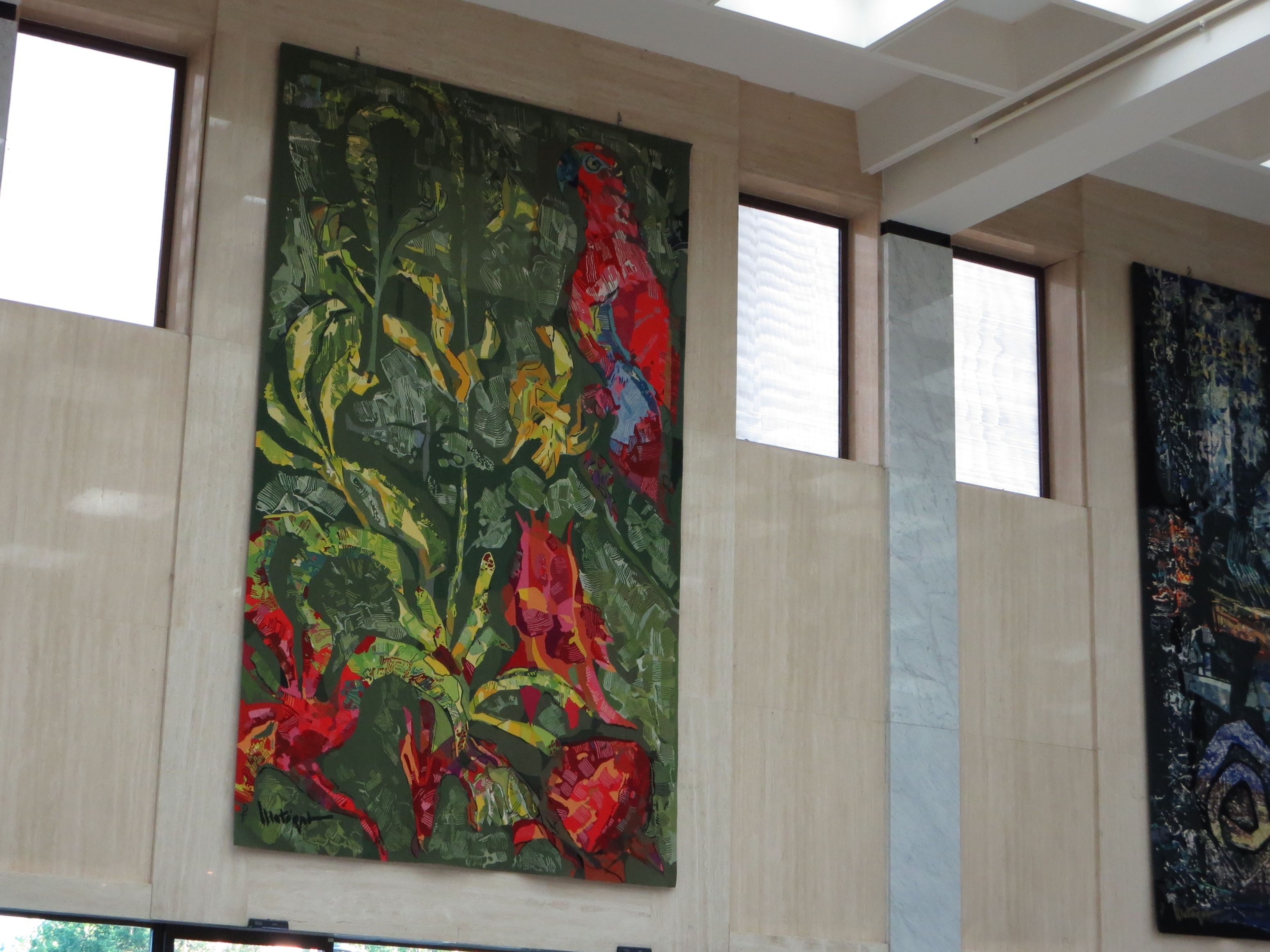
Parrot tapestry, NLA foyer

Parrot tapestry, NLA foyer

You have to be hardy to be a follower (or subscriber) of Canberra’s chamber group the Griffyn Ensemble, about whom I’ve written several times before. Take, for example, the opening concert of their 2014 season. It was held at the National Library of Australia to coincide with the Mapping Our World exhibition. We started in the foyer on the ground floor – sitting on the few scattered seats or on the marble stairs that lead to the mezzanine floor, or standing. We then moved to the conference room on the fourth floor. With only two lifts (elevators) available, the attendants opened the doors to the stairs, which several of us took, not realising where we were heading. Four floors later we emerged, some puffing more than others, to be met by vivacious soprano, Susan Ellis, singing to us as she gave us our programs. We found our seats and settled in for what we hoped would be an entertaining evening. We were not disappointed – but then, have we ever been?

This year’s theme is Fairy Tales but, as before, the theme is broadly defined. The Lost Mapmaker is described in the season booklet as follows:

A mapmaker, trapped outside reality, is trying to draw her way back into the world. Incomplete maps of Australia allow the lost mapmaker, who is only able to communicate through pen and ink, to create an alternative version of reality.

Quartet performing John Gage's A story

Quartet performing John Gage’s A story

Our and the mapmaker’s journey started in the foyer with visual artist Annika Romeyn drawing on an easel while four of the Griffyns sat in a circle, performing the second movement from John Gage’s Living Room Music. The work is a percussion and speech quartet, and the second movement, appropriately title “A story”, involves the players presenting a percussive rhythmic reading of words from Gertrude Stein’s The World is Round: “Once upon a time the world was round and you could go on it around and around.” Words are repeated, round-like, emulating the meaning of the piece. It was an effective, lively opening to the concert, and certainly got us ready to be told a story or two.

Once upstairs the ensemble performed a varied program, ranging from a movingly rendered traditional song by John Dowland, “In darkness let me dwell”, to pieces by popular musicians Brian Wilson of the Beach Boys (“Our prayer”) and Roger Waters and David Gilmour of Pink Floyd (“Comfortably Numb”). It included works by contemporary American composers Lou Harrison (“Song” and “The Clay’s Quintet”), Charles Dodge (“The Waves”) and John Kennedy (“Eagle Poem”). The performance concluded with “Attica” by another American composer, Frederic Rzewski, using words by Sam Melville who was killed in the 1971 Attica Prison Riots. As always, the music challenged us musically and conceptually, but that’s why, I think, most of us love Griffyn Ensemble concerts. We meet new composers or new arrangements of works well-known to us, and we meet them in unusual settings, physical and contextual.

While the ensemble performed, Annika Romeyn drew, using pen, brush and ink on paper that was projected onto a screen. Her drawings took us on a journey through half-made maps, via mythological beings (such as dragons) and gods (such as Aeolus the wind god), a tall ship and a mariner’s compass. It was dynamic, with images being reworked, transformed, as the music moved on. Occasionally, the drawings were replaced by words, devised by author Katie Taylor. “I must name what I see” reminded us of the early explorers and “This country was known before I came” made a pointed reference to “terra nullius”. The Griffyns do not shy from politics.

This year’s ensemble has a new look. Two original members, percussionist Wyana and clarinettist Matthew O’Keeffe, have, sadly, decided that new parenthood and being resident in Melbourne make it too hard for them to continue. We’ll miss them. But, their replacements, double bassist Holly Downes and violinist Christ Stone, both from the folk chamber group, The String Contingent, are looking good. Meriel Owen, the current harpist, was replaced for this concert by the ensemble’s original harpist, Laura Tanata. I still remember a haunting  piece featuring Tanata and flautist Kiri Sollis, some years ago, so was delighted to see Tanata again.

Musical director Michael Sollis is a talented jack-of-all-trades – performer, conductor, composer, arranger, and administrator/entrepreneur. He has an eye for opportunities around town that will work with the ensemble’s ethos and is keen to encourage collaboration with other artists/creators. This shows not only in the venues they perform in, and the variety of music they play, but in associated aspects such as the printed program. Not for them a set format. This program was presented as a scroll, complete with red seal. Visually beautiful, it needed attention to work it out – which I managed when the lights came up during intermission. What did I say about the Griffyns demanding much of their followers!

I haven’t said much about the playing, which is a bit silly given I’m writing about a concert. There was, I think, more whole-ensemble work in this concert and it worked, though the solo and small group pieces have often provided highlights in the past. The new players have slotted in easily, the new instrument mix is possibly more natural than the old, and I do like a double bass! But I will miss Matthew’s clarinet and Wyana’s engaging personality and percussion work. Life, however, moves on – and now we must wait until August for the next concert in the season.

You can hear other versions of some of the music on You Tube:

PS I should mention the concert’s supporting act – a new thing for this season. It was Canberra’s new young group, the Telopea Trio, who gorgeously played pieces by Beethoven, Haydn, Piazzola and Dvorak.

Monday musings on Australian literature: Australia Council Award

Last month the Australia Council announced this year’s Lifetime Achievement Award for Australian Literature. This award used to be called the Writer’s Emeritus Award, which I have written about before. Lifetime Achievement Award sounds better don’t you think? After all, “emeritus” implies retirement but most winners never really retire – at least as far as I can tell.

The award is worth $50,000 and it “acknowledges the achievements of eminent literary writers aged 60 years and over who have made an outstanding and lifelong contribution to Australian literature”. The Australia Council defines this contribution pretty specifically: “Nominated writers must have provided a critically acclaimed body of work with at least five full-length literary works published or performed over their creative life”. Five full-length literary works? I presume that means that if you are a poet or a short story writer, they would expect five published collections?

This year’s winner, though, is a novelist so no worries on the criteria front. The winner is Frank Moorhouse. The Australia Council Literary Strategy Chair, author Sophie Cunningham, said that while it was hard to select a winner:

Frank’s highly influential, intelligent, timely and sparkling contributions to Australian literature over so many years was hard to beat

Frank Moorhouse has an extensive body of work including novels, short stories and memoirs, but he is probably best known for his Edith trilogy, the third of which, Cold light, I reviewed earlier this year. The President of the Australian Publishers Association Louise Adler, who nominated him for the award, said that

Frank’s Edith is one of the great characters of Australian literature, but his career covers a lot more ground than that extraordinary achievement.

and that

His Edith trilogy is a magisterial work that takes Australia to the world and brings the world home to Australia in a hugely original literary endeavour.

Moorhouse is, I agree, a deserving winner. He’s one of the grand old men of Australian culture – and has been a strong advocate for writers and their rights, and for the book industry. He brought with the Australian Copyright Council, for example, a landmark copyright case against the University of New South Wales regarding the photocopying of pages from his work “The Americans, baby”. Controversy is, in fact, often not far from him, such as when in 1994, the Miles Franklin Award judges decided that his Grand days, the first Edith Trilogy book, was “insufficiently Australian” to be considered for the award. And then, there was even a little contretemps over the announcement of this very award. It was supposed to be announced at an event on November 21, but was pre-emptively announced much earlier on November 4. According to The Australian‘s Stephen Romei, in his blog A pair of ragged claws, this was due to Moorhouse who

said he didn’t want a media embargo in place until the announcement because he was opposed to the “cruel” trend towards treating literary awards “like the Oscars” and keeping shortlisted writers in the dark until the envelope was opened.

Clearly, at 75, Moorhouse is not going quietly!

Some past winners are pretty well-known, such as poet Bruce Dawe (200) and novelist Christopher Koch (2007), but others are not so well-known, including Dr Peter Kocan whose win I reported in 2010. Another lesser known winner is last year’s Herb Wharton, the indigenous Australian poet and novelist.

This is a significant award – and worth a decent amount of money – and yet it doesn’t receive a lot of publicity. That’s a shame, not only because the writers deserve recognition, but because better publicity could help inform Australians about their literary culture and about the work of the Australia Council which our taxes support. Anything that raises our literary consciousness would be a very good thing.