Monday musings on Australian literature: Some New Releases in 2026

For some years now, my first Monday Musings of the year has comprised a selected list of new Australian book releases for the coming year. For many years, the bulk of this post came from a comprehensive list prepared by Jane Sullivan for the Sydney Morning Herald. Last year that changed to something more selective, and this year, I think it is similar, but is paywalled.

So, this year the research is all mine, mainly from publisher websites, but also from a couple of other sources like publisher emails. The sources varied in how well and thoroughly they shared their forthcoming titles, and many only cover the early part of the year, as you can tell from my list.

Links on the authors’ names are to my posts on those authors.

Fiction

As always, I have included some but not all the genre fiction I found to keep the list manageable and somewhat focused, and I have not included books for younger readers. Here’s my selection:

  • Debra Adelaide, When I am sixty-four (March, UQP): based on Adelaide’s friendship with Gabrielle Carey
  • Romy Ash, Mantle (April, Ultimo Press)
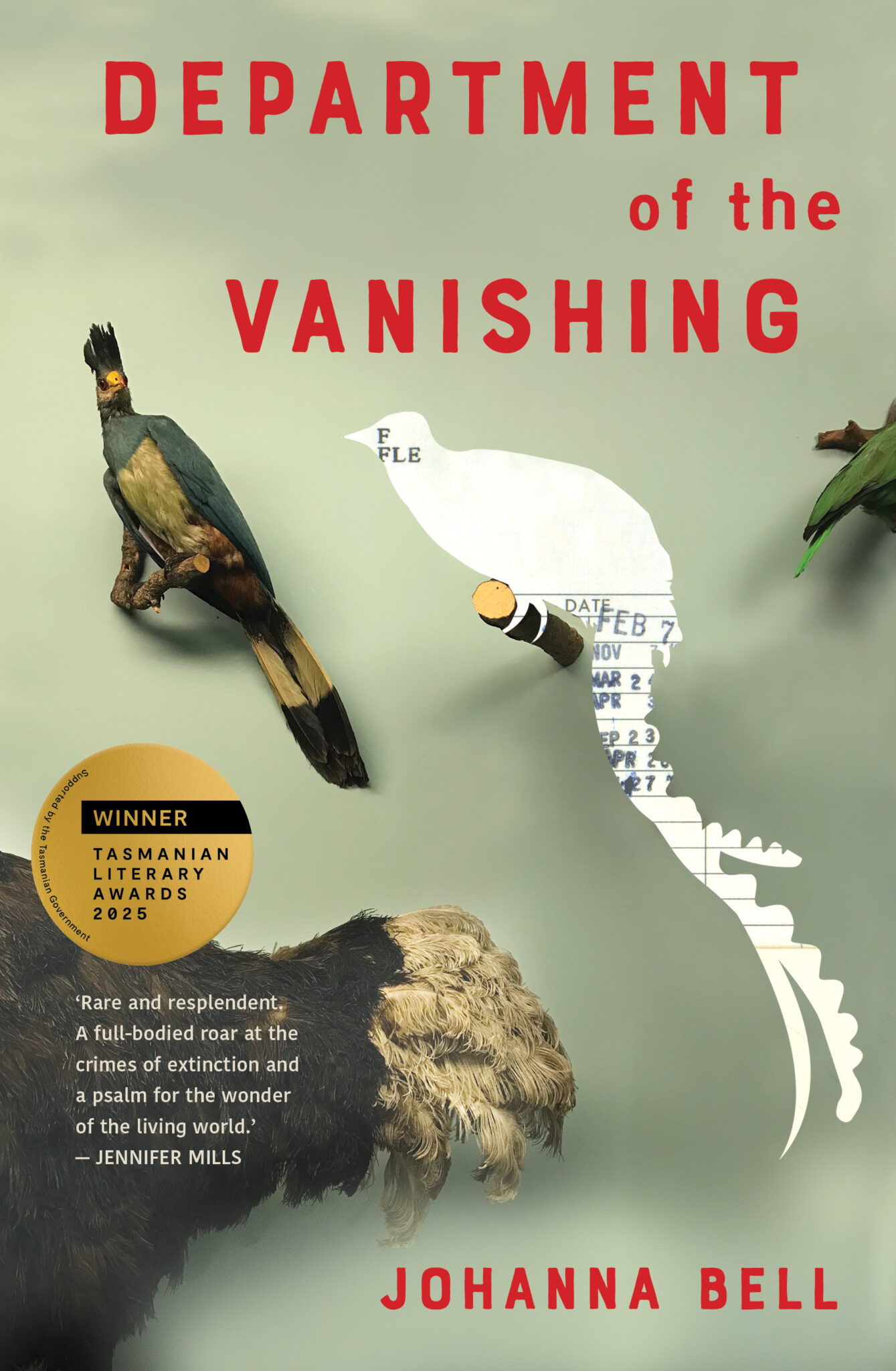
  • Johanna Bell, Department of the Vanishing (March, Transit Lounge)
  • Bridie Blake, The boyfriend clause (March, Text): debut novel (romance)
  • Brendan Colley, The season for flying saucers (April, Transit Lounge)
  • Abby Corson, Happy woman (April, Ultimo Press): cosy crime
  • Amanda Curtin, Six days (August, Upswell)
  • Alan Fyfe, The cross thieves (March, Transit Lounge)
  • Sulari Gentill, Chasing Odysseus (The Hero Trilogy, Book 1, plus Books 2 & 3) (May, Ultimo Press)
  • Robert Gott, The winter murders (latest in the Seasonal Murders) (August, Scribe)
  • Christine Gregory, The informant (May, Ultimo Press)
  • Victoria Hannan, I love the whole world! (August, Penguin)
  • Anita Heiss, The paradise pact (March, Simon and Schuster): First Nations
  • Eva Hornung, The minstrels (March, Text)
  • Ian Kemish, Two islands (February, UQP): debut novel
  • George Kemp, Soft serve (February, UQP): debut novel
  • Emily Lighezzolo, Life drawing (March, UQP)
  • Laure McPhee-Browne, Worry doll (June, Scribe)
  • Melissa Manning, Frogsong (March, UQP)
  • Sean Micallef, DeAth takes a holiday (March, Ultimo Press)
  • Jaclyn Moriarty, Time travel for beginners (August, Ultimo Press)
  • John Morrissey, Bird deity (February, Text): First Nations
  • Angela O’Keeffe, Phantom days (April, UQP)
  • Ellena Savage, The ruiners (no date, Summit)
  • Bobuq Sayed, No god but us (May, Ultimo Press): debut novel
  • M.L. Stedman, A far-flung life (March, Penguin)
  • Olivia Tolich, Side character energy (February, Text): debut novel (romance)
  • Steve Toltz, A rising of the lights (April, Penguin)
  • Sita Walker, In a common hour (January, Ultimo Press)
  • Dave Warner, Sound mind dead body (no date, Fremantle Press)
  • Fiona Wilkes, I remember everything (no date, Fremantle Press)
  • Chloe Wilson, The turnbacks (May, Penguin): debut novel
  • Michael Winkler, Griefdogg (March, Text)
  • Fiona Wright, Kill your boomers (March, Ultimo Press)

There are a few familiar names here, including some from whom we’ve not heard for a while (like Eva Hornung, Amanda Curtin and Romy Ash) and others who have published in other forms but are making their novel debuts (like Chloe Wilson).

Short stories

None that I saw.

Nonfiction

Divided into two broad categories …

Life-writing (loosely defined)

  • Cynthia Banham, Mother shadow: A meditation on maternal inheritance (April, Upswell)
  • Clara Brack, The secret landscapes: On not pleasing your mother (April, Upswell)
  • Valerie A Brown, The girl on the roof: The life of a change-maker (June, Scribe)
  • David Carlin and Peta Murray, How to dress for old age (February, Upswell)
  • Rosalie Ham, Look after your feet (April, Allen & Unwin)
  • Kate Holden, The ruin of magic: Longing and belonging in strange times (April, Black Inc)
  • Susan Lever, A.D. Hope: A life (March, La Trobe University Press/Black Inc)
  • Linda Martin, A tale of two publishing houses: A behind-the-scenes look into the publishing industry (April, Fremantle Press)
  • Jim Morrison, Tony Hansen, Alan Carter and Steve Mickler (ed), Why weren’t we told? (November, Upswell): First Nations stolen generation stories
  • Patrick Mullins, The stained man: a crime, a scandal, and the making of a nation (April, Scribe)
  • Lisa Wilkinson, The Titanic story of Evelyn (April, Hachette)
  • Laura Elizabeth Woollett, Hell days (September, Scribe)

History and other non-fiction

  • Julie Andrews, Where’s all the community? Aboriginal Melbourne revisited (March, Black Inc): First Nations
  • Danielle Clode, The enigmatic echidna: Secrets of the world’s most curious creature (May, Black Inc)
  • Michael Dulaney, Sentinels: how animals warn us of disease (August, Scribe)
  • Peter Hartcher, The Age of Carnivores: How Australia can navigate the new global order (March, Black Inc)
  • Andrew Leigh, The shortest history of innovation (February, Black Inc)
  • Martin McKenzie-Murray, Sirens: Inside the shadow world of first responders (April, Black Inc)
  • Ross McMullin, The light on the hill: An updated history of the Australian Labor Party (June, Scribe)
  • Desmond Manderson, High time: How Australia changed its mind about illegal drugs (April, La Trobe University Press/Black Inc)
  • Murray Pittock, The shortest history of Scotland (February, Black Inc)
  • Erin Vincent, Fourteen ways of looking (March, Upswell)

Poetry

Finally, for poetry lovers, I found these from publisher websites:

  • Beverley Farmer, For the seasons: Haikus (February, Giramondo): posthumous publication
  • Susan Fealy, The deer woman (May, Upswell)
  • Toby Fitch, Or, an autobiography (March, Upswell)
  • Yvette Henry Holt, Fitzroy North 3068 (May, Upswell)
  • Kristen Lang , [re]turn: love notes from the mountain (February, Upswell)
  • Caitlin Maling, Midwest (September, Upswell)
  • Maria van Neerven, Two tongues (February, UQP): First Nations
  • Dženana Vucic, after war (April, UQP)

So far I have read only two from my 2025 lists, one less than I had last year, but I have several on the TBR. Will I finish those, and how will I go this year?

PS I published this on Saturday NOT Monday by mistake! Oh well, you get my list early. If I find more titles I will add them.

Meanwhile, anything here interest you?

Six degrees of separation, FROM The third chopstick TO …

And so we start another year. I do hope it’s a good one for us all. I know that not everyone is as fortunate as I am, but wouldn’t it be wonderful if leaders around the world cared about their people and made the right decisions to keep us all safe and healthy. Meanwhile, I’ll just wish you all the best for 2026, including some great reading that feeds all of our hearts and minds. And with that, I will get onto the meme. As always, if you don’t know how it works, please check Kate’s blog – booksaremyfavouriteandbest.

The first rule is that Kate sets our starting book. This month, she did that sneaky thing she’s done at least once before which is that she has told us to start our first chain of the year with the book on which we ended our December chain. For me, that’s Biff Ward’s memoir, The third chopstick (my review). As I wrote in December, it’s about how Ward, a pacifist and anti-Vietnam War activist, decided later in life to revisit her actions during those emotional times. She sought out, met and interviewed some of the soldiers who fought in the war she’d demonstrated against.

Josephine Rowe, A loving faithful animal

So the obvious thing is for me to link to a book about that war. Trouble is, I have read a few. I did think of linking to one written from a Vietnamese perspective. However, in the end I decided to choose another one that looks at the aftermath for soldiers, Josephine Rowe’s A loving faithful animal (my review), in which she tells of a family broken by the father’s ongoing trauma (PTSD) following his Vietnam War experience. In her book, Biff Ward calls PTSD the Vietnam vets’ gift to the world, which, as many of you will know, is because it was largely through the Vietnam vets that PTSD became a recognised condition.

Rowe’s novel is told through multiple voices, with each chapter (or story) told from a different character’s point of view. Another novel about a family struggling with trauma – in this case the accidental death of a baby – and told through the different characters’ points of view is Melanie Cheng’s The burrow (my review).

In The burrow, the struggling little family’s life is disturbed by two new additions, a pet rabbit bought for Lucie and Amy’s mother Pauline who has broken her wrist and cannot live alone for a while. These two offer potential catalysts for change. I wrote in my post that it reminded me a little of Charlotte Wood’s Stone Yard devotional (my review), where three visitations threaten the peace of a quiet little religious community in an abbey on the Monaro.

Albert Camus, The plague

One of the visitations to that abbey is a mouse plague, so my next link is to one of my favourite novels of all time, Albert Camus’ La peste/The plague (my review), about a community on the Algerian coast that closes itself off when it is visited by the bubonic plague in the 1940s.

I wrote in my post on The plague that it can be read on different levels, one of which is a metaphorical story about how to live in an “absurd” (that is, inherently irrational) world. This is a bit of a loose link, but Tom Gauld’s graphic novel Goliath (my review) is specifically about the absurdity of war. It presents a Goliath who just wants to spend his time quietly doing admin work, not being an aggressor.

My final book is about a character who, like Goliath, lives in a world that can be confusing, if not sometimes downright hostile. As I wrote in my post, the overall theme seems to be: How do you live in this world? The novel is Uruguayan writer Ida Vitale’s Byobu (my review). Byobu is a more complex work to read than Goliath, but there are similarities in the description of a world where, for example, “supervision and compliance” are expected, but where defiance and imagination might be better.

Many of this month’s books, including Biff Ward’s opening one, encourage us to rethink our world view, in some way or another, to consider how much we align with “the plague” and how much we defy it. I rather enjoyed putting this together, particularly because it reminded me of some books I’ve not thought about for a while.

Have you read The third chopstick and, regardless, what would you link to?

Blogging highlights for 2025

Yesterday, as per my tradition, I posted my annual Reading highlights, which means tonight it’s time for my Blogging highlights. This is of more interest to me, really, but being a librarian/archivist by training I love to keep records and my blog is the best place to keep my blogging records – duh!

My main highlight for this year is one I let slip by, which is that August marked 15 years of writing my weekly Monday Musings posts. I published my first one on 9 August 2010, and never expected to be still blogging now, let alone writing those Musings. My closest post to that anniversary went live on Monday 11 August, and was no. 753. They can be a challenge at times, and some are pretty thin, but I enjoy writing them and love the conversations many of them engender. My post on The lost child motif (February 2011) which has been in my annual top three Monday Musings for some time, fell this year to 6th, but it is still my top Monday Musings of all time.

Anyhow, onto some specific highlights …

Top posts for 2025

Do you keep an eye on which posts of yours get the most hits? I’m particularly love seeing which of my review posts (that is, excluding Monday Musings, event and meme posts) attract visitors. Here is this year’s top ten:

  1. Claire Keegan, So late in the day (December 2023, Irish): retained top spot
  2. Charlotte Wood, Stone Yard devotional (June 2024, Australian): jumped up from 7th last year
  3. Richard Flanagan, Question 7 (March 2024, Australian): jumped up one, from 4th last year
  4. Jane Caro, The mother (September 2024, Australian): new to the top ten
  5. Barbara Kingsolver, Demon Copperhead (February 2024, American): slipped from 3rd last year
  6. Elizabeth Strout, Olive Kitteridge (June 2025, American): new to the top ten
  7. Shirley Jackson, “The lottery” (October 2021, American): new to the top ten
  8. Michelle de Kretser, Theory & practice (May 2025, Australian/Sri Lankan): new to the top ten
  9. Evelyn Araluen, Dropbear (July 2022, Australian/First Nations): new to the top ten
  10. Ernest Hemingway, “Cat in the rain” (September 2022, American): slipped from 2nd last year

Observations:

The last couple of years have seen quite a change in my Top Ten. For many years, older posts dominated my Top Ten, but in recent years there’s been a gradual shift to more of my newer posts taking top honours. This continued in 2025. Why, I wonder? The result is that my longterm serial Top Tenners (Jack London, Barbara Baynton, and Mark Twain) are absent again. In fact, this year’s oldest Top Ten post dates to October 2021 (Shirley Jackson’s “The lottery”).

There is always something to surprise me. This year it is Jane Caro’s The mother. It wasn’t an award-winner, and I don’t hear it mentioned much, but its coercive control subject is right in the zeitgeist, and its powerful response to that issue clearly continues to capture attention. Also interesting is the steady rise up the list of my post on Evelyn Araluen’s Dropbear, due largely I suspect to its being a set text. How encouraging that a contemporary work of First Nations poetry is a set text.

I also like to see how the posts written in the year fare, so here are the Top Ten 2025-published posts (again excluding Monday Musings, event and meme posts):

My most popular Monday Musings posts also saw a change, with last year’s third place, First Nations short story collections (July 2024), taking top spot this year, and the current year’s version of Some new releases dropping to second after a stranglehold at the top for a few years. Third place goes to literary Magandjin/Brisbane (September 2024).

Random blogging stats

The searches

It looks like Jetpack has dropped reporting on search terms altogether, which makes me sad, but it will keep this post a bit shorter!

Other stats

2025 was another quiet year for me post-wise. I wrote fewer posts than ever before, just 130, which is well under my long term average of 151. However, my overall hits for the year were only a little under last year’s significant jump and 24% ahead of 2023’s figures.

The top six countries visiting my blog changed a little. The top three were the same – Australia (37% versus last year’s 46%), the USA (22%, same as last year), and the United Kingdom – but then China, which was just out of last year’s Top Ten, popped in at fourth, followed by last year’s next group, India, Canada, and the Philippines, and then New Zealand, Germany and Ireland. Thankfully, I didn’t have the spamming/AI bot scraping that Brona had.

I first reported on Clicks last year. These tell which sites (and posts) visitors clicked on from my posts. They tell us something about how people (other bloggers and readers) engage with our posts, and about the blogging community. My most clicked on links are Wikipedia, my own blog and images within it, but here are the top 5 blogs clicked on from mine, plus their most clicked link:

Caledonian Road was clearly a big hit last year!

Challenges, memes, et al

There is no real change from last year. I continued to do my one regular meme, Kate’s (booksaremyfavouriteandbest) #sixdegreesofseparation (but did not do any others in 2025). And I took part, to some degree, in Nonfiction November (multiple bloggers), Novellas in November (Cathy of 746 books and Rebecca of Bookish Beck), the #YEAR Club (Kaggsy’s Bookish Rambling and Simon’s Stuck in a Book), and Buried in Print’s MARM. Most of these can be found via my “Reading weeks/months/years” category.

I value the structured opportunity these provide for us to explore writers and works we might otherwise not get to. I’d love to do more, but, well, I whinge enough so will say no more …

And so, on to 2026 …

Once again thanks to all of you who commented on my blog this year – my wonderful regulars and the newbies who gave me a shot. I love those of you who comment – regularly or occasionally – and thank you for engaging so positively. Posts can’t cover everything, so I enjoy it when comments tease out other ideas. I also love being encouraged to clarify my ideas and thinking. But, thank you too to the lurkers. Your interest and support is also greatly appreciated, even if I don’t know who you are.

I also want to thank all you hardworking bloggers out there. Again I’ve been a less regular commenter on your blogs than I’d like to, and it saddens me. My life has changed quite dramatically over the last five years, and I’m still working out how to manage my new lifestyle, and balance new and old commitments. I enjoy reading your posts when I can. I hope to read more, and engage in more book talk in 2026.

Finally, as always, big thanks to the authors, publishers and booksellers who make it all possible.

Roll on 2026 … and Happy New Year everyone.

Reading highlights for 2025

Here we are at my annual highlights time, which for me means posting my reading highlights on December 31, and blogging highlights on January 1. I do my Reading Highlights on the last day of the year, so I will have read (even if not reviewed) all the books I’m going to read in the year, and I call it “highlights” because I don’t do “best” or even, really, “favourite” books. Rather, I try to capture a picture of my reading year. I also include literary highlights, that is, reading-related activities which enhance my reading interests and knowledge.

Literary highlights

This mostly comprises my favourite literary events of the year. I never get to all that I would like – not even close – but those I attend I enjoy. Even where the books or authors may not be my favourite genre or topic, there is always something to learn from writers and other readers.

  • Canberra Writers Festival (CWF): I attended seven sessions this year, and you can find my write-ups on them (plus my posts on all previous festival sessions) on my Canberra Writers Festival tag. This year I attended more panels than conversations, which was not so much intentional as that the panels popped out as offering some interesting discussions. You can seen them all at the link.
  • Awards events: I attended three awards this year: ACT Literary Awards and, the ACT Book of the Year Award (which was my first CWF 2025 session), and the Stella (online) award.
  • Author conversations/book launches: I attended one more than last year. They were the ANU Meet the Author series (Sarah Krasnostein and Helen Garner, and Sofie Laguna); Canberra Writers Festival’s non-festival series (Colum McCann and Helen Garner); and an author tour (Irma Gold). I never get to as many of these as I would like, which is frustrating, but life is just busy.
  • Podcasts: I am not a big podcast follower, mainly because I prefer to have some moments of peace in my life rather than be constantly plugged in. However, I have continued to follow Secrets from the Green Room and this year I also listened to the ABC’s Book Show’s 5-part series, Dear Jane Austen, celebrating Jane Austen’s sesquicentenary. (I particularly loved the conversation with Colm Tóibín who discussed Austen with such a writer’s eye.) I also recommend Francie Finn’s three-part Firestarters by Francie Finn which drew in part from our Australian Women Writers blog posts on forgotten Australian women writers.

Reading highlights

I don’t set reading goals, but I do have basic “rules of thumb”. These are to give focus to Australian and women writers, include First Nations authors and translated literature in my list, and reduce the TBR pile. I didn’t do wonderfully with all these this year but they remain my rules of thumb.

2025 was a disappointing year – reading-wise, I mean – partly due to our regular trips to Melbourne where our children and grandchildren live, and to our two longer holidays (to Cape York and the Torres Strait in May-June and to Japan in August-September).

Now the highlights … each year I present them a bit differently, because each reading year is different. I love seeing how different themes and trends pop out each year. How much of this is due to the publishing zeitgeist and how much to my choices I can’t tell, but I think the former plays a big role. Here are this year’s observations (with links to my reviews on the first mention of a title):

The characters

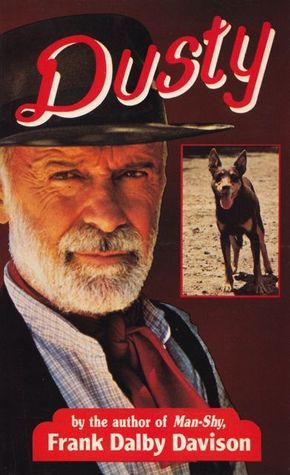
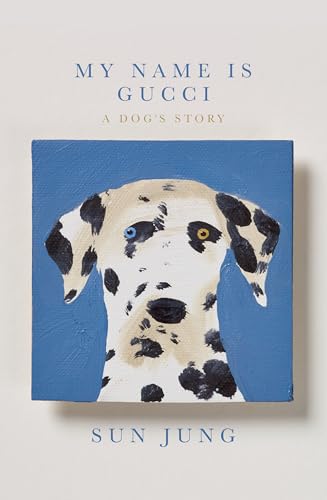
  • It’s a dog’s life: Last year I came across cross a variety of animals in my reading, but this year the dogs certainly had it. Three authors let us see some or all of their stories from a dog’s point of view, Frank Dalby Davison in Dusty, Sun Jung in My name is Gucci, and Carmel Bird in her short story, “The King’s white hound” (which was published in The Saturday Paper, and which I enjoyed but didn’t manage to post about.)
  • Shocking protagonists: I loved Olive in Elizabeth Strout’s Olive Kitteridge, even though sometimes she wasn’t very nice, she shocked in fact. But, she was honest and could be warm. She felt real . The other protagonist who could be even more shocking at times was Michelle de Kretser’s 24-year-old narrator in Theory & practice. She got up to some seriously unkind stuff but had a story to tell.
  • Vulnerable young people: These are not uncommon in literature, but this year a few were in real peril, most particularly 15-year-old Anna in Angus Gaunt’s novella Anna, but there were also those missing young people in Shelley Burr’s third crime novel Vanish.
  • Family in extremis: Families in trouble are also not uncommon, but Melanie Cheng’s family in The burrow had suffered a terrible sorrow before the novel’s start and were not coping well. My heart – along with that of many readers – went to them.
  • Writers as protagonists: Also not unusual. After all, who do writers know better than writers! And this year, I come across many, including Campbell in Andrew O’Hagan’s Caledonian Road, grieving mother Amy in The burrow, Gucci’s owner in My name is Gucci, the aging, questioning Quin in Brian Castro’s Chinese postman, and the stalled-in-life Fennell in Colum McCann’s Twist.

The subject matter

  • Messy lives and truths: Life – and truth – are messy. What do we mean by “truth” anyhow? I like books that recognise the greys. De Kretser talks of “messy human truths” and Colum McCann writes that “There is no logic. The world is messy”, while Winnie Dunn in Dirt poor islanders describes the “messy truth” of being an Islander.
  • Can art make a difference? This is one of those imponderables, and Irma Gold explores it in Shift, through photographer, Arlie, who is asked by a community leader to “show the world the truth about Kliptown”. It’s not essential, but I do like artists who want to make a difference, even while questioning – as Brian Castro also does in Chinese postman – whether art can indeed achieve anything.
  • Pushing the fiction envelope: I read several books this year – like, Olga Tokarczuk’s House of day, house of night, Chinese postman, Theory & practice – which challenged me (and other readers) because their authors pushed us to think about what a novel is and can be.
  • Would you eat a mushroom? Mushrooms popped up frequently in my reading this year, quite unrelated to the year’s big criminal case, the Leongatha Mushroom Murders trial. Maybe mushrooms have appeared just as often in previous years, but I haven’t noticed? Whatever the reason, they kept popping up, including in Vanish, Anna, and House of day, house of night.
  • Pandemic: With the pandemic now receding into the past, it is starting to appear in more fiction, not always as the main subject but as a backdrop. Sometimes it’s quite a significant backdrop, as in The burrow, while other times it’s a smaller part of the whole, as in Caledonian Road, or affected the writing in some way, as in Twist and Helen Garner’s The season.
  • Truthtellers of the year: I am keeping this category because truthtelling, particularly regarding the “colonial project”, is not done. My favourites this year were the real Wayne Bergman in his and Madelaine Dickie’s Some people want to shoot me, and Louise Erdrich’s fictional Thomas in her historical novel, The night watchman.

The reading life

  • TBR treasures: All my TBR reading this year was worth waiting for, but if I had to name one standout, it would be Olive Kitteridge. I expected to love it, and I did.
  • Surprises of the year: The Russian satirical writer Teffi (my post), whom I discovered via the 1925 Year Club, was the biggest surprise. I now have a collection of her stories in my Kindle library. Others included the African American writer Alice Ruth Moore/Alice Dunbar Nelson (see my posts) and many of the forgotten writers found during my AWW research, including Gertrude Mack (my post). She has not lasted as well as her sisters Louise and Amy, presumably because she was published in newspapers not books, but she was quite the goer.
  • Jane Austen sesquicentenary: I cannot not mention Jane Austen given this was the 250th year of her birth. I didn’t read more Jane, because I read and talk about her every year, but I loved all the love she got!

Some stats …

I don’t read to achieve specific stats, but I do have some reading preferences which I have shared in past years so won’t again here. There has been some skewing in my reading over the three years, and it continues, partly because my life has changed and partly because the research I do for my Australian Women Writers (AWW) blog posts has me reading more older short stories by women. This affects the balance in terms of gender, year of publication and form (short story). So, this year:

  • 85% of my reading was fiction (the same as last year) and 79% of my authors were women, which is a little higher than last year. Both percentages are higher than my long-term average.
  • 50% of the year’s reading comprised works written before 2000, which is around the same as last year, and also higher than recent percentages largely (again) due to my AWW research.
  • 58% of this year’s authors were Australian, which is around the same as last year.
  • In 2023, short stories and novellas comprised over 60% of my year’s reading. This halved in 2024 to just over 30%, and increased a bit this year to just over 40%.
  • My reading of First Nations authors dropped this year, but my reading of translated authors increased by one. I hope to increase both in 2026.

I read four books from my actual TBR, two more than last year! Woohoo! They were Frank Dalby Davison’s Dusty, Paddy O’Reilly’s Other houses, Elizabeth Strout’s Olive Kitteridge, and Margaret Atwood’s Negotiating with the dead.

Tomorrow, I will post my blogging highlights, but now I’ll leave you with a message from one of this year’s books:

Nanna taught me nothing less than what it means to be human, to earn the grace and wisdom that come from surviving darkness and celebrating light. (Andra Putnis, Stories my grandmothers didn’t tell me)

So, huge end-of-year thanks to you who read my posts, engage in discussion, recommend more books and support our little litblogging community. I wish you all the grace and wisdom that books (and life’s lessons) can bring – and a peaceful 2026.

What were your 2025 reading or literary highlights?

Monday musings on Australian literature: Favourite books 2025, Pt 2: Nonfiction

Last Monday, I shared the favourite Fiction and Poetry books that had been chosen by various critics and commentators in a select number of sources. I haven’t always shared the nonfiction choices, though I do think it’s worth doing – so this year I am! I won’t repeat the intro from last week, but I will re-share the sources, having edited them slightly to show those which included nonfiction … and remind you that I’ve only included the Aussie choices.

Here are the sources I used:

  • ABC RN Bookshelf (radio broadcaster): Cassie McCullagh, Kate Evans and a panel of bookish guests, Jason Steger (arts journalist and former book editor); Jon Page (bookseller); Robert Goodman (reviewer and literary judge specialising in genre fiction): only shared their on air picks, not their extras which became long
  • Australian Book Review (literary journal): selected across forms by ABR’s reviewers
  • Australian Financial Review (newspaper, traditional and online): shared “the top picks …to add to your holiday reading pile.” (free briefly, but now paywalled.)
  • The Conversation (online news source): experts from across the spectrum of The Conversation’s writing so a diverse list
  • The Guardian (online news source): promotes its list as “Guardian Australia critics and staff pick out the best books of the year”.
  • Readings (independent bookseller): has its staff “vote” for their favourite books of the year, and then lists the Top Ten in various categories, one of which is adult nonfiction, of which I have included the Australian results.

And here are the books …

Life-writing (Memoir/Autobiography/Biography/Diaries)

Book cover
  • Katherine Biber, The last outlaws (Patrick Mullins, ABR; Clare Wright, ABR)
  • David Brooks, A.D. Hope: A memoir of a literary friendship (Tony Hughes-d-Aeth, ABR)
  • Geraldine Brooks, Memorial days (Jenny Wiggins, AFR; Susan Wyndham, The Guardian; Readings)
  • Bob Brown, Defiance (Readings)
  • Candice Chung, Chinese parents don’t say I love you (Readings)
  • Robert Dessaix, Chameleon (Tim Byrne, The Guardian) (on my TBR)
  • Helen Garner, How to end a Story: Collected diaries (Ben Brooker, ABR; Stuart Kells, ABR; Jonathan Ricketson, ABR; Lucy Clark, The Guardian) (see my posts on vol 1 and vol 2 from this collected volume)
  • Moreno Giovannoni, The immigrants (Joseph Cummins, The Guardian)
  • Hannah Kent, Always home, always homesick (Kate Evans, ABC)
  • Josie McSkimming, Gutsy girls (Amanda Lohrey, ABR)
  • Sonia Orchard, Groomed (Clare Wright, ABR)
  • Mandy Sayer, No dancing in the lift (Clare Wright, ABR)
  • Lucy Sussex and Megan Brown, Outrageous fortunes: The adventures of Mary Fortune, crime-writer, and her criminal son George (Stuart Kells, ABR)
  • Marjorie (Nunga) Williams, Old days (Julie Janson, ABR)

History and other nonfiction

  • Geoffrey Blainey, The causes of war (rerelease) (Stuart Kells, ABR)
  • Ariel Bogle and Cam Wilson, Conspiracy nation (Joseph Lew, AFR)
  • Liam Byrne, No power greater: A history of union action in Australia (Marilyn Lake)
  • Anne-Marie Condé, The Prime Minister’s potato: And other essays (Patrick Mullins, ABR) (on my TBR)
  • Joel Deane, Catch and kill: The politics of power (rerelease) (Stuart Kells, ABR) 
  • Helen Garner, Chloe Hooper & Sarah Krasnostein, The Mushroom Tapes (Donna Lu, The Guardian; Readings)
  • Juno Gemes, Until justice comes (Mark McKenna, ABR)
  • Alyx Gorman, All women want (Sian Cain, The Guardian)
  • Luke Kemp, Goliath’s curse: The history and future of societal collapse (Tom Doig, The Conversation; John Long, The Conversation)
  • Richard King, Brave new wild: Can technology really save the planet? (Carody Culver, ABR; Clinton Fernandes, ABR)
  • Shino Konishi, Malcolm Allbrook and Tom Griffiths (ed), Reframing Indigenous biography (Kate Fullager, ABR)
  • Natalie Kyriacou, Nature’s last dance: Tales of wonder in an age of extinction (Euan Ritchie, The Conversation)
  • Melissa Lucashenko, Not quite white in the head (Glyn Davis, ABR; Michael Williams, ABR; Readings)
  • Ann McGrath and Jackie Huggins (ed), Deep history: Country and sovereignty (Kate Fullager, ABR)
  • Tom McIlroy, Blue Poles: Jackson Pollock, Gough Whitlam and the painting that changed a nation (Esther Anatolis, ABR; Alex Now, AFR)
  • Mark McKenna, Shortest history of Australia (Patrick Mullins, ABR)
  • Djon Mundine, Windows and mirrors (Victoria Grieves Williams, ABR)
  • Antonia Pont, A plain life: On thinking, feeling and deciding (Julienne van Loon, The Conversation)
  • Margot Riley, Pix: The magazine that told Australia’s story (Kevin Foster, ABR)
  • Sean Scalmer, A fair day’s work: The quest to win back time (Marilyn Lake, ABR)
  • Emma Shortis, After America: Australia and the new world order (Marilyn Lake, ABR)
  • Don Watson, The shortest history of the United States of America (Emma Shortis, The Conversation)
  • Hugh White, Hard new world: Our post-American future (Marilyn Lake, ABR)
  • Tyson Yunkaporta & Megan Kelleher, Snake talk (Readings)

Cookbooks

  • Helen Goh, Baking & the meaning of life (Sian Cain, The Guardian)
  • Rosheen Kaul, Secret sauce (Alyx Gorman, The Guardian)
  • Thi Le, Viet Kieu: Recipes remembered from Vietnam (Yvonne C Lam, The Guardian)

Finally …

One children’s book, as far as I could tell, was chosen, and I’ve not included it anywhere else so here it is:

  • Rae White, with Sha’an d’Anthes (illus.), All the colours of the rainbow (Esther Anatolis, ABR)

A few books were named by two people, with two books named by three, Geraldine Brooks’ Memorial days and Melissa Lucashenko’s Not quite white in the head, and one named by four, Helen Garner’s How to end a Story: Collected diaries. Is it a coincidence that these authors have also written fiction? Or that in terms of my reading wishes, they are up there, though several others are in my sights.

Is there any nonfiction in your sights for 2026? After all, Nonfiction November isn’t that far away if this year is any indication!

Books given in 2025

Over the years I have often listed the books I gave as Christmas gifts, though last year I shared the books I gave throughout the year – as Christmas, birthday and other gifts. I’m doing the same this year. Most, though not all, are Australian books. They are not necessarily my favourite reads – indeed, I haven’t read many of them – because they were chosen to suit the recipients’ likes. Those I have read I did enjoy, otherwise I wouldn’t have given them to someone else, and some of those I haven’t read are on my TBR.

  • Isabel Allende, My name is Emilia del Valle (historical fiction, Chilean American)
  • Maxine Beneba Clarke, Beautiful changelings (poetry collection, Australian) (on my TBR)
  • Peter Carnavas, Blue whale blues (children’s picture book, Australian)
  • Gregory Day, Southsightedness (poetry collection, Australian) (on my TBR)
  • Garry Disher, Mischance Creek (crime fiction, Australian)
  • Abbas El-Zein, Bullet, paper, rock: A memoir of war and words (memoir, Lebanese-Australian) (on my TBR)
  • Richard Flanagan, Question 7 (nonfiction, Australian) (my review)
  • Lily King, Heart the lover (novel, American)
  • Angus Gaunt, Anna (novel, Australian, given to a few people)(my review)
  • Saskia Gwinn, Scientists are saving the world (children’s nonfiction picture book, English)
  • Joanne Harris, Vianne (novel, British)
  • Gail Jones, The name of the sister (novel, Australian) (on my TBR)
  • Kim Kelly, Touched (memoir, Australian) (my review)
  • Tania McCartney, Wildlife compendium of the world: Awe-inspiring animals from every continent (children’s nonfiction picture book, Australian)
  • Dinuka McKenzie, The torrent (crime fiction, Australian)
  • Jen Marlin, Wind riders: Rescue on Turtle Beach (children’s chapter book, American)
  • Seichō Matsumoto, Suspicion (crime fiction, Japanese)
  • Meanjin: Essays that changed Australia, 1940 to today (essays, Australian)
  • Robert Skinner, I’d rather not (memoir, Australian) 
  • Jessica White, Habits of silence (ecobiographical essays, Australian) (on my TBR)

It’s quite a variety as you can see, but that’s because – of course – my family and friends range in age and interests. You will see a few more children’s books here than usual. You can guess why.

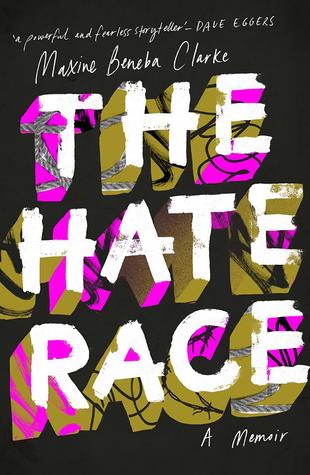
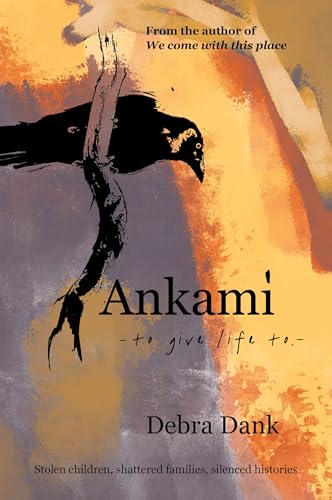
As for books I received this Christmas? They included two for reading group next year (so were on my Santa list), Maxine Beneba Clarke’s Beautiful changelings and Niall Williams’ This is happiness, plus Debra Dank’s new book Ankami: Stolen children, shattered families, silenced histories, and Zitkála-Šá’s American Indian stories. All wonderful choices for me, and all authors I’ve read before except for Niall Williams whom I’ve wanted to read for some time.

How about you? Care to share your Christmas book-giving and/or receiving?

Monday musings on Australian literature: Favourite books 2025, Pt 1: Fiction and Poetry

Around this time of December, I have, for some years, shared favourite Aussie reads of the year from various sources. Those sources have varied a little from time to time. This year’s are listed below.

This is not a scientific survey. For a start, the choosers’ backgrounds vary. Depending on the source, they may include critics, reviewers, commentators, subject specialists, publishers and/or booksellers. Then, there’s the fact that what they are asked to do varies. For example, some pickers are “allowed” to name several books while others are limited to “one” best (or favourite). And of course, they choose from different sets of books, depending on what they have read, and they use different criteria. In other words, this exercise is more serendipitous than authoritative. But, it still has value.

As always, I’m only including the choosers’ Aussie choices, but I include links to the original article/post so you can read them yourselves, should you so wish.

Here are the sources I used:

  • ABC RN Bookshelf (radio broadcaster): Cassie McCullagh, Kate Evans and a panel of bookish guests, Jason Steger (arts journalist and former book editor); Jon Page (bookseller); Robert Goodman (reviewer and literary judge specialising in genre fiction). I only shared their on air picks, not their extras.
  • Australian Book Review (literary journal): selected from many forms by ABR’s reviewers
  • Australian Financial Review (newspaper, traditional and online): shared “the top picks … to add to your holiday reading pile.” 
  • The Conversation (online news source): experts from across the spectrum of The Conversation’s writing so a diverse list.
  • The Guardian (online news source): promotes its list as “Guardian Australia critics and staff pick out the best books of the year”.
  • Readings (independent bookseller): staff “vote” for their favourite books of the year, then Readings shares the Top Ten in various categories.

To keep it manageable, I am focusing here on fiction (including short stories) and poetry, with a separate post on nonfiction, to follow.

Novels

  • Randa Abdel-Fattah, Discipline (Zora Simic, ABR; Clare Wright, ABR)
  • Shokoofeh Azar, The Gowkaran tree in the middle of our kitchen (Edwina Preston, The Conversation)
  • Dominic Amerena, I want everything (Julian Novitz, ABC; Jon Page, ABC; Andrew Pippos, AFR; Jack Callil, The Guardian) (Kate’s review)
  • Marc Brandi, Eden (Robert Goodman, ABC)
  • Paul Daley, The leap (Julie Janson, ABR; Bridie Jabour, The Guardian)
  • Olivia De Zilva, Plastic budgie (Jo Case, The Conversation)
  • Laura Elvery, Nightingale (Readings)
  • Beverley Farmer, The seal woman (1992, rereleased 2025) (Eve Vincent, The Conversation)
  • Jon Fosse, Septology (Marjon Mossammaparast, ABR)
  • Andrea Goldsmith, The buried life (Readings) (my review)
  • Madeleine Gray, Chosen family (Kate Evans, ABC) (Brona’s review)
  • Fiona Hardy, Unbury the dead (Jon Page, ABC; Readings)
  • James Islington, The strength of the few (Tim Byrne, The Guardian)
  • Brandon Jack, Pissants (Readings) (Kate’s review)
  • Toni Jordan, Tenderfoot (Readings)
  • Vijay Khurana, The passenger seat (Beejay Silcox, The Guardian) (Lisa’s review)
  • Sofie Laguna, The underworld (Sian Cain, The Guardian) (on my TBR, see my conversation post)
  • Charlotte McConaghy, Wild dark shore (Julia Feder, AFR) (Brona’s review)
  • Jasmin McGaughey, Moonlight and dust (Allanah Hunt, The Conversation) (See my CWF post)
  • Lay Maloney, Weaving us together (Melanie Saward, The Conversation)
  • Patrick Marlborough, Nock Loose (Jared Richards, The Guardian)
  • Angie Faye Martin, Melaleuca (Sandra Phillips, The Conversation)
  • Jennifer Mills, Salvage (Robert Goodman, ABC; Alice Grundy, The Conversation
  • Judi Morison, Secrets (Paul Daley, The Guardian)
  • Rachel Morton, The sun was electric light (Readings; Seren Heyman-Griffiths, The Guardian)
  • Omar Musa, Fierceland (Kate Evans, ABC; Readings; Giselle Au-Nhien Nguyen, The Guardian)
  • Andrew Pippos, The transformations (Jo Case, The Conversation; Cassie McCullagh, ABC; Readings; Zora Simic, ABR)
  • Nicolas Rothwell and Alison Nampitjinpa Anderson, Yilkari: A Desert Suite (Stephen Romei, ABR; John Woinarski, AFR) (on my TBR)
  • Josephine Rowe, Little world (Felicity Plunkett, ABR; Readings; Geordie Williamson, ABR; Fiona Wright, The Conversation) (Lisa’s review)
  • Craig Silvey, Runt and the diabolical dognapping (Jason Steger x 2, ABC and ABR)
  • Jessica Stanley, Consider yourself kissed (Lauren Sams, AFR)
  • Sinéad Stubbins, Stinkbug (Michael Sun, The Guardian)
  • Lenore Thaker, The pearl of Tagai town (Julie Janson, ABR)
  • Madeleine Watts, Elegy, Southwest (Steph Harmon, The Guardian)
  • Sean Wilson, You must remember this (Jason Steger x 2, ABC and ABR) (Kate’s review)

Short stories

  • Tony Birch, Pictures of you: Collected stories (Tony Hughes-d’Aeth, ABR; Julie Janson, ABR; Readings; Geordie Williamson, ABR; BK, The Guardian)
  • Lucy Nelson, Wait here (Marjon Mossammaparast, ABR; Bec Kavanagh, The Guardian)
  • Zoe Terakes, Eros (Dee Jefferson, The Guardian)

Poetry

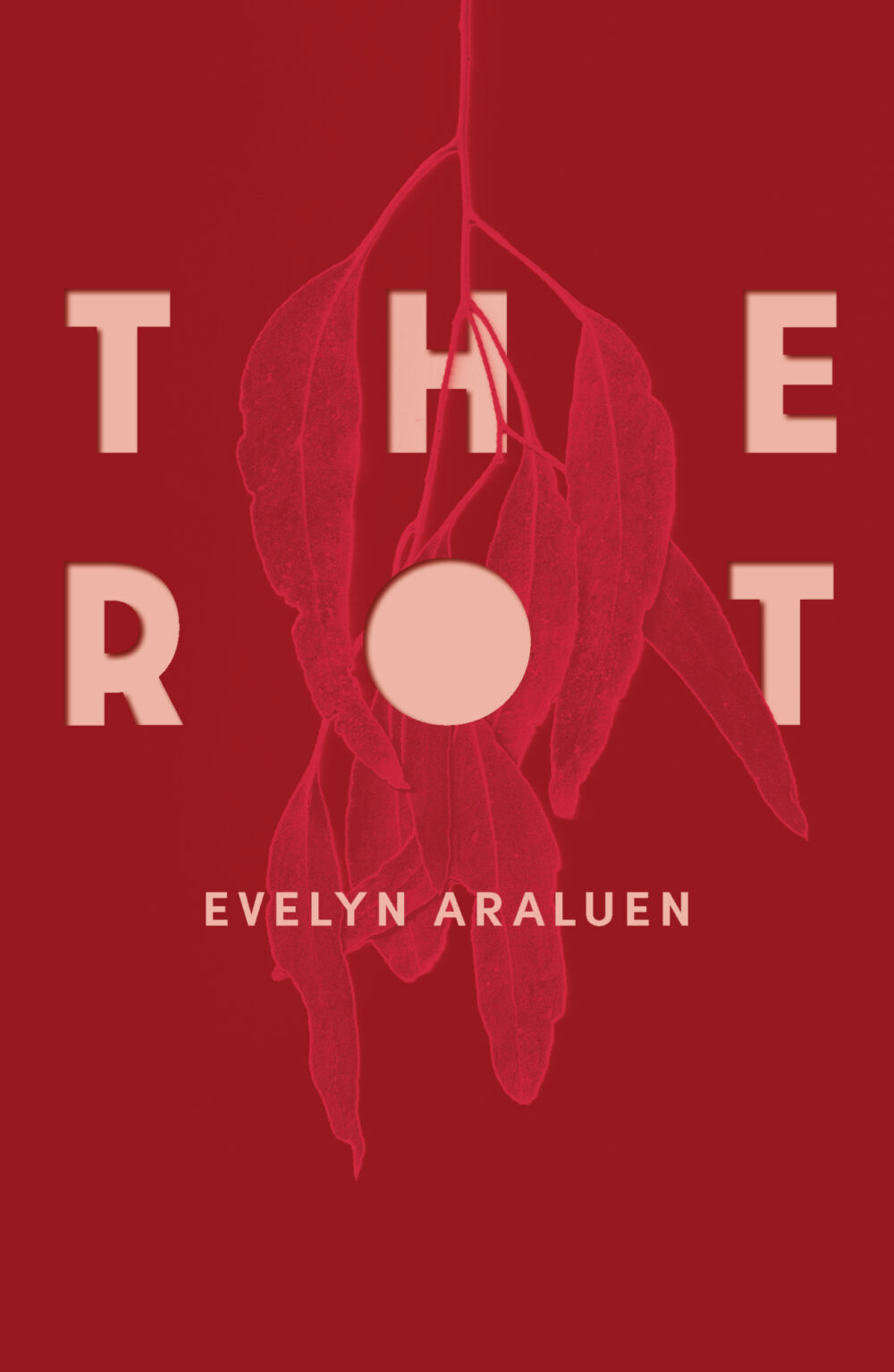
  • Evelyn Araluen, The rot (Tony Hughes-d’Aeth x 2, ABR and The Conversation; John Kinsella, ABR; Alison Croggon, The Guardian) (on my TBR, see my CWF posts 1 and 2)
  • Eileen Chong, We speak of flowers (Seren Heyman-Griffiths, The Guardian) (Jonathan’s review)
  • Antigone Kefala, Poetry (Marjon Mossammaparast, ABR)
  • Luke Patterson, A savage turn (Felicity Plunkett, ABR; John Kinsella, ABR)
  • Omar Sakr and Safdar Ahmed, The nightmare sequence (Jen Webb, The Conversation)
  • Sara M. Saleh and Zainab Syed with Manal Younus (ed.), Ritual: A collection of Muslim Australian poetry (Esther Anatolis, ABR; Julie Janson, ABR)

Finally …

It’s encouraging to see the increasing diversity in these lists, including (but not only) several First Nations writers, compared with the lists I made just three or four years ago. It’s also interesting to see what books feature most. Popularity doesn’t equal quality, but it does indicate something about what has attracted attention during the year. One book (Tony Birch’s short story collection) was mentioned five times, and three others four times:

  • Tony Birch, Pictures of you (short stories)
  • Dominic Amerena, I want everything
  • Andrew Pippos, The transformations
  • Josephine Rowe, Little world

Of last year’s most mentioned books, several received significant notice at awards time – some winning them – including Michelle de Kretser’s Theory & practice and Fiona McFarlane’s Highway Thirteen.

This year, I read three novels from last year’s (2024) lists, Brian Castro’s Chinese postman, Melanie Cheng’s The burrow, Michelle de Kretser’s Theory & practice.

So, what has caught my eye from this year’s list, besides the one I have read – Andrea Goldsmith’s The buried life – and those on my TBR? Well, many, but in particular Tony Birch’s short story collection. And, I have read Josephine Rowe and Shokoofeh Azar before, so I am keen to read their new books.

If you haven’t seen it you might also like to check out Kate’s list of the top 48 books (from around the world) that appeared on the 54 lists she surveyed.

Thoughts – on this or lists from your neck of the wood?

Kim Kelly, Touched (#BookReview)

In 2023, novelist Kim Kelly was one of the two winners of Finlay Lloyd’s inaugural 20/40 Publishing Prize, with her 1920s-set historical novel, Ladies’ Rest and Writing Room (my review). Publisher Julian Davies had hoped at the time to award one fiction and one nonfiction prize, but there was a dearth of good nonfiction entries. That was rectified in 2024, with Sonya Voumard’s book on dystonia, Tremor (my review), being one of the two winners. This year, Kim Kelly returned with a nonfiction work on anxiety, titled Touched: A small history of feeling – and won again.

There is an obvious similarity between these two nonfiction winners, given both deal with medical conditions that impinge significantly on their writers’ lives. However, as quickly becomes apparent, the similarity is superficial, probably due to their writers’ origins. Voumard and Kelly are both published authors with other books to their names, but Voumard is a journalist while Kelly is a novelist, and this I think informs their different approaches to their subject matter.

Finlay Lloyd describes Touched like this:

Why this book is different
Documenting the damaging role of anxiety in our lives is hardly new, but Touched takes us inside the destabilising riot of a three-day panic attack with such insight, honesty and humour that the perspective we gain is revelatory and overwhelmingly hopeful.

Why we liked it
This book has a wonderful breadth of understanding—of the author’s own crazily complex family, of the wider issue of anxiety across society, and of her own voyage as a highly competent yet vulnerable being in a worryingly unhinged world.

Both Voumard and Kelly use a personal narrative arc to frame their discussions. For Voumard it’s the brain surgery she is about to undertake as her book opens, while for Kelly it’s the three-day panic attack she has leading up to her Masters graduation ceremony. Kelly’s focus is this attack. She takes us into it, viscerally. It is the emotional and narrative core of this book. Voumard, on the other hand, weaves her own story through a wider story about dystonia, in which she explores its different forms and treatments through the experiences of others as well as her own. Both writers situate their conditions within a wider societal context, but very differently.

And here I will leave Voumard. After all, she has her own review already!

Kelly starts her book with an (unlabelled) author’s note in which she explains that memory is slippery, so dates and details may not be precise, but “everything in this memoir is true, in essence and in feeling”. I like this, because no-one can remember all the tiny details, and in most cases – crime, excepted – they are not important. What is important is being truthful to the experience, and this, I feel, Kelly achieves.

“It’s exhausting, being human”

Touched is divided into two parts – the lead up to graduation day, and then graduation day and its aftermath. Within these parts are single-word titled chapters starting, logically, with “contact”, and her contradictory responses to “touch”, to how physical touch can settle her but can also produce anxiety when it involves people she doesn’t know well, like, say, hairdressers, doctors and dentists. As for masseurs, no way! But “touched” of course has other meanings, including:

To be in touch, to communicate. To have the touch, a skill at something. To be touched, to be momentarily captured by some sentiment. To live in a vague state of craziness. To feel. Small word, wonderfully big inside its tight dimensions of spelling and sound.(p. 14)

Kelly, who is a book editor as well as a novelist, loves words, so her memoir is written with the eye of someone who is deeply engaged with the meanings of words and how they convey feelings. As graduation day approaches, and she and her partner drive to Sydney for it, she suffers an excruciating panic attack which she describes with a clarity that is revelatory for those like me who have not experienced that degree of psychic distress. At the same time, she looks back to history – including to the Ancient Greeks and philosophers like Aristotle – for ideas on anxiety. And she flashes back to her own past, exploring how and where and why it all began. Her Jewish roots, the experiences of poverty and war in her Irish Catholic tree, the insecurities of her parents, her own childhood fears, and wider societal issues like the imposter syndrome that is particularly common among women, all come into the frame.

It’s not all distress and misery, however, because in between her mulling she shares her wins, her strategies, and her optimistic self that keeps on going. The writing is beautiful, slipping between information-sharing, straight narrative, and light or lyrical, rhythmical moments when she takes a breath and so do we.

Touched is a personal story, and so, by definition, it can be intensely self-focused at times. However, the intensity serves a purpose for those unfamiliar with what anxiety can do. Further, with a keen sense of tone, Kelly regularly reins it in so it never wallows. At the time of her writing, she tells us, around 17% of Australians had experienced some form of anxiety disorder. That’s nearly one in five of us. This book is for all those people – and for the rest of us who know someone who has experienced it, or who might ourselves experience it one day. We just never know. We should thank Kim Kelly for putting herself out there, so beautifully and so honestly.

Read for Novellas in November (as novella-length nonfiction) and Nonfiction November, but not quite finished in time!

Kim Kelly
Touched: A small history of feeling
Braidwood: Finlay Lloyd, 2025
142pp.
ISBN: 9780645927030

My reading group’s favourites for 2025

Once again, I am sharing my reading group’s top picks for the year, because I think, like me, many of you enjoy hearing about other reading groups.

I’ll start by sharing what we read in the order we read them (with links on titles to my reviews):

Last year, I wrote that our schedule had been less diverse than it had been for a while, with eight of our eleven authors being Australian, seven of whom were Australian women. I’m always happy to support Australian women writers as you know, but diversity in a reading group is good. This year we did mix it up more. Only five of our eleven authors were Australian, four of whom were women. Of the other six, three were by American writers, and three by writers from Great Britain and Ireland. This could sound a little white-anglo focused but there was some diversity in our writers’ backgrounds, with an African American, First Nations American, and three Australians coming from migrant backgrounds (including Winnie Dunn, the first published Tongan Australian novelist). We read four male writers this year, versus two last year, but only one nonfiction work versus three last year. We didn’t read any novels in translation, which I’d love to rectify, and for the first time in a while we read no First Nations Australian work.

The top picks …

Like last year all eleven of our regularly attending members voted, meaning the maximum a book could get was 11 votes, and that there were 33 votes all up. The rules were the same. We had to name our three favourite works, and all were given equal weighting. Last year, the top three positions were closely fought with just a vote between each of the place-getters, but this year we had a runaway winner, and second place was ahead of the pack too, with two then tying for third place. (A bit more like 2023’s Top Picks).

2025’s top three places were:

  1. Olive Kitteridge by Elizabeth Strout (9 votes)
  2. Stories my grandmothers didn’t tell me by Andra Putnis (7 votes)
  3. Caledonian Road by Andrew O’Hagan and The night watchman by Louise Erdrich (4 votes each )

We didn’t name any highly commendeds because the rest of the votes were evenly spread across the rest of the books, with four receiving two votes, one receiving one, and two receiving no votes (not because, as we discussed at our Christmas do, they were disliked so much as they just didn’t jump out at people when it came to choosing three.) Some of the biggest Austen fans in the group didn’t vote for Mansfield Park (which received two votes) because, first, it was a multiple re-read for most of us and we decided to choose from new reads, and second, because it is in a league of its own.

As for my three picks, it was very tough (as always). I got something out of every book I read, and many will stay with me for a long time. There were five that I really wanted to nominate. Unlike last year, the group’s top pick was in my top three, but like last year, and like most years, my three books were all fiction. They were, in alphabetical order, Louise Erdrich’s The night watchman, Percival Everett’s James, and Elizabeth Strout’s Olive Kitteridge. I chose these because Strout took a flawed middle-aged woman and her community and described them with great humanity; because Erdrich captured an important story in First Nations American history and told it through characters who felt whole and real; and because Everett, with clever wit, used language in a way that shows the fundamental role it plays the power dynamic.

Selected comments

Not everyone included comments with their picks, and not all books received comments, but here’s a flavour of what was said:

Cover
  • Olive Kitteridge: Commenters talked about the humour and characterisation that made us come to like and understand a flawed protagonist; one described it beautifully saying “original voice, earthy characters, and quirky stories”.
  • Stories my grandmothers didn’t tell me: Commenters focused on its impact on their feelings, and its meaningful portrayal of the experiences of migration; one described it as “deeply personal [but] also universal”.
  • Caledonian Road: Four votes but only one comment which, however, summed it up perfectly, “loved the depth, breadth, Dickensian layers of multiple characters, and stories of modern London”.
  • The night watchman: The two commenters talked of its evocation of place and characters, and its depiction of a community coming together to oppose unfair laws that threaten to dispossess them more than they already were.

I’d love to hear your thoughts, particularly if you were in a reading group this year. What did your group read and love?

Monday musings on Australian literature: recent Australian creative nonfiction on my TBR

Brona (This Reading Life) recently announced her main reading project for next year, Reading Nonfiction 2026, in which she plans to read 24 nonfiction books from her TBR. She has written a few posts on the project, including on two nonfiction categories on her TBR shelves, Australian Lit Bios and Environment, Climate and Travel. If you are looking for some good Aussie nonfiction – perhaps to get ahead of the game for Nonfiction November 2026 – these posts would be a good place to start.

While I also have nonfiction books on my TBR shelves, including some in the categories above, particularly the Lit Bio one, I thought I would share here some books from another “genre”, that described as creative or narrative or even literary nonfiction. As I have written before, including in my Supporting Genres post back in 2021, it generally refers to nonfiction writing that uses some of the techniques of fiction, particularly, but not only, in terms of narrative style. Wikipedia defines it as “a genre of writing that uses literary styles and techniques to create factually accurate narratives.” This is a good enough description (I’ll use “description” that rather than “definition”) for me to use here.

I do enjoy nonfiction, including history of all sorts but particularly social history, autobiography and biography, travel, science, and more, but the form which this writing takes can make a difference and, being a lover of fiction, creative nonfiction is my preferred form. As is my wont and as I explained in that 2021 post, I define it broadly, so I won’t repeat all that here. Instead, I’ll just list a few that are on my TBR right now that fill the bill. 

Interestingly, several of them come from Upswell Publishing which, as publisher Terri-ann White says on her About page, publishes “books that elude easy categorising and work somewhat against the grain of current trends. They are books that may have trouble finding a home in the contemporary Australian publishing sector.” They are, in fact, the sorts of books that tend to fall into the creative nonfiction basket. Other publishers who publish in this area include Transit Lounge, Text Publishing, and, although small in output, Finlay Lloyd. Interestingly too, these books are often, but certainly not always, written by writers of fiction.

So, here is a somewhat eclectic and random list of recent books from my TBR. I have ascribed some sort of “form” to them, but because, by definition, they are hard to categorise, these descriptors are loose, even those that don’t look like they are:

  • Anne-Marie Condé, The prime minister’s potato and other essays (Upswell, 2025, sociocultural studies)
  • Gregory Day, Words are eagles (Upswell, 2022, landscape writing)
  • Abbas El-Zein, Bullets, paper, rock: A memoir of words and wars (Upswell, 2024, memoir)
  • Helen Garner, Chloe Hooper and Sarah Krasnostein, The mushroom tapes (Text, 2025, true crime)
  • Kim Kelly, Touched (Finlay Lloyd, 2025, memoir, review coming soon)
  • Belinda Probert, Imaginative possession: Learning to live in the Antipodes (Upswell, 2021, memoir/place writing)
  • Susan Varga, Hard joy: Life and writing (Upswell, 2022, memoir)
  • Jessica White, Silence is my habitat (Upswell, 2025, ecobiographical writing)

What do you think about creative (or whatever you prefer to call it) nonfiction?