As I have written before, World Poetry Day was declared by UNESCO in 1999, with the goal of honouring “poets, revive oral traditions of poetry recitals, promote the reading, writing and teaching of poetry, foster the convergence between poetry and other arts such as theatre, dance, music and painting, and raise the visibility of poetry in the media”. Again, as I have said before, in Australia, like some other places, we also have National Poetry Month, but in August.
Last year, I commemorated the day by sharing two recent poetry books on my TBR – Helen Swain’s Calibrating home and Vanessa Proctor’s On wonder. I thought I would do the same this year. And, I’ll start with two other books by Swain and Proctor.
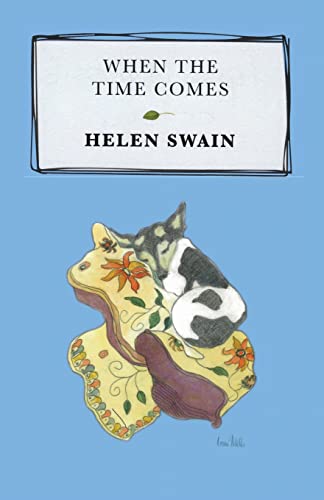
I briefly mentioned Helen Swain’s last year, as my lutruwita/Tasmanian-based brother had given me both of her books. It is a verse novel published in 2022, titled When the time comes, and is about an ageing mother and her daughter who wants to care for her. The third poem explains the title. It starts:
When Dad got sick
Mum had a sudden thoughtI don’t want to be a burden
she told me
When the time comes
just put me out of my misery(“My Mother”)
I really must read it, given it speaks to issues currently confronting my generation.
Similarly, Vanessa Proctor’s book was given to me by my old schoolfriend, who had given me Proctor’s On wonder. It is an anthology which was edited with two others, Lyn Reeves and Rob Scott. Published in 2023, it is titled under the same moon: Fourth Australian haiku anthology. Haiku has a strong following in Australia, and this anthology contains many that speak directly to Australian experience and landscape:
the blurred outline
of the southern cross
bushfire moon– Louise Hopewell
while others have a more universal feel, like this one speaking to women
biannual breast check –
the artist places the model
in a hard-to-hold pose– Alice Wanderer
The other books I want to mention are Paris Rosemont’s Barefoot poetess which joined my TBR in May last year, and two that I have already mentioned on my blog, Evelyn Araluen’s The rot, which has just been longlisted for the Stella Prize, and Maxine Beneba Clarke’s Beautiful changelings, which my reading group will be doing in a few months. I saw and heard both poets read from their books at last year’s Canberra Writers Festival, so I won’t say more now. I will add, however, that another poetry collection, one I don’t have, Eunice Andrada’s Kontra, was also longlisted for this year’s Stella Prize.
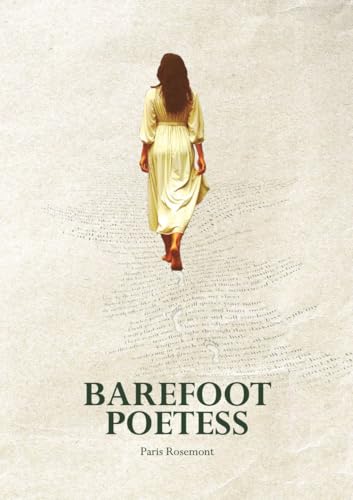
Paris Rosemont’s Barefoot poetess is her second collection. Her first, Banana girl, was well received, and was listed for a few awards. The promo for Barefoot poetess says that Banana girl “exploded onto the poetry scene – a hybrid of experimental styles and a fresh, edgy voice” but that Barefoot poetess represents a shift in tone. Her voice is “more distilled, her craft more finely controlled”. It’s “about journeys: through love, disenchantment, and change”. Poet Tim Loveday, who wrote the introduction, calls it “confessional poetry in all its glorious exhibitionism”.
And confessional it surely seems to be. The opening, heart-breaking poem, “Mama’s flown away with the mockingbirds”, is told in a first person voice and tells of a mother, the poet, who has left her children, whether mentally, emotionally, spiritually, it’s hard to tell at this point but it’s clear she’s there in name only:
The children know I died weeks ago. This corpse
masquerading as their mother is an imposter.
Noone else has cottoned on yet. But I raised
savvy kids. They know.
The poem ends with
… their mother has brokered a fool’s-
gold escape. She has mortgaged her heart.
The cost of her wings – two tiny souls.
This feels raw, is certainly powerful, is honest but also witty – and makes me want to read more.
I’ve not researched this year’s World Poetry Day plans, but I did receive an email from the Bellingen Readers and Writers Festival which references World Poetry Day, and includes a Poetry Slam Q&A, but I’ll just share a quote from Khalil Gibran which they open with:
“Poetry is a deal of joy and pain and wonder, with a dash of the dictionary.”
– Khalil Gibran
The “dash of the dictionary” makes me smile. Happy World Poetry Day.
This is my seventh World Poetry Day post.
Have you read any poetry this year? And if so, care to share any that grabbed you?
 Whispering Gums
I own The Rot
I recently reviewed The Aeneid
I got Marcie to read Alan Wearn;
all in the past few months. That’ll have to be my contribution to World Poetry Day,
though I wouldn’t mind having a go at a verse novel
And I am aware of all those things – at least the first three things, Bill. They seem perfectly good contributions to World Poetry Day to me.
Are you saying you have never read a verse novel? If that’s the case, I think you should have a go – perhaps the one that is my big gap, Dorothy Porter’s The monkey’s mask OR one I have read, Ali Cobby Eckermann’s Ruby Moonlight. But I have read a few and am usually surprised by how much I enjoy them. Why I am surprised I don’t know!
Wearne’s work is mostly verse novels (Is the Aeneid a verse novel?). I enjoy the Indigenous narrative poetry I sometimes pick up. I read reviews of verse novels I would probably like, and yet I have so far not bothered to buy one.
Good question … is it called an epic? What makes the difference.
We were in Bolzano, otherwise Bozen, this month, where I spotted some lines of Virgil, namely Book VI, lines 851-853, on adjacent buildings. Given the incompetence of the regime that put up that boast, there was a temptation to smirk, and I did not resist.
Bolzano: in the mountains north of Venice
Book VI, Lines 851-3: The closest I could get was –
“remember Roman, thou, to rule the nations as their master: these thine arts shall be,
to engraft the law of peace, forbear the conquered, and war down the proud.”
Quite. Until late 1918, Bozen was in the Austro-Hungarian Empire, a part of the South Tyrol. When the empire disintegrated and the troops in the South Tyrol went home, the Italian forces simply occupied it. To say that they “warred down” their opponents is inaccurate: the destruction of the Austro-Hungarian armies was largely accomplished by the Russians and I suppose the Serbs. Nor did the Italian regime forbear the conquered. It treated the German-speaking locals miserably as part of its program to Italianize the area. Need I say that Fascism only made things worse?
Anyway, since the 1960s matters have gone better for the German-speakers of the Alto Adige. But the boasts on the building, dating I am sure from Mussolini’s days, read oddly.
Thanks George … it’s interesting how lines or quotes from one context can be used in another, sometimes purposefully ignoring the original import and sometimes just ignorant.
A favourite of mine is Miss Bingley’s praise of reading which is deeply ironic in the novel – Pride and prejudice – but is used seriously as a quote in books of reading quotes, on pendants and mugs and tea towels etc. And it is a good quote, on its own, but it also jars if you know the background.
Thanks Bill … why did I go look it up when you had already done it for me – and in a better translation than AI did.
Haha George … nothing wrong with a good smirk. Of course I had to look up those lines before I could understand your smirk!
Barefoot Poetess sounds wonderful! I’ve challenged myself to read a collection a month this year and so far I am sticking to it!
Oh good for you Cathy. I read a couple more poems of Barefoot poetess last night when I went to bed, and liked them. I hope to continue over the next week.
I don’t think that I have read any new poetry this year. I teach English as a Second Language, and a few times a term will hand out a poem–as long as a sonnet, as short as an epigram–for the students to read along with me. I do this because essentially all of them are native speakers of Spanish (with some French thrown in), and I want to emphasize the heavier stresses of English.
I do periodically look at books of poetry acquired long since. Recently I flipped through a volume of Marianne Moore, looking for something I thought she wrote.
That’s interesting George – I mean re why you use poetry sometimes. Stresses in language can make the difference in understanding can’t they? We have a Japanese friend who points this out with the word kaki which can be oyster or persimmon. Very different Kanji but the sound difference is almost imperceptible to western ears. Another is hana which can be nose or flower.
I learnt French at school and I remember finding the sounds easier to learn and remember than which syllable to stress.
Oh, and did look at Les Murray’s Subhuman Redneck Poems at a bookstore this week, but only long enough to find the poem about his weight loss that told me that the poems must be in his Collected Poems.
Why were you looking up Les Murray? I have read small bits of him but I did also hear him read some poems once. That was a treasure. It was at a regular event named Poetry at the Gods, the event being in a cafe called The Gods that was located on a building housing a theatre.
Hi Sue, I read Maxine Beneba Clarke’s Beautiful Changelings in January, it was an enjoyable read. I am visiting Iceland in May so I am trying to read and understand their culture. I read and liked Halldor Laxness – Icelandic Lullaby poem and Gerdur Kristny poem, Patriotic Poem. The weekend Australian usually has a poem, and Saturday’s “Be Still” by and Indian poet Sudesh Mishra, is excellent.
Thanks Meg … I’m looking forward to Beautiful changelings. But Iceland – how exciting.
That poem about being a burden is a tough read. I don’t think people realize the whole “put me out of my misery” thing is a long-lasting burden because it comes with difficult decisions and, possibly, lifelong guilt. My grandfather used to say that if he ever got cancer, he would walk out into the woods and shoot himself. He got cancer; the first thing we did was secure his guns. Can you imagine living the rest of your life thinking about a parent who died by suicide? I can (to a VERY small degree) thanks to the numerous authors who have written about their experiences with it.
Going to poetry slams always makes me feel a bit odd. The crowd is endlessly supportive because the person volunteered to get on stage and be so vulnerable. However, if I pause and think for a moment, a lot of poetry slams have fairly terrible poetry. For me, the joy of poetry is either someone really skilled at evoking imagery and emotions, or someone who is BRAVE and we support that.
Fair point Melanie, though while I think it would be a really sad thing to live with, I think I would find suicide at the end of a good long-lived life not so much a burden as one by a younger family member which I have experienced and it is tough, tough, tough. Here in many Australian states we have VAD which I think is a good thing but I do hope I never have to support someone doing it, and I don’t think I would do it myself.
I have been to poetry readings, but not to a full-on slam. I can imagine you would always get a mix of people from those you love to those which completely fall flat for you, but that most might appeal to someone?? I like your description of the joy of poetry. I can’t really add much to that!
I remember rethinking dying with dignity in hospice after a comment from the lady at the Books Are My Favorite and Best blog. I believe she works in palliative care?
Yes, I think she works around that sort of area, though I’m not sure in what capacity. Well remembered. It’s a tricky area.
Ahem. I’m not sure whether it’s technically valid to use having convinced someone else to read poetry as one’s own poetry-related accomplishment when it comes to celebrating World Poetry Day, but I suppose my lateness will fundamentally compromise the quality of my case. /sideeye
The only poetry in my stack recently has been the new Reginald Dwayne Betts collection Doggerel, from the long-established American indie W.W. Norton, which I wholly recommend to anyone with even a fleeting attachment to any dog ever (although it was his previous collection Felon that secured my interest) let alone big ideas like freedom and justice and love.
Haha Marcie … I reckon all’s fair in …
I do love dogs, and just the title Doggerel appeals. I’m guessing the poetry is more Doggerel than doggerel though a little bit of doggerel never goes astray.