Last year, I read just one of the starting books. This year, I have started off well as I had read January’s starter (which is not surprising since it was my choice, not Kate’s!) This month, however, we are back to business-as-usual. Before I get onto it, the usual reminder that if you don’t know this member and how it works, please check Kate’s blog – booksaremyfavouriteandbest.
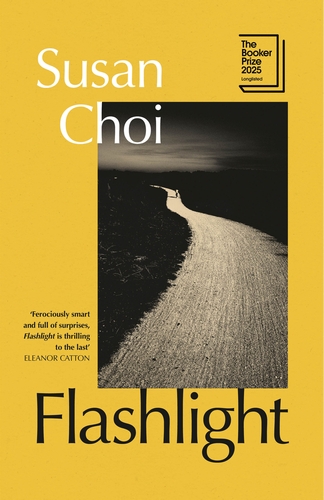
The first rule is that Kate sets our starting book. This month, she nominated a book I have heard quite a bit about, because my Californian friend, Carolyn, read it recently. It’s Susan Choi’s Flashlight. She chose it because it topped lots of “best of 2025” lists (see Kate’s list.) It starts with a father and daughter taking a walk along a breakwater, but only the daughter comes back (apparently.) I thought of many links for this novel, including a father-daughter one, but, hold that thought, because it might return. Meanwhile …
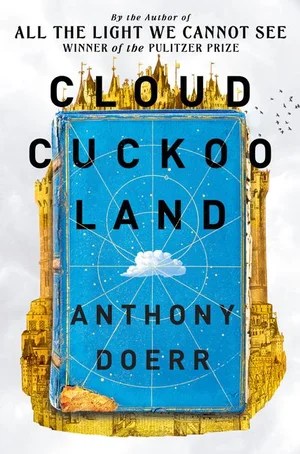
I decided to go with something that my friend Carolyn told me in our correspondence which was that this book made Barack Obama’s top ten of the year. Another book that I’ve read which made Obama’s Top Ten, albeit back in 2021, was Anthony Doerr’s Cloud cuckoo land (my review). I know I’ve linked to this book before, but any book that Obama recommends and that is positive about librarians deserves a good airing.
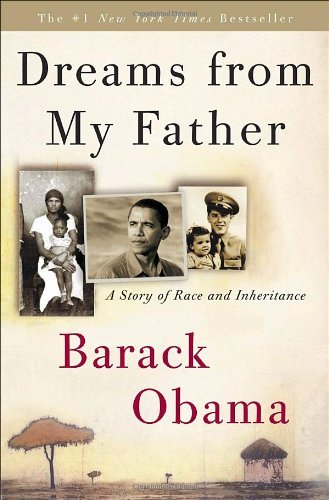
I am sticking with the Barack Obama link, and am going with a book written by him that I reviewed early in this blog, his excellent origin memoir, Dreams from my father (my review). And lookee here, there’s a father! So, with that, I decided I should go with the flow, for a little while at least.
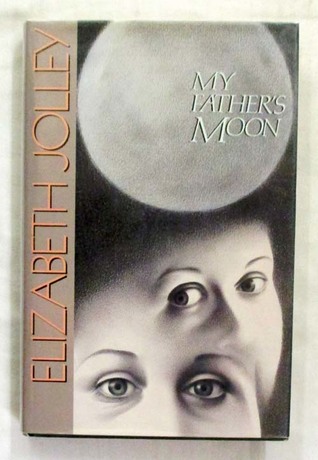
My next link is fiction – but autofiction – and to a book I also reviewed back in 2009 when I posted on Obama’s book, Elizabeth Jolley’s My father’s moon (my review). The novel’s protagonist is Vera, a lonely young woman. The title refers to her loved father, who had told her throughout her childhood that wherever she is, she can always look at the same moon he is looking at, ‘And because of this … you must know that I am not far away. You must never feel lonely’. Lovely, eh?
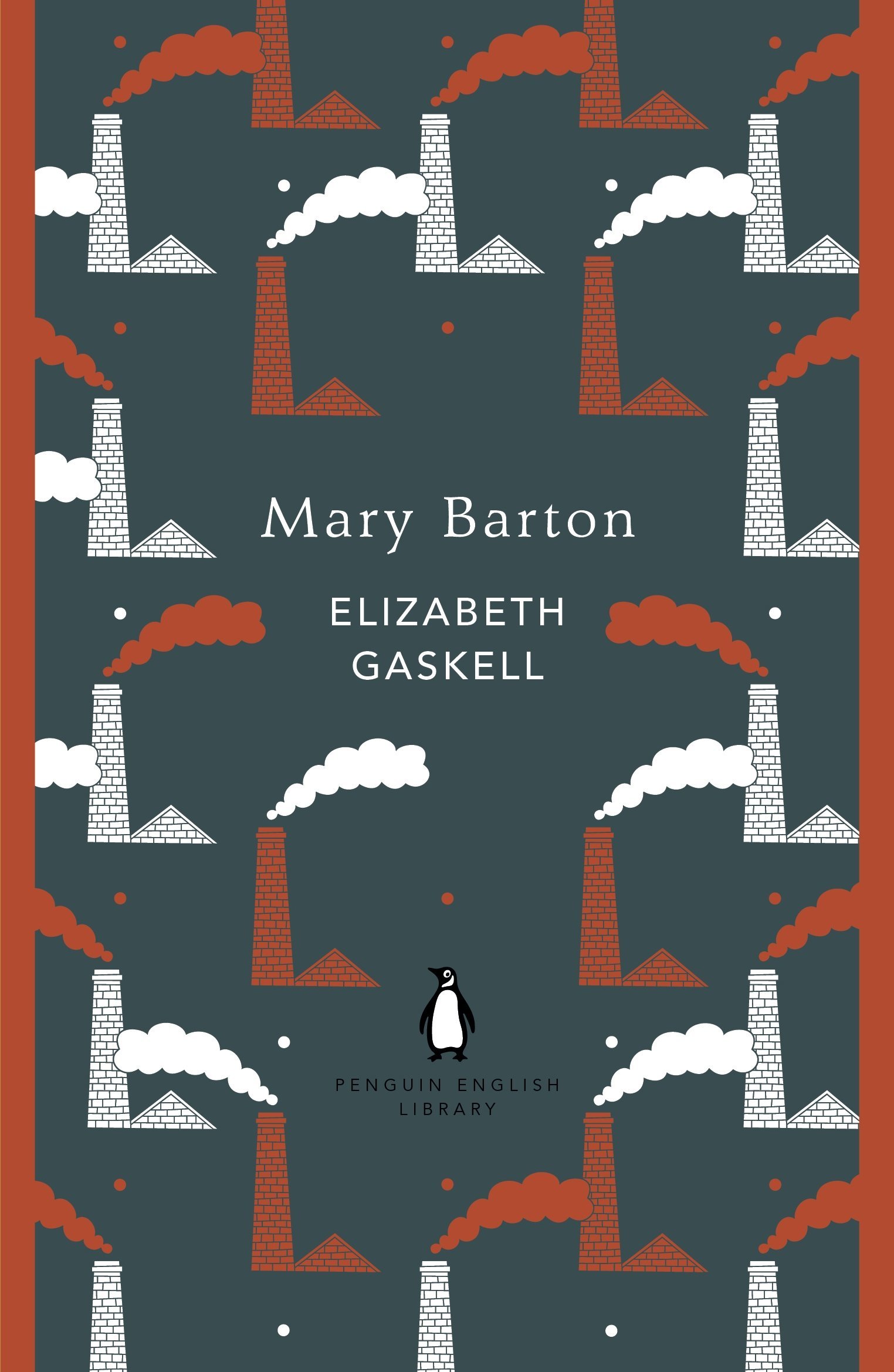
I could do a whole post on fathers and daughters, but I won’t. However, because I’ve just reviewed a book on this relationship, I will do one link on fathers and daughters, Elizabeth Gaskell’s Mary Barton (my review). Apparently, Gaskell had initially planned to title it John Barton, for the father. This conveys that the story is evenly balanced between the two, but Mary is a good choice, I think, because she offers a more hopeful ending.

And now we leave fathers and daughters for unionism. John Barton turns to Trade Unions when he realises that the “masters” are not going to help workers without a bit of a push. Just as John and his mill-worker friends face starvation as employment disappears in 1840s England, so do the wharf labourers in 1920s to 30s Adelaide when jobs disappear, so the book I’m linking to is Wendy Scarfe’s Hunger town (my review). Although, unlike Scarfe, Gaskell lived during the period about which she wrote, the subject matter – workers’ struggles for fair treatment – is similar.
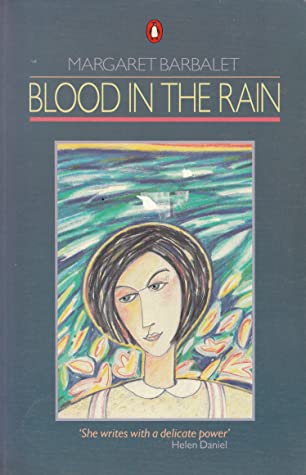
My last link picks up on two aspects of Scarfe’s novel – Adelaide and the Depression era – and is also historical fiction. The book is Margaret Barbalet’s Blood in the rain (my review). Barbalet’s novel is less overtly political. Rather, it’s a domestic story, but one that in its brief 200 pages tells a strong story about children, poverty and precarity.
Most of this month’s books are set in the 20th century, with just Mary Barton set in the 19th and Cloud Cuckoo Land spanning centuries. Two of my six books are by male writers, while regarding nationality, three are by Australians, two by Americans and one by an Englishwoman. And, though I haven’t read Flashlight, I think there is an argument for a circular link, because both the starting book and my ending one feature a young girl who is suddenly deprived of parents (albeit in Flashlight the mother is physically present) and who realises she must depend on her own resources to survive.
Have you read Flashlight and, regardless, what would you link to?
 Whispering Gums
I am always HAPPY to read mention of my contemporary hero, Barack Obama; and you mention a book from one of his reading lists and one of his own books. Imo, Obama is representative of what a western man should try to be – and I particularize that because it’s the only kind I know.
The excrescence in the White House has just been forced to delete an entry he made in his own social network, which was a childish but dreadful insult to Barack and Michelle; so my hero is very much in mind at the moment. And with your excellent timing, here you are restoring things ! 🙂
Oh I didn’t see that MR, but I did see an Insta post showing Obama with the text “Guess who’s not in the files?”
Yes, that one’s good. I think I re-posted it on Bluesky. 🙂
I apologize, as is normal, for doing another off-topic comment, ST: but you are always very forgiving.
I suppose such comments mean at least that you know I’ve read your article !!
You never need to apologise MR, not only because I can tell you’ve read my post but also because there is always a link, no matter how tenuous it might be!!
Degree one will have to be Chateaubriand’s Memoirs d’Outre-Tombe, since apparently the young Normans enjoyed playing on the rocks where the surf came in.
Degree two will be The Iliad since not many lines in the priest Chryseis walks silently by the thundering shore–the word for thundering, “poluphloisboio” being one of not many Homeric epithets that have seeped into the general consciousness.
Now, Chryseis was distressed about his daughter, so I will stick with poetry (if lyric now), and make degree three Heart’s Needle by the American poet W.D. Snodgrass, about and addressed to a daughter he saw less after a divorce.
Degree four will be The War Between the Tates by Alison Lurie, since that involves divorce with young children as affected parties. Also, it is set in American academia, and I suppose Snodgrass had an academic job when he was writing.
For degree five, I will pick Heroes of the Frontier, an obnoxious novel by Dave Eggers, obnoxious but with two very convincing children of divorced parents.
Finally, for degree six, Katherine Anne Porter’s novella or long short story Old Mortality, for the brief chapter with the two sisters in New Orleans.
Obama: I was astonished to learn that he had said good things about the novel Fates and Furies, which I did not care for. As for Dreams From My Father, I steer clear of campaign biographies.
I have not read or heard of Flashlight.
A fascinating and varied chain George. I think you may have mentioned Katherine Anne Porter’s Old mortality before (which is perfectly fine, btw. This is not a complaint, but it popped out at me because the last time it was mentioned – and I think it was by you – what came into MY head was Sir Walter Scott’s novel of that name.) As for Dreams from my father, I guess it might have been a campaign biography for you, but it wasn’t for me! I don’t read a lot of political biographies, but I was intrigued by this one.
And, I hadn’t heard of Flashlight until my Californian friend wrote to me about it, but it clearly was on the tip of a lot of tongues at the end of last year, given Kate’s lists.
Oops–I forgot how to italicize!
I don’t think you did – forget, I mean. I’m surprised, because I thought the comment block accepted html. It used to. Anyhow, I have corrected it, but have left this comment here to explain that the WP Comment block does accept WYSIWYG italicising.
Hi Sue, I did have two of your links, so I had a bit of trouble finding another two. I have read Flashlight and did like it. My links are Never Let Me go by Kazuo Ishiguro; Her Father’s Daughter by Alice Pung; All the Light we Cannot See by Anthony Doerr; A Wrinkle in Time by Madeleine E’ngle; The Shiralee by Darcy Niland; and the The Inheritance of Loss by Kiran Desai;
Oh, thanks Meg, you did a father-daughter theme too. All the light we cannot see would have been a good one for me too. I have read most of your links – just not the L’Engle and the Niland, the latter of which I really should read.)
I have a father and daughter link in my chain this month too. I haven’t read any of these books, but I do have a copy of Mary Barton which I’m hoping to read soon!
Oh I love that you plan to read Mary Barton soon too, Helen. I’ll look forward to seeing you thoughts when you do.
I really need to read Cloud Cuckoo Land!
I’m the last one to tell someone what they should read Cathy, but it is a good read! (BTW Sorry for the delay in replying. We are in Melbourne for birthday season, so my computer time is limited, and for some reason your comment had gone to Spam! Jetpack went cuckoo!!)
By coincidence, I’m reading an Obama favourite, although not the one you linked to or Flashlight – James McBride’s The Heaven & Earth Grocery Store which I probably wouldn’t otherwise have looked at but I’m enjoying. I like the sound of the Elizabeth Jolley.
Thanks Susan … I have read a couple of books by James McBride – a memoir and a novel. I’d be interested to read more. As for Elizabeth Jolley, she was English born, and didn’t come to Australia until well into her life, but we call her an Australian writer because this is where her career started. (Oh, maybe you have read her before?)
I haven’t but would like to. Do you have one you’d particularly recommend?
I used to always recommend The newspaper of Claremont Street. She can be dark, which I don’t mind. I’ve read a lot so it’s hard. Another I like because it’s from the perspective of a grandmother, is Orchard thieves. Or you could start with some short stories.
Thank you. I don’t mind dark – it’s often more interesting.
Excellent … I don’t either but some people do.
Back when Obama was running against John McCain, a coworker friend coaxed me into starting a coed book group. She thought it we read nonfiction we’d attract me to this group. Why *I* had to do all the work, I don’t recall, but we chose Dreams From My Father. We had 15 at the discussion – fourteen women and one wimpy guy who was a minister from New Hampshire and had driven 90 minutes to join us. The second month we read John McCain’s memoir which was even better but there were only four attendees, including Felicia and me. I don’t remember what we read for the third month but no one showed up except me, not even annoying Felicia! So that was the end of my reading male memoirs, although I did enjoy both of them!
Oh, that’s a bit of a sad story Staircase! But I’m glad you enjoyed the books! My main reading group is women only, but my Jane Austen group is open. We only have one man though.
Well, that was just lovely.
Thanks Davida …
Adding Mary Barton and Blood in the Rain to my own list of Books to Look Out For.
Haha Rose … but what good taste you have!
Either that or I’m easily led!
I’ve read very little of Susan Choi and was debating whether to explore her more this summer or Gish Jen (whose works I’ve also mostly missed). Is this the same friend who loved the Toews memoir? Then again, you mention she read the Choi novel, but not that she necessarily loved it. Either way, I might still get to it later this year. (Love your links with Obama’s reading rec’s: it was wonderful having such a thoughtful and respectable man in the office of the presidency in the country to the south of us.)
Thanks Marcie – and no, I don’t think it was. I think it was Melanie of Grab the Lapels who recommended the Toews, though I thought Melanie recommended a novel, not a memoir, so maybe my Californian friend recommend a memoir by her. But yes, she did like Flashlight a lot.
Bit late to this. I have not read Flashlight by Susan Choi but can link off the name of the book.
And will follow with your Anthony Doerr referencing with one of my own read of All the Light We Cannot See that I thought a terrific novel with a young adult feel to the story and also a link to St Malo a place we made visit to a many long year back.
From my Sci Fi youth there is Roger Zelazny who wrote the superb Lord of Light that mixed Sci with Indian mythology to great effect. Future planet stuff that I reread a couple of years back and was still as interesting years later.
Bodies of Light by Jennifer Down I thought a very good read on bad memories and trauma. A worthy winner of the Miles Franklin.
Beam of Light by John Kinsella that I enjoyed. This book had a great cover, an ibis in polluted water and a metaphor for many of the story’s ecological roots. Recommended to those that wonder about us all.
Last but not least but like the starting book I have not read Frank Moorhouse nor his book Cold Light. I have a copy of it and also the rest of the trilogy. One day I will get on with them.
Love it John … I did think about going the Light route myself. I wanted to read Bodies of light, but never got a copy and now I fear it might just pass me by as other books come into view. I can however recommend the Moorhouse trilogy though I have to admit that I’ve only read 1 and 3. Don’t ask why! These things happen.
Fun links as always! I have read Flashlight and it is very good with lots of character complexity and twists so I have not idea what I would link to it because there are so many options! Ha! Sometimes it might be best if you haven’t read the book because it limits your options a little bit 😀
Oh great Stefanie … I will think that way in future when I haven’t read the book! I guess also, if someone criticises my link, I can just blame the blurb writer for leading me astray!