I did have another plan for today’s Monday Musings, but it seemed wrong to ignore the elephant in the room, that is, the dire situation facing the Adelaide Festival’s Writers Week. Australians will not need me to explain what has happened, but for those of you not across the events, I’ll briefly explain.
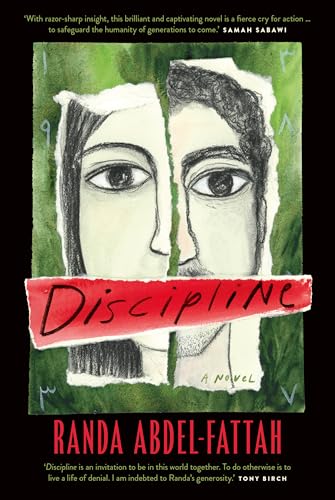
The Adelaide Writers Week is one part of the wide-ranging Adelaide Festival, which is a significant Australian cultural event and which attracts visitors from around Australia and the world. This year’s Writers Week is (was) due to begin on 28 February, but is now in complete disarray because over 100 writers have withdrawn their participation after the Board removed Palestinian Australian author and academic Randa Abdel-Fattah from the line-up on the grounds of “cultural sensitivity” in the wake of December’s Bondi Massacre. (She was to speak on her debut adult novel, Discipline, which appeared in my report on favourite reads of 2025.) The Board stated that:
Whilst we do not suggest in any way that Dr Randa Abdel-Fattah’s [sic] or her writings have any connection with the tragedy at Bondi, given her past statements we have formed the view that it would not be culturally sensitive to continue to program her at this unprecedented time so soon after Bondi. (from Adelaide Festival website)
Hmmm … This follows the furore that occurred last August when multiple authors, including Randa Abdel-Fatteh, withdrew from the Bendigo Writers Festival after the festival adopted a code of conduct which, among other things, required participants to “avoid language or topics that could be considered inflammatory, divisive or disrespectful.” The withdrawing writers rejected this stifling of their freedom of expression. (See the excellent The Conversation piece linked below.)
I am not going to discuss this issue in detail because you can read about it at The Conversation, and other online sites that are covering the situation as it unfolds. I don’t need to add my voice to the chorus, except to say that I am a librarian by training, and freedom of expression is one of the tenets of our profession. I want to see respectful – thoughtful – discussion on the big issues we are facing.
So instead, I’m going to share a few Australian articles and posts on writers festivals and their value.
For writers, festivals are not, as readers might expect, a source of stellar sales. Apparently, only the top name writers tend to sell well at festivals*. But, according to writer and authorpreneur (!) Anna Featherstone, festivals offer writers a whole bunch of benefits. And she lists many of them, from the practical opportunities that come from networking to the stimulation and inspiration that can come from being with other writes and readers. She’s a big advocate, and points to festivals like the Byron Bay Writers Festival and the Romance Writers Australia Conference. In fact, early writers festivals were primarily for and attended mainly by writers.
The writers festival as a wider community phenomenon is a relatively recent development. However, my sense is that no matter how different festivals are, or how big or small, this networking aspect with its many-pronged possibilities, is still of value to many writers. In 2024, Kill Your Darlings asked “publishing industry folk” to share “some of the unexpected and useful things they’ve learned along the way about writers’ festivals”. Most of these people were writers, and while they offer a wide variety of advice, the one that appeared most frequently was to encourage writers to take the opportunity to talk to other writers.
But, it is the cultural value of writers festivals that has seen their stunning rise in popularity over the last couple of decades, a rise that has resulted in regional town after regional town establishing their own festival. Some have gone on to become well established events.
There are many articles and posts on this aspect of festivals, but Queensland’s Storyfest has a lovely succinct piece on “The role of writers festivals in shaping our communities”. And, in particular, they say this:
As an arena of intellectual debate, a platform to express opinions – literary, political, and otherwise – and a place where an increasingly varied group of people congregate, it is only natural that literary festivals have a role in politics too. As political platforms, writers’ festivals give attendees the opportunity to engage with thoughtful, mediated conversations and to learn new ideas from fresh, often authentic sources.
[…]
As such, writers’ festivals have grown to be events that contribute to the wider public’s engagement in issues and ideas of broader interest to society. Their role is no longer merely to connect readers and writers … While writers still use these events to meet other writers, readers, and to network, these festivals have grown in function and duties over the last couple of decades. This has expanded the purpose of literature festivals, making them play a significant role in local and international politics too.
This gels with what I look for in a festival. I mostly avoid the “big author” sessions and go for those where I think I’ll be confronted by some different ideas or ways of seeing, where I might be made to feel uncomfortable (in a respectful way!) These sessions are not always easy to find but at the recent Canberra Writers Festival I did find some.
And now, let’s return to the Adelaide Writers Week. I found a blog post written in 2024 by author and blogger Anne Green (of Eating My Words). Her post is titled “Literary Festivals: The good, the bad and the ugly”. It covers all the issues I had dot-pointed for including here (including the tourist potential for small towns, and the “elitism” critique of festivals). It also has a significant focus on Adelaide Writers Week, and its history. It’s a well-researched, comprehensive post that made me realise I didn’t need to reinvent the wheel here!
So, instead, I will close on a quote from another site, writes4women, which struck me – forcefully:
Writing festivals are a reflection of where our country is at any given moment.
That’s a worry!
* See Melanie Joosten at the Kill Your Darlings link.
 Whispering Gums
Wooooow, I cannot believe how timely this post is for something going on in my life. Yesterday, I was effectively kicked out of a bookstore unless I agree to censor myself (I believe the phrase was “keep your thoughts to yourself” at book clubs). I wrote a blog post about what happened, which I will publish soon, but wooooow. This line right here just about echoed some of what I wrote about: “…where I think I’ll be confronted by some different ideas or ways of seeing, where I might be made to feel uncomfortable (in a respectful way!).”
I am really, truly conflicted about the writer they removed from the festival. I just do not agree with silencing people as a way of keeping everything sensitive. In fact, in recent weeks, the word “sensitive” has come to have a negative connotation in my world. It includes big and small things that shouldn’t bother me, but I do get frustrated. For instance, last night, Nick and I were looking over the calendar for the coming week, and he saw there was a potluck for cultural sharing. I suggested we make for Nick we make “puppy chow,” a midwestern staple. He went to the spreadsheet to include his food choice, and found that they wanted a list of all allergens in the dish. Then we both kind of panicked. Does corn chex have gluten? Dairy? Eggs? Was it made in a factory that also makes foods with peanuts, meaning it possibly came into contact with tree nuts? Are chocolate chips dairy? Etc etc etc. He got so upset that he decided not to go. On the one hand, I absolutely believe that people should know what allergens are in their food. On the other hand, it’s a big responsibility to assume that you are going to list every allergen that could possibly kill someone. I’ve read that people with allergens often don’t trust potlucks in general because you never know. So….maybe this is a stupid question, but is the allergen list on the spreadsheet being sensitive to people’s allergies, or are we actually helping out our allergic colleagues? My feeling is that the spreadsheet is a bit of “security theater,” because even if chex mix does not contain gluten, who knows if I accidentally did a cross contamination, etc. Okay, I’m definitely ranting now, Sue. The past three days I have felt so confused and vulnerable.
Oh my Melanie … I look forward to your post. I can’t understand a bookshop behaving like that.
As for the food spreadsheet, that sounds OTT, and impossible. My sense is that if someone is that “sensitive” to food that you can’t just name the ingredient (eg, the brand of Corn Chex) they would not be attending or they’d be bringing their own food or they’d be avoiding foods brought along that included processed ingredients AND they’d have their epi-pen. They just wouldn’t risk their life and health to a situation where people just can’t know all that’s potentially dangerous in their contribution. And, if they were that sensitive, they surely couldn’t trust that people will be honest or even just accurate. I have non-life threatening intolerances that most of my friends know about and take care about when preparing food for me. I won’t die if something crosses my lips but this diet has kept me off constant medication for 4 decades (since January 1986 in fact). But recently, we were invited to lunch by some very old friends whom we haven’t dined with in the years since I’ve been doing this intolerance diet (because they moved away from our town.) I said to them “how about we just go out because I have multiple intolerances and I don’t want to put them all on you. If we go out, I know what I can eat and can’t eat, and everyone can eat what they want to eat.” That’s what we did and it was great.
I have a friend I like to cook for, and she always took medicine at dinner time. I hadn’t realized that she was lactose intolerant, and she’s very sensitive to both onions and garlic. Once I knew, I could make dishes without those things. But I suppose the situation that I’m thinking of with the potluck is definitely what Nick likes to call security theater. It’s something that we’re doing because we all feel better because we feel like we’re being inclusive and sensitive, but in reality it’s not practical for anybody who actually has severe allergies. Heck, even somebody who’s lactose intolerant or can’t do gluten, from what I’ve heard, would get serious bloating and possibly explosive diarrhea, and don’t nobody need that at work.
Exactly, it’s just not practical if anyone has serious allergies. And in my experience they know it and either don’t come or provide for themselves. I mean, how can everyone know every ingredient. For example the product cornflour (which you call cornstarch) can, in Australia, be made with wheat. If do the label will say, often in smaller print, “wheaten” cornflour. Now, if someone buys cornflour and empties it out of the packet into a canister, and then later makes a dish with cornflour, they could very well think they were using a gluten-free product. They could quite honestly believe they were. I know many people who were completely unaware of this cornflour issue. (You have so much corn you probably don’t make cornstarch with wheat!) It’s just too fraught for people who must seriously avoid these things.
I never knew wheat cornstarch existed 😵💫
I support every writer who has made the decision not to attend based on the discrimination against the Palestinian writer, sad though for the fans. I heard on the ABC that the director of the Writers Festival has resigned as the decision to block the Palestinian writer was not her decision and the repercussions have impacted her greatly. I really think this situation could have been avoided by a disclaimer saying the opinions are those of the authors and not the organisers. (pretty standard really). I don’t want to get political here, but things are getting very out of hand at the moment.
Yes, well said Jenny … thanks for commenting. I see things have moved on since I wrote this post last night.
Great and timely post. You would think that writers could get together with each other, with readers even, without people getting their knickers in a knot. But it seems that politicians are involved, stacking festival boards with ‘business people’ rather than arts people, and that those boards are susceptible to organised campaigns. And the pro-Israel lobby is very good at organised campaigns.
All good points Bill. One that has been exercising my Friends of the NFSA group over the last few years is that of stacking arts/culture boards with business people. It’s a huge issue I think.
Hi Sue, the Adelaide Writers’ festival has been cancelled. Writers’ festivals do seem to cause controversy. Deb Conway was cancelled from writers’ festivals and even the ABC Radio national because of her views. The Bendigo Writers’ festival last years, saw many authors cancel because they were asked to ensure their ‘content is appropriate for a general audience and sensitive to cultural, social, and personal differences’ in the Code of Conduct. ‘The Festival and Presenting Partner, La Trobe University, felt it was necessary to emphasise the importance of safety and wellbeing for all participants by introducing a Code of Conduct. Seems reasonable to me, especially in these times of war and hate speech.
Thanks Meg … yes, I just got back from the movies and Mr Gums told me the news about the cancellation.
You know, I wondered whether physical safety had been a concern in the original decision, but it wasn’t mentioned at all, so I decided that it must not have been. I think Festivals have to trust their artistic directors, speakers and moderators to make good decisions and behave appropriately. In these times, they probably do need to ensure they’ve talked through, have a plan for, how to handle debates that might get out of hand, but I don’t think debate should be quashed?
Oh no, this is terrible. What an appalling decision by the festival. Thanks for explaining the situation to those of us elsewhere!
Thanks Laura … the whole thing has been handled very poorly with the result that the festival has been cancelled. This is heartbreaking for the people who love this festival.
Thank you for this post. I like to believe anyone attending a festival can handle all kinds of views and opinions and can decide for themselves what events to attend and people to hear. Censorship in my opinion, at a literary festival is just wrong.
Thanks Pam … absolutely agree with you. I so despair of the way emotion overtakes reason. The world can be a cruel place. I know I am a lucky Australian but I don’t think that invalidates my perspective which is that no one group has a monopoly on brutality nor on suffering. I wish everyone started from that point. And that we could then talk with and listen to others from a respectful point of view even where we vehemently disagree. But this is so hard to do!
I agree. I learned a lot of these skills from keeping a good relationship with my Texan Trump supporting brother. I have to respect his right to believe what he does. That is the only way we can respectfully discuss our views with each other.
Exactly Pam … well done!
Ahhh, thanks for including the mention of the Bendigo Festival; I couldn’t figure out why so much of this seemed familiar when it was obviously only just unfolding now. I’m heart-broken when the opportunity to talk/discuss is eclipsed, but I do understand how hard it is to make the most thoughtful, most fair decisions in these situations when funding is always an underlying necessity.
Why did this go into moderation? Weird. Anyhow, I’m glad I wrote it so that you could work out what was going on! I like your understanding of the pressures in these situations. None of the discussions mentioned that funding was an issue, but you just don’t know what is really going on behind the scenes do you. It’s discouraging though when arts organisations and events can’t support difficult conversations.
Pingback: Book Diary | January 2026 – This Reading Life