Last Monday, I shared the favourite Fiction and Poetry books that had been chosen by various critics and commentators in a select number of sources. I haven’t always shared the nonfiction choices, though I do think it’s worth doing – so this year I am! I won’t repeat the intro from last week, but I will re-share the sources, having edited them slightly to show those which included nonfiction … and remind you that I’ve only included the Aussie choices.
Here are the sources I used:
- ABC RN Bookshelf (radio broadcaster): Cassie McCullagh, Kate Evans and a panel of bookish guests, Jason Steger (arts journalist and former book editor); Jon Page (bookseller); Robert Goodman (reviewer and literary judge specialising in genre fiction): only shared their on air picks, not their extras which became long
- Australian Book Review (literary journal): selected across forms by ABR’s reviewers
- Australian Financial Review (newspaper, traditional and online): shared “the top picks …to add to your holiday reading pile.” (free briefly, but now paywalled.)
- The Conversation (online news source): experts from across the spectrum of The Conversation’s writing so a diverse list
- The Guardian (online news source): promotes its list as “Guardian Australia critics and staff pick out the best books of the year”.
- Readings (independent bookseller): has its staff “vote” for their favourite books of the year, and then lists the Top Ten in various categories, one of which is adult nonfiction, of which I have included the Australian results.
And here are the books …
Life-writing (Memoir/Autobiography/Biography/Diaries)
- Katherine Biber, The last outlaws (Patrick Mullins, ABR; Clare Wright, ABR)
- David Brooks, A.D. Hope: A memoir of a literary friendship (Tony Hughes-d-Aeth, ABR)
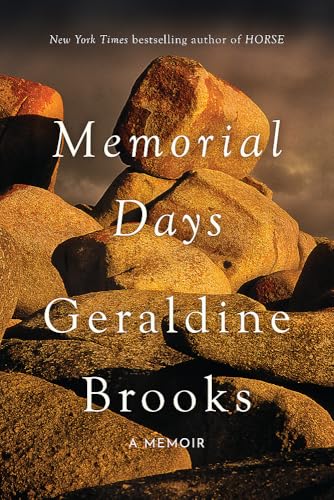
- Geraldine Brooks, Memorial days (Jenny Wiggins, AFR; Susan Wyndham, The Guardian; Readings)
- Bob Brown, Defiance (Readings)
- Candice Chung, Chinese parents don’t say I love you (Readings)
- Robert Dessaix, Chameleon (Tim Byrne, The Guardian) (on my TBR)
- Helen Garner, How to end a Story: Collected diaries (Ben Brooker, ABR; Stuart Kells, ABR; Jonathan Ricketson, ABR; Lucy Clark, The Guardian) (see my posts on vol 1 and vol 2 from this collected volume)
- Moreno Giovannoni, The immigrants (Joseph Cummins, The Guardian)
- Hannah Kent, Always home, always homesick (Kate Evans, ABC)
- Josie McSkimming, Gutsy girls (Amanda Lohrey, ABR)
- Sonia Orchard, Groomed (Clare Wright, ABR)
- Mandy Sayer, No dancing in the lift (Clare Wright, ABR)
- Lucy Sussex and Megan Brown, Outrageous fortunes: The adventures of Mary Fortune, crime-writer, and her criminal son George (Stuart Kells, ABR)
- Marjorie (Nunga) Williams, Old days (Julie Janson, ABR)
History and other nonfiction
- Geoffrey Blainey, The causes of war (rerelease) (Stuart Kells, ABR)
- Ariel Bogle and Cam Wilson, Conspiracy nation (Joseph Lew, AFR)
- Liam Byrne, No power greater: A history of union action in Australia (Marilyn Lake)
- Anne-Marie Condé, The Prime Minister’s potato: And other essays (Patrick Mullins, ABR) (on my TBR)
- Joel Deane, Catch and kill: The politics of power (rerelease) (Stuart Kells, ABR)
- Helen Garner, Chloe Hooper & Sarah Krasnostein, The Mushroom Tapes (Donna Lu, The Guardian; Readings)
- Juno Gemes, Until justice comes (Mark McKenna, ABR)
- Alyx Gorman, All women want (Sian Cain, The Guardian)
- Luke Kemp, Goliath’s curse: The history and future of societal collapse (Tom Doig, The Conversation; John Long, The Conversation)
- Richard King, Brave new wild: Can technology really save the planet? (Carody Culver, ABR; Clinton Fernandes, ABR)
- Shino Konishi, Malcolm Allbrook and Tom Griffiths (ed), Reframing Indigenous biography (Kate Fullager, ABR)
- Natalie Kyriacou, Nature’s last dance: Tales of wonder in an age of extinction (Euan Ritchie, The Conversation)
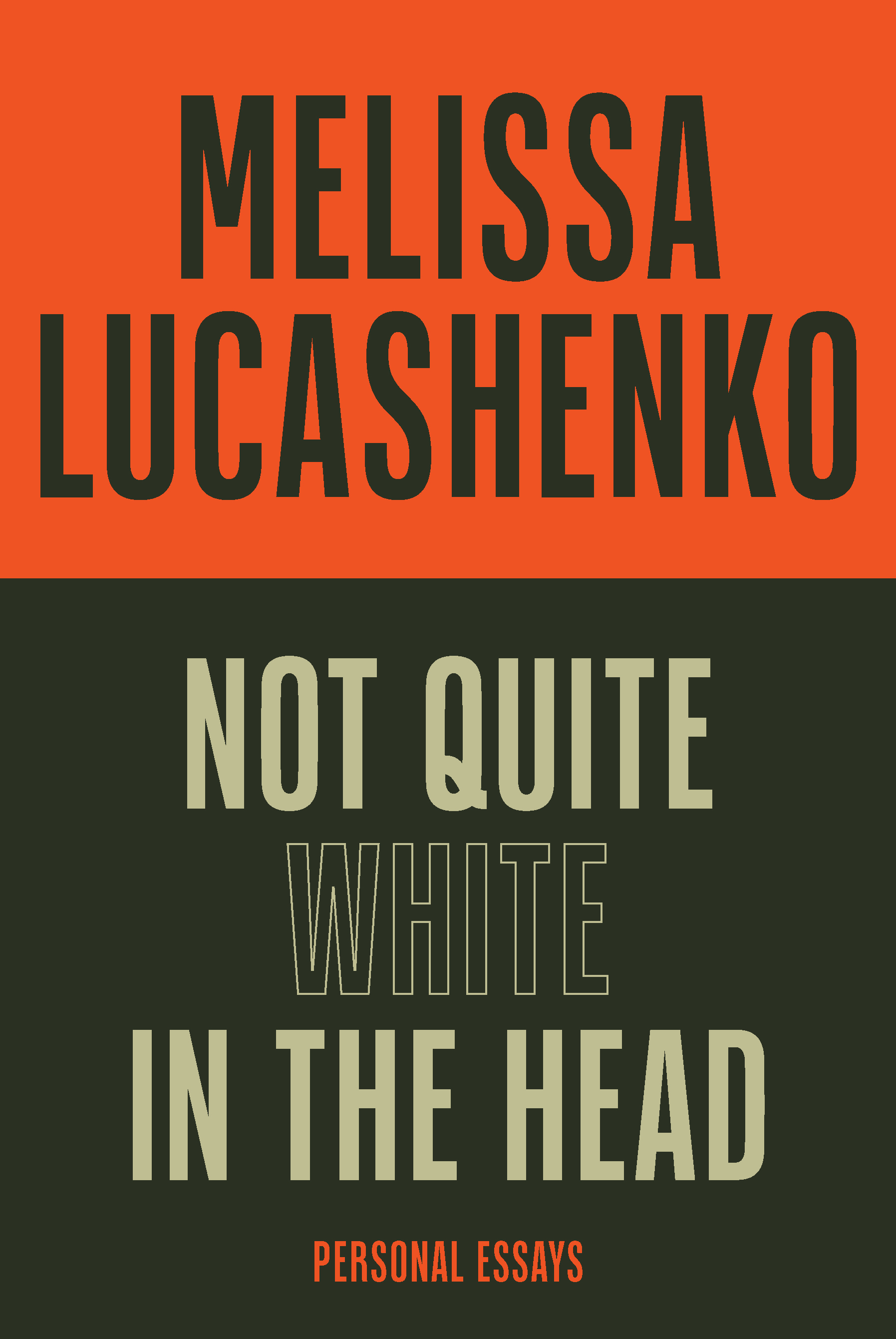
- Melissa Lucashenko, Not quite white in the head (Glyn Davis, ABR; Michael Williams, ABR; Readings)
- Ann McGrath and Jackie Huggins (ed), Deep history: Country and sovereignty (Kate Fullager, ABR)
- Tom McIlroy, Blue Poles: Jackson Pollock, Gough Whitlam and the painting that changed a nation (Esther Anatolis, ABR; Alex Now, AFR)
- Mark McKenna, Shortest history of Australia (Patrick Mullins, ABR)
- Djon Mundine, Windows and mirrors (Victoria Grieves Williams, ABR)
- Antonia Pont, A plain life: On thinking, feeling and deciding (Julienne van Loon, The Conversation)
- Margot Riley, Pix: The magazine that told Australia’s story (Kevin Foster, ABR)
- Sean Scalmer, A fair day’s work: The quest to win back time (Marilyn Lake, ABR)
- Emma Shortis, After America: Australia and the new world order (Marilyn Lake, ABR)
- Don Watson, The shortest history of the United States of America (Emma Shortis, The Conversation)
- Hugh White, Hard new world: Our post-American future (Marilyn Lake, ABR)
- Tyson Yunkaporta & Megan Kelleher, Snake talk (Readings)
Cookbooks
- Helen Goh, Baking & the meaning of life (Sian Cain, The Guardian)
- Rosheen Kaul, Secret sauce (Alyx Gorman, The Guardian)
- Thi Le, Viet Kieu: Recipes remembered from Vietnam (Yvonne C Lam, The Guardian)
Finally …
One children’s book, as far as I could tell, was chosen, and I’ve not included it anywhere else so here it is:
- Rae White, with Sha’an d’Anthes (illus.), All the colours of the rainbow (Esther Anatolis, ABR)
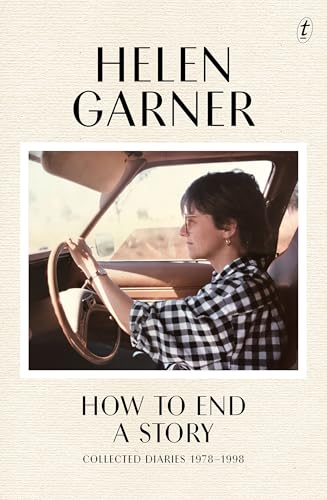
A few books were named by two people, with two books named by three, Geraldine Brooks’ Memorial days and Melissa Lucashenko’s Not quite white in the head, and one named by four, Helen Garner’s How to end a Story: Collected diaries. Is it a coincidence that these authors have also written fiction? Or that in terms of my reading wishes, they are up there, though several others are in my sights.
Is there any nonfiction in your sights for 2026? After all, Nonfiction November isn’t that far away if this year is any indication!
 Whispering Gums
The Prime Minister’s Potato has got to be one of the best titles 😀 Baking and the Meaning of Life seems to me like an apt title since I find most kitchen things, especially baking, to be rather existential undertakings and not just because of the food to survive aspect.
How to End a Story is making a bit of splash here in the States. I hope to give it a go in 2026 along with lots of other nonfiction. I always have a NF book on the go and a huge pile and TBR list the has reached impossible dimensions. But that’s all part of the pleasure.
It’s a great title isn’t it Stefanie, and I think it will be a very interesting book (particularly for people who work in museums/libraries/archives). I’m glad Garner’s book is making a splash. It was originally published in three volumes, and I’ve read the first two. I must find time to read the third because I loved the ones I’ve read.
As for Baking and the Meaning of Life, I originally listed it under Lifewriting thinking it might have been a cook’s memoir, but I think it is primarily recipes. I think you are right about cooking/baking/most kitchen things. They are not just mechanical processes are they?
You know I have a thing about titles, and there are some beauties here !
Always home, always homesick
Until justice comes
Conspiracy nation
Nature’s last dance: Tales of wonder in an age of extinction
some examples. They let you know what you’re in for – which I believe to be required in book titles.
I agree MR, titles are important. You’ve chosen some good ones. I particularly like Hannah Kent’s, the first in your list.
I have Monster: A Fan’s Dilemma by Claire Deder on my TBR, and so far, I’m not enjoying it. The thoughts are meandering. Someone in my book club chose Bottom of the Pyramid by Nia Sioux, which looks pretty fluffy, so we’ll see. I AM excited about several titles I added to my Books of Winter list:
All of Me by Venise Berry
Savage Inequalities: Children in America’s Schools by Jonathan Kozol
At Wit’s End by Erma Bombeck
Minding the Store: Great Literature About Business from Tolstoy to Now edited by Robert Coles and Albert LaFarge
Touched by Kim Kelly
Suggs Black Backtracks by Martha Ann Spencer
Wow, looking at my list for early 2026, I have a lot of nonfiction on there! One book I’ve had on my list for four years is You’re Leaving When?: Adventures in Downward Mobility by Annabelle Gurwitch, which is about children moving back in with parents. I don’t know why it sounds so interesting to me, as I have never moved back in with parents.
Thanks for sharing your list Melanie. Savage inequities sounds really interesting to me. Although I never planned to be a teacher, I did a couple of education courses at university, including one called Education and Society. It was really the sociology of education, and a big focus (though not the only focus) was inequity. That course left a lasting (as in permanent) impression on me. Of your other books, Minding the store sounds really interesting too. I wrote a post once on business novels (or something like it). I think it’s a really interesting thing for writers to write about.
I’ve read a few on this list – Hannah Kent’s book will certainly be on my favourites list this year.
The Mushroom Tapes was terrific and was obviously published when it was because of court dates etc – good for Christmas shopping (although those that wanted to read it, like me, got it the moment it landed in book shops) but not good for making ‘best of’ lists!
Thanks Kate … I’d like to read Kent’s book and I’m looking forward to reading The mushroom tapes. As you say, late publication in the year is good for Christmas but not for ‘best of’ lists. I guess if I were an author I know which one I’d prefer!
I think of all those books I’d only consider reading two, the Lucashenko and Garner’s diaries. While I do read some NF, I’m always surprised by people preferring to read collections of facts rather than fiction, but I suppose it takes all sorts.
Sometimes you mystify me Bill! Not, in this case, your choices from this list because if asked what you might read, I would have included those in my list. No, it’s the point about being surprised by people preferring to read collections of facts rather than fiction, because it sometimes seems that the fiction you want to read is primarily that which is ground in facts (ie the lived experience of the author). Except of course for sci-fi, which is a whole different ballgame. (You know I like to tease you so you needn’t answer, unless you want to, because I do get the difference between the collections of facts and the sort of fiction you prefer!)
I prefer, as you do, good writing and to read stories about what people are thinking. I find that autofiction does that best.
I have a personal preference for accurate geography in fiction.
And as for SF, well that contradicts all of the above, what can I say!
And that’s what makes it all interesting isn’t it? The fact that none of our preferences can be perfectly articulated because there are always the exceptions or outliers!
Yay! I’ve made the cut. I’m reading Conspiracy nation at the moment.
Oh well, done Gwendoline. I bet it makes fascinating reading!
It’s too complex for my late-night bedtime reading, so I slipped in Judi Morrison’s “Secrets” in between. (Full disclosure, Judi is a fellow member of the South Coast Writers’ Centre NSW).
Hi Sue I just finished Groomed and I am now reading one of my favourite non fiction author Robert Macfarlane’s, Is a River Alive? I also want to read The Best Australian Writing 2025, Beautiful Changelings by Maxine Beneba Clarke, and Clouds by Edward Graham. I am also going to read How to be a Heroine by Samantha Ellis: Or what I’ve learned from reading too Much!
Oh I love this – or do I? – Meg: “Or what I’ve learned from reading too Much!” I mean, can you ever read too much? I’d love to know what she says. (It also makes me think of Catherine Morland in Northanger Abbey who is introduced as not typical heroine material.)
Hi Sue, you cannot read too much. Samantha Ellis is a strong feminist. Her memoir concerns novels with strong and weak women she read when young and now she is older her views have changed. This memoir was written in 2014, and since she was six years old, she has always wanted to be a writer. She has written and produced plays but had to do other jobs at the same time to achieve her aim. You will be pleased to know she writes about the Bennet sisters, especially Lizzy. There is another ten chapters concerning other main women characters. I will finish it tomorrow. Funny you should mention Northanger Abbey because she has written a book about Anne Bronte; Take Courage: Anne Bronte and the Art of Life. However, Anne Bronte is not mentioned in the memoir but her sisters Charlotte and Emily and their characters are given a chapter.
Thanks Meg … I assumed that was the case but wondered about her take. Thanks so much for sharing what she is writing about in some detail. Sounds really interesting.
Plenty of non-fiction on the TBR. What I read this year? No idea. 😄
You didn’t put them on GoodReads?? What sort of nonfiction do you most like John?
I read a broad variety, travel, history and science, humanities, though rarely bios. At present, I am reading (slowly) Behave: The Biology of Humans at Our Best and Worst by Robert M. Sapolsky. A bit heavy in terms of biological detail but interesting nonetheless. Also as an easy read On Tasmania by Nicholas Shakespeare, a genealogical come history come travel book. Not bad. These I dip into when I need to. I have 770 on the TBR according to GR though that is a mix of both fact and fiction.
Thanks John … bios are interesting. Some people love them and some really don’t. It feels like there’s not a lot of in-between.
I’ve only read one! I enjoyed Candice Chung’s memoir and I have just started the Mushroom Tapes. I also have the Josie McSkimming and Don Watson books on my TBR.
Oh I’m in the car now but I will try to remember to add a link to that when I get home. The McKimming sounds interesting. Great title.
I’m starting to wonder what will be on this year’s Stella long list.
The Mushroom Tapes could be a possibility and Evelyn Araluen has a new poetry collection as has Maxine Beneba Clark.
Yes, all good possibilities. I have all three sitting next to me right now so I could even read them if they were listed!
In a previous comnent, I mentioned Mr BIP had found his way into my “saved” list at the bookshop and to surprise me he ordered a few titles that I’d been keeping in mind, which were mostly non-fiction, partly because I always buy fiction first (so likely bought rather than “saved” the fiction titles). But I also find it harder to finish non-fiction from the library, because I read it more slowly, so I really should buy it more often and borrow fiction more often, but it doesn’t happen. My buying habits make the same kind of sense that Bill’s preferences make. (hee hee) Most of them are bookish or lit.biographies, but there’s one you will recognise, the Jane Rawson that has Nature in the title.