My participation in Nonfiction November, like Novellas in November and MARM, tends to be a bit random and sporadic. Last year, I wrote one post for Nonfiction November. I will do the same this year, focusing on two of the questions – My Year in Nonfiction and Book Pairings. These are the two that most interest me.
Week 1: Your year in Nonfiction
Heather (Based on a True Story) hosted this week, which is described as follows:
Celebrate your year of nonfiction. What books have you read? What were your favorites? Have you had a favorite topic? Is there a topic you want to read about more? What are you hoping to get out of participating in Nonfiction November?
This Nonfiction November year runs, by my definition, from 1 November 2024 to 31 October 2025. My nonfiction reading has been varied, though most of it involved some sort of life writing – biography, memoir, and hybrids of the two. These books were, in alphabetical order by author, with links to my reviews or posts where applicable:
- Sarah Ailwood, “Austen’s Men, Immortality and Intertextuality” (2023, essay, read for a Jane Austen group meeting)
- Wayne Bergmann and Madelaine Dickie, Some people want to shoot me (2024, co-written biography, my review)
- Ruby Doyle, “A bush picnic” (1933, newspaper column, read for my post on Doyle)
- Helen Garner, The season (2024, memoir, my review)
- Gideon Haigh, My brother Jaz (2024, memoir, my review)
- Marion Halligan, Words for Lucy (2022, memoir, my review)
- Andra Putnis, Stories my grandmothers never told me (2024, biography/memoir, my review)
- Helen Trinca, Looking for Elizabeth: The life of Elizabeth Harrower (2025, biography, my review)
- Sonia Voumard, Tremor (2024, memoir, my review)
I am currently reading two other nonfiction works, including Hazzard and Harrower: The letters by Brigitta Olubas and Susan Wyndham (see my author conversation post) which I started last year. What I’ve read so far provided some good background for Trinca’s biography of Elizabeth Harrower.
I won’t answer the rest of the questions, except to say that my favourite nonfiction includes literary biography and memoir, and narrative nonfiction on any subject that I think might be interesting!
Week 3: Book Pairings
Liz (Adventures is Reading, Running and Working from Home) hosts this week, and explains it thus:
Pair up a nonfiction book with a fiction title (or whatever you want to pair up). Maybe it’s a historical novel and the real history in a nonfiction version, or a memoir and a novel, or a fiction book you’ve read and you would like recommendations for background reading. Or two books on two different areas have chimed and have a link. You can be as creative as you like!
This is my favourite part of Nonfiction November, because, like the #SixDegrees meme, it’s fun to think about. I’m giving you three pairs. My rule was that the nonfiction book had to come from this year’s reading, but the paired book could – and indeed all do – come from previous years.
Grandmothers’ stories
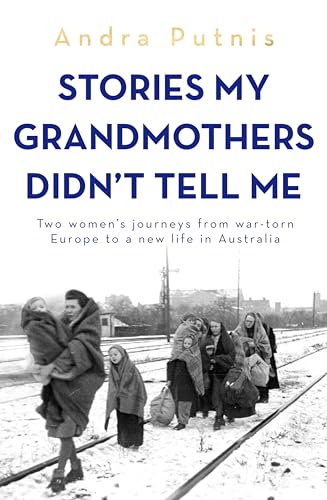
This year my reading group read Andra Putnis’ biography/memoir, Stories my grandmothers didn’t tell me (my review) about her two Latvian grandmothers who survived World War Two and ended up in Australia. Five years ago, we discussed Favel Parrett’s novel There was still love (my review), which revolves around the lives of two Czech sisters, who also survived World War 2, but here one ends up in Australia while the other remains in Prague. Parrett tells her story mainly through the eyes of their grandchildren.
Mining and land rights in Western Australia
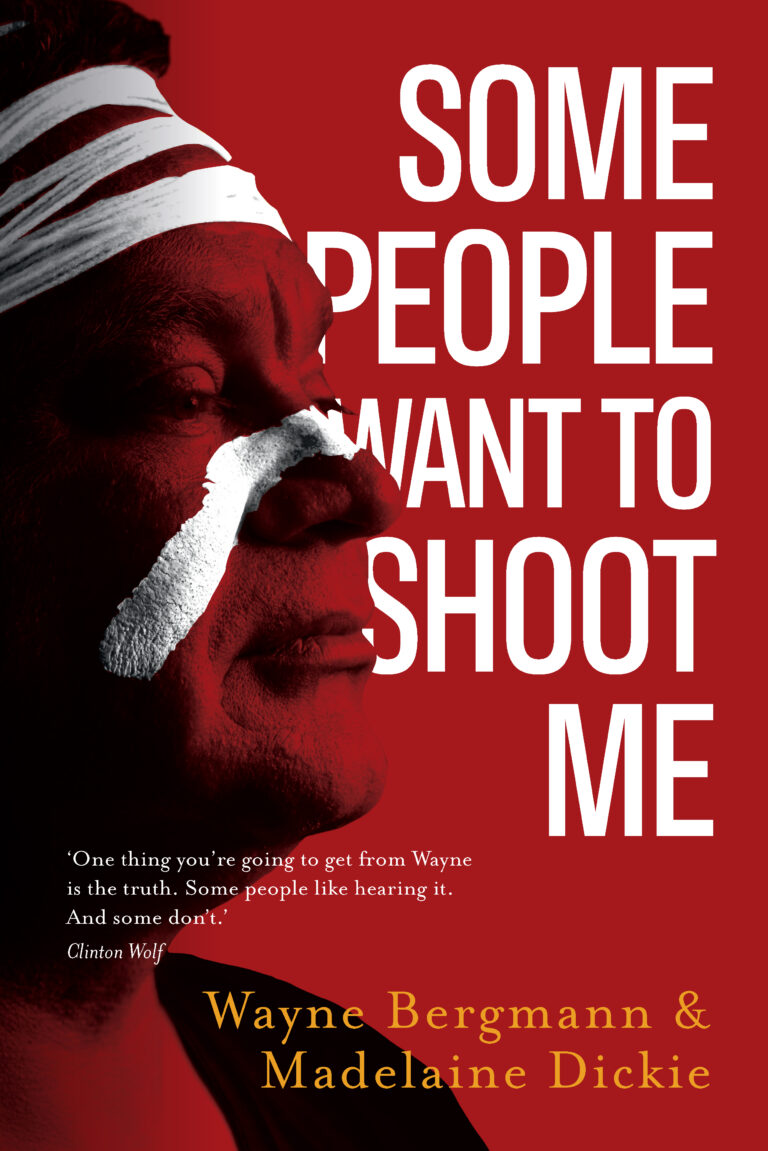
Wayne Bergmann and Madelaine Dickie’s biography Some people want to shoot me (my review) tells the story of First Nations man Wayne Bergmann who has spent much of his life fighting for the rights of Traditional Owners. One of those fights documented in this book occurred when he was chief executive of the Kimberley Land Council during the James Price Point gas hub negotiations which saw conflict within First Nations communities and between them and the wider Broome community. Madelaine Dickie’s novel Red can origami (my review) is set in a fictional community in the same region and encompasses a similar story of conflict, negotiation, tested loyalties and skulduggery over a uranium mining licence.
Youth football
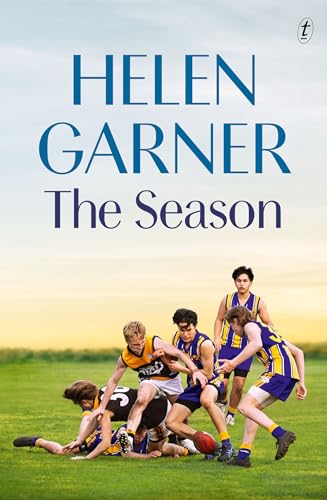
This pairing of Helen Garner’s memoir The season (my review) with Karen Viggers’ novel Sidelines (my review) is a bit looser than the previous two, but I’m going there. Both are Australian books about young people playing sport, and in both the sport is football. However, in Garner’s memoir the football is Australian Rules, while in Viggers’ novel it’s soccer (or, in fact, to many, “the” football). Also, Garner focuses on the positive aspects. Hers is a grandmother’s story. She wanted to get to know her grandson better so she followed him through a year of training for and playing games. It’s primarily about the relationship she developed with her grandson through doing so, but does include some insights into youth sport, mostly in terms of its benefits. Viggers’ novel, on the other hand, sets out specifically to interrogate what happens when parental support turns into pressure, and what that pressure can do to the young players experiencing it.
What would you pair (and/or do you have anything to share regarding your year in nonfiction)?
 Whispering Gums
I have decided that your life must be TOTALLY ARRANGED, ST: big horse if it weren’t, I would not be able to believe that one middle-aged woman with a husband and family dotted about could CONCEIVABLY read so much.
Arranged under headings: Monday = nonfiction; Tuesday = novellas; Wednesday = memoir; and so on. Of course there are sub-divisions: Novellas = genuine ones OR ones that shouldn’t really be under this heading; Fiction = fantasy OR historical fiction OR Australian fiction; etc., etc.
Tell me I’m wrong. [grin]
I wish you were right MR, then I might read more! From your timetable there, I can see you would have made a great librarian. You gave me a great laugh particularly with your novella subsets!
I’m always hoping to get you laughing, ST …
And you often do – don’t stop. X
I don’t read much non-fiction and what I do is either about books or Indigenous issues. I could think of a couple of interesting pairs of fiction/non-fiction for early settlers and First Nations in Canada, but I’ll go with a novel and a memoir by the late Ngũgĩ wa Thiong’o – Weep Not Child and Birth of a Dream Weaver.
Good choice Bill. I do like nonfiction when I read it but I gravitate to fiction.
I’ve been all over the place with NFN and still have a post in my file from years ago that remains unfinished because November just wouldn’t cooperate. hehe This year I did post about a pairing in the week that Liz hosted, but that was all I managed. Now I’m already thinking about my non-fiction reading for next year, thanks to Bron’s loose project, so I might end up being more organised accidentally for next November. Ahem. We will see. Meanwhile, we read, eh?
Meanwhile we sure do!
I have a few draft posts … mostly unfinished and mostly inspired by some idea from my reading but that I don’t stop to spend time to think through to the end. And of course when I come back to it the excitement has abated!!
I enjoyed uour pairings. Looks like good combinations.
Thanks Pam
Pingback: Nonfiction November Week 3 - Pairings
Excellent pairings and I’ve added a link to this post to my list – an advantage of not being able to put the Linkys on my posts like the other hosts can is that I can keep updating it as long as I want to!
I didn’t understand that about Linky but now I’m glad too!!
The non-fiction book that stuck with me most this year was Poisoned Blood by Philip E. Ginsburg. It’s a true crime book that I listened to during my internship that said a lot about what happens when we don’t trust our instincts and instead rely on established relationships that are supposed to be safe.
Thanks Melanie … I do like good true crime. And that one sound good!
Always excellent reading WG! And great pairings too.
I don’t have a nonfiction/fiction pairing but a double nonfiction pairing:
Theory of Water: Nishnaabe Maps to the Times Ahead by Leanne Betasamosake Simpson, a Canadian Nishnaabeg writer whose book comes from a place in which water is unquestionably an ancestor and alive, paired with Is a River Alive? by Robert Macfarlane, who, from his western European perspective, has to do research and ask questions and find logical “proof” to come to a still very western understanding with many qualifications, that yes, a river is alive.
I bet you can guess which book I liked the most 🙂
I think I can, Stefanie! This is a great pairing because while it’s not in form it is in the spirit of the idea given the very different cultural perspectives.
PS love the two ideas of “alive” in your pairing too.