
Once again it’s Karen’s (Kaggsy’s Bookish Rambling) and Simon’s (Stuck in a Book) “Year Club” week. This week, it is 1925, and it runs from today, 20 to 26 October. As for the last 8 clubs, I am devoting my Monday Musings to the week.
The 1920s were wild years, at least in the Western World. The First World War was over, and neither the Depression nor Second World War were on the horizon. It was a time of excess for many, of the flappers, of
A brief 1925 literary recap
Books were, naturally, published across all forms, but my focus is Australian fiction, so here is a selection of novels published in 1925:
- Martin Boyd (as Martin Mills): Love gods
- Dale Collins, The haven: A chronicle
- Erle Cox, Out of the silence
- Zora Cross, The lute-girl of Rainyvale : A story of love, mystery, and adventure in North Queensland
- Carlton Dawe, Love: the conqueror
- Carlton Dawe, The way of a maid
- C.J. de Garis, The victories of failure
- W. M. Fleming, Where eagles build
- Nat Gould, Riding to orders
- Jack McLaren, Spear-eye
- Henry Handel Richardson, The way home (the second book in the The Fortunes of Richard Mahony trilogy)
- M. L. Skinner, Black swans: Rara avis in terris nigroque simillima cygno
- E. V. Timms, The hills of hate
- Ethel Turner, The ungardeners
- E. L. Grant Watson, Daimon
- Arthur Wright, The boy from Bullarah
EV Timms had a long career. Indeed, he also appeared in my 1952 Year Club list. Zora Cross has reappeared in recent decades due to renewed interest in Australia woman writers. Both Bill and I have written about M.L. (Mollie) Skinner, a Western Australian writer who came to the attention of D.H. Lawrence. And then of course there are those writers – Martin Boyd, Henry Handel Richardson and Ethel Turner – who have never “disappeared” from discussions about Australia’s literary heritage.
While my focus here is fiction, it’s worth noting that many of Australia’s still recognised poets published this year, including Mary Gilmore, Henry Lawson, Dorothea Mackellar, Furnley Maurice and John Shaw Neilson.
The only well-recognised novelist I could find who was born this year was Thea Astley.
The state of the art
As for previous club years, I checked Trove to see what newspapers were saying about Australian fiction. Because 1925 is a century ago, I had already started researching the year for the little Monday Musings Century ago subseries I started in 2022. So far, I have written just one post on 1925. It focused on two literary societies which were active at the time, the Australian Literature Society and Australian Institute of the Arts and Literature, so I won’t repeat that here.
I found a few interesting tidbits to share, including, in a couple of newspapers, a brief report of a talk given to Melbourne’s Legacy Club by local bookseller, C. H. Peters, manager for Robertson and Mullens. He reported that the English publisher, John Murray the Fourth, said
that the Australian consumption of fiction was enormous, compared with the English market, and that, making allowances for differences in population, the Australian read five novels to every one read by the Englishman.
Some of the other items of interest I found were …
On a cult classic?
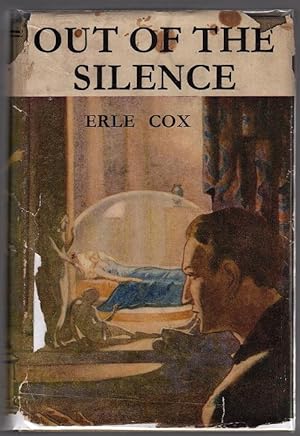
One of the surprising – to me – finds during my Trove search was the book Out of the silence by Erle Cox. It was, says The Argus (9 October) and the Sydney Morning Herald (28 November), first published in serial form around 1919, but there were many requests for it to be available in book form, which happened in 1925. The story concerns the discovery of a gigantic, buried sphere, which contains the accumulated knowledge of an ancient civilisation. The Argus’ reviewer says that the sphere’s aim “was to exemplify the perfection attained in a long past era and to assist the human race of the time of discovery towards similar perfection”, with the finder being helped in this goal by the “dazzling Earani”, a survivor of that civilisation.
The reviews at the time were positive. The Argus says that “the story is carried on with much ability”, while The Age (17 October) describes it as “brilliantly conceived and charmingly written … original and weird, maybe a little far-fetched”. Edward A. Vidler writes for the Sydney Morning Herald that “Mr. Cox is to be congratulated on a story of rare interest, which holds the attention from beginning to end”.
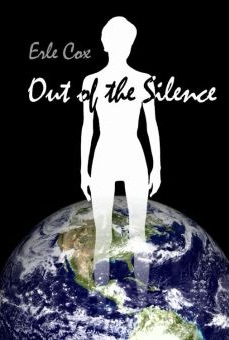
It has been republished more than once since 1925, including in other countries. For example, in 1976, it was republished in a series called “Classics of Science Fiction” in 1976, by Hyperion Press, and in 2014 an ePub version was published “with an Historical Afterword by Ron Miller”, who featured it in his “The Conquest of Space Book Series.” The promo for this edition describes it as “the classic lost race novel” in which a pair of amateur archaeologists “inadvertantly revive Earani, the survivor of an ancient race of superbeings”. But this is not all. It was also adapted for radio, and turned into a comic strip. You can read all this on Erle Cox’s Wikipedia page.
On reviewing
I enjoy seeing how reviewers of a different time went about their business. Some reviews in this era – the 1920s – tell the whole story of the novel, and do little else. Others, though, try to grapple with the book, finding positives as well as negatives, and sometimes discussing the reason for their criticisms.
Reviews for Dale Collins’s island adventure The haven are a good example. It seems that Collins had decided to have the main character – the male protagonist – tell his story. The reviewer in The Age (31 October) didn’t feel it worked, writing that Collins
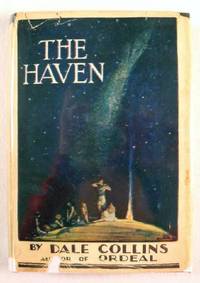
repeats the experiment of blending psychology and sensation which he caried out so successfully in ‘Ordeal.’ It is a very clever and original story, but the reader who wants sensation will find there is too much psychology in it; and the reader who is interested in psychological studies will discover that the author has handicapped himself by making the central figure tell the story. As a result the psychology becomes monotonous …
The Argus (6 November) on the other hand was positive about the technique of Mark telling his own story:
Mr Collins has skilfully worked out the effect of the situation on each one of his characters, but especially on that of Mark, who reveals himself through a diary of their life on the island … The author has set himself a very difficult task in the carrying out of which he has been remarkably successful.
The reviewer in The Age (25 July) – the same one? – was disappointed in Zora Cross’s The lute-girl of Rainyvale, seemingly because of its supernatural subject matter concerning Chinese vases and curses, after the quality of her previous novel Daughters of the Seven Mile, but ended on:
The story has some vivid descriptive writing, which serves to emphasise that Zora Cross’s real gifts are wasted on fiction of this character.
Mollie Skinner’s Black swans was reviewed twice in the same column in The Age (12 September) with slightly different assessments. The first writes that it is “a very readable story founded on historical events in the convict days of Western Australia” and goes on to say that she had collaborated with D. H. Lawrence on The boy in the bush but that “her unaided work is preferable”. The review concludes that Skinner had “drawn her picture strongly and produced a good novel”.
Later in the same column, the reviewer (presumably a different one?) references Skinner’s work with Lawrence and then says of this new book that the story begins in Western Australia’s Crown colony days of 1849. Skinner “sends her childish heroine and hero on adventures amongst blacks and Malays, in company with an escaped convict” then “takes them to England for the social and love interest”. The reviewer concludes that
Miss Skinner writes well, with a special anxiety to set down striking phrases and epigrams. To quote a common, phrase, she is more interesting than convincing.
Hmm … there’s a sense between the lines here that the story doesn’t hang together, but that Skinner, like Cross, has some writing skills.
As for Henry Handel Richardson, although her novel came out in mid-1925, I found only a couple of brief references to it. Martin Mills (Martin Boyd), on the other hand, fared better with some quite detailed discussions, including in the West Australian (4 July). The reviewer explored it within the context of being part of a rising interest in the “religious novel” and ended with:
Love Gods, with its old story of the unending conflict between the Pagan deities and the restraining influences of Christianity, is a novel of unusual insight, and most uncommon power of literary expression.
There’s more but I’ve probably tired us all out by now! I will post again on this year.
Sources
(Besides those linked in the post)
- 1925 in Australian Literature (Wikipedia)
- Joy Hooton and Harry Heseltine, Annals of Australian literature, 2nd ed. OUP, 1992
Previous Monday Musings for the “years”: 1929, 1936, 1937, 1940, 1952, 1954, 1962 and 1970.
Do you plan to take part in the 1925 Club – and if so how?
 Whispering Gums
“original and weird, maybe a little far-fetched” is right up my alley, lol.
It sounds like the variety of things people published about books still holds true today, from the entire plot described to deciding on the qualities the book possesses.
I thought of you and Bill as I read about this book Melanie. I wonder if Bill has heard of it – thought you probably wouldn’t have.
I haven’t. I have never been very close to Australian SF. I will have to look now and see if I can locate a copy.
Oops read these in reverse order. Glad you found it.
Here you go Bill. https://lycanthiabooks.com/book/erle-cox-out-silence-first-edition/
Well done John …
Did you see how much for a first edition signed? I fell off my chair!
Haha, no I didn’t click through because I am under the pump at the moment, but I assumed that if I did it would be astronomical given it was a first edition, and I’ve seen many huge prices for rare old books.
Out of the Silence is available from Project Gutenberg. I’ve been casting around for my next PG read, so this can be it.
The Introduction (dated 1939) begins: “THE name of Erle Cox is well known to readers of The Australasian, by reason of his weekly book review, and is also familiar to a wide public through the medium of his own books, especially “Out of the Silence,” which has maintained— and is maintaining—a steady sale over a period of 20 years or so, something unusual in these days of mass production and short lives in novels.”
I hoped it would pique your interest Bill. I look forward to hearing what you have to say.
Thanks whispering gums,
‘was to exemplify the perfection attained in a long past era and to assist the human race of the time of discovery towards similar perfection’ – would that our current goals were similar, now it’s survival or deny? 1925 seems quite advanced in this write up!
And… more interesting than convincing.. gave me a laugh.
I’m glad Moira that it both interested you and gave you a laugh. Looking back can be quite instructive can’t it!
I don’t recognise even one of those author names! Have they faded from the scene or do people still read them?
Most have disappeared Karen, but Henry Handel Richardson is still read and very well regarded, particularly her trilogy which I name above. Martin Boyd is still read too, and Ethel Turner’s children’s book Seven little Australians is a classic.
The book which interested me most in your list was Zora Cross’s. I did a search on the title and was directed to a repost of an old review in Perry Middlemiss’s old blog: ‘Perilously close to this category of second-rate Australian novels falls unhappily, the latest effort of Miss Zora Cross. With every desire to be sympathetic and encouraging toward an author who has written much good and almost good verse, it is impossible to write enthusiastically of this novel, “The Lute Girl of Rainyvale.”‘ Faint praise!
Sounds like it’s not the work of hers to chase Bill. Must say that the description I read wasn’t enticing to me.
Such an interesting post – thank you! I always appreciate the fact you share your researches on the year in question, these posts are a great addition to the club!
Thanks Karen. I do enjoy doing these. I have found a fascinating – non-Australian – short story to share but I have a really busy week including a challenging book group read and the Canberra Writer’s festival, so I may not get it written up until next week I’m afraid. I’ll see if I can do it earlier but I fear I won’t.
Excellent work as always, adding so much to the Week!
Thanks Liz…
Pingback: Out of the Silence, Erle Cox | The Australian Legend
I’m curious whether I’d’ve been able to list as many by Canadian writers! (BTW, I think you have a typo in the year after your heading? I know those details drive you mad.) This is the first time I was all prepared and had finished my book and had done my research and written it up… then was not well and couldn’t post. Figures, eh? heheh
Thanks for that Marcie … I duplicated the previous “Year” club Monday Musings as it provided a rough template. And that year was 1952. I caught most of them in the post but missed that one!!
As for that list … I have help from the Annals (under Sources) and Wikipedia, with Trove adding a bit too but I don’t include all I find there. It would be too much. And some are more pulp fiction titles, which are fine of course but I don’t want to make the list too broad.
I read a story for it in time too – but the background is interesting and I haven’t found the time to finalise the post. I’m hoping next week! You can still post. I hope you are well now?
My initial search for 1961 showed lots of interesting candidates but not necessarily Canadian: it’s like looking for a second layer isn’t it!
Oh, yes, I did post late even so. And scheduled the other date-related posts I had finished, just in case of a relapse. hehe A slow recovery but hopefully that makes it stick.
You are a machine! I rarely get posts written in advance though I have a lot in draft or in notes stage!! Hope you are properly well.
I am reading my MARM book and should finish and post before the end of the month.
Only this year have I started to write a draft as soon as I finish reading, because I felt like I was more time-consuming to try to catch the flavour after time had passed and all I had were my notes and vague impressions. (But I still have to edit a lot, and anyway that’s probably just me, because I have so many reads underway at one time to suit different reading moods and can’t just read a book or three like a normal person. heheh)
Haha, writing a draft has always been my practice until the last year or so. Not my preference for the reasons you give but something has changed though I can’t work out what it is. My brain perhaps! But I do usually make good notes that help. However there is a sweet spot where a little time can let ideas gel while too much requires a significant refresh which is frustrating!
Funny! We seem to have swapped methods, at least temporarily.
Yes, I quite agree, it’s a sweet-spot matter. Sometimes I go back and reread my draft and am shocked to find that I’ve wholly omitted what later seems like the Entire Point.
Do you make note of observations and feelings along the way? My notes are 95% quotations unless I am writing in my journal (which isn’t a regular thing).
Most of my notes are quotes, marking plot points, etc but I do try to gather observations together too. Like when I see glimmers of a theme or recurring motifs. I don’t note feelings so much though, because I think my reviewing is more about analysis than emotion. Does that make sense?
I know what you mean about sometimes missing the entire point. Done that too. I get so focused on something that interests me I don’t step back enough to see the big picture. Does that just counteract what I said above?!
Hahaha If it does contradict, that makes sense to me: I think what makes all of us such different readers resides in our contradictions about books and stories and how we think about and talk about them. But I’m not sure it does contradict, because in one’s notes, one can be wholly and completely myopic, and it’s not until we think about another person reading our thoughts that we realise we’ve missed that Entire Point (sometimes). We seem to take similar notes; I hardly ever note an emotional response, but have recently tried to add some bits like that, especially when a story takes a dramatic turn. Maybe we were both taught to note facts not feelings, in early English classes!
I suspect early English training is part of it … question is how much it taught me versus how much it honed the sort of reader I was likely to be anyhow? Some people say English classes spoiled reading for them. How much was that the teaching and how much the sort of reader they were?