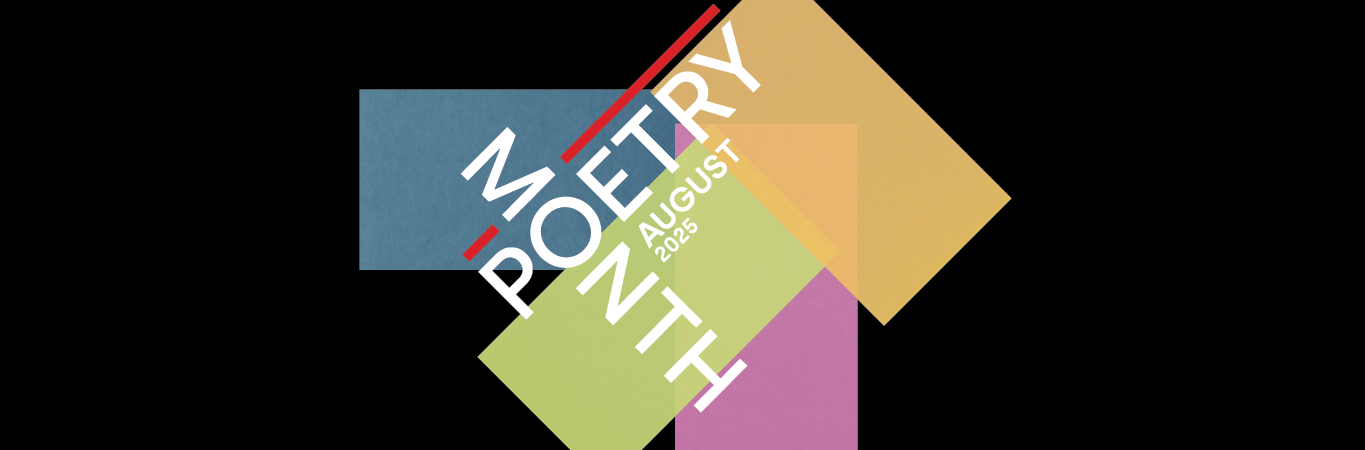
National Poetry Month – in Australia – is now five years old, and once again it is spearheaded by Red Room Poetry, which should not need any introduction by now to regular readers here. This year it runs a bit over a month, from 30 July to 3 September.
As before, they have appointed Poetry Month Ambassadors, with 2025’s being author and journalist Stan Grant, comedian Suren Jayemanne, screenwriter Luke Davies, rapper Dobby, musician Leah Senior, model Nyaluak Leth, and author and broadcaster Julia Baird. (You can read more about the Ambassadors on this dedicated page.) Arts Hub reports that this year they are introducing a Youth Ambassadors program “to showcase and foster the next generation of Australian poetic talent”. I understand that there will be four Poetry Month Youth Ambassadors, and that they will be announced online, tomorrow, 12 August, in time for International Youth Day.
Red Room is running similar events and activities to those they’ve run before – the 30in30 daily poems/reflections/writing prompts, and the National Poetry Month Gala, which will be on 28 August at the State Library of NSW (and also live-streamed via Red Room Poetry’s YouTube). This year’s 30in30 features, reported thatshowblog, “an impressive roster of contemporary Australian voices including Evelyn Araluen, David Brooks, Winnie Dunn, Nardi Simpson, and Tyson Yunkaporta, alongside emerging talents like Grace Yee and Madison Godfrey”.
New events and initiatives this year include (though some are now past!):
- Art After Hours: Ekphastic Fantastic at AGNSW (Wednesday 6 August)
- Middle of the Air: Lyric Writing Workshop (Wednesday 6 August)
- Hatred of Poetry Great Debate (Thursday 14 August) at the Wheeler Centre in Melbourne: arguing that the hatred of poetry is justified will be Evelyn Araluen, Sez, and Suren Jayemanne, with their opponents being Eloise Grills, PiO, and Vidya Rajan.
- Poetry After Dark: Panel & Performance at Dymocks, Sydney (Friday 22 August)
- Middle of the Air Competition for poetry set to song, offered in partnership with the ABC: entries close on 1 September. The two winning songs/poems will be broadcast on The Music Show in November (More info here)
- Poetry and Film Showcase (Wednesday 3 September) at the Sydney Opera House
Internet searches reveal more events – such as this page from What’s On City of Sydney. It feels like this month is becoming established in Australia’s literary calendar.
Poetry posts since the 2024 National Poetry Month
How slack have I been? I have only written two posts on poetry since last August:
- Monday musings on Australian literature: Les Murray Award for Refugee Recognition (May 2025)
- World Poetry Day 2025 – a day late (March 2025)
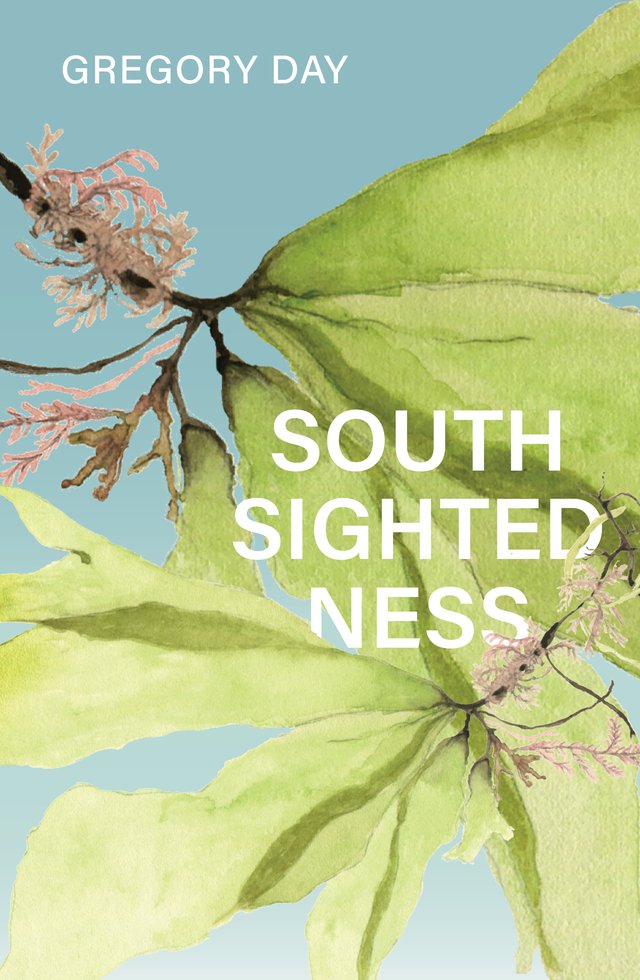
I do have several poetry books on my TBR, including those mentioned in the World Poetry Day post, and Gregory Day’s gorgeously produced Southsightedness.
Red Room’s 10 essential Australian poetry collections
On 31 July, to herald National Poetry Month, The Guardian published “10 essential Australian collections that will change how you read”. It was compiled by Red Room Poetry’s artistic directors, David Stavanger and Nicole Smede, who said in their introduction:
This list isn’t about ranking or canon-building, but about spotlighting collections that crack language open, unsettle expectations, and echo long after the last line. From poetic noir, epic love lines and jazz-inflected dreamscapes to sovereign storytelling and lyrical confrontations with history, these books remind us of poetry’s unmatched ability to hold truth, tension, and transformation.
The collections are, in the (mysterious to me) order given:
- Ali Cobby Eckermann, Inside my mother (2015, my review)
- Dorothy Porter, The monkey’s mask (2000, on my TBR still, but I have read Porter’s The bee hut)
- Sarah Holland-Batt, The jaguar (2022, on my TBR, Kate’s and kimbofo’s review)
- Samuel Wagan Watson, Smoke encrypted whispers (2004)
- Bill Neidjie, Story about feeling (1989)
- Luke Davies, Totem (2004)
- Judith Wright, The moving image (1946)
- Alison Whittaker, Blakwork (2018, Bill’s and Brona’s posts)
- Nam Le, 36 Ways of writing a Vietnamese poem (2024)
- Shastra Deo and Kate Lilley, Best of Australian poems 2024 (2024)
It’s a good list, not the only list, because nothing is, but a good list. It’s diverse in authorship, and it includes a verse novel, a Stella winner, Judith Wright from the 1940s, and a Best of … anthology.
At the end of the article, The Guardian asks a question, so I’m asking it too:
Do you have a favourite Australian poetry book that wasn’t mentioned here? (Or any other poetry collection, particularly if you are not Australian!) Please share it in the comments.
Notes:
- Links on writers’ names are to my posts for the writer (though the posts aren’t always about poetry).
- Image: I assume Red Room Poetry is happy for their Poetry Month banner to be used in articles and posts about the month.
 Whispering Gums
Middle of the Air …
Paul Kelly’s most beautiful, haunting song. I had the enormous pleasure of seeing it performed by Tripod and Eddie Perfect, a thousand years ago on that amazing TV program Sideshow. Long gone are those days of marvellous individuality,
Oh thanks so much MR, I missed that connection!
It would be hard to pick a favourite collection, but Blakwork (above) was one of those collections that had a profound impact on me.
Certain poems are meaningful thanks to time and place (ie a couple of Judith Wright poems that I studied for my HSC, Keats’ Ode to Autumn thanks to a university lecturer who recited it on just the right misty day one April).
If I had to pick one though, I would pick two – Yuiquimbiang | Louise Crisp & The Monkey’s Mask | Dorothy Porter which I classified as a verse novel and blew my mind!
Thanks Brona. I remember Keats from school and university but my favourite would probably have to be Gerard Manley Hopkins. I have still to read Monkey’s mask but two verse novels stand out for me, Geoff Page’s The scarring and Ali Cobby Eckermann’s Ruby Moonlight.
The only time I see much about poetry is when I get on Goodreads and they have voting open for best of categories, one of which is poetry. Consistent winners are those who wrote poetry on places like Tumblr and then got a book deal. It’s nothing like what we would consider classic poetry, but it does resonate with young readers, and I’m happy about that. Perhaps they will grow with the poets, much like Harry Potter fans and the books.
I agree with you Melanie. The important thing is to keep poetry alive … the good, the bad, the long term, the short term, the universal, the local, the serious, the light. There’s a place for all.
Hi Sue, I have a few poetry books in my bedroom and on my coffee table in the lounge, which I often pickup. In my Leaving Year we had an excellent poetry collection, The Progress of Poetry. And, that is when I began to appreciate poetry. I do like David Brooks (OPen House), and I like Dorothy Porter. I also enjoy Banjo Paterson and C J Dennis. Last year Judith Bishop won the Warrender prize for Poetry, and I do enjoy her poems. However, I have to say Mathew Arnold and his poetry is my favourite, followed by The Sin and Her Flowers collection by Rupi Kaur.
I do too Meg … I don’t review it often because I tend not to read whole collections in a reasonable amount of time.
I love hearing people’s favourites, including back to school days. I don’t know Rupi Kaur, but will check her out.
I feel ridiculous saying that I don’t really read poetry because it doesn’t feel like reading but… but… honestly, I only read it when it’s part of the Stella long and short lists and even then I drag my feet. That said, I really loved the Sarah Holland-Batt collection and often use parts of it in my work with clients caring for someone with dementia.
Love this story Kate, about you and poetry. I sort of understand your point, though for me it definitely is reading! How great that Jaguar has proved so useful. I really must get to it.
Between family and work I am hopelessly behind in blog reading, but you know that. Thank you for linking to my Blakworks post, it’s an excellent collection. Apart from Alan Wearne, I’d say my favourites of the very few poetry books I have read are False Claims of Colonial Thieves by Charmaine Papertalk Green and John Kinsella, and the Red Room commissioned collection, Guwayu – For All Times, Jeanine Leane ed.
I understand completely Bill as you would well know! And it’s going to get worse as we are off to Japan next Wed for 3 weeks.
I would like to read all those … I’ve read some FN poetry which I’ve liked a lot but different ones to you!
That debate sounds fun! Here’s a link to one of my favourite poems, which you probably know, but might have forgotten. Anyone bookish will love the opening at least, even if they hate poetry through and through and forever.