Once again it’s Karen’s (Kaggsy’s Bookish Rambling) and Simon’s (Stuck in a Book) “Year Club” week. This week, it is 1952, and it runs from today, 21 to 27 April. As for the last 7 clubs, I am devoting my Monday Musings to the week.
The 1950s represent the main period of the Baby Boomer generation (1945-1964), but of course, those born at this time had little to say about the literature of the period! Instead, Baby Boomers, of which I am one, are the product of times that were prosperous in the west (at least) but also overshadowed by the Cold War and its fear of a nuclear war. It was a conservative time, with men in charge, and women and other minority groups oppressed, which led to the various rights movements that appeared in the 1960s.
I wrote a post on 1954 when that was the Club’s year back in 2018, so much of what I found for that year, applies to 1952.
A brief 1952 literary recap
Books were, naturally, published across all forms, but my focus is Australian fiction, so here is a selection of novels published in 1952:
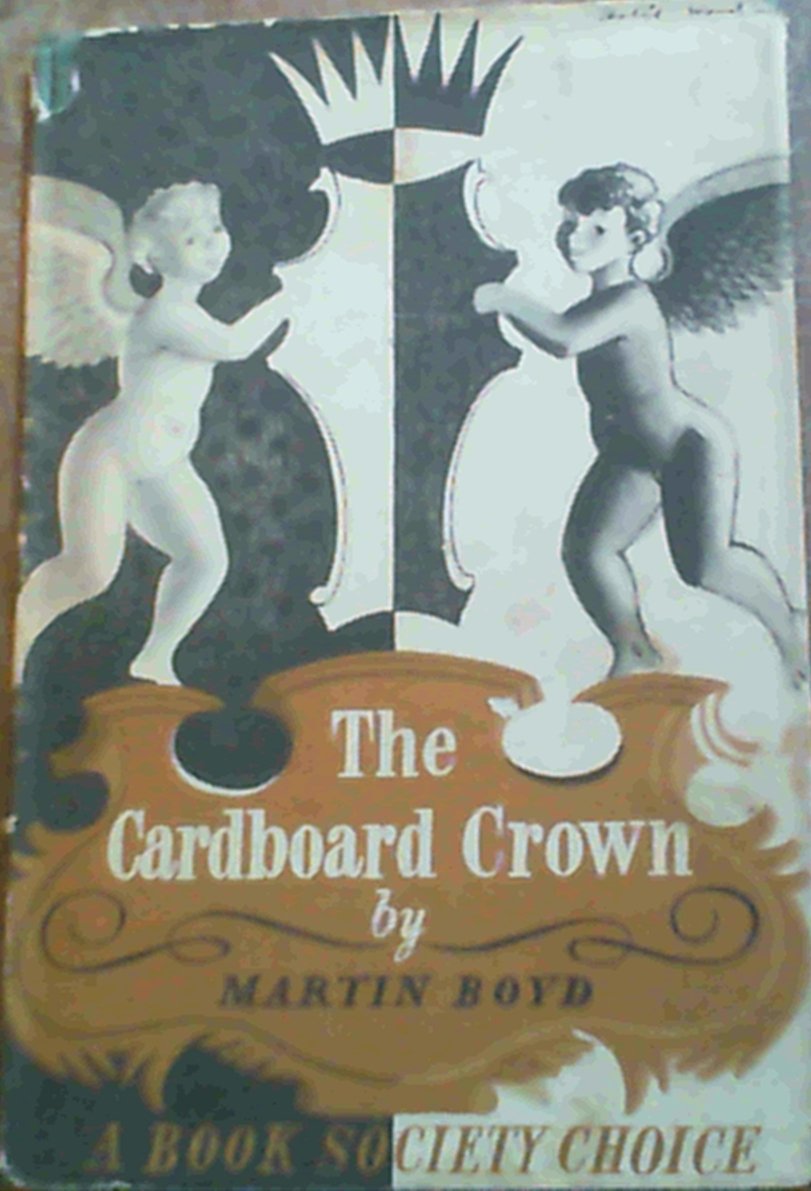
- Martin Boyd, The cardboard crown (on my TBR)
- Jon Cleary, The sundowners (read long before blogging)
- Ralph de Boissière, Crown jewel
- Helen Fowler, These shades shall not vanish
- T.A.G. Hungerford, The ridge and the river
- Rex Ingamells, Aranda boy AND Of us now living
- Philip Lindsay, The merry mistress AND The shadow of the red barn
- Colin MacInnes, June in her spring (aka Colin McInnes and Colin Thirkell; son of Angela Thirkell; primarily known as an English novelist)
- Charles Shaw, Heaven knows, Mr Allison
- Nevil Shute, The far country (read in my teens)
- Colin Simpson, Come away, pearler
- Christina Stead, The people with the dogs
- E.V. Timms, The challenge
- Arthur Upfield, Venom house
Two of these writers – Martin Boyd and Christina Stead – are recognised today as part of Australia’s literary heritage. Others are still remembered, and at least occasionally read, such as Jon Cleary (whose The sundowners was adapted to a film starring Robert Mitchum in the main Aussie role!), Arthur Upfield (whose novels were adapted for the Boney TV series , and Nevil Shute (who has been adapted mutilple times for film and television). T.A.G Hungerford is especially remembered in the West where there is an unpublished manuscript award in his name.
Born this year were novelists Janine Burke, Nicholas Jose, Larry Buttrose, John Embling, Suzanne Falkiner, and John Foulcher. Suzanne Falkiner edited the first book my reading group did back in 1988, an anthology of short stores by Australian women writers, Room to move.
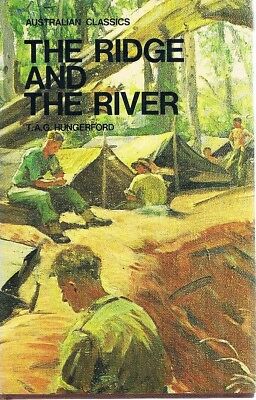
There were not many literary awards, but the ALS Gold Medal went to T.A.G. Hungerford for his novel, The ridge and the river. Fourtriplezed who often comments here has reviewed it on GoodReads, noting that its racist language would not be acceptable today, but that it is nonetheless “a very “important and significant piece of Australian literature”. The Grace Leven Prize for Poetry went to R.D. Fitzgerald (whom I don’t know).
The state of the art
As for previous club years, I checked Trove to see what newspapers were saying about Australian fiction. There was the ongoing issue of writers/journalists/academics feeling the need to defend Australian literature, but I’ve discussed that often before, so will not focus on it here, because they essentially bring out the same arguments, including that Australia did have great writers, like Henry Handel Richardson, Christina Stead, and Xavier Herbert.
However, two issues, in particular, captured the imagination of the papers – the idea of banning “indecent” or “crude” literature for Australia’s youth, and the place of “red” or Communist literature in Australian society. These two issues in particular encapsulate much about 1950s Australia – its conservatism, and fear of Communism.
On “indecent” or “crude” literature
The main issue here seemed to be the influx of American comics and movies. It got a wide range of people excited, including First Constable Pat Loftus, Children’s Court prosecutor, and the visiting Mrs J. Kalker, a Dutch headmistress representing the International Montessori Organisation. North Queensland’s The Northern Miner (5 July) cited these two as urging parents to censor what children were reading and seeing. Mrs Kalker, for example, “was horrified to see so many Australian children going to picture matinees and reading comics” and said that “some films and comics are evil influences that contribute to sex crimes and delinquency”. She also said
Australian children were more intense, more restless, and more undisciplined than Dutch children.
Ouch!
On 9 July, in the Illawarra Daily Mercury, it was the state premiers who took up the cause. Indeed, “a magazine with a photograph of a nude woman on the cover was passed around the table at the Premiers’ Conference” during a discussion about “the undesirable comic books being imported into or published in Australia”. Tasmanian Premier, Mr. Crosgrove, wanted such books and comic magazines to “be passed by the censor before their distribution was permitted” but conservative Prime Minister Robert Menzies neatly side-stepped, saying that works published in Australia, to which Cosgrove had referred, was a State issue!
Meanwhile, in the same newspaper report we are told that Mr. Kelly, the N.S.W. Chief Secretary, had received complaints about children being “found during school hours examining indecent publications they kept hidden under their desks” and that he’d sought “legal advice whether a number of publications now circulating in N.S.W. could be regarded as indecent literature. Churchmen and others had represented to him that an evil existed through these publications”.
In August, there were reports in papers like Tasmania’s Advocate (18 August), about the Young Christian Workers’ Movement aligning itself ‘in the battle for a ban on the sale of indecent literature … especially the violent and sex-ridden U.S. “comics”.’ They were developing their own campaign, and were including in their sights an Australian nudist magazine.
The articles abounded, including another report later in the year from the Australian Council of School Organisations, but I think you get the drift.
On “red” literature
There was an earnestness about socialist literature at the time, one that led to what now seems like a narrow definition of what is “valid” literature. Joan Clarke, President Sydney Realist Writers, praised the Communist newspaper the Tribune (28 May), for “publishing so many of the winning poems and stories from the Literary Competitions run by the Youth Carnival for Peace and Friendship” but offered a criticism of two winning stories in the spirit of encouraging development. The authors of the stories aren’t named, but their stories failed in her eyes because, while they were in the approved “realist” style, one failed to identify the “larger reality” surrounding the issue at hand while the other failed to extract “the essential dramatic truth” (as, she says, Frank Hardy does in Power Without Glory).
This was the year that the Australasian Book Society, about which I wrote last month, was formed. Frank Hardy, a member of the Communist Party of Australia, was quoted by Queensland’s Maryborough Chronicle (25 October) as saying its aim was to “foster the country’s cultural literature”, and that “the best authors were people who would concentrate upon human and down-to-earth stories” – and these, the Society believed, were realist stories.
Of course, this was the 1950s and there was much anxiety about Communist influences. On 5 September, the Sydney Morning Herald reported on a little furore regarding Commonwealth Literary Fund grants. Apparently during the parliamentary Estimates debate, Liberal MP, Mr. W. C. Wentworth, and Labor MP, Mr. S. M. Keon charged that too many of the fellowships granted by the Fund had gone to Communists. The paper presented the arguments for and against, referencing past and present Prime Ministers, and identifying several writers who were accused of being said Communists, such as Judah Waten, Frank Hardy, John Morrison, Frank Dalby Davison, and Marjorie Barnard. It was a he-said-she-said type article, with no resolution, but concluded with a reply by Labor MP, Mr Haylen. The article closes on:
“There are certainly no Communists in the literary fund, whose leader is the Prime Minister himself.”
Mr. Haylen said members of the advisory committee had done an honest job. There had not been one book published under sponsorship of the committee that had the faintest tinge of Communist propaganda.
Politics never changes!
That will do for my brief introduction to 1952, unless I decide to share a little more next Monday!
Sources
- 1952 in Australian Literature (Wikipedia)
- Joy Hooton and Harry Heseltine, Annals of Australian literature, 2nd ed. OUP, 1992
Previous Monday Musings for the “years”: 1929, 1936, 1937, 1940, 1954, 1962 and 1970.
Do you plan to take part in the 1952 Club – and if so how?
 Whispering Gums
I don’t remember what I was reading in 1952, or what was being read to me. Little Golden Books probably.
As I got older my parents were definitely in the no comics camp. The country towns we lived in didn’t have movies so I can’t say if I was banned from matinees.
I’m planning on reading the Rex Ingamells later this year. I don’t have the TAG Hungerford but I should keep an eye out for it.
Thanks Bill … I lived Wirun walking distance of a cinema in Mt Isa in my pre- and early teens but we won’t allowed to go to the cinema. I remember going to the matinee just once. It was not so much about what we watched, but that we should be outside playing in the fresh air! It was possibly also seen as a waste of money.
Very interesting, thank you. I know Colin MacInnes but only his Absolute Beginners trilogy.
Oh that’s interesting Liz. Did you read his mother too? I have a feeling we’ve discussed this.
Yes, her big series all the way through from the first one to the end of the war!
I thought you might have. I’ve still only read the Aussie one.
You’ve hit my reading period, when I was consuming my father’s study’s shelves. But I didn’t get ’round to Aussies like TAG Hungerford till much later.
I don’t remember discussing Communism at home, ever: but we were belaboured about the ears on the topic at school …
Were you really … bashed around the ears about Communism I mean, MR. I didn’t hit high school until the mid to late 60s. It was still a bit of a dirty word … I do remember hints of anti-red feeling in my primary school days but not being bashed around the ears. I always went to state schools.
The nuns were very anti, never missing an opportunity to froth at the mouth. There was very much a Catholic thing against Communism: no idea how religion managed to weasel its way in there !
I had a feeling you went to a Catholic school and that was it. I guess the thing is that Communism was anti-religion so I guess the church felt doubly threatened!
I am always amazed and grateful when you do research like this. Thank you.
Thanks Carmel … I just report rather than comment mostly but I’m glad it’s interesting to others as well as to me.
I’d wanted to join the 1952 club and read B. Pym’s Excellent Women. But circumstances didn’t allow. I hope to join the next club. My current post is an update of my life.
I can understand that. I had a book I planned to read, but in the end am just – though “just” is not to imply lesser importance – doing a short story. And, a good one it is, I think.
I was adding my review to the list today and noticed that someone has read and reviewed the Nevil Shute. I read a couple of his back in January and found them very readable!
Thanks Marcie … yes, they are readable. I loved them in my teens but they do tend to feel a bit stilted now. He was a good storyteller though!
I’m wondering what about American comics at the time was so scandalous. I’m trying to think of the sex and violence, and all I can think of is people punching each other, like when Superman would punch a Nazi. Or communist!
The problem with comics wasn’t that they were scandalous, but that they were considered lazy reading. Our (middle class) parents wanted us kids to read real books, not pictures with a few words.
Yeah….it’s better now, but I still hear older folks say that. Grandparents and some teachers harp on about “real books” despite there being a time when a real book was only nonfiction/educational. In America, there was a fight to keep fiction out of libraries because that was not the purpose of the facility, nor is entertainment “real reading.”
Oh, I hope that fight about fiction was a LONG time ago Melanie. It certainly was a view – hence Jane Austen defending the novel back in the 1810s! But I’m not really aware of Australian libraries in the 20th century not including fiction. The Mechanics’ Institute libraries did focus on nonfiction but they were “educationally” focused in the traditional sense of the word. However, they did stock some fiction by the 20th century. I wrote a post on Australian “library borrowing” between 1860 and 1918, and one of the findings was that “fiction was, overall, more borrowed than non-fiction” so they must have stocked novels, and not always just the cannon!
This was way back in the days of founding libraries in the U.S., I think particularly Carnegie’s libraries early on. It’s definitely not a thing anymore; however, now people are arguing that libraries should not loan video games because they’re trash, and it’s the same argument that used to be made of fiction.
Oh yes, it never stops. Having the discussion probably doesn’t hurt as long as it doesn’t result in narrowing of library functions.
Yes, that’s my recollection too Bill re “real” books … though I’ve sensed in these articles a bit of a conflation with other issues too, but it wasn’t clear in the several articles I read.
Such an interesting post – thanks so much for researching and sharing! I wish I’d realised that the Colin MacInnes was 1952, it’s a while since I read him!
Thanks Karen … sorry about that!
BTW I was noticing that no one has mentioned John Steinbeck… I think his East of Eden was published this year too. It seems to be the only book published in 1952 that I’ve read since I start keeping my spreadsheet …
A number of my maternal uncles were reading comic books in the 1950’s. Nan kept a stash of them in the bedside tables in what I knew as the spare bedrooms, but once would have housed my mother and her siblings. When we went for visits during the 70’s, my sisters and I would dig them all out, reread favourites and try new ones. I don’t think any of us were particularly deliquent or undisciplined, although a couple of older cousins may have skidded rather close to this definition 🙂
I had a Nan too, Brona! (I love seeing the different names used for grandparents. I had a Nan and a Gran). What comics were they Brona. I didn’t read many – I’m talking 60s I guess, but I did like The Phantom, I certainly wasn’t delinquent.
There were all sorts of superhero ones (not my favourites). I loved the Archie & Jughead comics the best.
I’ve heard of those … I guess I really didn’t have access to many so have none I can really remember reading a lot. I remember The Phantom. I used to watch Superman but don’t recollect the comics. But I was not into superheroes as a genre. I think ultimately I never really sought comics because I preferred text to the complication of the images!
I had a Nan and a Pop and a Grandma. My mum chose Nanny and dad went for Grandad. What did you choose?
Mr Books and I have started discussing options although it’s likely to be still be a few years away ☺️
I had Nan and Grandpa Brisbane, and Gran and Grandpa Sydney (though as we lived nearer Grandpa Brisbane in my pre-teens he was usually just Grandpa, and then he died when I was 14.)
My kids had Grandma Sydney and Grandpa Sydney (known collectively as “The Sydneys”, and Grandma Mickey and Bat-and-Ball! Bat-and-Ball died however when our kids for 6 and 3.
We are Gumma and Gumpa (Gumma being a little nod to my blog, and Gumpa a derivative of that! It was suggested by commenter Meg, when my son didn’t want Gummie!!) Their other grandparents are Nanny and Mick (his real name).
I’ll be interested to see what you end up with, when the time comes.
Love your grandparent names. One I’ve thrown into the ring for me is Nonna Brona 😅
Haha, that’s a good one!