With this weekend in Australia being a long weekend for Australia Day (or, Invasion Day), I decided that the best thing I could do would be to write a post promoting historical fiction by First Nations Australian writers. While there are First Nations historians writing histories, I figure more people read historical fiction, given I’d like to encourage us all to broaden, fill out, revise our understanding of Australia’s history, then historical fiction seemed a good place to start.
Of course, there’s the obvious proviso. Historical fiction is not history. However, I believe that good historical fiction does provide truths about the past that can inform our understanding of what happened. Historical fiction by First Nations writers ensures that this understanding extends beyond the point of view of the victors to that of those who were displaced and dispossessed. Historical fiction can also provide some facts, but we can’t assume what we read is factual. It is fiction after all. All the books I list here have some basis in fact, but how much, and what sort of fact varies. All, though, offer important truths.
The books – which include some I’ve not read – are listed in rough chronological order by their time setting, and organised under some broad “eras”, because while some issues are overarching or ongoing, there are experiences and ideas particular to different eras. Stories that encompass multiple timeframes are listed under the earliest one. Where possible, and to the best of my ability, I have identified places using both their local and settler names.
Early settlement
The books set in this period explore what happened when white settlers first appeared on land belonging to First Nations peoples. These novels explore the clashes that occurred, the mistakes that were made, the possibilities for doing it differently or the moments where it might have gone differently, and the ultimate dispossession of the traditional owners.
Jane Harrison, The visitors (2021): 1788; Warrane/Sydney Cove: reimagines the arrival of the First Fleet from the perspectives of elders from seven nations (Brona’s review).
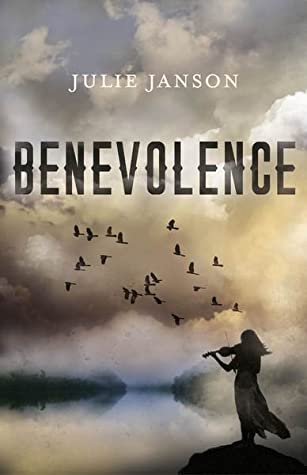
Julie Janson, Benevolence: 1816-1842, Dharug Nation/Western Sydney: based on the author’s ancestor, tells the story of Muraging who, when around 12 years old, is handed over by her father to the Parramatta Native Institution, in the hope that she will help their people by learning British language and ways (my review).
Anita Heiss, Dirrayawadha (Rise up): around 1824, Wiradyuri Country/Bathurst: inspired by the 1824 Bathurst War, fought between the Wiradyuri people and the British, tells the story of the Wiradjuri resistance leader Windradyne, through the eyes of his fictional sister Miinaa (my CWF 2024 post).
Kim Scott, That deadman dance (2011): 1826-1844, Noongar Country/Southwest WA: a first contact story set in Western Australia in which the generosity of the local people, and their willingness to engage, is ultimately met by rapaciousness and violence (my review).
Julie Janson, Compassion (2024): 1836 on, Dharug Nation/Western Sydney: sequel to Benevolence, and based on the life of another Janson ancestor, Muraging’s outlaw daughter, a horse thief and resistance fighter who took on colonial authorities (including in the courts).
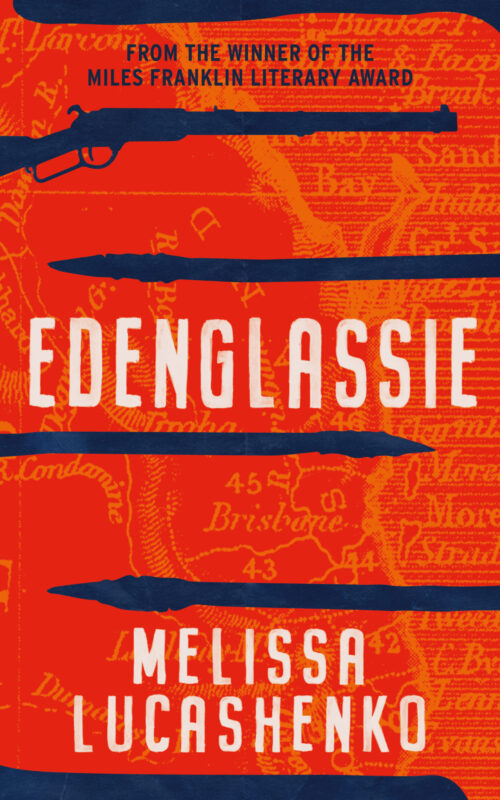
Melissa Lucashenko, Edenglassie (2023): 1850s and 2020s, Magandjin/Brisbane: a “what if” story in which armed resistance to the dispossession, massacres and other brutalities from the colonisers is told alongside attempts from both sides to work together (my review).
Mid to late 19th century
By this period, the settlers had established themselves throughout Australia, with First Nations people surviving as best they could – often in the employ of the settlers and living, of course, under British law. Their lives, health and culture were severely affected by dislocation, and they lived at the mercy of the settlers. Many were separated from their Country, with culture, including language, was being lost.
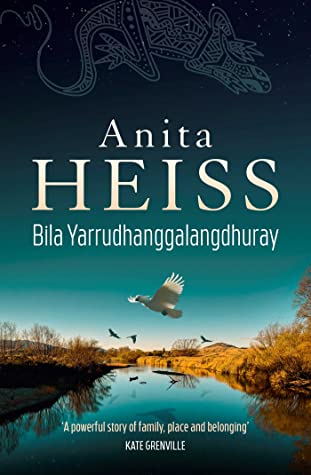
Anita Heiss, Bila Yarrudhanggalangdhuray (River of dreams) (2021): 1852 on, Wiradjuri Country/Gundagai and Wagga Wagga: inspired by the story of the four First Nations men who, using bark canoes, saved 40-70 people during Gundagai’s 1852 flood; tells the fictionalised story of the daughter of one those men, her ending up working for one of the landowning families, and being forced to leave her country (my review).
Ali Cobby Eckermann, Ruby Moonlight (2012): 1880s, mid-north South Australia: verse novel about a teenage girl, Ruby Moonlight, whose family is massacred by white settlers, and who meets the lonely “colourless man”, Miner Jack (my review).
Leah Purcell, The drover’s wife (2017): 1890s, Ngarigo and Walgalu Country/Snowy Mountains: re-visioning of Henry Lawson’s classic short story, turning the drover’s wife into a First Nations woman left to fend for herself in a hostile world (my review of the film version).
Federation to 1930s
While the facts of First Nations lives at this time are largely a continuation of the previous era, fiction set in this period starts to address more specifically the impact of the missions, and of government policies, on First Nations’ lives.
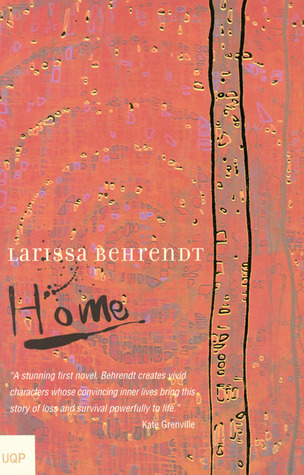
Larissa Behrendt, Home (2004): 1918 through to 1980s, Eualeyai Country/North-western New South Wales: based on the story of the author’s grandmother, who was abducted from her camp in 1918, and following her seven children. (Lisa’s review)
Post World War 2
As we move closer to contemporary times, the fiction addresses more contemporary issues, particularly regarding government polity, while still retrieving stories from the past that are little known.
Anita Heiss, Barbed wire and cherry blossoms (2017): 1944, Wiradyuri Country/Cowra: inspired by the 1844 breakout from the Cowra POW Camp, imagines a relationship between escaped Japanese POW Hiroshi and the daughter of a First Nations couple who offer him refuge at Erambie Mission. But, mission rules, and government protection and assimilation policies limit their choices. (Lisa’s review)
Marie Munkara, A most peculiar act (2020): 1940s, Larrakia Nation/Darwin: follows the trials and tribulations of a 16 year-old Aboriginal fringe-camp dweller, in Darwin during the Japanese bombing raids, and her resistance to protectionist policies like the Aboriginal Ordinances Act and the “White Australia” policy (Lisa’s review).
Dylan Coleman, Mazin Grace (2012): 1940s and 50s, Kokatha Mula Country/western South Australia: fictionalised version of the author’s mother’s childhood at the Koonibba Lutheran Mission (Lisa’s review).
Alexis Wright, The plains of promise (1997): 1950s Gulf Country of Queensland: starts at St Dominic’s Mission in the Gulf Country of Far North Queensland, where a young Aboriginal woman is taken away from her mother, and explores the brutality of colonisation at the mission and beyond (Tony’s review).
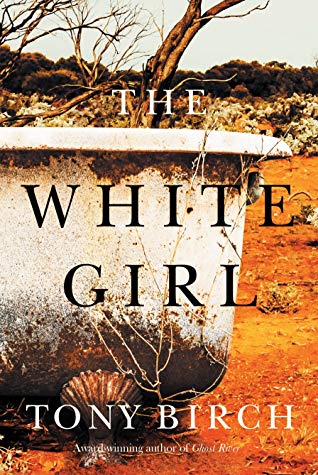
Tony Birch, The white girl (2019): 1960s, fictional rural town: tells the story of Odette who is determined to save her granddaughter from being removed, against the backdrop of the egregious restrictions of the Aboriginal Protection Act are in force (my review).
Karen Wyld, Where the fruit falls (2020): 1960s-70s, multiple locations: spans four generations of women, over several decades, with a focus on the 1960s and 70s, a time of rapid social change and burgeoning Aboriginal rights (Lisa’s review)
There should be something here for everyone!
Any thoughts? Or, do you have any historical fiction titles to add?
 Whispering Gums
A wonderful round up, Sue! I’ve read a handful and have a few in the TBR, so this is a nice reminder to dig those ones out.
Thanks kimbofo … I enjoyed doing it … sounds am glad you find it useful. I looked for some I hadn’t read on your blog, but I don’t think you’d read any I hadn’t? I have a couple of those I haven’t read on my TBR too.
Excellent post (on Invasion Day) – shamefully I’ve only read one of the books listed (Edenglassie) which I enjoyed.
The only other book that comes to mind is The Yield by Tara June Winch – might not fit the historical theme neatly, but I thought of it because of the importance of lost language to that story, which I found really interesting.
Thanks Kate, I did think about The yield as it does have an historical element, but in the end decided not to, but I could have I think for the grandfather’s story.
Thanks for the list! I’ve read the last two on the list, but there’s loads of good stuff for me to dig into, especially with the earlier history.
Oh I’m glad you’ve read those Andrew. They are a good start.
This post would’ve been all grist to your mill, you researching fool ! 🙂
Haha yes it was MR … and I wished I had more time!
Anita Heiss is prominent here, making me wonder if her focus is mostly on historical fiction, or if that means other first nations writers don’t focus on history to the same extent.
She actually started with contemporary novels – what she called choc-lit (!) Melanie but seems to have found a love for historical fiction. It will be interesting to see what she does next.
I had no idea there were so many, though I’ve read 4 or 5. I would add Scott’s Benang which although framed in the present day tells his great grandmother’s story and the repercussions of the Cocanarup Massacre in the 1880s.
Thanks Bill … i was surprised too … I wondered about Benang … and nearly added it but I haven’t read it so backed off though there are a few there that are framed in the present.
Many of these are familiar to me from your and other readers’ reviews and consideration but I haven’t read any of them.
Speaking on the subject of national days/invasion days, there is a new CBC produced documentary film about the Wetsuwetin nation (in what’s today western Canada in geo-political colonial language) called Yintah which is just fascinating about how Indigenous sovereignty continues to be undermined and attacked. It’s all set in the present-day but the legacy of colonialism is on full display via the presence and actions of the Royal Canadian Mounted Police.
It’s truly awful isn’t it Marcie, how far we still have to go in this aspect of our nationhoods.