I have had to put aside the novel I was reading for Bill’s Gen 1-3 Aussie male writers week, as my reading group book called. I will get back to it, and post on it later, but in the meantime, I wanted to post something in the actual week.
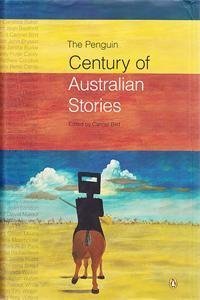
So, I turned, as I have for other Reading Weeks, to The Penguin century of Australian stories, an excellent anthology edited by Carmel Bird. Given Bill’s week encompasses writers working from 1788 to the 1950s, Bird’s anthology offered almost too many choices. Besides the obvious Henry Lawson, there were Steele Rudd, Tom Collins, Vance Palmer, and more, ending with Judah Waten’s 1950 story, “The mother”. I considered several, but Gavin Casey captured my attention because in her Introduction to the anthology, Kerryn Goldsworthy, looking at the 1930s and 40s, commented that Gavin Casey’s “Dust” and John Morrison’s “Nightshift” exemplified the more overtly political stories of this era. She added that:
they are stories in simple, unadorned language … that focus on workers and workplace disasters, on the physical dangers lying in wait for working men and women.
I have been interested in this period – and its socialist-influenced political thinking – for some time, so it had to be Casey or Morrison. Casey it was because I have listed him in a couple of Monday Musings posts but knew nothing about him.
Who was Gavin Casey?
Casey (1907-1964) was an author and journalist, born in Kalgoorlie, Western Australia, to an Australian-born father and Scottish mother.
He doesn’t have a Wikipedia article but there is a useful biographical entry for him in the Australian dictionary of biography (ADB). Written by Anthony Ferguson, it says he had a sketchy education before obtaining a cadetship with the Kalgoorlie Electric Light Station. However, he left there to work in Perth as a motorcycle salesman, only to be “forced” back to Kalgoorlie in 1931 by the Depression. He then worked “as a surface-labourer and underground electrician at the mines, raced motorcycles and became a representative for the Perth Mirror“. He married in 1933, but “poverty plagued them, long after their return to Perth next year”.
By 1936, he was publishing short stories in the Australian Journal and the Bulletin, and in 1938 he was foundation secretary of the West Australian branch of the Fellowship of Australian Writers. His two short story collections – It’s harder for girls (1942), which won the 1942 S. H. Prior memorial prize and in which “Dust” appeared, and Birds of a feather (1943) – established his reputation. Ferguson writes:
Realistic in their treatment of place and incident, his stories showed—beneath the jollity and assurance of his characters—inner tensions, loneliness, unfulfilled hopes, and the lack of communication between men and women.
You may not be surprised to hear that his first marriage failed!
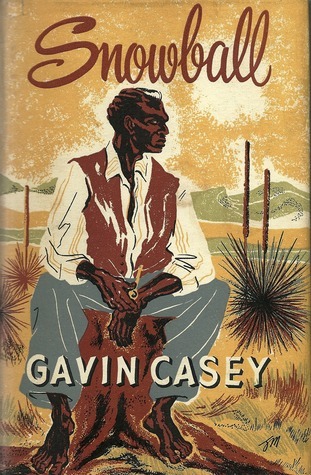
Overall, he wrote seven novels plus short stories and nonfiction works. His novels include Snowball (1958), which “examined the interaction between Aborigines and Whites in a country town”, and Amid the plenty (1962), which “traced a family’s struggle against adversity”. There is more about him in the ADB (linked above).
Ferguson doesn’t specifically address the political interests Goldsworthy references. Instead, he concludes that critics liken Casey’s earlier works to Lawson, seeing “a consistent emphasis on hardship that is tempered, for the male at least, by the conviviality of mates”. Ferguson also praises both for “their perceptiveness” and “their execution”.
The reality of Casey is a bit more nuanced, I understand. For a start, his men are not bush-men but suburban workingmen. Consequently, I plan to write more on him in a Monday Musings Forgotten Writers post, soon. Meanwhile, on with “Dust”.
“Dust”
“Dust” features male characters only, and there are some mates but, while they are important, they are not central. “Dust” also must draw on Casey’s experience of working in Kalgoorlie’s mining industry. It’s a short, short story, and is simply, but clearly constructed. It starts with a physical description of dust swooping through the township, over housetops and hospital buildings, and “leaving a red trail wherever in went”. It sounds – almost – neutral, but there are hints of something else. Why, of all the buildings in town, are “hospital buildings” singled out with the “housetops”, and does the “red trail” left behind signifiy anything?
Well, yes it does, as we learn in the next paragraph. Although this dust comes from “honest dirt” and can do damage like lifting roofs off, it is “avoidable” and is nothing like the “stale, still, malicious menace that polluted the atmosphere of far underground”. Ah, we think, so the “dust” we are talking about is something far more sinister than that flying around the open air.
And here is where the hospital buildings come in. Protagonist Parker and his miner friends are waiting for their six-monthly chest x-rays checking for the miners’ dust lung disease which killed his father. Things have changed since his father’s times, Parker knows. Not only are there the periodic medical examinations, but there are mechanisms to keep the dust down, and a system of “tickets” and pensions for affected miners. But, the risk is still there, and Parker’s anxiety increases as he watches his mates go in one by one, while he waits his turn.
This is a story about worker health and safety – but told from a personal not political perspective. It’s left to the reader to draw the political conclusions. However, it is also a highly relatable story about humans, health, and risky choices and behaviour, because it seems that Parker does have a choice. I won’t spoil it for you, but simply say that the ending made me smile – ruefully.
Gavin Casey
“Dust” (orig. 1936)
in Carmel Bird (ed.), The Penguin century of Australian stories
Camberwell: Penguin Books, 2006 (first ed. 2000)
pp. 86-90
 Whispering Gums
I was astonished, when I began to read this post, to learn that somebody was using The Penguin Century of Australian Stories. All that work was not in vain, after all.
When I say ‘all that work’, I remember the saga of the book’s publication. I had already finished it, with all the permissions etc, and it was the The Random Century of ASS. I thought that sounded quite funny. Then Random House was joined by a huge German publisher called Bertelsmann, and the publication was considered irrelevant and was cancelled. Undaunted, I submitted the idea to Penguin, and had to do most of the work all over again, with bells on.
Now, of course, Penguin and Random have been married…
Ya gotta larf.
The Random-Bertelsmann-Penguin Century of Australian Short Stories. Does not have much of a ring to it.
Thank you for using it to find ‘Dust’.
Haha, Carmel, you do gotta! Love the Random Century of ASS!
It’s a great resource, if I can call it that. My daughter gave it to my Mum in 2006, when she (my daughter that is) had a weekend job at Angus and Robertson’s bookseller.
But, now I’ve got you, a question. Do you remember why you chose this story? I’m certainly not questioning it. It’s such a tight little treasure, but did you particularly want this story? Or, did you want Gavin Casey and had to make a choice re which one? Then again, it was so long ago, and it’s a large anthology, so you may not remember that detail about every choice.
Funny you should ask.
When Penguin took on the publication (see above), they brought in Elizabeth Webby to kind of ‘oversee’ my list of stories. It was Elizabeth, not I, who chose ‘Dust’. I remember such details vividly. I was too tired of the whole hoo haa of it all to question Elizabeth’s decision. She removed a couple of women and inserted a couple of men. There is, I notice, no mention of Elizabeth anywhere in the production. Penguin wanted a kind of ‘academic’ focus and blessing on the whole enterprise. So there was Elizabeth, and then there was added a fine Introduction by academic Kerryn Goldsworthy. It did not exist in the first manifestation of the text. One other little thing I will tell you – there was one writer who refused to contribute to the anthology, explaining that they did not wish to mingle with all those other voices. You do not need to know who it was.
Thanks for this background Carmel. The introduction is lovely to have, and I think Goldsworthy did a good job. I was thinking about the anthology last night, and how it includes far more women writers than you often see in these sorts of publications, so it’s interesting to hear that you had even more!
I wonder if that writer was ever sorry about their decision. This feels like such a good “survey” of short stories/short story writers.
(BTW my copy is hardback, and has a sticker on the outside that says “Only at Angus and Robertson”!)
The system won’t let me reply to your reply. So I am replying here.
I imagine the left-out writer couldn’t care less. Or possibly remains glad not to have to mingle.
Was there a paperback? I don’t really know. I have a lovely hardback with a glorious cover designed by Sandy Cull with an image I selected – Jetty at Rosebud by Arthur Boyd. There were other editions.
Ah yes, that’s because I’ve limited the amount of “nesting” of comments because otherwise the indenting for each level results in very narrow text. I’ve seen blogs where heaving nested comment has ended up with one letter per line! It was unreadable.
I searched for editions, and I see your hardback edition with the Boyd painting. Looks like there was a paperback edition with a Frederick McCubbin beach scene, “Moyes Bay Beaumaris”, and my 2006 hardback edition with a Sidney Nolan Ned Kelly image on the cover!
I think yours must be the American edition
I don’t think it is Carmel. At least, it says, This edition published by Penguin Group (Australia), 2006. But I love that there was an American edition.
I know Kalgoorlie pretty well. I was there on Friday loading mining equipment. And Milly still has family there. Years ago her grandmother got in the local newspaper when a willy willy swept through the town, taking her front verandah as it went.
Dust is a problem of course though all mining (and roadworks) companies work very hard at dust suppression these days. I would say these men at least are not so far from Lawson’s – miners in the outback. Thanks for taking the trouble to post during my ‘week’ (which is going to last a fortnight).
Thanks Bill, I haven’t read enough Lawson to know about his miners. I will probably do my Gavin Casey post next Monday (because he was clearly more than a passing figure in his day), but that will still technically be out of your fortnight, as I expect will be my novel review as the Australian Open tennis and my long reading group book, not to mention ordinary life, are occupying a lot of time.
It’s too hot to give a properly researched reply, but Lawson grew up in a gold mining town and The Loaded Dog must be a miners’ story. As for tennis, I was never a fan, but I’m with 4zzz now and seem to have given up following sport altogether. I agree Casey looks interesting (and Western Australian).
Ha… a long long time since I read The loaded dog. Must do so again.
I don’t follow much sport but I do love tennis.
And yes Western Australian which I hadn’t picked up in my previous brief listings of him. Did he end up in Sydney – will check that tomorrow.
I’m curious if you, it other folks, know if mining is considered a family tradition or birthright, like it is in the US. Desire generations of men dying, American families in the coal mining business–and I mean the people in the mines, not the executives–are staunchly against clean energy, even if a similar job is available to transfer to. It’s like getting sick and dying is a rite of passage. I saw one man in his 40s with two small children and a wife on the news, who was extremely sick and dying from coal mining, who said he wouldn’t change a thing.
It’s an interesting question, but the answer is mostly no.
Firstly, nearly all Australian mines are out in the desert and the workers are flown in for one or two week stints from major centres, state capitals mostly;
Secondly, in the coal mining towns of central Queensland and the east coast, I think the workers and the families are fierce about retaining their jobs, though not necessarily for their children. And the unions and the mining companies don’t allow practices that might lead to silicosis.
Sue grew up in an outback mining town, from before the time fly in/fly out became common. I wonder what she’ll say.
I’m inclined to agree with Bill, though I wouldn’t die in a ditch over it. I lived in a desert mining town in the mid-60s, and was young, but I wasn’t aware of this sort of tradition. Then again mining didn’t really get going there until the 1930s, so we are not talking much time to develop such a generational tradition. There were many immigrants working in the mines there at that time. I’m not so sure about the Queensland coal mines, but I’m inclined to think that Bill is probably right in his assessment there too.
Now, England is another matter. I think the coal mines there had more like what you are talking about Melanie. What the situation is like now though I don’t know.
Pingback: Dust, Gavin Casey | The Australian Legend
I’ve never seen the Australian book of stories you mention. Sounds a good reference.
It is a great anthology Pam … first published in 2000 … worth looking out for.
I really need to dig out Short-Shift Saturday by Casey. And as to Bills mention of sport, I cooked tea tonight while the better half watched the Ladies tennis final.
Your mention of The Penguin century of Australian stories means I have to mention that Brisbane has had BookFest on over the last week and I have attended. It takes all ones energy not to grab compilations of local literature there are so many of them. I have to admit that I wish I had read this post prior to going as I would have been on the look out for the The Penguin century etc.
Awww, I used to have a copy of this but it was such a chunky little thing it got plucked in one of the moves. Now I wish I had it for sure.
I’m curious whether the character had to leave Perth to return to Kalgoorlie because there was too much competition in the city when the economy took a hit? Or whether one’s simply always eager to get out of Perth? /innocentlook
Haha Marcie … fancy your having had a copy. I’m impressed.
Haha re Perth but no it felt like he was forced back because of the economy. Presumably mining towns survived better than others, though I admit that I don’t know that level of detail about where jobs were better during the depression.
I just finished an old Nevil Shute from the 30s (having believed it would fit for Bill’s event, but it was set in England almost entirely) and it was really interesting to see the impact of the depression on the economy in one small town in northern England. (Ruined City), with talk of mostly shipbuilding but a bit about mining too. (Glad you got my Perth joke.)
Sh yes, Nevil Shute … I read all his novels in my teens … but very few were set in Australia. Off the cuff I can remember three though I probably do t remember them all.
I enjoyed your Perth joke – and presumed there was an element on Bill tease in it!