
This November has been – well, about as busy as usual. I am secretary of an association for which, in November, we present our annual lecture and also hold our AGM. It all takes time and energy. I am therefore planning to combine my Novella in November (run by Cathy of 746 Books and Rebecca of Bookish Beck) comments into a couple of posts.
These reading months tend to suggest you start with “my year in [whatever the topic is]”. For last year’s (2023) post, I was horrified to discover that I’d only read one novella in the preceding twelve months, Jessica Au’s Cold enough for snow (my review). But, in fact, I realise now that I told a lie, as I had read another, Gwendolen Brooks’ Maud Martha (my review). Regardless, that was an easy benchmark to beat and beat it I did. Of course, I’ve still only read a fraction of what many bloggers have read, but here is my alphabetically-ordered list of books read for this “novella” year – that is, between 1 November 2023 and 31 October 2024:
- Jane Austen, Lady Susan (my review)
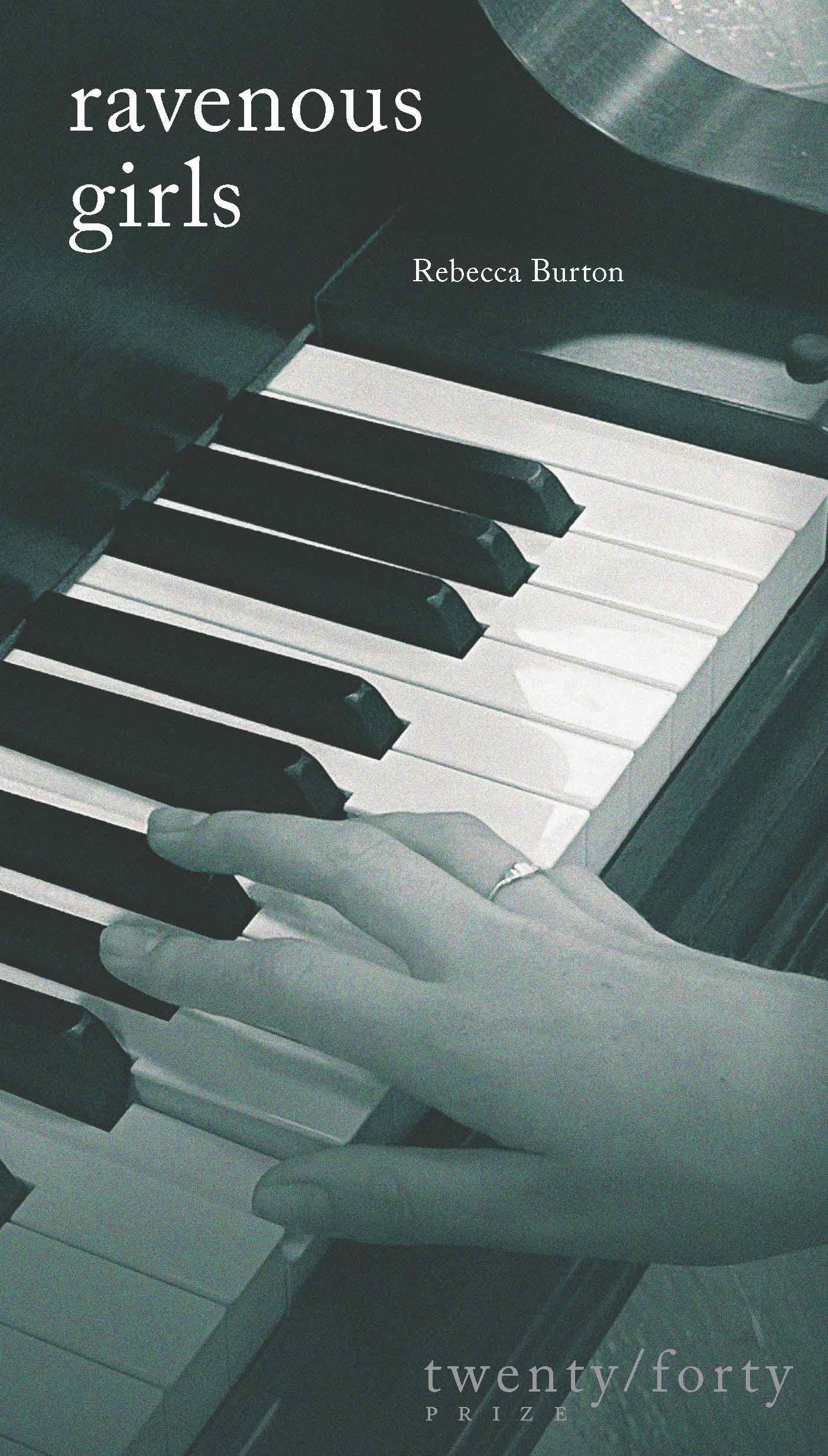
- Rebecca Burton, Ravenous girls (my review): joint winner of Finlay Lloyd’s inaugural 20/40 Prize
- Rebecca Campbell, Arboreality (my review): novella or connected short stories, which won the 2023 Ursula K. Le Guin Prize
- Michael Fitzgerald, Late (my review)
- Elizabeth Gaskell, Cousin Phillis (my review): read for Bill’s Gen O week
- Elizabeth Gaskell, Lizzie Leigh (my review): read for Bill’s Gen O week
- Kim Kelly, The Ladies’ Rest and Writing Room (my review): joint winner of Finlay Lloyd’s inaugural 20/40 Prize
- Thomas King and Natasha Donovan, Borders (my review): short story turned into an under 200pp short graphic novel which makes it a novella to my mind
- Patrick Modiano, Sundays in August (my review)
In addition to these, I have read a novella this month (but have not yet posted my review) and have also nearly finished another, but both of these will all appear in next year’s novella count.

As I understand it, Cathy and Rebecca are not posing weekly prompt questions this year, which suits me as these can sometimes become repetitive. So, given that freedom, I am going to conclude this post with some comments made by Rebecca Campbell in an interview posted in the online journal The Artisanal Writer. The whole interview is worth reading, particularly if you liked Arboreality. She was asked
Another writer might have broken the personal narratives into linked short stories or added content to meet the length expected for a novel. You chose instead to give us a form we don’t get to read often enough. What drew you to the novella form for this particular piece of fiction?
It’s an interesting question, as the book can be (and has been) described as linked short stories. However, Arboreality does have an overall narrative trajectory and it has some continuing characters albeit, by the end, the early ones are in memory rather than still living. Anyhow, Campbell answered:
This is where genre expectations are important. Novellas have always been an important part of science fiction, probably a holdover from its origins in pulp magazines. They’re still published regularly in periodicals, and markets for them are growing at both major and small presses.
Readers like novellas, and they are of an appealing length for writers. The novella maintains some of the focus of the short story, but allows a writer more space to explore the world they’ve created, something that’s particularly important in a genre obsessed with world-building.
Arboreality is one of two novellas I’m publishing in 2022 (the other is The Talosite from Undertow Publications). After years of writing short fiction, I found my stories growing longer and more elaborate, so this form was the next natural step for me. I was also inspired by novellas that combined the focus of the short story with a sense of breadth, as though we are only seeing a fraction of a much larger world that is more compelling because it’s incomplete. On Chesil Beach by Ian McEwan and Great Work of Time by John Crowley in particular let me see how flexible and evocative the form can be, despite its brevity.
I have heard other writers talk about the novella form appealing to them.
I particularly liked Campbell’s point about how novellas can combine the focus of the short story with a sense of breadth resulting in our “only seeing a fraction of a much larger world that is more compelling because it’s incomplete”. While some sense of resolution is usually needed, I’m not one who must have closure, so this openness appeals to me. Certainly, I loved On Chesil Beach. What do you think about this idea of “incompleteness”?
Written for Novellas in November 2024 (linked in opening para).
 Whispering Gums
That cover for Arboreality is gorgeous! I like her comment about novellas having a sense of incompleteness, but I also think some novellas can really distil a theme or story into a perfect short length. I think this tends to work best if the subject matter is dark.
Oh yes, good point about darkness Cathy. I think you can distil a theme but still be incomplete?? Not that I’m saying all novellas must be in complete but just that I don’t think those two are mutually exclusive? I guess it depends a bit on what you mean by complete? But I think what I’m saying is that an author can leave you in no doubt as to their theme – like inexperience and poor communication – but leave the characters up in the air? Like On Chesil Beach.
Thanks for joining us! Those are great quotes from Rebecca Campbell. Kate Kruimink, winner of a Weatherglass Novella Prize, said similar things when I saw her on a “The Future of the Novella” panel in London in September. She described her novella Astraea as a “long short story” with a small character arc, and her publisher said that novellas should have ambiguous endings.
Thanks Rebecca … that’s sounds like a panel I would have loved. I love ambiguous endings and how our own temperaments can affect how we read them.
I’d not thought of this sense of incompleteness in novellas before. But I agree. I just finished The Turn of the Screw which ends very abruptly. What just happened? It is brilliant, actually since it has kept me in the story long after closing the pages on the book.
I am participating in Novellas in November for the first time this year. <a href=”https://headfullofbooks.blogspot.com/2024/11/review-orbital-friday56-linkup.html“>Orbital</a>
Oh good on you Anne … it’s a good challenge as I love novellas… that’s a novella that’s been on my virtual TBR for a long time!
Oh but once again, I can’t comment on your blog with my WordPress account. Part of blogging is commenting with your blog account but your blog comment system seems not to cater for WP bloggers. If I’ve got it wrong please let me know.
I no longer have a Disqus account either, so I understand what you’re saying, MizzGumz; in this instance, I was able to use my Google credentials to pass the baton, but I don’t think that works for you either. And I think you’ve moved from X to BlueSky along with everyone else now, so that wouldn’t work. So I tried to ask a question that I thought you might have asked if you could’ve logged in yourself. lol Just kidding. Well, maybe? hehe
Ah Marcie I could use my Google credentials but I prefer not to because if I’m commenting on a blog I want to comment as Whispering Gums. I don’t like the fact that I am not able to on certain blogger blogs whereas other blogger blogs will enable that facility by offering a name URL option. And yes I am on blue sky. I still do have my X account but again I don’t want to comment with my X account. I simply want to comment as I do on yours or on many other blogger blogs as whispering gums and I don’t quite understand why a few blogger blogs don’t enable that the way most do. Does that make sense? Anyhow when I get home, I will go and see what question you asked. Haha.
I see what you’re saying. As for why it seems inconsistent, it could be that they’re all using different widgets that offer s-l-i-g-h-t-l-y different functionality. I’m reminded of the “share” widgets that all operate basically the same but, for instance, not all of them have coded to include Bluesky or Mastodon, so if you want that feature, you have to select from the widgets that include it…but maybe that means setting aside another desirable element so you have to compromise (because we’re all so busy reading that we don’t know to code our own blogs/sites lol).
That could be … except sharing is a different function to commenting. I should check my reading group’s old blogger blog and see if I can work out what the issue it – but then, really, I’d rather be reading!
Thanks. I am baffled by comments. I have a blogger account and it seems to go through phases where it just makes it hard for everyone to comment. I follow the rules and still.. Funnily, another blogger and I were just hatting today about the opposite…where her comments were coming to me from WordPress, but mine weren’t getting to her. Sigh.
I can’t figure it out about comments, either. I just contacted another person with a WordPress account because my comments aren’t showing up on her blog, but her comments are showing up on mine. It shouldn’t matter it you don’t have a Disqus account. It would help but not necessary. Lots of my communication is with non-disqus users. Perhaps if you clear your cache (whatever that is?!) I’ll do the same, if I can figure it out.
Hi Anne, thanks for caring. The point is that I can comment using my Google account, but what bloggers do is comment with their blog account which enables us all to share our conversations. Most blogger blogs allow non-blogger users to comment by entering their Name and URL in a comment box that pops up. But yours seems to require us to comment via some sort of ”system” like Disqus, Google, LinkedIn (I think) and a few others that have nothing to do with our blogs. (l’ve seen it occasionally on other blogs but it’s not common. If you visit a lot of blogs I’m sure you’ll see what I mean?
I have seen WP bloggers comment on your blog, but there is no link to their blog on their name because they have to comment as “something else”. The end result is that those bloggers are not recognised as bloggers by most of the other commenters, whereas on most other blogs they are. Does that make sense?
Regarding your comments not showing up on that other person’s WP blog, has that blogger checked her/his pending and spam files? That is usually the reason comments don’t show up.
Hi WG, one of my online book groups has just read Evelyn Waugh’s dystopian novella, Love Among the Ruins (1953) – about an England in which people are lining up for euthanasia, and the ‘hero,’ Miles Plastic, falls in love with Clara, a young woman who has a beard. Waugh covers a lot of themes – the ‘ruins’ of the title, criminal rehabilitation, and the transformative power of love – as well as the assisted-death industry. Plenty of themes with relevance to our time!
Oh thanks Judy… I’ve heard of that Waugh but not read it. I’ll add it to my list as I do like dystopian novellas!
I love the way Arboreality is resonating with so many readers here in Australia. I love, of course, that Campbell places herself so unapologetically in the ‘near-future Science Fiction’ camp in that excellent interview. I hadn’t really thought about novellas having their own rules, separate from novels and short stories, nor about novellas in early SF magazines (I would have thought the magazines tended towards serials for their long form works. I’ll have to have a look at my collection).
Thanks Bill. I agree re your opening point.
I think novellas do have their own rules – but it’s also all a spectrum I think. However, through AWW I’m aware that SF was particularly the home of shorter forms. But I’ll be interested to hear what you find in your collection.
As I was reading this post, it dawned on me the I own The Talosite because I get the Undertow newsletter and purchase good deals on ebooks (they have many). My understanding is that Campbell’s a horror writer, so I’m surprised to see her here on your blog! Maybe she leans more toward the science fiction that she mentions, but Undertow is known for their horror.
Oh, Melanie, I got sidetracked checking out The Talosite and didn’t come back to reply to you. I found her website, where she says “I write weird stories about climate change and ghosts, mostly, though aliens and parasites sometimes show up, too”. Arboreality is “horror” in the sense that it’s dystopian speculative fiction, but not what I understand by the horror genre or how you’ve described it. Perhaps it’s an aberration or maybe she’s changing genres, or adding more strings to her bow? Whatever it is, I liked the book a lot.
Ahhhh, okay. I was guessing it was horror because it’s published through Undertow. That’s interesting! I find that horror crops up all over the place, so I’m pretty flexible with the definition of the genre myself. If it’s horrifying, it’s horror. If I want that “warm and fuzzy” horror that I know like home, it’s gotta have all the horror genre tropes. So, for me, it’s a range.
Thanks Melanie … I like this sort of flexible thinking!